Abstract
Due to there is no better way to exploit depleted gas reservoirs, and hydrogen can generate from natural gas combustion. In this paper, the possibility of in-situ hydrogen generation in air injected gas reservoirs was determined through pseudo dynamic experiments. The study indicated that higher temperature and steam/methane ratio can generate more hydrogen, and the temperature should not be lower than 600 °C within gas reservoirs. The debris has positive catalysis for hydrogen generation. The maximum mole fraction of hydrogen was 26.63% at 600 °C.
1. Introduction
The world is undergoing the third energy transition from fossil to renewable fuels such as hydrogen energy [1]. Moreover, hydrogen also plays a significant role in metallurgy, oil refining, and medical treatment. However, hydrogen mostly comes from fossil fuels, and there are a large number of greenhouse gases, such as CO2, involved in hydrogen production [2]. In fact, hydrogen production is the process of controlling pollution by manufacturing pollution, and there will be a high cost for greenhouse gas low emission.
Hydrogen can be produced from hydrocarbons though steam methane reforming (SMR), partial oxidation of methane (POM), autothermal reforming (ATR), and water gas shift reaction (WGSR) [3,4,5]. Nevertheless, all these techniques are not economic or green, as they cause the generation of gases that can pollute environment. In addition, hydrogen generation is mostly from the combustion (oxidation) of hydrocarbons with CO2 emission. At present, SMR is the most popular method to obtain hydrogen, as it is able to produce hydrogen on a large scale in an economical way; POM and ATR have also made great contributions to hydrogen production [6,7,8,9]. It is necessary to know that lowering the emission of greenhouse gases will increase costs.
In recent years, an economic and green method to generate hydrogen from hydrocarbon reservoirs, was proposed [10,11,12,13]. Hydrogen with smaller density would gather on the top, whereas carbon oxide and sulfur oxide with bigger density accumulate at the bottom on account of gravity in in the gas reservoir. Moreover, CO2 could dissolve in water and be mineralized with salt water [4]. A hydrogen filtration membrane could also be installed on the production well for only-hydrogen production, whereas all other gases are stored in-situ [11]. As a result, hydrogen could be generated from depleted oil reservoir without greenhouse gases. There exist many methods for hydrogen generation from gas reservoirs, such as oil aquathermolysis, pyrolysis, WGSR, and SMR [14,15,16,17,18,19].
Like oil reservoirs [20], hydrogen generation from in-situ gas reservoir combustion could also produce no greenhouse gases in the atmosphere. Hydrogen generation from a gas reservoir refers to the reaction in an underground reactor, in which the temperature is provided by natural gas combustion [21]. During the combustion process, the POM, WGSR, thermal cracking, and ATR produce hydrogen. These reactions are as follows.
where x and y are the oxygen/methane ratio (O/C) and the steam/methane ratio (S/C), respectively.
In this paper, the gas fields that are depleted or water blocked were considered for the production of hydrogen. A porous media made using debris of gas fields was used to simulate gas reservoir combustion rather than external heating to provide the heat needed for the hydrogen generation reaction, which has not been studied by existing research [13]. The gas or gas and water was firstly injected to establish the original state of gas reservoir. The pseudo dynamic experiments in which oxygenated gas would be injected at a certain flow as soon as the reactor reached the goal temperature were carried out. The influences of temperature, reaction time, oxygen/methane ratio, and steam/methane ratio on the hydrogen yield were investigated. The experimental data could be a director for the field test and push on the process of in-situ hydrogen generation from a gas reservoir.
2. Materials and Methods
2.1. Materials
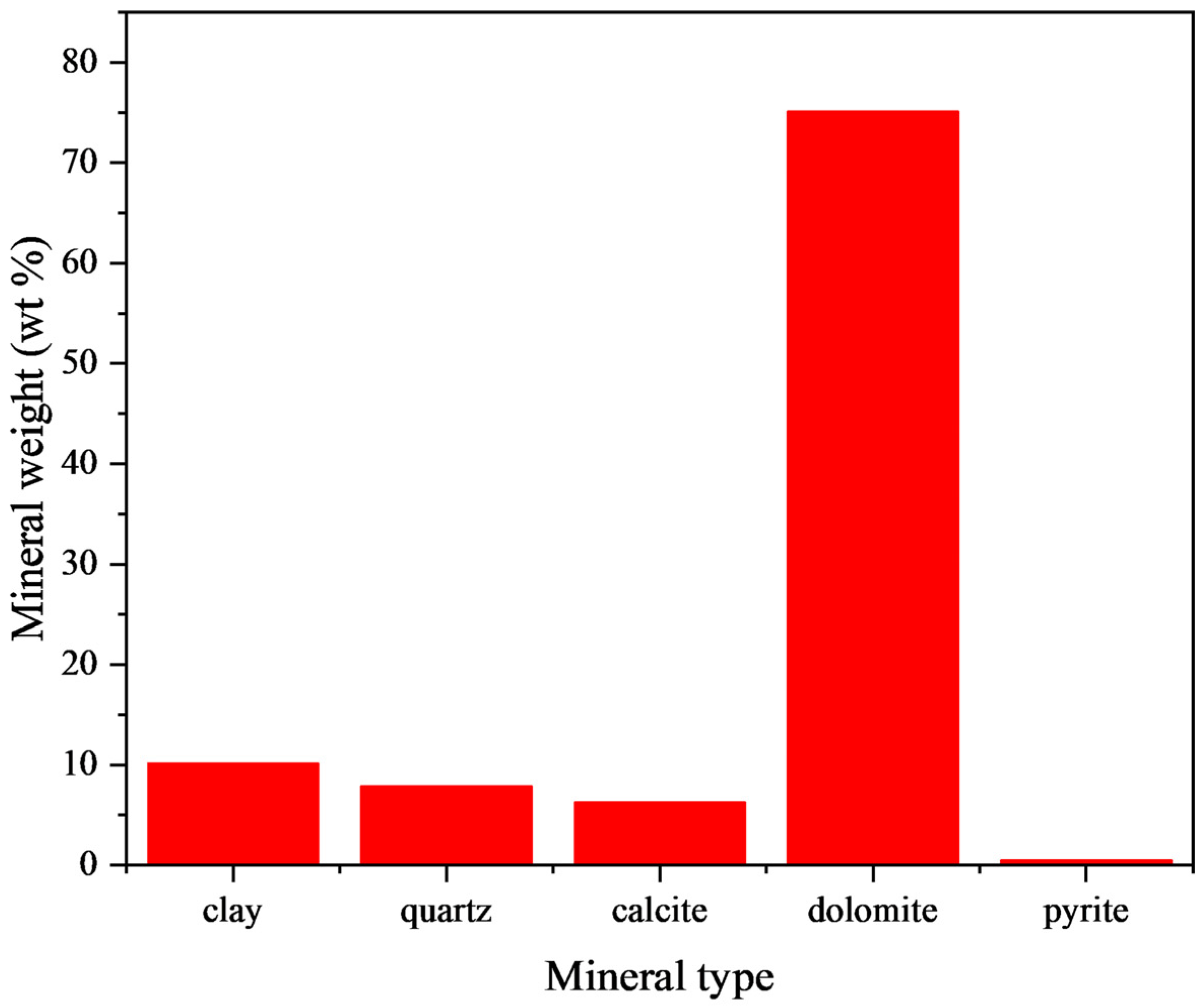
The methane purchased by Chengdu Keyuan Gas Co., Ltd. (Chengdu, China) was used to approximate the simulation of natural gas to investigate hydrogen generation. The debris grinded into 40~80 mesh, which were obtained from oil and gas fields located in the south-west, were used as filler in the experiments to model actual rock samples. The porosity and permeability were 0.28 and 126.35 mD, respectively. The X-ray fluorescence spectrum (XRF) and X-ray diffraction (XRD) results of debris are shown in Table 1 and Figure 1.
Table 1.
The XRF results of debris.
Figure 1.
The XRD results of debris.
2.2. Experimental Setup
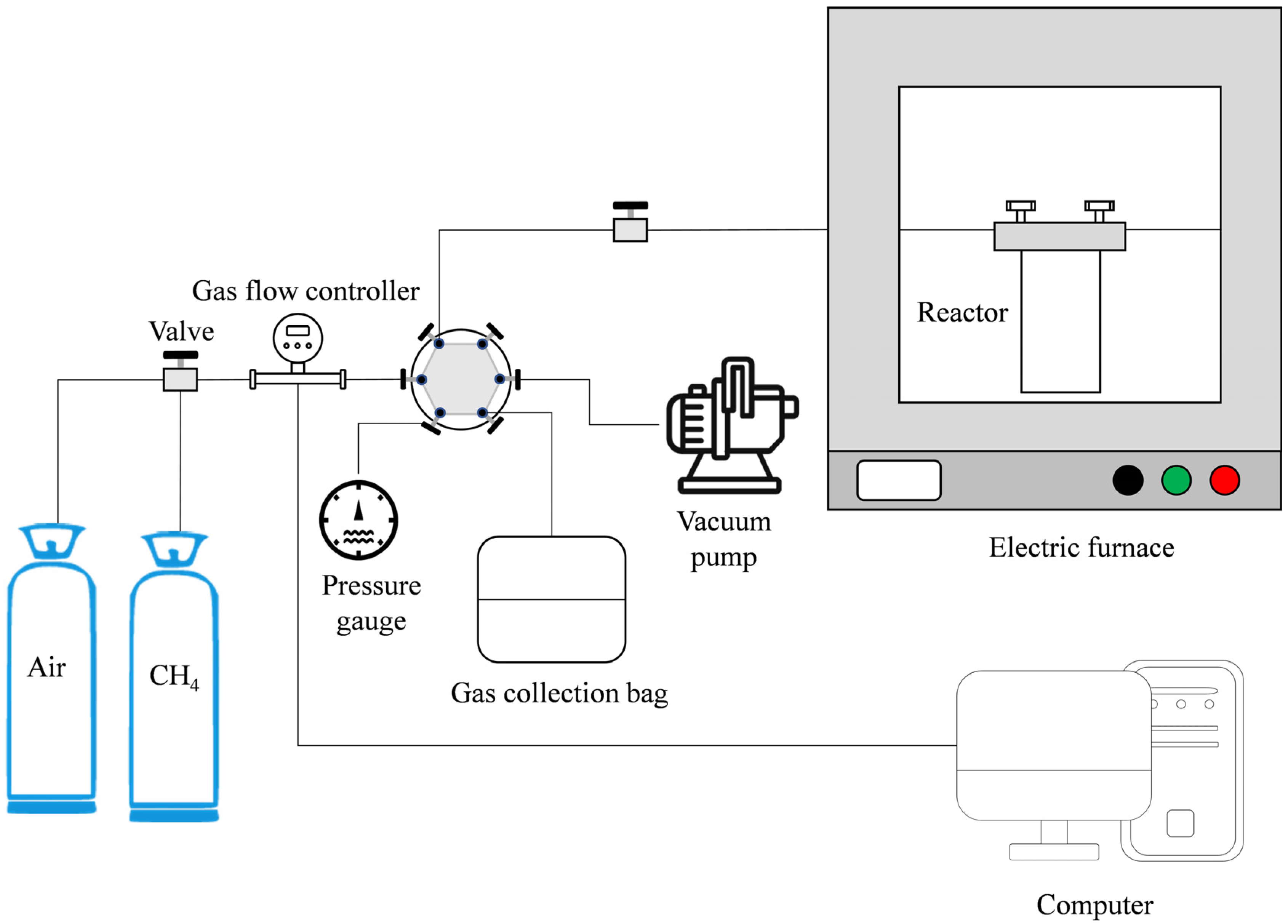
The experimental setup composed of a reactor, electric furnace, vacuum pump, six-way valve, gas bottle, gas flow controller is shown in Figure 2. The reactor was at the max temperature of 600 °C, and a max pressure of 400 bar was used for the static experiments. The volume of the reactor is 0.16 L. The electric furnace with a max temperature of 1200 °C was purchased from Tianjin Zhonghuan Electric Furnace Co., Ltd. (Tianjin, China). The gas flow controller controlling gas flow from 0 mL/min to 270 mL/min in standard state was bought from Netherlands, Bronkhorst.
Figure 2.
Schematic diagram of experiment.
2.3. Experimental Procedures
The hydrogen generation experiments were carried out in the high-temperature and high-pressure reactor that was filled with debris as porous media. After that, the whole hydrodynamic system was vacuumed and the methane was injected using the gas flow controller in the reactor for simulating the initial state of the gas reservoir. The methane was heated to the reaction temperature for simulating the gas reservoir under high temperature; then, air consisting of about 22% oxygen and 78% nitrogen of normal atmospheric temperature was also injected to the reactor. The air volume in atmospheric pressure was determined by the atmospheric pressure volume of methane and oxygen/methane ratio, and the flow of air was decided by reaction time and the amount of air. It should be noted that in actual gas reservoirs, air is firstly heated, then the methane in the gas reservoir is heated by the hot air through air injection, after which the methane and air start an oxidation combustion reaction. In this study, we used heated methane to replace heated air to simplify experiments. Moreover, we injected air as soon as the methane reached the target temperature to avoid the pyrolysis of methane as much as possible. The gas sample was collected using a gas sampling bag which ATR used to measure absolute volume by drainage volume method; furthermore, it was analyzed by gas chromatography (Agilent 7890 B, Santa Clara, CA, USA).
In order to evaluate the performances of hydrogen generation from in-situ natural gas combustion, two primary indices were evaluated. These indices include CH4 conversion and H2 yield. The CH4 conversion stands for the reaction extent of CH4; H2 yield represents the moles of H2 generation from per CH4 mole. The indices can be calculated by the following equations.
where n is the number of moles, and the initial and the final states are designated by the subscripts inlet and outlet, respectively.
3. Thermodynamic Model
The thermodynamic calculations for hydrogen generation from in-situ methane combustion was performed. Gas and water are distributed in sections in the gas reservoir, therefore, there is only gas or water in some places [22]. In this study, POM and ATR were considered to be the main mechanisms of hydrogen generation.
3.1. Chemical Reactions
The essence of reactions of POM and ATR is the interaction between species, including CH4, O2, H2, CO, H2O, CO2, and N2. Nitrogen, an inert component, does not react with other gases. Accordingly, the value of enthalpy, entropy, and Gibbs free energy of the above species are listed [23] in Table 2.
Table 2.
The value of enthalpy, entropy, and Gibbs free energy.
Combustion, POM, SMR, WGSR, and methanation, are compound reactions. The reactions are listed in Table 3.
Table 3.
The equations of ATR and POM.
The combustion reaction (R1) and POM (R2) are involved in ATR because of the exothermic process. Furthermore, the heat released from (R1) and (R2) can be used to start the SMR (R3). The WGSR (R4) would occur in the presence of carbon monoxide produced by (R2) and steam. In addition, methanation (R5) also occurs due to the existence of carbon monoxide and hydrogen.
3.2. Methods of Calculation
The Gibbs free energy of a species in a reaction system can be expressed as the following formula [24]:
When the reaction system is in a low-pressure and high-temperature environment, the ratio becomes . Therefore, the total Gibbs free energy of the reaction system is written as
Then, according to the law of conservation of mass, ni have the following relations:
For the reaction equilibrium in the gas phase, the minimum Gibbs free energy of each gaseous species and that of the total system can be written as Equations (10) and (11), with the Lagrange’s undetermined multiplier method.
4. Results and Discussion
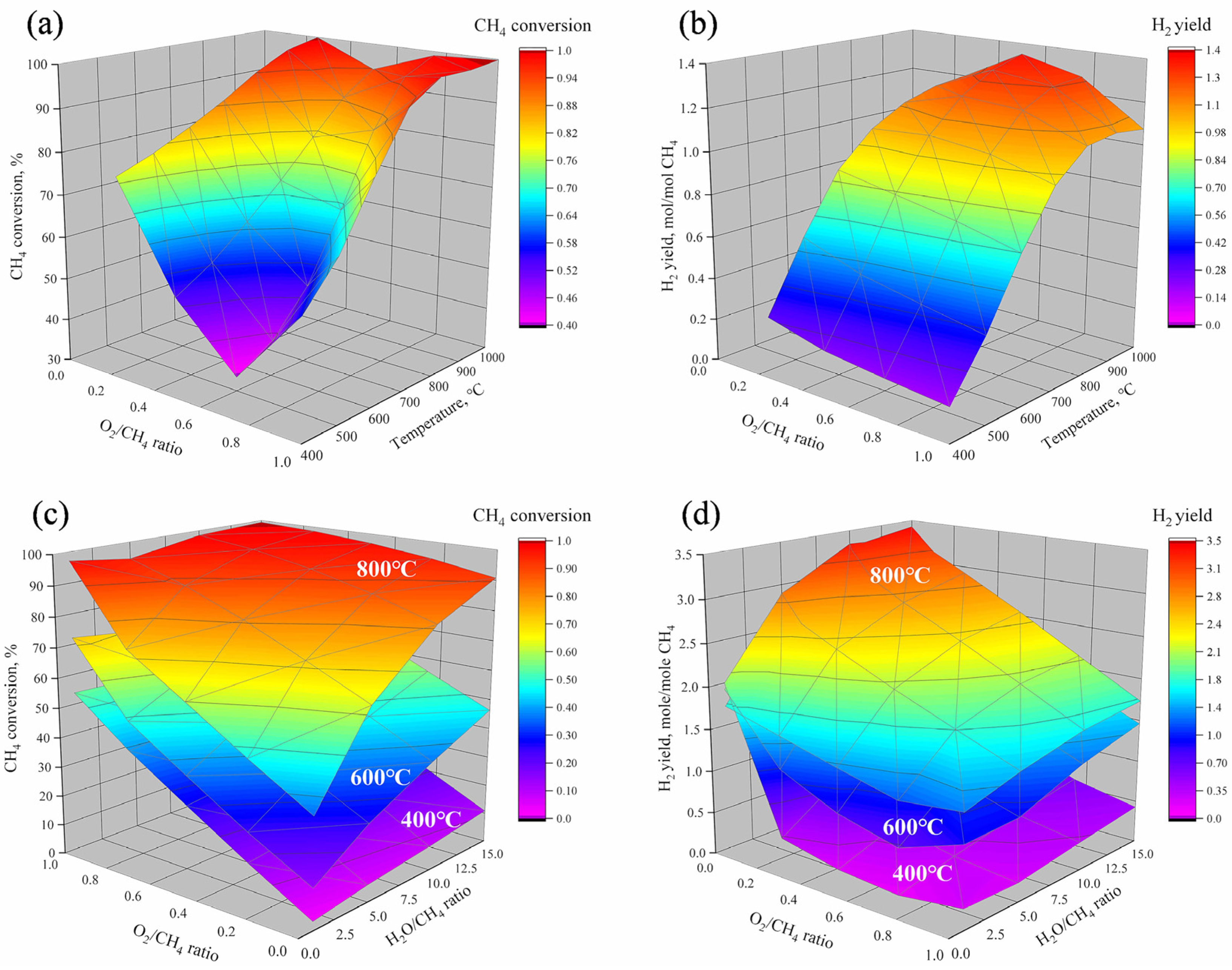
In this study, the equilibrium calculations including methane conversion, hydrogen yield, and gas mixture’s equilibrium composition were carried out with python programing language. The results of the methane conversion and hydrogen yield of POM and ATR at different temperatures (from 400 to 1000 °C), oxygen/methane ratio (from 0.25 to 1), and steam/methane ratio (from 1 to 15) were shown in Figure 3. The pressure was 50 bar during the whole computational process.
Figure 3.
The results of thermodynamic calculation according to principle of minimum Gibbs energy. (a) © methane conversion of POM at different O/C and temperature, (b) the hydrogen yield of POM at different O/C and temperature, (c) the methane conversion of ATR at different S/C, O/C and temperature, and (d) the hydrogen yield of ATR at different S/C, O/C and temperature.
Moreover, the use of POM and ATR for hydrogen generation from in-situ gas reservoir combustion was explored. Four important parameters, including temperature, reaction time, oxygen/methane ratio, and steam/methane ratio, affecting the hydrogen generation were taken into account. All the experiments mentioned were performed using 50 bar and porous media, and the amount of methane changed with the oxygen/methane ratio and steam/methane ratio to maintain a constant pressure.
4.1. The Computed Results
To obtain a higher methane conversion and hydrogen yield, a higher temperature and lower oxygen/methane ratio during the POM are needed. The temperature of methane combustion which has already been reported [22,25] could reach over 1000 °C. Methane in the gas reservoir was used to bring heat by combustion, and hydrogen generation due to the POM of methane would occur in the presence of a certain amount of heat in the area without water. The lower oxygen/methane amount could be more easily achieved, on account of air or oxygen being the injected gas while methane filled the gas field. Figure 3c,d also shows that a higher steam/methane ratio and oxygen/methane ratio would obtain better methane conversion, whereas a greater hydrogen yield requires a higher steam/methane ratio and lower oxygen/methane ratio in the ATR. The insufficient methane conversion caused by the low oxygen carbon ratio could be compensated by high temperature. Consequently, raising the gas reservoir temperature is a suitable method to increase hydrogen generation. In this study, the simulations results at higher temperatures could not be verified by our experimental data as they are limited to a maximum of 600 °C, but it could have a great fit at higher temperatures when comparing with the experimental data of previous studies [3,26].
It should be pointed out that other gas components of natural gas where not considered in relation to experiments or thermodynamic models. However, there are other gases, such as ethane, propane, and hydrogen sulfide in natural gas which can be impactful. The results relating to other gas components will be introduced in subsequent publications.
4.2. Effect of Temperature
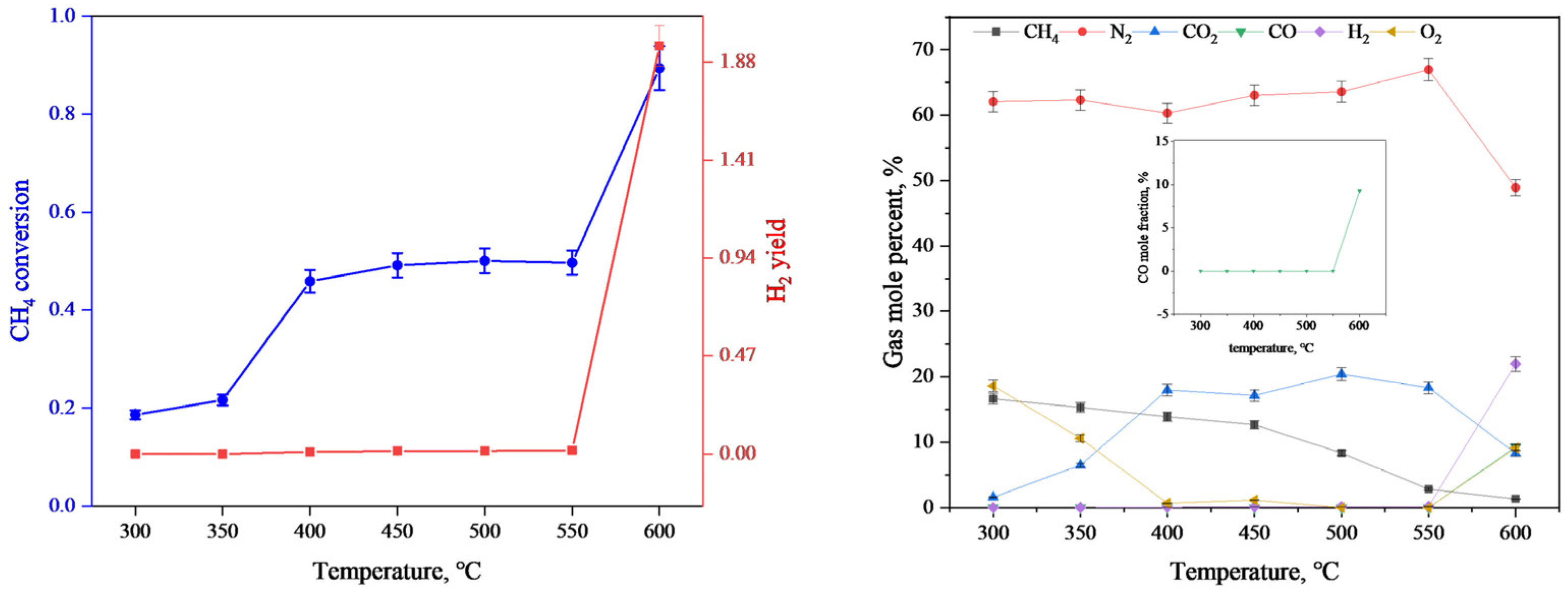
The variations of final concentrations of gas components under the condition of oxygen/methane ratio = 1 in POM are shown in Figure 4. The residence time is one hour. The flow of air injected is 4.2 SmL per minute. As seen from the methane conversion, there is hardly any reaction at 300 °C. Only carbon dioxide and water were generated below 400 °C, which did not reach equilibrium according to the oxygen ratio, and the percent of hydrogen yield increased with temperatures above 400 °C. As known from hydrogen and carbon monoxide concentrations, the combustion of methane is more likely to occur than POM when temperatures range from 400 °C to 600 °C. The POM is more likely to happen at 600 °C, thanks to the increased amounts of hydrogen and carbon monoxide, and the result is consistent with existing research [26]. The hydrogen fraction obtained from experiments was 21.96%, which is higher than that obtained from the thermodynamic model, which computed 12.89%. This is due to the fact that the gas tested by gas chromatography did not contain steam as a result of the standard temperature test condition and catalysis caused by the iron and nickel present in the debris [27,28,29]. The nitrogen fraction decreased at 600 °C since the POM is the volume increasing reaction. Besides, the reaction did not reach a state of equilibrium due to a lack of oxygen. Consequently, the fraction of hydrogen and carbon monoxide would lessen as the retention time increases. It could be concluded that there are two main elements in the process that do not require water with regards to in-situ gas reservoir combustion. One is combustion as the main reaction with a lower temperature, and the other is POM as the main mechanism with a higher temperature. Carbon dioxide is the principal product in combustion and makes no contribution to hydrogen generation. Nevertheless, carbon monoxide could be an excellent raw material for hydrogen through WGSR, which can occur at a lower temperature than SMR and POM [30,31,32]. As a result, controlling the insufficient combustion of methane as the primary reaction for producing more carbon monoxide might increase hydrogen generation.
Figure 4.
The results of methane conversion and hydrogen yield (left) and the mole fraction of gas components (right) at different temperatures in POM.
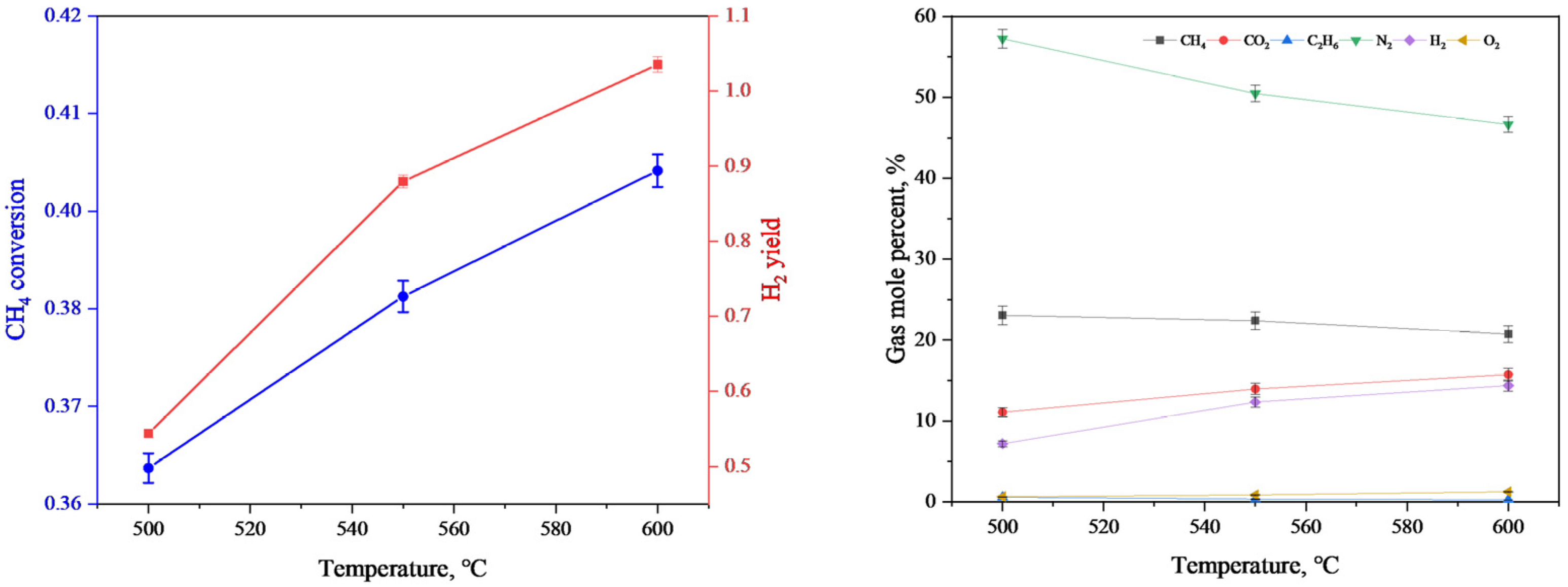
Figure 5 plots the changes of gas fraction at different temperatures under the condition of steam/methane = 1 and oxygen/methane = 1 in ATR. The reaction time is one hour. The flow of injected air is 2.8 SmL per minute. As seen from the figures, the methane conversion and hydrogen yield increased with temperature, and a mountain of hydrogen was more easily generated at a temperature 500 °C in ATR comparing with POM, which required 600 °C, indicating that WGSR was the main mechanism of hydrogen generation. Similar with POM, the hydrogen fraction from the experiment was also higher than that from the calculation, owing to the test condition and catalysis. Hydrogen generation decreases due to water addition, indicating that mixing water might be a good approach to use when injecting air during in-situ combustion. However, the temperature of methane combustion would decrease in the presence of water [33]. Thus, water and air mixing or circulating injection will be investigated, and the research of dynamic experiments will be presented in future publications.
Figure 5.
The results of methane conversion and hydrogen yield (left) and the mole fraction of gas components (right) at different temperatures in ATR.
4.3. Effect of Reaction Time
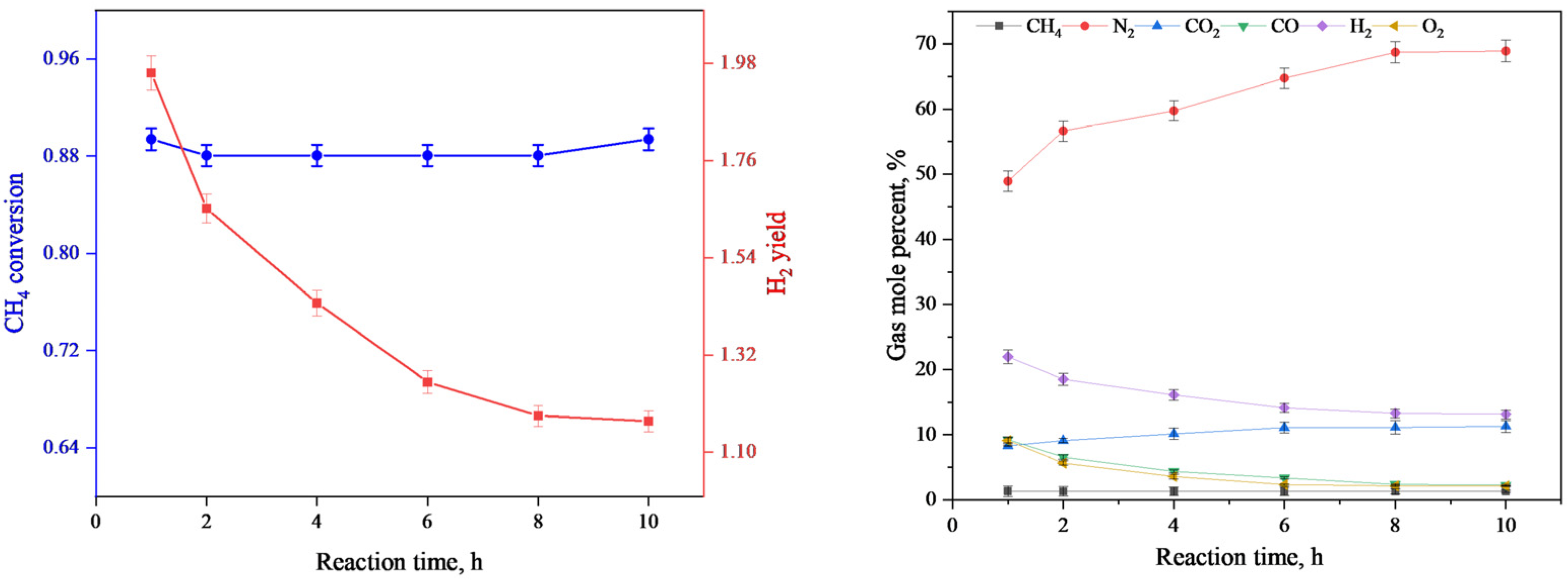
Figure 6 plots the changes of gas fraction at different reaction times under the conditions of a temperature of 600 °C and oxygen/methane = 1 in POM. The results showed that the methane conversion continued as the residence time increased, indicating that methane can be converted in a short time, which could also be observed in the variation of methane mole fractions. Nevertheless, the hydrogen yield decreased with the increase of retention time due to the fact that the hydrogen was reacted by excess oxygen, as shown by the hydrogen and oxygen concentration curves. It was found from the gas percent curves of carbon monoxide and carbon dioxide that the carbon monoxide was consumed by the remaining oxygen to produce carbon dioxide. Otherwise, the gas composition is almost at a constant value from 8 h to 10 h, so it could be said that the reaction has reached equilibrium. Therefore, the process of POM has two main processes: one is the fast conversion of methane to carbon monoxide and hydrogen, the other is the carbon monoxide and hydrogen that are consumed by incoming oxygen. The longer reaction time is more practical with regard to the gas reservoir on account of the much larger reservoirs needing more time for the air injection process.
Figure 6.
The results of methane conversion and hydrogen yield (left) and the mole fraction of gas components (right) at different reaction times in POM.
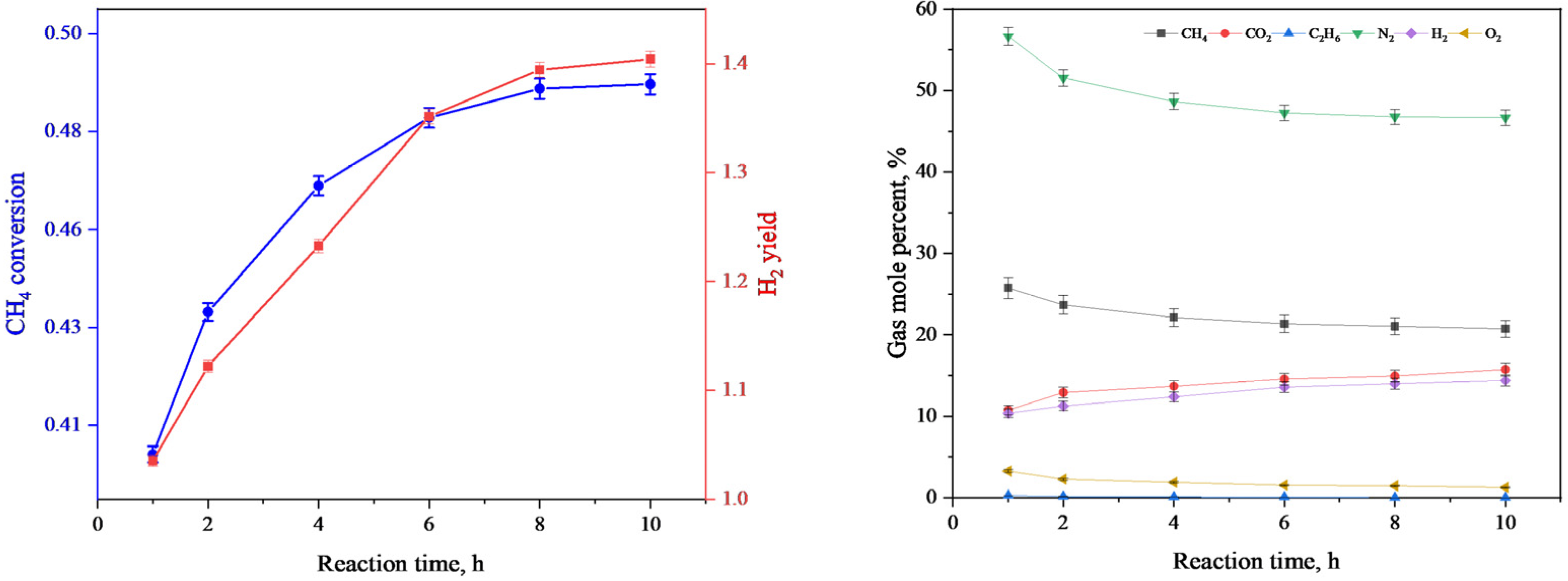
Figure 7 presents the changes of gas fraction at different reaction times under the condition of a temperature of 600 °C, steam/methane = 1 and oxygen/methane = 1 in ATR. The results showed that the methane conversion and hydrogen yield first increased and then remained constant. The methane fraction decreased and the hydrogen concentration increased as time went on, and the reaction could be observed to have reached the equilibrium state at 10 h, due to almost unchanged gas fractions. The maximum hydrogen mole percent was 14.38%.
Figure 7.
The results of methane conversion and hydrogen yield (left) and the mole fraction of gas components (right) at different reaction times in ATR.
4.4. Effect of Oxygen/Methane Ratio
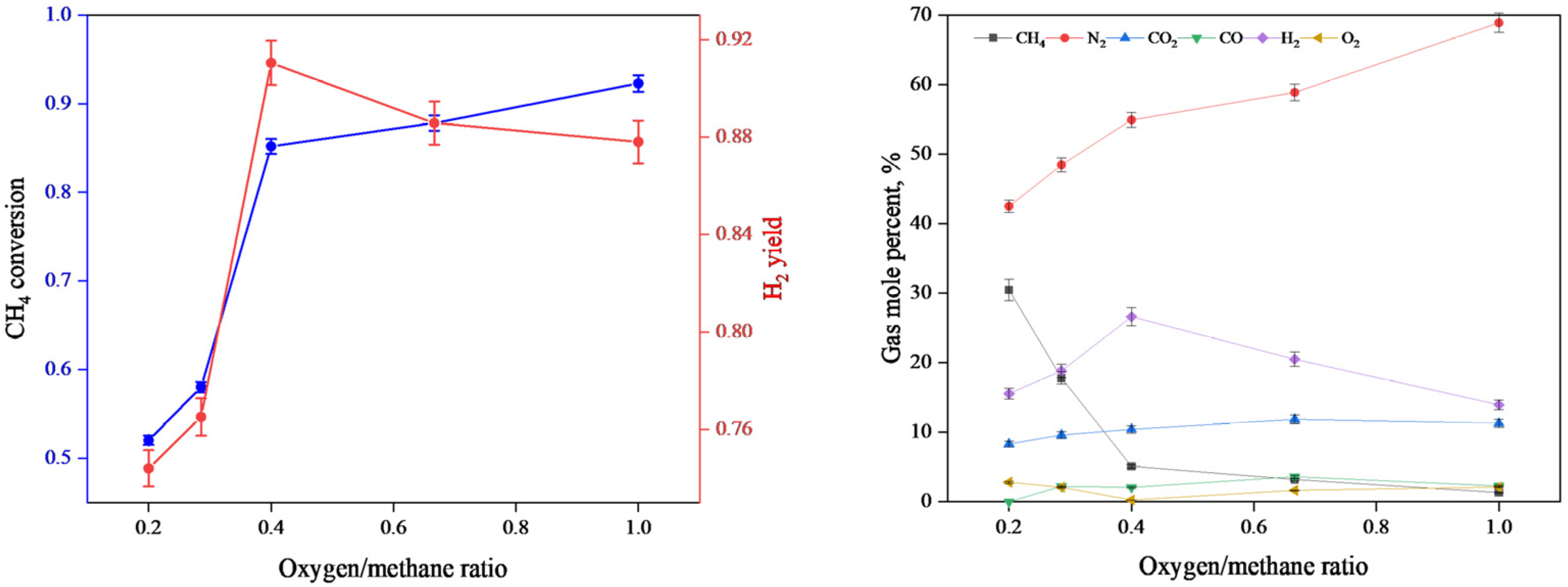
The variations of gas components, methane conversion, and hydrogen yield under the condition of 600 °C at different oxygen/methane ratio in POM are shown in Figure 8. The retention time was ten hours for reaching the equilibrium state. As shown in the figures, methane conversion increased with the oxygen/methane ratio, and the hydrogen yield was at its maximum at oxygen/methane = 0.4. The hydrogen percentage ranged from 13.96% to 26.62%, whereas the one obtained from computing ranged from 8% to 18%. As with the experiments mentioned above, catalysis and test conditions were the primary reasons. This indicated that increased oxygen was instrumental in methane conversion because of the greater molecular collision frequency. However, the hydrogen yield first increased and then decreased with the increase of the oxygen/methane ratio and was relatively higher at the oxygen/methane ratio = 0.4 and oxygen/methane ratio = 0.67, indicating that excessive methane or oxygen is not conducive to hydrogen generation in POM. Hence, the gas distribution in reservoirs should be known for controlling the amount of injected air in the process of gas reservoir combustion to produce more hydrogen.
Figure 8.
The results of methane conversion and hydrogen yield (left) and the mole fraction of gas components (right) at different oxygen/methane ratios.
4.5. Effect of Steam/Methane Ratio
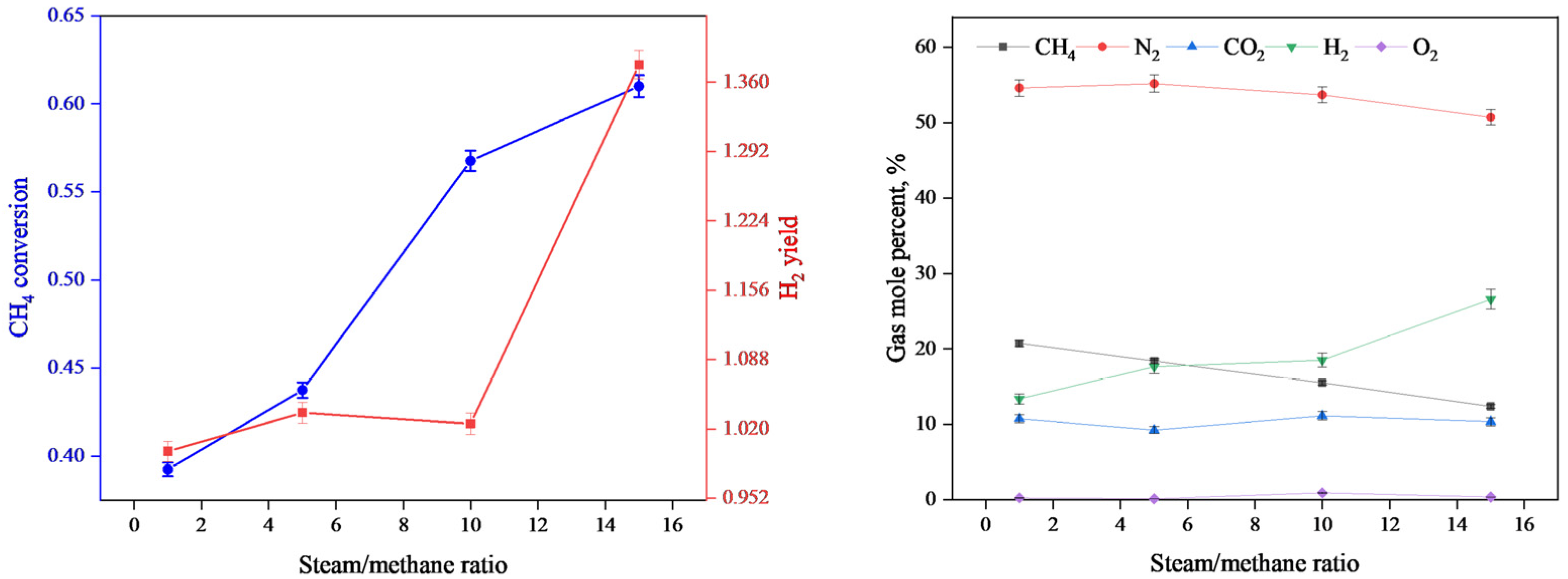
The variations of gas components, methane conversion, and hydrogen yield under the condition of 600 °C and oxygen/methane = 0.5 at different steam/methane ratios in ATR are shown in Figure 9. The residence time was ten hours. As seen in the figures, the methane conversion and hydrogen yield increased as the steam/methane ratio increased. The methane and hydrogen mole percentage ranged from 12.36% to 20.75% and from 13.38% to 26.63%, respectively, which is greater than the range from 8.89% to 12.94% and 5.78% to 7.18% that was computed. Comparing with POM, the hydrogen yield was higher, whereas the methane conversion was lower, indicating that water could promote hydrogen production and inhibit the conversion of methane. Moreover, raising the temperature allowed for the obtention of more hydrogen from computed results in ATR. Thus, air is preferentially injected to reach a high temperature, and then water is injected to promote ATR, which might be the best way for generating more hydrogen.
Figure 9.
The results of methane conversion and hydrogen yield (left) and the mole fraction of gas components (right) at different steam/methane ratios.
5. Conclusions
This paper studied the feasibility of hydrogen generation from gas reservoirs by air injection. The main conclusion can be summarized as follows:
- Below 400 °C, the oxidation rate of methane is excessively slow. In addition, methane combustion is the main mechanism of methane consumption below 600 °C, whereas it is POM at 600 °C.
- The hydrogen yield reaches a maximum at oxygen/methane ratio = 0.5 and increases with an oxygen/methane ratio close to 0.5.
- The hydrogen detected is higher than that which was computed, meaning that the rock cuttings may have a catalytic effect on hydrogen generation.
- A higher steam/methane ratio can obtain more hydrogen, which can be achieved by the alternating injection of water and gas.
The results indicate the potential prospects of in-situ hydrogen generation from depleted gas fields. This technology needs the reservoir to be heated to 450 °C and above, which can be achieved by hydrocarbon combustion.
Author Contributions
Conceptualization, W.P. and X.T.; methodology, X.T.; software, D.W.; validation, Y.R., Q.T. and C.Y.; formal analysis, D.W.; investigation, Y.R. and B.Z.; resources, Q.T.; data curation, C.Y.; writing—original draft preparation, Y.R.; writing—review and editing, X.T.; visualization, D.W. and X.T.; supervision, D.W.; project administration, W.P.; funding acquisition, B.Z. All authors have read and agreed to the published version of the manuscript.
Funding
This research was funded by the Science and Technology Project of Southwest Petroleum University (2021JBGS09), Central Government Funds of Guiding Local Scientific and Technological Development of Sichuan Province (2021ZYD0056), and Special project for the central government to guide the development of local science and technology in Sichuan Province (2021ZYD0099).
Acknowledgments
The authors gratefully acknowledge the Science and Technology Project of Southwest Petroleum University (2021JBGS09), Central Government Funds of Guiding Local Scientific and Technological Development of Sichuan Province (2021ZYD0056), and Special project for the central government to guide the development of local science and technology in Sichuan Province (2021ZYD0099). The authors also thank the anonymous reviewers for their constructive and valuable comments.
Conflicts of Interest
The authors declare that there are no competing interest.
Nomenclature
| SMR | Steam methane reforming |
| POM | Partial oxidation of methane |
| ATR | Autothermal reforming |
| WSGR | Water gas shift reaction |
| O/C | Oxygen/methane ratio |
| S/C | Steam/methane ratio |
| Total Gibbs free energy of reaction system | |
| Gibbs free energy of species i | |
| Standard-state Gibbs free energy of species i | |
| Partial fugacity of species i | |
| Standard-state fugacity of species i | |
| p | Pressure |
| p0 | Standard-state pressure |
| n | Numbers of moles of reaction system |
| Moles of species i. | |
| N | Numbers of compounds |
| Number of gram-atoms of element j in a mole of molecule i. | |
| Total number of atomic weights of element j | |
| Lagrangian multipliers |
References
- Zou, C.N.; Zhang, F.D.; Zheng, D.W.; Sun, F.J.; Zhang, J.H.; Xue, H.Q.; Pan, S.Q.; Zhao, Q.; Zhao, Y.M.; Yang, Z. Strategic Role of the Synthetic Hydrogen Production and Industry in Energy Independence of China. Nat. Gas Ind. 2019, 39, 1–10. [Google Scholar]
- Balcombe, P.; Speirs, J.; Johnson, E.; Martin, J.; Brandon, N.; Hawkes, A. The carbon credentials of hydrogen gas networks and supply chains. Renew. Sustain. Energy Rev. 2018, 91, 1077–1088. [Google Scholar] [CrossRef]
- Al-Hamamre, Z.; De Vos, S.; Trimis, D. Hydrogen production by thermal partial oxidation of hydrocarbon fuels in porous media based reformer. Int. J. Hydrog. Energy 2009, 34, 827–832. [Google Scholar] [CrossRef]
- Aminu, M.D.; Nabavi, S.A.; Rochelle, C.A.; Manovic, V. A review of developments in carbon dioxide storage. Appl. Energy 2017, 208, 1389–1419. [Google Scholar] [CrossRef]
- Cherif, A.; Nebbali, R.; Sen, F.; Sheffield, J.W.; Doner, N.; Nasseri, L. Modeling and simulation of steam methane reforming and methane combustion over continuous and segmented catalyst beds in autothermal reactor. Int. J. Hydrog. Energy 2022, 47, 9127–9138. [Google Scholar] [CrossRef]
- Penã, M.; Gómez, J.; Fierro, J. New catalytic routes for syngas and hydrogen production. Appl. Catal. A Gen. 1996, 144, 7–57. [Google Scholar] [CrossRef]
- Ewan, B.; Allen, R. A figure of merit assessment of the routes to hydrogen. Int. J. Hydrog. Energy 2005, 30, 809–819. [Google Scholar] [CrossRef]
- Cruz, P.L.; Navas-Anguita, Z.; Iribarren, D.; Dufour, J. Exergy analysis of hydrogen production via biogas dry reforming. Int. J. Hydrog. Energy 2018, 43, 11688–11695. [Google Scholar] [CrossRef]
- Nourbakhsh, H.; Shahrouzi, J.R.; Ebrahimi, H.; Zamaniyan, A. Experimental study of ultra-rich thermal partial oxidation of methane using a reticulated porous structure. Int. J. Hydrog. Energy 2020, 45, 12298–12307. [Google Scholar] [CrossRef]
- Surguchev, L.; Berenblyum, R. In-situ H2 Generation from Hydrocarbons and CO2 Storage in the Reservoir. In Proceedings of the Fourth EAGE CO2 Geological Storage Workshop, Stavanger, Norway, 22–24 April 2014. [Google Scholar] [CrossRef]
- Gates, I.D.; Wang, J. In-Situ Process to Produce Hydrogen from Underground Hydrocarbon Reservoirs. WO2017136924A1, 17 August 2017. [Google Scholar]
- Yuan, Q.; Jie, X.; Ren, B. High-Purity, CO2-Free Hydrogen Generation from Crude Oils in Crushed Rocks Using Microwave Heating. In Proceedings of the SPE Annual Technical Conference and Exhibition, Dubai, Arab, 21–23 September 2021. [Google Scholar] [CrossRef]
- Afanasev, P.; Popov, E.; Cheremisin, A.; Berenblyum, R.; Mikitin, E.; Sorokin, E.; Borisenko, A.; Darishchev, V.; Shchekoldin, K.; Slavkina, O. An Experimental Study of the Possibility of In Situ Hydrogen Generation within Gas Reservoirs. Energies 2021, 14, 5121. [Google Scholar] [CrossRef]
- Kapadia, P.R.; Kallos, M.; Gates, I. Potential for hydrogen generation from in situ combustion of Athabasca bitumen. Fuel 2011, 90, 2254–2265. [Google Scholar] [CrossRef]
- Kapadia, P.R.; Wang, J.; Kallos, M.S.; Gates, I.D. Practical process design for in situ gasification of bitumen. Appl. Energy 2013, 107, 281–296. [Google Scholar] [CrossRef]
- Kapadia, P.R.; Kallos, M.S.; Gates, I.D. A new kinetic model for pyrolysis of Athabasca bitumen. Can. J. Chem. Eng. 2012, 91, 889–901. [Google Scholar] [CrossRef]
- Kapadia, P.R.; Kallos, M.S.; Gates, I.D. A new reaction model for aquathermolysis of Athabasca bitumen. Can. J. Chem. Eng. 2012, 91, 475–482. [Google Scholar] [CrossRef]
- Jin, H.; Guo, L.; Guo, J.; Ge, Z.; Cao, C.; Lu, Y. Study on gasification kinetics of hydrogen production from lignite in supercritical water. Int. J. Hydrog. Energy 2015, 40, 7523–7529. [Google Scholar] [CrossRef]
- Dinh, D.K.; Kang, H.S.; Jo, S.; Lee, D.H.; Song, Y.-H. Partial oxidation of diesel fuel by plasma—Kinetic aspects of the reaction. Int. J. Hydrog. Energy 2017, 42, 22756–22764. [Google Scholar] [CrossRef]
- Hajdo, L.E.; Hallam, R.J.; Vorndran, L.D.L. Hydrogen Generation During in-Situ Combustion. In Proceedings of the SPE California Regional Meeting, Bakersfield, CA, USA, 27–29 March 1985. [Google Scholar]
- Loukou, A.; Mendes, M.; Frenzel, I.; Pereira, J.; Ray, S.; Trimis, D. Experimental and numerical investigation of methane thermal partial oxidation in a small-scale porous media reformer. Int. J. Hydrog. Energy 2017, 42, 652–663. [Google Scholar] [CrossRef]
- Hashemi, S.M.; Hashemi, S.A. Flame stability analysis of the premixed methane-air combustion in a two-layer porous media burner by numerical simulation. Fuel 2017, 202, 56–65. [Google Scholar] [CrossRef]
- Green, D.W.; Southard, M.Z. Perry’s Chemical Engineers’ Handbook; McGraw-Hill Education: New York, NY, USA, 2019. [Google Scholar]
- Wang, H.; Wang, X.; Li, M.; Li, S.; Wang, S.; Ma, X. Thermodynamic analysis of hydrogen production from glycerol autothermal reforming. Int. J. Hydrog. Energy 2009, 34, 5683–5690. [Google Scholar] [CrossRef]
- Wang, Y.; Zeng, H.; Shi, Y.; Cai, N. Methane partial oxidation in a two-layer porous media burner with Al2O3 pellets of different diameters. Fuel 2018, 217, 45–50. [Google Scholar] [CrossRef]
- Fukada, S.; Nakamura, N.; Monden, J. Effects of temperature, oxygen-to-methane molar ratio and superficial gas velocity on partial oxidation of methane for hydrogen production. Int. J. Hydrog. Energy 2004, 29, 619–625. [Google Scholar] [CrossRef]
- Wang, Y.; Yang, W.; Yang, L.; Wang, X.; Zhang, Q. Iron-containing heterogeneous catalysts for partial oxidation of methane and epoxidation of propylene. Catal. Today 2006, 117, 156–162. [Google Scholar] [CrossRef]
- Larimi, A.; Alavi, S. Ceria-Zirconia supported Ni catalysts for partial oxidation of methane to synthesis gas. Fuel 2012, 102, 366–371. [Google Scholar] [CrossRef]
- Özdemir, H.; Öksüzömer, M.F.; Gürkaynak, M.A. Effect of the calcination temperature on Ni/MgAl2O4 catalyst structure and catalytic properties for partial oxidation of methane. Fuel 2014, 116, 63–70. [Google Scholar] [CrossRef]
- Xu, J.; Froment, G.F. Methane Steam Reforming, Methanation and Water-Gas Shift: I. Intrinsic Kinetics. AIChE J. 1989, 35, 88–96. [Google Scholar] [CrossRef]
- Nieva, M.A.; Villaverde, M.M.; Monzon, A.; Garetto, T.F.; Marchi, A.J. Steam-methane reforming at low temperature on nickel-based catalysts. Chem. Eng. J. 2014, 235, 158–166. [Google Scholar] [CrossRef]
- Torimoto, M.; Ogo, S.; Hisai, Y.; Nakano, N.; Takahashi, A.; Ma, Q.; Gil Seo, J.; Tsuneki, H.; Norby, T.; Sekine, Y. Support effects on catalysis of low temperature methane steam reforming. RSC Adv. 2020, 10, 26418–26424. [Google Scholar] [CrossRef]
- Dai, H.; Zhao, Q.; Lin, B.; He, S.; Chen, X.; Zhang, Y.; Niu, Y.; Yin, S. Premixed combustion of low-concentration coal mine methane with water vapor addition in a two-section porous media burner. Fuel 2017, 213, 72–82. [Google Scholar] [CrossRef]
Publisher’s Note: MDPI stays neutral with regard to jurisdictional claims in published maps and institutional affiliations. |
© 2022 by the authors. Licensee MDPI, Basel, Switzerland. This article is an open access article distributed under the terms and conditions of the Creative Commons Attribution (CC BY) license (https://creativecommons.org/licenses/by/4.0/).