Abstract
The 2030 Climate target plan of the European Commission (EC) establishes a greenhouse gases (GHG) emissions reduction target of at least 55% by 2030, compared to 1990. It highlights that all transport modes—road, rail, aviation and waterborne—will have to contribute to this aim. A smart combination of vehicle/vessel/aircraft efficiency improvements, as well as fuel mix changes, are among the measures that can reduce GHG emissions, reducing at the same time noise pollution and improving air quality. This research provides a comprehensive analysis of recent research and innovation in low-emission alternative energy for transport (excluding hydrogen) in selected European Union (EU)-funded projects. It considers the latest developments in the field, identifying relevant researched technologies by fuel type and their development phase. The results show that liquefied natural gas (LNG) refueling stations, followed by biofuels for road transport and alternative aviation fuels, are among the researched technologies with the highest investments. Methane-based fuels (e.g., compressed natural gas (CNG), LNG) have received the greatest attention concerning the number of projects and the level of funding. By contrast, liquefied petroleum gas (LPG) only has four ongoing projects. Alcohols, esters and ethers, and synthetic paraffinic and aromatic fuels (SPF) are in between. So far, road transport has the highest use of alternative fuels in the transport sector. Despite the financial support from the EU, advances have yet to materialize, suggesting that EU transport decarbonization policies should not consider a radical or sudden change, and therefore, transition periods are critical. It is also noteworthy that there is no silver bullet solution to decarbonization and thus the right use of the various alternative fuels available will be key.
1. Introduction
Despite the technological evolution of vehicles, greenhouse gas (GHG) emissions due to transport account for about 25% of the European Union’s (EU) total GHG emissions [1]. National projections suggest that transport GHG emissions in 2030 will remain above 1990 levels, even with measures currently planned by EU member states (MS). Higher levels of economic activity result in increases in passenger and freight transport, leading to rising transport GHG. Therefore, further action is needed to tackle transport GHG emissions and pollutants, which can trigger or aggravate heart and respiratory diseases among other negative effects to human health [2].
The European Green Deal highlights the EU’s commitment to accelerate the shift to sustainable and smart mobility, achieving climate neutrality by 2050 [3]. As part of the goals of the Green Deal, the EU should in parallel ramp-up the production and deployment of sustainable alternative transport fuels. More recently, the European Commission adopted a package of proposals (also known as “fit for 55”) to make the EU’s climate, energy, land use, transport and taxation policies fit for reducing net greenhouse gas emissions by at least 55% by 2030, compared to 1990 levels [4]. The more ambitious targets for reducing the CO2 emissions of new cars and vans as from 2035 could likely mean the end of combustion engines across Europe.
In May 2017, the European Commission adopted the Strategic Transport Research and Innovation Agenda (STRIA), as part of the ‘Europe on the Move’ package [5,6]. It indicates main transport research and innovation (R&I) areas and priorities for clean, connected and competitive mobility to complement the 2015 Strategic Energy Technology Plan [7]. The seven STRIA roadmaps on low-emission alternative energy for transport (ALT), transport electrification, cooperative, connected, and automated transport, vehicle design and manufacturing, smart mobility and services, network and traffic management systems, and infrastructure, establish priorities to support and accelerate the research, innovation and deployment process leading to radical technology changes in transport. The STRIA ALT roadmap [8] covers renewable fuels production, alternative fuel infrastructures, along with the impact of relevant technologies on transport systems and services. It covers all transport modes (i.e., waterborne, aviation, rail and road). This paper focuses on ALT that can be used only in combustion engines (i.e., methane-based fuels, liquefied petroleum gas (LPG), alcohols, ethers and esters, and synthetic paraffinic fuels (SPF)). Electricity is covered in the Transport Electrification roadmap. This paper therefore targets ALT technologies that for certain applications and transport modes can contribute to GHG emission reduction.
The extent to which European research addresses ALT issues in transport and its state of the art in European transport R&I activities remains unclear. Building on two previous studies [9,10], this paper highlights the state of play of ALT R&I in transport and EU transport policy. The paper:
- (1)
- reviews the most relevant literature at European level about ALT in transport.
- (2)
- examines the status and evolution of European research in ALT in transport by studying R&I parameters such as EU research framework programs and technologies related to the ALT roadmap. This is done using the EC’s Transport Research and Innovation Monitoring and Information System (TRIMIS).
- (3)
- assesses the state of play of different technologies by analyzing the research being performed, the achieved results, and the lessons for future research and policy development under four sub-themes.
The paper concludes by providing insights and policy recommendations aimed at the further deployment of ALT in European transport.
2. Literature Review
This section reviews the most relevant literature on ALT, focusing on review articles that analyzed the state of play, challenges, and opportunities of the different alternative fuels. It reviews natural gas (NG) fuels, LPG, and biofuels production and its evolution, including SPF for aviation.
2.1. Methane-Based Fuels
The process of LNG has four main steps that are production, liquefaction, transportation and finally regasification. Kanbur et al. [11] studied the advantages and disadvantages of the cold utilization system of LNG. They found that, thanks to the new technologies for gas explorations, it is becoming more popular over the years. The use of cryogenic exergy allows an improvement of the energetic efficiency, and the pay back periods of cold storage systems were less than 5 years.
Burel et al. [12] studied the impact of LNG on the sustainability of waterborne transport. From an economic point of view, heavy fuel oils for ships are very efficient, albeit their burning process can cause heavy fuel oils to produce notable volumes of air pollutants. LNG reduces pollutants, the payback period of its system installation is about three years. Therefore, LNG is an interesting option to comply with international regulations.
Brynolf et al. [13] compared emissions and pollutants of four marine fuels: LNG, methanol, bio-methanol and liquefied biogas. One option to reduce ship emissions is to change fuels. A transition from heavy fuel oils to methanol or LNG (both processed from NG) would improve SO2 and NOX emissions, but CO2 and CH4 emissions would be similar to heavy fuel oils. On the contrary, only methanol produced from biomass and liquefied biogas can potentially mitigate climate change.
Withers et al. [14] analyzed the socioeconomic and environmental impact of LNG as a supplemental aircraft fuel. The authors included CH4 leakage during NG recovery in their analysis. LNG is not a drop-in fuel, so the aircraft (e.g., fuel injection, fuel storage, engine control software) and the infrastructure need some investment to be able to use LNG. The storage of LNG inside the aircraft allows a lighter tank than CNG, but as previously highlighted, the insulation, shape and structure of the tank are key issues. Operators could save up to 14% on fuel by using LNG retrofits. Moreover, the socioeconomic assessment is also very positive, with saves of up to 12% when compared to conventional fuel. The benefits depend on fuel prices, quantity, and cost of retrofitting for LNG as well as the number of trips and its length. CH4 emissions have a great influence on GHG emissions and methane leakage could offset the benefits of lower combustion CO2 emissions, particularly in the first decades after implementation.
The main barriers for the development of CNG are the reduction of space in the vehicles (due to a lower energy density compared to gasoline and diesel), the refueling time and the lack of infrastructure in some regions [15]. However, CNG vehicle technologies are available and well stablished, and their contribution in reducing GHG can make this fuel a real alternative to the traditional ones. The main contrast between CNG and LNG is the storage of NG. When compared to LNG, CNG takes more time to refill the tank, but no special gloves are necessary, whilst in the case of LNG the gloves are mandatory due to the cryogenic temperature. When vehicles are not in use for longer periods, the LNG could become gaseous and might need venting. However, LNG vehicles have a higher autonomy than CNG vehicles.
The lack of NG, which is generally imported, and the lack of infrastructure hinder the development of CNG for vehicles in Europe [16]. The advantages are the maturity of the technology and environmental benefits such as energy efficiency and the use of renewable energy. The authors recommend infrastructure deployment, particularly outside cities, and tax reductions.
The high costs of refueling infrastructure prevent the adaptation of road vehicles to CNG, but they can be addressed with enough demand and economic and government incentives [17]. In the long term, increasing oil prices should be another factor favoring the shift to this transportation fuel.
Pfoser et al. [18] studied the potential implementation of LNG in regions without sea access. The main benefits to change LNG are cost savings, environmental improvements and a better range and horsepower than CNG vehicles, particularly for heavy-duty vehicles. However, the main barriers for the introduction are the profitability of additional investments, the lack of infrastructure and finally, the harmonization of the legislation. In other words, if these three barriers remain over time it will be difficult to deploy a LNG system in landlocked regions.
Gandossi and Calisto [19] analyzed the challenges and perspectives of LNG as fuel for marine transportation. They identified seven main issues for tis development: emission assessment, methane slip in LNG engines, fuel tanks and storage, retrofitting of current vessels, bunkering infrastructure, safety issues and finally, public acceptance. Nevertheless, the authors did not consider these issues as major bottlenecks that could prevent the deployment of LNG for marine transportation.
Osorio-Tejada et al. [20] reviewed the environmental, technical, and socioeconomic characteristics of the use of LNG for road freight transport in the EU. The high costs of the technology (e.g., in the case of dual fuel engines), small GHG emissions reduction in the short term and market segmentation are the three barriers for the widespread of these vehicles. The reduction of environmental impact (almost 100% of Sulphur oxides and particulate matter are eliminated, and around 40% in GHG in the long term) and lower running costs for heavy vehicles offset the disadvantages. Tax reductions and subsidies for these technologies can overcome these barriers whilst industry and traders along with the governments should work together to avoid market failures.
Dyr et al. [21] compared the costs and benefits of purchasing and using CNG buses for public transport. It is noteworthy that the investment and maintenance costs for CNG buses are higher compared to diesel ones but have a better environmental performance than diesel buses. Recommendations also included tax reductions and subsidies.
Pfoser et al. [22] studied the decisive factors influencing LNG acceptance as alternative fuel for heavy vehicles and long distance. The four most important factors influencing stakeholders’ willingness for the use of LNG were accessibility, attitude, usability, and usefulness.
Kumar et al. [23] compared the advantages and disadvantages of LNG over CNG and LPG. The main advantages of LNG are its easier transportation, storage, and better density than gaseous methane. In addition, the availability of NG in the world can help energy diversification and the reduction of GHG. As previously mentioned, the main disadvantage for its use in road transportation are the special requirements for the on-board fuel tank, which are costly. Other barriers are the need of more infrastructure and the lack of public awareness. The authors highlighted that the tendency of increasing prices of petroleum and other transportation fuels make LNG a better option in the near future. They also recommended subsidies to acknowledge the environmental advantages of LNG over oil and coal.
2.2. Liquefied Petroleum Gas
The advantages of using LPG for road transport were acknowledged almost two decades ago and made the fuel a good option for a small share of the fuel used in road transport [24]. LPG can be used in combination with other alternative fuels such as LNG/CNG and other biofuels [9]. For instance, LPG can also be introduced in heavy vehicles and mixed with HVO up to certain limits to reduce GHG emissions [25]. LPG also emit less pollutants than conventional fuels, but the reduction is small [26]. Despite LPG technological evolution [27] it still has a limited overall environmental advantage compared to conventional fuels, mainly because it is equally mostly based on fossil energy sources [9].
2.3. Biofuels
First generation (1G) biofuels are generally processed from edible food crops (e.g., sugar cane, palm oil, and rapeseed) and, they result in bioethanol, biodiesel, vegetable oil, bioether and solid biofuels. Second generation (2G) biofuels come from non-edible cellulosic energy crops, agricultural residues and woody biomass, and its products are cellulosic ethanol, biohydrogen, biomethane, Fischer-Tropsch Diesel and mycodiesel [28]. The main problem posed by 1G biofuels is the change in land use (i.e., the food vs fuel conflict) as well as uncompetitive retail prices. Sustainability of 2G biofuels is more complex to assess than 1G biofuels due to the analysis of the whole system, and not just food vs fuel [29].
From an ethical point of view, food production should be prioritized over the other two options of biomass use (i.e., production of biomaterials or production of energy) [30]. If biomass is chosen to produce energy, then electricity production should be supported instead of liquid biofuels since it will usually emit less GHG per vehicle-km.
In order to avoid the fuel vs food problem and the resistance of biofuels in some regions, Naik et al. [31] proposed to develop 2G biofuels in the shortest time possible. Logistic change can help with the transition and make 2G biofuels more economical. The combination of chemical conversion of substances and biotechnology is key.
Carriquiry et al. [32] reviewed the economics and policies of 2G biofuels. Cost is one of the main barriers for the commercial deployment of 2G biofuels. For instance, for the cellulosic ethanol the main issue is the cost of transforming the biomass, whereas for biodiesel the main issue is feedstock cost. One of the main advantages of 2G biofuels is their contribution to the energy mix. Additionally, policy schemes should clearly differentiate between types of biofuels and discourage the production of not environmentally friendly biofuels.
Bolonio et al. [33] proved that residues from wine industry can be a good source for the production of fatty acid ethyl esters, particularly in regions with a long tradition of wine production. Grapeseed oil combined with bioethanol produced renewable and waste-derived alternative fuel. Moreover, it can be processed at a low price and has environmental advantages over biodiesel produced with palm oil.
The third generation (3G) of biofuels is produced from marine resources such macroalgae, seaweeds and microalgae, and the main product is algae fuel. 3G biofuels are more sustainable than both 1G and 2G ones [34].
Baudry et al. [35] applied a range-based multi-actor multi-criteria analysis methodology and considered the point of view of the stakeholders (e.g., feedstock producers, biofuel producers, refining industry, fuel distributors, end-users, car manufacturers, government, and non-governmental organizations). Their results suggest that microalgae biodiesel can contribute to a sustainable transport sector.
Linares and Perez-Arriaga [36] pointed out the main difficulties for the deployment of sustainable biofuels in Europe. They gathered the opinions of 30 experts in the area and highlighted the major barriers, which are biofuels availability (particularly with the introduction of sustainability criteria and indirect land use changes), market segmentation across the EU, the blending wall (i.e., blends that are compatible with current vehicles), high prices, technology improvement and finally, consumer’s perception.
Panoutsou et al. [37] also saw advanced biofuels as a good option to decarbonize transport in the short to medium term, particularly when there are no immediate alternatives such in waterborne transport, aviation, and heavy-duty vehicles. However, their production and market uptake remains low due to several challenges.
In the maritime sector, Carvalho et al. [38] suggested establishing mandatory fuel blends and joining forces with other sectors that would be benefited from the co-production of advanced biofuels.
Paris et al. [39] also found that for Greece, despite strong learning curve effects for the current technologies, no advanced biofuels, renewable gases or electrofuels will be cost competitive at least until 2050. In order to overcome such issue, they suggested incentivizing the production of these advanced fuels (e.g., higher carbon prices, direct subsidies or high taxes for fossil fuels). To achieve the 2030 emission targets, the authors suggested the integration of tailored policy interventions to overcome such challenges.
Chiaramonti et al. [40] screened main published investigations concerning biofuel contribution to transport decarbonization in the future. Biofuels can significantly help achieve the EU targets, with a progressive shift towards advanced feedstock: on average, their total contribution might account for 24.5 megatonnes of oil equivalent (Mtoe) in 2030 and 48.3 Mtoe in 2050, while advanced biofuels might contribute with an 8.7 Mtoe reduction in 2030 and 36.5 Mtoe in 2050. Authors also highlighted that the occurrence of several factors (e.g., the hybridization and electrification of transport or a more efficient transport system) will help achieve such reductions.
Gustafsson and Niclas Svensson [41] studied the economic and environmental performance of using liquefied biomethane instead of LNG or diesel in the heavy-duty transport sector. Their findings show that liquefied biomethane can significantly reduce the environmental impact compared to both LNG and diesel, but liquefied biomethane currently has a higher production cost than the other two. The authors also acknowledged the variability of the results, since they depended on results that varied a lot depending on the type of feedstock used to produce biomethane, the electricity mix and the guidelines followed for the calculations (i.e., Renewable Energy Directive or International Organization for Standardization).
Aviation CO2 emission are expected to grow until 2030 [42]. Deane and Pye [43] identified the challenges and opportunities of biofuels in aviation in Europe. They found three main barriers for the deployment biojet fuel in Europe: higher cost than jet kerosene, uncertainty for investors and finally, the dearth of awareness at MS level. A clear and stable policy, replicating the example of the leading MSs, such as The Netherlands will help the deployment of ALTs in aviation. In addition, public administrations should give example with their lead (e.g., all government flights to use biofuels).
Ahmad et al. [44] also developed multicriteria-based framework to take into account conflicting objectives of various aviation stakeholders for the deployment of sustainable aviation fuels. They found that the environmental and the economic impact categories are the most important ones followed by the technical and the social criteria.
Pavlenko, Searle and Christensen [45] evaluated the cost of ALT production for aviation across different pathways and feedstocks. They found ALTs to be two to eight times more expensive than the conventional fuel for aviation. If carbon reduction is taken into account, the most effective fuel would be hydroprocessed esters and fatty acids. However, they are used in the road transport sector and there is a limited supply. The following better option would be the gasification of municipal solid waste and lignocellulosic feedstocks. The authors recommend policies to incentivize ALTs based on GHG reduction and financial support to mitigate investor’s perception of risk.
Some conclusions arise from this review:
- (1)
- Methane-based fuels offer some limited GHG emissions reduction over conventional fuels. Further improvements should focus on addressing methane leakage.
- (2)
- LPG environmental advantages are small compared to conventional fuels, and its use is currently studied in combination with other alternative fuels.
- (3)
- 2G Biofuels offer better environmental performance than methane-based fuels and LPG, but they are not yet cost-competitive.
3. Methodology and Identified Technologies Relating to Alternative Fuels for Transport
This section presents the TRIMIS methodology for assessing transport R&I [46]. TRIMIS is the European Commission’s analytical support tool for the establishment and implementation of the STRIA. It comprises seven roadmaps and highlights future transport R&I priorities to decarbonize the European transport. It contains an open-access, searchable database of approximately 9000 projects and programs clustered according to the seven STRIA roadmaps. The projects have been funded by EU research Framework Programs (FPs), MSs, and other countries. This analysis focuses on EU financed projects from the latest FPs found in TRIMIS in spring 2021. Although MS projects provide indications on the state of R&I, considering in this analysis MS projects would be less reliable, with the MS project dataset not being comprehensive enough. Appendix A describes the characteristics and attributes that appear on all identified projects in the TRIMIS database.
3.1. Identified Projects
An essential step is the identification of the projects that fall under the ALT roadmap. Many projects cover ALT, and therefore only projects that mention a considerable amount of ALT research in the project description have been considered in this research. The projects have been assessed against several other variables, including transport modes and geographical scope. All relevant projects funded by the last two FPs, namely the 7th Framework Program for Research (FP7) and the Horizon 2020 Framework Program for Research and Innovation (H2020), together with projects from the Connecting Europe Facility (CEF) have been included.
Additionally, projects were allocated to the same sub-themes of the roadmap. Table 1 provides the sub-topics identified (left column), and the focus of each sub-topic (right column). By adopting a clustering, it is possible to assess R&I findings focusing on specific areas of interest, give ideas on which areas have been left out until now, and compare developments. A complete table of all projects considered in this paper is provided in Appendix B.
Table 1.
Low-emission alternative energy for transport sub-topics.
3.2. Technology Analysis from Projects
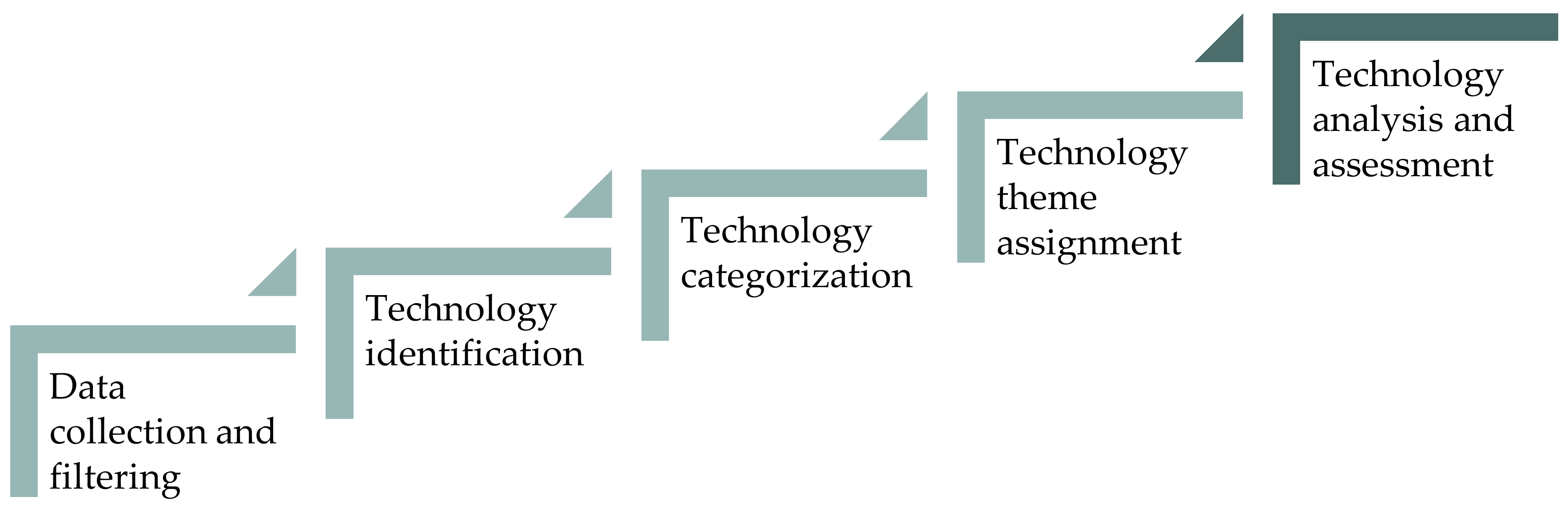
TRIMIS has developed an inventory of new and transport emerging technologies and trends, proposing a taxonomy, assessment and monitoring framework [47]. This framework supports innovation management at various levels while backing the current transport systems’ transformation through technological advances. The TRIMIS technology study currently analyses technologies researched in 2936 projects from FP7 and H2020. Within these projects, 867 technologies have been identified under 45 technology themes through a Grounded Theory approach [48], by means of an iterative approach. Figure 1 shows the main methodological steps undertaken.
Figure 1.
Technology assessment methodological steps (adapted from [47]).
First, a standardized approach was adopted on what constituted a distinct technology, based on a study that identified technologies within European transport research projects [49]. Following that, projects were flagged when a technology was mentioned in the description. The full list of technologies was evaluated, and the labelling of similar technologies was aligned with labels inspired by existing taxonomies, such as those under the Cooperative Patent Classification [50]. After establishing the technology list, several overarching technology themes were found that provide a better understanding of how technologies group together and which fields of research receive relatively greater interest. This led to a minimum number of 45 themes under which all technologies could still be logically placed.
Although this approach for building a taxonomy is not without limitations, it can be useful for the identification of technology value chains and to provide indications on possible overspending and inefficiencies.
The specific exercise focuses on 124 technologies linked to ALT projects, 25 of which are exclusive to the ALT roadmap. From these technologies, only 14 derive from more than one project: in other words, 11 technologies are linked to unique projects. 14 technologies are related to road transport, seven to waterborne transport, two to aviation, one to multimodal and one to rail.
Consequently, the assessment of the identified technologies was performed using a set of metrics that highlight the potential for each technology for further development.
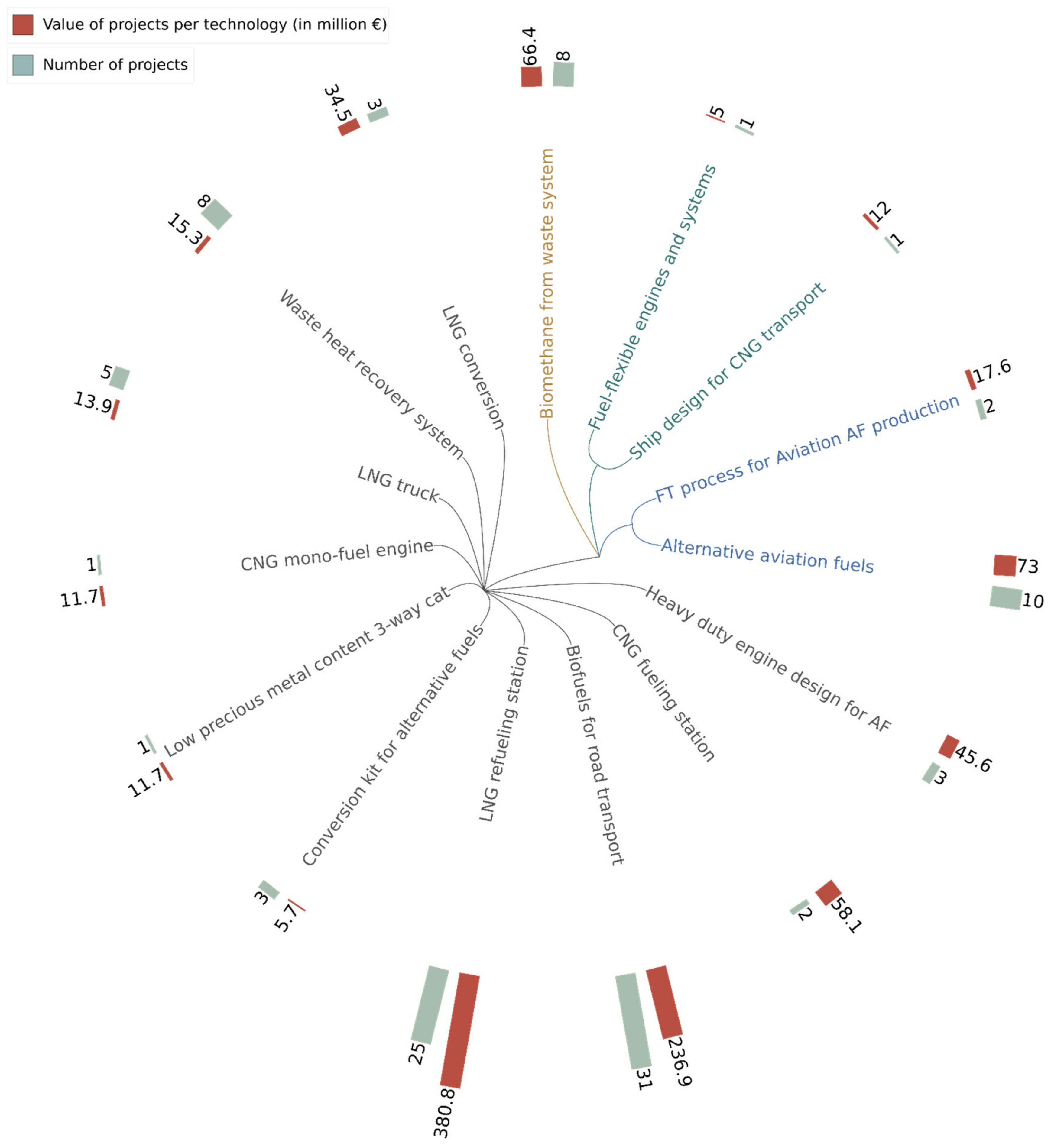
Figure 2 shows key metrics that indicate the combined effort that has been put into the technology for the top 15 technologies exclusive to ALT, in terms of the total invested value.
Figure 2.
Overall top 15 technologies. Source [10]. Bars not in scale. (LNG: Liquefied natural gas; AF: Alternative Fuel; CNG: Compressed natural gas; FT: Fischer-Tropsch). Brown branches: road transport; blue branches: aviation; green branches: waterborne transport; dark yellow: multimodal transport.
The metrics in the figure (“Value of projects per technology” and “Number of projects”) represent respectively the total investment in the development of the technology (both by the EU and industry) and the number of projects that have researched the technology. It should be noted that the budget allocated to each technology was determined by dividing the project budget by the number of associated technologies (if more than one technology were researched in a project). Considering that reports in projects that link directly technologies to budget are rarely available, this is considered a transparent and appropriate approach.
The top technology in terms of budget is LNG refueling station, researched in 25 projects, and linked to road transport. The high budget for this technology derives from the projects that research it: 24 of the 25 projects are linked to CEF calls, while only one is linked to FP7 (the LNG Blue Corridors project). For the same reason, the technology is marked with high maturity in the TRIMIS database (21 projects researched the technology at a Demonstration/Prototyping/Pilot Production maturity phase, with four projects still ongoing in 2021).
The second top technology is biofuels for road transport, researched in 31 projects. 27 of the projects that research this technology are from H2020 calls, making that the maturity of this technology is rather lower. In fact, 14 projects, all of them from H2020 calls and 10 still ongoing in 2021 research the technology at a research maturity phase. Six projects are in a validation phase, and seven in a Demonstration/Prototyping/Pilot Production phase in the TRIMIS database. In fact, among the projects, one (Photofuel) declares an initial technology readiness level (TRL) of 3, one (ABC-SALT) an initial TRL 4, while four projects (CONVERGE, BioRen, BABET-REAL5, COZMOS) declare an initial TRL 5.
Finally, the third technology with the highest budget is alternative aviation fuels researched only in 10 projects (four from FP7 and six from H2020 calls). Six of the 10 projects researched the technology from a low development phase (research), while two (namely, the still ongoing BIO4A and HEAVEN H2020 projects), declare an initial TRL 6, leading to these technologies being tagged as Demonstration/Prototyping/Pilot Production in the TRIMIS database.
4. Assessment of Research & Innovation
This section provides an analysis of the research being performed, the results being achieved and the lessons for future research and policy development. In line with the fuel categories included in the ALT roadmap, Table 1 presented the sub-topics selected for this analysis.
Table 2 presents the main figures of projects and levels of funding identified from an analysis of the projects in TRIMIS under each of these sub-topics for recent projects. The selection of these projects was based on those assigned to the ALT STRIA roadmap in TRIMIS, with end dates from 2019 onwards. Note that the LPG sub-theme has significantly less research being conducted than the other sub-themes, consequently the number of projects and funding value assigned to it are comparatively small.
Table 2.
Projects and levels of funding identified for transport sub-themes.
4.1. Methane-Based Fuels
4.1.1. Description
This section analyses the use of all methane-based fuels, mainly LNG and CNG. There is also research into biomethane as a transport fuel. These fuels have lower carbon emissions (per unit of energy) compared to diesel or petrol; this is due to the lower carbon content of the fuel. The downside is that the energy density of CNG is lower than that of diesel or gasoline and therefore for the same requested work from the engine, more CNG fuel is required than either diesel or gasoline. Research from three recent projects suggests that NG engines might have higher particle number emissions than diesel engines [51]; this remains an important issue that needs attention if gaseous fuels are introduced as a viable alternative to conventional diesel [9].
4.1.2. Overall Direction of Research & Innovation
The research projects in this area usually study issues such as the development of engine technology, charging infrastructure and fuel storage. Many of the methane-based research projects reviewed in this assessment relate to the deployment of refueling infrastructure. This is a necessary measure to support the uptake of methane propelled vehicles and so is expected to be a focus area of the research. The Trans-European Transport CORE network appears to be a key geographic area of investigation for the deployment of refueling stations. This is consistent with the Alternative Fuels Infrastructure Directive, which places mandatory targets for 2025 on the number of CNG and LNG refueling stations along the Trans-European Transport CORE network [52]. In terms of funding, there is quite an even distribution across the various methane fuel types, though biomethane has the largest share (See Table 3). This is encouraging as biomethane (if produced sustainably) has the potential to reduce lifecycle emissions significantly compared to fossil-fuel CNG/LNG.
Table 3.
Projects and levels of funding identified for Methane-based fuels.
Some of the projects reviewed point towards the economic benefits that alternative methane-based fuels could provide. One such study (STOREandGO) determined that the socio-economic cost-benefit ratio of the construction of a biomethane refueling station could in the region of 5.5 in favor of the benefits. Power to gas has great potential in a future energy system which requires large-scale energy storage coupled with intermittent renewables. The project has conducted economic analysis of Power to Gas’ potential which concludes that it could play a key role in a future European energy system. Further research into this promising area is well justified given its potential.
Other study (LNG Motion) has predicted a great socio-economic benefit in the construction of biomethane refueling stations, which is to be expected given the carbon emission reductions that could be achieved. Another project (GAINN4MOS) identified that there is enough LNG demand from heavy-duty vehicles to justify the construction of a refueling station. Future work could involve demonstrating field trials of methane refueling infrastructure to support the potential shown in the research.
In several the studies discussed above, the researchers have explicitly expressed that further policy support is required for methane-based fuels to reach their potential. For instance, to gain the full benefits of using CNG as a fuel, from the extraction to the powering of vehicles, research will need to be conducted into carbon-neutral natural gas (or methane) production methods. Although the use of CNG achieves only a limited level of decarbonization, biomass digestion and Power to gas technology to produce biomethane (or synthetic methane) have the potential to reduce CO2 emissions by 100%.
Methane-based fuels have significant economic potential as demonstrated in some projects. The concerns related to the lack of policy support raised in the projects above, coupled with the economic potential of methane-based fuels gives good incentive for supportive European policy.
4.2. Liquefied Petroleum Gas and Bio Liquefied Petroleum Gas Fuels
4.2.1. Description
The assessment on this sub-topic includes the research projects relating to both LPG and bioLPG for use as an alternative transport fuel. Conventional petrol cars can be converted relatively cheaply to run on LPG, offering quick carbon emission savings.
4.2.2. Overall Direction of Research and Innovation
As an alternative fuel source, LPG and bioLPG have undergone little research; the majority of projects reviewed covered a range of alternative fuel types and were not LPG- specific. There has been some research into using LPG in fuel cells for the purpose of producing auxiliary power and some ongoing projects are looking into alternative methods of propane production using renewable sources of CO2 and electricity. There is a limited number of LPG/bioLPG research projects (just seven projects with end dates from 2019 onwards for an overall value of € 66.5 M); therefore, it is difficult to draw any conclusions for future research. One project (the PROMETHEUS-5 project) was a notable success, however, and is due to undergo the next stage of its research. Field testing of its fuel cell power unit (the H2PS-5) is to take place and based on the success of this next stage of research, the product may be commercialized. The H2PS-5 is aimed at auxiliary power unit applications in transport.
LPG and bioLPG may have a role to play in decarbonizing transport; however, there is little research in this area. The use of LPG in a proton-exchange membrane fuel cell for the purpose of auxiliary power in transport, and not for the purpose of propulsion, has been demonstrated. Current research focuses on improving car conversion kits and Bio-LPG. This suggests that LPG technology is fully developed, and LPG’s role in a future transport system is likely small and may find a place complementing other fuels rather than acting as the primary source of propulsion.
4.3. Alcohols, Ethers and Esters Fuels
4.3.1. Description
This sub-topic studies a broad range of fuels and projects, which tend to have a focus on feedstock cultivation or production of the biofuel, rather than vehicle technologies for using the fuel. Alcohols, ethers and esters can be produced from renewable sources and offer low-carbon alternatives to conventional fossil fuels in transport. The fuel types being researched cover a range of transport modes and feedstocks. A benefit of using alcohol, ethers and esters is the ability for the fuel to be blended with conventional fossil fuel (up to a certain limit, which depends on the fuel type) with minimal changes to the vehicle components. This idea is quite attractive to consumers as it incurs smaller disruption and lower capital costs than switching to other alternative fuel types.
4.3.2. Overall Direction of Research and Innovation
The research identified in this review was largely focused on the production of alcohols, mostly bioethanol. The typical production method of such biofuels is from lignocellulosic biomass feedstocks (mainly food-crops), these biofuels are termed 1G biofuels. Many of the production methods being researched in the projects reviewed are methods that aim to mitigate the land-use issue by using resources that are not as dependent on land. Such methods include: biocatalytic production which requires only sunlight, CO2 and water, and the torrefaction of waste wood biomass. Table 4 shows the total funding and number of projects for alcohols, ethers and esters research projects.
Table 4.
Projects and levels of funding identified for alcohols, ethers and esters fuels.
Other research includes looking into alternative business models that allow ethanol to be produced in smaller scale plants, whereas currently it is restricted to large scale plants that are in close proximity to an abundant biomass feedstock. Smaller plants that can produce ethanol at a cost competitive price will increase the number and variety of feedstocks available for use. The novel processes investigated in the reviewed projects are largely at relatively low stages of development (TRL 1–5); considerable further research will be required to bring the alternative production methods up to commercial deployment.
Many of projects discussed have been researching production methods of 2G biofuels (or advanced biofuels) which are manufactured from non-food related biomass. Most biofuels used today are 1G which are those manufactured from food crops such as sugars and vegetable oils. The second-generation processes identified in the above projects are still at the early stages of development (TRL 1–5); therefore, further research should be included into any future policy development around biofuels. Only one project researched third-generation biofuels’ production, which means electrofuels might be scaled up faster than 3G biofuels. As identified in this review, the cost of 2G biofuels is currently too high to be competitive with fossil-fuels; therefore, policy should support research into increasing their cost-effectiveness and/or a subsidy to make them competitive.
4.4. Synthetic Paraffinic Fuels
4.4.1. Description
This sub-topic analyses the research projects focusing on SPFs for use in transport. SPFs are a relatively new generation of transport fuels made through the Fischer-Tropsch process from NG or biomass, or through HVO or animal fats. SPFs are the only alternative fuels which can compete on energy density. These fuels are also ‘drop-in’; which means that they can be used in conventional combustion engines up to a blend of 100%, without the need for retrofitting engine components or additional infrastructure. However, 100% HVO is below the EN590 (diesel) standard for density, and requires a lubricity additive, and has a comparatively much higher cetane number compared to EN590 diesel fuel.
4.4.2. Overall Direction of Research and Innovation
These fuel types are relatively new areas of research, and hence much of the work is around investigating novel production processes and evaluating their commercial viability. The high energy density of SPFs make them particularly promising for their use in the aviation sector. Research into the SPF area is still in its early stages, with most projects investigating technologies at low readiness levels (TRL 1–5). The research is largely focused on the production of the fuels; with many projects investigating the use of waste as the feedstock. The concept of turning waste into a high value fuel is an attractive proposition and one that has been heavily publicized. Research into SPF is, therefore, well justified and as such, there is considerable funding in this area (See Table 5 below).
Table 5.
Projects and levels of funding identified for synthetic paraffinic fuels.
SPF for the aviation industry is the most researched end use application, though there is considerable work looking into SPFs as diesel substitute for the heavy-duty transport sector. Many of the projects are attempting to produce the SPF to established quality standards, such as ASTM D7566 (international aviation fuel standard containing synthesized hydrocarbons) and the European standards EN228 and EN590 for diesel and gasoline. This is encouraging, as reaching the standards will enable the commercial uptake of SPF. There are also projects that investigate the use of existing crude oil infrastructure in the SPF production chain. The premise of this work is that by using existing infrastructure, the capital costs of the alternative fuel production will be reduced, and thus the fuel can be made more cost competitive. This is a resourceful idea and one that should be encouraged to accelerate the uptake of synthetic paraffinic fuels.
Many of the results reported by the reviewed projects thus far look promising and SPF has great potential to decarbonize the heavy-duty road transport and aviation sectors where other alternative energy sources do not appear to be viable. Further work should, therefore, focus on demonstrating the concepts to a higher TRL. Much of the work has focused on the aviation sector, with some research into the heavy-duty road vehicle market. To explore the potential decarbonization of each transport mode, more research into bringing SPF to other transport modes is required. Significant policy support will be required for aviation to fully contribute to the achievement of the 90% reduction in transport emissions by 2050, as envisaged in the European Green Deal. SPF offer the potential to reach this goal, as they have the high energy density that is required by this industry, whereas other alternative fuels do not.
Similarly to the aviation industry, it is not yet certain that battery electric vehicles will be a strong solution to decarbonize heavy-duty road transport, due to the large size and weight of the batteries required for long-distance travel. SPF is, therefore, a promising option for decarbonization and this is reflected in the research projects reviewed. Two projects (the TO-SYN-FUEL and heat-to-fuel projects) are both investigating the production of diesel substitute for road transport, with one (the TO-SYN-FUEL project) aiming to produce an equivalent gasoline and diesel substitute compliant with EN228 and EN590 European standards. Due to the ‘drop-in’ potential of some SPFs they could be used in heavy-duty vehicles with little changes to the vehicle components.
Some of the work reviewed shows good promise in terms of the cost competitiveness of the SPF produced (see 4REFINERY project), though further policy support will likely be required in the early stages of uptake so that it can compete with conventional fossil-fuels. Two of the projects reviewed (the Bio4A and ADVANCEFUEL projects) expressed respectively concerns that either the business case was very sensitive to the amount of policy support available (and consequently the case could quickly be shifted from negative to positive if the required incentives were available), or, that there is lack of subsidies available to bridge the price gap between renewable and fossil-fuel based fuels. Clearly, significant policy support is needed to make renewable fuels economically viable.
5. Conclusions
This paper analyses R&I in ALT in Europe, focusing on selected EU funded projects from TRIMIS with end dates from 2019 onwards. The following conclusions and lessons learned arise from this review:
- LNG refueling stations (25 projects and €380.8 m) followed by biofuels for road transport (31 projects and €236.9 m) and alternative aviation fuels (10 projects and €373 m) are the top three researched technologies.
- New technologies and changes need time and therefore transition periods are very important along with right use of the various alternative fuels available. In other words, there is no silver bullet solution to transport decarbonization, while the right mix of alternative fuels, including those not covered by this review will be crucial.
- For instance, the most promising option to decarbonize aviation on the short to medium term is through the use of sustainably produced SPF. In the case of road transport, it is essential to differentiate between light-duty vehicles and heavy-duty vehicles since the most suitable alternative fuels and propulsion technologies differ. In the case of waterborne transport, the most applicable advanced biofuels to international shipping applications are bio-LNG (if produced sustainably), alcohols, ethers and esters (e.g., biomethanol or lignocellulosic ethanol) and SPF (e.g., hydrothermal liquefaction), so a mix of all may likely be required. Finally, it is essential to note that the number of projects investigating alternative fuels for rail is relatively small, suggesting that alternative fuels studied in this review might play a marginal role in the future.
- The fuels with the highest economic potential are already on the market (e.g., methane-based fuels and LPG), but they have a limited overall environmental advantages over conventional fuels (petrol and diesel). On the other hand, renewable fuels with a higher potential to decarbonization are either not available in sufficient quantities (e.g., low indirect land-use change risk conventional biofuels) or still not commercially viable (e.g., advanced biofuels and SPF), and there is not enough infrastructure for their deployment across Europe. Surprisingly, there is little research on third-generation biofuels’ production, which means electrofuels might be scaled up faster than third-generation biofuels.
- Alternative fuel policies should consider the current state of the art of low-emission alternative energy for transport. They should evaluate all potential impacts (i.e., social, environmental and economic) to set realistic targets that ensure the decarbonization of the transport sector at the highest possible speed to achieve the EU’s climate objectives.
- This paper is based on a TRIMIS analysis on R&I in ALT in Europe. The effort to consolidate and expand the TRIMIS data repository is continuous, thus, the analyses presented in the paper face some limitations. One of the main limitations is that TRIMIS focuses on publicly funded projects, and private investments are not considered. Moreover, funding information from national research in TRIMIS is fragmented and hence has not been fully included in this study. Thus, even though the presented results cover the main trends in ALT R&I at European level, further analysis is necessary on research financed by private entities or national funds. In this sense, also the technology assessment should be further refined and updated as new research results enter the market.
Author Contributions
Conceptualization, A.O., K.G., A.T. and F.P.; methodology, A.O., K.G., A.T. and F.P.; software, K.G.; validation, A.O. and F.P.; formal analysis, A.O., K.G., A.T. and F.P.; investigation, A.O., K.G. and A.T.; resources, F.P.; data curation, A.O. and K.G.; writing—original draft preparation, A.O.; writing—review and editing, A.O., K.G., A.T. and F.P.; visualization, K.G.; supervision, F.P.; project administration, F.P.; funding acquisition, F.P. All authors have read and agreed to the published version of the manuscript.
Funding
This research received funding from the Horizon 2020 Framework Program for Research and Innovation.
Institutional Review Board Statement
Not applicable.
Informed Consent Statement
Not applicable.
Data Availability Statement
Publicly available datasets were analyzed in this study. The TRIMIS Database can be found at: TRIMIS. Available online: https://trimis.ec.europa.eu (accessed on 4 October 2021).
Acknowledgments
The European Commission’s Joint Research Centre (JRC) is responsible for the development of the Transport Research and Innovation Monitoring and Information System (TRIMIS). The work has been carried out under the supervision of the European Commission’s Directorate-General for Mobility and Transport (DG MOVE) and Directorate-General for Research and Innovation (DG RTD) which are co-leading the Strategic Transport Research and Innovation Agenda (STRIA). The presented paper is based on the report “Research and innovation in low-emission alternative energy for transport in Europe” published by the Publications Office of the European Union (2021). The authors would like to acknowledge the support of Ricardo-AEA Ltd. The views expressed here are those of the authors and may not, under any circumstances, be regarded as an official position of the European Commission.
Conflicts of Interest
The authors declare no conflict of interest.
Glossary
| 1G biofuels | First generation biofuels |
| 2G biofuels | Second generation biofuels |
| 3G biofuels | Third generation biofuels |
| ALT | Low emission alternative energy for transport |
| bioLPG | Bio-liquefied petroleum gas |
| CEF | Connecting Europe Facility |
| CH4 | Methane |
| CNG | Compressed natural gas |
| CO2 | Carbon dioxide |
| EU | European Union |
| FP | Framework Program |
| FP7 | 7th Framework Program for Research |
| GHG | Greenhouse gas |
| H2020 | Horizon 2020 Framework Program for Research and Innovation |
| HVO | Hydrotreatment process from vegetable oils |
| LNG | Liquefied natural gas |
| LPG | Liquefied petroleum gas |
| MS | Member state |
| Mtoe | Megatonnes of oil equivalent |
| NG | Natural gas |
| NOX | Nitrogen oxides |
| R&I | Research and innovation |
| SO2 | Sulphur dioxide |
| SPF | Synthetic paraffinic fuel |
| STRIA | Strategic Transport Research and Innovation Agenda |
| TRIMIS | Transport Research and Innovation Monitoring and Information System |
| TRL | Technology readiness level |
Appendix A
Project attributes in the TRIMIS database:
- Title.
- Acronym.
- Start date and end date.
- Funding origin (e.g., European, EU MSs, international).
- Programs linked to the project.
- Cost and EU contribution (feature only available for EU-funded projects).
- A description of the project which includes background and policy context, strategic objectives, methodology, and critical results.
- Organizations and partner organizations (feature only available for European funded projects).
- Technologies.
- Geospatial type (i.e., urban, infrastructure node or other location).
- Transport modes (i.e., road transport, rail transport, waterborne transport, aviation, multimodal).
- Transport policies (i.e., societal/economic issues, environmental/emission aspects, safety and security, digitalization, deployment/planning/financing/market roll-out, other specified).
- Transport sectors (i.e., passenger, freight, both).
- STRIA Roadmaps (i.e., CAT, ELT, VDM, ALT, NTM, SMO, INF, and other.
- Project status (i.e., completed or ongoing).
Appendix B

Table A1.
With projects considered for this research.
Table A1.
With projects considered for this research.
| Project Acronym | Project Name | Project Duration | Source of Funding * |
|---|---|---|---|
| - | BioLNG EuroNet | 2018–2023 | CEF |
| - | H2Benelux | 2017–2020 | CEF |
| - | HyBalance | 2015–2020 | H2020-EU.3.3 |
| - | Nordic Hydrogen Corridor: zero emission transport between the capitals of the Nordic countries with fuel cell vehicles | 2017–2020 | CEF |
| - | Watertruck+ | 2014–2019 | CEF |
| - | Zero Emission Valley | 2018–2023 | CEF |
| - | A state-of-the art review on the development of CNG infrastructure and mapping/digitalisation of the natural gas transmission network in Estonia | 2005–2021 | - |
| - | Action 2017-EU-TM-0147-W—LNGHIVE2 Vessels Demand: Green and smart links—LNG solutions for smart maritime links in Spanish Core ports | 2018–2021 | CEF |
| - | Biohybrid-Market rollout of sustainable small-scale solution supplying LBG as alternative fuel for heavy-duty transport | 2018–2021 | CEF |
| - | Blue Stations Network | 2018–2020 | CEF |
| - | Construction of a pilot docking station, as a part of an LNG distribution system based on cryogenic tank containers | 2017–2020 | CEF |
| - | Creation of an LNG road haulage market in a smart & quick way | 2016–2019 | CEF |
| - | Demonstration study of infrastructure associated with an innovative LNG traction solution in railway operations | 2017–2020 | CEF |
| - | FueLCNG | 2017–2020 | CEF |
| - | Future transport power sources | 2012–2030 | - |
| - | Green Connect—A public CNG network | 2018–2023 | CEF |
| - | Liquiefied BioGas: Fuelling renewable transport in the Visegrad countries | 2017–2020 | CEF |
| - | LNG motion | 2016–2020 | CEF |
| - | LNG Rollout in Central Europe—for a greener transportation sector | 2018–2021 | CEF |
| - | Nordic LNG/CNG—Decarbonisation of the Core Network by deployment of alternative fuel refuelling infrastructure | 2018–2021 | CEF |
| - | Olympic Energy: Tipping the scale towards Bio-CNG for European transport starts in TEN-T Core Urban Node of Paris | 2018–2022 | CEF |
| - | PAN-LNG Project | 2015–2019 | CEF |
| - | PAN-LNG-4-DANUBE | 2016–2019 | CEF |
| - | Policy on eco-friendly transport fuels | 2017–2030 | - |
| - | Seven Europe Network | 2018–2021 | CEF |
| - | Small-scale liquefaction and supply facility for Liquefied Biogas as alternative fuel for the transport sector | 2014–2019 | CEF |
| - | Snam 4 Mobility—retail LNG network development | 2018–2023 | CEF |
| - | Study for a pilot CNG filling station network | 2017–2020 | CEF |
| - | SuperGreen (SG) | 2019–2021 | CEF |
| - | Svealand Public Transport infrastructure roll-out for biogas and electric buses | 2018–2023 | CEF |
| - | H2Bus Europe | 2018–2023 | CEF |
| 2015-EU-TM-0104-S | SiLNGT Small Scale TRANSPORT | 2016–2019 | - |
| 2016-MT-SA-0005 | Technical Study and Cost-Benefit Analysis for the Development of LNG as a Marine Fuel in Malta | 2017–2019 | CEF |
| 2016-PL-SA-0011 | The small-scale LNG Reloading Terminal in Gdansk and bunkering services | 2017–2019 | CEF |
| 3EMOTION | Environmentally Friendly, Efficient Electric Motion | 2015–2019 | FP7-JTI |
| 4REFINERY | Scenarios for integration of bio-liquids in existing REFINERY processes | 2017–2021 | H2020-EU.3.3 |
| ABC-SALT | Advanced Biomass Catalytic Conversion to Middle Distillates in Molten Salts | 2018–2022 | H2020-EU.3.3 |
| ADVANCEFUEL | Facilitating market roll-out of RESfuels in the transport sector to 2030 and beyond | 2017–2020 | H2020-EU.3.3 |
| ALTERNATE | ASSESSMENT ON ALTERNATIVE AVIATION FUELS DEVELOPMENT | 2020–2022 | H2020-EU.3.4 |
| Ambition | Advanced biofuel production with energy system integration | 2016–2019 | H2020-EU.3.3 |
| BABET-REAL5 | New technology and strategy for a large and sustainable deployment of second generation biofuel in rural areas | 2016–2020 | H2020-EU.3.3 |
| BALANCE | Increasing penetration of renewable power, alternative fuels and grid flexibility by cross-vector electrochemical processes | 2016–2019 | H2020-EU.3.3 |
| BECOOL | Brazil-EU Cooperation for Development of Advanced Lignocellulosic Biofuels | 2017–2021 | H2020-EU.3.3 |
| BENEFIC | BENEFIC | 2017–2020 | CEF |
| BIG HIT | Building Innovative Green Hydrogen systems in an Isolated Territory: a pilot for Europe | 2016–2021 | H2020-EU.3.3 |
| BIO2G | Technology for 2G biofuel and biosolvents production verified in a pilot plant | 2019–2019 | H2020-EU.2.3 |
| BIO4A | Advanced sustainable BIOfuels for Aviation | 2018–2022 | H2020-EU.3.3 |
| BIOLNG4EU | BIOLNG4EU | 2017–2020 | CEF |
| BioMates | Reliable Bio-based Refinery Intermediates | 2016–2021 | H2020-EU.3.3 |
| BioRen | Development of competitive, next generation biofuels from municipal solid waste | 2018–2022 | H2020-EU.3.3 |
| Blue Baltics | LNG infrastructure facility deployment in the Baltic Sea Region | 2016–2019 | - |
| CAMELOT | UNDERSTANDING CHARGE, MASS AND HEAT TRANSFER IN FUEL CELLS FOR TRANSPORT APPLICATIONS | 2020–2022 | H2020-EU.3.7 |
| CH2P | Cogeneration of Hydrogen and Power using solid oxide based system fed by methane rich gas | 2017–2020 | H2020-EU.3.3 |
| CIVITAS ECCENTRIC | Innovative solutions for sustainable mobility of people in suburban city districts and emission free freight logistics in urban centres. | 2016–2020 | H2020-EU.3.4 |
| CLARA | Chemical Looping gAsification foR sustainAble production of biofuels | 2018–2022 | H2020-LC-SC3 |
| ClimOP | CLIMATE ASSESSMENT OF INNOVATIVE MITIGATION STRATEGIES TOWARDS OPERATIONAL IMPROVEMENTS IN AVIATION | 2020–2023 | H2020-EU.3.4 |
| CNG ROMANIA | Initial Market Deployment of a Refuelling Station Network along the Core Network Corridors | 2016–2019 | CEF |
| COHRS | Connecting Hydrogen Refuelling Stations | 2015–2019 | CEF |
| COLHD | Commercial vehicles using Optimised Liquid biofuels and HVO Drivetrains | 2017–2020 | H2020-EU.3.4 |
| COMSYN | Compact Gasification and Synthesis process for Transport Fuels | 2017–2021 | H2020-EU.3.3 |
| CONVERGE | CarbON Valorisation in Energy-efficient Green fuels | 2018–2022 | H2020-EU.3.3 |
| CORE LNGas hive | Core Network Corridors and Liquefied Natural Gas | 2014–2020 | CEF |
| COSMHYC | COmbined hybrid Solution of Metal HYdride and mechanical Compressors for decentralised energy storage and refueling stations | 2017–2019 | H2020-EU.3.4 |
| COSMHYC XL | COmbined hybrid Solution of Metal HYdride and mechanical Compressors for eXtra Large scale hydrogen refuelling stations | 2019–2021 | H2020-EU.3.4 |
| COZMOS | Efficient CO2 conversion over multisite Zeolite-Metal nanocatalysts to fuels and OlefinS | 2019–2023 | H2020-EU.3.3 |
| CRE8 | Creating the station of the future | 2018–2022 | CEF |
| CRESCENDO | Critical Raw material ElectrocatalystS replacement ENabling Designed pOst-2020 PEMFC | 2018–2021 | H2020-EU.3.5 |
| DIGIMAN | DIGItal MAterials CharacterisatioN proof-of-process auto assembly | 2017–2019 | H2020-EU.3.4 |
| DOLPHIN | Disruptive PEMFC stack with nOvel materials, Processes, arcHitecture and optimized Interfaces | 2019–2022 | H2020-EU.3.5 |
| ECO-GATE | European COrridors for natural GAs Transport Efficiency | 2017–2019 | CEF |
| eForFuel | Fuels from electricity: de novo metabolic conversion of electrochemically produced formate into hydrocarbons | 2018–2022 | H2020-EU.3.3 |
| ENABLEH2 | Enabling cryogenic hydrogen based CO2 free air transport (ENABLEH2) | 2018–2021 | H2020-EU.3.4 |
| ENDURUNS | Development and demonstration of a long-endurance sea surveying autonomous unmanned vehicle with gliding capability powered by hydrogen fuel cell | 2018–2022 | H2020-EU.3.4 |
| ETIP-B-SABS 2 | European Technology and Innovation Platform Bioenergy—Support of Renewable Fuels and Advanced Bioenergy Stakeholders 2 | 2018–2021 | H2020-EU.3.3 |
| EVERYWH2ERE | Making hydrogen affordable to sustainably operate Everywhere in European cities | 2018–2023 | H2020-EU.3.3 |
| FASTWATER | FAST Track to Clean and Carbon-Neutral WATERborne Transport through Gradual Introduction of Methanol Fuel: Developing and Demonstrating an Evolutionary Pathway for Methanol Technology and Take-up | 2020–2024 | H2020-EU.3.4 |
| FCHgo | Fuel Cells HydroGen educatiOnal model for schools | 2019–2020 | H2020-EU.3.3 |
| Fit-4-AMandA | Future European Fuel Cell Technology: Fit for Automatic Manufacturing and Assembly | 2017–2020 | H2020-EU.3.4 |
| FLAGSHIPS | Clean waterborne transport in Europe | 2019–2022 | H2020-EU.3.4 |
| FLEDGED | FLExible Dimethyl ether production from biomass Gasification with sorption-enhancED processes | 2016–2020 | H2020-EU.3.3 |
| FlexiFuel-SOFC | Development of a new and highly efficient micro-scale CHP system based on fuel-flexible gasification and a SOFC | 2015–2019 | H2020-LCE-2014 |
| FlexJET | Sustainable Jet Fuel from Flexible Waste Biomass | 2018–2022 | H2020-EU.3.3 |
| FLHYSAFE | Fuel CelL HYdrogen System for AircraFt Emergency operation | 2018–2020 | H2020-EU.3.4 |
| FReSMe | From residual steel gasses to methanol | 2016–2020 | H2020-EU.3.3 |
| FURTHER-FC | Further Understanding Related to Transport limitations at High current density towards future ElectRodes for Fuel Cells | 2020–2024 | H2020-EU.3.4; H2020-EU.3.5 |
| GAIA | next Generation AutomotIve membrane electrode Assemblies | 2019–2021 | H2020-EU.3.5 |
| GAINN4MED | GAINN4MED | 2017–2020 | CEF |
| GAINN4MID | GAINN for Mobile Infrastructure Deployment | 2017–2020 | CEF |
| GAINN4MOS | Sustainable LNG Operations for Ports and Shipping—Innovative Pilot Actions | 2015–2019 | - |
| GASVESSEL | Compressed Natural Gas Transport System | 2017–2021 | H2020-EU.3.4 |
| Giantleap | Giantleap Improves Automation of Non-polluting Transportation with Lifetime Extension of Automotive PEM fuel cells | 2016–2019 | H2020-EU.3.4 |
| Go4Synergy in LNG | Go4Synergy in LNG | 2016–2019 | CEF |
| GREAT | Green Region for Electrification and Alternatives fuels for Transport | 2015–2019 | CEF |
| GrowSmarter | GrowSmarter | 2015–2019 | H2020-SCC-2014 |
| H2Haul | Hydrogen fuel cell trucks for heavy-duty, zero emission logistics | 2019–2024 | H2020-EU.3.4 |
| H2ME | Hydrogen Mobility Europe | 2015–2020 | H2020-EU.3.4 |
| H2ME 2 | Hydrogen Mobility Europe 2 | 2016–2022 | H2020-EU.3.4 |
| H2Ports | Implementing Fuel Cells and Hydrogen Technologies in Ports | 2019–2022 | H2020-EU.3.3 |
| Heat-To-Fuel | Biorefinery combining HTL and FT to convert wet and solid organic, industrial wastes into 2nd generation biofuels with highest efficiency | 2017–2021 | H2020-EU.3.3 |
| HEAVEN | High powEr density FC System for Aerial Passenger VEhicle fueled by liquid HydrogeN | 2019–2022 | H2020-EU.3.4 |
| HEAVENN | Hydrogen Energy Applications for Valley Environments in Northern Netherlands | 2020–2025 | H2020-EU.3.3 |
| HIGH V.LO-CITY | Cities speeding up the integration of hydrogen buses in public fleets | 2012–2019 | FP7-JTI |
| HybridSolarFuels | Efficient Photoelectrochemical Transformation of CO2 to Useful Fuels on Nanostructured Hybrid Electrodes | 2017–2021 | H2020-EU.1.1 |
| HYDRIDE4MOBILITY | Hydrogen fuelled utility vehicles and their support systems utilising metal hydrides | 2017–2021 | H2020-EU.1.3 |
| Hydrogenlogistics | Enabling the Hydrogen Economy | 2017–2019 | H2020-EU.3.4 |
| HyFlexFuel | Hydrothermal liquefaction: Enhanced performance and feedstock flexibility for efficient biofuel production | 2017–2021 | H2020-EU.3.3 |
| HyMethShip | Hydrogen-Methanol Ship propulsion system using on-board pre-combustion carbon capture | 2018–2021 | H2020-EU.3.4 |
| HySeas III | Realising the world’s first sea-going hydrogen-powered RoPax ferry and a business model for European islands | 2018–2021 | H2020-EU.3.4 |
| HySTOC | Hydrogen Supply and Transportation using liquid Organic Hydrogen Carriers | 2018–2021 | H2020-EU.3.3 |
| HYTECHCYCLING | New technologies and strategies for fuel cells and hydrogen technologies in the phase of recycling and dismantling | 2016–2019 | H2020-EU.3.4 |
| INLINE | Design of a flexible, scalable, high quality production line for PEMFC manufacturing | 2017–2020 | H2020-EU.3.4 |
| INN-BALANCE | INNovative Cost Improvements for BALANCE of Plant Components of Automotive PEMFC Systems | 2017–2019 | H2020-EU.3.4 |
| INSPIRE | Integration of Novel Stack Components for Performance, Improved Durability and Lower Cost | 2016–2019 | H2020-EU.3.4 |
| JETSCREEN | JET Fuel SCREENing and Optimization | 2017–2020 | H2020-EU.3.4 |
| JIVE | Joint Initiative for hydrogen Vehicles across Europe | 2017–2022 | H2020-EU.3.4 |
| JIVE 2 | Joint Initiative for hydrogen Vehicles across Europe 2 | 2018–2023 | H2020-EU.3.4 |
| KEROGREEN | Production of Sustainable aircraft grade Kerosene from water and air powered by Renewable Electricity, through the splitting of CO2, syngas formation and Fischer-Tropsch synthesis | 2017–2022 | H2020-EU.3.3 |
| LAST MILE | LAST MILE | 2019–2022 | CEF |
| LeanShips | Low Energy And Near to zero emissions Ships | 2015–2019 | H2020-EU.3.4 |
| LNG4Trucks | LNG4Trucks | 2017–2020 | CEF |
| LNGAFT | Liquefied natural gas as alternative fuel for transport | 2016–2019 | CEF |
| LNGHIVE2 | LNGHIVE2 Infrastructure and Logistics Solutions | 2018–2022 | CEF |
| LONGRUN | Development of efficient and environmental friendly LONG distance powertrain for heavy dUty trucks aNd coaches | 2020–2023 | H2020-EU.3.4 |
| MacroFuels | Developing the next generation Macro-Algae based biofuels for transportation via advanced bio-refinery processes | 2016–2019 | H2020-LCE-2015; H2020-EU.3.3 |
| MAHEPA | Modular Approach to Hybrid Electric Propulsion Architecture | 2017–2021 | H2020-EU.3.4 |
| MARANDA | Marine application of a new fuel cell powertrain validated in demanding arctic conditions | 2017–2021 | H2020-EU.3.4 |
| MEHRLIN | Models for Economic Hydrogen Refuelling Infrastructure | 2016–2020 | CEF |
| MULTI-E | Multiple Urban and Long-distance Transport Initiatives Electric and CNG | 2018–2023 | CEF |
| Nautilus | Nautical Integrated Hybrid Energy System for Long-haul Cruise Ships | 2020–2024 | H2020-EU.3.4 |
| NextGenRoadFuels | Sustainable Drop-In Transport fuels from Hydrothermal Liquefaction of Low Value Urban Feedstocks | 2018–2022 | H2020-EU.3.3 |
| NYSMART | Novel dual-fuel system for modernisation of air-polluting diesel locomotives to clean and efficient gas operation | 2017–2019 | H2020-EU.3.4 |
| ORCA | Optimised Real-world Cost-Competitive Modular Hybrid Architecture for Heavy Duty Vehicles | 2016–2020 | H2020-EU.3.4 |
| PEGASUS | PEMFC based on platinum Group metAl free StrUctured cathodeS | 2018–2021 | H2020-EU.3.5 |
| Photofuel | Biocatalytic solar fuels for sustainable mobility in Europe | 2015–2020 | H2020-EU.3.3 |
| PRHYDE | Protocol for heavy duty hydrogen refuelling | 2020–2021 | H2020-EU.3.4 |
| PROMETHEUS-5 | Energy efficient and environmentally friendly multi-fuel power system with CHP capability, for stand-alone applications. | 2016–2019 | H2020-EU.3.3 |
| Pulp and Fuel | Pulp and Paper Industry Wastes to Fuel | 2018–2022 | H2020-EU.3.3 |
| PURE H2 | Hydrogen Purifying Unit and Filling Infrastructure | 2018–2021 | CEF |
| REDIFUEL | Robust and Efficient processes and technologies for Drop In renewable FUELs for road transport | 2018–2021 | H2020-EU.3.3 |
| REVIVE | Refuse Vehicle Innovation and Validation in Europe | 2018–2021 | H2020-EU.3.4 |
| REWOFUEL | REsidual soft WOod conversion to high characteristics drop-in bioFUELs | 2018–2021 | H2020-EU.3.3 |
| ShipFC | Piloting Multi MW Ammonia Ship Fuel Cells | 2020–2025 | H2020-EU.3.4 |
| STOREandGO | Innovative large-scale energy STOragE technologies AND Power-to-Gas concepts after Optimisation | 2016–2020 | H2020-EU.3.3 |
| SUN-to-LIQUID | Integrated solar-thermochemical synthesis of liquid hydrocarbon fuels | 2016–2019 | H2020-EU.3.3 |
| TAHYA | TAnk HYdrogen Automotive | 2018–2020 | H2020-EU.3.4 |
| THOR | Thermoplastic Hydrogen tanks Optimised and Recyclable | 2019–2021 | H2020-EU.3.4 |
| Torero | TORrefying wood with Ethanol as a Renewable Output: large-scale demonstration | 2017–2020 | H2020-EU.3.3 |
| TO-SYN-FUEL | The Demonstration of Waste Biomass to Synthetic Fuels and Green Hydrogen | 2017–2021 | H2020-EU.3.3 |
| TRANSCEND | Technology Review of Alternative and Novel Sources of Clean Energy with Next-generation Drivetrains | 2019–2022 | H2020-EU.3.4 |
| TSO 2020 | TSO 2020: Electric Transmission and Storage Options along TEN-E and TEN-T corridors for 2020 | 2017–2019 | CEF |
| VIRTUAL-FCS | VIRTUAL & physical platform for Fuel Cell System development | 2020–2022 | H2020-EU.3.4 |
| WASTE2ROAD | Biofuels from WASTE TO ROAD transport | 2018–2022 | H2020-EU.3.3 |
| ZEFER | Zero Emission Fleet vehicles For European Roll-out | 2017–2022 | H2020-EU.3.4 |
* Abbreviations and Acronyms: CEF: Connecting Europe Facility; JTI: Joint Technology Initiatives; H2020-EU.1.1: Excellent Science—European Research Council (ERC); H2020-E.E.2.3: Industrial Leadership—Innovation in SMEs; H2020-EU.3.3: Societal Challenges—Secure, clean and efficient energy; H2020-EU.3.4: Societal Challenges - Smart, Green and Integrated Transport; H2020-EU.3.5: Societal Challenges—Climate action, Environment, Resource Efficiency and Raw Materials; H2020-EU.3.7: Secure Societies—Protecting freedom and security of Europe and its citizens; H2020-LCE-2014: Low-Carbon Energy; H2020-LC-SC3: Building a Low-Carbon, Climate Resilient Future: Secure, Clean and Efficient energy; H2020-SCC-2014: Smart Cities and Communities; TEN-T: Trans-European Transport Network.
References
- European Environment Agency (EEA). EEA Greenhouse Gases—Data Viewer. Available online: https://www.eea.europa.eu/data-and-maps/data/data-viewers/greenhouse-gases-viewer (accessed on 27 September 2021).
- World Health Organisation (WHO). Available online: https://www.who.int/news/item/22-09-2021-new-who-global-air-quality-guidelines-aim-to-save-millions-of-lives-from-air-pollution (accessed on 27 September 2021).
- European Commission. The European Green Deal COM/2019/640 Final; European Commission: Brussels, Belgium, 2019. [Google Scholar]
- European Commission. ‘Fit. for 55’: Delivering the EU’s 2030 Climate Target. on the Way to Climate Neutrality COM/2021/550 Final; European Commission: Brussels, Belgium, 2021. [Google Scholar]
- European Commission. ‘Europe on the Move: An Agenda for a Socially Fair Transition Towards Clean, Competitive and Connected Mobility for All’, Communication from the Commission to the European Parliament, the Council, the European Economic and Social Committee and the Committee of the Regions, COM(2017) 283. Available online: https://ec.europa.eu/transport/sites/transport/files/com20170283-europe-on-the-move.pdf (accessed on 22 September 2021).
- European Commission. Towards Clean, Competitive and Connected Mobility: The Contribution of Transport. Research and Innovation to the Mobility Package SWD/2017/0223 Final; European Commission: Brussels, Belgium, 2017. [Google Scholar]
- European Commission. Towards an Integrated Strategic Energy Technology (SET) Plan: Accelerating the European Energy System Transformation C/2015/6317 Final; European Commission: Brussels, Belgium, 2015. [Google Scholar]
- Bauen, A.; Gomez, I.; Nanaki, E.; OudeNijeweme, D.; Paraschiv, M.; Schoentgen, R. STRIA Roadmap Low-Emission Alternative Energy for Transport. 2020 Update Based on Original 2016 Version; European Commission: Brussels, Belgium, 2020. [Google Scholar]
- Ortega Hortelano, A.; van Balen, M.; Gkoumas, K.; Haq, G.; Tsakalidis, A.; Grosso, M.; Pekár, F. Research and Innovation in Low Emission Alternative Energy for Transport; Publications Office of the European Union: Luxembourg, 2019. [Google Scholar] [CrossRef]
- Ortega Hortelano, A.; Stepniak, M.; Gkoumas, K.; Marques dos Santos, F.; Tsakalidis, A.; Grosso, M.; Pekár, F. Research and Innovation in Low-Emission Alternative Energy for Transport in Europe. An Assessment Based on the Transport. Research and Innovation Monitoring and Information System (TRIMIS), EUR 30666 EN; Publications Office of the European Union: Luxembourg, 2021; ISBN 978-92-76-34253-3. [Google Scholar] [CrossRef]
- Kanbur, B.B.; Xiang, L.; Dubey, S.; Choo, F.H.; Duan, F. Cold utilization systems of LNG: A review. Renew. Sustain. Energy Rev. 2017, 79, 1171–1188. [Google Scholar] [CrossRef]
- Burel, F.; Taccani, R.; Zuliani, N. Improving sustainability of maritime transport through utilization of Liquefied Natural Gas (LNG) for propulsion. Energy 2013, 57, 412–420. [Google Scholar] [CrossRef]
- Brynolf, S.; Fridell, E.; Andersson, K. Environmental assessment of marine fuels: Liquefied natural gas, liquefied biogas, methanol and bio-methanol. J. Clean. Prod. 2014, 74, 86–95. [Google Scholar] [CrossRef]
- Withers, M.R.; Malina, R.; Gilmore, C.K.; Gibbs, J.M.; Trigg, C.; Wolfe, P.J.; Barrett, S.R. Economic and environmental assessment of liquefied natural gas as a supplemental aircraft fuel. Prog. Aerosp. Sci. 2014, 66, 17–36. [Google Scholar] [CrossRef]
- Khan, M.I.; Yasmin, T.; Shakoor, A. Technical overview of compressed natural gas (CNG) as a transportation fuel. Renew. Sustain. Energy Rev. 2015, 51, 785–797. [Google Scholar] [CrossRef]
- Engerer, H.; Horn, M. Natural gas vehicles: An option for Europe. Energy Policy 2010, 38, 1017–1029. [Google Scholar] [CrossRef]
- Khan, M.I.; Yasmeen, T.; Khan, M.I.; Farooq, M.; Wakeel, M. Research progress in the development of natural gas as fuel for road vehicles: A bibliographic review (1991–2016). Renew. Sustain. Energy Rev. 2016, 66, 702–741. [Google Scholar] [CrossRef]
- Pfoser, S.; Aschauer, G.; Simmer, L.; Schauer, O. Facilitating the implementation of LNG as an alternative fuel technology in landlocked Europe: A study from Austria. Res. Transp. Bus. Manag. 2016, 18, 77–84. [Google Scholar] [CrossRef]
- Gandossi, L.; Filipe Calisto, H. Gasification of the Commercial Fleet; EUR 29626 EN; Publications Office of the European Union: Luxembourg, 2018; ISBN 978-92-79-98976-6. [Google Scholar] [CrossRef]
- Osorio-Tejada, J.L.; Llera-Sastresa, E.; Scarpellini, S. Liquefied natural gas: Could it be a reliable option for road freight transport in the EU? Renew. Sustain. Energy Rev. 2017, 71, 785–795. [Google Scholar] [CrossRef] [Green Version]
- Dyr, T.; Misiurski, P.; Ziółkowska, K. Costs and benefits of using buses fuelled by natural gas in public transport. J. Clean. Prod. 2019, 225, 1134–1146. [Google Scholar] [CrossRef]
- Pfoser, S.; Schauer, O.; Costa, Y. Acceptance of LNG as an alternative fuel: Determinants and policy implications. Energy Policy 2018, 120, 259–267. [Google Scholar] [CrossRef]
- Kumar, S.; Kwon, H.T.; Choi, K.H.; Lim, W.; Cho, J.H.; Tak, K.; Moon, I. LNG: An eco-friendly cryogenic fuel for sustainable development. Appl. Energy 2011, 88, 4264–4273. [Google Scholar] [CrossRef]
- Johnson, E. LPG: A secure, cleaner transport fuel? A policy recommendation for Europe. Energy Policy 2003, 31, 1573–1577. [Google Scholar] [CrossRef]
- Oliva, F.; Fernandez-Rodriguez, D. Autoignition study of LPG blends with diesel and HVO in a constant-volume combustion chamber. Fuel 2020, 267, 117173. [Google Scholar] [CrossRef]
- Baek, S.; Kim, K.; Cho, J.; Myung, C.L.; Park, S. Assessment of gaseous, particulate, and unregulated emissions from diesel compression ignition and LPG direct injection spark ignition minibus vehicles under the world harmonized vehicle cycle on a chassis dynamometer. Fuel 2021, 294, 120392. [Google Scholar] [CrossRef]
- Raslavičius, L.; Keršys, A.; Mockus, S.; Keršienė, N.; Starevičius, M. Liquefied petroleum gas (LPG) as a medium-term option in the transition to sustainable fuels and transport. Renew. Sustain. Energy Rev. 2014, 32, 513–525. [Google Scholar] [CrossRef]
- Azimov, U.; Okoro, V.; Hernandez, H.H. Recent Progress and Trends in the Development of Microbial Biofuels from Solid Waste—A Review. Energies 2021, 14, 6011. [Google Scholar] [CrossRef]
- Mohr, A.; Raman, S. Lessons from first generation biofuels and implications for the sustainability appraisal of second generation biofuels. Energy Policy 2013, 63, 114–122. [Google Scholar] [CrossRef]
- Moriarty, P.; Yan, X.; Wang, S.J. Liquid biofuels: Not a long-term transport solution. Energy Procedia 2019, 158, 3265–3270. [Google Scholar] [CrossRef]
- Naik, S.N.; Goud, V.V.; Rout, P.K.; Dalai, A.K. Production of first and second generation biofuels: A comprehensive review. Renew. Sustain. Energy Rev. 2010, 14, 578–597. [Google Scholar] [CrossRef]
- Carriquiry, M.A.; Du, X.; Timilsina, G.R. Second generation biofuels: Economics and policies. Energy Policy 2011, 39, 4222–4234. [Google Scholar] [CrossRef] [Green Version]
- Bolonio, D.; García-Martínez, M.J.; Ortega, M.F.; Lapuerta, M.; Rodríguez-Fernández, J.; Canoira, L. Fatty acid ethyl esters (FAEEs) obtained from grapeseed oil: A fully renewable biofuel. Renew. Energy 2019, 132, 278–283. [Google Scholar] [CrossRef]
- Hawrot-Paw, M.; Koniuszy, A.; Gałczyńska, M. Sustainable Production of Monoraphidium Microalgae Biomass as a Source of Bioenergy. Energies 2020, 13, 5975. [Google Scholar] [CrossRef]
- Baudry, G.; Macharis, C.; Vallée, T. Can microalgae biodiesel contribute to achieve the sustainability objectives in the transport sector in France by 2030? A comparison between first, second and third generation biofuels though a range-based Multi-Actor Multi-Criteria Analysis. Energy 2018, 155, 1032–1046. [Google Scholar] [CrossRef]
- Linares, P.; Pérez-Arriaga, I.J. A sustainable framework for biofuels in Europe. Energy Policy 2013, 52, 166–169. [Google Scholar] [CrossRef]
- Panoutsou, C.; Germer, S.; Karka, P.; Papadokostantakis, S.; Kroyan, Y.; Wojcieszyk, M.; Landalv, I. Advanced biofuels to decarbonise European transport by 2030: Markets, challenges, and policies that impact their successful market uptake. Energy Strategy Rev. 2021, 34, 100633. [Google Scholar] [CrossRef]
- Carvalho, F.; Portugal-Pereira, J.; Junginger, M.; Szklo, A. Biofuels for Maritime Transportation: A Spatial, Techno-Economic, and Logistic Analysis in Brazil, Europe, South Africa, and the USA. Energies 2021, 14, 4980. [Google Scholar] [CrossRef]
- Paris, B.; Papadakis, G.; Janssen, R.; Rutz, D. Economic analysis of advanced biofuels, renewable gases, electrofuels and recycled carbon fuels for the Greek transport sector until 2050. Renew. Sustain. Energy Rev. 2021, 144, 111038. [Google Scholar] [CrossRef]
- Chiaramonti, D.; Talluri, G.; Scarlat, N.; Prussi, M. The challenge of forecasting the role of biofuel in EU transport decarbonisation at 2050: A meta-analysis review of published scenarios. Renew. Sustain. Energy Rev. 2021, 139, 110715. [Google Scholar] [CrossRef]
- Gustafsson, M.; Svensson, N. Cleaner heavy transports–Environmental and economic analysis of liquefied natural gas and biomethane. J. Clean. Prod. 2021, 278, 123535. [Google Scholar] [CrossRef]
- Kousoulidou, M.; Lonza, L. Biofuels in aviation: Fuel demand and CO2 emissions evolution in Europe toward 2030. Transp. Res. Part D Transp. Environ. 2016, 46, 166–181. [Google Scholar] [CrossRef]
- Deane, J.P.; Pye, S. Europe’s ambition for biofuels in aviation-A strategic review of challenges and opportunities. Energy Strategy Rev. 2018, 20, 1–5. [Google Scholar] [CrossRef]
- Ahmad, S.; Ouenniche, J.; Kolosz, B.W.; Greening, P.; Andresen, J.M.; Maroto-Valer, M.M.; Xu, B. A stakeholders’ participatory approach to multi-criteria assessment of sustainable aviation fuels production pathways. Int. J. Prod. Econ. 2021, 238, 108156. [Google Scholar] [CrossRef]
- Pavlenko, N.; Searle, S.; Christensen, A. The Cost of Supporting Alternative Jet Fuels in the European Union; International Council on Clean Transportation (ICCT): Washington, DC, USA, 2019. [Google Scholar]
- Tsakalidis, A.; Gkoumas, K.; Grosso, M.; Pekár, F. TRIMIS: Modular Development of an Integrated Policy-Support Tool for Forward-Oriented Transport Research and Innovation Analysis. Sustainability 2020, 12, 10194. [Google Scholar] [CrossRef]
- Gkoumas, K.; Tsakalidis, A. A framework for the taxonomy and assessment of new and emerging transport technologies and trends. Transport 2019, 34, 455–466. [Google Scholar] [CrossRef] [Green Version]
- Glaser, B.G.; Strauss, A.L. The Discovery of Grounded Theory: Strategies for Qualitative Research, 1st ed.; Routledge: New York, NY, USA, 1999. [Google Scholar] [CrossRef]
- INTEND. Home—Intend Project [WWW Document]. INTEND—INtentify future Transport rEsearch NeeDs. 2017. Available online: https://intend-project.eu (accessed on 2 October 2021).
- CPC. Cooperative Patent Classification. Available online: https://www.cooperativepatentclassification.org (accessed on 2 October 2021).
- Ortega Hortelano, A.; Marques Dos Santos, F.; Tsakalidis, A.; Kousoulidou, M.; Gkoumas, K.; Grosso, M.; Pekár, F. Research and Innovation in Road Vehicle Emissions Control; EUR 30299 EN; Publications Office of the European Union: Luxembourg, 2020; ISBN 978-92-76-21344-4. [Google Scholar] [CrossRef]
- European Parliament and the Council of the European Union. Directive 2014/94/EU of the European Parliament and of the Council of 22 October 2014 on the Deployment of Alternative Fuels Infrastructure; Publications Office of the European Union: Luxembourg, 2014. [Google Scholar]
Publisher’s Note: MDPI stays neutral with regard to jurisdictional claims in published maps and institutional affiliations. |
© 2021 by the authors. Licensee MDPI, Basel, Switzerland. This article is an open access article distributed under the terms and conditions of the Creative Commons Attribution (CC BY) license (https://creativecommons.org/licenses/by/4.0/).