

Physical Fitness, Exercise Self-Efficacy, and Quality of Life in Adulthood: A Systematic Review



Abstract
1. Introduction
1.1. Quality of Life in Adulthood
1.2. Active Life as a Quality of Life Enhancer
1.3. Physical Fitness as an Indicator of Quality of Life
1.4. The Role of Self-Efficacy in Maintaining an Active Life
1.5. The Present Study
2. Material and Methods
3. Results
3.1. Results of Studies Assessing Overall Physical Fitness
3.2. Results of Studies Assessing Self-Efficacy
3.3. Results of Studies Assessing Quality of Life
4. Discussion
4.1. Self-Efficacy, Fitness, and Quality of Life
4.2. Review of Instruments and Measures
5. Conclusions
Author Contributions
Funding
Conflicts of Interest
References
- Caldas de Almeida, J.M.; Mateus, P.; Frasquilho, D.; Parkkonen, J. EU COMPASS for Action on Mental Health and Wellbeing; European Commission: Brussels, Belgium, 2016; pp. 1–31. [Google Scholar]
- Lachman, M.E.; Jette, A.; Tennstedt, S.; Howland, J.; Harris, B.A.; Peterson, E. A cognitive-behavioural model for promoting regular physical activity in older adults. Psychol. Health Med. 1997, 2, 251–261. [Google Scholar] [CrossRef]
- Lachman, M.E.; Lewkowicz, C.; Marcus, A.; Peng, Y. Images of midlife development among young, middle-aged, and older adults. J. Adult Dev. 1994, 1, 201–211. [Google Scholar] [CrossRef]
- González-Mecías, J.S.; Marín, F.; Vila, J.; Díez-Álvarez, A.; Abizanda, M.; Álvarez, R.O.; Gimeno, A.S.; Pegenaute, E. Prevalencia de factores de riesgo de osteoporosis y fracturas osteoporóticas en una serie de 5.195 mujeres mayores de 65 años. Med. Clín. 2004, 123, 85–89. [Google Scholar]
- Tenover, J.L. Testosterone replacement therapy in older adult men. Int. J. Androl. 1999, 22, 300–306. [Google Scholar] [CrossRef] [PubMed]
- Collins, E.; Langbein, W.E.; Dilan-Koetje, J.; Bammert, C.; Hanson, K.; Reda, D.; Edwards, L. Effects of exercise training on aerobic capacity and quality of life in individuals with heart failure. Heart Lung J. Acute Crit. Care 2004, 33, 154–161. [Google Scholar] [CrossRef] [PubMed]
- Dionne, I.J.; Ades, P.A.; Poehlman, E.T. Impact of cardiovascular fitness and physical activity level on health outcomes in older persons. Mech. Ageing Dev. 2003, 124, 259–267. [Google Scholar] [CrossRef]
- Jürgens, I. Práctica deportiva y percepción de calidad de vida. Rev. Int. Med. Y Cienc. Act. Física Y Deporte 2006, 6, 62–74. [Google Scholar]
- Pressman, S.D.; Matthews, K.A.; Cohen, S.; Martire, L.M.; Scheier, M.; Baum, A.; Schulz, R. Association of enjoyable leisure activities with psychological and physical well-being. Psychosom. Med. 2009, 71, 725–732. [Google Scholar] [CrossRef]
- Rejeski, W.J.; Brawley, L.R.; Shumaker, S.A. Physical activity and health-related quality of life. Exerc. Sport Sci. Rev. 1996, 24, 71–108. [Google Scholar] [CrossRef]
- McPhee, J.S.; French, D.P.; Jackson, D.; Nazroo, J.; Pendleton, N.; Degens, H. Physical activity in older age: Perspectives for healthy ageing and frailty. Biogerontology 2016, 17, 567–580. [Google Scholar] [CrossRef]
- Lavie, C.J.; Ozemek, C.; Carbone, S.; Katzmarzyk, P.T.; Blair, S.N. Sedentary Behavior, Exercise, and Cardiovascular Health. Circ. Res. 2019, 124, 799–815. [Google Scholar] [CrossRef] [PubMed]
- Ramirez-Vélez, R. Actividad física y calidad de vida relacionada con la salud: Revisión sistemática de la evidencia actual. Rev. Andal. Med. Deporte 2010, 3, 110–120. [Google Scholar]
- Cornachione Larrinaga, M.A.A. Psicología Del Desarrollo Adultez: Aspectos Biológicos, Psicológicos y Sociales, 1st ed.; Brujas: Córdoba, Argentina, 2006; p. 298. [Google Scholar]
- Cattanach, L.; Tebes, J.K. The nature of elder impairment and its impact on family caregivers’ health and psychosocial functioning. Gerontologist 1991, 31, 246–255. [Google Scholar] [CrossRef]
- Gillis, A.J. Determinants of a health-promoting lifestyle: An integrative review. J. Adv. Nurs. 1993, 18, 345–353. [Google Scholar] [CrossRef] [PubMed]
- Sweeney, A.M.; Wilson, D.K.; Lee Van Horn, M. Longitudinal relationships between self-concept for physical activity and neighbourhood social life as predictors of physical activity among older African American adults. Int. J. Behav. Nutr. Phys. Act. 2017, 14, 67. [Google Scholar] [CrossRef] [PubMed]
- Häuser, W.; Bernardy, K.; Arnold, B.; Offenbächer, M.; Schiltenwolf, M. Efficacy of multicomponent treatment in fibromyalgia syndrome: A meta-analysis of randomized controlled clinical trials. Arthritis Care Res. 2009, 61, 216–224. [Google Scholar] [CrossRef]
- Li, F.; Harmer, P.; McAuley, E.; John Fisher, K.; Duncan, T.E.; Duncan, S.C. Tai Chi, Self-Efficacy, and Physical Function in the Elderly. Prev. Sci. 2001, 2, 229–239. [Google Scholar] [CrossRef]
- Wiskemann, J.; Hummler, S.; Diepold, C.; Keil, M.; Abel, U.; Steindorf, K.; Beckhove, P.; Ulrich, C.M.; Steins, M.; Thomas, M. POSITIVE study: Physical exercise program in non-operable lung cancer patients undergoing palliative treatment. BMC Cancer 2016, 16, 499. [Google Scholar] [CrossRef]
- Caspersen, C.J.; Powell, K.E.; Christenson, G.M. Physical Activity, Exercise and Physical Fitness Definitions for Health-Related Research. Public Health Rep. 1985, 100, 126–131. [Google Scholar]
- Taylor, D.L.; Nichols, J.F.; Pakiz, B.; Bardwell, W.A.; Flatt, S.W.; Rock, C.L. Relationships between cardiorespiratory fitness, physical activity, and psychosocial variables in overweight and obese breast cancer survivors. Int. J. Behav. Med. 2010, 17, 264–270. [Google Scholar] [CrossRef]
- McAuley, E.; Konopack, J.F.; Motl, R.W.; Morris, K.S.; Doerksen, S.E.; Rosengren, K.R. Physical activity and quality of life in older adults: Influence of health status and self-efficacy. Ann. Behav. Med. 2006, 31, 99–103. [Google Scholar] [CrossRef]
- Estévez-López, F.; Gray, C.M.; Segura-Jiménez, V.; Soriano-Maldonado, A.; Álvarez-Gallardo, I.C.; Arrayás-Grajera, M.J. Independent and combined association of overall physical fitness and subjective well-being with fibromyalgia severity: The al-Ándalus project. Qual. Life Res. 2015, 24, 1865–1873. [Google Scholar] [CrossRef] [PubMed]
- Bandura, A. Self-Efficacy; Ramachaudran, V.S., Ed.; Academic Press: New York, NY, USA, 1994; pp. 71–81. [Google Scholar]
- Bandura, A. Self-efficacy mechanism in human agency. Am. Psychol. 1982, 37, 122–147. [Google Scholar] [CrossRef]
- Zhou, X.; Krishnan, A. What Predicts Exercise Maintenance and Well-Being? Examining The Influence of Health-Related Psychographic Factors and Social Media Communication. Health Commun. 2019, 34, 589–597. [Google Scholar] [CrossRef] [PubMed]
- Ekkekakis, P.; Dafermos, M. Exercise is a Many-Splendored Thing, but for Some It Does Not Feel So Splendid: Staging a Resurgence of Hedonistic Ideas in the Quest to Understand Exercise Behavior; American Psychological Association: Washington, DC, USA, 2012; pp. 295–333. [Google Scholar]
- Du, H.; Everett, B.; Newton, P.J.; Salamonson, Y.; Davidson, P.M. Self-efficacy: A useful construct to promote physical activity in people with stable chronic heart failure. J. Clin. Nurs. 2012, 21, 301–310. [Google Scholar] [CrossRef]
- Urrútia, G.; Bonfill, X. PRISMA declaration: A proposal to improve the publication of systematic reviews and meta-analyses. Med. Clínica 2010, 135, 507–511. [Google Scholar]
- Bailey, K.J.; Little, J.P.; Jung, M.E. Self-Monitoring Using Continuous Glucose Monitors with Real-Time Feedback Improves Exercise Adherence in Individuals with Impaired Blood Glucose: A Pilot Study. Diabetes Technol. Ther. 2016, 18, 185–193. [Google Scholar] [CrossRef]
- Baptista, A.S.; Villela, A.L.; Jones, A.; Natour, J. Effectiveness of dance in patients with fibromyalgia: A randomised, single-blind, controlled study. Clin. Exp. Rheumatol. 2012, 30 (Suppl. 74), 18–23. [Google Scholar]
- Belza, B.; Steele, B.G.; Hunziker, J.; Lakshminaryan, S.; Holt, L.; Buchner, D.M. Correlates of Physical Activity in Chronic Obstructive Pulmonary Disease. Nurs. Res. 2001, 50, 195–202. [Google Scholar] [CrossRef]
- Bieler, T.; Siersma, V.; Magnusson, S.P.; Kjaer, M.; Christensen, H.E.; Beyer, N. In hip osteoarthritis, Nordic Walking is superior to strength training and home-based exercise for improving function. Scand. J. Med. Sci. Sports 2017, 27, 873–886. [Google Scholar] [CrossRef]
- Cameron-Tucker, H.L.; Wood-Baker, R.; Owen, C.; Joseph, L.; Walters, E.H. Chronic disease self-management and exercise in COPD as pulmonary rehabilitation: A randomized controlled trial. Int. J. Copd 2014, 9, 513–523. [Google Scholar] [CrossRef] [PubMed]
- Donesky-Cuenco, D.A.; Nguyen, H.Q.; Paul, S.; Carrieri-Kohlman, V. Yoga therapy decreases dyspnea-related distress and improves functional performance in people with chronic obstructive pulmonary disease: A pilot study. J. Altern. Complement. Med. 2009, 15, 225–234. [Google Scholar] [CrossRef] [PubMed]
- Feldstain, A.; Lebel, S.; Chasen, M.R. An interdisciplinary palliative rehabilitation intervention bolstering general self-efficacy to attenuate symptoms of depression in patients living with advanced cancer. Support. Care Cancer 2016, 24, 109–117. [Google Scholar] [CrossRef] [PubMed]
- Froehlich-Grobe, K.; Lee, J.; Aaronson, L.; Nary, D.E.; Washburn, R.A.; Little, T.D. Exercise for everyone: A randomized controlled trial of project workout on wheels in promoting exercise among wheelchair users. Arch. Phys. Med. Rehabil. 2014, 95, 20–28. [Google Scholar] [CrossRef] [PubMed]
- Hospes, G.; Bossenbroek, L.; Ten Hacken, N.H.T.; Van Hengel, P.; de Greef, M.H.G. Enhancement of daily physical activity increases physical fitness of outclinic COPD patients: Results of an exercise counseling program. Patient Educ. Couns. 2009, 75, 274–278. [Google Scholar] [CrossRef]
- Kersten, P.; McPherson, K.M.; Kayes, N.M.; Theadom, A.; McCambridge, A. Bridging the goal intention-action gap in rehabilitation: A study of if-then implementation intentions in neurorehabilitation. Disabil. Rehabil. 2015, 37, 1073–1081. [Google Scholar] [CrossRef]
- Lee, H.Y. Effects of a rehabilitation nursing program on muscle strength, flexibility, self-efficacy and health related quality of life in disabilities. J. Korean Acad. Nurs. 2006, 36, 484–492. [Google Scholar] [CrossRef]
- Liao, L.R.; Ng, G.Y.; Jones, A.Y.; Huang, M.Z.; Pang, M.Y. Whole-Body Vibration Intensities in Chronic Stroke: A Randomized Controlled Trial. Med. Sci. Sports Exerc. 2016, 48, 1227–1238. [Google Scholar] [CrossRef]
- McKay, C.; Prapavessis, H.; Doherty, T. The Effect of a Prehabilitation Exercise Program on Quadriceps Strength for Patients Undergoing Total Knee Arthroplasty: A Randomized Controlled Pilot Study. PM&R 2012, 4, 647–656. [Google Scholar]
- Moy, M.L.; Reilly, J.J.; Ries, A.L.; Mosenifar, Z.; Kaplan, R.M.; Lew, R.; Garshick, E. Multivariate models of determinants of health-related quality of life in severe chronic obstructive pulmonary disease. J. Rehabil. Res. Dev. 2009, 46, 643–654. [Google Scholar] [CrossRef]
- Nam, S.; Dobrosielski, D.A.; Stewart, K.J. Predictors of exercise intervention dropout in sedentary individuals with type 2 diabetes. J. Cardiopulm. Rehabil. Prev. 2012, 32, 370–378. [Google Scholar] [CrossRef] [PubMed]
- Nordgren, B.; Fridén, C.; Demmelmaier, I.; Bergström, G.; Lundberg, I.E.; Dufour, A.B.; Opava, C.H.; the PARA Study Group. An outsourced health-enhancing physical activity programme for people with rheumatoid arthritis: Exploration of adherence and response. Rheumatology 2015, 54, 1065–1073. [Google Scholar] [CrossRef] [PubMed]
- Oka, R.K.; DeMarco, T.; Haskell, W.L. Perceptions of physical fitness in patients with heart failure. Prog. Cardiovasc. Nurs. 1999, 14, 97–102. [Google Scholar] [PubMed]
- Pilleri, M.; Weis, L.; Zabeo, L.; Koutsikos, K.; Biundo, R.; Facchini, S.; Rossi, S.; Masiero, S.; Antonini, A. Overground robot assisted gait trainer for the treatment of drug-resistant freezing of gait in Parkinson disease. J. Neurol. Sci. 2015, 355, 75–78. [Google Scholar] [CrossRef]
- Ries, A.L.; Kaplan, R.M.; Myers, R.; Prewitt, L.M. Maintenance after pulmonary rehabilitation in chronic lung disease: A randomized trial. Am. J. Respir. Crit. Care Med. 2003, 167, 880–888. [Google Scholar] [CrossRef] [PubMed]
- Sullivan, J.; Espe, L.; Kelly, A.; Veilbig, L.; Kwasny, M. Feasibility and outcomes of a community-based, pedometer-monitored walking program in chronic stroke: A pilot study. Top. Stroke Rehabil. 2014, 21, 101–110. [Google Scholar] [CrossRef]
- Tang, Q.; Yang, B.; Fan, F.; Li, P.; Yang, L.; Guo, Y. Effects of individualized exercise program on physical function, psychological dimensions, and health-related quality of life in patients with chronic kidney disease: A randomized controlled trial in China. Int. J. Nurs. Pract. 2017, 23, e12519. [Google Scholar] [CrossRef]
- Tu, S.P.; McDonell, M.B.; Spertus, J.A.; Steele, B.G.; Fihn, S.D. A new self-administered questionnaire to monitor health-related quality of life in patients with COPD. Chest 1997, 112, 614–622. [Google Scholar] [CrossRef]
- Wang, C.; Schmid, C.H.; Fielding, R.A.; Harvey, W.F.; Reid, K.F.; Price, L.L.; Driban, J.B.; Kalish, R.; Rones, R.; McAlindon, T. Effect of tai chi versus aerobic exercise for fibromyalgia: Comparative effectiveness randomized controlled trial. BMJ 2018, 360. [Google Scholar] [CrossRef]
- Yeh, G.Y.; McCarthy, E.P.; Wayne, P.M.; Stevenson, L.W.; Wood, M.J.; Davis, R.B.; Phillip, R.S. Tai chi exercise in patients with chronic heart failure: A randomized clinical trial. Arch. Intern. Med. 2011, 171, 750–757. [Google Scholar] [CrossRef]
- Yeh, G.Y.; Mu, L.; Davis, R.B.; Wayne, P.M. Correlates of exercise self-efficacy in a randomized trial of mind-body exercise in patients with chronic heart failure. J. Cardiopulm. Rehabil. Prev. 2016, 36, 186–194. [Google Scholar] [CrossRef]
- Zanaboni, P.; Hoaas, H.; Aarøen Lien, L.; Hjalmarsen, A.; Wootton, R. Long-term exercise maintenance in COPD via telerehabilitation: A two-year pilot study. J. Telemed. Telecare 2017, 23, 74–82. [Google Scholar] [CrossRef] [PubMed]
- Cheong, I.Y.; An, S.Y.; Cha, W.C.; Rha, M.Y.; Kim, S.T.; Chang, D.K. Efficacy of Mobile Health Care Application and Wearable Device in Improvement of Physical Performance in Colorectal Cancer Patients Undergoing Chemotherapy. Clin. Colorectal Cancer 2018, 17, e353–e362. [Google Scholar] [CrossRef] [PubMed]
- Coelho, C.M.; Campos, L.A.; Pereira, F.O.; Cardoso, R.M.; Nascimento, L.M.; Oliveira, J.B.L. Objectively measured daily-life physical activity of moderate-to-severe Brazilian asthmatic women in comparison to healthy controls: A cross-sectional study. J. Asthma. 2018, 55, 73–78. [Google Scholar] [CrossRef] [PubMed]
- Costa, R.; Bastos, T.; Probst, M.; Seabra, A.; Vilhena, E.; Corredeira, R. Autonomous motivation and quality of life as predictors of physical activity in patients with schizophrenia. Int. J. Psychiatry Clin. Pract. 2018, 22, 184–190. [Google Scholar] [CrossRef] [PubMed]
- Moreno-Suarez, I.; Liew, S.; Dembo, L.G.; Larbalestier, R.; Maiorana, A. Physical Activity Is Higher in Patients with Left Ventricular Assist Device Compared with Chronic Heart Failure. Med. Sci. Sports Exerc. 2020, 52, 1–7. [Google Scholar] [CrossRef]
- Rosa, C.S.d.C.; Nishimoto, D.Y.; Souza, G.D.E.; Ramirez, A.P.; Carletti, C.O.; Daibem, C.G.L. Effect of continuous progressive resistance training during hemodialysis on body composition, physical function and quality of life in end-stage renal disease patients: A randomized controlled trial. Clin. Rehabil. 2018, 32, 899–908. [Google Scholar] [CrossRef]
- Damush, T.M.; Perkins, A.; Miller, K. The implementation of an oncologist referred, exercise self-management program for older breast cancer survivors. Psycho-Oncol. 2006, 15, 884–890. [Google Scholar] [CrossRef]
- Gregg, M.J.; Bedard, A. Mission Impossible? Physical Activity Programming for Individuals Experiencing Homelessness. Res. Q. Exerc. Sport 2016, 87, 376–381. [Google Scholar] [CrossRef]
- Ligibel, J.A.; Meyerhardt, J.; Pierce, J.P.; Najita, J.; Shockro, L.; Campbell, N.; Newman, V.A.; Barbier, L.; Hacker, E.; Wood, M.; et al. Impact of a telephone-based physical activity intervention upon exercise behaviors and fitness in cancer survivors enrolled in a cooperative group setting. Breast Cancer Res. Treat. 2012, 132, 205–213. [Google Scholar] [CrossRef]
- McAuley, E.; Elavsky, S.; Jerome, G.J.; Konopack, J.F.; Marquez, D.X. Physical activity-related well-being in older adults: Social cognitive influences. Psychol. Aging 2005, 20, 295–302. [Google Scholar] [CrossRef] [PubMed]
- Awad, L.; Reisman, D.; Binder-Macleod, S. Distance-Induced Changes in Walking Speed after Stroke: Relationship to Community Walking Activity. J. Neurol. Phys. Ther. 2019, 43, 220–223. [Google Scholar] [CrossRef] [PubMed]
- Haskell, W.L.; Lee, I.M.; Pate, R.R.; Powell, K.E.; Blair, S.N.; Franklin, B.A.; Macera, C.A.; Heath, G.W.; Thompson, P.D.; Bauman, A. Physical activity and public health: Updated recommendation for adults from the American College of Sports Medicine and the American Heart Association. Circulation 2007, 116, 1081–1093. [Google Scholar] [CrossRef] [PubMed]
- Gulati, M.; Pandey, D.K.; Arnsdorf, M.F.; Lauderdale, D.S.; Thisted, R.A.; Wicklund, R.H.; Al-Hani, A.J.; Black, H.R. Exercise capacity and the risk of death in women: The St. James Women Take Heart Project. Circulation 2003, 108, 1554–1559. [Google Scholar] [CrossRef]
- Laukkanen, J.A.; Lakka, T.A.; Rauramaa, R.; Kuhanen, R.; Venäläinen, J.M.; Salonen, R.; Salonen, J.T. Cardiovascular fitness as a predictor of mortality in men. Arch. Intern. Med. 2001, 161, 825–831. [Google Scholar] [CrossRef]
- Forrest, K.Y.Z.; Zmuda, J.M.; Cauley, J.A. Patterns and determinants of muscle strength change with aging in older men. Aging Male 2005, 8, 151–156. [Google Scholar] [CrossRef]
- Landers, K.A.; Hunter, G.R.; Wetzstein, C.J.; Bamman, M.M.; Weinsier, R.L. The interrelationship among muscle mass, strength, and the ability to perform physical tasks of daily living in younger and older women. J. Gerontol. Ser. A Biol. Sci. Med Sci. 2001, 56, B443–B448. [Google Scholar] [CrossRef]
- Schlüssel, M.M.; dos Anjos, L.A.; de Vasconcellos, M.c.T.L.; Kac, G. Reference values of handgrip dynamometry of healthy adults: A population-based study. Clin. Nutr. 2008, 27, 601–607. [Google Scholar] [CrossRef]
- Vianna, L.C.; Oliveira, R.B.; Araújo, C.G.S. Age-related decline in handgrip strength differs according to gender. J. Strength Cond. Res. 2007, 21, 1310–1314. [Google Scholar]
- O’Leary, A. Self-efficacy and health. Behav. Res. Ther. 1985, 23, 437–451. [Google Scholar] [CrossRef]
- Strecher, V.J.; McEvoy DeVellis, B.; Becker, M.H.; Rosenstock, I.M. The Role of Self-Efficacy in Achieving Health Behavior Change. Health Educ. Behav. 1986, 13, 73–92. [Google Scholar] [CrossRef] [PubMed]
- Lewis, B.A.; Marcus, B.H.; Pate, R.R.; Dunn, A.L. Psychosocial mediators of physical activity behavior among adults and children. Am. J. Prev. Med. 2002, 23 (Suppl. 1), 26–35. [Google Scholar] [CrossRef]
- Bandura, A.; Freeman, W.H.; Lightsey, R. Self-Efficacy: The Exercise of Control; Springer: Berlin, Germany, 1999; Volume 13, pp. 158–166. [Google Scholar]
- McAuley, E.; Morris, K.S. State of the Art Review: Advances in Physical Activity and Mental Health: Quality of Life. Am. J. Lifestyle Med. 2007, 1, 389–396. [Google Scholar] [CrossRef]
- McAuley, E.; Doerksen, S.E.; Morris, K.S.; Motl, R.W.; Hu, L.; Wójcicki, T.R.; White, S.M.; Rosengren, K.R. Pathways from physical activity to quality of life in older women. Ann. Behav. Med. 2008, 36, 13–20. [Google Scholar] [CrossRef] [PubMed]
- Kyung, L.H.; Hee, S.E. The Influence Factors on Health-Related Quality of Life of Middle-Aged Working Women. Indian J. Sci. Technol. 2016, 9, 25. [Google Scholar] [CrossRef]
- Brennan-Olsen, S.L.; Pasco, J.A.; Hosking, S.M.; Dobbins, A.G.; Williams, L.J. Poor quality of life in Australian men: Cross-sectional associations with obesity, mobility, lifestyle and psychiatric symptoms. Maturitas 2017, 103, 32–36. [Google Scholar] [CrossRef]
- Parish, R.; Powell, C.; Wilkes, E. Health Promotion in Nursing Practice. Nurs. Stand. 1991, 5, 37–40. [Google Scholar] [CrossRef]
- Lachman, M.E.; Weaver, S.L. The Sense of Control as a Moderator of Social Class Differences in Health and Well-Being. J. Personal. Soc. Psychol. 1998, 74, 763–773. [Google Scholar] [CrossRef]
- Wijkstra, P.J.; Van Altena, R.; Otten, V.; Ten Vergert, E.M.; Postma, D.S.; Kraan, J.; Koeter, G.H. Reliability and validity of the chronic respiratory questionnaire (CRQ). Thorax 1994, 49, 465–467. [Google Scholar] [CrossRef]
- Ware, J.E.; Kosinski, M.; Keller, S.D. A 12-Item Short-Form Health Survey: Construction of Scales and Preliminary Tests of Reliability and Validity. Med. Care 1996, 34, 220–233. [Google Scholar] [CrossRef]
- Goldberg, T.H.; Chavin, S.I. Preventive medicine and screening in older adults. J. Am. Geriatr. Soc. 1997, 45, 344–354. [Google Scholar] [CrossRef] [PubMed]
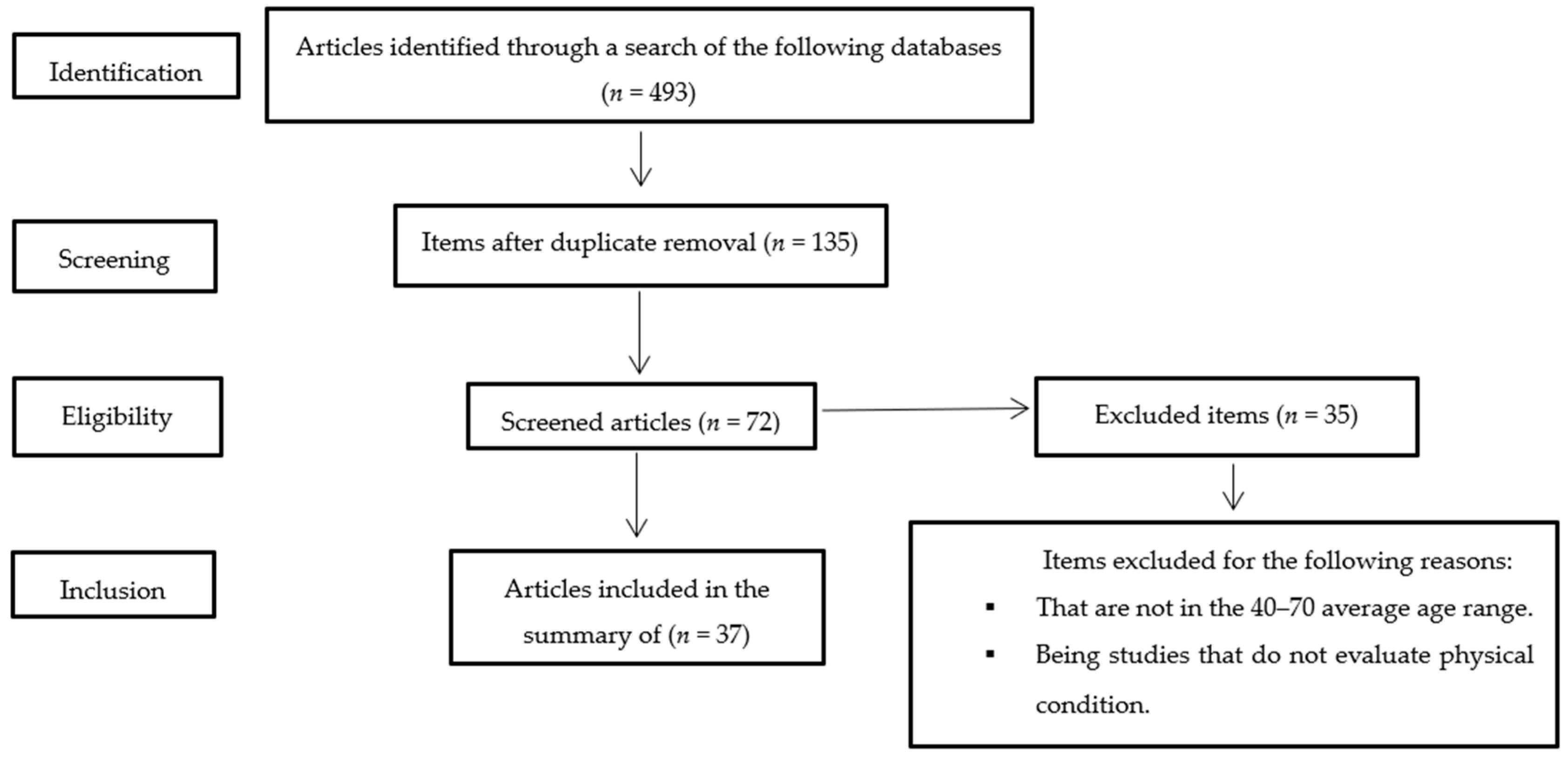

| A total of 493 articles were identified in PubMed. 455 articles were excluded: 420 were duplicates; 35 did not meet the inclusion criteria:
|
| Participants | Variables | Instruments | Results |
|---|---|---|---|
| Collins et al., 2004 [6] Individuals with heart failure N = 31 Group 1: Aerobic Exercise Program Group 2: Control group Age Mean: 64 ± 10 | Physical Fitness Variables: Peak oxygen consumption; Functional aerobic impairment. Psychic Variables: Exercise Self-efficacy: Confidence in designated change towards exercise behavior. Quality of Life: Self-perceived physical fitness; General health; Vitality; Mental health; Physical role; Emotional role; Social function; Body pain. | Physical Fitness: Functional Aerobic Impairment (FAI); Naughton Treadmill Test (TNT). Self-Perceived Physical Fitness: SF-36 Health Questionnaire. | Significant gains in fitness levels are shown for those who maintained exercise for 24 to 36 weeks. The exercise group has higher levels of self-perceived fitness. After the intervention, the group that maintained physical exercise showed significant improvements at 24 weeks in self-perceived physical fitness levels. Higher levels of self-efficacy for the intervention group after the program. These improvements are maintained in the subjects who maintained the exercise. No relationships between physical fitness parameters and self-efficacy and/or quality of life are found. |
| Exercise Self-Efficacy: The 16-item Cardiac Exercise Self-Efficacy. Quality of Life: The Medical Outcomes 36-Items Short Form (SF-36). | |||
| Bailey et al., 2016 [31] Pre-diabetic and type 2 diabetes participants N = 13 Group 1: Standard care (CON condition). Grupo 2: Self-monitoring intervention (SM condition). Age Mean: 61.14 ± 8.38 | Physical Fitness Variables Cardiovascular fitness Psychic Variables Exercise Self-efficacy: Adherence to the exercise routine. Quality of Life: self-perceived physical fitness; General Health; Vitality; Mental Health; Physical Role; Emotional Role; Social Function; Body Pain. | Physical Fitness: The 6-Min Walk Test (6MWT). | The group 2 shows great effects due to the intervention. Levels of self-efficacy increase. Significant improvement in both behavior and exercise adherence. Quality of life increases in all groups throughout the intervention and follow-up. There is a significant increase in the 6MWT test in both groups. They do not refer to the relationships between physical fitness parameters and self-efficacy and/or quality of life. |
| Exercise Self-Efficacy: Self-Monitor Exercise Behavior (SMEB). Quality of Life: The Short Form 36 Health Survey. | |||
| Baptista et al., 2012 [32] Patients with Fibromyalgia N = 80 Group 1: Dance group Group 2: Control group Age Mean Group 1: 49.5 Group 2: 49.1 | Physical Fitness Variables Functional capacity Psychic Variables Quality of Life: Self- perceived physical fitness; General health; Vitality; Mental health; Physical role; Emotional role; Social function; Body pain; Physical function and Severity of symptoms. | Physical Fitness: The 6-Min Walk Test (6MWT). | The intervention was followed by improved physical fitness and increased quality of life for the experimental group. No correlation is reported between the 6MWT test and quality of life parameters. |
| Quality of Life: The Quality of Life Short Form 36 (SF-36); Fibromyalgia Impact Questionnaire (FIQ). | |||
| Belza et al., 2001 [33] People with chronic obstructive pulmonary disease (COPD) N = 63 patients Age Mean: 65.4 ± 8.0 | Physical Fitness Variables Functional capacity Psychic Variables Exercise Self-efficacy: self-perceived functional capacity. Quality of Life: Dyspnea; Fatigue; Emotional function; Mastery; Generic health status. | Physical Fitness: The 6-Min Walk Test (6MWT). | The 6MWT is positively and significantly correlated with walking self-efficacy (r = 0.68) and with SF-36 physical Subscale (r = 0.67) but not with mental subscale. SEQ-W is positively and significantly correlated with SF-36 physical subscale (r = 0.67). |
| Exercise Self-Efficacy: The Self-Efficacy Questionnaire-Walking (SEQ-W). Quality of Life: The Chronic Respiratory Disease Questionnaire (CRQ); SF-36 Health Questionnaire. | |||
| Bieler et al., 2017 [34] Participants with hip osteoarthritis N = 152 Group 1: Nordic WalkingGroup 2: strength training Group 3: Home-based exercise Age Mean Group 1: 70.0 ± 6.3 Group 2: 69.6 ± 5.4 Group 3: 69.3 ± 6.4 | Physical Fitness Variables Functional performance: Endurance capacity; muscle strength, muscle function. Psychic Variables Self-perceived Physical Fitness: physical function. Exercise Self-efficacy: Self-efficacy for climbing stairs; Pain; self-perceived physical fitness and other symptoms. Quality of Life: Self-perceived physical fitness; General health; Vitality; Mental health; Physical role; Emotional role; Social function; Body pain. | Physical Fitness: The 30-s Chair Stand Test (30Scs); Timed Stair Climbing Test (TSC); 8-Foot Up and Go Test;15-Sencond Marching on the Spot Test; 6-Min Walk Test (6MWT). Self-Perceived Physical Fitness: The Arthritis Self-Efficacy Scale (ASES). | The Nordic Walking group gets the most important improvements in terms of physical fitness. Self-efficacy and quality of life also improve the most in this particular group in terms of mental health levels. The improvement in the hours spent in the most vigorous physical activity during the follow-up period is maintained. The strength training group improves functional performance and quality of life factors at 12 months, more than group 3. Quality of life improves more in group 1 and group 2 than in group 3. They do not refer to the relationships between physical fitness parameters and self-efficacy and/or quality of life. |
| Self-efficacy: Task-Specific Self-Efficacy; The Arthritis Self-Efficacy Scale (ASES). Quality of Life: The Danish SF36 Health Survey. | |||
| Cameron-Tucker et al., 2014 [35] Outpatients with chronic obstructive pulmonary disease (COPD). N = 84 Group 1: Chronic Disease Self-Management Program (CDSMP)+exercise. Group 2: (CDSMP)-only. Age Mean: 65.8 ± 9.35 Group 1: 64.5 ± 9.13 Group 2: 67.1 ± 9.41 | Physical Fitness Variables Physical capacity Psychic Variables Exercise self-efficacy: Confidence to exercise behaviour. Quality of Life: Self-perceived physical fitness; General health; Vitality; Mental health; Physical role; Emotional role; Social function; Body pain. | Physical Fitness: The 6-Min Walk Test (6MWT). | There was a significant improvement in the 6MWT test for both groups. No difference in the comparison between groups. There was no change in both groups in self-efficacy. Physical fitness and the role and physical component of quality of life increased in the exercise group with no difference in treatment. They found no significant correlation between the 6MWT test and self-efficacy and quality of life. Moderate exercise and self-efficacy explained 7.9% of the variation in 6MWT in a multiple linear regression model. |
| Exercise Self-efficacy: Exercise Self-Efficacy Scale. Quality of Life: The Short-Form 36 Questionnaire, version 2 (SF-36). | |||
| Donesky-Cuenco et al., 2009 [36] People with chronic obstructive pulmonary disease (COPD) N = 29 Group 1: Yoga Program Group 2: Usual care Control Age Mean Group 1: 72.2 ± 6.5 Group 2: 67.7 ± 11.5 | Physical Fitness Variables: Muscle endurance; Muscle strength; Exercise performance. Psychic Variables: Quality of Life: Self-physical fitness; General health; Vitality; Mental health; Physical role; Emotional role; Social function; Body pain. Dyspnea; Fatigue; Mastery, Emotional function. | Physical Fitness: The 6-Min Walk Test (6MWT); Symptom-Limited Test; Isokinetic muscle testing. | After 3 months of intervention with a yoga program, significant improvements are obtained in the 6MWT test for the experimental group. But they do not refer to the relationships between the parameters of physical fitness and quality of life. |
| Quality of Life: SF-36 Health Questionnaire; The Chronic Respiratory Disease Questionnaire (CRQ). | |||
| Feldstain et al., 2016 [37] Advanced cancer patients N = 80 Group 1: Quasi-experimental Average age: 64.04 ± 12.50 | Physical Fitness Variables Maximal oxygen uptaken Psychic Variables Self-efficacy: Self-perceived physical fitness and general self-efficacy. | Physical Fitness: The 6-Min Walk Test (6MWT). Self-perceived physical condition: General Self-efficacy Scale. | The intervention helps to increase exercise levels and reinforce beliefs of self-efficacy. They do not study the changes that occur with 6MWT results. Self-efficacy is the only factor in the intervention that helps reduce depressive symptoms. Exercise and physical endurance are not significant in relation to depression. They do not refer to the relationships between physical fitness parameters and self-efficacy. |
| Froehlich-Grobe et al., 2014 [38] Wheelchair users N = 128 Group 1: The Staff Supported Intervention group Group 2: Self-Guide Comparison Group Age Mean Group 1: 46.0 ± 12.1 Group 2: 42.9 ± 13 | Physical Fitness Variables Maximal strength; Aerobic capacity. Psychic Variables Exercise Self-efficacy: Exercise; Nutrition; Responsible health practice; Psychological well-being. Quality of Life: Self-perceived physical fitness; General health; Vitality; Mental health; Physical role; Emotional role; Social function; Body pain. | Physical Fitness: 1-Repetition Maximum Free Weight Bench Press; Discontinuous Arm Crank Test with SciFit Pro I ergometer. | Group 1 increased their physical exercise practice more than group 2, but there were no significant differences in the aerobic capacity or strength. Exercise Self-efficacy improved for the self-guided group. There are no changes in quality of life associated with body pain. But they do not refer to the relationships between physical fitness parameters and self-efficacy and/or quality of life. |
| Self-efficacy: Self-Rated Abilities for Health Practices Scale (SRAHP). Quality of Life: SF-36 Health Questionnaire. | |||
| Hospes et al., 2009 [39] Patients with chronic obstructive pulmonary disease (COPD) N = 35 Group 1: Exercise Counseling Group 2: Usual Care Age Mean Group 1: 63.1 ± 8.3 Group 2: 61.2 ± 9.1 | Physical Fitness Variables Leg strength; Arm strength; Grip force; Cardiorespiratory endurance. Psychic Variables Exercise Self-efficacy: Perceived flexibility; Reaction time; Perceived general strength; Self-perceived physical condition; Smooth movements; Climbing stairs; Perceived strength in hand; Perceived speed of walking; Change in exercise behavior; Perceived balance; Perceived general activity. Quality of Life: Symptoms; Activity; Impacts. Symptoms; Functional state; Mental state. | Physical Fitness: The Chair-Stand-Test; The arm curl Test; The 6-Min Walk Test (6MWT); Handheld Dynanometer. Self-Perceived Physical Fitness: Self-efficacy in Leisure-Time Physical Activity (LIVAS) | The program carried out was effective, increasing adherence to daily physical exercise. The experimental group presented significant improvements in leg and arm strength, self-efficacy and quality of life. They do not refer to the relationships between physical fitness parameters and self-efficacy and/or quality of life. |
| Exercise Self-Efficacy: Self-efficacy in Leisure-Time Physical Activity (LIVAS). Quality of Life: The St. George Respiratory Questionnaire (SGRQ-TS); The Clinical COPD Questionnaire. | |||
| Kersten et al., 2015 [40] People with sclerosis and stroke N = 20 Group 1: Experimental Group 2: Control Age Mean Group 1: 57(53–70) Group 2: 54(51–67) | Physical Fitness Variables Aerobic capacity Psychic Variables Self-perceived physical fitness: Self-reported mobility. General Self-efficacy: The stable feeling of personal competence to effectively handle a wide variety of stressful situations. Symptom control; Role function; Emotional functioning and communication with physicians. Quality of Life: Mastery; Physical; Psychological; Social; Environmental | Physical Fitness: The 10-Min Walk Test (10MWT) Self-perceived physical fitness: Rivermead Mobility Index | The experimental group walks faster than the control group and these values are maintained throughout 12 months of follow-up. There are no significant changes in mobility outcomes for any of the groups. The experimental group obtains better levels of self-efficacy although the values are balanced with the control group over 12 months of follow-up. Quality of life levels are increasing in both groups. No reference is made to the relationships between physical fitness parameters and self-efficacy and/or quality of life. |
| General Self-Efficacy: The General Self-Efficacy Scale; The Self-efficacy for Chronic Diseases Scales. Quality of Life: The World Health Organization Quality of Life questionnaire (WHOQOL-BREF). | |||
| Hea-Young, 2006 [41] People with disabilities N = 40 Group 1: Experimental Group 2: Control Age Mean: 53.7 Group 1: 55.1 ± 13.68 Group 2: 52.29 ± 12.11 | Physical Fitness Variables: Maximum muscle strength of the knee; Grip force; flexibility. Psychic Variables: Exercise self-efficacy: Performance achievements, indirect experience, verbal persuasion and physiological states. (Bandura, 1977). Locus of control; Personal control; Social desire; Ego strength; Interpersonal competence and self-esteem. Sherer and Maddux, (1982) and (1994). Quality of Life: Self-perceived physical fitness; General health; Vitality; Mental health; Physical role; Emotional role; Social function; Body pain. | Physical Fitness: Lafayette instrument company (United Stated of America). | After the intervention, the experimental group shows better levels of maximum muscle strength of the extensors and flexors of the knee and better levels of flexibility, in addition there are improvements in the level of self-efficacy towards exercise and in the levels of quality of life regarding the control group. They do not refer to the relationships between physical fitness parameters and self-efficacy and/or quality of life. |
| Exercise Self-efficacy: Bandura Self-Efficacy Scale 1997; Sherer & Maddux Self-Efficacy Scale (1982) and (1994). Quality of life: The Short Form-36 Health Survey (version 2). | |||
| Liao et al., 2016 [42] Chronic stroke participants N = 84 Group1: Low Intensity Body Vibration Group 2: Hight Intensity Body Vibration Group 3: Control Age Mean: 61.2 ± 9.2 | Physical Fitness Variables Muscle strength; Balance; Walking endurance; Functional mobility. Psychic Variables Balance Self-efficacy: Confidence in the performance of specific outpatient activities. Quality of Life: Self-perceived physical fitness; Physical Role; Body Pain; General Health; Vitality; Social Function; Emotional Role; Mental Health. | Physical Fitness: Dynamometer; The 14-item Mini Balance Evaluation Systems Test (Mini-BESTest); The 6-Min Walk Test (6MWT); Timed Up and Go (TUG). | The results showed a significant increase between groups in the parameters of physical fitness, self-efficacy and quality of life with respect to effect size. There are no appreciable differences between group 1 and group 2 in relation to the variables evaluated. The programs are not effective in their purpose. No results are presented for the relationships between physical fitness, self-efficacy and quality of life. |
| Balance Self-efficacy: The Activities-Specific Balance Confidence Scale (ABC Scale). Quality of Life: Short-Form Health Questionnaire SF-12. | |||
| McKay et al., 2012 [43] Patients undergoing total knee arthroplasty N = 22 Group 1: Intervention Group 2: Control Age Mean Group 1: 63.5 ± 4.93 Group 2: 60.58 ± 8.05 | Physical Fitness Variables Quadriceps strength; Mobility; Balance. Psychic Variables Self-efficacy: Pain; Self-perceived physical function; other symptoms. Quality of life: Physical function; General health; Vitality; Mental health; Physical role; Emotional role; Social function; Body pain. | Physical Fitness: Isometric Strength Assessment; 50-Feet Flat Surface Walking Test; Stair Ascent-Descent. Self-Perceived Physical fitness: The Arthritis Self-Efficacy Scale. | The intervention affects the improvement of quadriceps strength levels and significantly improves self-efficacy and quality of life for the experimental group. But they do not refer to relationships between physical fitness parameters and self-efficacy and/or quality of life. |
| Self-efficacy: The Arthritis Self-Efficacy Scale. Quality of Life: The Short Form 36 (SF-36). | |||
| Moy et al., 2009 [44] Persons with severe chronic obstructive pulmonary disease (COPD) N = 1621 patients. Age Mean: 66 ± 6 | Physical Fitness Variables Exercise capacity Psychic Variables Quality of Life: Self-perceived physical fitness; Physical role; Body pain; General health Perceptions; Vitality; Social function; Emotional role; Mental health. | Physical Fitness: The 6-Min Walk Test (6MWT). | Physical fitness values are positively related to quality of life. The self-perception of being disabled is significantly associated with the quality of life. |
| Quality of life: The Medical Outcomes Study 36-Item Short Form (The MOS SF-36); The St. George’s Respiratory Questionnaire Total Score (SGRQ-TS); Self-Administered Quality of-Well-Being Scale (QWB-SA). | |||
| Nam et al., 2012 [45] People with type 2 diabetes N = 140 Group 1: Exercise Group 2: control Age Mean Group 1: 57.24 ± 6.08 Group 2: 55.53 ± 6.49 | Physical Fitness Variables Maximum oxygen consumption; Muscle strength. Psychic Variables Exercise Self-efficacy: Self-perceived ability to perform arm and leg tasks before and after training. Quality of Life: Self-perceived physical fitness; General health; Vitality; Mental health; Physical role; Emotional role; Social function; Body pain. | Physical Fitness: Peak Oxygen Uptake (VO2) with Treadmill Walking Test. The Borg Rating of Perceived Exertion Scale; 1-Repetition Maximum of 7 Exercises. | Subjects who participated in the exercise group dropped out of the activity to a greater extent than in the control group; those who dropped out had lower levels of self-efficacy in lifting and less physical fitness. It does not relate physical fitness variables to self-efficacy and quality of life. |
| Exercise Self-Efficacy: The Exercise Self-Efficacy Scale. Quality of Life: Short-form 36 Item Health Survey. | |||
| Nordgren et al., 2015 [46] Rheumatoid arthritis patients N = 220 Group 1: Completed the program Group 2: They didn’t complete the program. Age Mean Group 1: 58 ± 9.9 Group 2: 60 ± 8.4 | Physical Fitness Variables Maximal aerobic capacity; Lower limb function Maximum and average grip strength. Psychic Variables Exercise Self-Efficacy: Social support (family, friends) for exercise behavior; Expected long-term health; Beliefs to avoid fear. Quality of Life: Self-care; Pain; Discomfort; Anxiety; Depression. | Physical Fitness: Submaximal Bicycle Ergometer; The Timed-Stands Test; The Grippit Device. | The results showed significant changes before and after the intervention programs for the two groups. Levels of physical fitness, self-efficacy and quality of life were significantly improved at one year and greater adherence to the training program was shown, resulting in improved perception of health and self-efficacy towards exercise. No reference is made to the relationships between physical fitness parameters and self-efficacy and/or quality of life |
| Exercise Self-efficacy: The Exercise Self-efficacy Test. Quality of Life: The EuroQol Five-Dimensions Questionnaire (EQ-5D). | |||
| Oka et al., 1999 [47] Patients with heart failure N = 40 patients Age Mean: 56 ± 12 | Physical Fitness Variables Functional capacity Psychic Variables Self-efficacy: Confidence to carry out the behavior; Average strength; Expectations of self-efficacy for each behavior. | Physical Fitness: VO2 Peak Naughton Protocol; The 6-Min Walk Test (6MWT). Self-Perceived physical fitness: 5-Item Physical Condition Questionnaire. | There are positive correlations between physical fitness through the 6-Min test with the walking and stair-climbing self-efficacy scales. Perceived physical fitness was associated with emotional wellbeing. No correlation was found between self-efficacy and quality of life. |
| Self-Perceived physical fitness: Individual perception of various aspects of physical condition. Quality of Life: Energy; Fatigue; Wellbeing. | Exercise Self-efficacy: The Self- Efficacy Expectation Scales for Walking, Stair climbing and General Activities. Quality of life: The Medical Outcomes Study 36-Item Short Form (SF-36). | ||
| Pilleri et al., 2015 [48] People with Parkinson disease N = 20 Group 1: (robot assisted gait training) Age Mean: 64.5 (45–71) | Physical Fitness Variables Aerobic capacity; Balance. Psychic Variables Self-efficacy: Fear of falling during daily activities. Quality of Life: Activities of daily life; Attention and work memory; Communication; Depression; Quality of life; Social relationship. | Physical Fitness: Timed Up and go Test (TUG); The 10-Min Walk Test (10-MWT); Berg Balance Scale (BBS). | After the intervention, aerobic capacity and balance improve, indicating an improvement in perceived stability. It also reflects improved levels of self-efficacy and quality of life. No relationships are expressed between the variables of physical fitness, self-efficacy and quality of life. |
| Self-Efficacy: The Fear of Falling Efficacy Scale (FFES) Quality of Life: The Parkinson’s Disease Questionnaire-8 (PDQ-8). | |||
| Ries et al., 2003 [49] Patients with chronic lung disease N = 172 Group 1: Experimental maintenance program Group 2: Standard care control group Age Mean: 67.1 ± 8.2 | Physical Fitness Variables Maximum distance possible in 6 Mins. Psychic Variables Exercise self-efficacy: Change in behavior toward exercise (range of activity; general effort in moving things; lifting; climbing stairs; tolerating stress; tolerating anger). Quality of Life: Self-perceived physical fitness; mental function; fatigue; dyspnea; mastery. physical Functioning; body pain; role limitations due to physical health problems; role limitations due to personal or emotional problems; general mental health; social functioning; energy; fatigue; general health perceptions. | Physical Fitness: The 6-Min Walk Test (6MWT). | The experimental group shows improvements after the intervention in the 6MWT test; in walking self-efficacy and in quality of life levels. Follow-up over 1 and 2 years shows that the levels of resistance, self-efficacy and quality of life of the experimental group tend to be balanced with the levels of the control group. They do not refer to the relationships between physical fitness parameters and self-efficacy and/or quality of life. |
| Exercise Self-Efficacy: The Self Efficacy Questionnaire Walking (SEQ-W). Quality of life: The Quality of Well-Being Scale (QWB); The Chronic Respiratory Questionnaire (CRQ); The Rand 36-ítem Health Survey. | |||
| Sullivan et al., 2014 [50] Participants with chronic stroke N = 11 Group 1: Podometer-Monitored, community-based intervention Age Mean: 60.4 ± 12.1 | Physical Condition Variables Walking endurance. Psychic Variables Self-efficacy: Confidence in performing specific outpatient activities. Quality of Life: Strength; hand function; activities of daily living/instrumental activities of daily living; mobility. | Physical Condition: The 6-Min Walk Test (6MWT); The 10-Meter Walk Test (10MWT). | The increase in the number of steps correlates with an increase in Self-perceived physical fitness and this in turn correlates with moderate changes in the 6MWT and quality of life. In addition, barriers to physical exercise are minimized. There are no significant changes in the group over the measurement time. |
| Self-Efficacy: The Activities-Specific Balance Confidence Scale (ABC Scale). Quality of Life: Stroke Impact Scale-16 (SIS-16). | |||
| Tang et al., 2017 [51] Patients with chronic kidney disease N = 84 Group 1: Experimental Group 2: Control Age Mean Group 1: 46.26 ± 15.61 Group 2: 43.90 ± 12.44 | Physical Fitness Variables Endurance; Function of lower body muscle strength Psychic Variables Exercise Self-efficacy: Self-perceived ability to perform arm and leg tasks before and after training. Quality of Life: List of symptoms/problems; Effects of kidney disease; Burden of kidney disease; Physical component; Mental component; Physical function; General health; Vitality; Mental health; Physical role; Emotional role; Social role; Body pain. | Physical Fitness: The 6-Min Walk Test (6MWT); 10 Repetition of Sit to Stand Test (STS10). | No results are presented for the relationships between physical fitness, self-efficacy and quality of life. Group 1 improves their physical fitness, self-efficacy and quality of life. Improvements in 6MWT and STS10 helped to achieve the reported quality of life improvements. The exercise program is effective in improving the physical fitness and quality of life in these patients. |
| Exercise Self-Efficacy: The Self-Efficacy for Exercise Scale (SEE). Quality of Life: The Kidney Disease Quality of Life (KDQOL-36); SF-12 Health Questionnaire. | |||
| Tu et al., 1997 [52] Patients with chronic obstructive pulmonary disease (COPD) N = 203 Grupo 1: Subjects with unstable conditions Grupo 2: Subjects with stable conditions Group 3: Lung education subjects Age Mean: 70 years old | Physical Fitness Variables Functional exercise capacity. Psychic Variables Self-efficacy: Negative effect; intense arousal emotional; physical effort; climate/environment environment; and behavioral risk factors. Quality of life: Self-perceived physical fitness; General health; Vitality; Mental health; Physical role; Emotional role; Social function; Body pain. | Physical Fitness: The 6-Min Walk Test (6MWT). | Self-perceived physical fitness scale of SF-36 is more correlated with 6MWT than with emotional function. The physical fitness scale of SF-36 shows a moderate correlation between the physical fitness parameters and the physical fitness scale. |
| Self-Efficacy: Chronic Pulmonary Disease Self-Efficacy Scale (CSES). Quality of Life: The Medical Outcomes Study Short Form 36 (SF-36). | |||
| Wang et al., 2018 [53] Adult with fibromyalgia N = 226 Group 1: Tai chi Group 2: Aerobic exercise Age Mean Group 1: 52.1 ± 13.3 Group 2: 50.9 ± 12.5 | Physical Fitness Variables Physical function; Muscle strength and power; Balance. Psychic Variables Self-efficacy: Pain; self-perceived physical fitness and other symptoms. Quality of Life: Self- perceived physical fitness; General health; Vitality; Mental health; Physical role; Emotional role; Social function; Body pain. | Physical Fitness: The 6-Min Walk Test (6MWT), Balance Test; The Chair Stand Test; Leg Press. Self-Perceived Physical Fitness: The Arthritis Self-Efficacy Scale (ASES). | No results are presented for the relationships between physical fitness, self-efficacy and quality of life. The group 1 obtains equal or better results in self-efficacy and quality of life after 24 weeks and greater adherence compared to group 2. Psychological benefits may be associated with longer exercise practice affecting mental health and physical fitness. |
| Self-efficacy: The arthritis self-efficacy scale (ASES). Quality of Life: The Short Form Health Survey | |||
| Yeh et al., 2011 [54] Patients with chronic heart failure N = 100 Group 1: Tai chi group Group 2: Education group Age Mean Group 1: 68.1 ± 11.9 Group 2: 66.6 ± 12.1 | Physical Fitness Variables Aerobic capacity; Agility. Psychic Variables Exercise Self-efficacy: confidence in the designated change towards exercise behavior. Quality of Life: Swelling in the ankles; Difficulty climbing stairs; Fatigue; Depressive feelings; Monetary expense; Health-related treatment. | Physical Fitness: Bicycle Ramp Protocol (Borg scale); The 6-Min Walk Test (6MWT); Timed Up and Go. | The intervention group after the Tai chi program significantly improves the levels of quality of life and self-efficacy towards exercise in comparison with the control group. There is improvement in the 6MWT test for the intervention group although there are no relevant differences between groups. There are no relationships between physical fitness parameters with self-efficacy and/or quality of life. |
| Exercise Self-Efficacy: The 16-Item Cardiac Exercise Self-Efficacy. Quality of Life: Minnesota Living with Heart Failure Questionnaire (MLHFQ). | |||
| Yeh et al., 2016 [55] Patients with heart failure N = 100 Group 1: Tai chi Group 2: Education Age Mean Group 1: 69 Group 2: 66 | Physical Fitness Variables Aerobic capacity; Agility. Psychic Variables Exercise Self-efficacy: Confidence in the designated change towards exercise behavior Quality of Life: self-perceived physical fitness; Physical Role; Body Pain; General Health; Vitality; Social Function; Emotional Role; Mental Health; Ankle swelling; Difficulty climbing stairs; Fatigue; Depressive feelings; Money spent; Health-related treatment | Physical Fitness: Bicycle Ramp Protocol; The 6-Min Walk Test (6MWT); Timed Up and Go. | There was no improvement in physical fitness. Group 1 shows significant improvements in self-efficacy over 1 year in comparison with group 2. Quality of life levels are higher in group 1 compared to group 2. The Tai chi program was effective in improving self-efficacy and quality of life with respect to the other group in this type of patient. The 6MWT test is associated with change in self-efficacy. |
| Exercise Self-Efficacy: The 16-item Cardiac Exercise Self-Efficacy. Quality of Life: Minnesota Living with Heart Failure Questionnaire (MLHFQ); SF-12v2 Short Form Health Survey. | |||
| Zanaboni et al., 2016 [56] Patients with chronic obstructive pulmonary disease (COPD) N = 120 Group 1: telerehabilitation Group 2: Treadmill Group 3: control Age Mean: Between 40-80 years old | Physical Fitness Variables Functional exercise capacity Psychic Variables Exercise Self-efficacy: maintenance of exercise; maintenance of self-management routines. Quality of Life: self-care; pain; discomfort; anxiety; depression. | Physical Fitness: 6-Min Walking Distance (6MWD). | No results are presented for the relationships between physical fitness, self-efficacy and quality of life. The physical fitness and quality of life in group 1 improves over one year compared to the other two groups. Telerehabilitation can prevent deterioration, improve physical performance, health status and quality of life. |
| Self-Efficacy: The Generalized Self-Efficacy Scale (GSES). Quality of Life: The EuroQol Five-Dimensional Questionnaire (EQ-5D). | |||
| Cheong et al., 2018 [57] Colorectal cancer patients N = 75 Age Mean: 58.27 ± 11.74 | Physical Fitness Variables Physical performance Upper extremity muscle strength Psychic Variables Overall health status; area of functioning; area of symptoms. | Physical Fitness: The grip strength test; 30 s CST; the 2-min walk test (2MWT). Hand-held dynamometer. | The lower extremity strength and cardiorespiratory endurance was significantly improved. There are no relationships between physical fitness parameters with quality of life. |
| Quality of life: European Organization for Research and Treatment of Cancer Quality of Life Questionnaire C30 (EORTC QLQ-C30). | |||
| Coelho et al., 2017 [58]. Asthmatic women N = 66; Age Mean Asthma group: 45.8 ± 12.3 Control Group: 44.3 ± 11.6 | Physical Fitness Variables Submaximal exercise capacity Psychic Variables Limitation of usual activities; symptoms; emotional function; environmental stimuli. | Physical Fitness: The 6MWT. | Daily life physical activity correlated with QoL and 6MWT. There are no relationships between physical fitness parameters with quality of life. |
| Quality of life: The Asthma Quality of Life Questionnaire (AQLQ). | |||
| Costa et al., 2018 [59] Schizophrenia patients N = 114 Age Mean: 44.25 ± 9.72 | Physical Fitness Variables Functional exercise capacity Psychic Variables Physical; psychological; social relationship; environment. | Physical Fitness The 6MWT | QoL correlated with physical activity. Active behaviours could improve QoL. There are no relationships between physical fitness parameters with quality of life. |
| Quality of life WHOQOL-BREF | |||
| Moreno-Suarez et al., 2020 [60] Patients with Left Ventricular Assist Device and Patient Chronic Heart Failure N = 32 Age Mean LVAD Group: 59.1 ± 10.8 CHF Group: 58.3 ± 8.7 | Physical Fitness Variables Cardiopulmonary exercise testing Psychic Variables Self-Efficacy: The strength of efficacy beliefs Quality of life: Self-perceived physical fitness; general health; vitality; mental health; physical role; emotional role; social function; body pain. | Physical Fitness Treadmill exercise test | Patients with LAVD reported better QoL. There are no relationships between physical fitness parameters with self-efficacy and/or quality of life. |
| Self-efficacy 16 item Heart Disease Self-Efficacy Scale (HDSE) Quality of life SF-36 | |||
| Rosa et al., 2018 [61] Hemodialysis patients N = 52 Age Mean: 55.7 ± 14.03 | Physical Fitness Variables Physical capacity and strength; leg and back flexibility. Psychic Variables Self-perceived physical fitness; general health; vitality; mental health; physical role; emotional role; social function; body pain. | Physical Fitness The 6MWT; Hand grip dynamometry; Sit to stand test (STS10); Wells bench. | The program increases leg lean mass and STS10 performance. There are no relationships between physical fitness parameters with self-efficacy and/or quality of life. |
| Quality of life SF-36 | |||
| Damush et al., 2006 [62] Breast cancer survivors. Group 1: Experimental N = 34 patients Age Mean: 59.6 ± 6.6 | Physical Fitness Variables Aerobic capacity, Lower body strength; Agility; flexibility; health. Psychic Variables Exercise for self-efficacy: Perceived barriers; Benefits and enjoyment of physical activity. Quality of Life: Depression; Fatigue; Physical functioning; Psychosocial functioning. | Physical Fitness: Senior Fitness Test Battery (2 Min Step Test; The 30s Chair Stand; The Arm Curl; The Chair sit and reach; Back scratch; 8ft Get Up and Go). | This program improves perceived barriers to exercise and physical fitness by improving endurance and strength levels, and quality of life. They do not refer to the relationships between physical fitness parameters and self-efficacy and/or quality of life. |
| Exercise Self-Efficacy: The Self-Efficacy for Exercise Scale (SEE). Quality of Life: The Kidney Disease Quality of Life (KDQOL-36); SF-12 Health Questionnaire. | |||
| Gregg et al., 2016 [63] Homeless male participants N = 18 Age Mean: 41.05 ± 11.32 | Physical Fitness Variables Cardiorespiratory Fitness; Lower back hamstring; Hip flexibility; General muscle strength. Psychic Variables Self-efficacy: Dimension of the self-efficacy feature. Quality of Life: Well-being; Relationship with Others; Social Community; Vivid Involvement; Personal Development; Compliance. | Physical Fitness: 1-Mille Treadmill Walk Test; A Sit-and-Reach Test; A Grip Strength Test. | Self-efficacy is positively correlated with quality of life. There is no correlation between self-efficacy and quality of life with the physical fitness parameters studied. |
| Self-Efficacy: The New General Self-Efficacy Scale (NGSE). Quality of Life: The Quality of Life Scale. | |||
| Ligibel et al., 2012 [64] Cancer survivors N = 61 Group 1: Telephone-Based Exercise Intervention Group 2: Usual Care Control Age Mean: 50.0 ± 12.0 Group 1: 53.1 ± 10.8 Group 2: 55.5 ± 10.6 | Physical Fitness Variables Functional exercise capacity Psychic Variables Exercise Self-efficacy: Precontemplation; Contemplation; Preparation; Action; Maintenance; Relaxation. Quality of Life: Global quality of life; Pain; Insomnia. | Physical Fitness: The 6-Min Walk Test (6MWT); Cycle Ergometer and Treadmill Based Exercise. Exercise Self-Efficacy: The Physical Activity Self-Efficacy Questionnaire. | The increase in the amount of weekly physical activity, the improvement in physical fitness, self-perceived physical fitness, and self-efficacy due to the intervention process for group 1. They do not refer to the relationships between physical fitness parameters and self-efficacy and/or quality of life. |
| Quality of life: The European Organization for Research and Training, Quality of Life Questionnaire - Core 30, Version 3.0 (The EORTC QLQ-C30). | |||
| McAuley et al., 2005 [65] Older sedentary adults N = 174 Grupo 1: Aerobic Activity Program (Walking or Stretching) Group 2: Toning Program Age Mean: 66.71 ± 5.35 Group 1: 67.42 ± 5.24 Group 2: 66.02 ± 11.48 | Physical Fitness Variables Aerobic capacity Psychic Variables Self-perceived physical fitness: Physical fitness; Physical strength. Exercise Self-efficacy: Self-perceived physical fitness and self-efficacy to exercise; Perceptions of the ability to overcome barriers to exercise. | Physical Fitness: VO2 Peak Balke Protocol. Self-perceived physical fitness: The Perceived Importance Profile. Eight-Item Measure of Beliefs in Capabilities. | Self-efficacy is inversely related to positive well-being after the implementation of the program. But these do not refer to the relationships between the parameters of physical fitness and self-efficacy. |
| Exercise Self-efficacy: Eight-Item Measure of Beliefs. | |||
| Awad et al., 2019 [66] Community-dwelling individuals N = 40 Age Mean: 58.4 ± 1.6 | Physical Fitness Variables Cardiovascular capacity Psychic Variables Balance confidence | Physical Fitness: The 6MWT; The 6MWT | The 6MWTotal and ABC score were each bivariately correlated with steps/d. Self-efficacy score was not significant independent predictor. |
| Self-efficacy: Activities-specific Balance Confidence (ABC Scale) |
© 2020 by the authors. Licensee MDPI, Basel, Switzerland. This article is an open access article distributed under the terms and conditions of the Creative Commons Attribution (CC BY) license (http://creativecommons.org/licenses/by/4.0/).
Share and Cite
Medrano-Ureña, M.d.R.; Ortega-Ruiz, R.; Benítez-Sillero, J.d.D. Physical Fitness, Exercise Self-Efficacy, and Quality of Life in Adulthood: A Systematic Review. Int. J. Environ. Res. Public Health 2020, 17, 6343. https://doi.org/10.3390/ijerph17176343
Medrano-Ureña MdR, Ortega-Ruiz R, Benítez-Sillero JdD. Physical Fitness, Exercise Self-Efficacy, and Quality of Life in Adulthood: A Systematic Review. International Journal of Environmental Research and Public Health. 2020; 17(17):6343. https://doi.org/10.3390/ijerph17176343
Chicago/Turabian StyleMedrano-Ureña, María del Rocio, Rosario Ortega-Ruiz, and Juan de Dios Benítez-Sillero. 2020. "Physical Fitness, Exercise Self-Efficacy, and Quality of Life in Adulthood: A Systematic Review" International Journal of Environmental Research and Public Health 17, no. 17: 6343. https://doi.org/10.3390/ijerph17176343
APA StyleMedrano-Ureña, M. d. R., Ortega-Ruiz, R., & Benítez-Sillero, J. d. D. (2020). Physical Fitness, Exercise Self-Efficacy, and Quality of Life in Adulthood: A Systematic Review. International Journal of Environmental Research and Public Health, 17(17), 6343. https://doi.org/10.3390/ijerph17176343

