
Skip Content
You are currently on the new version of our website. Access the old version .

International Journal of Environmental Research and Public Health

International Journal of Environmental Research and Public Health (IJERPH) is a transdisciplinary, peer-reviewed, open access journal that covers global health, healthcare sciences, behavioral and mental health, infectious diseases, chronic diseases and disease prevention, exercise and health related quality of life, environmental health and environmental sciences, and is published monthly online by MDPI.
The International Society Doctors for the Environment (ISDE), Italian Society of Environmental Medicine (SIMA) and Environmental Health Association of Québec (ASEQ‑EHAQ) are affiliated with IJERPH and their members receive discounts on the article processing charges.

All Articles (65,607)

  • Perspective
  • Open Access

Breast cancer is the most common cancer among women worldwide and a leading cause of mortality. Stark differences in outcomes across income levels, regions, population groups, and healthcare systems reflect deep inequities in access to early detection, diagnosis, and treatment. Due to remarkable scientific advances and many global initiatives, breast cancer is often perceived as a “finished agenda”. This Call to Action, led and endorsed by a multidisciplinary panel of international experts in breast cancer care, policy, and healthcare systems, provides a structured approach to guide countries in improving breast cancer care through the Breast Cancer Care Quality Index (BCCQI), a unified, expert-endorsed tool that translates broad guidance into practical metrics. The Call to Action outlines a framework for country profiling across the BCCQI dimensions: early detection, timely diagnosis, comprehensive management, and strong and resilient healthcare systems. Applying a structured self-assessment matrix linked to tiered recommendations, the Call to Action supports country performance assessment and the development of context-sensitive roadmaps for concrete interventions. By linking assessment to actionable guidance, the Call to Action underscores the urgency of coordinated national efforts and international support to close existing gaps and accelerate progress toward high-quality breast cancer care for all patients.

6 February 2026

Overview of key challenges in breast cancer care.

Background: Since World War II, the number of motorized vehicles has increased dramatically. Yet, few studies have evaluated how perceptions of single and multiple motorized traffic variables, in different combinations, influence pedestrians’ appraisals of the route environment in relation to whether it facilitates or deters walking. We have previously illuminated this in an inner urban area of a metropolitan region. This study aims to scrutinize these matters in the suburban–rural parts of the same metropolitan area. For comparative reasons, we use the same methods as used for the inner urban area. Our hypothesis is that these kinds of perceptions, to some extent, may be context-specific. Methods: Relations between pedestrians’ perceptions of motorized traffic variables (flow and speeds of motor vehicles, noise, and exhaust fumes) and combinations of them, as well as if appraisals of route environments hinder–stimulate walking and are unsafe–safe for reasons of traffic, have been evaluated. This was studied in the suburban and rural areas of Greater Stockholm, Sweden. The pedestrians (n = 233) rated their route environment with the Active Commuting Route Environment Scale (ACRES). Correlation, multiple regression, and mediation analyses were used to study the relationships. Results: The regression analyses showed that noise was the primary negative predictor variable in relation to hindering–stimulating walking. With respect to the other outcome, unsafe–safe traffic, none of the variables had a significant relation. The mediation analyses showed that (1) vehicle speed had an indirect effect on unsafe–safe traffic via noise, (2) both vehicle speed and vehicle flow had, via noise, indirect effects on hinders–stimulates walking, and (3) vehicle speed had, via vehicle flow, an indirect effect on noise and exhaust fumes. Conclusions: In suburban–rural route environments, noise protrudes as a hindering variable for walking. The mediation analyses showed that vehicle speed intensified noise and had negative effects on both outcomes. Therefore, by reducing vehicle speed, noise levels will be lowered, and the walking experience is likely to be enhanced, which can influence the amount of walking. The results are further illuminated through the exploration of existing and potential future research strategies.

6 February 2026

The route environments consist of several environmental domains: physical (stationary objects), traffic (mobile objects), social (individual interactions), weather (wind, rain, sun, etc.), and light conditions (natural and artificial light). These domains represent a number of predictor variables, and perceptions of them can influence safety appraisals as well as perceptions of whether the environment hinders or stimulates walking. These appraisals can impact walking behaviour, physiological, psychological, and medical effects, as well as environmentally induced unwellbeing–wellbeing. The bidirectional lines indicate potential mutual relationships. The background to this conceptual framework is described in a previous study [15] (pp. 26–29). Figure 1 is adapted from material previously published in three publications (cf. [15,16,17]).

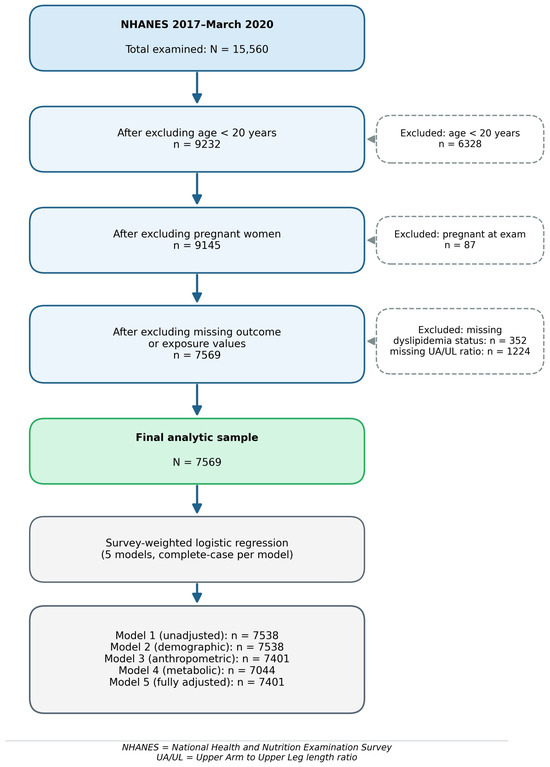
Depression is a major public health concern, and evidence continues to show that environmental toxicants may contribute to its development. This study evaluated the association between depressive symptoms and per- and polyfluoroalkyl substances (PFAS), heavy metals, phthalates, and organophosphate metabolites using data from NHANES 2017–2018. Depressive symptoms were measured with the Patient Health Questionnaire-9 (PHQ-9). Environmental exposure variables were analyzed using multivariable linear regression and Bayesian Kernel Machine Regression (BKMR). All models adjusted for demographic, socioeconomic, behavioral, and clinical covariates. In multivariable linear regression models adjusted for demographic, socioeconomic, behavioral, and clinical covariates, higher urinary dimethylphosphate concentrations were significantly associated with increased depressive symptom scores (β = 0.15; 95% CI: 0.04, 0.27; p = 0.0098). Mono-(2-ethylhexyl) phthalate (MEHP) was also positively associated with PHQ-9 scores (β = 0.001; 95% CI: 0.0003, 0.0019; p = 0.0043). Because environmental mixtures tend to follow non-linear patterns, BKMR analysis was run. BKMR analyses indicated that organophosphate metabolites exhibited the greatest overall contribution to depressive symptoms (group posterior inclusion probability = 0.7875), with diethylphosphate emerging as the most influential individual exposure within the group (conditional PIP = 0.7211). Exposure–response functions suggested non-linear and threshold relationships for several metabolites. These findings identify specific organophosphate and phthalate metabolites as potential contributors to depressive symptoms and support the importance of evaluating chemical mixtures rather than single exposures. Additional longitudinal studies are needed to clarify temporal relationships and to inform public health efforts aimed at reducing exposure to organophosphate pesticides and endocrine-disrupting chemicals.

6 February 2026

Spearman Correlation among variables of interest.

Sleep is a fundamental aspect of physiological and psychological functioning, and the beneficial effect of exercise on sleep quality and quantity, depending on training modality, remains underexplored. This study compared the effects of high-intensity interval training (HIIT) versus a moderate-intensity continuous training (MICT) regime on sleep quality. Twenty-five participants (sixteen men, nine women) were randomly assigned to 8-week HIIT or MICT programs. Anthropometric data, blood pressure, and maximal exercise tests (VO2max, lactate, heart rate) were conducted one week before and after training. Sleep quality was evaluated daily through self-reported perception and duration and via the Pittsburgh Sleep Quality Index (PSQI) at baseline, one week, and two weeks post-intervention. Data were analyzed in SPSS version 29 using repeated-measures ANOVA. PSQI scores improved significantly over time (p = 0.013), regardless of modality, with no significant group or interaction effects. Cardiorespiratory fitness improved for all participants, with significant gains in VO2max (p = 0.009), maximal aerobic speed (p < 0.001), and reduced maximal heart rate (HIIT: p = 0.003; MICT: p = 0.021). Sleep perception showed no significant change during training (p = 0.063), with a slight improvement trend. In conclusion, exercise training improves sleep quality regardless of modality. Running three sessions per week for eight weeks enhances both aerobic and cardiorespiratory fitness, along with sleep quality. Physical activity is therefore an effective non-pharmacological strategy to improve sleep.

4 February 2026

Summary of the timeline Between week 1 (W1) and week 12 (W12).

News & Conferences

Issues

Open for Submission

Editor's Choice

Reprints of Collections

Access to Public Health Services and Challenges to Healthcare Management
Reprint

Access to Public Health Services and Challenges to Healthcare Management

Editors: Isabella Piassi Dias Godói, Carlos Podalirio Borges de Almeida

Get Alerted

Add your email address to receive forthcoming issues of this journal.

XFacebookLinkedIn
Int. J. Environ. Res. Public Health - ISSN 1660-4601