Association Between CYP2C9 and CYP2C19 Genetic Polymorphisms and Antiseizure Medication-Induced Adverse Reactions Among Peruvian Patients with Epilepsy

 ,
,  , , ,
, , ,  , , , , , , , , , , , , , and
Abstract

1. Introduction
1.1. Background
1.2. Genetic and Non-Genetic Factors Associated with Drug Resistance to Antiseizure Medication
1.3. Pharmacogenetics and Personalized Medicine in Epilepsy
1.4. Enzymes That Metabolize Antiseizure Medication
1.5. Pharmacogenetic Studies on ASM in Peru
1.6. Objective
2. Results
2.1. Clinical Characteristics and Medication Data of Patients
2.2. Genes, Allelic Variants, and Genotypes
2.3. Metabolic Phenotype Related to Adverse Drug Reactions Induced by Antiseizure Medication
3. Discussion
3.1. Interpretation of Findings and Comparison with Literature
3.2. Clinical Importance
3.3. Strengths and Limitations
4. Materials and Methods
4.1. Study Design, Population, and Type of Sampling
4.2. Inclusion and Exclusion Criteria
4.3. Obtaining Genomic DNA
4.4. Genotypic Analysis
4.5. Statistical Analysis
4.6. Ethical Considerations
5. Conclusions
Author Contributions
Funding
Institutional Review Board Statement
Informed Consent Statement
Data Availability Statement
Acknowledgments
Conflicts of Interest
Abbreviations
| ADRs | Adverse drug reactions |
| ASMs | Antiseizure medications |
| AUC | Area under the curve |
| AIC | Akaike Information Criterion |
| gDNA | Genomic DNA |
| ILAE | International League Against Epilepsy |
| HNASS | Alberto Sabogal Sologuren National Hospital |
| ESSALUD | Social Health Security |
| 95% CI | 95% confidence intervals |
| OR | Odds ratio |
| DRESS | Drug reaction with eosinophilia and systemic symptoms |
| SJS | Stevens–Johnson syndrome |
| TEN | Toxic epidermal necrolysis |
| IM | Intermediate metabolizers |
| NM | Normal metabolizers |
| PM | Poor metabolizers |
| RM | Rapid metabolizers |
| LEV | Levetiracetam |
| LTG | Lamotrigine |
| PHT | Phenytoin |
| PHB | Phenobarbital |
| VPA | Valproic acid |
References
- Stafstrom, C.E.; Carmant, L. Seizures and epilepsy: An overview for neuroscientists. Cold Spring Harb. Perspect. Med. 2015, 5, a022426. [Google Scholar] [CrossRef] [PubMed]
- Fisher, R.S.; Cross, J.H.; French, J.A.; Higurashi, N.; Hirsch, E.; Jansen, F.E.; Lagae, L.; Moshé, S.L.; Peltola, J.; Roulet Perez, E.; et al. Operational classification of seizure types by the International League Against Epilepsy: Position Paper of the ILAE Commission for Classification and Terminology. Epilepsia 2017, 58, 522–530. [Google Scholar] [CrossRef] [PubMed]
- Yazbeck, H.; Youssef, J.; Nasreddine, W.; El Kurdi, A.; Zgheib, N.; Beydoun, A. The role of candidate pharmacogenetic variants in determining valproic acid efficacy, toxicity and concentrations in patients with epilepsy. Front. Pharmacol. 2024, 15, 1483723. [Google Scholar] [CrossRef] [PubMed]
- World Health Organization. Epilepsy. 2021. Available online: https://www.who.int/news-room/fact-sheets/detail/epilepsy (accessed on 13 June 2025).
- McGinn, R.J.; Von Stein, E.L.; Summers Stromberg, J.E.; Li, Y. Precision medicine in epilepsy. Prog. Mol. Biol. Transl. Sci. 2022, 190, 147–188. [Google Scholar] [CrossRef]
- Burneo, J.G.; Tellez-Zenteno, J.; Wiebe, S. Understanding the burden of epilepsy in Latin America: A systematic review of its prevalence and incidence. Epilepsy Res. 2005, 66, 63–74. [Google Scholar] [CrossRef]
- Burneo, J.G.; Steven, D.A.; Arango, M.; Zapata, W.; Vasquez, C.M.; Becerra, A. La cirugía de epilepsia y el establecimiento de programas quirúrgicos en el Perú: El proyecto de colaboración entre Perú y Canadá. Rev. Neuropsiquiatr. 2017, 80, 181–188. [Google Scholar] [CrossRef]
- Handoko, K.B.; van Puijenbroek, E.P.; Bijl, A.H.; Hermens, W.A.; Zwart-van Rijkom, J.E.; Hekster, Y.A.; Egberts, T.C. Influence of chemical structure on hypersensitivity reactions induced by antiepileptic drugs: The role of the aromatic ring. Drug Saf. 2008, 31, 695–702. [Google Scholar] [CrossRef]
- Kim, H.K.; Kim, D.Y.; Bae, E.K.; Kim, D.W. Adverse Skin Reactions with Antiepileptic Drugs Using Korea Adverse Event Reporting System Database, 2008–2017. J. Korean Med. Sci. 2020, 35, e17. [Google Scholar] [CrossRef]
- Ayalew, M.B.; Muche, E.A. Patient reported adverse events among epileptic patients taking antiepileptic drugs. SAGE Open Med. 2018, 6, 2050312118772471. [Google Scholar] [CrossRef]
- Alvarado, A.T.; Zavaleta, A.I.; Li-Amenero, C.; Bendezú, M.R.; Garcia, J.A.; Chávez, H.; Palomino-Jhong, J.J.; Surco-Laos, F.; Laos-Anchante, D.; Melgar-Merino, E.J.; et al. Role of pharmacogenomics for prevention of hypersensitivity reactions induced by aromatic antiseizure medications. Front. Pharmacol. 2025, 16, 1640401. [Google Scholar] [CrossRef]
- Zgolli, F.; Aouinti, I.; Charfi, O.; Kaabi, W.; Hamza, I.; Daghfous, R.; Kastalli, S.; Lakhoua, G.; Aidli, S.E. Cutaneous adverse effects of antiepileptic drugs. Therapie 2024, 79, 453–459. [Google Scholar] [CrossRef] [PubMed]
- Asadi-Pooya, A.A.; Rostaminejad, M.; Zeraatpisheh, Z.; Mirzaei Damabi, N. Cosmetic adverse effects of antiseizure medications; A systematic review. Seizure 2021, 91, 9–21. [Google Scholar] [CrossRef] [PubMed]
- Moshé, S.L.; Perucca, E.; Ryvlin, P.; Tomson, T. Epilepsy: New advances. Lancet 2015, 385, 884–898. [Google Scholar] [CrossRef]
- Rashid, H.U.; Ullah, S.; Carr, D.F.; Khattak, M.I.K.; Asad, M.I.; Rehman, M.U.; Tipu, M.K. The association of ABCB1 gene polymorphism with clinical response to carbamazepine monotherapy in patients with epilepsy. Mol. Biol. Rep. 2024, 51, 191. [Google Scholar] [CrossRef] [PubMed]
- Urzì Brancati, V.; Pinto Vraca, T.; Minutoli, L.; Pallio, G. Polymorphisms Affecting the Response to Novel Antiepileptic Drugs. Int. J. Mol. Sci. 2023, 24, 2535. [Google Scholar] [CrossRef]
- Keangpraphun, T.; Towanabut, S.; Chinvarun, Y.; Kijsanayotin, P. Association of ABCB1 C3435T polymorphism with phenobarbital resistance in Thai patients with epilepsy. J. Clin. Pharm. Ther. 2015, 40, 315–319. [Google Scholar] [CrossRef] [PubMed]
- Chouchi, M.; Kaabachi, W.; Klaa, H.; Tizaoui, K.; Turki, I.B.; Hila, L. Relationship between ABCB1 3435TT genotype and antiepileptic drugs resistance in Epilepsy: Updated systematic review and meta-analysis. BMC Neurol. 2017, 17, 32. [Google Scholar] [CrossRef]
- Potschka, H.; Brodie, M.J. Pharmacoresistance. Handb. Clin. Neurol. 2012, 108, 741–757. [Google Scholar] [CrossRef]
- Lakhan, R.; Kumari, R.; Misra, U.K.; Kalita, J.; Pradhan, S.; Mittal, B. Differential role of sodium channels SCN1A and SCN2A gene polymorphisms with epilepsy and multiple drug resistance in the north Indian population. Br. J. Clin. Pharmacol. 2009, 68, 214–220. [Google Scholar] [CrossRef]
- Hasanzad, M.; Sarhangi, N.; Naghavi, A.; Ghavimehr, E.; Khatami, F.; Ehsani Chimeh, S.; Larijani, B.; Aghaei Meybodi, H.R. Genomic medicine on the frontier of precision medicine. J. Diabetes Metab. Disord. 2021, 21, 853–861. [Google Scholar] [CrossRef]
- Halbert, C.H. Equity in Genomic Medicine. Annu. Rev. Genom. Hum. Genet. 2022, 23, 613–625. [Google Scholar] [CrossRef] [PubMed]
- Sisodiya, S.M. Precision medicine and therapies of the future. Epilepsia 2021, 62, S90–S105. [Google Scholar] [CrossRef] [PubMed]
- Gaedigk, A.; Ingelman-Sundberg, M.; Miller, N.A.; Leeder, J.S.; Whirl-Carrillo, M.; Klein, T.E.; PharmVar Steering Committee. The Pharmacogene Variation (PharmVar) Consortium: Incorporation of the Human Cytochrome P450 (CYP) Allele Nomenclature Database. Clin. Pharmacol. Ther. 2018, 103, 399–401. [Google Scholar] [CrossRef] [PubMed]
- Alvarado, Á.T.; Muñoz, A.M.; Loja, B.; Miyasato, J.M.; García, J.A.; Cerro, R.A.; Quiñones, L.A.; Varela, N.M. Study of the allelic variants CYP2C9*2 and CYP2C9*3 in samples of the Peruvian mestizo population. [Estudio de las variantes alélicas CYP2C9*2 y CYP2C9*3 en muestras de población mestiza peruana]. Biomedica 2019, 39, 601–610. [Google Scholar] [CrossRef]
- CPIC. CPIC® Guideline for Phenytoin and CYP2C9 and HLA-B. 2020. Available online: https://cpicpgx.org/guidelines/guideline-for-phenytoin-and-cyp2c9-and-hla-b (accessed on 10 June 2025).
- Karnes, J.H.; Rettie, A.E.; Somogyi, A.A.; Huddart, R.; Fohner, A.E.; Formea, C.M.; Ta Michael Lee, M.; Llerena, A.; Whirl-Carrillo, M.; Klein, T.E.; et al. Clinical Pharmacogenetics Implementation Consortium (CPIC) Guideline for CYP2C9 and HLA-B Genotypes and Phenytoin Dosing: 2020 Update. Clin. Pharmacol. Ther. 2021, 109, 302–309. [Google Scholar] [CrossRef]
- Fekete, F.; Mangó, K.; Déri, M.; Incze, E.; Minus, A.; Monostory, K. Impact of genetic and non-genetic factors on hepatic CYP2C9 expression and activity in Hungarian subjects. Sci. Rep. 2021, 11, 17081. [Google Scholar] [CrossRef]
- Scott, S.A.; Sangkuhl, K.; Stein, C.M.; Hulot, J.S.; Mega, J.L.; Roden, D.M.; Klein, T.E.; Sabatine, M.S.; Johnson, J.A.; Shuldiner, A.R.; et al. Clinical Pharmacogenetics Implementation Consortium guidelines for CYP2C19 genotype and clopidogrel therapy: 2013 update. Clin. Pharmacol. Ther. 2011, 90, 328–332. [Google Scholar] [CrossRef]
- Lee, C.R.; Luzum, J.A.; Sangkuhl, K.; Gammal, R.S.; Sabatine, M.S.; Stein, C.M.; Kisor, D.F.; Limdi, N.A.; Lee, Y.M.; Scott, S.A.; et al. Clinical Pharmacogenetics Implementation Consortium Guideline for CYP2C19 Genotype and Clopidogrel Therapy: 2022 Update. Clin. Pharmacol. Ther. 2022, 112, 959–967. [Google Scholar] [CrossRef]
- Maruf, A.A.; Greenslade, A.; Arnold, P.D.; Bousman, C. Antidepressant pharmacogenetics in children and young adults: A systematic review. J. Affect. Disord. 2019, 254, 98–108. [Google Scholar] [CrossRef]
- Skadrić, I.; Stojković, O. Defining screening panel of functional variants of CYP1A1, CYP2C9, CYP2C19, CYP2D6, and CYP3A4 genes in Serbian population. Int. J. Legal Med. 2020, 134, 433–439. [Google Scholar] [CrossRef]
- Iannaccone, T.; Sellitto, C.; Manzo, V.; Colucci, F.; Giudice, V.; Stefanelli, B.; Iuliano, A.; Corrivetti, G.; Filippelli, A. Pharmacogenetics of Carbamazepine and Valproate: Focus on Polymorphisms of Drug Metabolizing Enzymes and Transporters. Pharmaceuticals 2021, 14, 204. [Google Scholar] [CrossRef]
- Dorado, P.; López-Torres, E.; Peñas-Lledó, E.M.; Martínez-Antón, J.; Llerena, A. Neurological toxicity after phenytoin infusion in a pediatric patient with epilepsy: Influence of CYP2C9, CYP2C19 and ABCB1 genetic polymorphisms. Pharmacogenom. J. 2013, 13, 359–361. [Google Scholar] [CrossRef]
- Manson, L.E.N.; Nijenhuis, M.; Soree, B.; de Boer-Veger, N.J.; Buunk, A.M.; Houwink, E.J.F.; Risselada, A.; Rongen, G.A.P.J.M.; van Schaik, R.H.N.; Swen, J.J.; et al. Dutch Pharmacogenetics Working Group (DPWG) guideline for the gene-drug interaction of CYP2C9, HLA-A and HLA-B with anti-epileptic drugs. Eur. J. Hum. Genet. 2024, 32, 903–911. [Google Scholar] [CrossRef] [PubMed]
- Staines, A.G.; Coughtrie, M.W.; Burchell, B. N-glucuronidation of carbamazepine in human tissues is mediated by UGT2B7. J. Pharmacol. Exp. Ther. 2004, 311, 1131–1137. [Google Scholar] [CrossRef] [PubMed]
- Ghodke-Puranik, Y.; Thorn, C.F.; Lamba, J.K.; Leeder, J.S.; Song, W.; Birnbaum, A.K.; Altman, R.B.; Klein, T.E. Valproic acid pathway: Pharmacokinetics and pharmacodynamics. Pharmacogenet. Genom. 2013, 23, 236–241. [Google Scholar] [CrossRef] [PubMed]
- Smith, R.L.; Haslemo, T.; Refsum, H.; Molden, E. Impact of age, gender and CYP2C9/2C19 genotypes on dose-adjusted steady-state serum concentrations of valproic acid-a large-scale study based on naturalistic therapeutic drug monitoring data. Eur. J. Clin. Pharmacol. 2016, 72, 1099–1104. [Google Scholar] [CrossRef]
- Alvarado, A.T.; Cotuá, J.; Delgado, M.; Morales, A.; Muñoz, A.M.; Li, C.; Bendezú, M.R.; García, J.A.; Laos-Anchante, D.; Surco-Laos, F.; et al. Serum concentrations of valproic acid in people with epilepsy: Clinical implication. J. Pharm. Pharmacogn. Res. 2022, 10, 1117–1125. [Google Scholar] [CrossRef]
- Lopez-Garcia, M.A.; Feria-Romero, I.A.; Fernando-Serrano, H.; Escalante-Santiago, D.; Grijalva, I.; Orozco-Suarez, S. Genetic polymorphisms associated with antiepileptic metabolism. Front. Biosci. 2014, 6, 377–386. [Google Scholar] [CrossRef]
- Balestrini, S.; Sisodiya, S.M. Pharmacogenomics in epilepsy. Neurosci. Lett. 2018, 667, 27–39. [Google Scholar] [CrossRef]
- Glauser, T.A. Biomarkers for antiepileptic drug response. Biomark. Med. 2011, 5, 635–641. [Google Scholar] [CrossRef]
- Martinez, M.N.; Amidon, G.L. A mechanistic approach to understanding the factors affecting drug absorption: A review of fundamentals. J. Clin. Pharmacol. 2002, 42, 620–643. [Google Scholar] [CrossRef]
- Hilmer, S.; Rochon, P. Sex and Age Differences in Geriatric Pharmacotherapy. Public Policy Aging Rep. 2023, 33, 132–135. [Google Scholar] [CrossRef]
- Spleis, H.; Sandmeier, M.; Claus, V.; Bernkop-Schnürch, A. Surface design of nanocarriers: Key to more efficient oral drug delivery systems. Adv. Colloid. Interface Sci. 2023, 313, 102848. [Google Scholar] [CrossRef] [PubMed]
- Oscanoa, T.J.; Guevara-Fujita, M.L.; Fujita, R.M.; Muñoz-Paredes, M.Y.; Oscar Acosta, O.; Romero-Ortuño, R. Association between polymorphisms of the VKORC1 and CYP2C9 genes and warfarin maintenance dose in Peruvian patients. Br. J. Clin. Pharmacol. 2024, 90, 769–775. [Google Scholar] [CrossRef]
- Valencia Ayala, E.; Chevarría Arriaga, M.; Barbosa Coelho, C.; Sandoval, J.; Salazar Granara, A. Metabolizer phenotype prediction in different Peruvian ethnic groups through CYP2C9 polymorphisms. Drug Metabol. Pers. Ther. 2021, 36, 113–121. [Google Scholar] [CrossRef] [PubMed]
- Lakhan, R.; Kumari, R.; Singh, K.; Kalita, J.; Misra, U.K.; Mittal, B. Possible role of CYP2C9 & CYP2C19 single nucleotide polymorphisms in drug refractory epilepsy. Indian. J. Med. Res. 2011, 134, 295–301. [Google Scholar]
- Makowska, M.; Smolarz, B.; Bryś, M.; Forma, E.; Romanowicz, H. An association between the rs1799853 and rs1057910 polymorphisms of CYP2C9, the rs4244285 polymorphism of CYP2C19 and the prevalence rates of drug-resistant epilepsy in children. Int. J. Neurosci. 2021, 131, 1147–1154. [Google Scholar] [CrossRef]
- Fohner, A.E.; Rettie, A.E.; Thai, K.K.; Ranatunga, D.K.; Lawson, B.L.; Liu, V.X.; Schaefer, C.A. Associations of CYP2C9 and CYP2C19 Pharmacogenetic Variation with Phenytoin-Induced Cutaneous Adverse Drug Reactions. Clin. Transl. Sci. 2020, 13, 1004–1009. [Google Scholar] [CrossRef]
- 51; Song, C.; Li, X.; Mao, P.; Song, W.; Liu, L.; Zhang, Y. Impact of CYP2C19 and CYP2C9 gene polymorphisms on sodium valproate plasma concentration in patients with epilepsy. Eur. J. Hosp. Pharm. 2022, 29, 198–201. [Google Scholar] [CrossRef]
- Alvarado, A.T.; Ybañez-Julca, R.; Muñoz, A.M.; Tejada-Bechi, C.; Cerro, R.; Quiñones, L.A.; Varela, N.; Alvarado, C.A.; Alvarado, E.; Bendezú, M.R.; et al. Frequency of CYP2D6*3 and *4 and metabolizer phenotypes in three mestizo Peruvian populations. Pharmacia 2021, 68, 891–898. [Google Scholar] [CrossRef]
- Alvarado, A.T.; Muñoz, A.M.; Varela, N.; Sullón-Dextre, L.; Pineda, M.; Bolarte-Arteaga, M.; Bendezú, M.R.; García, J.A.; Chávez, H.; Surco-Laos, F.; et al. Pharmacogenetic variants of CYP2C9 and CYP2C19 associated with adverse reactions induced by antiepileptic drugs used in Peru. Pharmacia 2023, 70, 603–618. [Google Scholar] [CrossRef]
- Alvarado, A.T.; Saravia, M.; Losno, R.; Pariona, R.; María Muñoz, A.; Ybañez-Julca, R.O.; Loja, B.; Bendezú, M.R.; García, J.A.; Surco-Laos, F.; et al. CYP2D6 and CYP2C19 Genes Associated with Tricontinental and Latin American Ancestry of Peruvians. Drug Metab. Bioanal. Lett. 2023, 16, 14–26. [Google Scholar] [CrossRef] [PubMed]
- Doré, M.; San Juan, A.E.; Frenette, A.J.; Williamson, D. Clinical Importance of Monitoring Unbound Valproic Acid Concentration in Patients with Hypoalbuminemia. Pharmacotherapy 2017, 37, 900–907. [Google Scholar] [CrossRef] [PubMed]
- Thaker, S.J.; Gandhe, P.P.; Godbole, C.J.; Bendkhale, S.R.; Mali, N.B.; Thatte, U.M.; Gogtay, N.J. A prospective study to assess the association between genotype, phenotype and Prakriti in individuals on phenytoin monotherapy. J. Ayurveda Integr. Med. 2017, 8, 37–41. [Google Scholar] [CrossRef]
- Alvarado, A.T.; Muñoz, A.M.; Miyasato, J.M.; Alvarado, E.A.; Loja, B.; Villanueva, L.; Pineda, M.; Bendezú, M.; Palomino-Jhong, J.J.; García, J.A. In Vitro Therapeutic Equivalence of Two Multisource (Generic) Formulations of Sodium Phenytoin (100 mg) Available in Peru. Dissolution Technol. 2020, 27, 33–40. [Google Scholar] [CrossRef]
- van Dijkman, S.C.; Rauwé, W.M.; Danhof, M.; Della Pasqua, O. Pharmacokinetic interactions and dosing rationale for antiepileptic drugs in adults and children. Br. J. Clin. Pharmacol. 2018, 84, 97–111. [Google Scholar] [CrossRef]
- Milosheska, D.; Roškar, R. Simple HPLC-UV Method for Therapeutic Drug Monitoring of 12 Antiepileptic Drugs and Their Main Metabolites in Human Plasma. Molecules 2023, 28, 7830. [Google Scholar] [CrossRef]
- Benedetti, M.S. Enzyme induction and inhibition by new antiepileptic drugs: A review of human studies. Fundam. Clin. Pharmacol. 2000, 14, 301–319. [Google Scholar] [CrossRef]
- Fratoni, A.J.; Colmerauer, J.L.; Linder, K.E.; Nicolau, D.P.; Kuti, J.L. A Retrospective Case Series of Concomitant Carbapenem and Valproic Acid Use: Are Best Practice Advisories Working? J. Pharm. Pract. 2023, 36, 537–541. [Google Scholar] [CrossRef]
- St Louis, E.K. Monitoring antiepileptic drugs: A level-headed approach. Curr. Neuropharmacol. 2009, 7, 115–119. [Google Scholar] [CrossRef]
- Perucca, P.; Gilliam, F.G. Adverse effects of antiepileptic drugs. Lancet Neurol. 2012, 11, 792–802. [Google Scholar] [CrossRef]
- Joshi, R.; Tripathi, M.; Gupta, P.; Gulati, S.; Gupta, Y.K. Adverse effects & drug load of antiepileptic drugs in patients with epilepsy: Monotherapy versus polytherapy. Indian. J. Med. Res. 2017, 145, 317–326. [Google Scholar] [CrossRef] [PubMed]
- Dang, Y.L.; Foster, E.; Lloyd, M.; Rayner, G.; Rychkova, M.; Ali, R.; Carney, P.W.; Velakoulis, D.; Winton-Brown, T.T.; Kalincik, T.; et al. Adverse events related to antiepileptic drugs. Epilepsy Behav. 2021, 115, 107657. [Google Scholar] [CrossRef] [PubMed]
- Bekele, F.; Mamo, T.; Fekadu, G. Prevalence and associated factors of medication-related problems among epileptic patients at ambulatory clinic of Mettu Karl Comprehensive Specialized Hospital: A cross-sectional study. J. Pharm. Policy Pract. 2022, 15, 71. [Google Scholar] [CrossRef]
- Bayane, Y.B.; Jifar, W.W.; Berhanu, R.D.; Rikitu, D.H. Antiseizure adverse drug reaction and associated factors among epileptic patients at Jimma Medical Center: A prospective observational study. Sci. Rep. 2024, 14, 11592. [Google Scholar] [CrossRef] [PubMed]
- Maneerot, T.; Saelue, P.; Sangiemchoey, A. Phenytoin-Induced Severe Thrombocytopenia: A Case Report. Cureus 2024, 16, e60669. [Google Scholar] [CrossRef]
- Kamitaki, B.K.; Minacapelli, C.D.; Zhang, P.; Wachuku, C.; Gupta, K.; Catalano, C.; Rustgi, V. Drug-induced liver injury associated with antiseizure medications from the FDA Adverse Event Reporting System (FAERS). Epilepsy Behav. 2021, 117, 107832. [Google Scholar] [CrossRef]
- Kakunje, A.; Prabhu, A.; Sindhu Priya, E.S.; Karkal, R.; Kumar, P.; Gupta, N.; Rahyanath, P.K. Valproate: It’s Effects on Hair. Int. J. Trichology 2018, 10, 150–153. [Google Scholar] [CrossRef]
- Orsini, A.; Esposito, M.; Perna, D.; Bonuccelli, A.; Peroni, D.; Striano, P. Personalized medicine in epilepsy patients. J. Transl. Genet. Genom. 2018, 2, 1–18. [Google Scholar] [CrossRef]
- Monostory, K.; Nagy, A.; Tóth, K.; Bűdi, T.; Kiss, Á.; Déri, M.; Csukly, G. Relevance of CYP2C9 Function in Valproate Therapy. Curr. Neuropharmacol. 2019, 17, 99–106. [Google Scholar] [CrossRef]
- Shnayder, N.A.; Grechkina, V.V.; Khasanova, A.K.; Bochanova, E.N.; Dontceva, E.A.; Petrova, M.M.; Asadullin, A.R.; Shipulin, G.A.; Altynbekov, K.S.; Al-Zamil, M.; et al. Therapeutic and Toxic Effects of Valproic Acid Metabolites. Metabolites 2023, 13, 134. [Google Scholar] [CrossRef]
- Garg, V.K.; Supriya; Shree, R.; Prakash, A.; Takkar, A.; Khullar, M.; Saikia, B.; Medhi, B.; Modi, M. Genetic abnormality of cytochrome-P2C9*3 allele predisposes to epilepsy and phenytoin-induced adverse drug reactions: Genotyping findings of cytochrome-alleles in the North Indian population. Futur. J. Pharm. Sci. 2022, 8, 44. [Google Scholar] [CrossRef]
- Milosavljevic, F.; Manojlovic, M.; Matkovic, L.; Molden, E.; Ingelman-Sundberg, M.; Leucht, S.; Jukic, M.M. Pharmacogenetic Variants and Plasma Concentrations of Antiseizure Drugs: A Systematic Review and Meta-Analysis. JAMA Netw. Open 2024, 7, e2425593. [Google Scholar] [CrossRef]
- Claudio-Campos, K.; Labastida, A.; Ramos, A.; Gaedigk, A.; Renta-Torres, J.; Padilla, D.; Rivera-Miranda, G.; Scott, S.A.; Ruaño, G.; Cadilla, C.L.; et al. Warfarin Anticoagulation Therapy in Caribbean Hispanics of Puerto Rico: A Candidate Gene Association Study. Front. Pharmacol. 2017, 8, 347. [Google Scholar] [CrossRef] [PubMed]
- Chung, W.H.; Hung, S.I.; Hong, H.S.; Hsih, M.S.; Yang, L.C.; Ho, H.C.; Wu, J.Y.; Chen, Y.T. Medical genetics: A marker for Stevens-Johnson syndrome. Nature 2004, 428, 486. [Google Scholar] [CrossRef]
- Wang, Q.; Zhou, J.Q.; Zhou, L.M.; Chen, Z.Y.; Fang, Z.Y.; Chen, S.D.; Yang, L.B.; Cai, X.D.; Dai, Q.L.; Hong, H.; et al. Association between HLA-B*1502 allele and carbamazepine-induced severe cutaneous adverse reactions in Han people of southern China mainland. Seizure 2011, 20, 446–448. [Google Scholar] [CrossRef] [PubMed]
- Harris, V.; Jackson, C.; Cooper, A. Review of Toxic Epidermal Necrolysis. Int. J. Mol. Sci. 2016, 17, 2135. [Google Scholar] [CrossRef]
- Phillips, E.J.; Sukasem, C.; Whirl-Carrillo, M.; Müller, D.J.; Dunnenberger, H.M.; Chantratita, W.; Goldspiel, B.; Chen, Y.T.; Carleton, B.C.; George, A.L.; et al. Clinical Pharmacogenetics Implementation Consortium Guideline for HLA Genotype and Use of Carbamazepine and Oxcarbazepine: 2017 Update. Clin. Pharmacol Ther. 2018, 103, 574–581. [Google Scholar] [CrossRef]



| Variable | Male (n 45, 50.56%) | Female (n 44, 49.44%) | p-Value | ||||
|---|---|---|---|---|---|---|---|
| Mean ± SD | Range | Mean ± SD | Range | ||||
| Age (years) | 23.6 ± 10.0 | 18–85 | 24.0 ± 12.4 | 18–79 | 0.5912 * | ||
| Monotherapy | n = 28 (62.20%) | Mean ± SD | Range | n = 17 (37.70%) | Mean ± SD | Range | |
| VPA (dose mg/day) | 18 (40.0%) | 1722 ± 491.76 | 1000–2500 | 9 (20.5%) | 1388.89 ± 333.33 | 1000–2000 | 0.483 * |
| PHT (dose mg/day) | 9 (20.0%) | 300 | 300 | 8 (18.2%) | 300 | 300 | |
| PHB (dose mg/day) | 1 (2.2%) | 300 | 300 | 0 (0.0%) | 0 | 0 | |
| Polytherapy | n = 17 (37.80) | n = 27 (61.30) | |||||
| VPA (dose mg/day) | 13 (28.9%) | 1500 | 1500 | 22 (50.0%) | 1500 | 1500 | 0.069 ** |
| LTG (dose mg/day) | 100 | 100 | 100 | 100 | |||
| LEV (dose mg/day) | 3000 | 3000 | 3000 | 3000 | |||
| PHT (dose mg/day) | 4 (8.9%) | 300 | 300 | 5 (11.3%) | 300 | 300 | 0.972 ** |
| LEV (dose mg/day) | 3000 | 3000 | 3000 | 3000 | |||
| Seizure type | |||||||
| Generalized | 13 (28.90%) | 21 (47.70%) | 0.0755 ** | ||||
| Focal | 32 (71.10%) | 23 (52.30%) | |||||
| With a family history of seizure | 28 (62.2%) | 15 (34.10%) | 0.0109 * | ||||
| No family history of seizure | 17 (37.8%) | 29 (65.90%) | |||||
| Controlled (without recurrence) | 29 (64.4%) | 26 (59.1%) | 0.6657 * | ||||
| Not controlled | 16 (35.6%) | 18 (40.9%) | |||||
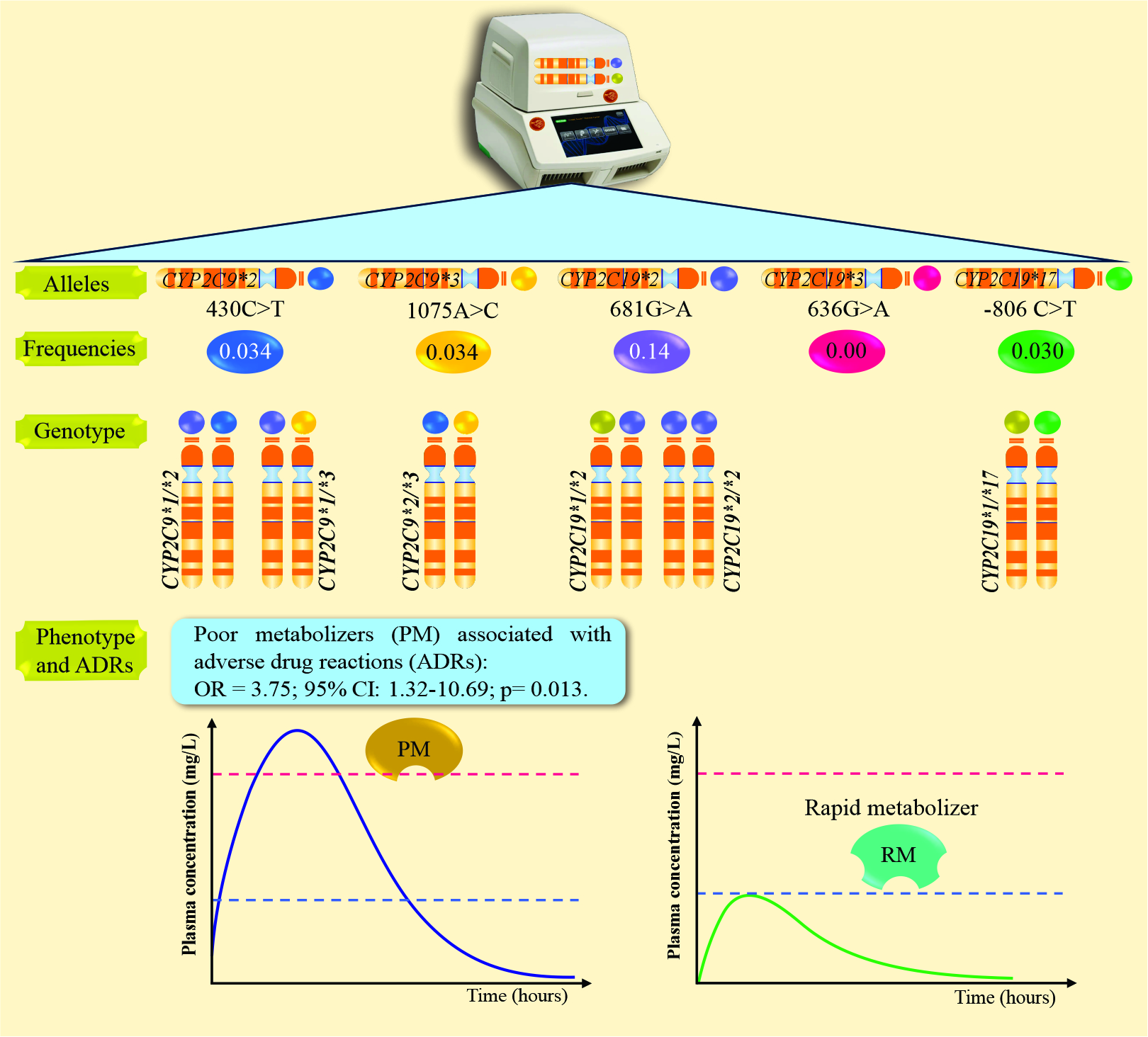
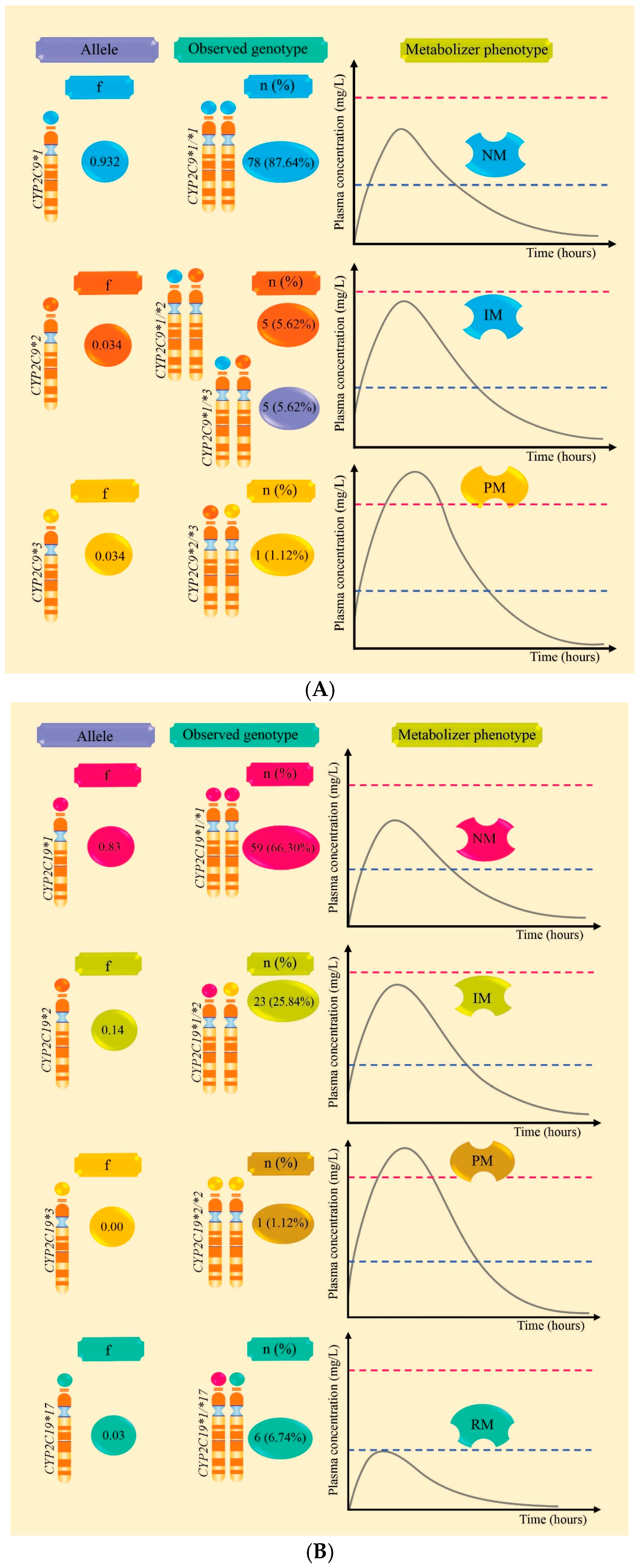
| Gene | Allele | Observed Genotype | Metabolizer Phenotype | |||
|---|---|---|---|---|---|---|
| Type | n | f | Type | n (%) | ||
| CYP2C9 | *1 | 166 | 0.932 | *1/*1 | 78 (87.64) | NM |
| *2 | 6 | 0.034 | *1/* 2 | 5 (5.62) | IM | |
| *3 | 6 | 0.034 | *1/*3 | 5 (5.62) | IM | |
| *2/*3 | 1 (1.12) | PM | ||||
| 178 | 1.00 | 89 (100%) | ||||
| CYP2C19 | *1 | 147 | 0.83 | *1/*1 | 59 (66.30) | NM |
| *2 | 25 | 0.14 | *1/*2 | 23 (25.84) | IM | |
| *3 | 0 | 0.00 | *2/*2 | 1 (1.12) | PM | |
| *17 | 6 | 0.03 | *1/*17 | 6 (6.74) | RM | |
| 178 | 1.00 | 89 (100%) | ||||
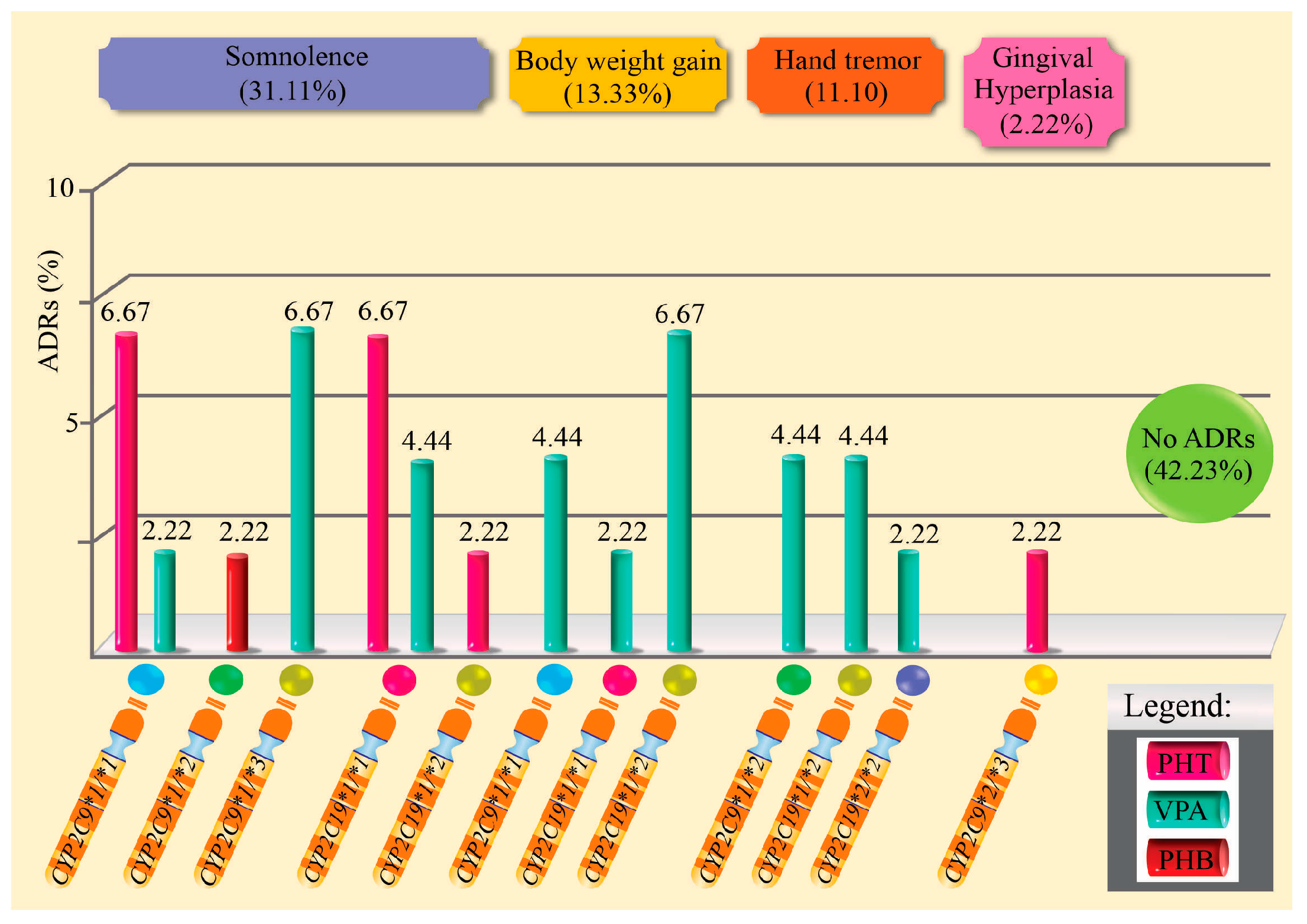
| Genotype | Phenotype | ASM | ADRs Observed in the Study | No ADRs n (%) | Total n (%) | |||
|---|---|---|---|---|---|---|---|---|
| Somnolence n (%) | Body Weight Gain n (%) | Hand Tremor n (%) | Gingival Hyperplasia n (%) | |||||
| CYP2C9*1/*1 | NM | VPA | 1 (2.22) | 2 (4.44) | 0 (0.00) | 0 (0.00) | 4 (8.89) | 7 (15.56) |
| PHT | 3 (6.67) | 0 (0.00) | 0 (0.00) | 0 (0.00) | 3 (6.67) | 6 (13.33) | ||
| CYP2C19*1/*1 | NM | VPA | 2 (4.44) | 1 (2.22) | 0 (0.00) | 0 (0.00) | 3 (6.67) | 6 (13.33) |
| PHT | 3 (6.67) | 0 (0.00) | 0 (0.00) | 0 (0.00) | 2 (4.44) | 5 (11.11) | ||
| CYP2C9*1/*2 | IM | VPA | 0 (0.00) | 0 (0.00) | 2 (4.44) | 0 (0.00) | 0 (0.00) | 2 (4.44) |
| PHB | 1 (2.22) | 0 (0.00) | 0 (0.00) | 0 (0.00) | 0 (0.00) | 1 (2.22) | ||
| CYP2C9*1/*3 | IM | VPA | 3 (6.67) | 0 (0.00) | 0 (0.00) | 0 (0.00) | 0 (0.00) | 3 (6.67) |
| CYP2C9*2/*3 | PM | PHT | 0 (0.00) | 0 (0.00) | 0 (0.00) | 1 (2.22) | 0 (0.00) | 1 (2.22) |
| CYP2C19*1/*2 | IM | VPA | 0 (0.00) | 3 (6.67) | 2 (4.44) | 0 (0.00) | 0 (0.00) | 5 (11.11) |
| PHT | 1 (2.22) | 0 (0.00) | 0 (0.00) | 0 (0.00) | 1 (2.22) | 2 (4.44) | ||
| CYP2C19*2/*2 | PM | VPA | 0 (0.00) | 0 (0.00) | 1 (2.22) | 0 (0.00) | 0 (0.00) | 1 (2.22) |
| CYP2C19*1/*17 | RM | VPA | 0 (0.00) | 0 (0.00) | 0 (0.00) | 0 (0.00) | 3 (6.67) | 3 (6.67) |
| PHT | 0 (0.00) | 0 (0.00) | 0 (0.00) | 0 (0.00) | 3 (6.67) | 3 (6.67) | ||
| Total: | 14 (31.11) | 6 (13.33) | 5 (11.10) | 1 (2.22) | 19 (42.23) | 45 (100%) | ||
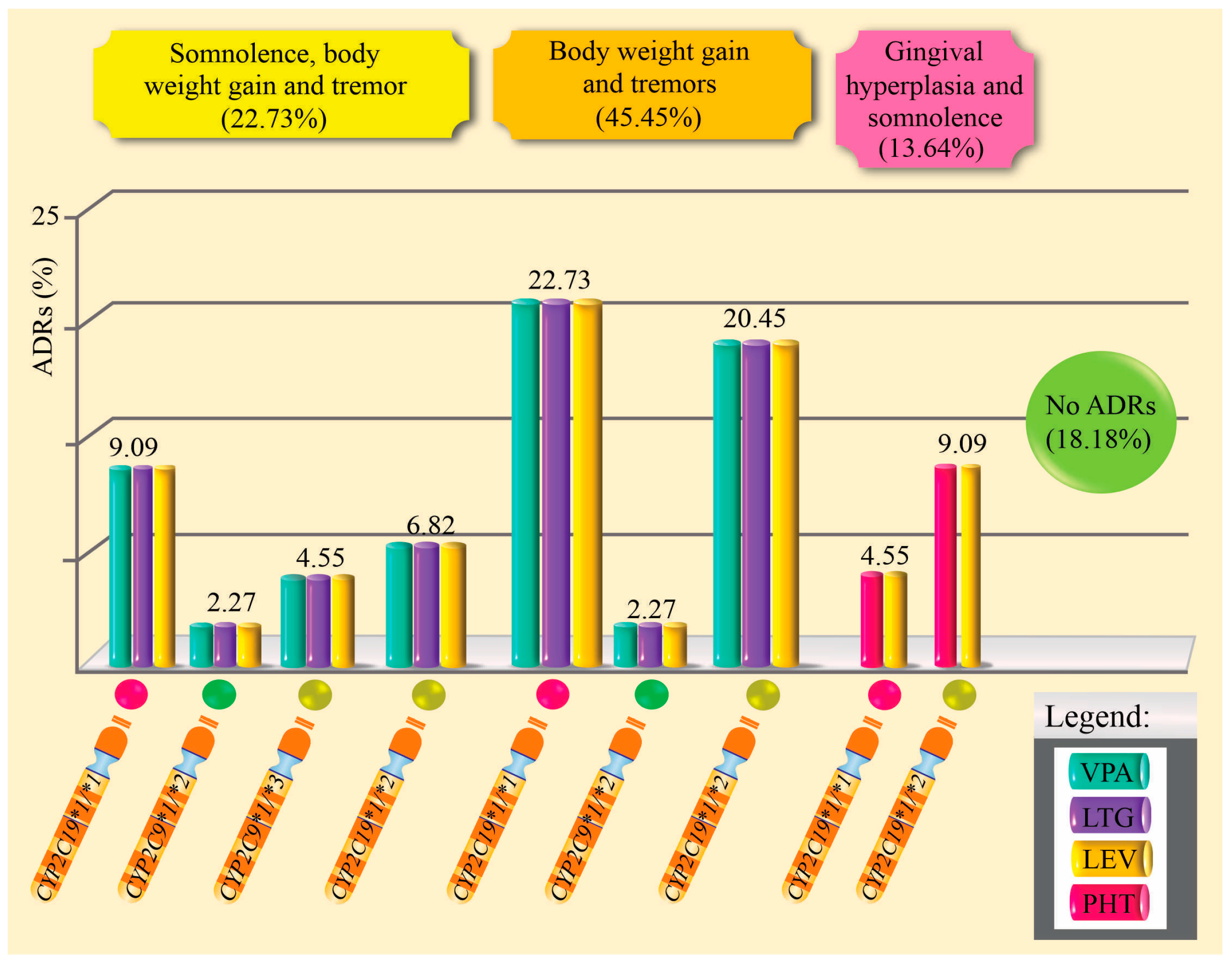
| Genotype | Phenotype | ASM | ADRs Observed in the Study | No ADRs n (%) | Total n (%) | ||
|---|---|---|---|---|---|---|---|
| Somnolence, Body Weight Gain, and Tremor n (%) | Body Weight Gain and Tremors n (%) | Gingival Hyperplasia and Somnolence n (%) | |||||
| CYP2C19*1/*1 | NM | VPA, LTG, LEV | 4 (9.09) | 10 (22.73) | 0 (0.00) | 5 (11.36) | 19 (43.18) |
| PHT, LEV | 0 (0.00) | 0 (0.00) | 2 (4.55) | 3 (6.82) | 5 (11.36) | ||
| CYP2C9*1/*2 | IM | VPA, LTG, LEV | 1 (2.27) | 1 (2.27) | 0 (0.00) | 0 (0.00) | 2 (4.55) |
| CYP2C9*1/*3 | IM | VPA, LTG, LEV | 2 (4.55) | 0 (0.00) | 0 (0.00) | 0 (0.00) | 2 (4.55) |
| CYP2C19*1/*2 | IM | VPA, LTG, LEV | 3 (6.82) | 9 (20.45) | 0 (0.00) | 0 (0.00) | 12 (27.27) |
| PHT, LEV | 0 (0.00) | 0 (0.00) | 4 (9.09) | 0(0.00) | 4 (9.09) | ||
| Total: | 10 (22.73) | 20 (45.45) | 6 (13.64) | 8 (18.18) | 44 (100%) | ||
| Independent Variables/Reference Category | OR | 95%CI | p-Value |
|---|---|---|---|
| Metabolic phenotype | |||
| NM (Referring) | - | - | - |
| IM and PM | 3.75 | 1.32–10.69 | 0.013 * |
| Type of pharmacotherapy | |||
| Monotherapy (Referring) | - | - | - |
| Polytherapy | 4.33 | 1.46–12.80 | 0.008 * |
| Seizure type | |||
| Focal (Referring) | - | - | - |
| Generalized | 1.62 | 0.55–4.77 | 0.379 |
| Allele (dbSNP) | Context Sequence TaqMan SNP Genotyping Assay™ |
|---|---|
| CYP2C9*2 (rs1799853) | GATGGGGAAGAGGACATTGAGGAC[C/T] GTGTTCAAGAGGAAGCCCGCTGCCT |
| CYP2C9*3 (rs1057910) | TGTGGTGCACGAGGTCCAGAGATAC[C/A] TTGACCTTCTCCCCACCAGCCTGCC |
| CYP2C19*2 (rs4244285) | TTCCCACTATCATTGATTATTTCCC[A/G] GGAACCCATAACAAATTACTTAAAA |
| CYP2C19*3 (rs4986893) | ACATCAGGATTGTAAGCACCCCCTG[A/G] ATCCAGGTAAGGCCAAGTTTTTTGC |
| CYP2C19*17 (rs12248560) | AAATTTGTGTCTTCTGTTCTCAAAG[C/T] ATCTCTGATGTAAGAGATAATGCGC |
Disclaimer/Publisher’s Note: The statements, opinions and data contained in all publications are solely those of the individual author(s) and contributor(s) and not of MDPI and/or the editor(s). MDPI and/or the editor(s) disclaim responsibility for any injury to people or property resulting from any ideas, methods, instructions or products referred to in the content. |
© 2025 by the authors. Licensee MDPI, Basel, Switzerland. This article is an open access article distributed under the terms and conditions of the Creative Commons Attribution (CC BY) license (https://creativecommons.org/licenses/by/4.0/).
Share and Cite
Alvarado, A.T.; Ignacio-Cconchoy, F.L.; Espinoza-Retuerto, J.C.; Contreras-Macazana, R.M.; Quiñones, L.A.; García, J.A.; Bendezú, M.R.; Chávez, H.; Surco-Laos, F.; Laos-Anchante, D.; et al. Association Between CYP2C9 and CYP2C19 Genetic Polymorphisms and Antiseizure Medication-Induced Adverse Reactions Among Peruvian Patients with Epilepsy. Pharmaceuticals 2025, 18, 1872. https://doi.org/10.3390/ph18121872
Alvarado AT, Ignacio-Cconchoy FL, Espinoza-Retuerto JC, Contreras-Macazana RM, Quiñones LA, García JA, Bendezú MR, Chávez H, Surco-Laos F, Laos-Anchante D, et al. Association Between CYP2C9 and CYP2C19 Genetic Polymorphisms and Antiseizure Medication-Induced Adverse Reactions Among Peruvian Patients with Epilepsy. Pharmaceuticals. 2025; 18(12):1872. https://doi.org/10.3390/ph18121872
Chicago/Turabian StyleAlvarado, Angel T., Felipe L. Ignacio-Cconchoy, Juan C. Espinoza-Retuerto, Roxana M. Contreras-Macazana, Luis Abel Quiñones, Jorge A. García, María R. Bendezú, Haydee Chávez, Felipe Surco-Laos, Doris Laos-Anchante, and et al. 2025. "Association Between CYP2C9 and CYP2C19 Genetic Polymorphisms and Antiseizure Medication-Induced Adverse Reactions Among Peruvian Patients with Epilepsy" Pharmaceuticals 18, no. 12: 1872. https://doi.org/10.3390/ph18121872
APA StyleAlvarado, A. T., Ignacio-Cconchoy, F. L., Espinoza-Retuerto, J. C., Contreras-Macazana, R. M., Quiñones, L. A., García, J. A., Bendezú, M. R., Chávez, H., Surco-Laos, F., Laos-Anchante, D., Cuba-Garcia, P. A., Melgar-Merino, E. J., Pari-Olarte, B., Bonifaz-Hernández, M., Almeida-Galindo, J. S., Kong-Chirinos, J., Pariona-Llanos, R., Aguilar-Ramírez, P., & Varela, N. M. (2025). Association Between CYP2C9 and CYP2C19 Genetic Polymorphisms and Antiseizure Medication-Induced Adverse Reactions Among Peruvian Patients with Epilepsy. Pharmaceuticals, 18(12), 1872. https://doi.org/10.3390/ph18121872