


Abstract
Cyber threats and vulnerabilities present an increasing risk to the safe and frictionless execution of business operations. Bad actors (“hackers”), including state actors, are increasingly targeting the operational technologies (OTs) and industrial control systems (ICSs) used to protect critical national infrastructure (CNI). Minimisations of cyber risk, attack surfaces, data immutability, and interoperability of IoT are some of the main challenges of today’s CNI. Cyber security risk assessment is one of the basic and most important activities to identify and quantify cyber security threats and vulnerabilities. This research presents a novel i-TRACE security-by-design CNI methodology that encompasses CNI key performance indicators (KPIs) and metrics to combat the growing vicarious nature of remote, well-planned, and well-executed cyber-attacks against CNI, as recently exemplified in the current Ukraine conflict (2014–present) on both sides. The proposed methodology offers a hybrid method that specifically identifies the steps required (typically undertaken by those responsible for detecting, deterring, and disrupting cyber attacks on CNI). Furthermore, we present a novel, advanced, and resilient approach that leverages digital twins and distributed ledger technologies for our chosen i-TRACE use cases of energy management and connected sites. The key steps required to achieve the desired level of interoperability and immutability of data are identified, thereby reducing the risk of CNI-specific cyber attacks and minimising the attack vectors and surfaces. Hence, this research aims to provide an extra level of safety for CNI and OT human operatives, i.e., those tasked with and responsible for detecting, deterring, disrupting, and mitigating these cyber-attacks. Our evaluations and comparisons clearly demonstrate that i-TRACE has significant intrinsic advantages compared to existing “state-of-the-art” mechanisms.
1. Introduction
Whilst businesses today are ever increasingly reliant on technology than before, and technological mediators underpin almost every critical civil society function, vulnerabilities exist within technological mediators, and these vulnerabilities have the potential to be exploited by adversaries, hence directly impacting the execution of business operations. Cyber security offers potentially valuable insights to enable security-related risks to be identified, quantified, assessed, and showcased to nontechnical C-Suite decision makers and budget holders. Hence, successful security management enables informed organisational decision making, improves cyber security strategy, and connects with the organisation’s needs and risk appetite, allowing it to achieve its long-term objectives more effectively.
Critical national infrastructure (CNI) comprises the essential and critical assets, such as information technology (IT), networks, facilities, etc., that underpin the provision of food, energy, health, emergency services, technology, transport services, and the interrelated processes that provide day-to-day essential services. CNI impacts individual life and a nation-state’s overall economic growth. The nature of CNI itself and its vital role in provisioning vital real-time, low-latency e-utilities means that standard security solutions, frameworks ISO standards, incident response and forensics are insufficient to adequately protect mission-critical connected CNI and OP facilities, systems, and sites from damage or loss. This research followed the generic ISO standard ISO31000 [1] for risk monitoring and risk communication and the CVSS scoring system. Organisations supporting CNI had just 36% of some 370 participating entities and already had sufficient cyber resilience. Siemens and the Ponemon Institute explored 64% of sophisticated attacks against key utilities. Keeping up with the industrial cyber threats sector was rated as a top challenge, and around 54% of respondents fully expected that an attack on CNI would occur in the next year [2]. According to the same, only 35% of survey participants reported that they have an IoT security strategy in place (of which only 28% said that they had implemented it).
Similarly, another survey [3] found that 80% of organisations had experienced cyber attacks on their IoT devices in the past year. However, refs. [2,3] found that 26% of the organisations did not use IoT-specific security protection technologies. These surveys demonstrate the inherent security limitations of many IoT devices (many have “lite” weak onboard, built-in security features), hence the urgent need for organisations to move at pace proactively to invest in IoT cyber security. Despite weak security measures, existing risk assessment methods are inappropriate for low-latency dynamic OP systems such as IoT devices. Hence, an extensive and dynamic cyber risk assessment method needs time to cope with the requirements of a resilient IoT system.
The i-TRACE project is a collaboration between the University of Warwick, British Telecommunications plc (BT) the national leader in network operations and management, Cisco the world leader in network routing equipment manufacturing, and Senseon a UK-based medium-sized enterprise. Through a developed system from Senseon, based on AI and threat data recovery, wrapped around network threat modelling and knowledge from the University of Warwick, the system can provide an enhanced discoverability system [4] that cannot be matched with the mitigation algorithms. Alongside discovery, i-TRACE provides a resilient trust system based on a blockchain signature system and Cisco’s Assured Transport System.
The i-TRACE project’s key performance indicator (KPI) assessment is a realistic, measurable, secure, low-cost, and long-life IoT cyber security solution that leverages existing edge device technologies in connection with distributed blockchain technology to add immutable identity, time, and content metadata to data in motion. The functions of KPIs within i-TRACE drive continuous optimisation, distinguishing between what has been implemented correctly and which areas still need attention and facilitating continuous fine-tuning of the system and controls. Since security threats constantly evolve, security management is a constant process, reliant upon KPIs to measure performance and derive security decisions as required. Since info-sec needs to be considered primarily a key managerial concern instead of a purely technological issue, KPIs are necessary to evaluate the success of particular software engineering activities, lifecycles, devices, third-party supplier products, networks, and architectures. Thus, KPIs need always be aligned with the objective and goals. This approach would be through key result areas (KRAs), critical success factors (CSFs), or key drivers of success [5].
The i-TRACE project KPI assessments emphasise the significance of security concerns by revealing the impacts that these have on the following use cases: connected and energy management sites. i-TRACE endorses the fact that cyber security concerns can potentially restructure the use cases and enhance a system’s overall efficacy and efficiency. Figure 1 below shows an architectural workflow diagram comprising different end-points. The solution is installed on the Preston site. It is used to collect data from each of these devices, regardless of the communication protocols, while guaranteeing the data’s integrity and interoperability. Potential benefits include securing and better managing the construction sites and accelerating the deployment of IoT sensing capabilities into more construction sites, including, but not limited to, drivers, location, actors, and success criteria. Hitherto, such sites have been conservatively managed/deployed. After selecting the project management KPIs, it is essential to define them in such a way as to clarify, articulate and support the goals of the project. The most important aspect of a KPI is to be “S.M.A.R.T.E.R”. (specific, measurable, attainable, realistic, time-bound, evaluation, and re-evaluation) for project success. Such KPIs not only help to ensure that the project is directed toward the right direction, but if the project deviates from its predefined success path, KPIs help to rectify its forward trajectory [6,7,8,9].
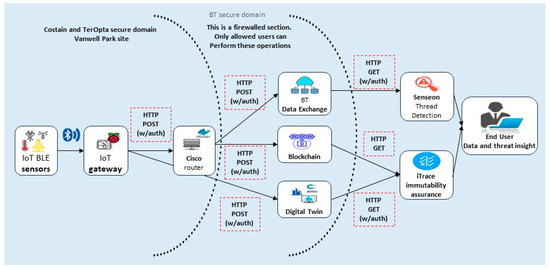
Figure 1.
i-TRACE architecture use cases.
The i-TRACE KPI-based methodology aims to address, hence remediate, the challenges of securing prevalent IoT devices. It seeks to offer reliable, low-cost and long-life IoT solutions in the context of various heterogeneous edge IoT devices’ deployments that leverage distributed blockchain technologies [10]. In the past, energy management approaches employed costly to monitor and energy inefficient solutions. However, due to technological advancements in IoT, numerous bespoke, end-to-end, cost-effective, and efficient systems have been deployed and, hence, are readily available. However, many so-called “low-cost” IoT devices and the end-to-end solutions have not been hitherto designed with cyber resilience in mind. This inevitably makes such bespoke “solutions” insecure and vulnerable devices with penetration points (attack vectors); as a result, an unauthorised user or attacker can take advantage of these attack vectors to penetrate and change or hack important data [11]. Generically, deploying such devices within end-to-end solutions creates a “trust” deficit. This deficit can fundamentally undermine the confidentiality, availability, and integrity of mission-critical CPNI systems, as exemplified by our two chosen use cases described in the following sections.
The key contributions of this paper are the following:
- A novel i-TRACE KPI assessment methodology is proposed to overcome the interoperability issues and reduce the cyber risks in IoT systems, using the use case of energy management and connected sites.
- The proposed resilient methodology leverages the digital twins’ modern technology and distributed ledger technologies.
- The security controls and vulnerability management of IoT devices are demonstrated.
- The SMARTER KPIs are followed to embody a set of wide-ranging countermeasures to the cyber security challenge of IoT.
The rest of the paper is organised as follows. Section 2 discusses the literature review. Section 3 presents the i-TRACE KPIs assessment methodology. The KPIs assessment, performance measurement, and risk evaluation are performed using two use cases, the connected sites and energy management sites, in Section 4. The conclusion of the work is presented in Section 5.
2. Literature Review
Numerous previous authors have sought to address the security challenges posed by IoT-enabled CPNI (Centre for the Protection of National Infrastructure) systems. In [12], the authors presented an approach to asset identification using a multicriteria-based decision theory to overcome the challenges of identifying critical assets of critical infrastructures (CIs). Whilst a valuable contribution to the literature, the authors do not offer a method for making a critical decision. A novel structured risk management approach was presented in [13], wherein the authors proposed specific techniques specifically designed to mitigate the hazardous events of internal and external impacts of a given CI. Their research followed the generic ISO standard ISO31000 for risk monitoring and communication. Interdependencies were also discussed within [12]. However, the authors offered no guidelines for calculating risk levels and their mitigation. In [14], the authors presented an overview of cyber-critical assets within CI. Strategic planning for civil protection and risk management activities was offered; however, the key issues of both threat impact and prevention were not explicitly addressed. In [15], the authors described and applied the UML (Unified Modelling Language) in telecommunication systems by adopting a model named TVRA (Threat, Vulnerability, and Risk Analysis). The TVRA, based on UML-centric modelling, enabled the authors to articulate and systematically analyse the system’s security objectives, weaknesses, assets, vulnerabilities, threats, and detrimental incidents. In [16], Clarizia et al. presented a multilevel graph methodology that collects and analyses sensor data using context dimension trees, Bayesian belief networks, and ontologies to support decision-making. In [17], Wang and Liu proposed a novel attribute, “location”, and presented a detailed vulnerability analysis for the Multimedia Subsystem (IMS) network and Internet Protocol (IP), designed to identify the weaknesses of IMS systems. However, many critical assets were not identified in their model. In [18], the authors proposed a novel model to determine the vulnerabilities that arise via unexpected interactions between system components. All the components were modelled using a high-level specification language to capture all possible behaviours of a system. Each behaviour was further analysed using an automated verification technique to identify security-related violation(s). Ezell [19] proposed a model that quantifies vulnerabilities using the IVAM (Infrastructure Vulnerability Assessment Model), applying the model to a medium-sized system. This paper did not specifically identify the overall assets; instead, the aim was to quantify the system’s security vulnerabilities fully. In [20], the authors reviewed the “state-of-the-art” cyber security risk assessment methodologies commonly used in SCADA (supervisory control and data acquisition) system design and deployment. Various risk assessment techniques were examined and analysed, including stages of risk management, application domain impact measurement, risk management, and probabilistic data evaluation tools. McQueen et al. [21] presented a technique to estimate the time needed for an attacker to compromise a system. This model estimates the expected value of known and visible vulnerabilities as well as the skill level of the attacker. The model was used to assess the risk reduction in a SCADA system. The authors also presented a method to estimate the time to compromise. They used the standard of the North American Electric Reliability Corporation (NERC), i.e., CIP-002 through CIP 009, to provide a security framework that supports the reliable operation and maintenance of electric power grids. In [22], the authors proposed a risk reduction model on a partial SCADA system. Their methodology was developed by estimating quantitative risk reduction using a graph-theoretical approach. Both cloud and blockchain were leveraged.
However, in all the preceding studies, the key issue of inefficient collaborations among project participants, which helps complete projects on time and within budget, remains unaddressed. Several studies [23,24,25] showed that DT technology has the immense potential to support information sharing among project participants. DTs are the virtual representation of digital assets using sensor data to represent real-time information visually. To share accountable information among fragmented participants using digital twins (for example), all the transactions need to be transparent without any potential for adversarial or other (malicious) manipulation. The shared data needs to be tamper-proof. However, heterogeneous DT issues in data management, including data storage, security, and sharing, have yet to be thoroughly realised.
DTs using a hybrid approach can selectively store and share important i-TRACE information traceability. The hybrid approach adds authentication and traceability to any transaction shared amongst participants. Decentralised mechanisms authenticate and attest to the accuracy and integrity of transactions amongst project participants. These serve to facilitate, verify, or otherwise automatically enforce agreement terms embedded within contracts. Consequently, collaboration is supported whilst at the same time reducing unnecessary interactions among participants (i.e., improved project efficiency and customer satisfaction; see [24]). Table 1 below aims to show that constructing an entirely new architecture is not required. Instead, our contribution leverages the “best” (optimal) features and functionality of existing architectures in a hybrid manner [25].

Table 1.
i-TRACE and existing architectures: an informal comparison.
It is clear that there is a genuine need to identify the critical assets, vulnerabilities, and threats to CPNI systems. It has been observed that there is currently a lack of systematic approach to support the critical national infrastructure (CNI) organisations via identifying their critical assets; hence, cyber security vulnerabilities and threats. Furthermore, what is needed is a systematic KPI-driven method of asset identification and vulnerability assessment consolidated with the effect of the vulnerabilities identified upon cyber threats, hence, associated risk. In the case of our novel i-TRACE solution (which leverages a private blockchain), only known participants are admitted to the network, thus confirming that only fully authenticated and authorised nodes can mine and append new blocks. The justification and choice of blockchain as the security architecture central to i-TRACE is that it drastically reduces the possibility of the injection of malicious nodes and/or other adversarial interference, even by a nation-state actor. This does not mean that blockchain can be made totally secure or that the data are immutable, per se [25]. However, due to numerous inherent advantages, it is an order of magnitude more “secure” than conventional choices such as private cloud.
3. i-TRACE KPIs Assessment Methodology
The i-TRACE KPI project has a set of proposed key results areas (KRAs) or key performance areas (KPAs) for each use case. Different parameters of each use case are measured accordingly to determine the impact of our innovation on the KPIs established in the programme. A dedicated methodology is also presented herein to assess the KPIs for the i-TRACE project out of the KPAs. Using that methodology, the key results areas (KRAs) for both use cases will be assessed and decomposed into smaller, more specific, quantifiable, and measurable indicators. This means selecting SMARTER (specific, measurable, attainable, result-oriented, time-based, evaluated, and re-evaluated) indicators. Data will be gathered in the data collection phase, during which each hand will be analysed using characteristics, such as its name, description, objectives, type (quantitative, qualitative), effort (low, medium, high), metric setup (scale, formula, range, weight, percentage), unit, assessment method, possible tool, analysis frequency, comments, etc., in the analysis and design phase. KPI questions will be framed to develop better and more meaningful performance indicators in order to validate the alignment of the goals set and achieved.
3.1. KRA of i-TRACE
As already discussed in the introduction section, key result areas (KRAs) or key performance areas (KPAs) are established in order to evaluate the effects of our innovation on the KPIs. A dedicated methodology has also been introduced to evaluate the KPIs for the project. As shown in Figure 2, the KRAs help define the scope and the optimum outcomes and results. To succeed, critical items require long discussions between consortium members to go through the pros and cons of the UCs individually; the following list of KRAs has been filtered for both the use cases (UCs) of i-TRACE.
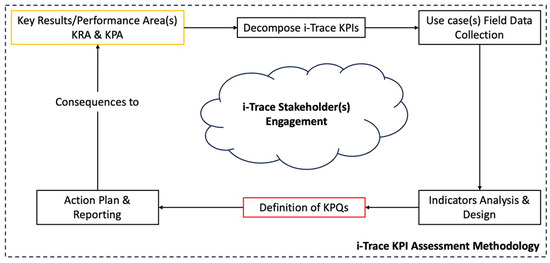
Figure 2.
i-TRACE KPIs’ assessment methodology.
3.1.1. UC-1: Connected Sites (CoS) KRAs
- Level of interoperability and immutability aspects achieved.
- Level of reduction in cyber security risks.
Level of safety for people on construction sites.
3.1.2. UC-2: Energy Management Sites (EMS) KRAs
- Level of reduction in cyber security risks (UC-1).
- Level of data immutability achieved (UC-1).
- Reduction in the attack surface.
- Level of minimisation of attack impacts.
3.2. Decomposition of KRAs
According to the methodology set out in Figure 2, after having KRAs in hand, they are further broken down into smart, smaller, more specific, practical, quantifiable, and measurable parts to achieve the importance of the meaning of each KRA regarding use cases. Therefore, the following decompositions were performed from Level I to Level III to gain insight into each use case.
Level I: Decomposition of KRAs of CoS and EMS
The following are explanations of the KRAs related to CoS and EMS use cases:
- Level of interoperability and immutability aspects achievedLet D = (V, E), where the vertex set V = {v1, vs. 2,⋯vs. n} is the set of n systems supporting the operational thread, and the edge set E = {e1, e2,⋯enn} is the set of directed connections between systems (including loops). Define the spin matrix S = [sij], sij ∈ −1, 0, +1, i, j = 1⋯n as a modified adjacency matrix and the multiplicity matrix C = [[cij]n × n, cij ∈ ≥0]I, j = 1⋯n as a spin matrix multiplication, where Cij is the number of times a system pair is repeated when the elements of T are taken two at a time in a forward direction. M = [Cij × sij]n × n, where M is defined as the interoperability matrix [26]. The data (or metadata) are securely distributed across several entities, ensuring integrity and lowering the risk of loss whilst offering an audit trail (in the case of a malicious actor). The “append-only” model inherent to blockchain provides all participants of the private blockchain with full transparency viz a viz activity. Enabling both a “holistic” viewpoint and forensic analysis to be performed for a “deeper dive” as desired [27].
- Level of reduction in cyber security risksRisk management is mission-critical to all business functions, and as companies grow, it becomes an ever more complex task. Managing risk at strategic and operational levels requires the nuanced consideration and evaluation of inherent trade-offs. Eliminating all risks, including security and technological risks, through assurance activities is simply impractical in terms of cost–benefit analysis. The intrinsic “tug-of-war” between productivity and security is tricky to manage; many risk professionals embedded within complex organisations are simply managers outmanoeuvred by day-to-day operational demands. The need to provide heterogeneous stakeholders within a large-scale healthcare provider access to Big Data inevitably means that such systems expose themselves to internal and external threat actors. Therefore, business risk managers should pragmatically conceptualise generic safety, cyber risk, and cyber risk mitigation within the context of CPNI.
- Level of safety for people on construction sitesWorking on construction sites is a hazardous activity with a high risk of on-site accidents, off-site hazards, health issues, and safety risks. The best ways to avoid construction site hazards will place you and your building sites in the optimal position to continue to attract the best workers. Injury, illnesses, mental health, and long-term damage are some of the main negative outcomes. Some of the main causes of these accidents are lack of communication/unclear training, electrocution, unsafe access/egress, unsafe spoil-pile placement, and lack of protective systems in place. In recent years, there has been a realisation that the reliability of complex work systems in achieving organisational goals safely depends on the work structures and the technical arrangements that the perceived level of risk and safety, the accident rate, the level of employees’ cooperation, the safety attitude of managers and employees, the level of employees’ physical risk in a workplace, and level of safety information indicate as key safety parameters [27].
- Reduction in the attack surfaceOne of the key ways to assess the vulnerability of a system is to assess and measure the number of ways an application, system, etc., can be exploited. The attack surface consists of a compendium of vulnerabilities an attacker could exploit to compromise the network system, device, or API. The larger the system’s attack surface is, the more vulnerable the system is to attacks and the more damage that is likely to result from the attacks [28]. By reducing the attack surface, we can protect the devices and networks of i-TRACE use cases, as it leaves hackers with fewer ways to perform their attacks. A large attack surface provides attackers with multiple points to gain illegal access to sensitive data such as personally identifiable information of employees and customers, financial transaction records, sensitive information exchange, and more. Continuous attack-surface review is needed to keep pace with technological and platform protocol evolution.
- Reduction in attack vectorsAttack vectors are potential points the attackers can use to penetrate the IoT environment by exploiting the vulnerabilities of both data and network. Each point, such as protocols, access points, and services, represents a vulnerability. To identify the attack vectors, it is essential to clearly understand the IoT environment and the most common devices used in each IoT domain [10].
3.3. Use Case(s) Field Data Collection
Sustainability performance management collects data in two ways: 1. Automatic data collection, which refers to collecting KPIs via automatic scripts, which access the corresponding systems to gather the data; and 2.Manual data collection refers to collecting KPI data via correspondence with users who provide answers manually. Typical data collection methods include surveys, questionnaires, interviews, sensor data collection, focus groups, automated machine data collection, and collection of archival data [29].
Data Collection for Energy Management and Connected Sites
In this section, data related to each KPI are collected and stored appropriately. Afterwards, an analysis will be performed to determine the results of each KPI accordingly.
3.4. Analysis and Design Indicators
The criteria used in the method, along with their definitions, can be found in Table 2. This list is a working subset of the original twenty criteria previously identified by Horst and Weiss in 2015 [30]. Each criterion is ranked numerically in descending order by each stakeholder, using a rank sum method. For example, a one is assigned to the most important criterion, a two is assigned to the second most important criterion, and so forth.
Table 2.
KPI assessment criteria.
The key performance indicator analysis for connected and energy management sites for each of the key KPIs for both our use cases, the corresponding KPI name, explanation, unit, formula, relevance, and time required to track each KPI [31] are presented below in Table 3.
Table 3.
Key performance indicator analysis for connected and energy management sites for each of the KPIs (#1–6).
3.5. KPQs for Connected Sites and Energy Management Sites
KPQs (key performance questions) help companies develop better, more meaningful, and useful performance indicators. This section presents the KPQs related to each finalised KPI for both the use cases: connected sites and energy management. KPQs help to optimise the tracking of the business’s goals and to indicate if the system is heading in the right direction.
3.6. Action Plan and Reporting
An audience and access to the KPI define the primary audience of the KPI, i.e., who these data are for and who will have access to them. The key performance indicator should always include an expiry date or revision date.
A smart dashboard will be designed to measure and report each indicator. The dashboard will be designed to perform all the designed tasks well before the set time and generate different types of alerts to guide its end users to take appropriate steps accordingly. A visual display (VD) highlights the most important information to assist in decision-making and performance management. The reporting frequency coordinates the data collection and ensures that the data are current and up to date. Performance management will be carried out autonomously.
4. KPIs Assessment: Connected Sites and Energy Management Sites
This section demonstrates an assessment of each KPI associated with the use cases (connected sites and energy management sites) of the i-TRACE project, filtered out in the section above.
4.1. Interoperability of the Use Cases
The i-Score methodology is used to calculate the interoperability of both the use cases of i-TRACE. The methodology is firmly based on the concepts of an operational thread and an interoperability spin. An operational thread is defined as a sequence of activities where each activity is supported by exactly one system (mechanism). An interoperability spin is defined as an intrinsic property of a system pair, which indicates the quality of the pair’s interoperation. Borrowing from physics, spin is a quantised intrinsic property. In this report, based on the i-TRACE’s use cases, i.e., energy management and construction sites, the word spin is used in connotation to describe the intrinsic interoperability between two devices, i, j, and quantise it as sij ∈ −1, 0, +1 (Table 4). To this end, the best spin (+1) is assigned when two devices can communicate without any translation (human or machine). An example of a system pair with sij = +1 is a sensor and a gateway. The next best spin (0) is assigned to a device pair, which requires an intervening device (nonhuman) to perform a machine translation to allow them to interoperate. An example of a device pair with sij = 0 is two devices or sensors that require gateways to interoperate. The worst spin (−1) is assigned when the only way for two devices or sensors to interoperate is if a human system intervenes and translates. A sij = −1 spin is often assigned between two human systems when they require a third human to perform language translation services in order for them to communicate, conduct business, or otherwise interoperate [32].
Table 4.
Table representing values for interoperate score.
A = {(1,2), (1,2), (1,2), (1,3), (1,3), (1,3), (1,4), (1, 5), (1,5), (1,5), (1,6), (1,7), (1,8).
(2,2), (2,2), (2,3), (2,3), (2,3), (2,4), (2,5), (2,5), (2,5), (2,6), (2,7), (2,8)
(2,2), (2,3), (2,3), (2,3), (2,4), (2,5), (2,5), (2,5), (2,6), (2,7), (2,8)
(2,3), (2,3), (2,3), (2,4), (2,5), (2,5), (2,5), (2,6), (2,7), (2,8)
(3,3), (3,3), (3,4), (3,5), (3,5), (3,5), (3,6), (3,7), (3,8)
(3,3), (3,4), (3,5), (3,5), (3,5), (3,6), (3,7), (3,8)
(3,4), (3,5), (3,5), (3,5), (3,6), (3,7),(3,8)
(4,5), (4,5), (4,5), (4,6), (4,7), (4,8)
(5,5), (5,5), (5,6), (5,7), (5,8)
(5,5), (5,6), (5,7), (5,8)
(5,6), (5,7), (5,8)
(6,7), (6,8)
(7,8)}
(1, 2) = 3, (1, 3) = 3, (1, 4) = 1, (1, 5) = 3, (1, 6) = 1, (1, 7) = 1, (1, 8) = 1
(2, 2) = 3, (2, 3) = 8, (2, 4) = 3, (2, 5) = 8, (2, 6) = 3, (2, 7) = 3, (2, 8) = 3
(3, 3) = 3, (3, 4) = 3, (3, 5) = 9, (3, 6) = 3, (3, 7) = 3, (3, 8) = 3
(4, 5) = 3, (4, 6) = 1, (4, 7) = 1, (5, 8) = 3
(5, 5) = 3, (5, 6) = 3, (5, 7) = 3, (5, 8) = 3
(6, 7) = 1, (6, 8) = 1
(7, 8) = 1
I = 41-8 = 34
Total interactions: 64
Direct Communication: Interoperable: (DCom): 21
In-direct Communication: (ICom): 33
Communication not possible: CNP: 10
DCom + ICom = 21 + 33 = 34 => I
Hence it is proved that both the use cases are fully interoperable.
4.2. Level of Immutability Achieved for Both the Uses Cases
A hash of device data is written to the blockchain to ensure privacy instead of the data themselves. However, because of the potential volume of data, creating a separate transaction for every sensor update or even every device update might become prohibitively processor- and storage-intensive. Thus, sensors belonging to a device are grouped, and a number of updates are collated before creating a hash. For these data to be used for verification, other metadata needs to be stored along with the hash, namely, the device ID, the timestamp of the first and last updates included in the hash, and a count of the number of updates included in the hash (to allow further checking). When a transaction is verified, this metadata is used to extract data from the data exchange so that the hash can be regenerated and checked against the hash stored in the blockchain.
The diagram in Figure 3 shows the overall process. Devices’ updates are sent to the router and forwarded to the data exchange, where they are stored immediately and to a buffer for the blockchain. When the buffer contains a certain number of updates, a hash is generated and stored along with the metadata as data in a transaction. The hash must be generated precisely since even one character difference would produce a completely different hash. The approach used is as follows:
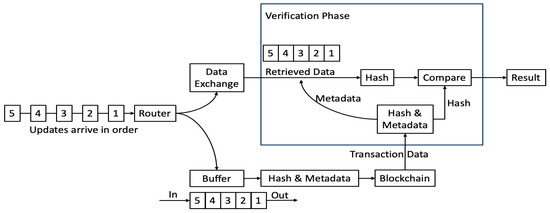
Figure 3.
Integration scheme among devices.
- Ensure the updates in the buffer are in time sequence.
- Create a data string for each update by using semicolons to join the individual data streams’ values (each data stream holds values for one of the device’s sensors).
- Join the data strings using semicolons to produce a combined data string containing all data for the update (note that in this and the previous step, no delimiter is actually required when joining values together, and the size of the hash is constant irrespective of the length of the input string; however, to simplify debugging and analysis, a human-readable delimiter is used).
- Compute the Keccak 256 hash of the combined data string.
It is conceivable that a device’s data might not all arrive in time sequence, so for robustness, the buffer used to hold data destined for the blockchain is actually three times the size of the number of updates used to generate a hash. When the buffer becomes full, it is sorted to ensure that out-of-sequence data are in the correct position, and then the oldest updates are removed and used to generate the hash. This is visualised and explained in Figure 4.
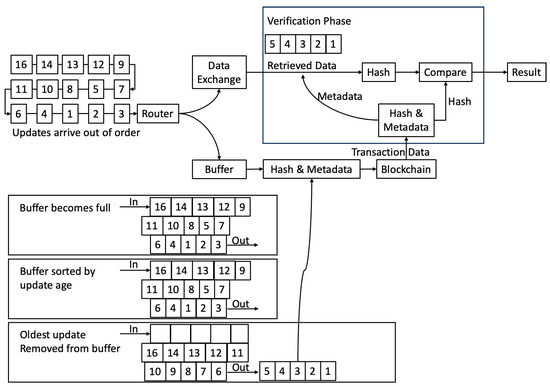
Figure 4.
Blockchain communication and calculation of Merkle root.
With reference to the “Verification Phase” block in the two figures, when verifying data, this is performed one transaction at a time, and the process is as follows:
- Obtain the data from the transaction. This is the device ID, the first and last timestamps of data included in the hash, the hash itself, and a count of the number of data groups used to create the hash (to enable a simple check).
- Use the device ID to map to the feed ID in the data exchange.
- Use the first and last timestamps to extract only the data relating to the transaction (and, therefore, the transaction’s hash) from the data exchange feed.
- Optionally check that the number of data points returned from the data exchange is the same as the expected number; if it is not, then the hash will not match, and there is no need for it even to be calculated.
- Create the hash using the data from the data exchange feed.
- Compare the newly-computed hash with that from the blockchain; if they match, then the data from the data exchange have not been altered and are the same as those sent originally (note that if the hashes do not match, this means that least part of the data do not match: this could be due to data that have been added to the data exchange feed in the transaction’s time range, data that have been removed from the feed, or data that have been altered in the feed. Whilst most or all of the data from the data exchange feed could be correct and unaltered, it is impossible to know what has changed, so all the data relating to the transaction must be treated as unreliable).
i-TRACE is a blockchain based on a decentralised P2P network and integrated with cryptographic processes. It can offer many new features and improve existing functionalities of IoT systems. Its security structure is more scalable than traditional ones, providing strong protection against data tampering, thus making it an attractive approach for addressing many security and trust challenges in large-scale IoT systems [33]. More specifically, the i-TRACE approach i. can be used to trace the measurements of IoT devices and prevent forging or modifying data. ii. can exchange data, establishing trust among themselves instead of going through a third party, significantly reducing the deployment and operation costs of IoT applications. iii. can eliminate a single source of failure within the IoT ecosystem, protecting the IoT devices used in both use cases from tampering. iv. can enable device autonomy via smart contracts, individual identity, and data integrity and can support P2P communication by removing technical bottlenecks and inefficiencies. v. although the configuration of IoT devices can be complex, the blockchain can be well adapted to provide IoT device identification, authentication, and seamless secure data transfer.
One of the most significant challenges in IoT scenarios is the vast amount of IoT data that is generated in a short period, and both the data hash and the data themselves need to be stored. If it does so, its immutability value would be 1; otherwise, it will be 0. Let I be the immutability vector, where the features of I = i0, i1,…, In, where n is the length of the I immutability vector, and each i-subsystem variable inside vector I represents a unique subsystem of immutability.
Consider the following scenario: a, b, c, d,…, n − 1, n are transactions; there are approximately 2000 transactions for a block of size I MB, with each transaction of 500 bytes between gateway and blockchain, all executed on the same block. Immutability or irreversibility is proved using the Merkle tree, a data structure constructed by recursively hashing pairs of transactions until only one hash, called the Merkle root, is used in Bitcoin to summarise all the transactions in a block. The following are the hash values of the transactions: h (a), h (b), h (c), h (d). The hashes are paired together, double-SHA256, resulting in Hash AB and Hash CD [34,35].
The diagram below (Figure 5) shows that the immutability in the communication or transactions between blockchain and other concerned devices will be maintained to 1 because if someone tries to pollute any block, then, of course, the entire block Merkle root’s hash code will be changed and the next block will be able to fetch its parent. The polluted node breaks from the chain and can be detected easily. Hence, the chain is almost immutable at different levels, as shown in Table 5.
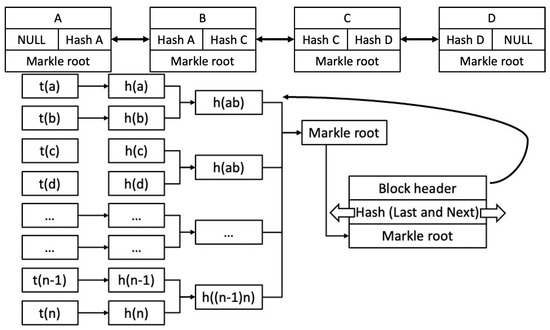
Figure 5.
Blockchain communication and calculation of Merkle root.
Table 5.
Communication at different levels and its impact.
4.3. Reduction in Cyber Security Risks of Both the Uses Cases
NIST conducts the risk assessment process, including risk (a) acceptance, if it is under a harmless level (risk appetite), (b) mitigation, by applying security measures, (c) transfer, or (d) avoidance, by removing the affected asset itself. This section will summarise the vulnerabilities of the IoT devices, which in the case of i-TRACE are resource-constraint sensor nodes and smart devices (Table 6). Based on a vulnerabilities assessment for the devices of the use case 1, compromise of the CIA (confidentiality, integrity and availability) triad is possible if: (a) the network services are not secure enough on the devices; (b) the gateways, digital twins, blockchain, and databases are not secured; (c) the device firmware is not validated; (d) insecure OS platforms or components from a compromised supply chain are used; and (e) hardening i.e. the process of securing a system by reducing its surface of vulnerability is not performed. Other vulnerabilities are related with (a) possibilities of cross-site scripting (XSS) attacks in Web applications, (b) possibilities of file directory traversal in the cloud server, (c) unsigned device updates, and (d) devices that ignore server certificate validity. Indeed, IOT suppliers shall use a Web application firewall to protect servers from HTTP traffic at the application layer. Recently, tremendous botnet-powered distributed denial of service (DDoS) attacks have exploited vulnerabilities of a few thousand IoT gadgets, utilising them to send bad traffic to valid websites. Vulnerabilities drastically increase the risks born due to the IoT devices, thereby mandating the need for a structured risk assessment process within the risk assessment frameworks. Table 7 depicts how the ranking of IoT risks can be calculated, resulting in five risk levels. If the risk ranks ≤ 10, it is very low, thus not worth considering. Low and medium risks need to be considered. High and very high risks need better treatment as their impacts are high [34,35].
Table 6.
The devices used in the use cases energy management and connected sites.
Table 7.
Level of risk rank criterion. The different colours represent the different levels of IoT risks, with black being the high probability of risks and blue for no risk concern.
4.4. Attack Surface Reduction for Both the Use Cases
A two-step approach is required to reduce the attack surfaces for both the use cases. As a first step, the risks associated with well-known vulnerabilities of the devices are assessed, as shown in Table 8 and Table 9, as well as the well-known threats or attacks associated with both the use cases, as shown in Table 10. Vulnerabilities exist in both the use cases. Having vulnerabilities and threats defined and assessed, it is essential to identify security control methods to patch those vulnerabilities and prevent the attacks. Security controls to reduce the attack surfaces of use cases 1 and 2 are shown in Table 11 and Table 12, respectively.
Table 8.
Use Case 2: Energy management’s risk rank calculation.
Table 9.
Use Case 1: Connected site’s risk rank calculation.
Table 10.
Known vulnerability associated with both the use cases.
Table 11.
Security control methods to address the vulnerabilities.
Table 12.
Security controls are defined for the use cases 1 and 2.
4.5. Attack Surface Reduction in Use Cases 1 and 2
The above table (Table 12) shows the number of vulnerabilities associated with each asset of the use cases that have been exploited by the list of threats to access or damage the assets. This defines the attack surface, the number of all possible points or attack vectors where an unauthorised user can access a system and extract data. Hence, security controls should be applied against the sub-attack surface presented at different layers of the use case to reduce the risk of attack.
4.6. Level of Safety for People on Construction Sites
The questionnaire (in Appendix A Table A1) consists of attitudinal questions to be answered with scaling (“strongly agree”, “agree”, “neither agree nor disagree”, “disagree”, and “strongly disagree”) by concerned stakeholders of safety on construction sites including operatives, managers, and safety officers of the construction sites. In the light of data gathered against each question, the analysis will be performed and hopefully provide better safety measures on construction sites [54].
4.7. i-TRACE Strength with Blockchain and Digital Twins
The main components of the proposed framework are presented in Figure 6. The participating entities (such as sensors, machines, and humans) registration process is manual as the device IDs are manually added to the code, and any unknown device is ignored (step 1). Next, at the data layer, the assets monitor, collect, and process designated parameters in the physical space of the shopfloor (step 2a). The resource-constrained devices used in the use cases monitor and collect data, whereas the gateways receive requests from sensors requests and process data. The collected data and provenance are sent to the storage layer (step 2b). Provenance is metadata that records a complete lineage of data and a set of actions performed on data [55]. Based on the collected sensor data, domain knowledge, system history data, and process documents, the twinned system generates models and stores them at the storage layer (step 3). The application layer keeps analysing data to detect incidents (step 4). In case of trouble, the respective scheduling services (step 5a) in the physical space or the model calibration services (step 5b) in the virtual space are called, completing the feedback loop. The storage layer provides secure distributed data storage through a lightweight, scalable, and quantum-immune blockchain. In the implementation phase, no actual data values are stored in the blockchain (this is intentional to keep potentially sensitive data private in a potentially public blockchain); instead, only the hash of the data is stored along with information about which data they are so that the device ID, the start time, end time, and the number of expected data points can be verified.
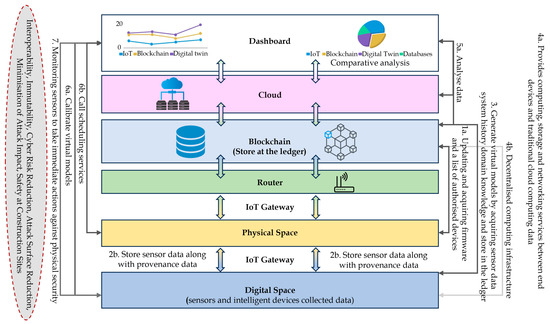
Figure 6.
i-TRACE extension(s): cloud and blockchain with DTs.
Additionally, surveillance cameras, fire alarms, and power monitoring devices are deployed as physical security countermeasures to prioritise critical events. Since the repercussions of contingency events require immediate actions, we also enable the direct continuous monitoring of such events through sensory data logged at the control unit. Figure 6 further elaborates on the connection between the data layer and storage layer of the proposed framework. Before the production process, necessary details such as sup-ply chain data (e.g., consignment information), order information (e.g., material stock, production quantity, estimated cost), simulation data (equipment historical data, prediction of equipment fault), etc., are already stored in the storage system (step 1a and 1b). Based on the product lifecycle data, domain knowledge, and process documents, the predefined values of the acceptable ranges of system performance parameters are also stored (step 2). We consider steps 1 and 2, a one-time data access during the process.
During the production process, to enforce interoperability, we introduce a data wrangling method which is responsible for cleaning invalid or missing data and converting different data formats into a unified format before inputting data into the twinned system (step 3). As the process initiates, the underlying process data and provenance are recorded on the storage system (step 4). Furthermore, we introduce a data synchronisation method (step 5) for digital–physical mapping and checking for data inconsistencies. The reason for relying on such a process is to limit the frequent, time-consuming access to the blockchain-based storage system, where we explicitly separate the data flow of real-time sensor data and the less dynamic production and provenance data. The data synchronisation method performs a continuous mapping between the predefined equipment performance parameters retrieved from the framework, illustrating the monitoring, collection, storing, processing, and analysis of data from humans, machines, and sensor devices.
Real-time sensor data are obtained from the manufacturing unit to verify their consistency (step 6). The data synchronisation method can access the updated process and provenance them directly from the ledger (other than the manufacturing unit) to eliminate the qualms of those that are untrustworthy. In case of inconsistencies reported by the synchronisation method, corresponding scheduling services (in the physical space) or model calibration services (in the virtual area) carry out the neces-sary measures (step 7a) first at the virtual system (step 7b) and afterwards regulate them on the physical system (step 7c). After resolving the issue, the updated model is stored in the blockchain. The end user or the dashboard uses the blockchain to obtain information about the underlying network, physically and digitally, through edge computing and cloud services.
One clear alternative to integrating blockchain with the IoTs is integrating the IoT and cloud computing [56]. This integration has been used in the last few years to overcome the IoT processing, storage, and access limitations. However, cloud computing usually provides a centralised architecture, which complicates reliable sharing with many participants compared to the blockchain. Integrating blockchain and the IoT addresses previous limitations and maintains reliable data. Fog computing aims to distribute and bring computing closer to end devices, following a distributed approach like blockchain. This can incorporate more powerful machines than the IoT, such as gateways and edge nodes, which can then be reused as blockchain components. Therefore, fog computing could ease the integration of the IoT with blockchain.
4.8. i-TRACE Strength Utilizing Blockchain Technology
Since the importance and use of IoTs have been growing exponentially day by day, considering their autonomous and competent intelligent nature in transforming data from the physical to the digital world, the challenges associated with the technology have also been increasing accordingly, particularly in the field of cyber security. The devices in IoT are connected in a decentralised manner, so it would be impractical to use the standard security techniques for communication among the devices. To address the security issues in the decentralised distributed network environment, blockchain technology (BC) is introduced. The BC helps store and provide a decentralised, distributed, and publicly available shared ledger for the processing and verifying of nodes in the network. The data made available in the public ledger are automatically managed by peer-to-peer technology. The BC consists of blocks where the data related to nodes are stored and chained with each other with the help of enclosing the previous block’s hash in the current block, chaining the block together as a circle in the public ledger.
Each block has two sections: the header and the data section, which has a group of transactions. The title presents metadata used to give all the details, such as version number (4 bytes), previous block’s hash (32 bytes), timestamp (4 bytes), Merkle tree (32 bytes), difficulty target (4 bytes), and a nonce (4 bytes) of the block in the ledger. The data section stores and processes data for verification of the transactions. These transactions are the interactions between the nodes in the use cases. The sequence of these transactions presents a use trail of use-device activities in the use cases. The use of BC in the use cases helps to prevent compromise in case of a single point of failure because of its decentralised nature. One of the criticisms raised on using BC technology in resource-constrained devices is that they do not have enough computation or storage power to support them. The answer is that BC considers those devices as a part of their chain that does not have these constraints, such as interaction being carried out through IoT–router in the use cases.
Moreover, traditional IoT environments face some issues, such as scalability, interoperability, security, privacy, trustworthiness, etc. BC has been introduced into the network to address these concerns. The concept of BC comes into existence through the framework of IoT and cloud Integration [57].
4.9. i-TRACE Strength Utilising Digital Twins
Digital twins (DTs) were initially presented by the National Aerostatics and Space Administration (NASA) to monitor aerospace missions to diagnose problems and provide proven solutions [58]. Nevertheless, the concept described by the current DTs for simulating real-world systems is not the same as NASA’s suggestion because it is more than just the system’s virtualisation [59]. The concept of DTs, a digital entity of the physical entity, works independently. Still, these two share a twin relationship, being used today, introduced by Michael Grieves in [60] and later in [61]. In connection with these, DTs are considered “machines (physical and virtual) or computer-based models that are simulating, emulating, mirroring or twinning the life of a physical entity” [61]. There are some similar definitions, such as “a system that couples physical entities to virtual counterparts, leveraging the benefits of both the virtual and physical environments to the benefit of the entire system” [61], “multiphysics, multiscale, probabilistic simulation of an as-built vehicle or system that uses the best available physical models, sensor updates, fleet history, etc., to mirror the life of its corresponding flying twin” [62], “a computerised model of a physical device or system that represents all functional features and links with the working elements” [62], and “a virtual representation of real-world entities and processes, synchronised at a specified frequency and fidelity” [59,62].
DTs are integrated multiscale, multiphysics, probabilistic simulations, representations, and real-world mirroring of physical components [62]. DTs are envisioned to transform the working of their products in terms of design and shape and work across various industries. They have a profound impact on different manufacturing industries [59,61]. On the other hand, the IoTs paradigm deploys multiple devices and technologies such as sensors, actuators, microcontrollers, and cloud-enabled services and analytics [63,64]. It is observed that approximately forty-five billion IoT network devices will provide DTs with the data they need in Europe by 2021. According to the report of Gartner [65], 13% of enterprises implemented IoT projects using DTs, whereas 62% are going to employ DTs or planning to do so. They help industries manufacture and manage IoT devices for better and improved outcomes with precise tolerance and flexibility [50]. They also help to comprehend what the IoTs would accomplish before being assembled or manufactured. Because of their striking features, they are expected to be used by NASA and the United States Air Force in future generation vehicles. DTs help perform analytics on holding data, and the need to exchange the enormous amount of data transparently and trustably was a challenging issue [66,67]. Using blockchain with DTs has become the most relevant and capable technology to ensure transparency, trust, and security in DTs [58,68].
Recent advancements in IoT technologies allow DTs to be connected in such a way that supports effective monitoring and data analysis throughout their lifecycle for enabling proactive maintenance, new opportunities development, and planning for further operations with physical counterparts in real-time. The IoT layer stack consists of five layers (Figure 7): physical space, communication layer, digital space, data analysis and visualisation, and application and security layer. The first layer (physical space) consists of sensors, cameras, actuators, etc. The sensors and other intelligent devices collect data from physical objects and send them to the digital space through the communication layer for data storage and processing in the above layers. The second layer (communication) is implemented right above the PSL of the digital twin model. This layer offers to effectively transmit/receive data by the sensors/actuators to the higher layers for further processing and analysis of the data. It acts as a bridge between the physical space and the cyber/virtual space. As it is more likely to consider that both physical exact and virtual space may not be in the same geographical location, the DTs need a wide area wireless network for their communication; in our case, it is considered LoRaWAN. The third layer (virtual or cyberspace) is comprised of two sublayers: data aggregation and modelling. The aggregation layer collects data from underlying sensors through the communication layer for storage and processing. At the same time, the data modelling layer performs modelling of the data present at the aggregation layer. The fourth layer (visualisation) works in connection with the third layer by accessing data from the visualisation layer to mine the data for assessing the condition of the physical objects or systems and predict possible failures and maintenance requirements for the foreseeable future and after performing an analysis on the data reports being made and sent to management. Finally (application and security layers), it is noticed that a large amount of data is being transmitted to the virtual space, which shows that DTs are intrinsically present in a manufacturing process and can dramatically help improve production efficiency, flexibility, and visibility. These node-recorded data can help show the insights of each sensor node and innovative component using business intelligence tools and techniques. For example, the data collected from the physical layer devices can help reduce the devices’ downtimes [69]. Furthermore, the data stored at the visualisation layer are used to present the performance in charts, graphs, and reports. The performance evaluation carried out at the dashboard using such statements helps in identical important key performance indicators (KPIs) to be considered, tracked, and predicted to achieve the goals set by the use cases. Similarly, each layer of DTs can be vulnerable to severe attacks, including demanding, replacing, and stealing sensors, detail of service attacks (injection, sniffing, hijacking, and spoofing), data manipulation, and alteration of analytical algorithms. Cyber-attacks and security threat assessments must be carried out regularly to ensure resiliency.
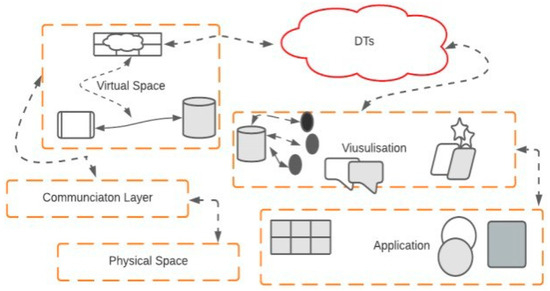
Figure 7.
Layers of IoTs: physical to the application layer.
4.10. i-TRACE Strength Utilising the Cloud Environment
The cloud environment provides enormous resources to meet communication and storage requirements through virtualisation. Each request proceeds via an infinite number of processors of the help-constrained devices in IoTs. Cloud computing offers many advantages and services, including Pay-As-You-Go (PAYG), Software-as-a-Service (SaaS), Platform-as-a-Service (PaaS), Infrastructure-as-a-Service (IaaS), Application-as-a-Service (AaaS), and Utility-as-a-Service (UaaS). The merge of cost-effective sensor-based processors with communication technologies brought about the technical revolution in IoTs [70]. IoTs aim to offer direct communication between machines and bring these online to become autonomous, intelligent, and self-organising devices [71].
The IoT devices have been used for monitoring, controlling, or interacting with ubiquitous devices to enable intelligent services such as construction energy management, construction sites, etc. This concept gives birth to the cloud of things (IoT) paradigm [72,73]. Hence, having that paradigm in use provides and manages services and shows great potential to improve the performance and efficiency of service delivery [74]. On the other hand, this architecture tends to be ineffective because of the following challenges. First, the paradigm is based on a centralised communication model, making the network’s scalability harder in case more widespread networks are considered [75]. Second, considering IoT data processing in the paradigm explains that most of the current architecture relies on a third party, hence raising data privacy concerns. The last concern is higher power consumption and communication latency because long data transmission hinders large-scale deployment in practical scenarios. Banafa [76] presented three layers: things, network infrastructure, and cloud infrastructure, as shown in Figure 8 below. Each layer has its issues, as listed in the following diagram.
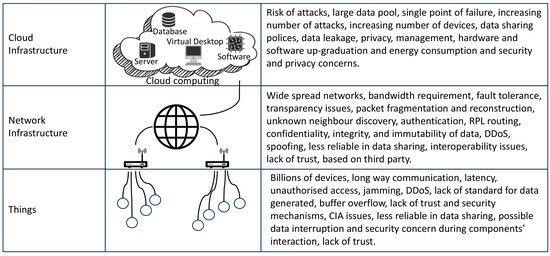
Figure 8.
Issues in cloud-computing-based IoT [76].
Figure 1 shows that IoT system architecture comprises the following five components: IoT devices, IoT gateway, router, blockchain, database, and user devices to access the information. In addition to its advantages, in the past decade, the cloud infrastructure has also been singled out for several issues [77]. These issues include security, privacy, losses and risks, scalability, latency, energy consumption, cost, payment, and billing (Table 13) [77].
Table 13.
Summary of issues in cloud computing and blockchain-based IoT.
Given the limitations discussed previously, more sustainable and decentralised applications must be proposed to replace the traditional centralised model with the blockchain, as discussed in the above section. To offer the blockchain in the cloud environment, the computing paradigm helps to achieve the best of both worlds and makes it compatible with sustainable applications for both industries and academia.
Table 13 shows that blockchain offers security, avoids losses and risks, and preserves security and privacy. Blockchain has a robust payment method, while the cloud provides network scalability and combats the forking issues of the blockchain. Issues such as scalability, flexibility, latency, cost concerns, and energy consumption could be addressed by using DTs. It provides a more robust and flexible solution, called tomorrow’s technology, in the form of i-TRACE, certain that the upcoming architecture will be based on some hybrid approach. Based on current ongoing research activities and projects to overcome the challenges, i-TRACE is proposed as a possible hybrid approach and a way forward to overcome existing problems.
4.11. i-TRACE Addressed Challenges: Energy Management and Connected Sites
The rapid increase in cyber-attacks is partly due to the phenomenal growth of IoT devices in smart areas such as energy management, construction sites, etc. Security management of the IoT is challenging due to the dynamic and transient nature of the connection between devices [97,100], the diversity of actors capable of interacting within IoT systems [97], and resource constraints [101]. Due to the increasing number of cyber-attacks on IoT devices, maturing security regulations, and rising security concerns, a compound annual growth rate of 33.7% in the cybersecurity market is expected from 2018 to 2023 [95]. Based on recent threat reports, it is further indicated that IoT will be more widespread and impactful and will force senior management to pay more attention to IoT risks while developing the organisation-level cyber risk man-agement [98]. According to the same, only 35% of survey participants reported that they have an IoT security strategy in place, of which only 28% said that they implemented it.
Similarly, another survey [102] presented that 80% of organisations experienced cyber attacks on their IoT devices in the past year. However, 26% of them did not use security protection technologies. These two surveys demonstrate the security limitations many IoT devices have and the need for organisations to proactively invest in IoT cyber security. Despite the weak security measures, existing risk assessment methods are inappropriate for dynamic systems such as the IoTs [103]. i-TRACE used in the energy management and construction site plan scenarios is sufficiently designed for considering interoperability, known vulnerabilities associated with the devices, threat analysis, and cyber security risk assessment of the systems whose complexity broadens wide attack points to adversaries [104]. Developing IoT systems around a standard platform may help organisations develop IoT security measures without inadvertently raising cyber risks [105].
I-TRACE aims to reduce cyber security risks related to energy management and construction site organisations and users by protecting assets and privacy. New technologies are emerging and providing opportunities and challenges for cybersecurity management. However, most of them focus on the technological aspects of IoT cyber security rather than on risk management frameworks to address these complex issues. It has been recognised and endorsed to identify any malicious activity or sources and mitigate attacks in a timely fashion before damaging the organisation’s assets to share cyber threat information (CTI) in a timely and reliable manner. NIST [106] defines CTP as “any information that can help an organisation identify, assess, monitor and respond to cyber threats”. According to a survey conducted by SANS [107], 72% of those responding to the study mentioned that, in 2018, they had produced or consumed such information for their network defence. The respective percentage was 60% in 2017. This shows that information sharing is becoming a part of organisations’ strategies, and the amount of organisations joining the community is rising.
The impact of a successful attack can damage different aspects of the business, which are broadly divided into financial, reputation, and legal aspects. In economic damage, the cyber-attack results in theft of cooperating information, financial information such as bank details or payment card details, etc., theft of money, disruption of trading such as inability to carry out a transaction online, and loss of business or contract. Dealing with these breaches generally incurs costs associated with repairing affected systems and devices. According to the latest government survey [108], 2022 presented that 39% of UK businesses have noticed cyber-attacks. Among these, 31% estimated at least one attack per week, and one in five said that they had experienced adverse outcomes due to an attack; in connection with material products, the average estimated cost of cyber attacks in the last 12 months is GBP 4200. This figure rises to GBP 19,400 for medium and large organisations. At the same time, reputational damage can obliterate the organisation’s trust, an essential element of a customer relationship. This could lead to loss of customers and sales and profit reduction. This can even have an impact on the supplier or affect the relationship ties with the partners, investors, and other invested third parties. Finally, the legal consequences of the cyber breach, as data protection and privacy bind to manage the security of all the personal data being held, may include fines and regulator sanctions if these data are compromised deliberately or accidentally, and the deployment of appropriate security measures failed. Understandably, a security breach can devastate even the most resilient system, but managing the risk of the breach is extremely important in having an effective security incident response in place. It could reduce the impact, report the incident to the concerned authority, clean up the affected area, and have the system up and running in the shortest possible time.
In light of the existing literature on cloud-based IoT, it is accepted that it is more vulnerable to cyber-attacks. To fix those consequences and issues of cloud-based IoT, blockchain-based IoT has been introduced because it has the potential to overcome the problems of cloud-based IoT, including centralisation, by providing peer-to-peer distributed ledger and changes to the stored data, thus providing a high level of trust, immutability, and integrity of data among non-trusting parties. In the case of i-TRACE (a private blockchain), only known participants are admitted to the network and confirm that authenticated and authorised nodes can mine and append the new blocks. Therefore, it ensures that no malicious node exists in the network, increasing the overall security of the system.
To share accountable information among fragmented participants in the digital twin, all transactions must be transparent without any potential manipulation. The shared data needs to be temper-proof and shared as treatable among the participants. However, the issues with DTs concerning data management, including data storage, security, and sharing, still need to be thoroughly realised. Addressing the case above of DTs, using a hybrid approach can selectively store and share important i-TRACE information traceably. The hybrid approach adds authentication and traceability to any transaction that participants share. The hybrid system further uses decentralised mechanisms to authenticate and consent to the accuracy and integrity of transactions among the project participants [109]. This ends up sharing information securely and transparently, making information transmitted in DTs accountable. With the help of this approach, lengthy contracts and payment execution are automated and quickly advanced through the intelligent contract, a self-executing contract protocol intended to facilitate, verify, or enforce an agreement in connection to a contract term automatically. Consequently, reduced collaboration among participants improved project efficiency and customer satisfaction [103]. Moreover, the hybrid approach proved to be the most robust and reliable infrastructure for IoTs [104].
4.12. i-TRACE’s Performance Analysis Energy Management and Connected Sites
i-TRACE uses IoT devices that have the feature to communicate through wireless and remote locations and deal with security and privacy challenges, including interoperability, mutability, cyber risk measurement, unrestraint due to no password, devices evolution failure, malicious data access, use of devices in a casual way, etc., in the field of energy management and construction management sites. It supports connected things, humans, systems, and knowledge. It also provides the solution to cyber security disruptions increasing globally due to increasing industrial IoT devices such as sensors and actuators. The devices connected to the internet are being estimated to surpass 20 billion devices [110,111], 30 billion [112], 10 billion [95], and 50 billion [112,113,114,115].
i-TRACE’s security aims to successfully bridge the connectivity, vulnerability, compatibility, interoperability, immutability, attack surface minimisation, and cyber risk minimisation gaps between operational technology (OT) and information technology (IT). The framework for the industry to increase IoT visibility has introduced security issues around link establishment, authentication, key agreement, and encryption methods in IoT applications and services. Security in industrial work was known as safety, and the protection of workers and machines in the industrial setup [22,23] was not associated with the IT world. This means that i-TRACE development of IoT solutions for cyber-physical systems (CPSs) should be the convergence of OT and IT requirements. The IT domain has been identified as a dangerous platform because smart connected devices can compromise industrial systems [24]. The security procedure in the i-TRACE environment should capture the ecosystem’s hardware, networking, application-specific requirements, and third-party aspects.
4.13. Comparison of i-TRACE with State-of-the-Art Mechanisms Using Risk Analysis
The i-TRACE project has been observed under different impacts, including safety, health, environment, security, operational disruption, financial/cost of loss, objectives, brand and reputation, legal, regularity, people, technology innovation and delivery, cyber security, likelihood, along with different options, as per Table 6, Table 7, Table 8, Table 9 and Table 10, to calculate the risk against attribute values: very low (1), low (2), moderate (3), high (4), and very high (5), for the particular assets involved for both use cases 1 and 2. It is proved that the i-TRACE solutions engaged for both the use cases and scenarios, with threat agents and their properties presented in Table 14 and Table 15, are more trustworthy and effective for the network’s resilience. It is further observed that i-TRACE is a better solution than existing mechanisms available in the literature, as demonstrated in Table 16 and Table A1 for energy management sites and connected sites, respectively.
Table 14.
Use Case 1 scenarios’ threat actors and their properties. Threat = f (capability, motivation, catalyst, opportunity, threat score, method).
Table 15.
Use Case 2 scenarios’ threat actors and their properties. Threat = f (capability, motivation, catalyst, opportunity, threat score, method).
Table 16.
Comparison of i-TRACE with state-of-the-art mechanisms available in the literature.
The Wilcoxon signed-rank test is used to statistically test the proposed approach and compare it with the state-of-the-art methods for all evaluation metrics. The p-value for all evaluation metrics is less than 0.05, indicating that the proposed system is better than the state-of-the-art ones.
5. Conclusions
This paper presented the i-TRACE KPIs assessment methodology of IoT devices by employing use cases of energy management and connected sites of CNI. The proposed hybrid methodology is used to combat the growing vicarious nature of remote, well-planned, and well-executed cyber-attacks on CNI’s IoT devices. The i-TRACE KPIs assessment methodology accesses each level of the KPIs of both use cases in detail. The proposed method is divided into four significant steps, including (1) KPI decomposition into different levels, (2) KPIs’ data collection and reporting, (3) KPQs, and (4) KPI assessment performance. These key steps are identified to achieve the desired level of interoperability and immutability of data. A dedicated methodology is also presented herein to assess the KPIs for the i-TRACE project out of the KPAs. The key results areas (KRAs) for both the use cases were assessed and decomposed into smaller, more specific, quantifiable, and measurable indicators as selected SMARTER (specific, measurable, attainable, result-oriented, time-based, evaluate, and re-evaluate) factors. A detailed risk rank calculation method for both use cases, including vulnerability type, impact of CIA traits, exploitability, device risk score, likelihood, risk score, and risk level, was also discussed at the end of the paper.
Author Contributions
Conceptualisation, methodology, validation, formal analysis, writing—original draft preparation, A.M.; writing—review and editing, visualisation, N.E.; conceptualisation, review and editing, supervision, G.E. conceptualisation, funding acquisition, resources, C.M.; writing, investigation, R.W. All authors have read and agreed to the published version of the manuscript.
Funding
This work is co-funded by Innovate UK, Grant Agreement number 105590 (i-TRACE).
Institutional Review Board Statement
Not applicable.
Informed Consent Statement
Not applicable.
Data Availability Statement
The data presented in this study are available on request from the corresponding author.
Conflicts of Interest
The authors declare no conflict of interest.
Appendix A
Table A1.
Questionnaire enlisting questions for safety on construction sites.
Table A1.
Questionnaire enlisting questions for safety on construction sites.
| Historical factors | Those who were under the age of 21 years were given a numeral 1, age 21 ± 28 was given 2, age 28 ± 35 was given 3, age 35 ± 45 was given 4, and those over the age of 45 years were given a numeral 5. | Strongly Agree (5) | Agree (4) | Neither agree nor Disagree (3) | Disagree (2) | Strongly disagree (1) |
| Whether operatives under the age of 28 also had a high level of accidents, and operatives over the age of 28 were involved in fewer accidents. | Strongly Agree (5) | Agree (4) | Neither agree nor Disagree (3) | Disagree (2) | Strongly disagree (1) | |
| For safety, does the Operative’s trade matter? | Strongly Agree (5) | Agree (4) | Neither agree nor Disagree (3) | Disagree (2) | Strongly disagree (1) | |
| Does the Operative’s background in safety training matter? | Strongly Agree (5) | Agree (4) | Neither agree nor Disagree (3) | Disagree (2) | Strongly disagree (1) | |
| Does safety training have an influence on safety performance? | Strongly Agree (5) | Agree (4) | Neither agree nor Disagree (3) | Disagree (2) | Strongly disagree (1) | |
| Economic factors | Does danger money help take risks? | Strongly Agree (5) | Agree (4) | Neither agree nor Disagree (3) | Disagree (2) | Strongly disagree (1) |
| Does bankman training help in the safety of the concerned? | Strongly Agree (5) | Agree (4) | Neither agree nor Disagree (3) | Disagree (2) | Strongly disagree (1) | |
| An incentive recognises the high standards that guide employee safety in the workplace. | Strongly Agree (5) | Agree (4) | Neither agree nor Disagree (3) | Disagree (2) | Strongly disagree (1) | |
| Safety incentives should be used in addition to a policy that is already in place for employees. An incentive recognises the high standards that guide employee safety in the workplace. | Strongly Agree (5) | Agree (4) | Neither agree nor Disagree (3) | Disagree (2) | Strongly disagree (1) | |
| Hiring a consulting firm can help assess Operative’s safety needs and plan for ways to encourage employees to prioritise safety. | Strongly Agree (5) | Agree (4) | Neither agree nor Disagree (3) | Disagree (2) | Strongly disagree (1) | |
| Use incentives that are not monetary-based. | Strongly Agree (5) | Agree (4) | Neither agree nor Disagree (3) | Disagree (2) | Strongly disagree (1) | |
| Psychological factors | Personal care for safety. Impact of H and S act. | Strongly Agree (5) | Agree (4) | Neither agree nor Disagree (3) | Disagree (2) | Strongly disagree (1) |
| Ongoing safety training on-site. Supervisor’s safety behaviour. | Strongly Agree (5) | Agree (4) | Neither agree nor Disagree (3) | Disagree (2) | Strongly disagree (1) | |
| Workmate’s safety behaviour. | Strongly Agree (5) | Agree (4) | Neither agree nor Disagree (3) | Disagree (2) | Strongly disagree (1) | |
| Technical factors | Asbestos awareness. | Strongly Agree (5) | Agree (4) | Neither agree nor Disagree (3) | Disagree (2) | Strongly disagree (1) |
| Asbestos handling. | Strongly Agree (5) | Agree (4) | Neither agree nor Disagree (3) | Disagree (2) | Strongly disagree (1) | |
| Use of ladders. | Strongly Agree (5) | Agree (4) | Neither agree nor Disagree (3) | Disagree (2) | Strongly disagree (1) | |
| Technical factors | Scolding fixing and inspection. Steel erection. | Strongly Agree (5) | Agree (4) | Neither agree nor Disagree (3) | Disagree (2) | Strongly disagree (1) |
| Strongly Agree (5) | Agree (4) | Neither agree nor Disagree (3) | Disagree (2) | Strongly disagree (1) | ||
| Plant driving skills. | Strongly Agree (5) | Agree (4) | Neither agree nor Disagree (3) | Disagree (2) | Strongly disagree (1) | |
| Procedural factors | Provision of safety clothing and equipment. Training on the use of safety clothing. | Strongly Agree (5) | Agree (4) | Neither agree nor Disagree (3) | Disagree (2) | Strongly disagree (1) |
| Training on the use of safety equipment. | Strongly Agree (5) | Agree (4) | Neither agree nor Disagree (3) | Disagree (2) | Strongly disagree (1) | |
| Issue of safety booklet. | Strongly Agree (5) | Agree (4) | Neither agree nor Disagree (3) | Disagree (2) | Strongly disagree (1) | |
| Organisational factors. | Strongly Agree (5) | Agree (4) | Neither agree nor Disagree (3) | Disagree (2) | Strongly disagree (1) | |
| Worker–management relationship. Trade union involvement. | Strongly Agree (5) | Agree (4) | Neither agree nor Disagree (3) | Disagree (2) | Strongly disagree (1) | |
| Control of subcontract’s safety behaviour. | Strongly Agree (5) | Agree (4) | Neither agree nor Disagree (3) | Disagree (2) | Strongly disagree (1) | |
| Site safety representative. | Strongly Agree (5) | Agree (4) | Neither agree nor Disagree (3) | Disagree (2) | Strongly disagree (1) | |
| Management–worker co-operation on safety. | Strongly Agree (5) | Agree (4) | Neither agree nor Disagree (3) | Disagree (2) | Strongly disagree (1) | |
| Safety committee policy. | Strongly Agree (5) | Agree (4) | Neither agree nor Disagree (3) | Disagree (2) | Strongly disagree (1) | |
| Talk by management on safety. | Strongly Agree (5) | Agree (4) | Neither agree nor Disagree (3) | Disagree (2) | Strongly disagree (1) | |
| Safety poster display. | Strongly Agree (5) | Agree (4) | Neither agree nor Disagree (3) | Disagree (2) | Strongly disagree (1) | |
| Environmental factors | Tidy site. | Strongly Agree (5) | Agree (4) | Neither agree nor Disagree (3) | Disagree (2) | Strongly disagree (1) |
| Planned and organised sites. | Strongly Agree (5) | Agree (4) | Neither agree nor Disagree (3) | Disagree (2) | Strongly disagree (1) |
References
- International Standard ISO 31000. 2018. Available online: https://shahrdevelopment.ir/wp-content/uploads/2020/03/ISO-31000.pdf (accessed on 11 September 2020).
- Ghebreyesus, E. 5 Key Security Challenges Facing Critical National Infrastructure (CNI). 2020. Available online: https://www.tripwire.com/state-of-security/key-security-challenges-facing-critical-national-infrastructure-cni (accessed on 6 September 2023).
- Lee, I. Internet of Things (IoT) Cybersecurity: Literature Review and IoT Cyber Risk Management. Future Internet 2020, 12, 157. [Google Scholar] [CrossRef]
- Rao, A.; Carreón, N.; Lysecky, R.; Rozenblit, J. Probabilistic threat detection for risk management in cyber-physical medical systems. IEEE Softw. 2018, 35, 38–43. [Google Scholar] [CrossRef]
- Tsarchopoulos, P.; Angelakoglou, K.; Tzovaras, D.; Tryferidis, A.; Giourka, P.; Svensson, I.L.; Nikolopoulos, N. A Methodological Framework for the Selection of Key Performance Indicators to Assess Smart City Solutions. Smart Cities 2019, 2, 269–306. [Google Scholar] [CrossRef]
- KPIs for Success. Available online: https://www.toptal.com/project-managers/project-management-consultant/kpis-for-success-an-overview-of-project-manager-performance-metrics (accessed on 10 March 2021).
- CSF/KPI Framework. Available online: https://andysavvides.wordpress.com/csf-kpi/ (accessed on 12 October 2021).
- Key Performance Indicators. Available online: https://efinancemanagement.com/financial-analysis/key-performance-indicators-kpis (accessed on 10 March 2021).
- See, Think, Do, Care: A New Way to Communicate Your SEO Strategy. Available online: https://www.searchenginejournal.com/seo/see-think-do-care-seo-strategy/#close (accessed on 18 August 2020).
- Gao, Z. Application of Internet of Things and Block-chain Technology in Improving Supply Chain Financial Risk Management System. IETE J. Res. 2022, 1–10. [Google Scholar] [CrossRef]
- Izuakor, C.; White, R. Critical Infrastructure Asset Identification: Policy, Methodology and Gap Analysis; Springer: Edinburgh, UK, 2016; pp. 27–41. [Google Scholar] [CrossRef]
- Rizvi, S.; Orr, R.J.; Cox, A.; Ashokkumar, P.; Rizvi, M.R. Identifying the attack surface for IoT network. Internet Things 2020, 9, 100162. [Google Scholar] [CrossRef]
- Bialas, A. Risk management in critical infrastructure-foundation for its sustainable work. Sustainability 2016, 8, 240. [Google Scholar] [CrossRef]
- Fekete, A. Common criteria for the assessment of critical infrastructures. Int. J. Disaster Risk Sci. 2011, 2, 15–24. [Google Scholar] [CrossRef]
- ETSI TS 102 165-1 V5.2.3 (2007–2010)-Method and Performa for Threat. Risk, Vulnerability Analysis. Available online: https://www.etsi.org/deliver/etsi_ts/102100_102199/10216501/05.02.03_60/ts_10216501v050203p.pdf (accessed on 6 September 2023).
- Clarizia, F.; Colace, F.; Lombardi, M.; Santaniello, F.P.D. A multilevel graph approach for road accidents data interpretation. In Proceedings of the 10th International Symposium, CSS 2018, Amalfi, Italy, 29–31 October 2018. [Google Scholar] [CrossRef]
- Wang, D.; Liu, C. Model-based vulnerability analysis of IMS network. JNW 2009, 4, 254–262. [Google Scholar] [CrossRef]
- Ramakrishnan, C.; Sekar, R. Model-based vulnerability analysis of computer systems. In Proceedings of the 2nd International Workshop on Verification, Model Checking and Abstract Interpretation, Pisa, Italy, 19 September 1998. [Google Scholar]
- Ezell, B.C. Infrastructure vulnerability assessment model (I-VAM). Risk Anal. 2007, 27, 571–581. [Google Scholar] [CrossRef]
- Cherdantseva, Y.; Burnap, P.; Blyth, A.; Eden, P.; Jones, K.; Soulsby, H.; Stoddart, K. A review of cyber security risk assessment methods for SCADA systems. Comput. Secur. 2016, 56, 1–27. [Google Scholar] [CrossRef]
- McQueen, M.A.; Boyer, W.F.; Flynn, M.A.; Beitel, G.A. Time-to-compromise model for cyber risk reduction estimation. In Quality of Protection; Springer: Boston, MA, USA, 2006; pp. 49–64. [Google Scholar] [CrossRef]
- McQueen, M.A.; Boyer, W.F.; Flynn, M.A.; Beitel, G.A. Quantitative Cyber Risk Reduction Estimation for a SCADA Control System; INL/EXT-05-00319, Idaho National Laboratory, CSSC Report; US Department of Homeland Security: Kauai, HI, USA, 2006. [CrossRef]
- Glatt, M.; Sinnwell, C.; Yi, L.; Donohoe, S.; Ravani, B.; Aurich, J.C. Modeling and implementation of a digital twin of material flows based on physics simulation. J. Manuf. Syst. 2020, 58, 231–245. [Google Scholar] [CrossRef]
- Tao, F.; Cheng, J.; Qi, Q.; Zhang, M.; Zhang, H.; Sui, F. Digital twin-driven product design, manufacturing and service with big data. Int. J. Adv. Manuf. Technol. 2018, 94, 3563–3576. [Google Scholar] [CrossRef]
- Lu, Y.; Liu, C.; Wang, K.I.-K.; Huang, H.; Xu, X. Digital twin-driven smart manufacturing: Connotation, reference model, applications and research issues. Robot. Comput. Integr. Manuf. 2020, 61, 101837. [Google Scholar] [CrossRef]
- Zhao, T.; Foo, E.; Tian, H. A Lightweight Blockchain-Based Trust Management Framework for Access Control in IoT. In Secure and Trusted Cyber Physical Systems; Springer: Cham, Switerland, 2022; pp. 135–175. [Google Scholar] [CrossRef]
- Frank, H.; Wurster, S.; Ron, E.; Böhmecke-Schwafert, M. The immutability concept of blockchains and benefits of early standardization. In ITU Kaleidoscope: Challenges for a Data-Driven Society (ITU K); IEEE: Nanjing, China, 2017; pp. 1–8. [Google Scholar] [CrossRef]
- Seyedhamed, G.; Palit, T.; Mishra, S.; Polychronakis, M. Temporal system call specialization for attack surface reduction. In Proceedings of the 29th USENIX Security Symposium (USENIX Security 20), Berkeley, CA, USA, 12–14 August 2020; pp. 1749–1766. [Google Scholar]
- Kaleen, L.; Ezell, B.; Collins, A.; Horst, J.; Hester, P.; Dominion, O.; Suffolk, V.A. Web-Enabled Selection Method for Key Performance Indicators for Manufacturing. In Proceedings of the MODSIM World Conference & Expo, Queensland, Australia, 29 November–4 December 2015. [Google Scholar]
- Lord, N. What are Indicators of Compromise? 2023. Available online: https://digitalguardian.com/blog/what-are-indicators-compromise (accessed on 8 July 2023).
- Woods, T. 5 Ways to Reduce Your Attack Surface. 2018. Available online: https://www.securitymagazine.com/articles/89283-ways-to-reduce-your-attack-surface (accessed on 27 September 2022).
- Olzak, T. Attack Surface Reduction—Chapter 4. 2012. Available online: https://resources.infosecinstitute.com/topics/management-compliance-auditing/attack-surface-reduction/ (accessed on 27 September 2022).
- National Cyber Security Centre. 10 Steps to Cyber Security. 2021. Available online: https://www.ncsc.gov.uk/collection/10-steps-to-cybersecurity/introduction-to-cybersecurity/common-cyber-attacks-reducing-the-impact (accessed on 14 June 2023).
- Marr, B. IT KPI Examples: How Do You Measure IT Project Performance? 2022. Available online: https://www.bernardmarr.com/default.asp?contentID=1337 (accessed on 8 March 2023).
- Thomas, F.; Colombi, J.; Graham, S.; Jacques, D. The Interoperability Score; Air Force Institute of Technology Wright-Patterson AFB OH: Hoboken, NJ, USA, 2007. [Google Scholar]
- Project Management KPIs: Definitions and Best Practices. Available online: https://hubstaff.com/tasks/project-management-kpis (accessed on 9 March 2023).
- Gang, W.; Shi, Z.; Nixon, M.; Han, S. Chainsplitter: Towards blockchain-based industrial IoT architecture for supporting hierarchical storage. In Proceedings of the 2019 IEEE International Conference on Blockchain (Blockchain), Atlanta, GA, USA, 14–17 July 2019; pp. 166–175. [Google Scholar] [CrossRef]
- NIST SP 800-39. Managing Information Security Risk. 2011. Available online: https://nvlpubs.nist.gov/nistpubs/legacy/sp/nistspecialpublication800-39.pdf (accessed on 9 March 2023).
- Morteza, A.; Andersson, K.; Schelen, O. A survey of secure internet of things in relation to blockchain. J. Internet Serv. Inf. Secur. (Jisis) 2020, 10, 47–75. [Google Scholar] [CrossRef]
- Paul, C. Disaster Recovery Planning is Business-Critical. CPA J. 2008, 78, 11. [Google Scholar] [CrossRef]
- Ahmad, K.M.; Salah, K. IoT security: Review, blockchain solutions, and open challenges. Future Gener. Comput. Syst. 2018, 82, 395–411. [Google Scholar] [CrossRef]
- Bako, A.; Awad, A.I. Cyber and physical security vulnerability assessment for IoT-based smart homes. Sensors 2018, 18, 817. [Google Scholar] [CrossRef]
- Geetanjali, R.; Sharma, A.; Iqbal, R.; Aloqaily, M.; Jaglan, N.; Kumar, R. A blockchain framework for securing connected and autonomous vehicles. Sensors 2019, 19, 3165. [Google Scholar] [CrossRef]
- Aziz, R.T.; Haq, E.U. Security challenges facing IoT layers and its protective measures. Int. J. Comput. Appl. 2018, 975, 8887. [Google Scholar] [CrossRef]
- Vasilomanolakis, E.; Daubert, J.; Luthra, M.; Gazis, V.; Wiesmaier, A.; Kikiras, P. On the Security and Privacy of Internet of Things Architectures and Systems. In Proceedings of the International Workshop on Secure Internet of Things (SIoT), Vienna, Austria, 21–25 September 2015; IEEE: Toulouse, France, 2015. pp. 49–57. [CrossRef]
- Atamli, A.W.; Martin, A. Threat-Based Security Analysis for the Internet of Things. In Proceedings of the International Workshop on Secure Internet of Things, Wroclaw, Poland, 10 September 2014; IEEE: Toulouse, France, 2014; Volume 2914. [Google Scholar]
- Mallikarjunan, K.N.; Muthupriya, K.; Shalinie, S.M. A Survey of Distributed Denial of Service Attack. In Proceedings of the 10th International Conference on Intelligent Systems and Control (ISCO), Coimbatore, India, 7–8 January 2016. [Google Scholar] [CrossRef]
- Iacob, N. Security for Virtual Private Networks, Knowledge Horizons. In Knowledge Horizons Economics; Christian University: Bucharest, Romania, 2015; Volume 7, pp. 176–179. [Google Scholar]
- Abomhara, M.; KøIen, G.M. Cyber Security and the Internet of Things: Vulnerabilities, Threats, Intruders and Attacks. J. Cyber Secur. Mobil. 2015, 4, 65–88. [Google Scholar] [CrossRef]
- Liu, J.; Zhou, H.; Liu, X.; Tian, G.; Wu, M.; Cao, L.; Wang, W. Dynamic evaluation method of machining process planning based on digital twin. IEEE Access 2019, 7, 19312–19323. [Google Scholar] [CrossRef]
- Shar, L.K.; Tan, H.B.K. Defeating SQL Injection. Computer 2013, 46, 69–77. [Google Scholar] [CrossRef]
- Carter, P.A. Reducing the Attack Surface, Securing SQL Server; Apress: Berkeley, CA, USA, 2016; pp. 143–160. [Google Scholar] [CrossRef]
- Waldvogel, R.J.M.; Zhang, Q. Indra: A Peer-to-Peer Approach to Network Intrusion Detection and Prevention. In Proceedings of the WET ICE 2003, Twelfth IEEE International Workshops on Enabling Technologies: Infrastructure for Collaborative Enterprises, Linz, Austria, 14–16 June 2003. [Google Scholar] [CrossRef]
- Hodo, E.; Ballekens, X.; Hamilton, A.W.; Dubouilh, P.L. Threat Analysis of IoT Networks Using Artificial Neural Network Intrusion Detection System, In Proceedings of the 2016 International Symposium on Networks, Computers and Communications (ISNCC), Hammamet, Tunisia, 11–13 May 2016. [CrossRef]
- Suhail, S.; Hussain, R.; Abdellatif, M.; Pandey, S.R.; Khan, A.; Hong, C.S. Provenance-enabled packet path tracing in the RPL-based internet of things. Comput. Networks 2020, 173, 107189. [Google Scholar] [CrossRef]
- Ana, R.; Martín, C.; Chen, J.; Soler, E.; Díaz, M. On blockchain and its integration with IoT. Challenges and opportunities. Future Gener. Comput. Syst. 2018, 88, 173–190. [Google Scholar]
- Shiho, K.; Deka, G.C. (Eds.) Advanced Applications of Blockchain Technology; Springer: Berlin/Heidelberg, Germany, 2020. [Google Scholar]
- Salah, K.; Rehman, M.H.U.; Nizamuddin, N.; Al-Fuqaha, A. Blockchain for AI: Review and open research challenges. IEEE Access 2019, 7, 10127–10149. [Google Scholar] [CrossRef]
- Schluse, M.; Priggemeyer, M.; Atorf, L.; Rossmann, J. Experimentable digital twins-streamlining simulation-based systems engineering for industry 4.0. IEEE Trans. Ind. Inform. 2018, 14, 1722–1731. [Google Scholar] [CrossRef]
- Grieves, M.W. Virtually Intelligent Product Systems: Digital and Physical Twins; American Institute of Aeronautics and Astronautics: Melburne, FL, USA, 2019. [Google Scholar] [CrossRef]
- Tao, F.; Zhang, H.; Liu, A.; Nee, A.Y.C. Digital twin in industry: State-of-the-art. IEEE Trans. Ind. Inform. 2019, 15, 2405–2415. [Google Scholar] [CrossRef]
- Glaessgen, E.; Stargel, D. The digital twin paradigm for future NASA and U.S. air force vehicles. In Proceedings of the 53rd AIAA/ASME/ASCE/AHS/ASC Structures, Structural Dynamics and Materials Conference, Honolulu, HI, USA, 14 April 2012; pp. 1–14. [Google Scholar]
- Xie, J.; Tang, H.; Huang, T.; Yu, F.R.; Xie, R.; Liu, J.; Liu, Y. A survey of blockchain technology applied to smart cities: Research issues and challenges. IEEE Commun. Surv. Tutorials 2019, 21, 2794–2830. [Google Scholar] [CrossRef]
- Moubayed, A.; Refaey, A.; Shami, A. Software-defined perimeter (sdp): State of the art secure solution for modern networks. IEEE Network 2019, 33, 226–233. [Google Scholar] [CrossRef]
- Courtois, N.T.; Bahack, L. On Subversive Miner Strategies and Block Withholding Attack in Bitcoin Digital Currency. arXiv 2014, arXiv:402.1718. [Google Scholar]
- Gehrmann, C.; Gunnarsson, M. A digital twin based industrial automation and control system security architecture. IEEE Trans. Ind. Inform. 2020, 16, 669–680. [Google Scholar] [CrossRef]
- Fang, Y.; Peng, C.; Lou, P.; Zhou, Z.; Hu, J.; Yan, J. Digital-twinbased job shop scheduling toward smart manufacturing. IEEE Trans. Ind. Inform. 2019, 15, 6425–6435. [Google Scholar] [CrossRef]
- Leng, J.; Yan, D.; Liu, Q.; Xu, K.; Zhao, J.L.; Shi, R.; Wei, L.; Zhang, D.; Chen, X. Manuchain: Combining permissioned blockchain with a holistic optimization model as bi-level intelligence for smart manufacturing. IEEE Trans. Syst. Man, Cybern. Syst. 2019, 50, 182–192. [Google Scholar] [CrossRef]
- Shohin, A.; Xu, X.; Zhong, R.Y.; Lu, Y. Digital twin as a service (DTaaS) in industry 4.0: An architecture reference model. Adv. Eng. Inform. 2021, 47, 101225. [Google Scholar]
- Ray, P.P. A survey of iot cloud platforms. Future Comput. Inform. J. 2017, 1, 35–46. [Google Scholar] [CrossRef]
- Whitmore, A.; Agarwal, A.; Da Xu, L. The internet of things—A survey of topics and trends. Inf. Syst. Front. 2015, 17, 261–274. [Google Scholar] [CrossRef]
- Aazam, M.; Khan, I.; Alsaffar, A.A.; Huh, E.N. Cloud of Things: Integrating Internet of Things and Cloud Computing and the Issues Involved. In Proceedings of the 2014 11th International Bhurban Conference on Applied Sciences and Technology, IBCAST, Islamabad, Pakistan, 14–18 January 2014; pp. 414–419. [Google Scholar] [CrossRef]
- Elazhary, H. Internet of Things (IoT), mobile cloud, cloudlet, mobile IoT, IoT cloud, fog, mobile edge, and edge emerging computing paradigms: Disambiguation and research directions. J. Netw. Comput. Appl. 2019, 128, 105–140. [Google Scholar] [CrossRef]
- Ridhawi, I.A.; Kotb, Y.; Aloqaily, M.; Jararweh, Y.; Baker, T. A profitable and energy-efficient cooperative fog solution for IoT services. IEEE Trans. Ind. Inform. 2019, 16, 3578–3586. [Google Scholar] [CrossRef]
- Tarik, T.; Samdanis, K.; Mada, B.; Flinck, H.; Dutta, S.; Sabella, D. On multi-access edge computing: A survey of the emerging 5G network edge cloud architecture and orchestration. IEEE Commun. Surv. Tutor. 2017, 19, 1657–1681. [Google Scholar]
- Banafa, A. IoT and blockchain convergence: Benefits and challenges. IEEE Internet Things Newsl. 2017. Available online: https://iot.ieee.org/articles-publications/newsletter/january-2017/iot-and-blockchain-convergence-benefits-and-challenges.html (accessed on 24 February 2021).
- Kim, H.G. Protection against Packet Fragmentation Attacks at 6LoWPAN Adaptation Layer. In Proceedings of the 2008 International Conference on Convergence and Hybrid Information Technology, ICHIT, Daejeon, Republic of Korea, 28–29 August 2008; pp. 796–801. [Google Scholar] [CrossRef]
- Granjal, J.; Monteiro, E.; Silva, J.S. Security for the internet of things: A survey of existing protocols and open research issues. IEEE Commun. Surv. Tutor. 2015, 17, 1294–1312. [Google Scholar] [CrossRef]
- Sicari, S.; Rizzardi, A.; Grieco, L.A.; Coen-Porisini, A. Security, privacy and trust in internet of things: The road ahead. Comput. Netw. 2015, 76, 146–164. [Google Scholar] [CrossRef]
- Wang, Y.; Uehara, T.; Sasaki, R. Fog Computing: Issues and Challenges in Security and Forensics. In Proceedings of the International Computer Software and Applications Conference, Taichung, Taiwan, 1–5 July 2015; Volume 3, pp. 53–59. [Google Scholar] [CrossRef]
- Yi, S.; Qin, Z.; Li, Q. Security and Privacy Issues of Fog Computing: A Survey. In Proceedings of the 10th International Conference on Wireless Algorithms, Systems, and Applications, Qufu, China, 10–12 August 2015; pp. 685–695. [Google Scholar] [CrossRef]
- Dorri, A.; Kanhere, S.S.; Jurdak, R.; Gauravaram, P. LSB: A Lightweight Scalable Blockchain for Iot Security and Privacy. 2017. Available online: https://arxiv.org/pdf/1712.02969.pdf (accessed on 14 September 2018).
- Wang, W.; Hoang, D.T.; Hu, P.; Xiong, Z.; Niyato, D.; Wang, P.; Wen, Y.; Kim, D.I. A survey on consensus mechanisms and mining strategy management in blockchain networks. IEEE Access 2019, 7, 22328–22370. [Google Scholar] [CrossRef]
- Singh, D.; Tripathi, G.; Jara, A.J. A Survey of Internet-of-Things: Future Vision, Architecture, Challenges and Services. In Proceedings of the 2014 IEEE World Forum on Internet of Things, WF-IoT 2014, Seoul, Republic of Korea, 6–8 March 2014; pp. 287–292. [Google Scholar] [CrossRef]
- Henze, M.; Wolters, B.; Matzutt, R.; Zimmermann, T.; Wehrle, K. Distributed Configuration, Authorization and Management in the Cloud-Based Internet of Things. In Proceedings of the 2017 IEEE Trustcom/BigDataSE/ICESS, Sydney, Australia, 1–4 August 2017; pp. 185–192. [Google Scholar] [CrossRef]
- Zhou, J.; Cao, Z.; Dong, X.; Vasilakos, A.V. Security and privacy for cloud-based iot: Challenges. IEEE Commun. Mag. 2017, 55, 26–33. [Google Scholar] [CrossRef]
- Stergiou, C.; Psannis, K.E.; Kim, B.G.; Gupta, B. Secure integration of iot and cloud computing. Future Gener. Comput. Syst. 2018, 78, 964–975. [Google Scholar] [CrossRef]
- Mollah, M.B.; Azad, M.A.K.; Vasilakos, A. Security and Privacy Challenges in Mobile Cloud Computing: Survey and Way Ahead. J. Netw. Comput. Appl. 2017, 84, 38–54. [Google Scholar] [CrossRef]
- Kshetri, N. Blockchain’s roles in strengthening cybersecurity and protecting privacy. Telecommun. Policy 2017, 41, 1027–1038. [Google Scholar] [CrossRef]
- Ourad, A.Z.; Belgacem, B.; Salah, K. Using Blockchain for IOT Access Control and Authentication Management; Lecture Notes in Computer Science (Including Subseries Lecture Notes in Artificial Intelligence and Lecture Notes in Bioinformatics); Springer International Publishing AG: Seattle, WA, USA, 2018; Volume 10972, pp. 150–164. [Google Scholar] [CrossRef]
- Bellavista, P.; Zanni, A. Towards Better Scalability for IoT-Cloud Interactions via Combined Exploitation of MQTT and CoAP. In Proceedings of the 2016 IEEE 2nd International Forum on Research and Technologies for Society and Industry Leveraging a Better Tomorrow, RTSI, Bologna, Italy, 7–9 September 2016. [Google Scholar] [CrossRef]
- Bano, S.; Al-Bassam, M.; Danzis, G. The road to scalable blockchain designs. Winter 2017, 42, 31–36. [Google Scholar]
- Yang, C.; Puthal, D.; Mohanty, S.P.; Kougianos, E. Big-sensing-data curation for the cloud is coming: A promise of scalable cloud-data-center mitigation for next-generation iot and wireless sensor networks. IEEE Consum. Electron. Mag. 2017, 6, 48–56. [Google Scholar] [CrossRef]
- Bonomi, F.; Milito, R.; Zhu, J.; Addepalli, S. Fog Computing and Its Role in the Internet of Things. In Proceedings of the First Edition of the MCC Workshop on Mobile Cloud Computing—MCC’12, New York, NY, USA, 17 August 2017; p. 13. [Google Scholar] [CrossRef]
- MarketsandMarkets. IoT Security Market Worth $35.2 Billion by 2023. 2019. Available online: https://www.marketsandmarkets.com/PressReleases/iot-security.asp (accessed on 17 September 2020).
- Manral, J. IoT enabled insurance ecosystem possibilities challenges and risks. CoRR 2015, 1–18. Available online: http://arxiv.org/abs/1510.03146 (accessed on 23 February 2019).
- Atzori, L.; Iera, A.; Morabito, G. The internet of things: A survey. Comput. Netw. 2010, 54, 2787–2805. [Google Scholar] [CrossRef]
- PwC. Managing Emerging Risks from the Internet of Things. 2016. Available online: https://www.pwc.com/us/en/services/consulting/cybersecurity/library/broader-perspectives/managing-iot-risks.html (accessed on 17 September 2020).
- Dyn Analysis Summary of Friday October 21 Attack|Dyn Blog, (n.d.). Available online: https://dyn.com/blog/dyn-analysis-summary-of-friday-october-21-attack/ (accessed on 24 February 2018).
- Lee, I. The Internet of things for enterprises: An ecosystem, architecture, and IoT service business model. Internet Things Eng. Cyber Phys. Hum. Syst. 2019, 7, 100078. [Google Scholar] [CrossRef]
- Malik, V.; Singh, S. Security risk management in IoT environment. J. Discret. Math. Sci. Cryptogr. 2019, 22, 697–709. [Google Scholar] [CrossRef]
- Irdeto. New 2019 Global Survey: IoT-Focused Cyberattacks Are the New Normal. 2019. Available online: https://resources.irdeto.com/global-connected-industries-cybersecurity-survey/new-2019-globalsurvey-iot-focused-cyberattacks-are-the-new-normal (accessed on 17 September 2020).
- Mackenzie, B.; Ferguson, R.I.; Bellekens, X. An assessment of blockchain consensus protocols for the Internet of Things. In Proceedings of the 2018 International Conference on Internet of Things, Embedded Systems and Communications, Hammamet, Turkey, 20–21 December 2018; pp. 183–190. [Google Scholar] [CrossRef]
- Morkunas, V.J.; Paschen, J.; Boon, E. How blockchain technologies impact your business model. Bus. Horiz. 2019, 62, 295–306. [Google Scholar] [CrossRef]
- Deloitte. Secure IoT by Design. 2018. Available online: https://www2.deloitte.com/us/en/pages/operations/articles/iot-platform-security.html (accessed on 17 September 2020).
- Johnson, C.S.; Badger, M.L.; Waltermire, D.A.; Snyder, J.; Skorupka, C. Guide to Cyber Threat Information Sharing; Special Publication (SP) 800-150; National Institute of Standards and Technology: Gaithersburg, MD, USA, 2016.
- Brown, R.; Lee, R.M. The Evolution of Cyber Threat Intelligence (CTI): 2019 SANS CTI Survey. 2019. SANS Institute. Available online: https://www.sans.org/reading-room/whitepapers/threats/paper/38790 (accessed on 3 March 2020).
- Nibusinessinfo.co.uk. Available online: https://www.nibusinessinfo.co.uk/content/impact-cyber-attack-your-business (accessed on 23 June 2023).
- Nakamoto, S. Bitcoin: A Peer-to-Peer Electronic Cash System. 2008. Available online: https://bitcoin.org/bitcoin.pdf (accessed on 4 October 2020).
- Wang, W.; Lu, Z. Cyber security in the smart grid: Survey and challenges. Comput. Netw. 2013, 57, 1344–1371. [Google Scholar] [CrossRef]
- Dharmendra, Y.; Mahajan, A.R. Smart grid cyber security and risk assessment: An overview. Int. J. Sci. Eng. Technol. Res. 2015, 4, 3078–3085. [Google Scholar]
- Datta, R.P.; Harnoor, R.; Hentea, M. Smart power grid security: A unified risk management approach. In Proceedings of the 44th Annual 2010 IEEE International Carnahan Conference on Security Technology, San Jose, CA, USA, 5–8 October 2010; pp. 276–285. [Google Scholar]
- Ibrahim, K.H.; Islam, S.; Razzaque, M.A. An integrated cyber security risk management approach for a cyber physical system. Appl. Sci. 2018, 8, 898. [Google Scholar]
- Laurens, S.; Yskout, K.; Landuyt, D.V.; Joosen, W. Solution-aware data flow diagrams for security threat modeling. In Proceedings of the 33rd Annual ACM Symposium on Applied Computing, Pau, France, 9–13 April 2018; pp. 1425–1432. [Google Scholar]
- Shostack, A. Threat Modeling: Designing for Security; John Wiley & Sonsl: Hoboken, NJ, USA, 2014. [Google Scholar]
- Laurens, S.; Yskout, K.; Landuyt, D.V.; Joosen, W. Risk-based design security analysis. In Proceedings of the 1st International Workshop on Security Awareness from Design to Deployment, Gothenburg, Sweden, 27 May 2018; pp. 11–18. [Google Scholar]
- Abel, Y.; Islam, S. Cyber security threat modeling for supply chain organizational environments. Future Internet 2019, 11, 63. [Google Scholar]
- Stefan, M.; Vallant, H.; Nahrgang, K. Cyber security requirements engineering for low-voltage distribution smart grid architectures using threat modeling. J. Inf. Secur. Appl. 2019, 49, 102389. [Google Scholar]
- Rajwinder, K.; Sandhu, J.K.; Pundir, M.; Singh, G.; Mehta, A. Towards a Systematic Threat Modeling Approach for Wireless Sensor Networks. Ecs Trans. 2022, 107, 8855. [Google Scholar]
- Ali, K.H.; Tehreem, K.; Almogren, A.; Ameer, Z.; Din, I.U.; Adnan, M. Dynamic pricing in industrial internet of things: Blockchain application for energy management in smart cities. J. Inf. Secur. Appl. 2020, 55, 102615. [Google Scholar]
- Peiru, J.; Guo, T.; Wang, D.; Valipour, E.; Nojavan, S. Risk-based energy management of industrial buildings in smart cities and peer-to-peer electricity trading using second-order stochastic dominance procedure. Sustain. Cities Soc. 2022, 77, 103550. [Google Scholar]
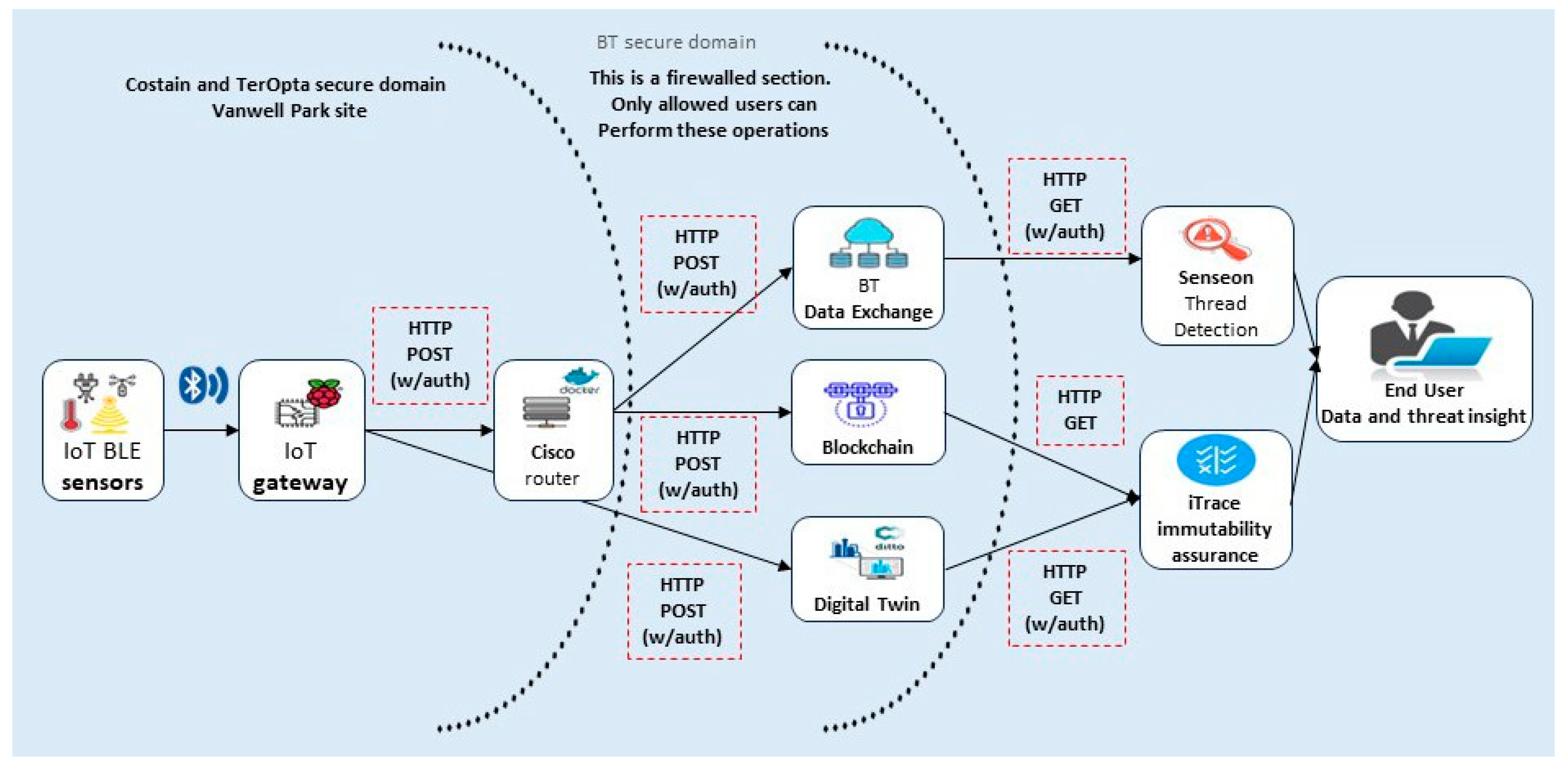
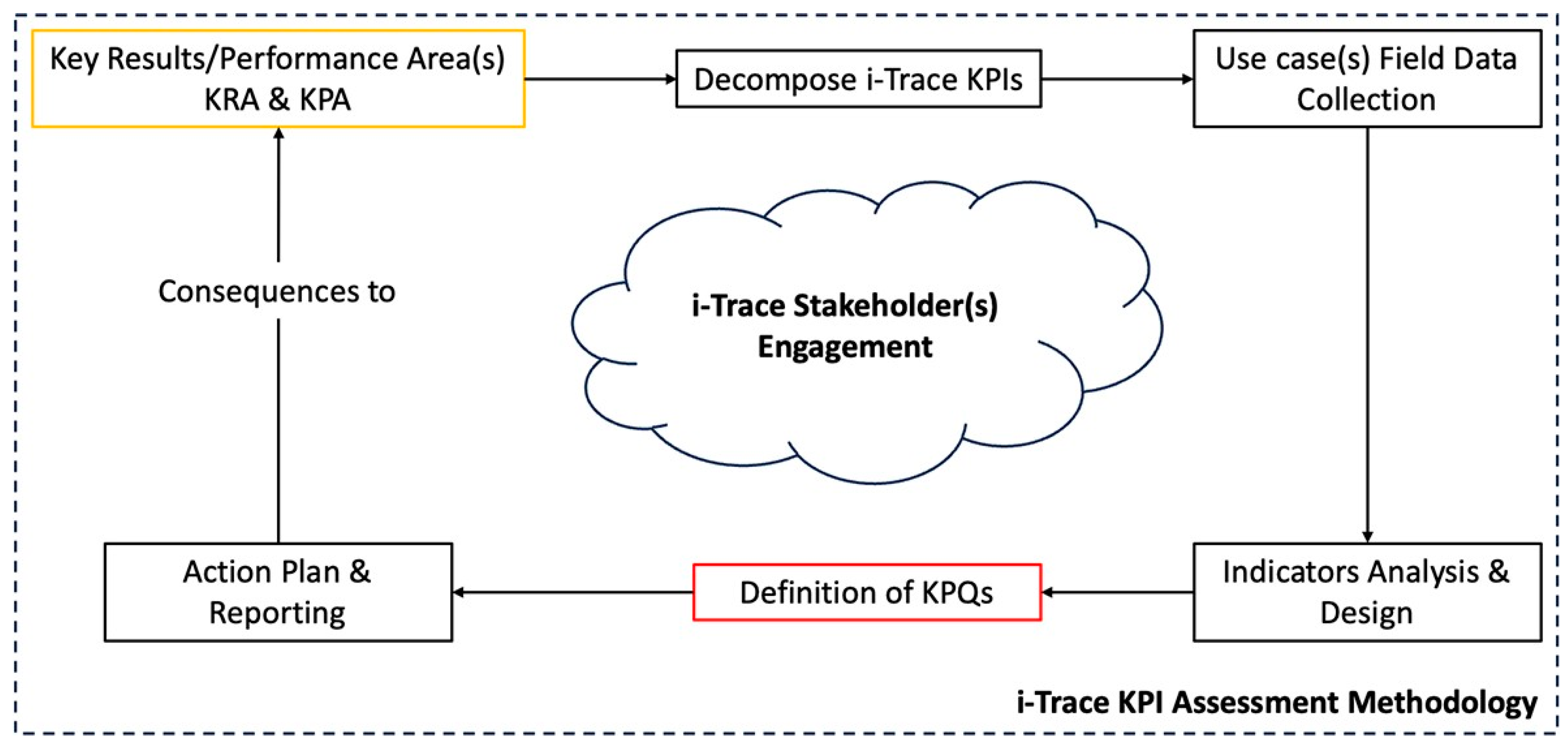
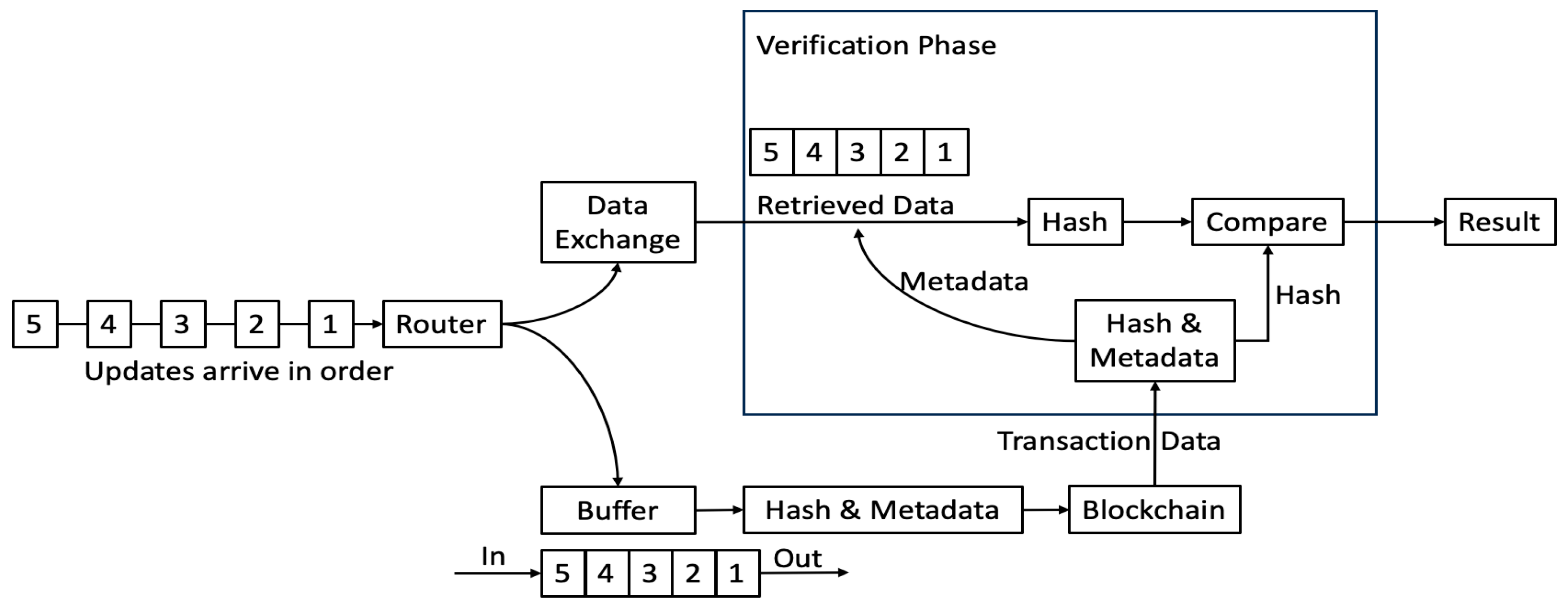
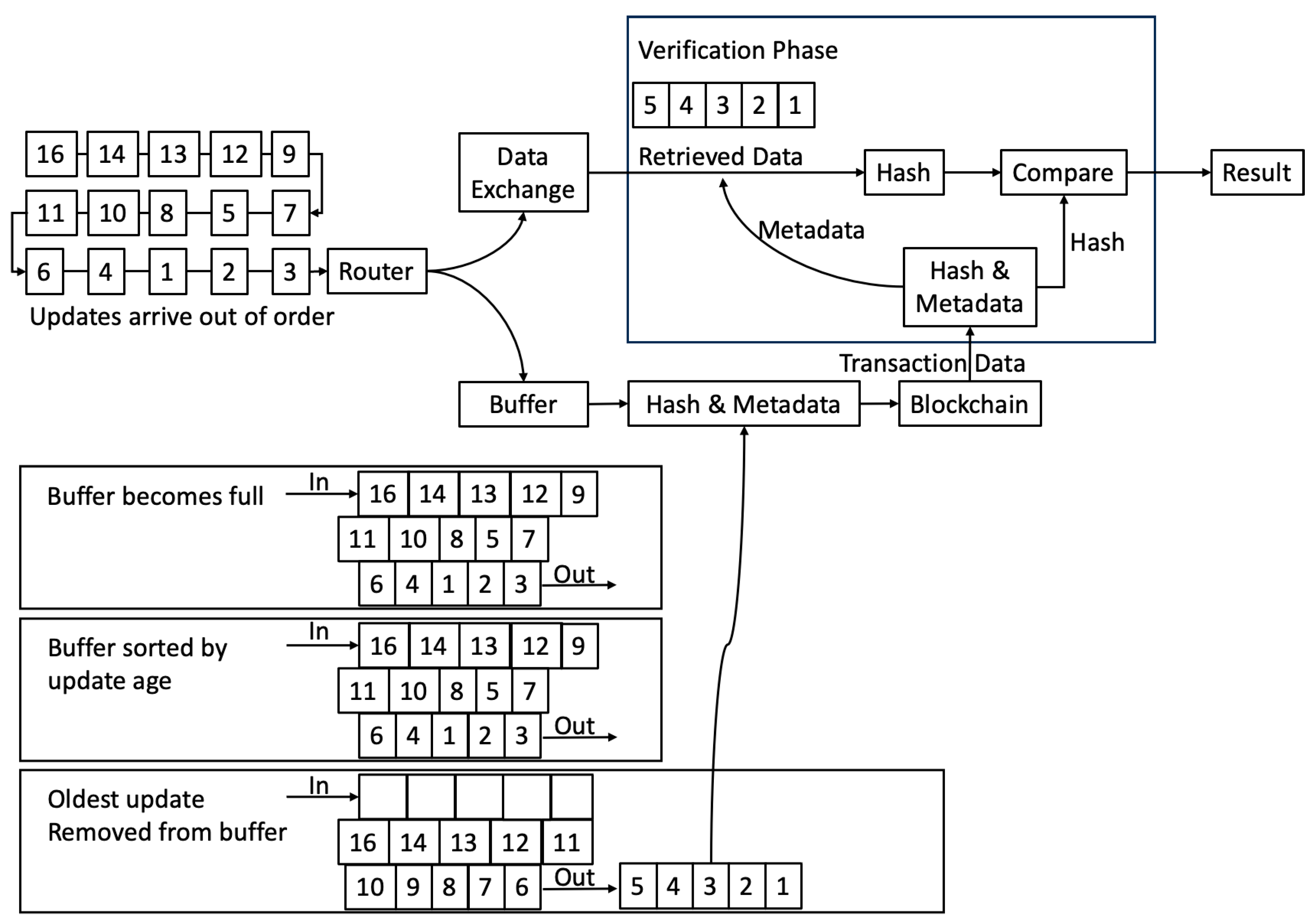
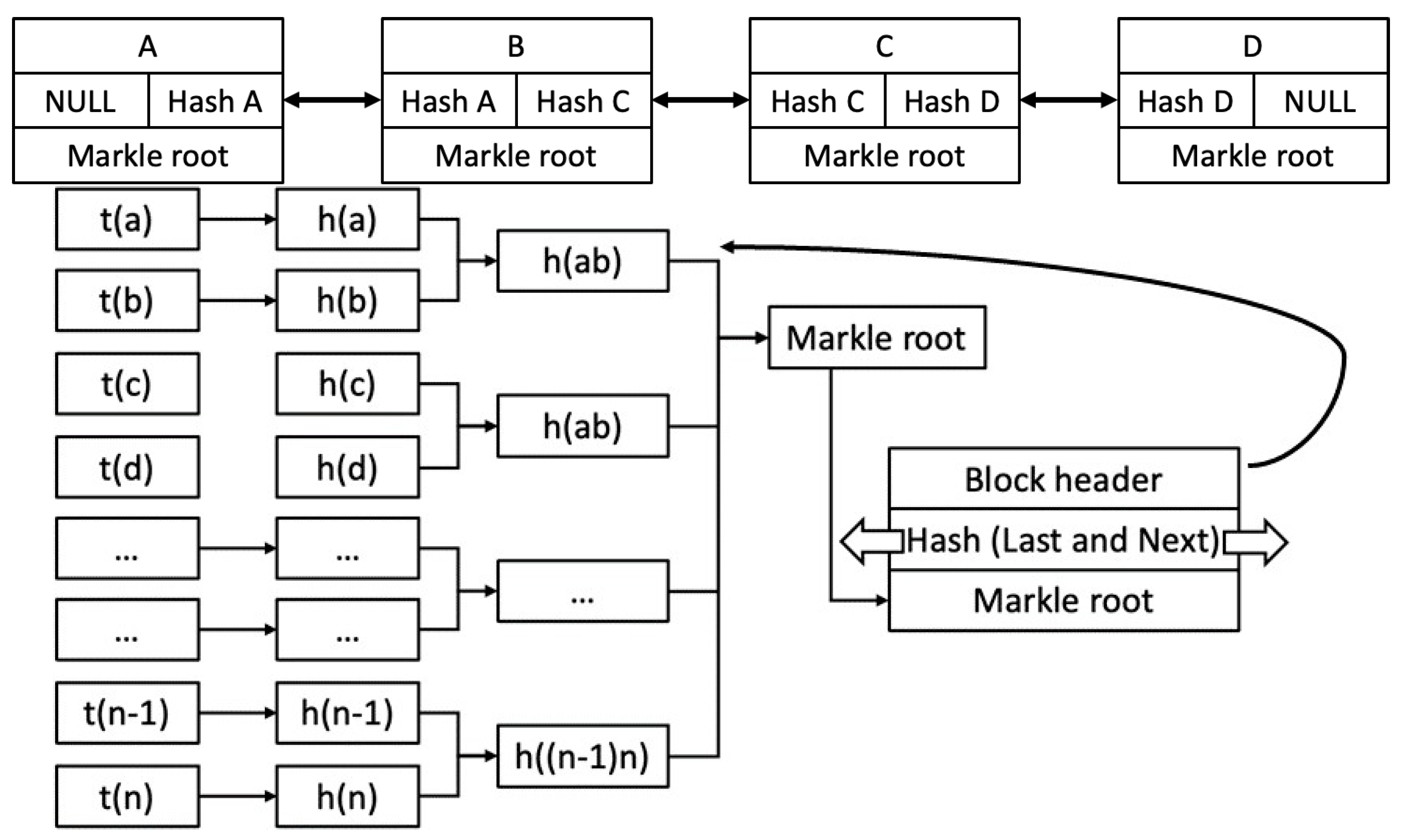
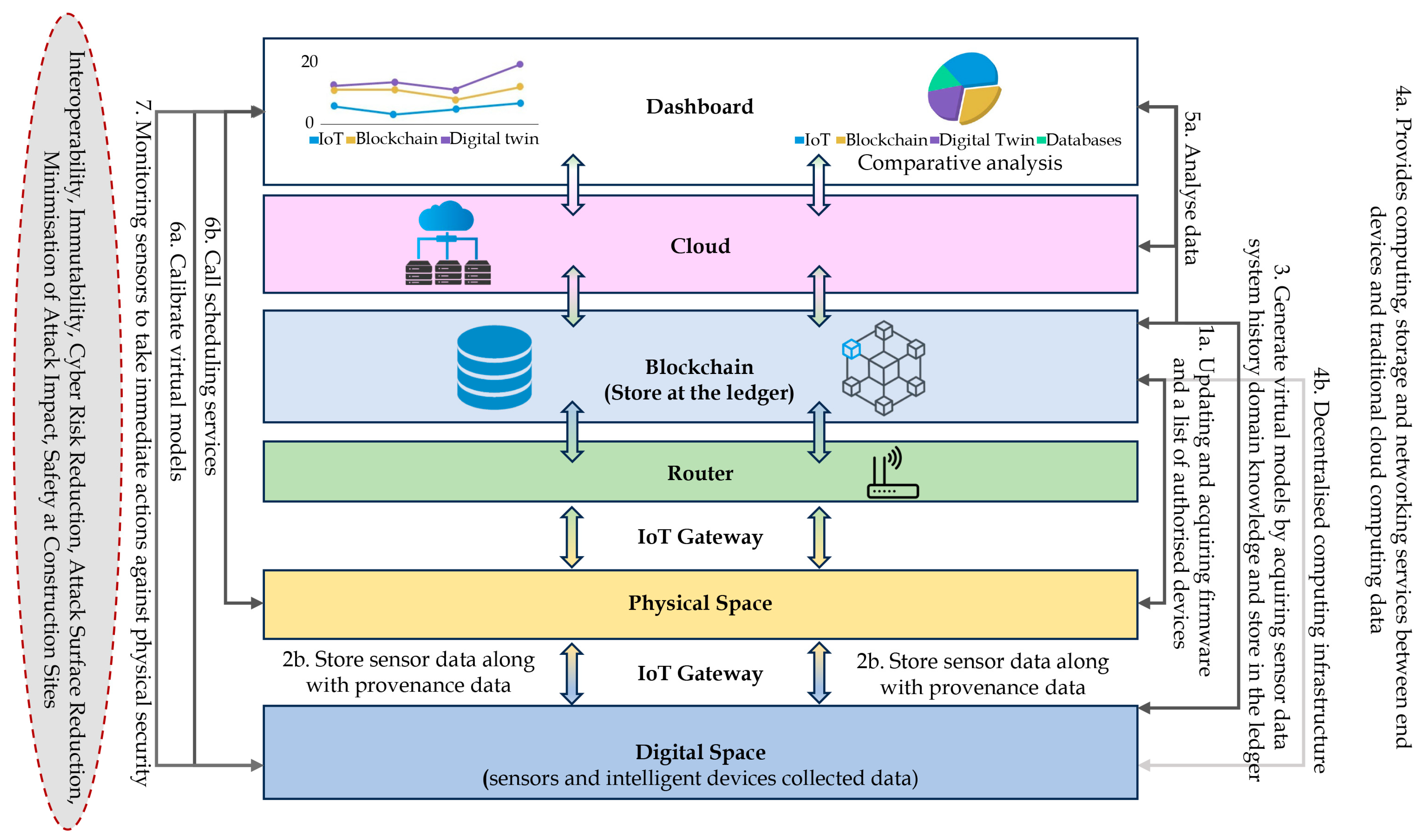
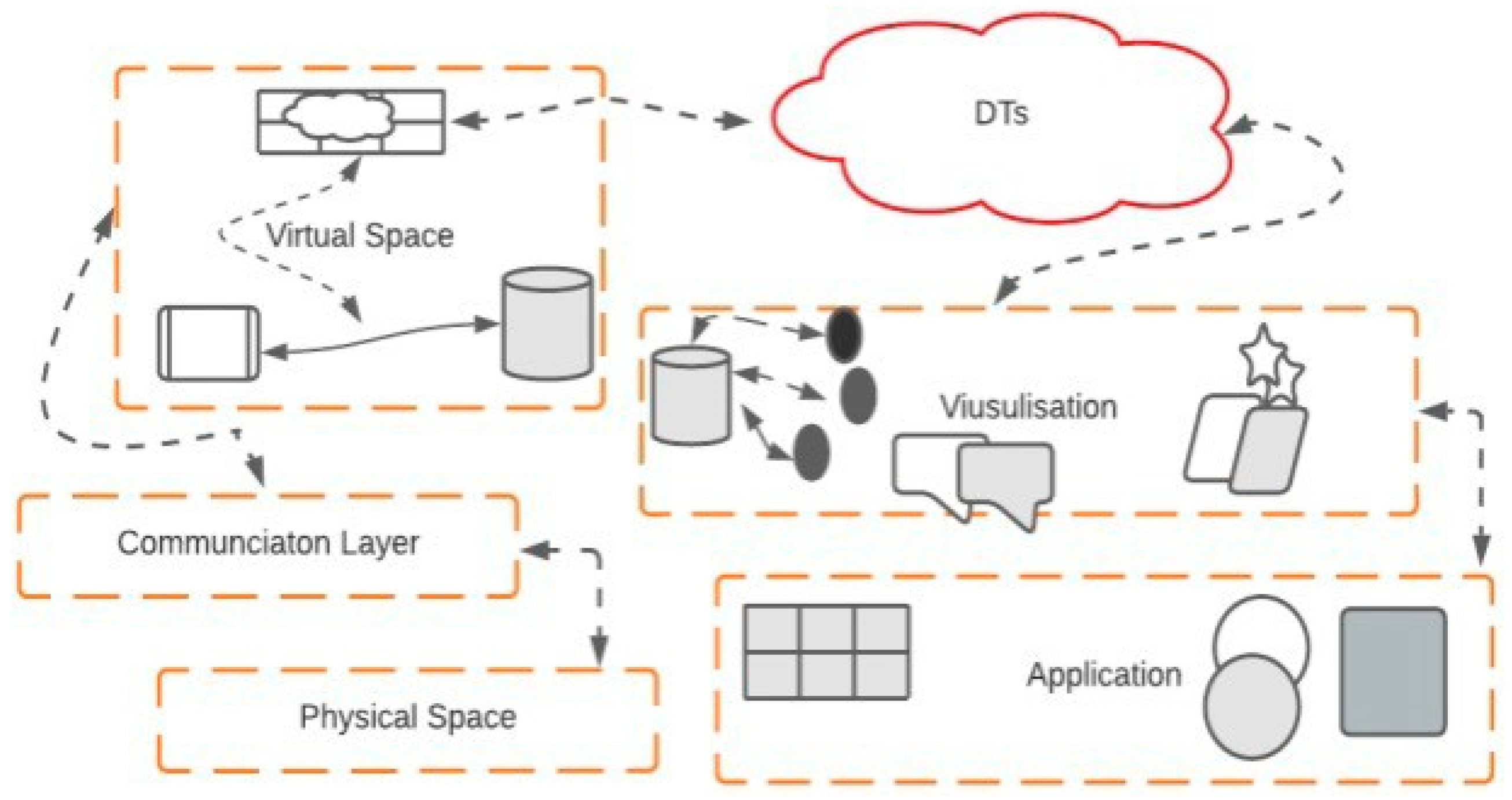
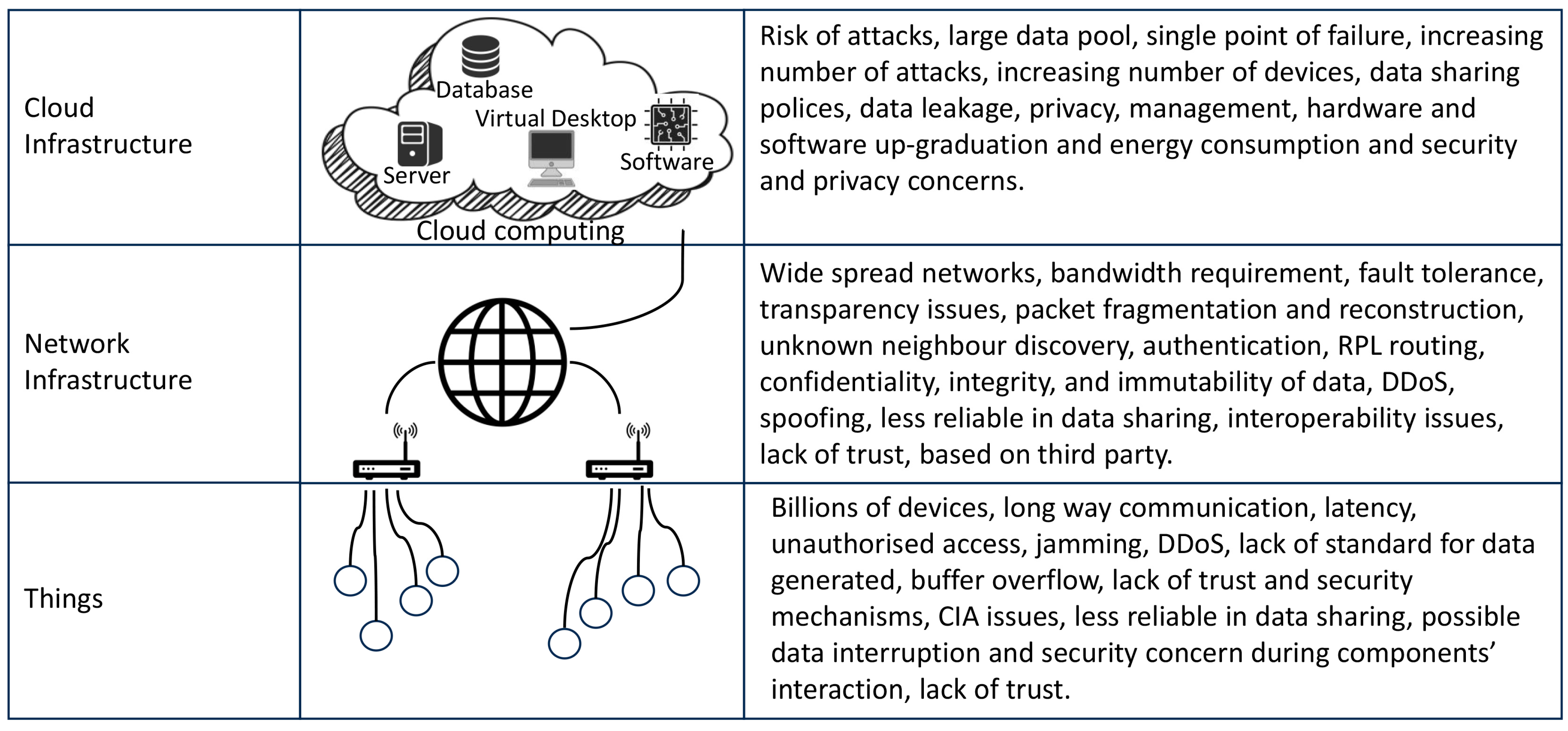
Disclaimer/Publisher’s Note: The statements, opinions and data contained in all publications are solely those of the individual author(s) and contributor(s) and not of MDPI and/or the editor(s). MDPI and/or the editor(s) disclaim responsibility for any injury to people or property resulting from any ideas, methods, instructions or products referred to in the content. |
© 2023 by the authors. Licensee MDPI, Basel, Switzerland. This article is an open access article distributed under the terms and conditions of the Creative Commons Attribution (CC BY) license (https://creativecommons.org/licenses/by/4.0/).