Article

Spatio-Temporal Modeling and Simulation of Asian Soybean Rust Based on Fuzzy System

by
Nayara Longo Sartor Zagui
,
André Krindges
,
Anna Diva Plasencia Lotufo
and
Carlos Roberto Minussi
*
Electrical Engineering Department, UNESP-São Paulo State University, Av. Brasil 56, Ilha Solteira (SP), Sao Paulo 15385-000, Brazil
*
Author to whom correspondence should be addressed.
Sensors 2022, 22(2), 668; https://doi.org/10.3390/s22020668
Submission received: 27 November 2021 / Revised: 16 December 2021 / Accepted: 12 January 2022 / Published: 16 January 2022
(This article belongs to the Section Smart Agriculture)

Abstract

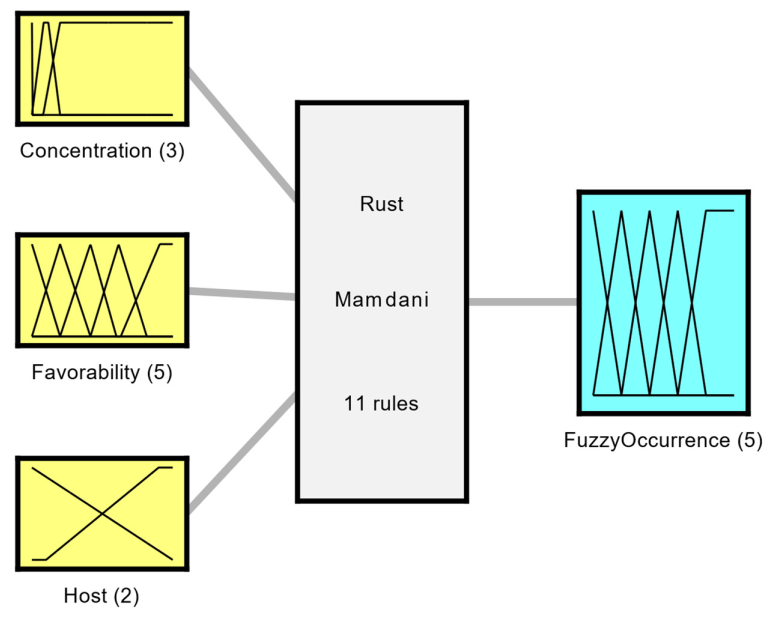
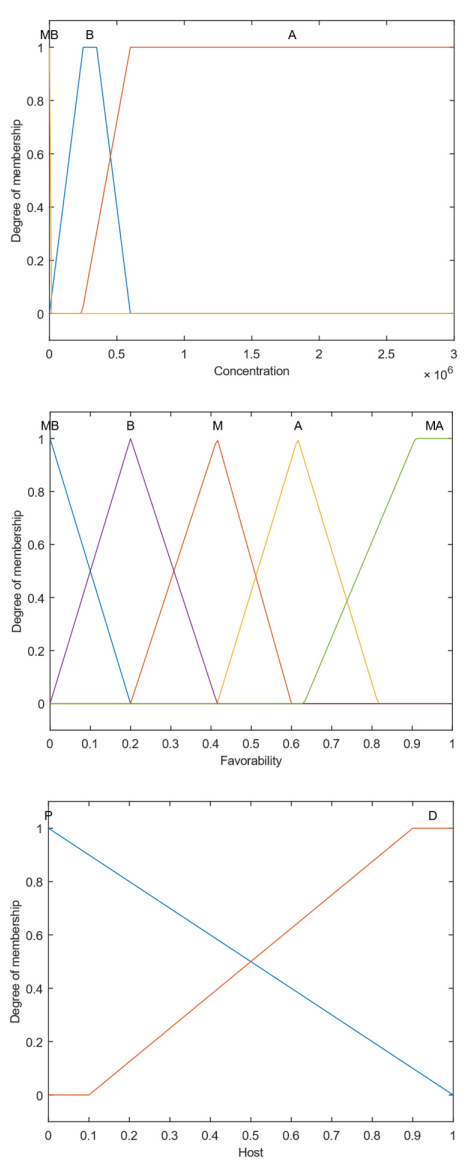
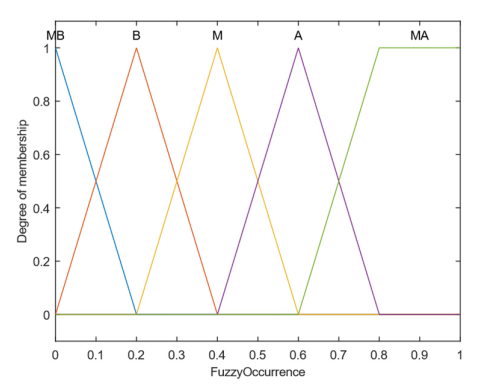
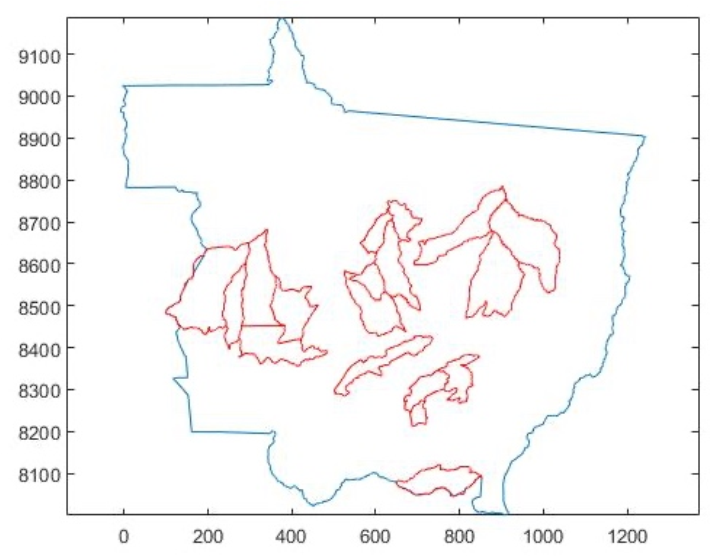
Mato Grosso, Brazil, is the largest soy producer in the country. Asian Soy Rust is a disease that has already caused a lot of damage to Brazilian agribusiness. The plant matures prematurely, hindering the filling of the pod, drastically reducing productivity. It is caused by the Phakopsora pachyrhizi fungus. For a plant disease to establish itself, the presence of a pathogen, a susceptible plant, and favorable environmental conditions are necessary. This research developed a fuzzy system gathering these three variables as inputs, having as an output the vulnerability of the region to the disease. The presence of the pathogen was measured using a diffusion-advection equation appropriate to the problem. Some coefficients were based on the literature, others were measured by a fuzzy system and others were obtained by real data. From the mapping of producing properties, the locations where there are susceptible plants were established. And the favorable environmental conditions were also obtained from a fuzzy system, whose inputs were temperature and leaf wetness. Data provided by IBGE, INMET, and Antirust Consortium were used to fuel the model, and all treatments, tests, and simulations were carried out within the Matlab® environment. Although Asian Soybean Rust was the chosen disease here, the model was general in nature, so could be reproduced for any disease of plants with the same profile.
Keywords: advection-diffusion problem; modeling and simulation Asian soybean rust; fuzzy logic advection-diffusion problem; modeling and simulation Asian soybean rust; fuzzy logic