Caveolin-1 in Skin Protection Against Radiation-Induced Skin Injuries: Pathophysiological Mechanisms and New Avenues for Prevention


Abstract
1. Introduction
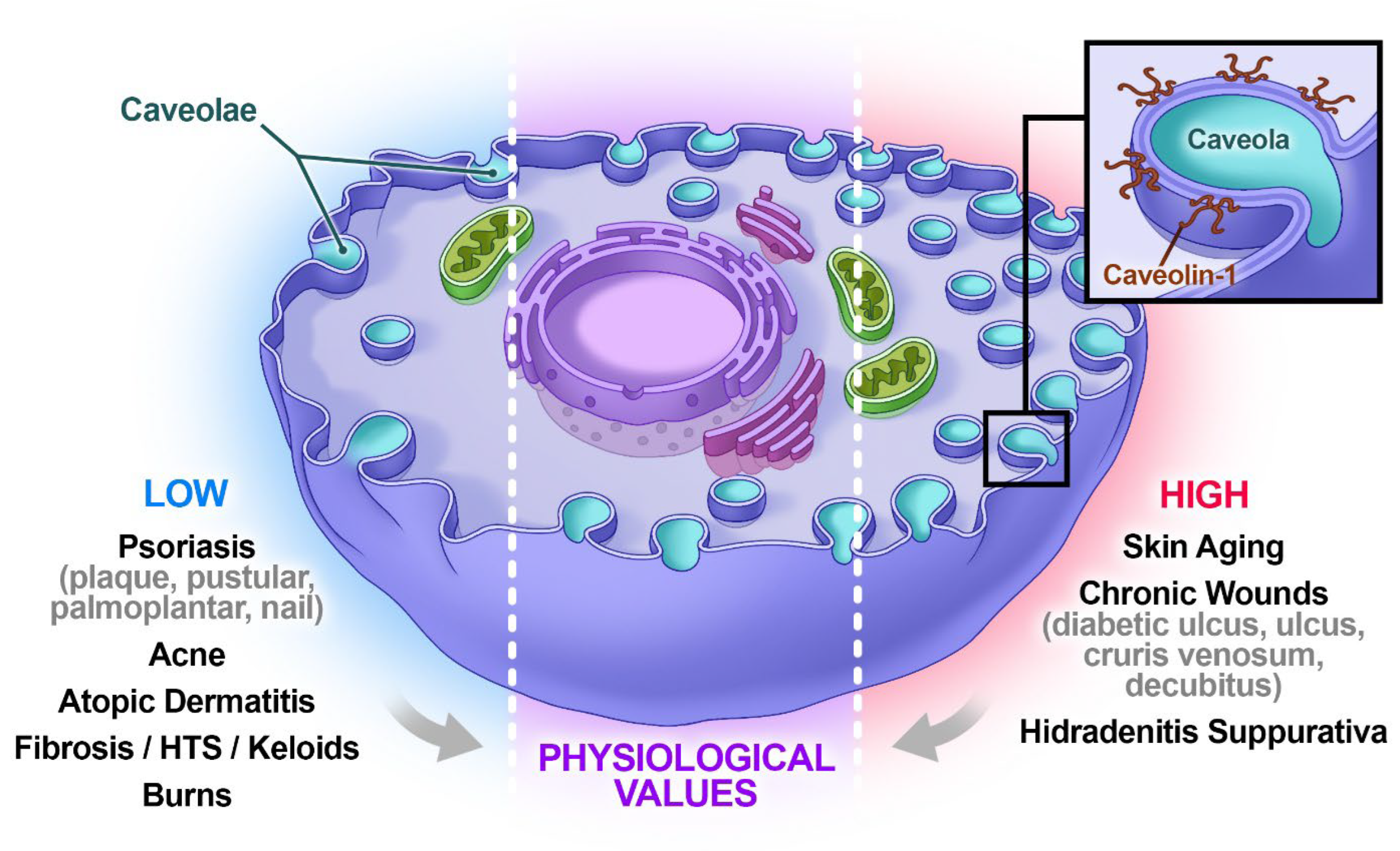
2. Caveolin-1 as a Universal Pathophysiological Factor and Target in Pathological Cutaneous Conditions
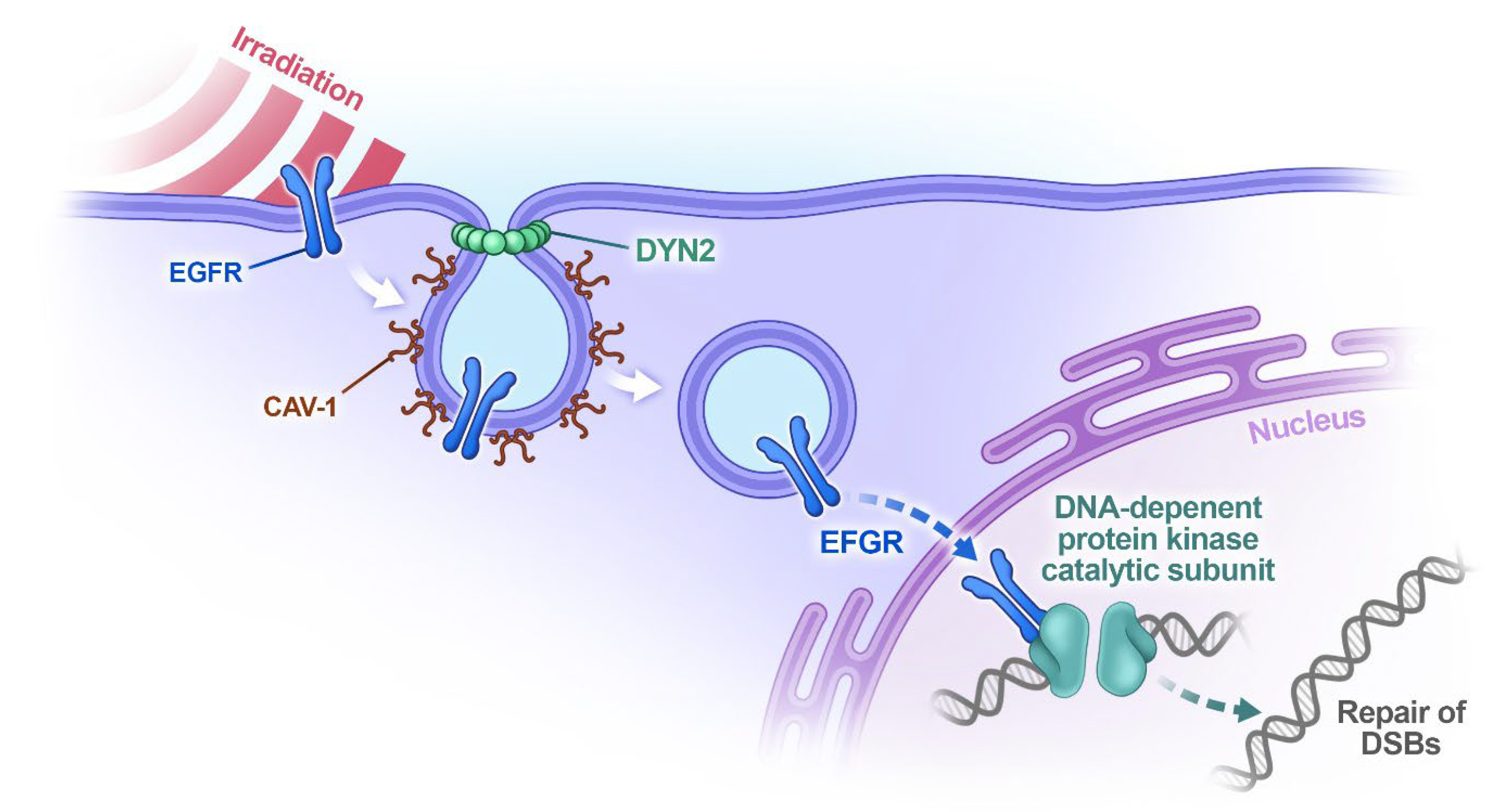
3. CAV1’s Role Protecting Cells Against Genotoxic Stress
4. IR-Induced Activation of Complement Pathway and Its Relation to CAV1
5. New Avenues for Prevention of RISIs
6. Conclusions
Funding
Institutional Review Board Statement
Informed Consent Statement
Data Availability Statement
Acknowledgments
Conflicts of Interest
References
- Yang, X.; Ren, H.; Guo, X.; Hu, C.; Fu, J. Radiation-induced skin injury: Pathogenesis, treatment, and management. Aging 2020, 12, 23379. [Google Scholar] [CrossRef] [Scilit] [PubMed]
- Wang, Y.; Tu, W.; Tang, Y.; Zhang, S. Prevention and treatment for radiation-induced skin injury during radiotherapy. Rad. Med. Protec. 2020, 1, 60–68. [Google Scholar] [CrossRef] [Scilit]
- Gallet, P.; Phulpin, B.; Merlin, J.L.; Leroux, A.; Bravetti, P.; Mecellem, H.; Tran, N.; Dolivet, G. Long-term alterations of cytokines and growth factors expression in irradiated tissues and relation with histological severity scoring. PLoS ONE 2011, 6, e29399. [Google Scholar] [CrossRef] [Scilit]
- Surace, L.; Lysenko, V.; Fontana, A.O.; Cecconi, V.; Janssen, H.; Bicvic, A.; Okoniewski, M.; Pruschy, M.; Dummer, R.; Neefjes, J.; et al. Complement is a central mediator of radiotherapy-induced tumor-specific immunity and clinical response. Immunity 2015, 42, 767–777. [Google Scholar] [CrossRef] [Scilit]
- Iwashita, K.; Suzuki, K.; Ojima, M. Recent advances in understanding radiation-induced skin tissue reactions with respect to acute tissue injury and late adverse effect. J. Rad. Res. 2025, 66, 437–450. [Google Scholar] [CrossRef] [Scilit]
- Ma, X.; Jin, Z.; Li, G.; Yang, W. Classification of chronic radiation-induced ulcers in the chest wall after surgery in breast cancers. Rad. Oncol. 2017, 12, 135. [Google Scholar] [CrossRef] [Scilit] [PubMed]
- Kruglikov, I.L.; Scherer, P.E. Caveolin-1 as a pathophysiological factor and target in psoriasis. npj Aging Mech. Dis. 2019, 5, 4. [Google Scholar] [CrossRef] [Scilit]
- Kruglikov, I.L.; Scherer, P.E. Caveolin as a universal target in dermatology. Int. J. Mol. Sci. 2019, 21, 80. [Google Scholar] [CrossRef] [Scilit]
- Lin, D.A.; Abujamra, B.A.; Revah, S.; Nattkemper, L.; Morrison, B.; Romanelli, P.; Jozic, I. Downregulation of caveolae-associated proteins in psoriasis: A case series study. JID Innov. 2024, 4, 100265. [Google Scholar] [CrossRef] [Scilit]
- Kruglikov, I.L.; Scherer, P.E. Caveolin-1 as a possible target in the treatment for acne. Exp. Dermatol. 2020, 29, 177–183. [Google Scholar] [CrossRef] [Scilit]
- Seth, N.; Abujamra, B.A.; Boulina, M.; Lev-Tov, H.; Jozic, I. Upregulation of caveolae-associated proteins in lesional samples of hidradenitis suppurativa: A case series study. JID Innov. 2023, 3, 100223. [Google Scholar] [CrossRef] [Scilit]
- Mathay, C.; Pierre, M.; Pittelkow, M.R.; Depiereux, E.; Nikkels, A.F.; Colige, A.; Poumay, Y. Transcriptional profiling after lipid raft disruption in keratinocytes identifies critical mediators of atopic dermatitis pathways. J. Invest. Dermatol. 2011, 131, 46–58. [Google Scholar] [CrossRef] [Scilit]
- Jozic, I.; Abujamra, B.A.; Elliott, M.H.; Wikramanayake, T.C.; Marjanovic, J.; Stone, R.C.; Head, C.R.; Pastar, I.; Kirsner, R.S.; Andreopoulos, F.M.; et al. Glucocorticoid-mediated induction of caveolin-1 disrupts cytoskeletal organization, inhibits cell migration and re-epithelialization of non-healing wounds. Comm. Biol. 2021, 4, 757. [Google Scholar] [CrossRef] [Scilit]
- Shao, X.; Chen, Y.; Zhang, L.; Zhang, Y.; Ariyawati, A.; Chen, T.; Chen, J.; Liu, L.; Pu, Y.; Li, Y.; et al. Effect of 30% supramolecular salicylic acid peel on skin microbiota and inflammation in patients with moderate-to-severe acne vulgaris. Dermatol. Ther. 2023, 13, 155–168. [Google Scholar] [CrossRef] [Scilit] [PubMed]
- Kruglikov, I.L.; Scherer, P.E. Caveolin-1 as a target in prevention and treatment of hypertrophic scarring. npj Regen. Med. 2019, 4, 9. [Google Scholar] [CrossRef] [Scilit] [PubMed]
- Galdo, F.D.; Sotgia, F.; De Almeida, C.J.; Jasmin, J.F.; Musick, M.; Lisanti, M.P.; Jiménez, S.A. Decreased expression of caveolin 1 in patients with systemic sclerosis: Crucial role in the pathogenesis of tissue fibrosis. Arthritis Rheum. 2008, 58, 2854–2865. [Google Scholar] [CrossRef] [Scilit]
- Oezel, L.; Wohltmann, M.; Gondorf, N.; Wille, J.; Güven, I.; Windolf, J.; Thelen, S.; Jaekel, C.; Grotheer, V. Dupuytren’s disease is mediated by insufficient TGF-β1 release and degradation. Int. J. Mol. Sci. 2023, 24, 15097. [Google Scholar] [CrossRef] [Scilit]
- Jozic, I.; Sawaya, A.P.; Pastar, I.; Head, C.R.; Wong, L.L.; Glinos, G.D.; Wikramanayake, T.C.; Brem, H.; Kirsner, R.S.; Tomic-Canic, M. Pharmacological and genetic inhibition of caveolin-1 promotes epithelialization and wound closure. Mol. Ther. 2019, 27, 1992–2004. [Google Scholar] [CrossRef] [Scilit]
- Sawaya, A.P.; Jozic, I.; Stone, R.C.; Pastar, I.; Egger, A.N.; Stojadinovic, O.; Glinos, G.D.; Kirsner, R.S.; Tomic-Canic, M. Mevastatin promotes healing by targeting caveolin-1 to restore EGFR signaling. JCI Insight 2019, 4, e129320. [Google Scholar] [CrossRef] [Scilit] [PubMed]
- Kruglikov, I.L.; Zhang, Z.; Scherer, P.E. Caveolin-1 in skin aging—From innocent bystander to major contributor. Ageing Res. Rev. 2019, 55, 100959. [Google Scholar] [CrossRef] [Scilit]
- Takamura, N.; Yamaguchi, Y. Involvement of caveolin-1 in skin diseases. Front. Immunol. 2022, 13, 1035451. [Google Scholar] [CrossRef] [Scilit]
- Egger, A.N.; Rajabi-Estarabadi, A.; Williams, N.M.; Resnik, S.R.; Fox, J.D.; Wong, L.L.; Jozic, I. The importance of caveolins and caveolae to dermatology: Lessons from the caves and beyond. Exp. Dermatol. 2020, 29, 136–148, Erratum in: Exp Dermatol. 2020, 29, 446. [Google Scholar] [CrossRef] [Scilit]
- Zhu, H.; Yue, J.; Pan, Z.; Wu, H.; Cheng, Y.; Lu, H.; Ren, X.; Yao, M.; Shen, Z.; Yang, J.-M. Involvement of Caveolin-1 in repair of DNA damage through both homologous recombination and non-homologous end joining. PLoS ONE 2010, 5, e12055. [Google Scholar] [CrossRef] [Scilit] [PubMed]
- Dittmann, K.; Mayer, C.; Kehlbach, R.; Rodemann, H.P. Radiation-induced caveolin-1 associated EGFR internalization is linked with nuclear EGFR transport and activation of DNA-PK. Mol. Cancer. 2008, 7, 69. [Google Scholar] [CrossRef] [Scilit] [PubMed]
- Schultz, D.F.; Billadeau, D.D.; Jois, S.D. EGFR trafficking: Effect of dimerization, dynamics, and mutation. Front. Oncol. 2023, 13, 1258371. [Google Scholar] [CrossRef] [Scilit]
- Khan, E.M.; Heidinger, J.M.; Levy, M.; Lisanti, M.P.; Ravid, T.; Goldkorn, T. Epidermal growth factor receptor exposed to oxidative stress undergoes Src-and caveolin-1-dependent perinuclear trafficking. J. Biol. Chem. 2006, 281, 14486–14493. [Google Scholar] [CrossRef] [Scilit]
- Kruglikov, I.L.; Scherer, P.E. Control of adipose tissue cellularity by the terminal complement cascade. Nat. Rev. Endocrinol. 2023, 19, 679–680. [Google Scholar] [CrossRef] [Scilit]
- Qian, J.; Yang, J.; Dragovic, A.F.; Abu-Isa, E.; Lawrence, T.S.; Zhang, M. Ionizing radiation-induced adenovirus infection is mediated by Dynamin 2. Cancer Res. 2005, 65, 5493–5497. [Google Scholar] [CrossRef] [Scilit]
- Wu, Y.; Lim, Y.W.; Parton, R.G. Caveolae and the oxidative stress response. Biochem. Soc. Trans. 2023, 51, 1377–1385. [Google Scholar] [CrossRef] [Scilit] [PubMed]
- Domingues, L.; Hurbain, I.; Gilles-Marsens, F.; Sirés-Campos, J.; André, N.; Dewulf, M.; Romao, M.; de Lesegno, C.V.; Macé, A.-S.; Blouin, C.; et al. Coupling of melanocyte signaling and mechanics by caveolae is required for human skin pigmentation. Nat. Commun. 2020, 11, 2988. [Google Scholar] [CrossRef] [Scilit]
- Cho, K.A.; Ryu, S.J.; Park, J.S.; Jang, I.S.; Ahn, J.S.; Kim, K.T.; Park, S.C. Senescent phenotype can be reversed by reduction of caveolin status. J. Biol. Chem. 2003, 278, 27789–27795. [Google Scholar] [CrossRef] [Scilit] [PubMed]
- Xu, Y.; Shao, Y.; Zhou, J.; Voorhees, J.J.; Fisher, G.J. Ultraviolet irradiation-induces epidermal growth factor receptor (EGFR) nuclear translocation in human keratinocytes. J. Cell. Biochem. 2009, 107, 873–880. [Google Scholar] [CrossRef] [Scilit]
- Goutas, A.; Papathanasiou, I.; Mourmoura, E.; Tsesmelis, K.; Tsezou, A.; Trachana, V. Oxidative stress response is mediated by overexpression and spatiotemporal regulation of caveolin-1. Antioxidants 2020, 9, 766. [Google Scholar] [CrossRef] [Scilit] [PubMed]
- Tan, X.; Lambert, P.F.; Rapraeger, A.C.; Anderson, R.A. Stress-induced EGFR trafficking: Mechanisms, functions, and therapeutic implications. Trend. Cell Biol. 2016, 26, 352–366. [Google Scholar] [CrossRef] [Scilit]
- Codenotti, S.; Marampon, F.; Triggiani, L.; Bonù, M.L.; Magrini, S.M.; Ceccaroli, P.; Guescini, M.; Gastaldello, S.; Tombolini, V.; Poliani, P.L.; et al. Caveolin-1 promotes radioresistance in rhabdomyosarcoma through increased oxidative stress protection and DNA repair. Cancer Lett. 2021, 505, 1–12. [Google Scholar] [CrossRef] [Scilit]
- Midgley, A.C.; Bowen, T.; Phillips, A.O.; Steadman, R. Micro RNA-7 inhibition rescues age-associated loss of epidermal growth factor receptor and hyaluronan-dependent differentiation in fibroblasts. Aging Cell 2014, 13, 235–244. [Google Scholar] [CrossRef] [Scilit] [PubMed]
- Kruglikov, I.L.; Scherer, P.E. Regulation of the terminal complement cascade in adipose tissue for control of its volume, cellularity and fibrosis. Obesity 2025, 33, 839–850. [Google Scholar] [CrossRef] [Scilit]
- Kruglikov, I.L.; Walendzik, K.; Scherer, P.E. The complement pathway and the pathophysiology of fibroproliferative cutaneous scarring. Front. Immunol. 2025, 16, 1701998. [Google Scholar] [CrossRef] [Scilit]
- Cazander, G.; Jukema, G.N.; Nibbering, P.H. Complement activation and inhibition in wound healing. J. Immunol. Res. 2012, 2012, 534291. [Google Scholar] [CrossRef] [Scilit]
- Liang, Y.; Mai, L.; Schneeweiss, J.M.; Lopez Perez, R.; Kirschfink, M.; Huber, P.E. Radiotherapy upregulates the expression of membrane-bound negative complement regulator proteins on tumor cells and limits complement-mediated tumor cell lysis. Cancers 2025, 17, 2383. [Google Scholar] [CrossRef] [Scilit]
- Ulasov, I.; Thaci, B.; Sarvaiya, P.; Yi, R.; Guo, D.; Auffinger, B.; Pytel, P.; Zhang, L.; Kim, C.K.; Borovjagin, A.; et al. Inhibition of MMP 14 potentiates the therapeutic effect of temozolomide and radiation in gliomas. Cancer Med. 2013, 2, 457–467. [Google Scholar] [CrossRef] [Scilit]
- Pasch, M.C.; Okada, N.; Bos, J.D.; Asghar, S.S. Effects of UVB on the synthesis of complement proteins by keratinocytes. J. Invest. Dermatol. 1998, 111, 683–688. [Google Scholar] [CrossRef] [Scilit] [PubMed]
- Volonte, D.; Galbiati, F. Caveolin-1, a master regulator of cellular senescence. Cancer Metastasis Rev. 2020, 39, 397–414. [Google Scholar] [CrossRef] [Scilit]
- Song, P.; An, J.; Zou, M.H. Immune clearance of senescent cells to combat ageing and chronic diseases. Cells 2020, 9, 671. [Google Scholar] [CrossRef] [Scilit]
- Zhou, Z.; Feng, Y.; Qiao, W. The preventive and protective effects of aspirin on radiation-induced skin injury. Adv. Radiother. Nucl. Med. 2025, 3, 57–70. [Google Scholar] [CrossRef] [Scilit]
- Jiang, H.; Swacha, P.; Aung, K.M.; Gekara, N.O. Aspirin protects against genotoxicity by promoting genome repair. Cell Res. 2023, 33, 325–327. [Google Scholar] [CrossRef] [Scilit]
- Lee, M.E.; Kim, S.R.; Lee, S.; Jung, Y.J.; Choi, S.S.; Kim, W.J.; A Han, J. Cyclooxygenase-2 inhibitors modulate skin aging in a catalytic activity-independent manner. Exp. Mol. Med. 2012, 44, 536–544. [Google Scholar] [CrossRef] [Scilit] [PubMed]
- Kim, S.R.; Park, J.H.; Lee, M.E.; Park, J.S.; Park, S.C.; Han, J.A. Selective COX-2 inhibitors modulate cellular senescence in human dermal fibroblasts in a catalytic activity-independent manner. Mech. Ageing Dev. 2008, 129, 706–713. [Google Scholar] [CrossRef] [Scilit]
- Krishnan, R.; Park, C.Y.; Lin, Y.C.; Mead, J.; Jaspers, R.T.; Trepat, X.; Lenormand, G.; Tambe, D.; Smolensky, A.V.; Knoll, A.H.; et al. Reinforcement versus fluidization in cytoskeletal mechanoresponsiveness. PLoS ONE 2009, 4, e5486. [Google Scholar] [CrossRef] [Scilit]
- Oliver, M.; Kováts, T.; Mijailovich, S.M.; Butler, J.P.; Fredberg, J.J.; Lenormand, G. Remodeling of integrated contractile tissues and its dependence on strain-rate amplitude. Phys. Rev. Lett. 2010, 105, 158102. [Google Scholar] [CrossRef] [Scilit]
- Kruglikov, I.L. Modeling of the spatiotemporal distribution of temperature fields in skin and subcutaneous adipose tissue after exposure to ultrasound waves of different frequencies. AIP Adv. 2017, 7, 105317. [Google Scholar] [CrossRef] [Scilit]
- Kruglikov, I.L.; Scherer, P.E. Skin aging as a mechanical phenomenon: The main weak links. Nutr. Health Aging 2018, 4, 291–307. [Google Scholar] [CrossRef] [Scilit] [PubMed]
- Mizrahi, N.; Zhou, E.H.; Lenormand, G.; Krishnan, R.; Weihs, D.; Butler, J.P.; Weitz, D.A.; Fredberg, J.J.; Kimmel, E. Low intensity ultrasound perturbs cytoskeleton dynamics. Soft Matter 2012, 8, 2438–2443. [Google Scholar] [CrossRef] [Scilit] [PubMed]
- Samandari, M.; Abrinia, K.; Mokhtari-Dizaji, M.; Tamayol, A. Ultrasound induced strain cytoskeleton rearrangement: An experimental and simulation study. J. Biomech. 2017, 60, 39–47. [Google Scholar] [CrossRef] [Scilit] [PubMed]
- Echarri, A.; Del Pozo, M.A. Caveolae–mechanosensitive membrane invaginations linked to actin filaments. J. Cell. Sci. 2015, 128, 2747–2758. [Google Scholar] [CrossRef] [Scilit]
- Lee, W.S.; Park, E.S.; Kang, S.G.; Tak, M.S.; Kim, C.H. Successful treatment of recalcitrant remaining postoperative wounds by dual-frequency ultrasound. Med. Laser. 2018, 7, 74–78. [Google Scholar] [CrossRef] [Scilit]
- Ahn, T.H.; Lee, J.S.; Kim, S.Y.; Lee, S.B.; Kim, W.; Kruglik, I.; Yi, K. Application of dual-frequency ultrasound for reduction of perilesional edema and ecchymosis after rhinoseptoplasty. J. Cosmet. Dermatol. 2024, 23, 830–838. [Google Scholar] [CrossRef] [Scilit]
- Chervinskaya, I.G.; Gaidash, N.V.; Kruglikov, I.L. A retrospective pragmatic two-center clinical study to evaluate the clinical outcome of triple-frequency ultrasound in the treatment of mild-to-severe acne vulgaris. J. Cosmet. Dermatol. 2025, 24, e16672. [Google Scholar] [CrossRef] [Scilit]
- Chervinskaya, I.G.; Kuprina, N.I.; Kruglikov, I.L. A retrospective pragmatic longitudinal case-series clinical study to evaluate the clinical outcome of triple-frequency ultrasound in treatment of cellulite. Clin. Cosmet. Invest. Dermatol. 2024, 17, 2779–2794. [Google Scholar] [CrossRef] [Scilit]
- Cho, Y.S.; Park, E.S. Application of dual-frequency ultrasound to radiation-induced fibrosis in a breast cancer patient. Med. Laser. 2017, 6, 86–89. [Google Scholar] [CrossRef] [Scilit]
- Ahn, K.H.; Lee, S.J.; Park, E.S.; Park, Y.G. Satisfaction with the effect of local dynamical micromassage therapy on the pain and discomfort after breast reconstruction surgery. Med. Laser. 2020, 9, 39–43. [Google Scholar] [CrossRef] [Scilit]
- Kruglikov, I.L. Acoustic waves in axonal membrane and caveolins are the new targets for pain treatment with high frequency ultrasound. J. Pain. Res. 2020, 13, 2791–2798. [Google Scholar] [CrossRef] [Scilit] [PubMed]

Disclaimer/Publisher’s Note: The statements, opinions and data contained in all publications are solely those of the individual author(s) and contributor(s) and not of MDPI and/or the editor(s). MDPI and/or the editor(s) disclaim responsibility for any injury to people or property resulting from any ideas, methods, instructions or products referred to in the content. |
© 2025 by the author. Licensee MDPI, Basel, Switzerland. This article is an open access article distributed under the terms and conditions of the Creative Commons Attribution (CC BY) license.
Share and Cite
Kruglikov, I.L. Caveolin-1 in Skin Protection Against Radiation-Induced Skin Injuries: Pathophysiological Mechanisms and New Avenues for Prevention. Int. J. Mol. Sci. 2026, 27, 415. https://doi.org/10.3390/ijms27010415
Kruglikov IL. Caveolin-1 in Skin Protection Against Radiation-Induced Skin Injuries: Pathophysiological Mechanisms and New Avenues for Prevention. International Journal of Molecular Sciences. 2026; 27(1):415. https://doi.org/10.3390/ijms27010415
Chicago/Turabian StyleKruglikov, Ilja L. 2026. "Caveolin-1 in Skin Protection Against Radiation-Induced Skin Injuries: Pathophysiological Mechanisms and New Avenues for Prevention" International Journal of Molecular Sciences 27, no. 1: 415. https://doi.org/10.3390/ijms27010415
APA StyleKruglikov, I. L. (2026). Caveolin-1 in Skin Protection Against Radiation-Induced Skin Injuries: Pathophysiological Mechanisms and New Avenues for Prevention. International Journal of Molecular Sciences, 27(1), 415. https://doi.org/10.3390/ijms27010415