Phytochemical Evaluation of Terminalia catappa L. Extracts with Antibacterial and Antibiotic Potentiation Activities Against β-Lactam Drug-Resistant Bacteria



Abstract
1. Introduction
2. Results
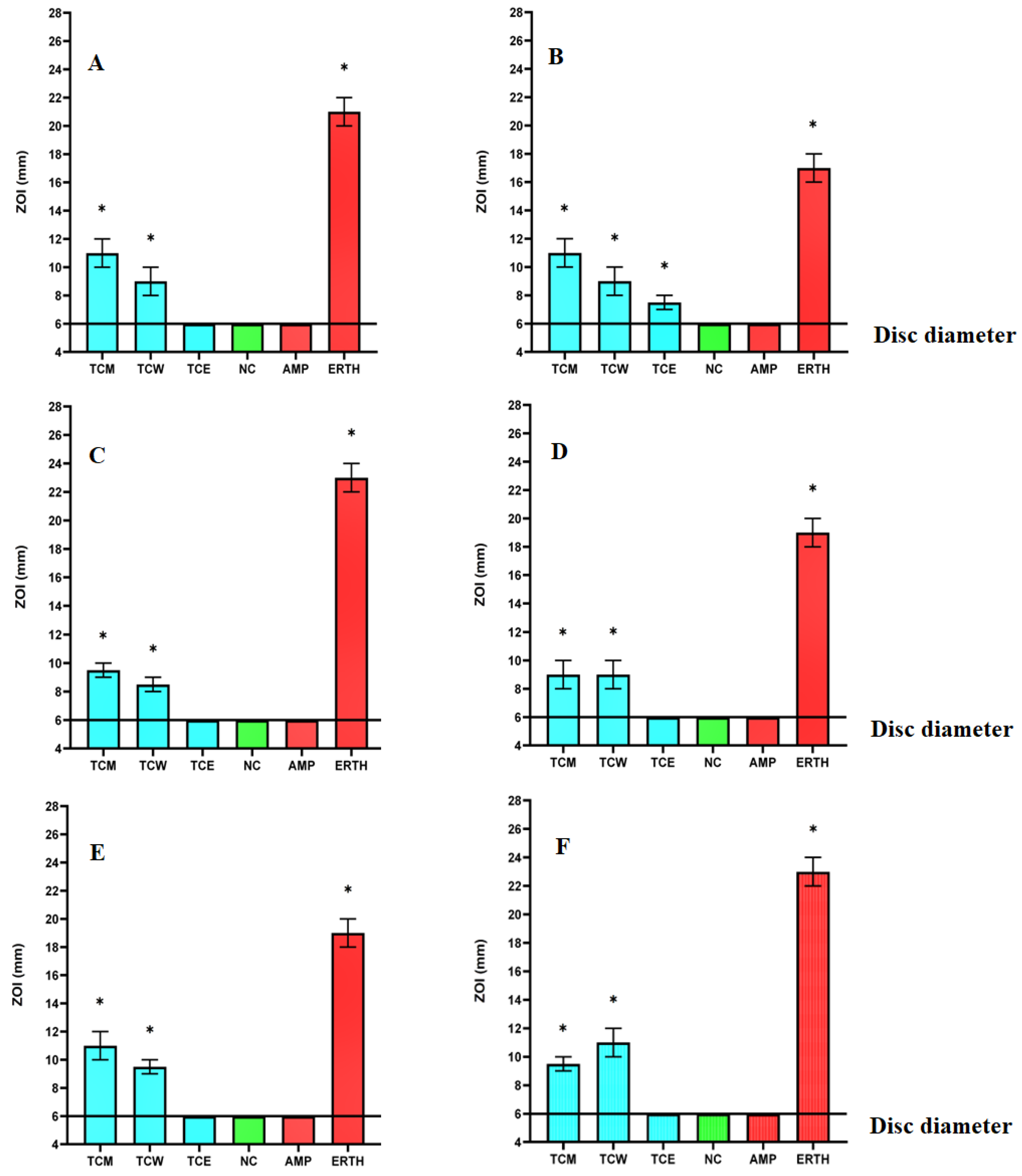
2.1. Bacterial Susceptibility Screening
2.2. Quantification of Fractional Inhibitory Concentration (FIC)
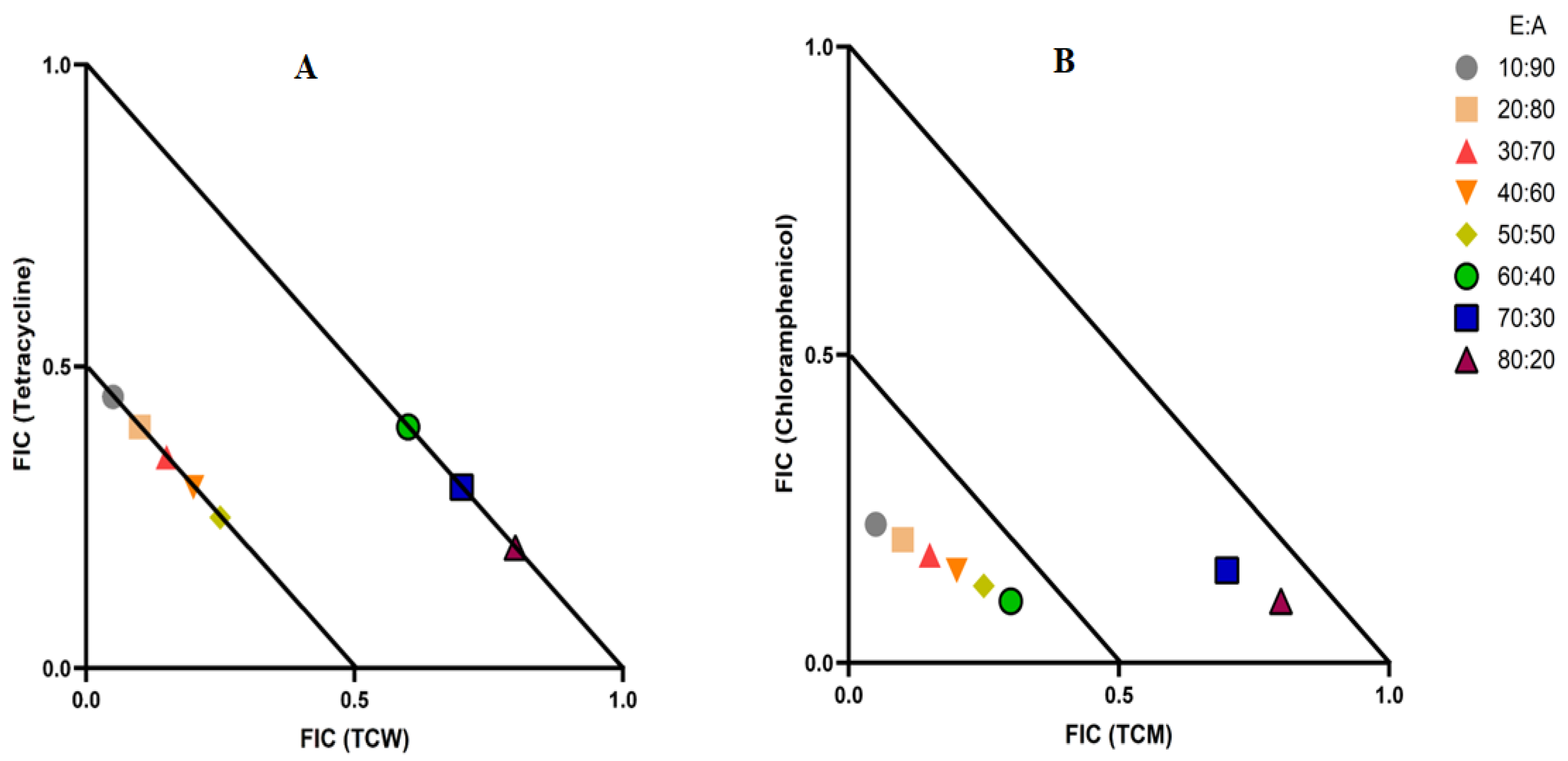
2.3. Isobologram Analysis of Synergistic Combinations
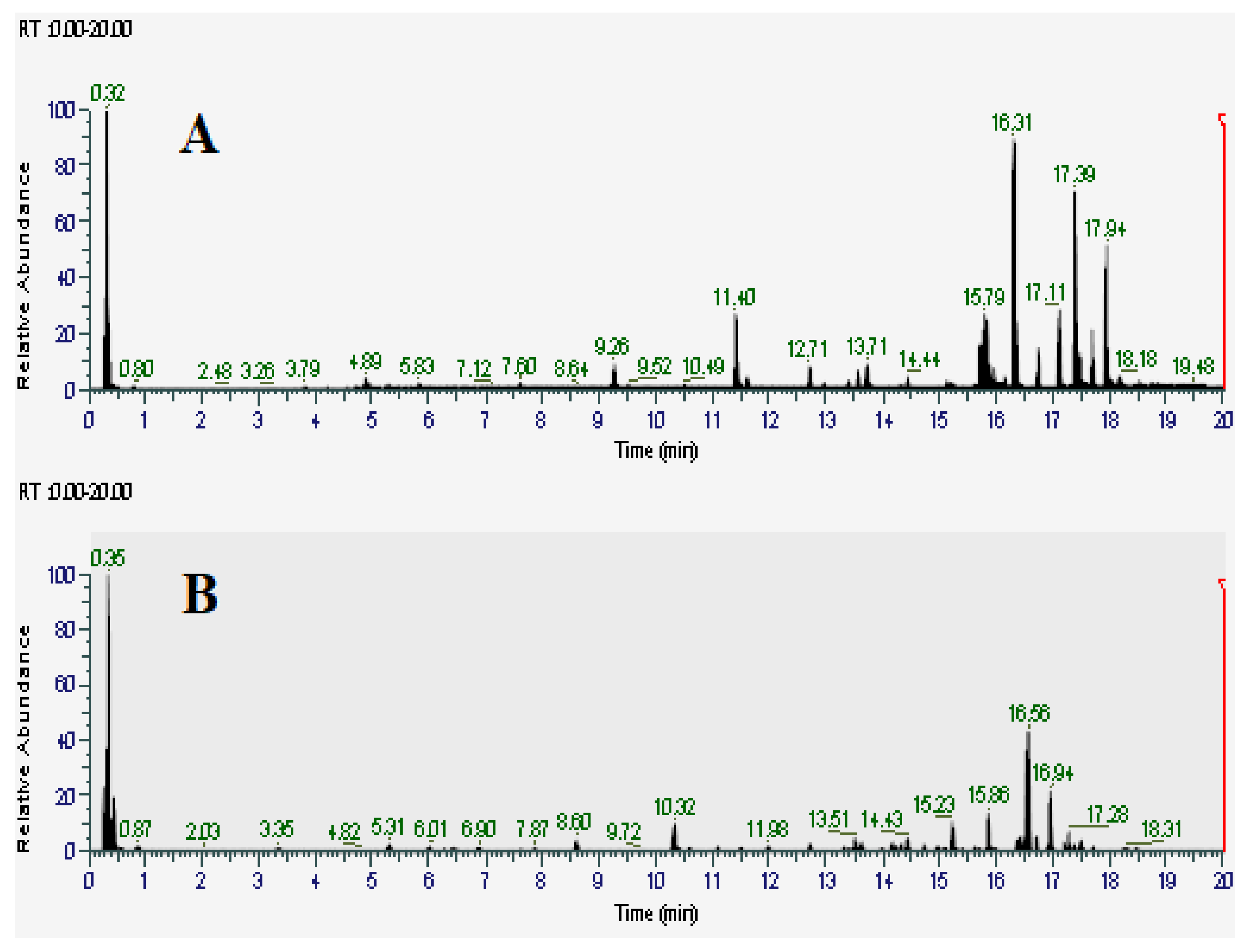
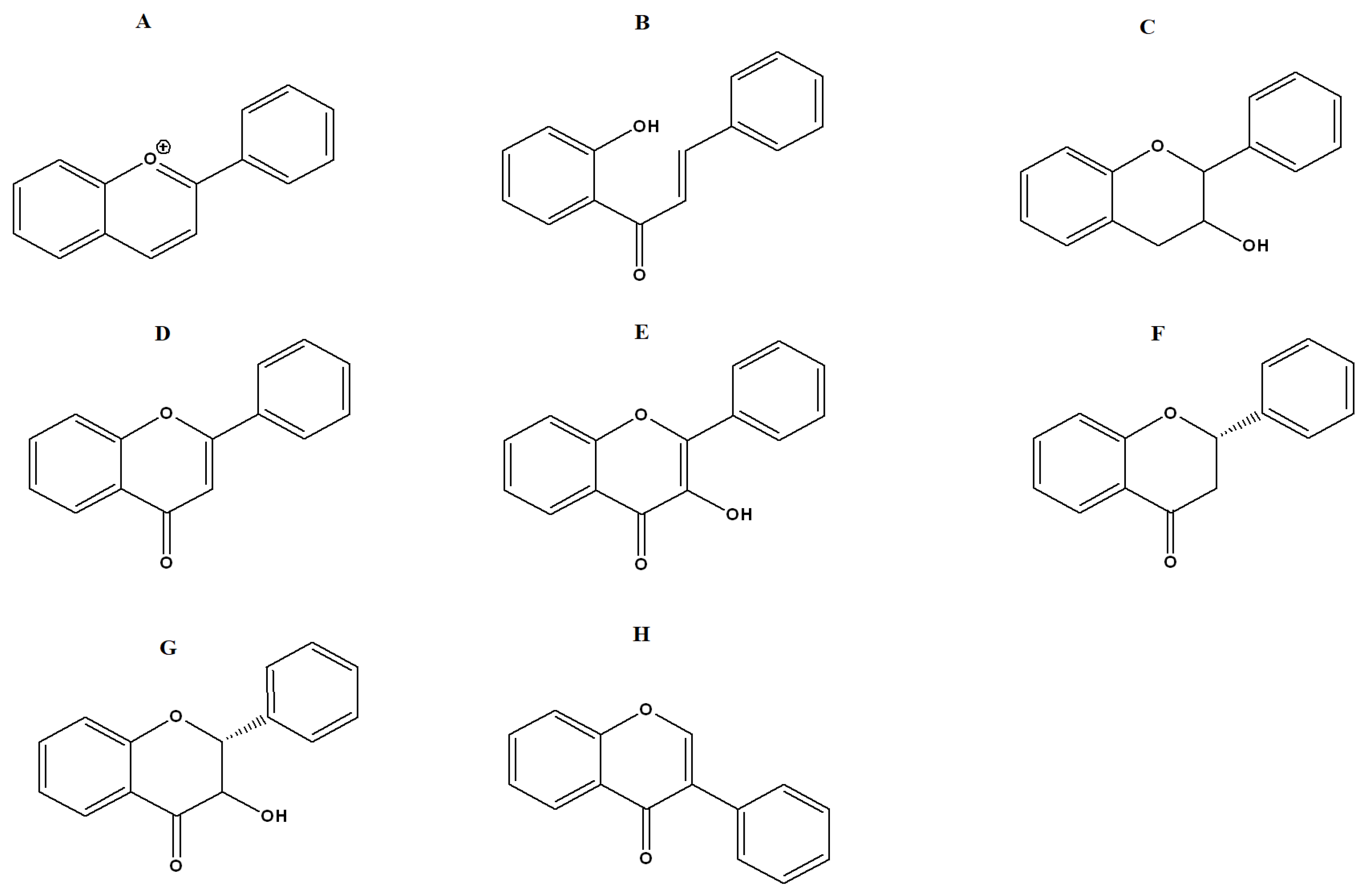
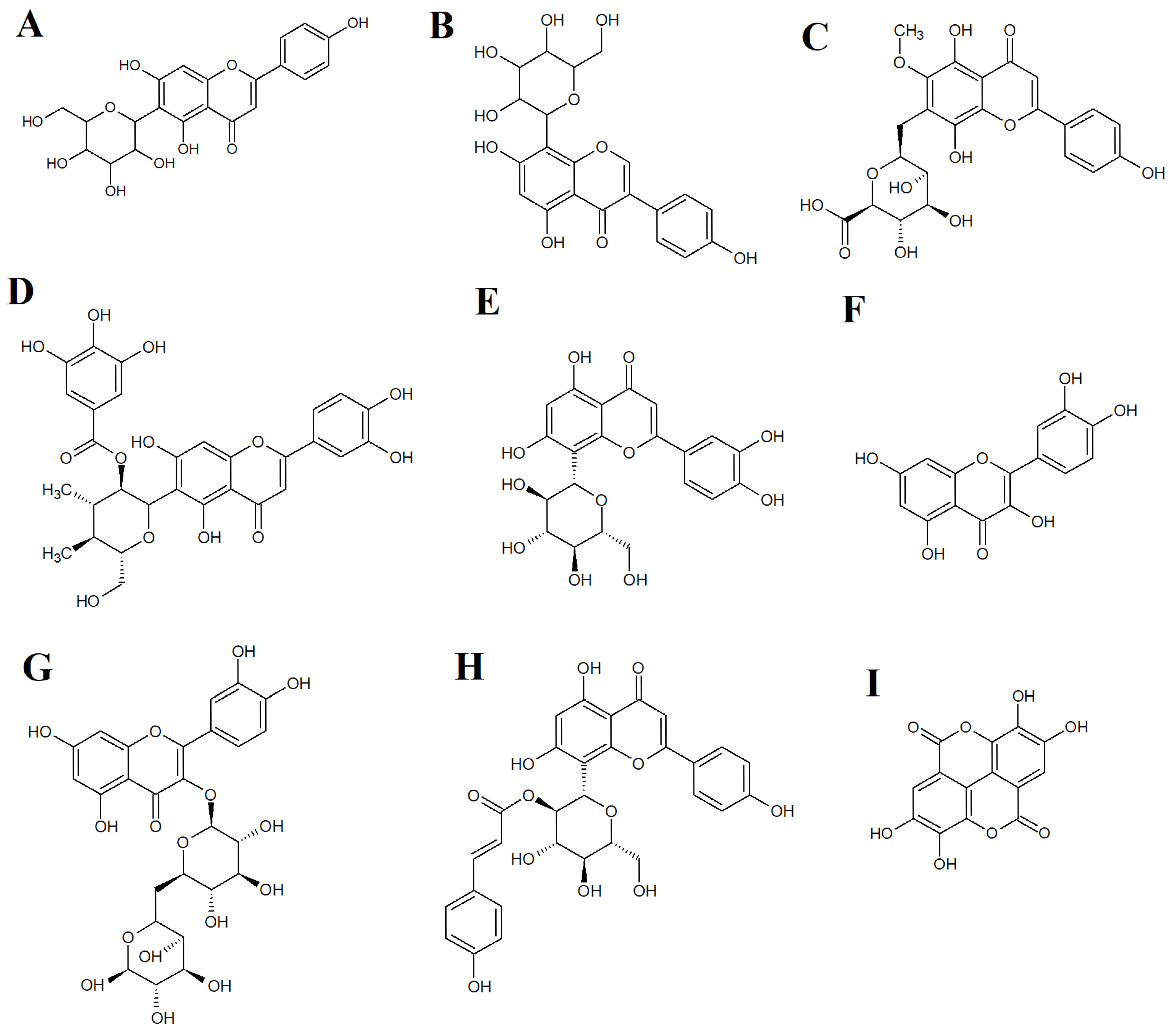
2.4. HPLC-MS Identification of TCM and TCW Extract Compounds
2.5. Evaluation of Toxicity
3. Discussion
4. Materials and Methods
4.1. Materials
4.2. Plant Collection and Extraction
4.3. Antibacterial Studies
4.4. Bacterial Culture Conditions
4.5. Concentration of Antibiotic and INT Solution
4.6. Examination of Combinational Effects
4.7. Isobologram Analysis of Synergistic Combinations
4.8. LC-MS Analysis
4.9. Toxicity Studies
4.10. Data Analysis and Statistical Methods
5. Conclusions
Author Contributions
Funding
Institutional Review Board Statement
Informed Consent Statement
Data Availability Statement
Acknowledgments
Conflicts of Interest
Abbreviations
| ALA | Artemia franciscana nauplii lethality assay |
| ANOVA | Analysis of variance |
| AR | Analytical-grade reagent |
| DMSO | Dimethyl sulfoxide |
| ESBL | Extended-spectrum β-lactamase |
| FIC | Fractional inhibitory concentration |
| ∑FIC | Sum of FIC values |
| HPLC-MS | High performance liquid chromatography coupled with mass spectrometry |
| INT | Iodonitrotetrazolium |
| LC-MS | Liquid chromatography–mass spectrometry |
| LC50 | 50% lethal concentration |
| MIC | Minimum inhibitory concentration |
| MDR | Multidrug resistant |
| MRSA | Methicillin-resistant Staphylococcus aureus |
| m/z | Mass-to-charge ratio |
| SEM | Standard error of the mean |
| TCC | Total compound chromatograms |
| TCE | Terminalia catappa ethyl acetate extract |
| TCM | Terminalia catappa methanolic extract |
| TCW | Terminalia catappa water extract |
| ZOI | Zone of inhibition |
References
- Masuda, T.; Yonemori, S.; Oyama, Y.; Takeda, Y.; Tanaka, T.; Andoh, T.; Shinohara, A.; Nakata, M. Evaluation of the antioxidant activity of environmental plants: Activity of the leaf extracts from seashore plants. J. Agric. Food Chem. 1999, 47, 1749–1754. [Google Scholar] [CrossRef]
- Neelavathi, P.; Venkatalakshmi, P.; Brindha, P. Antibacterial activities of aqueous and ethanolic extracts of Terminalia catappa leaves and bark against some pathogenic bacteria. Int. J. Pharm. Pharm. Sci. 2013, 5, 114–120. [Google Scholar]
- Germosén-Robineau, L. Towards a Caribbean Pharmacopoeia. Tramil 7; The University of the West Indies: Kingston, Jamaica, 1995. [Google Scholar]
- Cock, I.E. The medicinal properties and phytochemistry of plants of the genus Terminalia (Combretaceae). Inflammopharmacology 2015, 23, 203–229. [Google Scholar] [CrossRef]
- Kloucek, P.; Polesny, Z.; Svobodova, B.; Vlkova, E.; Kokoska, L. Antibacterial screening of some Peruvian medicinal plants used in Calleria District. J. Ethnopharmacol. 2005, 99, 309–312. [Google Scholar] [CrossRef] [PubMed]
- Shinde, S.L.; Junne, S.B.; Wadje, M.S.; Baig, M.M.V. The diversity of antibacterial compounds of Terminalia species (Combretaceae). Pak. J. Biol. Sci. 2009, 12, 1483–1486. [Google Scholar] [CrossRef] [PubMed]
- Nair, R.; Chanda, S. Antimicrobial activity of Terminalia catappa, Manilkara zapota and Piper betel leaf extract. Indian. J. Pharm. Sci. 2008, 70, 390–393. [Google Scholar] [CrossRef]
- DuPont, H.L. Bacterial diarrhea. N. Eng. J. Med. 2009, 361, 1560–1569. [Google Scholar] [CrossRef]
- Stulberg, D.L.; Penrod, M.A.; Blatny, R.A. Common bacterial skin infections. AFP 2002, 66, 119–125. [Google Scholar]
- Baratelli, T.D.; Gomes, A.C.; Wessjohann, L.A.; Kuster, R.M.; Simas, N.K. Phytochemical and allelopathic studies of Terminalia catappa L. (Combretaceae). Biochem. Syst. Ecol. 2012, 41, 119–125. [Google Scholar] [CrossRef]
- Kumar, V.D.; Kokila, G.S.; Sarvatha, A.; Pradeepa, D. Phytochemical profiles, in vitro antioxidant, anti inflammatory and antibacterial activities of aqueous extract of Terminalia catappa L. leaves. J. Pharm. Sci. Res. 2021, 13, 340–346. [Google Scholar]
- Nunes, A.F.; Viana, V.S.; Brito Junior, E.C.; Rabelo, R.S.; Nunes Filho, D.M.; Nunes, P.H.; Martins, M.C. Antiulcerogenic activity of ethanol extract of the bark from Terminalia catappa in gastric ulcer model induced by ethanol in Rattus norvegicus. Pharmacologyonline 2012, 9, 98–101. [Google Scholar]
- Sangavi, R.; Venkatalakshmi, P.; Brindha, P. Anti-bacterial activity of Terminalia catappa L. bark against some bacterial pathogens. World J. Pharm. Pharm. Sci. 2015, 4, 987–992. [Google Scholar] [CrossRef]
- Akharaiyi, F.C.; Ilori, R.N.; Adesida, J.A. Antibacterial effect of Terminalia catappa on some selected pathogenic bacteria. Int. J. Pharm. Biomed. Res. 2011, 2, 64–67. [Google Scholar]
- Ahmad, A.; Van Vuuren, S.; Viljoen, A. Unravelling the complex antimicrobial interactions of essential oils—The case of Thymus vulgaris (Thyme). Molecules 2014, 19, 2896–2910. [Google Scholar] [CrossRef]
- Cheesman, M.J.; White, A.; Matthews, B.; Cock, I.E. Terminalia ferdinandiana fruit and leaf extracts inhibit methicillin-resistant Staphylococcus aureus growth. Planta Med. 2019, 85, 1253–1262. [Google Scholar] [CrossRef]
- Eloff, J. Which extractant should be used for the screening and isolation of antimicrobial components from plants? J. Ethnopharmacol. 1998, 60, 1–8. [Google Scholar] [CrossRef] [PubMed]
- van Vuuren, S.F.; Viljoen, A. Plant-based antimicrobial studies–methods and approaches to study the interaction between natural products. Planta Med. 2011, 77, 1168–1182, Erratum in Planta Med. 2012, 78, 302. [Google Scholar] [CrossRef] [PubMed]
- Bonev, B.; Hooper, J.; Parisot, J. Principles of assessing bacterial susceptibility to antibiotics using the agar diffusion method. J. Antimicrob. Chemother. 2008, 61, 1295–1301. [Google Scholar] [CrossRef]
- Chanda, S.; Rakholiya, K.; Nair, R. Antimicrobial activity of Terminalia catappa L. leaf extracts against some clinically important pathogenic microbial strains. Chin. Med. 2011, 2, 171–177. [Google Scholar] [CrossRef]
- Babayi, H.; Kolo, I.; Okogun, J.I.; Ijah, U.J. The antimicrobial activities of methanolic extracts of Eucalyptus camalctulensis and Terminalia catappa against some pathogenic microorganisms. Biokemistri 2004, 16, 106–111. [Google Scholar]
- Cheesman, M.J.; Ilanko, A.; Blonk, B.; Cock, I.E. Developing new antimicrobial therapies: Are synergistic combinations of plant extracts/compounds with conventional antibiotics the solution? Pharmacogn. Rev. 2017, 11, 57–72. [Google Scholar] [CrossRef] [PubMed]
- Zhang, X.-R.; Kaunda, J.S.; Zhu, H.-T.; Wang, D.; Yang, C.-R.; Zhang, Y.-J. The genus Terminalia (Combretaceae): An ethnopharmacological, phytochemical and pharmacological review. Nat. Prod. Bioprospect. 2019, 9, 357–392. [Google Scholar] [CrossRef]
- Farha, A.K.; Yang, Q.Q.; Kim, G.; Li, H.B.; Zhu, F.; Liu, H.Y.; Gan, R.Y.; Corke, H. Tannins as an alternative to antibiotics. Food Biosci. 2020, 38, 100751. [Google Scholar] [CrossRef]
- Shamsudin, N.F.; Ahmed, Q.U.; Mahmood, S.; Ali Shah, S.A.; Khatib, A.; Mukhtar, S.; Alsharif, M.A.; Parveen, H.; Zakaria, Z.A. Antibacterial effects of flavonoids and their structure-activity relationship study: A comparative interpretation. Molecules 2022, 27, 1149. [Google Scholar] [CrossRef]
- Anand, A.; Divya, N.; Kotti, P. An updated review of Terminalia catappa. Pharmacogn. Rev. 2015, 9, 93–98. [Google Scholar] [CrossRef]
- Oduro, I.; Larbie, C.; Amoako, T.; Antwi-Boasiako, A. Proximate composition and basic phytochemical assessment of two common varieties of Terminalia catappa (Indian Almond). J. Sci. Technol. 2009, 29, 1–6. [Google Scholar] [CrossRef]
- Otsuka, N.; Liu, M.-H.; Shiota, S.; Ogawa, W.; Kuroda, T.; Hatano, T.; Tsuchiya, T. Anti-methicillin resistant Staphylococcus aureus (MRSA) compounds isolated from Laurus nobilis. Biol. Pharm. Bull. 2008, 31, 1794–1797. [Google Scholar] [CrossRef] [PubMed]
- Tsuchiya, H.; Sato, M.; Miyazaki, T.; Fujiwara, T.S.; Tanigaki, S.; Ohyama, M.; Tanaka, T.; Iinuma, M. Comparative study on the antibacterial activity of phytochemical flavanones against methicillin-resistant Staphylococcus aureus. J. Ethnopharmacol. 1996, 50, 27–34. [Google Scholar] [CrossRef]
- Alam, M.S.; Rahman, S.M.; Lee, D.-U. Synthesis, biological evaluation, quantitative-SAR and docking studies of novel chalcone derivatives as antibacterial and antioxidant agents. Chem. Pap. 2015, 69, 1118–1129. [Google Scholar] [CrossRef]
- Lee, K.A.; Moon, S.-H.; Lee, J.-Y.; Kim, K.-T.; Park, Y.-S.; Paik, H.-D. Antibacterial activity of a novel flavonoid, 7-O-butyl naringenin, against methicillin-resistant Staphylococcus aureus (MRSA). Food Sci. Biotechnol. 2013, 22, 1725–1728. [Google Scholar] [CrossRef]
- Yang WooYoung, Y.W.; Won TaeHyung, W.T.; Ahn ChanHong, A.C.; Lee SoHyoung, L.S.; Yang HyeongCheol, Y.H.; Shin JongHeon, S.J.; Oh KiBong, O.K. Streptococcus mutans sortase A inhibitory metabolites from the flowers of Sophora japonica. Bioorg. Med. Chem. Lett. 2015, 25, 1394–1397. [Google Scholar] [CrossRef]
- Scalbert, A. Antimicrobial properties of tannins. Phytochemistry 1991, 30, 3875–3883. [Google Scholar] [CrossRef]
- Boakye, Y.D.; Agyare, C.; Hensel, A. Anti-infective properties and time-kill kinetics of Phyllanthus muellerianus and its major constituent, geraniin. Med. Chem. Res. 2016, 6, 95–104. [Google Scholar] [CrossRef]
- Lewis, K. Riddle of biofilm resistance. Antimicrob. Agents Chemother. 2001, 45, 999–1007. [Google Scholar] [CrossRef] [PubMed]
- Hancock, V.; Dahl, M.; Vejborg, R.M.; Klemm, P. Dietary plant components ellagic acid and tannic acid inhibit Escherichia coli biofilm formation. J. Med. Microbiol. 2010, 59, 496–498. [Google Scholar] [CrossRef]
- Zai, M.J.; Cheesman, M.J.; Cock, I.E. Terminalia petiolaris A. Cunn ex Benth. extracts have antibacterial activity and potentiate conventional antibiotics against β-lactam-drug-resistant bacteria. Antibiotics 2023, 12, 1643. [Google Scholar] [CrossRef] [PubMed]



| Test (Extract or Antibiotic) | Bacterial Species and MIC (µg/mL) | |||||
|---|---|---|---|---|---|---|
| E. coli | ESBL E. coli | S. aureus | MRSA | K. pneumoniae | ESBL K. pneumoniae | |
| TCM | 130 | 259 | 259 | 259 | 519 | 259 |
| TCW | 416 | 1663 | 1663 | 1663 | 416 | 438 |
| TCE | - | - | - | - | - | - |
| Tetracycline | - | - | 1.25 | - | - | - |
| Chloramphenicol | - | - | 0.31 | - | 1.25 | 1.25 |
| Ciprofloxacin | 2.5 | - | 0.62 | 2.5 | 2.5 | 1.25 |
| Gentamicin | 0.039 | 0.039 | 0.03 | 0.03 | 0.03 | 0.03 |
| Erythromycin | - | - | 1.25 | - | 2.5 | - |
| Negative control | - | - | - | - | - | - |
| Bacteria | Extract | Tetracycline | Chloramphenicol | Ciprofloxacin | Gentamicin | Erythromycin |
|---|---|---|---|---|---|---|
| E. coli | TCM | - | - | 4.25 | 3.10 | - |
| TCW | - | - | 2.25 | 1.42 | ||
| TCE | - | - | - | - | - | |
| ESBL E. coli | TCM | - | - | - | 2.85 | - |
| TCW | - | - | - | 5.33 | - | |
| TCE | - | - | - | - | - | |
| S. aureus | TCM | 1.25 | 1 | 1.50 | 1.12 | 1.25 |
| TCW | 0.50 | 1.25 | 3 | 0.66 | 1 | |
| TCE | - | - | - | - | - | |
| MRSA | TCM | - | - | 2.25 | 5.70 | - |
| TCW | - | - | 0.75 | 2.66 | - | |
| TCE | - | - | - | - | - | |
| K. pneumoniae | TCM | - | 0.37 | 0.62 | 2.72 | 0.62 |
| TCW | - | 2.5 | 2.25 | 2.84 | 1.12 | |
| TCE | - | - | - | - | - | |
| ESBL K. pneumoniae | TCM | - | 1.25 | 1.25 | 2.85 | - |
| TCW | - | 0.66 | 2.5 | 1.41 | - | |
| TCE | - | - | - | - | - |
| Flavonoids | Retention Time (min) | Empirical Formula | Molecular Mass | Putative Identification | Relative Abundance (% Total Area) | |
| TCM | TCW | |||||
| 8.13 | C30H26O12 | 578.14 | Vitexin 2″-O-p-coumarate | 0.02 | ||
| 6.35 | C27H30O16 | 610.15 | Rutin | 0.05 | ||
| 6.30 | C15H10O7 | 302.04 | Quercitin | 0.02 | ||
| 5.54 | C21H20O11 | 448.10 | Orientin | 0.03 | ||
| 6.19 | C21H20O10 | 432.10 | 1,5-Anhydro-1-[5,7-dihydroxy-2-(4-hydroxyphenyl)-4-oxo-4H-chromen-6-yl] hexitol | 0.55 | ||
| 6.94 | C28H24O15 | 600.11 | Isoorientin 2”-O-gallate | 0.01 | ||
| 13.22 | C22H20O12 | 476.09 | Hispidulin 7-glucuronide | 0.02 | ||
| 7.35 | C21H20O10 | 432.10 | 1,5-Anhydro-1-[5,7-dihydroxy-3-(4-hydroxyphenyl)-4-oxo-4H-chromen-8-yl] hexitol | 0.18 | ||
| Tannins | 6.35 | C14H6O8 | 302.00 | Ellagic acid (isomer 1) | 1.09 | |
| 7.46 | C14H6O8 | 302.00 | Ellagic acid (isomer 2) | 0.48 | ||
Disclaimer/Publisher’s Note: The statements, opinions and data contained in all publications are solely those of the individual author(s) and contributor(s) and not of MDPI and/or the editor(s). MDPI and/or the editor(s) disclaim responsibility for any injury to people or property resulting from any ideas, methods, instructions or products referred to in the content. |
© 2025 by the authors. Licensee MDPI, Basel, Switzerland. This article is an open access article distributed under the terms and conditions of the Creative Commons Attribution (CC BY) license.
Share and Cite
Zai, M.J.; Cheesman, M.J.; Cock, I.E. Phytochemical Evaluation of Terminalia catappa L. Extracts with Antibacterial and Antibiotic Potentiation Activities Against β-Lactam Drug-Resistant Bacteria. Int. J. Mol. Sci. 2026, 27, 177. https://doi.org/10.3390/ijms27010177
Zai MJ, Cheesman MJ, Cock IE. Phytochemical Evaluation of Terminalia catappa L. Extracts with Antibacterial and Antibiotic Potentiation Activities Against β-Lactam Drug-Resistant Bacteria. International Journal of Molecular Sciences. 2026; 27(1):177. https://doi.org/10.3390/ijms27010177
Chicago/Turabian StyleZai, Muhammad Jawad, Matthew James Cheesman, and Ian Edwin Cock. 2026. "Phytochemical Evaluation of Terminalia catappa L. Extracts with Antibacterial and Antibiotic Potentiation Activities Against β-Lactam Drug-Resistant Bacteria" International Journal of Molecular Sciences 27, no. 1: 177. https://doi.org/10.3390/ijms27010177
APA StyleZai, M. J., Cheesman, M. J., & Cock, I. E. (2026). Phytochemical Evaluation of Terminalia catappa L. Extracts with Antibacterial and Antibiotic Potentiation Activities Against β-Lactam Drug-Resistant Bacteria. International Journal of Molecular Sciences, 27(1), 177. https://doi.org/10.3390/ijms27010177