Gut Microbiota in the Regulation of Intestinal Drug Transporters: Molecular Mechanisms and Pharmacokinetic Implications



Abstract
1. Introduction
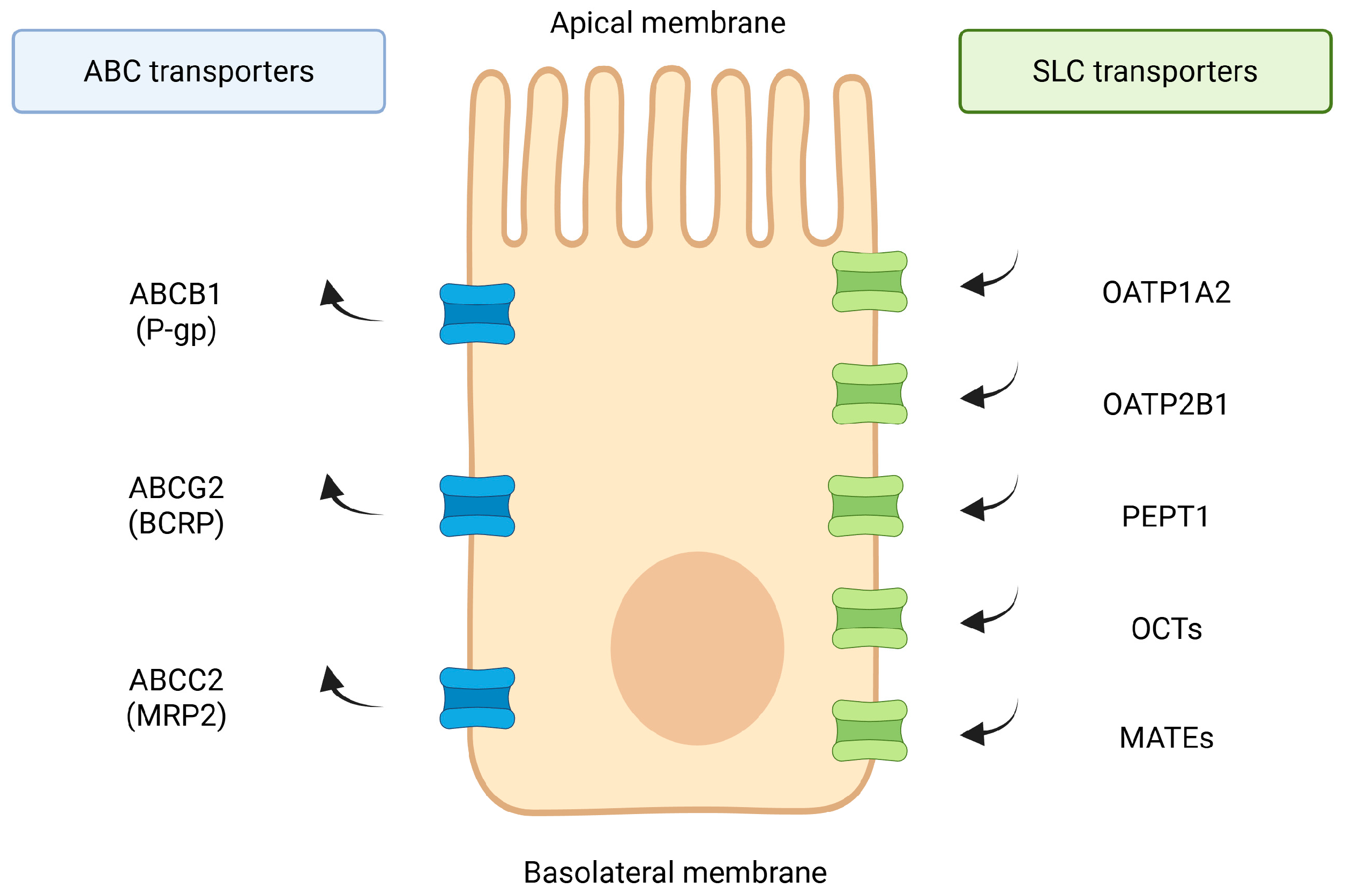
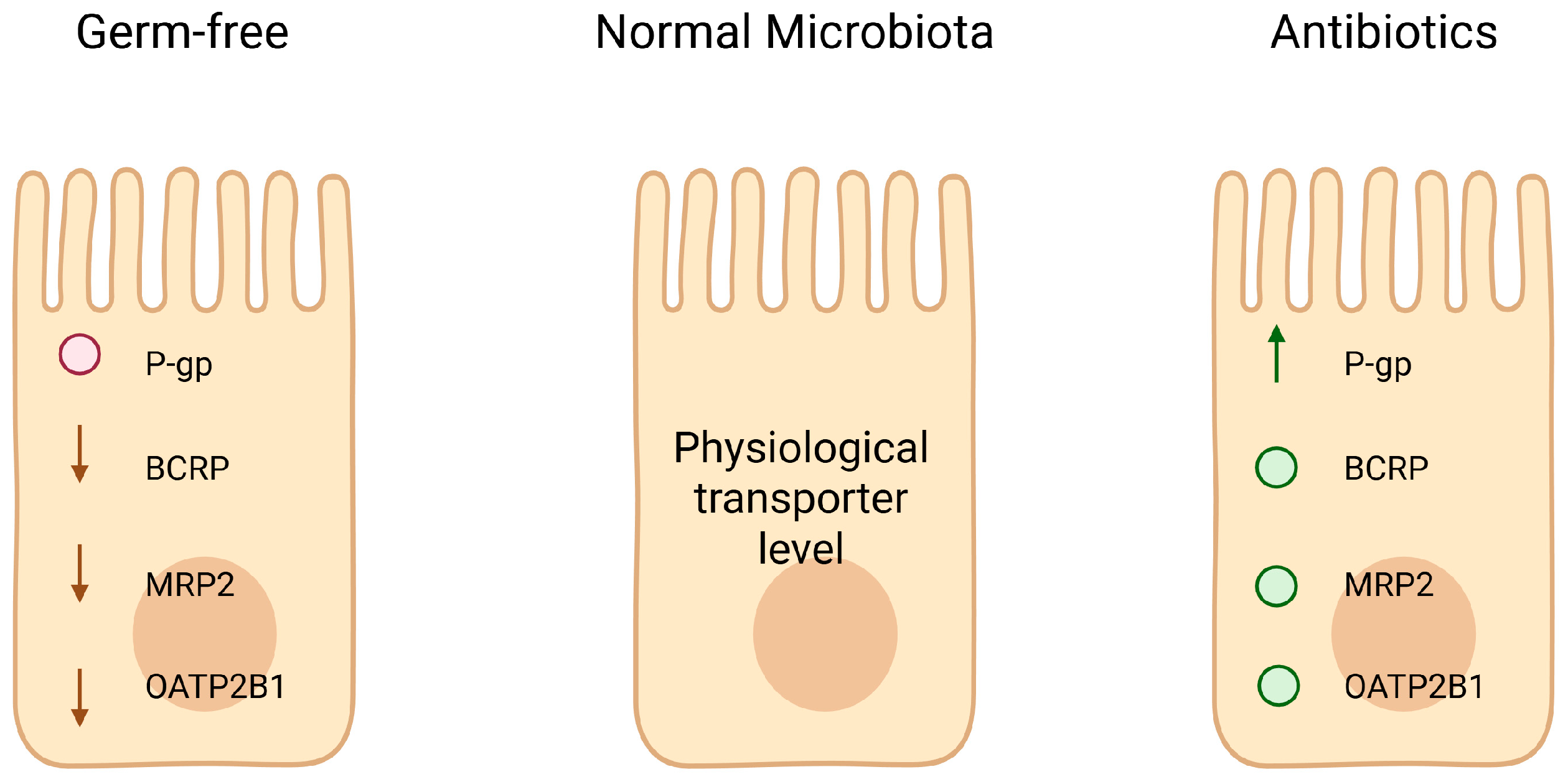
2. Gut Microbiota and Intestinal Drug Transporters
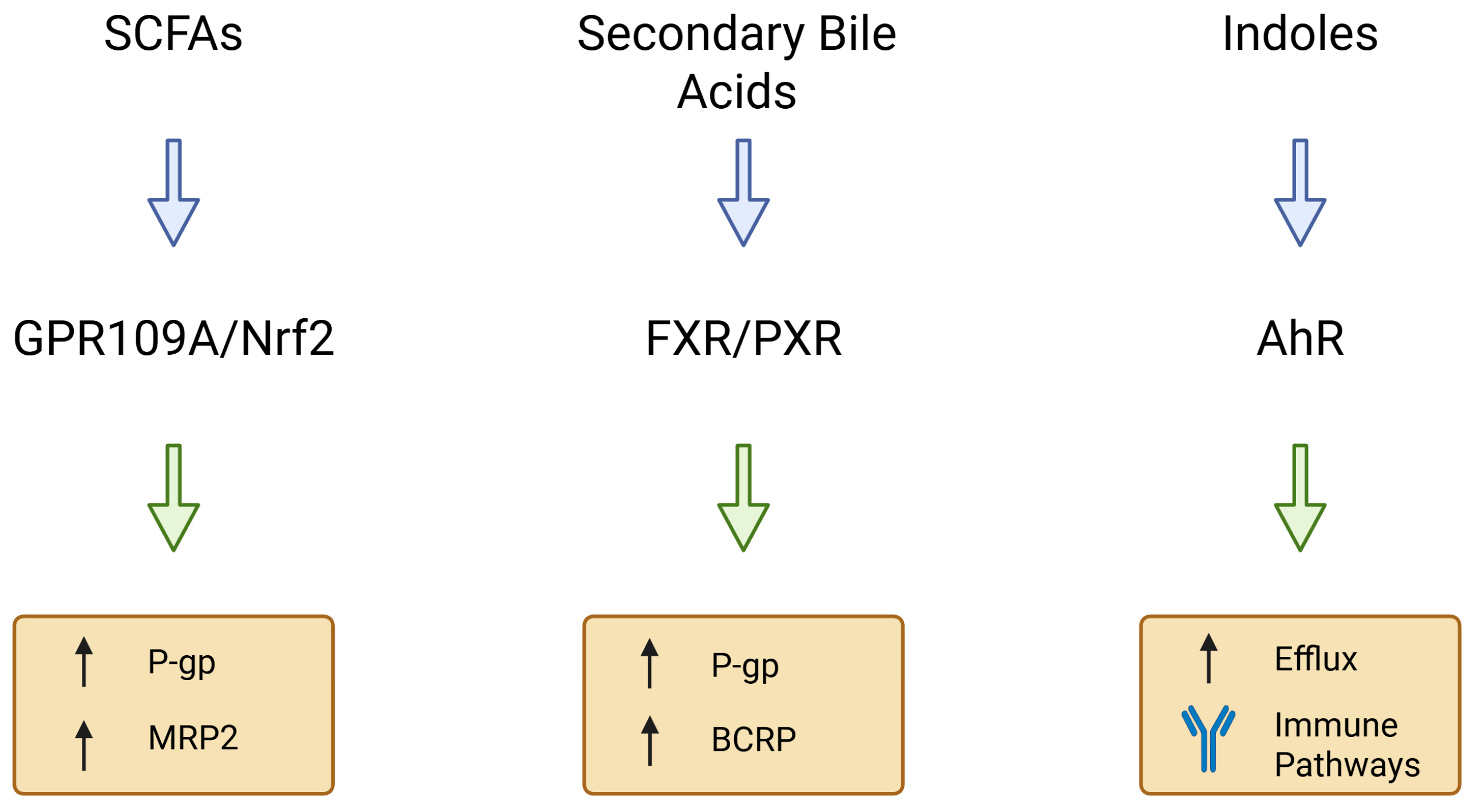
3. Microbial Metabolites and Transporter Regulation: SCFAs, Bile Acids, and Tryptophan Derivatives
3.1. Short-Chain Fatty Acids Upregulating Drug Transporters
3.2. Secondary Bile Acids and Nuclear Receptor Signaling
3.3. Tryptophan Metabolites and Aryl Hydrocarbon Receptor (AhR) Activation
3.4. Other Microbial Metabolites and Factors
- Phenolic Metabolites: Gut bacteria metabolize polyphenols and aromatic compounds into phenolic acids that may activate receptors like PXR or Nrf2 [40]. For example, urolithins (derived from polyphenols by gut microbes) have been noted to induce phase II enzymes and could affect transporters via Nrf2 activation, though direct evidence on transporter genes is still emerging [113].
- Trimethylamine N-oxide (TMAO): Produced from dietary choline/carnitine by a two-step microbial-host process, TMAO has been implicated in modulating bile acid and cholesterol transport. Some studies suggest TMAO may downregulate hepatic transporters (like OATP and NTCP) via FXR signaling. In the intestine, a high-TMAO environment (as in some dysbiosis) could conceivably alter FXR and hence transporter expression, although details remain to be clarified [114].
- Microbial Enzymes and Postbiotics: Microbes secrete enzymes or peptide signaling molecules that interact with host cells. Probiotics can release soluble proteins that activate MAPK pathways in epithelial cells, potentially influencing transporter gene expression similar to how Lactobacillus activated AP-1 to increase P-gp. Additionally, microbial fermentation gases (H2S, methane) or small molecules (like spermine, polyamines) might impact cellular signaling pathways [115,116,117,118], that modulate transporter post-translational modification (e.g., phosphorylation status affecting transporter activity) [119].
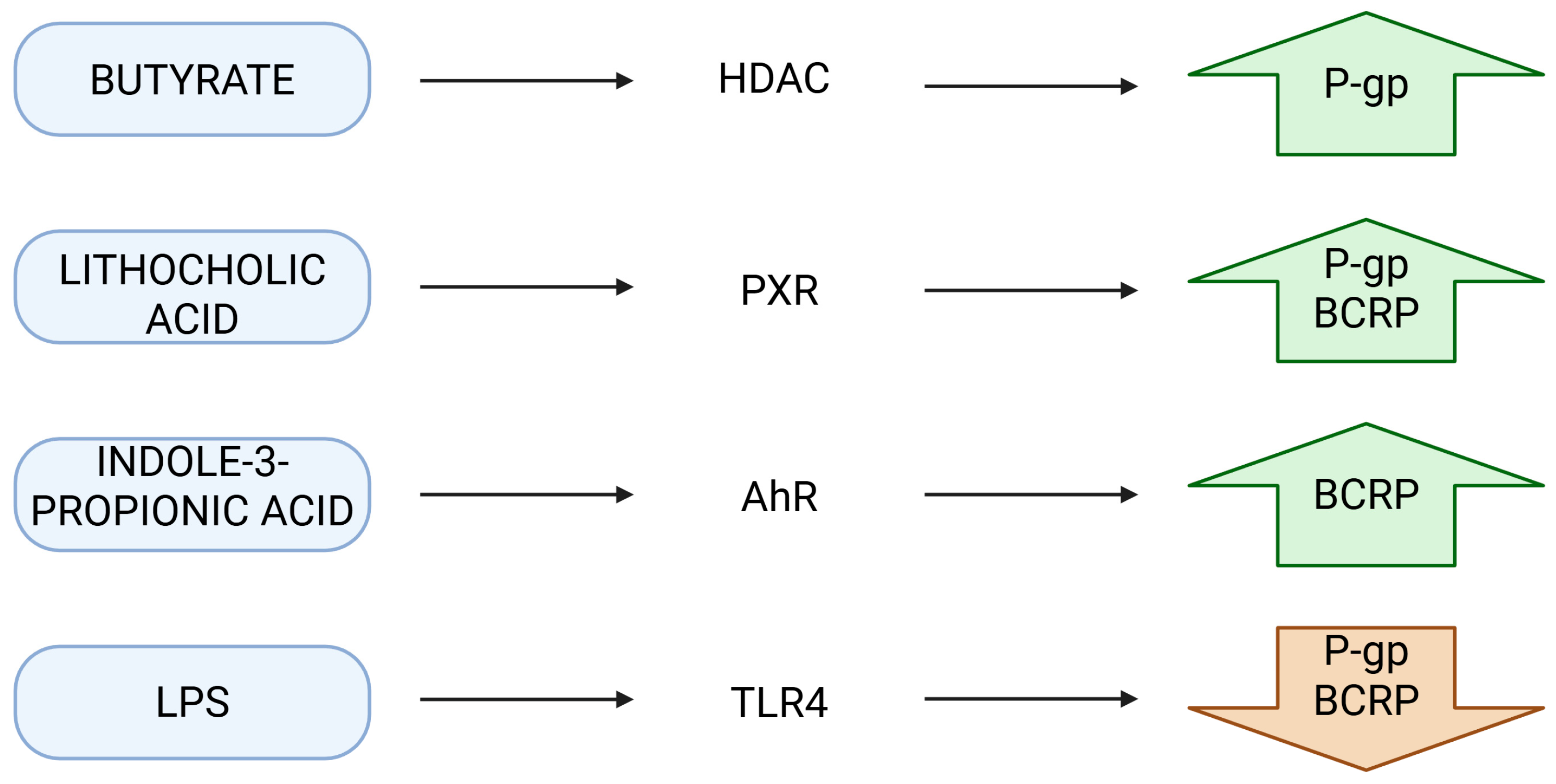
- Pathogen-associated Molecular Patterns (PAMPs): Components of microbial cells, such as lipopolysaccharide (LPS) from Gram-negative bacteria, can also affect transporter function. LPS triggers Toll-like receptor 4 (TLR4) and downstream NF-κB inflammatory signaling in the gut [120,121]. Acute exposure to LPS or a pro-inflammatory state has been shown to downregulate P-glycoprotein expression and inhibit its function in various tissues [122]. For example, LPS administration in rodents impaired P-gp-mediated efflux at blood–tissue barriers. In the intestine, inflammation due to pathogenic bacteria or microbial imbalance could similarly suppress P-gp and other transporter levels as part of the broader NF-κB driven response [122,123]. Infections like Citrobacter rodentium in mice reduce colonic P-gp expression, an effect linked to increased epithelial permeability and inflammation [124]. Such findings highlight that not all microbial signals induce transporters—some, particularly from pathogens or dysbiosis, can inhibit transporter expression and activity, diminishing the gut’s drug efflux capability [125,126]. The summary is provided in Table 1 below.
4. Molecular Pathways of Microbiota-Driven Transporter Regulation
4.1. Nuclear Receptors as Xenobiotic and Metabolite Sensors
- Pregnane X Receptor (PXR): PXR is activated by various microbial metabolites (secondary bile acids like LCA, certain dietary compounds possibly modified by microbes, etc.). When activated in intestinal enterocytes, PXR binds to response elements on genes to induce a suite of xenobiotic-handling proteins—like ABCB1 (P-gp), ABCC2 (MRP2), ABCG2 (BCRP), and CYP3A4 [3,43,129,130,131]. In addition to ABC transporters, PXR activation has been shown to regulate multiple SLC genes, including members of the SLCO (OATP) and SLC22 (OAT/OCT) families, indicating that microbiota-derived PXR ligands may reshape both intestinal drug uptake and efflux (Zhou i in., 2017 [2,58]; Zhou i Shu, 2022 [14]). PXR thus serves as a crucial mediator by which microbiota can enhance efflux transporter expression to handle increased luminal loads of foreign chemicals. Interestingly, gut microbes themselves can modulate PXR signaling not only by providing ligands but also by influencing PXR expression levels [132].
- Constitutive Androstane Receptor (CAR): CAR is another xenobiotic-sensing NR which often overlaps with PXR in target genes but is usually active basally and further induced by certain ligands (e.g., phenobarbital-type inducers) [133]. They pinpointed CAR as a likely transcription factor mediating microbiota-induced changes in Abcb1 (P-gp) expression [134]. It appears that some microbiota metabolites may repress CAR activity under normal conditions, and removing them (with antibiotics) triggers CAR, which then boosts P-gp expression. CAR’s exact endogenous ligands from microbiota are not well-characterized; indirect modulation via altered bile acid pools or cytokine signaling is possible [135]. CAR activation is generally associated with induction of certain efflux pumps and phase II enzymes, so it aligns with an increase in transporter expression [136].
- Farnesoid X Receptor (FXR): FXR, activated by bile acids, influences primarily bile acid transporters. Microbiota-controlled bile acid profiles will determine FXR activation. Intestinal FXR activation tends to maintain barrier integrity and can have varying effects on drug transporters [137]. Some studies in FXR-knockout mice show alterations in P-gp and BCRP levels during cholestatic conditions, implying FXR may contribute to their regulation. Notably, FXR agonists (e.g., obeticholic acid) given to mice shift the gut microbiota and also change expression of some ABC transporters, though disentangling cause/effect is complex [138].
- Vitamin D Receptor (VDR): VDR can be activated by lithocholic acid (a secondary bile acid) which is a VDR ligand. Activation of VDR has been shown to induce P-gp expression in the gut as well, since vitamin D/VDR signaling upregulates ABCB1 in various tissues. Microbiota that produce LCA could activate VDR locally, potentially contributing to P-gp regulation [139,140].
4.2. Transcription Factors and Signaling Pathways
- Nrf2 (Nuclear factor E2-related factor 2): Nrf2 is a master regulator of cellular antioxidant and defensive responses. SCFAs like butyrate can activate Nrf2. When Nrf2 translocates to the nucleus, it binds antioxidant response elements (AREs) in gene promoters. Nrf2 drives expression of many phase II metabolism enzymes (UGTs, GSTs) and certain transporters including MRP2 and MRP3. Butyrate-mediated Nrf2 activation has been linked to increased P-gp levels as well. For example, berberine (a plant alkaloid that also modulates gut microbes) was shown to upregulate P-gp via Nrf2-dependent mechanisms in colitic rats [141,142].
- NF-κB (Nuclear Factor kappa B): NF-κB is a key inflammatory transcription factor activated by microbial PAMPs (LPS, flagellin) and cytokines [143]. Activation of NF-κB generally leads to production of pro-inflammatory mediators, but it can also repress certain genes. In inflammatory states of the gut, NF-κB activation correlates with decreased expression of transporters like P-gp and BCRP [144,145]. The mechanism may involve NF-κB interfering with the binding of positive factors (like PXR or constitutive transcription factors) on transporter gene promoters [146]. Additionally, NF-κB induces nitric oxide and oxidative stress that can impair transporter function [147]. Overall, chronic NF-κB activation (e.g., in IBD or infection) is associated with transporter downregulation, contributing to barrier compromise [148].
- AP-1 (Activator Protein 1): AP-1 refers to dimeric transcription factors composed of Fos and Jun proteins that respond to MAPK signaling [149]. The MDR1 (P-gp) gene promoter contains AP-1 binding sites known to enhance its transcription [150,151]. Beneficial microbes can activate AP-1 in epithelial cells, e.g., L. acidophilus was shown to induce c-Fos/c-Jun, resulting in higher P-gp expression [152]. On the other hand, certain bacterial toxins or stress may activate JNK pathways leading to AP-1, but in contexts like oxidative stress AP-1 might also be repressive [153].
- PPARs (Peroxisome Proliferator-Activated Receptors): These lipid-sensing NRs (PPARα/δ/γ) can be activated by microbial metabolites (e.g., certain fatty acids) [154]. While not classic drug transporter regulators, PPARγ activation by microbiota (as in fermentation products) has anti-inflammatory effects that indirectly preserve transporter function [155]. Some studies indicate PPARα agonists can increase ABCB1 expression in the liver; whether similar occurs in gut is under investigation [156,157].
- HIF-1 (Hypoxia Inducible Factor 1): The gut mucosa experiences an altered oxygen gradient in dysbiosis, possibly activating HIF-1. HIF-1 is known to induce certain transporters (like ABCB1 in hypoxic tumors) [158,159]. A fiber-rich, microbiota-driven increase in butyrate actually consumes oxygen in the colon and can stabilize HIF-1, which has been linked to enhanced barrier function [160]. Microbiota-induced HIF-1 helps upregulate P-gp or other transporters as part of adaptation to low oxygen, though direct evidence in vivo is limited [161].
4.3. Post-Translational Modifications of Transporters
- Kinase signaling: Transporter proteins like BCRP and P-gp can be phosphorylated by kinases (e.g., PKA, PKC, JNK) which may alter their localization or activity [6,168]. The gut microbiota modulates host kinase signaling (for example, microbial secondary bile acids can activate PKC or Src kinases) [169]. There is evidence that intestinal BCRP requires phosphorylation by JAK2/3 (Janus kinases) for full activity. In inflammatory states, cytokines activate JAK/STAT pathways which could modify BCRP [170,171]. Microbiota that reduce inflammation might maintain proper JAK-mediated BCRP activation, whereas dysbiosis could lead to aberrant phosphorylation and diminished function [172]. Similarly, P-gp function can be modulated by PKC-mediated phosphorylation; some bacterial toxins activate PKC and might internalize P-gp, reducing efflux at the membrane [173].
- Glycosylation: N-glycosylation of P-gp and BCRP is needed for stability and trafficking to the plasma membrane [174]. Microbiota affect the gut epithelial glycosylation patterns (e.g., via influencing nutrient availability like monosaccharides or modulating endoplasmic reticulum stress). If microbial products interfere with normal glycosylation (for instance, some bacterial infections cause ER stress), transporters could misfold or be targeted for degradation, lowering their surface expression [175].
- Ubiquitin-proteasome degradation: Inflammatory signals triggered by microbes can promote ubiquitin tagging of certain proteins [176,177]. Commensals that activate pathways like AMPK may actually enhance transporter stability by preventing misfolded protein accumulation [178]. It has been noted that butyrate can increase expression of chaperone proteins and stabilize tight junction and transporter proteins in the membrane, though more specific data on transporter PTMs are needed [179].
- Membrane microenvironment: Microbial metabolites can also alter the membrane lipid composition [180]. P-gp activity is known to depend on membrane lipid environment. Secondary bile acids can incorporate into membranes and might modulate how P-gp interacts with the bilayer, potentially changing its conformation and drug affinity [181].
- Although these post-translational mechanisms are biologically plausible and supported by selected in vitro studies, the evidence linking microbiota-derived metabolites directly to transporter PTMs remains fragmentary. Additional work is required to determine the extent to which these modifications occur in vivo and whether they meaningfully influence human drug disposition.
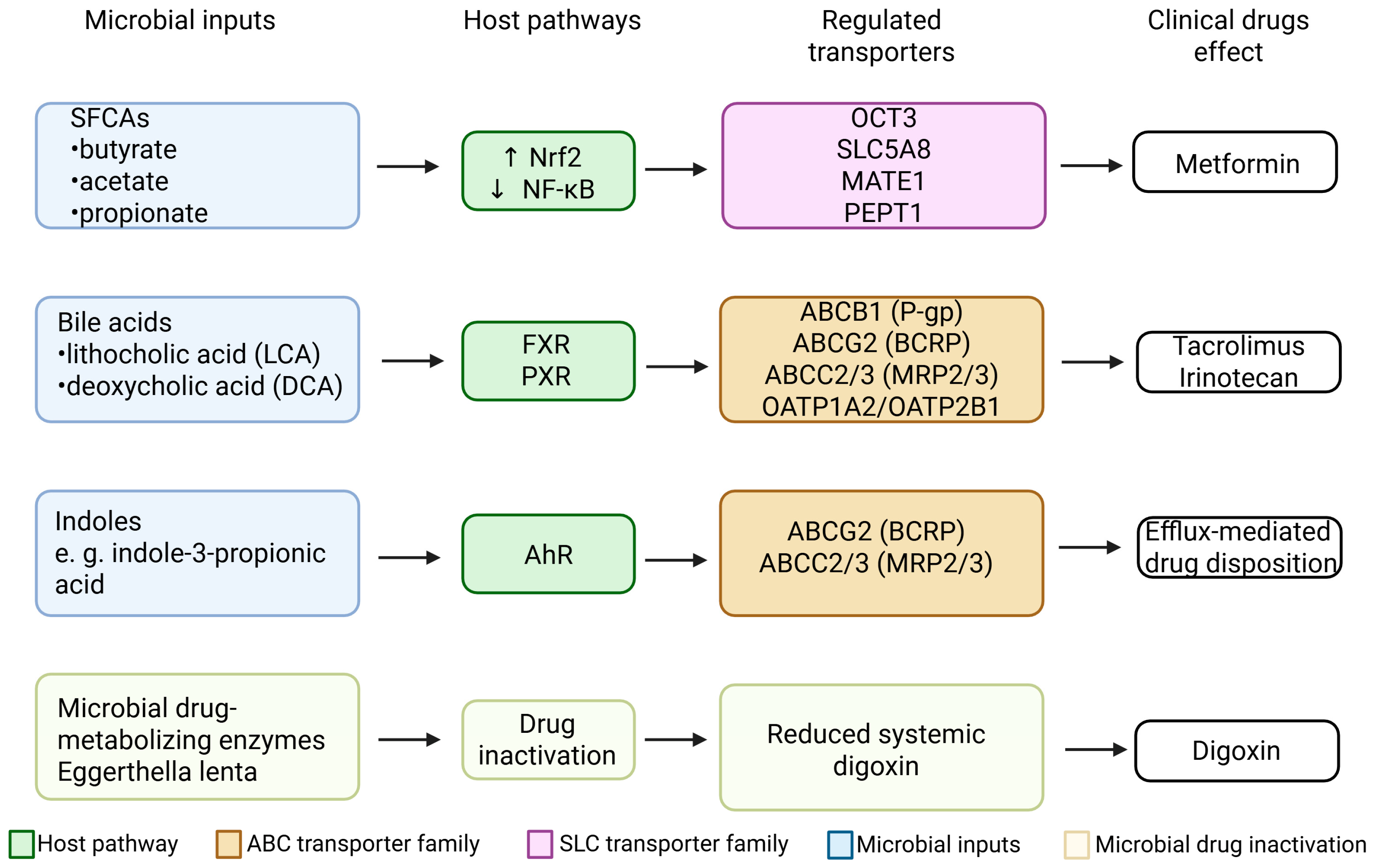
- Figure 5 summarizes the integrated relationships between microbiota-derived metabolites, host signaling pathways, regulated intestinal drug transporters, and representative clinical drugs affected by these interactions.
5. Clinical Observations and Human Studies
- Association studies: Analyses of intestinal biopsies have shown correlations between microbiota composition and transporter gene expression. As one example, in a cohort of UC patients versus healthy controls, P-gp expression in colon biopsies was lower in UC and directly correlated with the abundance of butyrate-producing Firmicutes in the patients’ gut microbiota. Those with more Roseburia/Faecalibacterium had higher mucosal P-gp, whereas those over-colonized by Proteobacteria (like E. coli) had lower P-gp. This is consistent with mechanistic data and suggests microbiome profiling might predict transporter expression in individuals [182,183].
- Fecal metabolite associations: Similarly, levels of fecal SCFAs and secondary bile acids in patients have been linked to transporter modulation. Patients on high-fiber diets (with presumably higher SCFAs) showed increased expression of genes like ABCB1 and SLC22A3 (OCT3) in colon biopsies in one small study (potentially explaining better drug tolerance) [41]. Conversely, individuals on broad-spectrum antibiotics (which wipe out SCFA producers) had transient reductions in fecal butyrate and coincident drops in P-gp expression (noted in one study examining loperamide response, though more data are needed) [184].
- Drug pharmacokinetics and microbiome status: There are reported instances where changes in a patient’s microbiota (due to antibiotics or illness) altered drug levels in ways consistent with transporter effects:
- Tacrolimus: Clinical anecdotal reports and pilot studies have noted that patients on tacrolimus (an immunosuppressant) experienced elevated drug levels and toxicity after courses of broad-spectrum antibiotics [185]. While some of this is due to loss of bacterial drug metabolism, the study by Degraeve et al. suggests a mechanistic basis: antibiotics increase intestinal P-gp which lowers tacrolimus absorption [17]. In a controlled setting, one study co-administered the P-gp inhibitor zosuquidar to kidney transplant patients and found that normally, P-gp limits tacrolimus absorption, but when gut bacteria are suppressed (as in patients on multiple antibiotics), tacrolimus AUC variance increased markedly until P-gp was blocked. This indicates that microbiota differences could be part of why some patients need higher tacrolimus doses—those with certain microbiomes might have higher baseline P-gp activity [186,187].
- Digoxin: A classic case is digoxin, a cardiac glycoside. About 10% of patients harbor Eggerthella lenta strains that metabolize digoxin, reducing its plasma levels. Interestingly, those same strains secrete P-gp inhibitors [188]. A recent trial measured digoxin pharmacokinetics in subjects before and after altering their microbiota (through diet) [189]. In those where E. lenta increased, early-phase digoxin blood levels were higher (consistent with P-gp inhibition increasing absorption rate), although total exposure (AUC) did not change much because metabolic degradation counteracted it [190].
- Metformin: Emerging data link metformin response to the microbiome. Metformin’s absorption occurs mainly in the upper intestine via transporters like OCT1 and SERT, and it exerts glucose-lowering effects partly through actions on the gut. Some studies found that microbiome composition (abundance of Akkermansia and SCFA producers) correlates with better metformin response [191]. Mechanistically, metformin itself alters bile acid pools and gut microbes, which could upregulate intestinal apical bile acid transporters and limit metformin diarrhea side-effects [192,193].
- Cancer chemotherapeutics: The irinotecan example is notable clinically. Cancer patients on irinotecan sometimes receive antibiotics like neomycin to mitigate diarrhea [194]. Neomycin kills β-glucuronidase-producing bacteria, preventing reactivation of toxic SN-38 in the colon [195]. Additionally, neomycin might modulate transporter expression: small studies hint that neomycin co-treatment leads to higher expression of MRP2 in colon (so that SN-38 glucuronide is effluxed more, reducing exposure of colon mucosa) [196]. Probiotic trials in cancer patients also showed reduced irinotecan diarrhea, presumably by microbiota modulation affecting both metabolism and transport [197]. More broadly, cancer patients often have altered microbiomes due to diet/antibiotics, which may influence oral bioavailability of drugs like tyrosine kinase inhibitors (many of which are P-gp/BCRP substrates) [198].
Case Examples of Drug–Microbiota–Transporter Interactions
6. Implications for Personalized Medicine and Drug Development
Personalized Medicine and Microbiome Profiling
7. Drug–Drug–Microbiota Interactions
8. Pharmacokinetic Modeling and Drug Development
Microbiota Modifiers Affecting Microbiota–Transporter Pathways
- Probiotics or Prebiotics: Administering specific strains known to induce transporters (like Lactobacillus for P-gp) could be a strategy to reduce drug absorption when desirable, such as preventing systemic uptake of a toxin or modulating local drug delivery [226]. In inflammatory conditions, probiotic-induced P-gp might help export inflammatory mediators (as P-gp exports endocannabinoids that suppress neutrophils) [227].
- Inhibitors of negative pathways: Blocking the effect of LPS/TLR4 with drugs (e.g., TLR4 antagonists) might prevent the inflammatory downregulation of transporters during infections or sepsis, potentially protecting the barrier and preventing unpredictable drug absorption in critical illness [228].
- Microbiome engineering: Fecal transplants or engineered bacterial consortia could be deployed to manage chronic diseases where transporter regulation is a factor. For example, in IBD, a consortium that produces high butyrate and secondary bile acids might be given to maintain P-gp and promote remission (as low P-gp is implicated in colitis severity) [229]. In metabolic disease, modulating bile-acid metabolizing bacteria might alter FXR signaling and intestinal nutrient transporters to treat obesity/diabetes [230].
- Adjunct therapy in chemotherapy: Given the role of microbial β-glucuronidases and transporters in irinotecan toxicity, combining chemotherapy with microbiome-targeted interventions (antibiotics, enzymatic inhibitors like pPB—a bacterial β-glucuronidase inhibitor, or transporter inducers) is being investigated. Early trials with such adjuncts show promise in reducing side effects without compromising efficacy [231].
9. Conclusions
Author Contributions
Funding
Institutional Review Board Statement
Informed Consent Statement
Data Availability Statement
Conflicts of Interest
References
- Foley, S.E.; Tuohy, C.; Dunford, M.; Grey, M.J.; De Luca, H.; Cawley, C.; Szabady, R.L.; Maldonado-Contreras, A.; Houghton, J.M.; Ward, D.V.; et al. Gut microbiota regulation of P-glycoprotein in the intestinal epithelium in maintenance of homeostasis. Microbiome 2021, 9, 183. [Google Scholar] [CrossRef] [PubMed]
- Zhou, F.; Zhu, L.; Wang, K.; Murray, M. Recent advance in the pharmacogenomics of human solute carrier transporters (SLCs) in drug disposition. Adv. Drug Deliv. Rev. 2017, 116, 21–36. [Google Scholar] [CrossRef]
- Drozdzik, M.; Czekawy, I.; Oswald, S.; Drozdzik, A. Intestinal drug transporters in pathological states: An overview. Pharmacol. Rep. 2020, 72, 1173–1194. [Google Scholar] [CrossRef] [PubMed]
- Nigam, S.K.; Granados, J.C. OAT, OATP, and MRP Drug Transporters and the Remote Sensing and Signaling Theory. Annu. Rev. Pharmacol. Toxicol. 2023, 63, 637–660. [Google Scholar] [CrossRef] [PubMed]
- Oostendorp, R.L.; Beijnen, J.H.; Schellens, J.H. The biological and clinical role of drug transporters at the intestinal barrier. Cancer Treat. Rev. 2009, 35, 137–147. [Google Scholar] [CrossRef]
- Brouwer, K.L.R.; Evers, R.; Hayden, E.; Hu, S.; Li, C.Y.; Meyer Zu Schwabedissen, H.E.; Neuhoff, S.; Oswald, S.; Piquette-Miller, M.; Saran, C.; et al. Regulation of drug transport proteins—From mechanisms to clinical impact: A white paper on behalf of the International Transporter Consortium. Clin. Pharmacol. Ther. 2022, 112, 461–484. [Google Scholar] [CrossRef]
- Suominen, L.; Stenberg, E.; Sjöstedt, N.; Kidron, H. Food additives inhibit intestinal drug transporters but have limited effect on in vitro drug permeability. Mol. Pharm. 2025, 22, 5627–5637. [Google Scholar] [CrossRef]
- Murakami, T.; Takano, M. Intestinal efflux transporters and drug absorption. Expert Opin. Drug Metab. Toxicol. 2008, 4, 923–939. [Google Scholar] [CrossRef]
- Mercado-Lubo, R.; McCormick, B.A. The interaction of gut microbes with host ABC transporters. Gut Microbes 2010, 1, 301–306. [Google Scholar] [CrossRef]
- Montagnani, M.; Bottalico, L.; Potenza, M.A.; Charitos, I.A.; Topi, S.; Colella, M.; Santacroce, L. The crosstalk between gut microbiota and nervous system: A bidirectional interaction between microorganisms and metabolome. Int. J. Mol. Sci. 2023, 24, 10322. [Google Scholar] [CrossRef]
- Mao, Q.; Unadkat, J.D. Role of the breast cancer resistance protein (BCRP/ABCG2) in drug transport—An update. AAPS J. 2015, 17, 65–82. [Google Scholar] [CrossRef] [PubMed]
- Nguyen, T.T.; Duong, V.A.; Maeng, H.J. Pharmaceutical formulations with P-glycoprotein inhibitory effect as promising approaches for enhancing oral drug absorption and bioavailability. Pharmaceutics 2021, 13, 110. [Google Scholar] [CrossRef] [PubMed]
- Cvetkovic, M.; Leake, B.; Fromm, M.F.; Wilkinson, G.R.; Kim, R.B. OATP and P-glycoprotein transporters mediate the cellular uptake and excretion of fexofenadine. Drug Metab. Dispos. 1999, 27, 866–871. [Google Scholar] [CrossRef] [PubMed]
- Zhou, S.; Shu, Y. Transcriptional regulation of solute carrier (SLC) drug transporters. Drug Metab. Dispos. 2022, 50, 1238–1250. [Google Scholar] [CrossRef]
- Kyaw, K.S.; Adegoke, S.C.; Ajani, C.K.; Nwabor, O.F.; Onyeaka, H. Toward in-process technology-aided automation for enhanced microbial food safety and quality assurance in milk and beverages processing. Crit. Rev. Food Sci. Nutr. 2022, 64, 1715–1735. [Google Scholar] [CrossRef]
- Kyaw, T.S.; Zhang, C.; Sandy, M.; Trepka, K.; Zhang, S.; Ramirez Hernandez, L.A.; Ramirez, L.; Goh, J.J.N.; Yu, K.; Dimassa, V.; et al. Human gut Actinobacteria boost drug absorption by secreting P-glycoprotein ATPase inhibitors. iScience 2024, 27, 110122. [Google Scholar] [CrossRef]
- Degraeve, A.L.; Haufroid, V.; Loriot, A.; Gatto, L.; Andries, V.; Vereecke, L.; Elens, L.; Bindels, L.B. Gut microbiome modulates tacrolimus pharmacokinetics through the transcriptional regulation of ABCB1. Microbiome 2023, 11, 138. [Google Scholar] [CrossRef]
- Trepka, K.R.; Olson, C.A.; Upadhyay, V.; Zhang, C.; Turnbaugh, P.J. Pharma[e]cology: How the gut microbiome contributes to variations in drug response. Annu. Rev. Pharmacol. Toxicol. 2025, 65, 355–373. [Google Scholar] [CrossRef]
- Sun, C.; Chen, L.; Shen, Z. Mechanisms of gastrointestinal microflora on drug metabolism in clinical practice. Saudi Pharm. J. 2019, 27, 1146–1156. [Google Scholar] [CrossRef]
- Swanson, H.I. Drug metabolism by the host and gut microbiota: A partnership or rivalry? Drug Metab. Dispos. 2015, 43, 1499–1504. [Google Scholar] [CrossRef]
- Lundberg, R.; Toft, M.F.; August, B.; Hansen, A.K.; Hansen, C.H. Antibiotic-treated versus germ-free rodents for microbiota transplantation studies. Gut Microbes 2016, 7, 68–74. [Google Scholar] [CrossRef] [PubMed]
- Cresci, G.A.; Thangaraju, M.; Mellinger, J.D.; Liu, K.; Ganapathy, V. Colonic gene expression in conventional and germ-free mice with a focus on the butyrate receptor GPR109A and the butyrate transporter SLC5A8. J. Gastrointest. Surg. 2010, 14, 449–461. [Google Scholar] [CrossRef] [PubMed]
- Foley, S.E.; Dente, M.J.; Lei, X.; Sallis, B.F.; Loew, E.B.; Meza-Segura, M.; Fitzgerald, K.A.; McCormick, B.A. Microbial metabolites orchestrate a distinct multi-tiered regulatory network in the intestinal epithelium that directs P-glycoprotein expression. mBio 2022, 13, e01993-22. [Google Scholar] [CrossRef] [PubMed]
- Vendramin, R.; Litchfield, K.; Swanton, C. Cancer evolution: Darwin and beyond. EMBO J. 2021, 40, e108389. [Google Scholar] [CrossRef]
- Portincasa, P.; Bonfrate, L.; Vacca, M.; De Angelis, M.; Farella, I.; Lanza, E.; Khalil, M.; Wang, D.Q.; Sperandio, M.; Di Ciaula, A. Gut microbiota and short chain fatty acids: Implications in glucose homeostasis. Int. J. Mol. Sci. 2022, 23, 1105. [Google Scholar] [CrossRef]
- Theis, B.F.; Park, J.S.; Kim, J.S.A.; Zeydabadinejad, S.; Vijay-Kumar, M.; Yeoh, B.S.; Saha, P. Gut feelings: How microbes, diet, and host immunity shape disease. Biomedicines 2025, 13, 1357. [Google Scholar] [CrossRef]
- Ufer, M.; Häsler, R.; Jacobs, G.; Haenisch, S.; Lächelt, S.; Faltraco, F.; Sina, C.; Rosenstiel, P.; Nikolaus, S.; Schreiber, S.; et al. Decreased sigmoidal ABCB1 (P-glycoprotein) expression in ulcerative colitis is associated with disease activity. Pharmacogenomics 2009, 10, 1941–1953. [Google Scholar] [CrossRef]
- Kumari, R.; Ahuja, V.; Paul, J. Fluctuations in butyrate-producing bacteria in ulcerative colitis patients of North India. World J. Gastroenterol. 2013, 19, 3404–3414. [Google Scholar] [CrossRef]
- Sultan, S.; El-Mowafy, M.; Elgaml, A.; Ahmed, T.A.E.; Hassan, H.; Mottawea, W. Metabolic influences of gut microbiota dysbiosis on inflammatory bowel disease. Front. Physiol. 2021, 12, 715506. [Google Scholar] [CrossRef]
- Zhu, S.; Han, M.; Liu, S.; Fan, L.; Shi, H.; Li, P. Composition and diverse differences of intestinal microbiota in ulcerative colitis patients. Front. Cell Infect. Microbiol. 2022, 12, 953962. [Google Scholar] [CrossRef]
- Prame Kumar, K.; Ooi, J.D.; Goldberg, R. The interplay between the microbiota, diet and T regulatory cells in the preservation of the gut barrier in inflammatory bowel disease. Front. Microbiol. 2023, 14, 1291724. [Google Scholar] [CrossRef] [PubMed]
- Takiishi, T.; Fenero, C.I.M.; Câmara, N.O.S. Intestinal barrier and gut microbiota: Shaping our immune responses throughout life. Tissue Barriers 2017, 5, e1373208. [Google Scholar] [CrossRef] [PubMed]
- Mogoş, G.F.R.; Manciulea, M.; Enache, R.-M.; Pavelescu, L.A.; Popescu, O.A.; Cretoiu, S.M.; Marinescu, I. Intestinal microbiota in early life: Latest findings regarding the role of probiotics as a treatment approach for dysbiosis. Nutrients 2025, 17, 2071. [Google Scholar] [CrossRef] [PubMed]
- Bai, X.; Zhao, L.; Li, C.; Xiao, J.; Wu, J.; Li, X.; Zhang, J.; Zhao, Y.; Wang, J. Regulation of CYP450 and drug transporter mediated by gut microbiota under high-altitude hypoxia. Front. Pharmacol. 2022, 13, 977370. [Google Scholar] [CrossRef]
- Zhao, Q.; Chen, Y.; Huang, W.; Zhou, H.; Zhang, W. Drug-microbiota interactions: An emerging priority for precision medicine. Signal Transduct. Target Ther. 2023, 8, 386. [Google Scholar] [CrossRef]
- Kim, S.; Seo, S.U.; Kweon, M.N. Gut microbiota-derived metabolites tune host homeostasis fate. Semin. Immunopathol. 2024, 46, 2. [Google Scholar] [CrossRef]
- Masse, K.E.; Lu, V.B. Short-chain fatty acids, secondary bile acids and indoles: Gut microbial metabolites with effects on enteroendocrine cell function and their potential as therapies for metabolic disease. Front. Endocrinol. 2023, 14, 1169624. [Google Scholar] [CrossRef]
- Banfi, D.; Moro, E.; Bosi, A.; Bistoletti, M.; Cerantola, S.; Crema, F.; Maggi, F.; Giron, M.C.; Giaroni, C.; Baj, A. Impact of microbial metabolites on microbiota–gut–brain axis in inflammatory bowel disease. Int. J. Mol. Sci. 2021, 22, 1623. [Google Scholar] [CrossRef]
- Gasaly, N.; de Vos, P.; Hermoso, M.A. Impact of bacterial metabolites on gut barrier function and host immunity: A focus on bacterial metabolism and its relevance for intestinal inflammation. Front. Immunol. 2021, 12, 658354. [Google Scholar] [CrossRef]
- Youdim, K.A.; Dobbie, M.S.; Kuhnle, G.; Proteggente, A.R.; Abbott, N.J.; Rice-Evans, C. Interaction between flavonoids and the blood-brain barrier: In vitro studies. J. Neurochem. 2003, 85, 180–192. [Google Scholar] [CrossRef]
- Han, D.S.; Wu, W.K.; Liu, P.Y.; Yang, Y.T.; Hsu, H.C.; Kuo, C.H.; Wu, M.S.; Wang, T.G. Differences in the gut microbiome and reduced fecal butyrate in elders with low skeletal muscle mass. Clin. Nutr. 2022, 41, 1491–1500. [Google Scholar] [CrossRef] [PubMed]
- Wahlström, A.; Sayin, S.I.; Marschall, H.U.; Bäckhed, F. Intestinal crosstalk between bile acids and microbiota and its impact on host metabolism. Cell Metab. 2016, 24, 41–50. [Google Scholar] [CrossRef] [PubMed]
- Li, T.; Chiang, J.Y. Bile acid signaling in metabolic disease and drug therapy. Pharmacol. Rev. 2014, 66, 948–983. [Google Scholar] [CrossRef] [PubMed]
- Nireeksha; Luke, A.M.; Kumari, N.S.; Hegde, M.N.; Hegde, N.N. Metabolic interplay of SCFAs in the gut and oral microbiome: A link to health and disease. Front. Oral Health 2025, 6, 1646382. [Google Scholar] [CrossRef]
- den Besten, G.; van Eunen, K.; Groen, A.K.; Venema, K.; Reijngoud, D.J.; Bakker, B.M. The role of short-chain fatty acids in the interplay between diet, gut microbiota, and host energy metabolism. J. Lipid Res. 2013, 54, 2325–2340. [Google Scholar] [CrossRef]
- Li, S.; Feng, W.; Wu, J.; Cui, H.; Wang, Y.; Liang, T.; An, J.; Chen, W.; Guo, Z.; Lei, H. A narrative review: Immunometabolic interactions of host–gut microbiota and botanical active ingredients in gastrointestinal cancers. Int. J. Mol. Sci. 2024, 25, 9096. [Google Scholar] [CrossRef]
- Salvi, P.S.; Cowles, R.A. Butyrate and the intestinal epithelium: Modulation of proliferation and inflammation in homeostasis and disease. Cells 2021, 10, 1775. [Google Scholar] [CrossRef]
- Kibbie, J.J.; Dillon, S.M.; Thompson, T.A.; Purba, C.M.; McCarter, M.D.; Wilson, C.C. Butyrate directly decreases human gut lamina propria CD4 T cell function through histone deacetylase (HDAC) inhibition and GPR43 signaling. Immunobiology 2021, 226, 152126. [Google Scholar] [CrossRef]
- Modoux, M.; Rolhion, N.; Lefevre, J.H.; Oeuvray, C.; Nádvorník, P.; Illes, P.; Emond, P.; Parc, Y.; Mani, S.; Dvorak, Z.; et al. Butyrate acts through HDAC inhibition to enhance aryl hydrocarbon receptor activation by gut microbiota-derived ligands. Gut Microbes 2022, 14, 2105637. [Google Scholar] [CrossRef]
- Sun, M.; Wu, W.; Liu, Z.; Cong, Y. Microbiota metabolite short chain fatty acids, GPCR, and inflammatory bowel diseases. J. Gastroenterol. 2017, 52, 1–8. [Google Scholar] [CrossRef]
- Kayama, H.; Takeda, K. Manipulation of epithelial integrity and mucosal immunity by host and microbiota-derived metabolites. Eur. J. Immunol. 2020, 50, 921–931. [Google Scholar] [CrossRef]
- Guo, W.; Liu, J.; Sun, J.; Gong, Q.; Ma, H.; Kan, X.; Cao, Y.; Wang, J.; Fu, S. Butyrate alleviates oxidative stress by regulating NRF2 nuclear accumulation and H3K9/14 acetylation via GPR109A in bovine mammary epithelial cells and mammary glands. Free Radic. Biol. Med. 2020, 152, 728–742. [Google Scholar] [CrossRef] [PubMed]
- Cheng, X.; Zhou, T.; He, Y.; Xie, Y.; Xu, Y.; Huang, W. The role and mechanism of butyrate in the prevention and treatment of diabetic kidney disease. Front. Microbiol. 2022, 13, 961536. [Google Scholar] [CrossRef] [PubMed]
- Smolková, K.; Mikó, E.; Kovács, T.; Leguina-Ruzzi, A.; Sipos, A.; Bai, P. Nuclear factor erythroid 2-related factor 2 in regulating cancer metabolism. Antioxid. Redox Signal. 2020, 33, 966–997. [Google Scholar] [CrossRef] [PubMed]
- Hu, M.; Yuan, L.; Zhu, J. The dual role of NRF2 in colorectal cancer: Targeting NRF2 as a potential therapeutic approach. J. Inflamm. Res. 2024, 17, 5985–6004. [Google Scholar] [CrossRef]
- Frommel, T.O.; Coon, J.S.; Tsuruo, T.; Roninson, I.B. Variable effects of sodium butyrate on the expression and function of the MDR1 (P-glycoprotein) gene in colon carcinoma cell lines. Int. J. Cancer 1993, 55, 297–302. [Google Scholar] [CrossRef]
- Yano, J.M.; Yu, K.; Donaldson, G.P.; Shastri, G.G.; Ann, P.; Ma, L.; Nagler, C.R.; Ismagilov, R.F.; Mazmanian, S.K.; Hsiao, E.Y. Indigenous bacteria from the gut microbiota regulate host serotonin biosynthesis. Cell 2015, 161, 264–276. [Google Scholar] [CrossRef]
- Zhou, D.; Pan, Q.; Shen, F.; Cao, H.X.; Ding, W.J.; Chen, Y.W.; Fan, J.G. Total fecal microbiota transplantation alleviates high-fat diet-induced steatohepatitis in mice via beneficial regulation of gut microbiota. Sci. Rep. 2017, 7, 1529. [Google Scholar] [CrossRef]
- Seksik, P.; Rigottier-Gois, L.; Gramet, G.; Sutren, M.; Pochart, P.; Marteau, P.; Jian, R.; Doré, J. Alterations of the dominant faecal bacterial groups in patients with Crohn’s disease of the colon. Gut 2003, 52, 237–242. [Google Scholar] [CrossRef]
- Priyamvada, S.; Anbazhagan, A.N.; Kumar, A.; Soni, V.; Alrefai, W.A.; Gill, R.K.; Dudeja, P.K.; Saksena, S. Lactobacillus acidophilus stimulates intestinal P-glycoprotein expression via a c-Fos/c-Jun-dependent mechanism in intestinal epithelial cells. Am. J. Physiol. Gastrointest. Liver Physiol. 2016, 310, G599–G608. [Google Scholar] [CrossRef]
- Vinolo, M.A.R.; Rodrigues, H.G.; Nachbar, R.T.; Curi, R. Regulation of inflammation by short chain fatty acids. Nutrients 2011, 3, 858–876. [Google Scholar] [CrossRef]
- Buyse, M.; Radeva, G.; Bado, A.; Farinotti, R. Intestinal inflammation induces adaptation of P-glycoprotein expression and activity. Biochem. Pharmacol. 2005, 69, 1745–1754. [Google Scholar] [CrossRef]
- Kalkan, A.E.; BinMowyna, M.N.; Raposo, A.; Ahmad, M.F.; Ahmed, F.; Otayf, A.Y.; Carrascosa, C.; Saraiva, A.; Karav, S. Beyond the gut: Unveiling butyrate’s global health impact through gut health and dysbiosis-related conditions: A narrative review. Nutrients 2025, 17, 1305. [Google Scholar] [CrossRef] [PubMed]
- Hagos, Y.; Wolff, N.A. Assessment of the role of renal organic anion transporters in drug-induced nephrotoxicity. Toxins 2010, 2, 2055–2082. [Google Scholar] [CrossRef] [PubMed]
- Magliocca, G.; Mone, P.; Di Iorio, B.R.; Heidland, A.; Marzocco, S. Short-chain fatty acids in chronic kidney disease: Focus on inflammation and oxidative stress regulation. Int. J. Mol. Sci. 2022, 23, 5354. [Google Scholar] [CrossRef] [PubMed]
- González-Bosch, C.; Boorman, E.; Zunszain, P.A.; Mann, G.E. Short-chain fatty acids as modulators of redox signaling in health and disease. Redox Biol. 2021, 47, 102165. [Google Scholar] [CrossRef]
- Shang, Q. Inulin alleviates inflammatory response and gut barrier dysfunction via modulating microbiota in lipopolysaccharide-challenged broilers. Int. J. Biol. Macromol. 2024, 282, 137208. [Google Scholar] [CrossRef]
- Liu, H.; Johnston, L.J.; Wang, F.; Ma, X. Triggers for the Nrf2/ARE signaling pathway and its nutritional regulation: Potential therapeutic applications of ulcerative colitis. Int. J. Mol. Sci. 2021, 22, 11411. [Google Scholar] [CrossRef]
- Kiriyama, Y.; Nochi, H. Physiological Role of Bile Acids Modified by the Gut Microbiome. Microorganisms 2022, 10, 68. [Google Scholar] [CrossRef]
- Ridlon, J.M.; Harris, S.C.; Bhowmik, S.; Kang, D.J.; Hylemon, P.B. Consequences of bile salt biotransformations by intestinal bacteria. Gut Microbes 2016, 7, 22–39, Erratum in Gut Microbes 2016, 7, 262. [Google Scholar] [CrossRef]
- Eloranta, J.J.; Kullak-Ublick, G.A. Coordinate transcriptional regulation of bile acid homeostasis and drug metabolism. Arch. Biochem. Biophys. 2005, 433, 397–412. [Google Scholar] [CrossRef] [PubMed]
- Geick, A.; Eichelbaum, M.; Burk, O. Nuclear receptor response elements mediate induction of intestinal MDR1 by rifampin. J. Biol. Chem. 2001, 276, 14581–14587. [Google Scholar] [CrossRef] [PubMed]
- Swales, K.E.; Moore, R.; Truss, N.J.; Tucker, A.; Warner, T.D.; Negishi, M.; Bishop-Bailey, D. Pregnane X receptor regulates drug metabolism and transport in the vasculature and protects from oxidative stress. Cardiovasc. Res. 2012, 93, 674–681. [Google Scholar] [CrossRef] [PubMed]
- Ridlon, J.M.; Kang, D.J.; Hylemon, P.B. Bile salt biotransformations by human intestinal bacteria. J. Lipid Res. 2006, 47, 241–259. [Google Scholar] [CrossRef]
- Devlin, A.S.; Fischbach, M.A. A biosynthetic pathway for a prominent class of microbiota-derived bile acids. Nat. Chem. Biol. 2015, 11, 685–690. [Google Scholar] [CrossRef]
- Ding, L.; Yang, L.; Wang, Z.; Huang, W. Bile acid nuclear receptor FXR and digestive system diseases. Acta Pharm. Sin. B 2015, 5, 135–144. [Google Scholar] [CrossRef]
- Inagaki, T.; Choi, M.; Moschetta, A.; Peng, L.; Cummins, C.L.; McDonald, J.G.; Luo, G.; Jones, S.A.; Goodwin, B.; Richardson, J.A.; et al. Fibroblast growth factor 15 functions as an enterohepatic signal to regulate bile acid homeostasis. Cell Metab. 2005, 2, 217–225. [Google Scholar] [CrossRef]
- Groen, A.; Romero, M.R.; Kunne, C.; Hoosdally, S.J.; Dixon, P.H.; Wooding, C.; Williamson, C.; Seppen, J.; Van den Oever, K.; Mok, K.S.; et al. Complementary functions of the flippase ATP8B1 and the floppase ABCB4 in maintaining canalicular membrane integrity. Gastroenterology 2011, 141, 1927–1937.e4. [Google Scholar] [CrossRef]
- Armstrong, L.E.; Guo, G.L. Role of FXR in liver inflammation during nonalcoholic steatohepatitis. Curr. Pharmacol. Rep. 2017, 3, 92–100. [Google Scholar] [CrossRef]
- Chiang, J.Y. Hepatocyte nuclear factor 4α regulation of bile acid and drug metabolism. Expert Opin. Drug Metab. Toxicol. 2009, 5, 137–147. [Google Scholar] [CrossRef]
- Vavassori, P.; Mencarelli, A.; Renga, B.; Distrutti, E.; Fiorucci, S. The bile acid receptor FXR is a modulator of intestinal innate immunity. J. Immunol. 2009, 183, 6251–6261. [Google Scholar] [CrossRef]
- Gadaleta, R.M.; van Erpecum, K.J.; Oldenburg, B.; Willemsen, E.C.; Renooij, W.; Murzilli, S.; Klomp, L.W.; Siersema, P.D.; Schipper, M.E.; Danese, S.; et al. Farnesoid X receptor activation inhibits inflammation and preserves the intestinal barrier in inflammatory bowel disease. Gut 2011, 60, 463–472. [Google Scholar] [CrossRef] [PubMed]
- Mohammed, T.A.; Zalzala, M.H. FXR crosstalk with other nuclear receptors. J. Physiol. Biochem. 2025. [Google Scholar] [CrossRef] [PubMed]
- Modica, S.; Bellafante, E.; Moschetta, A. Master regulation of bile acid and xenobiotic metabolism via the FXR, PXR and CAR trio. Front. Biosci. 2009, 14, 4719–4745. [Google Scholar] [CrossRef] [PubMed]
- Fickert, P.; Fuchsbichler, A.; Marschall, H.U.; Wagner, M.; Zollner, G.; Krause, R.; Zatloukal, K.; Jaeschke, H.; Denk, H.; Trauner, M. Lithocholic acid feeding induces segmental bile duct obstruction and destructive cholangitis in mice. Am. J. Pathol. 2006, 168, 410–422. [Google Scholar] [CrossRef]
- Xie, Q.S.; Zhang, J.X.; Liu, M.; Liu, P.H.; Wang, Z.J.; Zhu, L.; Jiang, L.; Jin, M.M.; Liu, X.N.; Liu, L.; et al. Short-chain fatty acids exert opposite effects on the expression and function of P-glycoprotein and breast cancer resistance protein in rat intestine. Acta Pharmacol. Sin. 2021, 42, 470–481. [Google Scholar] [CrossRef]
- Li, T.; Liu, W.; Hui, W.; Shi, T.; Liu, H.; Feng, Y.; Gao, F. Integrated analysis of ulcerative colitis revealed an association between PHLPP2 and immune infiltration. Dis. Markers 2022, 2022, 4983471. [Google Scholar] [CrossRef]
- Bertolini, A.; Fiorotto, R.; Strazzabosco, M. Bile acids and their receptors: Modulators and therapeutic targets in liver inflammation. Semin. Immunopathol. 2022, 44, 547–564. [Google Scholar] [CrossRef]
- Roager, H.M.; Licht, T.R. Microbial tryptophan catabolites in health and disease. Nat. Commun. 2018, 9, 3294. [Google Scholar] [CrossRef]
- Wlodarska, M.; Luo, C.; Kolde, R.; d’Hennezel, E.; Annand, J.W.; Heim, C.E.; Krastel, P.; Schmitt, E.K.; Omar, A.S.; Creasey, E.A.; et al. Indoleacrylic acid produced by commensal Peptostreptococcus species suppresses inflammation. Cell Host Microbe 2017, 22, 25–37.e6. [Google Scholar] [CrossRef]
- Owe-Larsson, M.; Drobek, D.; Iwaniak, P.; Kloc, R.; Urbanska, E.M.; Chwil, M. Microbiota-derived tryptophan metabolite indole-3-propionic acid—Emerging role in neuroprotection. Molecules 2025, 30, 3628. [Google Scholar] [CrossRef] [PubMed]
- Alexeev, E.E.; Lanis, J.M.; Kao, D.J.; Campbell, E.L.; Kelly, C.J.; Battista, K.D.; Gerich, M.E.; Jenkins, B.R.; Walk, S.T.; Kominsky, D.J.; et al. Microbiota-derived indole metabolites promote human and murine intestinal homeostasis through regulation of interleukin-10 receptor. Am. J. Pathol. 2018, 188, 1183–1194. [Google Scholar] [CrossRef] [PubMed]
- Hubbard, T.D.; Murray, I.A.; Perdew, G.H. Indole and tryptophan metabolism: Endogenous and dietary routes to Ah receptor activation. Drug Metab. Dispos. 2015, 43, 1522–1535. [Google Scholar] [CrossRef] [PubMed]
- Agus, A.; Planchais, J.; Sokol, H. Gut microbiota regulation of tryptophan metabolism in health and disease. Cell Host Microbe 2018, 23, 716–724. [Google Scholar] [CrossRef]
- Ebert, B.; Seidel, A.; Lampen, A. Identification of BCRP as transporter of benzo[a]pyrene conjugates metabolically formed in Caco-2 cells and its induction by Ah-receptor agonists. Carcinogenesis 2005, 26, 1754–1763. [Google Scholar] [CrossRef]
- Kukal, S.; Guin, D.; Rawat, C.; Bora, S.; Mishra, M.K.; Sharma, P.; Paul, P.R.; Kanojia, N.; Grewal, G.K.; Kukreti, S.; et al. Multidrug efflux transporter ABCG2: Expression and regulation. Cell. Mol. Life Sci. 2021, 78, 6887–6939. [Google Scholar] [CrossRef]
- Tan, K.P.; Wang, B.; Yang, M.; Boutros, P.C.; Macaulay, J.; Xu, H.; Chuang, A.I.; Kosuge, K.; Yamamoto, M.; Takahashi, S.; et al. Aryl hydrocarbon receptor is a transcriptional activator of the human breast cancer resistance protein (BCRP/ABCG2). Mol. Pharmacol. 2010, 78, 175–185. [Google Scholar] [CrossRef]
- Zgarbová, E.; Vrzal, R. The impact of indoles activating the aryl hydrocarbon receptor on androgen receptor activity in the 22Rv1 prostate cancer cell line. Int. J. Mol. Sci. 2022, 24, 502. [Google Scholar] [CrossRef]
- Tompkins, L.M.; Li, H.; Li, L.; Lynch, C.; Xie, Y.; Nakanishi, T.; Ross, D.D.; Wang, H. A novel xenobiotic responsive element regulated by aryl hydrocarbon receptor is involved in the induction of BCRP/ABCG2 in LS174T cells. Biochem. Pharmacol. 2010, 80, 1754–1761. [Google Scholar] [CrossRef]
- Liu, J.; Tan, Y.; Cheng, H.; Zhang, D.; Feng, W.; Peng, C. Functions of gut microbiota metabolites, current status and future perspectives. Aging Dis. 2022, 13, 1106–1126. [Google Scholar] [CrossRef]
- Mackowiak, B.; Gao, B. Interplay of gut microbes and aryl hydrocarbon receptor in alcohol-associated liver disease. Cell. Mol. Gastroenterol. Hepatol. 2022, 13, 343–345. [Google Scholar] [CrossRef] [PubMed]
- Du, L.; Qi, R.; Wang, J.; Liu, Z.; Wu, Z. Indole-3-propionic acid, a functional metabolite of Clostridium sporogenes, promotes muscle tissue development and reduces muscle cell inflammation. Int. J. Mol. Sci. 2021, 22, 12435. [Google Scholar] [CrossRef] [PubMed]
- Ghosh, S.; Whitley, C.S.; Haribabu, B.; Jala, V.R. Regulation of intestinal barrier function by microbial metabolites. Cell. Mol. Gastroenterol. Hepatol. 2021, 11, 1463–1482. [Google Scholar] [CrossRef] [PubMed]
- Chen, Y.; Tang, Y.; Guo, C.; Wang, J.; Boral, D.; Nie, D. Nuclear receptors in the multidrug resistance through the regulation of drug-metabolizing enzymes and drug transporters. Biochem. Pharmacol. 2012, 83, 1112–1126. [Google Scholar] [CrossRef]
- Reznicek, J.; Ceckova, M.; Ptackova, Z.; Martinec, O.; Tupova, L.; Cerveny, L.; Staud, F. MDR1 and BCRP transporter-mediated drug-drug interaction between rilpivirine and abacavir and effect on intestinal absorption. Antimicrob. Agents Chemother. 2017, 61, e00837-17. [Google Scholar] [CrossRef]
- Sachar, M.; Ma, X. Role of ABCG2 in liver injury associated with erythropoietic protoporphyria. Hepatology 2016, 64, 305–315. [Google Scholar] [CrossRef]
- To, K.K.; Robey, R.; Zhan, Z.; Bangiolo, L.; Bates, S.E. Upregulation of ABCG2 by romidepsin via the aryl hydrocarbon receptor pathway. Mol. Cancer Res. 2011, 9, 516–527. [Google Scholar] [CrossRef]
- Kang, H.; Chen, Z.; Wang, B.; Chen, Z. The AhR/IL-22 axis in chronic gut inflammation: Unraveling mechanisms and therapeutic prospects. Front. Immunol. 2025, 16, 1668173. [Google Scholar] [CrossRef]
- Gargaro, M.; Manni, G.; Scalisi, G.; Puccetti, P.; Fallarino, F. Tryptophan metabolites at the crossroad of immune-cell interaction via the aryl hydrocarbon receptor: Implications for tumor immunotherapy. Int. J. Mol. Sci. 2021, 22, 4644. [Google Scholar] [CrossRef]
- Zelante, T.; Iannitti, R.G.; Cunha, C.; De Luca, A.; Giovannini, G.; Pieraccini, G.; Zecchi, R.; D’Angelo, C.; Massi-Benedetti, C.; Fallarino, F.; et al. Tryptophan catabolites from microbiota engage aryl hydrocarbon receptor and balance mucosal reactivity via interleukin-22. Immunity 2013, 39, 372–385. [Google Scholar] [CrossRef]
- Krishnan, S.; Ding, Y.; Saedi, N.; Choi, M.; Sridharan, G.V.; Sherr, D.H.; Yarmush, M.L.; Alaniz, R.C.; Jayaraman, A.; Lee, K. Gut microbiota-derived tryptophan metabolites modulate inflammatory response in hepatocytes and macrophages. Cell Rep. 2018, 23, 1099–1111. [Google Scholar] [CrossRef]
- Jing, W.; Dong, S.; Xu, Y.; Liu, J.; Ren, J.; Liu, X.; Zhu, M.; Zhang, M.; Shi, H.; Li, N.; et al. Gut microbiota-derived tryptophan metabolites regulated by Wuji Wan to attenuate colitis through AhR signaling activation. Acta Pharm. Sin. B 2025, 15, 205–223. [Google Scholar] [CrossRef] [PubMed]
- García-Villalba, R.; Giménez-Bastida, J.A.; Cortés-Martín, A.; Ávila-Gálvez, M.Á.; Tomás-Barberán, F.A.; Selma, M.V.; Espín, J.C.; González-Sarrías, A. Urolithins: A comprehensive update on their metabolism, bioactivity, and associated gut microbiota. Mol. Nutr. Food Res. 2022, 66, e2101019. [Google Scholar] [CrossRef] [PubMed]
- Fang, Y.; Qin, M.; Zheng, Q.; Wang, K.; Han, X.; Yang, Q.; Sang, X.; Cao, G. Role of bile acid receptors in the development and function of diabetic nephropathy. Kidney Int. Rep. 2024, 9, 3116–3133. [Google Scholar] [CrossRef] [PubMed]
- Wan, L.Y.; Chen, Z.J.; Shah, N.P.; El-Nezami, H. Modulation of intestinal epithelial defense responses by probiotic bacteria. Crit. Rev. Food Sci. Nutr. 2016, 56, 2628–2641. [Google Scholar] [CrossRef]
- Peterson, C.T.; Sharma, V.; Elmén, L.; Peterson, S.N. Immune homeostasis, dysbiosis and therapeutic modulation of the gut microbiota. Clin. Exp. Immunol. 2015, 179, 363–377. [Google Scholar] [CrossRef]
- Saksena, S.; Goyal, S.; Raheja, G.; Singh, V.; Akhtar, M.; Nazir, T.M.; Alrefai, W.A.; Gill, R.K.; Dudeja, P.K. Upregulation of P-glycoprotein by probiotics in intestinal epithelial cells and in the dextran sulfate sodium model of colitis in mice. Am. J. Physiol. Gastrointest. Liver Physiol. 2011, 300, G1115–G1123. [Google Scholar] [CrossRef]
- Nidhi; Iqbal, N.; Khan, N.A. Polyamines interaction with gaseous signaling molecules for resilience against drought and heat stress in plants. Plants 2025, 14, 273. [Google Scholar] [CrossRef]
- Altaany, Z.; Yang, G.; Wang, R. Crosstalk between hydrogen sulfide and nitric oxide in endothelial cells. J. Cell. Mol. Med. 2013, 17, 879–888. [Google Scholar] [CrossRef]
- Ghose, R.; Guo, T.; Haque, N. Regulation of gene expression of hepatic drug metabolizing enzymes and transporters by the Toll-like receptor 2 ligand, lipoteichoic acid. Arch. Biochem. Biophys. 2009, 481, 123–130. [Google Scholar] [CrossRef][Green Version]
- Cressman, A.M.; Petrovic, V.; Piquette-Miller, M. Inflammation-mediated changes in drug transporter expression/activity: Implications for therapeutic drug response. Expert Rev. Clin. Pharmacol. 2012, 5, 69–89. [Google Scholar] [CrossRef] [PubMed]
- Wittmann, G.; Mohácsik, P.; Balkhi, M.Y.; Gereben, B.; Lechan, R.M. Endotoxin-induced inflammation down-regulates L-type amino acid transporter 1 (LAT1) expression at the blood-brain barrier of male rats and mice. Fluids Barriers CNS 2015, 12, 21. [Google Scholar] [CrossRef] [PubMed]
- Petrovic, V.; Teng, S.; Piquette-Miller, M. Regulation of drug transporters during infection and inflammation. Mol. Interv. 2007, 7, 99–111. [Google Scholar] [CrossRef] [PubMed]
- Patel, M.; Kumar, A.; Jayawardena, D.; Priyamvada, S.; Anbazhagan, A.N.; Alrefai, W.A.; Gill, R.K.; Dudeja, P.K.; Saksena, S. Citrobacter rodentium infection inhibits colonic P-glycoprotein expression. Gene Rep. 2020, 18, 100549. [Google Scholar] [CrossRef]
- Shen, Y.; Fan, N.; Ma, S.X.; Cheng, X.; Yang, X.; Wang, G. Gut microbiota dysbiosis: Pathogenesis, diseases, prevention, and therapy. MedComm 2025, 6, e70168. [Google Scholar] [CrossRef]
- Ho, G.T.; Moodie, F.M.; Satsangi, J. Multidrug resistance 1 gene (P-glycoprotein 170): An important determinant in gastrointestinal disease? Gut 2003, 52, 759–766. [Google Scholar] [CrossRef]
- Yan, F.; Cao, H.; Cover, T.L.; Whitehead, R.; Washington, M.K.; Polk, D.B. Soluble proteins produced by probiotic bacteria regulate intestinal epithelial cell survival and growth. Gastroenterology 2007, 132, 562–575. [Google Scholar] [CrossRef]
- Jin, P.; Duan, X.; Huang, Z.; Dong, Y.; Zhu, J.; Guo, H.; Tian, H.; Zou, C.G.; Xie, K. Nuclear receptors in health and disease: Signaling pathways, biological functions and pharmaceutical interventions. Signal Transduct. Target Ther. 2025, 10, 228. [Google Scholar] [CrossRef]
- Zeng, H.; Umar, S.; Rust, B.; Lazarova, D.; Bordonaro, M. Secondary bile acids and short chain fatty acids in the colon: A focus on colonic microbiome, cell proliferation, inflammation, and cancer. Int. J. Mol. Sci. 2019, 20, 1214. [Google Scholar] [CrossRef]
- Guo, G.L.; Lambert, G.; Negishi, M.; Ward, J.M.; Brewer, H.B., Jr.; Kliewer, S.A.; Gonzalez, F.J.; Sinal, C.J. Complementary roles of farnesoid X receptor, pregnane X receptor, and constitutive androstane receptor in protection against bile acid toxicity. J. Biol. Chem. 2003, 278, 45062–45071. [Google Scholar] [CrossRef]
- Quattrochi, L.C.; Guzelian, P.S. Cyp3A regulation: From pharmacology to nuclear receptors. Drug Metab. Dispos. 2001, 29, 615–622. [Google Scholar] [PubMed]
- Flint, H.J.; Scott, K.P.; Louis, P.; Duncan, S.H. The role of the gut microbiota in nutrition and health. Nat. Rev. Gastroenterol. Hepatol. 2012, 9, 577–589. [Google Scholar] [CrossRef] [PubMed]
- Banerjee, M.; Robbins, D.; Chen, T. Targeting xenobiotic receptors PXR and CAR in human diseases. Drug Discov. Today 2015, 20, 618–628. [Google Scholar] [CrossRef] [PubMed]
- Selwyn, F.P.; Cheng, S.L.; Bammler, T.K.; Prasad, B.; Vrana, M.; Klaassen, C.; Cui, J.Y. Developmental regulation of drug-processing genes in livers of germ-free mice. Toxicol. Sci. 2015, 147, 84–103. [Google Scholar] [CrossRef]
- Willson, T.M.; Kliewer, S.A. PXR, CAR and drug metabolism. Nat. Rev. Drug Discov. 2002, 1, 259–266. [Google Scholar] [CrossRef]
- Xu, C.; Li, C.Y.; Kong, A.N. Induction of phase I, II and III drug metabolism/transport by xenobiotics. Arch. Pharm. Res. 2005, 28, 249–268. [Google Scholar] [CrossRef]
- Lefort, C.; Cani, P.D. The liver under the spotlight: Bile acids and oxysterols as pivotal actors controlling metabolism. Cells 2021, 10, 400. [Google Scholar] [CrossRef]
- Wei, S.; He, T.; Zhao, X.; Jing, M.; Li, H.; Chen, L.; Zheng, R.; Zhao, Y. Alterations in the gut microbiota and serum metabolomics of spontaneous cholestasis caused by loss of FXR signal in mice. Front. Pharmacol. 2023, 14, 1197847. [Google Scholar] [CrossRef]
- Ishizawa, M.; Matsunawa, M.; Adachi, R.; Uno, S.; Ikeda, K.; Masuno, H.; Shimizu, M.; Iwasaki, K.; Yamada, S.; Makishima, M. Lithocholic acid derivatives act as selective vitamin D receptor modulators without inducing hypercalcemia. J. Lipid Res. 2008, 49, 763–772. [Google Scholar] [CrossRef]
- Thummel, K.E.; Brimer, C.; Yasuda, K.; Thottassery, J.; Senn, T.; Lin, Y.; Ishizuka, H.; Kharasch, E.; Schuetz, J.; Schuetz, E. Transcriptional control of intestinal cytochrome P-4503A by 1α,25-dihydroxy vitamin D3. Mol. Pharmacol. 2001, 60, 1399–1406. [Google Scholar] [CrossRef]
- He, F.; Ru, X.; Wen, T. NRF2, a transcription factor for stress response and beyond. Int. J. Mol. Sci. 2020, 21, 4777. [Google Scholar] [CrossRef] [PubMed]
- Maher, J.M.; Dieter, M.Z.; Aleksunes, L.M.; Slitt, A.L.; Guo, G.; Tanaka, Y.; Scheffer, G.L.; Chan, J.Y.; Manautou, J.E.; Chen, Y.; et al. Oxidative and electrophilic stress induces multidrug resistance-associated protein transporters via the nuclear factor-E2-related factor-2 transcriptional pathway. Hepatology 2007, 46, 1597–1610. [Google Scholar] [CrossRef] [PubMed]
- Liu, T.; Zhang, L.; Joo, D.; Sun, S.C. NF-κB signaling in inflammation. Signal Transduct. Target Ther. 2017, 2, 17023. [Google Scholar] [CrossRef] [PubMed]
- Ageeva, T.; Rizvanov, A.; Mukhamedshina, Y. NF-κB and JAK/STAT signaling pathways as crucial regulators of neuroinflammation and astrocyte modulation in spinal cord injury. Cells 2024, 13, 581. [Google Scholar] [CrossRef]
- Lawrence, T. The nuclear factor NF-κB pathway in inflammation. Cold Spring Harb. Perspect. Biol. 2009, 1, a001651. [Google Scholar] [CrossRef]
- Oeckinghaus, A.; Ghosh, S. The NF-κB family of transcription factors and its regulation. Cold Spring Harb. Perspect. Biol. 2009, 1, a000034. [Google Scholar] [CrossRef]
- Mariappan, N.; Elks, C.M.; Sriramula, S.; Guggilam, A.; Liu, Z.; Borkhsenious, O.; Francis, J. NF-κB-induced oxidative stress contributes to mitochondrial and cardiac dysfunction in type II diabetes. Cardiovasc. Res. 2010, 85, 473–483. [Google Scholar] [CrossRef]
- Ouahed, J.D.; Griffith, A.; Collen, L.V.; Snapper, S.B. Breaking down barriers: Epithelial contributors to monogenic IBD pathogenesis. Inflamm. Bowel Dis. 2024, 30, 1189–1206. [Google Scholar] [CrossRef]
- Song, D.; Lian, Y.; Zhang, L. The potential of activator protein 1 (AP-1) in cancer targeted therapy. Front. Immunol. 2023, 14, 1224892. [Google Scholar] [CrossRef]
- Álvarez-Carrasco, P.; Morales-Villamil, F.; Maldonado-Bernal, C. P-glycoprotein as a therapeutic target in hematological malignancies: A challenge to overcome. Int. J. Mol. Sci. 2025, 26, 4701. [Google Scholar] [CrossRef]
- Scotto, K.W.; Egan, D.A. Transcriptional regulation of MDR genes. Cytotechnology 1998, 27, 257–269. [Google Scholar] [CrossRef] [PubMed]
- Cario, E. P-glycoprotein multidrug transporter in inflammatory bowel diseases: More questions than answers. World J. Gastroenterol. 2017, 23, 1513–1520. [Google Scholar] [CrossRef] [PubMed]
- Ferrer, J.L.M.; Garcia, R.L. Antioxidant systems, lncRNAs, and tunneling nanotubes in cell death rescue from cigarette smoke exposure. Cells 2022, 11, 2277. [Google Scholar] [CrossRef] [PubMed]
- Hassan, F.U.; Nadeem, A.; Li, Z.; Javed, M.; Liu, Q.; Azhar, J.; Rehman, M.S.; Cui, K.; Rehman, S.U. Role of peroxisome proliferator-activated receptors (PPARs) in energy homeostasis of dairy animals: Exploiting their modulation through nutrigenomic interventions. Int. J. Mol. Sci. 2021, 22, 12463. [Google Scholar] [CrossRef]
- Ortuño Sahagún, D.; Márquez-Aguirre, A.L.; Quintero-Fabián, S.; López-Roa, R.I.; Rojas-Mayorquín, A.E. Modulation of PPAR-γ by nutraceutics as complementary treatment for obesity-related disorders and inflammatory diseases. PPAR Res. 2012, 2012, 318613. [Google Scholar] [CrossRef]
- Zhang, S.; Shen, C.; Di, H.; Wang, Y.; Guan, F. Regulatory mechanisms of phenolic acids in metabolic dysfunction-associated steatotic liver disease: A review. Antioxidants 2025, 14, 760. [Google Scholar] [CrossRef]
- Ye, X.; Zhang, T.; Han, H. PPARα: A potential therapeutic target of cholestasis. Front. Pharmacol. 2022, 13, 916866. [Google Scholar] [CrossRef]
- Pral, L.P.; Fachi, J.L.; Corrêa, R.O.; Colonna, M.; Vinolo, M.A.R. Hypoxia and HIF-1 as key regulators of gut microbiota and host interactions. Trends Immunol. 2021, 42, 604–621. [Google Scholar] [CrossRef]
- Ziello, J.E.; Jovin, I.S.; Huang, Y. Hypoxia-inducible factor (HIF)-1 regulatory pathway and its potential for therapeutic intervention in malignancy and ischemia. Yale J. Biol. Med. 2007, 80, 51–60. [Google Scholar]
- Wang, R.X.; Henen, M.A.; Lee, J.S.; Vögeli, B.; Colgan, S.P. Microbiota-derived butyrate is an endogenous HIF prolyl hydroxylase inhibitor. Gut Microbes 2021, 13, 1938380. [Google Scholar] [CrossRef]
- Wang, J.; Zhou, T. Unveiling gut microbiota’s role: Bidirectional regulation of drug transport for improved safety. Med. Res. Rev. 2025, 45, 311–343. [Google Scholar] [CrossRef] [PubMed]
- Callaghan, R.; Luk, F.; Bebawy, M. Inhibition of the multidrug resistance P-glycoprotein: Time for a change of strategy? Drug Metab. Dispos. 2014, 42, 623–631. [Google Scholar] [CrossRef] [PubMed]
- Zimmermann, M.; Zimmermann-Kogadeeva, M.; Wegmann, R.; Goodman, A.L. Mapping human microbiome drug metabolism by gut bacteria and their genes. Nature 2019, 570, 462–467. [Google Scholar] [CrossRef] [PubMed]
- Dong, X.; Guthrie, B.G.H.; Alexander, M.; Noecker, C.; Ramirez, L.; Glasser, N.R.; Turnbaugh, P.J.; Balskus, E.P. Genetic manipulation of the human gut bacterium Eggerthella lenta reveals a widespread family of transcriptional regulators. Nat. Commun. 2022, 13, 7624. [Google Scholar] [CrossRef]
- Ahmed Juvale, I.I.; Abdul Hamid, A.A.; Abd Halim, K.B.; Che Has, A.T. P-glycoprotein: New insights into structure, physiological function, regulation and alterations in disease. Heliyon 2022, 8, e09777. [Google Scholar] [CrossRef]
- Seukep, A.J.; Kuete, V.; Nahar, L.; Sarker, S.D.; Guo, M. Plant-derived secondary metabolites as the main source of efflux pump inhibitors and methods for identification. J. Pharm. Anal. 2020, 10, 277–290. [Google Scholar] [CrossRef]
- Zhang, X.; Han, Y.; Huang, W.; Jin, M.; Gao, Z. The influence of the gut microbiota on the bioavailability of oral drugs. Acta Pharm. Sin. B 2021, 11, 1789–1812. [Google Scholar] [CrossRef]
- Czuba, L.C.; Hillgren, K.M.; Swaan, P.W. Post-translational modifications of transporters. Pharmacol. Ther. 2018, 192, 88–99. [Google Scholar] [CrossRef]
- Zeng, L.; Zeng, B.; Wang, H.; Li, B.; Huo, R.; Zheng, P.; Zhang, X.; Du, X.; Liu, M.; Fang, Z.; et al. Microbiota modulates behavior and protein kinase C mediated cAMP response element-binding protein signaling. Sci. Rep. 2016, 6, 29998. [Google Scholar] [CrossRef]
- Mishra, J.; Simonsen, R.; Kumar, N. Intestinal breast cancer resistance protein (BCRP) requires Janus kinase 3 activity for drug efflux and barrier functions in obesity. J. Biol. Chem. 2019, 294, 18337–18348. [Google Scholar] [CrossRef]
- Abdol Samat, H.N.; Razali, N.N.; Mahadzir, H.; Tengku Muhammad, T.S.; Ling, K.H.; Mansor, N.I.; Abidin, S.Z. The interplay of inflammation and gut-microbiota dysbiosis in Alzheimer’s disease: Mechanisms and therapeutic potential. Int. J. Mol. Sci. 2025, 26, 8905. [Google Scholar] [CrossRef]
- Vanoye, C.G.; Castro, A.F.; Pourcher, T.; Reuss, L.; Altenberg, G.A. Phosphorylation of P-glycoprotein by PKA and PKC modulates swelling-activated Cl− currents. Am. J. Physiol. 1999, 276, C370–C378. [Google Scholar] [CrossRef]
- Greer, D.A.; Ivey, S. Distinct N-glycan glycosylation of P-glycoprotein isolated from the human uterine sarcoma cell line MES-SA/Dx5. Biochim. Biophys. Acta 2007, 1770, 1275–1282. [Google Scholar] [CrossRef] [PubMed]
- Ke, X.; You, K.; Pichaud, M.; Haiser, H.J.; Graham, D.B.; Vlamakis, H.; Porter, J.A.; Xavier, R.J. Gut bacterial metabolites modulate endoplasmic reticulum stress. Genome Biol. 2021, 22, 292. [Google Scholar] [CrossRef] [PubMed]
- Bhat, S.A.; Vasi, Z.; Adhikari, R.; Gudur, A.; Ali, A.; Jiang, L.; Ferguson, R.; Liang, D.; Kuchay, S. Ubiquitin proteasome system in immune regulation and therapeutics. Curr. Opin. Pharmacol. 2022, 67, 102310. [Google Scholar] [CrossRef] [PubMed]
- Kattah, M.G.; Malynn, B.A.; Ma, A. Ubiquitin-modifying enzymes and regulation of the inflammasome. J. Mol. Biol. 2017, 429, 3471–3485. [Google Scholar] [CrossRef]
- You, M.; Xie, Z.; Zhang, N.; Zhang, Y.; Xiao, D.; Liu, S.; Zhuang, W.; Li, L.; Tao, Y. Signaling pathways in cancer metabolism: Mechanisms and therapeutic targets. Signal Transduct. Target Ther. 2023, 8, 196. [Google Scholar] [CrossRef]
- Canani, R.B.; Costanzo, M.D.; Leone, L.; Pedata, M.; Meli, R.; Calignano, A. Potential beneficial effects of butyrate in intestinal and extraintestinal diseases. World J. Gastroenterol. 2011, 17, 1519–1528. [Google Scholar] [CrossRef]
- Xiong, S. Gut-microbiota-driven lipid metabolism: Mechanisms and applications in swine production. Metabolites 2025, 15, 248. [Google Scholar] [CrossRef]
- Sharom, F.J. Complex interplay between the P-glycoprotein multidrug efflux pump and the membrane: Its role in modulating protein function. Front. Oncol. 2014, 4, 41. [Google Scholar] [CrossRef]
- Sakai, K.; Sakurai, T.; De Velasco, M.A.; Nagai, T.; Chikugo, T.; Ueshima, K.; Kura, Y.; Takahama, T.; Hayashi, H.; Nakagawa, K.; et al. Intestinal microbiota and gene expression reveal similarity and dissimilarity between immune-mediated colitis and ulcerative colitis. Front. Oncol. 2021, 11, 763468. [Google Scholar] [CrossRef]
- Olvera-Rosales, L.B.; Cruz-Guerrero, A.E.; Ramírez-Moreno, E.; Quintero-Lira, A.; Contreras-López, E.; Jaimez-Ordaz, J.; Castañeda-Ovando, A.; Añorve-Morga, J.; Calderón-Ramos, Z.G.; Arias-Rico, J.; et al. Impact of the gut microbiota balance on the health-disease relationship: The importance of consuming probiotics and prebiotics. Foods 2021, 10, 1261. [Google Scholar] [CrossRef]
- Lemmens, G.; Van Camp, A.; Kourula, S.; Vanuytsel, T.; Augustijns, P. Drug disposition in the lower gastrointestinal tract: Targeting and monitoring. Pharmaceutics 2021, 13, 161. [Google Scholar] [CrossRef] [PubMed]
- Lee, J.R.; Muthukumar, T.; Dadhania, D.; Taur, Y.; Jenq, R.R.; Toussaint, N.C.; Ling, L.; Pamer, E.; Suthanthiran, M. Gut microbiota and tacrolimus dosing in kidney transplantation. PLoS ONE 2015, 10, e0122399. [Google Scholar] [CrossRef] [PubMed]
- Zheng, Y.; Masand, A.; Wagner, M.; Kapur, S.; Dadhania, D.; Lubetzky, M.; Lee, J.R. Identification of antibiotic administration as a potentially novel factor associated with tacrolimus trough variability in kidney transplant recipients: A preliminary study. Transplant. Direct 2019, 5, e485. [Google Scholar] [CrossRef] [PubMed]
- Manes, A.; Di Renzo, T.; Dodani, L.; Reale, A.; Gautiero, C.; Di Lauro, M.; Nasti, G.; Manco, F.; Muscariello, E.; Guida, B.; et al. Pharmacomicrobiomics of classical immunosuppressant drugs: A systematic review. Biomedicines 2023, 11, 2562. [Google Scholar] [CrossRef]
- Haiser, H.J.; Seim, K.L.; Balskus, E.P.; Turnbaugh, P.J. Mechanistic insight into digoxin inactivation by Eggerthella lenta augments our understanding of its pharmacokinetics. Gut Microbes 2014, 5, 233–238. [Google Scholar] [CrossRef]
- Kvitne, K.E.; Hovd, M.; Johnson, L.K.; Wegler, C.; Karlsson, C.; Artursson, P.; Andersson, S.; Sandbu, R.; Hjelmesæth, J.; Skovlund, E.; et al. Digoxin pharmacokinetics in patients with obesity before and after a gastric bypass or a strict diet compared with normal weight individuals. Clin. Pharmacokinet. 2024, 63, 109–120. [Google Scholar] [CrossRef]
- Weiss, M.; Sermsappasuk, P.; Siegmund, W. Modeling the kinetics of digoxin absorption: Enhancement by P-glycoprotein inhibition. J. Clin. Pharmacol. 2012, 52, 381–387. [Google Scholar] [CrossRef]
- McCreight, L.J.; Stage, T.B.; Connelly, P.; Lonergan, M.; Nielsen, F.; Prehn, C.; Adamski, J.; Brøsen, K.; Pearson, E.R. Pharmacokinetics of metformin in patients with gastrointestinal intolerance. Diabetes Obes. Metab. 2018, 20, 1593–1601. [Google Scholar] [CrossRef]
- McCreight, L.J.; Bailey, C.J.; Pearson, E.R. Metformin and the gastrointestinal tract. Diabetologia 2016, 59, 426–435. [Google Scholar] [CrossRef] [PubMed]
- Godet, M.; Meugnier, E.; Vitalis, O.; Bendridi, N.; Vieille-Marchiset, A.; Vega, N.; Benoit, B.; Pinteur, C.; Rainteau, D.; Cheillan, D.; et al. Evaluation of the effects of metformin on gut functions and microbiota and their contribution to improving glucose tolerance in diabetic mice. Mol. Metab. 2025, 102, 102263. [Google Scholar] [CrossRef] [PubMed]
- Yang, X.; Chen, J.; Wang, Y.; Wu, Y.; Zhang, J. Managing irinotecan-induced diarrhea: A comprehensive review of therapeutic interventions in cancer treatment. Pharmaceuticals 2025, 18, 359. [Google Scholar] [CrossRef] [PubMed]
- Mani, S.; Boelsterli, U.A.; Redinbo, M.R. Understanding and modulating mammalian-microbial communication for improved human health. Annu. Rev. Pharmacol. Toxicol. 2014, 54, 559–580. [Google Scholar] [CrossRef]
- Hammond, W.A.; Swaika, A.; Mody, K. Pharmacologic resistance in colorectal cancer: A review. Ther. Adv. Med. Oncol. 2016, 8, 57–84. [Google Scholar] [CrossRef]
- Mego, M.; Kasperova, B.; Chovanec, J.; Danis, R.; Reckova, M.; Bystricky, B.; Konkolovsky, P.; Jurisova, S.; Porsok, S.; Vaclav, V.; et al. The beneficial effect of probiotics in the prevention of irinotecan-induced diarrhea in colorectal cancer patients with colostomy: A pooled analysis of two probiotic trials (Probio-SK-003 and Probio-SK-005) led by Slovak Cooperative Oncology Group. Front. Oncol. 2024, 14, 1438657. [Google Scholar] [CrossRef]
- Karthika, C.; Sureshkumar, R.; Zehravi, M.; Akter, R.; Ali, F.; Ramproshad, S.; Mondal, B.; Tagde, P.; Ahmed, Z.; Khan, F.S.; et al. Multidrug resistance of cancer cells and the vital role of P-glycoprotein. Life 2022, 12, 897. [Google Scholar] [CrossRef]
- Feng, W.; Liu, J.; Ao, H.; Yue, S.; Peng, C. Targeting gut microbiota for precision medicine: Focusing on the efficacy and toxicity of drugs. Theranostics 2020, 10, 11278–11301. [Google Scholar] [CrossRef]
- Xu, H.M.; Huang, H.L.; Xu, J.; He, J.; Zhao, C.; Peng, Y.; Zhao, H.L.; Huang, W.Q.; Cao, C.Y.; Zhou, Y.J.; et al. Cross-talk between butyric acid and gut microbiota in ulcerative colitis following fecal microbiota transplantation. Front. Microbiol. 2021, 12, 658292. [Google Scholar] [CrossRef]
- Karczewski, J.; Troost, F.J.; Konings, I.; Dekker, J.; Kleerebezem, M.; Brummer, R.J.; Wells, J.M. Regulation of human epithelial tight junction proteins by Lactobacillus plantarum in vivo and protective effects on the epithelial barrier. Am. J. Physiol. Gastrointest. Liver Physiol. 2010, 298, G851–G859. [Google Scholar] [CrossRef]
- López-Gómez, L.; Alcorta, A.; Abalo, R. Probiotics and probiotic-like agents against chemotherapy-induced intestinal mucositis: A narrative review. J. Pers. Med. 2023, 13, 1487. [Google Scholar] [CrossRef] [PubMed]
- Zhang, H.; Xie, Y.; Cao, F.; Song, X. Gut microbiota-derived fatty acid and sterol metabolites: Biotransformation and immunomodulatory functions. Gut Microbes 2024, 16, 2382336. [Google Scholar] [CrossRef]
- Wang, S.; Ju, D.; Zeng, X. Mechanisms and clinical implications of human gut microbiota-drug interactions in the precision medicine era. Biomedicines 2024, 12, 194. [Google Scholar] [CrossRef] [PubMed]
- Evans, W.E.; Johnson, J.A. Pharmacogenomics: The inherited basis for interindividual differences in drug response. Annu. Rev. Genomics Hum. Genet. 2001, 2, 9–39. [Google Scholar] [CrossRef] [PubMed]
- Swanson, E.C.; Basting, C.M.; Klatt, N.R. The role of pharmacomicrobiomics in HIV prevention, treatment, and women’s health. Microbiome 2024, 12, 254. [Google Scholar] [CrossRef]
- Guo, C.; Che, X.; Briese, T.; Ranjan, A.; Allicock, O.; Yates, R.A.; Cheng, A.; March, D.; Hornig, M.; Komaroff, A.L.; et al. Deficient butyrate-producing capacity in the gut microbiome is associated with bacterial network disturbances and fatigue symptoms in ME/CFS. Cell Host Microbe 2023, 31, 288–304.e8. [Google Scholar] [CrossRef]
- Patangia, D.V.; Ryan, C.A.; Dempsey, E.; Ross, R.P.; Stanton, C. Impact of antibiotics on the human microbiome and consequences for host health. Microbiologyopen 2022, 11, e1260. [Google Scholar] [CrossRef]
- Hitch, T.C.A.; Hall, L.J.; Walsh, S.K.; Leventhal, G.E.; Slack, E.; de Wouters, T.; Walter, J.; Clavel, T. Microbiome-based interventions to modulate gut ecology and the immune system. Mucosal Immunol. 2022, 15, 1095–1113. [Google Scholar] [CrossRef]
- Zimmermann, M.; Patil, K.R.; Typas, A.; Maier, L. Towards a mechanistic understanding of reciprocal drug-microbiome interactions. Mol. Syst. Biol. 2021, 17, e10116. [Google Scholar] [CrossRef]
- Weersma, R.K.; Zhernakova, A.; Fu, J. Interaction between drugs and the gut microbiome. Gut 2020, 69, 1510–1519. [Google Scholar] [CrossRef]
- Vich Vila, A.; Collij, V.; Sanna, S.; Sinha, T.; Imhann, F.; Bourgonje, A.R.; Mujagic, Z.; Jonkers, D.M.; Masclee, A.A.; Fu, J.; et al. Impact of commonly used drugs on the composition and metabolic function of the gut microbiota. Nat. Commun. 2020, 11, 362. [Google Scholar] [CrossRef]
- Li, T.; Chiang, J.Y. Rifampicin induction of CYP3A4 requires pregnane X receptor cross talk with hepatocyte nuclear factor 4α and coactivators, and suppression of small heterodimer partner gene expression. Drug Metab. Dispos. 2006, 34, 756–764. [Google Scholar] [CrossRef] [PubMed]
- Xu, Y.; Jing, H.; Wang, J.; Zhang, S.; Chang, Q.; Li, Z.; Wu, X.; Zhang, Z. Disordered gut microbiota correlates with altered fecal bile acid metabolism and post-cholecystectomy diarrhea. Front. Microbiol. 2022, 13, 800604. [Google Scholar] [CrossRef] [PubMed]
- Härtter, S.; Koenen-Bergmann, M.; Sharma, A.; Nehmiz, G.; Lemke, U.; Timmer, W.; Reilly, P.A. Decrease in the oral bioavailability of dabigatran etexilate after co-medication with rifampicin. Br. J. Clin. Pharmacol. 2012, 74, 490–500. [Google Scholar] [CrossRef] [PubMed]
- Wu, H.; Esteve, E.; Tremaroli, V.; Khan, M.T.; Caesar, R.; Mannerås-Holm, L.; Ståhlman, M.; Olsson, L.M.; Serino, M.; Planas-Fèlix, M.; et al. Metformin alters the gut microbiome of individuals with treatment-naive type 2 diabetes, contributing to the therapeutic effects of the drug. Nat. Med. 2017, 23, 850–858. [Google Scholar] [CrossRef]
- Sayin, S.I.; Wahlström, A.; Felin, J.; Jäntti, S.; Marschall, H.U.; Bamberg, K.; Angelin, B.; Hyötyläinen, T.; Orešič, M.; Bäckhed, F. Gut microbiota regulates bile acid metabolism by reducing the levels of tauro-β-muricholic acid, a naturally occurring FXR antagonist. Cell Metab. 2013, 17, 225–235. [Google Scholar] [CrossRef]
- Tsunoda, S.M.; Gonzales, C.; Jarmusch, A.K.; Momper, J.D.; Ma, J.D. Contribution of the Gut Microbiome to Drug Disposition, Pharmacokinetic and Pharmacodynamic Variability. Clin. Pharmacokinet. 2021, 60, 971–984. [Google Scholar] [CrossRef]
- Jones, H.; Rowland-Yeo, K. Basic concepts in physiologically based pharmacokinetic modeling in drug discovery and development. CPT Pharmacomet. Syst. Pharmacol. 2013, 2, e63. [Google Scholar] [CrossRef]
- Rowland Yeo, K.; Venkatakrishnan, K. Physiologically-based pharmacokinetic models as enablers of precision dosing in drug development: Pivotal role of the human mass balance study. Clin. Pharmacol. Ther. 2021, 109, 51–54. [Google Scholar] [CrossRef]
- Zhuang, X.; Lu, C. PBPK modeling and simulation in drug research and development. Acta Pharm. Sin. B 2016, 6, 430–440. [Google Scholar] [CrossRef]
- Dutta, M.; Lim, J.J.; Cui, J.Y. Pregnane X receptor and the gut-liver axis: A recent update. Drug Metab. Dispos. 2022, 50, 478–491. [Google Scholar] [CrossRef] [PubMed]
- Walsh, J.; Gheorghe, C.E.; Lyte, J.M.; van de Wouw, M.; Boehme, M.; Dinan, T.G.; Cryan, J.F.; Griffin, B.T.; Clarke, G.; Hyland, N.P. Gut microbiome-mediated modulation of hepatic cytochrome P450 and P-glycoprotein: Impact of butyrate and fructo-oligosaccharide-inulin. J. Pharm. Pharmacol. 2020, 72, 1072–1081. [Google Scholar] [CrossRef] [PubMed]
- Spanogiannopoulos, P.; Bess, E.N.; Carmody, R.N.; Turnbaugh, P.J. The microbial pharmacists within us: A metagenomic view of xenobiotic metabolism. Nat. Rev. Microbiol. 2016, 14, 273–287. [Google Scholar] [CrossRef] [PubMed]
- Verdegaal, A.A.; Goodman, A.L. Integrating the gut microbiome and pharmacology. Sci. Transl. Med. 2024, 16, eadg8357. [Google Scholar] [CrossRef]
- Venkatesh, M.; Mukherjee, S.; Wang, H.; Li, H.; Sun, K.; Benechet, A.P.; Qiu, Z.; Maher, L.; Redinbo, M.R.; Phillips, R.S.; et al. Symbiotic bacterial metabolites regulate gastrointestinal barrier function via the xenobiotic sensor PXR and Toll-like receptor 4. Immunity 2014, 41, 296–310. [Google Scholar] [CrossRef]
- Rau, S.; Gregg, A.; Yaceczko, S.; Limketkai, B. Prebiotics and probiotics for gastrointestinal disorders. Nutrients 2024, 16, 778. [Google Scholar] [CrossRef]
- Snider, N.T.; Sikora, M.J.; Sridar, C.; Feuerstein, T.J.; Rae, J.M.; Hollenberg, P.F. The endocannabinoid anandamide is a substrate for the human polymorphic cytochrome P450 2D6. J. Pharmacol. Exp. Ther. 2008, 327, 538–545. [Google Scholar] [CrossRef]
- Kalitsky-Szirtes, J.; Shayeganpour, A.; Brocks, D.R.; Piquette-Miller, M. Suppression of drug-metabolizing enzymes and efflux transporters in the intestine of endotoxin-treated rats. Drug Metab. Dispos. 2004, 32, 20–27. [Google Scholar] [CrossRef]
- Wilk, J.N.; Bilsborough, J.; Viney, J.L. The mdr1a−/− mouse model of spontaneous colitis: A relevant and appropriate animal model to study inflammatory bowel disease. Immunol. Res. 2005, 31, 151–159. [Google Scholar] [CrossRef]
- Chiang, J.Y.; Pathak, P.; Liu, H.; Donepudi, A.; Ferrell, J.; Boehme, S. Intestinal Farnesoid X Receptor and Takeda G protein-coupled receptor 5 signaling in metabolic regulation. Dig. Dis. 2017, 35, 241–245. [Google Scholar] [CrossRef]
- Wallace, B.D.; Wang, H.; Lane, K.T.; Scott, J.E.; Orans, J.; Koo, J.S.; Venkatesh, M.; Jobin, C.; Yeh, L.A.; Mani, S.; et al. Alleviating cancer drug toxicity by inhibiting a bacterial enzyme. Science 2010, 330, 831–835. [Google Scholar] [CrossRef]



| Microbial Factor (Source) | Host Target Receptor/Pathway | Affected Transporter(s) | Net Effect on Transporter | Reference(s) |
|---|---|---|---|---|
| Butyrate—short-chain fatty acid produced by Clostridia (e.g., Faecalibacterium, Roseburia) from dietary fiber fermentation. | HDAC inhibition (epigenetic) activates: GPCRs (FFAR2/3, GPR109A) signaling, Nrf2 and other transcription factors. | P-glycoprotein (P-gp, ABCB1); possibly MRP2 (ABCC2). | Upregulation of transporter expression and function (enhanced efflux activity). | [1] |
| Secondary bile acids (e.g., deoxycholic acid, lithocholic acid)—produced by microbial 7α-dehydroxylation of primary bile acids (Clostridium clusters). | Pregnane X Receptor (PXR) agonism; also FXR and TGR5 activation. | P-gp (ABCB1); MRP2 (ABCC2); BCRP (ABCG2) and others under PXR control. | Upregulation of transporter gene expression (enhanced efflux). | [1] |
| Tryptophan metabolites (e.g., indole, indole-3-propionic acid)—produced by various commensals from dietary tryptophan. | Aryl hydrocarbon receptor (AhR) activation. AhR/ARNT transcriptional regulation via XREs. | Breast cancer resistance protein (BCRP, ABCG2); possibly others with XRE (e.g., Phase I/II enzymes). | Upregulation of transporter expression (enhanced efflux). | [93] |
| Lactobacillus spp. Metabolites (Probiotics)—e.g., L. acidophilus, L. rhamnosus in gut. | TLR2/agonism or metabolite signaling, MAPK pathway, AP-1 (c-Fos/c-Jun) transcription factor activation. | P-gp (ABCB1). | Upregulation of P-gp expression and function. | [127] |
| Lipopolysaccharide (LPS)—endotoxin from Gram-negative bacteria (pathobionts or infection). | TLR4 → MyD88 → NF-κB inflammatory signaling; cytokine release (e.g., TNFα, IL-1β). | P-gp (ABCB1); BCRP (ABCG2); OATP2B1 (SLCO2B1); others broadly downregulated by inflammation. | Downregulation of transporter expression; inhibition of transporter function. | [120,121,122,123] |
| Eggerthella lenta metabolites—e.g., secreted isoflavonoid derivatives (from gut Actinobacteria E. lenta). | Direct post-translational interaction with P-gp protein (inhibit P-gp ATPase activity). | P-gp (ABCB1). | Functional inhibition of transporter (reduced efflux activity) without changing expression. | [16] |
| Other microbial factors: H2S (sulfide gas from sulfate-reducing bacteria); microbial ROS | Oxidative stress pathways; can modify cysteine residues or signaling (e.g., Keap1/Nrf2 if mild oxidative trigger). | Various (Nrf2 induces MRPs, etc.); direct S-modification can affect protein function. | Generally downregulate transporter if causing inflammation, or mild stress may upregulate via Nrf2. | [115,116,117,118,119] |
| Drug (Oral) | Key Transporter(s) Involved | Microbiota/Metabolite Factor | Effect on Drug Pharmacokinetics | Source/Study |
|---|---|---|---|---|
| Tacrolimus (immunosuppressant) | P-gp (ABCB1) efflux in gut; also CYP3A metabolism | Microbiota depletion (antibiotics) → ↑ P-gp expression in small intestine. Commensal metabolites (baseline) keep P-gp lower. | Decreased absorption: Antibiotic-treated or germ-free mice had higher intestinal P-gp and ~50% lower tacrolimus blood AUC vs. controls. In humans, broad antibiotics often reduce tacrolimus levels. P-gp inhibitor reverses this effect. | [17] |
| Digoxin (cardiac glycoside) | P-gp (ABCB1) efflux; minimal metabolism except by gut flora | Eggerthella lenta colonization—secretes P-gp ATPase inhibitors; also directly metabolizes digoxin. | Increased absorption rate: E. lenta in gnotobiotic mice led to faster and higher early digoxin plasma levels (P-gp inhibited). Total exposure was balanced by microbial degradation of drug. In some patients, E. lenta presence correlates with lower digoxin levels (metabolism dominates). | [16,188] |
| Irinotecan (chemotherapy prodrug) | MRP2 (ABCC2) efflux of SN-38 glucuronide into gut; also BCRP efflux of SN-38. | Antibiotic neomycin kills β-glucuronidase bacteria (less SN-38 reactivation); may induce MRP2 via FXR (from accumulated bile acids). Probiotics (Lactobacillus) can reduce gut inflammation and maintain transporters. | Decreased toxicity: Neomycin co-treatment in patients reduced incidence of irinotecan-induced diarrhea. Proposed mechanism: more efflux of SN-38 glucuronide (via MRP2) and less bacterial deconjugation. Probiotic trial showed less grade 3 diarrhea. No change in antitumor effect, indicating transport/metabolism alterations were localized. | [194,195,196,197,198] |
| Metformin (antidiabetic) | OCT1/3 (SLC22A1/3) uptake in gut; MDR1/P-gp may affect gut retention; PMAT (SLC29A4). | Microbiota shifts (e.g., ↑ Akkermansia, SCFA producers) with metformin therapy; bile acid changes via microbiota → altered FXR/TGR5 signaling affecting GLP-1 and possibly OCT expression. | Variable effect: Generally, microbiome with more SCFAs (eubiosis) is associated with better metformin response (improved glucose control) and tolerance. Some evidence that microbiota contribute to metformin’s action by increasing GLP-1 (through TGR5) and reducing GI side effects. Transporter-wise, SCFAs may upregulate OCT3 in colon (facilitating metformin uptake into enterocytes for local action). | [191,192,193] |
Disclaimer/Publisher’s Note: The statements, opinions and data contained in all publications are solely those of the individual author(s) and contributor(s) and not of MDPI and/or the editor(s). MDPI and/or the editor(s) disclaim responsibility for any injury to people or property resulting from any ideas, methods, instructions or products referred to in the content. |
© 2025 by the authors. Licensee MDPI, Basel, Switzerland. This article is an open access article distributed under the terms and conditions of the Creative Commons Attribution (CC BY) license (https://creativecommons.org/licenses/by/4.0/).
Share and Cite
Rzeczycki, P.; Pęciak, O.; Plust, M.; Droździk, M. Gut Microbiota in the Regulation of Intestinal Drug Transporters: Molecular Mechanisms and Pharmacokinetic Implications. Int. J. Mol. Sci. 2025, 26, 11897. https://doi.org/10.3390/ijms262411897
Rzeczycki P, Pęciak O, Plust M, Droździk M. Gut Microbiota in the Regulation of Intestinal Drug Transporters: Molecular Mechanisms and Pharmacokinetic Implications. International Journal of Molecular Sciences. 2025; 26(24):11897. https://doi.org/10.3390/ijms262411897
Chicago/Turabian StyleRzeczycki, Patryk, Oliwia Pęciak, Martyna Plust, and Marek Droździk. 2025. "Gut Microbiota in the Regulation of Intestinal Drug Transporters: Molecular Mechanisms and Pharmacokinetic Implications" International Journal of Molecular Sciences 26, no. 24: 11897. https://doi.org/10.3390/ijms262411897
APA StyleRzeczycki, P., Pęciak, O., Plust, M., & Droździk, M. (2025). Gut Microbiota in the Regulation of Intestinal Drug Transporters: Molecular Mechanisms and Pharmacokinetic Implications. International Journal of Molecular Sciences, 26(24), 11897. https://doi.org/10.3390/ijms262411897