The Circadian Modulators as Molecular Targets in Cancer—A Review



Abstract
1. Introduction
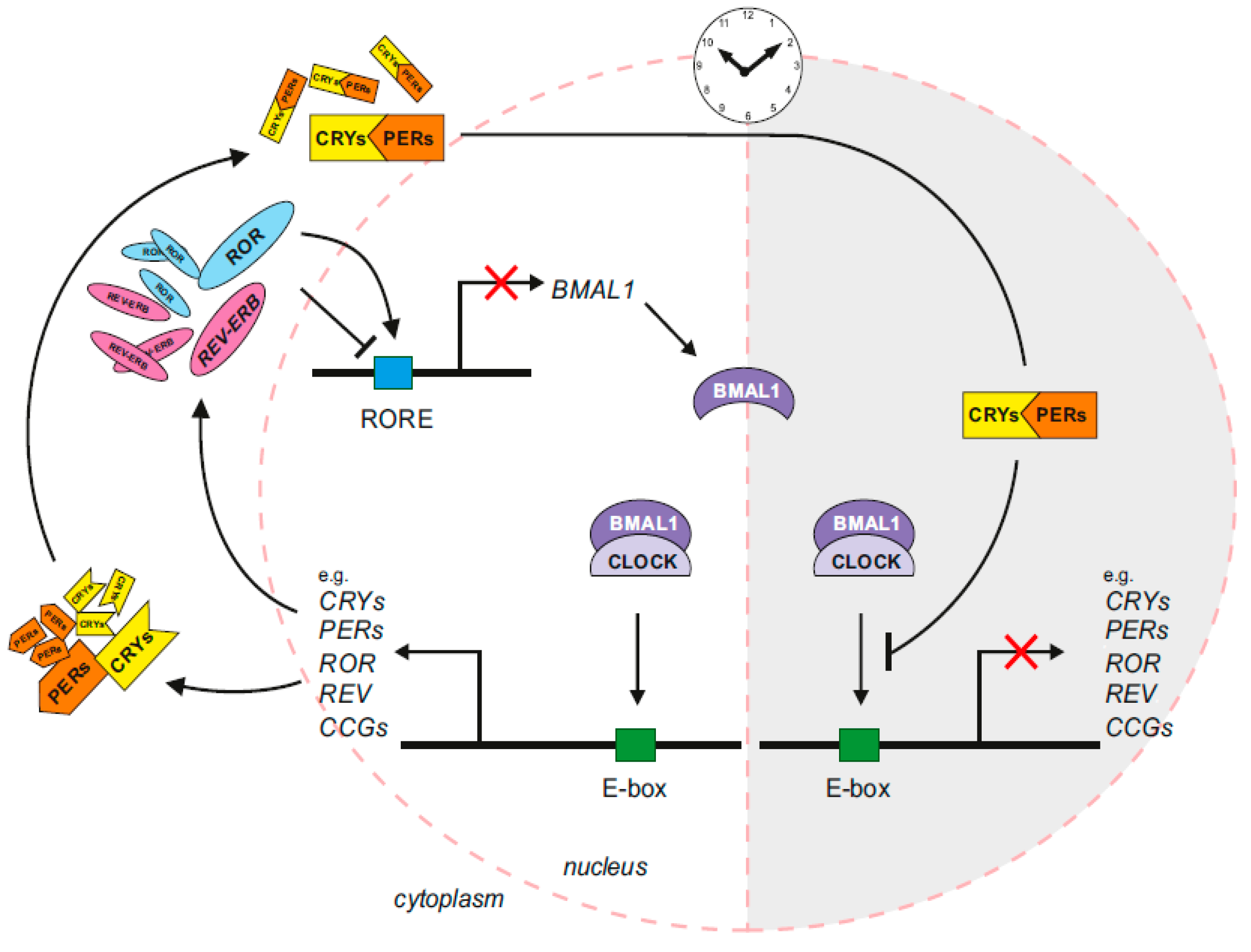
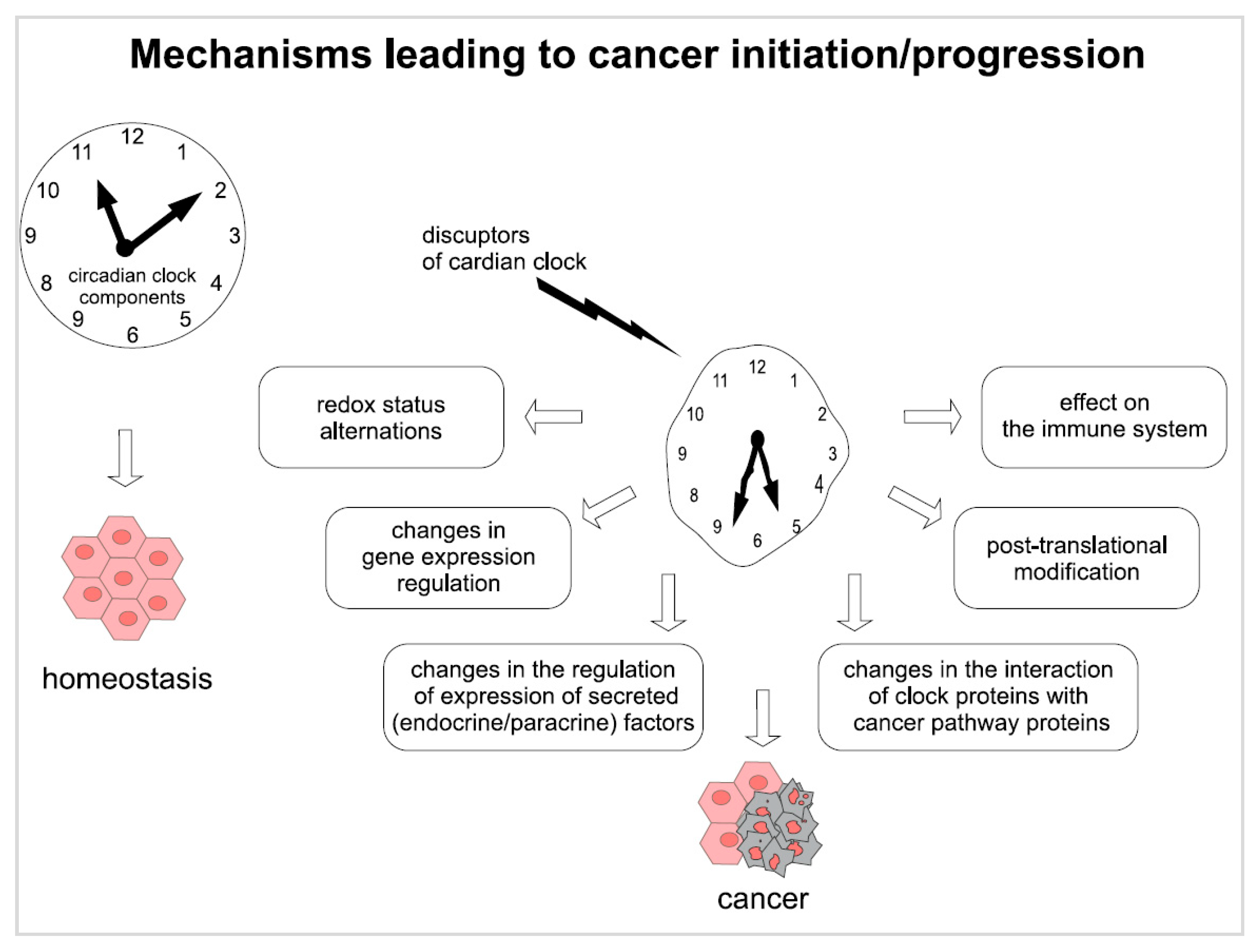
2. Circadian Clock and Cancer
3. Circadian Modulators as Molecular Targets
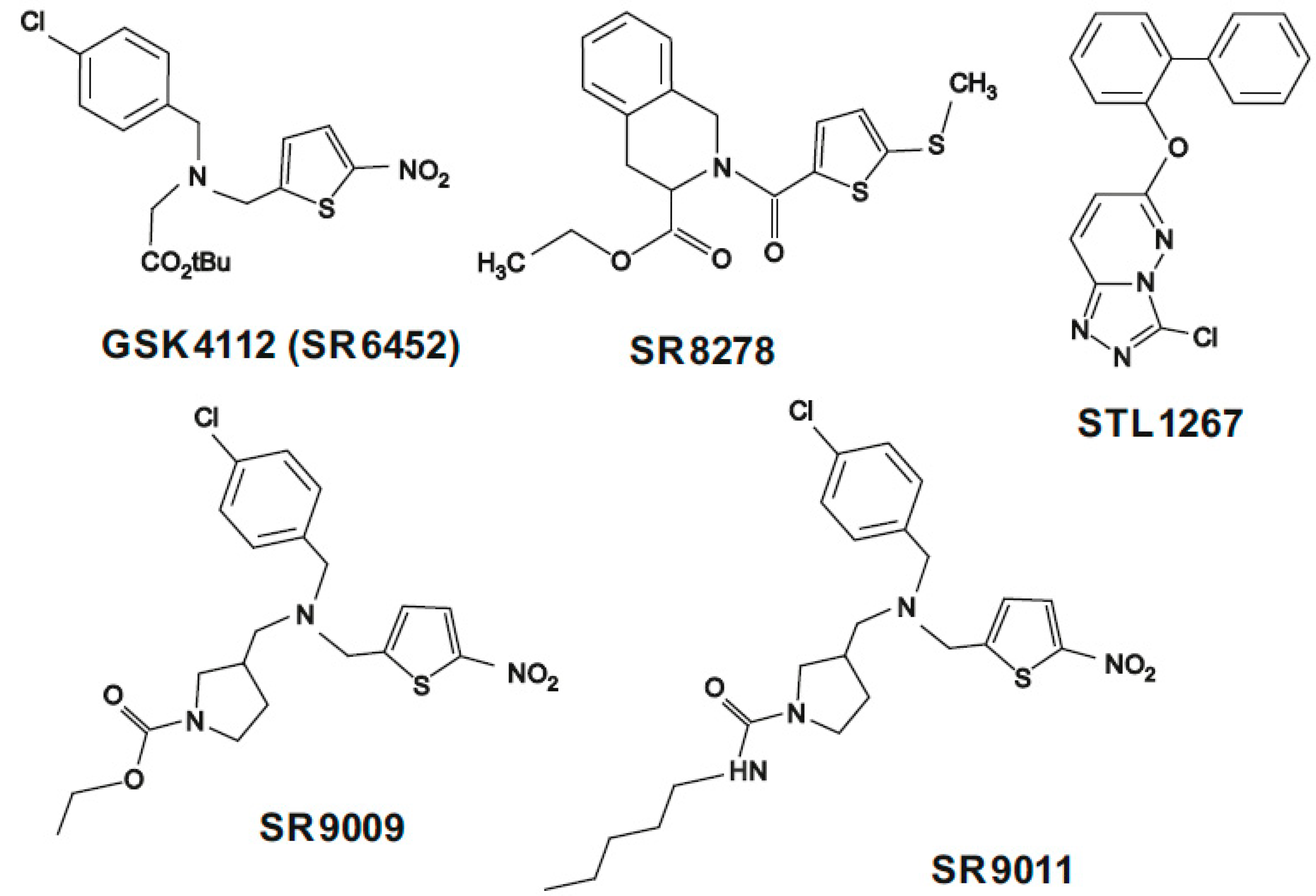
3.1. Modulators of REV-ERBs
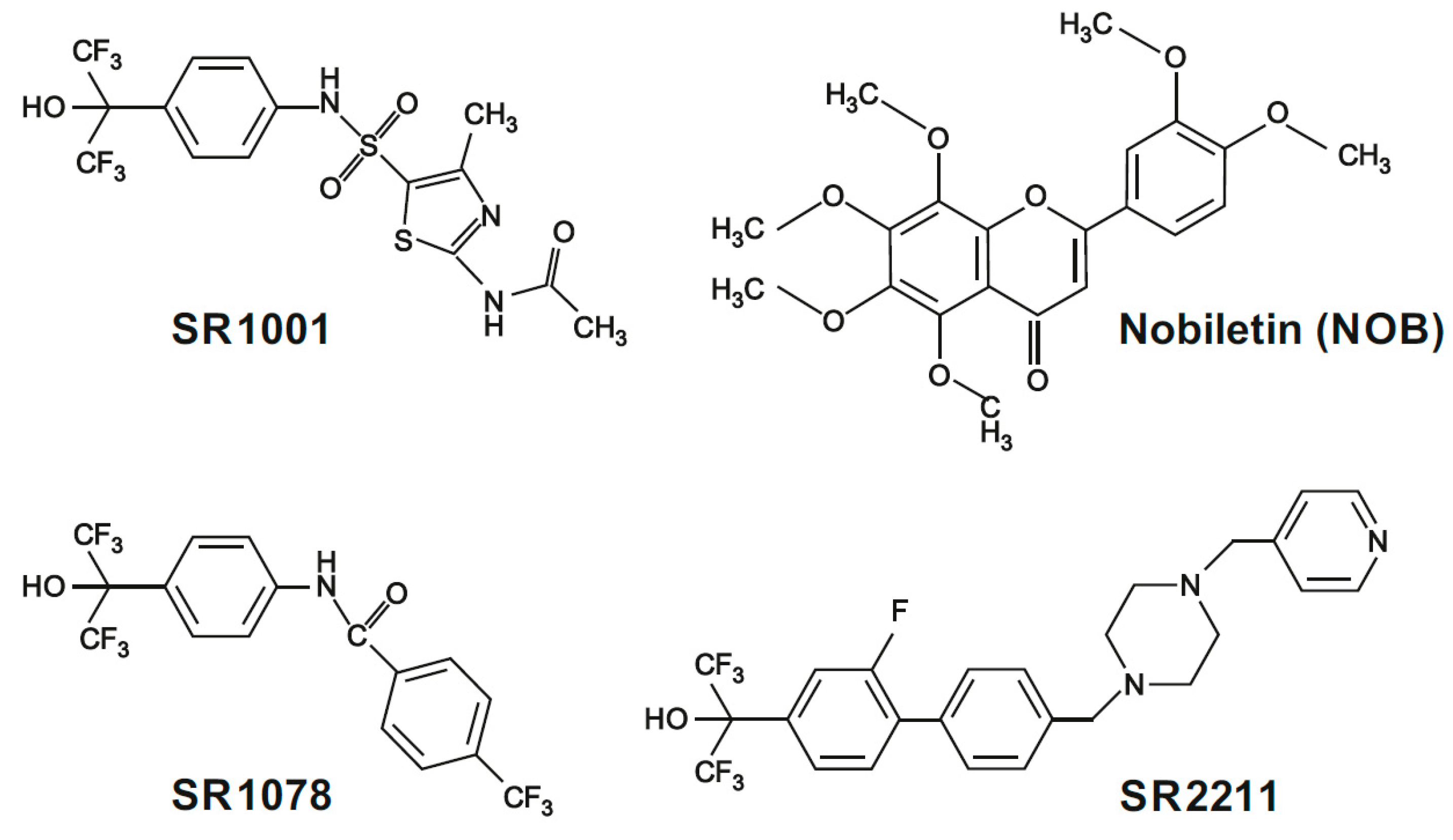
3.2. Modulators of RORs
Author Contributions
Funding
Institutional Review Board Statement
Informed Consent Statement
Data Availability Statement
Conflicts of Interest
Abbreviations
| BC | Bladder cancer |
| CCGs | Clock-controlled genes |
| DMSO | Dimethyl sulfoxide |
| FXR | Farnesoid X receptor |
| HOECs | Human oral epithelial cell |
| IARC | International Agency for Research on Cancer |
| IL-17 | Interleukin 17 |
| MM | Multiple myeloma |
| NOB | Nobiletin |
| LXR | Liver X receptor |
| PC | Prostate cancer |
| RORE | Receptor-related orphan response element |
| SCN | Hypothalamic suprachiasmatic nucleus |
| SCLC | Small-cell lung cancer |
| TH17 | T helper 17 |
| TNBC | Triple-negative breast cancer |
| TTFL | Transcription-translation feedback loop |
References
- Koronowski, K.B.; Sassone-Corsi, P. Communicating clocks shape circadian homeostasis. Science 2021, 371, eabd0951. [Google Scholar] [CrossRef]
- Vetter, C. Circadian disruption: What do we actually mean? Eur. J. Neurosci. 2020, 51, 531–550. [Google Scholar] [CrossRef] [PubMed]
- Rüger, M.; Scheer, F.A. Effects of circadian disruption on the cardiometabolic system. Rev. Endocr. Metab. Disord. 2009, 10, 245–260. [Google Scholar] [CrossRef] [PubMed]
- Gnocchi, D.; Bruscalupi, G. Circadian Rhythms and Hormonal Homeostasis: Pathophysiological Implications. Biology 2017, 6, 10. [Google Scholar] [CrossRef]
- Golombek, D.A.; Rosenstein, R.E. Physiology of circadian entrainment. Physiol. Rev. 2010, 90, 1063–1102. [Google Scholar] [CrossRef]
- Li, H.X. The role of circadian clock genes in tumors. OncoTargets Ther. 2019, 12, 3645–3660. [Google Scholar] [CrossRef]
- Guillaumond, F.; Dardente, H.; Giguère, V.; Cermakian, N. Differential control of Bmal1 circadian transcription by REV-ERB and ROR nuclear receptors. J. Biol. Rhythm. 2005, 20, 391–403. [Google Scholar] [CrossRef] [PubMed]
- Takahashi, J.S. Transcriptional architecture of the mammalian circadian clock. Nat. Rev. Genet. 2017, 18, 164–179. [Google Scholar] [CrossRef]
- Heipertz, E.L.; Harper, J.; Lopez, C.A.; Fikrig, E.; Hughes, M.E.; Walker, W.E. Circadian Rhythms Influence the Severity of Sepsis in Mice via a TLR2-Dependent, Leukocyte-Intrinsic Mechanism. J. Immunol. 2018, 201, 193–201. [Google Scholar] [CrossRef]
- Pariollaud, M.; Lamia, K.A. Cancer in the Fourth Dimension: What Is the Impact of Circadian Disruption? Cancer Discov. 2020, 10, 1455–1464. [Google Scholar] [CrossRef]
- Waddell, H.; Stevenson, T.J.; Mole, D.J. The role of the circadian rhythms in critical illness with a focus on acute pancreatitis. Heliyon 2023, 9, e15335. [Google Scholar] [CrossRef]
- Poole, J.; Kitchen, G.B. Circadian regulation of innate immunity in animals and humans and implications for human disease. Semin. Immunopathol. 2022, 44, 183–192. [Google Scholar] [CrossRef]
- Lananna, B.V.; Musiek, E.S. The wrinkling of time: Aging, inflammation, oxidative stress, and the circadian clock in neurodegeneration. Neurobiol. Dis. 2020, 139, 104832. [Google Scholar] [CrossRef]
- Ortega-Campos, S.M.; Verdugo-Sivianes, E.M.; Amiama-Roig, A.; Blanco, J.R.; Carnero, A. Interactions of circadian clock genes with the hallmarks of cancer. Biochim. Biophys. Acta Rev. Cancer 2023, 1878, 188900. [Google Scholar] [CrossRef]
- Liu, H.; Liu, Y.; Hai, R.; Liao, W.; Luo, X. The role of circadian clocks in cancer: Mechanisms and clinical implications. Genes Dis. 2023, 10, 1279–1290. [Google Scholar] [CrossRef]
- Xiang, R.; Cui, Y.; Wang, Y.; Xie, T.; Yang, X.; Wang, Z.; Li, J.; Li, Q. Circadian clock gene Per2 downregulation in non-small cell lung cancer is associated with tumour progression and metastasis. Oncol. Rep. 2018, 40, 3040–3048. [Google Scholar] [CrossRef] [PubMed]
- Wang, Z.; Li, F.; Wei, M.; Zhang, S.; Wang, T. Circadian Clock Protein PERIOD2 Suppresses the PI3K/Akt Pathway and Promotes Cisplatin Sensitivity in Ovarian Cancer. Cancer Manag. Res. 2020, 12, 11897–11908. [Google Scholar] [CrossRef] [PubMed]
- Hu, M.L.; Yeh, K.T.; Lin, P.M.; Hsu, C.M.; Hsiao, H.H.; Liu, Y.C.; Lin, H.Y.; Lin, S.F.; Yang, M.Y. Deregulated expression of circadian clock genes in gastric cancer. BMC Gastroenterol. 2014, 14, 67. [Google Scholar] [CrossRef]
- De Mei, C.; Ercolani, L.; Parodi, C.; Veronesi, M.; Lo Vecchio, C.; Bottegoni, G.; Torrente, E.; Scarpelli, R.; Marotta, R.; Ruffili, R.; et al. Dual inhibition of REV-ERBβ and autophagy as a novel pharmacological approach to induce cytotoxicity in cancer cells. Oncogene 2015, 34, 2597–2608. [Google Scholar] [CrossRef] [PubMed]
- Straif, K.; Baan, R.; Grosse, Y.; Secretan, B.; El Ghissassi, F.; Bouvard, V.; Altieri, A.; Benbrahim-Tallaa, L.; Cogliano, V.; Group, W.I.A.F.R.o.C.M.W. Carcinogenicity of shift-work, painting, and fire-fighting. Lancet Oncol. 2007, 8, 1065–1066. [Google Scholar] [CrossRef]
- Ma, D.; Li, S.; Molusky, M.M.; Lin, J.D. Circadian autophagy rhythm: A link between clock and metabolism? Trends Endocrinol. Metab. 2012, 23, 319–325. [Google Scholar] [CrossRef] [PubMed]
- Kondratov, R.V.; Antoch, M.P. Circadian proteins in the regulation of cell cycle and genotoxic stress responses. Trends Cell Biol. 2007, 17, 311–317. [Google Scholar] [CrossRef]
- Kolinjivadi, A.M.; Chong, S.T.; Ngeow, J. Molecular connections between circadian rhythm and genome maintenance pathways. Endocr. Relat. Cancer 2021, 28, R55–R66. [Google Scholar] [CrossRef] [PubMed]
- Aiello, I.; Fedele, M.L.M.; Román, F.; Marpegan, L.; Caldart, C.; Chiesa, J.J.; Golombek, D.A.; Finkielstein, C.V.; Paladino, N. Circadian disruption promotes tumor-immune microenvironment remodeling favoring tumor cell proliferation. Sci. Adv. 2020, 6, eaaz4530. [Google Scholar] [CrossRef]
- Antoni, M.H.; Lutgendorf, S.K.; Cole, S.W.; Dhabhar, F.S.; Sephton, S.E.; McDonald, P.G.; Stefanek, M.; Sood, A.K. The influence of bio-behavioural factors on tumour biology: Pathways and mechanisms. Nat. Rev. Cancer 2006, 6, 240–248. [Google Scholar] [CrossRef]
- Bruguerolle, B. Chronopharmacokinetics: Current status. Clin. Pharmacokinet. 1998, 35, 83–94. [Google Scholar] [CrossRef] [PubMed]
- Levi, F.; Schibler, U. Circadian rhythms: Mechanisms and therapeutic implications. Annu. Rev. Pharmacol. Toxicol. 2007, 47, 593–628. [Google Scholar] [CrossRef]
- Dallmann, R.; Brown, S.A.; Gachon, F. Chronopharmacology: New insights and therapeutic implications. Annu. Rev. Pharmacol. Toxicol. 2014, 54, 339–361. [Google Scholar] [CrossRef]
- He, B.; Chen, Z. Molecular targets for small-molecule modulators of circadian clocks. Curr. Drug Metab. 2016, 17, 503–512. [Google Scholar] [CrossRef]
- Sulli, G.; Manoogian, E.N.C.; Taub, P.R.; Panda, S. Training the Circadian Clock, Clocking the Drugs, and Drugging the Clock to Prevent, Manage, and Treat Chronic Diseases. Trends Pharmacol. Sci. 2018, 39, 812–827. [Google Scholar] [CrossRef]
- Gerhart-Hines, Z.; Lazar, M.A. Rev-erbα and the circadian transcriptional regulation of metabolism. Diabetes Obes. Metab. 2015, 17 (Suppl. S1), 12–16. [Google Scholar] [CrossRef] [PubMed]
- Solt, L.A.; Wang, Y.; Banerjee, S.; Hughes, T.; Kojetin, D.J.; Lundasen, T.; Shin, Y.; Liu, J.; Cameron, M.D.; Noel, R.; et al. Regulation of circadian behaviour and metabolism by synthetic REV-ERB agonists. Nature 2012, 485, 62–68. [Google Scholar] [CrossRef]
- Sulli, G.; Rommel, A.; Wang, X.; Kolar, M.J.; Puca, F.; Saghatelian, A.; Plikus, M.V.; Verma, I.M.; Panda, S. Pharmacological activation of REV-ERBs is lethal in cancer and oncogene-induced senescence. Nature 2018, 553, 351–355. [Google Scholar] [CrossRef]
- Wang, X.; Wang, N.; Wei, X.; Yu, H.; Wang, Z. REV-ERBα reduction is associated with clinicopathological features and prognosis in human gastric cancer. Oncol. Lett. 2018, 16, 1499–1506. [Google Scholar] [CrossRef]
- Kourtidis, A.; Jain, R.; Carkner, R.D.; Eifert, C.; Brosnan, M.J.; Conklin, D.S. An RNA interference screen identifies metabolic regulators NR1D1 and PBP as novel survival factors for breast cancer cells with the ERBB2 signature. Cancer Res. 2010, 70, 1783–1792. [Google Scholar] [CrossRef]
- Dong, Z.; Zhang, G.; Qu, M.; Gimple, R.C.; Wu, Q.; Qiu, Z.; Prager, B.C.; Wang, X.; Kim, L.J.Y.; Morton, A.R.; et al. Targeting Glioblastoma Stem Cells through Disruption of the Circadian Clock. Cancer Discov. 2019, 9, 1556–1573. [Google Scholar] [CrossRef]
- Zhang, H.; Shu, R.; Liu, X.; Zhang, X.; Sun, D. Downregulation of REV-ERBα is associated with the progression of lung adenocarcinoma. Ann. Transl. Med. 2022, 10, 56. [Google Scholar] [CrossRef]
- Hsu, Y.C.; Kuo, C.Y.; Chien, M.N.; Jhuang, J.Y.; Huang, S.Y.; Chang, S.C.; Cheng, S.P. Overexpression of NR1D1 portends disease recurrence in thyroid cancer. J. Clin. Endocrinol. Metab. 2024, 110, 991–1002. [Google Scholar] [CrossRef] [PubMed]
- Chen, K.; Li, A.; Wang, J.; Li, D.; Wang, X.; Liu, C.; Wang, Z. Arenobufagin causes ferroptosis in human gastric cancer cells by increasing rev-erbα expression. J. Tradit. Complement. Med. 2023, 13, 72–80. [Google Scholar] [CrossRef]
- Shen, W.; Zhang, W.; Ye, W.; Wang, H.; Zhang, Q.; Shen, J.; Hong, Q.; Li, X.; Wen, G.; Wei, T.; et al. SR9009 induces a REV-ERB dependent anti-small-cell lung cancer effect through inhibition of autophagy. Theranostics 2020, 10, 4466–4480. [Google Scholar] [CrossRef] [PubMed]
- Wang, R.; Liu, S.L.; Guo, Q.Q.; Shi, X.H.; Ma, M.M. Circadian Clock REV-ERBs Agonist SR9009 Induces Synergistic Antitumor Activity in Multiple Myeloma by Suppressing Glucose-Regulated Protein 78-Dependent Autophagy and Lipogenesis. World J. Oncol. 2023, 14, 464–475. [Google Scholar] [CrossRef]
- Yang, Y.; Bai, Y.; Wang, X.; Guo, Y.; Yu, Z.; Feng, D.; Zhang, F.; Li, D.; Han, P. Clock gene NR1D1 might be a novel target for the treatment of bladder cancer. Urol. Oncol. 2023, 41, 327.e9–327.e18. [Google Scholar] [CrossRef] [PubMed]
- Fekry, B.; Ribas-Latre, A.; Drunen, R.V.; Santos, R.B.; Shivshankar, S.; Dai, Y.; Zhao, Z.; Yoo, S.H.; Chen, Z.; Sun, K.; et al. Hepatic circadian and differentiation factors control liver susceptibility for fatty liver disease and tumorigenesis. FASEB J. 2022, 36, e22482. [Google Scholar] [CrossRef] [PubMed]
- Wagner, P.M.; Monjes, N.M.; Guido, M.E. Chemotherapeutic Effect of SR9009, a REV-ERB Agonist, on the Human Glioblastoma T98G Cells. ASN Neuro 2019, 11, 1759091419892713. [Google Scholar] [CrossRef]
- Xu, H.; Zhang, J.; Zheng, X.; Tan, P.; Xiong, X.; Yi, X.; Yang, Y.; Wang, Y.; Liao, D.; Li, H.; et al. SR9009 inhibits lethal prostate cancer subtype 1 by regulating the LXRα/FOXM1 pathway independently of REV-ERBs. Cell Death Dis. 2022, 13, 949. [Google Scholar] [CrossRef]
- Wang, Y.; Kojetin, D.; Burris, T.P. Anti-proliferative actions of a synthetic REV-ERBα/β agonist in breast cancer cells. Biochem. Pharmacol. 2015, 96, 315–322. [Google Scholar] [CrossRef] [PubMed]
- Yuan, B.; Shi, K.; Zha, J.; Cai, Y.; Gu, Y.; Huang, K.; Yue, W.; Zhai, Q.; Ding, N.; Ren, W.; et al. Nuclear receptor modulators inhibit osteosarcoma cell proliferation and tumour growth by regulating the mTOR signaling pathway. Cell Death Dis. 2023, 14, 51, Correction in Cell Death Dis. 2025, 16, 86. [Google Scholar] [CrossRef]
- Noel, R.; Song, X.; Shin, Y.; Banerjee, S.; Kojetin, D.; Lin, L.; Ruiz, C.H.; Cameron, M.D.; Burris, T.P.; Kamenecka, T.M. Synthesis and SAR of tetrahydroisoquinolines as Rev-erbα agonists. Bioorg. Med. Chem. Lett. 2012, 22, 3739–3742. [Google Scholar] [CrossRef]
- Banerjee, S.; Wang, Y.; Solt, L.A.; Griffett, K.; Kazantzis, M.; Amador, A.; El-Gendy, B.M.; Huitron-Resendiz, S.; Roberts, A.J.; Shin, Y.; et al. Pharmacological targeting of the mammalian clock regulates sleep architecture and emotional behaviour. Nat. Commun. 2014, 5, 5759. [Google Scholar] [CrossRef]
- Shea, S.A. Obesity and pharmacologic control of the body clock. N. Engl. J. Med. 2012, 367, 175–178. [Google Scholar] [CrossRef]
- Nakazato, R.; Hotta, S.; Yamada, D.; Kou, M.; Nakamura, S.; Takahata, Y.; Tei, H.; Numano, R.; Hida, A.; Shimba, S.; et al. The intrinsic microglial clock system regulates interleukin-6 expression. Glia 2017, 65, 198–208. [Google Scholar] [CrossRef]
- Wolff, S.E.C.; Wang, X.L.; Jiao, H.; Sun, J.; Kalsbeek, A.; Yi, C.X.; Gao, Y. The Effect of Rev-erbα Agonist SR9011 on the Immune Response and Cell Metabolism of Microglia. Front. Immunol. 2020, 11, 550145. [Google Scholar] [CrossRef]
- Wang, S.; Li, F.; Lin, Y.; Wu, B. Targeting REV-ERBα for therapeutic purposes: Promises and challenges. Theranostics 2020, 10, 4168–4182. [Google Scholar] [CrossRef] [PubMed]
- Murray, M.H.; Valfort, A.C.; Koelblen, T.; Ronin, C.; Ciesielski, F.; Chatterjee, A.; Veerakanellore, G.B.; Elgendy, B.; Walker, J.K.; Hegazy, L.; et al. Structural basis of synthetic agonist activation of the nuclear receptor REV-ERB. Nat. Commun. 2022, 13, 7131. [Google Scholar] [CrossRef] [PubMed]
- Kojetin, D.; Wang, Y.; Kamenecka, T.M.; Burris, T.P. Identification of SR8278, a synthetic antagonist of the nuclear heme receptor REV-ERB. ACS Chem. Biol. 2011, 6, 131–134. [Google Scholar] [CrossRef]
- Wang, Y.; Wang, Z.; Wu, Z.; Chen, M.; Dong, D.; Yu, P.; Lu, D.; Wu, B. Involvement of REV-ERBα dysregulation and ferroptosis in aristolochic acid I-induced renal injury. Biochem. Pharmacol. 2021, 193, 114807. [Google Scholar] [CrossRef]
- Xue, Y.; Liu, P.; Wang, H.; Xiao, C.; Lin, C.; Liu, J.; Dong, D.; Fu, T.; Yang, Y.; Wang, Z.; et al. Modulation of Circadian Rhythms Affects Corneal Epithelium Renewal and Repair in Mice. Investig. Ophthalmol. Vis. Sci. 2017, 58, 1865–1874. [Google Scholar] [CrossRef]
- Anabtawi, N.; Cvammen, W.; Kemp, M.G. Pharmacological inhibition of cryptochrome and REV-ERB promotes DNA repair and cell cycle arrest in cisplatin-treated human cells. Sci. Rep. 2021, 11, 17997. [Google Scholar] [CrossRef]
- Solt, L.A.; Kojetin, D.J.; Burris, T.P. The REV-ERBs and RORs: Molecular links between circadian rhythms and lipid homeostasis. Future Med. Chem. 2011, 3, 623–638. [Google Scholar] [CrossRef] [PubMed]
- Nematisouldaragh, D.; Kirshenbaum, E.; Uzonna, M.; Kirshenbaum, L.; Rabinovich-Nikitin, I. The Role of Retinoic-Acid-Related Orphan Receptor (RORs) in Cellular Homeostasis. Int. J. Mol. Sci. 2024, 25, 11340. [Google Scholar] [CrossRef]
- Du, J.; Xu, R. RORα, a potential tumor suppressor and therapeutic target of breast cancer. Int. J. Mol. Sci. 2012, 13, 15755–15766. [Google Scholar] [CrossRef]
- Yang, J.; Yang, Y.; Wang, L.; Jin, Q.; Pan, M. Nobiletin selectively inhibits oral cancer cell growth by promoting apoptosis and DNA damage in vitro. Oral Surg. Oral Med. Oral Pathol. Oral Radiol. 2020, 130, 419–427. [Google Scholar] [CrossRef]
- Jiang, Y.P.; Guo, H.; Wang, X.B. Nobiletin (NOB) suppresses autophagic degradation via over-expressing AKT pathway and enhances apoptosis in multidrug-resistant SKOV3/TAX ovarian cancer cells. Biomed. Pharmacother. 2018, 103, 29–37. [Google Scholar] [CrossRef]
- Kim, E.; Kim, Y.J.; Ji, Z.; Kang, J.M.; Wirianto, M.; Paudel, K.R.; Smith, J.A.; Ono, K.; Kim, J.A.; Eckel-Mahan, K.; et al. ROR activation by Nobiletin enhances antitumor efficacy via suppression of IκB/NF-κB signaling in triple-negative breast cancer. Cell Death Dis. 2022, 13, 374. [Google Scholar] [CrossRef]
- Byun, J.K.; Choi, Y.K.; Kang, Y.N.; Jang, B.K.; Kang, K.J.; Jeon, Y.H.; Lee, H.W.; Jeon, J.H.; Koo, S.H.; Jeong, W.I.; et al. Retinoic acid-related orphan receptor alpha reprograms glucose metabolism in glutamine-deficient hepatoma cells. Hepatology 2015, 61, 953–964. [Google Scholar] [CrossRef]
- Wang, X.; Zhang, J.; Wu, Y.; Zhang, Y.; Zhang, S.; Li, A.; Wang, J.; Wang, Z. RORα inhibits gastric cancer proliferation through attenuating G6PD and PFKFB3 induced glycolytic activity. Cancer Cell Int. 2024, 24, 12. [Google Scholar] [CrossRef]
- Oh, T.G.; Wang, S.M.; Acharya, B.R.; Goode, J.M.; Graham, J.D.; Clarke, C.L.; Yap, A.S.; Muscat, G.E.O. The Nuclear Receptor, RORγ, Regulates Pathways Necessary for Breast Cancer Metastasis. EBioMedicine 2016, 6, 59–72. [Google Scholar] [CrossRef]
- Brożyna, A.A.; Kim, T.K.; Zabłocka, M.; Jóźwicki, W.; Yue, J.; Tuckey, R.C.; Jetten, A.M.; Slominski, A.T. Association among Vitamin D, Retinoic Acid-Related Orphan Receptors, and Vitamin D Hydroxyderivatives in Ovarian Cancer. Nutrients 2020, 12, 3541. [Google Scholar] [CrossRef] [PubMed]
- Moreno-Smith, M.; Milazzo, G.; Tao, L.; Fekry, B.; Zhu, B.; Mohammad, M.A.; Di Giacomo, S.; Borkar, R.; Reddy, K.R.K.; Capasso, M.; et al. Restoration of the molecular clock is tumor suppressive in neuroblastoma. Nat. Commun. 2021, 12, 4006. [Google Scholar] [CrossRef] [PubMed]
- Zhang, Q.; Liu, S.; Ge, D.; Cunningham, D.M.; Huang, F.; Ma, L.; Burris, T.P.; You, Z. Targeting Th17-IL-17 Pathway in Prevention of Micro-Invasive Prostate Cancer in a Mouse Model. Prostate 2017, 77, 888–899. [Google Scholar] [CrossRef] [PubMed]
- Gao, M.; Guo, L.; Wang, H.; Huang, J.; Han, F.; Xiang, S.; Wang, J. Orphan nuclear receptor RORγ confers doxorubicin resistance in prostate cancer. Cell Biol. Int. 2020, 44, 2170–2176. [Google Scholar] [CrossRef]
- Wang, J.; Zou, J.X.; Xue, X.; Cai, D.; Zhang, Y.; Duan, Z.; Xiang, Q.; Yang, J.C.; Louie, M.C.; Borowsky, A.D.; et al. ROR-γ drives androgen receptor expression and represents a therapeutic target in castration-resistant prostate cancer. Nat. Med. 2016, 22, 488–496, Correction in Nat. Med. 2016, 22, 692. [Google Scholar] [CrossRef]
- Gutiérrez-Venegas, G.; Rosas-Martínez, M. Nobiletin and 5-demethylnobiletin ameliorate hypopharyngeal squamous cell carcinoma by suppressing TGF-β-mediated epithelial-mesenchymal transition. Oncol. Lett. 2025, 29, 176. [Google Scholar] [CrossRef]
- Morley, K.L.; Ferguson, P.J.; Koropatnick, J. Tangeretin and nobiletin induce G1 cell cycle arrest but not apoptosis in human breast and colon cancer cells. Cancer Lett. 2007, 251, 168–178. [Google Scholar] [CrossRef]
- Surichan, S.; Arroo, R.R.; Ruparelia, K.; Tsatsakis, A.M.; Androutsopoulos, V.P. Nobiletin bioactivation in MDA-MB-468 breast cancer cells by cytochrome P450 CYP1 enzymes. Food Chem. Toxicol. 2018, 113, 228–235. [Google Scholar] [CrossRef] [PubMed]
- Kumar, N.; Solt, L.A.; Conkright, J.J.; Wang, Y.; Istrate, M.A.; Busby, S.A.; Garcia-Ordonez, R.D.; Burris, T.P.; Griffin, P.R. The benzenesulfoamide T0901317 [N-(2,2,2-trifluoroethyl)-N-[4-[2,2,2-trifluoro-1-hydroxy-1-(trifluoromethyl)ethyl]phenyl]-benzenesulfonamide] is a novel retinoic acid receptor-related orphan receptor-alpha/gamma inverse agonist. Mol. Pharmacol. 2010, 77, 228–236. [Google Scholar] [CrossRef] [PubMed]
- Wang, Y.; Kumar, N.; Nuhant, P.; Cameron, M.D.; Istrate, M.A.; Roush, W.R.; Griffin, P.R.; Burris, T.P. Identification of SR1078, a synthetic agonist for the orphan nuclear receptors RORα and RORγ. ACS Chem. Biol. 2010, 5, 1029–1034. [Google Scholar] [CrossRef] [PubMed]
- Kuang, J.; Hou, X.; Zhang, J.; Chen, Y.; Su, Z. Identification of insulin as a novel retinoic acid receptor-related orphan receptor α target gene. FEBS Lett. 2014, 588, 1071–1079. [Google Scholar] [CrossRef]
- Zhao, Y.; Xu, L.; Ding, S.; Lin, N.; Ji, Q.; Gao, L.; Su, Y.; He, B.; Pu, J. Novel protective role of the circadian nuclear receptor retinoic acid-related orphan receptor-α in diabetic cardiomyopathy. J. Pineal. Res. 2017, 62, e12378. [Google Scholar] [CrossRef]
- Bode, B.P.; Fuchs, B.C.; Hurley, B.P.; Conroy, J.L.; Suetterlin, J.E.; Tanabe, K.K.; Rhoads, D.B.; Abcouwer, S.F.; Souba, W.W. Molecular and functional analysis of glutamine uptake in human hepatoma and liver-derived cells. Am. J. Physiol.-Gastrointest. Liver Physiol. 2002, 283, G1062–G1073. [Google Scholar] [CrossRef]
- Solt, L.A.; Kumar, N.; Nuhant, P.; Wang, Y.; Lauer, J.L.; Liu, J.; Istrate, M.A.; Kamenecka, T.M.; Roush, W.R.; Vidović, D.; et al. Suppression of TH17 differentiation and autoimmunity by a synthetic ROR ligand. Nature 2011, 472, 491–494. [Google Scholar] [CrossRef] [PubMed]
- Thun, M.J.; Henley, S.J.; Gansler, T. Inflammation and cancer: An epidemiological perspective. Novartis Found. Symp. 2004, 256, 6–21; discussion 22–28, 49–52, 266–269. [Google Scholar]
- Solt, L.A.; Kumar, N.; He, Y.; Kamenecka, T.M.; Griffin, P.R.; Burris, T.P. Identification of a selective RORγ ligand that suppresses T(H)17 cells and stimulates T regulatory cells. ACS Chem. Biol. 2012, 7, 1515–1519. [Google Scholar] [CrossRef]
- Kumar, N.; Lyda, B.; Chang, M.R.; Lauer, J.L.; Solt, L.A.; Burris, T.P.; Kamenecka, T.M.; Griffin, P.R. Identification of SR2211: A potent synthetic RORγ-selective modulator. ACS Chem. Biol. 2012, 7, 672–677. [Google Scholar] [CrossRef] [PubMed]
- Trump, R.P.; Bresciani, S.; Cooper, A.W.; Tellam, J.P.; Wojno, J.; Blaikley, J.; Orband-Miller, L.A.; Kashatus, J.A.; Boudjelal, M.; Dawson, H.C.; et al. Optimized chemical probes for REV-ERBα. J. Med. Chem. 2013, 56, 4729–4737. [Google Scholar] [CrossRef]
- Sulli, G.; Lam, M.T.Y.; Panda, S. Interplay between Circadian Clock and Cancer: New Frontiers for Cancer Treatment. Trends Cancer 2019, 5, 475–494. [Google Scholar] [CrossRef] [PubMed]



| Symbol | Full Name |
|---|---|
| NR1D1 | Nuclear receptor subfamily 1 group D member 1 |
| NR1D2 | Nuclear receptor subfamily 1 group D member 2 |
| DBP | D-box binding PAR bZIP transcription factor |
| TEF | TEF, PAR bZIP transcription factor |
| HLF | HLF, PAR bZIP transcription factor |
| BHLHE40 | Basic helix–loop–helix family member e40 |
| BHLHE41 | Basic helix–loop–helix family member e41 |
| PER1 | Period circadian clock 1 |
| PER2 | Period circadian clock 2 |
| PER3 | Period circadian clock 3 |
| CRY1 | Cryptochrome circadian clock 1 |
| CRY2 | Cryptochrome circadian clock 2 |
| RORA | Retinoic acid receptor (RAR) related orphan receptor A |
| RORB | RAR-related orphan receptor B |
| RORC | RAR-related orphan receptor C |
| NFIL3 | Nuclear factor, interleukin 3-regulated |
| ARNTL (BMAL1) | Aryl hydrocarbon receptor nuclear translocator-like |
| CLOCK | Clock circadian regulator |
| NPAS2 | Neuronal PAS domain protein 2 |
| CIPC | CLOCK interacting pacemaker |
| CSNK1A1 | Casein kinase 1 alpha 1 |
| CSNK1A1L | Casein kinase 1 alpha 1-like |
| CSNK1E | Casein kinase 1 epsilon |
| Compound | Activity | Cancer | Model Research | Effect | References |
|---|---|---|---|---|---|
| GSK4112 (SR6452) | Agonist | gastric | SGC-7901 and BGC-823 cell lines |
| [34] |
| BGC-823 and MKN-4 cell lines |
| [39] | |||
| SR9009 | Agonist | small-cell lung | Chemosensitive cells (H69 and H446) and their corresponding chemoresistant cells (H69AR and H446DDP) |
| [40] |
| BALB/c nude mice |
| ||||
| multiple myeloma | U266 and RPIM8226 cell lines |
| [41] | ||
| immune deficient BALB/c nude mice (5 weeks old) |
| ||||
| bladder | RT-4, T24, and 5637 cell lines |
| [42] | ||
| hepatocellular | Hepa1c1c7 and HepG2 cell lines |
| [43] | ||
| HepG2 |
| [44] | |||
| glioblastoma | T98G cells |
| [44] | ||
| prostate | PC3, 22RV1, DU145, LNCaP, and C4-2B cell lines |
| [45] | ||
| male BALB/c nude mice (6 weeks old) |
| ||||
| SR9011 | Agonist | breast | MCF10A, MDA-MB-231, MCF-7, MDA-MB-361, SKBR3, BT474 |
| [46] |
| osteosarcoma | U2OS, HOS-MNNG, Saos-2 cell lines |
| [47] | ||
| female BALB/c nude mice (4–6 weeks old) |
|
| Compound | Activity | Cancer | Model Research | Effect | References |
|---|---|---|---|---|---|
| Nobiletin (NOB) | Agonist | oral squamous cell | Ca9-22, HSC-3 and TSC-15 cell lines |
| [62] |
| ovarian | CaoV3, ES-2, HO-8910, SKOV3, and SKOV3/TAX |
| [63] | ||
| breast | HPNE-P2M, HPNE-Kras, PNAC1, MCF7, MDA-MB-231, MDA-MB-468, DB7 and BT549 cell lines |
| [64] | ||
| female FVB mice (5 weeks old) |
| ||||
| SR1078 | Agonist | hepatoma | HepG2, Hep3B, and Huh7 cells |
| [65] |
| gastric | AGS and MKN-74 cell lines |
| [66] | ||
| breast | T-47D, MCF-7 and MDA-MB-231 cell lines |
| [67] | ||
| ovarian | SKOV-3 and OVCAR-3 cell lines |
| [68] | ||
| neuroblastoma | SH-SY5Y, IMR32, SK-N-BE(2)-C, SK-N-AS, NGP, LAN5, CHLA255, MYCN3 and NB cell lines |
| [69] | ||
| female athymic Ncr nude mice (4–6 weeks old) |
| ||||
| SR1001 | Inverse agonist | prostate | Pten-null mice (6 weeks old) |
| [70] |
| SR2211 | Inverse agonist | prostate | C4-2B cell line |
| [71] |
| LNCaP, C4-2B, 22Rv1, PC-3, and PC346C |
| [72] | |||
| male SCID C.B17 mice and BALB/c nu/nu athymic mice (4 weeks old) |
| ||||
| breast | MCF-7 |
| [67] |
Disclaimer/Publisher’s Note: The statements, opinions and data contained in all publications are solely those of the individual author(s) and contributor(s) and not of MDPI and/or the editor(s). MDPI and/or the editor(s) disclaim responsibility for any injury to people or property resulting from any ideas, methods, instructions or products referred to in the content. |
© 2025 by the authors. Licensee MDPI, Basel, Switzerland. This article is an open access article distributed under the terms and conditions of the Creative Commons Attribution (CC BY) license (https://creativecommons.org/licenses/by/4.0/).
Share and Cite
Wolniakowska, A.; Roszak, J.; Sobańska, Z.; Reszka, E. The Circadian Modulators as Molecular Targets in Cancer—A Review. Int. J. Mol. Sci. 2025, 26, 11779. https://doi.org/10.3390/ijms262411779
Wolniakowska A, Roszak J, Sobańska Z, Reszka E. The Circadian Modulators as Molecular Targets in Cancer—A Review. International Journal of Molecular Sciences. 2025; 26(24):11779. https://doi.org/10.3390/ijms262411779
Chicago/Turabian StyleWolniakowska, Anna, Joanna Roszak, Zuzanna Sobańska, and Edyta Reszka. 2025. "The Circadian Modulators as Molecular Targets in Cancer—A Review" International Journal of Molecular Sciences 26, no. 24: 11779. https://doi.org/10.3390/ijms262411779
APA StyleWolniakowska, A., Roszak, J., Sobańska, Z., & Reszka, E. (2025). The Circadian Modulators as Molecular Targets in Cancer—A Review. International Journal of Molecular Sciences, 26(24), 11779. https://doi.org/10.3390/ijms262411779