Overcoming Antibiotic Resistance and Treating Bacterial Infections with Biological Nanoparticles

 , , , ,
  ,
,  and
and
Abstract
1. Introduction
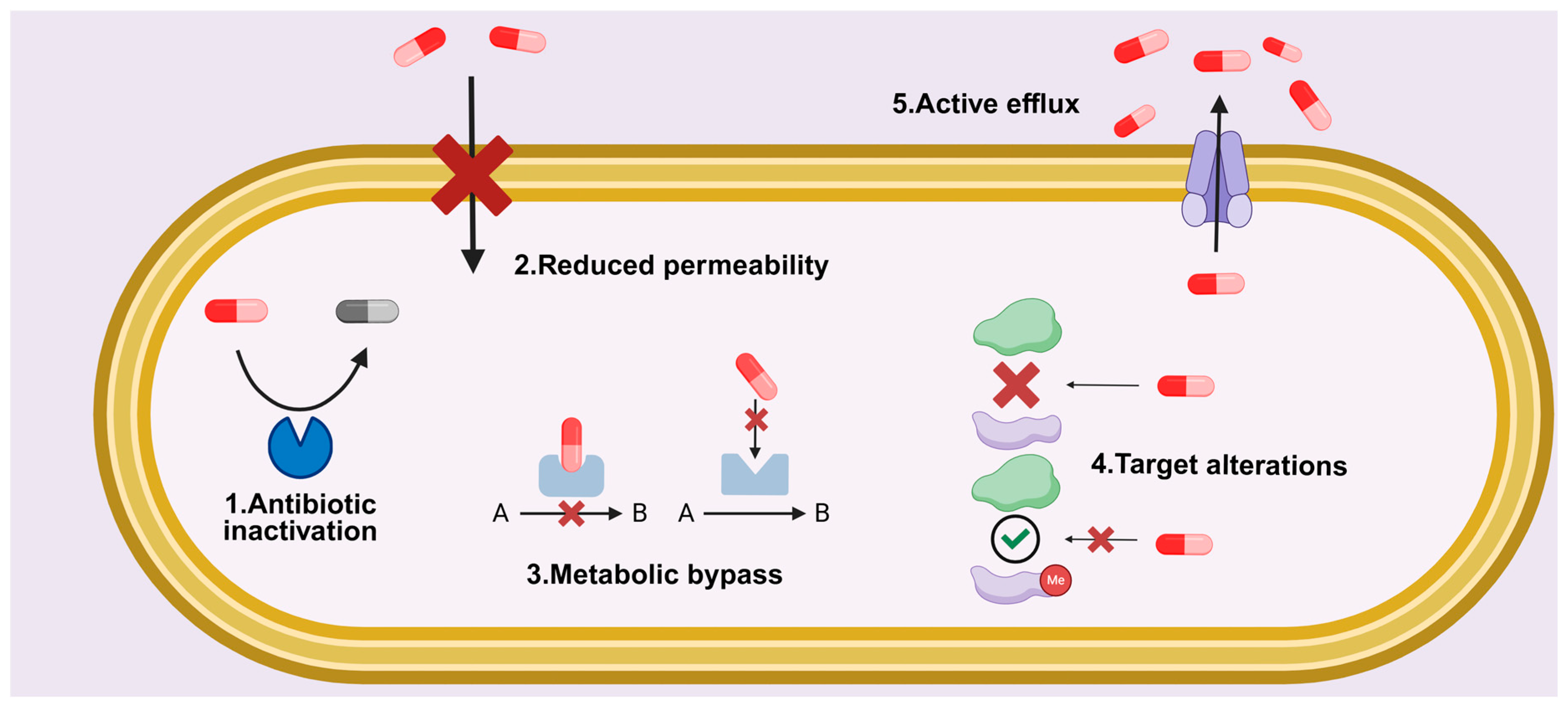
2. Mechanisms of Antibiotic Resistance
3. Biological NPs
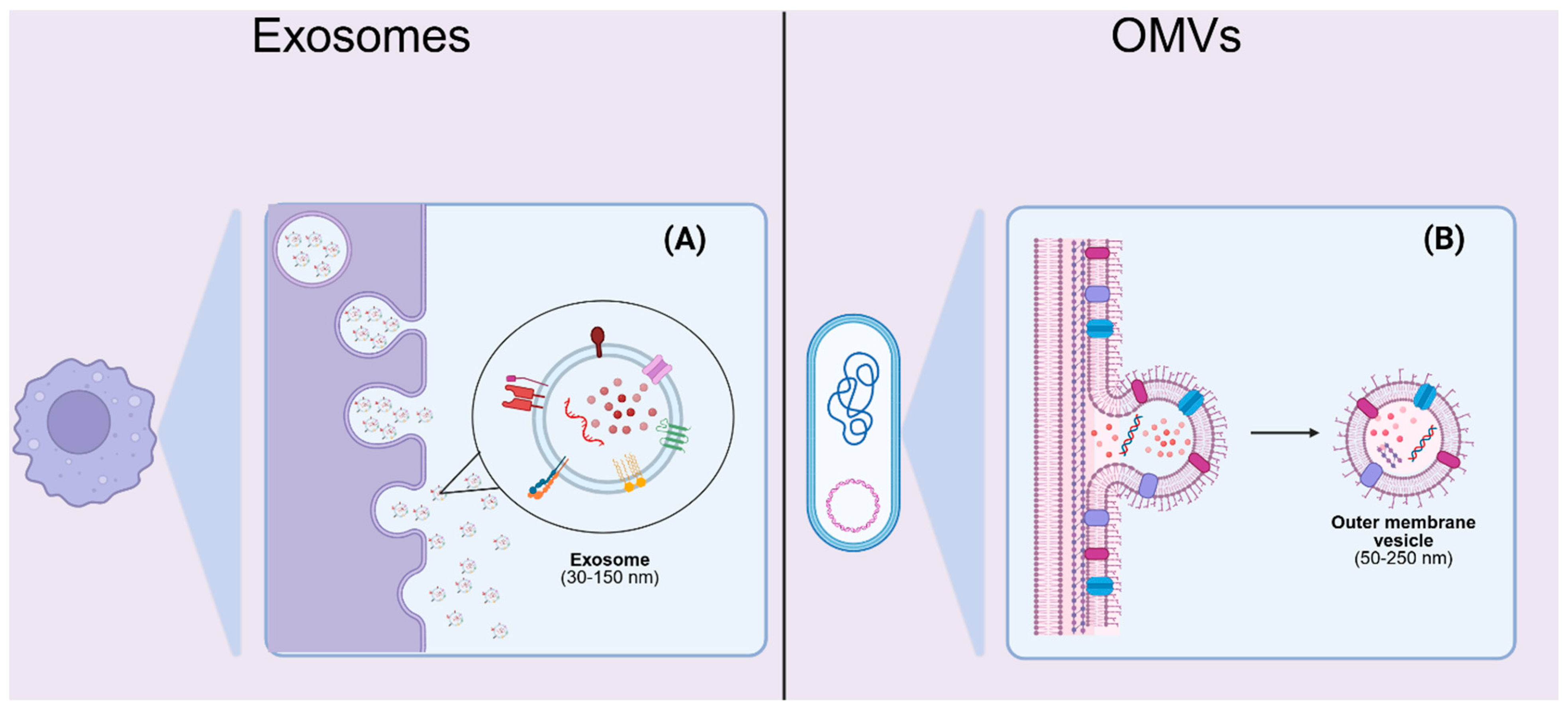
4. Exosomes
4.1. Antibiotic Delivery Based on Exosomes
4.2. Exosome-Based Antibacterial Vaccines
5. OMVs
5.1. Application of OMVs as a Delivery Instrument
5.2. OMV as a Vaccination Instrument
5.3. Additional Therapeutic Applications of OMVs
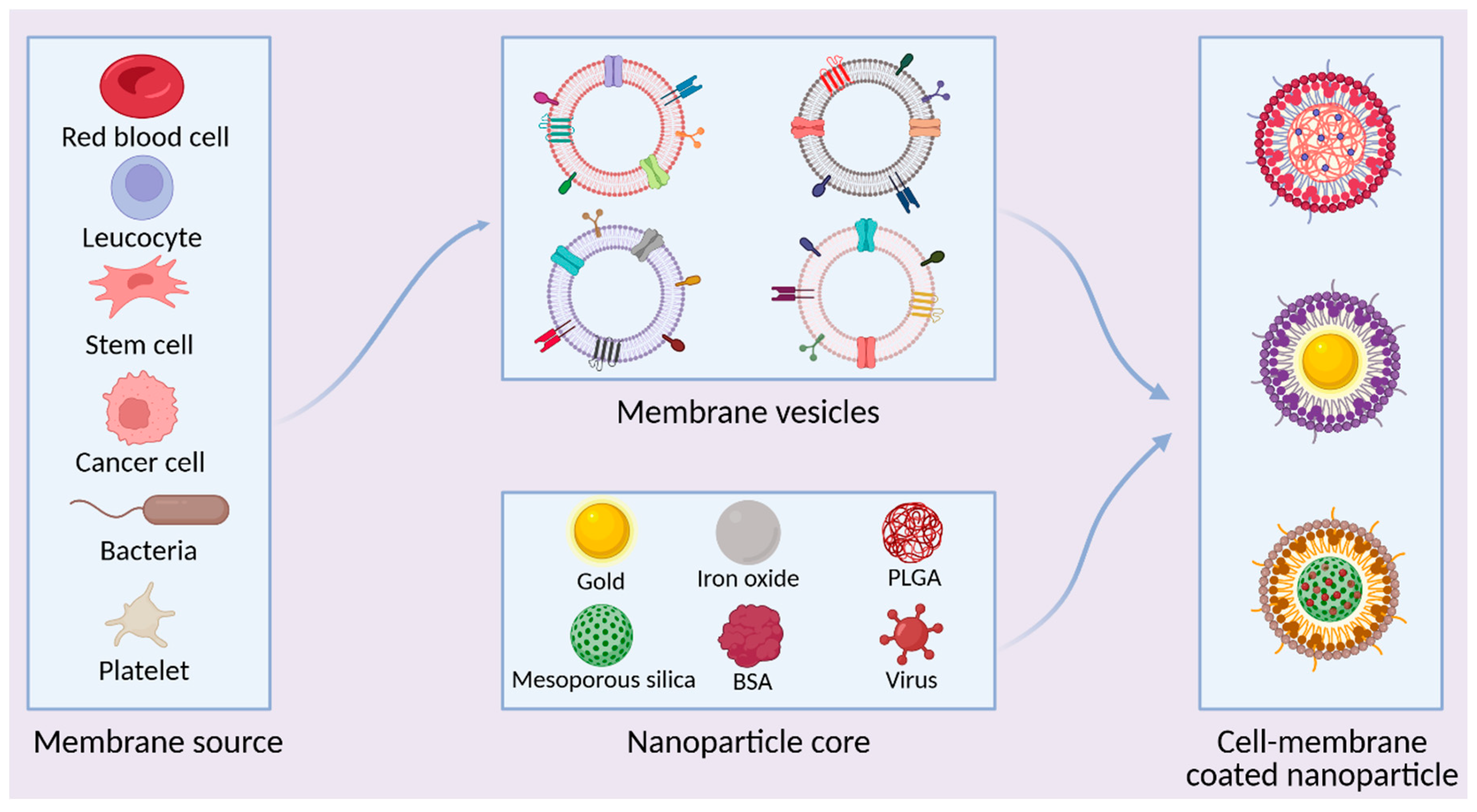
6. Cell Membrane-Coated NPs and Their Types
7. Applications for Cell Membrane-Coated NPs
7.1. Absorbing Toxins to Disarm Bacteria
7.2. Delivery of Antibiotics and Other Drugs to the Targets
7.3. Photothermal Application of Biomimetic NPs
8. Challenges and Future Perspectives
9. Conclusions
Author Contributions
Funding
Institutional Review Board Statement
Informed Consent Statement
Data Availability Statement
Acknowledgments
Conflicts of Interest
References
- World Health Organization. Global Antimicrobial Resistance and Use Surveillance System (GLASS) Report 2022; World Health Organization: Geneva, Switzerland, 2022. [Google Scholar]
- Murray, C.J.L.; Ikuta, K.S.; Sharara, F.; Swetschinski, L.; Aguilar, G.R.; Gray, A.; Han, C.; Bisignano, C.; Rao, P.; Wool, E.; et al. Global burden of bacterial antimicrobial resistance in 2019: A systematic analysis. Lancet 2022, 399, 629–655, Erratum in Lancet 2022, 400, 1102. [Google Scholar] [CrossRef]
- Cunha, B.A. Antibiotic side effects. Med. Clin. N. Am. 2001, 85, 149–185. [Google Scholar] [CrossRef] [PubMed]
- Hall, C.W.; Mah, T.-F. Molecular mechanisms of biofilm-based antibiotic resistance and tolerance in pathogenic bacteria. FEMS Microbiol. Rev. 2017, 41, 276–301. [Google Scholar] [CrossRef]
- Al-Hetty, H.R.A.K.; Kadhim, M.S.; Al-Tamimi, J.H.Z.; Ahmed, N.M.; Turki Jalil, A.; Saleh, M.M.; Kandeel, M.; Abbas, R.H. Implications of biomimetic nanocarriers in targeted drug delivery. Emergent Mater. 2023, 6, 1–13. [Google Scholar] [CrossRef] [PubMed]
- Ai, X.; Wang, S.; Duan, Y.; Zhang, Q.; Chen, M.S.; Gao, W.; Zhang, L. Emerging approaches to functionalizing cell membrane-coated nanoparticles. Biochemistry 2020, 60, 941–955. [Google Scholar] [CrossRef]
- Aflakian, F.; Mirzavi, F.; Aiyelabegan, H.T.; Soleimani, A.; Navashenaq, J.G.; Karimi-Sani, I.; Zomorodi, A.R.; Vakili-Ghartavol, R. Nanoparticles-based therapeutics for the management of bacterial infections: A special emphasis on FDA approved products and clinical trials. Eur. J. Pharm. Sci. 2023, 188, 106515. [Google Scholar] [CrossRef]
- Zhang, M.; Du, Y.; Wang, S.; Chen, B. A review of biomimetic nanoparticle drug delivery systems based on cell membranes. Drug Des. Devel. Ther. 2020, 14, 5495–5503. [Google Scholar] [CrossRef]
- Normark, B.H.; Normark, S. Evolution and spread of antibiotic resistance. J. Intern. Med. 2002, 252, 91–106. [Google Scholar] [CrossRef]
- Jacoby, G.A.; Munoz-Price, L.S. The new beta-lactamases. N. Engl. J. Med. 2005, 352, 380–391. [Google Scholar] [CrossRef] [PubMed]
- Vetting, M.W.; Magnet, S.; Nieves, E.; Roderick, S.L.; Blanchard, J.S. A bacterial acetyltransferase capable of regioselective N-acetylation of antibiotics and histones. Chem. Biol. 2004, 11, 565–573. [Google Scholar] [CrossRef]
- Kostyusheva, A.; Romano, E.; Yan, N.; Lopus, M.; Zamyatnin, A.A., Jr.; Parodi, A. Breaking barriers in targeted Therapy: Advancing exosome Isolation, Engineering, and imaging. Adv. Drug Deliv. Rev. 2025, 218, 115522. [Google Scholar] [CrossRef]
- Collins, S.M.; Brown, A.C. Bacterial outer membrane vesicles as antibiotic delivery vehicles. Front. Immunol. 2021, 12, 733064. [Google Scholar] [CrossRef]
- Brezgin, S.; Parodi, A.; Kostyusheva, A.; Ponomareva, N.; Lukashev, A.; Sokolova, D.; Pokrovsky, V.S.; Slatinskaya, O.; Maksimov, G.; Zamyatnin, A.A., Jr.; et al. Technological aspects of manufacturing and analytical control of biological nanoparticles. Biotechnol. Adv. 2023, 64, 108122. [Google Scholar] [CrossRef]
- Huda, M.N.; Nurunnabi, M. Potential application of exosomes in vaccine development and delivery. Pharm. Res. 2022, 39, 2635–2671. [Google Scholar] [CrossRef]
- Rao, L.; Bu, L.L.; Xu, J.H.; Cai, B.; Yu, G.T.; Yu, X.; He, Z.; Huang, Q.; Li, A.; Guo, S.S.; et al. Red blood cell membrane as a biomimetic nanocoating for prolonged circulation time and reduced accelerated blood clearance. Small 2015, 11, 6225–6236. [Google Scholar] [CrossRef]
- Thamphiwatana, S.; Angsantikul, P.; Escajadillo, T.; Zhang, Q.; Olson, J.; Luk, B.T.; Zhang, S.; Fang, R.H.; Gao, W.; Nizet, V.; et al. Macrophage-like nanoparticles concurrently absorbing endotoxins and proinflammatory cytokines for sepsis management. Proc. Natl. Acad. Sci. USA 2017, 114, 11488–11493. [Google Scholar] [CrossRef]
- Gao, W.; Fang, R.H.; Thamphiwatana, S.; Luk, B.T.; Li, J.; Angsantikul, P.; Zhang, Q.; Hu, C.M.; Zhang, L. Modulating antibacterial immunity via bacterial membrane-coated nanoparticles. Nano Lett. 2015, 15, 1403–1409. [Google Scholar] [CrossRef]
- Li, B.; Chu, T.; Wei, J.; Zhang, Y.; Qi, F.; Lu, Z.; Gao, C.; Zhang, T.; Jiang, E.; Xu, J.; et al. Platelet-membrane-coated nanoparticles enable vascular disrupting agent combining anti-angiogenic drug for improved tumor vessel impairment. Nano Lett. 2021, 21, 2588–2595. [Google Scholar] [CrossRef] [PubMed]
- Plummer, E.M.; Manchester, M. Viral nanoparticles and virus-like particles: Platforms for contemporary vaccine design. Wiley Interdiscip. Rev. Nanomed. Nanobiotechnology 2011, 3, 174–196. [Google Scholar] [CrossRef] [PubMed]
- Zhu, Z.; Antenucci, F.; Villumsen, K.R.; Bojesen, A.M. Bacterial outer membrane vesicles as a versatile tool in vaccine research and the fight against antimicrobial resistance. mBio 2021, 12, 10–1128. [Google Scholar] [CrossRef] [PubMed]
- Wang, M.; Xin, Y.; Cao, H.; Li, W.; Hua, Y.; Webster, T.J.; Zhang, C.; Tang, W.; Liu, Z. Recent advances in mesenchymal stem cell membrane-coated nanoparticles for enhanced drug delivery. Biomater. Sci. 2021, 9, 1088–1103. [Google Scholar] [CrossRef]
- Jakaria, M.G.; Sorkhdini, P.; Yang, D.; Zhou, Y.; Meenach, S.A. Lung cell membrane-coated nanoparticles capable of enhanced internalization and translocation in pulmonary epithelial cells. Int. J. Pharm. 2022, 613, 121418. [Google Scholar] [CrossRef]
- Tikhonov, A.; Kachanov, A.; Yudaeva, A.; Danilik, O.; Ponomareva, N.; Karandashov, I.; Kostyusheva, A.; Zamyatnin, A.A., Jr.; Parodi, A.; Chulanov, V.; et al. Biomimetic Nanoparticles for Basic Drug Delivery. Pharmaceutics 2024, 16, 1306. [Google Scholar] [CrossRef]
- Stogios, P.J.; Cox, G.; Spanogiannopoulos, P.; Pillon, M.C.; Waglechner, N.; Skarina, T.; Koteva, K.; Guarne, A.; Savchenko, A.; Wright, G.D. Rifampin phosphotransferase is an unusual antibiotic resistance kinase. Nat. Commun. 2016, 7, 11343. [Google Scholar] [CrossRef] [PubMed]
- Prabhu, D.; Rajamanikandan, S.; Saritha, P.; Jeyakanthan, J. Evolutionary significance and functional characterization of streptomycin adenylyltransferase from Serratia marcescens. J. Biomol. Struct. Dyn. 2020, 38, 4418–4431. [Google Scholar] [CrossRef]
- Algammal, A.M.; Hetta, H.F.; Elkelish, A.; Alkhalifah, D.H.H.; Hozzein, W.N.; Batiha, G.E.; Nahhas, N.E.; Mabrok, M.A. Methicillin-Resistant Staphylococcus aureus (MRSA): One health perspective approach to the bacterium epidemiology, virulence factors, antibiotic-resistance, and zoonotic impact. Infect. Drug Resist. 2020, 13, 3255–3265. [Google Scholar] [CrossRef] [PubMed]
- Choi, U.; Lee, C.-R. Distinct roles of outer membrane porins in antibiotic resistance and membrane integrity in Escherichia coli. Front. Microbiol. 2019, 10, 953. [Google Scholar] [CrossRef]
- Du, D.; Wang-Kan, X.; Neuberger, A.; van Veen, H.W.; Pos, K.M.; Piddock, L.J.V.; Luisi, B.F. Multidrug efflux pumps: Structure, function and regulation. Nat. Rev. Microbiol. 2018, 16, 523–539, Erratum in Nat. Rev. Microbiol. 2018, 16, 577. [Google Scholar] [CrossRef]
- Sköld, O. Sulfonamide resistance: Mechanisms and trends. Drug Resist. Updates 2000, 3, 155–160. [Google Scholar] [CrossRef]
- Huddleston, J.R. Horizontal gene transfer in the human gastrointestinal tract: Potential spread of antibiotic resistance genes. Infect. Drug Resist. 2014, 7, 167–176. [Google Scholar] [CrossRef] [PubMed]
- Parodi, A.; Quattrocchi, N.; van de Ven, A.L.; Chiappini, C.; Evangelopoulos, M.; Martinez, J.O.; Brown, B.S.; Khaled, S.Z.; Yazdi, I.K.; Enzo, M.V.; et al. Synthetic nanoparticles functionalized with biomimetic leukocyte membranes possess cell-like functions. Nat. Nanotechnol. 2013, 8, 61–68. [Google Scholar] [CrossRef]
- Yang, X.; Shi, G.; Guo, J.; Wang, C.; He, Y. Exosome-encapsulated antibiotic against intracellular infections of methicillin-resistant Staphylococcus aureus. Int. J. Nanomed. 2018, 13, 8095–8104. [Google Scholar] [CrossRef]
- Li, H.; Ding, Y.; Huang, J.; Zhao, Y.; Chen, W.; Tang, Q.; An, Y.; Chen, R.; Hu, C. Angiopep-2 modified exosomes load rifampicin with potential for treating central nervous system tuberculosis. Int. J. Nanomed. 2023, 18, 489–503. [Google Scholar] [CrossRef]
- Giri, P.K.; Schorey, J.S. Exosomes derived from M. Bovis BCG infected macrophages activate antigen-specific CD4+ and CD8+ T cells in vitro and in vivo. PLoS ONE 2008, 3, e2461. [Google Scholar] [CrossRef]
- Gabashvili, A.N.; Chmelyuk, N.S.; Efremova, M.V.; Malinovskaya, J.A.; Semkina, A.S.; Abakumov, M.A. Encapsulins—Bacterial protein nanocompartments: Structure, properties, and application. Biomolecules 2020, 10, 966. [Google Scholar] [CrossRef]
- Chmelyuk, N.S.; Oda, V.V.; Gabashvili, A.N.; Abakumov, M.A. Encapsulins: Structure, properties, and biotechnological applications. Biochemistry 2023, 88, 35–49. [Google Scholar] [CrossRef]
- Huang, W.; Zhang, Q.; Li, W.; Yuan, M.; Zhou, J.; Hua, L.; Chen, Y.; Ye, C.; Ma, Y. Development of novel nanoantibiotics using an outer membrane vesicle-based drug efflux mechanism. J. Control. Release 2020, 317, 1–22. [Google Scholar] [CrossRef] [PubMed]
- Wu, S.; Huang, Y.; Yan, J.; Li, Y.; Wang, J.; Yang, Y.; Yuan, P.; Ding, X. Bacterial outer membrane-coated mesoporous silica nanoparticles for targeted delivery of antibiotic rifampicin against Gram-negative bacterial infection in vivo. Adv. Funct. Mater. 2021, 31, 2103442. [Google Scholar] [CrossRef]
- Cerisy, T.; Rostain, W.; Chhun, A.; Boutard, M.; Salanoubat, M.; Tolonen, A.C. A targetron-recombinase system for large-scale genome engineering of clostridia. mSphere 2019, 4, 10–1128. [Google Scholar] [CrossRef] [PubMed]
- Higham, S.L.; Baker, S.; Flight, K.E.; Krishna, A.; Kellam, P.; Reece, S.T.; Tregoning, J.S. Intranasal immunization with outer membrane vesicles (OMV) protects against airway colonization and systemic infection with Acinetobacter baumannii. J. Infect. 2023, 86, 563–573. [Google Scholar] [CrossRef]
- Huang, Y.; Sun, J.; Cui, X.; Li, X.; Hu, Z.; Ji, Q.; Bao, G.; Liu, Y. Enhancing protective immunity against bacterial infection via coating nano-Rehmannia glutinosa polysaccharide with outer membrane vesicles. J. Extracell. Vesicles 2024, 13, e12514. [Google Scholar] [CrossRef]
- Peng, X.; Luo, Y.; Yang, L.; Yang, Y.Y.; Yuan, P.; Chen, X.; Tian, G.B.; Ding, X. A multiantigenic antibacterial nanovaccine utilizing hybrid membrane vesicles for combating Pseudomonas aeruginosa infections. J. Extracell. Vesicles 2024, 13, e12524. [Google Scholar] [CrossRef]
- Zhou, Z.; Sun, L.; Tu, Y.; Yang, Y.; Hou, A.; Li, J.; Luo, J.; Cheng, L.; Li, J.; Liang, K.; et al. Exploring Naturally Tailored Bacterial Outer Membrane Vesicles for Selective Bacteriostatic Implant Coatings. Adv. Sci. 2024, 11, 2405764. [Google Scholar] [CrossRef] [PubMed]
- Harris, J.C.; Scully, M.A.; Day, E.S. Cancer Cell Membrane-Coated Nanoparticles for Cancer Management. Cancers 2019, 11, 1836. [Google Scholar] [CrossRef]
- Turner, N.A.; Sharma-Kuinkel, B.K.; Maskarinec, S.A.; Eichenberger, E.M.; Shah, P.P.; Carugati, M.; Holland, T.L.; Fowler, V.G., Jr. Methicillin-resistant Staphylococcus aureus: An overview of basic and clinical research. Nat. Rev. Microbiol. 2019, 17, 203–218. [Google Scholar] [CrossRef]
- Chen, B.; Li, F.; Zhu, X.K.; Xie, W.; Hu, X.; Zan, M.H.; Li, X.; Li, Q.Y.; Guo, S.S.; Zhao, X.Z.; et al. Highly biocompatible and recyclable biomimetic nanoparticles for anti-biotic-resistant bacteria infection. Biomater. Sci. 2021, 9, 826–834. [Google Scholar] [CrossRef] [PubMed]
- Kim, J.K.; Uchiyama, S.; Gong, H.; Stream, A.; Zhang, L.; Nizet, V. Engineered Biomimetic Platelet Membrane-Coated Nanoparticles Block Staphylococcus aureus Cytotoxicity and Protect Against Lethal Systemic Infection. Engineering 2021, 7, 1149–1156. [Google Scholar] [CrossRef] [PubMed]
- Lin, A.; Liu, Y.; Zhu, X.; Chen, X.; Liu, J.; Zhou, Y.; Qin, X.; Liu, J. Bacteria-Responsive Biomimetic Selenium Nanosystem for Multidrug-Resistant Bacterial Infection Detection and Inhibition. ACS Nano 2019, 13, 13965–13984. [Google Scholar] [CrossRef]
- Huang, R.; Cai, G.; Li, J.; Li, X.; Liu, H.; Shang, X.; Zhou, J.; Nie, X.; Gui, R. Platelet membrane-camouflaged silver metal-organic framework drug system against infections caused by methicillin-resistant Staphylococcus aureus. J. Nanobiotechnology 2021, 19, 229. [Google Scholar] [CrossRef]
- Liu, J.; Chen, X.; Xu, L.; Tu, F.; Rui, X.; Zhang, L.; Yan, Z.; Liu, Y.; Hu, R. Neutrophil membrane-coated nanoparticles exhibit increased antimicrobial activities in an anti-microbial resistant K. pneumonia infection model. Nanomedicine 2023, 48, 102640. [Google Scholar] [CrossRef]
- Lu, L.; Quan, L.; Li, J.; Yuan, J.; Nie, X.; Huang, X.; Dong, H.; Su, Y.; Huang, Y.; Kou, Q.; et al. Bioengineered stem cell membrane functionalized nanoparticles combine anti-inflammatory and antimicrobial properties for sepsis treatment. J. Nanobiotechnology 2023, 21, 170. [Google Scholar] [CrossRef]
- Cao, H.; Gao, Y.; Jia, H.; Zhang, L.; Liu, J.; Mu, G.; Gui, H.; Wang, Y.; Yang, C.; Liu, J. Macrophage-Membrane-Camouflaged Nonviral Gene Vectors for the Treatment of Multidrug-Resistant Bacterial Sepsis. Nano Lett. 2022, 22, 7882–7891. [Google Scholar] [CrossRef]
- Park, J.H.; Mohapatra, A.; Zhou, J.; Holay, M.; Krishnan, N.; Gao, W.; Fang, R.H.; Zhang, L. Virus-Mimicking Cell Membrane-Coated Nanoparticles for Cytosolic Delivery of mRNA. Angew. Chem. Int. Ed. Engl. 2022, 61, e202113671. [Google Scholar] [CrossRef]
- Wei, G.; Xiao, T.; Xi, Y.; Ju, R. A macrophage-like biomimetic nanoparticle with high-efficiency biofilm disruption and innate immunity activation for implant-related infection therapy. Mater. Today Bio 2025, 31, 101575. [Google Scholar] [CrossRef] [PubMed]
- Khaydukov, E.V.; Mironova, K.E.; Semchishen, V.A.; Generalova, A.N.; Nechaev, A.V.; Khochenkov, D.A.; Stepanova, E.V.; Lebedev, O.I.; Zvyagin, A.V.; Deyev, S.M.; et al. Riboflavin photoactivation by upconversion nanoparticles for cancer treatment. Sci. Rep. 2016, 6, 35103. [Google Scholar] [CrossRef]
- Akasov, R.A.; Sholina, N.V.; Khochenkov, D.A.; Alova, A.V.; Gorelkin, P.V.; Erofeev, A.S.; Generalova, A.N.; Khaydukov, E.V. Photodynamic therapy of melanoma by blue-light photoactivation of flavin mononucleotide. Sci. Rep. 2019, 9, 9679. [Google Scholar] [CrossRef]
- Yan, D.; Li, X.; Wang, H.; Li, B.; Wang, W.; Liao, Y.; Tang, B.Z.; Wang, D. NIR-II aggregation-induced emission nanoparticles camouflaged with preactivated macrophage membranes for phototheranostics of pulmonary tuberculosis. Nat. Protoc. 2025, 20, 2560–2585. [Google Scholar] [CrossRef]
- Li, B.; Wang, W.; Zhao, L.; Wu, Y.; Li, X.; Yan, D.; Gao, Q.; Yan, Y.; Zhang, J.; Feng, Y.; et al. Photothermal therapy of tuberculosis using targeting pre-activated macrophage membrane-coated nanoparticles. Nat. Nanotechnol. 2024, 19, 834–845. [Google Scholar] [CrossRef]
- Zhang, Y.; Li, Y.; Xia, Q.; Li, Y.; Jin, S.; Mao, Q.; Liu, C.; Fan, X.; Lin, H. Cell membrane-coated human hair nanoparticles for precise disease therapies. J. Nanobiotechnology 2022, 20, 480. [Google Scholar] [CrossRef] [PubMed]
- Dexter, C.; Murray, G.L.; Paulsen, I.T.; Peleg, A.Y. Community-acquired Acinetobacter baumannii: Clinical characteristics, epidemiology and pathogenesis. Expert Rev. Anti. Infect. Ther. 2015, 13, 567–573. [Google Scholar] [CrossRef] [PubMed]
- Zhou, J.; Ventura, C.J.; Yu, Y.; Gao, W.; Fang, R.H.; Zhang, L. Biomimetic Neutrophil Nanotoxoids Elicit Potent Immunity against Acinetobacter baumannii in Multiple Models of Infection. Nano Lett. 2022, 22, 7057–7065. [Google Scholar] [CrossRef]
- Anastasiya Kostyusheva, A.; Brezgin, S.; Natalia Ponomareva, N.; Anastasiia Frolova, A.; Lunin, A.; Ekaterina Bayurova, E.; Tikhonov, A.; Slatinskaya, O.; Polina Demina, P.; Artyom Kachanov, A.; et al. Biologics-based technologies for highly efficient and targeted RNA delivery. Mol. Ther. 2025, 33, 168–183. [Google Scholar] [CrossRef]
- Lin, Y.; Wu, J.; Gu, W.; Huang, Y.; Tong, Z.; Huang, L.; Tan, J. Exosome-Liposome Hybrid Nanoparticles Deliver CRISPR/Cas9 System in MSCs. Adv. Sci. 2018, 5, 1700611. [Google Scholar] [CrossRef] [PubMed]
- Jeske, R.; Liu, C.; Duke, L.; Canonicco Castro, M.L.; Muok, L.; Arthur, P.; Singh, M.; Jung, S.; Sun, L.; Li, Y. Upscaling human mesenchymal stromal cell production in a novel vertical-wheel bioreactor enhances extracellular vesicle secretion and cargo profile. Bioact. Mater. 2023, 25, 732–747. [Google Scholar] [CrossRef] [PubMed]
- Ahn, S.-H.; Ryu, S.-W.; Choi, H.; You, S.; Park, J.; Choi, C. Manufacturing Therapeutic Exosomes: From Bench to Industry. Mol. Cells 2022, 45, 284–290. [Google Scholar] [CrossRef] [PubMed]



| Feature | Exosomes | Outer Membrane Vesicles (OMVs) | Cell Membrane-Coated Nanoparticles (CMNPs) |
|---|---|---|---|
| Origin | Endosomal pathway of eukaryotic cells (multivesicular bodies → plasma membrane fusion) [12] | Blebbing of outer membrane of Gram-negative bacteria [13] | Synthetic nanoparticle cores cloaked with plasma membranes from RBCs, WBCs, platelets, MSCs, bacteria, cancer cells, or viruses [8] |
| Typical Size | 30–150 nm [14] | 50–250 nm [13] | 50–200 nm (depends on NP core size and membrane source) |
| Biocompatibility | High biocompatibility, as they originate from endogenous cellular membranes [15] | Relatively low biocompatibility due to the presence of lipopolysaccharides (LPS) and other bacterial immunostimulatory components [13] | Moderate to high biocompatibility, depending on the membrane source; membranes derived from mammalian cells (e.g., RBCs, leukocytes, MSCs), extent of cell membrane-coating, display good hemocompatibility and immune tolerance, whereas bacterial or cancer cell coatings may elicit stronger immune responses |
| Surface Markers/ Composition | Tetraspanins (CD9, CD63, CD81), adhesion molecules, lipids, nucleic acids (miRNA, mRNA, proteins) [12] | Lipopolysaccharides (LPS), outer membrane proteins (OMPs), phospholipids, peptidoglycan fragments, bacterial DNA/RNA, virulence factors [13] | Retain native membrane proteins, glycosylation, receptors (e.g., CD47 on RBCs, CCR2/CXCR4 on leukocytes, ADAM10 on platelets, TAAs on cancer cells, PAMPs on bacterial membranes) [8,16,17,18,19,20] |
| Immunogenicity | Low (self-derived, minimal immune activation) [15] | High (LPS and bacterial antigens strongly activate immune system) [21] | Variable—depends on source membrane (e.g., RBC low immunogenicity, bacterial/cancer higher) |
| Advantages | Natural carriers, low toxicity, efficient intercellular communication, can cross barriers (e.g., BBB) [15] | Strong innate and adaptive immune activation, mimic pathogenic bacteria, efficient antigen presentation [21] | Modular design, tunable NP core [8], prolonged circulation [16], immune evasion [22], toxin absorption [17], pathogen/tissue specificity [23] |
| Limitations | Difficult large-scale isolation, heterogeneity, low yield, purification challenges [14] | Endotoxin-associated toxicity, stability issues, possible off-target inflammation [21] | Complex fabrication, scalability issues, membrane extraction efficiency, regulatory challenges [24] |
| Type of Biological Nanoparticle | Origin/Composition | Key Functional Properties | Representative Applications | Advantages | Limitations |
|---|---|---|---|---|---|
| Exosomes | Derived from eukaryotic cells; composed of lipid bilayers containing proteins (CD9, CD63, CD81), RNAs, and lipids [12] | Natural carriers; biocompatible; capable of intercellular communication and immune modulation | 1. Antibiotic delivery (linezolid, rifampicin) against S. aureus, M. tuberculosis [33,34] 2. Delivery of genetic material (siRNA, miRNA) 3. Vaccine development and antigen presentation (e.g., M. tuberculosis) [35] | Low immunogenicity; endogenous origin; ability to cross biological barriers [34] | Low yield and isolation efficiency; heterogeneity; challenges in large-scale production [14] |
| Outer Membrane Vesicles (OMVs) | Naturally secreted by Gram-negative bacteria; composed of outer membrane lipids, lipopolysaccharides (LPS), proteins, and DNA/RNA | High immunogenicity; mimic bacterial antigens; self-adjuvant properties | 1. Vaccine platforms (e.g., Pseudomonas aeruginosa, Acinetobacter Baumannii) [40,41] 2. Antibiotic delivery (e.g., levofloxacin) against Pseudomonas aeruginosa, Klebsiella pneumoniae and Escherichia coli [38,39] 3. Immunomodulatory and adjuvant applications [42] | Strong immune activation; natural pathogen mimicry [21]; easy genetic engineering | Endotoxin-related toxicity (LPS); potential inflammatory responses; stability concerns |
| Cell Membrane-Coated Nanoparticles (CMNPs) | Synthetic nanoparticle cores coated with biological membranes (RBCs, WBCs, platelets, MSCs, bacterial or cancer membranes) | Combine physical tunability of synthetic NPs with biological functions of native membranes | 1. Toxin neutralization (S. aureus α-toxin, LPS, etc.) [17,47,48] 2. Photothermal and photodynamic antibacterial therapy (e.g., Mycobacterium tuberculosis) [58,59] 3. Biofilm disruption and infection-site targeting [55] 4. Co-delivery of antibiotics and adjuvants (MRSA, K. pneumonia, etc.) [51,60] | Prolonged circulation [51]; immune evasion; pathogen-specific targeting [52]; multifunctionality [49] | Complex fabrication; membrane extraction efficiency; scalability and reproducibility issues [24] |
Disclaimer/Publisher’s Note: The statements, opinions and data contained in all publications are solely those of the individual author(s) and contributor(s) and not of MDPI and/or the editor(s). MDPI and/or the editor(s) disclaim responsibility for any injury to people or property resulting from any ideas, methods, instructions or products referred to in the content. |
© 2025 by the authors. Licensee MDPI, Basel, Switzerland. This article is an open access article distributed under the terms and conditions of the Creative Commons Attribution (CC BY) license (https://creativecommons.org/licenses/by/4.0/).
Share and Cite
Ponomarev, B.; Ponomareva, N.; Kachanov, A.; Evmenov, K.; Brezgin, S.; Kostyusheva, A.; Chulanov, V.; Timashev, P.; Kostyushev, D.; Lukashev, A. Overcoming Antibiotic Resistance and Treating Bacterial Infections with Biological Nanoparticles. Int. J. Mol. Sci. 2025, 26, 11780. https://doi.org/10.3390/ijms262411780
Ponomarev B, Ponomareva N, Kachanov A, Evmenov K, Brezgin S, Kostyusheva A, Chulanov V, Timashev P, Kostyushev D, Lukashev A. Overcoming Antibiotic Resistance and Treating Bacterial Infections with Biological Nanoparticles. International Journal of Molecular Sciences. 2025; 26(24):11780. https://doi.org/10.3390/ijms262411780
Chicago/Turabian StylePonomarev, Boris, Natalia Ponomareva, Artyom Kachanov, Konstantin Evmenov, Sergey Brezgin, Anastasiia Kostyusheva, Vladimir Chulanov, Peter Timashev, Dmitry Kostyushev, and Alexander Lukashev. 2025. "Overcoming Antibiotic Resistance and Treating Bacterial Infections with Biological Nanoparticles" International Journal of Molecular Sciences 26, no. 24: 11780. https://doi.org/10.3390/ijms262411780
APA StylePonomarev, B., Ponomareva, N., Kachanov, A., Evmenov, K., Brezgin, S., Kostyusheva, A., Chulanov, V., Timashev, P., Kostyushev, D., & Lukashev, A. (2025). Overcoming Antibiotic Resistance and Treating Bacterial Infections with Biological Nanoparticles. International Journal of Molecular Sciences, 26(24), 11780. https://doi.org/10.3390/ijms262411780