Minimal Residual Disease Detection: Bridging Molecular and Clinical Strategies for Recurrence Prevention in Gynecologic Cancers

 , , and
Abstract
1. Introduction
2. The Principles of Minimal Residual Disease (MRD)
2.1. The Evolution of MRD Detection in Oncology
2.2. Biological Principles of MRD
3. Techniques for MRD Detection in Gynecologic Cancer
3.1. Conventional Imaging Modalities and Serum Biomarkers
3.2. Liquid Biopsy Approaches
3.2.1. Circulating Tumor DNA (ctDNA)
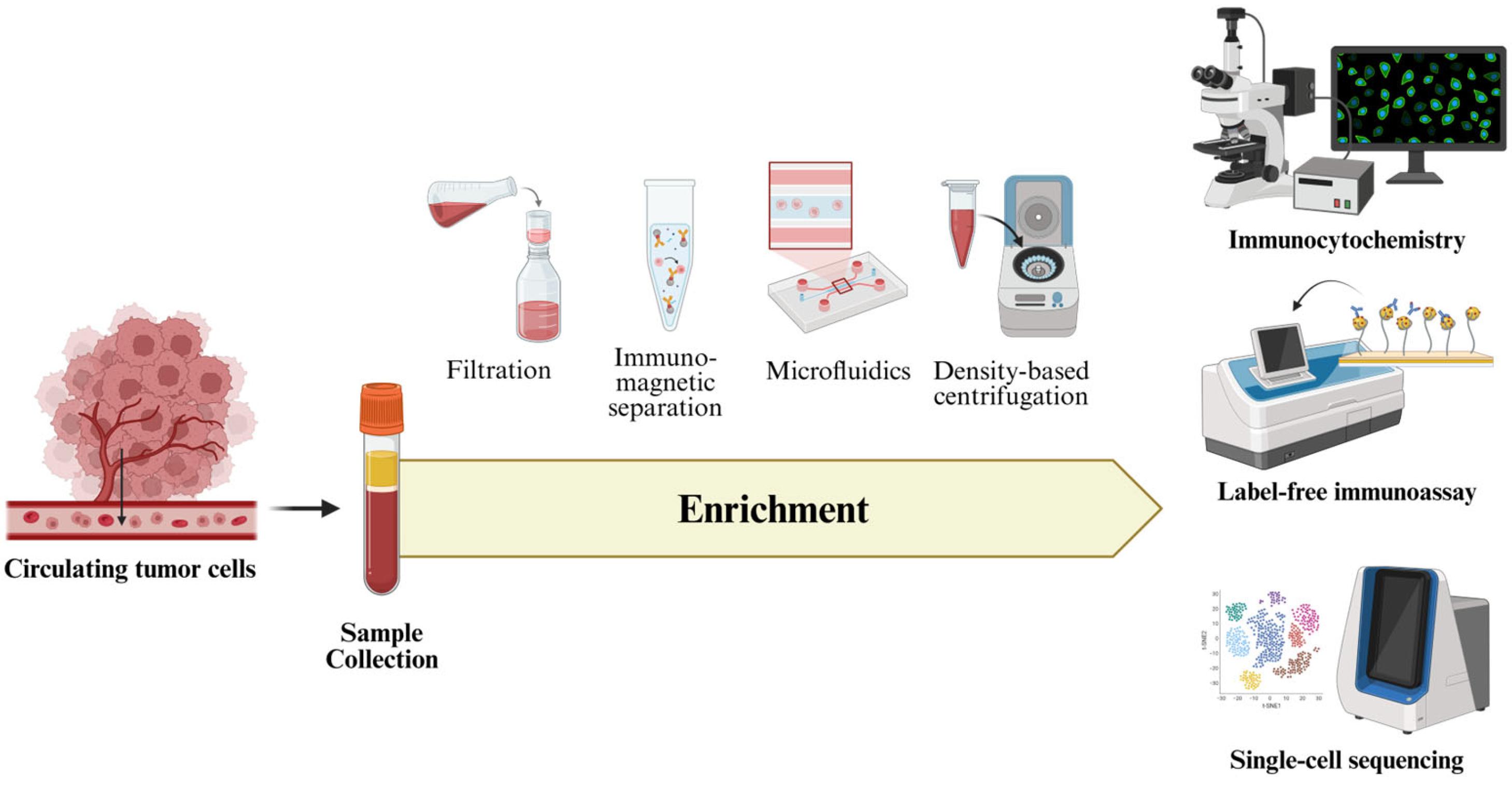
3.2.2. Circulating Tumor Cells (CTCs)
3.2.3. Exosome and Cell-Free RNA (cfRNA)
3.3. Tissue-Based Approaches
4. Clinical Evidence in Gynecologic Malignancies
4.1. Ovarian Cancer
4.2. Endometrial Cancer
4.3. Cervical Cancer
5. Impact of MRD Monitoring on Recurrence Prevention
6. Comparison of MRD in Gynecologic Cancers and Other Solid Tumors
7. Current Challenges and Limitations in MRD Evaluation
8. The Future of MRD Detection
9. Conclusions
Author Contributions
Funding
Institutional Review Board Statement
Informed Consent Statement
Data Availability Statement
Acknowledgments
Conflicts of Interest
Abbreviations
| ABC | ATP-Binding Cassette |
| AI | Artificial Intelligence |
| ALL | Acute Lymphoblastic Leukemia |
| AML | Acute Myeloid Leukemia |
| BCRP | Breast Cancer Resistance Protein |
| BEAMing | Beads, Emulsion, Amplification, and Magnetics |
| CA125 | Cancer Antigen 125 |
| cfRNA | Cell-Free RNA |
| CT | Computed Tomography |
| ctDNA | Circulating Tumor DNA |
| CTCs | Circulating Tumor Cells |
| ddPCR | Digital Droplet PCR |
| dMMR | Deficient Mismatch Repair |
| dPCR | Digital Polymerase Chain Reaction |
| DNA | Deoxyribonucleic acid |
| DWI | Diffusion-Weighted Imaging |
| EMT | Epithelial–Mesenchymal Transition |
| EpCAM | Epithelial Cell Adhesion Molecule |
| ERK1/2 | Extracellular Signal-Regulated Kinase 1/2 |
| FDG | Fluorodeoxyglucose |
| FIGO | International Federation of Gynecology and Obstetrics |
| HE4 | Human Epididymis Protein 4 |
| HPV | Human Papillomavirus |
| IHC | Immunohistochemistry |
| IL-6, IL-8 | Interleukin-6, Interleukin-8 |
| lncRNAs | Long Non-Coding RNAs |
| miRNAs | MicroRNAs |
| MLH1 | MutL protein homolog 1 |
| MMR | Mismatch Repair |
| MPFC | Multiparameter Flow Cytometry |
| MRD | Minimal Residual Disease |
| MRI | Magnetic Resonance Imaging |
| MRP1 | Multidrug Resistance Protein 1 |
| MSH2 | MutS homolog 2 protein |
| MSH6 | MutS homolog 6 protein |
| NF-kB | Nuclear Factor Kappa B |
| NGS | Next-Generation Sequencing |
| NTA | Nanoparticle Tracking Analysis |
| PCR | Polymerase Chain Reaction |
| PD-L1 | Programmed Death-Ligand 1 |
| PET | Positron Emission Tomography |
| PI3K/AKT | Phosphoinositide 3-Kinase/Protein Kinase B Pathway |
| PMS2 | Postmeiotic segregation increased 2 protein |
| RNA | Ribonucleic acid |
| ROMA | Risk of Ovarian Malignancy Algorithm |
| RT-qPCR | Real-Time Quantitative Polymerase Chain Reaction |
| USG | Ultrasonography |
| WGS | Whole Genome Sequencing |
References
- Zhu, B.; Gu, H.; Mao, Z.; Beeraka, N.M.; Zhao, X.; Anand, M.P.; Zheng, Y.; Zhao, R.; Li, S.; Manogaran, P.; et al. Global burden of gynaecological cancers in 2022 and projections to 2050. J. Glob. Health 2024, 14, 04155. [Google Scholar] [CrossRef] [PubMed]
- Gaba, F.; Ash, K.; Blyuss, O.; Bizzarri, N.; Kamfwa, P.; Saiz, A.; Cibula, D. International Variations in Surgical Morbidity and Mortality Post Gynaecological Oncology Surgery: A Global Gynaecological Oncology Surgical Outcomes Collaborative Led Study (GO SOAR1). Cancers 2023, 15, 5001. [Google Scholar] [CrossRef] [PubMed]
- Duan, H.; Liu, X.; Zhang, Y.; Liu, Y.; Ji, Y.; Zhang, Y.; Fan, Z.; Liu, S.; Yang, L.; Xu, T.; et al. Risk-stratified CA125 screening integrating CA125 trajectories, trajectory-specific progression and transvaginal ultrasound for ovarian cancer. J. Ovarian Res. 2024, 17, 210. [Google Scholar] [CrossRef] [PubMed]
- Liang, L.A.; Einzmann, T.; Franzen, A.; Schwarzer, K.; Schauberger, G.; Schriefer, D.; Radde, K.; Zeissig, S.R.; Ikenberg, H.; Meijer, C.J.L.M.; et al. Cervical cancer screening: Comparison of conventional pap smear test, liquid-based cytology, and human papillomavirus testing as stand-alone or cotesting strategies. Cancer Epidemiol. Biomark. Prev. 2021, 30, 474–484. [Google Scholar] [CrossRef]
- Luzarraga Aznar, A.; Canton, R.; Loren, G.; Carvajal, J.; de la Calle, I.; Masferrer-Ferragutcasas, C.; Serra, F.; Bebia, V.; Bonaldo, G.; Angeles, M.A.; et al. Current challenges and emerging tools in endometrial cancer diagnosis. Int. J. Gynecol. Cancer 2025, 35, 100056. [Google Scholar] [CrossRef]
- Zou, Z.; Xia, L.; Tang, S.; Lin, L.; Wu, Q.; Hou, D.; Zhao, S. Diagnostic Value of PET/CT for Ovarian Cancer Recurrence or Metastasis in Postoperative Patients with Elevated Serum CA125 Levels: A Systematic Review and Meta-Analysis. Cancer Innov. 2025, 4, e70015. [Google Scholar] [CrossRef]
- Momenimovahed, Z.; Mazidimoradi, A.; Allahqoli, L.; Salehiniya, H. The Role of CA-125 in the Management of Ovarian Cancer: A Systematic Review. Cancer Rep. 2025, 8, e70142. [Google Scholar] [CrossRef]
- Tsili, A.C.; Alexiou, G.; Tzoumpa, M.; Siempis, T.; Argyropoulou, M.I. Imaging of Peritoneal Metastases in Ovarian Cancer Using MDCT, MRI, and FDG PET/CT: A Systematic Review and Meta-Analysis. Cancers 2024, 16, 1467. [Google Scholar] [CrossRef]
- Usmani, S.; Al Riyami, K.; Ahmad, N.; Burney, I.A. The role of 68Ga-FAPI PET/CT imaging in gynecological cancers: An integrative review. Nucl. Med. Commun. 2025, 46, 585–591. [Google Scholar] [CrossRef]
- Chin, R.I.; Chen, K.; Usmani, A.; Chua, C.; Harris, P.K.; Binkley, M.S.; Azad, T.D.; Dudley, J.C.; Chaudhuri, A.A. Detection of Solid Tumor Molecular Residual Disease (MRD) Using Circulating Tumor DNA (ctDNA). Mol. Diagn. Ther. 2019, 23, 311. [Google Scholar] [CrossRef]
- Patelli, G.; Lazzari, L.; Crisafulli, G.; Sartore-Bianchi, A.; Bardelli, A.; Siena, S.; Marsoni, S. Clinical utility and future perspectives of liquid biopsy in colorectal cancer. Commun. Med. 2025, 5, 137. [Google Scholar] [CrossRef]
- Alimirzaie, S.; Bagherzadeh, M.; Akbari, M.R. Liquid biopsy in breast cancer: A comprehensive review. Clin. Genet. 2019, 95, 643–660. [Google Scholar] [CrossRef] [PubMed]
- Vacante, M.; Ciuni, R.; Basile, F.; Biondi, A. The Liquid Biopsy in the Management of Colorectal Cancer: An Overview. Biomedicines 2020, 8, 308. [Google Scholar] [CrossRef] [PubMed]
- Martignoles, J.A.; Delhommeau, F.; Hirsch, P. Genetic Hierarchy of Acute Myeloid Leukemia: From Clonal Hematopoiesis to Molecular Residual Disease. Int. J. Mol. Sci. 2018, 19, 3850. [Google Scholar] [CrossRef] [PubMed]
- Mancini, S.J.C.; Balabanian, K.; Corre, I.; Gavard, J.; Lazennec, G.; Le Bousse-Kerdilès, M.C.; Louache, F.; Maguer-Satta, V.; Mazure, N.M.; Mechta-Grigoriou, F.; et al. Deciphering Tumor Niches: Lessons from Solid and Hematological Malignancies. Front. Immunol. 2021, 12, 766275. [Google Scholar] [CrossRef]
- Yu, Z.; Xie, L.; Zhang, J.; Lin, H.; Niu, T. The evolution of minimal residual disease: Key insights based on a bibliometric visualization analysis from 2002 to 2022. Front. Oncol. 2023, 13, 1186198. [Google Scholar] [CrossRef]
- Zhao, K.; Hu, M.; Yang, R.; Liu, J.; Zeng, P.; Zhao, T. Decreasing expression of HIF-1α, VEGF-A, and Ki67 with efficacy of neoadjuvant therapy in locally advanced cervical cancer. Medicine 2023, 102, E33820. [Google Scholar] [CrossRef]
- Knisely, A.; Dai, Y.; Barlow, G.L.; Lee, S.; Lawson, B.; Clark, H.; Fellman, B.; Yuan, Y.; Lu, W.; Lubo, J.; et al. Surgical and Blood-Based Minimal Residual Disease in Patients with Ovarian Cancer after First-line Therapy: Clinical Outcomes and Translational Opportunities. Clin. Cancer Res. 2025, 31, 4122–4135. [Google Scholar] [CrossRef]
- Phan, T.G.; Croucher, P.I. The dormant cancer cell life cycle. Nat. Rev. Cancer 2020, 20, 398–411. [Google Scholar] [CrossRef]
- Gao, X.L.; Zhang, M.; Tang, Y.L.; Liang, X.H. Cancer cell dormancy: Mechanisms and implications of cancer recurrence and metastasis. OncoTargets Ther. 2017, 10, 5219–5228. [Google Scholar] [CrossRef]
- Damen, M.P.F.; van Rheenen, J.; Scheele, C.L.G.J. Targeting dormant tumor cells to prevent cancer recurrence. FEBS J. 2021, 288, 6286–6303. [Google Scholar] [CrossRef]
- Perego, M.; Tyurin, V.A.; Tyurina, Y.Y.; Yellets, J.; Nacarelli, T.; Lin, C.; Nefedova, Y.; Kossenkov, A.; Liu, Q.; Sreedhar, S.; et al. Reactivation of dormant tumor cells by modified lipids derived from stress-activated neutrophils. Sci. Transl. Med. 2020, 12, eabb5817. [Google Scholar] [CrossRef]
- Liu, C.; Zhao, Q.; Yu, X. Bone Marrow Adipocytes, Adipocytokines, and Breast Cancer Cells: Novel Implications in Bone Metastasis of Breast Cancer. Front. Oncol. 2020, 10, 561595. [Google Scholar] [CrossRef]
- Park, S.Y.; Nam, J.S. The force awakens: Metastatic dormant cancer cells. Exp. Mol. Med. 2020, 52, 569–581. [Google Scholar] [CrossRef]
- Bates, J.P.; Derakhshandeh, R.; Jones, L.; Webb, T.J. Mechanisms of immune evasion in breast cancer. BMC Cancer 2018, 18, 556. [Google Scholar] [CrossRef] [PubMed]
- Wilczyński, J.R.; Nowak, M. Cancer Immunoediting: Elimination, Equilibrium, and Immune Escape in Solid Tumors. Exp. Suppl. 2022, 113, 1–57. [Google Scholar] [CrossRef] [PubMed]
- Appierto, V.; Di Cosimo, S.; Reduzzi, C.; Pala, V.; Cappelletti, V.; Daidone, M.G. How to study and overcome tumor heterogeneity with circulating biomarkers: The breast cancer case. Semin. Cancer Biol. 2017, 44, 106–116. [Google Scholar] [CrossRef] [PubMed]
- Lim, Z.F.; Ma, P.C. Emerging insights of tumor heterogeneity and drug resistance mechanisms in lung cancer targeted therapy. J. Hematol. Oncol. 2019, 12, 134. [Google Scholar] [CrossRef]
- Emran, T.B.; Shahriar, A.; Mahmud, A.R.; Rahman, T.; Abir, M.H.; Siddiquee, M.F.R.; Ahmed, H.; Rahman, N.; Nainu, F.; Wahyudin, E.; et al. Multidrug Resistance in Cancer: Understanding Molecular Mechanisms, Immunoprevention and Therapeutic Approaches. Front. Oncol. 2022, 12, 891652. [Google Scholar] [CrossRef]
- Marcozzi, A.; Jager, M.; Elferink, M.; Straver, R.; van Ginkel, J.H.; Peltenburg, B.; Chen, L.T.; Renkens, I.; van Kuik, J.; Terhaard, C.; et al. Accurate detection of circulating tumor DNA using nanopore consensus sequencing. npj Genom. Med. 2021, 6, 106, Correction in npj Genom. Med. 2023, 8, 1. https://doi.org/10.1038/s41525-023-00356-x. [Google Scholar] [CrossRef]
- López-Méndez, T.B.; Sánchez-Álvarez, M.; Trionfetti, F.; Pedraz, J.L.; Tripodi, M.; Cordani, M.; Strippoli, R.; González-Valdivieso, J. Nanomedicine for autophagy modulation in cancer therapy: A clinical perspective. Cell Biosci. 2023, 13, 44, Correction in Cell Biosci. 2023, 13, 104. https://doi.org/10.1186/s13578-023-01057-9. [Google Scholar] [CrossRef]
- Wakefield, J.C.; Downey, K.; Kyriazi, S.; DeSouza, N.M.; Saremi, F. New MR techniques in gynecologic cancer. Am. J. Roentgenol. 2013, 200, 249–260. [Google Scholar] [CrossRef] [PubMed]
- Kim, S.; Lee, E.; Jung, J.; Lee, J.W.; Kim, H.J.; Kim, J.; Yoo, H.J.; Lee, H.J.; Chae, S.Y.; Jeon, S.M.; et al. MicroRNA-155 positively regulates glucose metabolism via PIK3R1-FOXO3a-cMYC axis in breast cancer. Oncogene 2018, 37, 2982–2991. [Google Scholar] [CrossRef]
- Brandmaier, P.; Purz, S.; Bremicker, K.; Höckel, M.; Barthel, H.; Kluge, R.; Kahn, T.; Sabri, O.; Stumpp, P. Simultaneous [18F]FDG-PET/MRI: Correlation of apparent diffusion coefficient (ADC) and standardized uptake value (SUV) in primary and recurrent cervical cancer. PLoS ONE 2015, 10, e0141684. [Google Scholar] [CrossRef]
- Bruckmann, N.M.; Rischpler, C.; Kirchner, J.; Umutlu, L.; Herrmann, K.; Ingenwerth, M.; Theurer, S.; Lahner, H.; Antoch, G.; Sawicki, L.M. Correlation between contrast enhancement, standardized uptake value (SUV), and diffusion restriction (ADC) with tumor grading in patients with therapy-naive neuroendocrine neoplasms using hybrid 68Ga-DOTATOC PET/MRI. Eur. J. Radiol. 2021, 137, 109588. [Google Scholar] [CrossRef]
- Sebastiano, J.; Rodriguez, C.; Samuels, Z.V.; Pepin, K.; Zeglis, B.M. Molecular Imaging in Gynecology: Beyond Cancer. J. Nucl. Med. 2024, 65, 998. [Google Scholar] [CrossRef]
- Guo, C.; Lewin, J.; Shackleton, M. Personalised surveillance after treatment for high-risk cancer. Oncotarget 2019, 10, 694. [Google Scholar] [CrossRef]
- Pop, V.S.; Tomoaia, G.; Parvu, A. Modern imaging techniques for monitoring patients with multiple myeloma. Med. Pharm. Rep. 2022, 95, 377. [Google Scholar] [CrossRef]
- Barr, C.E.; Njoku, K.; Jones, E.R.; Crosbie, E.J. Serum CA125 and HE4 as Biomarkers for the Detection of Endometrial Cancer and Associated High-Risk Features. Diagnostics 2022, 12, 2834. [Google Scholar] [CrossRef] [PubMed]
- Singh, A.K.; Yadav, P.; Shukla, M.; Samaiya, S.; Singh, S.; Sorout, S. Comparative Meta-Analysis of Carbohydrate Antigen 125 (CA125), Human Epididymis Protein 4 (HE4), and Diagnostic Indices (Risk of Malignancy Index (RMI) and Risk of Ovarian Malignancy Algorithm (ROMA)) for Pre-operative Detection of Ovarian Carcinoma. Cureus 2025, 17, e82415. [Google Scholar] [CrossRef] [PubMed]
- Putra, A.D.; Purwoto, G.; Sachi, Y.; Suhendar, C.W.; Nugroho, I.; Saidah, I.; Wirasugianto, J.; Amelia; Syariatin, L.; Lukas, G.A. Ultrasonography and Biomarkers in the Diagnostic Evaluation of Peritoneal Tuberculosis: A Case Series Analysis. Diagnostics 2025, 15, 2008. [Google Scholar] [CrossRef]
- Wang, H.; Liu, P.; Xu, H.; Dai, H. Early diagonosis of ovarian cancer: Serum HE4, CA125 and ROMA model. Am. J. Transl. Res. 2021, 13, 14141. [Google Scholar] [PubMed]
- Huo, Q.; Xu, C.; Shao, Y.; Yu, Q.; Huang, L.; Liu, Y.; Bao, H. Free CA125 promotes ovarian cancer cell migration and tumor metastasis by binding Mesothelin to reduce DKK1 expression and activate the SGK3/FOXO3 pathway. Int. J. Biol. Sci. 2021, 17, 574–588. [Google Scholar] [CrossRef] [PubMed]
- Pangaribuan, M.T.M.; Razali, R.R.; Darmawi, D. Diagnostic Accuracy of CA-125 Levels for Ovarian Tumor Patients with Suspected Malignancy. Indones. J. Cancer 2025, 19, 1–8. [Google Scholar] [CrossRef]
- Samborski, A.; Miller, M.C.; Blackman, A.; Maclaughlan-David, S.; Jackson, A.; Lambert-Messerlian, G.; Rowswell-Turner, R.; Moore, R.G. HE4 and CA125 serum biomarker monitoring in women with epithelial ovarian cancer. Tumor Biol. 2022, 44, 205–213. [Google Scholar] [CrossRef]
- Mao, X.; Chen, W. Serum CA125 and HE4 levels combined with magnetic resonance imaging (MRI) in the clinical diagnostic value of ovarian neoplasms. J. Radiat. Res. Appl. Sci. 2024, 17, 100877. [Google Scholar] [CrossRef]
- Rowlands, V.; Rutkowski, A.J.; Meuser, E.; Carr, T.H.; Harrington, E.A.; Barrett, J.C. Optimisation of robust singleplex and multiplex droplet digital PCR assays for high confidence mutation detection in circulating tumour DNA. Sci. Rep. 2019, 9, 12620. [Google Scholar] [CrossRef]
- Kim, S.Y.; Jeong, S.; Lee, W.; Jeon, Y.; Kim, Y.J.; Park, S.; Lee, D.; Go, D.; Song, S.H.; Lee, S.; et al. Cancer signature ensemble integrating cfDNA methylation, copy number, and fragmentation facilitates multi-cancer early detection. Exp. Mol. Med. 2023, 55, 2445–2460. [Google Scholar] [CrossRef]
- Wan, N.; Weinberg, D.; Liu, T.Y.; Niehaus, K.; Ariazi, E.A.; Delubac, D.; Kannan, A.; White, B.; Bailey, M.; Bertin, M.; et al. Machine learning enables detection of early-stage colorectal cancer by whole-genome sequencing of plasma cell-free DNA. BMC Cancer 2019, 19, 832. [Google Scholar] [CrossRef]
- Wu, C.; Zhao, X.; Welsh, M.; Costello, K.; Cao, K.; Tayoun, A.A.; Li, M.; Sarmady, M. Using Machine Learning to Identify True Somatic Variants from Next-Generation Sequencing. Clin. Chem. 2020, 66, 239–246. [Google Scholar] [CrossRef]
- Kang, Z.; Stevanovic, S.; Hinrichs, C.S.; Cao, L. Circulating cell-free DNA for metastatic cervical cancer detection, genotyping, and monitoring. Clin. Cancer Res. 2017, 23, 6856–6862. [Google Scholar] [CrossRef] [PubMed]
- Cheung, T.H.; Yim, S.F.; Yu, M.Y.; Worley, M.J.; Fiascone, S.J.; Chiu, R.W.K.; Lo, K.W.K.; Siu, N.S.S.; Wong, M.C.S.; Yeung, A.C.M.; et al. Liquid biopsy of HPV DNA in cervical cancer. J. Clin. Virol. 2019, 114, 32–36. [Google Scholar] [CrossRef] [PubMed]
- Leung, E.; Han, K.; Zou, J.; Zhao, Z.; Zheng, Y.; Wang, T.T.; Rostami, A.; Siu, L.L.; Pugh, T.J.; Bratman, S.V. HPV sequencing facilitates ultrasensitive detection of HPV circulating tumor DNA. Clin. Cancer Res. 2021, 27, 5857–5868. [Google Scholar] [CrossRef] [PubMed]
- Bolivar, A.M.; Luthra, R.; Mehrotra, M.; Chen, W.; Barkoh, B.A.; Hu, P.; Zhang, W.; Broaddus, R.R. Targeted next-generation sequencing of endometrial cancer and matched circulating tumor DNA: Identification of plasma-based, tumor-associated mutations in early stage patients. Mod. Pathol. 2019, 32, 405–414. [Google Scholar] [CrossRef]
- Lee, S.Y.; Chae, D.K.; Lee, S.H.; Lim, Y.; An, J.; Chae, C.H.; Kim, B.C.; Bhak, J.; Bolser, D.; Cho, D.H. Efficient mutation screening for cervical cancers from circulating tumor DNA in blood. BMC Cancer 2020, 20, 694. [Google Scholar] [CrossRef]
- Heo, J.; Kim, Y.N.; Shin, S.; Lee, K.; Lee, J.H.; Lee, Y.J.; Choi, Z.; Park, J.; Min, S.; Kim, S.W.; et al. Serial Circulating Tumor DNA Analysis with a Tumor-Naïve Next-Generation Sequencing Panel Detects Minimal Residual Disease and Predicts Outcome in Ovarian Cancer. Cancer Res. 2024, 84, 468–478. [Google Scholar] [CrossRef]
- Glueck, V.; Grimm, C.; Postl, M.; Brueffer, C.; Segui, N.; Alcaide, M.; Oton, L.; Chen, Y.; Saal, L.H.; Hofstetter, G.; et al. ctDNA as an Objective Marker for Postoperative Residual Disease in Primary Advanced High-Grade Serous Ovarian Cancer. Cancers 2025, 17, 786. [Google Scholar] [CrossRef]
- Sun, Y.; Zhang, L.; Ho, S.S.; Wu, X.; Gu, J. Lower mitochondrial DNA copy number in peripheral blood leukocytes increases the risk of endometrial cancer. Mol. Carcinog. 2016, 55, 1111–1117. [Google Scholar] [CrossRef]
- Galati, L.; Combes, J.-D.; Calvez-Kelm, F.L.; McKay-Chopin, S.; Forey, N.; Ratel, M.; McKay, J.; Waterboer, T.; Schroeder, L.; Clifford, G.; et al. Detection of Circulating HPV16 DNA as a Biomarker for Cervical Cancer by a Bead-Based HPV Genotyping Assay. Microbiol. Spectr. 2022, 10, e01480-21. [Google Scholar] [CrossRef]
- Abbas, A.; Gruner, M.; Karohl, J.; Rose, P.G.; Joehlin-Price, A.; Stover, D.; Mahdi, H. Case Report: Circulating Tumor DNA Fraction Analysis Using Ultra-Low-Pass Whole-Genome Sequencing Correlates Response to Chemoradiation and Recurrence in Stage IV Small-Cell Carcinoma of the Cervix—A Longitudinal Study. Front. Oncol. 2021, 11, 652683. [Google Scholar] [CrossRef]
- Sabatier, R.; Garnier, S.; Guille, A.; Carbuccia, N.; Pakradouni, J.; Adelaide, J.; Provansal, M.; Cappiello, M.; Rousseau, F.; Chaffanet, M.; et al. Whole-genome/exome analysis of circulating tumor DNA and comparison to tumor genomics from patients with heavily pre-treated ovarian cancer: Subset analysis of the PERMED-01 trial. Front. Oncol. 2022, 12, 946257. [Google Scholar] [CrossRef] [PubMed]
- Elazezy, M.; Prieske, K.; Kluwe, L.; Oliveira-Ferrer, L.; Peine, S.; Müller, V.; Woelber, L.; Schmalfeldt, B.; Pantel, K.; Joosse, S.A. BRCA1 promoter hypermethylation on circulating tumor DNA correlates with improved survival of patients with ovarian cancer. Mol. Oncol. 2021, 15, 3615–3625. [Google Scholar] [CrossRef] [PubMed]
- Li, G.; Zhang, Y.; Li, K.; Liu, X.; Lu, Y.; Zhang, Z.; Liu, Z.; Wu, Y.; Liu, F.; Huang, H.; et al. Transformer-based AI technology improves early ovarian cancer diagnosis using cfDNA methylation markers. Cell Rep. Med. 2024, 5, 101666. [Google Scholar] [CrossRef] [PubMed]
- Paiboonborirak, C.; Abu-Rustum, N.R.; Wilailak, S. Artificial intelligence in the diagnosis and management of gynecologic cancer. Int. J. Gynecol. Obstet. 2025, 171, 199–209. [Google Scholar] [CrossRef]
- Piansaddhayanon, C.; Koracharkornradt, C.; Laosaengpha, N.; Tao, Q.; Ingrungruanglert, P.; Israsena, N.; Chuangsuwanich, E.; Sriswasdi, S. Label-free tumor cells classification using deep learning and high-content imaging. Sci. Data 2023, 10, 570. [Google Scholar] [CrossRef]
- Caligola, S.; De Sanctis, F.; Canè, S.; Ugel, S. Breaking the Immune Complexity of the Tumor Microenvironment Using Single-Cell Technologies. Front. Genet. 2022, 13, 867880. [Google Scholar] [CrossRef]
- Phetsouphanh, C.; Zaunders, J.J.; Kelleher, A.D. Detecting Antigen-Specific T Cell Responses: From Bulk Populations to Single Cells. Int. J. Mol. Sci. 2015, 16, 18878–18893. [Google Scholar] [CrossRef]
- Sun, K.; Chen, P.; Yan, S.; Yuan, W.; Wang, Y.; Li, X.; Dou, L.; Zhao, C.; Zhang, J.; Wang, Q. Ultrasensitive Nanopore Sensing of Mucin 1 and Circulating Tumor Cells in Whole Blood of Breast Cancer Patients by Analyte-Triggered Triplex-DNA Release. ACS Appl. Mater. Interfaces 2021, 13, 21030–21039. [Google Scholar] [CrossRef]
- Nomura, M.; Yokoyama, Y.; Yoshimura, D.; Minagawa, Y.; Yamamoto, A.; Tanaka, Y.; Sekiguchi, N.; Marukawa, D.; Ichihara, M.; Itakura, H.; et al. Simple Detection and Culture of Circulating Tumor Cells from Colorectal Cancer Patients Using Poly(2-Methoxyethyl Acrylate)-Coated Plates. Int. J. Mol. Sci. 2023, 24, 3949. [Google Scholar] [CrossRef]
- Tellez-Gabriel, M.; Heymann, M.F.; Heymann, D. Circulating Tumor Cells as a Tool for Assessing Tumor Heterogeneity. Theranostics 2019, 9, 4580–4594. [Google Scholar] [CrossRef]
- Li, X.; Zhang, P.; Dou, L.; Wang, Y.; Sun, K.; Zhang, X.; Song, G.; Zhao, C.; Li, K.; Bai, Y.; et al. Detection of Circulating Tumor Cells in Breast Cancer Patients by Nanopore Sensing with Aptamer-Mediated Amplification. ACS Sens. 2020, 5, 2359–2366. [Google Scholar] [CrossRef]
- Obermayr, E.; Reiner, A.; Brandt, B.; Braicu, E.I.; Reinthaller, A.; Loverix, L.; Concin, N.; Woelber, L.; Mahner, S.; Sehouli, J.; et al. The long-term prognostic significance of circulating tumor cells in ovarian cancer—A study of the ovcad consortium. Cancers 2021, 13, 2613. [Google Scholar] [CrossRef]
- McAndrews, K.M.; Kalluri, R. Mechanisms associated with biogenesis of exosomes in cancer. Mol. Cancer 2019, 18, 52. [Google Scholar] [CrossRef] [PubMed]
- Maqsood, Q.; Sumrin, A.; Saleem, Y.; Wajid, A.; Mahnoor, M. Exosomes in Cancer: Diagnostic and Therapeutic Applications. Clin. Med. Insights Oncol. 2024, 18, 11795549231215966. [Google Scholar] [CrossRef] [PubMed]
- Lin, B.; Lei, Y.; Wang, J.; Zhu, L.; Wu, Y.; Zhang, H.; Wu, L.; Zhang, P.; Yang, C. Microfluidic-Based Exosome Analysis for Liquid Biopsy. Small Methods 2021, 5, 2001131. [Google Scholar] [CrossRef] [PubMed]
- Gonda, A.; Zhao, N.; Shah, J.V.; Siebert, J.N.; Gunda, S.; Inan, B.; Kwon, M.; Libutti, S.K.; Moghe, P.V.; Francis, N.L.; et al. Extracellular Vesicle Molecular Signatures Characterize Metastatic Dynamicity in Ovarian Cancer. Front. Oncol. 2021, 11, 718408. [Google Scholar] [CrossRef]
- Yang, Y.; Kannisto, E.; Patnaik, S.K.; Reid, M.E.; Li, L.; Wu, Y. Ultrafast Detection of Exosomal RNAs via Cationic Lipoplex Nanoparticles in a Micromixer Biochip for Cancer Diagnosis. ACS Appl. Nano Mater. 2021, 4, 2806–2819. [Google Scholar] [CrossRef]
- Mayer, Z.; Ungerer, V.; Bronkhorst, A.J.; Gazzaniga, P.; Sergi, C.M.; Polatoglou, E.; Mayer, Z.; Ungerer, V.; Bronkhorst, A.J.; Holdenrieder, S. Isolation and Quantification of Plasma Cell-Free DNA Using Different Manual and Automated Methods. Diagnostics 2022, 12, 2550. [Google Scholar] [CrossRef]
- Fonseca-Benitez, A.; Romero-Sánchez, C.; Lara, S.J.P.; Fonseca-Benitez, A.; Romero-Sánchez, C.; Janneth, S.; Lara, P. A Rapid and Simple Method for Purification of Nucleic Acids on Porous Membranes: Simulation vs. Experiment. Micromachines 2022, 13, 2238. [Google Scholar] [CrossRef]
- Zhong, P.; Bai, L.; Hong, M.; Ouyang, J.; Wang, R.; Zhang, X.; Chen, P. A Comprehensive Review on Circulating cfRNA in Plasma: Implications for Disease Diagnosis and Beyond. Diagnostics 2024, 14, 1045. [Google Scholar] [CrossRef]
- Ye, M.; Wang, J.; Pan, S.; Zheng, L.; Wang, Z.W.; Zhu, X. Nucleic acids and proteins carried by exosomes of different origins as potential biomarkers for gynecologic cancers. Mol. Ther. Oncolytics 2022, 24, 101–113, Correction in Mol. Ther. Oncolytics 2022, 25, 307. https://doi.org/10.1016/j.omto.2022.05.006. [Google Scholar] [CrossRef]
- Cilloni, D.; Petiti, J.; Rosso, V.; Andreani, G.; Dragani, M.; Fava, C.; Saglio, G. Digital PCR in Myeloid Malignancies: Ready to Replace Quantitative PCR? Int. J. Mol. Sci. 2019, 20, 2249. [Google Scholar] [CrossRef]
- Łukasiewicz, M.; Pastuszak, K.; Łapińska-Szumczyk, S.; Różański, R.; Veld, S.G.J.G.I.; Bieńkowski, M.; Stokowy, T.; Ratajska, M.; Best, M.G.; Würdinger, T.; et al. Diagnostic accuracy of liquid biopsy in endometrial cancer. Cancers 2021, 13, 5731. [Google Scholar] [CrossRef] [PubMed]
- Amemiya, K.; Hirotsu, Y.; Nagakubo, Y.; Watanabe, S.; Amemiya, S.; Mochizuki, H.; Oyama, T.; Kondo, T.; Omata, M. Simple IHC reveals complex MMR alternations than PCR assays: Validation by LCM and next-generation sequencing. Cancer Med. 2022, 11, 4479–4490. [Google Scholar] [CrossRef] [PubMed]
- Huang, Y.S.; Ou, Y.C.; Wu, C.H.; Lan, J.; Huang, C.C.; Fu, H.C.; Huang, S.W.; Huang, S.Y.; Wang, S.C.; Lin, H. A comparative analysis of MMR immunohistochemistry panels: Evaluating the utility of four-protein versus two-protein panels in endometrial cancer patients. J. Formos. Med. Assoc. 2025, 124, 845–851. [Google Scholar] [CrossRef] [PubMed]
- Yoshida, H.; Takigawa, W.; Kobayashi-Kato, M.; Nishikawa, T.; Shiraishi, K.; Ishikawa, M. Mismatch Repair Protein Expression in Endometrial Cancer: Assessing Concordance and Unveiling Pitfalls in Two Different Immunohistochemistry Assays. J. Pers. Med. 2023, 13, 1260. [Google Scholar] [CrossRef]
- Mais, V.; Peiretti, M. Immunohistochemical Markers in Endometrial Cancer: Latest Updates. Cancers 2023, 15, 4202. [Google Scholar] [CrossRef]
- Shu, T.; Liang, Y.; Zhang, S.; Sun, T.; Gao, Y.; Guo, C.; Li, Z.; Gao, M.; Zhang, N.; Song, N.; et al. The prognostic value of tumor-informed minimal residual disease detection using circulating tumor DNA in first-line treatment of ovarian cancer. Gynecol. Oncol. 2025, 192, 94–101. [Google Scholar] [CrossRef]
- Zhang, Y.; Guan, Y.; Xiao, X.; Xu, S.; Zhu, S.; Cao, D.; Yu, M.; Peng, P.; Wang, J.; Wang, Y.; et al. Circulating tumor DNA detection improves relapse prediction in epithelial ovarian cancer. BMC Cancer 2024, 24, 1565. [Google Scholar] [CrossRef]
- Weigelt, B.; Comino-Méndez, I.; De Bruijn, I.; Tian, L.; Meisel, J.L.; García-Murillas, I.; Fribbens, C.; Cutts, R.; Martelotto, L.G.; Ng, C.K.Y.; et al. Diverse BRCA1 and BRCA2 Reversion Mutations in Circulating Cell-Free DNA of Therapy-Resistant Breast or Ovarian Cancer. Clin. Cancer Res. 2017, 23, 6708–6720. [Google Scholar] [CrossRef]
- Recio, F.; Scalise, C.B.; Loar, P.; Lumish, M.; Berman, T.; Peddada, A.; Kalashnikova, E.; Rivero-Hinojosa, S.; Beisch, T.; Nicosia, B.; et al. Post-surgical ctDNA-based molecular residual disease detection in patients with stage I uterine malignancies. Gynecol. Oncol. 2024, 182, 63–69. [Google Scholar] [CrossRef]
- Jamieson, A.; McConechy, M.K.; Lum, A.; Senz, J.; Dowhy, T.; Huntsman, D.G.; McAlpine, J.N. Selective utilization of circulating tumor DNA testing enables disease monitoring in endometrial and ovarian carcinomas. J. Gynecol. Oncol. 2024, 36, e5. [Google Scholar] [CrossRef]
- Capasso, I.; Nero, C.; Anderson, G.; Del Re, M.; Perrone, E.; Fanfani, F.; Scambia, G.; Cucinella, G.; Mariani, A.; Choong, G.; et al. Circulating tumor DNA in endometrial cancer: Clinical significance and implications. Int. J. Gynecol. Cancer 2025, 35, 101656. [Google Scholar] [CrossRef] [PubMed]
- Han, K.; Zou, J.; Zhao, Z.; Baskurt, Z.; Zheng, Y.; Barnes, E.; Croke, J.; Ferguson, S.E.; Fyles, A.; Gien, L.; et al. Clinical Validation of Human Papilloma Virus Circulating Tumor DNA for Early Detection of Residual Disease After Chemoradiation in Cervical Cancer. J. Clin. Oncol. 2024, 42, 431–440. [Google Scholar] [CrossRef] [PubMed]
- Cabel, L.; Bonneau, C.; Bernard-Tessier, A.; Héquet, D.; Tran-Perennou, C.; Bataillon, G.; Rouzier, R.; Féron, J.G.; Fourchotte, V.; Le Brun, J.F.; et al. HPV ctDNA detection of high-risk HPV types during chemoradiotherapy for locally advanced cervical cancer. ESMO Open 2021, 6, 100154. [Google Scholar] [CrossRef] [PubMed]
- Mayadev, J.; Vázquez Limón, J.C.; Ramírez Godinez, F.J.; Leiva, M.; Cetina-Pérez, L.D.C.; Varga, S.; Molina Alavez, A.; Alarcon-Rozas, A.E.; Valdiviezo, N.; Acevedo, C.; et al. Ultrasensitive detection and tracking of circulating tumor DNA to predict relapse and survival in patients with locally advanced cervical cancer: Phase III CALLA trial analyses. Ann. Oncol. 2025, 36, 1047–1057. [Google Scholar] [CrossRef]
- Tewari, K.S.; Sill, M.W.; Monk, B.J.; Penson, R.T.; Moore, D.H.; Lankes, H.A.; Ramondetta, L.M.; Landrum, L.M.; Randall, L.M.; Oaknin, A.; et al. Circulating tumor cells in advanced cervical cancer: NRG oncology—Gynecologic oncology group study 240 (NCT 00803062). Mol. Cancer Ther. 2020, 19, 2363–2370. [Google Scholar] [CrossRef]
- Peng, Y.; Mei, W.; Ma, K.; Zeng, C. Circulating Tumor DNA and Minimal Residual Disease (MRD) in Solid Tumors: Current Horizons and Future Perspectives. Front. Oncol. 2021, 11, 763790. [Google Scholar] [CrossRef]
- Xu, M.; Shi, T.; Xu, R.; Chen, G.; He, W. The potential role of minimal/molecular residual disease in colorectal cancer: Curative surgery, radiotherapy and beyond. J. Natl. Cancer Cent. 2023, 3, 203. [Google Scholar] [CrossRef]
- Herbst, R.S.; John, T.; Grohé, C.; Goldman, J.W.; Kato, T.; Laktionov, K.; Bonanno, L.; Tiseo, M.; Majem, M.; Dómine, M.; et al. Molecular residual disease analysis of adjuvant osimertinib in resected EGFR-mutated stage IB–IIIA non-small-cell lung cancer. Nat. Med. 2025, 31, 1958–1968. [Google Scholar] [CrossRef]
- Panda, S.S.; Radhakrishnan, V.; Ganesan, P.; Rajendranath, R.; Ganesan, T.S.; Rajalekshmy, K.R.; Bhola, R.K.; Das, H.; Sagar, T.G. Flow Cytometry Based MRD and Its Impact on Survival Outcome in Children and Young Adults with ALL: A Prospective Study from a Tertiary Cancer Centre in Southern India. Indian J. Hematol. Blood Transfus. 2019, 36, 300. [Google Scholar] [CrossRef]
- Pantel, K.; Alix-Panabières, C. Crucial roles of circulating tumor cells in the metastatic cascade and tumor immune escape: Biology and clinical translation. J. Immunother. Cancer 2022, 10, 5615. [Google Scholar] [CrossRef]
- Stein, A.; Simnica, D.; Schultheiß, C.; Scholz, R.; Tintelnot, J.; Gökkurt, E.; Von Wenserski, L.; Willscher, E.; Paschold, L.; Sauer, M.; et al. PD-L1 targeting and subclonal immune escape mediated by PD-L1 mutations in metastatic colorectal cancer. J. Immunother. Cancer 2021, 9, 2844. [Google Scholar] [CrossRef]
- Keup, C.; Kimmig, R.; Kasimir-Bauer, S. Liquid Biopsies to Evaluate Immunogenicity of Gynecological/Breast Tumors: On the Way to Blood-Based Biomarkers for Immunotherapies. Breast Care 2020, 15, 470–480. [Google Scholar] [CrossRef] [PubMed]
- Battaglia, A.; Piermattei, A.; Buzzonetti, A.; Pasciuto, T.; Zampetti, N.; Fossati, M.; Angelico, G.; Iacobelli, V.; Nero, C.; Iannucci, V.; et al. Pd-l1 expression on circulating tumour-derived microvesicles as a complementary tool for stratification of high-grade serous ovarian cancer patients. Cancers 2021, 13, 5200. [Google Scholar] [CrossRef] [PubMed]
- Włodarczyk-Ciekańska, K.; Kwiatkowska-Makuch, A.; Pawłowska-Łachut, A.; Skiba, W.; Suszczyk, D.; Kotarski, J.; Pieniądz-Feculak, P.; Pańczyszyn, A.; Ignatowicz, A.; Tarkowski, R.; et al. Assessment of the PD-1/PD-L1/PD-L2 Immune Checkpoints Pathway in Endometrial Cancer and Its Clinical Significance. Cancers 2025, 17, 3485. [Google Scholar] [CrossRef] [PubMed]
- Gao, Y.; Qi, F.; Zhou, W.; Jiang, P.; Hu, M.; Wang, Y.; Song, C.; Han, Y.; Li, D.; Qin, N.; et al. Liquid biopsy using plasma proteomics in predicting efficacy and tolerance of PD-1/PD-L1 blockades in NSCLC: A prospective exploratory study. Mol. Biomed. 2025, 6, 51. [Google Scholar] [CrossRef]
- Akyüz, N.; Brandt, A.; Stein, A.; Schliffke, S.; Mährle, T.; Quidde, J.; Goekkurt, E.; Loges, S.; Haalck, T.; Ford, C.T.; et al. T-cell diversification reflects antigen selection in the blood of patients on immune checkpoint inhibition and may be exploited as liquid biopsy biomarker. Int. J. Cancer 2017, 140, 2535–2544. [Google Scholar] [CrossRef]
- Wang, B.; Saddawi-Konefka, R.; Clubb, L.M.; Tang, S.; Wu, D.; Mukherjee, S.; Sahni, S.; Dhruba, S.R.; Yang, X.; Patiyal, S.; et al. Longitudinal liquid biopsy identifies an early predictive biomarker of immune checkpoint blockade response in head and neck squamous cell carcinoma. Nat. Commun. 2025, 16, 8161. [Google Scholar] [CrossRef]
- Matulonis, U.; Vergote, I.; Backes, F.; Martin, L.P.; McMeekin, S.; Birrer, M.; Sahni, S.; Dhruba, S.R.; Yang, X.; Patiyal, S.; et al. Phase II study of the PI3K inhibitor pilaralisib (SAR245408; XL147) in patients with advanced or recurrent endometrial carcinoma. Gynecol. Oncol. 2015, 136, 246–253. [Google Scholar] [CrossRef]
- Mian, H.; Wildes, T.M.; Venner, C.P.; Fonseca, R. MRD negativity: Considerations for older adults with multiple myeloma. Blood Cancer J. 2023, 13, 166. [Google Scholar] [CrossRef]
- Chen, Q.; Zhang, Z.H.; Wang, S.; Lang, J.H. Circulating Cell-Free DNA or Circulating Tumor DNA in the Management of Ovarian and Endometrial Cancer. OncoTargets Ther. 2019, 12, 11517–11530. [Google Scholar] [CrossRef]
- Szatkowski, W.; Kmieć, A.; Kluz, T.; Cieślak-Steć, M.; Nowak-Jastrząb, M.U.; Śliwińska, M.; Winkler, I.; Tomaszewski, J.; Misiek, M.; Blecharz, P. Does FIGO 2023 meet clinical needs? An analysis of challenges and limitations. Przegląd Menopauzalny 2025, 24, 72. [Google Scholar] [CrossRef]
- Martinez-Martin, N.; Magnus, D. Privacy and ethical challenges in next-generation sequencing. Expert Rev. Precis. Med. Drug Dev. 2019, 4, 95. [Google Scholar] [CrossRef]
- Semenkovich, N.P.; Szymanski, J.J.; Earland, N.; Chauhan, P.S.; Pellini, B.; Chaudhuri, A.A. Genomic approaches to cancer and minimal residual disease detection using circulating tumor DNA. J. Immunother. Cancer 2023, 11, e006284. [Google Scholar] [CrossRef]
- Van Der Leest, P.; Schuuring, E. Critical Factors in the Analytical Work Flow of Circulating Tumor DNA-Based Molecular Profiling. Clin. Chem. 2024, 70, 220–233. [Google Scholar] [CrossRef]
- Peng, H.; Pan, M.; Zhou, Z.; Chen, C.; Xing, X.; Cheng, S.; Zhang, S.; Zheng, H.; Qian, K. The impact of preanalytical variables on the analysis of cell-free DNA from blood and urine samples. Front. Cell Dev. Biol. 2024, 12, 1385041. [Google Scholar] [CrossRef] [PubMed]
- Müller, M.C.; Hördt, T.; Paschka, P.; Merx, K.; La Rosée, P.; Hehlmann, R.; Hochhaus, A. Standardization of Preanalytical Factors for Minimal Residual Disease Analysis in Chronic Myelogenous Leukemia. Acta Haematol. 2004, 112, 30–33. [Google Scholar] [CrossRef] [PubMed]
- Kuligina, E.S.; Yanus, G.A.; Imyanitov, E.N. Improvement of the sensitivity of circulating tumor DNA-based liquid biopsy: Current approaches and future perspectives. Open Explor. 2025, 6, 1002333. [Google Scholar] [CrossRef] [PubMed]
- Soh, K.T.; Came, N.; Otteson, G.E.; Jevremovic, D.; Shi, M.; Olteanu, H.; Natoni, A.; Lagoo, A.; Theakston, E.; Óskarsson, J.Þ.; et al. Evaluation of Multiple Myeloma Measurable Residual Disease by High Sensitivity Flow Cytometry: An International Harmonized Approach for Data Analysis. Cytom. B Clin. Cytom. 2022, 102, 88. [Google Scholar] [CrossRef]
- Desai, A.; Lovly, C.M. Challenges in the implementation of ultrasensitive liquid biopsy approaches in precision oncology. J. Immunother. Cancer 2023, 11, 6793. [Google Scholar] [CrossRef] [PubMed]
- Grissom, A.A.; Friend, P.J. Multigene Panel Testing for Hereditary Cancer Risk. J. Adv. Pract. Oncol. 2016, 7, 394. [Google Scholar] [CrossRef] [PubMed]
- Boukouris, A.E.; Michaelidou, K.; Joosse, S.A.; Charpidou, A.; Mavroudis, D.; Syrigos, K.N.; Agelaki, S. A comprehensive overview of minimal residual disease in the management of early-stage and locally advanced non-small cell lung cancer. npj Precis. Oncol. 2025, 9, 178. [Google Scholar] [CrossRef] [PubMed]
- Bazinet, A.; Wang, A.; Li, X.; Jia, F.; Mo, H.; Wang, W.; Wang, S.A. Automated quantification of measurable residual disease in chronic lymphocytic leukemia, using an artificial intelligence-assisted workflow. Cytom. B Clin. Cytom. 2024, 106, 264–271. [Google Scholar] [CrossRef]
- Kobayashi, S.; Nakamura, Y.; Hashimoto, T.; Bando, H.; Oki, E.; Karasaki, T.; Horinouchi, H.; Ozaki, Y.; Iwata, H.; Kato, T.; et al. Japan society of clinical oncology position paper on appropriate clinical use of molecular residual disease (MRD) testing. Int. J. Clin. Oncol. 2025, 30, 605–654. [Google Scholar] [CrossRef]
- Vat, L.; Goodman, B.; Barile, E.; Kiernan, E.; Cucoş, B.; Martins, A.; Bolisetty, M.; Elks, C.; Demers, R.; De Vos, M.; et al. Creation of the ideal health care pathway for integrating ctDNA testing into clinical practice through multi-stakeholder engagement. J. Clin. Oncol. 2025, 43, e23032. [Google Scholar] [CrossRef]
- Li, L.; Sun, M.; Wang, J.; Wan, S. Multi-omics based artificial intelligence for cancer research. Adv. Cancer Res. 2024, 163, 303–356. [Google Scholar] [CrossRef]
- Shittu, L.; Ekundayo, F.; Olutimehin, D. Cancer diagnosis and prognosis using multi-Omics data: A data science and machine learning approach. World J. Adv. Res. Rev. 2024, 24, 2052–2069. [Google Scholar] [CrossRef]
- Wang, Y.; Han, S.; Wang, X.; Song, S.; Wang, X. Characteristics of human papillomavirus infection among females and the genetic variations of HPV18 and HPV58 in Henan province, China. Sci. Rep. 2023, 13, 2252. [Google Scholar] [CrossRef]
- Janik, A.; Torrente, M.; Costabello, L.; Calvo, V.; Walsh, B.; Camps, C.; Mohamed, S.K.; Ortega, A.L.; Nováček, V.; Massutí, B.; et al. Machine Learning–Assisted Recurrence Prediction for Patients with Early-Stage Non–Small-Cell Lung Cancer. JCO Clin. Cancer Inform. 2023, 7, e2200062. [Google Scholar] [CrossRef]
- Gaur, K.; Jagtap, M.M. Role of Artificial Intelligence and Machine Learning in Prediction, Diagnosis, and Prognosis of Cancer. Cureus 2022, 14, e31008. [Google Scholar] [CrossRef]
- Sardarabadi, P.; Kojabad, A.A.; Jafari, D.; Liu, C.-H. Liquid Biopsy-Based Biosensors for MRD Detection and Treatment Monitoring in Non-Small Cell Lung Cancer (NSCLC). Biosensors 2021, 11, 394. [Google Scholar] [CrossRef]
- Wijaya, J.H.; Octavius, G.S.; Hwei, L.R.Y. A Literature Review of Telemedicine in Indonesia: Past, Present, and Future Prospective. J. Adm. Kesehat. Indones. 2022, 10, 261–272. [Google Scholar] [CrossRef]



| Methods | Sensitivity Range (%) | Specificity Range (%) | Applications | Limitations | References |
|---|---|---|---|---|---|
| Digital droplet PCR (ddPCR) | 75–96% | 85–100% | Detection of HPV DNA, mutation analysis, and treatment monitoring. | Limited multiplexing, reliance on predefined targets, and moderate cost-effectiveness. | Kang et al., 2017 [51]; Cheung et al., 2019 [52]; Leung et al., 2021 [53]. |
| Next-Generation Sequencing (NGS) | 70–95% | 88–98% | Comprehensive profiling, detection of somatic mutations, and identification of molecular subtypes. | High cost, analytical complexity, and substantial infrastructure requirements. | Bolivar et al., 2019 [54]; Lee et al., 2020 [55]; Heo et al., 2024 [56]; Glueck et al., 2025 [57]. |
| Real-time qPCR | 24–85% | 85–95% | Single-target detection, HPV screening, and basic mutation identification. | Low sensitivity, single-target scope, and limited clinical applications. | Sun et al., 2016 [58] |
| Multiplex Digital PCR | 60–100% | 90–98% | Multiple HPV types identifications, simultaneous detection, and screening applications. | Limited validation, high technical complexity, and need for method standardization. | Galati et al., 2022 [59] |
| Whole Genome Sequencing (WGS) | 85–96% | 95–100% | Structural variant detection, comprehensive genomic profiling, and personalized diagnostic panel. | Very high cost, complex analytical procedures, and specialized expertise. | Abbas et al., 2021 [60]; Sabatier et al., 2022 [61]. |
| Methylation-based PCR | 80–97% | 90–95% | Epigenetic markers integration, improved sensitivity, molecular subtype classification. | Technical complexity, lack of method standardization, limited clinical validation. | Elazezy et al., 2021 [62] |
| AI-enhanced Analysis | 84–97.5% | 84–95% | Pattern recognition, diagnostic classification, clinical outcome prediction. | Large dataset requirements, reliance on black-box interpretation, clinical validation challenges. | Li et al., 2024 [63]; Paiboonborirak et al., 2025 [64]. |
| Study (Year) | Study Design | Biomarker | Sample Size | Statistical Significance |
|---|---|---|---|---|
| Shu et al. (2025) [88] | Retrospective | ctDNA | Stage II-IV ovarian cancer (n = 31) | Median PFS MRD-positive vs. PFS MRD-negative (HR = 6.678, p = 0.01) |
| Zhang et al. (2024) [89] | Prospective | ctDNA | Stage I (n = 11), Stage II (n = 9), Stage III (n = 31) ovarian cancer | Positive MRD post-surgery with relapses as independent prognostic factor (HR = 3.40; 95% CI = 1.02–11.42; p = 0.047) |
| Weigelt et al. (2017) [90] | Prospective | ctDNA | Ovarian cancer (n = 19) and breast cancer (n = 5) patients with platinum and/or PARP inhibitor resistance (n = 19) and | Percentage of ctDNA in breast cancer vs. ovarian cancer was higher (p < 0.0005) |
| Recio et al. (2024) [91] | Prospective | ctDNA | Stage I endometrial cancer (n = 101) | Patients with ctDNA positive after surgery at both first time point and longitudinally have an inferior recurrence-free survival (HR = 6.20, p = 0.0006 and HR = 15.50, p < 0.0001, respectively) |
| Jamieson et al. (2024) [92] | Cohort | ctDNA | Endometrial cancer (n = 24) and Ovarian cancer (n = 17), synchronous endometrial (n = 2), and endocervical adenocarcinoma (n = 1) | Comparison of largest tumor diameter between patients with preoperative ctDNA mutations to patients with no mutations (p = 0.075), and advanced (FIGO stage III-IV) disease with p < 0.038 |
| Han et al. (2023) [94] | Prospective | HPV ctDNA | Patient with stage IB-IVA cervical cancer treated with CRT (n = 70) | PFS of patients with detectable HPV ctDNA vs. undetectable ctDNA; 4–6 post CRT (p < 0.03), 3 months post CRT (p < 0.001), 2-year post CRT (p < 0.0001) |
| Mayadev et al. (2025) [96] | Randomized controlled trial | ctDNA/cHPV DNA | Adult women with stage IB2-IIB node-poistive or IIIA-IVA any node-status locally advanced cancer (n = 185), receive durvalumab + CRT or CRT alone (1:1) | Baseline ctDNA below the median predicted better PFS and OS than higher ctDNA, with HR of 0.61 and 0.55 for durvalumab + CRT and 0.49 and 0.65 for CRT, respectively |
Disclaimer/Publisher’s Note: The statements, opinions and data contained in all publications are solely those of the individual author(s) and contributor(s) and not of MDPI and/or the editor(s). MDPI and/or the editor(s) disclaim responsibility for any injury to people or property resulting from any ideas, methods, instructions or products referred to in the content. |
© 2025 by the authors. Licensee MDPI, Basel, Switzerland. This article is an open access article distributed under the terms and conditions of the Creative Commons Attribution (CC BY) license (https://creativecommons.org/licenses/by/4.0/).
Share and Cite
Putra, A.D.; Darmawan, N.S.; Rahman, A.T.; Syariatin, L. Minimal Residual Disease Detection: Bridging Molecular and Clinical Strategies for Recurrence Prevention in Gynecologic Cancers. Int. J. Mol. Sci. 2025, 26, 11708. https://doi.org/10.3390/ijms262311708
Putra AD, Darmawan NS, Rahman AT, Syariatin L. Minimal Residual Disease Detection: Bridging Molecular and Clinical Strategies for Recurrence Prevention in Gynecologic Cancers. International Journal of Molecular Sciences. 2025; 26(23):11708. https://doi.org/10.3390/ijms262311708
Chicago/Turabian StylePutra, Andi Darma, Naufal Syafiq Darmawan, Aldi Tamara Rahman, and Lasmini Syariatin. 2025. "Minimal Residual Disease Detection: Bridging Molecular and Clinical Strategies for Recurrence Prevention in Gynecologic Cancers" International Journal of Molecular Sciences 26, no. 23: 11708. https://doi.org/10.3390/ijms262311708
APA StylePutra, A. D., Darmawan, N. S., Rahman, A. T., & Syariatin, L. (2025). Minimal Residual Disease Detection: Bridging Molecular and Clinical Strategies for Recurrence Prevention in Gynecologic Cancers. International Journal of Molecular Sciences, 26(23), 11708. https://doi.org/10.3390/ijms262311708