Procyanidins: Structural Properties, Production Methods, and Modern Applications


 ,
,  , ,
, , 
 and
and
Abstract
1. Introduction
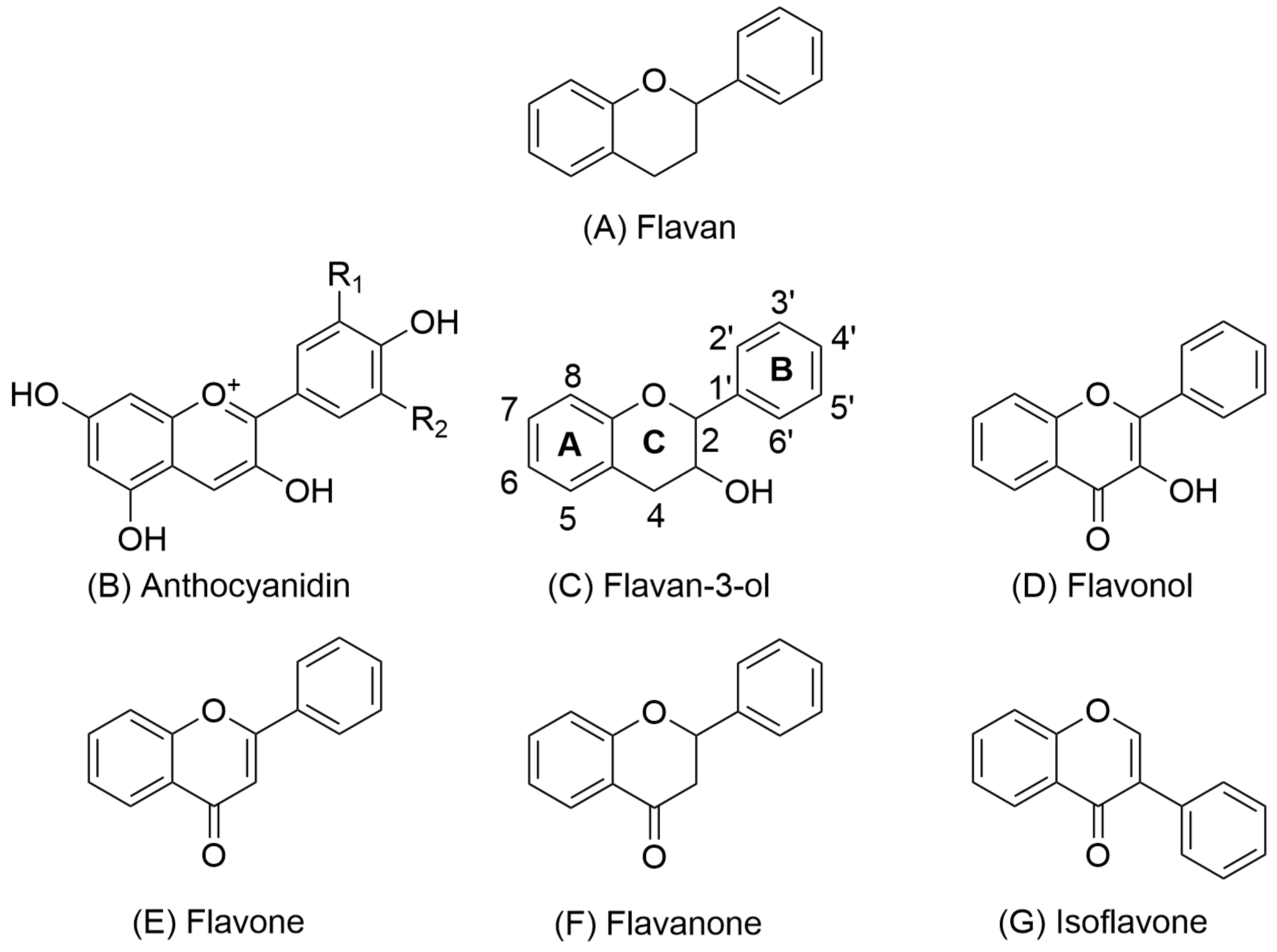
2. Structural Properties
- Molecules of procyanidins have several chiral centers, which dictate stereospecific binding and enzymatic recognition, affecting bioavailability and stability;
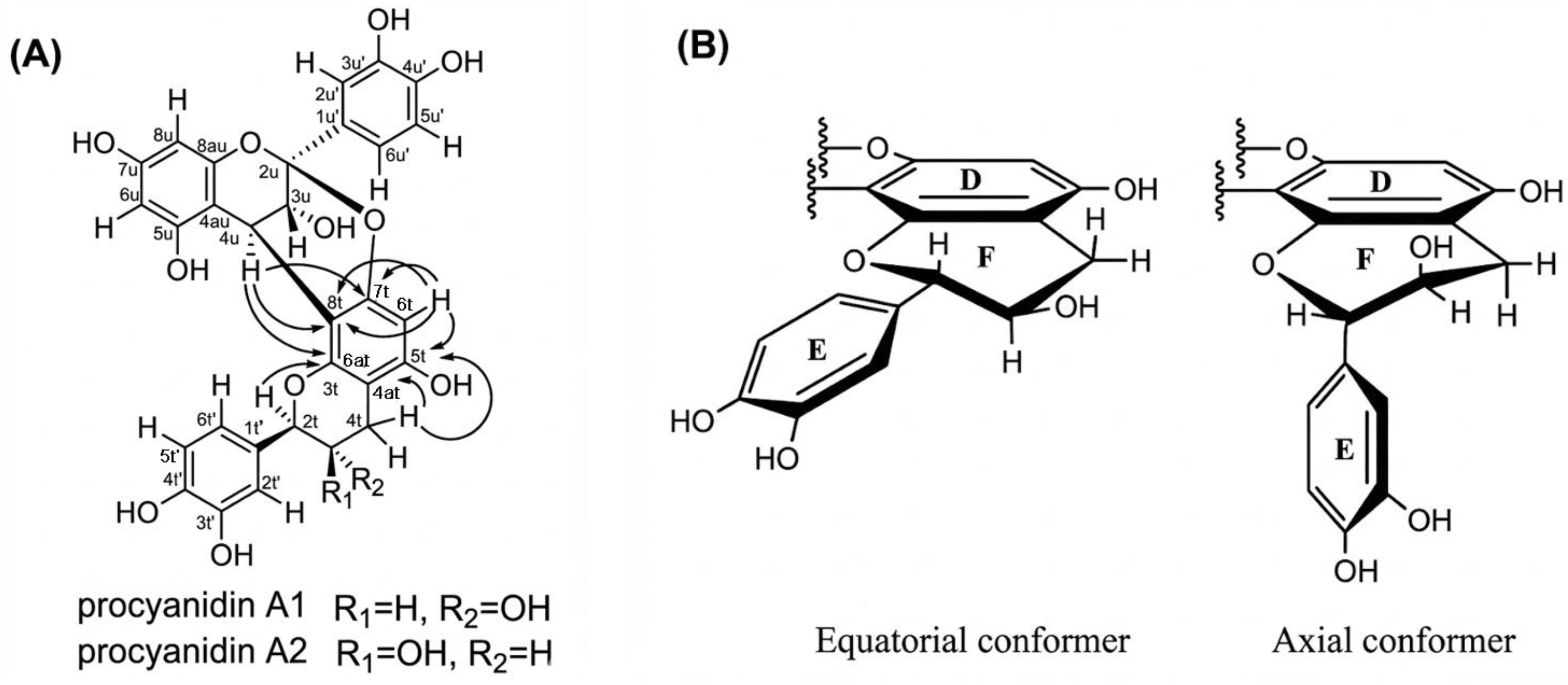
- Heterocyclic ring C of flavanol subunits can adopt different conformations (armchair, semi-chair, boat), altering molecular flexibility and solubility in aqueous environments;
- Ring B can occupy either an axial or an equatorial position relative to ring C, impacting intermolecular hydrogen bonding and self-association tendencies;
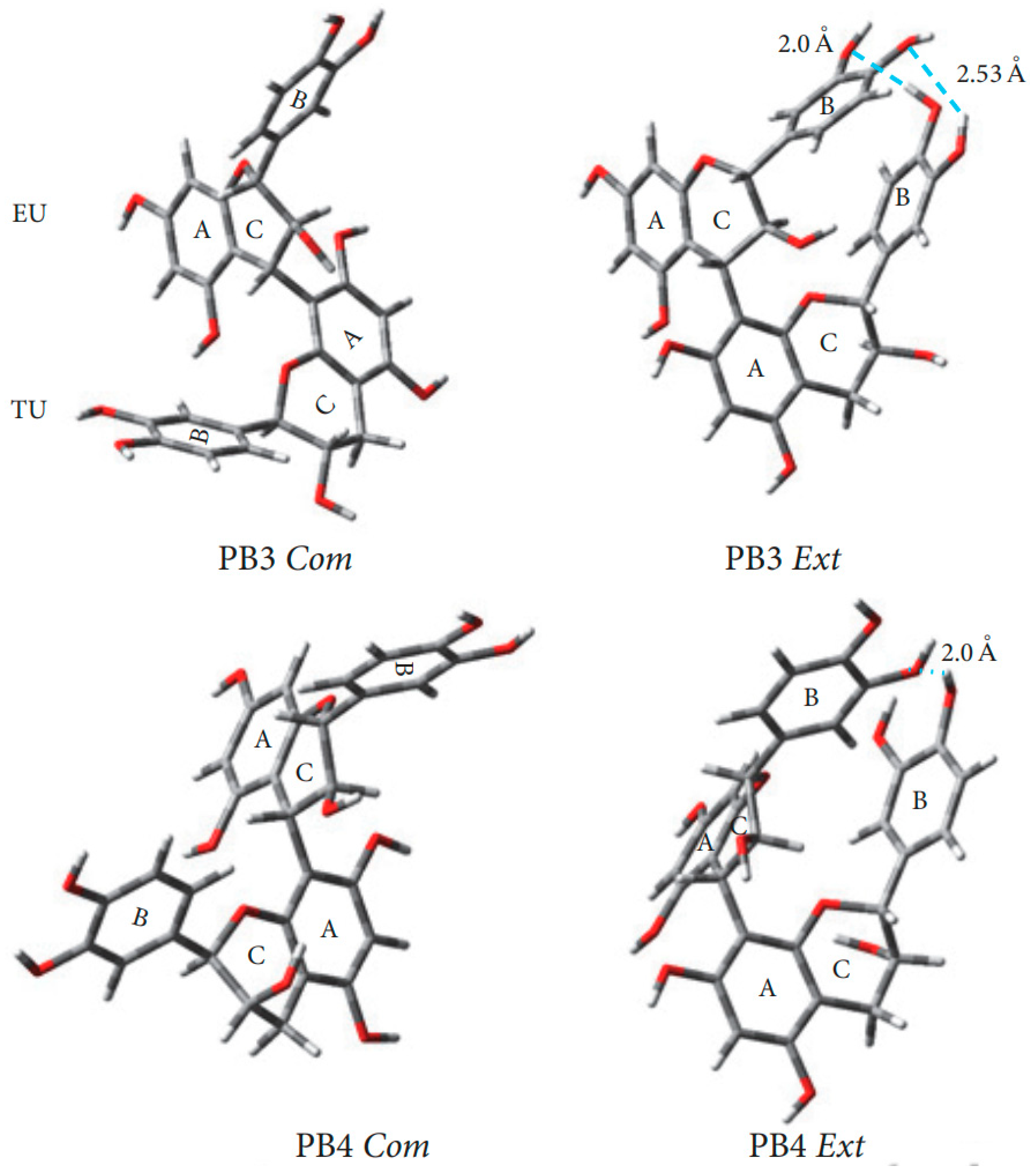
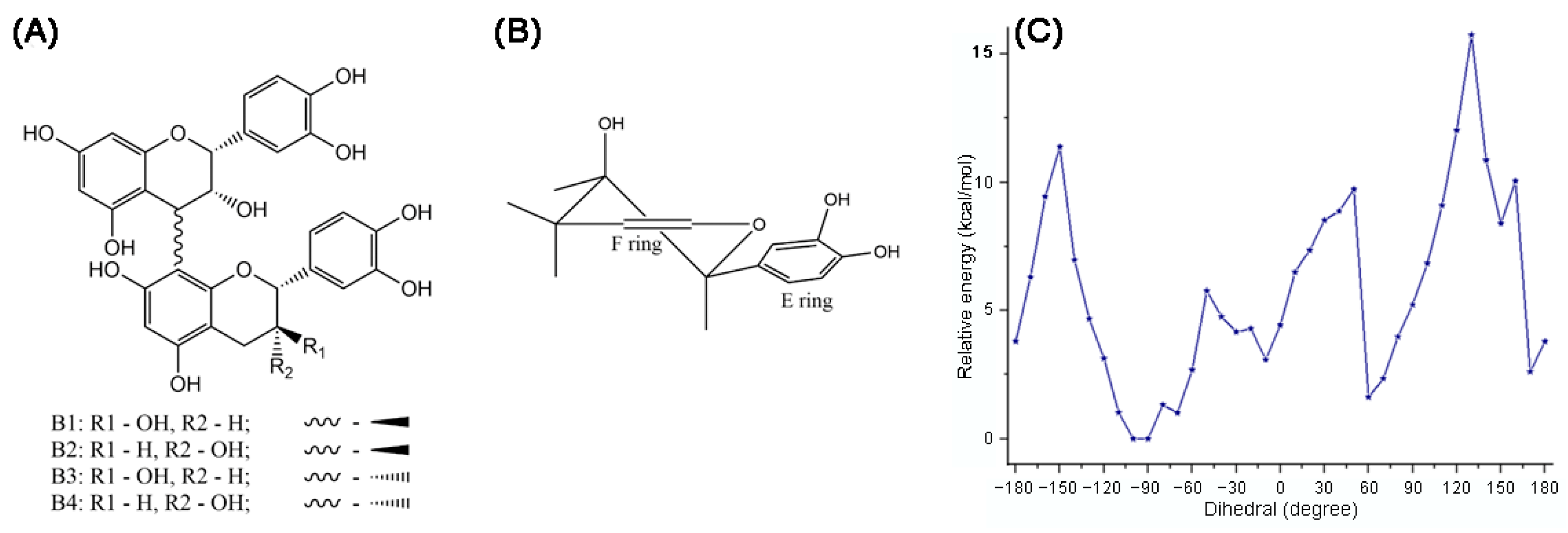
- Procyanidin types B and C can have several rotamer forms around interflavan bonds, influencing aggregate formation and precipitation behavior (Figure 3).

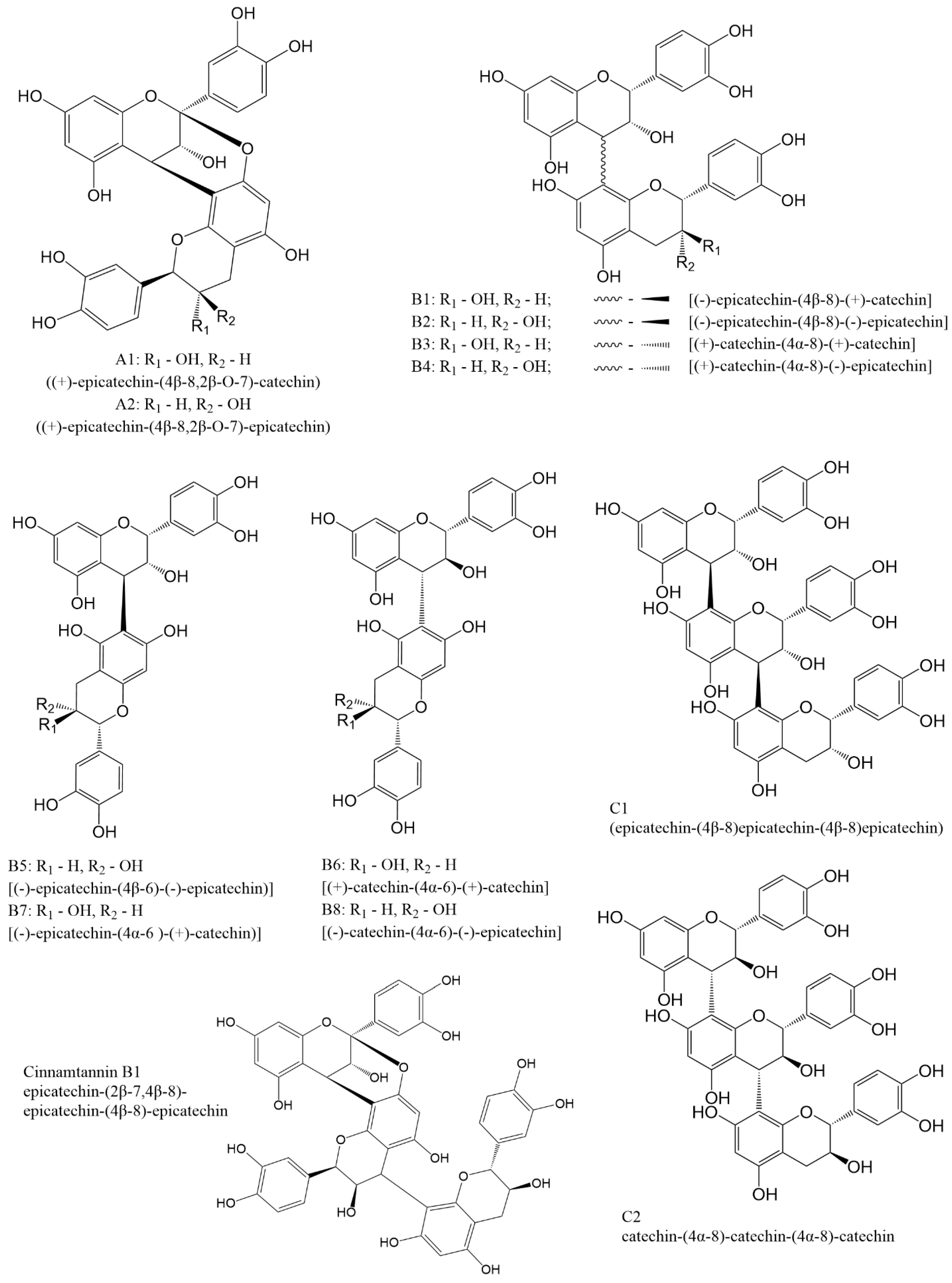
2.1. A-Type Procyanidins
2.2. B-Type Procyanidins
2.3. C-Type Procyanidins
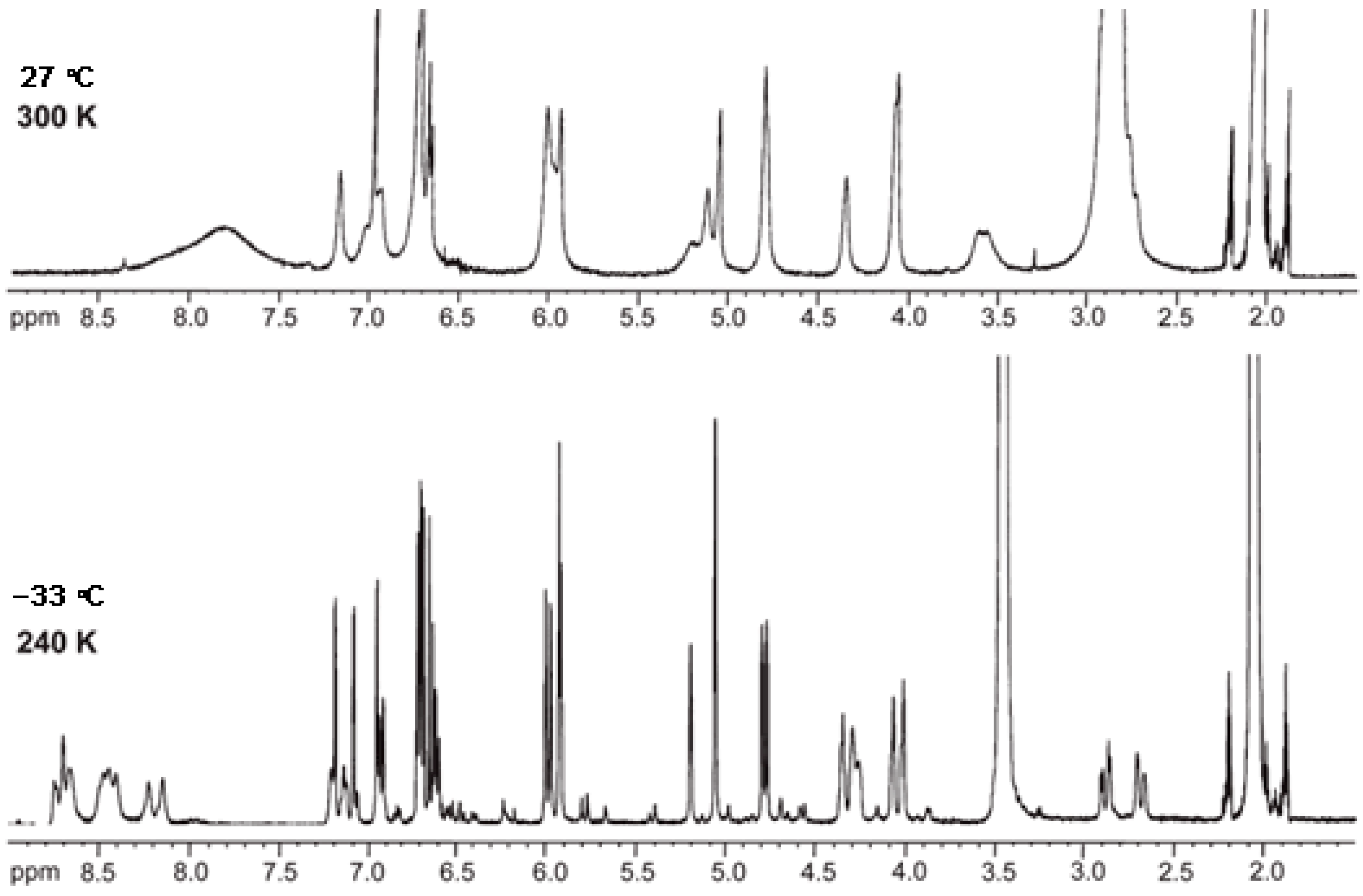
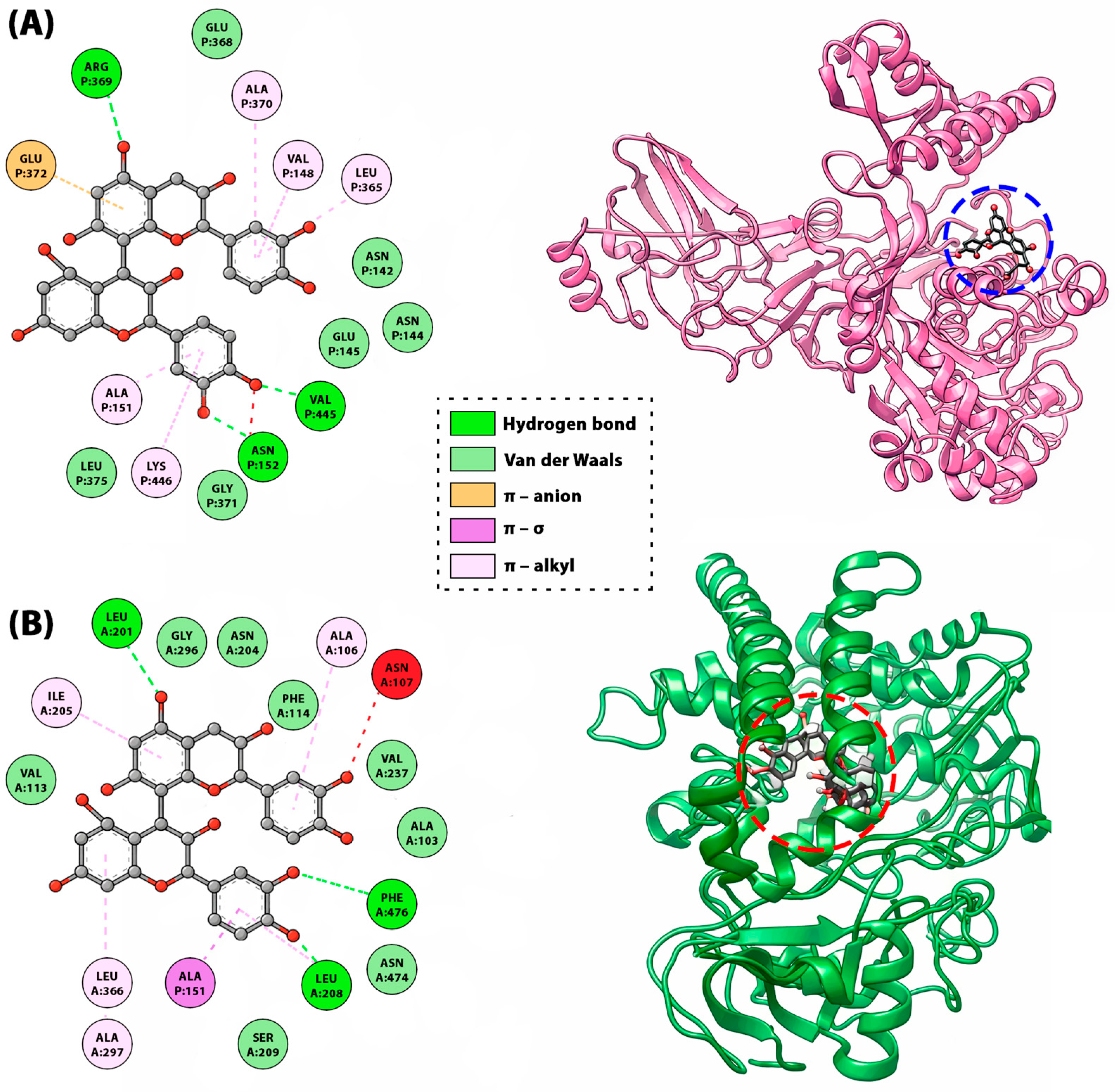
2.4. Conformations and Properties Relationships
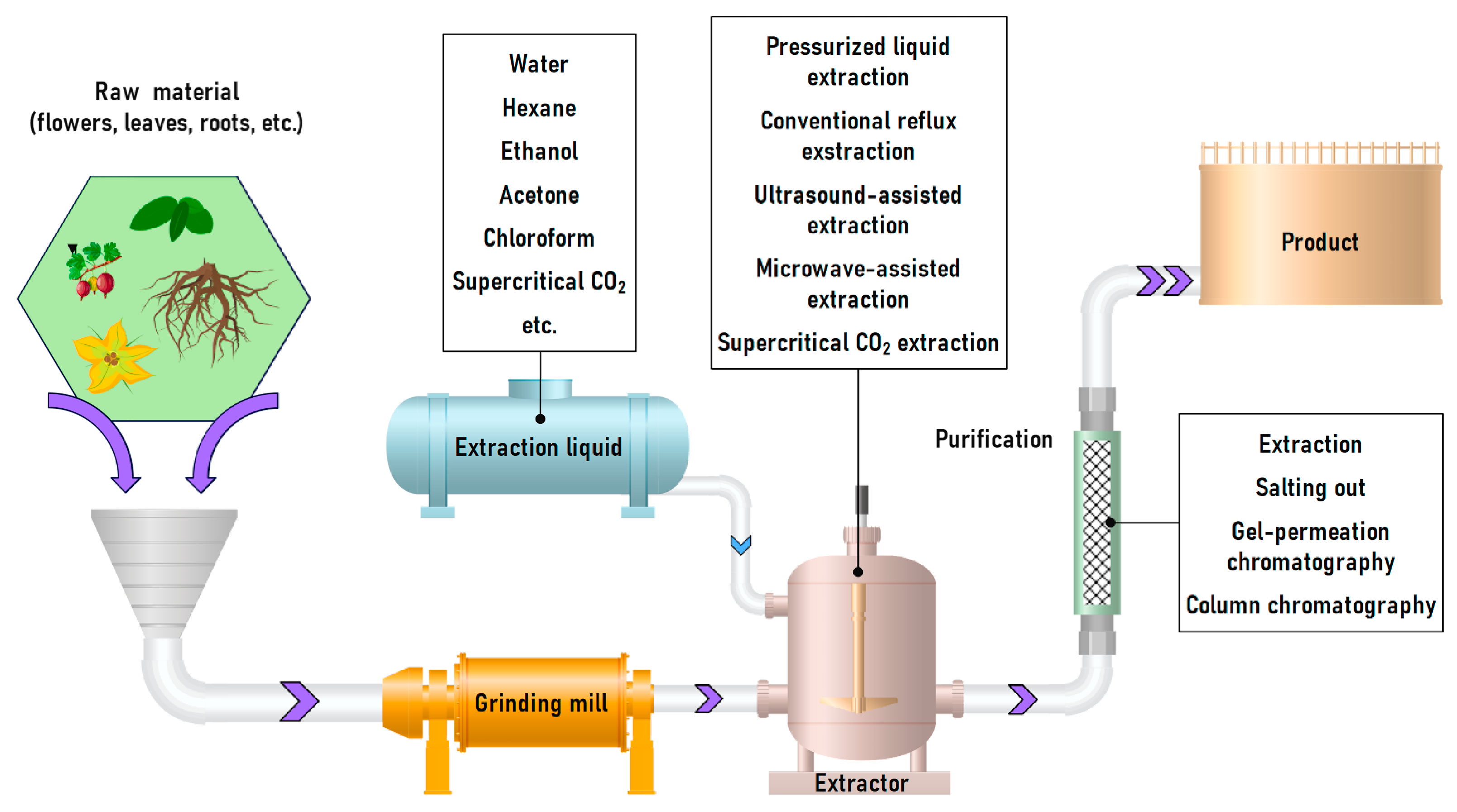
3. Synthesis and Extraction of Procyanidins
3.1. Synthetic Methods
3.2. Isolation from Natural Sources
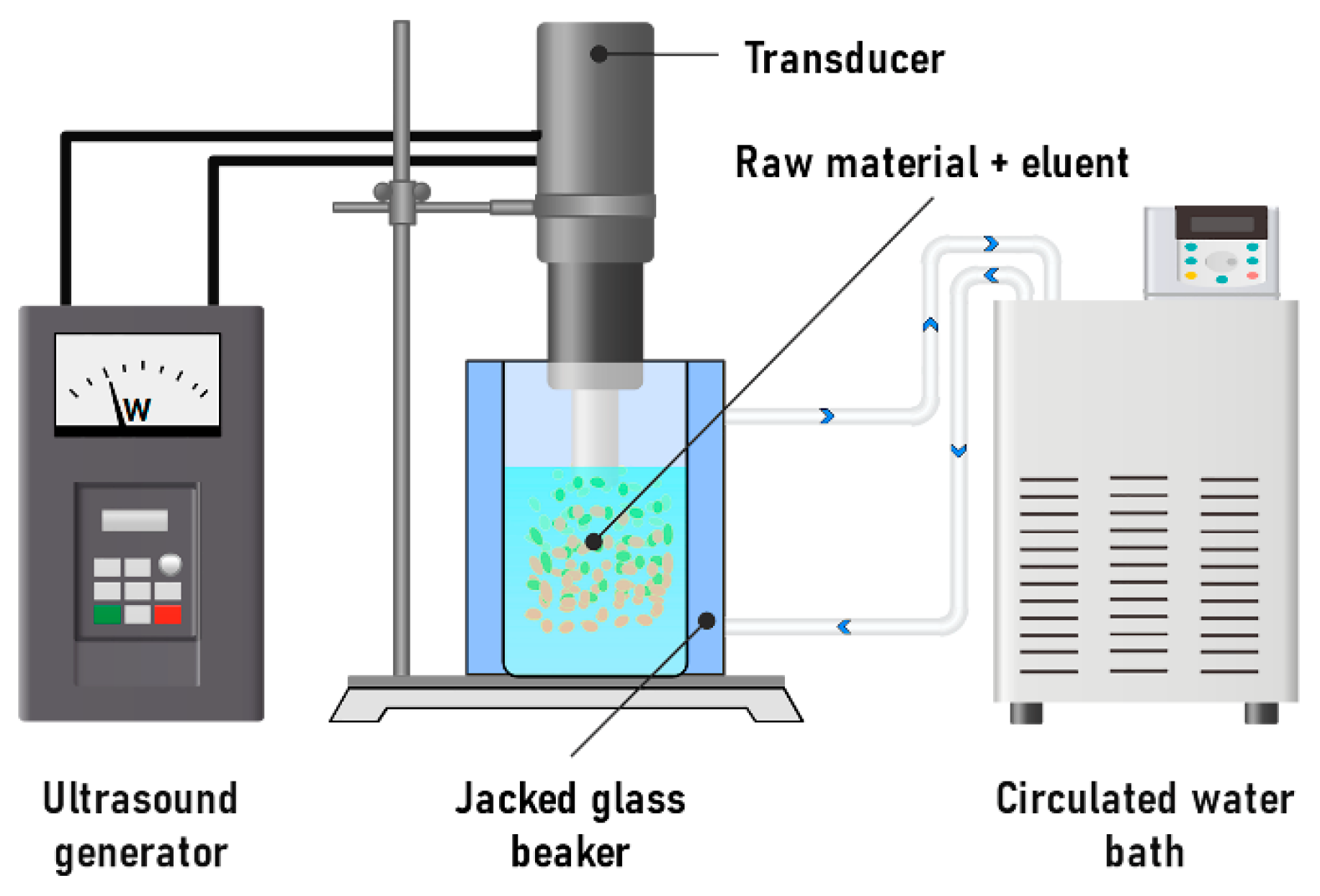
3.2.1. Ultrasonic-Assisted Extraction
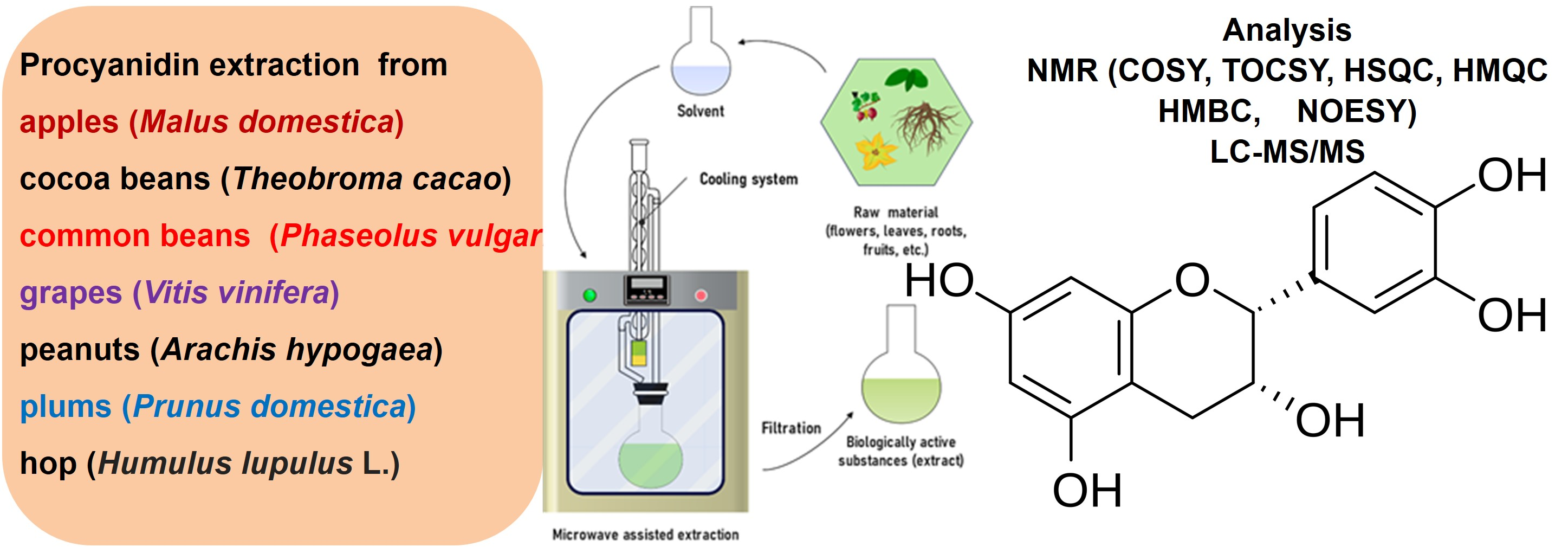
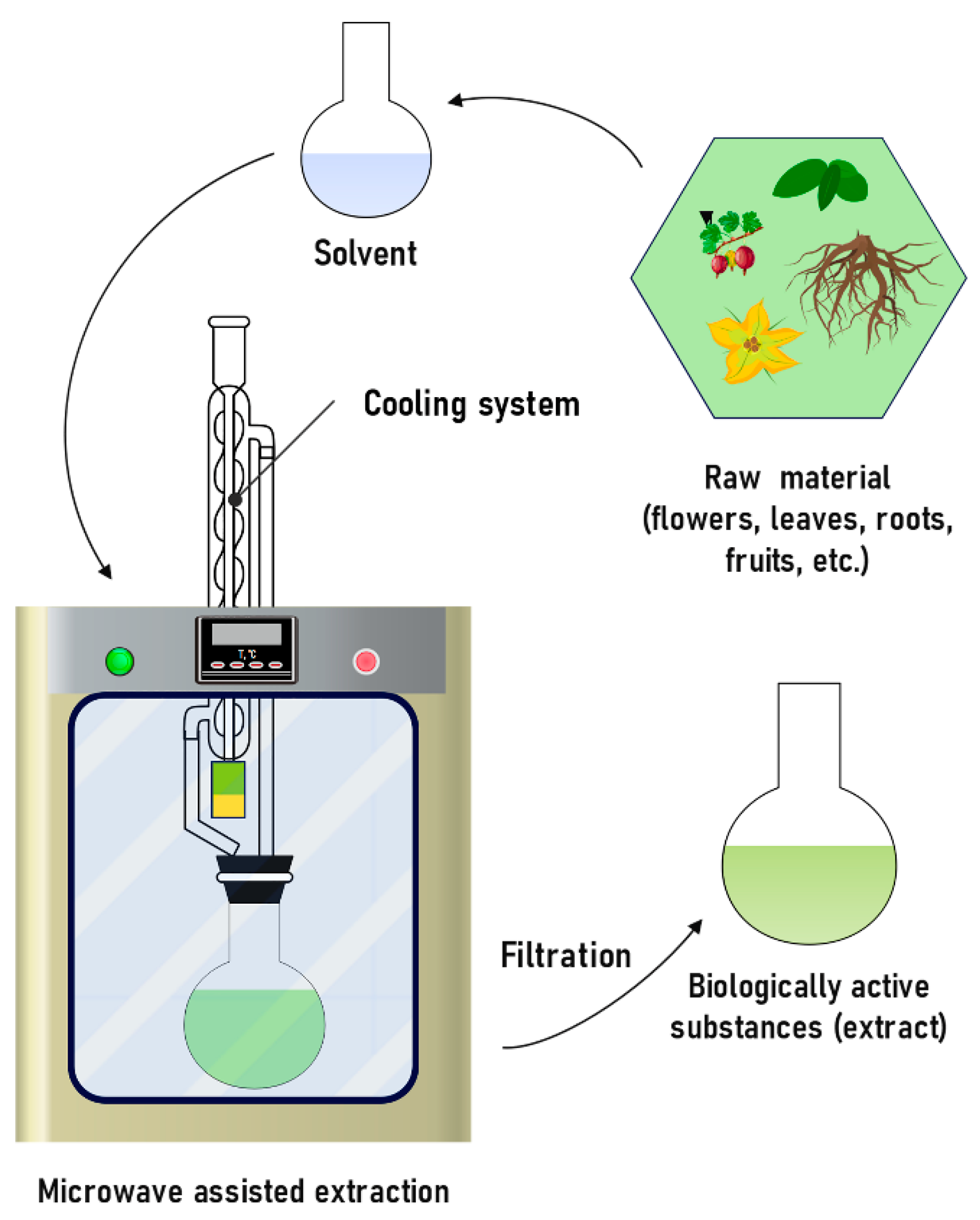
3.2.2. Microwave-Assisted Extraction
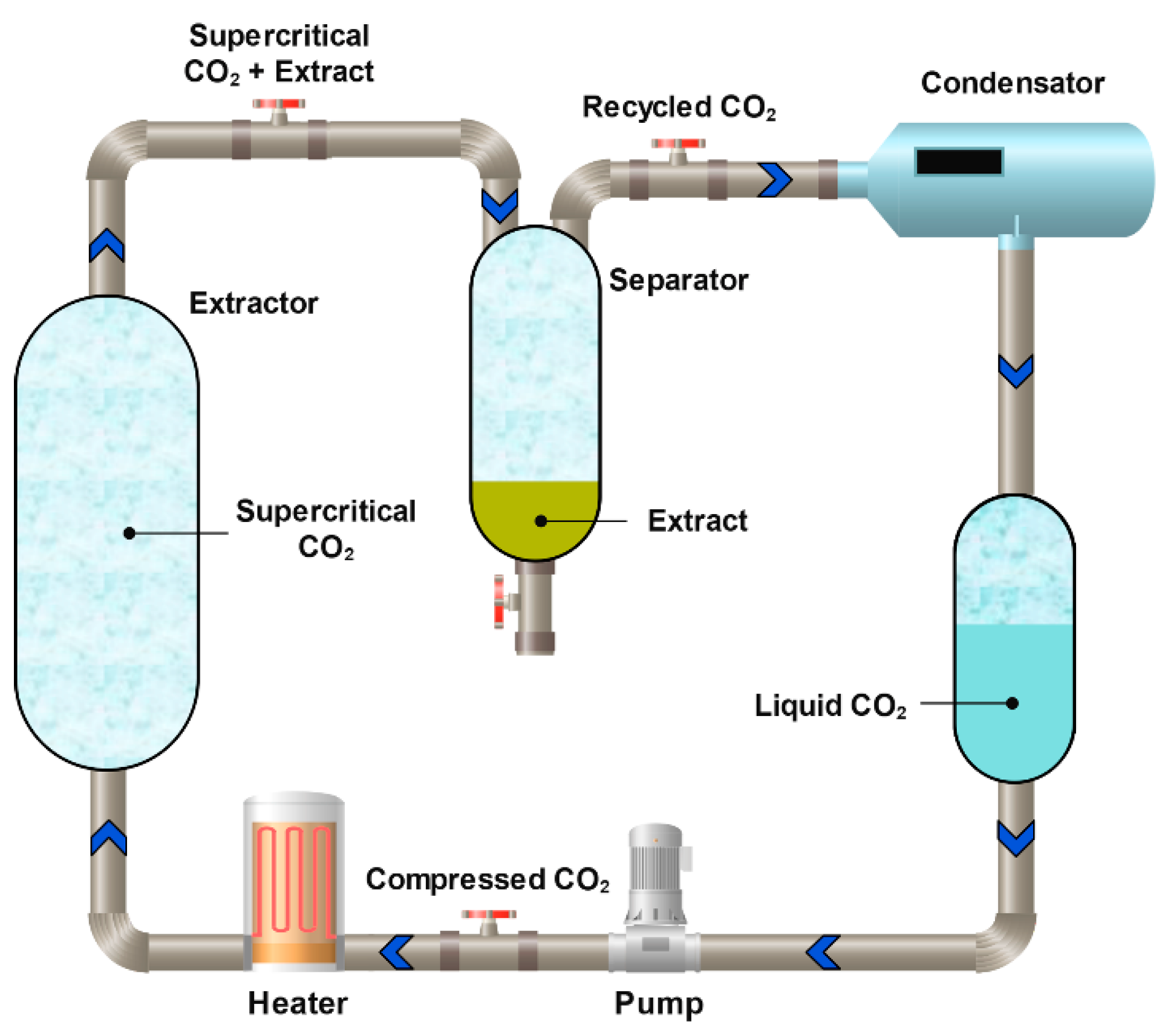
3.2.3. Carbon Dioxide Supercritical Extraction
3.2.4. Pressurized Liquid Extraction
3.2.5. Extraction with Deep Eutectic Solvents
3.2.6. Non-Extractable Procyanidins
3.3. Purification of Extracts Containing Procyanidins
3.4. Patents
3.5. Clinical Studies of Procyanidins
3.6. Metabolism and Bioavailability of Proanthocyanidins
4. Challenges and Future Outlook
- Development of effective methods for deep purification of multicomponent extracts and for isolating individual procyanidins from natural raw materials.
- Development of synthetic regioselective methods for obtaining procyanidins B5, B7 and B8 and other analogs not yet synthesized.
- Development and construction of predictive models that could work both in vitro and in vivo.
Author Contributions
Funding
Data Availability Statement
Conflicts of Interest
References
- Dini, I.; Grumetto, L. Recent Advances in Natural Polyphenol Research. Molecules 2022, 27, 8777. [Google Scholar] [CrossRef] [PubMed]
- Singh, A.K.; Kim, J.Y.; Lee, Y.S. Phenolic Compounds in Active Packaging and Edible Films/Coatings: Natural Bioactive Molecules and Novel Packaging Ingredients. Molecules 2022, 27, 7513. [Google Scholar] [CrossRef] [PubMed]
- Ahmad, A.; Ahmad, V.; Zamzami, M.A.; Chaudhary, H.; Baothman, O.A.; Hosawi, S.; Kashif, M.; Akhtar, M.S.; Khan, M.J. Introduction and Classification of Natural Polyphenols. In Polyphenols-Based Nanotherapeutics for Cancer Management; Tabrez, S., Imran Khan, M., Eds.; Springer: Singapore, 2021; pp. 1–16. ISBN 978-981-16-4935-6. [Google Scholar]
- Levdansky, V.A.; Korol’kova, I.V.; Levdanskiy, A.V.; Kuznetsov, B.N. Isolation and Study of Proanthocyanidins from Bark of Pine Pínus sylvéstris L. JCPRM 2020, 227–233. [Google Scholar] [CrossRef]
- Chang, Q.; Zhu, M.; Zuo, Z.; Chow, M.; Ho, W.K.K. High-Performance Liquid Chromatographic Method for Simultaneous Determination of Hawthorn Active Components in Rat Plasma. J. Chromatogr. B Biomed. Sci. Appl. 2001, 760, 227–235. [Google Scholar] [CrossRef] [PubMed]
- Thiesen, L.C.; Block, L.C.; Zonta, S.L.; Bittencourt, C.M.d.S.; Ferreira, R.A.; Filho, V.C.; Couto, A.G.; Bresolin, T.M.B. Simultaneous Determination of Epicatechin and Procyanidin A2 Markers in Litchi Chinensis Leaves by High-Performance Liquid Chromatography. Rev. Bras. Farmacogn. 2016, 26, 168–173. [Google Scholar] [CrossRef][Green Version]
- Chai, W.-M.; Wei, M.-K.; Wang, R.; Deng, R.-G.; Zou, Z.-R.; Peng, Y.-Y. Avocado Proanthocyanidins as a Source of Tyrosinase Inhibitors: Structure Characterization, Inhibitory Activity, and Mechanism. J. Agric. Food Chem. 2015, 63, 7381–7387. [Google Scholar] [CrossRef]
- Zhao, X.; Duan, C.-Q.; Li, S.-Y.; Zhang, X.-K.; Zhai, H.-Y.; He, F.; Zhao, Y.-P. Non-Enzymatic Browning of Wine Induced by Monomeric Flavan-3-Ols: A Review. Food Chem. 2023, 425, 136420. [Google Scholar] [CrossRef]
- Korpela, B.; Pitkänen, L.; Heinonen, M. Enzymatic Modification of Oat Globulin Enables Covalent Interaction with Procyanidin B2. Food Chem. 2022, 395, 133568. [Google Scholar] [CrossRef]
- McRae, J.M.; Kennedy, J.A. Wine and Grape Tannin Interactions with Salivary Proteins and Their Impact on Astringency: A Review of Current Research. Molecules 2011, 16, 2348–2364. [Google Scholar] [CrossRef]
- Hollands, W.J.; Voorspoels, S.; Jacobs, G.; Aaby, K.; Meisland, A.; Garcia-Villalba, R.; Tomas-Barberan, F.; Piskula, M.K.; Mawson, D.; Vovk, I.; et al. Development, Validation and Evaluation of an Analytical Method for the Determination of Monomeric and Oligomeric Procyanidins in Apple Extracts. J. Chromatogr. A 2017, 1495, 46–56. [Google Scholar] [CrossRef]
- Mecha, E.; Feliciano, R.P.; Rodriguez-Mateos, A.; Silva, S.D.; Figueira, M.E.; Patto, M.C.V.; Bronze, M.R. Human Bioavailability of Phenolic Compounds Found in Common Beans: The Use of High-Resolution MS to Evaluate Inter-Individual Variability. Br. J. Nutr. 2020, 123, 273–292. [Google Scholar] [CrossRef]
- Papillo, V.A.; Locatelli, M.; Travaglia, F.; Bordiga, M.; Garino, C.; Coïsson, J.D.; Arlorio, M. Cocoa Hulls Polyphenols Stabilized by Microencapsulation as Functional Ingredient for Bakery Applications. Food Res. Int. 2019, 115, 511–518. [Google Scholar] [CrossRef]
- Li, L.; Zhang, S.; Cui, Y.; Li, Y.; Luo, L.; Zhou, P.; Sun, B. Preparative Separation of Cacao Bean Procyanidins by High-Speed Counter-Current Chromatography. J. Chromatogr. B 2016, 1036–1037, 10–19. [Google Scholar] [CrossRef] [PubMed]
- Valencia-Hernandez, L.J.; Wong-Paz, J.E.; Ascacio-Valdés, J.A.; Chávez-González, M.L.; Contreras-Esquivel, J.C.; Aguilar, C.N. Procyanidins: From Agro-Industrial Waste to Food as Bioactive Molecules. Foods 2021, 10, 3152. [Google Scholar] [CrossRef] [PubMed]
- Rudra, A.; Arvind, I.; Mehra, R. Polyphenols: Types, Sources and Therapeutic Applications. Int. J. Home Sci. 2021, 7, 69–75. [Google Scholar] [CrossRef]
- Maniglia, B.C.; Rebelatto, E.A.; Andrade, K.S.; Zielinski, A.; de Andrade, C.J. Polyphenols. In Food Bioactives and Health; Galanakis, C.M., Ed.; Springer International Publishing: Cham, Switzerland, 2021; pp. 1–39. ISBN 978-3-030-57469-7. [Google Scholar]
- Levdansky, V.A.; Kondrasenko, A.A.; Levdansky, A.V.; Lutoshkin, M.A. Isolation and Study of Abies Bark Proanthocyanidins. J. Sib. Fed. Univ. Chem. 2019, 12, 604–613. [Google Scholar] [CrossRef]
- Schwitters, B. OPC in Practice: The Hidden Story of Proanthocyanidins, 2nd ed.; Alfa Omega Editrice: Rome, Italy, 1993; ISBN 978-88-86035-13-2. [Google Scholar]
- Sieniawska, E.; Ortan, A.; Fierascu, I.; Fierascu, R.C. Procyanidins in Food. In Handbook of Dietary Phytochemicals; Springer: Singapore, 2021; pp. 1783–1821. ISBN 978-981-15-4148-3. [Google Scholar]
- Gomes, P.W.P.; Gomes, E.R.S.; Carvalho, A.R.V.; Mannochio-Russo, H.; Leão, T.F.; Reis, J.D.E.; de Sarges, M.R.V.; Mardegan, H.A.; das GSR Pamplona, S.; e Silva, C.Y.; et al. Characterization of a Tetrameric Proanthocyanidin in Stryphnodendron pulcherrimum and an Overview on Potential Health Benefits of Condensed Tannins via Interaction with Gut Microbiota. J. Funct. Foods 2023, 109, 105801. [Google Scholar] [CrossRef]
- Sharma, A.; Kumar, A.; Tuli, H.S.; Khare, R.; Sharma, A.K. Flavan-3-Ols Research: From Chemistry to Nanomedicine. In Nanotechnology Horizons in Food Process Engineering; Apple Academic Press: Oakville, ON, Canada, 2023; ISBN 978-1-003-30538-5. [Google Scholar]
- Karonen, M.; Leikas, A.; Loponen, J.; Sinkkonen, J.; Ossipov, V.; Pihlaja, K. Reversed-Phase HPLC-ESI/MS Analysis of Birch Leaf Proanthocyanidins after Their Acidic Degradation in the Presence of Nucleophiles. Phytochem. Anal. 2007, 18, 378–386. [Google Scholar] [CrossRef]
- Rue, E.A.; Rush, M.D.; van Breemen, R.B. Procyanidins: A Comprehensive Review Encompassing Structure Elucidation via Mass Spectrometry. Phytochem. Rev. 2018, 17, 1–16. [Google Scholar] [CrossRef]
- Vazquez-Flores, A.A.; Martinez-Gonzalez, A.I.; Alvarez-Parrilla, E.; Díaz-Sánchez, Á.G.; De La Rosa, L.A.; González-Aguilar, G.A.; Aguilar, C.N. Proanthocyanidins with a Low Degree of Polymerization Are Good Inhibitors of Digestive Enzymes Because of Their Ability to Form Specific Interactions: A Hypothesis. J. Food Sci. 2018, 83, 2895–2902. [Google Scholar] [CrossRef]
- Rauf, A.; Imran, M.; Abu-Izneid, T.; Iahtisham-Ul-Haq; Patel, S.; Pan, X.; Naz, S.; Sanches Silva, A.; Saeed, F.; Rasul Suleria, H.A. Proanthocyanidins: A Comprehensive Review. Biomed. Pharmacother. 2019, 116, 108999. [Google Scholar] [CrossRef] [PubMed]
- Nishizuka, T.; Fujita, Y.; Sato, Y.; Nakano, A.; Kakino, A.; Ohshima, S.; Kanda, T.; Yoshimoto, R.; Sawamura, T. Procyanidins Are Potent Inhibitors of LOX-1: A New Player in the French Paradox. Proc. Jpn. Acad. Ser. B Phys. Biol. Sci. 2011, 87, 104–113. [Google Scholar] [CrossRef] [PubMed]
- Nie, F.; Liu, L.; Cui, J.; Zhao, Y.; Zhang, D.; Zhou, D.; Wu, J.; Li, B.; Wang, T.; Li, M.; et al. Oligomeric Proanthocyanidins: An Updated Review of Their Natural Sources, Synthesis, and Potentials. Antioxidants 2023, 12, 1004. [Google Scholar] [CrossRef]
- Nonaka, G.-I.; Morimoto, S.; Kinjo, J.-E.; Nohara, T.; Nishioka, I. Tannins and Related Compounds. L Structures of Proanthocyanidin A1 and Related Compounds. Chem. Pharm. Bull. 1987, 35, 149–155. [Google Scholar] [CrossRef]
- Nonaka, G.; Morimoto, S.; Nishioka, I. Tannins and Related Compounds. Part 13. Isolation and Structures of Trimeric, Tetrameric, and Pentameric Proanthicyanidins from Cinnamon. J. Chem. Soc. Perkin Trans. 1 1983, 2139–2145. [CrossRef]
- Sprygin, V.G.; Kushnerova, N.F. A Method for Evaluation and Standardization of Oligomeric Proanthocyanidin Complexes Isolated from Various Raw Plant Materials. Pharm. Chem. J. 2002, 36, 139–143. [Google Scholar] [CrossRef]
- Kim, S.H.; Kang, K.W.; Kim, K.W.; Kim, N.D. Procyanidins in Crataegus Extract Evoke Endothelium-Dependent Vasorelaxation in Rat Aorta. Life Sci. 2000, 67, 121–131. [Google Scholar] [CrossRef]
- Terra, X.; Palozza, P.; Fernandez-Larrea, J.; Ardevol, A.; Blade, C.; Pujadas, G.; Salvado, J.; Arola, L.; Blay, M.T. Procyanidin Dimer B1 and Trimer C1 Impair Inflammatory Response Signalling in Human Monocytes. Free Radic. Res. 2011, 45, 611–619. [Google Scholar] [CrossRef]
- Byun, E.-B.; Sung, N.-Y.; Byun, E.-H.; Song, D.-S.; Kim, J.-K.; Park, J.-H.; Song, B.-S.; Park, S.-H.; Lee, J.-W.; Byun, M.-W.; et al. The Procyanidin Trimer C1 Inhibits LPS-Induced MAPK and NF-κB Signaling through TLR4 in Macrophages. Int. Immunopharmacol. 2013, 15, 450–456. [Google Scholar] [CrossRef]
- Siomek, A. NF-κB Signaling Pathway and Free Radical Impact. Acta Biochim. Pol. 2012, 59, 323–332. [Google Scholar] [CrossRef]
- Sung, N.-Y.; Yang, M.-S.; Song, D.-S.; Byun, E.-B.; Kim, J.-K.; Park, J.-H.; Song, B.-S.; Lee, J.-W.; Park, S.-H.; Park, H.-J.; et al. The Procyanidin Trimer C1 Induces Macrophage Activation via NF-κB and MAPK Pathways, Leading to Th1 Polarization in Murine Splenocytes. Eur. J. Pharmacol. 2013, 714, 218–228. [Google Scholar] [CrossRef] [PubMed]
- Xu, Q.; Fu, Q.; Li, Z.; Liu, H.; Wang, Y.; Lin, X.; He, R.; Zhang, X.; Ju, Z.; Campisi, J.; et al. The Flavonoid Procyanidin C1 Has Senotherapeutic Activity and Increases Lifespan in Mice. Nat. Metab. 2021, 3, 1706–1726. [Google Scholar] [CrossRef] [PubMed]
- Gao, W.; Jin, Y.; Hao, J.; Huang, S.; Wang, D.; Quan, F.; Ren, W.; Zhang, J.; Zhang, M.; Yu, X. Procyanidin B1 Promotes in Vitro Maturation of Pig Oocytes by Reducing Oxidative Stress. Mol. Reprod. Dev. 2021, 88, 55–66. [Google Scholar] [CrossRef] [PubMed]
- Ferni, C.A.; Alverina, C.; Mas’ud, A.F. A Systematic Review of Procyanidins: Updates on Current Bioactivities and Potential Benefits in Wound Healing. Int. J. Med. Sci. Clin. Res. Stud. 2022, 2, 718–723. [Google Scholar] [CrossRef]
- González-Quilen, C.; Rodríguez-Gallego, E.; Beltrán-Debón, R.; Pinent, M.; Ardévol, A.; Blay, M.T.; Terra, X. Health-Promoting Properties of Proanthocyanidins for Intestinal Dysfunction. Nutrients 2020, 12, 130. [Google Scholar] [CrossRef]
- D’Andrea, G. Pycnogenol: A Blend of Procyanidins with Multifaceted Therapeutic Applications? Fitoterapia 2010, 81, 724–736. [Google Scholar] [CrossRef]
- Rippin; Sharma, A.K.; Beniwal, V. Biosynthesis and Medicinal Applications of Proanthocyanidins: A Recent Update. Biocatal. Agric. Biotechnol. 2022, 45, 102500. [Google Scholar] [CrossRef]
- Crozier, A.; Jaganath, I.B.; Clifford, M.N. Dietary Phenolics: Chemistry, Bioavailability and Effects on Health. Nat. Prod. Rep. 2009, 26, 1001. [Google Scholar] [CrossRef]
- Shi, Y.; Xing, Y.; Deng, S.; Zhao, B.; Fu, Y.; Liu, Z. Synthesis of Proanthocyanidins-Functionalized Fe3O4 Magnetic Nanoparticles with High Solubility for Removal of Heavy-Metal Ions. Chem. Phys. Lett. 2020, 753, 137600. [Google Scholar] [CrossRef]
- Hou, K.; Bao, M.; Xin, C.; Wang, L.; Zhang, H.; Zhao, H.; Wang, Z. Green Synthesis of Gold Nanoparticles Coated Doxorubicin Liposomes Using Procyanidins for Light–Controlled Drug Release. Adv. Powder Technol. 2020, 31, 3640–3649. [Google Scholar] [CrossRef]
- Deng, S.; Zhao, B.; Xing, Y.; Shi, Y.; Fu, Y.; Liu, Z. Green Synthesis of Proanthocyanidins-Functionalized Au/Ag Bimetallic Nanoparticles. Green Chem. Lett. Rev. 2021, 14, 45–50. [Google Scholar] [CrossRef]
- Biao, L.; Tan, S.; Zhang, X.; Gao, J.; Liu, Z.; Fu, Y. Synthesis and Characterization of Proanthocyanidins-Functionalized Ag Nanoparticles. Colloids Surf. B Biointerfaces 2018, 169, 438–443. [Google Scholar] [CrossRef] [PubMed]
- Ding, Z.; Mo, M.; Zhang, K.; Bi, Y.; Kong, F. Preparation, Characterization and Biological Activity of Proanthocyanidin-Chitosan Nanoparticles. Int. J. Biol. Macromol. 2021, 188, 43–51. [Google Scholar] [CrossRef]
- Hasanzadeh, E.; Mahmoodi, N.; Basiri, A.; Esmaeili Ranjbar, F.; Hassannejad, Z.; Ebrahimi-Barough, S.; Azami, M.; Ai, J.; Rahimi-Movaghar, V. Proanthocyanidin as a Crosslinking Agent for Fibrin, Collagen Hydrogels and Their Composites with Decellularized Wharton’s-Jelly-Extract for Tissue Engineering Applications. J. Bioact. Compat. Polym. 2020, 35, 554–571. [Google Scholar] [CrossRef]
- Wang, X.; Zhai, W.; Wu, C.; Ma, B.; Zhang, J.; Zhang, H.; Zhu, Z.; Chang, J. Procyanidins-Crosslinked Aortic Elastin Scaffolds with Distinctive Anti-Calcification and Biological Properties. Acta Biomater. 2015, 16, 81–93. [Google Scholar] [CrossRef]
- Borges-Vilches, J.; Figueroa, T.; Guajardo, S.; Aguayo, C.; Fernández, K. Improved Hemocompatibility for Gelatin-Graphene Oxide Composite Aerogels Reinforced with Proanthocyanidins for Wound Dressing Applications. Colloids Surf. B Biointerfaces 2021, 206, 111941. [Google Scholar] [CrossRef]
- Zhang, L.; Wang, Y.; Li, D.; Ho, C.-T.; Li, J.; Wan, X. The Absorption, Distribution, Metabolism and Excretion of Procyanidins. Food Funct. 2016, 7, 1273–1281. [Google Scholar] [CrossRef]
- Hatano, T.; Hemingway, R.W. Conformational Isomerism of Phenolic Procyanidins: Preferred Conformations in Organic Solvents and Water. J. Chem. Soc. Perkin Trans. 2 1997, 1035–1044. [Google Scholar] [CrossRef]
- Tarascou, I.; Barathieu, K.; Simon, C.; Ducasse, M.-A.; André, Y.; Fouquet, E.; Dufourc, E.J.; de Freitas, V.; Laguerre, M.; Pianet, I. A 3D Structural and Conformational Study of Procyanidin Dimers in Water and Hydro-Alcoholic Media as Viewed by NMR and Molecular Modeling. Magn. Reson. Chem. 2006, 44, 868–880. [Google Scholar] [CrossRef]
- Kind, T.; Fiehn, O. Advances in Structure Elucidation of Small Molecules Using Mass Spectrometry. Bioanal. Rev. 2010, 2, 23–60. [Google Scholar] [CrossRef]
- Silva Elipe, M.V. Advantages and Disadvantages of Nuclear Magnetic Resonance Spectroscopy as a Hyphenated Technique. Anal. Chim. Acta 2003, 497, 1–25. [Google Scholar] [CrossRef]
- Monagas, M.; Quintanilla-López, J.E.; Gómez-Cordovés, C.; Bartolomé, B.; Lebrón-Aguilar, R. MALDI-TOF MS Analysis of Plant Proanthocyanidins. J. Pharm. Biomed. Anal. 2010, 51, 358–372. [Google Scholar] [CrossRef] [PubMed]
- Rush, M.D.; Rue, E.A.; Wong, A.; Kowalski, P.; Glinski, J.A.; Van Breemen, R.B. Rapid Determination of Procyanidins Using MALDI-ToF/ToF Mass Spectrometry. J. Agric. Food Chem. 2018, 66, 11355–11361. [Google Scholar] [CrossRef] [PubMed]
- Vivas, N.; Glories, Y.; Pianet, I.; Barbe, B.; Laguerre, M. A Complete Structural and Conformational Investigation of Procyanidin A2 Dimer. Tetrahedron Lett. 1996, 37, 2015–2018. [Google Scholar] [CrossRef]
- Thuy, P.T.; Quan, P.M.; Duc, D.X.; Son, N.T. The Antioxidative Potential of Procyanidin B1: DFT (Density Functional Theory) and Docking Approaches. J. Mol. Model 2022, 28, 356. [Google Scholar] [CrossRef]
- Duddeck, H.; Dietrich, W.; Tóth, G. Structure Elucidation by Modern NMR: A Workbook; Steinkopff: Heidelberg, Germany, 1998; ISBN 978-3-7985-1111-8. [Google Scholar]
- Esatbeyoglu, T.; Jaschok-Kentner, B.; Wray, V.; Winterhalter, P. Structure Elucidation of Procyanidin Oligomers by Low-Temperature 1H NMR Spectroscopy. J. Agric. Food Chem. 2011, 59, 62–69. [Google Scholar] [CrossRef]
- Slade, D.; Ferreira, D.; Marais, J.P.J. Circular Dichroism, a Powerful Tool for the Assessment of Absolute Configuration of Flavonoids. Phytochemistry 2005, 66, 2177–2215. [Google Scholar] [CrossRef]
- Nam, J.-W.; Phansalkar, R.S.; Lankin, D.C.; McAlpine, J.B.; Leme-Kraus, A.A.; Vidal, C.M.P.; Gan, L.-S.; Bedran-Russo, A.; Chen, S.-N.; Pauli, G.F. Absolute Configuration of Native Oligomeric Proanthocyanidins with Dentin Biomodification Potency. J. Org. Chem. 2017, 82, 1316–1329. [Google Scholar] [CrossRef]
- Phansalkar, R.S.; Nam, J.-W.; Leme-Kraus, A.A.; Gan, L.-S.; Zhou, B.; McAlpine, J.B.; Chen, S.-N.; Bedran-Russo, A.K.; Pauli, G.F. Proanthocyanidin Dimers and Trimers from Vitis Vinifera Provide Diverse Structural Motifs for the Evaluation of Dentin Biomodification. J. Nat. Prod. 2019, 82, 2387–2399. [Google Scholar] [CrossRef]
- Nam, J.-W.; Phansalkar, R.S.; Lankin, D.C.; Bisson, J.; McAlpine, J.B.; Leme, A.A.; Vidal, C.M.P.; Ramirez, B.; Niemitz, M.; Bedran-Russo, A.; et al. Subtle Chemical Shifts Explain the NMR Fingerprints of Oligomeric Proanthocyanidins with High Dentin Biomodification Potency. J. Org. Chem. 2015, 80, 7495–7507. [Google Scholar] [CrossRef]
- Ding, Y.; Morozova, K.; Scampicchio, M.; Ferrentino, G. Non-Extractable Polyphenols from Food By-Products: Current Knowledge on Recovery, Characterisation, and Potential Applications. Processes 2020, 8, 925. [Google Scholar] [CrossRef]
- Carboni Martins, C.; Rodrigues, R.C.; Domeneghini Mercali, G.; Rodrigues, E. New Insights into Non-Extractable Phenolic Compounds Analysis. Food Res. Int. 2022, 157, 111487. [Google Scholar] [CrossRef] [PubMed]
- Amaya-Cruz, D.; Peréz-Ramírez, I.F.; Pérez-Jiménez, J.; Nava, G.M.; Reynoso-Camacho, R. Comparison of the Bioactive Potential of Roselle (Hibiscus sabdariffa L.) Calyx and Its by-Product: Phenolic Characterization by UPLC-QTOF MSE and Their Anti-Obesity Effect in Vivo. Food Res. Int. 2019, 126, 108589. [Google Scholar] [CrossRef] [PubMed]
- White, B.L.; Howard, L.R.; Prior, R.L. Release of Bound Procyanidins from Cranberry Pomace by Alkaline Hydrolysis. J. Agric. Food Chem. 2010, 58, 7572–7579. [Google Scholar] [CrossRef]
- White, B.L.; Howard, L.R.; Prior, R.L. Proximate and Polyphenolic Characterization of Cranberry Pomace. J. Agric. Food Chem. 2010, 58, 4030–4036. [Google Scholar] [CrossRef]
- Chai, W.; Wu, Y.; Li, X.; Zeng, S.; Cheng, Y.; Jiang, W.; Pan, Q.; Xia, X.; Chen, G. Relationships between Degree of Polymerization and Activities: A Study on Condensed Tannins from the Bark of Ficus altissima. Int. J. Biol. Macromol. 2024, 274, 133306. [Google Scholar] [CrossRef]
- Sun, W.; Miller, J.M. Tandem Mass Spectrometry of the B-Type Procyanidins in Wine and B-Type Dehydrodicatechins in an Autoxidation Mixture of (+)-Catechin and (−)-Epicatechin. J. Mass Spectrom. 2003, 38, 438–446. [Google Scholar] [CrossRef]
- Qi, Y.; Zhang, H.; Wu, G.; Zhang, H.; Gu, L.; Wang, L.; Qian, H.; Qi, X. Mitigation Effects of Proanthocyanidins with Different Structures on Acrylamide Formation in Chemical and Fried Potato Crisp Models. Food Chem. 2018, 250, 98–104. [Google Scholar] [CrossRef]
- Botha, J.J.; Young, D.A.; Ferreira, D.; Roux, D.G. Synthesis of Condensed Tannins. Part 1. Stereoselective and Stereospecific Syntheses of Optically Pure 4-Arylflavan-3-Ols, and Assessment of Their Absolute Stereochemistry at C-4 by Means of Circular Dichroism. J. Chem. Soc. Perkin Trans. 1 1981, 1213–1219. [Google Scholar] [CrossRef]
- Kolodziej, H. 1H NMR Spectral Studies of Procyanidin Derivatives: Diagnostic 1H NMR Parameters Applicable to the Structural Elucidation of Oligomeric Procyanidins. In Plant Polyphenols: Synthesis, Properties, Significance; Hemingway, R.W., Laks, P.E., Eds.; Springer: Boston, MA, USA, 1992; pp. 295–319. ISBN 978-1-4615-3476-1. [Google Scholar]
- Kolodziej, H.; Sakar, M.K.; Burger, J.F.W.; Engelshowe, R.; Ferreira, D. A-Type Proanthocyanidins from Prunus spinosa. Phytochemistry 1991, 30, 2041–2047. [Google Scholar] [CrossRef]
- Fischer, A.; Keller, H.; Droste, J.; Gök, R.; Esatbeyoglu, T. Structure Elucidation and Antioxidant Activity of the Radical-Induced Oxidation Products Obtained from Procyanidins B1 to B4. Curr. Res. Food Sci. 2025, 11, 101160. [Google Scholar] [CrossRef]
- Barrett, M.W.; Klyne, W.; Scopes, P.M.; Fletcher, A.C.; Porter, L.J.; Haslam, E. Plant Proanthocyanidins. Part 6. Chiroptical Studies. Part 95. Circular Dichroism of Procyanidins. J. Chem. Soc. Perkin Trans. 1 1979, 2375–2377. [CrossRef]
- Dudek, M.K.; Gliński, V.B.; Davey, M.H.; Sliva, D.; Kaźmierski, S.; Gliński, J.A. Trimeric and Tetrameric A-Type Procyanidins from Peanut Skins. J. Nat. Prod. 2017, 80, 415–426. [Google Scholar] [CrossRef] [PubMed]
- Roux, E.L.; Doco, T.; Sarni-Manchado, P.; Lozano, Y.; Cheynier, V. A-Type Proanthocyanidins from Pericarp of Litchi chinensis. Phytochemistry 1998, 48, 1251–1258. [Google Scholar] [CrossRef]
- Mendoza-Wilson, A.M.; Carmelo-Luna, F.J.; Astiazarán-García, H.; Pacheco-Moreno, B.I.; Anduro-Corona, I.; Rascón-Durán, M.L. DFT Study of the Physicochemical Properties of A- and B-Type Procyanidin Oligomers. J. Theor. Comput. Chem. 2016, 15, 1650069. [Google Scholar] [CrossRef]
- Tarascou, I.; Ducasse, M.-A.; Dufourc, E.J.; Moskau, D.; Fouquet, E.; Laguerre, M.; Pianet, I. Structural and Conformational Analysis of Two Native Procyanidin Trimers. Magn. Reson. Chem. 2007, 45, 157–166. [Google Scholar] [CrossRef]
- Bae, Y.; Burger, J.F.W.; Steynberg, J.P.; Ferreira, D.; Hemingway, R.W. Flavan and Procyanidin Glycosides from the Bark of Blackjack Oak. Phytochemistry 1994, 35, 473–478. [Google Scholar] [CrossRef]
- Mendoza-Wilson, A.M.; Balandrán-Quintana, R.R. Effect of Constituent Units, Type of Interflavan Bond, and Conformation on the Antioxidant Properties of Procyanidin Dimers: A Computational Outlook. J. Chem. 2017, 2017, 1–11. [Google Scholar] [CrossRef]
- Giubertoni, G.; Sofronov, O.O.; Bakker, H.J. Effect of Intramolecular Hydrogen-Bond Formation on the Molecular Conformation of Amino Acids. Commun. Chem. 2020, 3, 84. [Google Scholar] [CrossRef]
- Alam, M.Z.; Okonkwo, C.E.; Cachaneski-Lopes, J.P.; Graeff, C.F.O.; Batagin-Neto, A.; Tariq, S.; Varghese, S.; O’Connor, M.J.; Albadri, A.E.; Webber, J.B.W.; et al. Date Fruit Melanin Is Primarily Based on (−)-Epicatechin Proanthocyanidin Oligomers. Sci. Rep. 2024, 14, 4863. [Google Scholar] [CrossRef]
- Cala, O.; Pinaud, N.; Simon, C.; Fouquet, E.; Laguerre, M.; Dufourc, E.J.; Pianet, I. NMR and Molecular Modeling of Wine Tannins Binding to Saliva Proteins: Revisiting Astringency from Molecular and Colloidal Prospects. FASEB J. 2010, 24, 4281–4290. [Google Scholar] [CrossRef] [PubMed]
- Watson, A.; Wallis, C.; Franz, A.H. NMR Solution Structures and MD-Simulation of Procyanidin B1, B2, and C1. Arkivoc 2018, 2018, 279–301. [Google Scholar] [CrossRef]
- Balas, L.; Vercauteren, J.; Laguerre, M. 2D NMR Structure Elucidation of Proanthocyanidins: The Special Case of the Catechin-(4α-8)-Catechin-(4α-8)-Catechin Trimer. Magn. Reson. Chem. 1995, 33, 85–94. [Google Scholar] [CrossRef]
- Fletcher, A.C.; Porter, L.J.; Haslam, E.; Gupta, R.K. Plant Proanthocyanidins. Part 3. Conformational and Configurational Studies of Natural Procyanidins. J. Chem. Soc. Perkin Trans. 1 1977, 1628. [Google Scholar] [CrossRef]
- Foo, L.Y.; Porter, L.J. Synthesis and Conformation of Procyanidin Diastereoisomers. J. Chem. Soc. Perkin Trans. 1 1983, 1535. [Google Scholar] [CrossRef]
- Takanashi, K.; Suda, M.; Matsumoto, K.; Ishihara, C.; Toda, K.; Kawaguchi, K.; Senga, S.; Kobayashi, N.; Ichikawa, M.; Katoh, M.; et al. Epicatechin Oligomers Longer than Trimers Have Anti-Cancer Activities, but Not the Catechin Counterparts. Sci. Rep. 2017, 7, 7791. [Google Scholar] [CrossRef]
- Acker, S.A.B.E.V.; Berg, D.V.D.; Tromp, M.N.J.L.; Griffioen, D.H.; Bennekom, W.P.V.; Vijgh, W.J.F.V.D.; Bast, A. Structural Aspects of Antioxidant Activity of Flavonoids. Free Radic. Biol. Med. 1996, 20, 331–342. [Google Scholar] [CrossRef]
- Zeng, Y.-X.; Wang, S.; Wei, L.; Cui, Y.-Y.; Chen, Y.-H. Proanthocyanidins: Components, Pharmacokinetics and Biomedical Properties. Am. J. Chin. Med. 2020, 48, 813–869. [Google Scholar] [CrossRef]
- Feliciano, R.P.; Krueger, C.G.; Reed, J.D. Methods to Determine Effects of Cranberry Proanthocyanidins on Extraintestinal Infections: Relevance for Urinary Tract Health. Mol. Nutr. Food Res. 2015, 59, 1292–1306. [Google Scholar] [CrossRef]
- Mosbah, H.; Chahdoura, H.; Adouni, K.; Kamoun, J.; Boujbiha, M.A.; Gonzalez-Paramas, A.M.; Santos-Buelga, C.; Ciudad-Mulero, M.; Morales, P.; Fernández-Ruiz, V.; et al. Nutritional Properties, Identification of Phenolic Compounds, and Enzyme Inhibitory Activities of Feijoa Sellowiana Leaves. J. Food Biochem. 2019, 43. [Google Scholar] [CrossRef]
- Attanzio, A.; D’Anneo, A.; Pappalardo, F.; Bonina, F.P.; Livrea, M.A.; Allegra, M.; Tesoriere, L. Phenolic Composition of Hydrophilic Extract of Manna from Sicilian Fraxinus Angustifolia Vahl and Its Reducing, Antioxidant and Anti-Inflammatory Activity in Vitro. Antioxidants 2019, 8, 494. [Google Scholar] [CrossRef] [PubMed]
- Neto, J.J.L.; de Almeida, T.S.; de Medeiros, J.L.; Vieira, L.R.; Moreira, T.B.; Maia, A.I.V.; Ribeiro, P.R.V.; de Brito, E.S.; Farias, D.F.; Carvalho, A.F.U. Impact of Bioaccessibility and Bioavailability of Phenolic Compounds in Biological Systems upon the Antioxidant Activity of the Ethanolic Extract of Triplaris Gardneriana Seeds. Biomed. Pharmacother. 2017, 88, 999–1007. [Google Scholar] [CrossRef] [PubMed]
- Taparia, S.; Khanna, A. Effect of Procyanidin-Rich Extract from Natural Cocoa Powder on Cellular Viability, Cell Cycle Progression, and Chemoresistance in Human Epithelial Ovarian Carcinoma Cell Lines. Phcog. Mag. 2016, 12, 109. [Google Scholar] [CrossRef]
- Ambigaipalan, P.; de Camargo, A.C.; Shahidi, F. Phenolic Compounds of Pomegranate Byproducts (Outer Skin, Mesocarp, Divider Membrane) and Their Antioxidant Activities. J. Agric. Food Chem. 2016, 64, 6584–6604. [Google Scholar] [CrossRef]
- Mao, J.T.; Xue, B.; Smoake, J.; Lu, Q.-Y.; Park, H.; Henning, S.M.; Burns, W.; Bernabei, A.; Elashoff, D.; Serio, K.J.; et al. MicroRNA-19a/b Mediates Grape Seed Procyanidin Extract-Induced Anti-Neoplastic Effects against Lung Cancer. J. Nutr. Biochem. 2016, 34, 118–125. [Google Scholar] [CrossRef]
- Navarro, M.; Moreira, I.; Arnaez, E.; Quesada, S.; Azofeifa, G.; Vargas, F.; Alvarado, D.; Chen, P. Polyphenolic Characterization and Antioxidant Activity of Malus Domestica and Prunus Domestica Cultivars from Costa Rica. Foods 2018, 7, 15. [Google Scholar] [CrossRef]
- da Silva Porto, P.A.L.; Laranjinha, J.A.N.; de Freitas, V.A.P. Antioxidant Protection of Low Density Lipoprotein by Procyanidins: Structure/Activity Relationships. Biochem. Pharmacol. 2003, 66, 947–954. [Google Scholar] [CrossRef]
- Chen, J.; Chen, Y.; Zheng, Y.; Zhao, J.; Yu, H.; Zhu, J. The Relationship between Procyanidin Structure and Their Protective Effect in a Parkinson’s Disease Model. Molecules 2022, 27, 5007. [Google Scholar] [CrossRef]
- Chen, J.; Chen, Y.; Zheng, Y.; Zhao, J.; Yu, H.; Zhu, J. Relationship between Neuroprotective Effects and Structure of Procyanidins. Molecules 2022, 27, 2308. [Google Scholar] [CrossRef]
- Luo, L.; Bai, R.; Zhao, Y.; Li, J.; Wei, Z.; Wang, F.; Sun, B. Protective Effect of Grape Seed Procyanidins against H2O2-Induced Oxidative Stress in PC-12 Neuroblastoma Cells: Structure–Activity Relationships. J. Food Sci. 2018, 83, 2622–2628. [Google Scholar] [CrossRef]
- Hagerman, A.E.; Rice, M.E.; Ritchard, N.T. Mechanisms of Protein Precipitation for Two Tannins, Pentagalloyl Glucose and Epicatechin16 (4→8) Catechin (Procyanidin). J. Agric. Food Chem. 1998, 46, 2590–2595. [Google Scholar] [CrossRef]
- Zeller, W.E.; Reinhardt, L.A.; Robe, J.T.; Sullivan, M.L.; Panke-Buisse, K. Comparison of Protein Precipitation Ability of Structurally Diverse Procyanidin-Rich Condensed Tannins in Two Buffer Systems. J. Agric. Food Chem. 2020, 68, 2016–2023. [Google Scholar] [CrossRef] [PubMed]
- Buitimea-Cantúa, N.E.; Gutiérrez-Uribe, J.A.; Serna-Saldívar, S.O. Phenolic–Protein Interactions: Effects on Food Properties and Health Benefits. J. Med. Food 2018, 21, 188–198. [Google Scholar] [CrossRef] [PubMed]
- Oh, H.I.; Hoff, J.E.; Armstrong, G.S.; Haff, L.A. Hydrophobic Interaction in Tannin-Protein Complexes. J. Agric. Food Chem. 1980, 28, 394–398. [Google Scholar] [CrossRef]
- Trombley, J.D.; Loegel, T.N.; Danielson, N.D.; Hagerman, A.E. Capillary Electrophoresis Methods for the Determination of Covalent Polyphenol–Protein Complexes. Anal. Bioanal. Chem. 2011, 401, 1523–1529. [Google Scholar] [CrossRef]
- Zhang, K.; Huang, J.; Wang, D.; Wan, X.; Wang, Y. Covalent Polyphenols-Proteins Interactions in Food Processing: Formation Mechanisms, Quantification Methods, Bioactive Effects, and Applications. Front. Nutr. 2024, 11, 1371401. [Google Scholar] [CrossRef]
- Fujii, Y.; Suhara, Y.; Sukikara, Y.; Teshima, T.; Hirota, Y.; Yoshimura, K.; Osakabe, N. Elucidation of the Interaction between Flavan-3-Ols and Bovine Serum Albumin and Its Effect on Their In-Vitro Cytotoxicity. Molecules 2019, 24, 3667. [Google Scholar] [CrossRef]
- Alejo-Armijo, A.; Salido, S.; Altarejos, J. Synthesis of A-Type Proanthocyanidins and Their Analogues: A Comprehensive Review. J. Agric. Food Chem. 2020, 68, 8104–8118. [Google Scholar] [CrossRef]
- Sharma, P.K.; Romanczyk, L.J.; Kondaveti, L.; Reddy, B.; Arumugasamy, J.; Lombardy, R.; Gou, Y.; Schroeter, H. Total Synthesis of Proanthocyanidin A1, A2, and Their Stereoisomers. Org. Lett. 2015, 17, 2306–2309. [Google Scholar] [CrossRef]
- He, F.; Pan, Q.-H.; Shi, Y.; Duan, C.-Q. Chemical Synthesis of Proanthocyanidins in Vitro and Their Reactions in Aging Wines. Molecules 2008, 13, 3007–3032. [Google Scholar] [CrossRef]
- Oyama, K.; Yoshida, K.; Kondo, T. Recent Progress in the Synthesis of Flavonoids: From Monomers to Supra-Complex Molecules. COC 2011, 15, 2567–2607. [Google Scholar] [CrossRef]
- Ohmori, K.; Suzuki, K. Synthetic Strategies and Tactics for Oligomeric Proanthocyanidins. COC 2012, 16, 566–577. [Google Scholar] [CrossRef]
- Ferreira, D.; Coleman, C. Towards the Synthesis of Proanthocyanidins: Half a Century of Innovation. Planta Med. 2011, 77, 1071–1085. [Google Scholar] [CrossRef] [PubMed]
- Makabe, H. Recent Syntheses of Proanthocyanidins. HETEROCYCLES 2013, 87, 2225. [Google Scholar] [CrossRef][Green Version]
- Ohmori, K.; Ushimaru, N.; Suzuki, K. Oligomeric Catechins: An Enabling Synthetic Strategy by Orthogonal Activation and C(8) Protection. Proc. Natl. Acad. Sci. USA 2004, 101, 12002–12007. [Google Scholar] [CrossRef]
- Higashino, Y.; Okamoto, T.; Mori, K.; Kawasaki, T.; Hamada, M.; Nakajima, N.; Saito, A. Regioselective Synthesis of Procyanidin B6, A 4-6-Condensed (+)-Catechin Dimer, by Intramolecular Condensation. Molecules 2018, 23, 205. [Google Scholar] [CrossRef]
- Arnaudinaud, V.; Nay, B.; Vergé, S.; Nuhrich, A.; Deffieux, G.; Mérillon, J.-M.; Monti, J.-P.; Vercauteren, J. Total Synthesis of Isotopically Labelled Flavonoids. Part 5: Gram-Scale Production of 13C-Labelled (−)-Procyanidin B3. Tetrahedron Lett. 2001, 42, 5669–5671. [Google Scholar] [CrossRef]
- Kawamoto, H.; Nakatsubo, F.; Murakami, K. Synthesis of a Condensed Tannin Model Compound, 4-(2,4,6-Trihydroxyphenyl)Flavan-3,3′,4′,5,7-Pentaol. J. Wood Chem. Technol. 1989, 9, 35–52. [Google Scholar] [CrossRef]
- Lu, N. Revisiting Decade-Old Questions in Proanthocyanidin Biosynthesis: Current Understanding and New Challenges. Front. Plant Sci. 2024, 15, 1373975. [Google Scholar] [CrossRef]
- Verma, P.; Sen, R.; Bamanna, A.; Elhindawy, M.; Nagpal, K.; Krishnan, V. Structural Chemistry to Therapeutic Functionality: A Comprehensive Review on Proanthocyanidins. Biocatal. Agric. Biotechnol. 2024, 55, 102963. [Google Scholar] [CrossRef]
- Mannino, G.; Chinigò, G.; Serio, G.; Genova, T.; Gentile, C.; Munaron, L.; Bertea, C.M. Proanthocyanidins and Where to Find Them: A Meta-Analytic Approach to Investigate Their Chemistry, Biosynthesis, Distribution, and Effect on Human Health. Antioxidants 2021, 10, 1229. [Google Scholar] [CrossRef]
- Kondo, K.; Kurihara, M.; Fukuhara, K.; Tanaka, T.; Suzuki, T.; Miyata, N.; Toyoda, M. Conversion of Procyanidin B-Type (Catechin Dimer) to A-Type: Evidence for Abstraction of C-2 Hydrogen in Catechin during Radical Oxidation. Tetrahedron Lett. 2000, 41, 485–488. [Google Scholar] [CrossRef]
- Chen, L.; Yuan, P.; Chen, K.; Jia, Q.; Li, Y. Oxidative Conversion of B- to A-Type Procyanidin Trimer: Evidence for Quinone Methide Mechanism. Food Chem. 2014, 154, 315–322. [Google Scholar] [CrossRef] [PubMed]
- Osman, A.M.; Wong, K.K.Y. Laccase (EC 1.10.3.2) Catalyses the Conversion of Procyanidin B-2 (Epicatechin Dimer) to Type A-2. Tetrahedron Lett. 2007, 48, 1163–1167. [Google Scholar] [CrossRef]
- Betkekar, V.V.; Harachi, M.; Suzuki, K.; Ohmori, K. Syntheses of Doubly Linked Proanthocyanidins Using Free Flavan Units as Nucleophiles: Insight into the Origin of the High Regioselectivity of Annulation. Org. Biomol. Chem. 2019, 17, 9129–9134. [Google Scholar] [CrossRef]
- Ito, Y.; Ohmori, K.; Suzuki, K. Annulation Approach to Doubly Linked (a-Type) Oligocatechins: Syntheses of (+)-Procyanidin A2 and (+)-Cinnamtannin B1. Angew. Chem. Int. Ed. 2014, 53, 10129–10133. [Google Scholar] [CrossRef]
- Tarascou, I.; Barathieu, K.; André, Y.; Pianet, I.; Dufourc, E.J.; Fouquet, E. An Improved Synthesis of Procyanidin Dimers: Regio- and Stereocontrol of the Interflavan Bond. Eur. J. Org. Chem. 2006, 2006, 5367–5377. [Google Scholar] [CrossRef]
- Saito, A.; Nakajima, N.; Tanaka, A.; Ubukata, M. Synthetic Studies of Proanthocyanidins. Part 2: Stereoselective Gram-Scale Synthesis of Procyanidin-B3. Tetrahedron 2002, 58, 7829–7837. [Google Scholar] [CrossRef]
- Cruz, L.; Fernandes, V.C.; Araújo, P.; Mateus, N.; de Freitas, V. Synthesis, Characterisation and Antioxidant Features of Procyanidin B4 and Malvidin-3-Glucoside Stearic Acid Derivatives. Food Chem. 2015, 174, 480–486. [Google Scholar] [CrossRef]
- Nakajima, N.; Saito, A.; Matsuura, N.; Tanaka, A.; Ubukata, M. Synthetic Studies of Proanthocyanidins. Part 5. Highly Stereoselective Synthesis and Inhibitory Activity of Maillard Reaction of 3,4-Trans Catechin and Epicatechin Dimers, Procyanidin B1, B2, B3, B4 and Their Acetates. HETEROCYCLES 2004, 62, 479. [Google Scholar] [CrossRef]
- Watanabe, G.; Ohmori, K.; Suzuki, K. First Regiocontrolled Synthesis of Procyanidin B6, a Catechin Dimer with Rare Connectivity: A Halo-Capping Strategy for Formation of 4,6-Interflavan Bonds. Chem. Commun. 2013, 49, 5210. [Google Scholar] [CrossRef] [PubMed]
- Fujii, W.; Toda, K.; Kawaguchi, K.; Kawahara, S.; Katoh, M.; Hattori, Y.; Fujii, H.; Makabe, H. Syntheses of Prodelphinidin B3 and C2, and Their Antitumor Activities through Cell Cycle Arrest and Caspase-3 Activation. Tetrahedron 2013, 69, 3543–3550. [Google Scholar] [CrossRef]
- Kozikowski, A.P.; Tückmantel, W.; Böttcher, G.; Romanczyk, L.J. Studies in Polyphenol Chemistry and Bioactivity. 4.1 Synthesis of Trimeric, Tetrameric, Pentameric, and Higher Oligomeric Epicatechin-Derived Procyanidins Having All-4β,8-Interflavan Connectivity and Their Inhibition of Cancer Cell Growth through Cell Cycle Arrest1. J. Org. Chem. 2003, 68, 1641–1658. [Google Scholar] [CrossRef] [PubMed]
- Ku, C.S.; Mun, S.P. Characterization of Proanthocyanidin in Hot Water Extract Isolated from Pinus Radiata Bark. Wood Sci. Technol. 2007, 41, 235. [Google Scholar] [CrossRef]
- Yazaki, Y. Utilization of Flavonoid Compounds from Bark and Wood: A Review. Nat. Prod. Commun. 2015, 10, 1934578X1501000. [Google Scholar] [CrossRef]
- Brillouet, J.-M.; Fulcrand, H.; Carrillo, S.; Rouméas, L.; Romieu, C. Isolation of Native Proanthocyanidins from Grapevine ( Vitis Vinifera ) and Other Fruits in Aqueous Buffer. J. Agric. Food Chem. 2017, 65, 2895–2901. [Google Scholar] [CrossRef]
- Chang, M.; Sun, X.; Guo, X.; Bai, H.; Liu, R.; Jin, Q.; Wang, X. Composition and Antioxidant Study of Procyanidins from Peanut Skins. Food Meas. 2020, 14, 2781–2789. [Google Scholar] [CrossRef]
- Goto, T.; Obara, M.; Aoki, S.; Okazawa, K.; Konisho, K.; Osakabe, N.; Shoji, T. Evaluation of Polyphenolic Content and Potential Antioxidant Activity of Japanese Cultivars of Peaches, Prunes, and Plums Based on Reversed- and Normal-Phase HPLC and Principal Component Analyses. ACS Food Sci. Technol. 2021, 1, 2019–2029. [Google Scholar] [CrossRef]
- Chenot, C.; Simon, M.; Dusart, A.; Collin, S. Exploring Hop Varieties with Discriminating Flavan-3-Ol Profiles Likely to Improve Color and Colloidal Stability of Beers. Beverages 2023, 9, 67. [Google Scholar] [CrossRef]
- Shahidi, F.; Weerasinghe, D.K. (Eds.) Nutraceutical Beverages: Chemistry, Nutrition, and Health Effects; ACS Symposium Series; American Chemical Society: Washington, DC, USA, 2003; Volume 871, ISBN 978-0-8412-3823-7. [Google Scholar]
- Debnath, B.; Haldar, D.; Purkait, M.K. A Critical Review on the Techniques Used for the Synthesis and Applications of Crystalline Cellulose Derived from Agricultural Wastes and Forest Residues. Carbohydr. Polym. 2021, 273, 118537. [Google Scholar] [CrossRef]
- Jimenez-Cordero, D.; Heras, F.; Alonso-Morales, N.; Gilarranz, M.A.; Rodriguez, J.J. Porous Structure and Morphology of Granular Chars from Flash and Conventional Pyrolysis of Grape Seeds. Biomass Bioenergy 2013, 54, 123–132. [Google Scholar] [CrossRef]
- Bahri, M.A.; Calvo, L.; Gilarranz, M.A.; Rodriguez, J.J. Activated Carbon from Grape Seeds upon Chemical Activation with Phosphoric Acid: Application to the Adsorption of Diuron from Water. Chem. Eng. J. 2012, 203, 348–356. [Google Scholar] [CrossRef]
- Pavlenko, V.V.; Zakharov, A.Y.; Ayaganov, Z.E.; Mansurov, Z.A. Nanoporous Carbon Materials: Modern Production Methods and Applications. Russ. Chem. Rev. 2024, 93, RCR5122. [Google Scholar] [CrossRef]
- Supiyeva, Z.; Avchukir, K.; Pavlenko, V.; Yeleuov, M.; Taurbekov, A.; Smagulova, G.; Mansurov, Z. The Investigation of Electroreduction of AuCl4- in the Case of Gold Electrosorption Using Activated Carbon. Mater. Today Proc. 2020, 25, 33–38. [Google Scholar] [CrossRef]
- Bozan, B.; Tosun, G.; Özcan, D. Study of Polyphenol Content in the Seeds of Red Grape (Vitis vinifera L.) Varieties Cultivated in Turkey and Their Antiradical Activity. Food Chem. 2008, 109, 426–430. [Google Scholar] [CrossRef]
- Lachowicz, S.; Oszmiański, J.; Seliga, Ł.; Pluta, S. Phytochemical Composition and Antioxidant Capacity of Seven Saskatoon Berry (Amelanchier Alnifolia Nutt.) Genotypes Grown in Poland. Molecules 2017, 22, 853. [Google Scholar] [CrossRef]
- Li, Q.; Liu, C.; Li, T.; McClements, D.J.; Fu, Y.; Liu, J. Comparison of Phytochemical Profiles and Antiproliferative Activities of Different Proanthocyanidins Fractions from Choerospondias Axillaris Fruit Peels. Food Res. Int. 2018, 113, 298–308. [Google Scholar] [CrossRef]
- Ku, C.S.; Jang, J.P.; Mun, S.P. Exploitation of Polyphenol-Rich Pine Barks for Potent Antioxidant Activity. J. Wood Sci. 2007, 53, 524–528. [Google Scholar] [CrossRef]
- Morazzoni, P.; Vanzani, P.; Santinello, S.; Gucciardi, A.; Zennaro, L.; Miotto, G.; Ursini, F. Grape Seeds Proanthocyanidins: Advanced Technological Preparation and Analytical Characterization. Antioxidants 2021, 10, 418. [Google Scholar] [CrossRef]
- Pizzi, A. Tannin-Based Adhesives. J. Macromol. Sci. Part C 1980, 18, 247–315. [Google Scholar] [CrossRef]
- Antonio Pizzi, Z.C. Marie-Pierre Laborie A Review on Sources, Extractions and Analysis Methods of a Sustainable Biomaterial: Tannins. J. Renew. Mater. 2024, 2, 397. [Google Scholar] [CrossRef]
- Bucar, F.; Wube, A.; Schmid, M. Natural Product Isolation—How to Get from Biological Material to Pure Compounds. Nat. Prod. Rep. 2013, 30, 525–545. [Google Scholar] [CrossRef] [PubMed]
- Sobeh, M.; Mahmoud, M.; Hasan, R.; Cheng, H.; El-Shazly, A.; Wink, M. Senna Singueana: Antioxidant, Hepatoprotective, Antiapoptotic Properties and Phytochemical Profiling of a Methanol Bark Extract. Molecules 2017, 22, 1502. [Google Scholar] [CrossRef] [PubMed]
- Chang, C.-H.; Chiu, H.-F.; Han, Y.-C.; Chen, I.-H.; Shen, Y.-C.; Venkatakrishnan, K.; Wang, C.-K. Photoprotective Effects of Cranberry Juice and Its Various Fractions against Blue Light-Induced Impairment in Human Retinal Pigment Epithelial Cells. Pharm. Biol. 2017, 55, 571–580. [Google Scholar] [CrossRef]
- Furtado, R.A.; Bernardes, C.T.V.; da Silva, M.N.; Zoccal, K.F.; Faccioli, L.H.; Bastos, J.K. Antiedematogenic Evaluation of Copaifera Langsdorffii Leaves Hydroethanolic Extract and Its Major Compounds. BioMed Res. Int. 2015, 2015, 913152. [Google Scholar] [CrossRef]
- Yu, R.-J.; Liu, H.-B.; Yu, Y.; Liang, L.; Xu, R.; Liang, C.; Tang, J.-S.; Yao, X.-S. Anticancer Activities of Proanthocyanidins from the Plant Urceola Huaitingii and Their Synergistic Effects in Combination with Chemotherapeutics. Fitoterapia 2016, 112, 175–182. [Google Scholar] [CrossRef]
- Díaz-de-Cerio, E.; Pasini, F.; Verardo, V.; Fernández-Gutiérrez, A.; Segura-Carretero, A.; Caboni, M.F. Psidium guajava L. Leaves as Source of Proanthocyanidins: Optimization of the Extraction Method by RSM and Study of the Degree of Polymerization by NP-HPLC-FLD-ESI-MS. J. Pharm. Biomed. Anal. 2017, 133, 1–7. [Google Scholar] [CrossRef]
- Oldoni, T.L.C.; Melo, P.S.; Massarioli, A.P.; Moreno, I.A.M.; Bezerra, R.M.N.; Rosalen, P.L.; da Silva, G.V.J.; Nascimento, A.M.; Alencar, S.M. Bioassay-Guided Isolation of Proanthocyanidins with Antioxidant Activity from Peanut (Arachis Hypogaea) Skin by Combination of Chromatography Techniques. Food Chem. 2016, 192, 306–312. [Google Scholar] [CrossRef]
- Campos, J.F.; de Castro, D.T.H.; Damião, M.J.; Vieira Torquato, H.F.; Paredes-Gamero, E.J.; Carollo, C.A.; Estevinho, L.M.; de Picoli Souza, K.; Santos, E.L.D. The Chemical Profile of Senna Velutina Leaves and Their Antioxidant and Cytotoxic Effects. Oxidative Med. Cell. Longev. 2016, 2016, 8405957. [Google Scholar] [CrossRef]
- Ageeva, N.M.; Markosov, V.A.; Ilyina, I.A.; Dergunov, A.V. Phenolic compounds of red grape varieties growing in the krasnodar territory. JCPRM 2021, 201–208. [Google Scholar] [CrossRef]
- Ito, C.; Oki, T.; Yoshida, T.; Nanba, F.; Yamada, K.; Toda, T. Characterisation of Proanthocyanidins from Black Soybeans: Isolation and Characterisation of Proanthocyanidin Oligomers from Black Soybean Seed Coats. Food Chem. 2013, 141, 2507–2512. [Google Scholar] [CrossRef] [PubMed]
- Czerwińska, M.E.; Dudek, M.K.; Pawłowska, K.A.; Pruś, A.; Ziaja, M.; Granica, S. The Influence of Procyanidins Isolated from Small-Leaved Lime Flowers (Tilia Cordata Mill.) on Human Neutrophils. Fitoterapia 2018, 127, 115–122. [Google Scholar] [CrossRef] [PubMed]
- Pudziuvelyte, L.; Jakštas, V.; Ivanauskas, L.; Laukevičienė, A.; Ibe, C.F.D.; Kursvietiene, L.; Bernatoniene, J. Different Extraction Methods for Phenolic and Volatile Compounds Recovery from Elsholtzia Ciliata Fresh and Dried Herbal Materials. Ind. Crops Prod. 2018, 120, 286–294. [Google Scholar] [CrossRef]
- Pereira, G.A.; Silva, E.K.; Araujo, N.M.P.; Arruda, H.S.; Meireles, M.A.A.; Pastore, G.M. Obtaining a Novel Mucilage from Mutamba Seeds Exploring Different High-Intensity Ultrasound Process Conditions. Ultrason. Sonochemistry 2019, 55, 332–340. [Google Scholar] [CrossRef]
- Ismail, B.B.; Yusuf, H.L.; Pu, Y.; Zhao, H.; Guo, M.; Liu, D. Ultrasound-Assisted Adsorption/Desorption for the Enrichment and Purification of Flavonoids from Baobab (Adansonia Digitata) Fruit Pulp. Ultrason. Sonochemistry 2020, 65, 104980. [Google Scholar] [CrossRef]
- Wyspiańska, D.; Kucharska, A.Z.; Sokół-Łętowska, A.; Kolniak-Ostek, J. Physico-Chemical, Antioxidant, and Anti-Inflammatory Properties and Stability of Hawthorn (Crataegus monogyna Jacq.) Procyanidins Microcapsules with Inulin and Maltodextrin: Properties of Hawthorn Procyanidins Microcapsules. J. Sci. Food Agric. 2017, 97, 669–678. [Google Scholar] [CrossRef]
- Rhazi, N.; Hannache, H.; Oumam, M.; Sesbou, A.; Charrier, B.; Pizzi, A.; Charrier-El Bouhtoury, F. Green Extraction Process of Tannins Obtained from Moroccan Acacia Mollissima Barks by Microwave: Modeling and Optimization of the Process Using the Response Surface Methodology RSM. Arab. J. Chem. 2019, 12, 2668–2684. [Google Scholar] [CrossRef]
- Casazza, A.A.; Pettinato, M.; Perego, P. Polyphenols from Apple Skins: A Study on Microwave-Assisted Extraction Optimization and Exhausted Solid Characterization. Sep. Purif. Technol. 2020, 240, 116640. [Google Scholar] [CrossRef]
- Carniel, N.; Dallago, R.M.; Dariva, C.; Bender, J.P.; Nunes, A.L.; Zanella, O.; Bilibio, D.; Luiz Priamo, W. Microwave-Assisted Extraction of Phenolic Acids and Flavonoids from Physalis Angulata: Mae of Polyhenols from Physalis Angulata. J. Food Process Eng. 2017, 40, e12433. [Google Scholar] [CrossRef]
- Fernandes, P.A.R.; Le Bourvellec, C.; Renard, C.M.G.C.; Nunes, F.M.; Bastos, R.; Coelho, E.; Wessel, D.F.; Coimbra, M.A.; Cardoso, S.M. Revisiting the Chemistry of Apple Pomace Polyphenols. Food Chem. 2019, 294, 9–18. [Google Scholar] [CrossRef]
- Dang, Y.-Y.; Zhang, H.; Xiu, Z.-L. Microwave-Assisted Aqueous Two-Phase Extraction of Phenolics from Grape (Vitis vinifera) Seed. J. Chem. Technol. Biotechnol. 2014, 89, 1576–1581. [Google Scholar] [CrossRef]
- Zhang, R.; Su, D.; Hou, F.; Liu, L.; Huang, F.; Dong, L.; Deng, Y.; Zhang, Y.; Wei, Z.; Zhang, M. Optimized Ultra-High-Pressure-Assisted Extraction of Procyanidins from Lychee Pericarp Improves the Antioxidant Activity of Extracts. Biosci. Biotechnol. Biochem. 2017, 81, 1576–1585. [Google Scholar] [CrossRef]
- Okiyama, D.C.G.; Soares, I.D.; Cuevas, M.S.; Crevelin, E.J.; Moraes, L.A.B.; Melo, M.P.; Oliveira, A.L.; Rodrigues, C.E.C. Pressurized Liquid Extraction of Flavanols and Alkaloids from Cocoa Bean Shell Using Ethanol as Solvent. Food Res. Int. 2018, 114, 20–29. [Google Scholar] [CrossRef]
- Dobroslavić, E.; Elez Garofulić, I.; Šeparović, J.; Zorić, Z.; Pedisić, S.; Dragović-Uzelac, V. Pressurized Liquid Extraction as a Novel Technique for the Isolation of Laurus nobilis L. Leaf Polyphenols. Molecules 2022, 27, 5099. [Google Scholar] [CrossRef]
- Lv, H.; Yuan, Z.; Wang, X.; Wang, Z.; Suo, Y.; Wang, H. Rapid Separation of Three Proanthocyanidin Dimers from Iris Lactea Pall. Var. Chinensis (Fisch.) Koidz by High-Speed Counter-Current Chromatography with Continuous Sample Load and Double-Pump Balancing Mode: Separation of Proanthocyanidins from Iris Lactea by HSCCC. Phytochem. Anal. 2015, 26, 444–453. [Google Scholar] [CrossRef]
- Da Porto, C.; Natolino, A.; Decorti, D. The Combined Extraction of Polyphenols from Grape Marc: Ultrasound Assisted Extraction Followed by Supercritical CO2 Extraction of Ultrasound-Raffinate. LWT—Food Sci. Technol. 2015, 61, 98–104. [Google Scholar] [CrossRef]
- Ashraf-Khorassani, M.; Taylor, L.T. Sequential Fractionation of Grape Seeds into Oils, Polyphenols, and Procyanidins via a Single System Employing Co 2 -Based Fluids. J. Agric. Food Chem. 2004, 52, 2440–2444. [Google Scholar] [CrossRef]
- Seabra, I.J.; Dias, A.M.A.; Braga, M.E.M.; de Sousa, H.C. High Pressure Solvent Extraction of Maritime Pine Bark: Study of Fractionation, Solvent Flow Rate and Solvent Composition. J. Supercrit. Fluids 2012, 62, 135–148. [Google Scholar] [CrossRef]
- Zannou, O.; Koca, I. Greener Extraction of Anthocyanins and Antioxidant Activity from Blackberry (Rubus Spp) Using Natural Deep Eutectic Solvents. LWT 2022, 158, 113184. [Google Scholar] [CrossRef]
- Loarce, L.; Oliver-Simancas, R.; Marchante, L.; Díaz-Maroto, M.C.; Alañón, M.E. Modifiers Based on Natural Deep Eutectic Mixtures to Enhance Anthocyanins Isolation from Grape Pomace by Pressurized Hot Water Extraction. LWT 2021, 149, 111889. [Google Scholar] [CrossRef]
- Foroutani, Z.; Mogaddam, M.R.A.; Ghasempour, Z.; Ghareaghajlou, N. Application of Deep Eutectic Solvents in the Extraction of Anthocyanins: Stability, Bioavailability, and Antioxidant Property. Trends Food Sci. Technol. 2024, 144, 104324. [Google Scholar] [CrossRef]
- Pasini, F.; Chinnici, F.; Caboni, M.F.; Verardo, V. Recovery of Oligomeric Proanthocyanidins and Other Phenolic Compounds with Established Bioactivity from Grape Seed By-Products. Molecules 2019, 24, 677. [Google Scholar] [CrossRef]
- Optimization of the Extraction of Proanthocyanidins from Grape Seeds Using Ultrasonication-Assisted Aqueous Ethanol and Evaluation of Anti-Steatosis Activity In Vitro. Available online: https://www.mdpi.com/1420-3049/27/4/1363 (accessed on 17 October 2025).
- Kenneth, S. Suslick Ultrasound: Its Chemical, Physical and Biological Effects. J. Acoust. Soc. Am. 1990, 87, 919–920. [Google Scholar]
- Salarbashi, D.; Dowom, S.A.; Bazzaz, B.S.F.; Soheili, V.; Mohammadpour, A. Evaluation, Prediction and Optimization the Ultrasound- Assisted Extraction Method Using Response Surface Methodology: Antioxidant and Biological Properties of Stachys parviflora L. Iran J. Basic Med. Sci. 2016, 19, 14. [Google Scholar]
- Muñoz-Labrador, A.; Prodanov, M.; Villamiel, M. Effects of High Intensity Ultrasound on Disaggregation of a Macromolecular Procyanidin-Rich Fraction from Vitis vinifera L. Seed Extract and Evaluation of Its Antioxidant Activity. Ultrason. Sonochemistry 2019, 50, 74–81. [Google Scholar] [CrossRef]
- Liang, L.; Liu, Y.; Wu, L.; Weng, L.; Qiu, H.; Zhong, W.; Meng, F. Advances in Extraction Protocols, Degradation Methods, and Bioactivities of Proanthocyanidins. Molecules 2024, 29, 2179. [Google Scholar] [CrossRef]
- Zhang, J.C.; Wang, C.T.; Wang, C.T.; Wang, S.X.; Sun, B.G. Changes in Components of Aqueous and Non-Aqueous Extracts from Sea Buckthorn Seed Residues through Solid State Fermentation of Monascus Purpureus. BioRes 2019, 14, 2197–2215. [Google Scholar] [CrossRef]
- Coelho, C.; Ribeiro, M.; Cruz, A.C.S.; Domingues, M.R.M.; Coimbra, M.A.; Bunzel, M.; Nunes, F.M. Nature of Phenolic Compounds in Coffee Melanoidins. J. Agric. Food Chem. 2014, 62, 7843–7853. [Google Scholar] [CrossRef]
- Vajić, U.-J.; Grujić-Milanović, J.; Živković, J.; Šavikin, K.; Gođevac, D.; Miloradović, Z.; Bugarski, B.; Mihailović-Stanojević, N. Optimization of Extraction of Stinging Nettle Leaf Phenolic Compounds Using Response Surface Methodology. Ind. Crops Prod. 2015, 74, 912–917. [Google Scholar] [CrossRef]
- Albuquerque, B.R.; Prieto, M.A.; Barreiro, M.F.; Rodrigues, A.; Curran, T.P.; Barros, L.; Ferreira, I.C.F.R. Catechin-Based Extract Optimization Obtained from Arbutus Unedo L. Fruits Using Maceration/Microwave/Ultrasound Extraction Techniques. Ind. Crops Prod. 2017, 95, 404–415. [Google Scholar] [CrossRef]
- Qin, Z.; Liu, H.-M.; Ma, Y.-X.; Wang, X.-D. Chapter 9—Developments in Extraction, Purification, and Structural Elucidation of Proanthocyanidins (2000–2019). In Bioactive Natural Products; Atta-ur-Rahman, Ed.; Studies in Natural Products Chemistry; Elsevier: Amsterdam, The Netherlands, 2021; Volume 68, pp. 347–391. [Google Scholar]
- Wijngaard, H.H.; Ballay, M.; Brunton, N. The Optimisation of Extraction of Antioxidants from Potato Peel by Pressurised Liquids. Food Chem. 2012, 133, 1123–1130. [Google Scholar] [CrossRef]
- Garcia-Mendoza, M.P.; Paula, J.T.; Paviani, L.C.; Cabral, F.A.; Martinez-Correa, H.A. Extracts from Mango Peel By-Product Obtained by Supercritical CO2 and Pressurized Solvent Processes. LWT—Food Sci. Technol. 2015, 62, 131–137. [Google Scholar] [CrossRef]
- Porto, C.D.; Natolino, A.; Decorti, D. Extraction of Proanthocyanidins from Grape Marc by Supercritical Fluid Extraction Using CO2 as Solvent and Ethanol–Water Mixture as Co-Solvent. J. Supercrit. Fluids 2014, 87, 59–64. [Google Scholar] [CrossRef]
- Porto, C.D.; Decorti, D.; Natolino, A. Water and Ethanol as Co-Solvent in Supercritical Fluid Extraction of Proanthocyanidins from Grape Marc: A Comparison and a Proposal. J. Supercrit. Fluids 2014, 87, 1–8. [Google Scholar] [CrossRef]
- Massias, A.; Boisard, S.; Baccaunaud, M.; Leal Calderon, F.; Subra-Paternault, P. Recovery of Phenolics from Apple Peels Using CO2+ethanol Extraction: Kinetics and Antioxidant Activity of Extracts. J. Supercrit. Fluids 2015, 98, 172–182. [Google Scholar] [CrossRef]
- Cvetanović, A.; Švarc-Gajić, J.; Zeković, Z.; Mašković, P.; Đurović, S.; Zengin, G.; Delerue-Matos, C.; Lozano-Sánchez, J.; Jakšić, A. Chemical and Biological Insights on Aronia Stems Extracts Obtained by Different Extraction Techniques: From Wastes to Functional Products. J. Supercrit. Fluids 2017, 128, 173–181. [Google Scholar] [CrossRef]
- Wang, S.-T.; Dan, Y.-Q.; Zhang, C.-X.; Lv, T.-T.; Qin, Z.; Liu, H.-M.; Ma, Y.-X.; He, J.-R.; Wang, X.-D. Structures and Biological Activities of Proanthocyanidins Obtained from Chinese Quince by Optimized Subcritical Water-Ethanol Extraction. Food Meas. 2023, 17, 1703–1713. [Google Scholar] [CrossRef]
- Pereira, D.T.V.; Tarone, A.G.; Cazarin, C.B.B.; Barbero, G.F.; Martínez, J. Pressurized Liquid Extraction of Bioactive Compounds from Grape Marc. J. Food Eng. 2019, 240, 105–113. [Google Scholar] [CrossRef]
- Todd, R.; Baroutian, S. A Techno-Economic Comparison of Subcritical Water, Supercritical CO2 and Organic Solvent Extraction of Bioactives from Grape Marc. J. Clean. Prod. 2017, 158, 349–358. [Google Scholar] [CrossRef]
- Zhang, L.; Mou, D.; Du, Y. Procyanidins: Extraction and Micro- Encapsulation. J. Sci. Food Agric. 2007, 87, 2192–2197. [Google Scholar] [CrossRef]
- Yilmaz, E.E.; Özvural, E.B.; Vural, H. Extraction and Identification of Proanthocyanidins from Grape Seed (Vitis vinifera) Using Supercritical Carbon Dioxide. J. Supercrit. Fluids 2011, 55, 924–928. [Google Scholar] [CrossRef]
- Putra, N.R.; Rizkiyah, D.N.; Abdul Aziz, A.H.; Machmudah, S.; Jumakir, J.; Waluyo, W.; Che Yunus, M.A. Procyanidin and Proanthocyanidin Extraction from Arachis Hypogaea Skins by Using Supercritical Carbon Dioxide: Optimization and Modeling. J. Food Process. Preserv. 2021, 45, e15689. [Google Scholar] [CrossRef]
- Babova, O.; Occhipinti, A.; Capuzzo, A.; Maffei, M.E. Extraction of Bilberry (Vaccinium myrtillus) Antioxidants Using Supercritical/Subcritical CO2 and Ethanol as Co-Solvent. J. Supercrit. Fluids 2016, 107, 358–363. [Google Scholar] [CrossRef]
- Blanch, M.; Alvarez, I.; Sanchez-Ballesta, M.T.; Escribano, M.I.; Merodio, C. Increasing Catechin and Procyanindin Accumulation in High-CO2-Treated Fragaria Vesca Strawberries. J. Agric. Food Chem. 2012, 60, 7489–7496. [Google Scholar] [CrossRef]
- Busse-Valverde, N.; Gómez-Plaza, E.; López-Roca, J.M.; Gil-Muñoz, R.; Bautista-Ortín, A.B. The Extraction of Anthocyanins and Proanthocyanidins from Grapes to Wine during Fermentative Maceration Is Affected by the Enological Technique. J. Agric. Food Chem. 2011, 59, 5450–5455. [Google Scholar] [CrossRef]
- Hayrapetyan, G.; Trchounian, K.; Buon, L.; Noret, L.; Pinel, B.; Lagrue, J.; Assifaoui, A. Sequential Extraction of High-Value Added Molecules from Grape Pomaces Using Supercritical Fluids with Water as a Co-Solvent. RSC Sustain. 2023, 1, 2014–2023. [Google Scholar] [CrossRef]
- Pereira, R.G.; Garcia, V.L.; Rodrigues, M.V.N.; Martínez, J. Extraction of Lignans from Phyllanthus Amarus Schum. & Thonn Using Pressurized Liquids and Low Pressure Methods. Sep. Purif. Technol. 2016, 158, 204–211. [Google Scholar] [CrossRef]
- Monrad, J.K.; Howard, L.R.; King, J.W.; Srinivas, K.; Mauromoustakos, A. Subcritical Solvent Extraction of Procyanidins from Dried Red Grape Pomace. J. Agric. Food Chem. 2010, 58, 4014–4021. [Google Scholar] [CrossRef]
- Domínguez-Rodríguez, G.; García, M.C.; Marina, M.L.; Plaza, M. Pressurized Liquid Extraction Combined with Enzymatic-Assisted Extraction to Obtain Bioactive Non-Extractable Polyphenols from Sweet Cherry (Prunus avium L.) Pomace. Nutrients 2021, 13, 3242. [Google Scholar] [CrossRef]
- Benvenutti, L.; Zielinski, A.A.F.; Ferreira, S.R.S. Pressurized Aqueous Solutions of Deep Eutectic Solvent (DES): A Green Emergent Extraction of Anthocyanins from a Brazilian Berry Processing by-Product. Food Chem. X 2022, 13, 100236. [Google Scholar] [CrossRef]
- Thakur, R.; Gupta, V.; Dhar, P.; Deka, S.C.; Das, A.B. Ultrasound-Assisted Extraction of Anthocyanin from Black Rice Bran Using Natural Deep Eutectic Solvents: Optimization, Diffusivity, and Stability. J. Food Process. Preserv. 2022, 46, e16309. [Google Scholar] [CrossRef]
- Neto, R.T.; Santos, S.A.O.; Oliveira, J.; Silvestre, A.J.D. Impact of Eutectic Solvents Utilization in the Microwave Assisted Extraction of Proanthocyanidins from Grape Pomace. Molecules 2022, 27, 246. [Google Scholar] [CrossRef]
- Neto, R.T.; Santos, S.A.O.; Oliveira, J.; Silvestre, A.J.D. Tuning of Proanthocyanidin Extract’s Composition through Quaternary Eutectic Solvents Extraction. Antioxidants 2020, 9, 1124. [Google Scholar] [CrossRef]
- Panić, M.; Gunjević, V.; Cravotto, G.; Redovniković, I.R. Enabling Technologies for the Extraction of Grape-Pomace Anthocyanins Using Natural Deep Eutectic Solvents in up-to-Half-Litre Batches Extraction of Grape-Pomace Anthocyanins Using NADES. Food Chem. 2019, 300, 125185. [Google Scholar] [CrossRef]
- Le Bourvellec, C.; Bouchet, B.; Renard, C.M.G.C. Non-Covalent Interaction between Procyanidins and Apple Cell Wall Material. Part III: Study on Model Polysaccharides. Biochim. Biophys. Acta (BBA)—Gen. Subj. 2005, 1725, 10–18. [Google Scholar] [CrossRef]
- Bunzel, M. Chemistry and Occurrence of Hydroxycinnamate Oligomers. Phytochem. Rev. 2010, 9, 47–64. [Google Scholar] [CrossRef]
- Pérez-Jiménez, J.; Díaz-Rubio, M.E.; Saura-Calixto, F. Non-Extractable Polyphenols in Plant Foods: Nature, Isolation, and Analysis. In Polyphenols in Plants; Watson, R.R., Ed.; Academic Press: San Diego, CA, USA, 2014; pp. 203–218. ISBN 978-0-12-397934-6. [Google Scholar]
- Dzah, C.S.; Duan, Y.; Zhang, H.; Boateng, N.A.S.; Ma, H. Latest Developments in Polyphenol Recovery and Purification from Plant By-Products: A Review. Trends Food Sci. Technol. 2020, 99, 375–388. [Google Scholar] [CrossRef]
- Li, W.; Yang, R.; Ying, D.; Yu, J.; Sanguansri, L.; Augustin, M.A. Analysis of Polyphenols in Apple Pomace: A Comparative Study of Different Extraction and Hydrolysis Procedures. Ind. Crops Prod. 2020, 147, 112250. [Google Scholar] [CrossRef]
- Meini, M.-R.; Cabezudo, I.; Boschetti, C.E.; Romanini, D. Recovery of Phenolic Antioxidants from Syrah Grape Pomace through the Optimization of an Enzymatic Extraction Process. Food Chem. 2019, 283, 257–264. [Google Scholar] [CrossRef]
- Domínguez-Rodríguez, G.; Marina, M.L.; Plaza, M. Strategies for the Extraction and Analysis of Non-Extractable Polyphenols from Plants. J. Chromatogr. A 2017, 1514, 1–15. [Google Scholar] [CrossRef]
- Domínguez-Rodríguez, G.; García, M.C.; Marina, M.L. Green Solvents and Enzymes Combined with Advanced Extraction Techniques for the Recovery of Bioactive Carotenoids and Extractable/Non-Extractable Polyphenols from Grapefruit Peels. Adv. Sample Prep. 2025, 15, 100192. [Google Scholar] [CrossRef]
- Bourvellec, C.L.; Guyot, S.; Renard, C.M.G.C. Non-Covalent Interaction between Procyanidins and Apple Cell Wall Material: Part I. Effect of Some Environmental Parameters. Biochim. Biophys. Acta (BBA)—Gen. Subj. 2004, 1672, 192–202. [Google Scholar] [CrossRef]
- Acosta-Estrada, B.A.; Gutiérrez-Uribe, J.A.; Serna-Saldívar, S.O. Bound Phenolics in Foods, a Review. Food Chem. 2014, 152, 46–55. [Google Scholar] [CrossRef]
- Zhang, R.; Khan, S.A.; Chi, J.; Wei, Z.; Zhang, Y.; Deng, Y.; Liu, L.; Zhang, M. Different Effects of Extrusion on the Phenolic Profiles and Antioxidant Activity in Milled Fractions of Brown Rice. LWT 2018, 88, 64–70. [Google Scholar] [CrossRef]
- Hartzfeld, P.W.; Forkner, R.; Hunter, M.D.; Hagerman, A.E. Determination of Hydrolyzable Tannins (Gallotannins and Ellagitannins) after Reaction with Potassium Iodate. J. Agric. Food Chem. 2002, 50, 1785–1790. [Google Scholar] [CrossRef]
- Porter, L.J.; Hrstich, L.N.; Chan, B.G. The Conversion of Procyanidins and Prodelphinidins to Cyanidin and Delphinidin. Phytochemistry 1985, 25, 223–230. [Google Scholar] [CrossRef]
- Pérez-Jiménez, J.; Saura-Calixto, F. Fruit Peels as Sources of Non-Extractable Polyphenols or Macromolecular Antioxidants: Analysis and Nutritional Implications. Food Res. Int. 2018, 111, 148–152. [Google Scholar] [CrossRef]
- Speroni, C.S.; Stiebe, J.; Guerra, D.R.; Bender, A.B.B.; Ballus, C.A.; dos Santos, D.R.; Morisso, F.D.P.; da Silva, L.P.; Emanuelli, T. Micronization and Granulometric Fractionation Improve Polyphenol Content and Antioxidant Capacity of Olive Pomace. Ind. Crops Prod. 2019, 137, 347–355. [Google Scholar] [CrossRef]
- Naczk, M.; Shahidi, F. The Effect of Methanol-Ammonia-Water Treatment on the Content of Phenolic Acids of Canola. Food Chem. 1989, 31, 159–164. [Google Scholar] [CrossRef]
- Wu, T.; Phuong, N.N.M.; Van Camp, J.; Smagghe, G.; Le, T.T.; Raes, K. CHAPTER 4. Analysis of Non-Extractable Polyphenols (NEPP). In Food Chemistry, Function and Analysis; Saura-Calixto, F., Pérez-Jiménez, J., Eds.; Royal Society of Chemistry: Cambridge, UK, 2018; pp. 46–67. ISBN 978-1-78801-106-8. [Google Scholar]
- Tang, Y.; Zhang, B.; Li, X.; Chen, P.X.; Zhang, H.; Liu, R.; Tsao, R. Bound Phenolics of Quinoa Seeds Released by Acid, Alkaline, and Enzymatic Treatments and Their Antioxidant and α-Glucosidase and Pancreatic Lipase Inhibitory Effects. J. Agric. Food Chem. 2016, 64, 1712–1719. [Google Scholar] [CrossRef]
- Oliveira-Alves, S.C.; Pereira, R.S.; Pereira, A.B.; Ferreira, A.; Mecha, E.; Silva, A.B.; Serra, A.T.; Bronze, M.R. Identification of Functional Compounds in Baru (Dipteryx alata Vog.) Nuts: Nutritional Value, Volatile and Phenolic Composition, Antioxidant Activity and Antiproliferative Effect. Food Res. Int. 2020, 131, 109026. [Google Scholar] [CrossRef] [PubMed]
- Zeng, Y.; Zhou, W.; Yu, J.; Zhao, L.; Wang, K.; Hu, Z.; Liu, X. By-Products of Fruit and Vegetables: Antioxidant Properties of Extractable and Non-Extractable Phenolic Compounds. Antioxidants 2023, 12, 418. [Google Scholar] [CrossRef]
- Teng, X.; Zhang, M.; Mujumdar, A.S.; Wang, H. Inhibition of Nitrite in Prepared Dish of Brassica chinensis L. during Storage via Non-Extractable Phenols in Hawthorn Pomace: A Comparison of Different Extraction Methods. Food Chem. 2022, 393, 133344. [Google Scholar] [CrossRef] [PubMed]
- Gligor, O.; Mocan, A.; Moldovan, C.; Locatelli, M.; Crișan, G.; Ferreira, I.C.F.R. Enzyme-Assisted Extractions of Polyphenols—A Comprehensive Review. Trends Food Sci. Technol. 2019, 88, 302–315. [Google Scholar] [CrossRef]
- Bhadange, Y.A.; Carpenter, J.; Saharan, V.K. A Comprehensive Review on Advanced Extraction Techniques for Retrieving Bioactive Components from Natural Sources. ACS Omega 2024, 9, 31274–31297. [Google Scholar] [CrossRef]
- Leppä, M.M.; Laitila, J.E.; Salminen, J.-P. Distribution of Protein Precipitation Capacity within Variable Proanthocyanidin Fingerprints. Molecules 2020, 25, 5002. [Google Scholar] [CrossRef]
- Toro-Uribe, S.; López-Giraldo, L.J.; Decker, E.A. Relationship between the Physiochemical Properties of Cocoa Procyanidins and Their Ability to Inhibit Lipid Oxidation in Liposomes. J. Agric. Food Chem. 2018, 66, 4490–4502. [Google Scholar] [CrossRef]
- Xiao, J.-S.; Liu, L.; Wu, H.; Xie, B.-J.; Yang, E.-N.; Sun, Z.-D. Rapid Preparation of Procyanidins B2 and C1 from Granny Smith Apples by Using Low Pressure Column Chromatography and Identification of Their Oligomeric Procyanidins. J. Agric. Food Chem. 2008, 56, 2096–2101. [Google Scholar] [CrossRef]
- Katherina, F.E.; Paiva, R.; Aspé, E. Purification of Grape Proanthocyanidins by Membrane Ultrafiltration. J. Med. Bioeng. 2015, 4, 178–183. [Google Scholar] [CrossRef]
- Kumar, N.S.; Bandara, B.M.R.; Hettihewa, S.K. Isolation of a Tetrameric A-Type Proanthocyanidin Containing Fraction from Fresh Tea ( Camellia Sinensis ) Leaves Using High-Speed Counter-Current Chromatography. J. Liq. Chromatogr. Relat. Technol. 2015, 38, 1571–1575. [Google Scholar] [CrossRef]
- Li, L.; Zhao, J.; Yang, T.; Sun, B. High-Speed Countercurrent Chromatography as an Efficient Technique for Large Separation of Plant Polyphenols: A Review. Food Res. Int. 2022, 153, 110956. [Google Scholar] [CrossRef] [PubMed]
- Hellström, J.K.; Mattila, P.H. HPLC Determination of Extractable and Unextractable Proanthocyanidins in Plant Materials. J. Agric. Food Chem. 2008, 56, 7617–7624. [Google Scholar] [CrossRef] [PubMed]
- Tuominen, A.; Karonen, M. Variability between Organs of Proanthocyanidins in Geranium Sylvaticum Analyzed by Off-Line 2-Dimensional HPLC-MS. Phytochemistry 2018, 150, 106–117. [Google Scholar] [CrossRef] [PubMed]
- Pedan, V.; Fischer, N.; Rohn, S. Extraction of Cocoa Proanthocyanidins and Their Fractionation by Sequential Centrifugal Partition Chromatography and Gel Permeation Chromatography. Anal. Bioanal. Chem. 2016, 408, 5905–5914. [Google Scholar] [CrossRef]
- Toro-Uribe, S.; Herrero, M.; Decker, E.A.; López-Giraldo, L.J.; Ibáñez, E. Preparative Separation of Procyanidins from Cocoa Polyphenolic Extract: Comparative Study of Different Fractionation Techniques. Molecules 2020, 25, 2842. [Google Scholar] [CrossRef]
- Gutierrez-Docio, A.; Almodóvar, P.; Moreno-Fernandez, S.; Silvan, J.M.; Martinez-Rodriguez, A.J.; Alonso, G.L.; Prodanov, M. Evaluation of an Integrated Ultrafiltration/Solid Phase Extraction Process for Purification of Oligomeric Grape Seed Procyanidins. Membranes 2020, 10, 147. [Google Scholar] [CrossRef]
- Reig-Valor, M.-J.; Rozas-Martínez, J.; López-Borrell, A.; Lora-García, J.; López-Pérez, M.-F. Experimental Study of a Sequential Membrane Process of Ultrafiltration and Nanofiltration for Efficient Polyphenol Extraction from Wine Lees. Membranes 2024, 14, 82. [Google Scholar] [CrossRef]
- Ito, Y.; Sandlin, J.; Bowers, W.G. High-Speed Preparative Counter-Current Chromatography with a Coil Planet Centrifuge. J. Chromatogr. A 1982, 244, 247–258. [Google Scholar] [CrossRef]
- Renault, J.-H.; Nuzillard, J.-M.; Intes, O.; Maciuk, A. Chapter 3 Solvent Systems. In Comprehensive Analytical Chemistry; Elsevier: Amsterdam, The Netherlands, 2002; Volume 38, pp. 49–83. ISBN 978-0-444-50737-2. [Google Scholar]
- Luo, L.; Cui, Y.; Zhang, S.; Li, L.; Li, Y.; Zhou, P.; Sun, B. Preparative Separation of Grape Skin Polyphenols by High-Speed Counter-Current Chromatography. Food Chem. 2016, 212, 712–721. [Google Scholar] [CrossRef]
- Zhang, S.; Li, L.; Cui, Y.; Luo, L.; Li, Y.; Zhou, P.; Sun, B. Preparative High-Speed Counter-Current Chromatography Separation of Grape Seed Proanthocyanidins According to Degree of Polymerization. Food Chem. 2017, 219, 399–407. [Google Scholar] [CrossRef]
- Guyot, S.; Marnet, N.; Drilleau, J.-F. Thiolysis−HPLC Characterization of Apple Procyanidins Covering a Large Range of Polymerization States. J. Agric. Food Chem. 2001, 49, 14–20. [Google Scholar] [CrossRef] [PubMed]
- Koupai-Abyazani, M.R.; McCallum, J.; Bohm, B.A. Identification of the Constituent Flavanoid Units in Sainfoin Proanthocyanidins by Reversed-Phase High-Performance Liquid Chromatography. J. Chromatogr. A 1992, 594, 117–123. [Google Scholar] [CrossRef]
- Hümmer, W.; Schreier, P. Analysis of Proanthocyanidins. Mol. Nutr. Food Res. 2008, 52, 1381–1398. [Google Scholar] [CrossRef] [PubMed]
- Symma, N.; Hensel, A. Advanced Analysis of Oligomeric Proanthocyanidins: Latest Approaches in Liquid Chromatography and Mass Spectrometry Based Analysis. Phytochem. Rev. 2022, 21, 809–833. [Google Scholar] [CrossRef]
- Heravi, S.; Rahimi, M.; Shahriari, M.; Ebrahimi, S.N. Enrichment of Phenolic Compounds from Grape (Vitis vinifera L.) Pomace Extract Using a Macroporous Resin and Response Surface Methodology. Chem. Eng. Res. Des. 2022, 183, 382–397. [Google Scholar] [CrossRef]
- Ferrari, V.; Burki, C.; Weichmann, F. Procyanidins for the Treatment of Endothelial Dysfunction Triggered by COVID-19. U.S. Patent Application 17/928,797, 27 July 2023. [Google Scholar]
- Bañuelos Hortigüela, Ó.; Blanco Rojo, R.; Maldonado Lobón, J.A.; Pérez Martínez, L.; López Larramendi, J.L.; Olivares Martín, M.M. Uses and Compositions Based on Polyphenols for Improving the Oral Bioavailability of Hydroxytyrosol. WO 2021170806A1, 2 September 2021. [Google Scholar]
- University of California Contribution of Dietary Cocoa Procyanidins to the Systemic Presence of Flavanols Metabolites in Humans; clinicaltrials.gov: Bethesda, ML, USA, 2012.
- Express Rx, Inc. A 12-Week, Randomized, Open-Label Study of PCC1 and Senolytic Complex (Cellumiva) in Healthy Volunteers for Skin Rejuvenation; clinicaltrials.gov: Bethesda, ML, USA, 2024. [Google Scholar]
- Giraldo, M.L. Randomized Clinical Trial of the Effect of Cocoa Consumption in Cardiovascular and Immune Parameters in Colombian Patients With Newly Diagnosed Stage 1 Arterial Hypertension; clinicaltrials.gov: Bethesda, ML, USA, 2011. [Google Scholar]
- Kolibianakis, E.M. In Vitro Effects of Procyanidine on Semen Parameters and DNA Fragmentation Index: A Prospective, Double-Blind Trial; clinicaltrials.gov: Bethesda, ML, USA, 2018. [Google Scholar]
- University of Padova Effect of Procyanidins in the Leaky Gut Repairing Associated with Inflammatory Bowel Disease; clinicaltrials.gov: Bethesda, ML, USA, 2024.
- Technological Centre of Nutrition and Health. Spain Ability of Grape Seed Proanthocyanidins to Reduce Postprandial Triglycerides in Humans; clinicaltrials.gov: Bethesda, ML, USA, 2013. [Google Scholar]
- Vedlugaite, E. Efficacy of Proanthocyanidins in Non-Surgical Periodontal Therapy: A Randomized Controlled Trial; clinicaltrials.gov: Bethesda, ML, USA, 2022. [Google Scholar]
- Arafarma Group, S.A. Study of a Food Supplement (Mannose and Proanthocyanidins Prolonged Release 24 h) Versus Proanthocyanidins in the Prevention of Urinary Tract Infections in Kidney Transplant Patients; clinicaltrials.gov: Bethesda, ML, USA, 2023. [Google Scholar]
- Rau, M.; Santelli, A.; Martí, S.; Díaz, M.I.; Sabé, N.; Fiol, M.; Riera, L.; Etcheverry, B.; Codina, S.; Coloma, A.; et al. Randomized Clinical Trial of Non-Antibiotic Prophylaxis with d-Mannose plus Proanthocyanidins vs. Proanthocyanidins Alone for Urinary Tract Infections and Asymptomatic Bacteriuria in de Novo Kidney Transplant Recipients: The Manotras Study. Nefrologia (Engl. Ed.) 2024, 44, 408–416. [Google Scholar] [CrossRef]
- Niwano, Y.; Kohzaki, H.; Shirato, M.; Shishido, S.; Nakamura, K. Metabolic Fate of Orally Ingested Proanthocyanidins through the Digestive Tract. Antioxidants 2023, 12, 17. [Google Scholar] [CrossRef]
- Scalbert, A.; Williamson, G. Dietary Intake and Bioavailability of Polyphenols. J. Nutr. 2000, 130, 2073S–2085S. [Google Scholar] [CrossRef]
- Déprez, S.; Mila, I.; Lapierre, C.; Brezillon, C.; Rabot, S.; Philippe, C.; Scalbert, A. Polymeric Proanthocyanidins Are Catabolized by Human Colonic Microflora into Low-Molecular-Weight Phenolic Acids. J. Nutr. 2000, 130, 2733–2738. [Google Scholar] [CrossRef]
- Espín, J.C.; González-Sarrías, A.; Tomás-Barberán, F.A. The Gut Microbiota: A Key Factor in the Therapeutic Effects of (Poly)Phenols. Biochem. Pharmacol. 2017, 139, 82–93. [Google Scholar] [CrossRef]






| Procyanidin Type | Conformation (C-F Rings) | Eq-Eq, % | Eq-Ax, % | Ax-Eq, % | Sum, % |
|---|---|---|---|---|---|
| B1 | compact (exp.) | 83.7 | 5.7 | 2.6 | 92.0 |
| compact (theor.) | 96.7 | 0.2 | 1.9 | 98.8 | |
| extended (exp.) | 7.3 | 0.5 | 0.2 | 8.0 | |
| extended (theor.) | 0.4 | 0.0 | 0.8 | 1.2 | |
| B2 | compact (exp.) | 53.4 | 0.0 | 1.6 | 55.0 |
| compact (theor.) | 96.2 | 0.3 | 1.6 | 98.1 | |
| extended (exp.) | 43.7 | 0.0 | 1.3 | 45.0 | |
| extended (theor.) | 0.95 | 0.05 | 0.9 | 1.9 | |
| B3 | compact (exp.) | 75.0 | 14.3 | 4.7 | 95.0 |
| compact (theor.) | 98.2 | 0.2 | 0.9 | 99.3 | |
| extended (exp.) | 4.0 | 0.8 | 0.2 | 5.0 | |
| extended (theor.) | 0.7 | 0.0 | 0.0 | 0.7 | |
| B4 | compact (exp.) | 70.0 | 9.0 | 4.0 | 83.0 |
| compact (theor.) | 96.5 | 1.1 | 0.6 | 98.2 | |
| extended (exp.) | 14.0 | 1.0 | 2.0 | 17.0 | |
| extended (theor.) | 1.7 | 0.1 | 0.0 | 1.8 |
| Procyanidin Type and Conformation | Surface Area, Å2 | ΔEwater, kcal/mol |
|---|---|---|
| A1 | 710.0 | 0.8 |
| A2 | 725.0 | 0.0 |
| B1 extended | 725.0 | 4.86 |
| B1 compact | 709.0 | 0.0 |
| B2 extended | 726.0 | 0.8 |
| B2 compact | 699.0 | 0.0 |
| B3 extended | 745.9 | 6.49 |
| B3 compact | 678.5 | 3.49 |
| B4 extended | 744.4 | 0.23 |
| B4 compact | 677.3 | 0.0 |
| B5 | 748.3 | 5.05 |
| B6 | 751.4 | 3.12 |
| B7 | 745.3 | 4.63 |
| B8 | 749.8 | 4.55 |
| C1 compact-compact | 979.0 | 1.38 |
| C1 compact-extended | - | 1.89 |
| C1 extended-compact | 1038.0 | 0.0 |
| C1 extended-extended | - | 1.9.0 |
| Procyanidin Type | Synthesis Type | Ref |
|---|---|---|
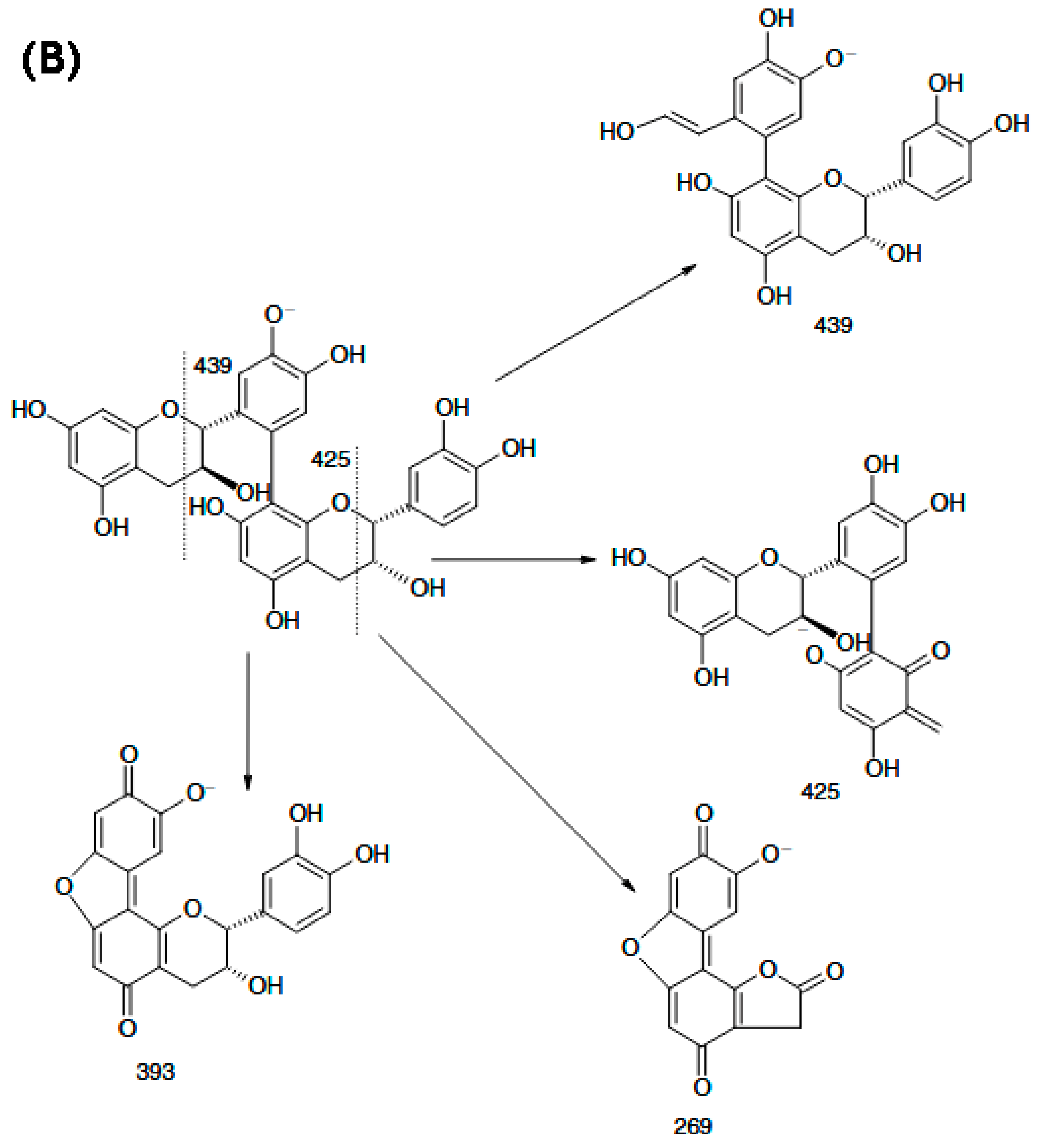
| A1, A2 | Radical or fermentative oxidation of B1 or B2 procyanidins | [115,116,129,130,131] |
| Intermolecular condensation of catechin blocks | [115,116,132,133] | |
| Synthesis using non-catechin precursors (diphenyl-propene derivatives) | [116] | |
| B1-B4 | Intermolecular condensation of catechin blocks (nucleophilic and electrophilic) in the presence of Lewis acids | [120,122,134,135,136] |
| Intramolecular condensation of a molecule with a glutar or amber bridge | [137] | |
| Orthogonal synthesis | [122] | |
| B5-B8 | Intermolecular condensation of catechin blocks (nucleophilic and electrophilic) in the presence of Lewis acids | [120,138] |
| Intramolecular condensation of a molecule with an azelaine bridge | [123] | |
| Orthogonal synthesis | [122] | |
| C1, C2 | Intermolecular condensation of B-type procyanidins and catechin blocks in the presence of Lewis acids with an excess of a nucleophilic agent | [119,139,140] |
| Orthogonal synthesis | [122] |
| Plant | Waste Type | Procyanidin Type | Concentration | Ref |
|---|---|---|---|---|
| Lychee (Litchi chinensis) | Leaves | A2 | 44.8–69.6 mg/g | [6] |
| Common grape vine (Vitis vinifera L.) | Pomace | Dimeric procyanidins | 1.0–3.0 mg/g | [153] |
| Total polymeric procyanidins | 27.0–43.3 mg/g | |||
| Saskatoon berry (Amelanchier alnifolia) | Peel and seeds | A-type dimers | 0.2–0.46 mg/g | [154] |
| B-type dimers | 0.026–0.06 mg/g | |||
| Polymeric procyanidins | 14.5–26.6 mg/g | |||
| Cacao (Theobroma cacao L.) | Husk | B1 | 0.55–0.83 mg/g | [13] |
| B2 | 0.23–0.90 mg/g | |||
| Nepali hog plum (Choerospondias axillaris) | Peel | Total procyanidins | 42.8–120.0 mg/g | [155] |
| Monterey pine (Pinus radiata) | Bark | Total procyanidins | 404.0 mg/g | [156] |
| Pitch pine (Pinus rigida) | 489.0 mg/g |
| Part of a Plant | Raw Material | Preliminary Preparation | Extraction | Purification | Ref. |
|---|---|---|---|---|---|
| Bark | Young shoots of hawthorn (Crataegus monogyna Jacq.) | Washed with 80% acetone; stored for 24 h at 18 °C; sonicated for 30 min at −20 °C | Water and chloroform (ratio not established) | 1. NaCl solutions; 2. Acetate water 0.5:5 (v/v) 3. Chloroform and hexane | [174] |
| Maritime pine (Pinus pinaster Ait.) | Grinding, screening through 60 and 18 mesh | CO2-ethanol (90:10), 3 times, 323 and 303 °C, 20.3 and 25.1 MPa, 370 and 360 min; 7.6, 13.2, and 19.1 kg/s × 105, solvent-to-solid mass ratio 28:1, 2:1, 20:1 | Hydrodistillation in a Schilcher apparatus, following the AOAC 962.17 method | [186] | |
| Flowers | Small-leaved linden (Tilia cordata Mill.) | Dry in the dark; fine grind | Acetone methanol water (3:1:1, v/v/v); exhaustive ultrasonic-assisted extraction 5 times for 30 min | Column chromatography using Sephadex LH-20; Column chromatography using Toyopearl HW-40F; Column chromatography using Diaion HP-20 | [170] |
| Fruits | Lychee pericarp (Litchi chinensis Sonn.) | Mix with chilled aqueous ethanol for 3 min and then homogenize in ice bath at 10,000 rpm for 5 min | Ultra-high-pressure extraction pressure 295 MPa, holding time under pressure 13 min, liquid to solid ratio 16:1, 70% ethanol, 25 °C | Information is not presented | [180] |
| Apples (Malus domestica) | (Not described) | Supercritical fluid, sublimation | HPLC followed by polyamide MN column | [11] | |
| Grape pericarp (Vitis vinifera L.) | Freezed in liquid nitrogen; grinded with a pestle in a mortar | Acetone/water (70 30, v/v) containing 0.05% (v/v) trifluoroacetic acid Stir for 1 h at room temperature in the dark | Column chromatography using Toyopearl TSK-HW 50F | [143] | |
| Grape pomace (V. vinifera L. cv. ‘Tempranillo’) | Frozen at 80 °C, freeze-dried under vacuum and milled | Pressurized hot water extraction 2 cycles; 10 min; 1500 psi. Choline chloride/oxalic acid (1:1, v/v) 30% mixture in water | Extracts were filtered through 0.20 μm polyester filters, then separated on an Ascentis Express C18 (HPLC) | [188] | |
| Avocado (Persea americana Mill.) | Washed; sublimated; grinded | Ultrasonic-assisted extraction three times with a solution of acetone/water (70:30, v/v) at 25 °C; add 0.1% ascorbic acid | Column chromatography using Sephadex LH-20 (50% MeOH/H2O and 70% Acetone/H2O) | [7] | |
| Seeds | Peanut peel (Arachis hypogaea cv. Runner 886) | Lyophilization | Acetone water (60:40), pH 1.5; 70 °C; 30 min | Amberlite XAD-2; Sephadex LH-20; TCX | [166] |
| Cacao beans (Theobroma cacao L.) | Washed; frozen; (liquid nitrogen); ground | Extracted three times with n-hexane (solid/liquid 1:5, w/v), 80% aqueous methanol (v/v) and 75% aqueous acetone (v/v), evaporated at 30 °C, extraction with an equal volume of chloroform three times | High performance counter current chromatography (HPCCC) | [14] | |
| Blackberry (Rubus spp.) | Pressed to obtain pulp, the pulp was roughly homogenized | Extracted by distilled water, methanol and ethanol (conventional solvents) or Natural deep eutectic solvents in a sonication water bath. An amount of 0.5 g was mixed with 10 mL of conventional or Natural deep eutectic solvents. The mixture was ultrasonicated at 25 °C for 20 min. Filtered through Whatman filter paper No.1 three times. | HPLC using Inertsil ODS-4 | [187] | |
| Iris lactea (Iris lactea Pall. var. Chinensis (Fisch.)) | Air dry; grinded to powder | Supercritical extraction with carbon dioxide; residue 80% ethanol (3 × 25 L, every 3 h) at 60 °C | Column chromatography using silicagel; HPCCC | [183] | |
| Grape seeds (Vitis vinifera L.) | The samples were processed to granulometry of 2 mm | ultrasound bath (Water ethanol (3:7 v/v), 34 kHz), vacuum rotary evaporation (35 °C), and wash by n-hexane, vacuum rotary evaporation. | A Sephadex LH-20 column rinse sequentially by ethanol/water 80:20 (v/v) and ethanol/water 50:50 (v/v), | [190] | |
| Black soy husk (Glycine max) | Stored at 10 °C before use | 70% acetone/0.5% acetic acid solution for 3 h at room temperature | Column chromatography using Sepabeads SP700; reverse phase preparative HPLC | [169] |
| Extraction Technic | Advantages | Disadvantages |
|---|---|---|
| Classical extraction | Easy Very low costs | Long time of extraction (hours) Low efficiency |
| UAE | Medium time of extraction (dozens of minutes) Low costs | Medium efficiency |
| MAE | Short time of extraction (minutes) High efficiency Low solvent consumption | High costs The impossibility of extracting heat-sensitive components |
| Supercritical CO2 | Maximal efficiency | Very high costs |
| PLE | High efficiency Low solvent consumption | High costs |
| DES assisted extraction | Short time of extraction (minutes) Low solvent consumption Great potential of combination with other technics | Questionable results |
| Source | NEPs Release Method | Main Compounds | References |
|---|---|---|---|
| Apple pomace | Sequence extraction combining acid and alkaline hydrolysis | The highest total phenolic content, reaching 12.38–13.76 mg GAE/g dry weight, with quercetin-3-O-galactoside identified as the predominant compound (by MS). | [229] |
| Sequential extraction facilitated by microwave | Flavan-3-ols constitute the major polyphenolic class (2.88 g/kg dry weight) with an average degree of polymerization of 4.7. Alkaline hydrolysis of apple procyanidins generates 3,4-dihydroxybenzoic acid (0.67 M/kg) and catechol (0.15 M/kg) as the principal degradation products. | [178] | |
| Grape pomace | Enzyme hydrolysis | Under optimized conditions the total phenolic content reaches 0.81 g GAE/100 g dry weight, with gallic acid (0.16 g/100 g dry weight) emerging as the main hydrolysis product. | [230] |
| Roselle by-products | Acid hydrolysis | The contents of hydrolysable polyphenols and proanthocyanidins are 6.18 mg GAE/g and 6.67 mg proanthocyanidin eq/g, respectively. Notably, NEPs account for 71.2% of the total phenolic content. | [69] |
| Brown rice bran | Alkaline hydrolysis | The total phenolic content reaches 276 mg GAE/100 g dry weight. Ferulic acid (1617 μg/g dry weight) and p-coumaric acid (394 μg/g dry weight) are the main compounds after hydrolysis. | [235] |
| NEPs Release Methods | Advantages | Disadvantages | Improvements |
|---|---|---|---|
| Acid hydrolysis | Cleavage of glycosidic bonds in the cell wall | Waste generation. High temperatures and acid concentrations | Milder conditions |
| Alkaline hydrolysis | Break ester bonds in the cell walls, releasing phenolic polysaccharide compounds | Waste generation. Complex pre-treatment process Inert gas atmosphere to prevent NEPs oxidation | Milder conditions |
| Enzymatic hydrolysis | Fast Low temperature Green technology | High cost Low specificity | Further studies about the methodology and recovery of enzymes |
| Additional extraction technologies | Break bonds with mechanical actions, increasing the solubility Increasing the efficiency of the extraction Reducing time Green technology | High cost Specific equipment | Further studies about the methodology |
Disclaimer/Publisher’s Note: The statements, opinions and data contained in all publications are solely those of the individual author(s) and contributor(s) and not of MDPI and/or the editor(s). MDPI and/or the editor(s) disclaim responsibility for any injury to people or property resulting from any ideas, methods, instructions or products referred to in the content. |
© 2026 by the authors. Licensee MDPI, Basel, Switzerland. This article is an open access article distributed under the terms and conditions of the Creative Commons Attribution (CC BY) license.
Share and Cite
Zakharov, A.Y.; Berillo, D.; Ng, A.; Aidarkhanov, D.S.; Tukesheva, A.V.; Temirkulova, K.M.; Tanybayeva, A.; Mansurov, Z.A.; Balanay, M.P.; Pavlenko, V.V. Procyanidins: Structural Properties, Production Methods, and Modern Applications. Molecules 2026, 31, 223. https://doi.org/10.3390/molecules31020223
Zakharov AY, Berillo D, Ng A, Aidarkhanov DS, Tukesheva AV, Temirkulova KM, Tanybayeva A, Mansurov ZA, Balanay MP, Pavlenko VV. Procyanidins: Structural Properties, Production Methods, and Modern Applications. Molecules. 2026; 31(2):223. https://doi.org/10.3390/molecules31020223
Chicago/Turabian StyleZakharov, Aleksandr Yu., Dmitriy Berillo, Annie Ng, Damir S. Aidarkhanov, Anna V. Tukesheva, Kamila M. Temirkulova, Ainur Tanybayeva, Zulkhair A. Mansurov, Mannix P. Balanay, and Vladimir V. Pavlenko. 2026. "Procyanidins: Structural Properties, Production Methods, and Modern Applications" Molecules 31, no. 2: 223. https://doi.org/10.3390/molecules31020223
APA StyleZakharov, A. Y., Berillo, D., Ng, A., Aidarkhanov, D. S., Tukesheva, A. V., Temirkulova, K. M., Tanybayeva, A., Mansurov, Z. A., Balanay, M. P., & Pavlenko, V. V. (2026). Procyanidins: Structural Properties, Production Methods, and Modern Applications. Molecules, 31(2), 223. https://doi.org/10.3390/molecules31020223