Phytochemistry, Bioactivity, and Toxicological Duality of Oxytropis glabra DC: A Review

 , , , , and
Abstract
1. Introduction
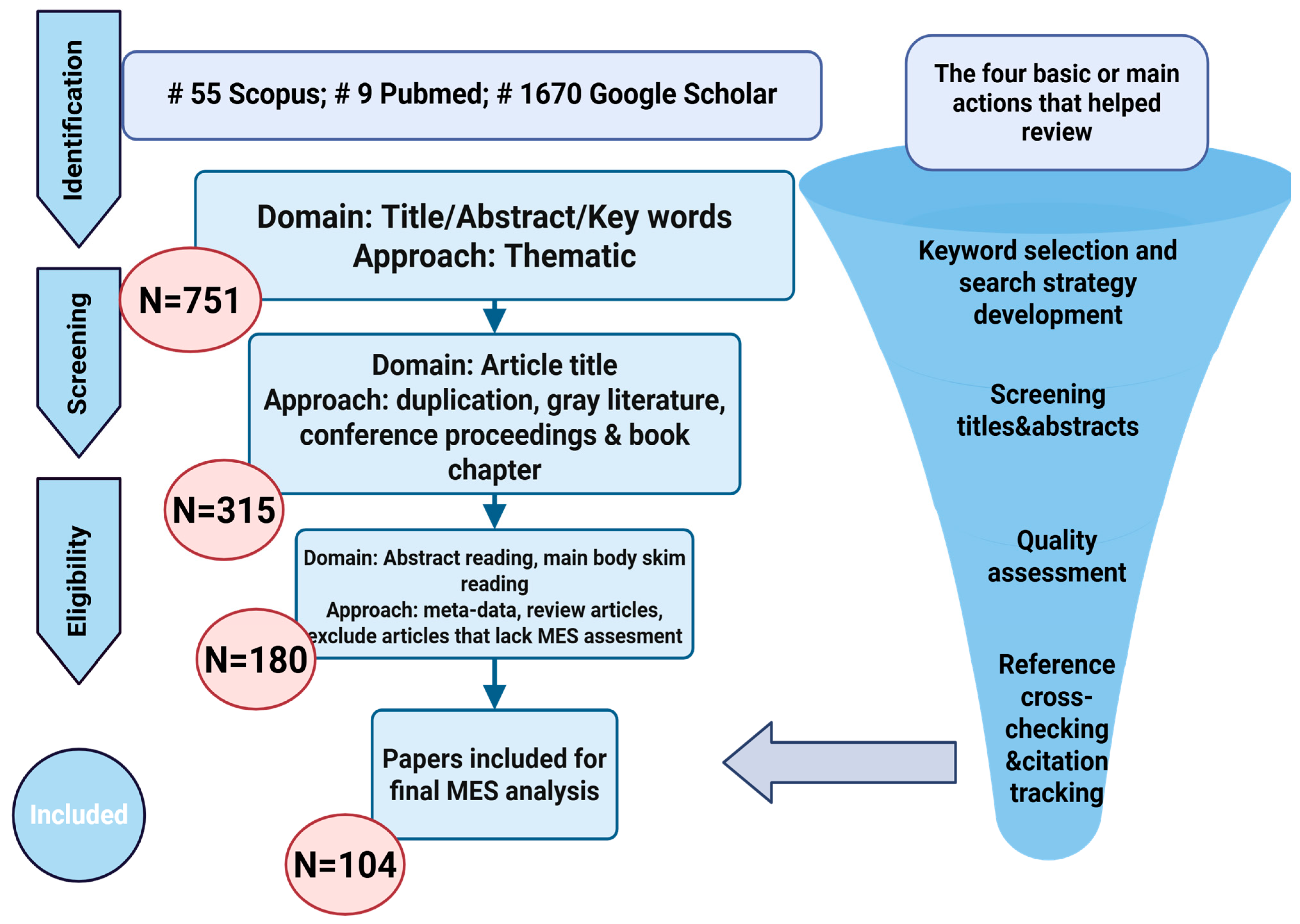
2. Methods
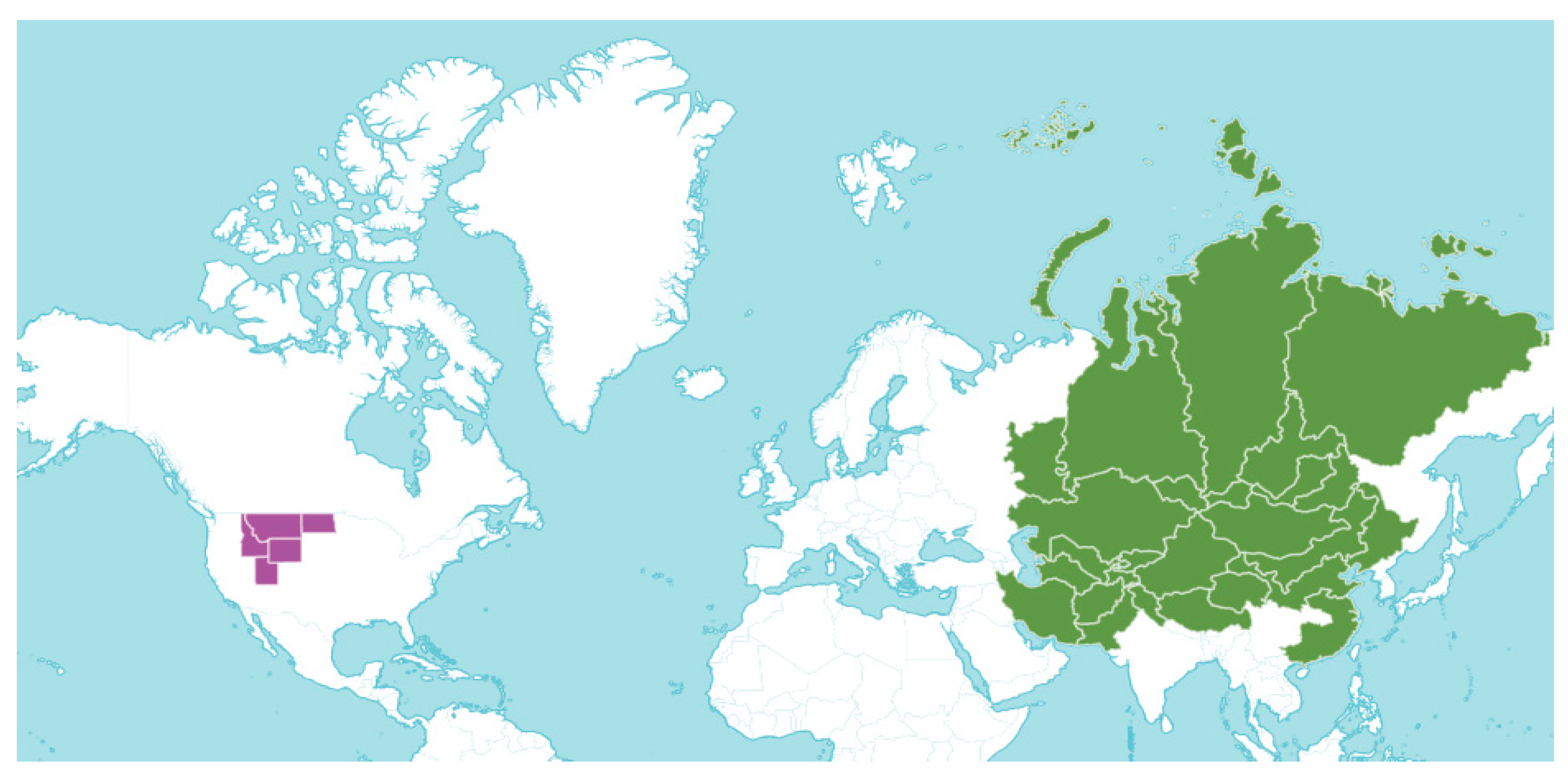
3. Distribution and Botanical Characterization
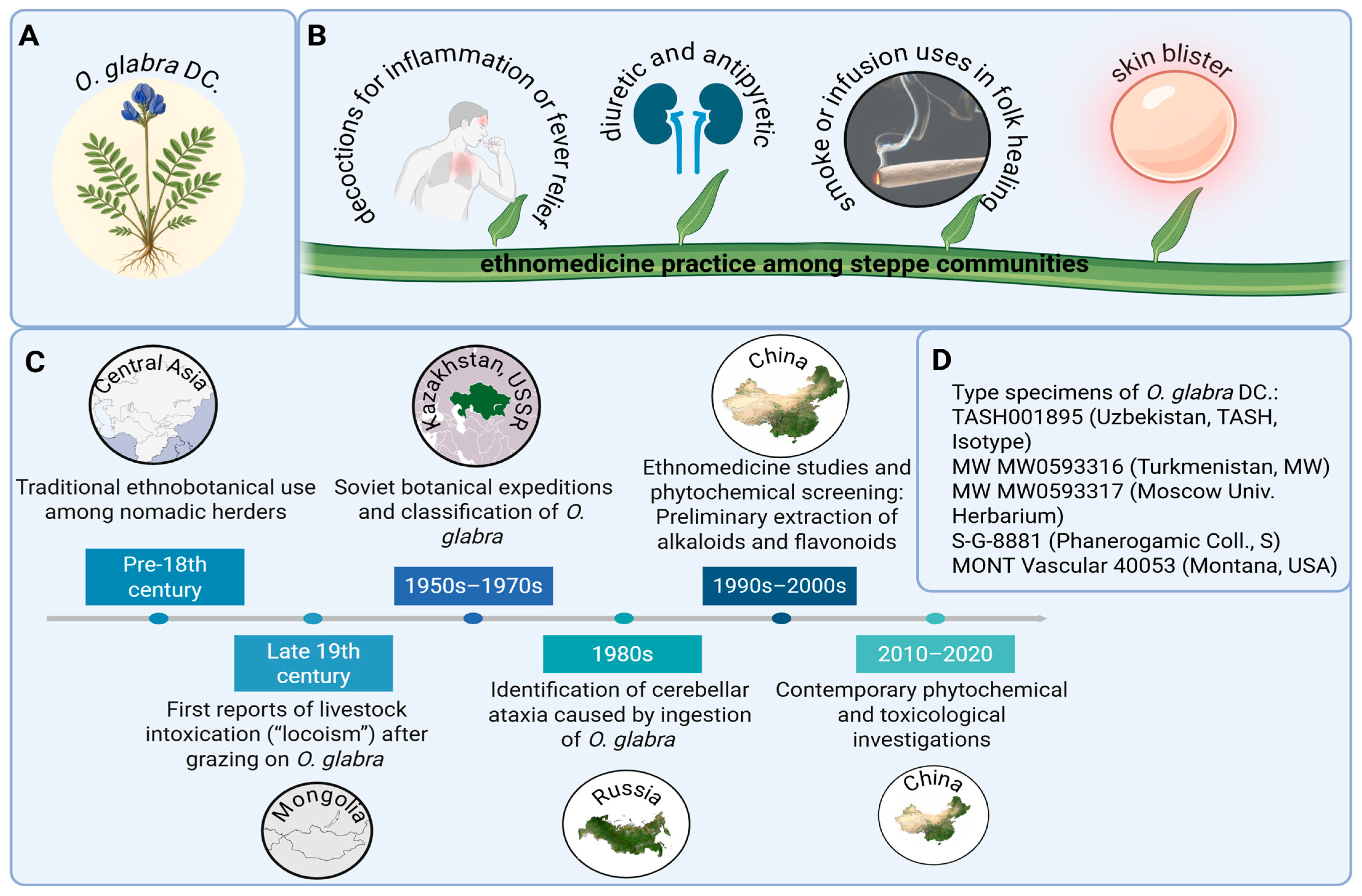
4. Historical and Cultural Uses of O. glabra
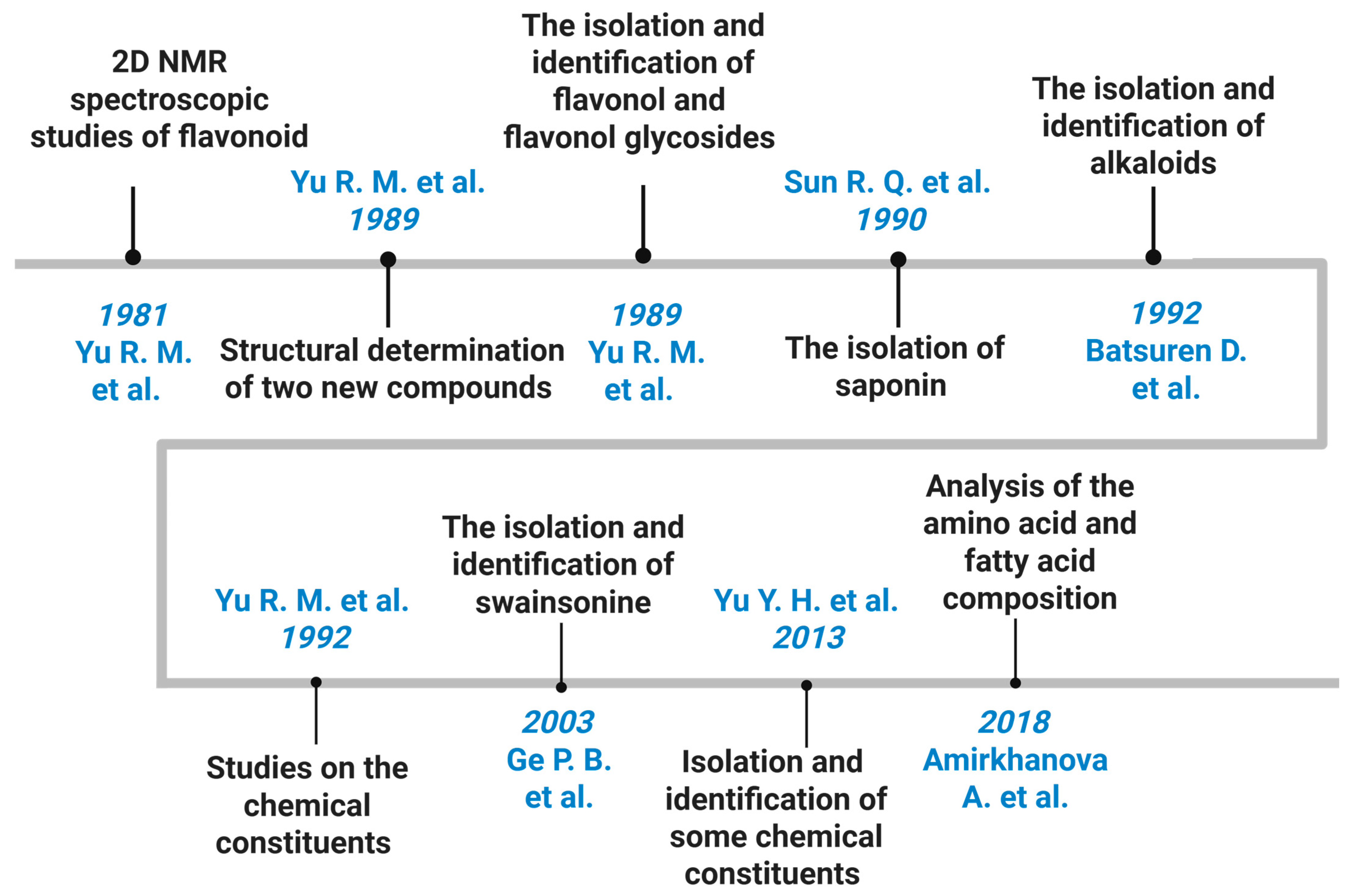
5. Phytochemistry
6. Bioactive Attributes of O. glabra
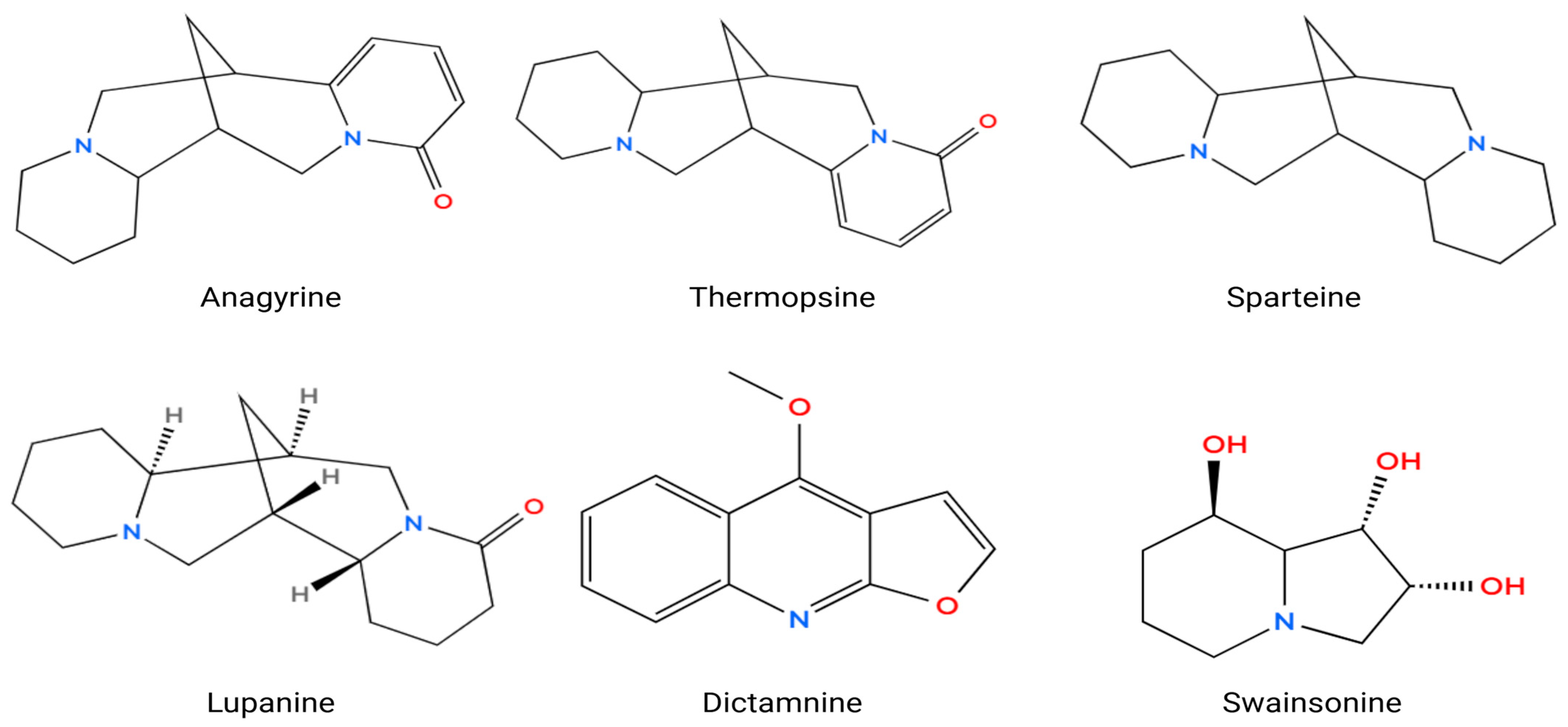
6.1. Alkaloids
6.2. Flavonoids
6.3. Lactam Compounds
6.4. Amino Acids
6.5. Fatty Acids
7. Toxicity
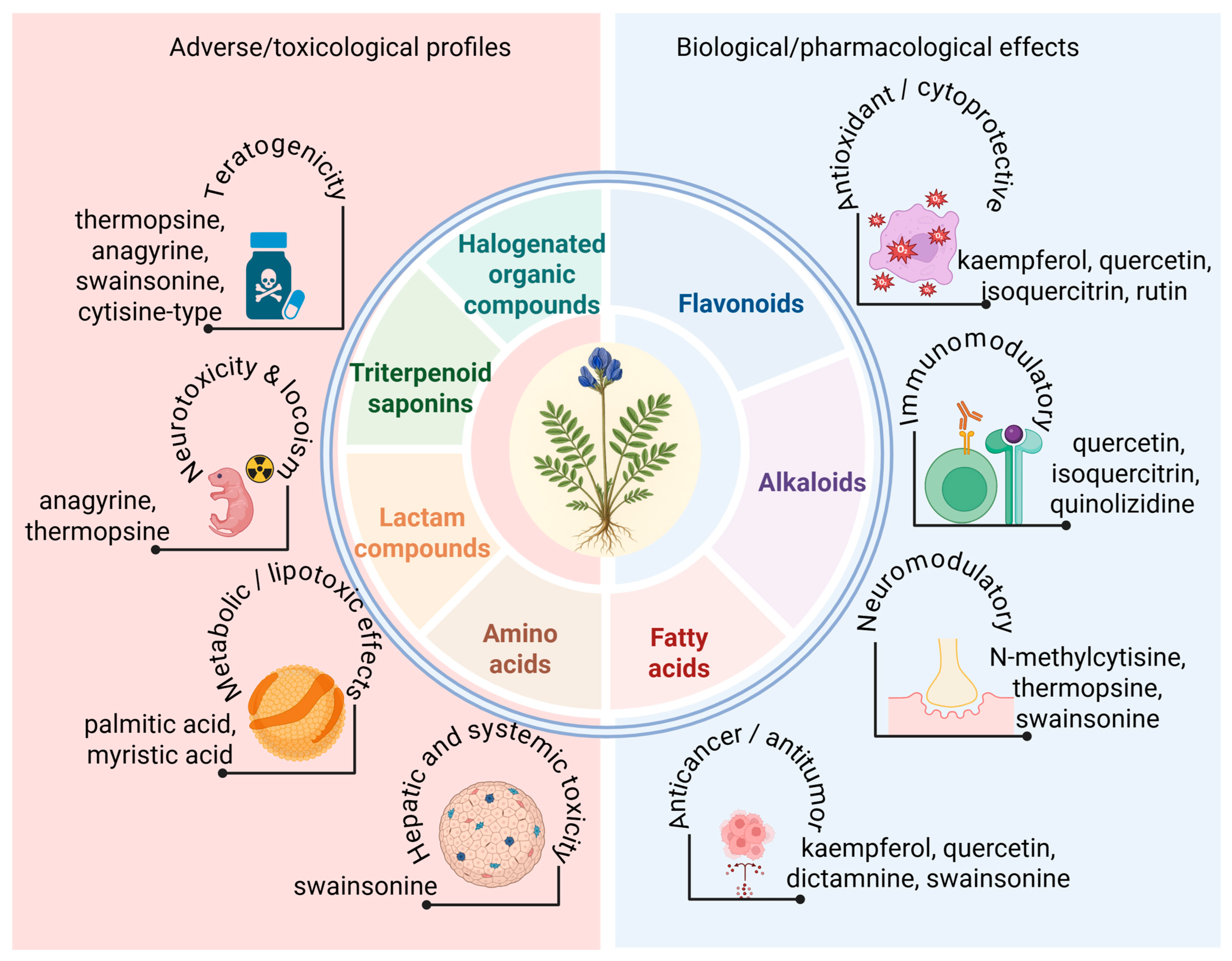
8. Integrative Perspective: Toxicological Risks Versus Pharmacological Opportunities
9. Conclusions and Future Perspectives
Author Contributions
Funding
Institutional Review Board Statement
Informed Consent Statement
Data Availability Statement
Conflicts of Interest
References
- Javid, H.; Shaheen, I.; Qadir, R.U.; Magray, J.A.; Wani, B.A.; Nawchoo, I.A.; Gulzar, S. A Comprehensive Review on Ethnomedicinal, Phytochemical and Pharmacological Properties of Genus Bistorta (L.) scop. Fitoterapia 2024, 176, 105977. [Google Scholar] [CrossRef]
- Nigussie, G.; Ashenef, S.; Meresa, A. The Ethnomedicine, Phytochemistry, and Pharmacological Properties of the Genus Bersama: Current Review and Future Perspectives. Front. Pharmacol. 2024, 15, 1366427. [Google Scholar] [CrossRef]
- Ezrari, S.; Ben Khadda, Z.; Boutagayout, A.; Rehali, M.; Jaadan, H.; El Housni, Z.; Khoulati, A.; Saddari, A.; Maleb, A. Health Risks and Toxicity Mechanisms of Medicinal and Aromatic Plants (MAPs): A Comprehensive Review of Adverse Effects on Organ Systems, Genotoxicity and Reproductive Toxicity. Fitoterapia 2025, 184, 106630. [Google Scholar] [CrossRef]
- Janssen, R.M.; Berg, M.; Ovakim, D.H. Two Cases of Cardiac Glycoside Poisoning from Accidental Foxglove Ingestion. Can. Med. Assoc. J. 2016, 188, 747–750. [Google Scholar] [CrossRef]
- Avetisov, S.E.; Fisenko, V.P.; Zhuravlev, A.S.; Avetisov, K.S. Primenenie Atropina dlia Kontrolia Progressirovaniia Miopii (Atropine Use for the Prevention of Myopia Progression). Vestn. Oftalmol. 2018, 134, 84–90. [Google Scholar] [CrossRef] [PubMed]
- Wang, B.; Tian, Z.; Lang, S.; Kong, Q.; Liu, X.; Chen, Y.; Hua, M.; Zhou, Q.; Yu, X.; Feng, H.; et al. The Genus Oxytropis DC: Application, Phytochemistry, Pharmacology, and Toxicity. J. Pharm. Pharmacol. 2024, 76, 1079–1114. [Google Scholar] [CrossRef]
- Li, M.X.; Lan, Z.H.; Fan, P.C.; Wei, L.; Jia, Z. Research Progress of Tibetan Medicine Oxytropis falcata Bunge. J. Chin. Med. Mater. 2009, 32, 1318–1322. [Google Scholar] [CrossRef]
- Zhang, M.-R.; Jiang, K.; Yang, J.-L.; Shi, Y.-P. Flavonoids as Key Bioactive Components of Oxytropis falcata Bunge, a Traditional Antiinflammatory and Analgesic Tibetan Medicine. Nat. Prod. Res. 2020, 34, 3335–3352. [Google Scholar] [CrossRef]
- Jia, X.; Liu, Y.; Wang, S.; Ma, J.; Yu, J.; Yue, X.; Zhang, Y.; Wang, X. Screening of Metabolic Markers Present in Oxytropis by UHPLC-Q-TOF/MS and Preliminary Pharmacophylogenetic Investigation. Front. Plant Sci. 2022, 13, 958460. [Google Scholar] [CrossRef] [PubMed]
- Li, Z.; Xu, X.; Huang, Y.; Ding, L.; Wang, Z.; Yu, G.; Xu, D.; Li, W.; Tong, D. Swainsonine Activates Mitochondria-Mediated Apoptotic Pathway in Human Lung Cancer A549 Cells and Retards the Growth of Lung Cancer Xenografts. Int. J. Biol. Sci. 2012, 8, 394–405. [Google Scholar] [CrossRef] [PubMed]
- Zhao, X.; Liu, Y.; Li, J.; Zhang, H.; Jia, L.; Hou, Q.; Sun, K. Numerical Analyses of Seed Morphology and Its Taxonomic Significance in the Genus Oxytropis DC. (Fabaceae) from Northwestern China. PhytoKeys 2023, 222, 49–67. [Google Scholar] [CrossRef]
- Song, S.; Zheng, X.; Liu, W.; Du, R.; Bi, L.; Zhang, P. 3-Hydroxymethylglutaryl Flavonol Glycosides from a Mongolian and Tibetan Medicine, Oxytropis racemosa. Chem. Pharm. Bull. 2010, 58, 1587–1590. [Google Scholar] [CrossRef]
- Li, P.; Yu, W.L.; Lu, H.Y.; Gao, N. Study on the Chemical Constituents in the Seeds of Oxytropis ochrocephala. Acta Chim. Sin. 1991, 49, 1510–1513. [Google Scholar]
- Amirkhanova, A.S.; Ustenova, G.O.; Krauze, M.B.; Pobłocka, L.O.; Shynykul, Z.S. Thin-Layer Chromatography Analysis of Extract Oxytropis glabra Lam. DC. In Proceedings of the 18th International Multidisciplinary Scientific GeoConference SGEM 2018, Albena, Bulgaria, 2–8 July 2018; Volume 18, p. S25.102. [Google Scholar] [CrossRef]
- Takeda, S.; Tanaka, H.; Shimada, A.; Morita, T.; Ishihara, A.; Adilbish, A.; Delgermaa, B.; Gungaa, O. Cerebellar Ataxia Suspected to Be Caused by Oxytropis glabra Poisoning in Western Mongolian Goats. J. Vet. Med. Sci. 2014, 76, 839–846. [Google Scholar] [CrossRef] [PubMed]
- Yu, R.M.; Li, X.; Zhu, T.R. 2D NMR Spectroscopic Studies of Flavonoid from Oxytropis glabra. Chin. J. Magn. Reson. 1981, 8, 99–101. [Google Scholar]
- Yu, R.M.; Li, X.; Zhu, T.R. Structural Determination of Two New Compounds in Oxytropis glabra. J. Shenyang Pharm. Univ. 1989, 6, 53. [Google Scholar]
- Yu, R.M.; Li, X.; Zhu, T.R. The Isolation and Identification of Flavonol and Flavonol Glycosides from Oxytropis glabra. J. Chin. Mater. Med. 1989, 14, 482. [Google Scholar]
- Sun, R.Q.; Jia, Z.J. Saponins from Oxytropis glabra. Phytochemistry 1990, 29, 2032–2034. [Google Scholar] [CrossRef]
- Batsuren, D.; Tsetsegmaa, S.; Batbayar, N.; Dungerdorzh, D.; Akhmedzhanova, V.I.; Mil’grom, Y.M.; Tashkes, Y.V.; Ibragimov, A.A. Alkaloids of Oxytropis. I. Chem. Nat. Compd. 1992, 28, 340–344. [Google Scholar] [CrossRef]
- Yu, R.M.; Li, X.; Zhang, H.J.; Wu, L.J.; Zhu, T.R.; Li, W.; Liu, L.Y.; Zhang, G. Studies on the Chemical Constituents of Oxytropis glabra. J. Integr. Plant Biol. 1992, 34, 369–371. [Google Scholar]
- Ge, P.B.; Zhao, B.Y.; Tong, D.W.; Qiao, S.Y.; Guo, X.; Cao, G.R.; Zhang, Y.K.; Dong, Q. Extraction, Fractionation, and Identification of Swainsonine Structure from Oxytropis glabra. Chin. Agric. Sci. Bull. 2003, 19, 1–4. [Google Scholar]
- Yu, Y.H.; Xiao, N.; Sun, M.Q.; Liu, B.; Fan, W.; Zhang, H. Isolation and Identification of Chemical Constituents of Oxytropis glabra. Acta Chin. Med. Pharmacol. 2013, 41, 11–13. [Google Scholar] [CrossRef]
- Amirkhanova, A.; Ustenova, G.; Mombekov, S.; Turgumbaeva, A.; Eleken, G. Study of Amino Acid and Fatty Acid Composition of Medicinal Plant Raw Materials Oxytropis glabra Lam. DC. Pharm. Kazakhstan 2018, 10, 24–28. (In Kazakh) [Google Scholar]
- Page, M.J.; McKenzie, J.E.; Bossuyt, P.M.; Boutron, I.; Hoffmann, T.C.; Mulrow, C.D.; Shamseer, L.; Tetzlaff, J.M.; Akl, E.A.; Brennan, S.E.; et al. The PRISMA 2020 statement: An updated guideline for reporting systematic reviews. J. Clin. Epidemiol. 2021, 134, 178–189. [Google Scholar] [CrossRef]
- Plants of the World Online. Oxytropis glabra DC.; Royal Botanic Gardens, Kew: London, UK, 1802; Available online: https://powo.science.kew.org/taxon/urn:lsid:ipni.org:names:511482-1 (accessed on 17 September 2025).
- Flora. Oxytropis glabra DC. In Flora of China; Missouri Botanical Garden: St. Louis, MO, USA; Harvard University Herbaria: Cambridge, MA, USA, 2010; Available online: http://www.efloras.org (accessed on 23 August 2025).
- Tropicos. Oxytropis glabra DC. In Flora of Pakistan; Missouri Botanical Garden: St. Louis, MO, USA, 2011; Available online: https://www.tropicos.org (accessed on 29 March 2025).
- Agzamova, M.A.; Omanova, U.M.; Ozek, G.; Ozek, T. HR-LC-MS Analysis of Extract from the Plant Oxytropis macrodonta. Chem. Nat. Compd. 2025, 61, 799. [Google Scholar] [CrossRef]
- GBIF. Oxytropis glabra DC. Global Biodiversity Information Facility: Copenhagen, Denmark, 1802. Available online: https://www.gbif.org/species/5361642 (accessed on 17 September 2025).
- Kim, J.H.; Kim, Y.S.; Choi, J.-G.; Li, W.; Lee, E.J.; Park, J.-W.; Song, J.; Chung, H.-S. Kaempferol and Its Glycoside, Kaempferol 7-O-rhamnoside, Inhibit PD-1/PD-L1 Interaction In Vitro. Int. J. Mol. Sci. 2020, 21, 3239. [Google Scholar] [CrossRef]
- Wang, J.; Fang, X.; Ge, L.; Cao, F.; Zhao, L.; Wang, Z.; Xiao, W. Antitumor, Antioxidant and Anti-Inflammatory Activities of Kaempferol and Its Corresponding Glycosides and the Enzymatic Preparation of Kaempferol. PLoS ONE 2018, 13, e0197563. [Google Scholar] [CrossRef] [PubMed]
- Xiufen, W.; Hiramatsu, N.; Matsubara, M. The Antioxidative Activity of Traditional Japanese Herbs. Biofactors 2004, 21, 281–284. [Google Scholar] [CrossRef] [PubMed]
- Alonso-Castro, A.J.; Ortiz-Sanchez, E.; Garcia-Regalado, A.; Ruiz, G.; Nunez-Martinez, J.M.; Gonzalez-Sanchez, I.; Quintanar-Jurado, V.; Morales-Sanchez, E.; Dominguez, F.; Lopez-Toledo, G.; et al. Kaempferitrin Induces Apoptosis via Intrinsic Pathway in HeLa Cells and Exerts Antitumor Effects. J. Ethnopharmacol. 2013, 145, 476–489. [Google Scholar] [CrossRef]
- Hua, F.; Li, J.Y.; Zhang, M.; Zhou, P.; Wang, L.; Ling, T.J.; Bao, G.H. Kaempferol-3-O-rutinoside Exerts Cardioprotective Effects through NF-κB/NLRP3/Caspase-1 Pathway in Ventricular Remodeling after Acute Myocardial Infarction. J. Food Biochem. 2022, 46, e14305. [Google Scholar] [CrossRef] [PubMed]
- Hwang, D.; Kang, M.J.; Kang, C.W.; Kim, G.D. Kaempferol-3-O-β-rutinoside Suppresses the Inflammatory Responses in Lipopolysaccharide-Stimulated RAW264.7 Cells via the NF-κB and MAPK Pathways. Int. J. Mol. Med. 2019, 44, 2321–2328. [Google Scholar] [CrossRef]
- Wang, Y.; Tang, C.; Zhang, H. Hepatoprotective Effects of Kaempferol 3-O-rutinoside and Kaempferol 3-O-glucoside from Carthamus tinctorius L. on CCl4-Induced Oxidative Liver Injury in Mice. J. Food Drug Anal. 2015, 23, 310–317. [Google Scholar] [CrossRef]
- Habtemariam, S. α-Glucosidase Inhibitory Activity of Kaempferol-3-O-rutinoside. Nat. Prod. Commun. 2011, 6, 201–203. [Google Scholar] [CrossRef]
- Valentová, K.; Vrba, J.; Bancířová, M.; Ulrichová, J.; Křen, V. Isoquercitrin: Pharmacology, Toxicology, and Metabolism. Food Chem. Toxicol. 2014, 68, 267–282. [Google Scholar] [CrossRef]
- Ortega, J.A.; Lazerson, J. Anagyrine-induced red cell aplasia, vascular anomaly, and skeletal dysplasia. J. Pediatr. 1987, 111, 87–89. [Google Scholar] [CrossRef] [PubMed]
- Soundararajan, R.; Wishart, A.D.; Rupasinghe, H.P.; Arcellana-Panlilio, M.; Nelson, C.M.; Mayne, M.; Robertson, G.S. Quercetin-3-glucoside Protects Neuroblastoma (SH-SY5Y) Cells In Vitro against Oxidative Damage by Inducing Sterol Regulatory Element-Binding Protein-2-Mediated Cholesterol Biosynthesis. J. Biol. Chem. 2008, 283, 2231–2245. [Google Scholar] [CrossRef]
- Finnell, R.H.; Chernoff, G.F. Anagyrine-Induced Congenital Defects. J. Pediatr. 1988, 112, 331. [Google Scholar] [CrossRef] [PubMed]
- Green, B.T.; Lee, S.T.; Welch, K.D.; Cook, D. Anagyrine Desensitization of Peripheral Nicotinic Acetylcholine Receptors: A Potential Biomarker of Quinolizidine Alkaloid Teratogenesis in Cattle. Res. Vet. Sci. 2017, 115, 195–200. [Google Scholar] [CrossRef]
- Turgunov, K.K.; Rakhimov, S.B.; Vinogradova, V.I.; Tashkhodjaev, B. Crystal Structure of Anagyrine Perchlorate. Acta Crystallogr. E Crystallogr. Commun. 2015, 71, o343–o344. [Google Scholar] [CrossRef]
- Cely-Veloza, W.; Kato, M.J.; Coy-Barrera, E. Quinolizidine-Type Alkaloids: Chemodiversity, Occurrence, and Bioactivity. ACS Omega 2023, 8, 27862–27893. [Google Scholar] [CrossRef]
- Lee, S.T.; Panter, K.E.; Pfister, J.A.; Gardner, D.R.; Welch, K.D. The Effect of Body Condition on Serum Concentrations of Two Teratogenic Alkaloids (Anagyrine and Ammodendrine) from Lupines (Lupinus Species) that Cause Crooked Calf Disease. J. Anim. Sci. 2008, 86, 2771–2778. [Google Scholar] [CrossRef]
- Keeler, R.F.; Gross, R. The Total Alkaloid and Anagyrine Contents of Some Bitter and Sweet Selections of Lupin Species Used as Food. J. Environ. Pathol. Toxicol. 1980, 3, 333–340. [Google Scholar] [PubMed]
- Keeler, R.F. Lupin Alkaloids from Teratogenic and Nonteratogenic Lupins. III. Identification of Anagyrine as the Probable Teratogen by Feeding Trials. J. Toxicol. Environ. Health 1976, 1, 887–898. [Google Scholar] [CrossRef]
- Gray, D.; Gallagher, T. A Flexible Strategy for the Synthesis of Tri- and Tetracyclic Lupin Alkaloids: Synthesis of (+)-Cytisine, (±)-Anagyrine, and (±)-Thermopsine. Angew. Chem. Int. Ed. Engl. 2006, 45, 2419–2423. [Google Scholar] [CrossRef]
- Green, B.T.; Lee, S.T.; Panter, K.E.; Welch, K.D.; Cook, D.; Pfister, J.A.; Kem, W.R. Actions of Piperidine Alkaloid Teratogens at Fetal Nicotinic Acetylcholine Receptors. Neurotoxicol. Teratol. 2010, 32, 383–390. [Google Scholar] [CrossRef] [PubMed]
- Chen, Y.; Hour, M.J.; Lin, C.S.; Chang, Y.S.; Chen, Z.Y.; Koval’skaya, A.V.; Su, W.C.; Tsypysheva, I.P.; Lin, C.W. Assessing the Inhibitory Effects of Some Secondary Amines, Thioureas and 1,3-Dimethyluracil Conjugates of (−)-Cytisine and Thermopsine on the RNA-Dependent RNA Polymerase of SARS-CoV-1 and SARS-CoV-2. Bioorg. Med. Chem. Lett. 2024, 113, 129950. [Google Scholar] [CrossRef] [PubMed]
- Villalpando-Vargas, F.; Medina-Ceja, L. Sparteine as an Anticonvulsant Drug: Evidence and Possible Mechanism of Action. Seizure 2016, 39, 49–55. [Google Scholar] [CrossRef]
- Wiedemann, M.; Gurrola-Díaz, C.M.; Vargas-Guerrero, B.; Wink, M.; García-López, P.M.; Düfer, M. Lupanine Improves Glucose Homeostasis by Influencing KATP Channels and Insulin Gene Expression. Molecules 2015, 20, 19085–19100. [Google Scholar] [CrossRef]
- Wang, S.; Wu, H.; Huang, X.; Geng, P.; Wen, C.; Ma, J.; Zhou, Y.; Wang, X. Determination of N-Methylcytisine in Rat Plasma by UPLC-MS/MS and Its Application to Pharmacokinetic Study. J. Chromatogr. B Anal. Technol. Biomed. Life Sci. 2015, 990, 118–124. [Google Scholar] [CrossRef] [PubMed]
- Yu, J.; Zhang, L.; Peng, J.; Ward, R.; Hao, P.; Wang, J.; Zhang, N.; Yang, Y.; Guo, X.; Xiang, C.; et al. Dictamnine, a Novel c-Met Inhibitor, Suppresses the Proliferation of Lung Cancer Cells by Downregulating the PI3K/AKT/mTOR and MAPK Signaling Pathways. Biochem. Pharmacol. 2022, 195, 114864. [Google Scholar] [CrossRef]
- Yang, N.; Shao, H.; Deng, J.; Yang, Y.; Tang, Z.; Wu, G.; Liu, Y. Dictamnine Ameliorates Chronic Itch in DNFB-Induced Atopic Dermatitis Mice via Inhibiting MrgprA3. Biochem. Pharmacol. 2023, 208, 115368. [Google Scholar] [CrossRef] [PubMed]
- Yuan, J.; Su, J.; Zhong, S.; Yuan, X.; Zhu, J.; Lu, S.; Zhang, D.; Li, G.; Xue, H.; Yan, M.; et al. Dictamnine Alleviates DSS-Induced Colitis in Mice by Inhibiting Ferroptosis of Enterocytes via Activating Nrf2–Gpx4 Signaling Pathway. Eur. J. Pharmacol. 2025, 997, 177464. [Google Scholar] [CrossRef]
- Hosseini, A.; Razavi, B.M.; Banach, M.; Hosseinzadeh, H. Quercetin and Metabolic Syndrome: A Review. Phytother. Res. 2021, 35, 5352–5364. [Google Scholar] [CrossRef]
- Tettey, C.O.; Yang, I.J.; Shin, H.M. Vasodilatory Effect of Kaempferol-7-O-α-L-rhamnopyranoside via NO–cGMP–PKG Signaling. Arch. Biochem. Biophys. 2019, 667, 1–5. [Google Scholar] [CrossRef]
- Siridechakorn, I.; Pimpa, J.; Choodej, S.; Ngamrojanavanich, N.; Pudhom, K. Synergistic Impact of Arbutin and Kaempferol-7-O-α-L-rhamnopyranoside from Nephelium lappaceum L. on Whitening Efficacy and Stability of Cosmetic Formulations. Sci. Rep. 2023, 13, 22004. [Google Scholar] [CrossRef]
- Zhang, W.; Chen, C.; Zhang, C.; Duan, J.; Yao, H.; Li, Y.; Meng, A.; Shi, J. Insight into the Binding Interaction of Kaempferol-7-O-α-L-rhamnopyranoside with Human Serum Albumin by Multiple Fluorescence Spectroscopy and Molecular Modeling. Exp. Ther. Med. 2017, 13, 3619–3623. [Google Scholar] [CrossRef]
- Xiao, W.; Li, Z.; Wang, Y.; Yongbo, X.; Li, W.; Li, J.; He, M.; Feng, Y. Multiomics Combined Analysis Reveals Protective Effect of 7-O-α-L-rhamnopyranosyl-kaempferol-3-O-β-D-glucopyranoside on Autoimmune Hepatitis. Phytomedicine 2025, 139, 156460. [Google Scholar] [CrossRef] [PubMed]
- Lee, K.H.; Tagahara, K.; Suzuki, H.; Wu, R.Y.; Haruna, M.; Hall, I.H.; Huang, H.C.; Ito, K.; Iida, T.; Lai, J.S. Antitumor Agents. 49. Tricin, Kaempferol-3-O-β-D-glucopyranoside and (+)-Nortrachelogenin, Antileukemic Principles from Wikstroemia indica. J. Nat. Prod. 1981, 44, 530–535. [Google Scholar] [CrossRef]
- Mohla, S.; Humphries, M.J.; White, S.L.; Matsumoto, K.; Newton, S.A.; Sampson, C.C.; Bowen, D.; Olden, K. Swainsonine: A New Antineoplastic Immunomodulator. J. Natl. Med. Assoc. 1989, 81, 1049–1056. [Google Scholar] [PubMed]
- Wang, S.; Tan, P.; Wang, H.; Wang, J.; Zhang, C.; Lu, H.; Zhao, B. Swainsonine Inhibits Autophagic Degradation and Causes Cytotoxicity by Reducing CTSD O-GlcNAcylation. Chem. Biol. Interact. 2023, 382, 110629. [Google Scholar] [CrossRef]
- Liu, Y.; Zhang, S.; Wang, W.; Tang, S.; Zhu, Y.; Wang, M.; Cao, B.; Zhu, Y.; Tang, L.; Liu, Y.; et al. Swainsonine-Induced Vacuolar Degeneration Is Regulated by mTOR-Mediated Autophagy in HT22 Cells. Toxicol. Lett. 2023, 373, 41–52. [Google Scholar] [CrossRef]
- Caprolactam. IARC Monogr. Eval. Carcinog. Risks Hum. 1999, 71, 383–400. [PubMed]
- Jang, S.; Jang, S.; Im, D.K.; Kang, T.J.; Oh, M.K.; Jung, G.Y. Artificial Caprolactam-Specific Riboswitch as an Intracellular Metabolite Sensor. ACS Synth. Biol. 2019, 8, 1276–1283. [Google Scholar] [CrossRef]
- Dong, K.; Ye, Z.; Hu, F.; Shan, C.; Wen, D.; Cao, J. Improvement of Plant Quality by Amino Acid Transporters: A Comprehensive Review. Plant Physiol. Biochem. 2024, 215, 109084. [Google Scholar] [CrossRef] [PubMed]
- Deck, K.E.V.; Brittain, W.D.G. Synthesis of Metal-Binding Amino Acids. Org. Biomol. Chem. 2024, 22, 9283–9318. [Google Scholar] [CrossRef] [PubMed]
- Battezzati, A.; Riso, P. Amino Acids. Curr. Protoc. Immunol. 1996, 17, Appendix 1–Appendix 1B. [Google Scholar] [CrossRef]
- Hu, S.H.; Feng, Y.Y.; Yang, Y.X.; Ma, H.D.; Zhou, S.X.; Qiao, Y.N.; Zhang, K.H.; Zhang, L.; Huang, L.; Yuan, Y.Y.; et al. Amino Acids Downregulate SIRT4 to Detoxify Ammonia through the Urea Cycle. Nat. Metab. 2023, 5, 626–641. [Google Scholar] [CrossRef] [PubMed]
- Piestansky, J.; Olesova, D.; Matuskova, M.; Cizmarova, I.; Chalova, P.; Galba, J.; Majerova, P.; Mikus, P.; Kovac, A. Amino Acids in Inflammatory Bowel Diseases: Modern Diagnostic Tools and Methodologies. Adv. Clin. Chem. 2022, 107, 139–213. [Google Scholar] [CrossRef]
- Pérez, L.; Pinazo, A.; Pons, R.; Infante, M. Gemini Surfactants from Natural Amino Acids. Adv. Colloid Interface Sci. 2014, 205, 134–155. [Google Scholar] [CrossRef]
- De Carvalho, C.C.C.R.; Caramujo, M.J. The Various Roles of Fatty Acids. Molecules 2018, 23, 2583. [Google Scholar] [CrossRef]
- White, S.W.; Zheng, J.; Zhang, Y.M.; Rock, C.O. The structural biology of type II fatty acid biosynthesis. Annu. Rev. Biochem. 2005, 74, 791–831. [Google Scholar] [CrossRef] [PubMed]
- Harwood, J.L. Fatty acid metabolism. Annu. Rev. Plant Physiol. Plant Mol. Biol. 1988, 39, 101–138. [Google Scholar] [CrossRef]
- Bloch, K.; Vance, D. Control mechanisms in the synthesis of saturated fatty acids. Annu. Rev. Biochem. 1977, 46, 263–298. [Google Scholar] [CrossRef] [PubMed]
- Leonard, A.E.; Pereira, S.L.; Sprecher, H.; Huang, Y.S. Elongation of long-chain fatty acids. Prog. Lipid Res. 2004, 43, 36–54. [Google Scholar] [CrossRef]
- Aly, S.H.; Elissawy, A.M.; Allam, A.E.; Farag, S.M.; Eldahshan, O.A.; Elshanawany, M.A.; Singab, A.N.B. New quinolizidine alkaloid and insecticidal activity of Sophora secundiflora and Sophora tomentosa against Culex pipiens (Diptera: Culicidae). Nat. Prod. Res. 2022, 36, 2722–2734. [Google Scholar] [CrossRef]
- Madgula, V.L.; Ali, Z.; Smillie, T.; Khan, I.A.; Walker, L.A.; Khan, S.I. Alkaloids and saponins as cytochrome P450 inhibitors from blue cohosh (Caulophyllum thalictroides) in an in vitro assay. Planta Med. 2009, 75, 329–332. [Google Scholar] [CrossRef]
- Sacks, D.; Baxter, B.; Campbell, B.C.V.; Carpenter, J.S.; Cognard, C.; Dippel, D.; Eesa, M.; Fischer, U.; Hausegger, K.; Hirsch, J.A.; et al. Multisociety Consensus Quality Improvement Revised Consensus Statement for Endovascular Therapy of Acute Ischemic Stroke. Int. J. Stroke 2018, 13, 612–632. [Google Scholar] [CrossRef] [PubMed]
- Sun, J.Y.; Zhu, M.Z.; Wang, S.W.; Miao, S.; Xie, Y.H.; Wang, J.B. Inhibition of the growth of human gastric carcinoma in vivo and in vitro by swainsonine. Phytomedicine 2007, 14, 353–359. [Google Scholar] [CrossRef]
- Singh, D.; Kaur, G. The antileukaemic cell cycle regulatory activities of swainsonine purified from Metarhizium anisopliae fermentation broth. Nat. Prod. Res. 2014, 28, 2044–2047. [Google Scholar] [CrossRef]
- Luo, X.; Gong, Y.; Jiang, Q.; Wang, Q.; Li, S.; Liu, L. Isoquercitrin promotes ferroptosis and oxidative stress in nasopharyngeal carcinoma via the AMPK/NF-κB pathway. J. Biochem. Mol. Toxicol. 2024, 38, e23542. [Google Scholar] [CrossRef]
- Chen, F.; Xie, F.; Yang, B.; Wang, C.; Liu, S.; Zhang, Y. Streptococcus suis sortase A is Ca2+ independent and is inhibited by acteoside, isoquercitrin and baicalin. PLoS ONE 2017, 12, e0173767. [Google Scholar] [CrossRef]
- Capriglione, F.; Maiuolo, J.; Celano, M.; Damante, G.; Russo, D.; Bulotta, S.; Maggisano, V. Quercetin Protects Human Thyroid Cells against Cadmium Toxicity. Int. J. Mol. Sci. 2021, 22, 6849. [Google Scholar] [CrossRef] [PubMed]
- Zhang, C.; Wang, R.; Zhang, G.; Gong, D. Mechanistic insights into the inhibition of quercetin on xanthine oxidase. Int. J. Biol. Macromol. 2018, 112, 405–412. [Google Scholar] [CrossRef]
- Ranganathan, S.; Halagowder, D.; Sivasithambaram, N.D. Quercetin Suppresses Twist to Induce Apoptosis in MCF-7 Breast Cancer Cells. PLoS ONE 2015, 10, e0141370. [Google Scholar] [CrossRef]
- Huang, R.J.; Ma, Y.J.; Zhao, S.J.; Wang, S.; Wu, C.; Lu, H.; Zhao, B. Research Progress on the History, Source and Biological Activity of Swainsonine. Chin. J. Vet. Sci. 2022, 42, 2326–2336. [Google Scholar] [CrossRef]
- Lu, H.; Ma, F.; Zhang, L.; Wang, J.; Wu, C.; Zhao, B. Swainsonine-Induced Apoptosis Pathway in Cerebral Cortical Neurons. Res. Vet. Sci. 2015, 102, 34–37. [Google Scholar] [CrossRef]
- Wu, C.; Han, T.; Lu, H.; Zhao, B. The Toxicology Mechanism of Endophytic Fungus and Swainsonine in Locoweed. Environ. Toxicol. Pharmacol. 2016, 47, 38–46. [Google Scholar] [CrossRef]
- Huang, Y.; Dong, F.; Du, Q.; Zhang, H.; Luo, X.; Song, X.; Zhao, X.; Zhang, W.; Tong, D. Swainsonine Induces Apoptosis through Mitochondrial Pathway and Caspase Activation in Goat Trophoblasts. Int. J. Biol. Sci. 2014, 10, 789–797. [Google Scholar] [CrossRef] [PubMed]
- Wang, S.; Guo, Y.; Yang, C.; Huang, R.; Wen, Y.; Zhang, C.; Wu, C.; Zhao, B. Swainsonine Triggers Paraptosis via ER Stress and MAPK Signaling Pathway in Rat Primary Renal Tubular Epithelial Cells. Front. Pharmacol. 2021, 12, 715285. [Google Scholar] [CrossRef]
- Wang, S.; Quan, H.Y.; Ren, Z.H.; Song, R.; Yang, L.; Zhao, B.; Lu, H. The Role and Mechanism of Autophagy in Locoweed Poisoning. Chin. J. Vet. Sci. 2017, 37, 1802–1806. [Google Scholar] [CrossRef]
- Wang, S.; Wang, J.; Yang, L.; Guo, R.; Huang, E.; Yang, H.; Zhang, Y.; Sun, L.; Song, R.; Chen, J.; et al. Swainsonine Induces Autophagy via PI3K/AKT/mTOR Signaling Pathway to Injure the Renal Tubular Epithelial Cells. Biochimie 2019, 165, 131–140. [Google Scholar] [CrossRef] [PubMed]
- Tan, Y.Y.; Wang, J.H.; Li, Q.F. Effect of 2,2,6,6-Tetramethyl-4-Piperidone on Serum α-Mannosidase in Mice. J. Wuhan Univ. Sci. Technol. 2002, 15, 69–71. [Google Scholar]
- Lu, H.; Wang, S.; Wang, W.; Zhang, L.; Zhao, B.-Y. Effect of Swainsonine in Oxytropis kansuensis on Golgi α-Mannosidase II Expression in the Brain Tissues of Sprague–Dawley Rats. J. Agric. Food Chem. 2014, 62, 7407–7412. [Google Scholar] [CrossRef]
- Wu, C.; Feng, K.; Lu, D.; Yan, D.; Han, T.; Zhao, B. Reproductive Toxicities Caused by Swainsonine from Locoweed in Mice. Biomed. Res. Int. 2016, 2016, 6824374. [Google Scholar] [CrossRef]
- Li, Z.Y.; Wang, S.X.; Qiang, Y.Y.; Tian, T.; Zhao, B.; Wu, C. The Effect of Swainsonine on the Secretion Function of Reproductive Hormones by Inhibiting N-Glycan Processing. Chin. J. Anim. Vet. Sci. 2020, 51, 3171–3180. [Google Scholar]
- Fu, K.; Chen, X.; Shou, N.; Wang, Z.; Yuan, X.; Wu, D.; Wang, Q.; Cheng, Y.; Ling, N.; Shi, Z. Swainsonine Induces Liver Inflammation in Mice via Disturbance of Gut Microbiota and Bile Acid Metabolism. J. Agric. Food Chem. 2023, 71, 1758–1767. [Google Scholar] [CrossRef] [PubMed]






| Keywords | Searches | ||
|---|---|---|---|
| Google Scholar | PubMed | Scopus | |
| Oxytropis glabra | 1670 | 9 | 55 |
| Oxytropis glabra compounds | 170 | — | 5 |
| Oxytropis glabra phytochemicals | 70 | 1 | 2 |
| Oxytropis glabra Pharmacological | 55 | — | — |
| Oxytropis glabra toxicity | 173 | — | — |
| Oxytropis glabra traditional uses | 381 | — | 1 |
| No. | Compound Name | Chemical Class | Subclass | Pharmacological Activity |
|---|---|---|---|---|
| 1 | Thermopsine [16] | Alkaloid | Quinolizidine alkaloid | — |
| 2 | 1,1,1,7,7,7-Hexachloro-2,6-dihydroxyheptan-4-one [17] | Halogenated organic compound | Chlorinated aliphatic ketone | — |
| 3 | Kaempferol 7-O-rhamnoside [17,18] | Flavonoid | Flavonol glycoside | immune checkpoint inhibition (PD-1/PD-L1 blockade) [31], antioxidant [32], anti-inflammatory [33], and antitumor activities [34] |
| 4 | Kaempferol 3-O-diglucoside [18] | Flavonoid | Flavonol diglycoside | — |
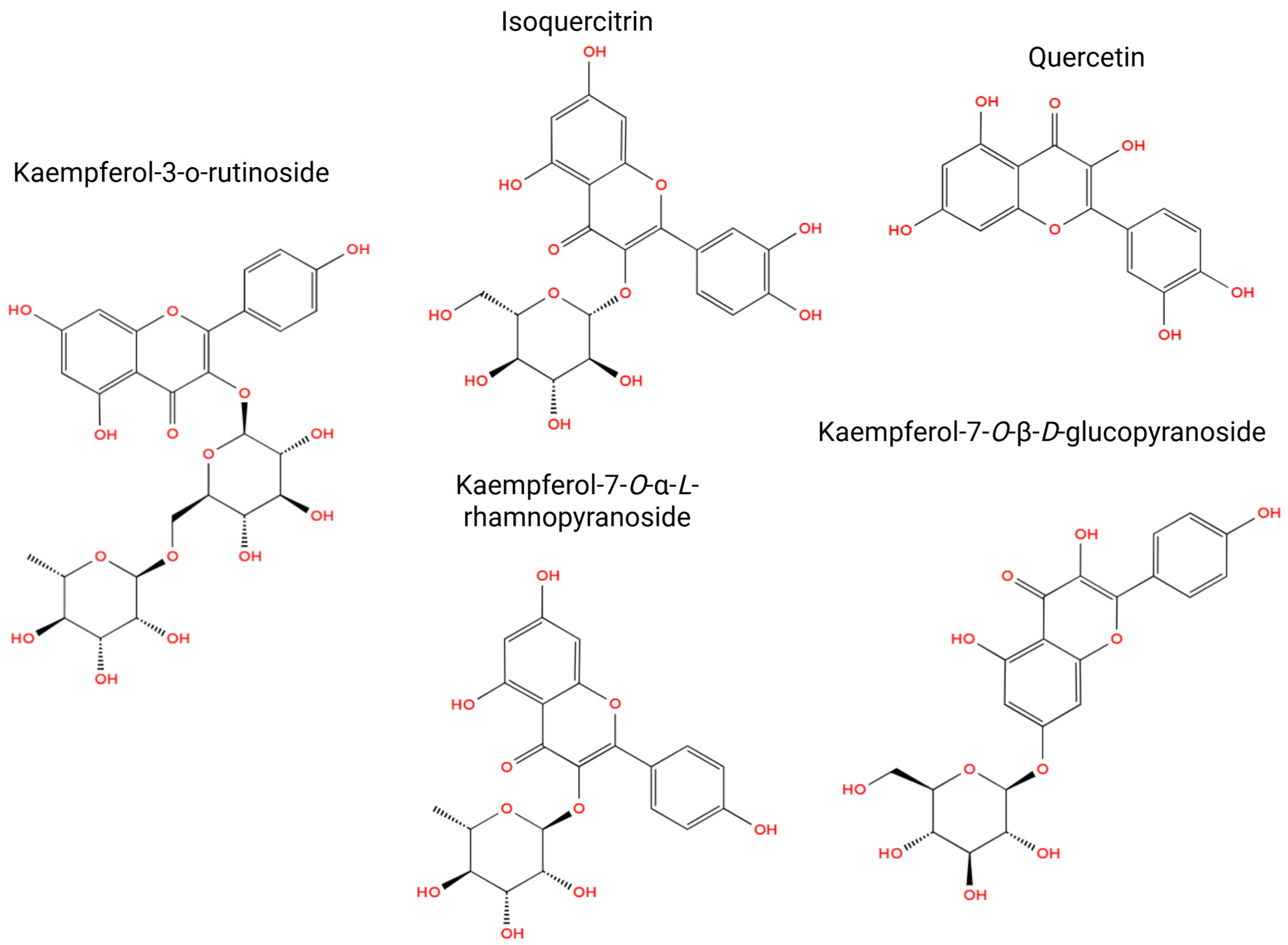
| 5 | Kaempferol 3-O-rutinoside [18] | Flavonoid | Flavonol glycoside (rutinoside) | cardioprotective, anti-inflammatory, hepatoprotective, antioxidant, antidiabetic, antifibrotic, antiapoptotic, and α-glucosidase inhibitory properties [35,36,37,38]. |
| 6 | Kaempferol 3-O-glucoside-7-O-glucoside [18] | Flavonoid | Flavonol diglycoside | — |
| 7 | Isoquercitrin [18] | Flavonoid | Flavonol 3-O-glucoside | antioxidant, anti-inflammatory, anti-angiogenic, anticancer, neuroprotective, hepatoprotective, antidiabetic, cytoprotective, anti-apoptotic, anti-melanogenic, chemopreventive, enzyme inhibitory (α-glucosidase, α-amylase, tyrosinase, CYP1A1, CYP1B1) [39,40,41] |
| 8 | 3′,7-Dihydroxy-2′,4′-dimethoxyisoflavane [18] | Isoflavonoid | Isoflavane-type compound | — |
| 9 | 3-O-[α-L-rhamnopyranosyl-(1→2)-β-Oglucopyranosyl(1→4)-β-D-glucuronopyranosyl]-soyasapogenol B [19] | Triterpenoid saponin | Oleanane-type saponin | — |
| 10 | Anagyrine [20] | Alkaloid | Quinolizidine alkaloid | teratogenic, neurotoxic, and cytotoxic [40,42,43,44,45,46,47,48,49,50] |
| 11 | Thermopsine [20] | Alkaloid | Quinolizidine alkaloid | neurotoxic, teratogenic, nAChR-modulating, antiviral (SARS-CoV-1 and SARS-CoV-2 RdRp inhibitory) [51] |
| 12 | Sparteine [20] | Alkaloid | Quinolizidine alkaloid | anticonvulsant, neuromodulatory, antiepileptic, mild analgesic, neuroprotective, muscarinic receptor (M2/M4) agonist, seizure-suppressive [52] |
| 13 | Lupanine [20] | Alkaloid | Quinolizidine alkaloid | antidiabetic, insulinotropic, glucose homeostasis regulator, KATP channel inhibitor, β-cell depolarizing agent, insulin gene (Ins-1) upregulator, non-hypoglycemic [53] |
| 14 | N-Formylcytisine [20] | Alkaloid | Quinolizidine alkaloid (cytisine-type) | — |
| 15 | 13-Hydroxysparteine [20] | Alkaloid | Quinolizidine alkaloid (hydroxylated) | — |
| 16 | N-Methylcytisine [20] | Alkaloid | Quinolizidine alkaloid (cytisine-type) | anti-inflammatory, antiviral (anti-dengue), pharmacokinetically bioavailable, anti-colitic, selective nicotinic acetylcholine receptor (nAChR) ligand, cholinergic agonist, neuroactive, behavior-modulating, cytotoxicity-measurable by UPLC–MS/MS [54] |
| 17 | Baptifoline [20] | Alkaloid | Quinolizidine alkaloid | — |
| 18 | Dictamnine [20] | Alkaloid | Furoquinoline alkaloid | anticancer, c-Met inhibitor, PI3K/AKT/mTOR and MAPK pathway suppressor, anti-inflammatory, anti-pruritic, anti-colitic, antioxidant, ferroptosis inhibitor, Nrf2–Gpx4 activator, EGFR-TKI sensitizer [55,56,57] |
| 19 | Myricitin 3-O-glucoside [21] | Flavonoid | Flavonol 3-O-glucoside | — |
| 20 | 3-O-[α-L-rhamnopyranosyl-(1→3)-β-D-glucopyranosyl(1→6)-β-D-glucuronopyranosyl]-soyasapogenol B [21] | Triterpenoid saponin | Oleanane-type saponin | — |
| 21 | Quercetin [21] | Flavonoid | Flavonol aglycone | antihyperglycemic, hypolipidemic, hypotensive, anti-obesity, antioxidant, anti-inflammatory, hepatoprotective, insulin-sensitizing, AMPK/SIRT1 activator, GLUT4 regulator [58] |
| 22 | Kaempferol [21] | Flavonoid | Flavonol aglycone | immune checkpoint inhibition (PD-1/PD-L1 blockade) [30], antioxidant 31], anti-inflammatory [32], and antitumor activities [33] |
| 23 | Kaempferol-7-O-α-L-rhamnopyranoside [21] | Flavonoid | Flavonol glycoside | vasodilatory, antihypertensive, eNOS activator, NO–cGMP–PKG pathway modulator, anti-melanogenic, tyrosinase inhibitor, cosmetic whitening agent, HSA-binding bioactive, antioxidant, anti-inflammatory [59,60,61] |
| 24 | Kaempferol-3-O-β-D-glucopyranoside [21] | Flavonoid | Flavonol 3-O-glucoside | hepatoprotective, antioxidant, anti-inflammatory, immunomodulatory, FXR–TLR4/MYD88/JNK pathway inhibitor, bile acid synthesis regulator, antitumor, antileukemic [62,63] |
| 25 | Kaempferol-3-O-β-D-glucopyranosyl(1→2)-β-D-glucopyranoside [21] | Flavonoid | Flavonol diglycoside | — |
| 26 | Kaempferol-3-O-β-D-glucopyranosyl-7-O-β-D-glucopyranoside [21] | Flavonoid | Flavonol diglycoside | — |
| 27 | Quercetin-3-O-β-D-glucopyranoside [21] | Flavonoid | Flavonol 3-O-glucoside | — |
| 28 | Myricetin-3-O-β-D-glucopyranoside [21] | Flavonoid | Flavonol 3-O-glucoside | — |
| 29 | 3-O-[α-L-rhamnopyranosyl(1→3)-β-D-glucopyranosyl(1→6)-β-D-glucuronopyranosyl]-soyasapogenol B [21] | Triterpenoid saponin | Oleanane-type saponin | — |
| 30 | 3-O-[β-D-glucopyranosyl(1→2)-β-D-glucuronopyranosyl]-azukisapogenol amide [21] | Triterpenoid saponin | Oleanane-type amide saponin | — |
| 31 | Swainsonine (SW) [22] | Alkaloid | Indolizidine alkaloid | antineoplastic, immunomodulatory, antimetastatic, antiproliferative, autophagy modulator, lysosomal inhibitor, O-GlcNAcylation regulator, CTSD maturation inhibitor, neurotoxic, mTOR/PI3K/AKT/ERK/p53 pathway regulator [64,65,66] |
| 32 | Caprolactam [23] | Lactam compound | Cyclic amide (ε-caprolactam type) | metabolite biosensor, riboswitch specificity, SELEX-based aptamer selection, high-throughput screening tool, metabolic engineering aid, caprolactam-responsive regulator, nylon-6 bioproduction enhancer [67,68] |
| 33 | Quercetin-3-O-β-D-rutinoside [23] | Flavonoid | Flavonol glycoside (rutinoside; rutin) | — |
| 34 | Apigenin-7-Oneohesperidoside,3 [23] | Flavonoid | Flavone glycoside | — |
| 35 | Kaempeferol-3-O-β-D-glucopyranoside-7-O-β-D-glucopyranoside [23] | Flavonoid | Flavonol diglycoside | — |
| 36 | Alanine [24] | Amino acid | Nonpolar, aliphatic | supports glucose metabolism and energy production through the alanine–glucose cycle [69,70,71,72,73,74] |
| 37 | Glycine [24] | Amino acid | Nonpolar, aliphatic | functions as a neurotransmitter and contributes to collagen synthesis and antioxidant defense [69,70,71,72,73,74] |
| 38 | Leucine [24] | Amino acid | Nonpolar, aliphatic | stimulates muscle protein synthesis via mTOR signaling and promotes tissue repair [69,70,71,72,73,74] |
| 39 | Isoleucine [24] | Amino acid | Nonpolar, aliphatic | regulates glucose uptake, hemoglobin formation, and muscle recovery [69,70,71,72,73,74] |
| 40 | Valine [24] | Amino acid | Nonpolar, aliphatic | aids muscle growth, nitrogen balance, and endurance [69,70,71,72,73,74] |
| 41 | Glutamic acid [24] | Amino acid | Acidic (negatively charged) | acts as an excitatory neurotransmitter and precursor of GABA [69,70,71,72,73,74] |
| 42 | Threonine [24] | Amino acid | Polar, uncharged | maintains gut integrity and supports protein and mucin synthesis [69,70,71,72,73,74] |
| 43 | Proline [24] | Amino acid | Nonpolar, cyclic (imino acid) | strengthens collagen structure and promotes wound healing [69,70,71,72,73,74] |
| 44 | Methionine [24] | Amino acid | Nonpolar, sulfur-containing | provides methyl groups for DNA methylation and supports antioxidant synthesis [69,70,71,72,73,74] |
| 45 | Serine [24] | Amino acid | Polar, uncharged | participates in nucleotide, phospholipid, and amino acid biosynthesis [69,70,71,72,73,74] |
| 46 | Aspartic acid [24] | Amino acid | Acidic (negatively charged) | supports urea cycle, energy metabolism, and hormone regulation [69,70,71,72,73,74] |
| 47 | Cystine [24] | Amino acid | Sulfur-containing (derived from cysteine) | supports urea cycle, energy metabolism, and hormone regulation [69,70,71,72,73,74] |
| 48 | Oxyproline (Hydroxyproline) [24] | Amino acid | Modified imino acid | maintains collagen stability and tissue strength [69,70,71,72,73,74] |
| 49 | Phenylalanine [24] | Amino acid | Aromatic, nonpolar | precursor for tyrosine and catecholamine neurotransmitters [69,70,71,72,73,74] |
| 50 | Tyrosine [24] | Amino acid | Aromatic, polar | precursor for thyroid hormones, melanin, and catecholamines [69,70,71,72,73,74] |
| 51 | Histidine [24] | Amino acid | Basic (positively charged) | precursor for histamine and involved in immune and antioxidant functions [69,70,71,72,73,74] |
| 52 | Ornithine [24] | Amino acid | Basic, non-proteinogenic | key intermediate in the urea cycle and promoter of cell growth and repair [69,70,71,72,73,74] |
| 53 | Arginine [24] | Amino acid | Basic (positively charged) | precursor of nitric oxide for vasodilation and immune modulation [69,70,71,72,73,74] |
| 54 | Lysine [24] | Amino acid | Basic (positively charged) | essential for collagen formation, calcium absorption, and antiviral defense [69,70,71,72,73,74] |
| 55 | Tryptophan [24] | Amino acid | Aromatic, nonpolar | precursor for serotonin, melatonin, and niacin, regulating mood and sleep [69,70,71,72,73,74] |
| 56 | Myristic acid [24] | Fatty acid | Saturated fatty acid | antimicrobial, surfactant, membrane-stabilizing, lipid-anchoring, pro-inflammatory modulator, metabolic energy source [75,76,77,78,79] |
| 57 | Pentadecanoic acid [24] | Fatty acid | Saturated fatty acid | odd-chain saturated fatty acid, biomarker of dairy fat intake, anti-inflammatory, insulin-sensitizing, cardioprotective [75,76,77,78,79] |
| 58 | Palmitic acid [24] | Fatty acid | Saturated fatty acid | major saturated fatty acid in mammals, structural component of membranes, signaling lipid precursor, pro-inflammatory, lipotoxic at high levels [75,76,77,78,79] |
| 59 | Palmitoleic acid [24] | Fatty acid | Monounsaturated fatty acid | monounsaturated fatty acid, lipokine activity, anti-inflammatory, improves insulin sensitivity, regulates hepatic lipid metabolism [75,76,77,78,79] |
| 60 | Stearic acid [24] | Fatty acid | Saturated fatty acid | long-chain saturated fatty acid, neutral effect on plasma cholesterol, membrane-stabilizing, energy storage, emollient in cosmetics [75,76,77,78,79] |
| 61 | Oleic acid [24] | Fatty acid | Monounsaturated fatty acid | monounsaturated ω-9 fatty acid, anti-inflammatory, antioxidant, cardioprotective, improves lipid profile, enhances membrane fluidity [75,76,77,78,79] |
| 62 | Linoleic acid [24] | Fatty acid | Polyunsaturated fatty acid | essential ω-6 polyunsaturated fatty acid, precursor of arachidonic acid, maintains skin barrier, regulates inflammation, modulates cell signaling [75,76,77,78,79] |
| 63 | Linolenic acid [24] | Fatty acid | Polyunsaturated fatty acid | essential ω-3 polyunsaturated fatty acid, anti-inflammatory, neuroprotective, cardiovascular protective, precursor of EPA and DHA [75,76,77,78,79] |
Disclaimer/Publisher’s Note: The statements, opinions and data contained in all publications are solely those of the individual author(s) and contributor(s) and not of MDPI and/or the editor(s). MDPI and/or the editor(s) disclaim responsibility for any injury to people or property resulting from any ideas, methods, instructions or products referred to in the content. |
© 2025 by the authors. Licensee MDPI, Basel, Switzerland. This article is an open access article distributed under the terms and conditions of the Creative Commons Attribution (CC BY) license.
Share and Cite
Raganina, K.; Amirkhanova, A.; Akhelova, S.; Berdgaleyeva, A.; Amantayeva, M.; Kartbayeva, E.; Kaldybayeva, A.; Nurlybayev, M.; Ikhsanov, Y.; Iztileu, N.; et al. Phytochemistry, Bioactivity, and Toxicological Duality of Oxytropis glabra DC: A Review. Molecules 2026, 31, 44. https://doi.org/10.3390/molecules31010044
Raganina K, Amirkhanova A, Akhelova S, Berdgaleyeva A, Amantayeva M, Kartbayeva E, Kaldybayeva A, Nurlybayev M, Ikhsanov Y, Iztileu N, et al. Phytochemistry, Bioactivity, and Toxicological Duality of Oxytropis glabra DC: A Review. Molecules. 2026; 31(1):44. https://doi.org/10.3390/molecules31010044
Chicago/Turabian StyleRaganina, Karlygash, Akerke Amirkhanova, Sholpan Akhelova, Aiman Berdgaleyeva, Meruyert Amantayeva, Elmira Kartbayeva, Aigul Kaldybayeva, Madi Nurlybayev, Yerbol Ikhsanov, Nurzhan Iztileu, and et al. 2026. "Phytochemistry, Bioactivity, and Toxicological Duality of Oxytropis glabra DC: A Review" Molecules 31, no. 1: 44. https://doi.org/10.3390/molecules31010044
APA StyleRaganina, K., Amirkhanova, A., Akhelova, S., Berdgaleyeva, A., Amantayeva, M., Kartbayeva, E., Kaldybayeva, A., Nurlybayev, M., Ikhsanov, Y., Iztileu, N., Shynykul, Z., & Koilybayeva, M. (2026). Phytochemistry, Bioactivity, and Toxicological Duality of Oxytropis glabra DC: A Review. Molecules, 31(1), 44. https://doi.org/10.3390/molecules31010044