As shown in
Table 1, the composition of the control and experimental yogurts differed in terms of dry matter. In the control samples, dry matter values ranged from 12.63% to 13.50% and were slightly lower than in the experimental yogurts, which ranged from 12.89% to 14.17%. As can be seen in
Table 1, these levels were lower than the typical values reported for traditional commercial yogurts, which usually have a dry matter content of 14–16% [
17]. Intentionally maintaining the dry matter content at a lower level made it possible to limit the stabilizing effect of natural milk components, such as casein, lactose, and fat, which in turn enabled a more precise assessment of the role of polysaccharides in shaping the structural properties of the product. The literature emphasizes that an increase in dry matter content improves the consistency and water retention of yogurt, but at levels exceeding 14%, milk proteins take over the dominant stabilizing function, which may weaken the visible effect of polysaccharide additives. In the analyses carried out, the protein content was similar in all samples, as a result of raw-material standardization, and ranged from 3.97 to 4.53%. These values correspond to the typical protein level in yogurts produced from skim milk. The fat content, in line with the use of skim milk, remained very low (0.05–0.07%), which was important for eliminating the influence of this component on the textural and sensory properties of the tested samples.
2.1. Acidity and Acidification Dynamics
The early stages of fermentation were characterized by a more rapid acid production of
Streptococcus thermophilus, while
Lactobacillus delbrueckii subsp.
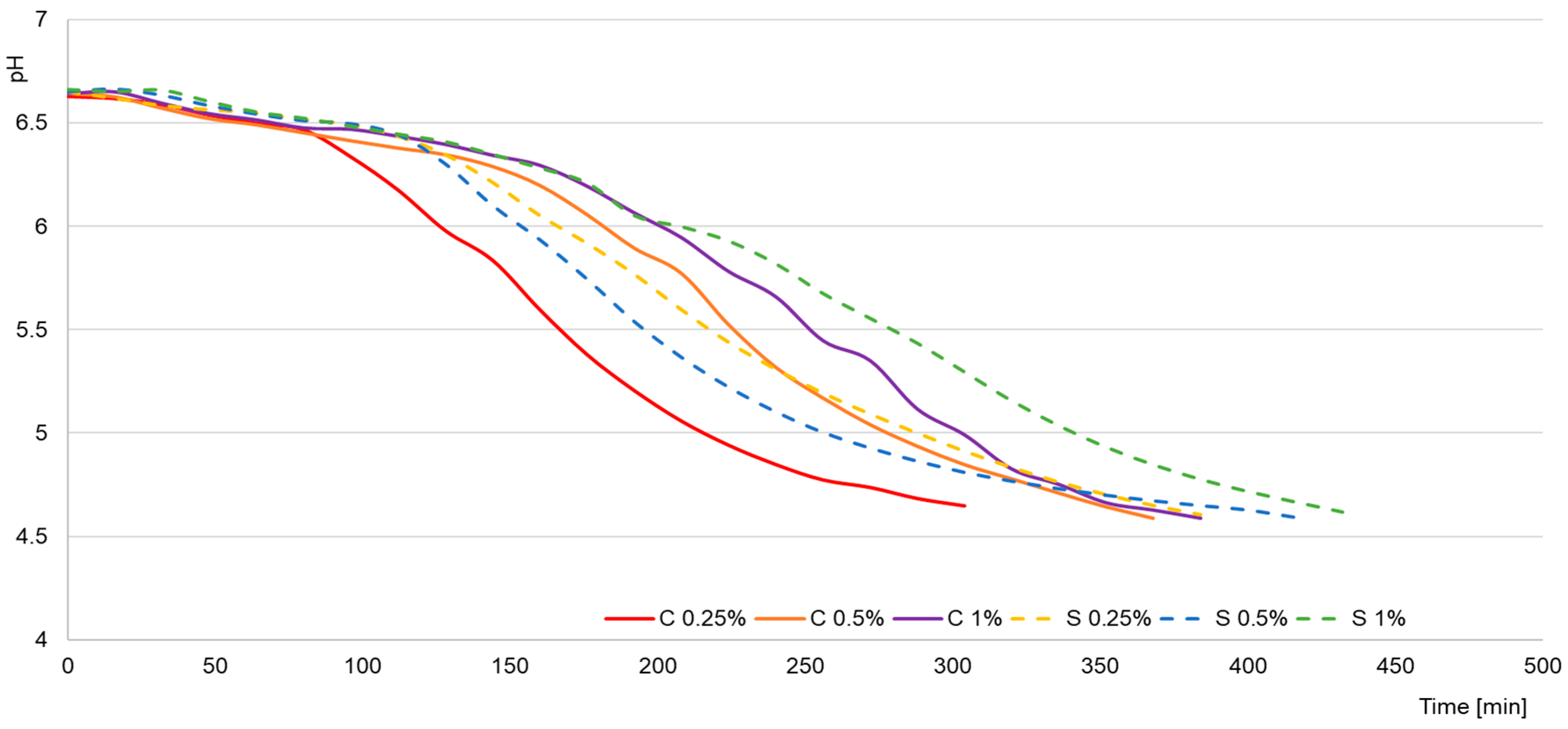
bulgaricus initiated intensive acidification in the later phase, generating the greatest amount of lactic acid at the end of the process, as illustrated in
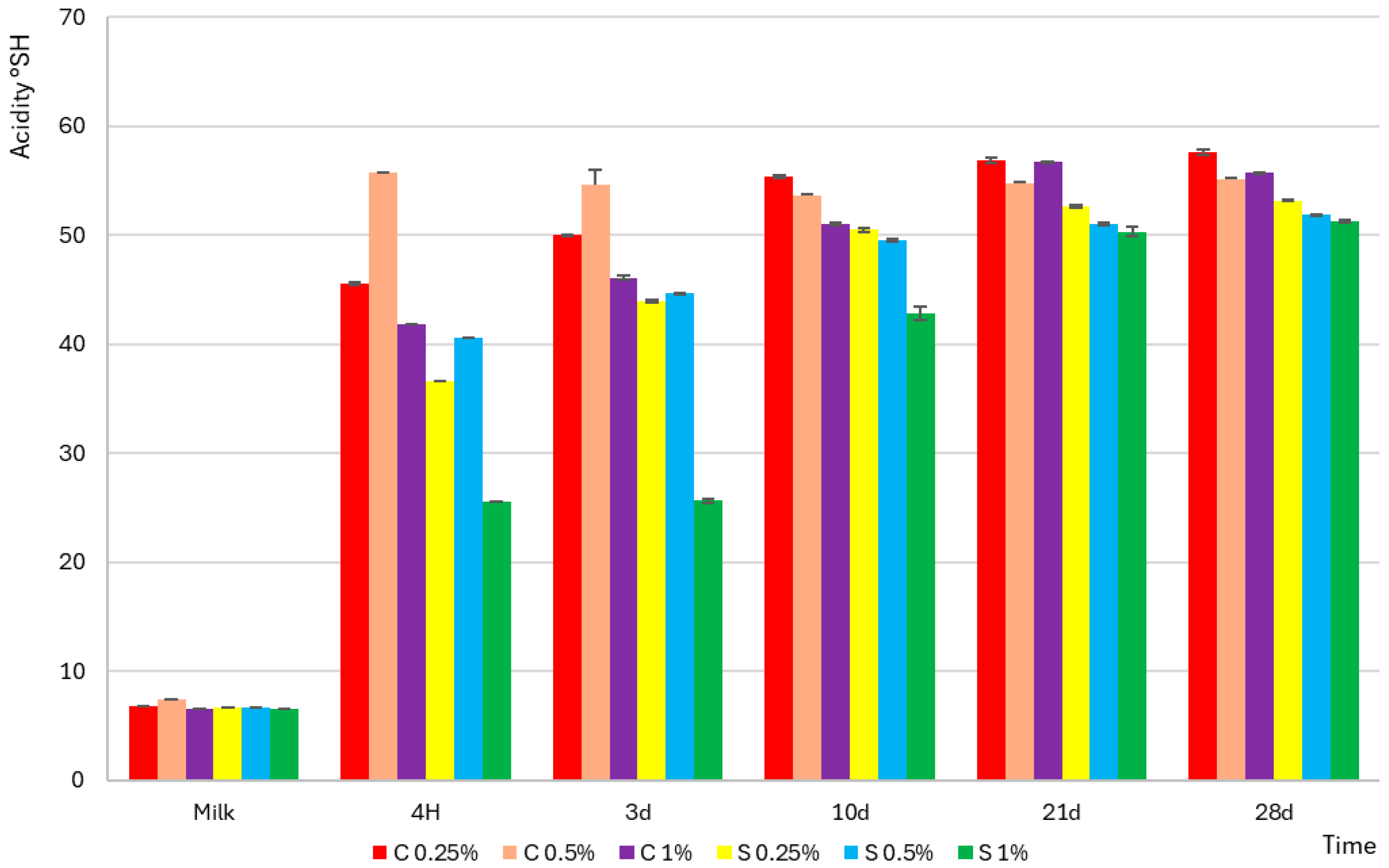
Figure 1. Raw milk was characterized by low acidity (6.8–7.4 °SH) and high pH (6.63–6.75), and
Figure 2 confirms that the addition of scleroglucan did not significantly affect the initial values (e.g., 0.25% C–6.63 °SH; pH 6.63; 0.25% S–6.72 °SH; pH 6.72). After fermentation, the faster acidification rate observed in the control yogurts is clearly visible in
Figure 2, where the 0.25% C sample reached pH 4.6 after approximately 310 min, compared with 384 min for 0.25% S and 432 min for 1% S.
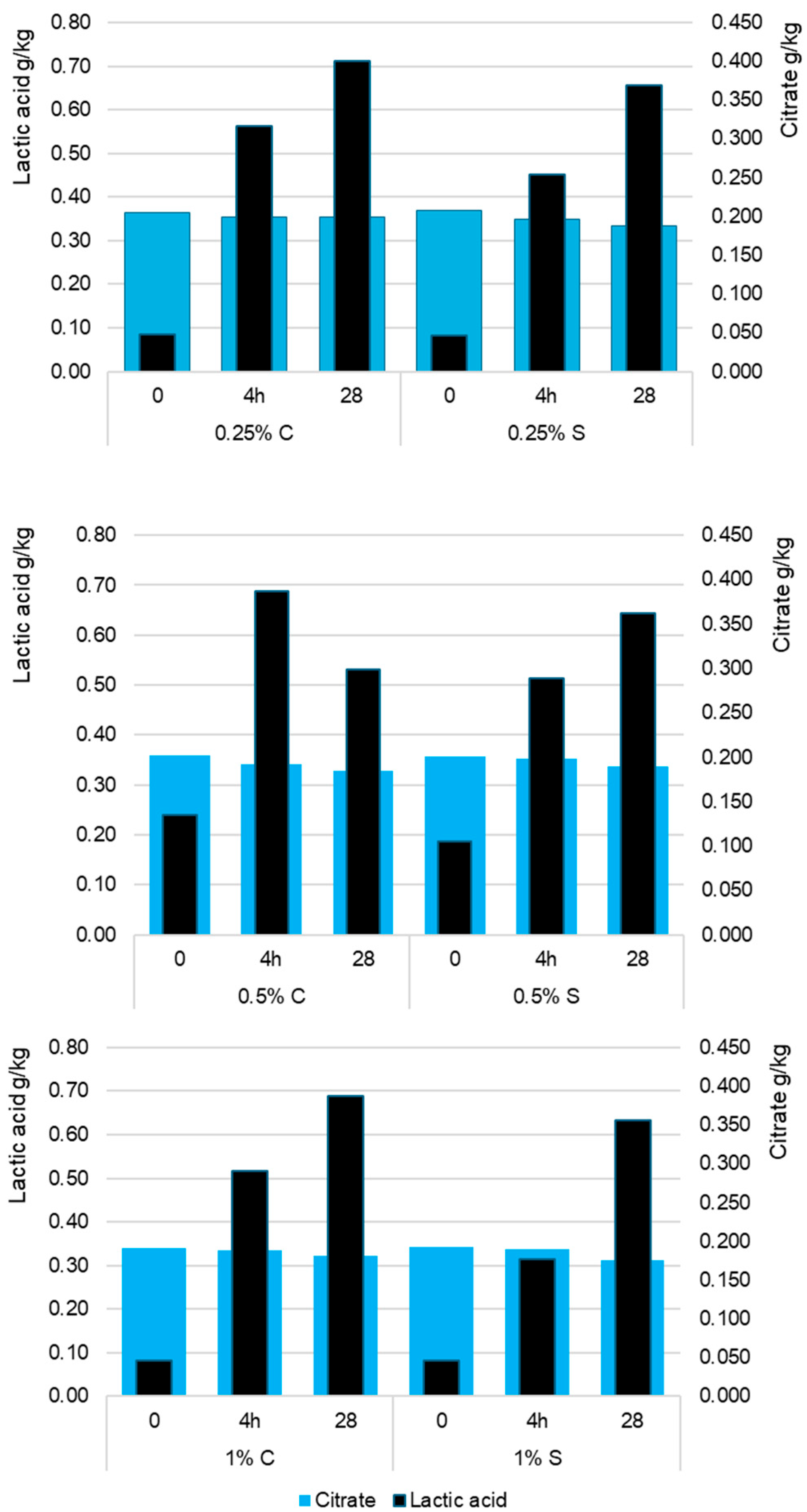
This was accompanied by an intense increase in the lactic acid concentration. In 0.25% C, it increased from 0.048 g/100 g to 0.316 g/100 g after 4 h and to 0.400 g/100 g on day 28, while in 0.25% S, the values were 0.046 g/100 g, 0.254 g/100 g, and 0.369 g/100 g, respectively. The observed relationships shown in
Figure 2 indicate that the decrease in pH and increase in acidity were directly related to the accumulation of lactic acid, and the scleroglucan content determined both the rate and the extent [
18]. The slower acidification observed in the samples containing scleroglucan can be attributed to limitations in substrate and metabolite diffusion caused by the increased viscosity and density of the protein–polysaccharide matrix. The triple-helical conformation of scleroglucan creates a thickened environment that reduces the mobility of lactose, amino acids and dissolved oxygen, which slows the glycolytic activity of starter cultures. Restricted oxygen transfer also modifies the redox balance, reducing the efficiency of NAD
+ regeneration needed for sustained lactic acid synthesis. Such viscosity-driven constraints on fermentation kinetics were also demonstrated for matrices enriched with oat β-glucan or curdlan, where increased environmental density reduced the metabolic activity of
Streptococcus thermophilus and
Lactobacillus delbrueckii subsp.
bulgaricus [
19]. During storage (days 3–28),
Figure 2 shows a milder increase in acidity and a slight decrease in pH. After 28 days, the control yogurts reached values of 57.6 °SH (0.25% C; pH 4.28), 54.7 °SH (0.5% C; pH 4.23), and 56.7 °SH (1% C; pH 4.22). Yogurts with scleroglucan showed lower final values: 53.2 °SH (0.25% S; pH 4.30), 51.8 °SH (0.5% S; pH 4.27), and 51.2 °SH (1% S; pH 4.22). These results were consistent with the lower lactic acid concentration in the experimental samples, confirming that scleroglucan reduced acid production during storage. Lower titratable acidity values corresponded directly to lower lactic acid levels, indicating that the presence of this polysaccharide limited the rate of acid synthesis, with the effect being most pronounced at the 1% level. From a technological and sensory point of view, this effect can be beneficial, as it helps to maintain a milder taste profile and greater stability of the yogurt matrix during storage.
2.3. Sugar Metabolism (Lactose, Glucose, Galactose)
Lactose metabolism depended significantly on both storage time (
p < 0.001; η
2p = 0.723) and the concentration of scleroglucan (
p < 0.001; η
2p = 0.410). The greatest changes occurred in the first 4 h of fermentation, when a rapid decrease in lactose concentration was accompanied by an increase in simple sugars, associated with enhanced β-galactosidase activity. In the later stages (4 h–28 days), the rate of change slowed down but remained statistically significant (
p < 0.001). As can be observed in
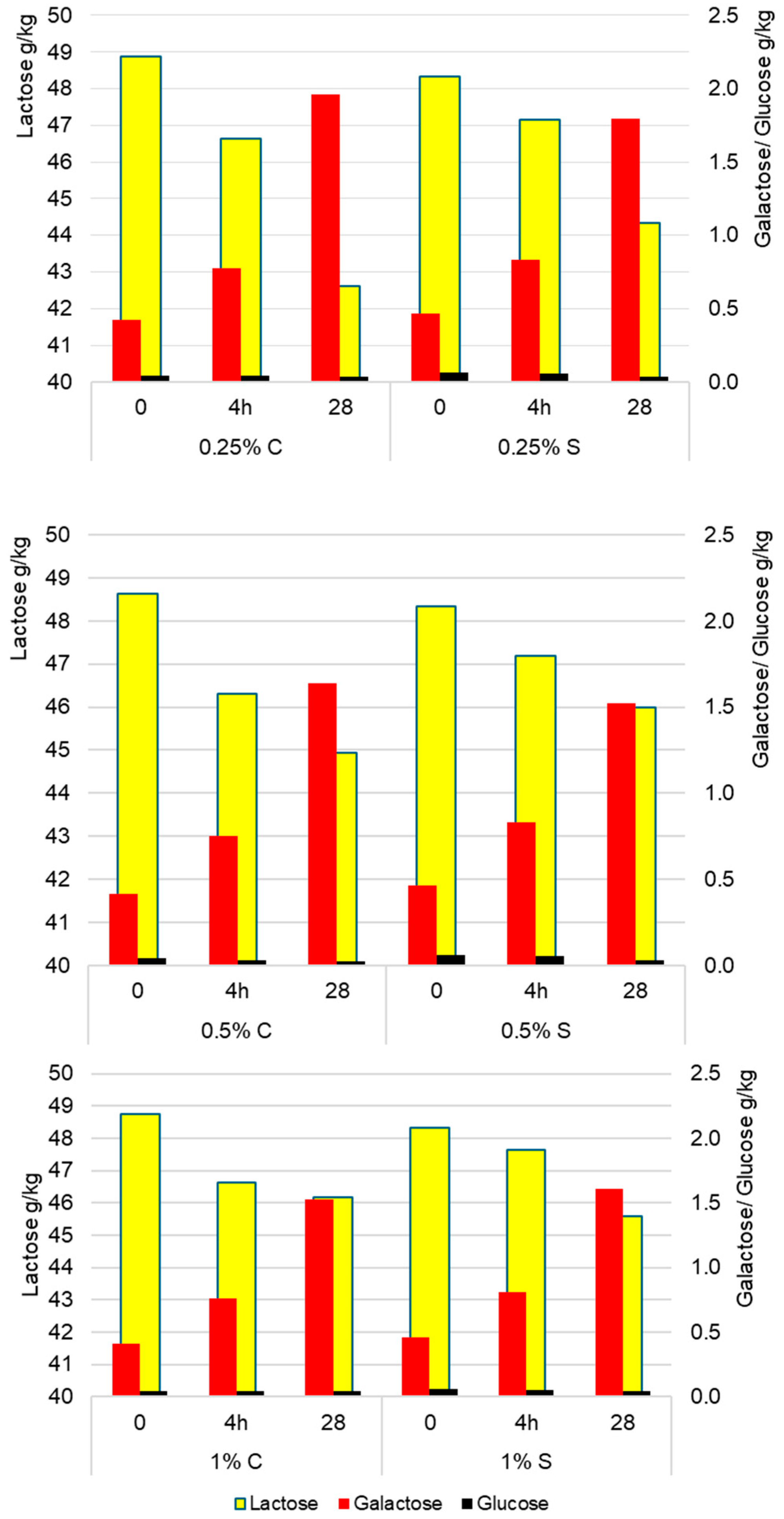
Figure 4, the highest rate of lactose conversion was found in yogurt with 0.25% scleroglucan, where after 28 days the lactose content decreased to 44.34 g/kg, and at the same time the highest accumulation of galactose (1.80 g/kg of product) and a minor reduction in glucose (0.03 g/kg). These results indicate that variants with a higher polysaccharide concentration were characterized by slower lactose hydrolysis, resulting in higher final lactose levels (45.99 g/kg for 0.5% S and 45.59 g/kg for 1% S) and lower galactose contents (1.52 g/kg and 1.61 g/kg, respectively) in
Figure 4. The analysis of variance (ANOVA) showed a significant effect of the polysaccharide concentration on lactose content (
p < 0.001). The differences between variants were +1.65 g/kg (0.25 vs. 0.5%), +1.25 g/kg (0.25 vs. 1.0%), and −0.40 g/kg (0.5 vs. 1.0%). These results indicate that higher doses of scleroglucan slowed lactose hydrolysis and monosaccharide accumulation, likely due to limited diffusion of substrates and metabolites in the denser protein–polysaccharide matrix. Similar relationships were reported by Aljewicz et al. (2020) [
19], who showed that oat β-glucan and curdlan, by modifying the microstructure of the gel, affected the transport of substrates and metabolites and the dynamics of lactose utilization. In turn, Brüls et al. (2024) [
21] showed that different exopolysaccharides reorganize the casein network and modulate secondary sugar transformations by influencing gel mechanics and the susceptibility of the system to syneresis. Consistent with these findings, in the present study, higher doses of scleroglucan limited lactose metabolism, while the lowest level (0.25%) promoted more intensive hydrolysis and galactose accumulation.
2.4. Analysis of Volatile Compounds
The aroma of yogurt is the result of the microbial metabolism of lactose, proteins, and lipids by microorganisms, leading to the synthesis of compounds that give the product its characteristic sensory properties. Additional aroma notes may also be formed through interactions and transformations between volatile and non-volatile compounds [
22]. The literature describes approximately 117 volatile compounds present in yogurt, including carbonyl compounds, acids, alcohols, esters, and other volatile metabolites [
23]. The most important aroma-active compounds include acetaldehyde, diacetyl (2,3-butanedione), acetoin, 2,3-pentanedione, and acetic acid, which are the main components responsible for the sensory profile of yogurt [
23].
Dimethyl sulfide (DMS), derived from the degradation of sulfur-containing amino acids and lipid precursors, contributes a sweet, buttery aroma at low levels, but imparts undesirable sulfur notes at higher concentrations. Its synthesis by lactic acid bacteria is linked to the redox potential of the medium oxidative conditions favor DMS formation [
24]. Due to its high specific surface area and greater susceptibility to oxidation, the addition of milk powder could generate additional sulfur precursors, increasing DMS accumulation [
25]. Dimethyl sulfide (DMS) was strongly affected by both scleroglucan concentration (
p < 0.001; η
2p = 0.986) and fermentation time (
p < 0.001; η
2p = 0.969). As indicated in
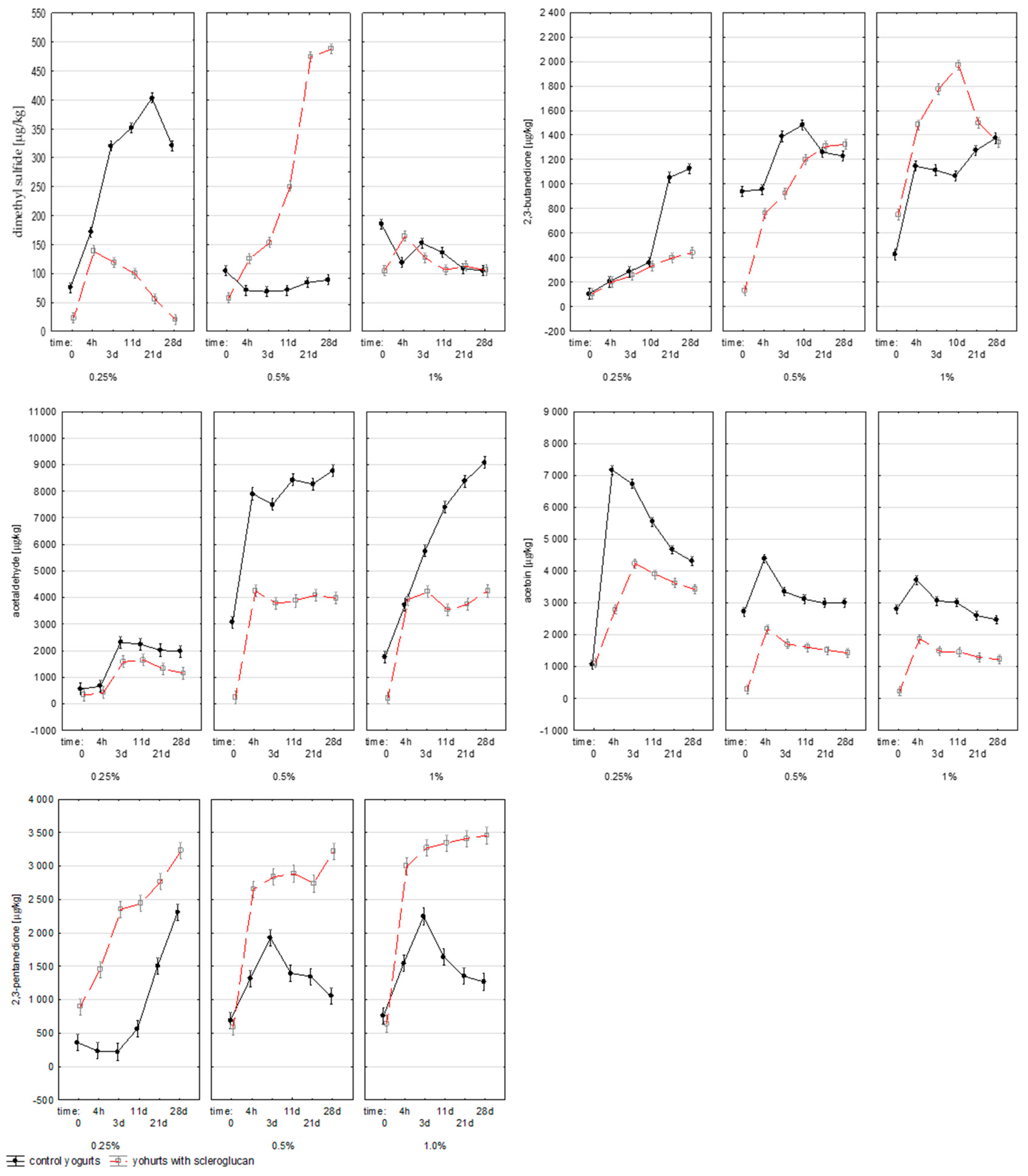
Figure 5, all samples exceeded the sensory threshold for DMS. The higher viscosity of scleroglucan-containing gels likely reduced oxygen diffusion, creating conditions favoring DMS accumulation.
Diacetyl (2,3-butanedione), a major carbonyl compound, plays a central role in shaping the buttery and creamy aroma of yogurt. Its accumulation was significantly influenced by milk powder content (
p < 0.001; η
2p = 0.985), fermentation time (
p < 0.001; η
2p = 0.980), and the interaction between factors (
p < 0.001; η
2p = 0.965). In the 0.25% C sample, the concentration exceeded 1.1 mg/kg after 28 d, while in yogurts with 0.25% S it was reduced to around 0.4 mg/kg, confirming the inhibitory effect of scleroglucan at low levels. Higher concentrations (0.5–1.0% S) resulted in a renewed increase, reaching up to 2.0 mg/kg. These patterns, as shown in
Figure 5, indicated a concentration-dependent effect. All values were above the odor perception threshold (1.1 µg/kg), confirming the sensory relevance of diacetyl in all samples. In the literature, diacetyl values in yogurt range from 0.2–3.0 mg/kg, depending on the strains and fermentation conditions [
26,
27]. In conditions of limited carbon availability or in the presence of more slowly metabolized carbohydrates, lactic acid bacteria switch to mixed acid metabolism, producing a variety of products, including diacetyl and its derivatives [
28]. Comparable relationships between fermentation conditions and diacetyl biosynthesis have been reported by Smid and Kleerebezem [
29], and Irigoyen et al. [
30]. The data presented show that scleroglucan had a significant effect on diacetyl biosynthesis, and the nature of this effect depended on the dose used.
Acetoin (3-hydroxy-2-butanone), formed by the reduction of diacetyl, provides mild, creamy notes that balance the acidic taste of yogurt. Its concentration depended significantly on milk powder level (
p < 0.001; η
2p = 0.974), fermentation time (
p < 0.001; η
2p = 0.977), and their interaction (
p < 0.001; η
2p = 0.971). In yogurts with scleroglucan, acetoin levels were generally lower, particularly during the early stages of fermentation. This may reflect a shift from reductive to oxidative metabolism associated with lower substrate mobility and oxygen transfer within a denser gel matrix. Similar metabolic competition between acetoin and diacetyl synthesis pathways has been described by Cheng et al. [
28]. Reduced diffusion of substrates in a thicker gel matrix containing scleroglucan may have shifted the balance toward oxidative pathways, resulting in lower acetoin concentrations. Acetoin is responsible for the mild, creamy aftertaste that balances the pronounced sour notes of yogurt. Its lower levels in the scleroglucan samples may explain the milder sensory character of these products, which is confirmed by literature data indicating that other polysaccharides also limit the biosynthesis of short-chain carbonyl compounds (C
4) [
28].
Acetaldehyde is the main compound responsible for the fresh, characteristic aroma of yogurt, often described as “green apple” or “nutty.” It is produced by several metabolic pathways of
Lactobacillus and
Streptococcus species, including the conversion of lactose, valine, pyruvate, acetyl phosphate, and threonine [
19,
29]. In the control yogurts, the acetaldehyde concentration was strongly dependent on the milk powder level (
p < 0.001; η
2p = 0.989) and fermentation time (
p < 0.001; η
2p = 0.977). As can be seen in
Figure 5, the 0.25% C variant reached about 2.3 mg/kg after fermentation, while in 0.5% C and 1.0% C, the concentrations were significantly higher, 8.8 and 9.1 mg/kg, respectively. Compared to the results of Aljewicz, et al. [
19], where acetaldehyde levels were 5.1 mg/kg for skimmed yogurt and 0.63 mg/kg for full-fat yogurt, the values obtained in this study were markedly higher. These differences can be explained by the different fermentation conditions and increased oxygen diffusion resulting from higher milk powder content, which enhances precursor availability and redox activity. The reduced acidification rate observed in yogurts containing scleroglucan likely resulted from the diffusion-limiting properties of the polysaccharide matrix. The formation of a dense, triple-helical scleroglucan network restricted oxygen transfer and metabolite exchange, thereby altering the redox balance and pyruvate metabolism of lactic acid bacteria. This mechanism explains both the slower acidification and the lower acetaldehyde concentration observed in the experimental samples.
Figure 5 also illustrates that scleroglucan addition reduced acetaldehyde accumulation at 0.25% and 0.5% concentrations, confirming a similar inhibitory trend previously reported for oat β-glucan [
19]. In yogurts with 1.0% scleroglucan, a rapid initial increase was observed, followed by a lower final concentration compared with the control. This behavior suggests that the polysaccharide may bind aldehyde precursors or modulate bacterial enzyme activity, thereby reducing the synthesis and accumulation of acetaldehyde during fermentation and storage.
2,3-Pentanedione, a diketone compound formed through the metabolism of branched-chain amino acids (valine and leucine) and pyruvate, is responsible for the buttery–creamy aroma characteristic of fermented milk products. In the control samples, the concentration initially decreased from 360.1 ± 8.3 µg/kg to 218.3 ± 8.0 µg/kg (3 d), followed by a marked increase to 1505.0 ± 42.6 µg/kg at 21 d and 2309.2 ± 138.5 µg/kg at 28 d. In yogurts with 0.25% scleroglucan, the content was higher throughout fermentation—from 893.8 ± 69.4 µg/kg initially to 2352.5 ± 139.6 µg/kg (3 d) and 3229.1 ± 129.4 µg/kg (28 d). Similar values were observed for 0.5% S and 1% S, reaching approximately 3000–3500 µg/kg. As evident in
Figure 5, scleroglucan stimulated 2,3-pentanedione formation, most likely by enhancing oxidative carbon metabolism and altering carbon flow among pyruvate-derived pathways. The combined increase in 2,3-pentanedione and the selective decrease in diacetyl at low scleroglucan levels support this interpretation [
29].
2.5. Microbiological Analysis—Viability of Starter Cultures
The viability of
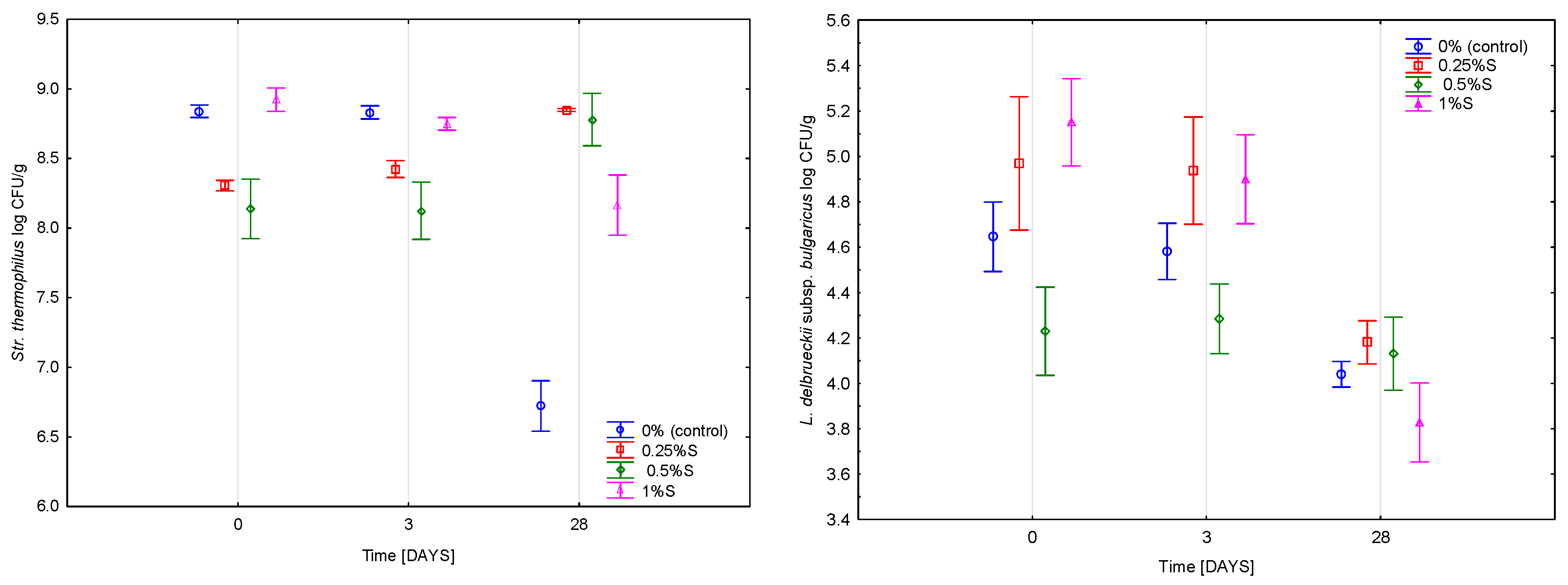
Streptococcus thermophilus remained high throughout storage and showed similar levels across all samples up to day 21 (approx. 8.5 log CFU/g). As can be seen in
Figure 6, a decline was observed in the control thereafter, reaching 5.85 log CFU/g by day 28, whereas the 1% S variant exhibited a smaller reduction of about 0.8 log unit. In contrast, the 0.5% S sample showed a slight increase (+0.65 log unit) between day 21 and day 28. Significant effects of scleroglucan concentration (
p < 0.001; η
2p = 0.351), storage time (
p < 0.001; η
2p = 0.217), and their interaction (
p < 0.001; η
2p = 0.941) were confirmed.
The viability of
Lactobacillus delbrueckii subsp.
bulgaricus was driven primarily by storage time (
p < 0.001; η
2p = 0.944), with a weaker effect of scleroglucan concentration (
p < 0.001; η
2p = 0.840). As illustrated in
Figure 6, counts at day 28 reached approximately 4.3 log CFU/g in the control. A slight increase occurred in the 0.25% S variant (+0.1 log), whereas the 0.5% S sample showed a more pronounced decrease (0.67 log CFU/g). The 1% S variant remained comparable to the control.
These relationships are confirmed by the results of the experiments with pullulan [
15] and previous studies concerning oat β-glucan and curdlan [
19], which also demonstrated that polysaccharides can influence the survival dynamics of lactic acid bacteria by modifying the physical structure of the matrix and its diffusion properties. The reduction in
L. bulgaricus counts was largely associated with the use of skimmed milk lacking the protective elements of the fat globule membrane, such as proteins and lipids. In this system, scleroglucan performed a sole stabilizing role, but its protective effect was limited compared to the natural components of the fat membrane [
30]. The structural effects of scleroglucan such as increased viscosity, reduced serum mobility and a more compact matrix provided partial stabilization that was sufficient to maintain higher
S. thermophilus counts but did not fully protect the more acid-sensitive
L. bulgaricus. Overall, the results demonstrate that scleroglucan did not inhibit starter culture activity and, at higher concentrations, improved the late-stage stability of
S. thermophilus, while exerting a more limited effect on
L. bulgaricus due to the inherent constraints of a low-fat system.
2.6. Syneresis
In yogurts produced from skimmed milk, syneresis reached high levels. As shown in
Table 2, after 3 days, whey separation amounted to 23.18% in the 0.25% C sample and 29.67% in the 1% C variant. After 28 days, syneresis decreased to approximately 20% in samples with higher milk powder content (0.5% C and 1% C), while no significant change was observed in the 0.25% C variant. As can be seen in
Table 2, all scleroglucan-containing samples exhibited complete suppression of syneresis (0.00% at both 3 and 28 days).
These values in
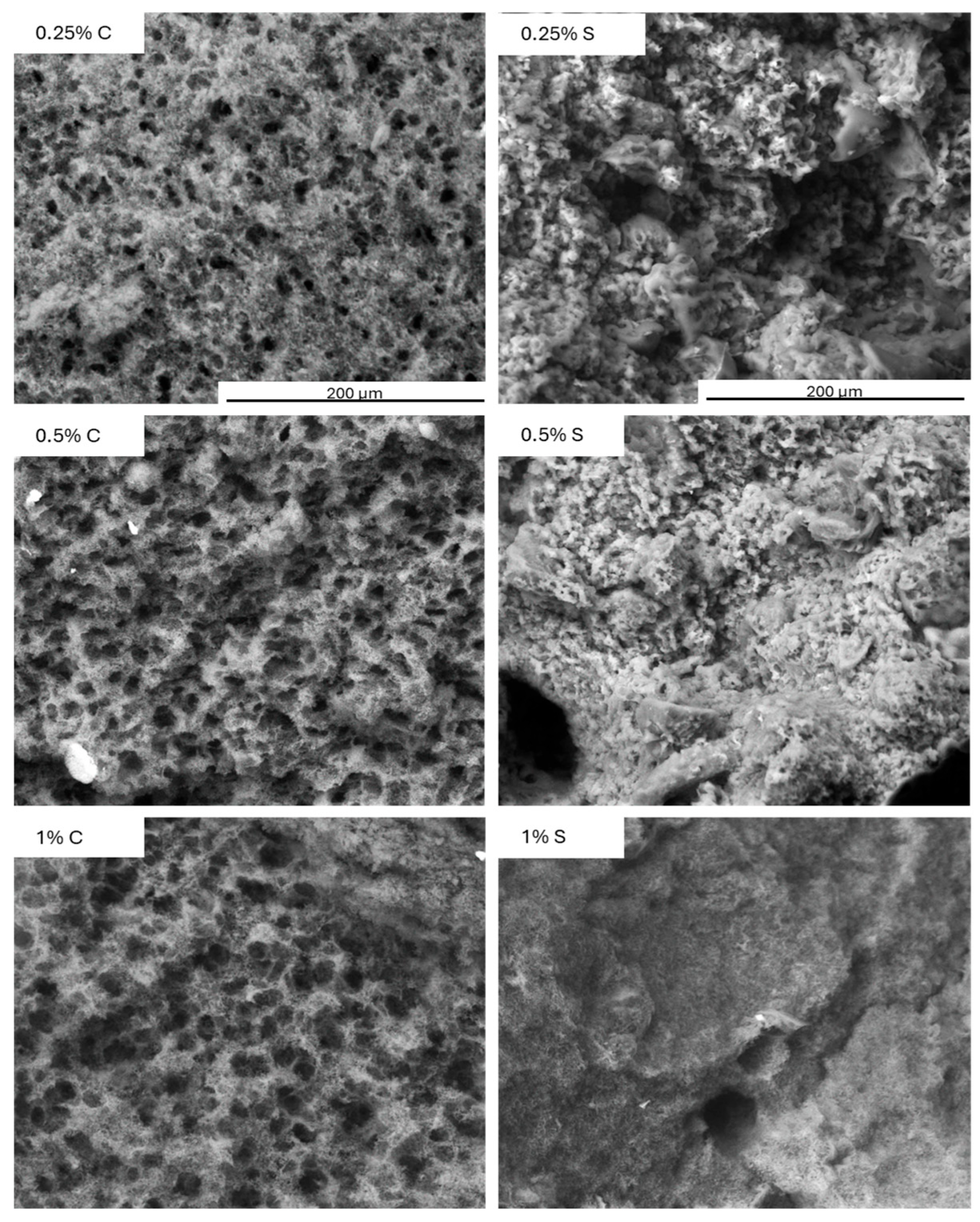
Table 2 indicate that the absence of syneresis in the scleroglucan variants directly reflects the microstructural changes observed in the SEM analysis. At 0.25–0.5%, the polysaccharide visibly smoothed and narrowed the pores within the protein network, while at 1.0% it produced a compact, continuous, nearly pore-free matrix. This structural reinforcement immobilized serum within the gel and prevented whey expulsion even during long-term storage.
In skimmed milk yogurts, the lack of fat globules weakens the structural integrity of the gel, making it highly susceptible to whey separation. Scleroglucan compensated for this deficit by integrating into the casein network, increasing its density and water-binding capacity, and reducing the size and connectivity of channels through which serum typically migrates. In control samples, the moderate reduction in syneresis by day 28 was associated with gradual restructuring of the protein matrix and improved hydration, particularly where higher levels of milk powder increased solids content. At lower solids, however, this effect was minimal due to insufficient network consolidation. The strong stabilising effect of scleroglucan corresponds with findings for other β-glucans and hydrocolloids, which enhance water retention through protein–polysaccharide interactions and the formation of denser gel structures [
31,
32,
33,
34]. Here, even the lowest concentration of scleroglucan (0.25%) eliminated whey separation, which is consistent with SEM observations and fully supported by the data in
Table 2.
2.7. Rheology Analysis
The analysis of flow curves showed a good fit to the Herschel–Bulkley model (R
2 = 0.897–0.998). As shown in
Table 2, the coefficient of determination decreased systematically with increasing scleroglucan content and storage time, which can be attributed to increased cross-linking and the formation of stresses within the protein matrix. In the control samples, after mild mixing, the yield value (τ
0) was close to zero, while the presence of scleroglucan caused a marked increase in this parameter: τ
0 ≈ 16.04 Pa (0.25% S3), 25.24 Pa (0.5% S3), and 45.24 Pa (1% S3). As can be seen in
Table 2, during storage, there was a slight decrease in the τ
0 values (e.g., 0.25% S28, 0.5% S28, 1% S28), indicating a gradual reorganization of the protein–polysaccharide network while maintaining its stability. Scleroglucan in the triple-helical conformation increased the stiffness of the microstructure and limited the rate of its changes during storage. A similar effect was reported for other polysaccharides, where anionic gellan at a concentration of 0.02% caused an increase in τ
0, improving yogurt texture [
2,
9].
The consistency coefficient (K) in control yogurts increased with the proportion of milk powder and storage time. As presented in
Table 2, the response in scleroglucan variants was non-linear response: in the 0.25% S3 and 0.5% S3 samples, the K values were lower than in the controls (e.g., 0.25% C3: 115.51 Pa·s
n vs. 21.47 Pa·s
n), while at 1% S addition, the index exceeded the control values (199.11 Pa·s
n vs. 156.60 Pa·s
n). The increase in K over time was more pronounced in the 0.25% S and 0.5% S variants, indicating that the stabilization of the protein–polysaccharide network occurred gradually. At 1% scleroglucan, a high K value was observed after only 3 days, suggesting a faster attainment of microstructural equilibrium. The interactions responsible for these effects were non-covalent in nature (primarily hydrogen and hydrophobic interactions).
The flow index (n) confirmed the increasing pseudoplasticity of yogurt samples during storage. As indicated by the values in
Table 2, n remained low in the control samples and decreased further after 28 days (e.g., in 0.25% C from 0.101 to 0.064). Yogurts with scleroglucan exhibited higher n values after 3 days (in the 0.25% S and 0.5% S samples), reflecting a lower degree of pseudoplasticity compared to the controls. After 28 days, these values decreased (to 0.195 and 0.081, respectively), approaching the level of the control variants. These changes—an increase in the consistency coefficient (K) and yield point (τ
0) with a simultaneous decrease in n values are characteristic of polysaccharide–stabilized systems [
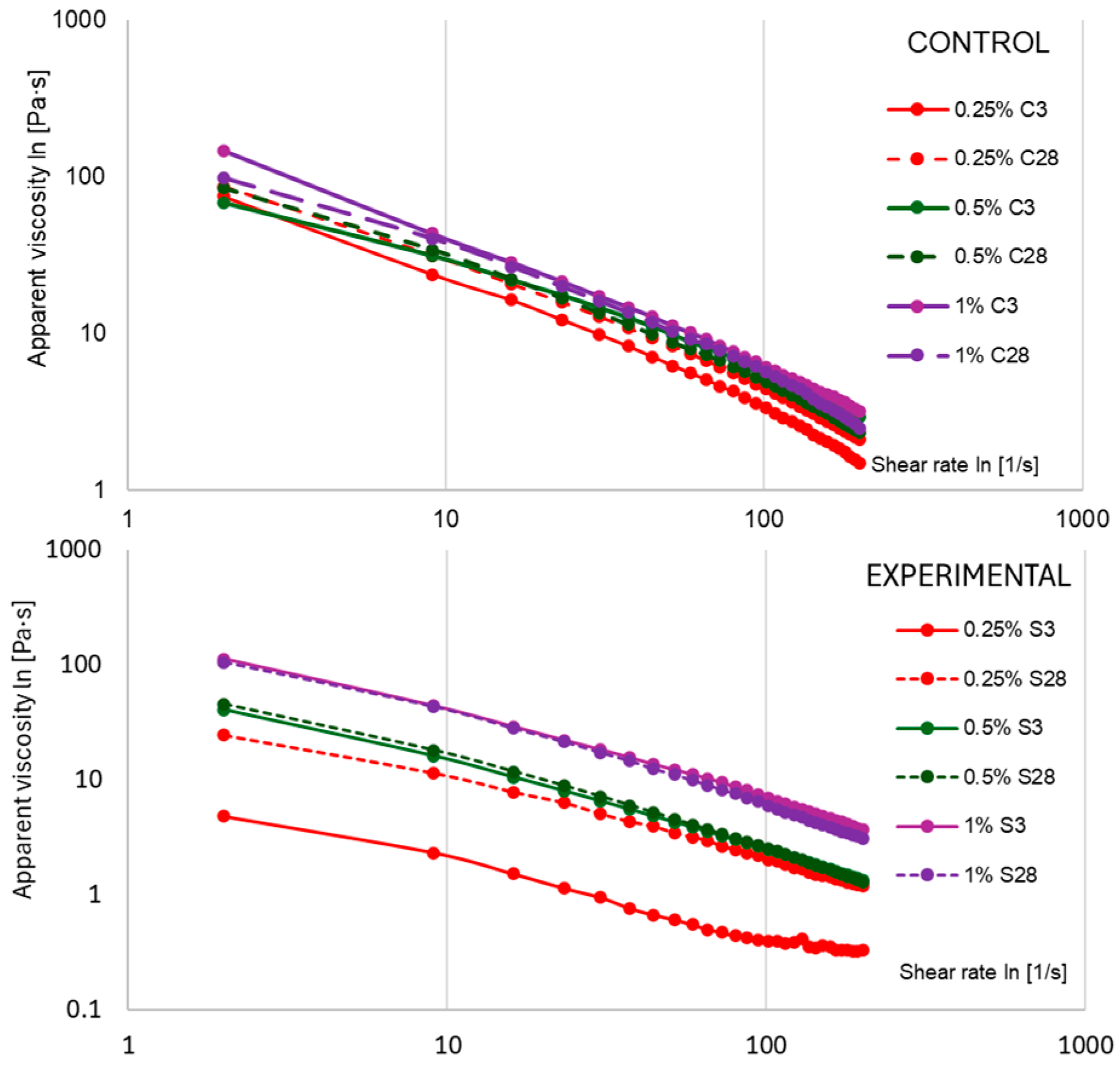
35]. As shown in
Figure 7, the apparent viscosity (η) depended on both storage time and additive concentration. In variants with 0.25–0.5% S, η values at medium and high shear rates (50–100 s
−1) were lower than in control samples, which facilitated flow in technological processes while maintaining stability at rest (τ
0 > 0). In the 1% S samples, the η values exceeded the control values, resulting in a more pronounced sensation of density in the mouth and greater flow resistance, requiring adjustment of process parameters on an industrial scale (e.g., pump capacity).
2.8. Texture Analysis
As shown in
Table 2, after 3 days of storage, the hardness of the control yogurts ranged from 1.58 N (0.25% C) to 2.09 N (1% C), while the samples containing scleroglucan showed higher values: 1.75 N (0.25% S), 2.25 N (0.5% S), and 5.34 N at 1% S. After 28 days, hardness increased slightly in all samples (C28: 2.33 N; S28: 3.43 N). The additive level remained the dominant factor determining texture (
p < 0.001; η
2p = 0.979).
The progressive increase in hardness with rising scleroglucan concentration corresponds with SEM observations, which showed that at 0.25–0.5% the polysaccharide partially filled the pores of the casein matrix, while at 1% it produced a compact, almost pore-free network. This structural reinforcement directly increased resistance to deformation during texture testing. This behavior reflects mechanisms reported for other hydrocolloids. Ge et al. (2022) demonstrated that even a very low concentration of gellan gum (0.02%) significantly increased yogurt hardness by strengthening the interactions within the protein matrix [
2]. Similarly, Aljewicz et al. (2021) showed that β-glucan reorganized the casein network, increased gel density, and enhanced structural cohesion during acidification [
9], which parallels the effects observed in the present study for scleroglucan. Zhao et al. (2020) reported that curdlan at concentrations of 0.10–0.50% formed its own gel network independent of casein, increased water-holding capacity and shear resistance, and markedly elevated hardness [
36]. Scleroglucan exhibits a similar strengthening action, but achieves it at lower concentrations due to the formation of a hydrated, triple-helical network that integrates efficiently with casein micelles.
The values presented in
Table 2 also show that adhesiveness decreased across all samples as storage progressed, ranging from −14.13 N·s (0.25% C3) to −3.64 N·s (1% C3), and from −23.67 N·s (0.25% S3) to −6.92 N·s (1% S3). This reduction resulted from the formation of a tighter, more cohesive protein–polysaccharide network that limited free surface moisture and reduced stickiness. The texture behavior aligns strongly with rheological properties: scleroglucan increased the yield stress and consistency coefficient while decreasing the flow index. The concurrent rise in τ
0 and K values, combined with SEM confirmed network compaction, explains the observed increase in hardness and the reduction in adhesiveness.
2.10. Color Analysis and Visual Properties
As shown in
Table 2, the CIELAB color parameters demonstrated that the effect of scleroglucan on yogurt color was indirect and largely associated with microstructural differences within the gel. Yogurts containing the polysaccharide were darker and less yellow than the corresponding control samples. At 0.25% S, the total color difference reached ΔE = 6.81, while at 0.5% S and 1% S the values were ΔE = 12.03 and ΔE = 4.21, respectively. In the control samples, ΔE decreased with increasing milk powder content (0.25% C: 4.84; 0.5% C: 1.23; 1% C: 0.27). After 28 days, the greatest deviation was observed for the 0.25% S variant (ΔE = 18.98; ΔL = −18.83; Δa = +0.05; Δb = −2.41), whereas the 0.5% S and 1% S samples showed only minimal changes (ΔE = 1.31 and 0.51).
These values in
Table 2 indicate that the optical properties correspond closely with the SEM findings. At low concentrations, scleroglucan produced an uneven, partially compacted network that scattered light irregularly, resulting in lower L values and greater ΔE. At higher levels, the matrix became more uniform and densely structured, limiting internal scattering and stabilizing color during storage. These relationships confirm that the visual appearance of yogurt was governed primarily by gel homogeneity and water distribution rather than direct pigment-related effects.
These findings are consistent with previous observations for other stabilizers used in fermented dairy systems. Both xanthan and guar gum have been shown to improve optical homogeneity by reducing syneresis and reinforcing the protein network [
39]. Inulin increases uniformity at sufficient concentrations by thickening the aqueous phase and filling the pores in the casein matrix, despite not altering L, a or b* values directly [
18]. Pullulan enhances visual smoothness through improved gel stability, although it does not significantly influence color parameters [
15]. In the present study, the visual stability of the 0.5% S and 1% S samples reflects the formation of a coherent and well-integrated protein–polysaccharide matrix, consistent with textural and rheological results. Only the 0.25% S variant showed clear deviations, attributable to incomplete microstructural cross-linking and heterogeneous light scattering. From a consumer perspective, the perceptibility thresholds indicate that ΔE values below 2.0 remain barely noticeable, which was achieved only in the samples containing 0.5% and 1% scleroglucan.
2.11. Sensory Evaluation and Overall Acceptability
Table 3 shows the average values of sensory attributes of control yogurts and yogurts enriched with scleroglucan. The attributes were classified according to appearance, aroma, consistency, mouthfeel, and taste, as well as overall acceptability. The evaluation was carried out on the tenth day of storage, i.e., at a different point in time than the instrumental measurements taken after 3 and 28 days and the analyses of volatile compound profiles conducted throughout the storage period. The sensory evaluation results were largely consistent with the instrumental analyses, with a few differences observed, which were due to the differences in the methods used.
As shown in
Table 3, all yogurts were characterized by very high color uniformity (
p > 0.05). The cream color was higher in the control yogurts and lower in the variants with scleroglucan (
p < 0.05). As can be seen in
Table 3, this trend was confirmed by the CIELAB color parameters which showed lower L* and b* values in the scleroglucan-containing samples and higher ΔE values, particularly at 0.25% S. Significant whey leakage occurred in the control yogurts, while this phenomenon did not occur in the experimental samples, according to the syneresis measurements (0% S at days 3 and 28).
Aroma. The values in
Table 3 indicate that the yogurt aroma was particularly intense in the control samples and decreased with the addition of scleroglucan, as did the sour aroma (
p < 0.05). The lowest values for both attributes were recorded at 1% S, which reflected lower acidity (°SH values), slower acidification, and less accumulation of acetaldehyde in the polysaccharide variants. No sweet or foreign odors were detected. The increase in diketones (2,3-pentanedione, diacetyl in certain variants) in the scleroglucan samples may have enhanced the creamy–buttery notes, which were not identified as a separate attribute.
Consistency. The patterns in
Table 3 demonstrate that uniformity in control yogurts decreased with the addition of SMP, while in experimental variants it increased with polysaccharide concentration. Lumpiness was highest at 0.25% S, and the highest “thickness” scores were obtained in 1% S yogurts (
p < 0.05). The sensory evaluation of thickness and uniformity was consistent with the textural and rheological parameters, as the highest density values in the 1% S variant corresponded to simultaneously high values of hardness, yield point (τ
0), and consistency coefficient (K). However, the sensory panel indicated high lumpiness at 0.25% S, which was consistent with microstructure analyses showing incomplete gel cross-linking and greater heterogeneity.
Mouthfeel. Adhesiveness, understood as the tendency of the yogurt to adhere to the palate, was scored as moderate in all variants, with the highest values found at 1% S. As indicated in
Table 3, the difference between the adhesiveness values measured by the texture profile analysis and the panelists’ perception was due to the different nature of both methods. The instrumental measurements reflected the force required to detach the probe, while the sensory evaluations were more related to the high yield point (τ
0) and viscosity at low shear rates (η = 10 s
−1), which were elevated in the variants with 1% S. For this reason, these yogurts were perceived as more adhesive, despite lower adhesiveness values obtained in the instrumental tests.
Taste. The intensity of the typical yogurt taste and sour taste was the lowest for the 1% S samples. This phenomenon reflected lower acidity values and reduced acetaldehyde production. Sweetness reached higher values at 1% S (
p = 0.001), which can be explained by a milder acid profile and increased thickness, without a significant increase in the concentration of simple sugars. Bitter and foreign tastes were not detected. The sensory panel scored the overall acceptability of all samples. According to
Table 3, the lowest scores were given to yogurts with 0.25% S and 0.5% S, which were associated with a perceived mealy mouthfeel. The control yogurts were scored as average—they had the most typical yogurt taste but were less thick and had the highest whey leakage. The highest scores were given to yogurt with 1% S, which, according to the panelists, had the mildest aroma, was the thickest, and had a smooth consistency.




 ,
,