Feature Papers in Propulsion Systems and Components in Electric Vehicle
Share This Topical Collection
Editor
 Prof. Dr. Vladimir Katic
Prof. Dr. Vladimir Katic
E-Mail
Website
Collection Editor
Faculty of Technical Sciences, University of Novi Sad, Trg Dositeja Obradovića 6, 21000 Novi Sad, Serbia
Interests: power electronics converters; power quality; renewable energy sources; electric vehicles; charging infrastructure
Special Issues, Collections and Topics in MDPI journals
Topical Collection Information
Dear Colleagues,
This Topical Collection of the World Electric Vehicle Journal in the section Propulsion Systems and Components aims to collect research articles, reviews, and perspectives on the fast-evolving area of the electric train drives and their components in new energy vehicles. Efficiency and innovation in these systems are critical for the performance of electric and electrified vehicles. Submissions should include the latest research results or in-depth and essential insights in drive and propulsion systems, electric motor drives, and innovative designs of electric machines. Supporting systems, such as auxiliary components and sensors, vehicle motion and stability control, and chassis systems for EVs, are also within scope. Manuscripts should ideally fall into the following fields:
- Drive and propulsion systems;
- Electric motor drive;
- Electric machine;
- Auxiliary components and Sensors;
- Vehicle motion and stability control;
- Chassis systems for EVS.
Prof. Dr. Vladimir Katic
Collection Editor
Manuscript Submission Information
Manuscripts should be submitted online at www.mdpi.com by registering and logging in to this website. Once you are registered, click here to go to the submission form. All submissions that pass pre-check are peer-reviewed. Accepted papers will be published continuously in the journal (as soon as accepted) and will be listed together on the collection website. Research articles, review articles as well as short communications are invited. For planned papers, a title and short abstract (about 250 words) can be sent to the Editorial Office for assessment.
Submitted manuscripts should not have been published previously, nor be under consideration for publication elsewhere (except conference proceedings papers). All manuscripts are thoroughly refereed through a single-blind peer-review process. A guide for authors and other relevant information for submission of manuscripts is available on the Instructions for Authors page. World Electric Vehicle Journal is an international peer-reviewed open access monthly journal published by MDPI.
Please visit the Instructions for Authors page before submitting a manuscript.
The Article Processing Charge (APC) for publication in this open access journal is 1400 CHF (Swiss Francs).
Submitted papers should be well formatted and use good English. Authors may use MDPI's
English editing service prior to publication or during author revisions.
Keywords
- drive and propulsion systems
- electric motor drive
- electric machine
- auxiliary components and sensors
- vehicle motion and stability control
- chassis systems for EVS
Published Papers (5 papers)
2026
Open AccessArticle
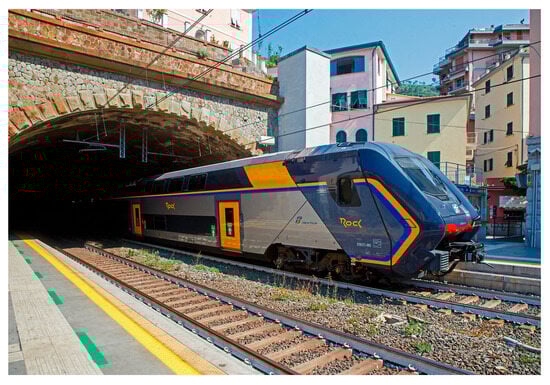
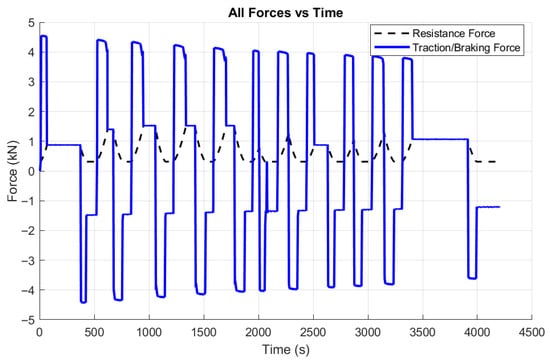
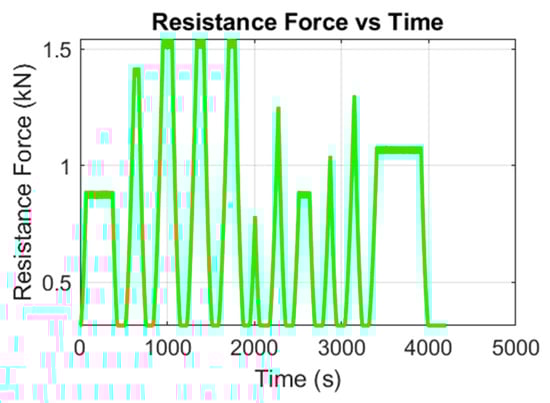
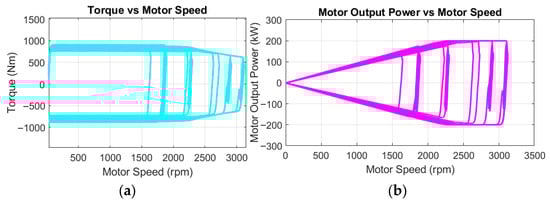
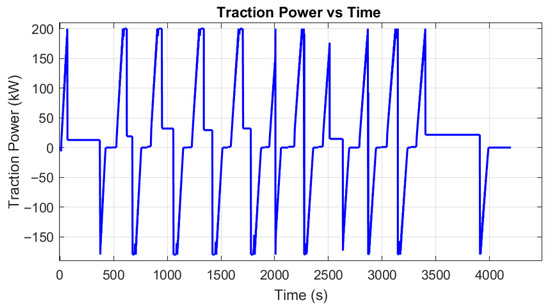
Dynamic Modeling and Simulation of Battery-Electric Multiple Units for Energy and Thermal Management Optimization in Regional Railway Applications
by
Joe Dahrouj, Sadaf Hussain, Alessandro Giannetti and Davide Tarsitano
Abstract
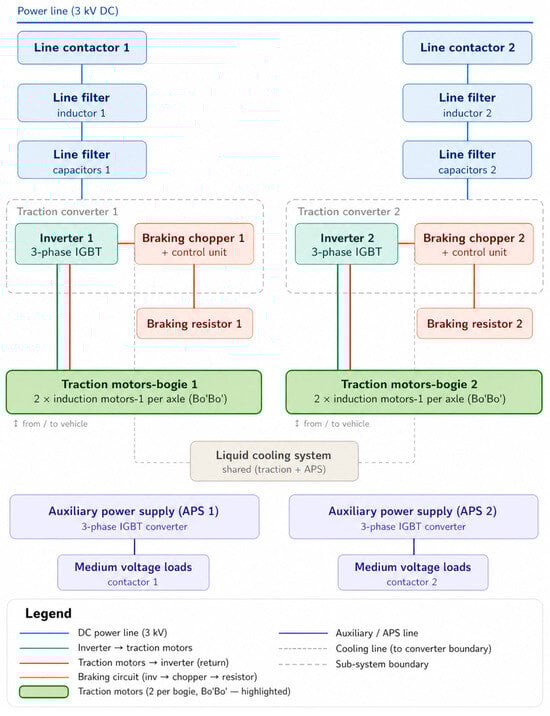
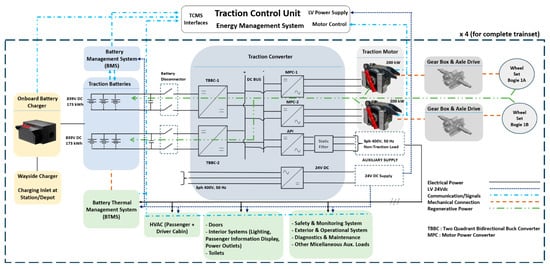
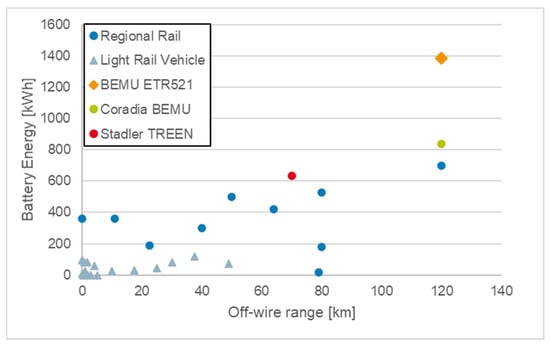
The electrification of regional railway lines using battery-electric trains requires accurate simulation tools to support energy management and thermal control design. This paper presents an integrated dynamic simulation model of the traction system of a Hitachi Caravaggio ETR 521 regional train operating in
[...] Read more.
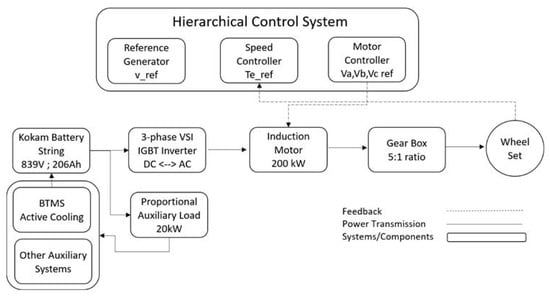
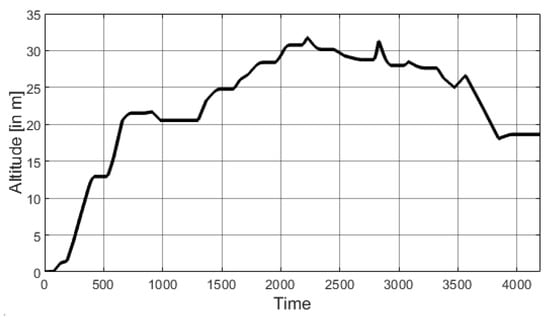
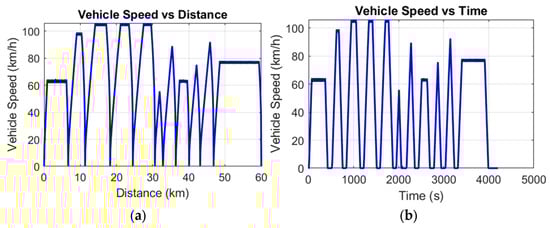
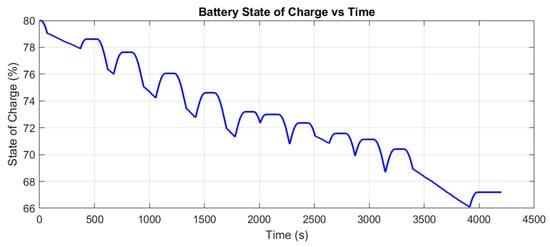
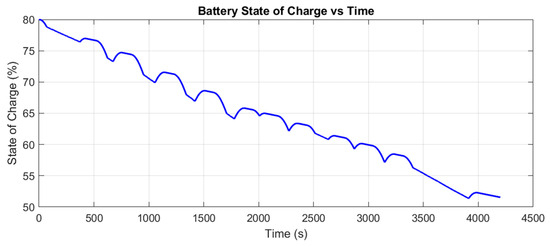
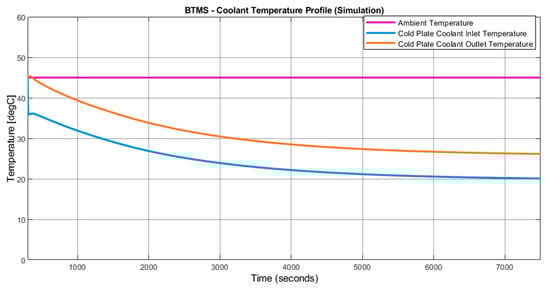
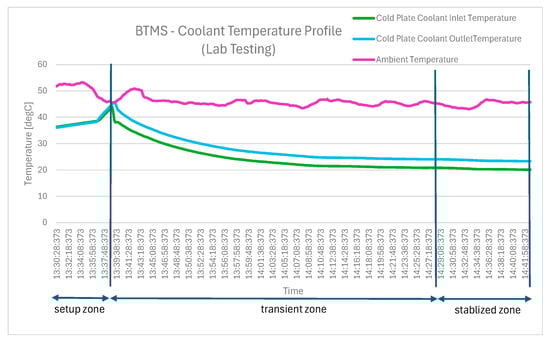
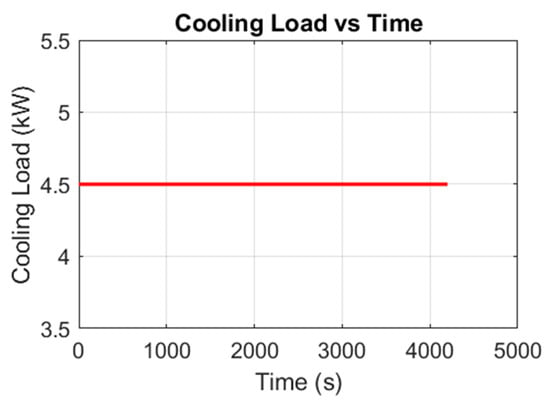
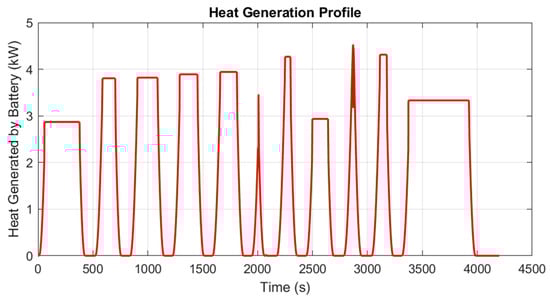
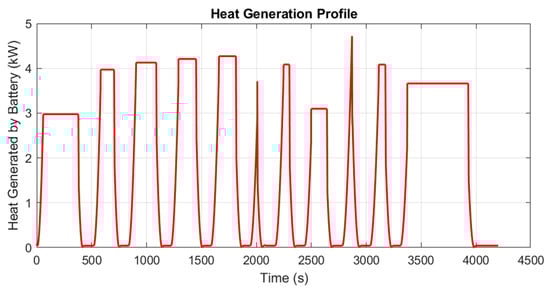
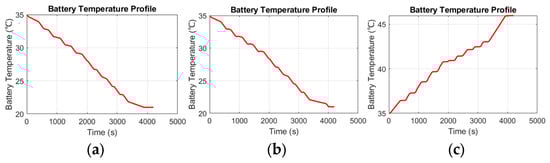
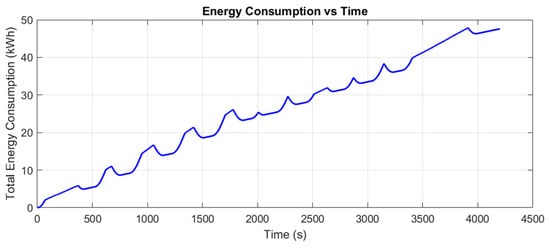
The electrification of regional railway lines using battery-electric trains requires accurate simulation tools to support energy management and thermal control design. This paper presents an integrated dynamic simulation model of the traction system of a Hitachi Caravaggio ETR 521 regional train operating in battery-electric mode, developed in MATLAB/Simulink 2024b. The model incorporates all key drivetrain components, including a train reference generator, speed controller, motor controller, three-phase inverter, induction motor, a Kokam Co., Ltd. lithium-ion battery pack, and a detailed battery thermal management system. The proposed framework enables simultaneous evaluation of traction performance, battery state of charge (SOC) evolution, and thermal behavior under realistic conditions. To validate the model, simulations of the Treviso–Vicenza route were conducted under two scenarios: traction-only operation and operation with a 160 kW auxiliary load. Simulation results demonstrate that auxiliary loads significantly affect energy consumption and battery thermal behavior, with energy consumption increased by 50%. The results highlight the importance of integrating thermal effects into energy management and sizing decisions for battery-electric regional trains. The developed model provides a practical tool for optimizing battery sizing, thermal management strategies, and overall energy performance, supporting the planning and design of sustainable electric railway solutions. The modular MATLAB/Simulink architecture is designed to be route-agnostic; extension to other regional lines with different gradients, speed profiles, or extreme climate conditions (e.g., alpine routes or high-temperature regions) requires only updated route data and adjusted ambient boundary conditions, demonstrating the model’s broad applicability beyond the Treviso–Vicenza case study.
Full article
►▼
Show Figures
Open AccessArticle
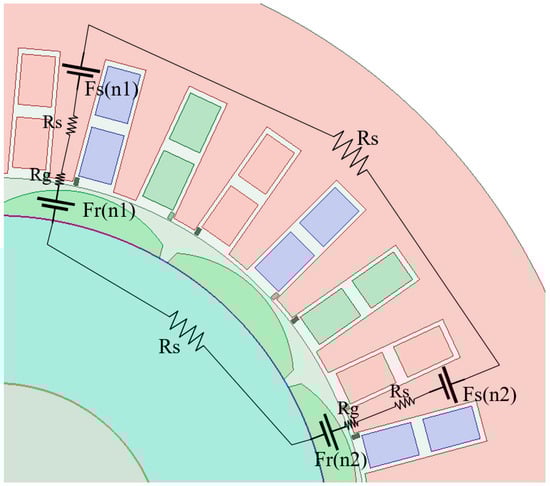
Demagnetization Fault Diagnosis of PMSMs with Multiple Stator Tooth Flux Detection Based on WT-CNN
by
Yuan Mao, Yuanzhi Wang, Junting Bao, Xiaofei Luo and Youbing Zhang
Viewed by 208
Abstract
Permanent magnet synchronous motors (PMSMs) have been widely used in new-energy vehicles and industrial servo systems. However, demagnetization faults (DMFs) can lead to severe issues, including torque ripple and magnetic field distortion. This paper proposes an intelligent diagnostic approach for DMFs based on
[...] Read more.
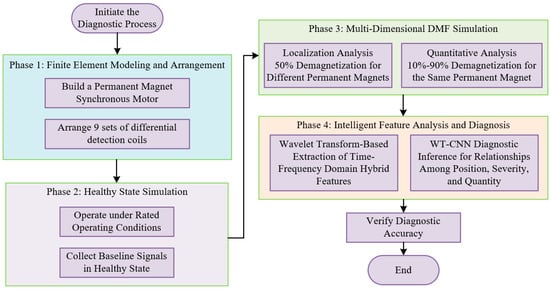
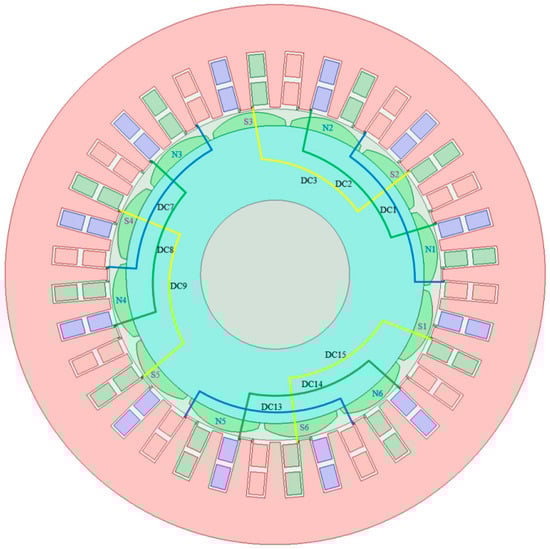
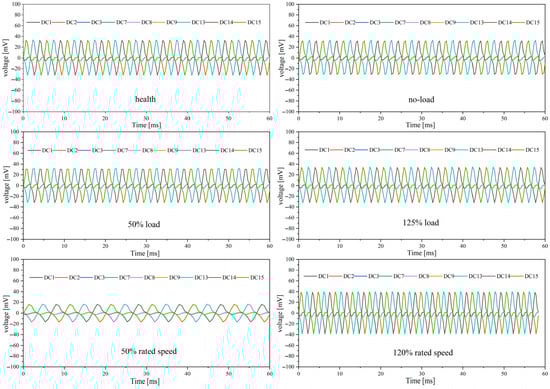
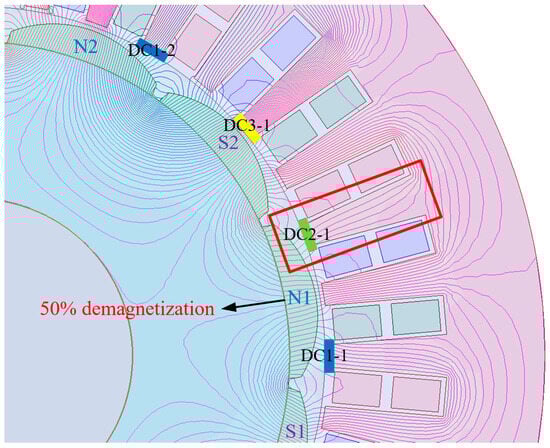
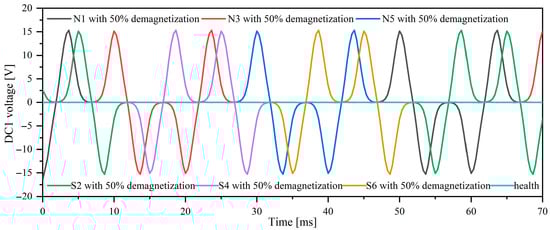
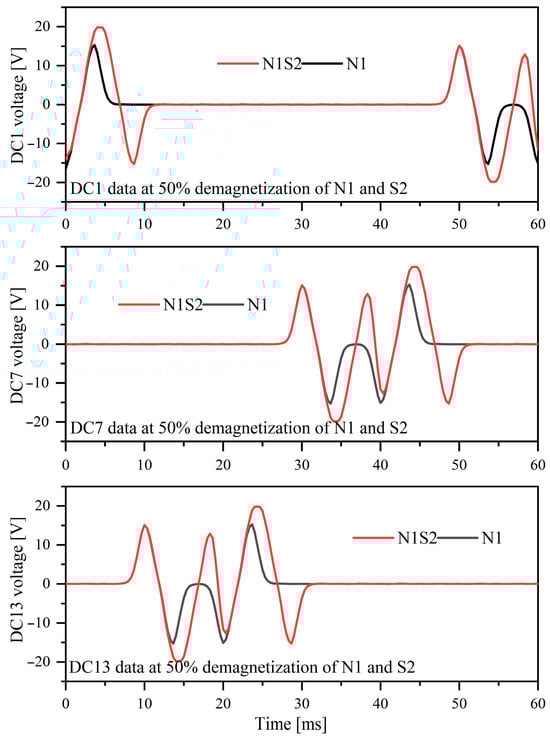
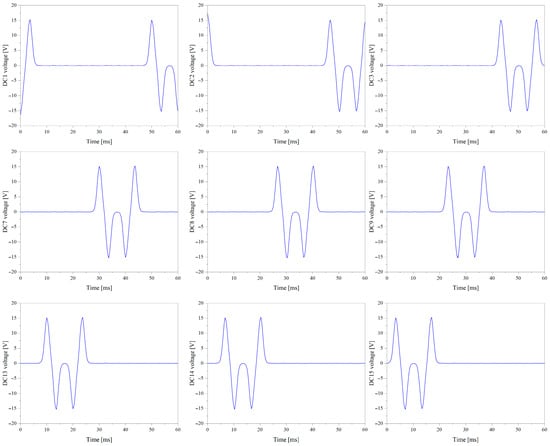
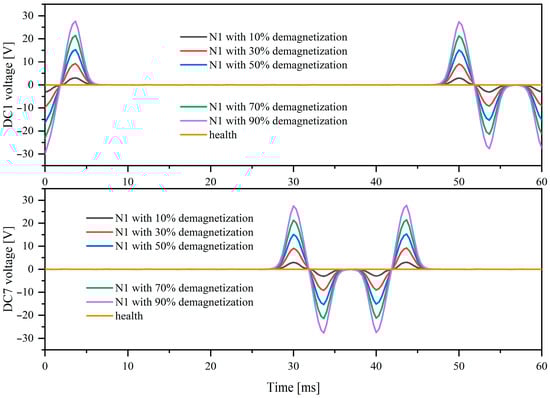
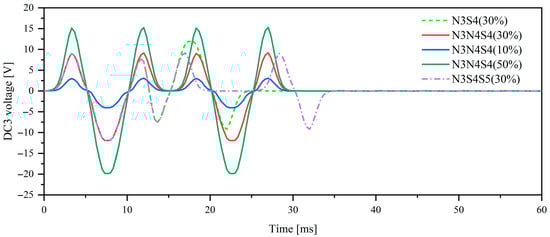
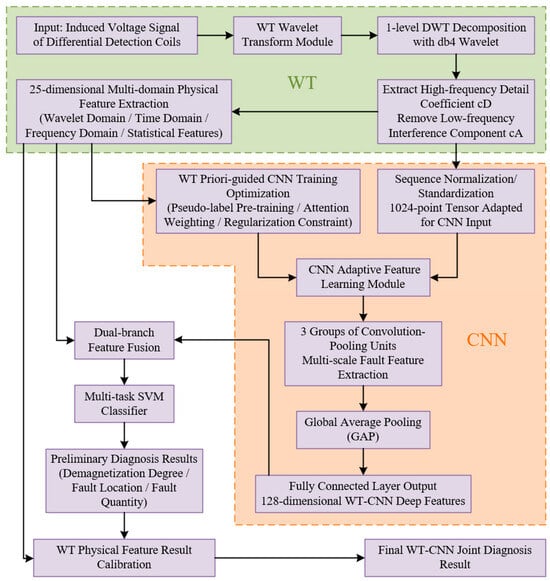
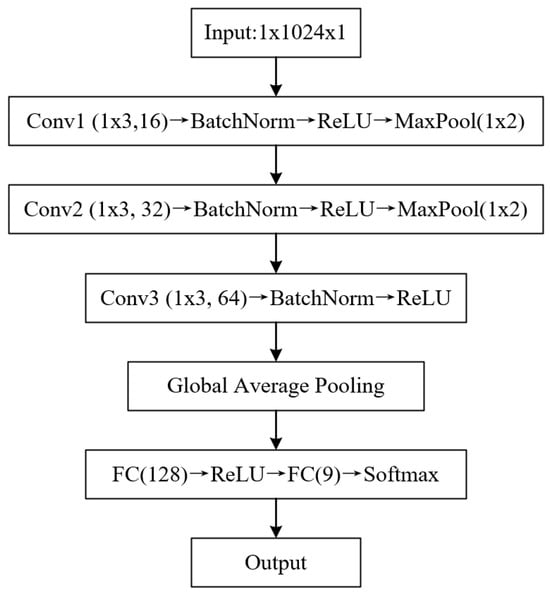
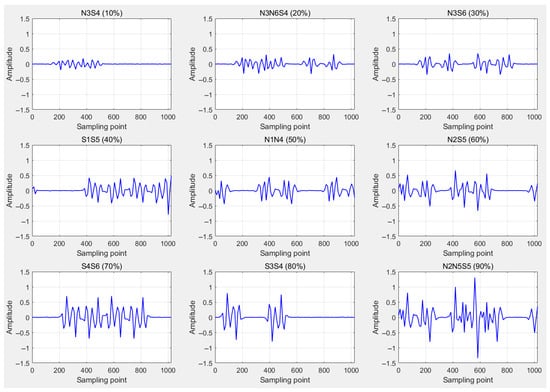
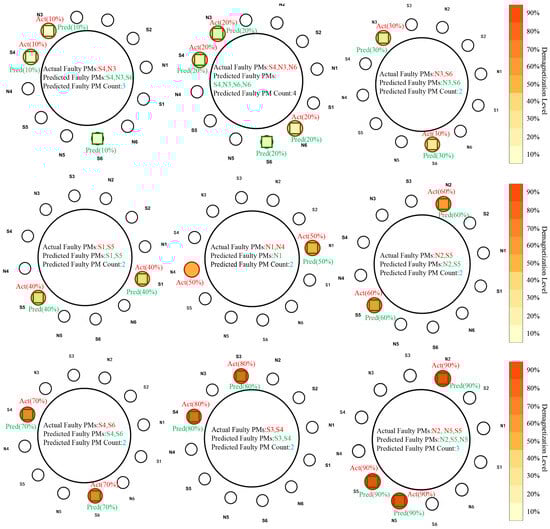
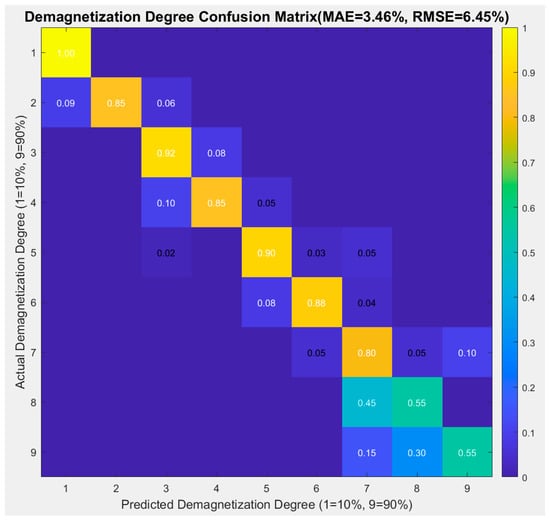
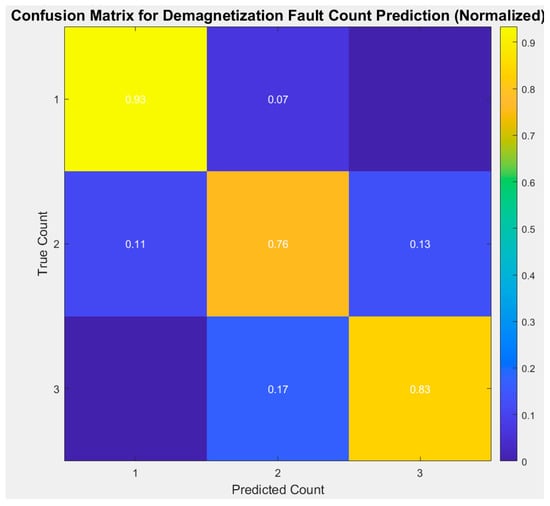
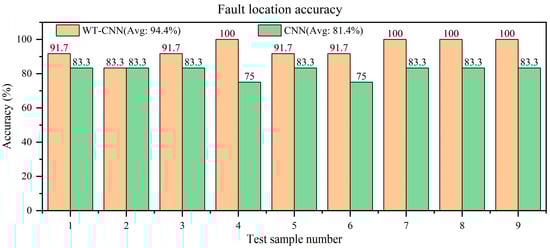
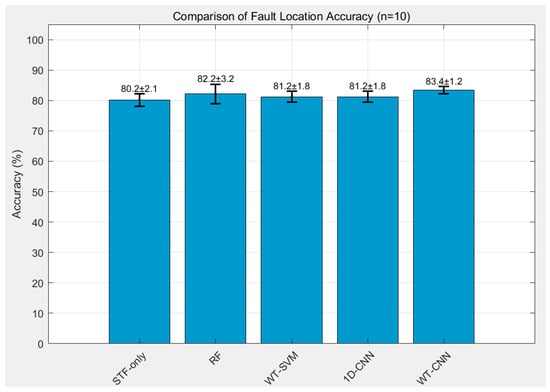
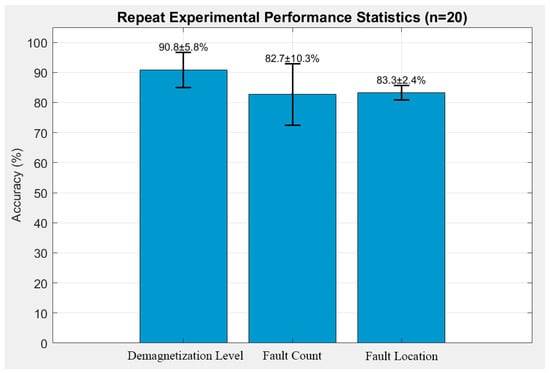
Permanent magnet synchronous motors (PMSMs) have been widely used in new-energy vehicles and industrial servo systems. However, demagnetization faults (DMFs) can lead to severe issues, including torque ripple and magnetic field distortion. This paper proposes an intelligent diagnostic approach for DMFs based on stator tooth flux (STF). A mathematical model of STF is formulated, and the magnetic flux change is measured using multiple sets of anti-series-connected detection coils (DCs). By combining finite element simulation with signal processing technology, we establish a comprehensive diagnostic system covering fault feature extraction, fault location identification, and severity assessment is established. The proposed method employs wavelet transform (WT) to extract time-frequency features of voltage signals and combines it with a convolutional neural network (CNN) to form the WT-CNN intelligent diagnosis model. Based on the extracted voltage signal features, the method achieves intelligent identification and visual localization of DMFs. Simulation results show that the proposed method achieves an accuracy above 80% for fault location identification (defined as sample-level multi-label classification accuracy across 12 PMs) and above 85% for demagnetization severity estimation (defined as classification accuracy across 9 severity degrees from 10% to 90%). These results provide an effective technical foundation for motor condition monitoring and fault early warning in simulation environments.
Full article
►▼
Show Figures
Open AccessReview
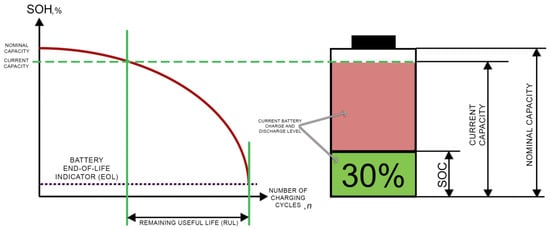
Modern Approaches to Assessing the Technical Condition of Traction Lithium-Ion Batteries: Review Article
by
Yuri Katsuba, Mikhail Kochegarov, Andrey Zalyubovsky, Alexander Sivov and Alexander Bazhenov
Viewed by 424
Abstract
In the context of the rapid growth of the electric and hybrid vehicle fleet, ensuring the reliability, safety, and durability of traction lithium-ion battery packs has become a key scientific and engineering challenge. The technical condition of battery packs, characterized by such parameters
[...] Read more.
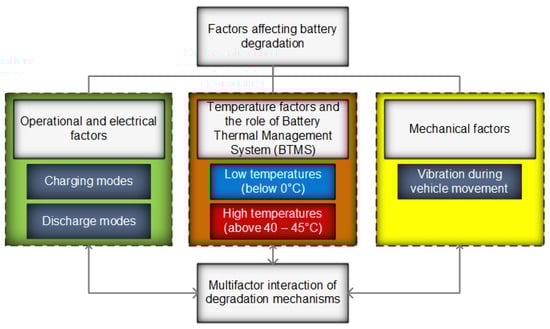
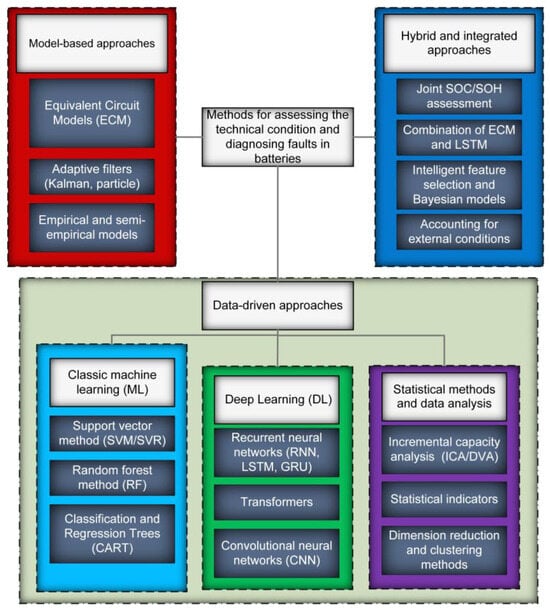
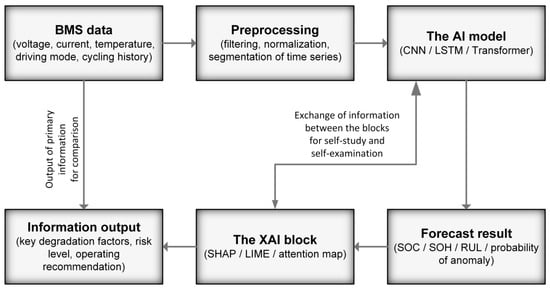
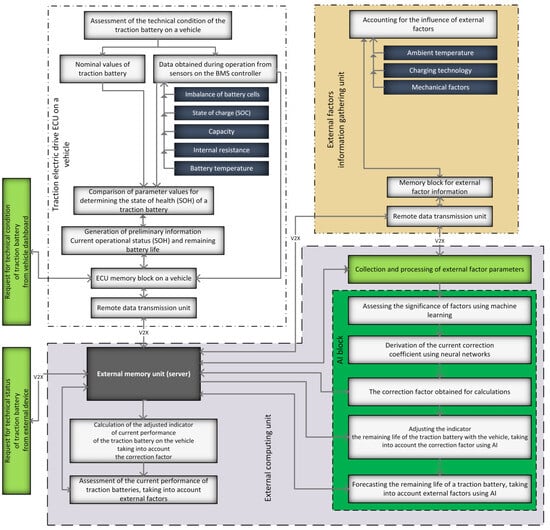
In the context of the rapid growth of the electric and hybrid vehicle fleet, ensuring the reliability, safety, and durability of traction lithium-ion battery packs has become a key scientific and engineering challenge. The technical condition of battery packs, characterized by such parameters as state of charge (SOC), state of health (SOH), and remaining useful life (RUL), directly affects vehicle performance and the total cost of ownership of electric vehicles. This review article systematizes and analyzes current approaches to assessing the technical condition of battery packs. Fundamental degradation mechanisms and factors are considered, including operational, thermal, and mechanical effects. A detailed analysis is presented for the three main classes of diagnostic methods: model-based approaches, data-driven approaches (machine learning and deep learning), and hybrid methods combining the advantages of the former two. Particular attention is paid to methods for early fault detection, thermal runaway prediction, and condition assessment based on real-world operational data. The article presents quantitative results demonstrating the accuracy and effectiveness of various algorithms and also discusses key challenges and promising research directions, such as the use of cloud platforms, digital twins, and explainable artificial intelligence methods.
Full article
►▼
Show Figures
Open AccessEditor’s ChoiceArticle
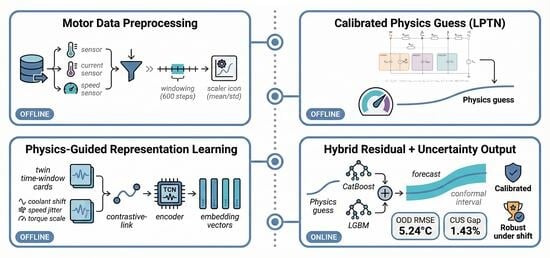
A Physics-Informed Hybrid Ensemble for Robust and High-Fidelity Temperature Forecasting in PMSMs
by
Rifath Bin Hossain, Md Maruf Al Hasan, Md Imran Khan, Monzur Ahmed, Yuting Lin and Xuchao Pan
Cited by 1 | Viewed by 696
Abstract
The deployment of artificial intelligence in safety-critical industrial systems is hindered by a core trust deficit, as models trained via empirical risk minimization often fail catastrophically in out-of-distribution (OOD) scenarios. We address this challenge by developing a physics-informed hybrid ensemble that achieves state-of-the-art
[...] Read more.
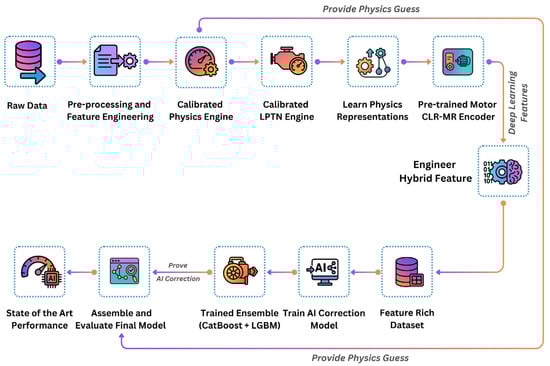
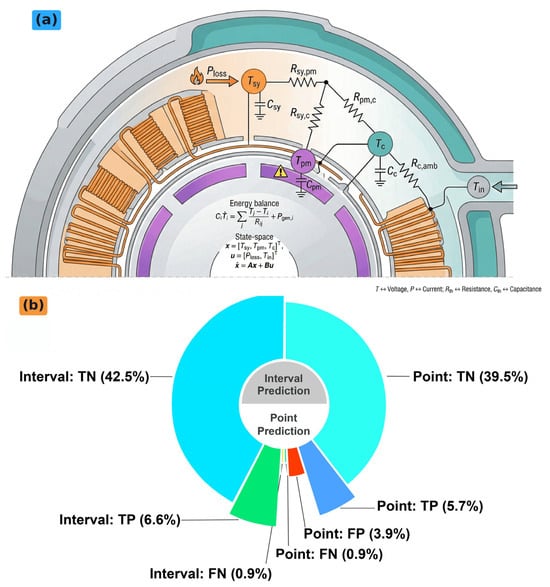
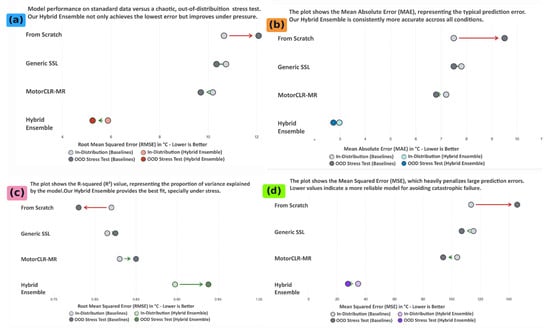
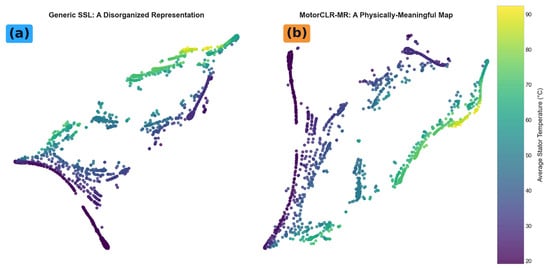
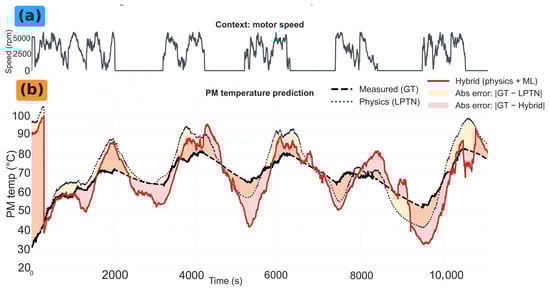
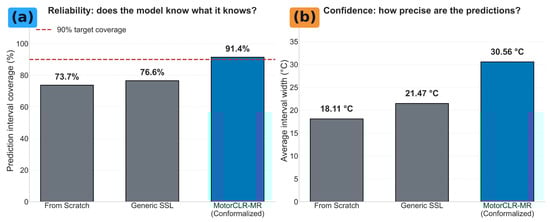
The deployment of artificial intelligence in safety-critical industrial systems is hindered by a core trust deficit, as models trained via empirical risk minimization often fail catastrophically in out-of-distribution (OOD) scenarios. We address this challenge by developing a physics-informed hybrid ensemble that achieves state-of-the-art accuracy and robustness for Permanent Magnet Synchronous Motor (PMSM) temperature forecasting. Our methodology first calibrates a Lumped-Parameter Thermal Network (LPTN) to serve as a physics engine for generating physically consistent data augmentations, which then pre-trains a Temporal Convolutional Network (TCN) encoder via self-supervision, with the final prediction assembled from the physics model’s baseline guess and a correction learned by an ensemble of gradient boosting models on a rich, multi-modal feature set. Evaluated against a suite of strong baselines, our hybrid ensemble achieves a state-of-the-art Root Mean Squared Error of 5.24 °C on a challenging OOD stress test composed of the most chaotic operational profiles. Most compellingly, our model’s performance improved by an unprecedented −10.68% under these extreme stress conditions where standard, purely data-driven models collapsed. This demonstrated robustness, combined with a statistically valid Coverage Under Shift (CUS) Gap of only 1.43%, provides a complete blueprint for building high-performance, trustworthy AI, enabling safer and more efficient control of critical cyber-physical systems and motivating future research into physics-guided pre-training for other industrial assets.
Full article
►▼
Show Figures
Open AccessArticle
Research on the Dynamic Performance of a New Semi-Active Hydro-Pneumatic Suspension System Based on GA-MPC Strategy
by
Ruochen Wang, Xiangwen Zhao, Renkai Ding and Jie Chen
Cited by 1 | Viewed by 493
Abstract
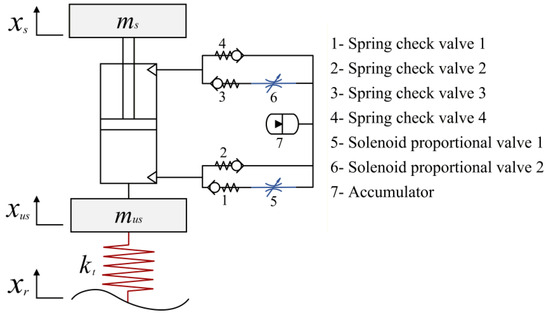
To address the limited capability of conventional hydro-pneumatic suspensions in coordinated damping–stiffness regulation, this paper proposes a new semi-active hydro-pneumatic suspension (SAHPS) system based on a dual-valve shock absorber. A damping valve architecture composed of a spring check valve–solenoid proportional valve–spring check valve
[...] Read more.
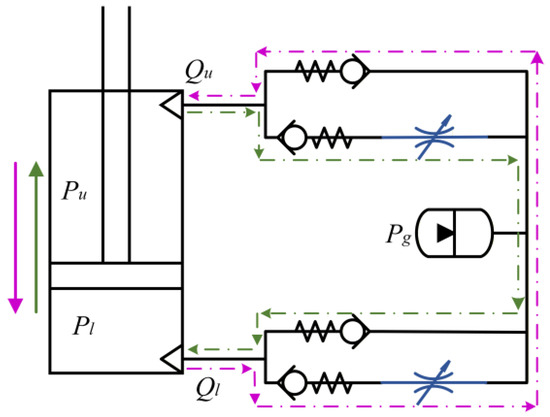
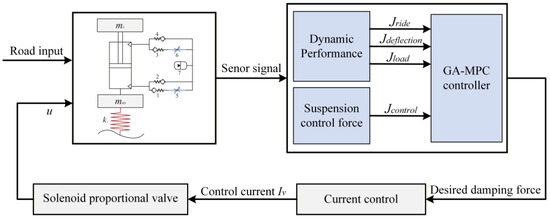
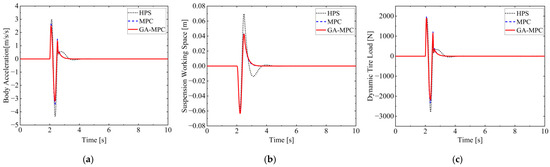
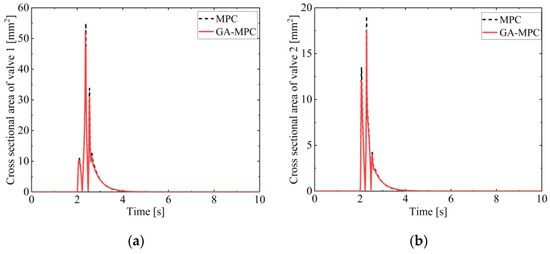
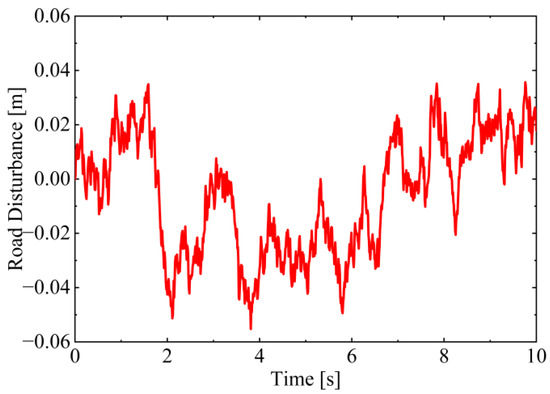
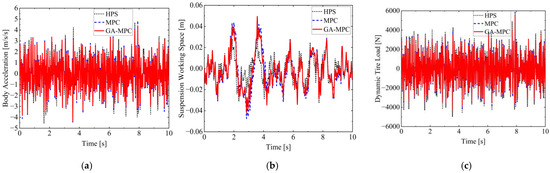
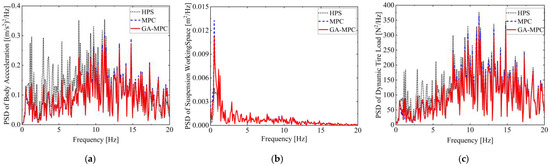
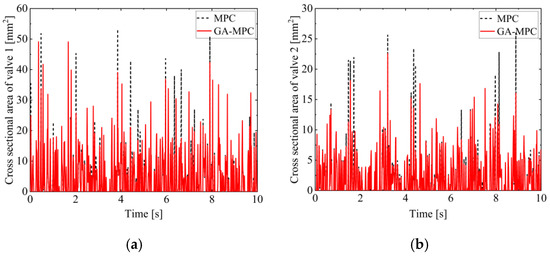
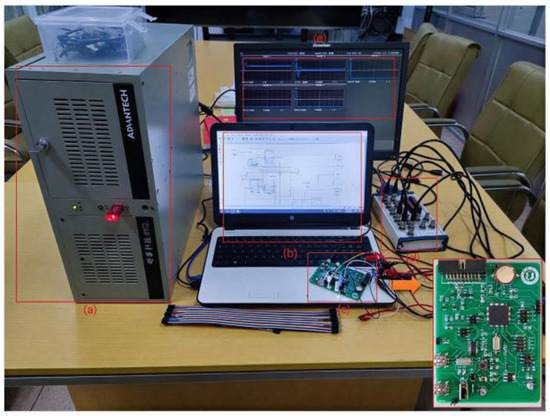
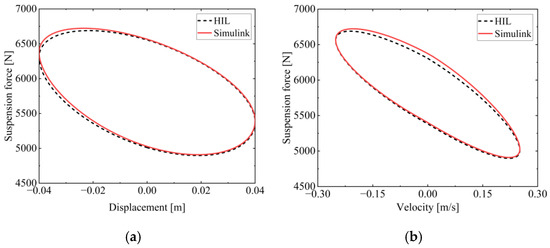
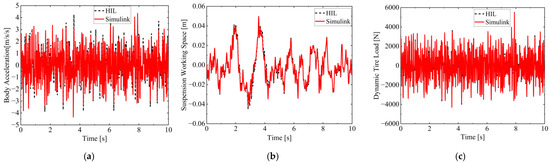
To address the limited capability of conventional hydro-pneumatic suspensions in coordinated damping–stiffness regulation, this paper proposes a new semi-active hydro-pneumatic suspension (SAHPS) system based on a dual-valve shock absorber. A damping valve architecture composed of a spring check valve–solenoid proportional valve–spring check valve is arranged between the rod and rodless chambers of the hydraulic cylinder, enabling coordinated adjustment of suspension damping and equivalent stiffness. Furthermore, a genetic algorithm optimization with model predictive control (GA-MPC) is designed to enhance the overall dynamic performance of the suspension while effectively reducing the operating frequency of the solenoid proportional valve. Finally, AMESim–Simulink co-simulations and hardware-in-the-loop (HIL) experiments are conducted under bumpy road excitation and Class C random road conditions. Under Class C random road conditions, compared with passive hydro-pneumatic suspension and semi-active suspension with conventional MPC, the proposed method achieves maximum reductions of 11%, 25%, and 12.9% in the root mean square values of body acceleration, suspension working space, and dynamic tire load, respectively. The discrepancies between experimental and simulation results remain below 7%, confirming the effectiveness of the proposed system and control strategy. This study provides a new technical guidance for low-frequency vibration suppression in vehicle suspension systems.
Full article
►▼
Show Figures