1. Introduction
With its core advantages of high power density, high efficiency, high torque density, and low-speed stability, permanent magnet synchronous motors (PMSMs) have become the preferred core components of electric vehicle (EV) drive systems. They are widely used in the powertrains of passenger and commercial vehicles, and also play a key role in charging piles and on-board auxiliary systems for new energy vehicles [
1,
2]. As the “heart” of EVs, the operational reliability of PMSMs directly determines vehicle driving safety, cruising range, and thr riding experience of vehicles. However, EVs operate under complex conditions during driving, such as frequent start-stop on urban roads, continuous overload at high speed, low-temperature starting in winter, high-temperature exposure in summer, and vibration impact under complex road conditions. Coupled with the complex on-board electromagnetic environment disturbed by electronic components such as inverters and on-board controllers, the PMs inside the motor are highly prone to irreversible DMFs. Such faults will cause air-gap magnetic field distortion, increased torque ripple, and a significant reduction in motor efficiency, shortening the cruising range and, in severe cases, leading to fatal failures such as motor burnout and vehicle power interruption, posing a serious threat to EV safety. Therefore, developing a diagnostic technology that can accurately identify the DMF location, quantify the fault degree, and adapt to multiple on-board fault scenarios for vehicle-mounted PMSMs has great practical value for improving the reliability of electric vehicle drive systems, ensuring driving safety, and reducing operation and maintenance costs.
Currently, DMF diagnosis methods for PMSMs are diversifying. Each technical route exhibits unique advantages but also has certain limitations and can be categorized into three major categories: signal analysis, magnetic field measurement, and intelligent diagnosis.
Traditional signal analysis methods based on the spectrum analysis of current and voltage signals [
3] are fundamental means of fault diagnosis. They possess significant advantages such as mature principles, no need for additional hardware, and strong engineering applicability, effectively meeting the demand for DMF identification under normal operating conditions. However, these methods are susceptible to interference from factors such as load fluctuations and inverter nonlinearity; they lack sensitivity to early local DMFs, and struggle to adapt to complex scenarios where multiple PMs demagnetize simultaneously.
Among magnetic field measurement methods, the radial air-gap flux density measurement method [
4] requires the installation of dedicated sensors, which is costly and complex, and offers limited spatial localization capability for local demagnetization. Although the detection coil (DC) technology has shown advantages in the diagnosis of eccentricity [
5] and inter-turn short-circuit [
6] faults, it mostly relies on single physical features (e.g., fundamental component of voltage [
7], half-cycle back EMF residual [
8], current response signal combined with high-frequency signal [
9], and cogging torque [
10]). This makes it difficult to mine deep information from signals and leaves it unable to meet the requirements of multi-fault intelligent diagnosis.
In recent years, intelligent diagnosis technology has become a research hotspot in the field of motor fault diagnosis, and various algorithm models have continuously improved diagnostic accuracy and efficiency. For example, a hierarchical model based on S-transform and PSO-LSSVM has achieved efficient identification of DMFs in permanent magnet linear motors (PMLMs) [
11]; a method based on physics-informed neural networks (PINN) estimates PM flux linkage and quantifies demagnetization degree by fusing measured data [
12], which fully integrates the physical mechanism of the motor and enhances the theoretical support of the model. In addition, the Vold-Kalman filtering (VKF) method for local demagnetization of on-board PMSMs [
13] and the super-twisting sliding mode observer (STSMO) for fault-coupled scenarios [
14] have both optimized diagnostic performance under specific operating conditions in a targeted manner. Reference [
15] systematically reviews the modeling methods and application challenges of digital twin for PM synchronous motors, providing a systematic reference for the engineering implementation of this technology. Reference [
16] proposes an adaptive digital twin framework that integrates dynamic batch Bayesian calibration and hierarchical physics-aware networks to achieve high-precision monitoring of motor thermal safety and demagnetization safety margins. Reference [
17] presents a hybrid digital twin fault diagnosis framework combining physics-informed neural networks and extended Kalman filter, which significantly improves the fault detection accuracy and real-time performance of PM synchronous motors. However, such intelligent methods still have shortcomings: some algorithms rely on complex feature engineering, while others do not fully integrate the core mechanism of the motor. This makes it difficult to balance diagnostic accuracy and robustness, and there remains room for improvement in the synchronous localization, quantitative evaluation, and online deployment of DMFs in multiple PMs.
Although machine learning-based diagnostic methods [
18] have shown potential for accuracy in identifying DMFs of PMSMs, they rely on a large number of labeled fault samples, lack physical interpretability, and have limited generalization ability in small-sample and multi-fault coupling scenarios. Finite element simulation [
19], as a core tool for demagnetization modeling, can generate high-fidelity fault data, effectively compensate for the lack of measured samples, and inject physical interpretability into machine learning models, thus becoming a key path to break through the above bottlenecks. However, current research has not yet fully solved the integrated diagnosis problem of “precise localization, degree quantification, and quantity identification” in multi-fault scenarios, and the depth of integration between physical mechanisms and data-driven approaches remains insufficient. Based on this, this paper innovatively integrates STF detection technology and intelligent algorithms, and proposes a WT-CNN hybrid diagnosis method: high signal-to-noise ratio (SNR) STF signals are obtained through differential detection coils (DDCs), multi-dimensional time-frequency domain features are extracted via wavelet transform (WT), and a lightweight convolutional neural network (CNN) model is constructed to realize end-to-end diagnosis of fault location, degree, and quantity. This method does not require additional independent sensors (the DCs are embedded into the stator teeth as part of the motor structure) and can meet the high-precision diagnosis requirements in multi-DMF scenarios using only DC data, providing a new technical path for intelligent monitoring of DMFs in PMSMs.
The main innovations of this paper are as follows:
- (1)
A novel fault indicator based on STF is proposed, which shows high sensitivity to local demagnetization in simulation. DDC structure with common-mode noise rejection is designed to enhance the SNR and exhibits good robustness against load variations under the simulated operating conditions.
- (2)
A hybrid diagnostic framework integrating physical mechanisms and an intelligent algorithm is established. By combining STF characteristics with WT-CNN, the method provides interpretability in the diagnostic process and demonstrates adaptability to multi-fault scenarios in simulation.
- (3)
Using time-series voltage signals from DCs, the proposed approach enables simultaneous identification of fault location, severity, and number of demagnetized magnets, which helps to reduce hardware complexity and data redundancy.
- (4)
A synergistic optimization mechanism of WT and CNN is designed to enhance fault distinguishability via time-frequency feature enhancement, thereby improving diagnostic accuracy in scenarios of slight demagnetization and multi-fault superposition.
The rest of this paper is structured as follows:
Section 2 describes the modeling of STF, the operating principle of the DDC, and the theoretical analysis of the fault feature extraction mechanism.
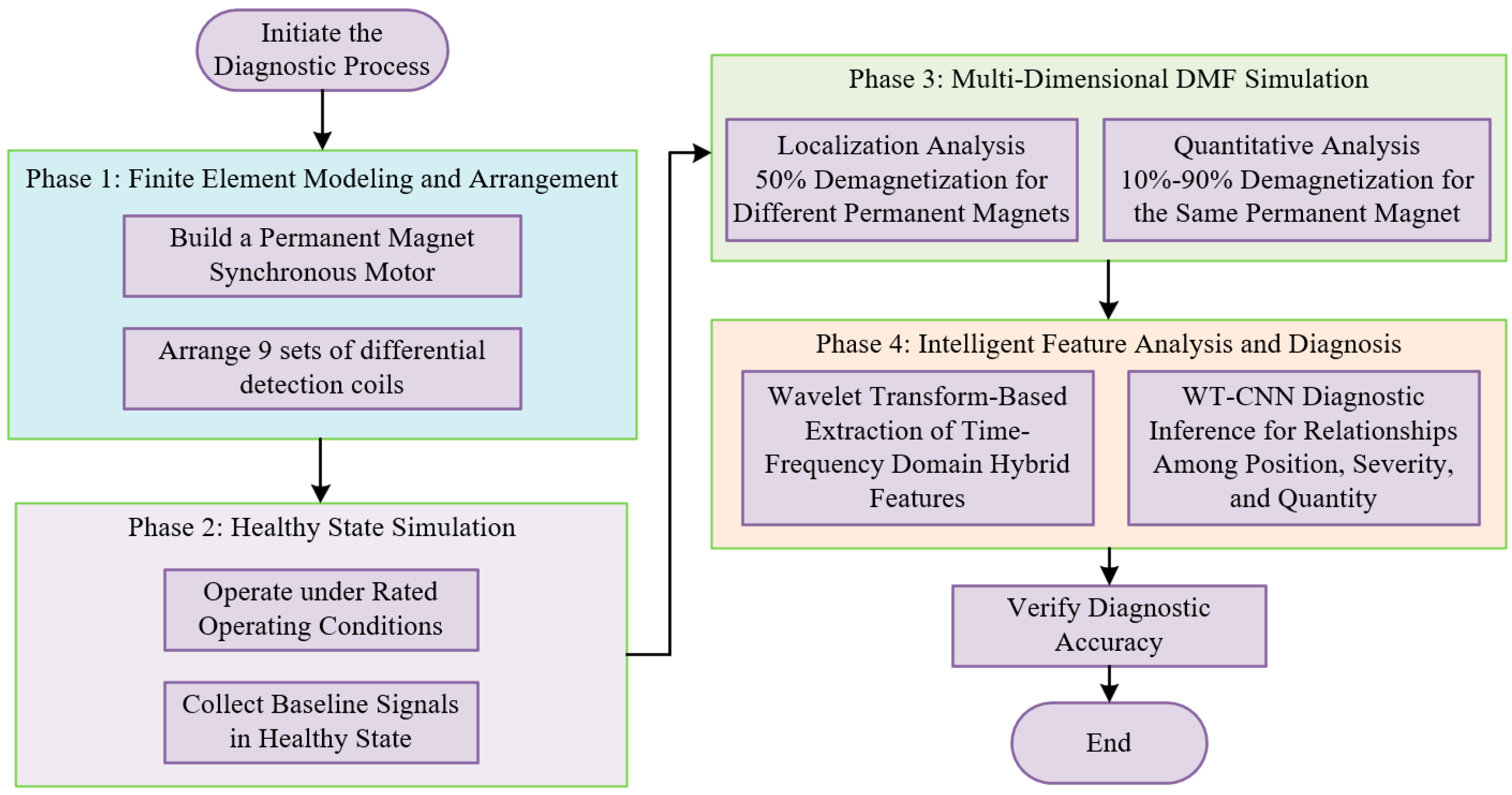
Section 3 details the overall fault diagnosis procedure, including finite element modeling, multi-scenario demagnetization simulations, and the proposed WT-CNN intelligent diagnosis model.
Section 4 provides simulation results and analysis, including signal analysis in healthy and fault states, fault localization and severity quantification, and performance evaluation of the WT-CNN model.
Section 5 concludes the paper and outlines future research directions.
2. STF Modeling and Measurement Principles
2.1. Analysis of Magnetic Circuit Mechanism for DMF
The DDC structure adopted in this paper has a core advantage: its suppression effect on common-mode flux components. Two Sub-Detection Coils (SDCs) are spaced two pole pitches apart, enabling them to have the same response to the stator armature reaction magnetic field with a wavelength of one pole pitch, thus canceling each other out in the output voltage . However, the local magnetic field distortion caused by local PM demagnetization does not have a complete periodic spatial distribution, leading to different rates of flux linkage change between the two sub-coils and thus generating a significant differential voltage in . This design makes a feature quantity that is highly sensitive to DMFs while being robust against load variations.
2.2. Mathematical Model of STF
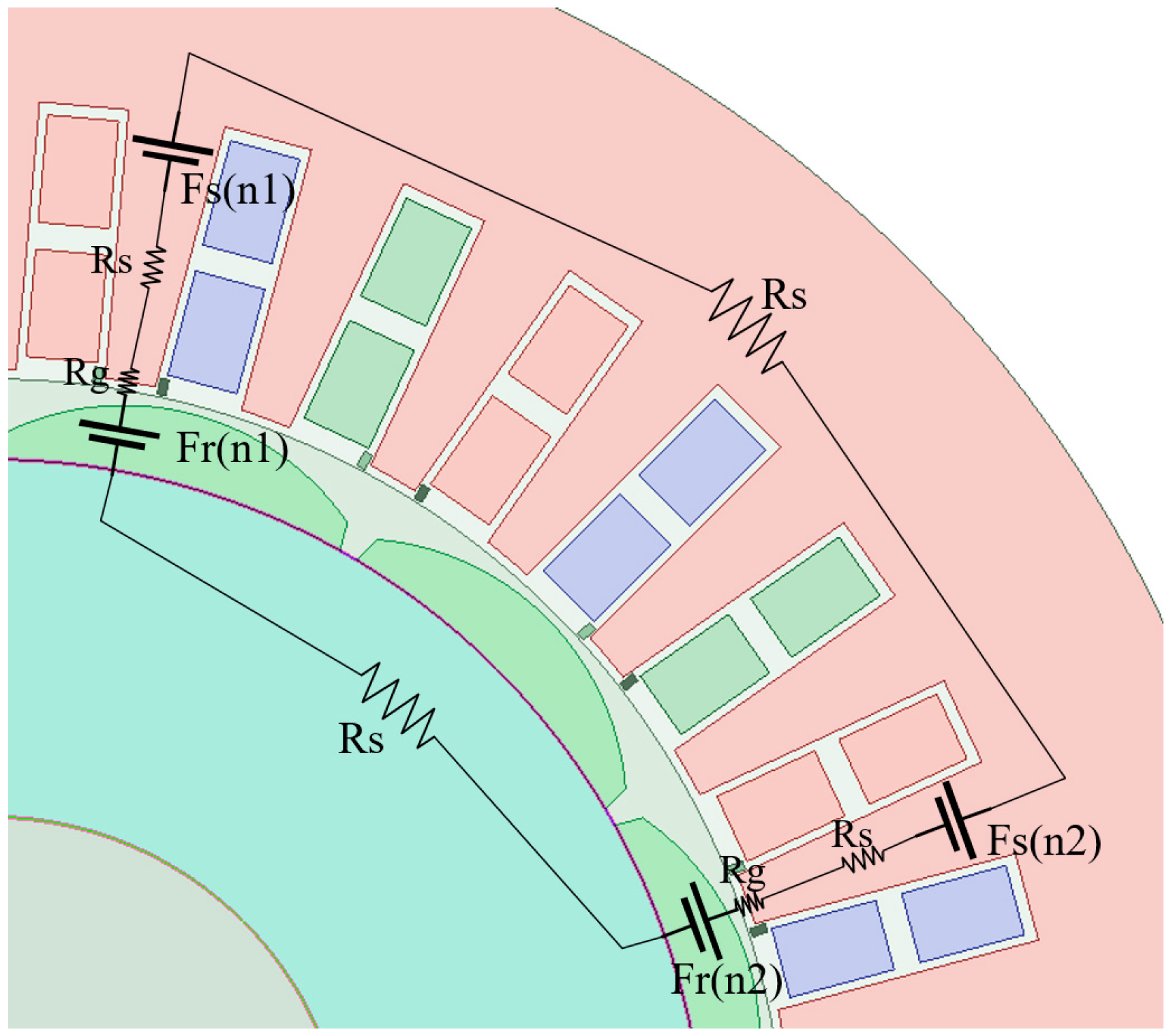
Based on Ohm’s Law of Magnetic Circuits and the Superposition Theorem of Magnetic Circuits [
20] (as shown in
Figure 1), a mathematical model of STF is established under the assumption that the motor operates in steady state and the influence of faults on core saturation is neglected:
where
denotes the STF;
is the number of stator teeth;
represents time;
is the electrical angular velocity;
and
are the amplitude and initial phase angle of the equivalent magnetomotive force (MMF) of the tooth flux generated by the stator current, respectively;
and
are the amplitude and initial phase angle of the equivalent MMF of the tooth flux generated by the PM, respectively;
and
are the magnetic reluctances of the stator core (including the PM) and air gap in the equivalent magnetic circuit of the -th tooth, respectively.
When a DMF occurs, the equivalent MMF generated by the PM changes, which in turn leads to a variation in the STF.
The mathematical model is derived under the assumptions of steady-state operation and neglecting the influence of faults on core saturation, which serves as a first-order approximation for fault mechanism analysis. In practical EV driving scenarios (e.g., overload, speed variation, inverter supply), the differential coil structure effectively cancels common-mode components, and the fault-induced voltage remains detectable. The influence of transient conditions is discussed in
Section 4.5 as a limitation for future study.
2.3. DC Design and Feature Signal Extraction
The DC is composed of two SDCs connected in reverse series. Each SDC is mounted on one stator tooth, and the spacing between the two SDCs is twice the pole pitch. The induced voltage of the SDC is
where
denotes the induced voltage of the SDC,
is the number of turns of the SDC, and
represents the magnetic flux in the SDC.
Since the motor magnetic field is mainly concentrated in the air gap and iron core, the magnetic flux in the SDC is approximately equal to the STF, i.e., .
The output voltage of the DC is given by
Measuring can reflect changes in the STF. To comprehensively detect DMFs, 9 sets of DCs have been arranged at different spatial positions of the motor, denoted as DC1, DC2, DC3, DC7, DC8, DC9, DC13, DC14, and DC15 respectively. Each SDC is wound with 88 turns of copper wire. It is embedded into the stator slot opening and fixed with insulating adhesive. Owing to the small cross-section and low number of turns, its influence on the main magnetic circuit can be neglected.
2.4. Fault Features and Theoretical Correlation Analysis
Substitute Equations (1)–(3) into Equations (4) and (5). Assume that the STFs corresponding to SDC1 and SDC2 are
and
, respectively, where
(
denotes the number of teeth corresponding to one pole pitch). The total output voltage expression of the DC can thus be derived as
Since the two SDCs are separated by two pole pitches, for the ideal stator MMF , holds. Therefore, after subtracting these two terms, the stator MMF component is largely canceled out. This is the common-mode rejection effect of the differential coil.
For the permanent MMF , if the PMs corresponding to the two sub-coils are both healthy, then , so this term is also canceled out, and is approximately zero. Once one of the PMs experiences a DMF—for example, decreases—, thus generating a significant signal.
To describe demagnetization more precisely, we introduce a well-defined “fault factor”. Suppose PM
undergoes demagnetization, and its MMF is attenuated to
times that of its healthy state (where
;
corresponds to the healthy state, and
corresponds to complete demagnetization). The MMF of the PM in the affected region can then be revised as
Equation (8) can be derived by substituting Equation (7) into Equation (6). It can be clearly seen that the amplitude of
is proportional to
, i.e., the voltage amplitude is proportional to the demagnetization severity. Moreover, the phase (or occurrence time) of the signal
encodes the spatial position information of the faulty PM
(when Coil 1 is aligned with the faulty PM
).
4. Simulation Results and Analysis
4.1. Simulation Setup
First, a 2D transient field finite element model of a 36-slot 12-pole PMSM is established in finite element simulation software, with its main parameters listed in
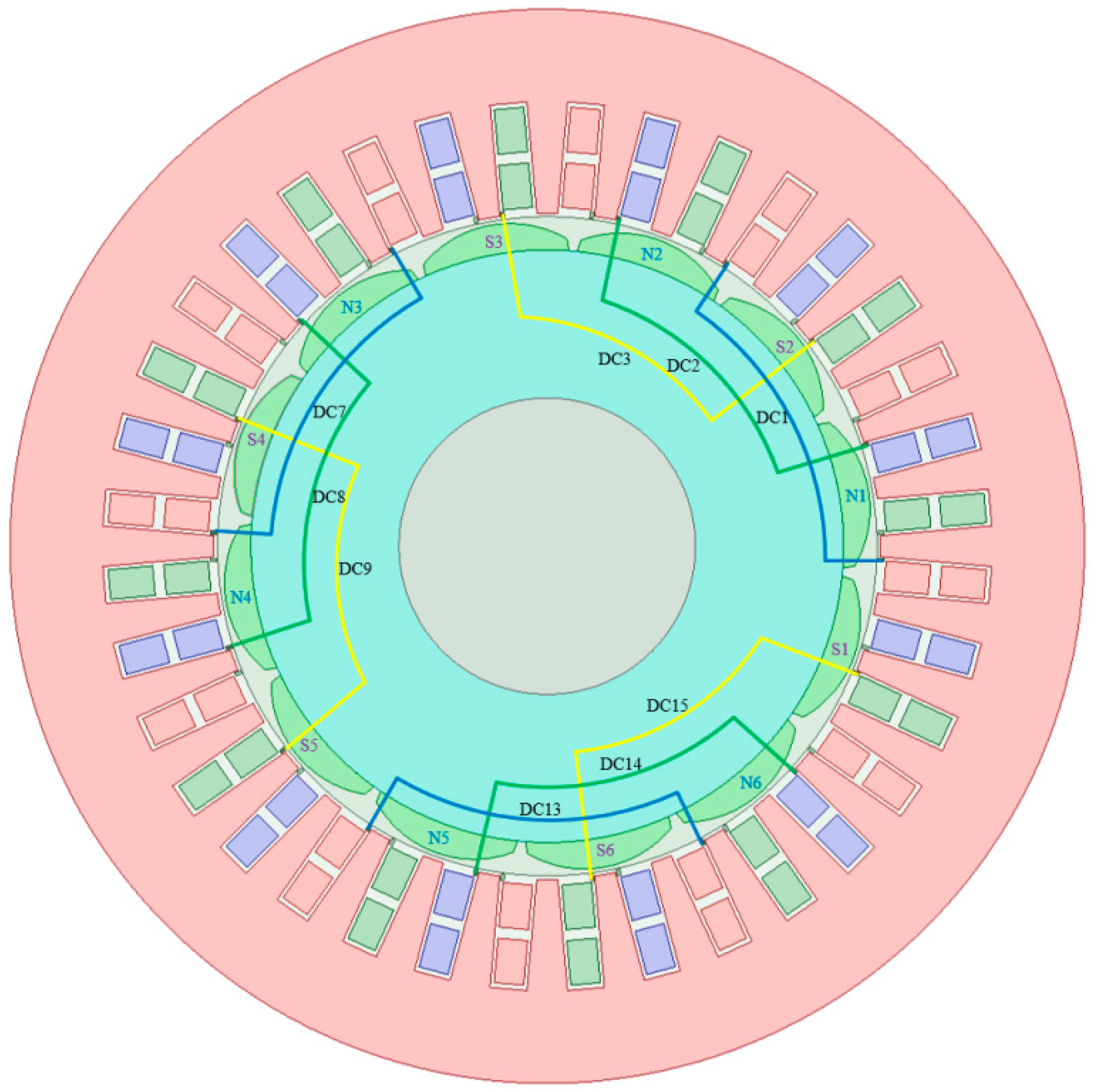
Table 1. To achieve spatial localization of local DMFs, this study innovatively arranges 9 sets (18 in total) of the DDCs (DC1–DC3, DC7–DC9, DC13–DC15) on the stator teeth. These coils are uniformly distributed following the “every other tooth” principle, and their installation positions and numbering rules are illustrated in
Figure 3. This arrangement ensures comprehensive coverage of all rotor PMs (N1–N6, S1–S6) by the detection network.
4.2. Baseline Signal Acquisition in Healthy State
Simulation is conducted under the healthy state of the model, with the motor operating under rated conditions (rated speed: 1000 r/min). The time required for the rotor to complete one mechanical cycle is 60 ms, corresponding to six electrical cycles. To ensure the acquisition of signals containing an integer number of electrical cycles (facilitating spectral analysis), the total simulation time is set to 70 ms, covering seven complete electrical cycles. Induced voltages from all DCs are collected as the baseline for the healthy state.
As shown in
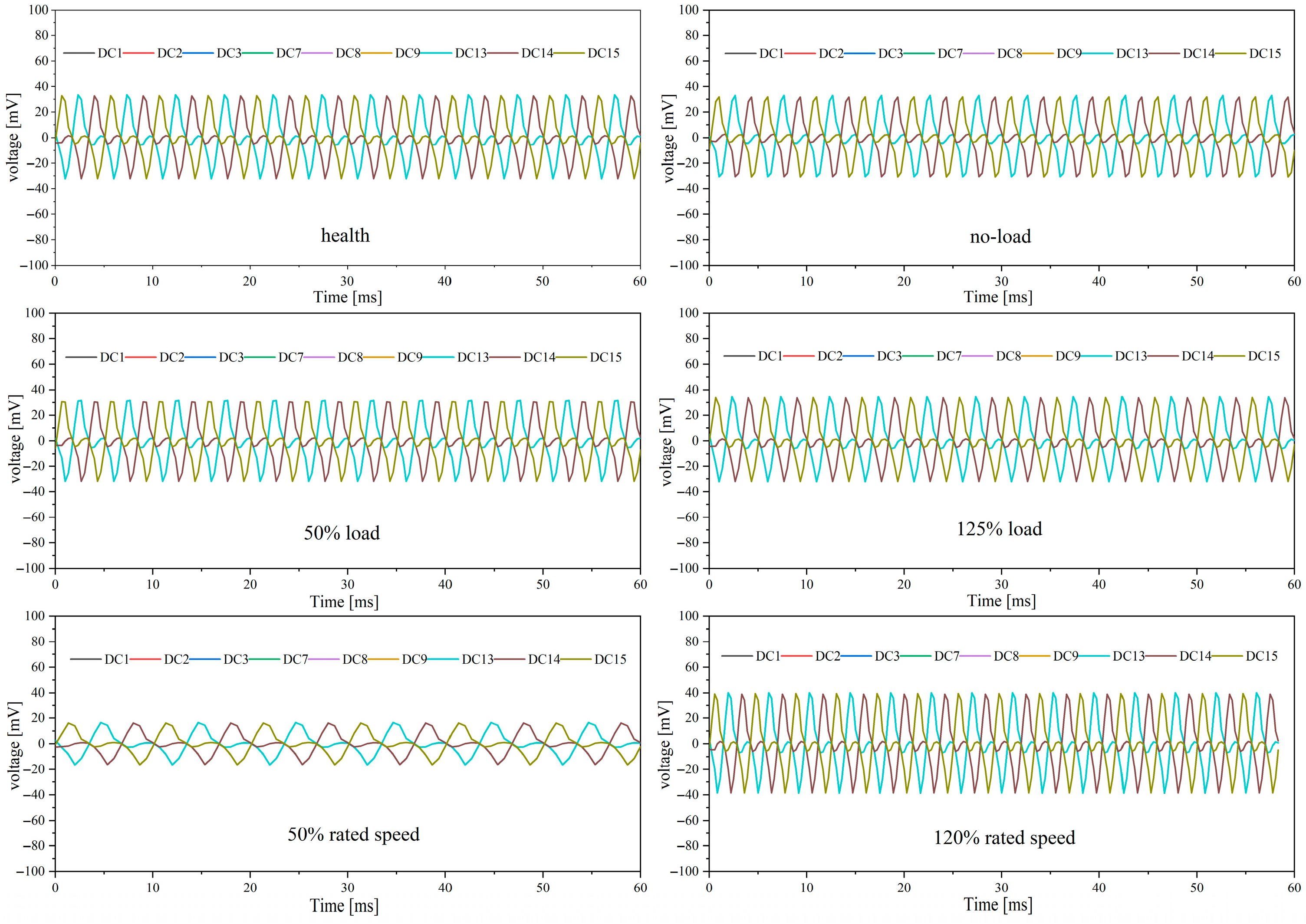
Figure 4, under rated working conditions with the system in a healthy state, the induced voltage amplitudes of all DCs remain at an extremely low level (within ±33 mV) and are essentially negligible, which provides a good baseline reference for subsequent fault feature extraction.
To further verify the common-mode rejection capability of the differential coil structure under complex working conditions, this study also systematically tested the influence of different operating conditions on the output voltage of the DCs. The simulation experiments covered two rotational speed levels (50% and 120% of the rated speed) and three load conditions (no-load, 50% rated load, and 125% rated load). These operating conditions were selected to comprehensively evaluate whether the differential structure can still effectively suppress common-mode interference when operating away from the rated point, such as low speed and light load or high speed and overload.
The simulation results show that the output voltage amplitudes of all DCs do not exceed 40 mV under all tested conditions. This result fully demonstrates that the differential coil structure exhibits strong common-mode rejection robustness—neither rotational speed variation nor load fluctuation causes significant drift or distortion of the detection signals. This lays a solid foundation for subsequent high-sensitivity fault diagnosis based on these DCs.
4.3. DMF Simulation and Signal Analysis
To verify the effectiveness of the proposed diagnostic method for the system, this study simulated irreversible DMFs with different positions and severities by modifying the B-H curves of specific PM materials, and conducted an in-depth analysis on the induced voltage signals of the DCs.
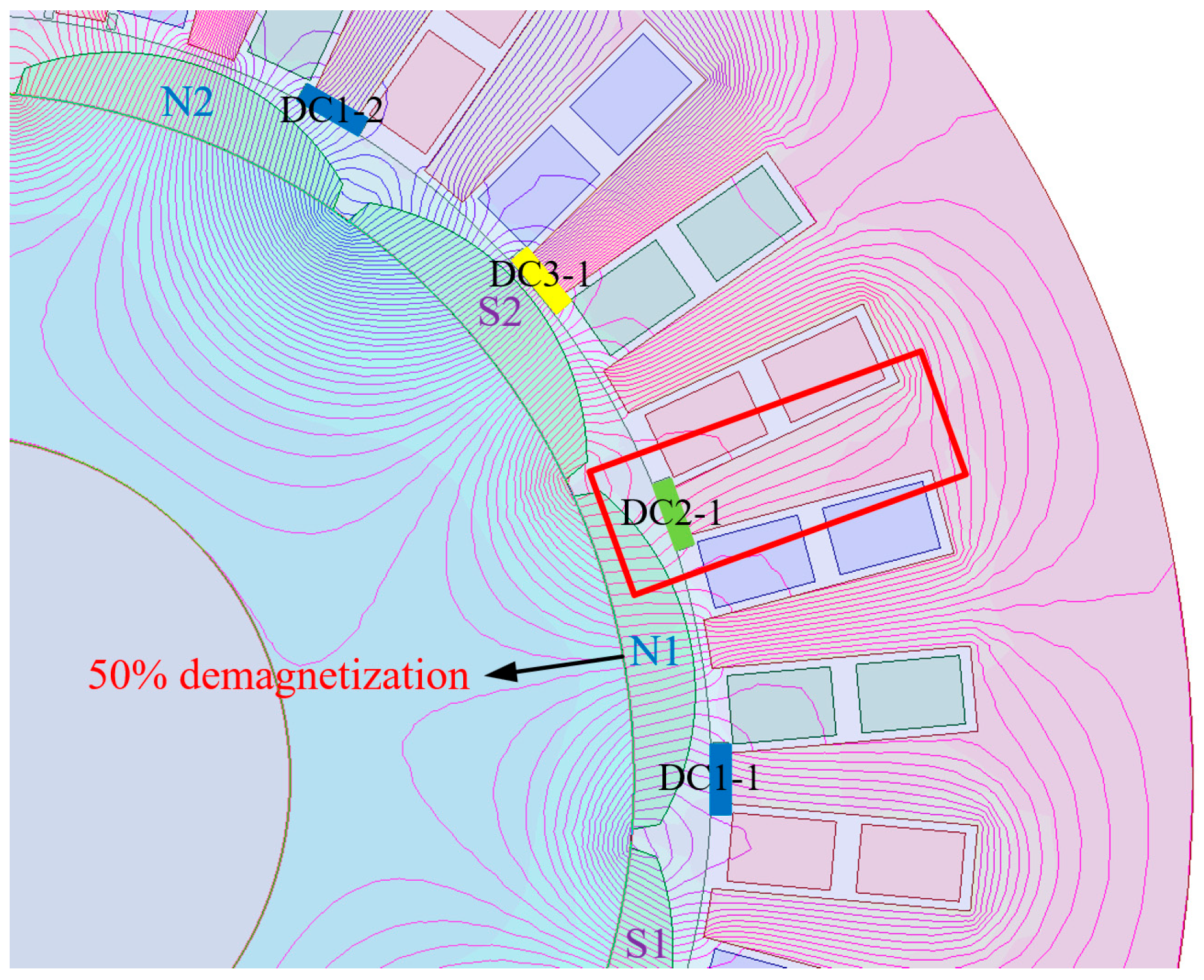
Figure 5 shows the magnetic flux line distribution in the motor cross-section when a 50% DMF occurs in PM N1. It can be clearly observed that above the demagnetized PM N1 (the area marked by the red box), the magnetic flux lines passing through the stator teeth are significantly sparser than those in the stator tooth areas corresponding to other healthy PMs (S2 and N2).
4.3.1. Characteristic Analysis of Fault Localization
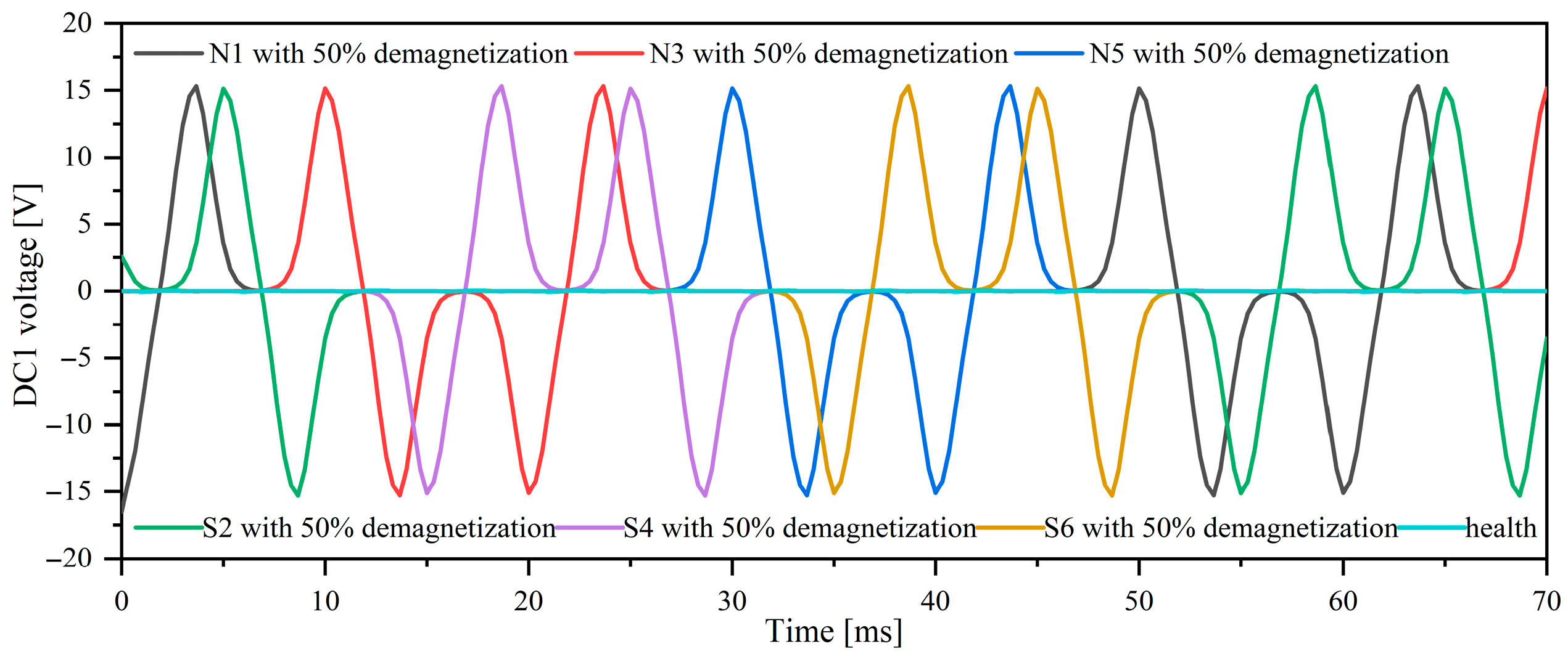
To investigate the localization capability for local DMFs, this study sequentially applied a 50% uniform DMF to the PMs N1, N3, N5, S2, S4, and S6. For ease of observation and analysis, the voltage response data of DC1 is taken as an example.
Figure 6 shows the output voltage waveforms of DC1 under different fault locations.
It can be seen from the figure that when the PM with DMF rotates with the rotor into the detection range of DC1, the amplitude of its induced signal changes drastically, and the peak voltage can reach approximately 15.3 V. Compared with the baseline signal of ±33 mV under the healthy condition, the response amplitude increases by three orders of magnitude, showing an extremely high SNR, which fully verifies that the proposed method has excellent sensitivity to local DMFs.
When the fault occurs in a PM spatially far away from DC1, the variation in its induced voltage waveform is extremely weak, indicating that the DC is mainly sensitive to the demagnetization state of the PM directly facing or adjacent to it. This local sensitivity characteristic provides a spatial selectivity basis for fault localization. Therefore, the location of the demagnetized PM can be uniquely determined by comprehensively analyzing the spatial distribution characteristics of the output voltage amplitudes of multiple DCs.
It is worth noting that the voltage waveforms induced by faults at different positions on DC1 are not only consistent in amplitude but also exhibit regular phase shift characteristics (as shown by the sequential variation in the peak instants of the curves for N1, N3, N5, S2, S4, and S6 in
Figure 6). This phase shift directly reflects the spatial angular position of the faulty PM on the rotor, providing a complementary time-domain criterion for accurate fault localization.
In addition, further simulation studies show that the voltage waveforms measured by the DC maintain a consistent trend under different demagnetization degrees, with only the amplitude increasing as the demagnetization degree intensifies. This characteristic ensures the stability and reliability of the method under different fault severities.
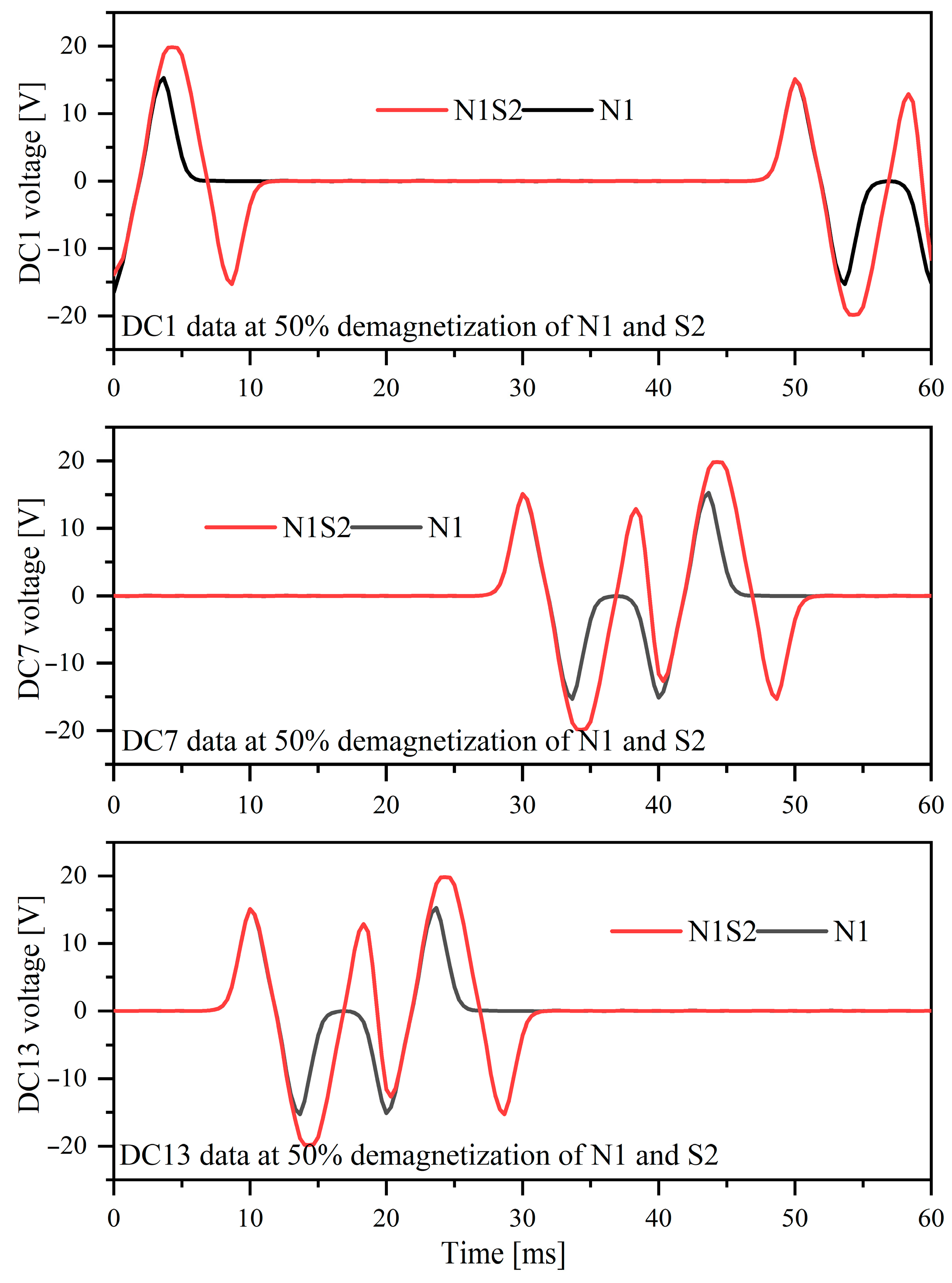
As illustrated in
Figure 7, when adjacent PMs N1 and S2 simultaneously experience a 50% DMF, the voltage responses of the three DCs (DC1, DC7, and DC13) are highly similar to those obtained when only N1 has a 50% DMF.
Specifically, the voltage waveforms of the same coil under the two fault conditions exhibit nearly identical mutation start times. This is because, during rotor rotation, the DC first aligns with and induces the magnetic field variation caused by N1—the first magnet to enter its effective detection range. In contrast, S2, which is immediately adjacent to N1 in spatial position, has a negligible impact on the initial response time of the coil.
Under the same fault condition, the voltage waveforms of DC1, DC7, and DC13 follow consistent pulse characteristic rules, with significant differences only in response timing. The core reason for this timing discrepancy is that during rotor rotation, the demagnetized PM sequentially enters the effective detection ranges of different coils, and the corresponding response time points are strictly synchronized with the time when the magnet sweeps across each coil. This spatial position-dependent timing characteristic can effectively improve the localization accuracy of demagnetized PMs.
From the perspective of amplitude characteristics, the induced voltage amplitudes of all DCs under the dual-magnet simultaneous demagnetization condition are slightly higher than those under the single-magnet (N1 only) demagnetization condition. This minor amplitude increase stems from the superposition of demagnetization effects of adjacent magnets: although the DC has relatively low sensitivity to the magnetic field variation in S2 (which is spatially lagging), the magnetic field distortion caused by S2’s demagnetization still modifies the overall magnetic field distribution in the detection region to a certain extent. Consequently, a small amplitude increment is generated on top of the induced signal from N1’s demagnetization.
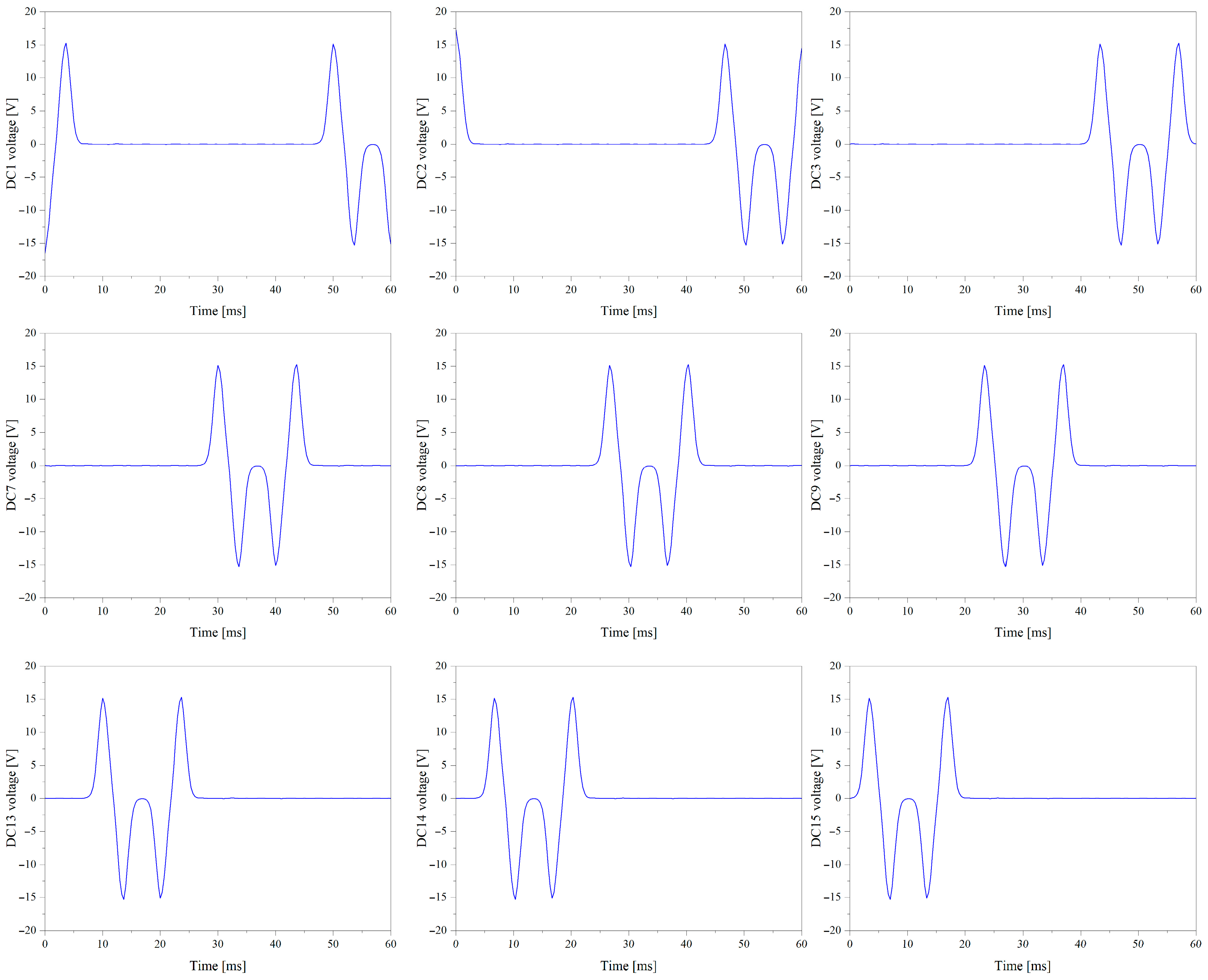
Figure 8 presents the voltage waveforms detected by the nine groups of DCs when the same PM suffers a 50% DMF. The results show that the voltage waveform trends of each group of DCs are highly consistent, with only slight differences in response timings due to the spatial position variations. This fully verifies that all DCs are capable of fault detection, and their detection results can be cross-validated with each other.
4.3.2. Quantitative Analysis of Fault Severity
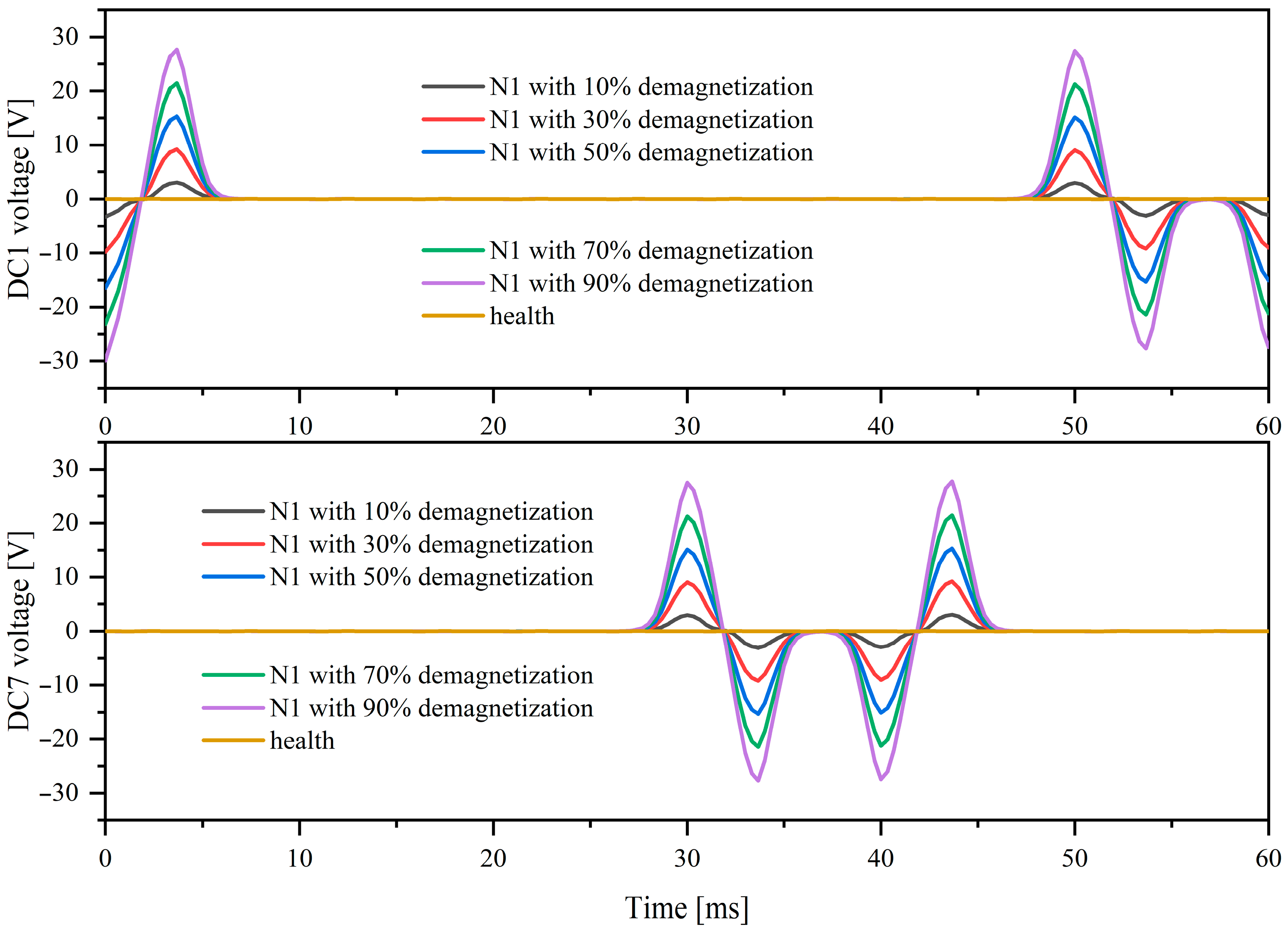
To establish a quantitative relationship between the severity of PM local DMF and the output signal amplitude of the DC, this study selected PM N1 as the analysis object and carried out simulation experiments on different degrees of DMFs. A total of nine demagnetization conditions (10%, 20%, 30%, 40%, 50%, 60%, 70%, 80%, and 90%) were simulated, and the response results of five typical conditions (10%, 30%, 50%, 70%, and 90%) were selected for comparison with the healthy state, as shown in
Figure 9.
The results show that in the healthy state, the output voltages of DC1 and DC7 always remain near zero without obvious pulse fluctuations. As the demagnetization degree of PM N1 intensifies, the peak value of the signal output by the DC shows a strictly monotonically increasing trend. Specifically, the induced voltage peak increases from approximately 3 V at 10% demagnetization to about 27.5 V at 90% demagnetization. This result is highly consistent with the theoretical derivation conclusion of Equation (8), which strongly verifies the core law that the output voltage amplitude of the DC is positively correlated with the demagnetization degree . The clear monotonic correspondence between the induced voltage signal and the fault severity makes it feasible to accurately evaluate the demagnetization degree of the PM by measuring the amplitude of .
By comparing the response waveforms of DC1 and DC7, it can be seen that they have consistent pulse evolution rules and amplitude variation characteristics under the same demagnetization condition, with only significant differences in response timing. This timing difference is jointly determined by the circumferential spatial distribution of the DCs on the stator and the rotational motion of the rotor. The multiple sets of DCs in this study can realize the circumferential localization of the demagnetized PM through the corresponding relationship of response timing, and the detection results of multiple coils can be mutually verified, effectively improving the accuracy and reliability of DMF localization.
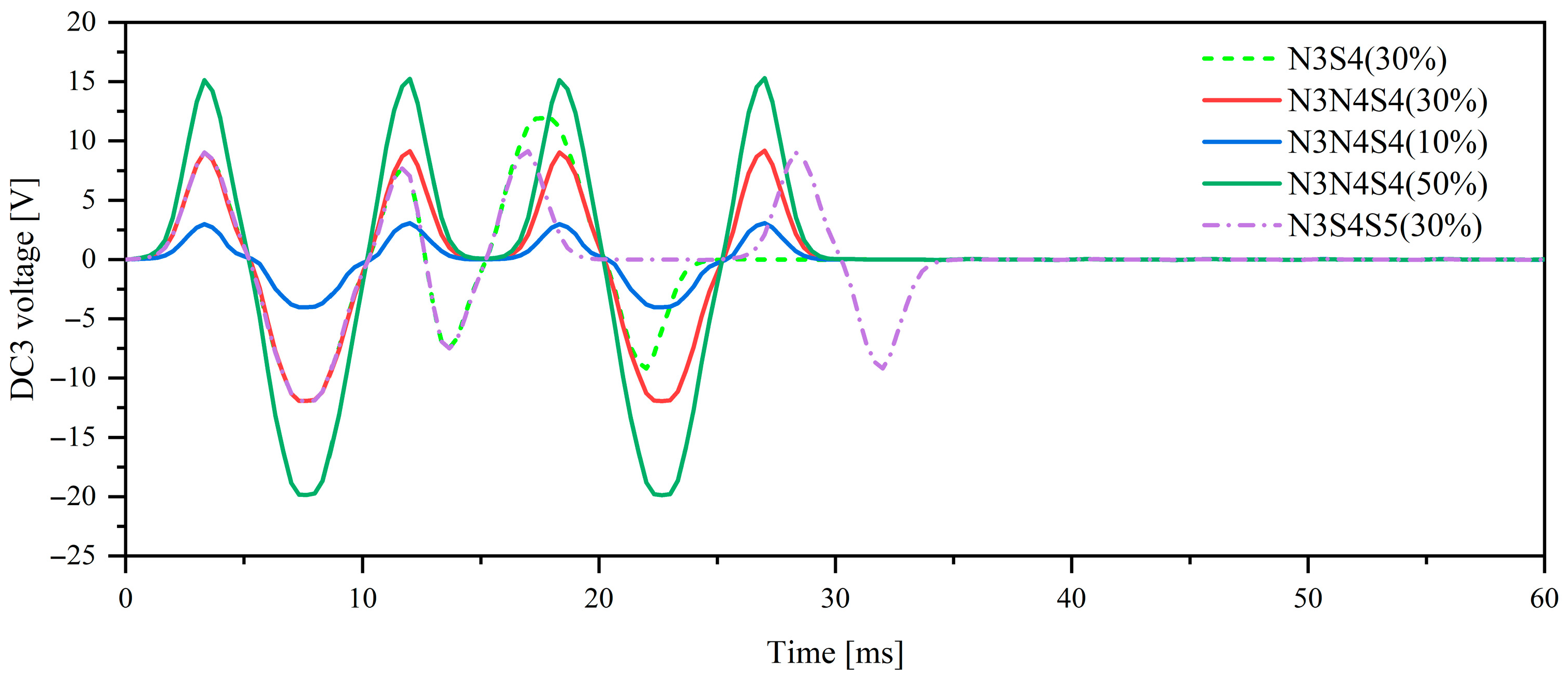
Figure 10 shows the induced voltage waveform of DC3. When three adjacent PMs (N3, N4, S4) experience DMFs, the three solid curves (blue, red, green) in the figure exhibit highly consistent waveform profiles, differing only in amplitude due to varying degrees of demagnetization. This is fully consistent with the previous analytical conclusion that “the induced voltage amplitude is monotonically positively correlated with the severity of the fault”. When only N3 and S4 undergo 30% demagnetization (green dashed curve in the figure), the maximum amplitude is comparable to the peak value when the three adjacent PMs simultaneously experience 30% demagnetization. However, the duration of the voltage fluctuation is significantly shortened, as the spatial coverage of the faulty PMs is smaller. When N3, S4, and S5 (which is separated from N3 and S4 by one healthy PM) simultaneously undergo 30% demagnetization, the voltage waveform of DC3 (purple dotted line) exhibits a stable zero-value interval in the middle segment. This interval corresponds exactly to the period during which the healthy PM sweeps through the detection range as the rotor rotates. This demonstrates the spatial selectivity of the DC for faulty PMs, which can be used to identify the distribution characteristics of the demagnetized PMs.
4.4. Fault Feature Extraction and Intelligent Diagnosis Based on WT-CNN
To establish an accurate mapping relationship between “STF and DMFs”, this section proposes an intelligent diagnostic model that deeply fuses WT and CNN for the non-stationary transient voltage signals collected by the DDC.
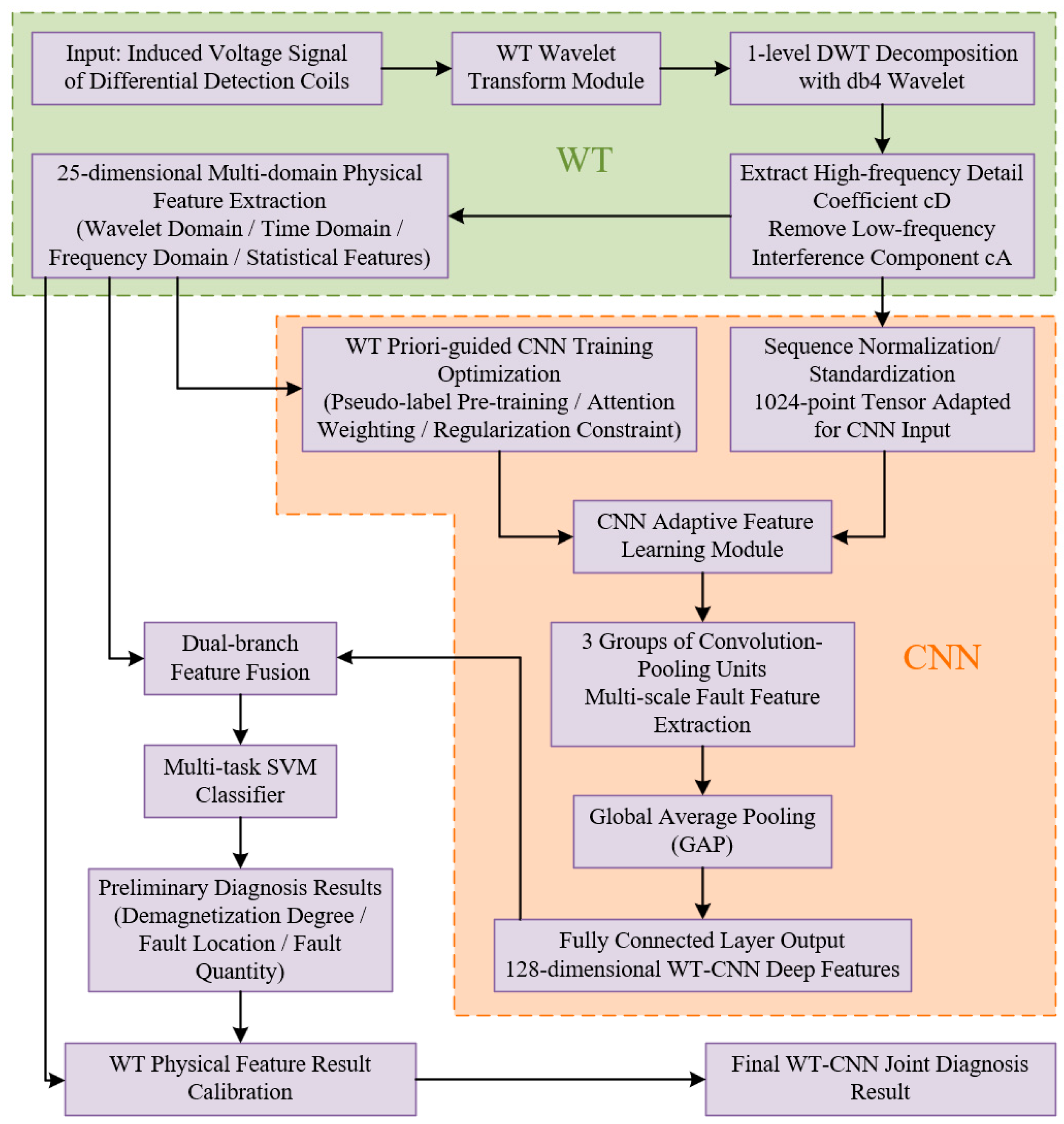
This model breaks through the simple serial pattern of “WT feature extraction + CNN classification”, takes the physical mechanism of DMFs as the core, and realizes the full-process bidirectional collaboration and deep integration of the two methods. It not only solves the limitations of the traditional Fourier transform in processing non-stationary fault signals, but also makes up for the defects of pure manual feature reliance on expert prior knowledge and the lack of interpretability in pure deep learning models. Ultimately, it achieves an integrated and accurate diagnosis of DMF location, degree, and quantity. The core architecture of the WT-CNN joint diagnosis is shown in
Figure 11.
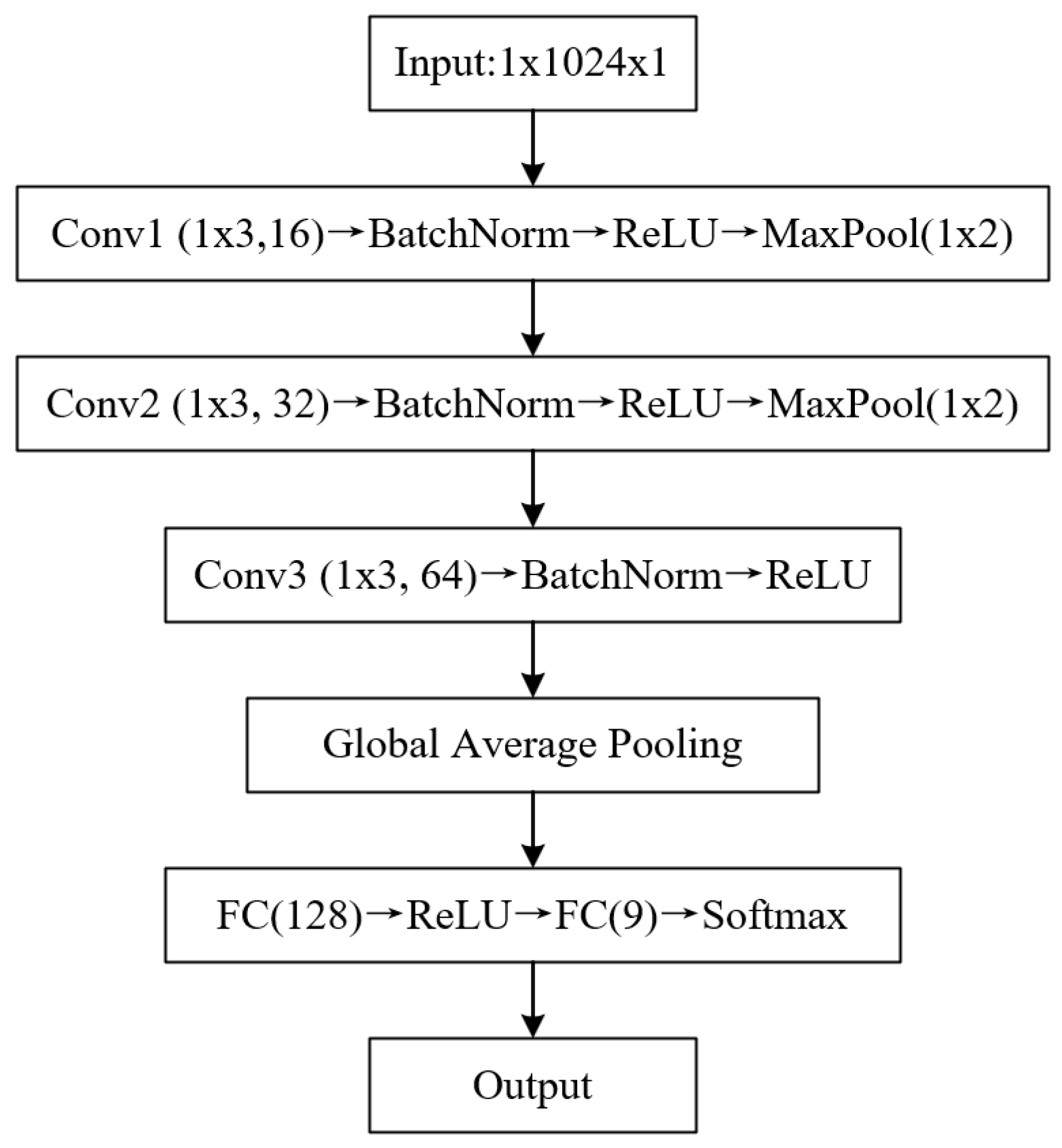
The CNN employed in this study is a one-dimensional convolutional network, whose input is the wavelet detail coefficients (cD) interpolated to 1024 points and reshaped into a 1 × 1024 × 1 tensor. As illustrated in
Figure 12, the network architecture sequentially consists of: input layer → convolutional layer → batch normalization → ReLU activation → max-pooling layer. After repeating the above convolutional module three times, a global average pooling layer, fully connected layers, and a Softmax classifier are connected. All convolutional layers adopt a 1 × 3 kernel with a stride of 1 and same padding; the max-pooling layers use a 1 × 2 window with a stride of 1 × 2; the global average pooling layer outputs 64-dimensional features.
The CNN is trained with an initial learning rate of 0.001, a batch size of 16, and a maximum of 20 iterations, using categorical cross-entropy as the loss function. The dataset is divided into 89 training samples, 15 validation samples (for parameter tuning via 5-fold cross-validation), and 9 independent test samples. Limited by the high computational resources and time cost of finite element simulations, additional simulation experiments will be conducted in future work to gradually expand the test sample size, thereby further verifying the generalization ability of the model.
4.4.1. Core Architecture of WT-CNN Joint Diagnosis
The WT-CNN joint diagnosis model constructed in this paper is centered on a closed-loop collaborative architecture of “WT fault feature enhancement—CNN adaptive feature learning—dual-feature joint decision-making”, with the integration of the two methods running through the entire diagnostic process:
- (1)
As the “physical prior layer” of the model, WT uses its time-frequency localization analysis capability to purify fault-sensitive information and eliminate interference components. Meanwhile, it extracts multi-domain features with clear physical significance, providing physical mechanism constraints and interpretability support for the CNN learning process.
- (2)
As the “adaptive learning layer” of the model, CNN takes the high SNR signal preprocessed by WT as input. It mines the implicit fault correlation characteristics that cannot be covered by manual features, compensates for the limitations of WT single-scale feature extraction, and forms a complementary advantage of “physical interpretability + adaptive generalization” with WT.
4.4.2. Full-Process Joint Mechanism of WT and CNN
- (1)
Pre-Joint: WT for Fault Feature Enhancement and Input Adaptation for CNN
This stage forms the foundation of the joint mechanism, with the core objective of providing the optimal input for CNN through WT preprocessing, thereby reducing the difficulty of model learning from the source. Given that DMF information is concentrated in high-frequency transient components, this paper employs the db4 wavelet basis, which matches the fault waveform, to perform 1-layer discrete WT. (As shown in
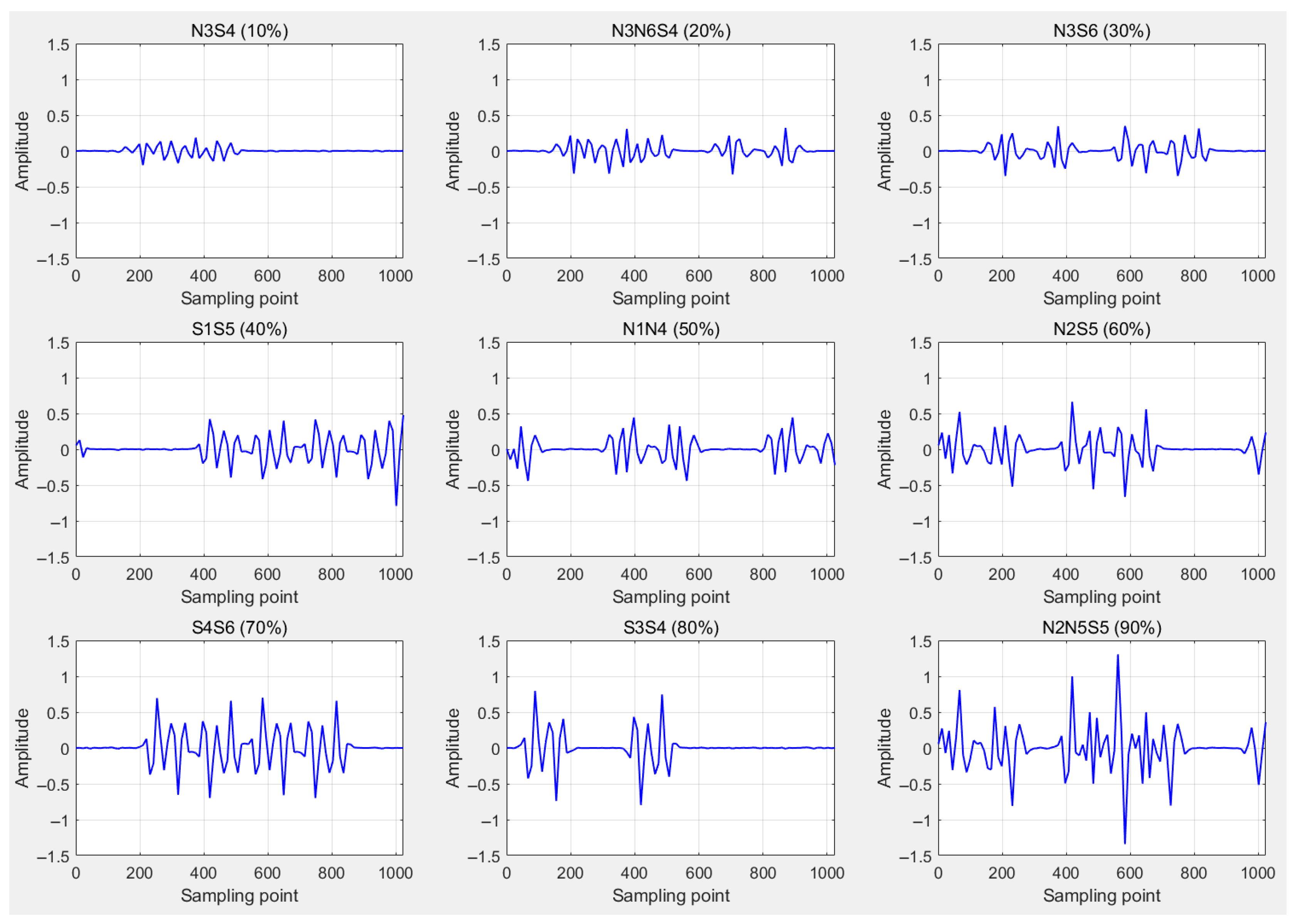
Table 2, a comparison of the model diagnostic performance for the db4, sym4 and coif4 wavelets reveals that the model achieves high accuracy in identifying demagnetization severity, demagnetization quantity and demagnetization position when one-level decomposition is performed with the db4 wavelet. In contrast, increasing the decomposition level introduces redundant high-frequency components, which leads to a slight decline in the model’s diagnostic performance. This verifies the rationality of selecting one-level decomposition with the db4 wavelet in this study.) The DC voltage signal is decomposed into low-frequency approximation coefficients (cA) and high-frequency detail coefficients (cD). The cA component, which mainly contains common-mode interference from load fluctuations and armature reaction, is discarded, while only the cD component encoding the core information of DMFs is retained, achieving SNR enhancement of fault features. On this basis, length normalization and sample-level standardization are applied to the cD sequence, unifying it into a fixed-length 1024-point tensor adapted to CNN input. This completes the seamless connection between WT output and CNN input, while eliminating the impact of signal dynamic range differences under different demagnetization degrees on model training.
Figure 13 intuitively verifies the effectiveness of WT as a physical prior layer: it purifies cD sequences with high SNR and uniform length from the raw voltage signals, providing high-quality input data for CNN. The amplitude and phase information contained in the cD waveforms lay a foundation for physical interpretability for the subsequent CNN to automatically mine deep fault correlation features. In the WT-CNN joint diagnosis architecture, these cD sequences are directly fed into the multi-scale convolutional layers of CNN. The model further extracts implicit features such as amplitude variation patterns and peak distribution rules through adaptive learning, and finally achieves the integrated and accurate diagnosis of demagnetization degree, fault quantity and fault location.
- (2)
Feature Space Joint: Dual-Branch Complementary Feature Mapping
This stage is the core of the joint mechanism. Dual parallel feature branches are constructed based on the WT output to realize deep complementarity between physical features and deep features.
WT Physical Feature Branch: Based on the cD component from wavelet decomposition, 25-dimensional multi-domain composite features covering time-domain statistics, wavelet domain sensitive characteristics, frequency-domain harmonics, and fault fluctuation patterns are extracted. All features have clear physical mapping relationships with the location, degree, and quantity of DMFs, providing interpretability support for the entire diagnostic process.
CNN Deep Feature Branch: Taking the standardized cD tensor preprocessed by WT as input, multi-scale feature learning is completed through three sets of convolution-pooling units, outputting 128-dimensional WT-CNN deep features. This captures implicit fault patterns in complex scenarios such as multi-permanent-magnet coupled demagnetization, compensating for the prior limitations of WT manual features.
Finally, the features from the two branches are fused to form a fused feature set that possesses both physical interpretability and strong generalization ability, which is then fed into a multi-task SVM classifier to complete diagnostic reasoning.
- (3)
Training and Decision Joint: Model Optimization and Result Calibration Guided by WT Priors
This stage is critical to improving the joint performance of the two methods. The physical priors of WT enable guidance for the CNN training process and calibration of diagnostic results. In the model training phase, physical features extracted by WT are used to generate pseudo-labels for CNN pre-training, which guides the convolution kernels to quickly converge to fault-sensitive patterns and solves the problem of model learning divergence under small-sample conditions. Meanwhile, an attention-weighted mechanism is constructed based on the fault mutation regions located by WT, guiding CNN to focus on fault-sensitive areas and improving its recognition ability for early, small-degree demagnetization. In the decision output phase, the preliminary diagnostic results of CNN are calibrated twice using the physical features extracted by WT: the demagnetization degree quantification results are calibrated through the linear mapping relationship between WT peak-to-peak value and demagnetization degree, while the fault location results are verified and corrected through the correspondence between WT peak phase and rotor spatial position, ultimately achieving accurate joint diagnosis.
4.4.3. Diagnostic Performance Validation
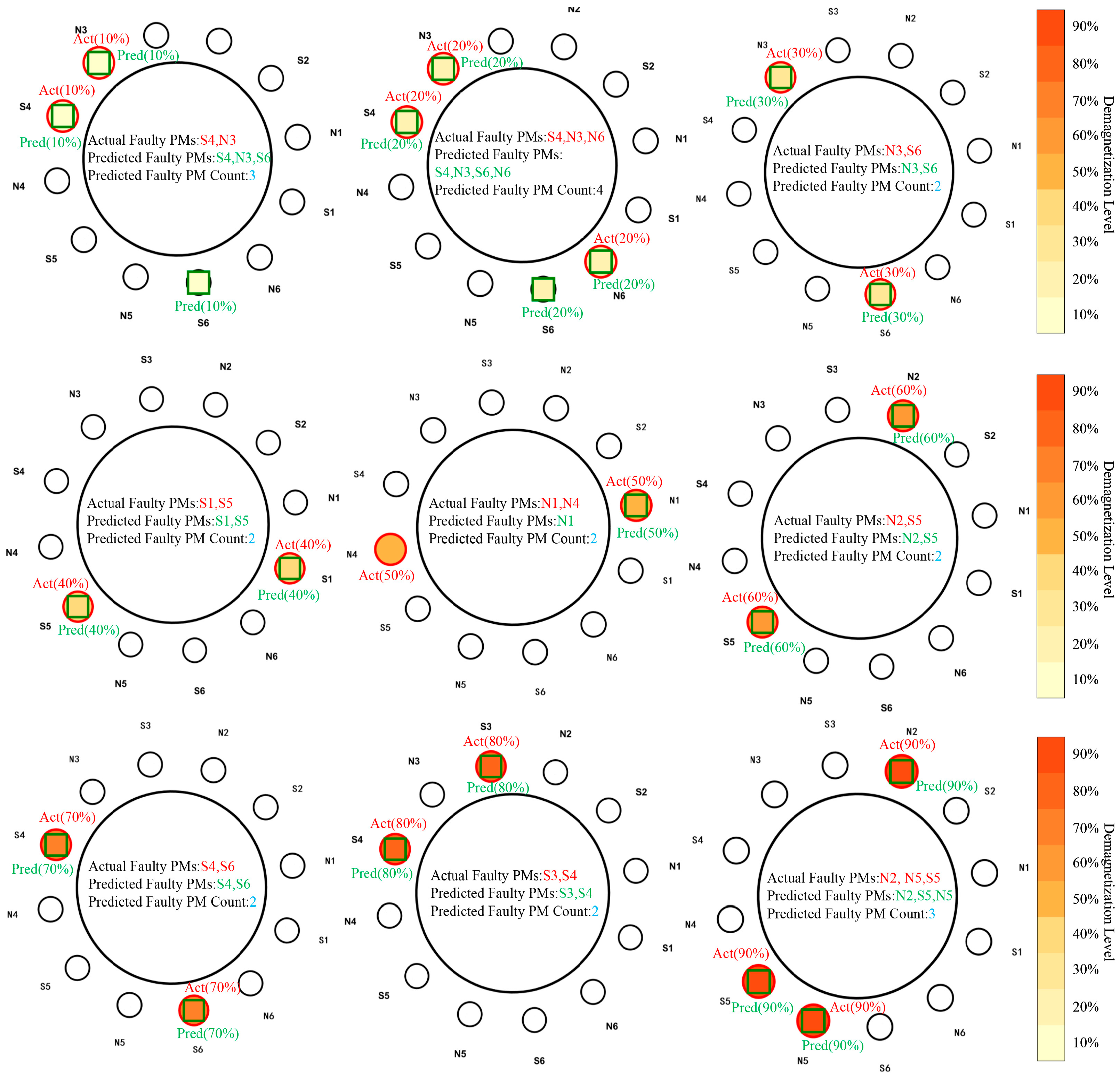
To verify the effectiveness of the proposed method, this study constructs multiple composite fault scenarios in a simulation environment for system testing.
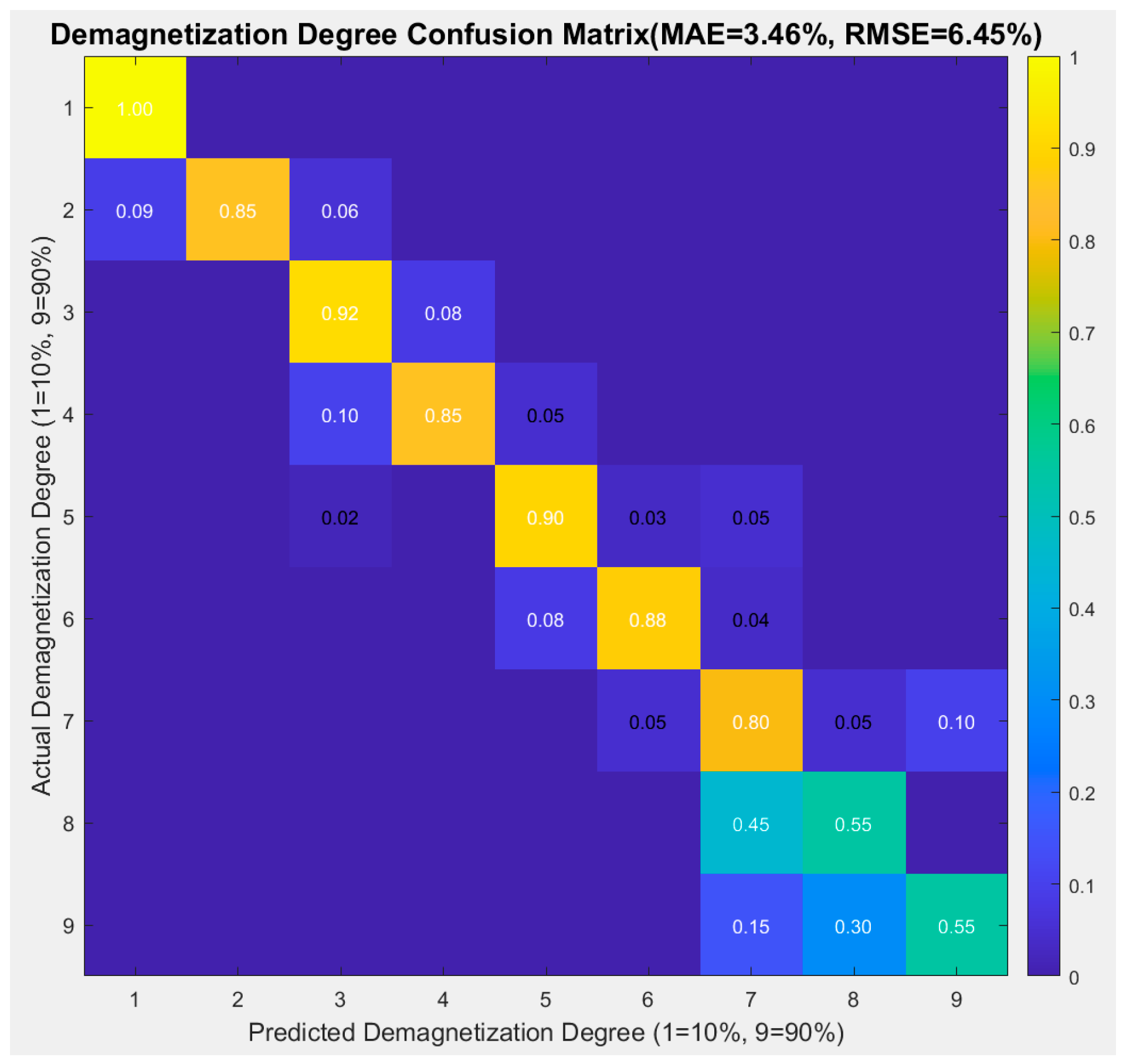
Figure 14 presents the simulation results of nine typical test samples, each corresponding to a specific demagnetization degree and demagnetization fault conditions of different PMs. The results indicate that the proposed diagnostic system achieves excellent accuracy in identifying the demagnetization degree of PMs; only under complex operating conditions with concurrent multiple PM faults (i.e., faults occurring in two or three PMs simultaneously) do occasional misjudgments in fault location occur. However, the overall accuracy of fault localization remains at a high level.
The confusion matrix for demagnetization degree prediction in
Figure 15 further validates the model’s hierarchical prediction performance: the average correct prediction probability on the diagonal for demagnetization degrees ranging from 10% to 70% reaches 0.89, with only a very small number of slight misjudgments occurring between adjacent grades and no severe cross-grade misclassifications, demonstrating a good model fitting effect. Although the correct prediction probabilities for the 80% and 90% high demagnetization degrees slightly decrease to 0.55, the misjudgments are only concentrated on the adjacent 70% demagnetization grade without significant deviations. This phenomenon may be attributed to the relatively small number of test samples for the high demagnetization grades, and we will continue to increase the number of test samples for high demagnetization degrees for further verification in subsequent work. In terms of quantitative metrics, the model achieves a mean absolute error (MAE) of 3.46% and a root mean square error (RMSE) of 6.45%, further indicating that the prediction error of the model for demagnetization degree is controlled at a low level and the diagnostic accuracy is reliable.
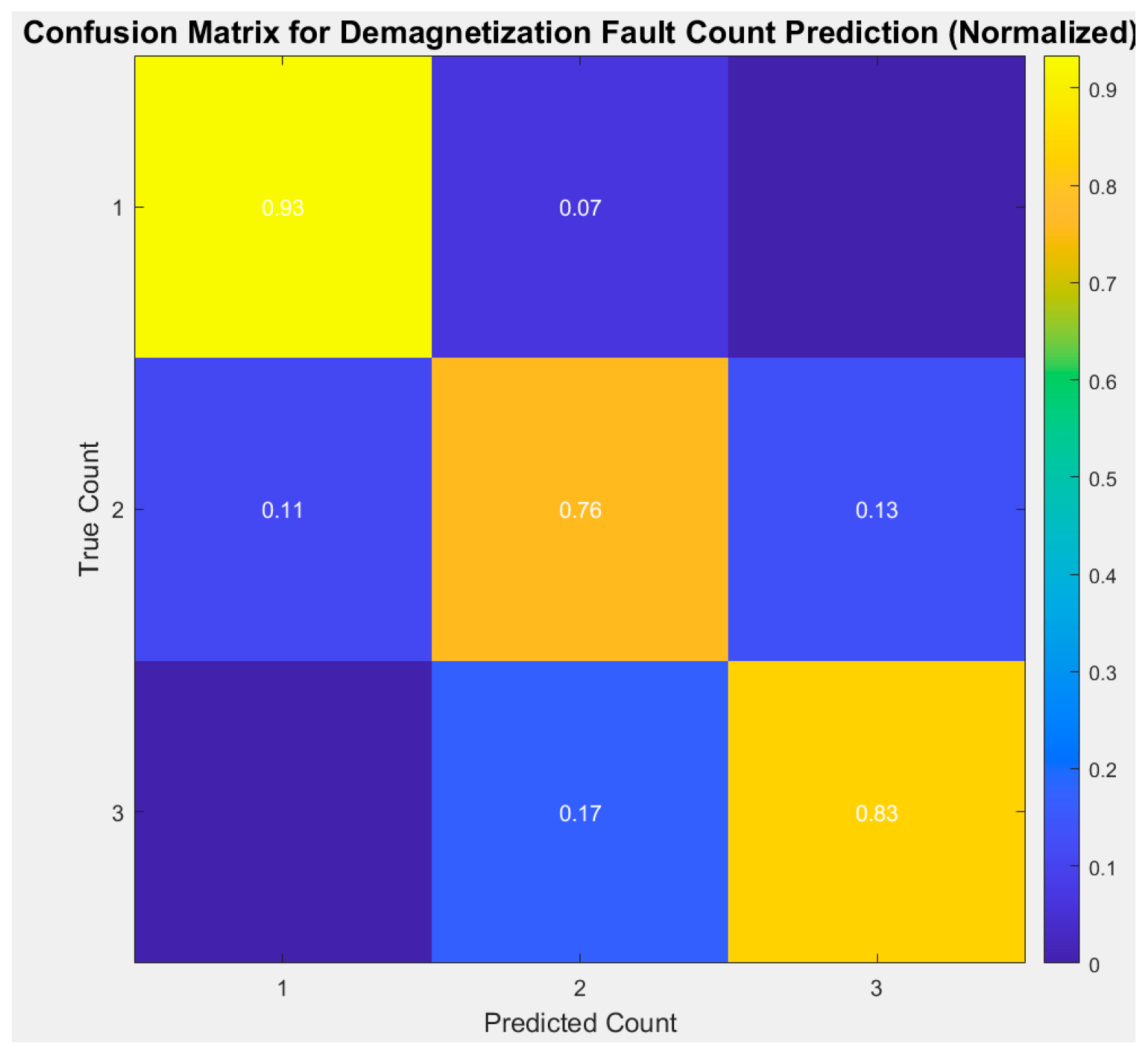
As shown in the confusion matrix of fault quantity in
Figure 16, the recognition accuracies for one and three faults both exceed 80% with stable performance. The accuracy for two faults is slightly lower but still within an acceptable range, and the misjudgments are concentrated in adjacent quantity categories, illustrating that the model can effectively capture the incremental characteristics of fault quantity and only has difficulty in distinguishing boundary samples.
According to the test results of fault location accuracy (as shown in
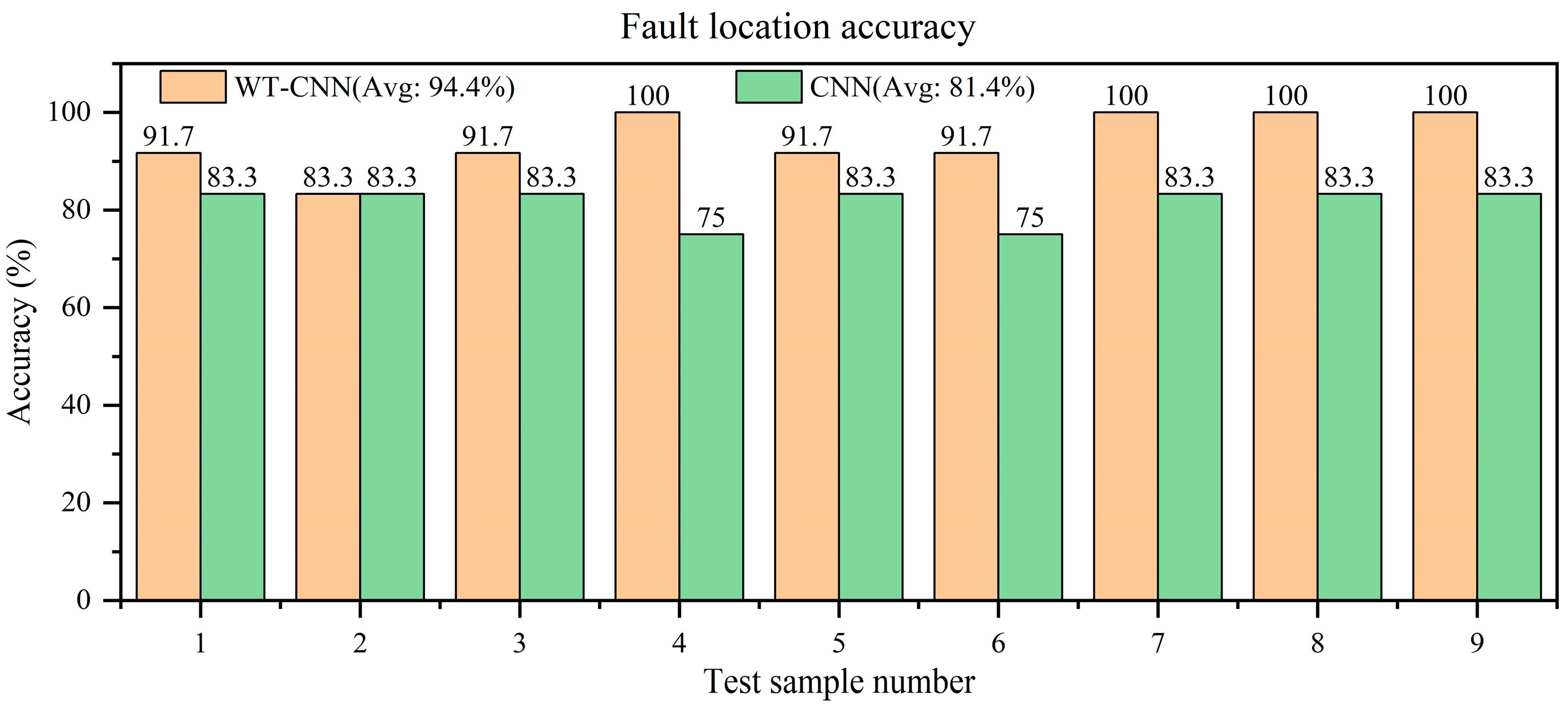
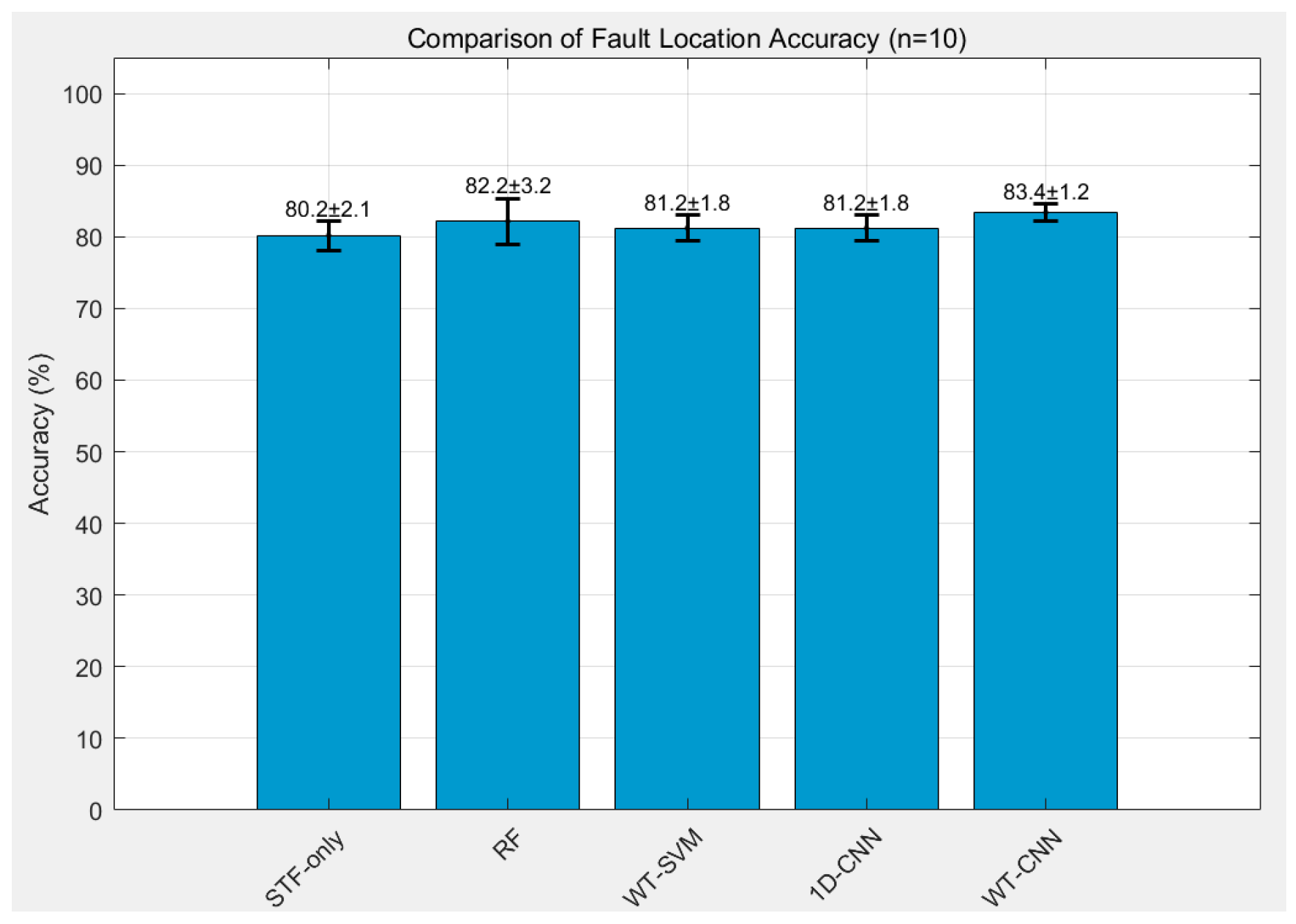
Figure 17), the WT-CNN model achieves a maximum accuracy of 100%, a minimum accuracy of 83.3%, and an average accuracy of 94.4% among nine test samples. In comparison, the traditional pure CNN model yields a maximum accuracy of 83.3%, a minimum accuracy of only 75%, and an average accuracy of 81.4%. To further intuitively verify the superiority of the proposed WT-CNN method for fault location, comparative simulation experiments are carried out with four typical methods, namely STF-only (SVM), RF, WT-SVM, and 1D-CNN. All methods adopt the same dataset, training strategy, and test environment, with multi-label classification of 12 PM positions as the evaluation metric. The simulation experiments are repeated 10 times, and the mean values and standard deviations are recorded, with the results illustrated in
Figure 18. The proposed WT-CNN method attains a fault location accuracy of 83.4 ± 1.2%, outperforming the other comparison methods in both accuracy and stability. Compared with 1D-CNN, the accuracy is increased by 2.2 percentage points, and the standard deviation is reduced from 1.8% to 1.2%. This validates that wavelet preprocessing, as a physical prior layer, enhances the feature extraction capability of CNN, enabling more efficient mining of fault-related features and achieving more accurate and robust fault location.
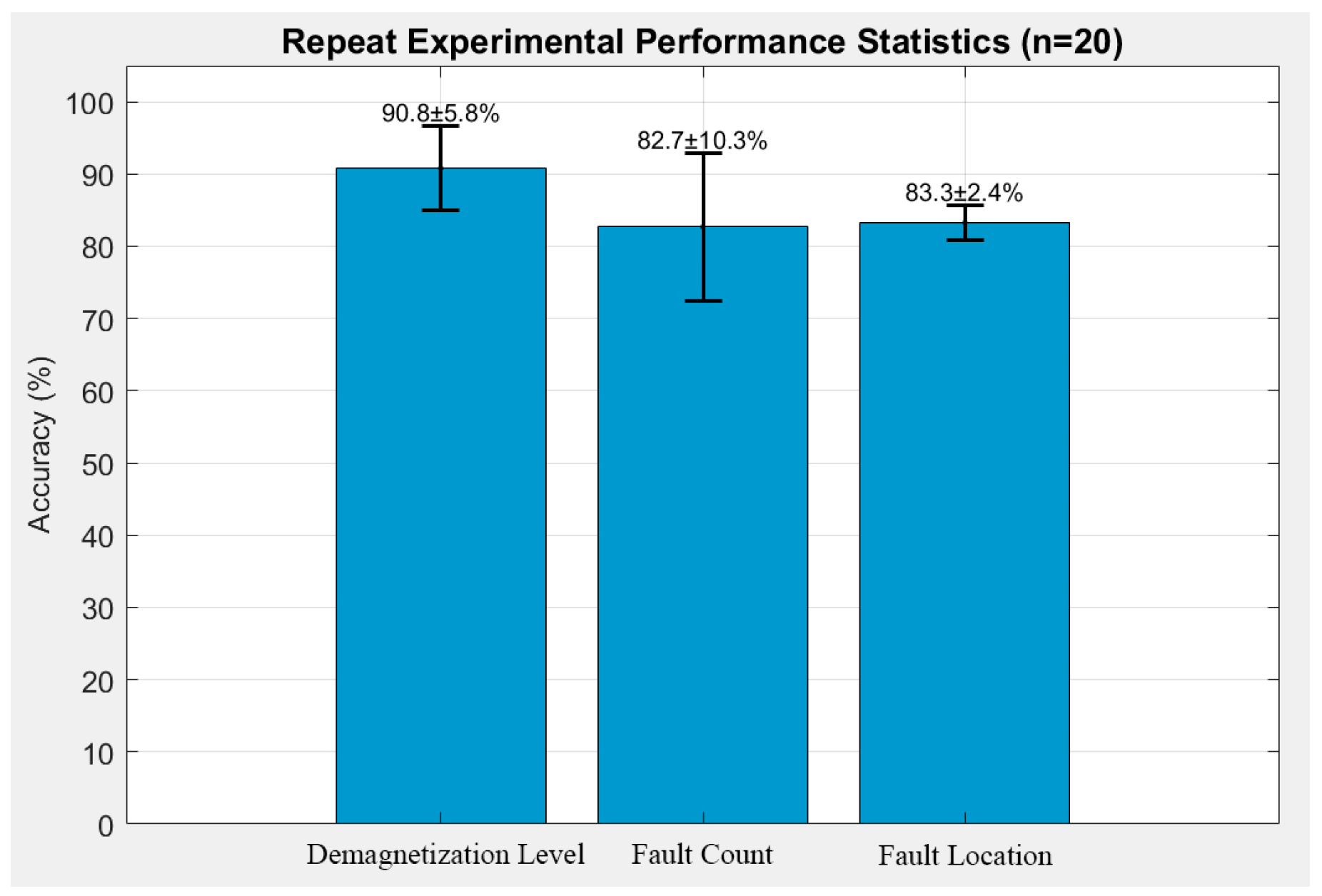
Figure 19 shows 20 repeated simulation experiments for three core tasks, where random stratified partitioning (80% training set, 20% test set) is adopted in each trial. The statistical results are as follows: the classification accuracy of demagnetization degree reaches 90.8 ± 5.8%, achieving both high precision and favorable stability; the classification accuracy of fault quantity is 82.7 ± 10.3%, presenting good accuracy with relatively large fluctuations between experiments; the positioning accuracy of fault location is 83.3 ± 2.4%, which exhibits optimal stability (with a standard deviation of only 2.4%) despite slightly lower precision. The overall average accuracy of the three tasks exceeds 80%.
In summary, the proposed WT-CNN joint diagnostic model in this paper possesses excellent comprehensive performance: the quantitative estimation accuracy of demagnetization degree is above 85%, and the fault location positioning accuracy is above 80%. It can maintain stable recognition capability even in complex scenarios of coupled demagnetization of multiple PMs, which can effectively support motor health monitoring and fault diagnosis.
4.5. Limitations and Future Directions
Although the proposed WT-CNN model exhibits excellent recognition accuracy in simulations, it still has the following limitations due to the constraints of current research conditions, which need to be further improved in subsequent work: (i) Insufficient scale and diversity of training samples. Relying solely on finite element simulation, no actual hardware experiments have been carried out for verification, which affects the generalization ability and robustness of the model. (ii) It is only applicable to the 36-slot 12-pole surface-mounted PM synchronous motor, and its universality has not been verified in motors with other topologies. (iii) The complex actual operating conditions of the motor during practical operation are not considered in this study.
In response to the above limitations, subsequent research work will focus on the following directions: (i) Expanding the high-quality training sample library: By combining high-fidelity finite element simulation with physical experiments, a sample library covering a wider range of operating conditions, more fault types, and different motor topologies will be constructed. In particular, complex fault samples involving multi-magnet demagnetization with varying degrees will be added to improve the recognition accuracy and generalization ability of the WT-CNN model. (ii) Conducting cross-platform and cross-model verification: The method will be extended to PMSMs with different pole-slot combinations and magnetic circuit structures for verification. Mechanisms of adaptive feature adjustment and model transfer learning will be explored to enhance the engineering applicability of the method. (iii) Further introducing real operating condition disturbances such as manufacturing tolerances, inverter nonlinearity, dynamic temperature variations, cross-coupling, dynamic transient processes and non-ideal magnetic asymmetry, so as to improve the robustness and generalization ability of the model in complex environments. The above improvements and expansions are expected to further improve the reliability and practicality of the intelligent diagnostic method in actual engineering applications, providing more comprehensive technical support for the condition monitoring and predictive maintenance of PM motors.
5. Conclusions
Aiming at the problems of insufficient local sensitivity and difficulty in multi-fault identification in the DMF diagnosis of PMSMs, this paper proposes a fault diagnosis method integrating STF measurement and intelligent algorithms. By integrating theoretical modeling, finite element simulation, and an intelligent diagnostic model, the system achieves the location positioning, degree quantification, and quantity identification of DMFs. The simulation results show that the proposed method exhibits good sensitivity and diagnostic accuracy for local DMFs, capable of identifying complex fault scenarios involving simultaneous demagnetization of multiple PMs, and demonstrates relatively stable diagnostic performance under simulated load variation conditions. The main research conclusions are as follows:
- (1)
A fault-sensitive observable quantity based on DDCs is proposed: The DDC structure with common-mode rejection capability is designed, which can effectively extract the STF change signals caused by local demagnetization without adding additional sensors. The simulation results show that the output voltage of this structure is close to zero under healthy conditions, while the SNR is significantly improved under DMFs, and it has good robustness to load changes and certain stability under simulated load changes.
- (2)
A multi-dimensional feature extraction and intelligent diagnostic model is constructed: WT is adopted to extract 25-dimensional composite features, including time-domain, frequency-domain, wavelet-domain, and statistical features, which effectively capture the time-frequency characteristics of fault signals. A lightweight WT-CNN model is further constructed to realize the end-to-end intelligent mapping from “signal-feature-fault”, showing relatively reliable diagnostic performance under various single and complex fault scenarios.
- (3)
The method performs excellently in simulation verification: A diverse sample dataset including single-point and multi-point demagnetization is constructed through finite element simulation. Tests show that the accuracy of the proposed method in fault location identification and demagnetization degree estimation reaches over 80% and 85%, respectively, and its effectiveness and stability in complex fault scenarios have been verified under simulated conditions.
In summary, to address the key challenges in the DMF diagnosis of PMSMs, this paper proposes a novel diagnosis method based on the fusion of STF measurement and intelligent algorithms. This method achieves high-sensitivity extraction of fault signals through the DDC and completes intelligent diagnosis by integrating the WT-CNN model. It exhibits good diagnostic accuracy and stability in the simulation environment, enabling the localization, quantification, and multi-fault identification of DMFs, and providing a reference for subsequent engineering applications.