



Mastitis in Dairy Animals

A special issue of Veterinary Sciences (ISSN 2306-7381). This special issue belongs to the section "Veterinary Microbiology, Parasitology and Immunology".

Deadline for manuscript submissions: 10 January 2027 | Viewed by 5589
Editors

College of Veterinary Medicine, Henan Agricultural University, Zhengzhou 450046, China
Interests: mammalian mammary gland immune physiology; prevention and treatment of mastitis; diseases of small animals
Agricultural Science and Technology Development Research Institute, Yangzhou University, Yangzhou 225009, China
Interests: mastitis of dairy cow; animal nutrition; matabolism of fatty acid
Special Issues, Collections and Topics in MDPI journals

Special Issue Information

Dear Colleagues,

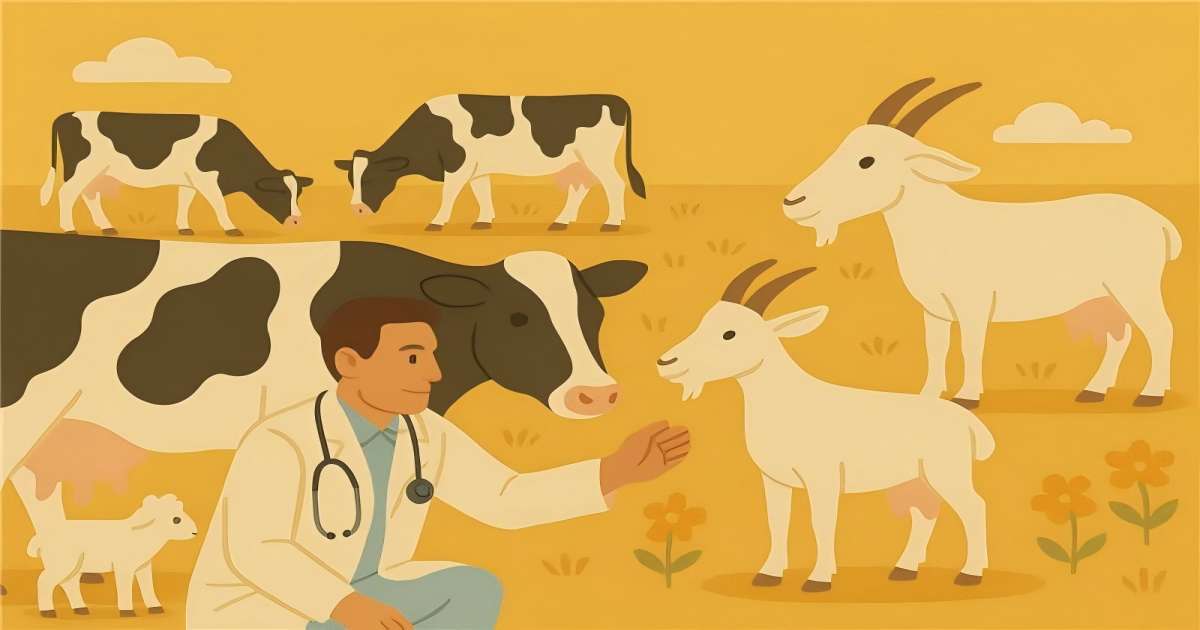
Mastitis remains one of the most prevalent and economically significant diseases affecting dairy animals worldwide, leading to reduced milk yield, altered milk composition, and increased veterinary costs. This Special Issue, titled “Mastitis in Animals”, aims to provide a comprehensive platform for advancing understanding of the etiology, pathogenesis, prevention, and treatment of mastitis. It welcomes research covering bacterial, viral, and fungal infections, antimicrobial resistance, host–pathogen interactions, and immune responses in different dairy species. Studies on diagnostic innovations, management strategies, and alternative therapies such as probiotics, phytochemicals, or immunomodulators are particularly encouraged. By integrating molecular, clinical, and epidemiological perspectives, this Special Issue seeks to promote sustainable mastitis control and enhance animal welfare and milk quality within modern dairy production systems.

Dr. Hongyu Dai
Dr. Tianle Xu
Guest Editors

Manuscript Submission Information

Manuscripts should be submitted online at www.mdpi.com by registering and logging in to this website. Once you are registered, click here to go to the submission form. Manuscripts can be submitted until the deadline. All submissions that pass pre-check are peer-reviewed. Accepted papers will be published continuously in the journal (as soon as accepted) and will be listed together on the special issue website. Research articles, review articles as well as short communications are invited. For planned papers, a title and short abstract (about 250 words) can be sent to the Editorial Office for assessment.

Submitted manuscripts should not have been published previously, nor be under consideration for publication elsewhere (except conference proceedings papers). All manuscripts are thoroughly refereed through a single-anonymized peer-review process. A guide for authors and other relevant information for submission of manuscripts is available on the Instructions for Authors page. Veterinary Sciences is an international peer-reviewed open access monthly journal published by MDPI.

Please visit the Instructions for Authors page before submitting a manuscript. The Article Processing Charge (APC) for publication in this open access journal is 2100 CHF (Swiss Francs). Submitted papers should be well formatted and use good English. Authors may use MDPI's English editing service prior to publication or during author revisions.

Keywords

  • mastitis
  • dairy animals
  • udder health
  • antimicrobial resistance
  • immune response
  • host–pathogen interaction
  • milk quality
  • diagnostics
  • prevention
  • treatment

Benefits of Publishing in a Special Issue

  • Ease of navigation: Grouping papers by topic helps scholars navigate broad scope journals more efficiently.
  • Greater discoverability: Special Issues support the reach and impact of scientific research. Articles in Special Issues are more discoverable and cited more frequently.
  • Expansion of research network: Special Issues facilitate connections among authors, fostering scientific collaborations.
  • External promotion: Articles in Special Issues are often promoted through the journal's social media, increasing their visibility.
  • Reprint: MDPI Books provides the opportunity to republish successful Special Issues in book format, both online and in print.

Further information on MDPI's Special Issue policies can be found here.

Published Papers (5 papers)

Order results
Result details
Select all
Export citation of selected articles as:

Research

Jump to: Review

14 pages, 1872 KB  
Article
Screening and Therapeutic Efficacy of Topical Agents for Teat Hyperkeratosis in Dairy Cows
by Leyao Xu, Jianfa Wang and Rui Wu
Vet. Sci. 2026, 13(7), 608; https://doi.org/10.3390/vetsci13070608 - 24 Jun 2026
Viewed by 393
Abstract
In dairy cows, teat keratinization occurs where keratinized tissue rings form around teat tips (opening). Manifesting as skin damage in mechanically milked dairy cows, keratinization presents as dry, rough, pale, or milky-white keratinous protrusions around teat orifices and progresses via the combined effects [...] Read more.
In dairy cows, teat keratinization occurs where keratinized tissue rings form around teat tips (opening). Manifesting as skin damage in mechanically milked dairy cows, keratinization presents as dry, rough, pale, or milky-white keratinous protrusions around teat orifices and progresses via the combined effects of mechanical stress, management practices, host genetics, environmental influences, and nutritional metabolism. The teat hole is the first physiological barrier protecting the mammary glands from external pathogen invasion. Most mastitis cases are caused by pathogens invading the mammary tissues from the teat end, thereby significantly impacting mammary gland health. Thus, there are no safe, effective, economical, and standardized treatment protocols for terminal teat hyperkeratosis in dairy cows. To address this, we treated keratinization lesions using pharmacological interventions and evaluated their efficacy in 91 cows at a large commercial dairy farm in Heilongjiang Province. Urea ointment, salicylic acid ointment, and 5% azelaic acid acne cream exerted therapeutic or alleviating effects toward teat keratosis, whereas retinoic acid ointment demonstrated poor therapeutic efficacy. In a three-daily application regimen, the optimal treating dose was 0.3 g. These findings provide a scientific basis for the clinical management of hyperkeratosis in large-scale dairy farms and the development of related veterinary therapeutics. Full article
(This article belongs to the Special Issue Mastitis in Dairy Animals)
Show Figures

Figure 1

17 pages, 8545 KB  
Article
Antimicrobial Activity of Cell-Free Supernatants Produced by Strains of Lactic Acid Bacteria Against Staphylococcus aureus
by Xinru Li, Yuejie Yang, Zijian Geng, Rui Wu, Shuai Lian and Jianfa Wang
Vet. Sci. 2026, 13(2), 139; https://doi.org/10.3390/vetsci13020139 - 30 Jan 2026
Cited by 1 | Viewed by 3259
Abstract
Bacterial zoonoses pose a serious threat to the development of animal husbandry, food safety, and public health. Staphylococcus aureus (S. aureus) is a major infectious and food-borne pathogen worldwide, and there was an urgent need to develop relevant methodologies for the [...] Read more.
Bacterial zoonoses pose a serious threat to the development of animal husbandry, food safety, and public health. Staphylococcus aureus (S. aureus) is a major infectious and food-borne pathogen worldwide, and there was an urgent need to develop relevant methodologies for the control of bacterial infections. This study aimed to evaluate the effectiveness of cell-free supernatants (CFSs) produced by selected strains of Lactiplantibacillus plantarum (L. plantarum), Lacticaseibacillus rhamnosus (L. rhamnosus), Streptococcus thermophilus (S. thermophilus), and Bifidobacterium longum subspecies infantis (B. infantis) to inhibit in vitrogrown S. aureus BNCC 186335. CFSs of S. thermophilus, B. infantis, L. plantarum, and L. rhamnosus not only showed good antibacterial activity against S. aureus but also have strong stability and tolerance, which could destroy the integrity of cell membrane, lead to changes in cell morphology, and then strongly and rapidly kill bacteria. Notably, the primary antimicrobial substances in the CFSs of L. plantarum and L. rhamnosus were organic acids and protein components, whereas the main antimicrobial substances in the CFSs of S. thermophilus and B. infantis were organic acids. Meanwhile, four CFSs achieved substantial removal of biofilms and inhibited decreased ATP content. These findings suggest that the CFSs of S. thermophilus, B. infantis, L. plantarum, and L. rhamnosus may have potential applications as biological preservatives to control the contamination of S. aureus in the food industry and animal husbandry. Full article
(This article belongs to the Special Issue Mastitis in Dairy Animals)
Show Figures

Figure 1

Review

Jump to: Research

34 pages, 4029 KB  
Review
Epigenetic and Epitranscriptomic Regulation of Mastitis in Dairy Cattle: A Review
by Shuaishuai Wu, Mohamed Tharwat, Ibrahim F. Halawani, Fuad M. Alzahrani, Khalid J. Alzahrani and Muhammad Zahoor Khan
Vet. Sci. 2026, 13(8), 732; https://doi.org/10.3390/vetsci13080732 - 24 Jul 2026
Viewed by 516
Abstract
Mastitis remains the most economically damaging disease in the global dairy industry, and conventional genetic selection based on somatic cell score (SCS) has produced only limited gains in resistance. Epigenetic mechanisms—mitotically heritable yet environmentally responsive and largely reversible modifications that regulate gene expression [...] Read more.
Mastitis remains the most economically damaging disease in the global dairy industry, and conventional genetic selection based on somatic cell score (SCS) has produced only limited gains in resistance. Epigenetic mechanisms—mitotically heritable yet environmentally responsive and largely reversible modifications that regulate gene expression without altering the DNA sequence—are now emerging as a complementary layer of biological information that can sharpen the prediction of disease susceptibility. This review summarizes current evidence on three classes of epigenetic markers associated with bovine mastitis resistance: DNA methylation, non-coding RNAs (with emphasis on microRNAs, long non-coding RNAs, circular RNAs, and small nucleolar RNAs), and histone modifications, alongside the increasingly important epitranscriptomic layer of N6-methyladenosine (m6A) RNA modification. Particular attention is given to differentially methylated regions and discriminant methylation haplotype blocks in immune-related genes, circulating and milk-derived non-coding RNA biomarkers, m6A-mediated regulation of inflammatory transcripts, and histone-mark dynamics in mammary epithelial cells challenged with Staphylococcus aureus and Escherichia coli. We conclude with current limitations and perspectives on translating these markers into selection tools and therapeutic targets. Across all marker classes, current evidence remains constrained by small cohort sizes, breed-specific study designs, a scarcity of longitudinal and multi-generational data, and limited functional validation, so most candidate markers are still at the discovery stage and require cautious interpretation before deployment. Full article
(This article belongs to the Special Issue Mastitis in Dairy Animals)
Show Figures

Figure 1

17 pages, 1492 KB  
Review
The Impact of Climate-Driven Heat Stress on Bovine Mastitis: A Review of the Po Valley Dairy System
by Mario Baratta, Paolo Accornero, Silvia Miretti and Eugenio Martignani
Vet. Sci. 2026, 13(7), 623; https://doi.org/10.3390/vetsci13070623 - 26 Jun 2026
Viewed by 376
Abstract
This review examines the relationship between climate-driven heat stress (HS) and bovine mastitis in the Po Valley, a key European dairy region characterized by intensive production systems and increasing climatic vulnerability. It aims to contextualize how rising temperature–humidity index (THI) levels influence animal [...] Read more.
This review examines the relationship between climate-driven heat stress (HS) and bovine mastitis in the Po Valley, a key European dairy region characterized by intensive production systems and increasing climatic vulnerability. It aims to contextualize how rising temperature–humidity index (THI) levels influence animal health and productivity. This study synthesizes the current literature on biometeorological conditions, epidemiological trends, and physiological mechanisms linking HS to mastitis. Evidence indicates that prolonged exposure to elevated THI impairs thermoregulation, disrupts endocrine and metabolic balance, and weakens immune function, thereby increasing susceptibility to intramammary infections. Epidemiological data reveal a clear seasonal pattern, with mastitis incidence peaking during summer months and a growing predominance of environmental pathogens. Additionally, HS negatively affects milk yield and quality, amplifying economic losses in dairy systems. The findings highlight that mastitis in this context is not merely an infectious disease but a multifactorial condition shaped by environmental, physiological, and management factors. Overall, this review underscores the need for integrated mitigation strategies, including improved housing, nutrition, genetic selection, and precision monitoring, to enhance resilience. In the face of ongoing climate change, adapting dairy production systems will be essential to safeguard animal welfare, maintain productivity, and ensure the long-term sustainability of the Po Valley dairy sector. Full article
(This article belongs to the Special Issue Mastitis in Dairy Animals)
Show Figures

Figure 1

19 pages, 1729 KB  
Review
The NLRP3 Inflammasome as a Central Driver of Mastitis Pathogenesis: A Review
by Shuaishuai Wu, Mohamed Tharwat, Ibrahim F. Halawani, Fuad M. Alzahrani, Khalid J. Alzahrani and Muhammad Zahoor Khan
Vet. Sci. 2026, 13(7), 609; https://doi.org/10.3390/vetsci13070609 - 24 Jun 2026
Viewed by 390
Abstract
Mastitis remains the most economically damaging disease of dairy production, and recent molecular work has converged on the NLRP3 inflammasome as a key integrative node of its pathogenesis. This narrative review integrates evidence published largely between 2015 and 2026 to show how diverse [...] Read more.
Mastitis remains the most economically damaging disease of dairy production, and recent molecular work has converged on the NLRP3 inflammasome as a key integrative node of its pathogenesis. This narrative review integrates evidence published largely between 2015 and 2026 to show how diverse triggers—Staphylococcus aureus and Escherichia coli, lipopolysaccharide (LPS) and lipoteichoic acid (LTA), non-esterified fatty acids (NEFA), heat stress, environmental xenobiotics including nanoplastics, and microbiota-derived signals—may funnel into a common NLRP3–ASC–caspase-1–GSDMD axis that drives pyroptosis, blood–milk barrier disruption, and clinical disease. The review examines the potential obligatory role of reactive oxygen species (ROS), mitochondrial dysfunction, and selenoprotein-mediated redox control in licensing inflammasome assembly. It further evaluates the emerging gut–mammary and rumen–mammary axes that operate upstream of local epithelial activation. We survey a structurally diverse therapeutic landscape encompassing dietary selenium, probiotics, microbial metabolites, plant-derived nanovesicles, polyphenols, ginsenosides, and small-molecule NLRP3 antagonists, identifying recurring mechanistic motifs that suggest combinatorial regimens may yield additive benefit. Importantly, much of the evidence derives from in vitro and murine models, and we highlight the translational gaps that must be bridged before clinical application in dairy cattle. Finally, we map outstanding research gaps and propose priorities for translational work aimed at sustainable, antibiotic-sparing management of bovine mastitis. Full article
(This article belongs to the Special Issue Mastitis in Dairy Animals)
Show Figures

Figure 1

Back to TopTop