Sustainable Maritime Policy and Management
Share This Topical Collection
Editor
 Dr. Alessandro Farina
Dr. Alessandro Farina
E-Mail
Website
Collection Editor
Department of Civil and Industrial Engineering, University of Pisa, 56126 Pisa, Italy
Interests: innovative transport systems; city logistics; freight transport by rail and by sea; passenger transport; acoustic capacity of roads; port telematization; transport systems simulation; optimization algorithms
Special Issues, Collections and Topics in MDPI journals
Topical Collection Information
Dear Colleagues,
There have been substantial improvements in maritime activities in recent years. Naval gigantism has strongly reduced transport costs. Port operations have become more automatized and port telematization has grown. The competitiveness among ports has made hinterlands more overlapped. Finally, the development of short sea shipping routes and motorways of the sea has created a valid and more sustainable alternative to road transport. On the other hand, maritime transportation and port activities cause several environmental impacts, such as water pollution, air pollution, greenhouse gas emissions, garbage, underwater noise pollution, and damage to the marine environment and fauna.
This Topical Collection focuses on policies to improve the port competitiveness and the potential of waterborne transport, on the one hand, and measures to reduce the environmental footprint of maritime transport operations and to safeguard the marine environment and fauna, on the other hand. Welcome topics include, but are not strictly limited to, the following:
- Policies and measures to safeguard the marine environment or fauna;
- Measures to reduce the environmental footprint of sea transport and port operations;
- Sustainable maritime transport;
- Low-emission ships;
- Low-emission port operations;
- Port competitiveness and regionalization;
- Port telematization;
- Motorways of the sea, short sea shipping, and their competitiveness against all-road mode.
Dr. Alessandro Farina
Collection Editor
Manuscript Submission Information
Manuscripts should be submitted online at www.mdpi.com by registering and logging in to this website. Once you are registered, click here to go to the submission form. All submissions that pass pre-check are peer-reviewed. Accepted papers will be published continuously in the journal (as soon as accepted) and will be listed together on the collection website. Research articles, review articles as well as short communications are invited. For planned papers, a title and short abstract (about 250 words) can be sent to the Editorial Office for assessment.
Submitted manuscripts should not have been published previously, nor be under consideration for publication elsewhere (except conference proceedings papers). All manuscripts are thoroughly refereed through a single-blind peer-review process. A guide for authors and other relevant information for submission of manuscripts is available on the Instructions for Authors page. Sustainability is an international peer-reviewed open access semimonthly journal published by MDPI.
Please visit the Instructions for Authors page before submitting a manuscript.
The Article Processing Charge (APC) for publication in this open access journal is 2400 CHF (Swiss Francs).
Submitted papers should be well formatted and use good English. Authors may use MDPI's
English editing service prior to publication or during author revisions.
Keywords
- Environmental footprint of maritime transport
- Air pollution and greenhouse gas emissions
- Water pollution
- Marine environment and fauna
- Low-emission ships
- Port competitiveness
- Port regionalization
- Port telematization
- Maritime transport routes
- Short sea shipping and motorways of the sea
Published Papers (18 papers)
Open AccessArticle
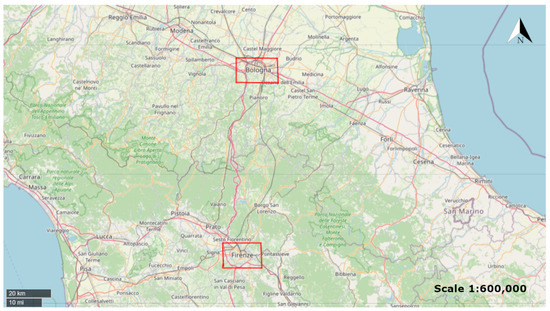
Electric Bikes and Scooters Versus Muscular Bikes in Free-Floating Shared Services: Reconstructing Trips with GPS Data from Florence and Bologna, Italy
by
Giacomo Bernieri, Joerg Schweizer and Federico Rupi
Cited by 1 | Viewed by 804
Abstract
Bike-sharing services contribute to reducing emissions and conserving natural resources within urban transportation systems. They also promote public health by encouraging physical activity and generate economic benefits through shorter travel times, lower transportation costs, and decreased demand for parking infrastructure. This paper examines
[...] Read more.
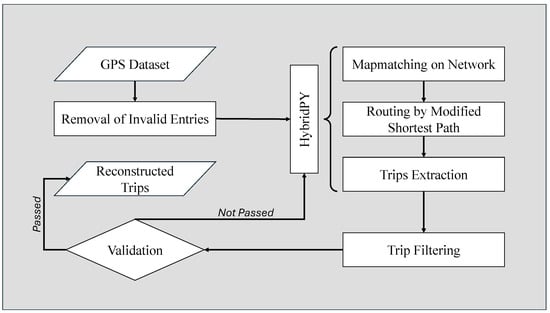
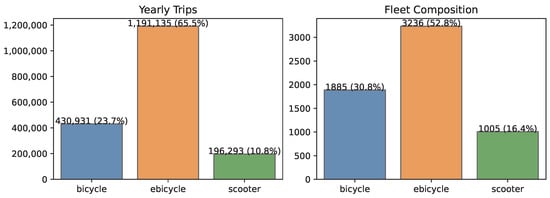
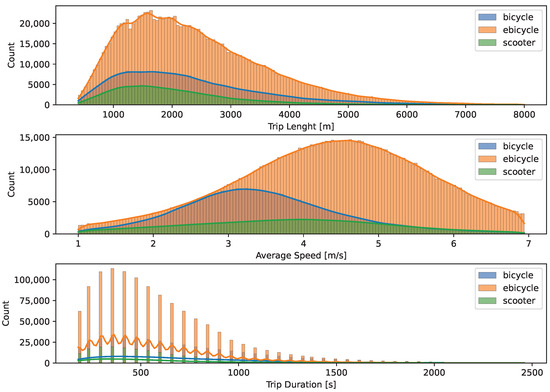
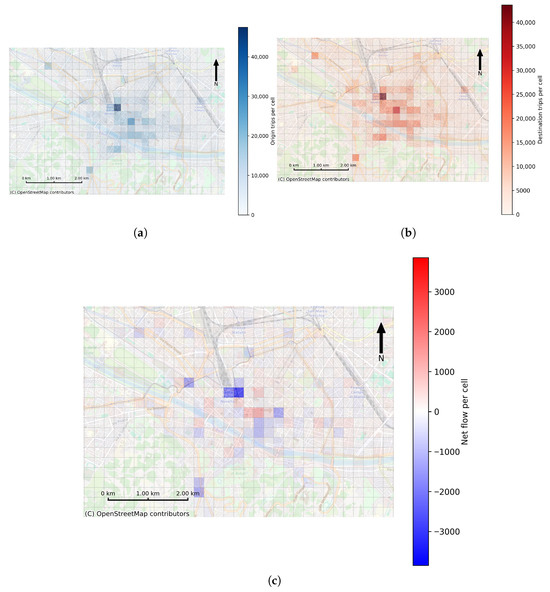
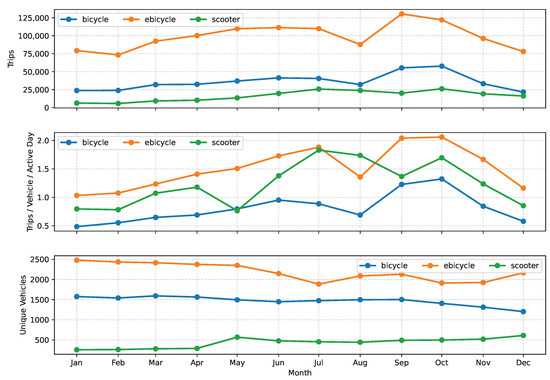
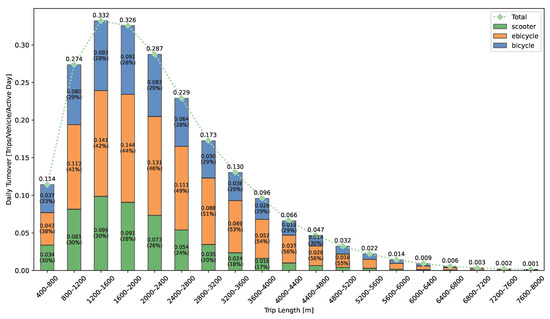
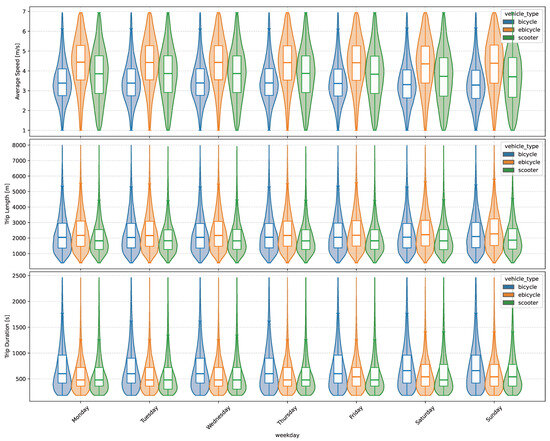
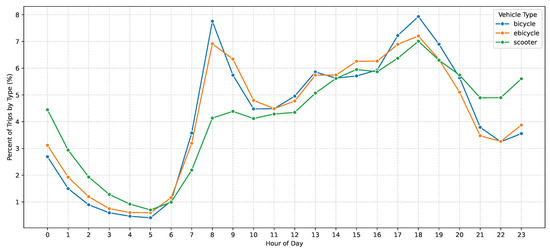
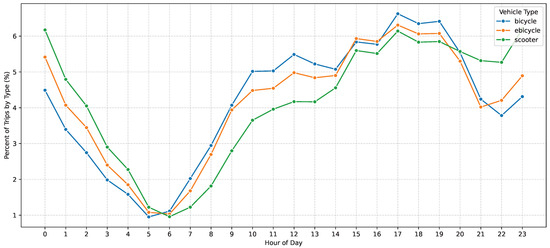
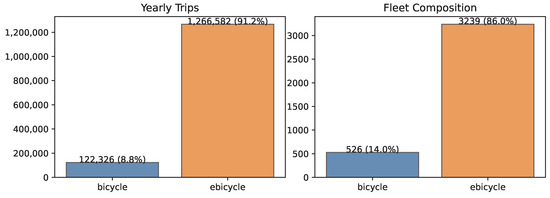
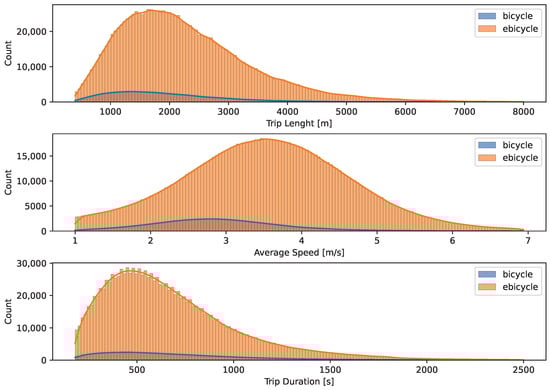
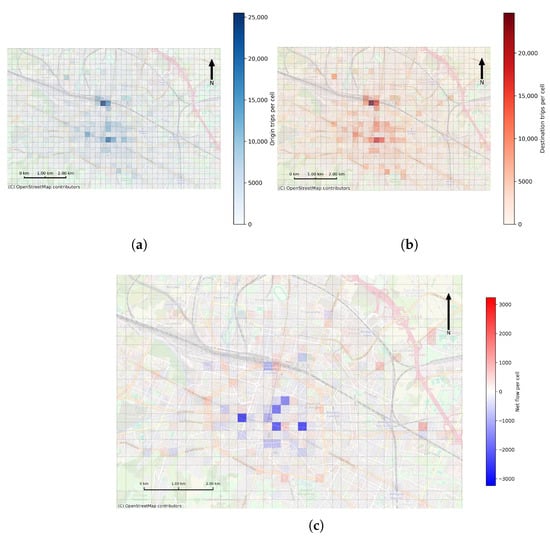
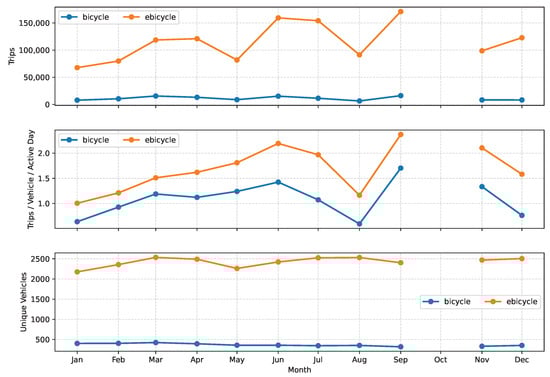
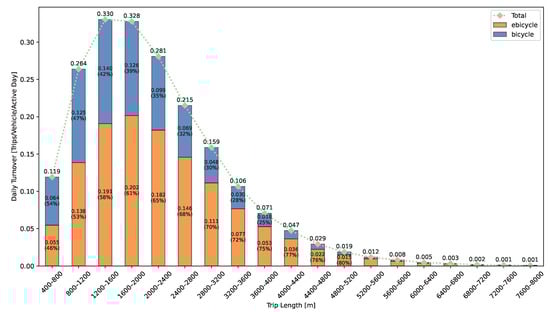
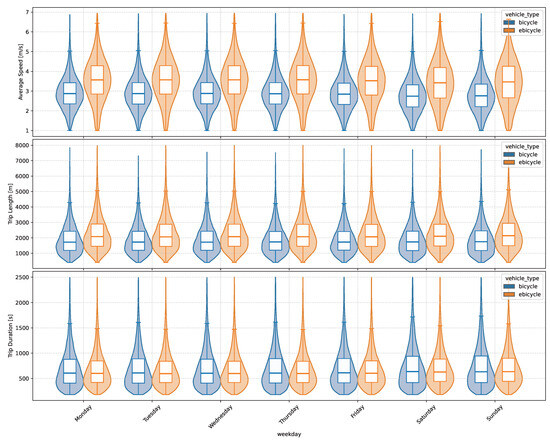
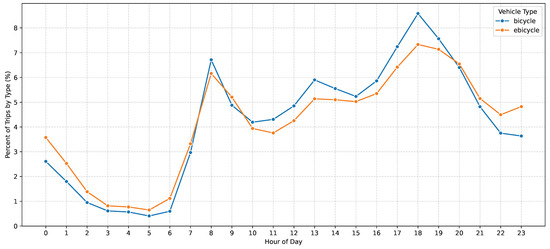
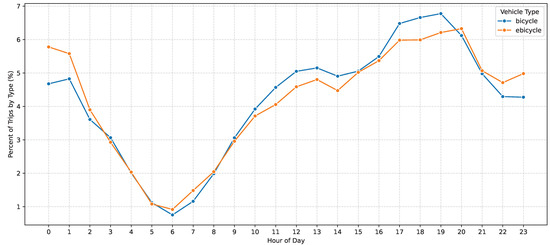
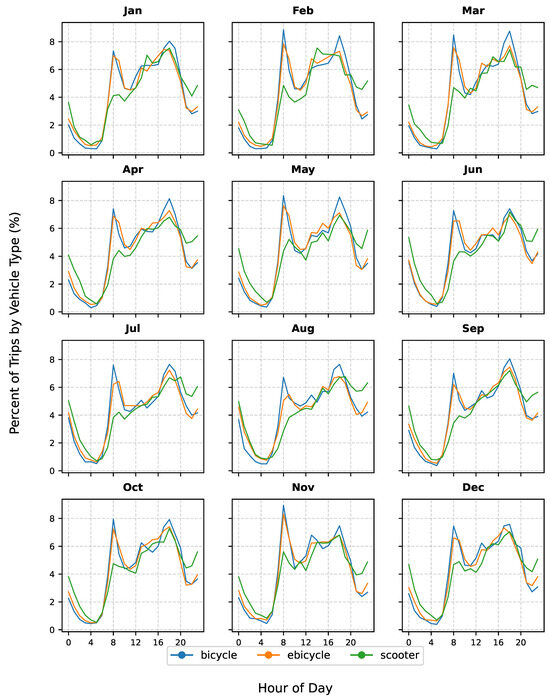
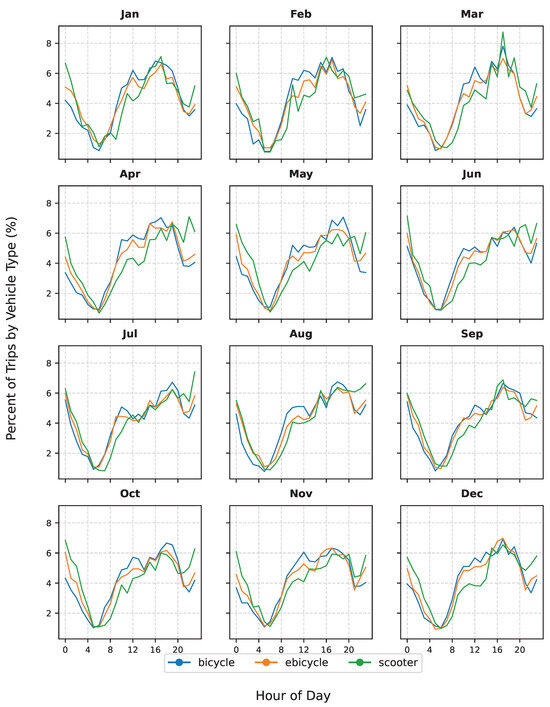
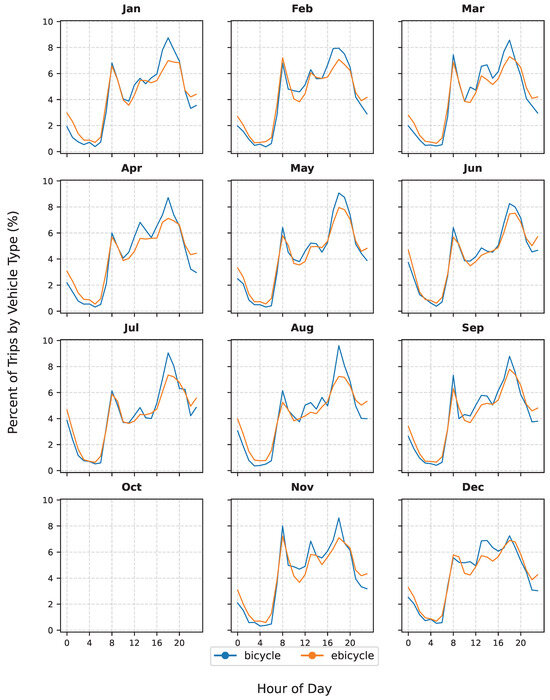
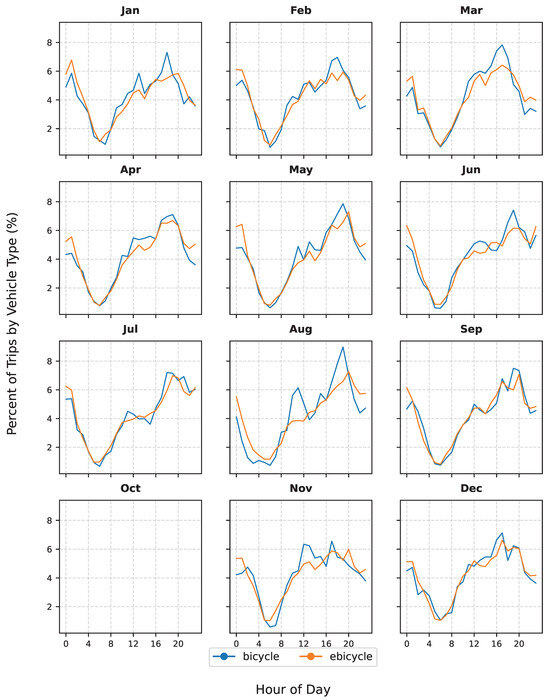
Bike-sharing services contribute to reducing emissions and conserving natural resources within urban transportation systems. They also promote public health by encouraging physical activity and generate economic benefits through shorter travel times, lower transportation costs, and decreased demand for parking infrastructure. This paper examines the use of shared micro-mobility services in the Italian cities of Florence and Bologna, based on an analysis of GPS origin–destination data and associated temporal coordinates provided by the RideMovi company. Given the still-limited number of studies on free-floating and electric-scooter-sharing systems, the objective of this work is to quantify the performance of electric bikes and e-scooters in bike-sharing schemes and compare it to traditional, muscular bikes. Trips were reconstructed starting from GPS data of origin and destination of the trip with a shortest path criteria that considers the availability of bike lanes. Results show that e-bikes are from 22 to 26% faster on average with respect to muscular bikes, extending trip range in Bologna but not in Florence. Electric modes attract more users than traditional bikes, e-bikes have from 40 to 128% higher daily turnover in Bologna and Florence and e-scooters from 33 to 62% higher in Florence with respect to traditional bikes. Overall, turnover is fairly low, with less than two trips per vehicle per day. The performance is measured in terms of trip duration, speed, and distance. Further characteristics such as daily turnover by transport mode are investigated and compared. Finally, spatial analysis was conducted to observe demand asymmetries in the two case studies. The results aim to support planners and operators in designing and managing more efficient and user-oriented services.
Full article
►▼
Show Figures
Open AccessArticle
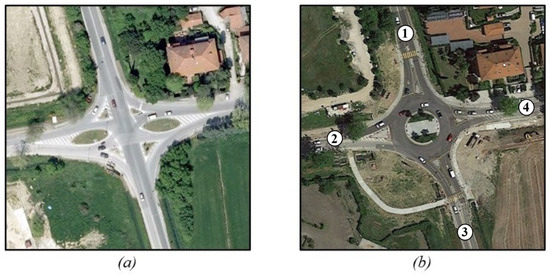
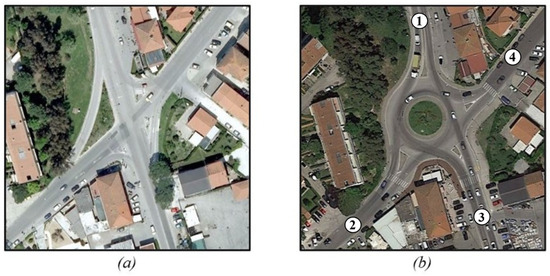
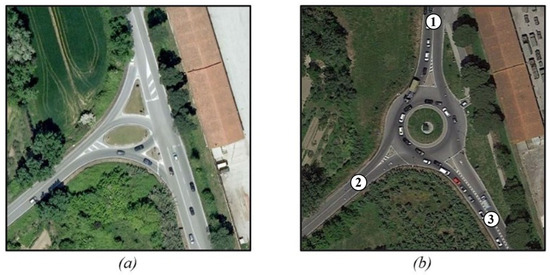
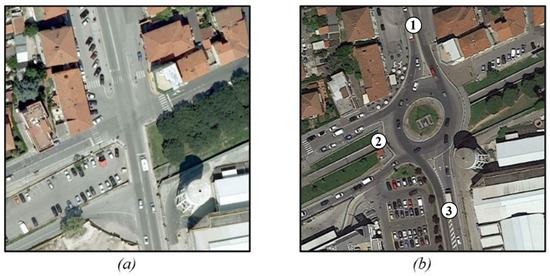
Exploring Traffic Paradoxes: A Study of Roundabout Corridors and Their Effects on Network Dynamics
by
Lorenzo Brocchini, Antonio Pratelli and Didier Josselin
Viewed by 1325
Abstract
This research is part of a broader investigation into dynamic simulation-based approaches for enhancing traffic efficiency, road safety, and sustainability in roundabout corridors and/or road corridors in general. The study emphasizes the need to analyze road intersections as interconnected systems rather than isolated
[...] Read more.
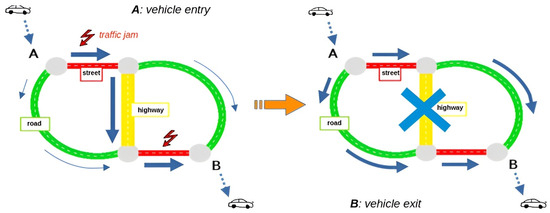
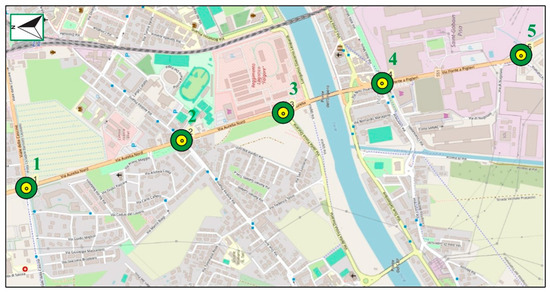
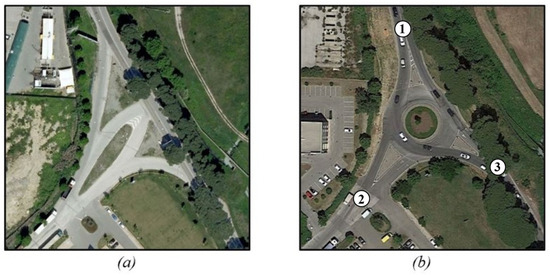
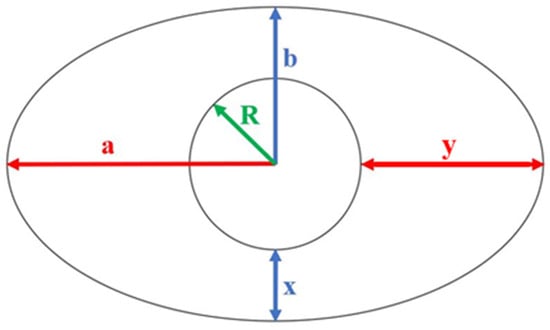
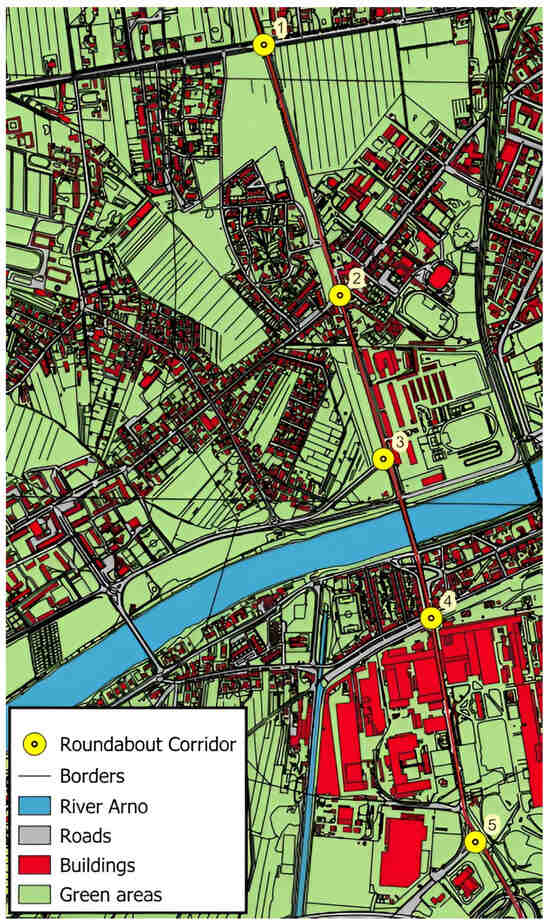
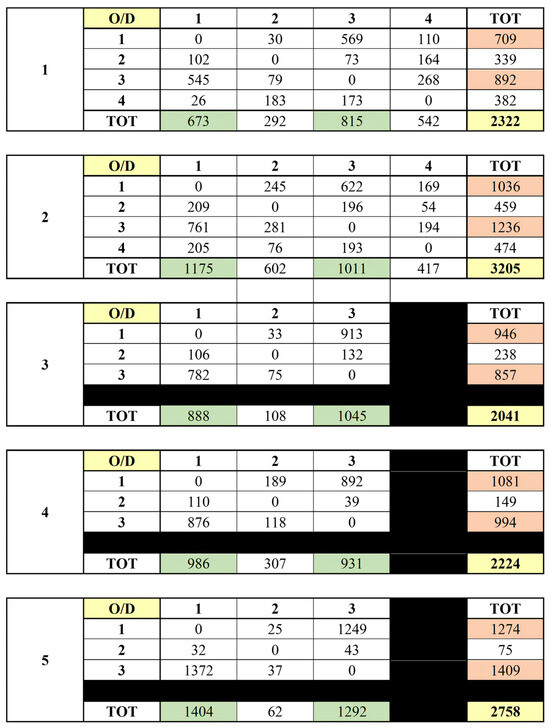
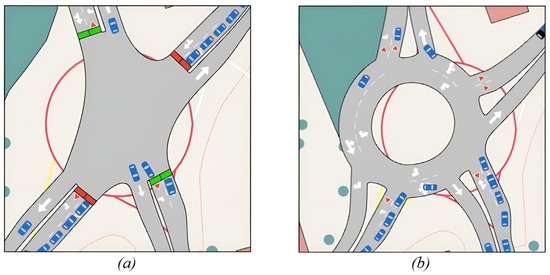
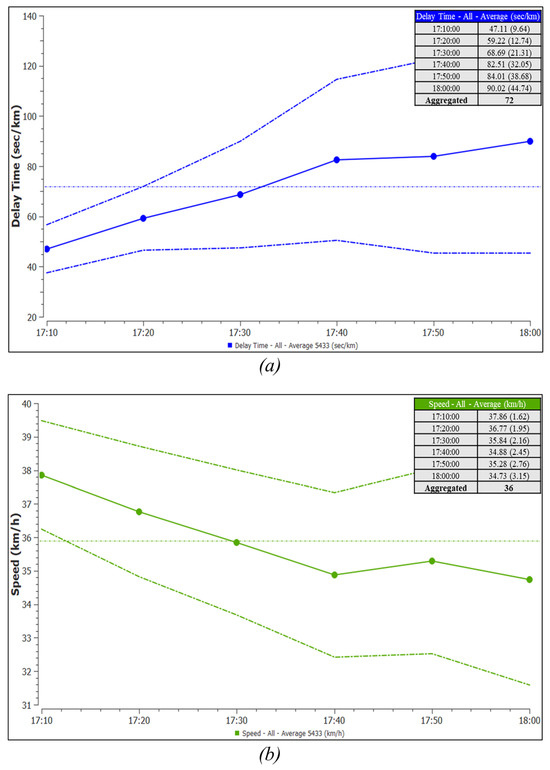
This research is part of a broader investigation into dynamic simulation-based approaches for enhancing traffic efficiency, road safety, and sustainability in roundabout corridors and/or road corridors in general. The study emphasizes the need to analyze road intersections as interconnected systems rather than isolated components, aiming to better understand and mitigate counterintuitive phenomena known as traffic paradoxes, including the well-known Braess Paradox. The first section introduces the main traffic paradoxes, exploring their definitions, real-world implications, and reproducibility in roundabout corridors. The second section focuses on a case study of the “SS1—Via Aurelia Nord” in Pisa (Italy), where converting a traffic-light-controlled corridor into a roundabout corridor unexpectedly led to increased congestion. This paradoxical outcome is analyzed within the broader context of network dynamics and sustainable mobility planning. Dynamic simulations were performed using Aimsun software, and a novel performance index—the “Celerity Roundabout Corridors” (CRC)—was proposed to quantify and detect these paradoxical effects. The findings highlight conditions under which roundabout corridors may generate inefficiencies despite infrastructural upgrades, emphasizing the importance of systemic, simulation-based evaluations for the sustainable design and optimization of urban traffic networks.
Full article
►▼
Show Figures
Open AccessArticle
An ITS System for Reducing Congestion and Noise Pollution due to Vehicles to/from Port Terminals
by
Marino Lupi, Marco Boero, Daniele Conte, Luca Naso Rappis, Mauro Vannucci and Alessandro Farina
Cited by 7 | Viewed by 3149
Abstract
This paper deals with a new ITS system aimed at reducing road congestion and noise emissions on the urban roads leading to port terminals. This system is composed of: traffic video cameras, VMS panels and an app. These three components are connected and
[...] Read more.
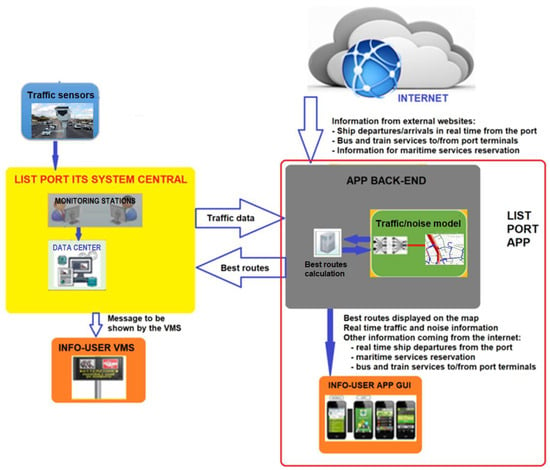
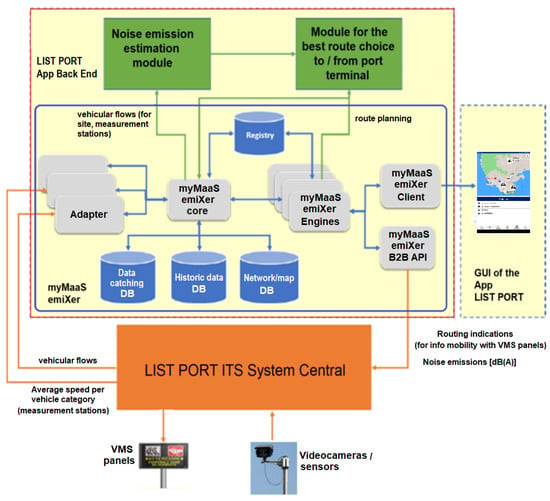
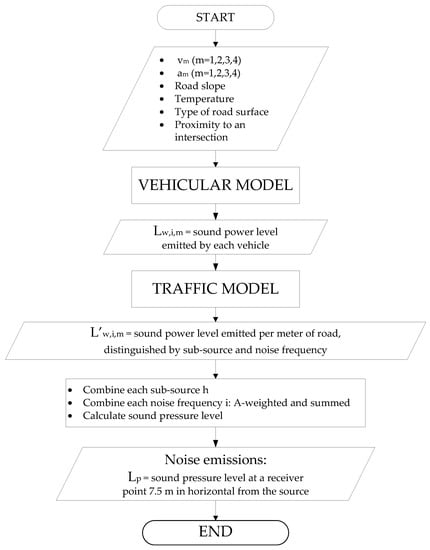
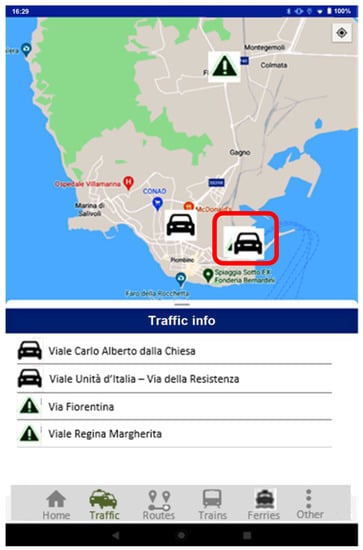
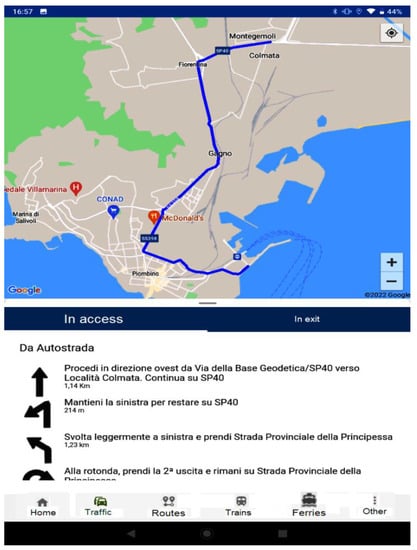
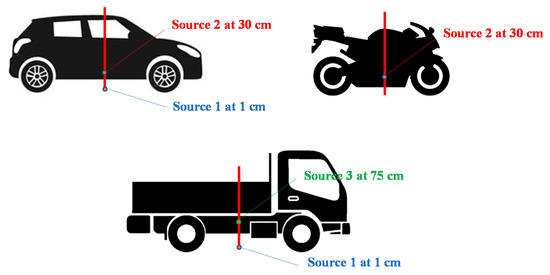
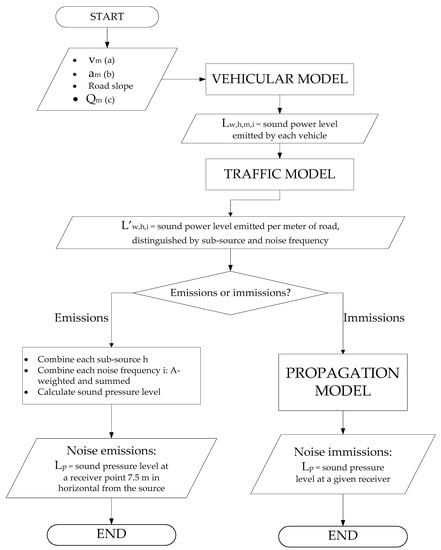
This paper deals with a new ITS system aimed at reducing road congestion and noise emissions on the urban roads leading to port terminals. This system is composed of: traffic video cameras, VMS panels and an app. These three components are connected and managed by an integrated ITS system management platform, called “LIST Port ITS System Central” in this paper. Video cameras measure traffic characteristics, such as flow rates, speed and composition of the vehicle stream and provide these data to the LIST Port ITS System Central. The central elaborates the data and provide the traffic flow characteristics to the app. The app calculates, in real time, the best route to/from port terminals, according to traffic congestion and noise emissions, and provides this information to the Central. Then, the app shows to the user the best route and the traffic and noise status in real time. The calculation of the best routes takes place according to the “physical capacity” and “acoustic capacity” of road infrastructures. Noise emissions are directly calculated from traffic characteristics by means of the CNOSSOS-EU model, and are after compared to the noise emission limit levels established by law. The services provided by the LIST Port ITS system are new, because, currently, routing strategies are usually based only on congestion, while noise pollution is almost always neglected. Noise pollution could be a more restrictive constraint because the “acoustic capacity” is often lower than the physical one.
Full article
►▼
Show Figures
Open AccessArticle
Can the Brazilian National Logistics Plan Induce Port Competitiveness by Reshaping the Port Service Areas?
by
William Costa, Britaldo Soares-Filho and Rodrigo Nobrega
Cited by 4 | Viewed by 7346
Abstract
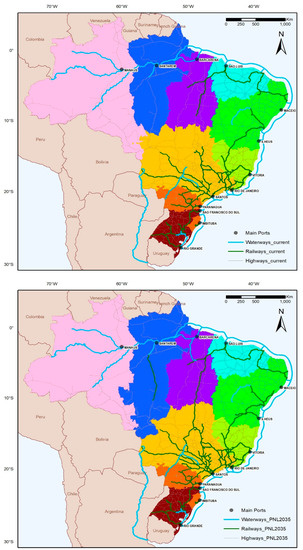
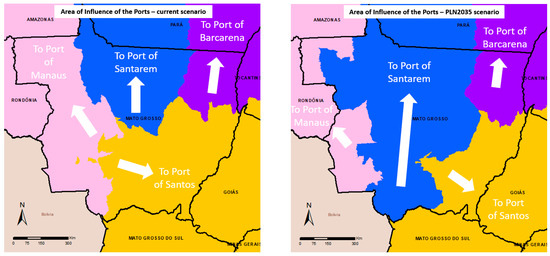
Brazil’s transportation infrastructure did not follow the country’s agricultural development and the macro-logistics operations still rely on trucking. Even with a lack of roads, the service areas of the ports on the Atlantic coast, particularly the port of Santos, expanded to central Brazil,
[...] Read more.
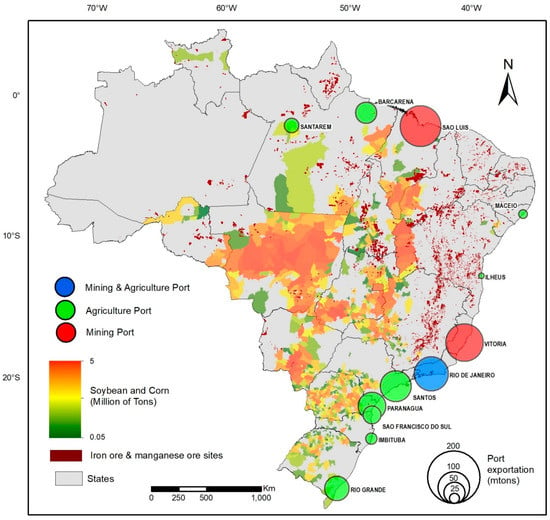
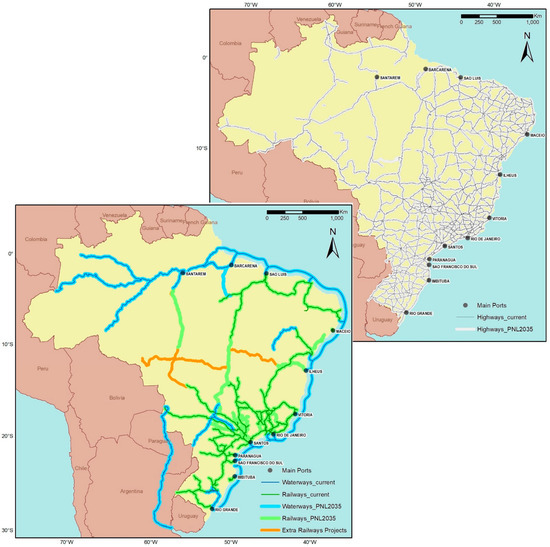
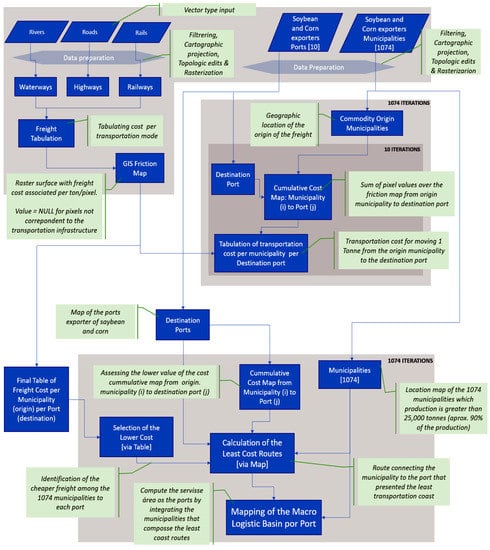
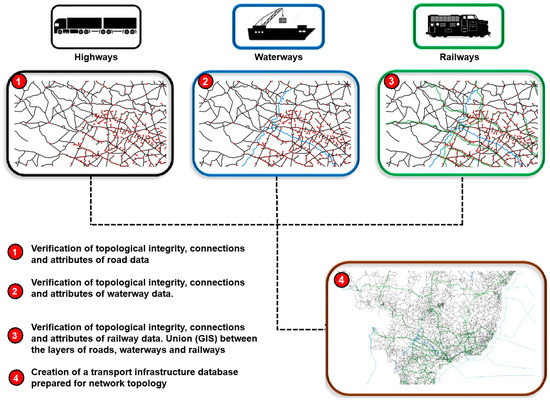
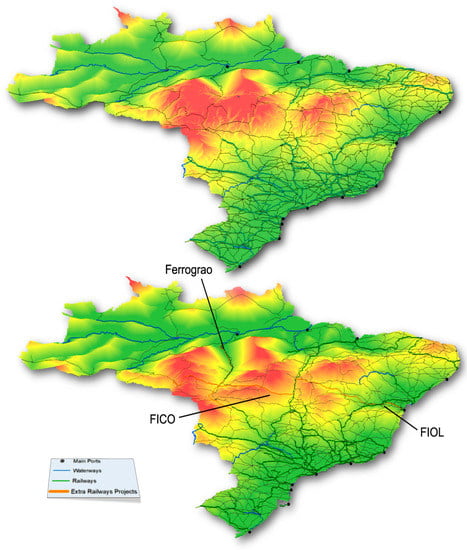
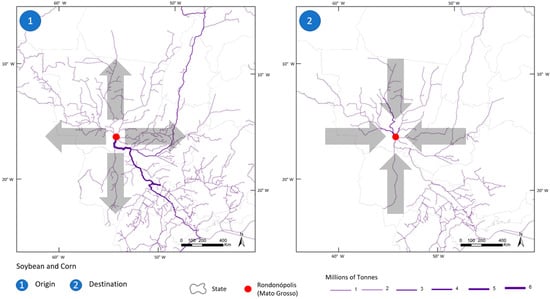
Brazil’s transportation infrastructure did not follow the country’s agricultural development and the macro-logistics operations still rely on trucking. Even with a lack of roads, the service areas of the ports on the Atlantic coast, particularly the port of Santos, expanded to central Brazil, the country’s most productive agricultural area. Recently, the Federal Government released mid-term plans to build railways to reduce transportation costs until 2035. However, no simulation about port regionalization and competitiveness was performed. This research evaluated the effectiveness of the proposed transportation infrastructure regarding transportation cost and new routes that can reshape the ports’ influence areas. Our geographically explicit model used the Dinamica_EGO modeling platform and PostgreSQL, fed by official public data from transportation and agriculture authorities. Considering the hypothesis that new railways can increase port competitiveness, we computed scenarios considering the planned 2035 infrastructure and compared them to the current situation. The findings showed that the Ferrogrão railway can effectively reduce transport costs, therefore changing the spatial configuration of macro-logistics basins. In conclusion, a geospatial model can predict short-cheaper routes, port regionalization, and competitiveness regarding the geographic aspects of the supply chain. The long-distance and importance of Brazilian agriculture exportation justify and value the investigation.
Full article
►▼
Show Figures
Open AccessArticle
The Dilemma and Countermeasures of Public Interest Litigation of Marine Environmental Pollution in China
by
Yingying Li
Cited by 4 | Viewed by 4729
Abstract
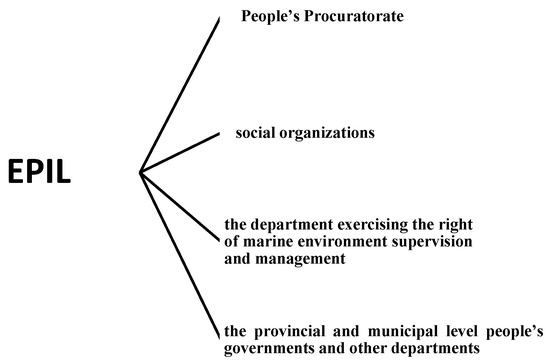
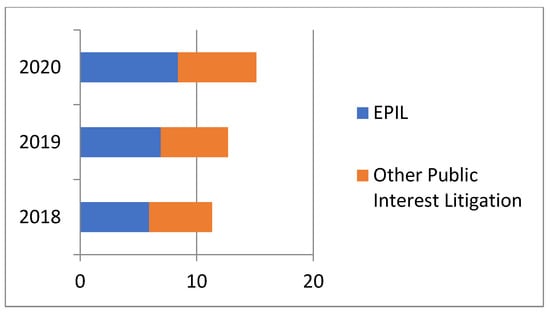
Cases of marine environmental pollution (MEP), such as condensate leakage in the
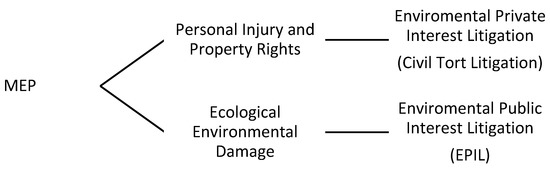
Sanchi case, not only directly infringe on private personal health and property rights, but also cause serious damage to the marine ecological environment. This paper analyzes dozens of MEP cases and
[...] Read more.
Cases of marine environmental pollution (MEP), such as condensate leakage in the
Sanchi case, not only directly infringe on private personal health and property rights, but also cause serious damage to the marine ecological environment. This paper analyzes dozens of MEP cases and summarizes the typical rights, interests, and remedies under Chinese law. Traditional tort liability legislation remedies the problem of infringement of private interests by environmental torts through compensation and punitive damages but it cannot reverse the damage to the marine ecological environment. Traditional civil legislation is built on the basis of rights and interests regarding damages and relief. MEP infringes on a wide range of citizens’ environmental rights and should be addressed by the environmental public interest litigation (EPIL), which is an important way to protect citizens’ environmental rights. This paper analyzes the legal interests, relief measures, and limitations of the existing EPIL legislation that is applicable to MEP cases under Chinese law, so as to make corresponding legislative suggestions.
Full article
►▼
Show Figures
Open AccessArticle
Incorporated Maritime Policy Concept: Adopting ESRS Principles to Support Maritime Sector’s Sustainable Growth
by
Kaidi Nõmmela and Kati Kõrbe Kaare
Cited by 9 | Viewed by 3733
Abstract
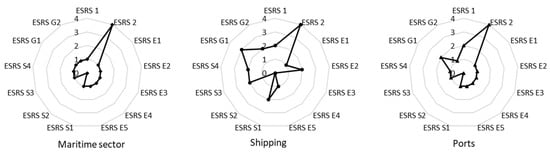
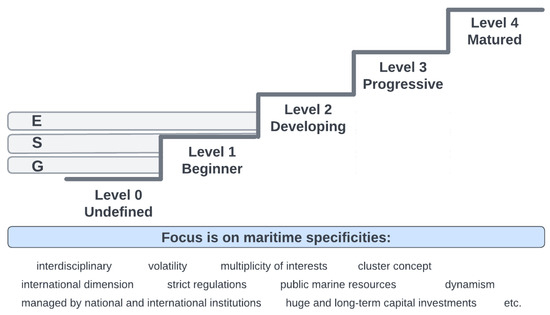
The international maritime sector plays an important part in contributing to the global sustainable economy and plays a significant role in achieving sustainable development goals. A variety of regulations and standards power the sustainability management of the global maritime sector, including the United
[...] Read more.
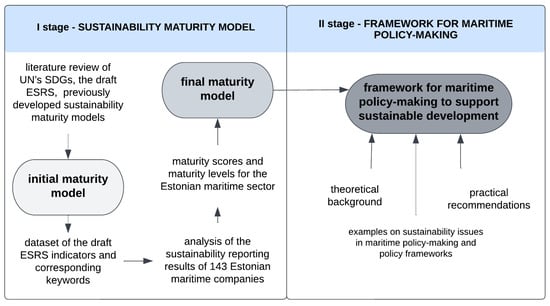
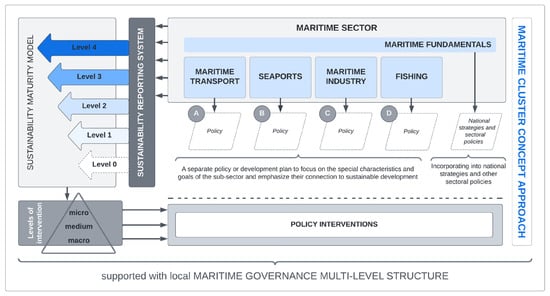
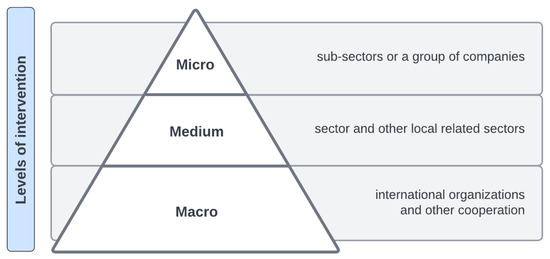
The international maritime sector plays an important part in contributing to the global sustainable economy and plays a significant role in achieving sustainable development goals. A variety of regulations and standards power the sustainability management of the global maritime sector, including the United Nations’ Sustainable Development Goals and the European Union’s new draft European Sustainability Reporting Standard. Limited research on the potential contribution of maritime policy-making to support sustainable development has led the sector to face multiple challenges. In this study, we analyzed how local policy-making can impact international goals and global sustainable development based on comprehensive datasets of 143 maritime companies. The study recommends the incorporation of sustainability dimensions of the maritime sector into all levels of policy-making and supporting the policy implementation with the local maritime governance structure. A maritime country should have strategic planning objectives that embrace maritime affairs and use the interactions identified between local development and the maritime sector. We propose a framework for maritime policy-making that supports sustainable development. A maturity model for sustainable development in the maritime sector was developed. The results can be used as guidelines for policymakers in planning sustainable development in a maritime country.
Full article
►▼
Show Figures
Open AccessArticle
Assessment of the Satisfaction Level of Users of Brazilian Cabotage—Containerized Cargo Segment
by
Aldery Silveira Junior and Rafael Rabelo Nunes
Cited by 2 | Viewed by 3205
Abstract
Due to its vast maritime coast, connected to the riverbeds that flow into the sea, Brazil holds favorable conditions for cargo transportation by cabotage—a type of navigation performed between points on the coast or between these and river points. The purpose of this
[...] Read more.
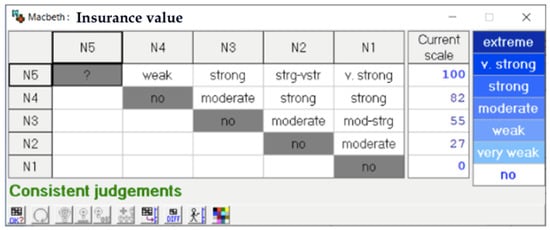
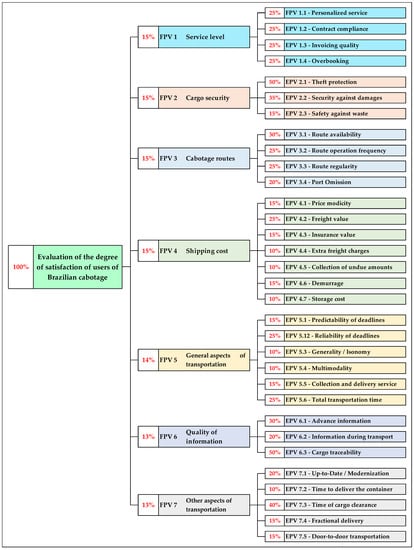
Due to its vast maritime coast, connected to the riverbeds that flow into the sea, Brazil holds favorable conditions for cargo transportation by cabotage—a type of navigation performed between points on the coast or between these and river points. The purpose of this study was to develop and apply a model to evaluate the degree of satisfaction of users of Brazilian cabotage, specifically the containerized cargo segment, with the services offered to them. The assessment model was developed based on the multicriteria decision aid (MCDA) methodology, which was designed under the aegis of the constructivist paradigm and with the collaboration of a team of cabotage specialists. A framework was built for assessment consisting of seven axes: service level, cargo safety, cabotage routes, transportation cost, general aspects of transportation, quality of information provided by EBNs and intermediary agents, and other aspects related to transportation. The global assessment obtained a score of 7.0, on a scale of zero to ten, which is considered good. The study’s contribution to the transportation sector consists of the construction of a multi-criteria assessment model, which can be replicated for other types of transportation with the necessary adjustments.
Full article
►▼
Show Figures
Open AccessArticle
A Practical Accessibility Evaluation Method for Port-Centric Coal Transportation Chains: Considering the Environment and Operational Adaptability
by
Min Dong, Yuhao Li, Xinglu Xu and Yaping Zha
Cited by 6 | Viewed by 3028
Abstract
Improving the accessibility of coal transportation is a crucial issue for energy security, national defense, and livelihoods. In this study, a method to evaluate the performance of the port-centric coal transportation chain (PCTC), which is a crucial part of the international coal production
[...] Read more.
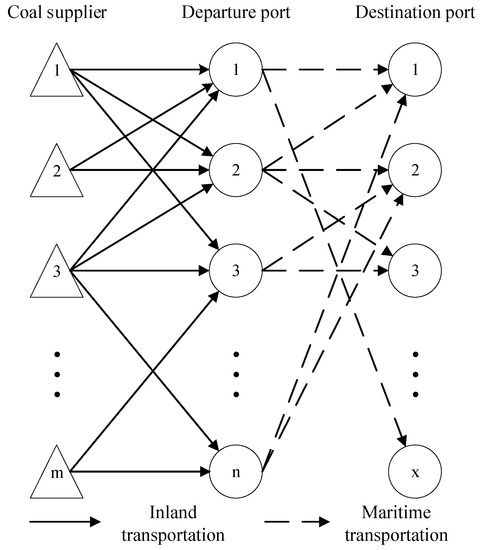
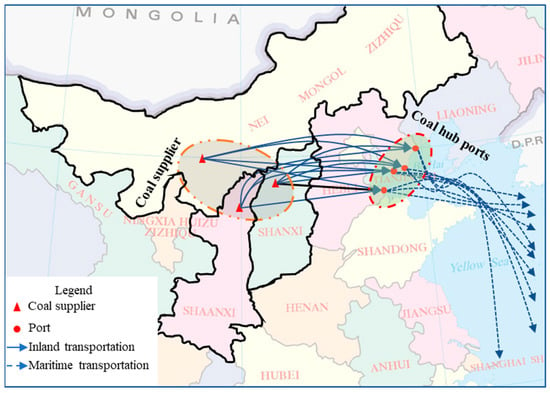
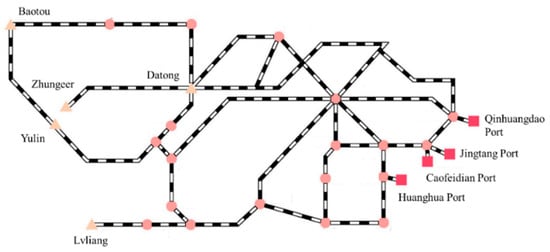
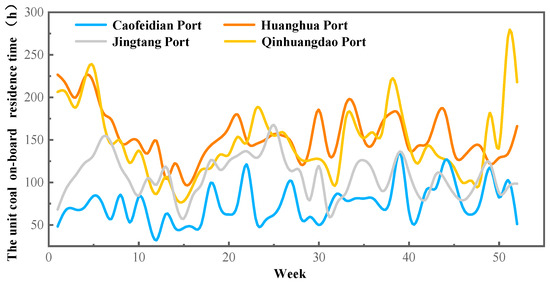
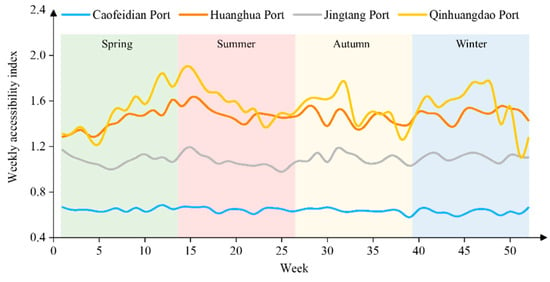
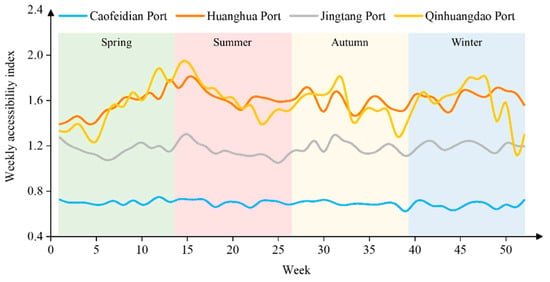
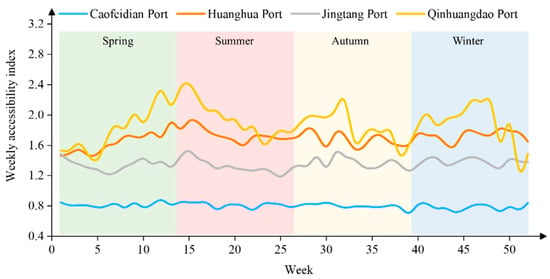
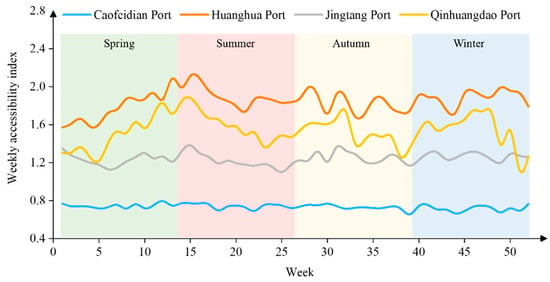
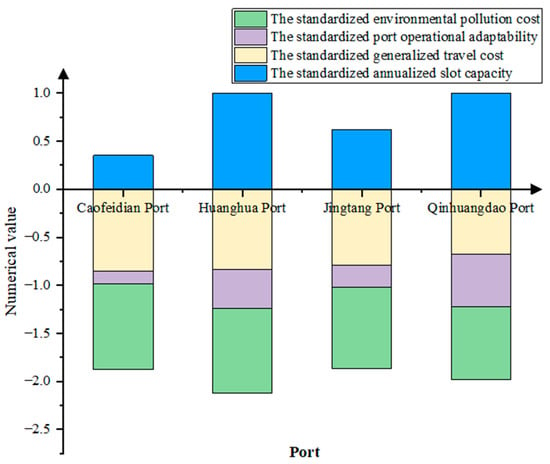
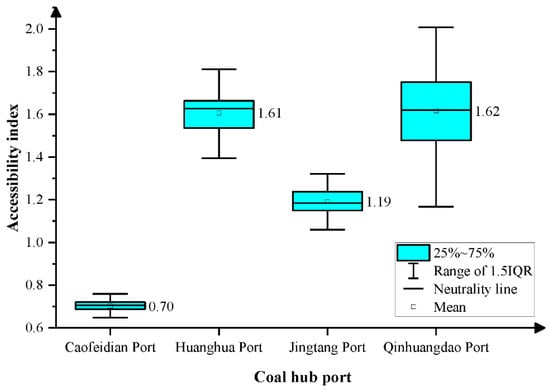
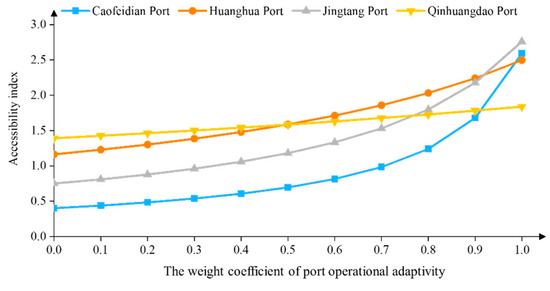
Improving the accessibility of coal transportation is a crucial issue for energy security, national defense, and livelihoods. In this study, a method to evaluate the performance of the port-centric coal transportation chain (PCTC), which is a crucial part of the international coal production and delivery process, is proposed. After analyzing the features of the port-centric coal transportation chain, a practical accessibility evaluation model is established based on the gravity model. Both the foreland and hinterland features are considered in the model. Based on the features of coal transportation, the concept of port operational adaptability is introduced to indicate the port’s ability to manage a fluctuating irregular workload. Moreover, environmental factors, including transportation emissions and dust pollution, are included in the evaluation system. Based on real data collected from China’s north-south coal transportation corridor, a case study presents the implementation of this comprehensive evaluation system in practice. This evaluation system enables us to determine the vulnerable areas in the coal maritime transportation network and provides a decision-making basis for both shippers and port owners.
Full article
►▼
Show Figures
Open AccessArticle
Resilience Analysis of Container Port Shipping Network Structure: The Case of China
by
Yao He, Yongchun Yang, Meimei Wang and Xudong Zhang
Cited by 32 | Viewed by 5738
Abstract
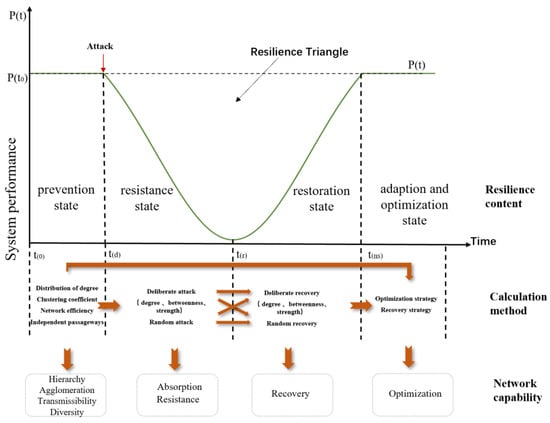
The increased port outages caused by events such as war and public health emergencies have motivated the study of container port shipping network (CPSN) resilience. This paper proposes a resilience framework, which includes prevention, resistance, restoration, adaption, and optimization. The framework is used
[...] Read more.
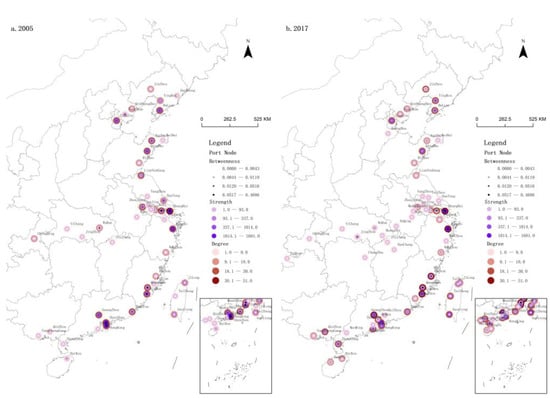
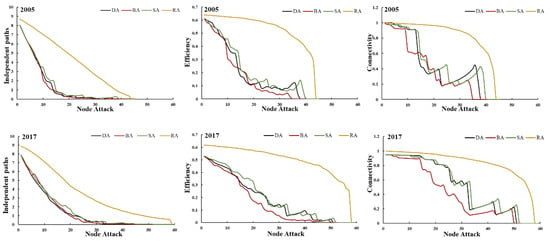
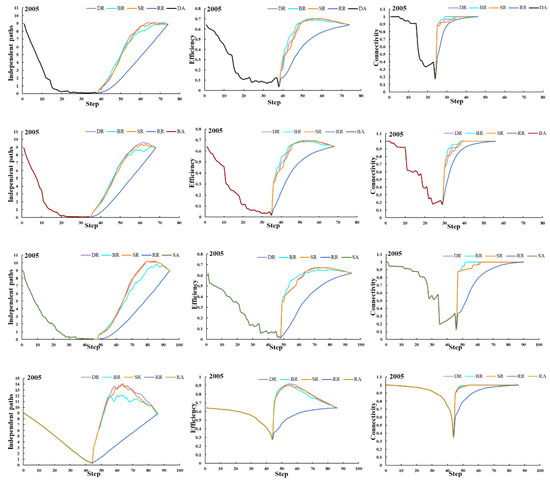
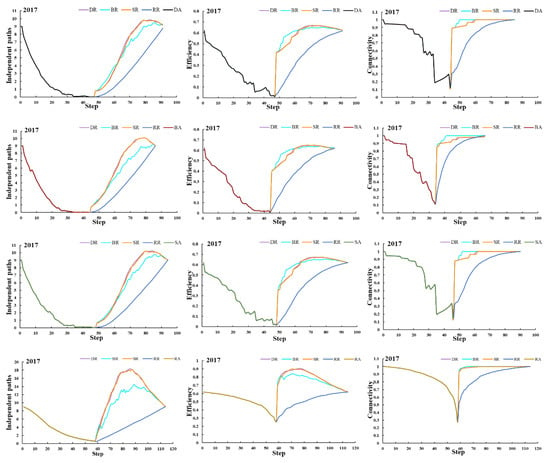
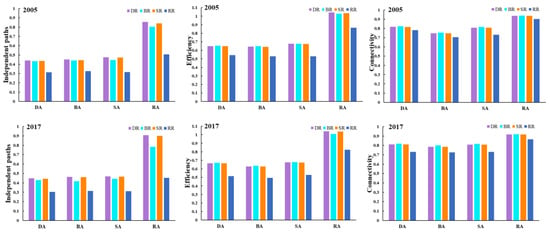
The increased port outages caused by events such as war and public health emergencies have motivated the study of container port shipping network (CPSN) resilience. This paper proposes a resilience framework, which includes prevention, resistance, restoration, adaption, and optimization. The framework is used to analyze the resilience of the CPSN by detecting changing performance of the network indicators before and after the random attack or one of the deliberate attacks. The indicators include the network resilience index, degree distribution, independent path, cluster coefficient, network efficiency and connectivity. The comparative analysis is based on the statistics of China’s cases in 2005 and 2017. The results indicate that, first, the resilience of the structure of China’s container port shipping network (CCPSN) in 2017 has improved when comparing the 2015 situation. Second, the performance of indicators under betweenness attack (BA) decreases faster than other attacks; the resilience index of deliberate attacks is poorer, when compared with the random attack (RA). Third, network resilience can be improved by protecting and adding hub port nodes. Priority should be given to restoring the hub port nodes during the recovery process. The same network indicator recovers similarly after facing different attacks, while different indicator shows various recovery process. Thus, it is necessary to consider the different recovery performances of network indicators when the damaged CPSN selects recovery mode.
Full article
►▼
Show Figures
Open AccessArticle
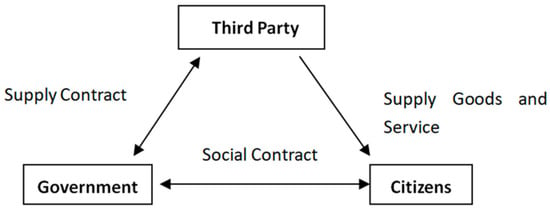
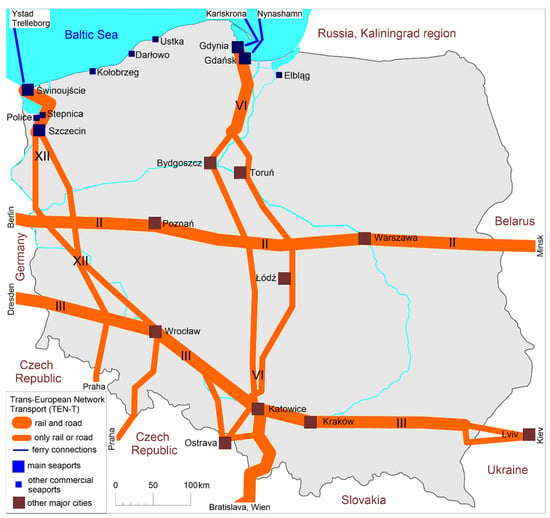
The Development of Major Seaports in the Context of National Maritime Policy. The Case Study of Poland
by
Tadeusz Bocheński, Tadeusz Palmowski and Tomasz Studzieniecki
Cited by 21 | Viewed by 7456
Abstract
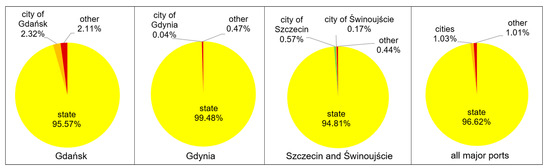
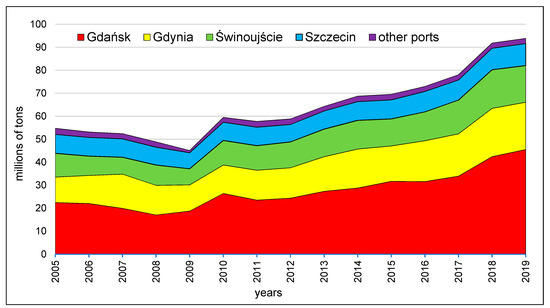
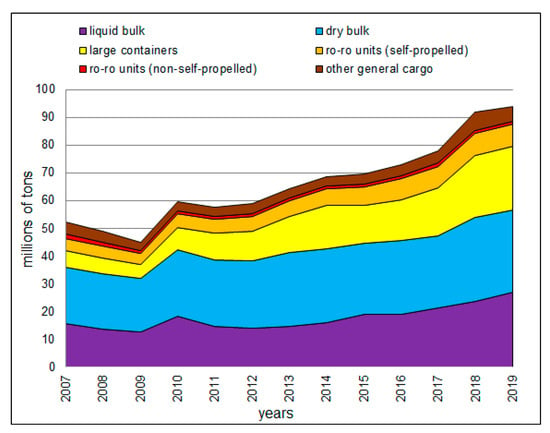
State authorities may influence the development of seaports by employing the tools of national maritime policy. On the one hand, seaports contribute to the socioeconomic development of coastal regions; on the other, they have a significant impact on foreign trade turnover. The aim
[...] Read more.
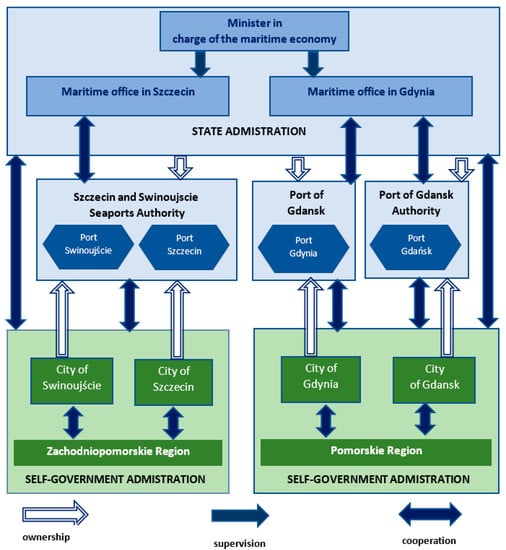
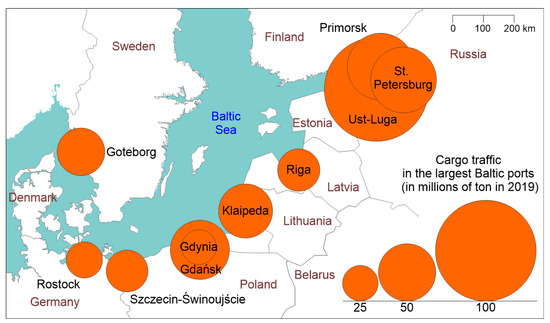
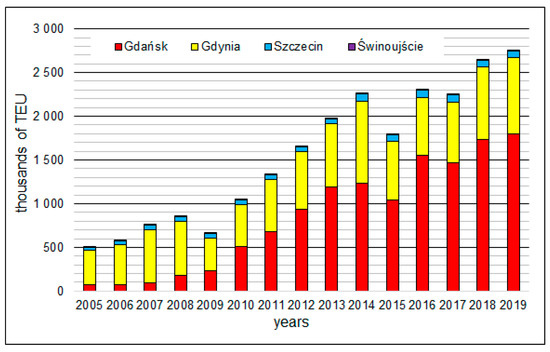
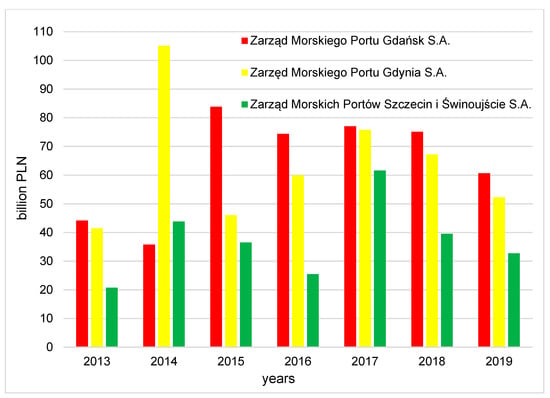
State authorities may influence the development of seaports by employing the tools of national maritime policy. On the one hand, seaports contribute to the socioeconomic development of coastal regions; on the other, they have a significant impact on foreign trade turnover. The aim of this study is to identify the major factors that have influenced the development of Poland’s seaports in the context of the country’s maritime policy. The paper examines and explains the development and transitions of major Polish seaports such as Gdansk, Gdynia, Szczecin, and Swinoujcie. In order to identify the state of the port economy the authors used public statistics and data analysis. Furthermore, they created a model of comanagement of major seaports and presented a qualitative and quantitative comparison of the development of major seaports from 2005 to 2019. It was discovered that port turnover increased, but in various ways in each of the analysed ports. The government of Poland, acting in a dual role as the coordinator of national maritime policy and the majority owner of seaports, was the most powerful decision-maker in the port economy. However initiatives to implement sustainable principles in seaports have gradually emerged through bottom-up activities of port authorities supported by local and regional authorities.
Full article
►▼
Show Figures
Open AccessArticle
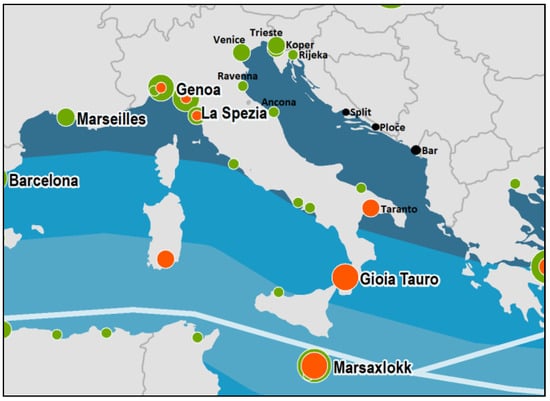
Adriatic Sea Hub Ports Feeder Service Optimization Using Multi-Criteria Decision-Making Methods
by
Dario Medić, Srećko Krile, Igor Jelaska and Rino Bošnjak
Cited by 4 | Viewed by 5308
Abstract
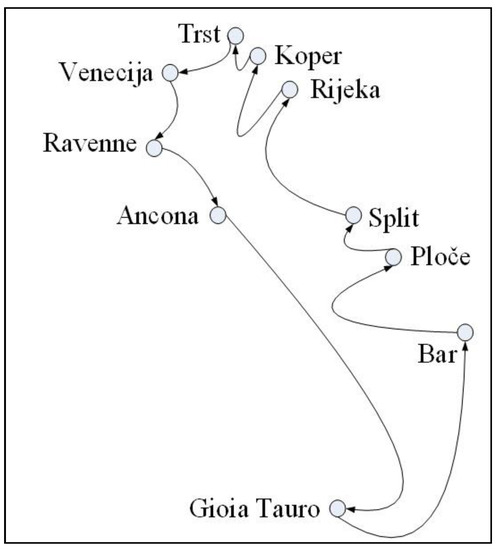
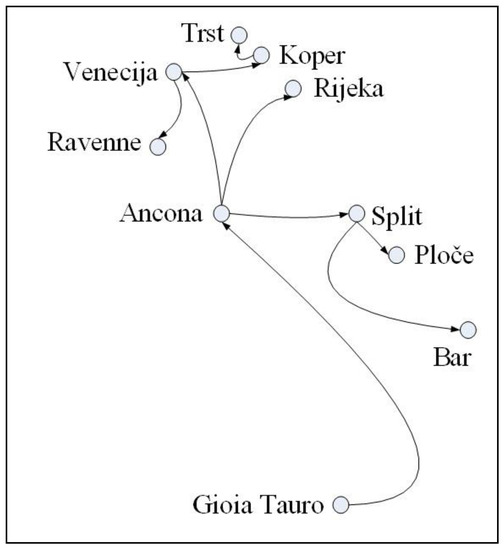
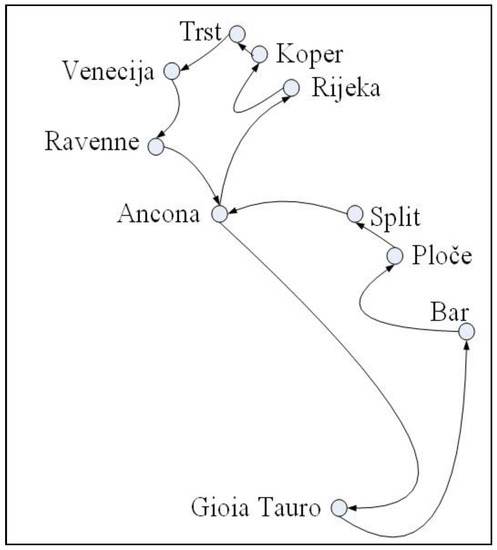
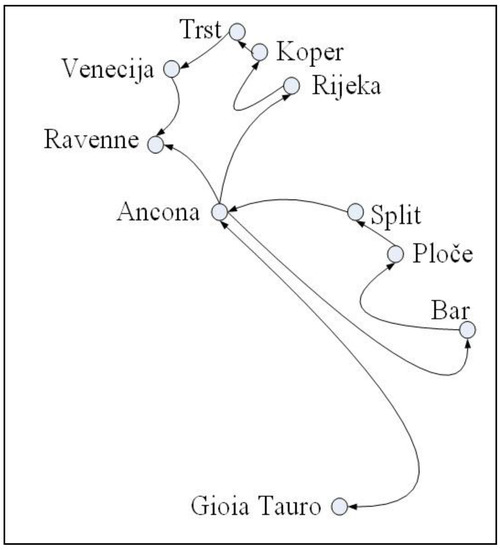
From a scientific viewpoint, as well as from the perspective of navigation practice, it is clear that the Adriatic Sea feeder service is relatively underdeveloped. Hence, the objective of this study is to suggest a model for selecting the hub port and to
[...] Read more.
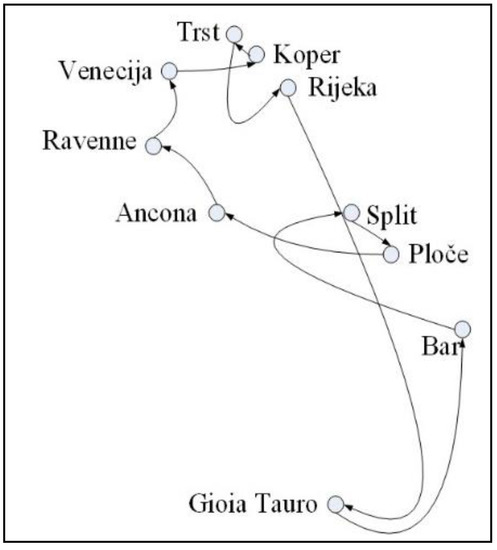
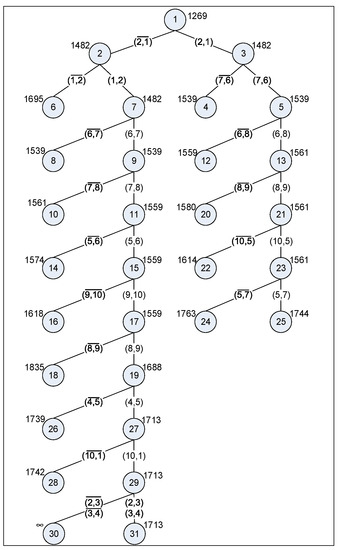
From a scientific viewpoint, as well as from the perspective of navigation practice, it is clear that the Adriatic Sea feeder service is relatively underdeveloped. Hence, the objective of this study is to suggest a model for selecting the hub port and to optimize the network of seaports engaged in the feeder service. Accordingly, an appropriate hub port has been identified through the methods of multi-criteria decision making and expert assessment, and the optimum shipping route has been calculated by applying the travelling salesman algorithm (TSA). In order to analyze whether there is a possibility of obtaining better optimization results, an integration of a sub-hub port system is suggested. Optimization has been achieved by applying a minimum spanning tree algorithm (MST) and a combination of these algorithms. The proposed methodology for selecting the hub port, sub-hub port and optimizing the feeder network can be implemented globally. The practical application of the achieved model would result in cost minimization, owing to shorter shipping routes or a combination of different transportation means (feeders).
Full article
►▼
Show Figures
Open AccessArticle
A Methodology for the Definition of the Acoustic Capacity of a Road Infrastructure
by
Marino Lupi, Chiara Pratelli and Alessandro Farina
Cited by 5 | Viewed by 2544
Abstract
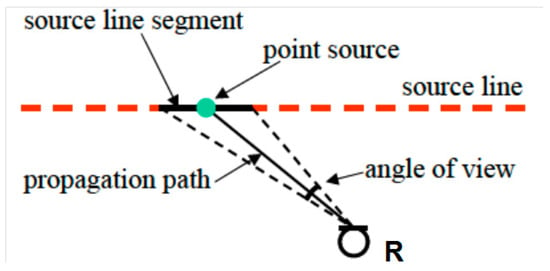
In this paper, a new methodology for the assessment of the so-called “acoustic capacity” of a road infrastructure is proposed. This aspect is very important in the field of transportation planning as, currently, road infrastructures are verified only in terms of physical capacity;
[...] Read more.
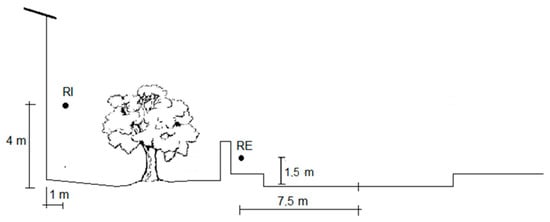
In this paper, a new methodology for the assessment of the so-called “acoustic capacity” of a road infrastructure is proposed. This aspect is very important in the field of transportation planning as, currently, road infrastructures are verified only in terms of physical capacity; at most, the environmental capacity due to atmospheric pollutants is taken into account, while the acoustic capacity is completely neglected. The acoustic capacity is assessed based on the Harmonoise model, which is widely recognized at the European level. The Harmonoise model, starting from traffic data, such as traffic flows, average speed, and typologies of vehicles, provides the levels of noise emissions and immissions, which can be compared to the noise limit levels established by law. The validity of the proposed methodology was assessed on a test network. The results of this analysis show that, generally, the acoustic capacity is actually a capacity constraint, which involves several traffic flows: this occurs in particular in the case of an intersection, but also in the case of a bi-directional road. Furthermore, the acoustic capacity of a road infrastructure is generally lower than its physical capacity.
Full article
►▼
Show Figures
Open AccessArticle
Legal Disputes under Time Charter in Connection with the Stranding of the MV Ever Given
by
Jaeung Cha, Jinwoo Lee, Changhee Lee and Yulseong Kim
Cited by 10 | Viewed by 9815
Abstract
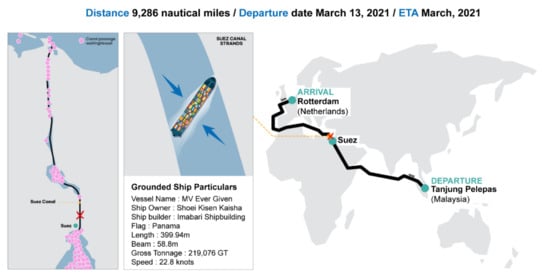
The
MV Ever Given’s stranding in the Suez Canal in March 2021 prompted renewed awareness of the heightened risk of marine accidents in narrow channels as global shipping companies continuously expand vessel sizes. However, there has been limited consideration of ways to
[...] Read more.
The
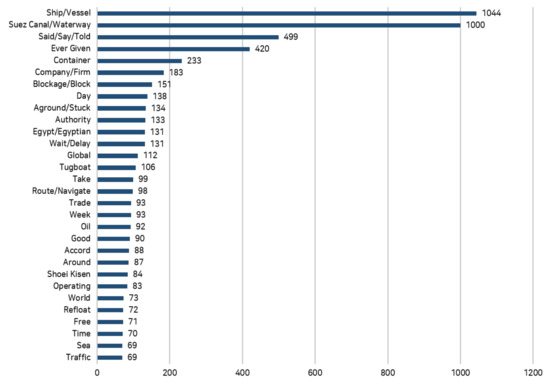
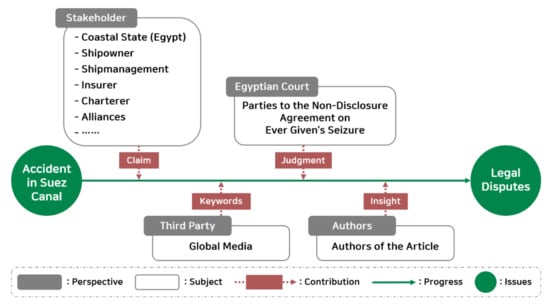
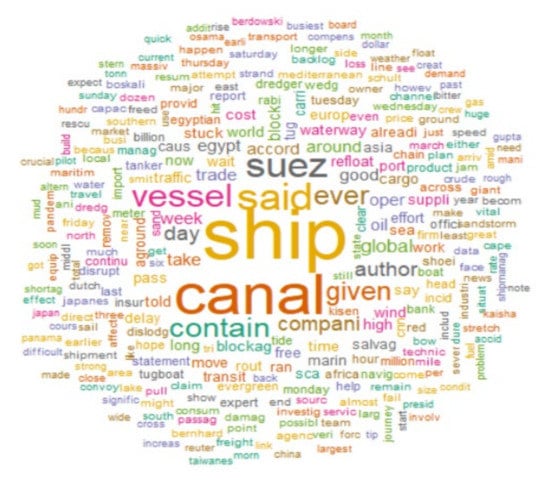
MV Ever Given’s stranding in the Suez Canal in March 2021 prompted renewed awareness of the heightened risk of marine accidents in narrow channels as global shipping companies continuously expand vessel sizes. However, there has been limited consideration of ways to improve accident response, and little analysis of future-oriented liabilities and damage compensation schemes for similar maritime accidents. First, key issues related to the Suez Canal stranding accident were analyzed based on web crawling using the R studio program (Version: R-4.0.5) to extract text data from unstructured format text (HTML tags). We designed the research questions to address the key issues/disputes, such as definitions of legal terms related to the
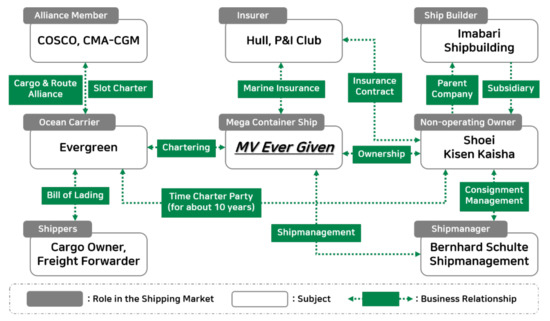
Ever Given’s stranding accident and the declaration of a general average (G/A), liability for maintaining seaworthiness, source of command authority over the captain, and liability for compensation for delay in delivery. Then, the liability of stakeholders was legally interpreted through causal inductive reasoning based on relevant legal theories and precedents. To help secure safe and sustainable shipping routes, this study demystifies the problems resulting from the side effects of the trend of ultra-large vessels based on technology bias, and will contribute to responses to similar accidents in the future.
Full article
►▼
Show Figures
Open AccessArticle
Legal Issues Regarding Arctic Cruise Shipping in the Russian Federation
by
Novikova Kseniia, Mehran Idris Khan and Yen-Chiang Chang
Cited by 4 | Viewed by 4797
Abstract
With the development of the transportation network, vessels are increasingly used in the tourism business. The international cruise business requires huge investments and a clear international and domestic legal framework. Russia has unique opportunities to develop cruise tourism as a country with the
[...] Read more.
With the development of the transportation network, vessels are increasingly used in the tourism business. The international cruise business requires huge investments and a clear international and domestic legal framework. Russia has unique opportunities to develop cruise tourism as a country with the world’s longest total length of coastal line (37.7 thousand kilometres). Russia intends to develop and support cruise tourism in the Arctic and increase the tourist flow to the Arctic to a certain level in order to promote socio-economic development in the region. At the same time, a rapidly evolving tourism in the Arctic brings new challenges related to the preservation of environmental safety and protection of national interests and requires comprehensive legal cover and regulation at the national level. This article deals with Russian Federation’s laws regulating sea/river cruise shipping involving an international element. It scrutinises state rules and policies on navigation in the Russian Arctic waters and relevant International Treaties of the Russian Federation, highlights the peculiarity of the cruise shipping contract in terms of Russian laws regulating the relationship arising from it, and finally, analyses the effects of Russian legislation in the field of Arctic tourism to its development. The authors attempted to summarise experts’ views on relevant Russian legislation’ shortcomings and put forward possible solutions.
Full article
Open AccessArticle
Institutional and Non-Institutional Governance Initiatives in Urban Transport Planning: The Paradigmatic Case of the Post-Collapse of the Morandi Bridge in Genoa
by
Ilaria Delponte
Cited by 4 | Viewed by 3998
Abstract
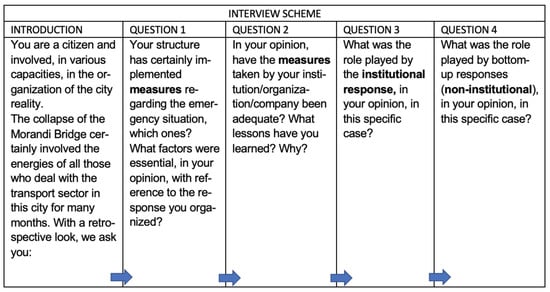
The relationship between the institutional (established in law) and non-institutional initiatives (not supported by law) that improve the public transport system is currently a debated topic. The purpose of this paper is to identify the most relevant aspects of this relationship during an
[...] Read more.
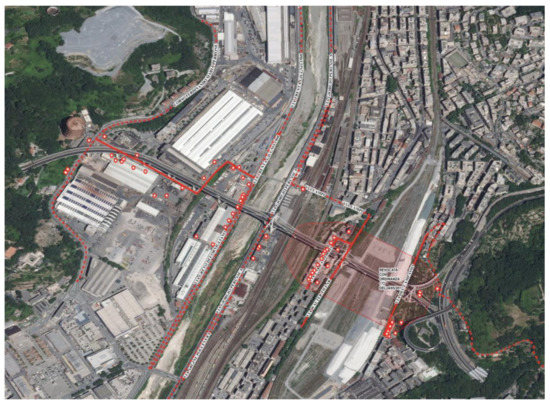
The relationship between the institutional (established in law) and non-institutional initiatives (not supported by law) that improve the public transport system is currently a debated topic. The purpose of this paper is to identify the most relevant aspects of this relationship during an emergency event, namely the paradigmatic case study of the collapse of the Morandi Bridge in Genoa, which occurred in August 2018. The investigation, according to a consistent methodology widely used in the literature, is made up of a selection of interviews with professional figures particularly involved in institutional structures, drawing on qualitative results, and compared with official statistics. The events that occurred in Genoa, during the phase of reorganization of the urban transport service and the circulation in the city, underlined how the response of citizenship is a crucial element, including from the governance point of view. Analytic and observational findings reveal that non-institutional initiatives smooth major criticalities where formal institutions can only produce sub-optimal transport solutions (because of the limited means they own by virtue of the moment of emergency), providing evidence that the two modes of governance are absolutely complementary.
Full article
►▼
Show Figures
Open AccessArticle
The “Island Formation” within the Hinterland of a Port System: The Case of the Padan Plain in Italy
by
Marino Lupi, Antonio Pratelli, Federico Campi, Andrea Ceccotti and Alessandro Farina
Cited by 5 | Viewed by 4492
Abstract
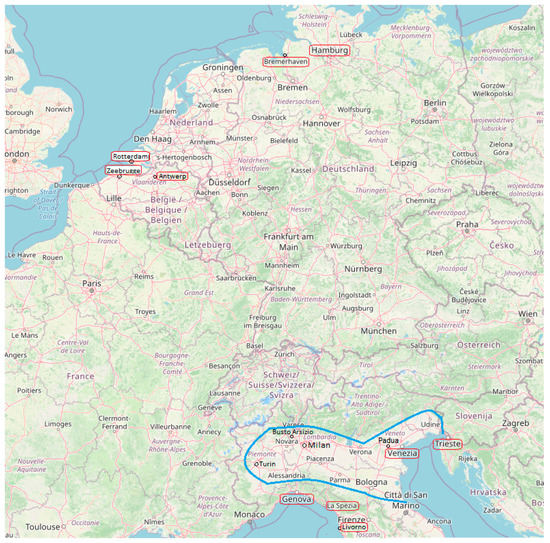
An “island formation” is a region within the hinterland of a port which is served by another port. Some regions of southern Europe, although located within the hinterland of some Mediterranean ports, are “island formations” of northern range ports (namely, northern European ports
[...] Read more.
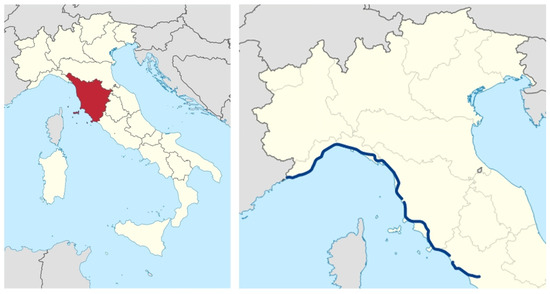
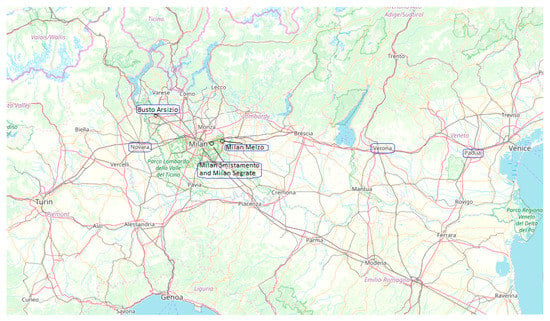
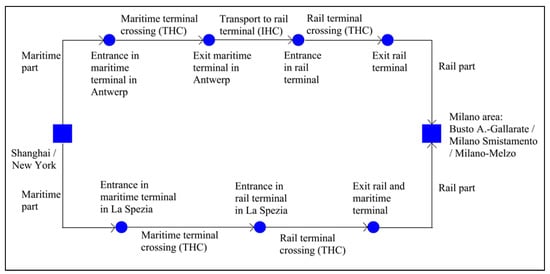
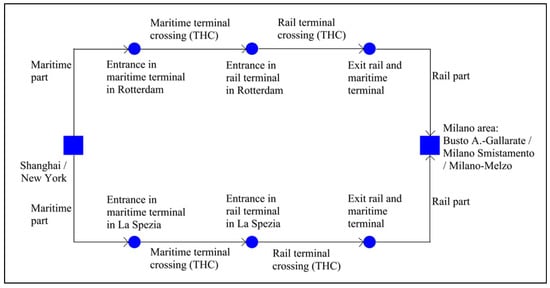
An “island formation” is a region within the hinterland of a port which is served by another port. Some regions of southern Europe, although located within the hinterland of some Mediterranean ports, are “island formations” of northern range ports (namely, northern European ports between Le Havre and Hamburg): an example is the Padan Plain, in northern Italy, which is currently, although only partially, an “island formation” of northern range ports. Actually, a relevant number of TEUs, which have origin or destination in the Padan Plain, and have been unloaded from ships operating deep-sea routes or will be loaded on them, cross northern range ports. Several sources report this number of TEUs, but there is disagreement among them. In this paper, firstly, this number of TEUs is estimated, according to scheduled rail connections between northern range ports and Italian intermodal centres/freight villages. Afterwards, an analysis of transport costs and travel times is carried out in order to determine the advantage of unloading containers (having origin in the Far East or North America and destination in the Padan Plain) through northern range ports instead of Italian ports.
Full article
►▼
Show Figures
Open AccessArticle
A State-Dependent Approximation Method for Estimating Truck Queue Length at Marine Terminals
by
Wenrui Qu, Tao Tao, Bo Xie and Yi Qi
Cited by 3 | Viewed by 3765
Abstract
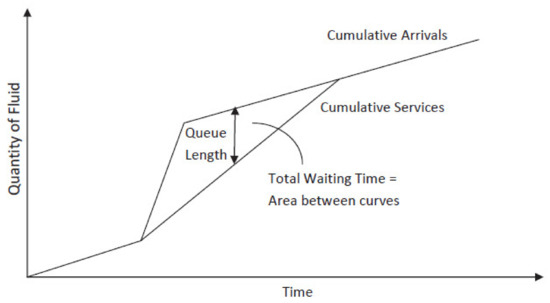
As international trade and freight volumes increase, there is a growing port congestion problem, leading to the long truck queues at US marine terminal gates. To address this problem, some countermeasures have been proposed and implemented for reducing truck queue length at marine
[...] Read more.
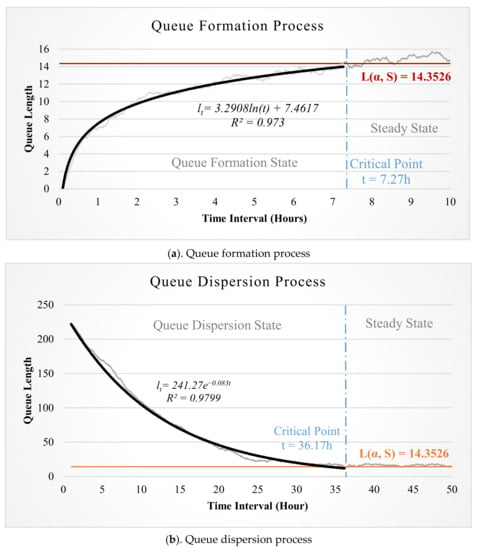
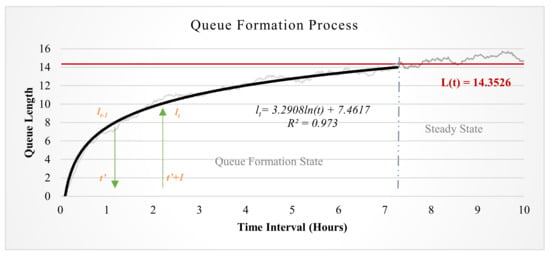
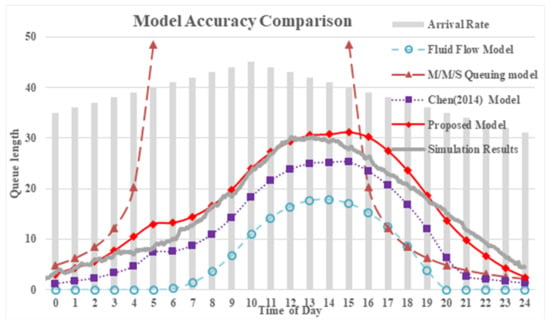
As international trade and freight volumes increase, there is a growing port congestion problem, leading to the long truck queues at US marine terminal gates. To address this problem, some countermeasures have been proposed and implemented for reducing truck queue length at marine terminals. To assess the effectiveness of these countermeasures, a method for accurately estimating terminal gate truck queue length is needed. This study developed a new method, named the state-dependent approximation method, for estimating the truck queue length at marine terminals. Based on the simulation of the truck queuing system, it was found that it takes several hours for the truck queue length to reach its steady state, and neglecting the queue formation (queue dispersion) processes will cause overestimation (underestimation) of truck queue length. The developed model can take into account the queue formation and dispersion processes, and it can be used to estimate the truck queue length caused by short-term oversaturation at marine terminals. For model evaluation, a simulation-based case study was conducted to evaluate the prediction accuracy of the developed model by comparing its results with the simulated queue lengths and the results of other four existing methods, including the fluid flow model, the M/M/S queuing model, and a simulation-based regression model developed a previous study. The evaluation results indicate that the developed model outperformed the other four modeling methods for different states of queue formation and dispersion processes. In addition, this new method can accurately estimate the truck queue length caused by the short-term system oversaturation during peak hours. Therefore, it will be useful for assessing the effectiveness of the countermeasures that are targeted at reducing the peak-hour congestion at marine terminals.
Full article
►▼
Show Figures
Open AccessArticle
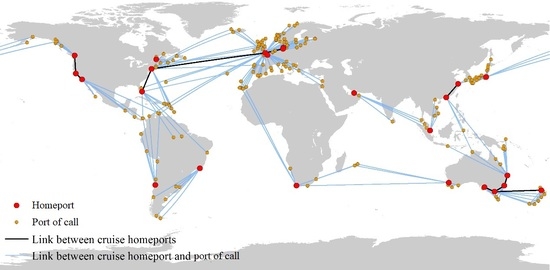
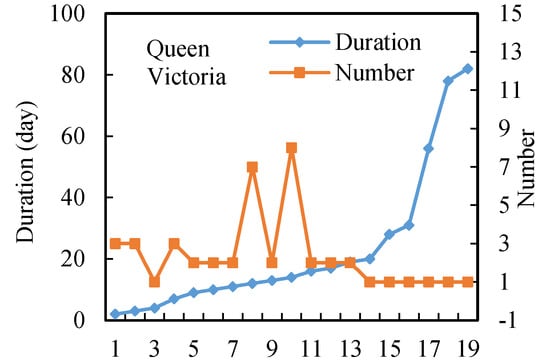
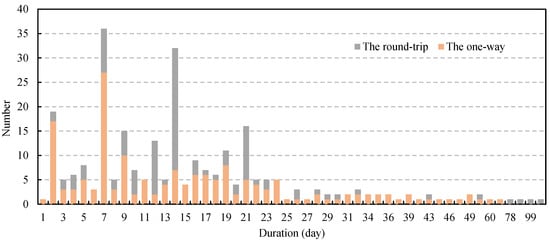
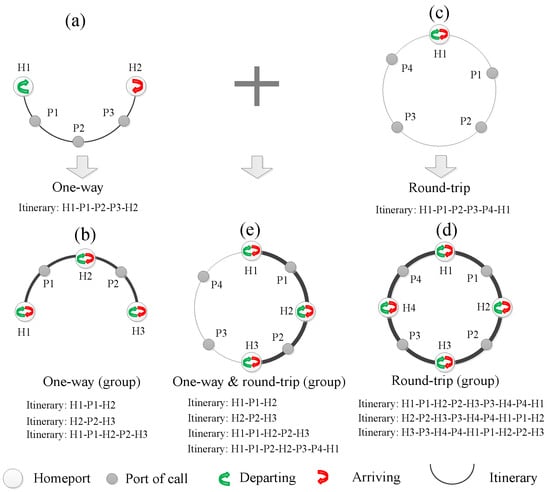
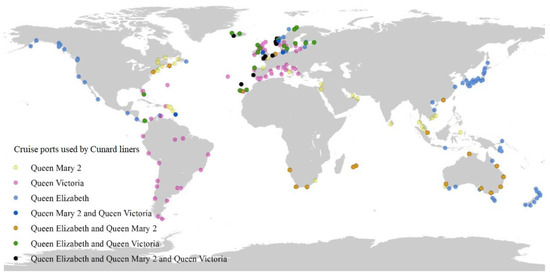
Globalization and Regionalization: Empirical Evidence from Itinerary Structure and Port Organization of World Cruise of Cunard
by
Xumao Li, Chengjin Wang and César Ducruet
Cited by 11 | Viewed by 4866
Abstract
Cruise tourism is an obviously global industry in different dimensions. From a geographical perspective, cruise ships are mobile and capable of being repositioned at a company’s notice, which forms the inherent basis for its global spatial layout. As a branch of the cruise
[...] Read more.
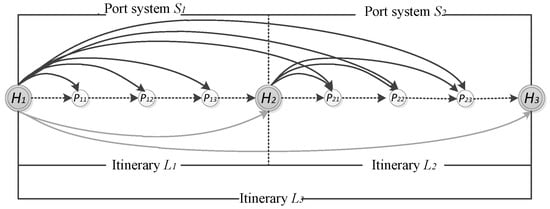
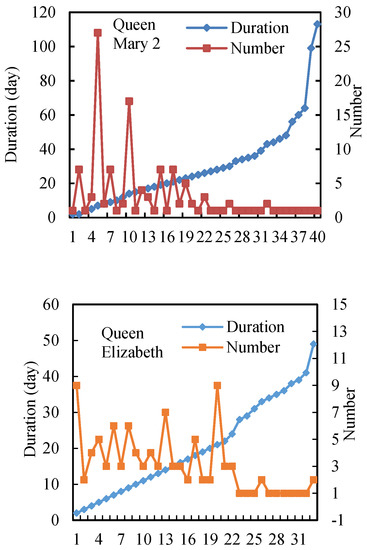
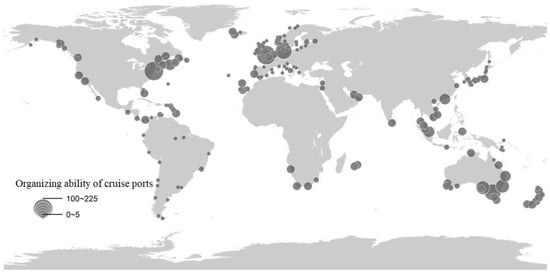
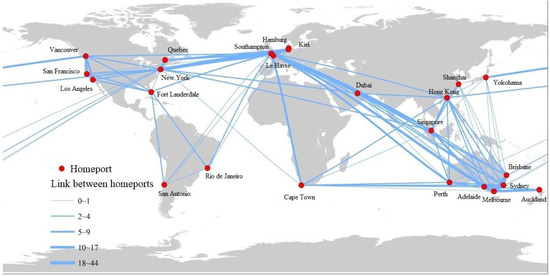
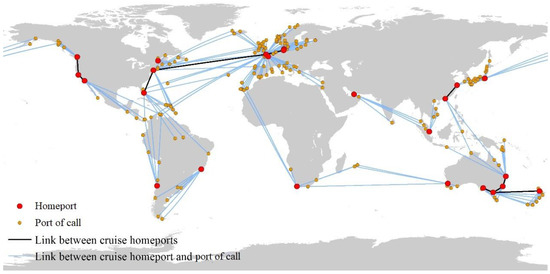
Cruise tourism is an obviously global industry in different dimensions. From a geographical perspective, cruise ships are mobile and capable of being repositioned at a company’s notice, which forms the inherent basis for its global spatial layout. As a branch of the cruise industry, the world cruise is clearly globalizing in geographical space by offering long itinerary, even round-the-world trips, for everyone. Using the schedule data from 2018 to 2019, this paper analyzes the spatial characteristics of the itinerary and port organization of Cunard, a world cruise company. We find that the itinerary distribution and port organization of Cunard are both globalization and regionalization, and the latter is the core and main component of the former. Under the influence of the COVID-19 epidemic, the global mobility of cruises has ground to a halt, while local mobility offers the possibility of its resumption as soon as possible. Turning to the regional voyage with the shorter and simple itinerary is feasible for Cunard and other world cruises, which is conducive to the realization of the resuming voyage as soon as possible. Moreover, strict boarding and safety onboard are essential.
Full article
►▼
Show Figures