You are currently viewing a new version of our website. To view the old version click .

Smart Governance and Policy

Special Issue Information

Dear Colleagues,

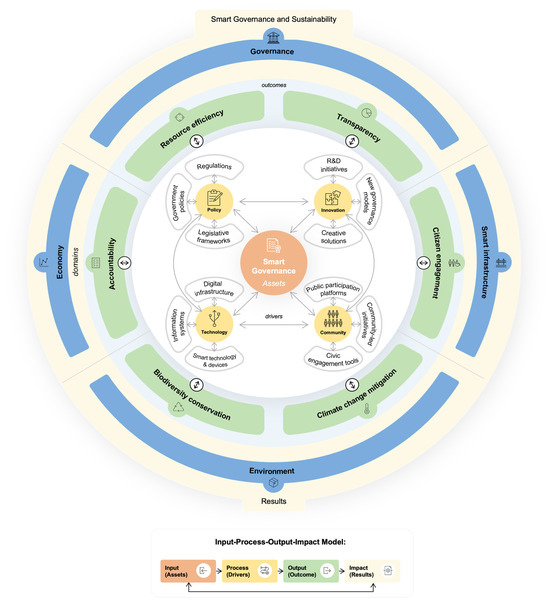
The digital revolution has transformed how governments in smart cities operate and interact with their citizens. The next-generation smart governance, characterized by the integration of advanced information technologies like artificial intelligence (AI), cloud computing, the Internet of Things (IoT), blockchain, and big data analytics, promises to enhance transparency, efficiency, and accountability. The term “smart” is interchangeable with a wide range of concepts, including virtual, intelligent, digital, or ubiquitous, underlining the comprehensive application of smart and convergent technologies in addressing urban and citizen-centric issues. While physical infrastructure and technological convergence have been at the forefront of smart city initiatives, an examination of how these developments align with broader government objectives and goals in terms of management, organization, governance, policy, technology, and environmental sustainability remains essential.

Governance and policy capacity building have become important issues across various government sectors, including education, health, security, transportation, and public finance. Effective policy interventions are increasingly reliant on interconnected networks, both nationally and globally, necessitating appropriate information and communication technologies and human networking for efficient administration. Implementing smart governance is challenging due to bureaucratic inertia, a resistance to change, and the demands for new competencies and resources. Therefore, a thorough investigation of the evolution of organizational structures, leadership dynamics, fiscal management, human resource management, and measurement and evaluation frameworks is crucial to deepen our understanding.

As a part of international collaboration, this Special Issue highlights the development of theoretical frameworks and relevant case studies in smart governance and policy capacity building. It aims to strengthen effective collaboration and networking among developing and developed countries, engaging government officials and experts at various levels.

This Special Issue seeks to present analytical, descriptive, and explanatory research that broadens the strategic and operational practices for smart governance development. It aims to bridge the existing knowledge and practice gaps in the multidisciplinary area of smart cities, focusing on policy initiatives, case studies, empirical research, and new perspectives that apply innovative and sustainable strategies for advancing smart cities across national, comparative, and international contexts.

Prof. Dr. Seunghwan Myeong
Dr. Younhee Kim
Dr. Michael Ahn
Dr. Jinsol Park
Prof. Dr. Changhoon Jung
Guest Editors

Manuscript Submission Information

Manuscripts should be submitted online at www.mdpi.com by registering and logging in to this website. Once you are registered, click here to go to the submission form. Manuscripts can be submitted until the deadline. All submissions that pass pre-check are peer-reviewed. Accepted papers will be published continuously in the journal (as soon as accepted) and will be listed together on the special issue website. Research articles, review articles as well as short communications are invited. For planned papers, a title and short abstract (about 250 words) can be sent to the Editorial Office for assessment.

Submitted manuscripts should not have been published previously, nor be under consideration for publication elsewhere (except conference proceedings papers). All manuscripts are thoroughly refereed through a single-blind peer-review process. A guide for authors and other relevant information for submission of manuscripts is available on the Instructions for Authors page. Smart Cities is an international peer-reviewed open access monthly journal published by MDPI.

Please visit the Instructions for Authors page before submitting a manuscript. The Article Processing Charge (APC) for publication in this open access journal is 2000 CHF (Swiss Francs). Submitted papers should be well formatted and use good English. Authors may use MDPI's English editing service prior to publication or during author revisions.

Keywords

  • best practices in smart city development
  • comprehensive models for technological empowerment and human collaboration
  • convergence technology applications for smart governance
  • government reform for smart governance in developing countries
  • artificial intelligence, Internet of Things, blockchain, sensors, clouds, and mobile networks for smart cities
  • new-deal policy initiatives for smart cities
  • embracing the usability and security of big data in operating smart cities
  • smart administration and management innovation in smart city governance
  • international partnerships among smart city communities
  • visible strategies and approaches for smart cities
  • human-oriented and nontechnological dimensions of smart cities
  • smart online education and training methods and technologies
  • interdisciplinary perspectives and theories of smart cities and smart governance

Benefits of Publishing in a Special Issue

  • Ease of navigation: Grouping papers by topic helps scholars navigate broad scope journals more efficiently.
  • Greater discoverability: Special Issues support the reach and impact of scientific research. Articles in Special Issues are more discoverable and cited more frequently.
  • Expansion of research network: Special Issues facilitate connections among authors, fostering scientific collaborations.
  • External promotion: Articles in Special Issues are often promoted through the journal's social media, increasing their visibility.
  • e-Book format: Special Issues with more than 10 articles can be published as dedicated e-books, ensuring wide and rapid dissemination.

Published Papers

Get Alerted

Add your email address to receive forthcoming issues of this journal.

XFacebookLinkedIn
Smart Cities - ISSN 2624-6511