



Sensors 2026, 26(1), 91; https://doi.org/10.3390/s26010091 - 23 Dec 2025
Viewed by 830
Abstract
►
Show Figures
Humans tend to rely on heuristic strategies for intuitive judgment during decision-making. Existing research proposes an availability heuristic, suggesting that individuals are inclined to use highly available information as a basis for judgment. To explore the behavioral and electrophysiological characteristics of the availability
[...] Read more.
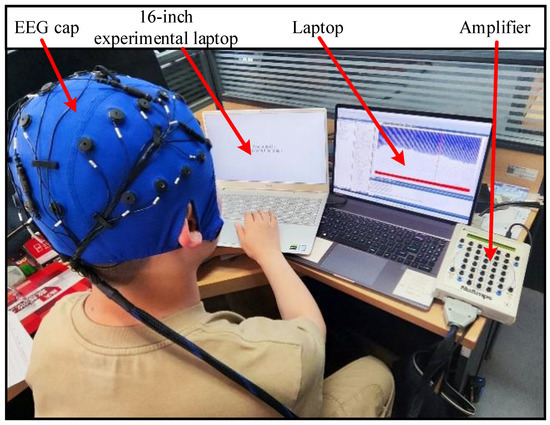
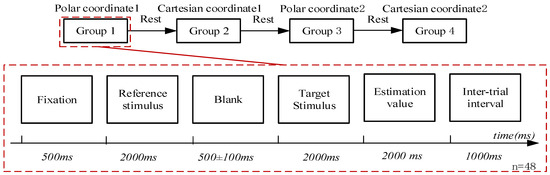
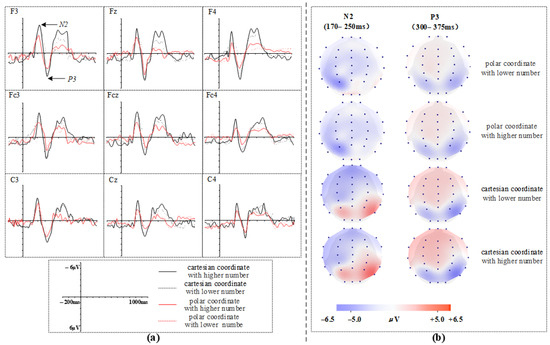
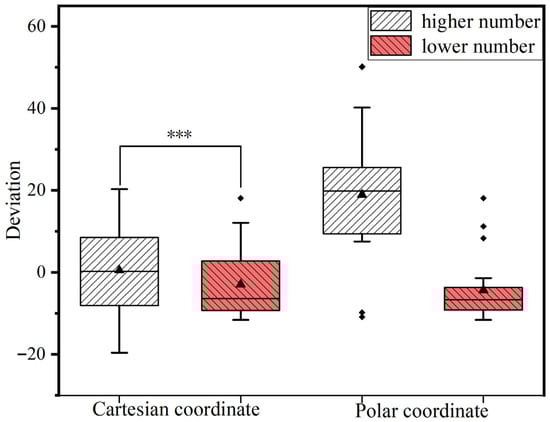
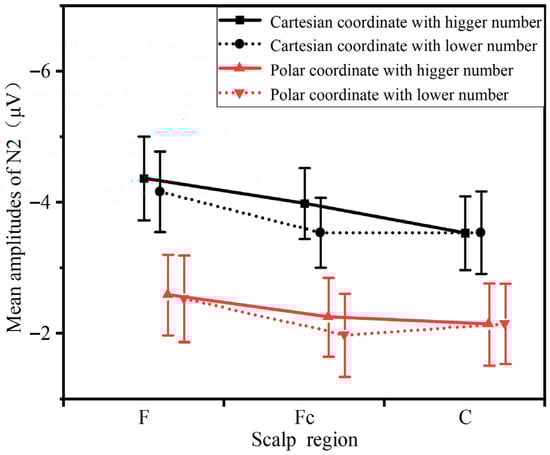
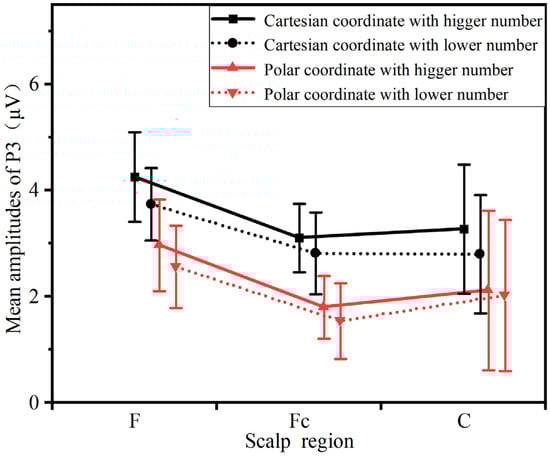
Humans tend to rely on heuristic strategies for intuitive judgment during decision-making. Existing research proposes an availability heuristic, suggesting that individuals are inclined to use highly available information as a basis for judgment. To explore the behavioral and electrophysiological characteristics of the availability heuristic in information visualization, 24 right-handed participants were recruited for the experiment. Using behavioral and event-related potentials (ERPs) analysis techniques, within-subject behavioral and electroencephalogram (EEG) experiments were conducted under four conditions: polar coordinate system with higher number, polar coordinate system with lower number, Cartesian coordinate system with higher number, and Cartesian coordinate system with lower number. The behavioral results revealed that in the angle estimation task, the polar coordinate condition induced a more significant availability heuristic effect compared to the Cartesian coordinate condition, exhibiting smaller numerical estimation deviations. This indicates that the degree of semantic relevance between the available information and the target task is a critical factor determining the facilitative effect of such information on judgment. The ERPs results showed that the polar coordinate condition elicited smaller N2 and P2 amplitudes than the Cartesian coordinate condition during angle judgment, suggesting reduced semantic conflict and lower attentional demand in task processing under the polar coordinate condition. By providing behavioral and electrophysiological evidence of intuitive decision-making processes, this study lays a theoretical foundation for the rational application of intuitive effects in information visualization design. Furthermore, the findings imply that using available information semantically aligned with the target task can significantly enhance the effectiveness of the availability heuristic, thereby mitigating availability bias.
Full article
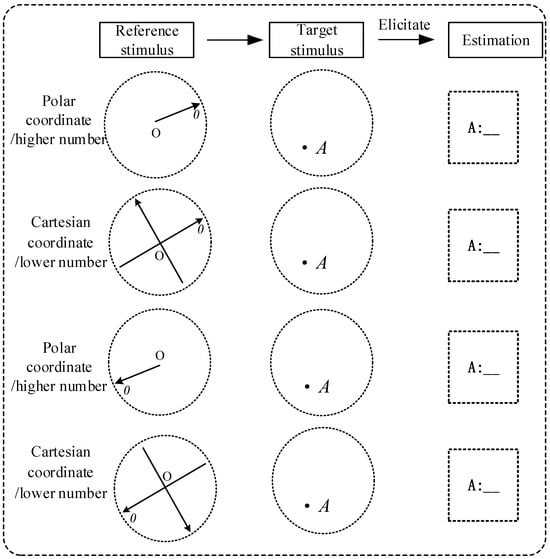
Figure 1