




- 4.9Impact Factor
- 9.7CiteScore
- 14 daysTime to First Decision
Thermal Characterization of Polymers and Polymer Composites
This special issue belongs to the section “Polymer Analysis and Characterization“.
Special Issue Information
Dear Colleagues,
Thermal analyses (TA) are a set of analytical techniques able to measure and analyze the properties, or their changes, of (synthetic/biobased) polymers, polymeric composites, and of other materials containing a polymeric phase as a function of the temperature (or time) when the material under investigation is subjected to a controlled temperature program.
In the field of polymer science, TA represent an extraordinary useful tool to characterize polymeric materials in a simple and fast way and to investigate a wide variety of their properties during thermal events. It is possible to relate these latter properties to the compositional modifications (polymer blends, presence of fillers, additives, plasticizers, etc.) and to the conditions used for their processing, gaining invaluable information for their production, usage, durability, recycling, and degradation.
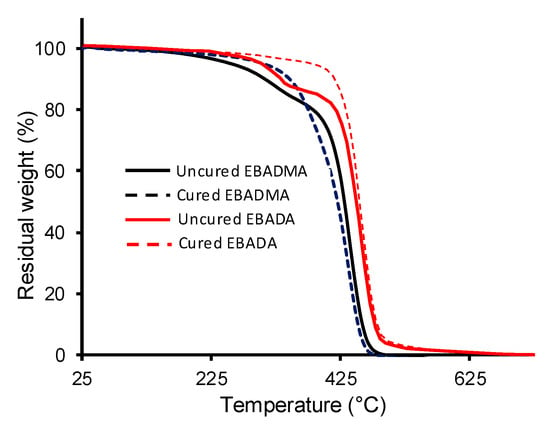
Different thermal analysis methods are available for several examination purposes. Among the most commonly employed TA for polymer characterization, there is differential scanning calorimetry (DSC), differential thermal analysis (DTA), thermogravimetric analysis (TGA), dynamic mechanical thermal analysis (DMTA), thermal mechanical analysis (TMA), and dielectric analysis (DEA).
The described techniques, frequently available in most industrial and research laboratories, also have strong potential and wide versatile applications in emerging fields of polymer research, such as polymer-based nanocomposites, polymers for energy applications, biodegradation of polymers, and high-performance polymer composites.
With TA techniques, it is possible to analyze chemical and physical processes related to thermal effects, including glass transition, melting, crystallization, curing reactions, physical aging, evaporation and decomposition processes, stability, interactions with environmental agents, fire retardancy, viscoelastic effects, volumetric and geometrical modifications, and changes in mechanical properties. Modeling and simulation of complex phenomena can be accomplished on the basis of TA data.
This Topical Collection focuses on the thermal analysis and characterization of polymers and polymer composites, on the information that these techniques can provide for optimal production/use/disposal of such materials, and on novel testing methods proposed to highlight properties and features of traditional as well as innovative polymer materials.
Prof. Dr. Mariaenrica Frigione
Collection Editor
Manuscript Submission Information
Manuscripts should be submitted online at www.mdpi.com by registering and logging in to this website. Once you are registered, click here to go to the submission form. Manuscripts can be submitted until the deadline. All submissions that pass pre-check are peer-reviewed. Accepted papers will be published continuously in the journal (as soon as accepted) and will be listed together on the special issue website. Research articles, review articles as well as short communications are invited. For planned papers, a title and short abstract (about 250 words) can be sent to the Editorial Office for assessment.
Submitted manuscripts should not have been published previously, nor be under consideration for publication elsewhere (except conference proceedings papers). All manuscripts are thoroughly refereed through a single-blind peer-review process. A guide for authors and other relevant information for submission of manuscripts is available on the Instructions for Authors page. Polymers is an international peer-reviewed open access semimonthly journal published by MDPI.
Please visit the Instructions for Authors page before submitting a manuscript. The Article Processing Charge (APC) for publication in this open access journal is 2700 CHF (Swiss Francs). Submitted papers should be well formatted and use good English. Authors may use MDPI's English editing service prior to publication or during author revisions.
Keywords
- calorimetry
- differential scanning calorimetry
- differential thermal analysis
- dynamic mechanical thermal analysis
- modeling
- thermal analysis
- thermal characterization
- thermal events
- thermal-mechanical analysis
- thermogravimetric analysis
Benefits of Publishing in a Special Issue
- Ease of navigation: Grouping papers by topic helps scholars navigate broad scope journals more efficiently.
- Greater discoverability: Special Issues support the reach and impact of scientific research. Articles in Special Issues are more discoverable and cited more frequently.
- Expansion of research network: Special Issues facilitate connections among authors, fostering scientific collaborations.
- External promotion: Articles in Special Issues are often promoted through the journal's social media, increasing their visibility.
- e-Book format: Special Issues with more than 10 articles can be published as dedicated e-books, ensuring wide and rapid dissemination.