You are currently viewing a new version of our website. To view the old version click .

Nanoarchitectonics of the Fourth Fundamental Electronic Component: Memristor, Meminductor and Memcapacitor

This special issue belongs to the section “Nanoelectronics, Nanosensors and Devices“.

Special Issue Information

Dear Colleagues,

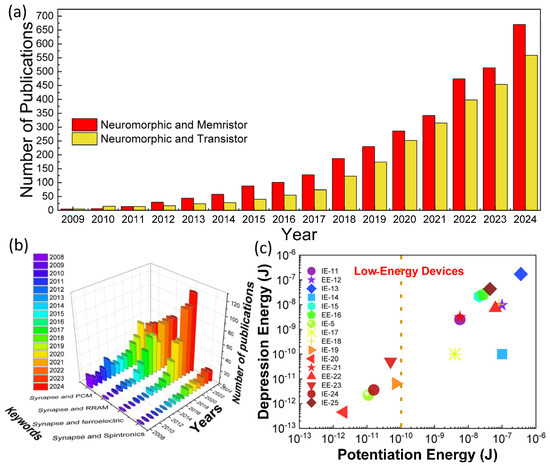
In 1971, Chua L.O. theorised a new classical electronic, memristor, as the fourth component complementing resistor, inductor, and capacitor. Despite the early physical phenomenon observed by Gibbons and Beadle in 1964, the development of the memristor did not receive much attention until the Hewlett-Packard Lab first elucidated that the ionic electron dynamic was the cause behind the phenomenon in 2008. Since then, its unique resistance tunability has received significant attention due to its potential application for data storage. However, we later found that besides its resistance (R), its inductance (I) and capacitance (C) can also be tuned! And thus, it is also called the meminductor and the memcapacitor, respectively. Any of its R, I or C can be reconfigured and used for different purposes. Moreover, the architectonic of this device is small, fast and low-powered. Henceforth, we foresee that the application of this technology is endless; memories, sensors, neuromorphic computing, random number generators, physically unclonable functions, advanced logic and adaptive/reconfigurable circuits are just a few examples from its long list of potential applications in both analogue and digital electronics.

This Topical Collection addresses the latest advances in the nanoarchitechtonics of the memristor, meminductor and memcapacitor. We invite scientists and engineers to contribute original research, reviews and perspective articles to inspire and shape the future directive towards the deployment of this fourth component for next-generation electronics. The scope of this collection includes, but is not limited to:

  • Nanoscale fabrication, novel architecture and processes;
  • Surface/interface and electrical characterisation, methodology and benchmarking;
  • Multifunctional capabilities: in-memory computing, in-memory sensing and beyond;
  • Integration and embedded techniques.

Dr. Firman Simanjuntak
Dr. Yao-Feng Chang
Dr. Sridhar Chandrasekaran
Collection Editors

Manuscript Submission Information

Manuscripts should be submitted online at www.mdpi.com by registering and logging in to this website. Once you are registered, click here to go to the submission form. Manuscripts can be submitted until the deadline. All submissions that pass pre-check are peer-reviewed. Accepted papers will be published continuously in the journal (as soon as accepted) and will be listed together on the special issue website. Research articles, review articles as well as short communications are invited. For planned papers, a title and short abstract (about 250 words) can be sent to the Editorial Office for assessment.

Submitted manuscripts should not have been published previously, nor be under consideration for publication elsewhere (except conference proceedings papers). All manuscripts are thoroughly refereed through a single-blind peer-review process. A guide for authors and other relevant information for submission of manuscripts is available on the Instructions for Authors page. Nanomaterials is an international peer-reviewed open access semimonthly journal published by MDPI.

Please visit the Instructions for Authors page before submitting a manuscript. The Article Processing Charge (APC) for publication in this open access journal is 2400 CHF (Swiss Francs). Submitted papers should be well formatted and use good English. Authors may use MDPI's English editing service prior to publication or during author revisions.

Keywords

  • nanofabrication
  • memristor
  • meminductor
  • memcapacitor
  • nanoarchitechtonic
  • nanoelectronics
  • neuromorphic computing

Benefits of Publishing in a Special Issue

  • Ease of navigation: Grouping papers by topic helps scholars navigate broad scope journals more efficiently.
  • Greater discoverability: Special Issues support the reach and impact of scientific research. Articles in Special Issues are more discoverable and cited more frequently.
  • Expansion of research network: Special Issues facilitate connections among authors, fostering scientific collaborations.
  • External promotion: Articles in Special Issues are often promoted through the journal's social media, increasing their visibility.
  • e-Book format: Special Issues with more than 10 articles can be published as dedicated e-books, ensuring wide and rapid dissemination.

Published Papers

Get Alerted

Add your email address to receive forthcoming issues of this journal.

XFacebookLinkedIn
Nanomaterials - ISSN 2079-4991