Feature Papers in Biofilm

A topical collection in Microorganisms (ISSN 2076-2607). This collection belongs to the section "Biofilm".

Viewed by 3099

Editors


E-Mail Website
Collection Editor
Department of Microbiology, Tumor and Cell Biology (MTC), Karolinska Institutet, Stockholm, Sweden
Interests: microbial biofilm formation; cyclic di-nucleotide signaling; pathogen-host interaction; protein quality control; Salmonella typhimurium; Pseudomonas aeruginosa; Candida parapsilosis
Special Issues, Collections and Topics in MDPI journals

E-Mail Website
Collection Editor
Department of Clinical Microbiology and Infectious Diseases, Hospital General Universitario Gregorio Marañón, 28007 Madrid, Spain
Interests: biofilms; prostheses; infection; devices; catheter
Special Issues, Collections and Topics in MDPI journals

Topical Collection Information

Dear Colleagues,

This Topical Collection, “Feature Paper in Biofilm”, intends to collect high-quality research articles, short communications, and review articles from all fields of biofilm research. Since the aim of this Topical Collection is to illustrate, through selected works, pioneering research in the field of biofilm, we encourage Editorial Board Members of the Biofilm Section of Microorganisms and beyond to contribute state-of-the-art articles reflecting the latest progress in their research field, or to invite relevant experts and colleagues to do so.

Topics of interest include, but are not limited to:

  • Pathogenesis of biofilms;
  • Biofilm formation of the microbiota;
  • Device-related infections;
  • Chronic tissue-related infections;
  • Innovative strategies for accurate diagnosis of biofilms;
  • Antimicrobial tolerance;
  • New antibacterial approaches;
  • Impact of biofilm formation in biotechnology;
  • Biofilms in nanomedicine.

Prof. Dr. Ute Römling
Dr. María Guembe
Collection Editors

Manuscript Submission Information

Manuscripts should be submitted online at www.mdpi.com by registering and logging in to this website. Once you are registered, click here to go to the submission form. All submissions that pass pre-check are peer-reviewed. Accepted papers will be published continuously in the journal (as soon as accepted) and will be listed together on the collection website. Research articles, review articles as well as short communications are invited. For planned papers, a title and short abstract (about 250 words) can be sent to the Editorial Office for assessment.

Submitted manuscripts should not have been published previously, nor be under consideration for publication elsewhere (except conference proceedings papers). All manuscripts are thoroughly refereed through a single-blind peer-review process. A guide for authors and other relevant information for submission of manuscripts is available on the Instructions for Authors page. Microorganisms is an international peer-reviewed open access monthly journal published by MDPI.

Please visit the Instructions for Authors page before submitting a manuscript. The Article Processing Charge (APC) for publication in this open access journal is 2700 CHF (Swiss Francs). Submitted papers should be well formatted and use good English. Authors may use MDPI's English editing service prior to publication or during author revisions.

Keywords

  • biofilm
  • infections
  • antibiofilm
  • biofilm formation

Published Papers (2 papers)

2026

Jump to: 2025

20 pages, 4954 KB  
Article
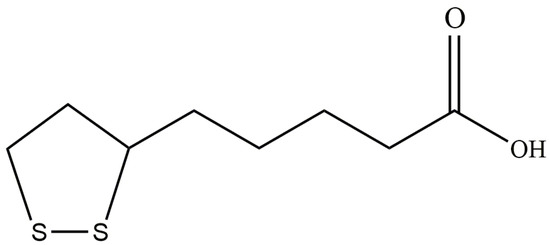
Mechanistic Insights into the Inhibition of Yersinia enterocolitica Biofilm Formation by Lipoic Acid
by Sichen Liao, Siqi Yang, Guoli Gong, Zhenbin Liu, Jiayi Zhang, Hongbo Li, Qing Sun, Haizhen Mo, Liangbin Hu and Lu Tian
Microorganisms 2026, 14(3), 558; https://doi.org/10.3390/microorganisms14030558 - 28 Feb 2026
Viewed by 476
Abstract
Yersinia enterocolitica is a foodborne pathogen that forms biofilms on surfaces, enhancing its survivability and increasing bacterial resistance, which poses a significant challenge to public health. Therefore, developing effective strategies to inhibit biofilm formation is crucial. Lipoic acid (LA) is a compound with [...] Read more.
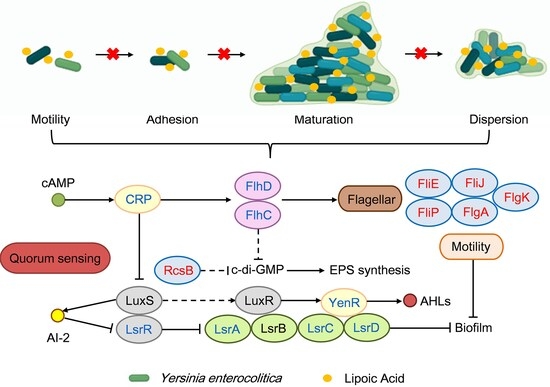
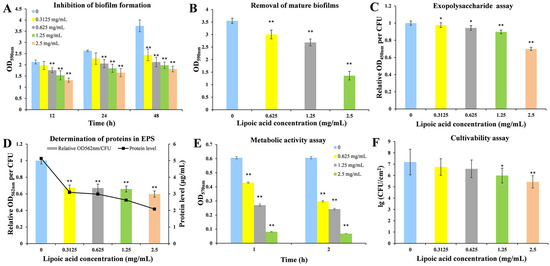
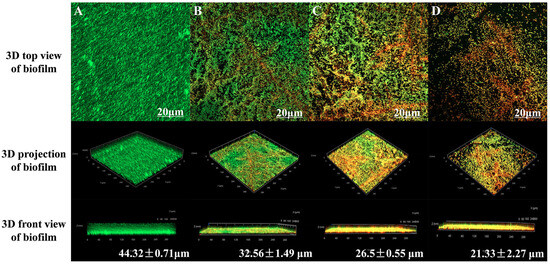
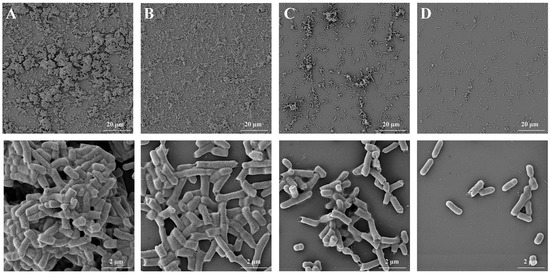
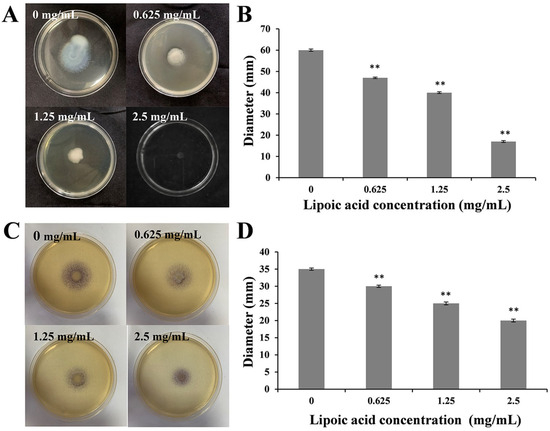
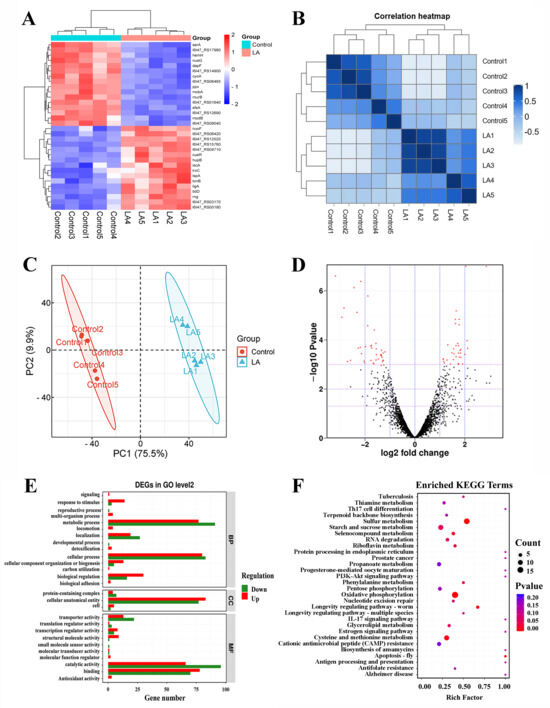
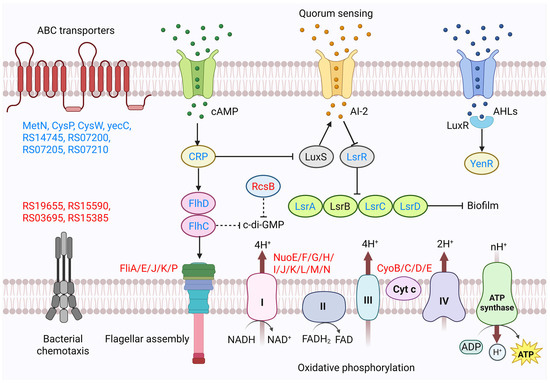
Yersinia enterocolitica is a foodborne pathogen that forms biofilms on surfaces, enhancing its survivability and increasing bacterial resistance, which poses a significant challenge to public health. Therefore, developing effective strategies to inhibit biofilm formation is crucial. Lipoic acid (LA) is a compound with antibiofilm properties. This study investigates the effects of LA on biofilm formation by Y. enterocolitica BNCC 108930 (a standard strain from the BeNa Culture Collection). Biofilm formation, maturation, removal, and cell viability were evaluated by crystal violet staining, extracellular polysaccharide assay, Methylthiazolyldiphenyl-tetrazolium bromide assays, motility, and quorum sensing (QS) assays. The results indicate that LA interferes with the early stages of biofilm formation by compromising cell membrane integrity and reducing cellular adhesion. Furthermore, 2.5 mg/mL of LA reduced biofilm biomass (with a 48 h treatment inhibition rate of 51.46 ± 1.29%) and extracellular polysaccharide production (with a relative inhibition rate of 30.09 ± 1.8%), while significantly reducing the metabolic activity of bacteria within the biofilm (inhibition rate over 85%) compared to the untreated group. Confocal laser scanning microscopy and field emission gun scanning electron microscopy confirm that LA induces a sparse biofilm structure, reduced aggregation, and decreased biofilm thickness to 21.33 ± 2.27 μm. Motility and QS assays demonstrate that LA affects flagellar motility and the secretion of N-acyl homoserine lactones. Transcriptome analysis revealed downregulation of genes involved in the QS system and biofilm formation (e.g., lsrA, lsrC, lsrD, lsrR, and oppA), as well as upregulation of genes related to bacterial chemotaxis and flagellar assembly (e.g., RS19655, RS15590, fliE, fliJ, fliP, fliA, and fliK). These alterations suggest that LA inhibits Y. enterocolitica biofilm formation by affecting intercellular communication and flagellar motility. This study highlights the antibiofilm properties of LA, providing a theoretical basis for potential applications in microbial and biofilm control. Full article
Show Figures

Graphical abstract

2025

Jump to: 2026

14 pages, 3325 KB  
Article
Formation of Mono-Organismal and Mixed Staphylococcus aureus and Streptococcus mutans Biofilms in the Presence of NaCl
by Yusuke Iwabuchi, Hiroko Yoshida, Shuichiro Kamei, Toshiki Uematsu, Masanori Saito and Hidenobu Senpuku
Microorganisms 2025, 13(5), 1118; https://doi.org/10.3390/microorganisms13051118 - 13 May 2025
Cited by 3 | Viewed by 1659
Abstract
Staphylococcus aureus, an opportunistic bacterium found in the oral cavity, has been reported as a causative agent of infective endocarditis and pneumonia. Salt is an essential mineral for cell maintenance in the human body. This study was conducted to clarify how salt [...] Read more.
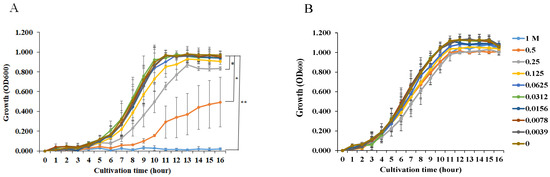
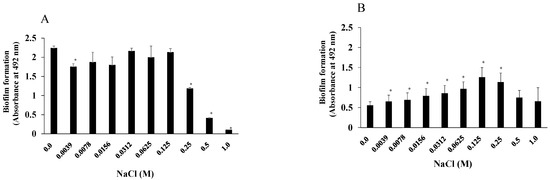
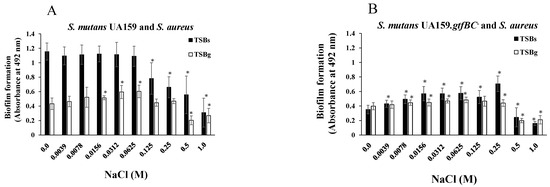
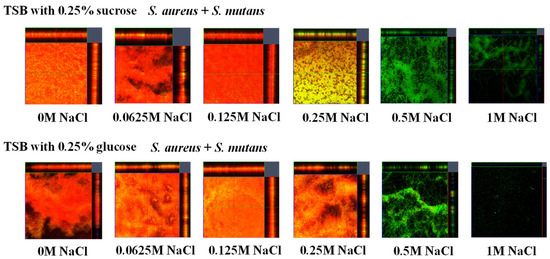
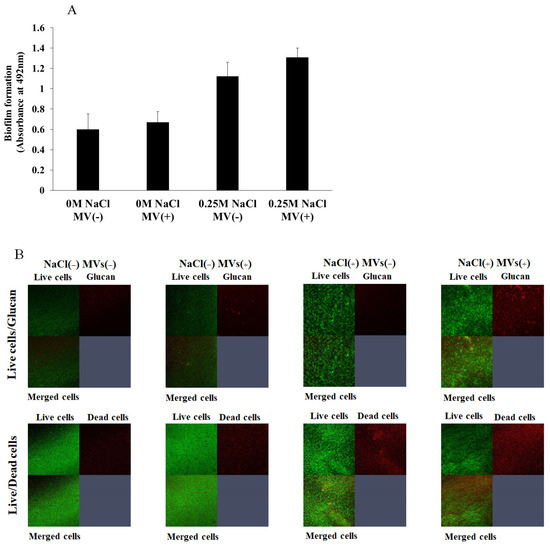
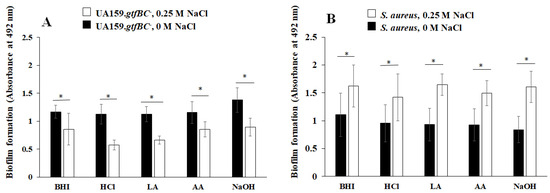
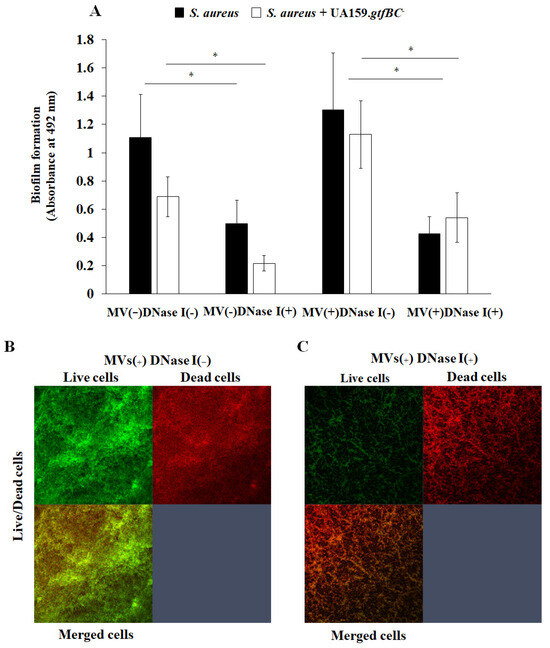
Staphylococcus aureus, an opportunistic bacterium found in the oral cavity, has been reported as a causative agent of infective endocarditis and pneumonia. Salt is an essential mineral for cell maintenance in the human body. This study was conducted to clarify how salt affects the formation of biofilms by S. aureus and Streptococcus mutans, pathogens implicated in dental caries. Bacteria were cultivated with various concentrations of NaCl on a 96-well microtiter plate in tryptic soy broth with 0.25% sucrose or 0.25% glucose (TSBs and TSBg, respectively) for 16 h. The effects of glucosyltransferase in S. mutans membrane vesicles (MVs) and extracellular DNA during biofilm formation were also analyzed. S. aureus biofilms were induced by 0.004–0.25 M NaCl but not by NaCl at concentrations greater than 0.25 M in TSBs. The mixed S. aureus and S. mutans biofilms gradually grew and were constructed by dead cells in a NaCl concentration-dependent manner in both TSBs and TSBg. Moreover, biofilms were slightly induced by glucan generation mediated by the glucosyltransferases in MVs under high-salinity conditions. The formation of mixed-species S. aureus and S. mutans biofilms increased in the presence of both extracellular DNA and MVs. Therefore, extracellular DNA, MVs, and dead cells are factors that promote S. aureus biofilm formation under harsh conditions containing NaCl. The sugar (sucrose and glucose) ingestion-induced S. mutans biofilm may be a risk factor for infection by opportunistic pathogens such as S. aureus in individuals who consume food and drinks containing high concentrations of salt. Full article
Show Figures

Figure 1
Back to TopTop