ijms-logo

Journal Browser

Journal Browser

Machine Learning in Molecular Sciences: From Molecular Descriptors to Neural Architectures

A topical collection in International Journal of Molecular Sciences (ISSN 1422-0067). This collection belongs to the section "Molecular Informatics".

Viewed by 717

Editors


E-Mail Website
Collection Editor
Department of Analytical Chemistry and Biochemistry, Faculty of Materials Science and Ceramics, AGH University of Krakow, Al. Mickiewicza 30, 30-059 Krakow, Poland
Interests: carbon nanomaterials; metal nanoparticles; metal oxides; electrochemical sensors; biosensors
Special Issues, Collections and Topics in MDPI journals

E-Mail Website
Collection Editor
Faculty of Materials Science and Ceramics, AGH University of Krakow, al. Mickiewicza 30, 30-059 Kraków, Poland
Interests: computer vision; deepn learning

Topical Collection Information

Dear Colleagues,

Machine learning (ML) is no longer a future trend in molecular sciences; it is now a central force driving discovery, design, and decision-making across the field. This Topical Collection aims to showcase the most recent advances in ML-powered research across all branches of molecular science, from data-driven molecular design to neural network models of spectroscopic and biological properties.

As the complexity and volume of experimental and computational data continue to grow, the role of ML becomes increasingly indispensable—not only in predictive modeling and simulation but also in signal interpretation, structure activity relationship modeling and the integration of large-scale omics and sensor datasets. Recent advances in chemoinformatics, electroanalytical chemistry, spectroscopy, and structural biology are now being enhanced by both traditional ML and modern deep learning approaches, including neural networks, transformers, and explainable AI.

This Topical Collection seeks to bring together interdisciplinary contributions that demonstrate how ML can address real-world challenges in molecular research, whether through novel algorithms, innovative data processing workflows, or impactful applications in drug discovery, diagnostics, materials development, or sensing technologies.

Topics of interest include, but are not limited to, the following:

  • ML-guided molecular modeling and simulation;
  • Advanced chemoinformatics and deep QSAR/QSPR modeling;
  • ML in spectroscopy: pattern recognition, signal processing, and calibration;
  • ML applications in electrochemistry and electroanalytical data processing;
  • Neural networks and transformer models in structural biology;
  • ML based prediction of biomolecular interactions, docking, and folding;
  • AI enhanced drug discovery and optimization;
  • Chemometrics and interpretable machine learning approaches;
  • Multiomics data integration using ML and deep learning;
  • Novel ML architectures for molecular and analytical applications.

Prof. Dr. Robert Piech
Dr. Filip Ciepiela
Collection Editors

Manuscript Submission Information

Manuscripts should be submitted online at www.mdpi.com by registering and logging in to this website. Once you are registered, click here to go to the submission form. All submissions that pass pre-check are peer-reviewed. Accepted papers will be published continuously in the journal (as soon as accepted) and will be listed together on the collection website. Research articles, review articles as well as short communications are invited. For planned papers, a title and short abstract (about 250 words) can be sent to the Editorial Office for assessment.

Submitted manuscripts should not have been published previously, nor be under consideration for publication elsewhere (except conference proceedings papers). All manuscripts are thoroughly refereed through a single-blind peer-review process. A guide for authors and other relevant information for submission of manuscripts is available on the Instructions for Authors page. International Journal of Molecular Sciences is an international peer-reviewed open access semimonthly journal published by MDPI.

Please visit the Instructions for Authors page before submitting a manuscript. There is an Article Processing Charge (APC) for publication in this open access journal. For details about the APC please see here. Submitted papers should be well formatted and use good English. Authors may use MDPI's English editing service prior to publication or during author revisions.

Keywords

  • machine learning in molecular sciences
  • deep learning and neural networks
  • chemoinformatics and QSAR/QSPR
  • spectroscopy and signal processing
  • electrochemical data analysis
  • biomolecular interaction prediction
  • drug discovery and molecular design
  • multiomics integration and big data

Published Papers (1 paper)

2026

27 pages, 2068 KB  
Review
A Risk-Tiered Validation Framework for Artificial Intelligence in Drug Discovery: From Reproducibility to Clinical Translation
by Sarfaraz K. Niazi
Int. J. Mol. Sci. 2026, 27(10), 4349; https://doi.org/10.3390/ijms27104349 - 13 May 2026
Viewed by 367
Abstract
Artificial intelligence has advanced from merely predicting static protein structures to modeling equilibrium conformational ensembles. It now concurrently forecasts structure and binding affinity and actively participates in candidate selection during the initial stages of drug discovery. Foundation models introduced between 2024 and 2026, [...] Read more.
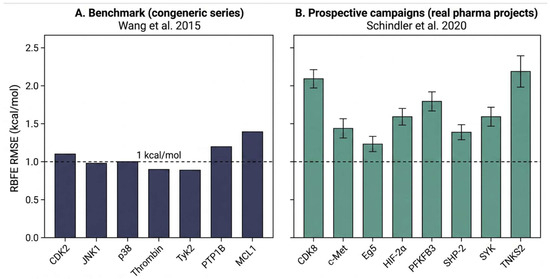
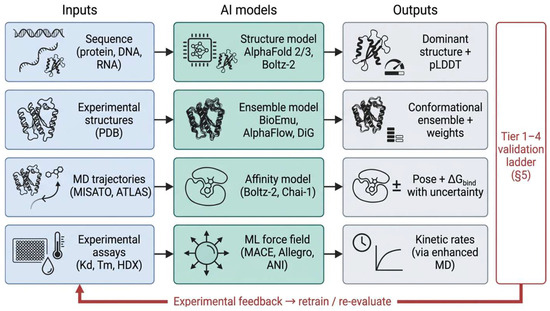
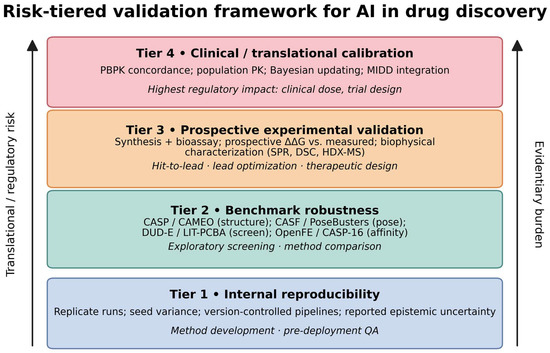
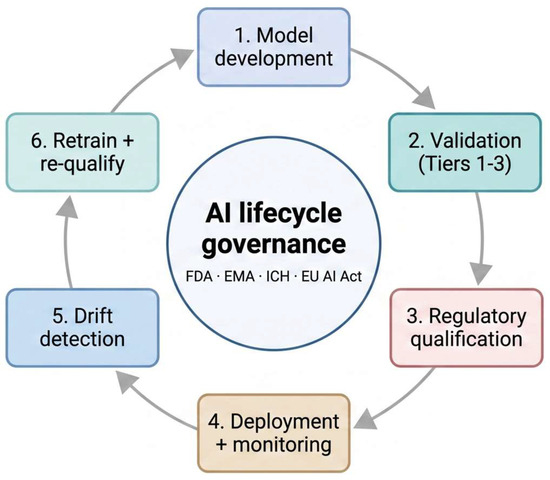
Artificial intelligence has advanced from merely predicting static protein structures to modeling equilibrium conformational ensembles. It now concurrently forecasts structure and binding affinity and actively participates in candidate selection during the initial stages of drug discovery. Foundation models introduced between 2024 and 2026, including BioEmu, AlphaFlow, DiG, Boltz-2, Chai-1, NeuralPLexer, and explicit-solvent prediction systems such as SuperWater, have begun to address issues previously identified as fundamental concerns in earlier critiques of AI in drug discovery. Nevertheless, many of these models are presently accessible only as preprints and require validation through independent peer review. Evidence indicates a shift in the primary bottleneck from representation challenges to validation difficulties. However, this transition remains incomplete and heavily dependent on context. The risks associated with AI-enabled drug discovery are increasingly not solely about the models’ capacity to accurately represent ensembles, but also about whether the evidentiary standards used to validate AI-derived predictions keep pace with the rapidity with which these predictions are generated and employed. This article introduces a four-tier validation framework designed to align the extent of computational and experimental evidence with the translational and regulatory risks associated with various artificial intelligence (AI) applications within the molecular sciences. These applications include machine learning (ML) models that analyze sequences, structures, conformational ensembles, protein–ligand complexes, and molecular dynamics trajectories. Tier 1 addresses the internal reproducibility of ML inference when applied to molecular inputs; Tier 2 pertains to the robustness of molecular-science benchmarks such as CASP, CASF-2016, PoseBusters, and OpenFE; Tier 3 involves prospective experimental validation against biophysical and biochemical measurements; and Tier 4 encompasses clinical and translational calibration within physiologically based pharmacokinetic (PBPK) and quantitative systems pharmacology (QSP) frameworks. This validation hierarchy functions as an explicit conceptual guide, serving as a framework rather than a regulatory requirement. It is firmly grounded in established principles derived from ICH Q8/Q9/Q10, the FDA model-informed drug development (MIDD) approach, the EMA reflection paper on AI in the medicinal product lifecycle, and the EU AI Act. The manuscript further incorporates recent evidence from ensemble-aware AI, prospective docking, free-energy campaigns, and clinical-stage AI-derived candidates. It concludes with specific recommendations pertaining to lifecycle governance, uncertainty reporting, and the adoption of harmonized evidentiary templates for AI/ML applications in the molecular sciences. Full article
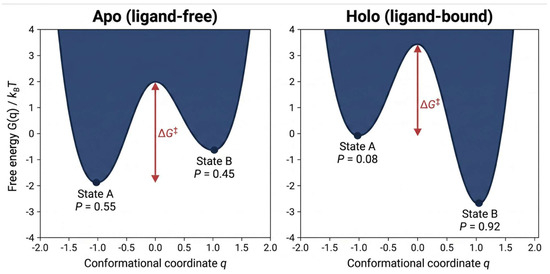
Show Figures

Figure 1

Back to TopTop