Latest Review Papers in Molecular Neurobiology
Share This Topical Collection
Editor
Topical Collection Information
Dear Colleagues,
We are delighted to announce a Topical Collection dedicated to high-quality review articles encompassing the full spectrum of neurobiology. Understanding the brain remains one of the most profound and complex challenges in science, demanding bold interdisciplinary collaboration and innovation.
This Topical Collection welcomes comprehensive reviews that explore any of the following topics:
- The structure and function of the nervous system;
- Cellular and molecular mechanisms;
- Pharmacological influences;
- Systems-level dynamics;
- Neurological disease mechanisms and models;
- Cognitive and computational approaches;
- Emerging intersections with related disciplines.
These are transformative times for neurobiology, with rapid advances reshaping our understanding of the brain and nervous system. We welcome contributions that synthesize recent developments, highlight emerging directions, and foster deeper insight across the field.
Full-length, integrative reviews are particularly encouraged. We also invite you to share this call with colleagues and experts who may be interested in contributing.
Dr. Hyo Eun Moon
Collection Editor
Manuscript Submission Information
Manuscripts should be submitted online at www.mdpi.com by registering and logging in to this website. Once you are registered, click here to go to the submission form. All submissions that pass pre-check are peer-reviewed. Accepted papers will be published continuously in the journal (as soon as accepted) and will be listed together on the collection website. Research articles, review articles as well as short communications are invited. For planned papers, a title and short abstract (about 250 words) can be sent to the Editorial Office for assessment.
Submitted manuscripts should not have been published previously, nor be under consideration for publication elsewhere (except conference proceedings papers). All manuscripts are thoroughly refereed through a single-blind peer-review process. A guide for authors and other relevant information for submission of manuscripts is available on the Instructions for Authors page. International Journal of Molecular Sciences is an international peer-reviewed open access semimonthly journal published by MDPI.
Please visit the Instructions for Authors page before submitting a manuscript.
There is an Article Processing Charge (APC) for publication in this
open access journal. For details about the APC please see here.
Submitted papers should be well formatted and use good English. Authors may use MDPI's
English editing service prior to publication or during author revisions.
Keywords
- neurobiology
- neurochemistry
- neurology
- neuropathology
- neurophysiology
- neuropharmacology
- neurogenetics
- neuro-oncology
- aging neuroscience
- neurotrauma
- neurogenesis
- neurotransmitter
- neuroinflammation
- neuroendocrine tumor
- neurodegenerative diseases
- neuroscience
- molecular and cellular neuroscience
- cognitive neuroscience
- computational neuroscience
Published Papers (2 papers)
2026
Open AccessReview
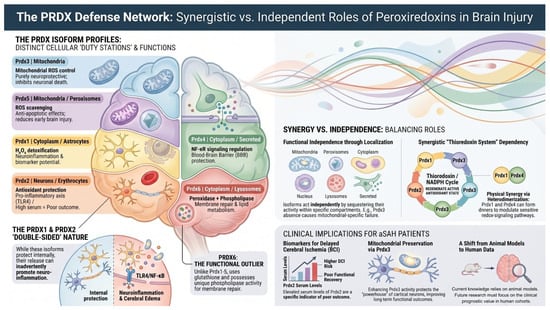
The Role of Peroxiredoxins in the Mechanisms of Oxidative Stress in Patients After Aneurysmal Subarachnoid Hemorrhage
by
Karol Zaczkowski, Bartosz Szmyd, Małgorzata Podstawka, Anna Dębska, Natalia Koc, Rafał Wójcik, Ernest Jan Bobeff, Dariusz Jan Jaskólski and Karol Wiśniewski
Abstract
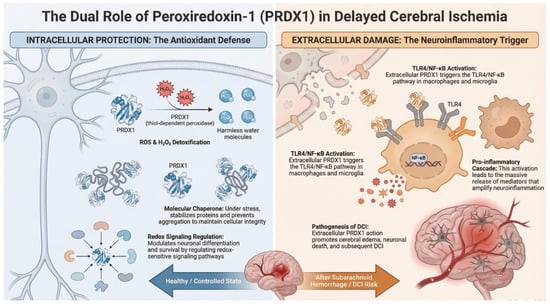
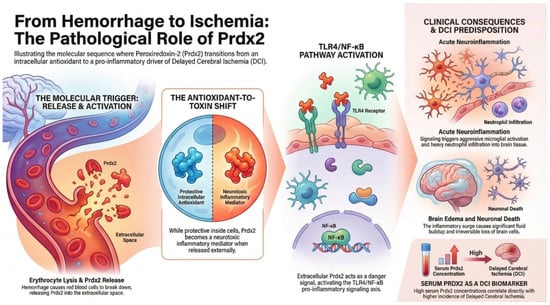
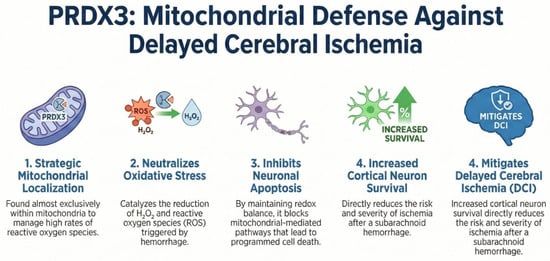
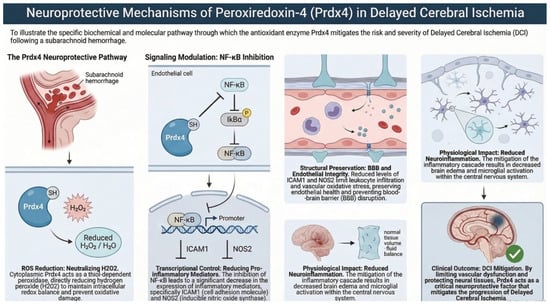
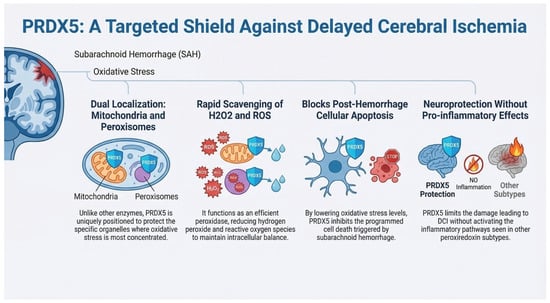
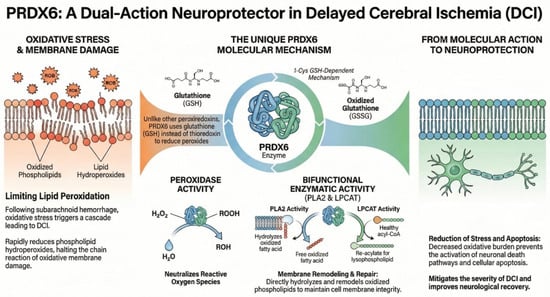
Delayed cerebral ischemia (DCI) is a major complication of aneurysmal subarachnoid hemorrhage (aSAH), strongly associated with neurological deterioration and poor outcomes. Its pathophysiology remains incompletely understood and involves multiple interacting processes. Increasing evidence highlights the role of redox imbalance triggered by hemoglobin breakdown
[...] Read more.
Delayed cerebral ischemia (DCI) is a major complication of aneurysmal subarachnoid hemorrhage (aSAH), strongly associated with neurological deterioration and poor outcomes. Its pathophysiology remains incompletely understood and involves multiple interacting processes. Increasing evidence highlights the role of redox imbalance triggered by hemoglobin breakdown and the subsequent generation of reactive species, leading to vascular dysfunction, impaired nitric oxide signaling, and inflammatory activation This review aims to summarize current knowledge on redox-related mechanisms involved in DCI and to explore the potential role of the peroxiredoxin (PRDX) family in this setting. A narrative review of experimental and preclinical studies was performed, focusing on molecular pathways associated with vascular regulation, cellular injury, and antioxidant defense. Particular attention was given to the distribution and biological functions of PRDX isoforms within the central nervous system. This work addresses a topic not previously systematically discussed, the potential involvement of PRDX proteins in aSAH-related complications. By integrating available data, it provides a conceptual framework linking PRDX to mechanisms relevant for DCI. The manuscript serves as a starting point for future research, particularly translational and clinical studies in humans, which are necessary to verify the relevance of these findings and to better understand their potential clinical implications.
Full article
►▼
Show Figures
Open AccessReview
Can IVIG Intervene in AD? Insights from Animal Experiments and Clinical Trials—A Systematic Review and Synthesis Without Meta-Analysis
by
Han Zhao, Zuoming Zhang, Caixian Wang, Fangzhao Lin and Haijun Cao
Viewed by 466
Abstract
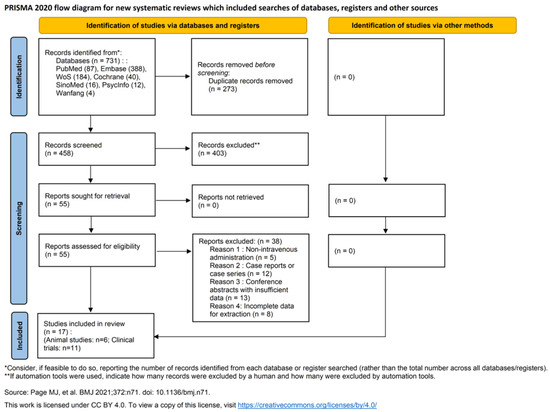
The clinical safety of intravenous immunoglobulin (IVIG) is well-established, offering potential as a “one-drug, multi-target” intervention for Alzheimer’s disease (AD). However, its efficacy remains inconclusive and appears closely related to specific functional properties. Therefore, we conducted a systematic review based on the analysis
[...] Read more.
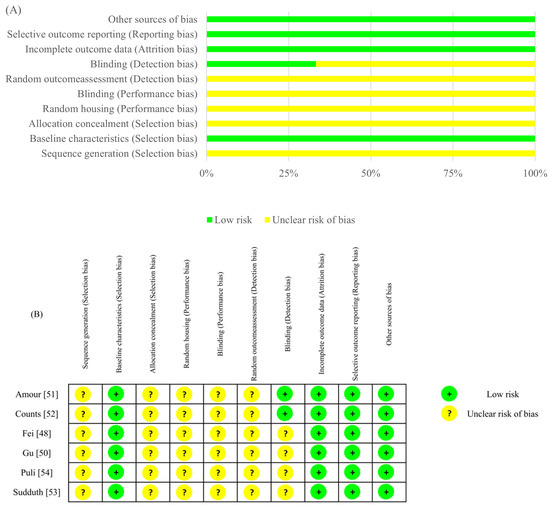
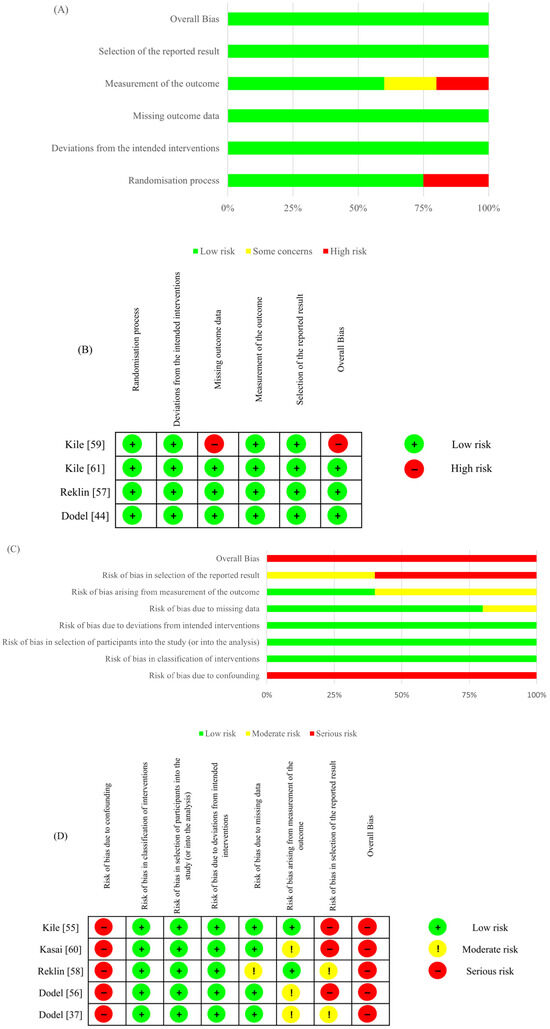
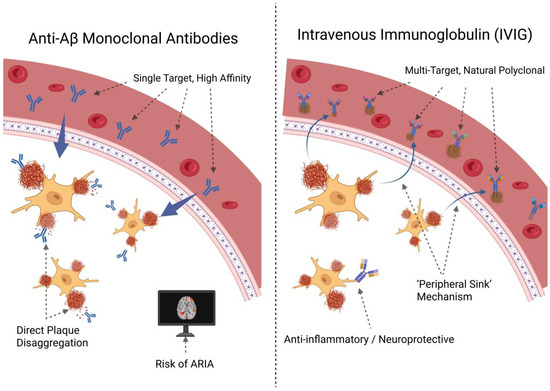
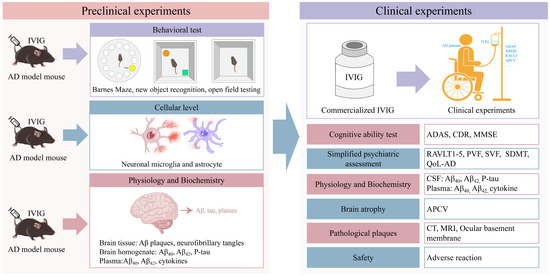
The clinical safety of intravenous immunoglobulin (IVIG) is well-established, offering potential as a “one-drug, multi-target” intervention for Alzheimer’s disease (AD). However, its efficacy remains inconclusive and appears closely related to specific functional properties. Therefore, we conducted a systematic review based on the analysis of prior animal and clinical trials to provide insights for future IVIG-based therapeutic development. A systematic search was conducted across PubMed, Embase, the Cochrane Library, Web of Science, PsycInfo, ClinicalTrials.gov, SinoMed, and Wanfang databases for the relevant literature published up to 30 October 2025, using terms related to Alzheimer’s, IVIG, and β-amyloid protein. Consequently, IVIG demonstrated clinical safety, though methodologies—including dosages, models, and manufacturers—varied significantly across studies. In most cases, IVIG treatment delayed cognitive degradation in both AD mice and patients. Biologically, Aβ and tau levels increased in plasma while decreasing in the brain or cerebrospinal fluid (CSF), suggesting a peripheral clearance mechanism distinct from that of monoclonal antibody interventions. Additionally, brain atrophy was alleviated, and pathological plaques were reduced. In the context of plasma exchange (PE) combination therapy, the administration of IVIG further contributed to improvements in language, memory, and praxis. IVIG possesses a favorable safety profile and can ameliorate AD symptoms, yet efficacy varies considerably between trials. To advance treatment, future research should investigate the reasons for these variances and establish a standardized system for evaluating preclinical IVIG interventions, thereby facilitating the development of specific IVIG products for AD.
Full article
►▼
Show Figures