Review

Can IVIG Intervene in AD? Insights from Animal Experiments and Clinical Trials—A Systematic Review and Synthesis Without Meta-Analysis

Institute of Blood Transfusion, Chinese Academy of Medical Sciences & Peking Union Medical College, Chengdu 610052, China
*
Author to whom correspondence should be addressed.
These authors contributed equally to this work.
Int. J. Mol. Sci. 2026, 27(5), 2275; https://doi.org/10.3390/ijms27052275
Submission received: 19 January 2026 / Revised: 12 February 2026 / Accepted: 12 February 2026 / Published: 28 February 2026
(This article belongs to the Collection Latest Review Papers in Molecular Neurobiology)

Abstract

The clinical safety of intravenous immunoglobulin (IVIG) is well-established, offering potential as a “one-drug, multi-target” intervention for Alzheimer’s disease (AD). However, its efficacy remains inconclusive and appears closely related to specific functional properties. Therefore, we conducted a systematic review based on the analysis of prior animal and clinical trials to provide insights for future IVIG-based therapeutic development. A systematic search was conducted across PubMed, Embase, the Cochrane Library, Web of Science, PsycInfo, ClinicalTrials.gov, SinoMed, and Wanfang databases for the relevant literature published up to 30 October 2025, using terms related to Alzheimer’s, IVIG, and β-amyloid protein. Consequently, IVIG demonstrated clinical safety, though methodologies—including dosages, models, and manufacturers—varied significantly across studies. In most cases, IVIG treatment delayed cognitive degradation in both AD mice and patients. Biologically, Aβ and tau levels increased in plasma while decreasing in the brain or cerebrospinal fluid (CSF), suggesting a peripheral clearance mechanism distinct from that of monoclonal antibody interventions. Additionally, brain atrophy was alleviated, and pathological plaques were reduced. In the context of plasma exchange (PE) combination therapy, the administration of IVIG further contributed to improvements in language, memory, and praxis. IVIG possesses a favorable safety profile and can ameliorate AD symptoms, yet efficacy varies considerably between trials. To advance treatment, future research should investigate the reasons for these variances and establish a standardized system for evaluating preclinical IVIG interventions, thereby facilitating the development of specific IVIG products for AD.

1. Introduction

Alzheimer’s disease (AD), a neurodegenerative disorder characterized by insidious onset and progressive decline, features core pathological mechanisms, including aberrant cerebral amyloid-beta (Aβ) deposition [1,2], tau hyperphosphorylation leading to neurofibrillary tangles [3,4], and persistent neuroinflammation [5,6]. As the most prevalent form of dementia in the elderly, AD poses a significant global public health threat. It is reported as the sixth-leading cause of death among individuals aged 65 and older [7]. For decades, AD pharmacotherapy has primarily relied on symptomatic treatments, such as three cholinesterase inhibitors [8,9,10,11,12,13,14,15] and memantine [16,17], which aim to rebalance neurotransmitter dysregulation [18]; however, these agents offer only limited symptomatic relief and cannot alleviate the progression of the disease [19]. More recently, the therapeutic landscape has evolved with the development of second-generation monoclonal antibodies (MABs) targeting Aβ [20,21,22,23,24,25,26,27,28]. While demonstrating some clinical promise in clearing cerebral Aβ plaques and slowing cognitive decline, their clinical utility is constrained by substantial limitations. Most notable is the risk of Amyloid-Related Imaging Abnormalities (ARIA). For Lecanemab specifically, clinical trials reported incidence rates of 12.6% for ARIA-E (edema) and 17.3% for ARIA-H (hemorrhage) [28], particularly in APOE ε4 carriers [29]. More detailed data from treatment with KISUNLA (donanemab) over a 12-month period showed that, while symptomatic ARIA-E occurred in 3% of patients and symptomatic ARIA-H in less than 1%, the overall incidence rates—including asymptomatic radiographic events—were substantially higher, reaching 29% for ARIA, 16% for ARIA-E, and 25% for ARIA-H [30]. Furthermore, their clinical use is hampered by prohibitive costs, with annual treatment expenses often exceeding $26,500 per patient [31]; with KISUNLA (donanemab) priced at $695.65 per vial, the total cost for a 12-month course of therapy is $32,000 [32]. These collective challenges underscore the urgent need for safer, more effective therapeutic strategies. Consequently, with the escalating global aging population, the number of patients is projected to exceed 139 million by 2050, imposing a substantial socioeconomic challenge [33,34].
Intravenous immunoglobulin (IVIG) is a pooled immunoglobulin concentrate derived from the plasma of thousands of healthy donors [35]. For nearly five decades, IVIG has been extensively utilized to treat various autoimmune diseases, inflammatory conditions, and secondary immunodeficiencies; its long history of clinical application substantiates an established safety profile [36]. Notably, IVIG contains naturally occurring antibodies against Aβ (first reported by Dodel et al. in 2002) [37]; subsequent research has also identified antibodies against tau and Receptor for Advanced Glycation Endproducts (RAGE) [38], as well as soluble low-density lipoprotein receptor-related protein 1 (sLRP1) [39]. A retrospective study found that IVIG therapy was associated with a reduced risk of developing AD and related disorders [40]. These constituents are all thought to beneficially modulate AD pathogenesis. Furthermore, IVIG’s inherent anti-inflammatory properties could effectively counteract AD-related neuroinflammation [41]. Therefore, given its pleiotropic immunomodulatory functions [42], IVIG is regarded as a promising, multi-target therapeutic avenue for AD.
Although preliminary research has yielded encouraging signals [43,44], a scientific consensus on IVIG’s capacity to durably improve cognitive function or modify disease progression in AD patients has yet to emerge. Results from clinical trials were inconsistent [45]. Following the failure of a large Phase III clinical trial by Baxalta (now part of Takeda) [46], global research interest in IVIG for AD intervention appeared to diminish significantly [47].
The reasons for the inconsistent results of clinical trials have rarely been thoroughly investigated. In 2023, Fei et al. found that the efficacy of different IVIGs on AD was significantly different [48], and the efficacy could be positively correlated with its level of AD-related antibodies and anti-inflammatory ability [49]. Therefore, a comprehensive re-evaluation of its therapeutic potential is warranted. This review systematically synthesizes and analyzes the preclinical and clinical literature published through October 2025 to investigate IVIG’s efficacy and safety. We will critically examine its impact on cognitive outcomes, alterations in cerebral Aβ and tau pathology, and structural neuroimaging changes, while also corroborating its established safety profile. The primary objective is to outline the current research landscape and conduct an initial exploration of potential factors contributing to treatment IVIG’s heterogeneity, thereby providing guidance for the development of targeted, next-generation immunoglobulin therapies for AD.

2. Research Method

2.1. Protocol and Registration

This systematic review was conducted in accordance with the Preferred Reporting Items for Systematic Reviews and Meta-Analyses (PRISMA) 2020 statement. The review protocol for the clinical evidence has been submitted to PROSPERO (Registration number: CRD420261301853), and the comprehensive protocol encompassing both preclinical and clinical evidence has been archived on the Open Science Framework (OSF) (DOI: 10.17605/OSF.IO/4X76T)

2.2. Search Strategy

A comprehensive and reproducible systematic search was performed across PubMed, Embase (via Ovid), the Cochrane Library (specifically CENTRAL), Web of Science (Science Citation Index Expanded), PsycInfo, ClinicalTrials.gov, SinoMed, and Wanfang databases from their respective inception to 30 October 2025. To ensure a thorough evidence synthesis, reference lists of the included studies and relevant systematic reviews were manually screened (citation tracing). The search employed a combination of Medical Subject Headings (MeSH) and keywords, including “Alzheimer’s Disease,” “Immunoglobulins, Intravenous,” “IVIG,” “Amyloid beta-Peptides,” and their variants. Detailed search strings for all databases are provided in Supplementary Table S1. No language restrictions were applied to minimize publication bias.

2.3. Inclusion and Exclusion Criteria

Studies were selected based on the following criteria:
Participants: For clinical studies, human patients diagnosed with AD or MCI due to AD; for preclinical studies, transgenic mouse models of AD (e.g., 3xTg and APP/PS1).
Intervention: Administration of IVIG (any manufacturer, dosage, or duration).
Comparators: Placebo, vehicle control, or baseline data for self-controlled studies.
Outcomes: Cognitive function (e.g., ADAS-Cog and MMSE), biomarker levels (Aβ, Tau), neuroimaging or pathological changes (brain volume and plaque load), and safety outcomes (adverse events).
Study Design: Randomized controlled trials (RCTs), non-randomized controlled trials, single-arm open-label studies, and controlled animal experiments.
Exclusion criteria: reviews, editorials, case reports, conference abstracts without complete data, and studies utilizing non-standard routes of administration (e.g., subcutaneous) without an IVIG comparison group.

2.4. Data Extraction and Risk of Bias Assessment

2.4.1. Data Selection and Extraction

Two reviewers (H.Z. and Z.Z.) independently screened titles/abstracts and full texts. Disagreements were resolved by discussion or consultation with a third reviewer (H.C.). Extracted data included study characteristics, participant/animal model details, intervention regimens, and outcomes.

2.4.2. Quality Assessment

The Risk of Bias Was Assessed Independently by Two Reviewers.
For animal studies, the SYRCLE’s RoB tool (https://link.springer.com/article/10.1186/1471-2288-14-43 was applied, accessed on 7 January 2025) was utilized to evaluate selection, performance, detection, attrition, and reporting biases.
For clinical RCTs, the Cochrane RoB 2 tool (https://sites.google.com/site/riskofbiastool/welcome/rob-2-0-tool/current-version-of-rob-2, accessed on 7 January 2025) was applied.
For non-randomized/single-arm clinical studies, the ROBINS-I-V2 tool (https://sites.google.com/site/riskofbiastool/welcome/robins-i-v2. accessed on 7 January 2025) was employed. The certainty of evidence for clinical outcomes was further evaluated using the Grading of Recommendations Assessment, Development and Evaluation (GRADE) (https://www.gradepro.org/, accessed on 7 January 2025) approach.

2.5. Data Synthesis and Analysis

Given the substantial heterogeneity in study designs, animal models, and dosing regimens, a quantitative meta-analysis was deemed inappropriate. Instead, a narrative synthesis was performed following the Synthesis Without Meta-analysis (SWiM) reporting guidelines. Data were categorized by population (preclinical vs. clinical) and study design. Treatment effects were synthesized using mean differences or direction-of-effect (improvement, no change, or decline), with p-values reported where applicable. Heterogeneity was qualitatively explored by analyzing variations in IVIG products, dosages, and AD stages.

2.6. Assessment of Certainty of Evidence

The certainty of evidence for clinical outcomes was evaluated using the Grading of Recommendations Assessment, Development and Evaluation (GRADE) approach. Two reviewers independently assessed five domains: risk of bias, inconsistency, indirectness, imprecision, and publication bias. The certainty was categorized into four levels: high, moderate, low, and very low.

3. Results

3.1. General Information Included in the Study

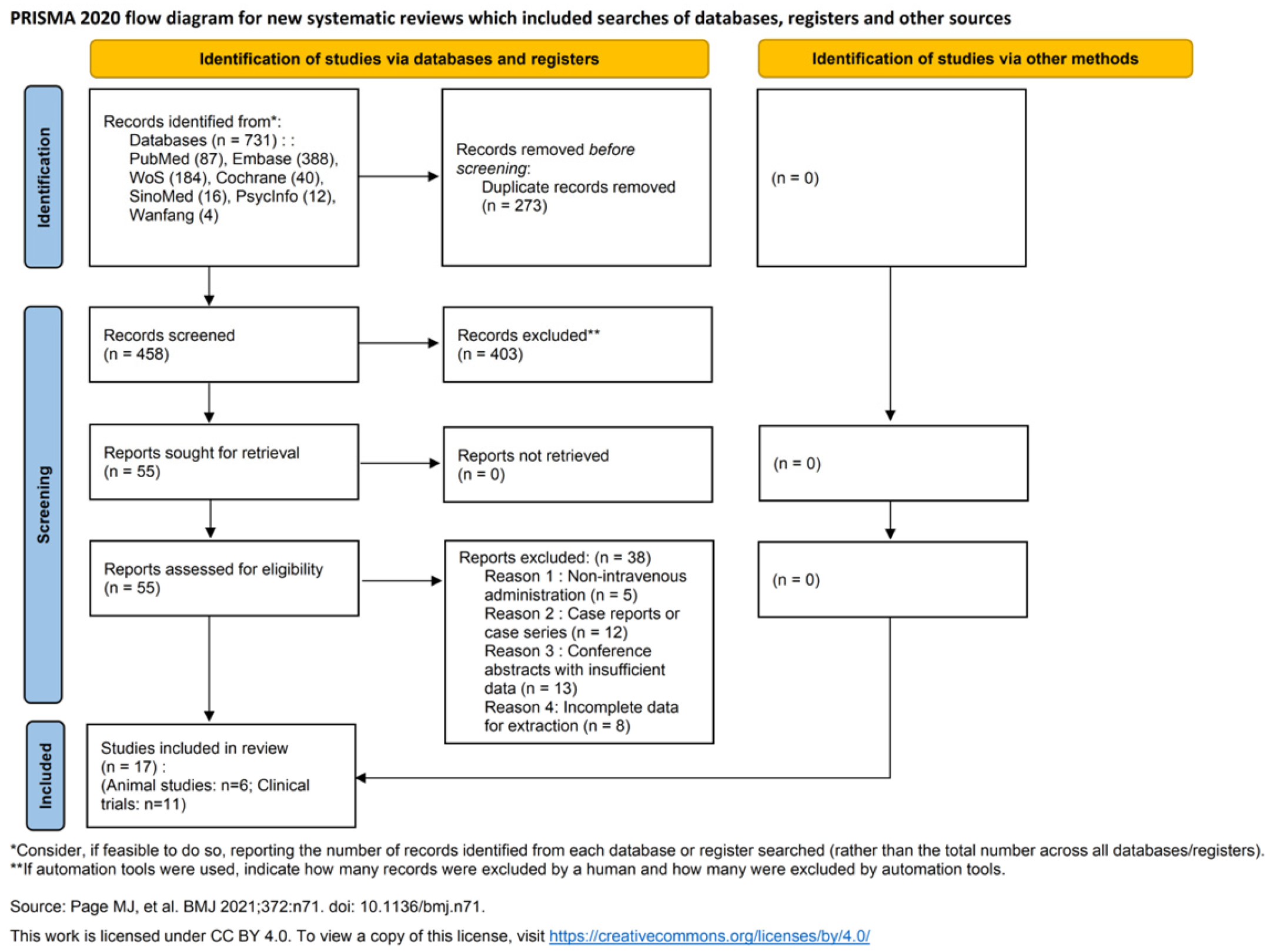
A total of 731 articles were retrieved, with 17 being included following rigorous screening, including 6 animal experiments and 11 clinical studies (14 articles); among 11 clinical studies, 8 analyzed the efficacy of IVIG (9 articles), 8 examined safety (9 articles), and 1 investigated combined IVIG and PE therapy (3 articles) (Figure 1).
The basic information of six animal experiments is shown in Table 1. Across six animal experiments, five articles were published in 2012–2014 [50,51,52,53,54]. All studies utilized Aβ transgenic mouse models, but the specific mouse strains varied, including 3xTg-AD mice [48,51,52], AβPP mice [50] and APP/PS1 mice [53,54]. The IVIG manufacturers were reported as Bayer (Pittsburgh, PA, USA) [50], Gamunex™ (Grifols Canada Ltd., Mississauga, ON, Canada) [51], and Gammagard 10% (Baxter Healthcare, Deerfield, FL, USA) [52], while, in other studies [48,53,54], the manufacturer was not specified. The injection site included abdomen [48,51,54], retro-orbital sinus [52], bilateral intracranial [53] and vein [50]. The injection doses, frequency and cycle were also inconsistent.
The basic information of eight clinical studies that analyzed the efficacy is shown in Table 2. Across nine clinical studies that analyzed the efficacy, the publication year was from 2002 to 2021, which was wider than animal research. The number of patients included ranged from 5 to 390. Although the IVIG manufacturer injection dose and frequency were also inconsistent, 6/9 experiments used Octagam [37,44,55,56] or Gammagard [57,58]; the injection dose for the 4/9 experiment was 0.4 g/kg, administered every two weeks [55,57,59,60,61]. The treatment period ranged from 10 to 72 weeks, with 10 weeks in the majority.

3.2. Risk of Bias Assessment

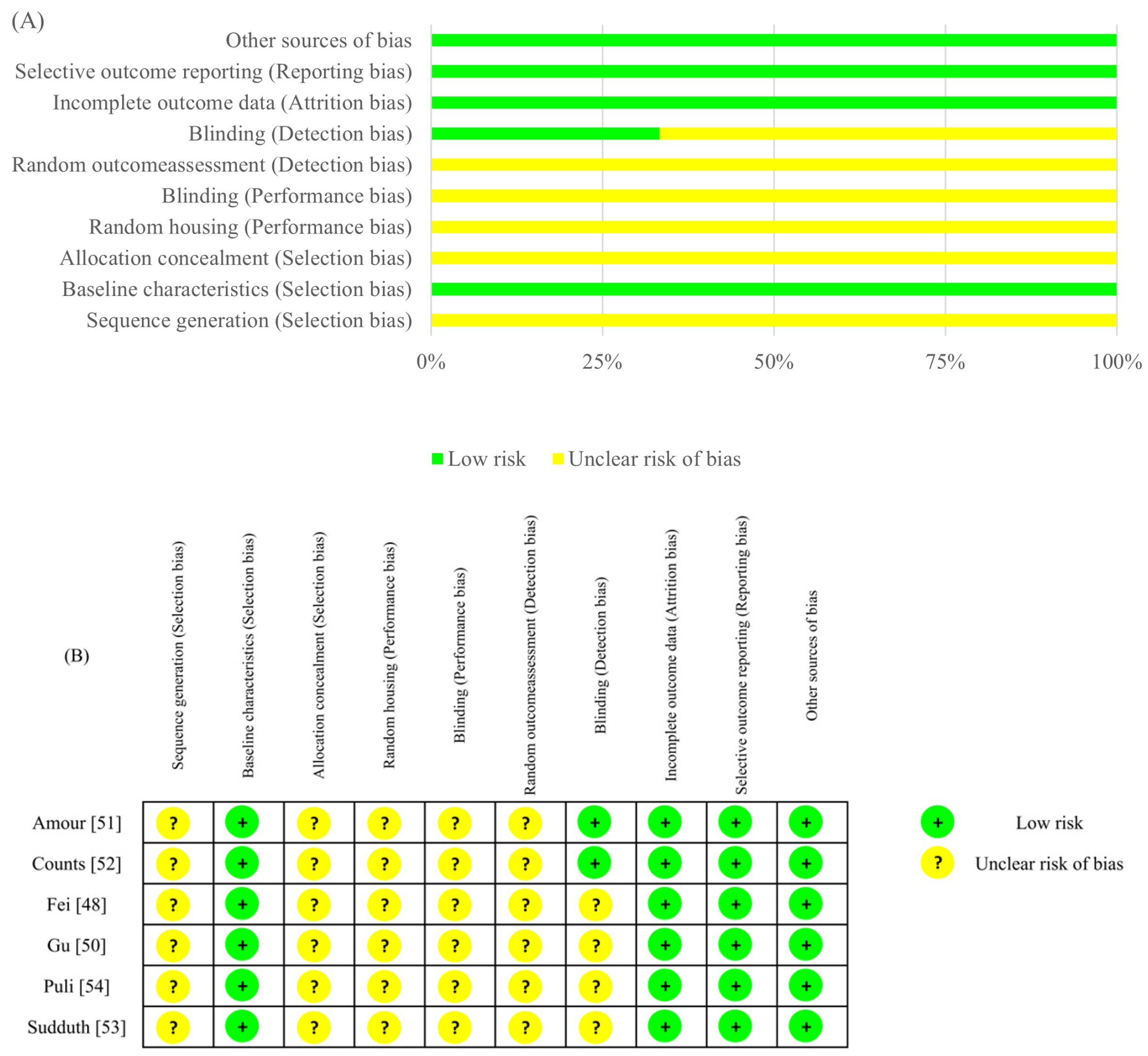
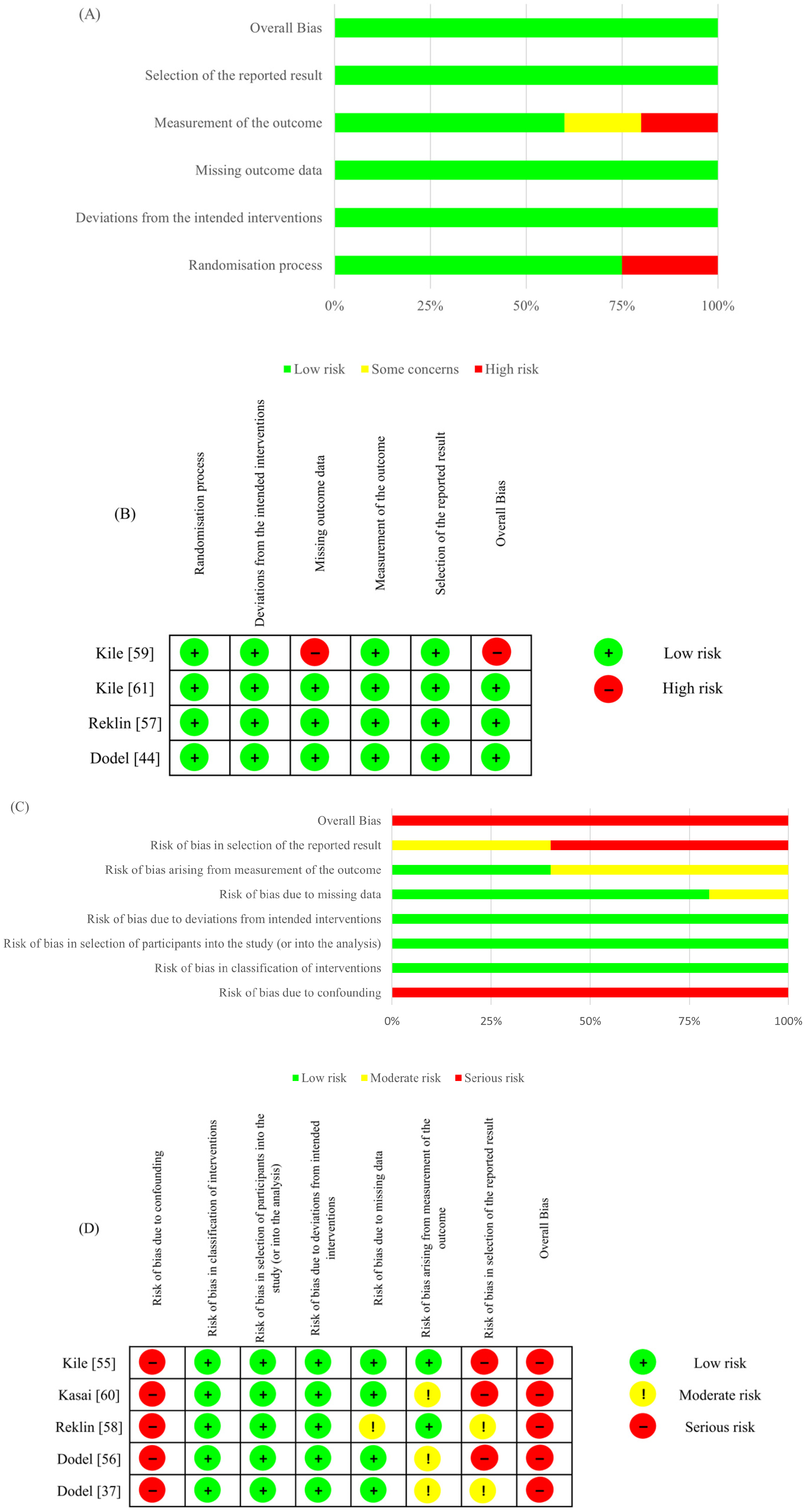
The methodological quality of the included studies was assessed to ensure the reliability of the evidence. The results are summarized in Figure 2 (preclinical) and Figure 3 (clinical). For preclinical studies (SYRCLE), a high prevalence of “unclear risk” was observed in domains related to randomization procedures and blinding, reflecting a general need for improved reporting standards in animal research (Figure 2). Regarding clinical RCTs (RoB 2), most studies exhibited a low overall risk, though Kile [59] was identified as high risk due to missing outcome data. Conversely, non-randomized studies (ROBINS-I) consistently showed a serious risk of bias, primarily stemming from potential confounding and selective reporting (Figure 3).

3.3. Animal Experiments

Animal behavioral tests are important tools in neurobiological studies to assess learning and memory abilities, anxiety, depression, fear and locomotion. However, in the above studies, only two studies conducted behavioral tests (Table 3). In Fei et al. [48] study, 3-month-old 3xTg-AD mice were randomly divided into three groups and administered intraperitoneally with different IVIG (A/B/C) for 3 months, and then behavioral tests were conducted at 9 months old. Compared to the group receiving physiological saline infusion, all groups improved the motor and autonomous decline in the open-field experiment test, and only IVIG-C ameliorated cognitive and motor decline in NOR test and Barnes maze test. However, the behavioral test outcomes of Amour et al. [51] study were not consistent with Fei et al. In Amour et al. [51] experiment, behavioral tests were conducted on 12- or 16-month-old 3xTg-AD mice after the administration of IVIG for 1 or 3 months. The NOR index assessed in 16-month-old animals for both treatment durations was significantly ameliorated. The anxiety-like behavior in the dark–light box emergence test in 12-month-old mice was mitigated. And the results of the open-field experiment and Barnes maze experiment showed no significant difference between AD mice treated with IVIG and untreated non-transgenic mice. The two studies suggest that IVIG had an improvement effect on the cognitive ability of AD mice. However, the efficacy differed across experimental groups, which could be related to variations in IVIG manufacturers, the age of the mice, and the duration of treatment.
There were five studies that detected Aβ40 and Aβ42 levels in plasma or brain in AD model mice after the administration of IVIG (Table 3). The total of Aβ in plasma was detected only in Gu et al. [50] study, and the result showed that, compared to the control group, the total of Aβ in the experimental group decreased in plasma and increased in the brain. In Sudduth et al. [53] study, Aβ40 and Aβ42 levels in the right frontal cortex were decreased. And, in Fei et al. [48] study, only soluble Aβ40 in the parietotemporal cortex of the IVIG-C group was decreased, and only the behavior of the IVIG-C was improved in the open-field experiment test, NOR test and Barnes maze test. However, in Puli et al. [54] study, soluble Aβ40 and Aβ42 in the hippocampus were increased in APP mice after 32 weeks of IVIG injection. Aβ40/Aβ42 could also change after IVIG injection; in Amour et al. [51] study, soluble Aβ40/Aβ42 in the parietotemporal cortex were decreased in 16-month-old 3xTg-AD mice, and only the groups with reduced Aβ42/Aβ40 showed an improved NOR index.
There were five studies that detected pathological plaques in AD mice after the administration of IVIG (Table 3). On the whole, the changes in Aβ deposition in the mouse brain were consistent with the changes in Aβ levels in the brain. Fei et al. [48] study showed that the deposition of Aβ was alleviated and the amount of p-tau was reduced in the hippocampus of 3xTg-AD mice by IVIG-C. The deposition of Aβ was alleviated in Sudduth’s [53] study as well. Count et al. [52] study showed that the amount of tau was reduced in the CA1 Pyramidal Neurons. However, there were no significant changes in the deposition of Aβ and the amount of p-tau in parietotemporal cortices in Amour’s study, and the deposition of Aβ in the hippocampus in Puli et al. [54] study.

3.4. Clinical Trials

There were six studies that evaluated the cognitive scale of patients after treatment, including Alzheimer’s Disease Assessment Scale-Cognitive Subscale (ADAS-Cog), Mini-Mental State Examination (MMSE), Clinical Dementia Rating Scale Sum of Boxes (CDR-SB), and others (Table 4). In all the studies of cognitive scale evaluation, only ADAS-Cog and MMSE could change after IVIG treatment, and other indicators had no significant change. The studies by Kasai et al. [60], Kile et al. [61], and Dodel et al. [56] showed that ADAS-Cog was decreased and MMSE was increased. And, in Relkin et al. [58] study, MMSE was increased after treatment. However, in other studies, there was no significant change in the cognitive scale scores of patients after treatment.
There were six studies that detected Aβ40 and Aβ42 in plasma or CSF in AD patients after the administration of IVIG (Table 4). Patients with Aβ increased in plasma or decreased in CSF had an improvement on cognitive performance [56,58,60]. This pattern is distinct from that observed in patients undergoing monoclonal antibody therapy. Specifically, after injecting Lecanemab in AD patients, Aβ40 and Aβ42 levels were observed to decrease in plasma and increase in CSF [28]. Within the IVIG studies, the changes in plasma Aβ levels were more pronounced than those in CSF.
In four studies, Aβ increased in plasma and decreased in CSF. In particular, Aβ in peripheral plasma seemed to be a more direct and precise biomarker than Aβ in plasma [60]. However, Aβ42 in plasma was decreased in Relkin et al. [57] and Dodel et al. [44] studies. In addition, the changes in Aβ levels after IVIG injection in recent years are not as obvious as those of more than 10 years ago.
Since histochemical analysis of brain tissue is not feasible in clinical trials, imaging methods such as Positron Emission Tomography-Computed Tomography (PET-CT) or Magnetic Resonance Imaging (MRI) are used to observe brain atrophy or retinal amyloid deposition. Annualized percent change in ventricular volume (APCV) was the most commonly used indicator among them [57,59,61]. There were six studies with imaging-related detection, and three of them had changes (Table 4). Kile et al. [59] detected APCV between baseline and 5 years, and the results showed that the effects of IVIG were most pronounced in L-MCI. And, in Kile et al. [61] previous study, APCV was significantly lower compared with the control group. In addition, Kile et al. [55] study showed that three subjects had a reduction in amyloid standard uptake value ratio (SUVR), and all five subjects had a reduction in amyloid retinal deposits in the eyes. However, in studies where cognitive function had been improved, there could not be significant changes in imaging examination [60].

3.5. Plasma Exchange Combination IVIG

In addition to using IVIG alone for intervention, there are also combinations of IVIG with other methods. Boada et al. [65,66,67] conducted a phase 2b/3 trial, which examined the effects of plasma exchange (PE) in patients with mild-to-moderate AD (Table 5). There were three PE-treatment groups: low-albumin groups, low-albumin and IVIG groups, and high-albumin and IVIG groups. PE-treated patients performed significantly better than placebo in cognitive performance, the AD Cooperative Study-Activities of Daily Living (ADCS-ADL) showed 52% less decline in PE-treated compared to placebo patients (p = 0.03) from baseline to month 14, while the AD Assessment Scale-Cognitive Subscale (ADAS-Cog) showed 66% less decline (p = 0.06). All treatment groups showed significantly less decline compared to placebo in the CDR-sb, while ADCS-CGIC scores were stable in all treatment groups at month 14. In all treatment groups, levels of Aβ42 and tau protein in CSF remained stable. However, in the placebo groups, levels of Aβ42 and tau protein in CSF were decreased in mild AD and increased in moderate AD. The changes in Aβ42 and tau protein levels in CSF were particularly evident in moderate AD patients but inconclusive or even counterintuitive in mild AD patients. Although cognitive function improved in each PE-treated group, no promoting effect of IVIG on cognitive function improvement was found from the cognitive scores. However, from the outcomes of neuropsychological and neuropsychiatric in AD patients, IVIG promotes improvements in language, memory, and praxis.

3.6. Safety of IVIG Treatment for AD

There is no animal experimental study on the safety of IVIG in the treatment of AD. However, at present, no adverse reactions have been reported in all animal experiments. As to the clinical studies, there are sufficient experiments (Table 6), including congestive cardiac failure, myocardial infarction, and vasogenic cerebral edema. Although some patients in the study had adverse reactions after IVIG treatment, no serious adverse reactions were related to IVIG.
In addition, some systematic reviews had evaluated the safety of IVIG treatment in AD patients, and all studies indicate that IVIG is safe [70,71,72,73]. Three plasma administrations and five IVIG randomized controlled trials were included in Fei et al. systematic review, and they performed a safety meta-analysis [70]. In Liu et al. [71] meta-analysis (755 patients in five RCTs), the number of patients with adverse events did not differ between IVIG and placebo groups (RD −0.00, 95% CI −0.05 to 0.05, p = 0.89). In general, IVIG is safe and well-tolerated.

3.7. Summary of Findings and Certainty of Evidence

The GRADE “Summary of Findings” for primary clinical outcomes is presented in Table 7. In brief, the evidence supporting IVIG’s safety and lack of ARIA risk was of high certainty. However, the evidence for cognitive improvement (ADAS-Cog/MMSE) was of low certainty, primarily downgraded due to the inclusion of small-scale open-label studies and the inconsistent results between early-phase trials and larger Phase III investigations.

4. Discussion

The incidence of AD exhibits an age-dependent increase, with the peak onset occurring in individuals aged 65 years and above [7]. The risk of developing the condition is highest among those aged 85 years and above [74]. Consequently, the safety profile of medications is of paramount importance. The recent FDA approvals of MABs, such as Lecanemab, had established a new benchmark for AD therapy [75]. These drugs operate via a highly specific and potent mechanism: directly targeting and clearing cerebral Aβ aggregates [28,76]. This potent, “brute-force” plaque removal, however, is mechanistically linked to a significant safety liability, ARIA, which presents a considerable risk, particularly for APOE4 carriers [29]. In contrast, preclinical studies, individual clinical trials, and meta-analyses had consistently demonstrated that IVIG intervention in AD exhibits a favorable tolerability and safety profile. From a safety standpoint, IVIG presents a compelling therapeutic option for AD.
A key strength of this review is the transparent assessment of evidence using the GRADE approach. Our findings highlight a stark contrast between the high-certainty evidence for IVIG’s safety and the low to moderate certainty for its clinical efficacy. The low certainty in cognitive outcomes is largely attributed to the “neutral findings” of large-scale RCTs compared to smaller exploratory studies. These limitations underscore the need for more standardized IVIG products with specific antibody titers against Aβ or tau, as suggested by the heterogeneity discussed earlier.
Despite its established safety [59,77], the efficacy of IVIG in AD treatment showed significant heterogeneity by both preclinical and clinical research. This observed inconsistency led to several systematic reviews and meta-analyses which, after pooling data from disparate trials, largely concluded that IVIG lacks overall efficacy for AD [45]. Although research into the use of IVIG for AD has spanned 21 years, yet to date no IVIG product has been approved for the treatment of AD [56,78]. Our findings prompt a critical re-evaluation of this conclusion: does this pooled “null finding” reflect a true class-wide failure, or does it mask the potential efficacy of specific, high-potency formulations?
The conclusions on efficacy from these meta-analyses are likely confounded by substantial methodological heterogeneity, including the IVIG manufacturer [49], injection dose, frequency and duration of treatment. This review argues that a key flaw in previous aggregate analyses is the implicit assumption that all IVIG products are therapeutically interchangeable. This premise is directly challenged by emerging preclinical evidence. Most notably, a study by Fei et al. reported that different commercial IVIG products exhibited differential neuroprotective effects in 3xTg-AD mice; among the three manufacturers tested, only one conferred significant neuroprotective benefits, which was correlated with the downregulation of proteins associated with antigen processing [48,67]. This finding clearly demonstrates a link between composition and therapeutic effect, strongly suggesting that the therapeutic potential of IVIG is manufacturer-specific and formulation-dependent. Given the complex composition and diverse mechanisms of action of IVIG, products from different manufacturers vary in their specific constituents, leading to variable treatment outcomes. Therefore, the heterogeneity observed in clinical trials is likely not random noise but a direct consequence of product-specific biochemical differences, such as varying anti-Aβ antibody titers and other immunomodulatory components [79].
Aβ antibody could be an important component of IVIG in the treatment of AD, so it is necessary to develop a specific IVIG for the treatment of AD. Although specific products had been proposed for a long time [80], they had not been implemented. The specific constituents and efficacy vary between different IVIG manufacturers, leading to differences in therapeutic outcomes [37,41]. Due to the complex composition and functional mechanism of IVIG and the differences in composition and function between different manufacturers [81], it is necessary to carry out a fundamental study of IVIG’s intervention mechanisms on AD. IVIG is derived from healthy human plasma, but the plasma of different populations had an important impact on the composition [82,83]. Although the preparation process has a certain impact [84], the plasma donor factor cannot be ignored. It has been found that there are significant differences in Aβ levels in IVIG from different manufacturers [79,85]. Compared with European Octagam (Octapharma AG, Vienna, Austria), the content of Aβ in Chinese products is generally higher. Aβ40 monomer, Aβ40 soluble oligomers, Aβ42 monomer and Aβ42 soluble oligomers’ concentrations in Chinese IVIG preparations were 16.53, 8.47, 24.36 and 33.25 μg/mL, while in Octagam IVIG were 1.66, 2.07, 4.61 and 4.64 μg/mL [79]. In the previous study, it was found that there are great differences in Aβ antibody levels among different individual plasma donors and regional donor groups in China (unpublished data), which provides conditions for preparation of specific IVIG products. In addition, the average ex-factory price of IVIG in China is about 220–280 dollars/10 g, while the price of IVIG in the United States is about 800–1000 dollars/10 g, and specific products also have advantages over monoclonal antibodies in terms of price. In summary, it is feasible for China to develop specific IVIG products to prevent AD.
Both animal studies and clinical trials demonstrate variations in the efficacy of different IVIG interventions for AD. Consequently, the effectiveness of IVIG in treating AD cannot be assessed holistically, nor should it be categorically dismissed based on the failure of a single phase III clinical trial [49,57]. This also underscores the critical importance of determining the optimal drug dosage and timing to maximize therapeutic efficacy [86,87]. In summary, it reframes the narrative from one of universal inefficacy to one of profound heterogeneity, demanding a more nuanced, product-specific approach to future clinical evaluation.
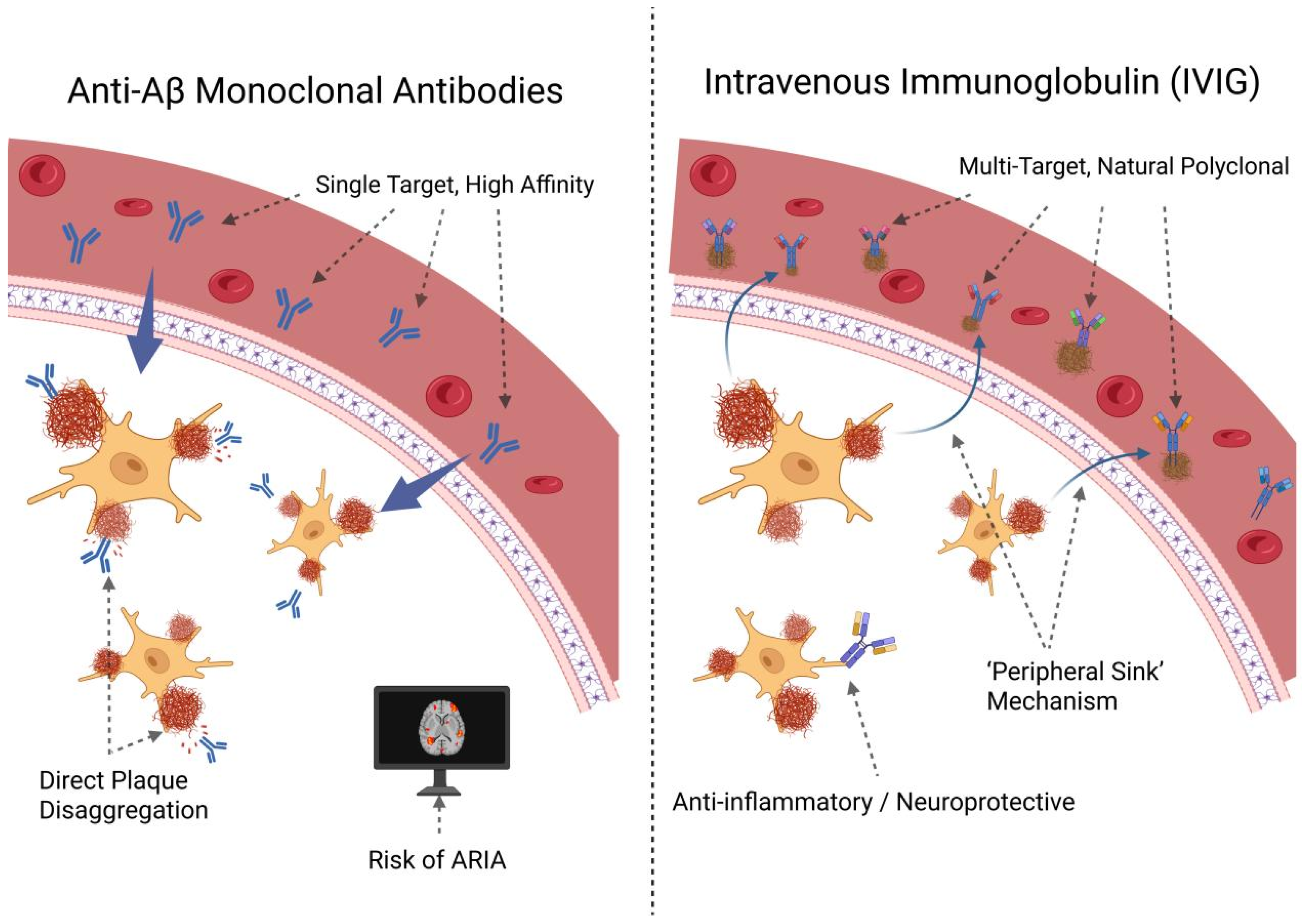
Existing data from animal and clinical trials on IVIG for AD showed similar, largely consistent trends toward improvement. In most study findings, after IVIG treatment, the degradation process in the cognitive function of AD mice or AD patients was delayed. At the same time, the levels of Aβ and tau in plasma increased, the levels of Aβ and tau in the brain or CSF decreased, and the pathological plaques in brain tissue reduced or brain atrophy alleviated. In the IVIG studies discussed herein, while cognitive function improved, the levels of Aβ and tau were decreased in CSF and increased in plasma. Therefore, it is speculated that effective intervention was associated with decreased CSF Aβ and increased plasma Aβ. The effects of IVIG intervention in AD differ from those of monoclonal antibodies. In stark contrast, IVIG offers a fundamentally different therapeutic paradigm. As a natural polyclonal preparation, it functions as a multi-target agent. Its therapeutic potential is not limited to a single pathway but encompasses naturally occurring antibodies against Aβ, tau, and RAGE, alongside broad anti-inflammatory and immunomodulatory properties [37,38,39,41]. This multi-pronged, potentially homeostatic mechanism likely explains IVIG’s most significant advantage over MABs: its superior and long-established safety profile [36]. This mechanistic divergence is vividly reflected in their respective biomarker signatures; whereas potent MABs induce a rapid and substantial decrease in brain amyloid load detectable by PET imaging, IVIG administration consistently results in a more subtle pattern—as shown in several trials reviewed here—of increased plasma Aβ and decreased CSF Aβ. This signature strongly supports the “peripheral sink” hypothesis, suggesting IVIG facilitates a gentle efflux of Aβ from the brain into the circulation [88,89], rather than aggressive in situ plaque disruption. This “gentle” clearance model provides a compelling biological rationale for why ARIA is not a characteristic side effect of IVIG therapy. In essence, whereas MABs aim to remove a pathological hallmark, IVIG could function by restoring physiological homeostasis, positioning it as a potentially safer therapeutic alternative. A diagram comparing the mechanisms of action of MABs and IVIG in the treatment of AD is also provided (Figure 4).
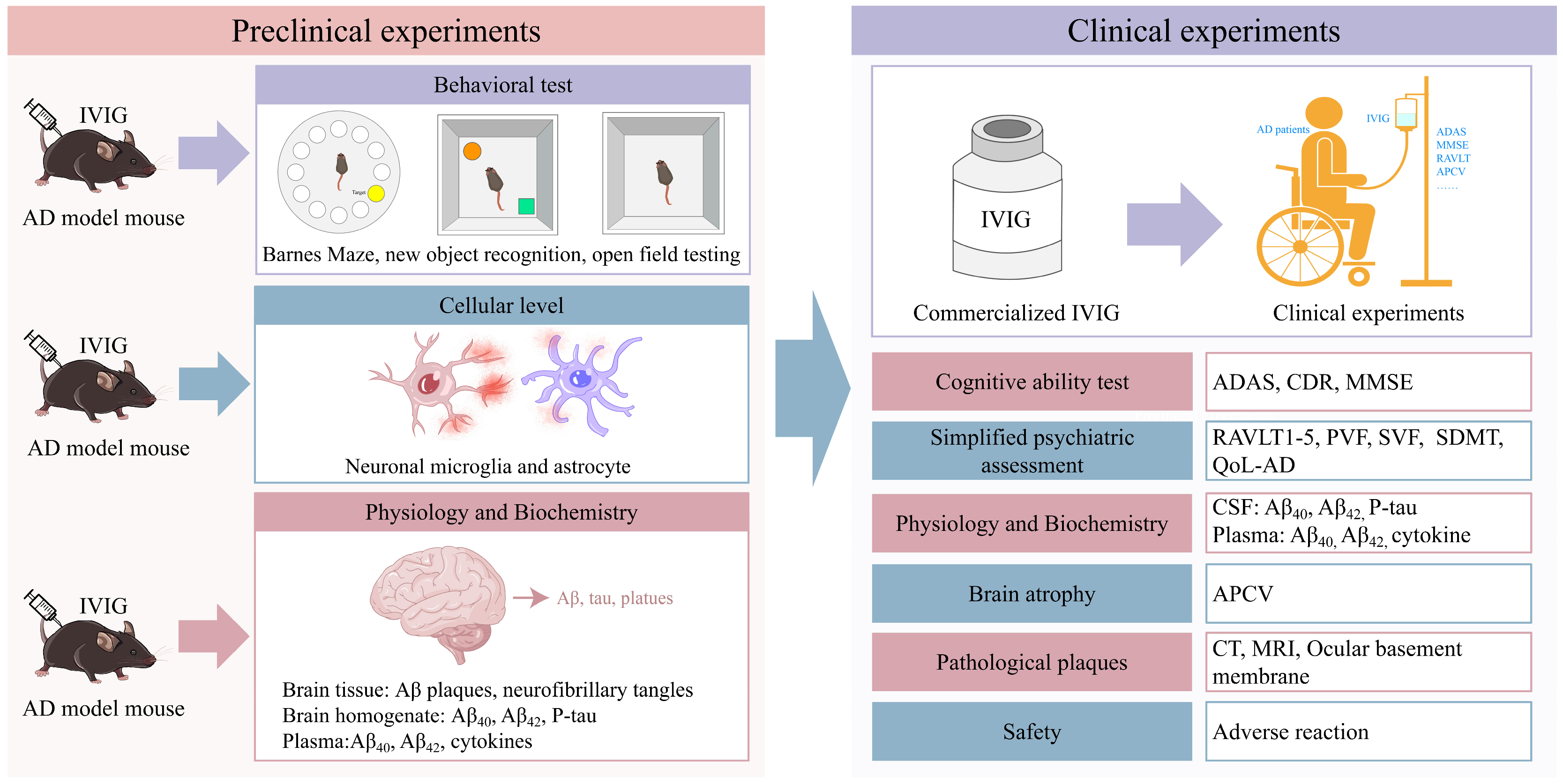
Since many research’s manufacturer and other information was not provided or hidden, this study failed to summarize and compare the efficacy of various manufacturers. Although there had been more than a dozen evaluations on the efficacy of IVIG on AD, few studies had directly evaluated cognitive function both in animal and clinical studies. Future studies should comprehensively evaluate cognitive function, physiology, biochemistry, pathology and other aspects. In addition, preclinical research is an important basis for clinical studies. At present, there are few animal experiments on the efficacy of IVIG on AD, especially after 2014. Nowadays, there are advanced foundations and technologies to carry out AD-related animal research, transgenic animal models [90], behavioral tests [91,92,93], physiological and biochemical tests, molecular biology testing [94], and tissue immune detection technology. Given that past preclinical and clinical studies had not been well-aligned and study designs had often been incomplete, it is necessary to establish a comprehensive research framework for IVIG in the treatment of AD (Figure 5).
Furthermore, the combination of IVIG with other interventions for AD warrants further exploration. Boada et al. phase 2b/3 clinical trial is the only clinical trial of plasma exchange combined with IVIG injection in the treatment of AD. Although IVIG promotes improvements in language, memory, and praxis, the cognitive function, physiological and biochemical indexes, mental state and quality of life in the treatment group were improved compared with those of the placebo group, no differences were found among the three treatment groups, and the effect of IVIG on the efficacy was not clear [65,66,67,95]. Dubey et al. [96] discovered that enhancing blood–brain barrier permeability via focused ultrasound to deliver effective doses of IVIG to the hippocampus promotes neurogenesis in an AD mouse model. In the course of investigating IVIG’s therapeutic effects on AD, exploring combinations with other technical modalities could lead to more suitable treatment regimens.

5. Conclusions

Based on findings from animal studies and clinical trials, IVIG exhibits a favorable safety profile. In conclusion, IVIG could alleviate symptoms of AD, including improvements in cognitive function and disease progression delay, though the efficacy varies across different studies.
Future research should pay attention to the heterogeneity of IVIG intervention on AD and focus on preclinical studies, conducting comprehensive assessments across multiple domains, including cognitive function, physiology, biochemistry, and pathology. Investigating the causes of therapeutic efficacy variations inherent to IVIG therapy itself, alongside developing targeted preventative and specific IVIG, represents a key direction for future advancement. Additionally, combining IVIG with other approaches for treating AD could also prove a viable strategy.

Supplementary Materials

The following supporting information can be downloaded at: https://www.mdpi.com/article/10.3390/ijms27052275/s1.

Author Contributions

H.Z. and H.C. conceptualized and designed the review. H.Z., Z.Z., C.W., F.L. and H.C. reviewed the literature and collected the data. H.Z. and Z.Z. drawing the images. H.Z., Z.Z. and H.C. wrote and finalized the manuscript. All authors have read and agreed to the published version of the manuscript.

Funding

This work was supported by Chinese Society of Blood Transfusion-Sansure Biotech Transfusion Medicine Development Fund (Grant No. CSBT-SX-2024-04); the Science and Technology Project of Sichuan (Grant No. 2019YFS0105); and the CAMS Innovation Fund for Medical Sciences (Grant No. CIFMS, 2021-I2M-1-060).

Institutional Review Board Statement

Not applicable.

Informed Consent Statement

Not applicable.

Data Availability Statement

The dataset supporting the conclusions of this article is included within the article.

Conflicts of Interest

The authors declare no competing interests.

Abbreviations

ADAlzheimer’s disease
ADAS-CogAlzheimer’s Disease Assessment Scale-Cognitive Subscale
ADCS-ADLAlzheimer’s Disease Cooperative Study-Activities of Daily Living
ADCS-CGICAlzheimer’s Disease Cooperative Study-Clinical Global Impression of Change
AEAdverse event
APCVAnnualized percent change in ventricular volume
ARIAAmyloid-Related Imaging Abnormalities
ARIA-EAmyloid-Related Imaging Abnormalities-edema
ARIA-HAmyloid-Related Imaging Abnormalities-hemorrhage
amyloid-beta
CDR-SBClinical Dementia Rating Scale Sum of Boxes
CSFcerebrospinal fluid
CTComputed Tomography
DVRDistribution Volume Ratio
FASTFunctional Assessment Staging
IVIGintravenous immunoglobulin
MABsmonoclonal antibodies
MMSEMini-Mental State Examination
MRIMagnetic Resonance Imaging
NPINeuropsychiatric Inventory
PEPlasma exchange
PETPositron Emission Tomography
PIBPittsburgh Compound-B
PVFPhonetic Verbal Fluency
QoL-ADquality of life-Alzheimer’s Disease
RAGEReceptor for Advanced Glycation Endproducts
RAVLTRey Auditory Verbal Learning Test
SDMTSymbol Digit Modalities Test
sLRP1soluble low-density lipoprotein receptor-related protein 1
SUVRstandard uptake value ratio
SVFSemantic Verbal Fluency

References

  1. Hardy, J.; Allsop, D. Amyloid deposition as the central event in the aetiology of Alzheimer’s disease. Trends Pharmacol. Sci. 1991, 12, 383–388. [Google Scholar] [CrossRef] [PubMed]
  2. Regland, B.; Gottfries, C.G. The role of amyloid beta-protein in Alzheimer’s disease. Lancet 1992, 340, 467–469. [Google Scholar] [CrossRef] [PubMed]
  3. Goedert, M. Tau protein and the neurofibrillary pathology of Alzheimer’s disease. Trends Neurosci. 1993, 16, 460–465. [Google Scholar] [CrossRef] [PubMed]
  4. Mandelkow, E.M.; Mandelkow, E. Tau in Alzheimer’s disease. Trends Cell Biol. 1998, 8, 425–427. [Google Scholar] [CrossRef]
  5. Aisen, P.S.; Davis, K.L. Inflammatory mechanisms in Alzheimer’s disease: Implications for therapy. Am. J. Psychiatry 1994, 151, 1105–1113. [Google Scholar] [CrossRef]
  6. Heppner, F.L.; Ransohoff, R.M.; Becher, B. Immune attack: The role of inflammation in Alzheimer disease. Nat. Rev. Neurosci. 2015, 16, 358–372. [Google Scholar] [CrossRef]
  7. Alzheimer’s Association. 2025 Alzheimer’s disease facts and figures. Alzheimer’s Dement 2025, 21, e70235. [Google Scholar]
  8. Cui, X.; Guo, Y.E.; Fang, J.H.; Shi, C.J.; Suo, N.; Zhang, R.; Xie, X. Donepezil, a drug for Alzheimer’s disease, promotes oligodendrocyte generation and remyelination. Acta Pharmacol. Sin. 2019, 40, 1386–1393. [Google Scholar] [CrossRef]
  9. Birks, J.S.; Harvey, R.J. Donepezil for dementia due to Alzheimer’s disease. Cochrane Database Syst. Rev. 2018, 6, CD001190. [Google Scholar] [CrossRef]
  10. Brewster, J.T., 2nd; Dell’Acqua, S.; Thach, D.Q.; Sessler, J.L. Classics in Chemical Neuroscience: Donepezil. ACS Chem. Neurosci. 2019, 10, 155–167. [Google Scholar] [CrossRef]
  11. Feldman, H.H.; Lane, R. Rivastigmine: A placebo controlled trial of twice daily and three times daily regimens in patients with Alzheimer’s disease. J. Neurol. Neurosurg. Psychiatry 2007, 78, 1056–1063. [Google Scholar] [CrossRef] [PubMed]
  12. Rösler, M.; Anand, R.; Cicin-Sain, A.; Gauthier, S.; Agid, Y.; Dal-Bianco, P.; Stähelin, H.B.; Hartman, R.; Gharabawi, M.; Bayer, T. Efficacy and safety of rivastigmine in patients with Alzheimer’s disease: International randomised controlled trial. BMJ 1999, 318, 633–638. [Google Scholar] [CrossRef] [PubMed]
  13. Scott, L.J.; Goa, K.L. Galantamine: A review of its use in Alzheimer’s disease. Drugs 2000, 60, 1095–1122. [Google Scholar] [CrossRef] [PubMed]
  14. Coyle, J.; Kershaw, P. Galantamine, a cholinesterase inhibitor that allosterically modulates nicotinic receptors: Effects on the course of Alzheimer’s disease. Biol. Psychiatry 2001, 49, 289–299. [Google Scholar] [CrossRef]
  15. Marco-Contelles, J.; do Carmo Carreiras, M.; Rodríguez, C.; Villarroya, M.; García, A.G. Synthesis and pharmacology of galantamine. Chem. Rev. 2006, 106, 116–133. [Google Scholar] [CrossRef]
  16. Reisberg, B.; Doody, R.; Stöffler, A.; Schmitt, F.; Ferris, S.; Jörg Möbius, H.; Memantine Study Group. Memantine in moderate-to-severe Alzheimer’s disease. N. Engl. J. Med. 2003, 348, 1333–1341. [Google Scholar] [CrossRef]
  17. Robinson, D.M.; Keating, G.M. Memantine: A review of its use in Alzheimer’s disease. Drugs 2006, 66, 1515–1534. [Google Scholar] [CrossRef]
  18. Grossberg, G.T. Rationalizing therapeutic approaches in Alzheimer’s disease. CNS Spectr. 2005, 10, 17–21. [Google Scholar] [CrossRef]
  19. Gupta, P. A review article on current therapeutic strategies and future directions in the treatment of alzheimer’s disease. Afr. J. Biomed. Res. 2024, 27, 6233–6245. [Google Scholar] [CrossRef]
  20. Kim, B.-H.; Kim, S.; Nam, Y.; Park, Y.H.; Shin, S.M.; Moon, M. Second-generation anti-amyloid monoclonal antibodies for alzheimer’s disease: Current landscape and future perspectives. Transl. Neurodegener. 2025, 14, 6. [Google Scholar] [CrossRef]
  21. Heneka, M.T.; Morgan, D.; Jessen, F. Passive anti-amyloid β immunotherapy in Alzheimer’s disease-opportunities and challenges. Lancet 2024, 404, 2198–2208. [Google Scholar] [CrossRef] [PubMed]
  22. Cummings, J.; Salloway, S. Aducanumab: Appropriate use recommendations. Alzheimer’s Dement. 2022, 18, 531–533. [Google Scholar] [CrossRef] [PubMed]
  23. Dhillon, S. Aducanumab: First Approval. Drugs 2021, 81, 1437–1443, Erratum in Drugs 2021, 81, 1701. [Google Scholar] [CrossRef] [PubMed]
  24. Behl, T.; Kaur, I.; Sehgal, A.; Singh, S.; Sharma, N.; Makeen, H.A.; Albratty, M.; Alhazmi, H.A.; Felemban, S.G.; Alsubayiel, A.M.; et al. “Aducanumab” making a comeback in Alzheimer’s disease: An old wine in a new bottle. Biomed. Pharmacother. 2022, 148, 112746. [Google Scholar] [CrossRef]
  25. Larkin, H.D. Lecanemab Gains FDA Approval for Early Alzheimer Disease. JAMA 2023, 329, 363. [Google Scholar] [CrossRef]
  26. Sims, J.R.; Zimmer, J.A.; Evans, C.D.; Lu, M.; Ardayfio, P.; Sparks, J.D.; Wessels, A.M.; Shcherbinin, S.; Wang, H.; Nery, E.S.M.; et al. Donanemab in Early Symptomatic Alzheimer Disease: The TRAILBLAZER-ALZ 2 Randomized Clinical Trial. JAMA 2023, 330, 512–527. [Google Scholar] [CrossRef]
  27. Harris, E. Alzheimer Drug Lecanemab Gains Traditional FDA Approval. JAMA 2023, 330, 495. [Google Scholar] [CrossRef]
  28. van Dyck, C.H.; Swanson, C.J.; Aisen, P.; Aisen, P.; Bateman, R.J.; Chen, C.; Gee, M.; Kanekiyo, M.; Li, D.; Reyderman, L.; et al. Lecanemab in Early Alzheimer’s Disease. N. Engl. J. Med. 2023, 388, 9–21. [Google Scholar] [CrossRef]
  29. Meißner, D.; Denker, A.; Stallmann, S.; Milbredt, S.; Venkataraman, I.; Saschenbrecker, S.; Steller, U. New real-time PCR test for APOE genotyping in patients with Alzheimer’s disease before anti-amyloid therapy. Alzheimer’s Dement. 2024, 20, e087290. [Google Scholar] [CrossRef]
  30. Eli Lilly and Company. Lilly’s Kisunla™ (Donanemab-Azbt) Approved by FDA for Treatment of Early Symptomatic Alzheimer’s Disease. Available online: https://investor.lilly.com/news-releases/news-release-details/lillys-kisunlatm-donanemab-azbt-approved-fda-treatment-early (accessed on 11 October 2025).
  31. Knopman, D.S.; Hershey, L. Implications of the Approval of Lecanemab for Alzheimer Disease Patient Care: Incremental Step or Paradigm Shift? Neurology 2023, 101, 610–620. [Google Scholar] [CrossRef]
  32. Eli Lilly and Company. Kisunla (Donanemab-Azbt) Injection Prescribing Information. Available online: https://uspl.lilly.com/kisunla/kisunla.html#pi (accessed on 11 October 2025).
  33. Wang, G.; Qi, J.; Liu, X.; Ren, R.; Lin, S.; Hu, Y.; Li, H.; Xie, X.; Wang, J.; Li, J.; et al. China Alzheimer’s report 2024. Diagn. Theory Pract. 2024, 23, 219–256. [Google Scholar] [CrossRef]
  34. Alzheimer’s Disease International. World Alzheimer Report 2023. Available online: https://www.alzint.org/resource/world-alzheimer-report-2023/ (accessed on 14 October 2025).
  35. Arumugham, V.B.; Ray, A. Intravenous immunoglobulin (IVIG). In Statpearls; StatPearls Publishing: Treasure Island, FL, USA, 2023. [Google Scholar]
  36. Taha, S.A.; Thalappil, S.; Ali, R.M.; Fatima, H.; Imameldin, A.O.A.; Aqel, S.; Abdelaal, A.M.; Siepmann, Y.; Barlinn, J.; Al-Nesf, M.A.; et al. Intravenous immunoglobulin therapy: Usage patterns and response to treatment in Qatar over ten years. Front. Immunol. 2024, 15, 1481079. [Google Scholar] [CrossRef] [PubMed]
  37. Dodel, R.; Hampel, H.; Depboylu, C.; Lin, S.; Gao, F.; Schock, S.; Jäckel, S.; Wei, X.; Buerger, K.; Höft, C.; et al. Human antibodies against amyloid beta peptide: A potential treatment for Alzheimer’s disease. Ann. Neurol. 2002, 52, 253–256. [Google Scholar] [CrossRef] [PubMed]
  38. Schaub, A.; Kropf, A.; Cattepoel, S.; Ender, M.; Bolli, R.; Fabri, L.; Miescher, S. P3-483: Intravenous immunoglobulin binds to tau, pTau and PrPc in addition to aβ. Alzheimer’s Dement. 2011, 7, S670. [Google Scholar] [CrossRef]
  39. Potere, N.; Del Buono, M.G.; Niccoli, G.; Crea, F.; Toldo, S.; Abbate, A. Developing LRP1 agonists into a therapeutic strategy in acute myocardial infarction. Int. J. Mol. Sci. 2019, 20, 544. [Google Scholar] [CrossRef]
  40. Fillit, H.; Hess, G.; Hill, J.; Bonnet, P.; Toso, C. IV immunoglobulin is associated with a reduced risk of Alzheimer disease and related disorders. Neurology 2009, 73, 180–185. [Google Scholar] [CrossRef]
  41. Puli, L.; Tanila, H.; Relkin, N. Intravenous immunoglobulins for Alzheimer’s disease. Curr. Alzheimer Res. 2014, 11, 626–636. [Google Scholar] [CrossRef]
  42. Segú-Vergés, C.; Caño, S.; Calderón-Gómez, E.; Bartra, H.; Sardon, T.; Kaveri, S.; Terencio, J. Systems biology and artificial intelligence analysis highlights the pleiotropic effect of IVIg therapy in autoimmune diseases with a predominant role on B cells and complement system. Front. Immunol. 2022, 13, 901872. [Google Scholar] [CrossRef]
  43. Craft, S.; Reger, M.; Baker, L.D.; Watson, G.S.; Fishel, M.; Cholerton, B.; Green, P.; Breitner, J.C.S.; DeGroodt, W.; Frey, W.H., Jr.; et al. O3–05–05: Therapeutic effects of daily intranasal insulin administration in early alzheimer’s disease. Alzheimer’s Dement. 2006, 2, S63. [Google Scholar] [CrossRef]
  44. Dodel, R.; Rominger, A.; Bartenstein, P.; Barkhof, F.; Blennow, K.; Förster, S.; Winter, Y.; Bach, J.P.; Popp, J.; Alferink, J.; et al. Intravenous immunoglobulin for treatment of mild-to-moderate Alzheimer’s disease: A phase 2, randomised, double-blind, placebo-controlled, dose-finding trial. Lancet Neurol. 2013, 12, 233–243. [Google Scholar] [CrossRef]
  45. Okuya, M.; Matsunaga, S.; Ikuta, T.; Kishi, T.; Iwata, N. Efficacy, acceptability, and safety of intravenous immunoglobulin administration for mild-to-moderate alzheimer’s disease: A systematic review and meta-analysis. J. Alzheimer’s Dis. 2018, 66, 1379–1387. [Google Scholar] [CrossRef]
  46. Shire Bnpo. A Phase 3 Randomized, Double-Blind, Placebo-Controlled Study of the Safety and Effectiveness of Immune Globulin Intravenous (Human), 10% Solution (IGIV, 10%) for the Treatment of Mild to Moderate Alzheimer’s Disease. ClinicalTrials.gov Identifier: NCT01524887. 2021. Available online: https://clinicaltrials.gov/study/NCT01524887 (accessed on 30 October 2025).
  47. Loeffler, D.A. Intravenous immunoglobulin and Alzheimer’s disease: What now? J. Neuroinflammation 2013, 10, 853. [Google Scholar] [CrossRef]
  48. Fei, Z.; Pan, B.; Pei, R.; Ye, S.; Wang, Z.; Ma, L.; Zhang, R.; Li, C.; Du, X.; Cao, H.; et al. Neuroprotective Effects of IVIG against Alzheimer’ s Disease via Regulation of Antigen Processing and Presentation by MHC Class I Molecules in 3xTg-AD Mice. J. Prev. Alzheimers Dis. 2023, 10, 581–594. [Google Scholar] [CrossRef] [PubMed]
  49. Fei, Z.; Pei, R.; Pan, B.; Ye, S.; Zhang, R.; Ma, L.; Wang, Z.; Li, C.; Du, X.; Cao, H.; et al. Antibody Assay and Anti-Inflammatory Function Evaluation of Therapeutic Potential of Different Intravenous Immunoglobulins for Alzheimer’s Disease. Int. J. Mol. Sci. 2023, 24, 5549. [Google Scholar] [CrossRef] [PubMed]
  50. Gu, H.; Zhong, Z.; Jiang, W.; Du, E.; Dodel, R.; Farlow, M.R.; Zheng, W.; Du, Y. The role of choroid plexus in IVIG-induced beta-amyloid clearance. Neuroscience 2014, 270, 168–176. [Google Scholar] [CrossRef] [PubMed]
  51. St-Amour, I.; Paré, I.; Tremblay, C.; Coulombe, K.; Bazin, R.; Calon, F. IVIg protects the 3xTg-AD mouse model of Alzheimer’s disease from memory deficit and Aβ pathology. J. Neuroinflammation 2014, 11, 54. [Google Scholar] [CrossRef]
  52. Counts, S.E.; Perez, S.E.; He, B.; Mufson, E.J. Intravenous immunoglobulin reduces tau pathology and preserves neuroplastic gene expression in the 3xTg mouse model of Alzheimer’s disease. Curr. Alzheimer Res. 2014, 11, 655–663. [Google Scholar] [CrossRef]
  53. Sudduth, T.L.; Greenstein, A.; Wilcock, D.M. Intracranial injection of Gammagard, a human IVIg, modulates the inflammatory response of the brain and lowers Aβ in APP/PS1 mice along a different time course than anti-Aβ antibodies. J. Neurosci. 2013, 33, 9684–9692. [Google Scholar] [CrossRef]
  54. Puli, L.; Pomeshchik, Y.; Olas, K.; Malm, T.; Koistinaho, J.; Tanila, H. Effects of human intravenous immunoglobulin on amyloid pathology and neuroinflammation in a mouse model of Alzheimer’s disease. J. Neuroinflammation 2012, 9, 105. [Google Scholar] [CrossRef]
  55. Kile, S.; Au, W.; Parise, C.; Sohi, J.; Yarbrough, T.; Czeszynski, A.; Johnson, K.; Redline, D.; Donnel, T.; Hankins, A.; et al. Reduction of Amyloid in the Brain and Retina After Treatment with IVIG for Mild Cognitive Impairment. Am. J. Alzheimers Dis. Other Dementiasr 2020, 35, 1533317519899800. [Google Scholar] [CrossRef]
  56. Dodel, R.C.; Du, Y.; Depboylu, C.; Hampel, H.; Frölich, L.; Haag, A.; Hemmeter, U.; Paulsen, S.; Teipel, S.J.; Brettschneider, S.; et al. Intravenous immunoglobulins containing antibodies against beta-amyloid for the treatment of Alzheimer’s disease. J. Neurol. Neurosurg. Psychiatry 2004, 75, 1472–1474. [Google Scholar] [CrossRef] [PubMed]
  57. Relkin, N.R.; Thomas, R.G.; Rissman, R.A.; Brewer, J.B.; Rafii, M.S.; Dyck, C.H.; Jack, C.R.; Sano, M.; Knopman, D.S.; Raman, R.; et al. A phase 3 trial of IV immunoglobulin for Alzheimer disease. Neurology 2017, 88, 1768–1775. [Google Scholar] [CrossRef] [PubMed]
  58. Relkin, N.R.; Szabo, P.; Adamiak, B.; Burgut, T.; Monthe, C.; Lent, R.W.; Younkin, S.; Younkin, L.; Schiff, R.; Weksler, M.E.; et al. 18-Month study of intravenous immunoglobulin for treatment of mild Alzheimer disease. Neurobiol. Aging 2009, 30, 1728–1736. [Google Scholar] [CrossRef] [PubMed]
  59. Kile, S.; Au, W.; Parise, C.; Rose, K.; Donnel, T.; Hankins, A.; Au, Y.; Chan, M.; Ghassemi, A. Five-year outcomes after IVIG for mild cognitive impairment due to Alzheimer disease. BMC Neurosci. 2021, 22, 49. [Google Scholar] [CrossRef]
  60. Kasai, T.; Kondo, M.; Ishii, R.; Tanaka, A.; Ataka, S.; Shimada, H.; Tomiyama, T.; Mori, H.; Taylor, M.; Allsop, D.; et al. Aβ levels in the jugular vein and high molecular weight Aβ oligomer levels in CSF can be used as biomarkers to indicate the anti-amyloid effect of IVIg for Alzheimer’s disease. PLoS ONE 2017, 12, e0174630. [Google Scholar] [CrossRef]
  61. Kile, S.; Au, W.; Parise, C.; Rose, K.; Donnel, T.; Hankins, A.; Chan, M.; Ghassemi, A. IVIG treatment of mild cognitive impairment due to Alzheimer’s disease: A randomised double-blinded exploratory study of the effect on brain atrophy, cognition and conversion to dementia. J. Neurol. Neurosurg. Psychiatry 2017, 88, 106–112. [Google Scholar] [CrossRef]
  62. Hooijmans, C.R.; Rovers, M.M.; de Vries, R.B. SYRCLE’s risk of bias tool for animal studies. BMC Med. Res. Methodol. 2014, 14, 43. [Google Scholar] [CrossRef]
  63. Sterne, J.A.; Savović, J.; Page, M.J.; Elbers, R.G.; Blencowe, N.S.; Boutron, I.; Cates, C.J.; Cheng, H.Y.; Corbett, M.S.; Eldridge, S.M.; et al. RoB 2: A revised tool for assessing risk of bias in randomised trials. BMJ 2019, 366, l4898. [Google Scholar] [CrossRef]
  64. ROBINS-I; Sterne, J.A.; Hernán, M.A.; Reeves, B.C.; Savović, J.; Berkman, N.D.; Viswanathan, M.; Henry, D.; Altman, D.G.; Ansari, M.T.; et al. ROBINS-I: A tool for assessing risk of bias in non-randomized studies of interventions. BMJ 2016, 355, i4919. [Google Scholar] [CrossRef]
  65. Boada, M.; López, O.L.; Olazarán, J.; Núñez, L.; Pfeffer, M.; Paricio, M.; Lorites, J.; Piñol-Ripoll, G.; Gámez, J.E.; Anaya, F.; et al. A randomized, controlled clinical trial of plasma exchange with albumin replacement for Alzheimer’s disease: Primary results of the AMBAR Study. Alzheimers Dement. 2020, 16, 1412–1425. [Google Scholar] [CrossRef]
  66. Boada, M.; López, O.L.; Olazarán, J.; Núñez, L.; Pfeffer, M.; Puente, O.; Piñol-Ripoll, G.; Gámez, J.E.; Anaya, F.; Kiprov, D.; et al. Neuropsychological, neuropsychiatric, and quality-of-life assessments in Alzheimer’s disease patients treated with plasma exchange with albumin replacement from the randomized AMBAR study. Alzheimers Dement. 2022, 18, 1314–1324. [Google Scholar] [CrossRef] [PubMed]
  67. Boada, M.; Kiprov, D.; Anaya, F.; López, O.L.; Núñez, L.; Olazarán, J.; Lima, J.; Grifols, C.; Barceló, M.; Rohe, R.; et al. Feasibility, safety, and tolerability of two modalities of plasma exchange with albumin replacement to treat elderly patients with Alzheimer’s disease in the AMBAR study. J. Clin. Apher. 2023, 38, 45–54. [Google Scholar] [CrossRef] [PubMed]
  68. Gelmont, D.; Thomas, R.G.; Britt, J.; Dyck-Jones, J.A.; Doralt, J.; Fritsch, S.; Brewer, J.B.; Rissman, R.A.; Aisen, P. Demonstration of safety of intravenous immunoglobulin in geriatric patients in a long-term, placebo-controlled study of Alzheimer’s disease. Alzheimers Dement. 2016, 21, 131–139. [Google Scholar] [CrossRef] [PubMed]
  69. Arai, H.; Ichimiya, Y.; Shibata, N.; Nakajima, T.; Sudoh, S.; Tokuda, T.; Sujaku, T.; Yokokawa, S.; Hoshii, N.; Noguchi, H.; et al. Safety and tolerability of immune globulin intravenous (human), 10% solution in Japanese subjects with mild to moderate Alzheimer’s disease. Psychogeriatrics 2014, 14, 165–174. [Google Scholar] [CrossRef]
  70. Fei, Z.; Pan, B.; Pei, R.; Chen, Z.; Du, X.; Cao, H.; Li, C. Efficacy and safety of blood derivatives therapy in Alzheimer’s disease: A systematic review and meta-analysis. Syst. Rev. 2022, 11, 256. [Google Scholar] [CrossRef]
  71. Liu, J.; Wang, L.N. Intravenous immunoglobulins for Alzheimer’s disease and mild cognitive impairment due to Alzheimer’s disease: A systematic review with meta-analysis. Expert Rev. Neurother. 2019, 19, 475–480. [Google Scholar] [CrossRef]
  72. Manolopoulos, A.; Andreadis, P.; Malandris, K.; Avgerinos, I.; Karagiannis, T.; Kapogiannis, D.; Tsolaki, M.; Tsapas, A.; Bekiari, E. Intravenous Immunoglobulin for Patients with Alzheimer’s Disease: A Systematic Review and Meta-Analysis. Am. J. Alzheimers Dis. Other Dementiasr 2019, 34, 281–289. [Google Scholar] [CrossRef]
  73. Devi, G.; Schultz, S.; Khosrowshahi, L.; Agnew, A.; Olali, E.; Devi, G. A retrospective chart review of the tolerability and efficacy of intravenous immunoglobulin in the treatment of Alzheimer’s disease. J. Am. Geriatr. Soc. 2008, 56, 772–774. [Google Scholar] [CrossRef]
  74. Burns, A.; Iliffe, S. Alzheimer’s disease. Bmj 2009, 338, b158. [Google Scholar] [CrossRef]
  75. U.S. Food and Drug Administration. FDA Converts Novel Alzheimer’s Disease Treatment to Traditional Approval. Available online: https://www.fda.gov/news-events/press-announcements/fda-converts-novel-alzheimers-disease-treatment-traditional-approval (accessed on 14 September 2025).
  76. Cummings, J.; Osse, A.M.L.; Cammann, D.; Powell, J.; Chen, J. Anti-Amyloid Monoclonal Antibodies for the Treatment of Alzheimer’s Disease. BioDrugs 2024, 38, 5–22. [Google Scholar] [CrossRef]
  77. Orbach, H.; Katz, U.; Sherer, Y.; Shoenfeld, Y. Intravenous immunoglobulin: Adverse effects and safe administration. Clin. Rev. Allergy Immunol. 2005, 29, 173–184. [Google Scholar] [CrossRef]
  78. Fillit, H. Intravenous immunoglobulins for Alzheimer’s disease. Lancet Neurol. 2004, 3, 704. [Google Scholar] [CrossRef]
  79. Ye, S.; Zeng, R.; Jiang, P.; Hou, M.; Liu, F.; Wang, Z.; Du, X.; Yuan, J.; Chen, Y.; Cao, H.; et al. Concentrations of antibodies against β-amyloid 40/42 monomer and oligomers in Chinese intravenous immunoglobulins. J. Pharm. Biomed. Anal. 2017, 138, 277–282. [Google Scholar] [CrossRef] [PubMed]
  80. Loeffler, D.A. Should development of Alzheimer’s disease-specific intravenous immunoglobulin be considered? J. Neuroinflammation 2014, 11, 198, Erratum in J. Neuroinflammation 2015, 12, 68. [Google Scholar] [CrossRef]
  81. Barahona Afonso, A.F.; João, C.M. The Production Processes and Biological Effects of Intravenous Immunoglobulin. Biomolecules 2016, 6, 15. [Google Scholar] [CrossRef] [PubMed]
  82. Ye, S.; Lei, M.; Jiang, P.; Liu, F.; Wang, Z.; Cao, H.; Du, X.; Yuan, J.; Chen, Y.; Ma, L.; et al. Demonstration of the IgG antibody repertoire against the bacteria Escherichia coli in Chinese intravenous immunoglobulins. J. Pharm. Biomed. Anal. 2017, 133, 8–14. [Google Scholar] [CrossRef] [PubMed]
  83. Serra, A.; Marzo, N.; Pons, B.; Maduell, P.; López, M.; Grancha, S. Characterization of antibodies in human immunoglobulin products from different regions worldwide. Int. J. Infect. Dis. 2021, 104, 610–616. [Google Scholar] [CrossRef]
  84. Lemm, G. Composition and properties of IVIg preparations that affect tolerability and therapeutic efficacy. Neurology 2002, 59, S28–S32. [Google Scholar] [CrossRef]
  85. Du, X.; Wang, Z.; Lv, Z.; Ye, S.; Liu, F.; Zhang, R.; Cao, H.; Li, C. Content of anti-β-amyloid(42) oligomers antibodies in multiple batches from different immunoglobulin preparations. Biologicals 2020, 65, 25–32. [Google Scholar] [CrossRef]
  86. Piazza, F. Reader response: A phase 3 trial of IV immunoglobulin for Alzheimer disease. Neurology 2018, 90, 144–145. [Google Scholar] [CrossRef]
  87. Aisen, P.S. Author response: A phase 3 trial of IV immunoglobulin for Alzheimer disease. Neurology 2018, 90, 145. [Google Scholar] [CrossRef] [PubMed]
  88. Counts, S.E.; Lahiri, D.K. Overview of immunotherapy in Alzheimer’s disease (AD) and mechanisms of IVIG neuroprotection in preclinical models of AD. Curr. Alzheimer Res. 2014, 11, 623–625. [Google Scholar] [CrossRef] [PubMed]
  89. Magga, J.; Puli, L.; Pihlaja, R.; Kanninen, K.; Neulamaa, S.; Malm, T.; Härtig, W.; Grosche, J.; Goldsteins, G.; Tanila, H.; et al. Human intravenous immunoglobulin provides protection against Aβ toxicity by multiple mechanisms in a mouse model of Alzheimer’s disease. J. Neuroinflammation 2010, 7, 90. [Google Scholar] [CrossRef] [PubMed]
  90. Kosel, F.; Pelley, J.M.S.; Franklin, T.B. Behavioural and psychological symptoms of dementia in mouse models of Alzheimer’s disease-related pathology. Neurosci. Biobehav. Rev. 2020, 112, 634–647. [Google Scholar] [CrossRef]
  91. Leger, M.; Quiedeville, A.; Bouet, V.; Haelewyn, B.; Boulouard, M.; Schumann-Bard, P.; Freret, T. Object recognition test in mice. Nat. Protoc. 2013, 8, 2531–2537. [Google Scholar] [CrossRef]
  92. Acikgoz, B.; Dalkiran, B.; Dayi, A. An overview of the currency and usefulness of behavioral tests used from past to present to assess anxiety, social behavior and depression in rats and mice. Behav. Process. 2022, 200, 104670. [Google Scholar] [CrossRef]
  93. Pádua, M.S.; Guil-Guerrero, J.L.; Lopes, P.A. Behaviour Hallmarks in Alzheimer’s Disease 5xFAD Mouse Model. Int. J. Mol. Sci. 2024, 25, 6766. [Google Scholar] [CrossRef]
  94. Lee, S.; Jang, K.I.; Lee, H.; Jo, Y.S.; Kwon, D.; Park, G.; Bae, S.; Kwon, Y.W.; Jang, J.H.; Oh, Y.S.; et al. Multi-proteomic analyses of 5xFAD mice reveal new molecular signatures of early-stage Alzheimer’s disease. Aging Cell 2024, 23, e14137. [Google Scholar] [CrossRef]
  95. Rohrer, L.; Yunce, M.; Montine, T.J.; Shan, H. Plasma Exchange in Alzheimer’s Disease. Transfus. Med. Rev. 2023, 37, 10–15. [Google Scholar] [CrossRef]
  96. Dubey, S.; Heinen, S.; Krantic, S.; McLaurin, J.; Branch, D.R.; Hynynen, K.; Aubert, I. Clinically approved IVIg delivered to the hippocampus with focused ultrasound promotes neurogenesis in a model of Alzheimer’s disease. Proc. Natl. Acad. Sci. USA 2020, 117, 32691–32700. [Google Scholar] [CrossRef]
Figure 1. PRISMA 2020 flow diagram of the study selection process.
Ijms 27 02275 g001
Figure 2. Risk of bias assessment for animal studies using the SYRCLE tool [62]. (A) Summary bar chart representing the percentage of studies with low, unclear, or high risk of bias for each domain. (B) Traffic light plot showing the risk of bias for each individual included study [48].
Ijms 27 02275 g002
Figure 3. Risk of bias assessment for clinical studies. (A) Summary risk of bias for RCTs across each domain. (B) Individual study risk of bias for randomized controlled trials (RCTs) using the Cochrane RoB 2 tool. (C) Summary risk of bias for non-randomized evidence across each domain. (D) Individual study risk of bias for non-randomized clinical studies using the ROBINS-I-V2 tool [63,64].
Ijms 27 02275 g003
Figure 4. Comparison of mechanisms of action between monoclonal antibodies and IVIG in the treatment of AD. Image created on the biorender: https://BioRender.com/ jhy1bz8 (accessed on 25 November 2025).
Ijms 27 02275 g004
Figure 5. Preclinical and clinical research process for IVIG treatment of AD. Image created on PowerPoint and Adobe Illustrator 2024.
Ijms 27 02275 g005
Table 1. The basic information of 6 animal experiments.
Publication YearFirst AuthorExperimental AnimalsBrandInjection SiteAge of Initial InjectionDoseControl GroupCycleAge of Testing Time
2023Fei [48]3xTg-AD mice
(n = 14/group)
Three kinds of IVIGi.p.12 weeks1 g/kg, twice a weekNS (AD, n = 10);
Untreated (WT, n = 10)
12 weeks36 weeks
2014Gu [50]AβPP mice
(n = 6)
Bayeri.v.12 weeks0.02 g/kg/weekIVIG without anti-Aβ (AD, n = 6);
NS (AD, n = 6)
2 weeks16 weeks
2014Counts [52]Female 3xTg-AD mice
(n = 15/group)
Gammagardr.o.s.12 weeks0.4 g/kg/2 weeks10% Sigma (AD, n = 15);
Untreated (AD, n = 8)
12 weeks36 weeks
24 weeks48 weeks
2014Amour [51]3xTg-AD mice
(mixed, n = 38)
Gamunexi.p.36 weeks1.5 g/kg, twice a week0.2 M glycine pH 4.25 (AD, n = 31; WT, n = 24)
IVIG (WT, n = 8)
12 weeks48 weeks
52 and 60 weeks12 or 4 weeks64 weeks
2013Sudduth [53]APP/PS1 mice
(n = 30)
Not mentionedi.c.v.28 weeks0.002 mg per mouseNS (AD, n = 30);
anti-Aβ antibody (AD, n = 30);
mouse IgG (n = 30)
Once29 weeks + 1, 3, 7, 14 and 21 days
2012Puli [54]APP/PS1 mice
(n = 16/group)
Not mentionedi.p.16 weeks1 g/kg/weekNS (AD, n = 15)12 weeks39 weeks
32 weeks49 weeks
Note: WT = Wild Type; AD = Alzheimer’s Disease model; NS = Normal Saline; i.p. = Intraperitoneal Injection; i.v. = Intravenous Injection; r.o.s. = Retro-orbital Sinus Injection; i.c.v. = Intracerebroventricular Injection (bilateral intracranial).
Table 2. The basic information of 9 clinical studies that analyzed the efficacy.
Publication YearFirst AuthorExperimental SubjectsBrandDoseControl GroupCycleTest Time
2021Kile [59,61]50 patients with amnestic MICNot mentioned0.4 g/kg/2 weeksNS (n = 25)10 weeks1, 2, 3, 4, and 5 years after completing treatment
2015
2020Kile [55]5 MCI patientsOctagam0.4 g/kg/2 weeksNot applicable10 weeks3 months after completing treatment
2017Kasai [60]5 patients with ADVenoglobulin 0.4 g/kg, 3 time per 4 weeksNot applicable8 weeksBaseline and before each cycle of IVIG
2017Relkin [57]390 patients with mild to moderate ADGammagard0.2 or 0.4 g/kg every 2 weeksLow-dose albumin (n = 130)72 weeksBaseline and every 3 months through month 18
2013Dodel [44]89 patients with mild to moderate ADOctagam0.2 g/0.5 g/0.8 g/kg, 4 times a week (n = 22); 0.1 g/0.25 g/0.4 g/kg, twice a week (n = 21)NS (n = 8)24 weeksBaseline and at 6 months
2009Relkin [58]8 patients with mild ADGammagard0.4 g/kg/2 weeks, 0.4 g/kg/weeks, 1 g/kg/2 weeks, 2 g/kg/4 weeksNot applicable24 weeksBaseline and at 3-month intervals thereafter
2004Dodel [56]5 patients with ADOctagam0.4 gm/kg, 3 times per 4 weeksNot applicable24 weeksBaseline and 6 months following IVIG
2002Dodel [37]7 patients with ADOctagam0.4 gm/kg, 3 consecutive daysNot applicable3 daysThe indicated times after the infusions
Note: AD = Alzheimer’s Disease; MCI = Mild Cognitive Impairment; NS = Normal Saline.
Table 3. The efficacy of IVIG in AD in animal experiments.
First AuthorAge of Testing TimeOpen-Field Experiment TestNovel Object Recognition TestBarnes Maze TestLight–Dark Box Emergence Test40 in Plasma42 in Plasma40 in Brain42 in Brain42/Aβ40 in BrainAβ Deposition in BrainTau Deposition in Brain
Fei [48]36 weeks-AOONNNO
parietotemporal cortex
O
parietotemporal cortex
O
parietotemporal cortex
O
hippocampus
O
hippocampus
36 weeks-BOONNNO
parietotemporal cortex
O
parietotemporal cortex
O
parietotemporal cortex
O
hippocampus
O
hippocampus
36 weeks-CNNN
parietotemporal cortex
O
parietotemporal cortex
O
parietotemporal cortex

hippocampus

hippocampus
Gu [50]16 weeksNNNN
total

total
NNN
Counts [52]36 or 48 weeksNNNNNNNNNN
CA1 Pyramidal Neurons
Amour [51]48 weeksNONNNO
parietotemporal cortex
O
parietotemporal cortex
O
parietotemporal cortex
O
parietotemporal cortex
O
parietotemporal cortex
64 weeksOONNNO
parietotemporal cortex
O
parietotemporal cortex

cytosolic fraction
O
parietotemporal cortex
O
parietotemporal cortex
Sudduth [53]29 weeks + 1, 3, 7, 14 and 21 daysNNNNNN
hippocampus

hippocampus
N
frontal cortex and hippocampus
N
Puli [54]39 weeksNNNNOO
hippocampus

hippocampus
NO
hippocampus
N
49 weeksNNNNONO
hippocampus
O
hippocampus
NO
hippocampus
N
Note: ↑/↓ = statistically significant increase/decrease (p < 0.05). O = no significant difference. N = not reported. Open-Field Experiment Test: the distance of movement. Novel Object Recognition Test: time in exploring the novel object. Barnes Maze Test: time of staying in the target zone. Light–Dark Box Emergence Test: time in light box.
Table 4. The efficacy of IVIG in AD in clinical trials.
First AuthorADAS-CogMMSECDR-SBOther40 in Plasma42 in Plasma40 in CSF42 in CSFTest ItemResult
Kile [59,61]
LMIC, 1 year, more favourable

LMIC
NOOOOOAPCV
L-MCI were most pronounced
Kile [55]NNNNNNNNSUVR; amyloid retinal deposits↓ (3/5); ↓ (all)
Kasai [60]↓ 3/5)↑ (3/5)OFAST (O)↑ (3/5, in jugular-plasma)↑ (3/5, in jugular-plasma)NOAβ deposition measured by PIB-PET DVR mapN
Relkin [57]ONNADCS-ADL, ADCS-CGIC, NPI (O)NNNAPCVO
Dodel [44]NNNNNNNNBrain volume atrophy rateO
Relkin [58]O
after 9 months of renewed IVIG infusions
OONN
Dodel [56]
a slight improvement

a slight improvement
NNNN
Dodel [37]NNNNNN
Note: ↑/↓ = statistically significant increase/decrease (p < 0.05). O = no significant difference. N = not reported. ADAS-Cog: Alzheimer’s Disease Assessment Scale-Cognitive Subscale. ADCS-ADL: Alzheimer’s Disease Cooperative Study-Activities of Daily Living. ADCS-CGIC: Alzheimer’s Disease Cooperative Study-Clinical Global Impression of Change. CDR-SB: Clinical Dementia Rating Scale Sum of Boxes. APCV: annualized percent change in ventricular volume. MMSE: Mini-Mental State Examination. FAST: Functional Assessment Staging. NPI: Neuropsychiatric Inventory. SUVR: standard uptake value ratio. PIB: Pittsburgh Compound-B. PET: Positron Emission Tomography. DVR: Distribution Volume Ratio.
Table 5. The efficacy of IVIG and PE treatment in AD in clinical trials.
GroupADCS-ADLADAS-CogCDR-sbADCS-CGIC40 (CSF)42 (CSF)T-Tau (CSF)P-Tau (CSF)RAVLT 1RAVLT 3RAVLT 2, 4, 5PVFSVFSDMTQoL-AD72 h AE
PE + low-albuminOOSignificantly less ↓SNNNNSOSS
consistent improvement
SN16.40%
PE + low-albumin + IVIGSignificantly less ↓SNNNNLess ↓
at month 2
p = 0.02

at month 2
p = 0.04

at month 14
p = 0.02
Less ↓
p > 0.05
IncreasedN15.70%
PE + high-albumin + IVIGSignificantly less ↓SNNNNLess ↓
at month 2, 12, 14
p = 0.03, 0.08, 0.004

at month 2, 14
p = 0.01, 0.01

consistent improvement
Less ↓
p > 0.05
Increased
at month 14 p = 0.03
N18.80%
s52% less ↓
p = 0.03
at 14 month
66% less ↓
p = 0.06
at 14 month
65–71% less ↓
p = 0.02~0.1
S
p < 0.01~0.02
SSSSLess ↓
at month 2, 6, 14
p = 0.06, 0.08, 0.07

at month 2
p = 0.04

at month 9, 12, 14
p = 0.05, 0.09, 0.007
Less ↓
at month 14
p = 0.03

at month 14 p = 0.05

at month 14 p = 0.02
N
Placebo groupS↑ in moderate AD,
↓ in mild AD
SS4.10%
Note: ↑/↓ = increase/decrease. O = no significant difference. N = not reported. S = stabilization.
Table 6. The safety of IVIG in AD in clinical trials.
AuthorPublication YearExperimental SubjectsSafety
Kile [59,61]2021, 201550 MCI due to AD patientsno drug-related adverse events
Kasai [60]20175 patients with ADno drug-related adverse events
Relkin [57]2017390 patients with mild to moderate ADfrequency of nonserious adverse events was decreased
Gelmont [68]2016383 patients with mild to moderate ADno unexpected safety findings
Arai [69]201416 patients with mild to moderate ADIVIG was safe and well tolerated
Dodel [44]201389 patients with mild to moderate ADIVIG may have an acceptable safety profile
Relkin [58]20098 patients with mild ADwell tolerated
Dodel [56]20045 patients with ADwell tolerated
Table 7. GRADE Summary of Findings for IVIG intervention in patients with AD or MCI. Patient or population: patients with AD or MCI; intervention: IVIG; comparison: placebo or baseline (pre-treatment).
OutcomesNo. of Studies (Design)Total Participants (N)Certainty of Evidence (GRADE)Key Findings
Cognitive Function (ADAS-Cog, MMSE)9 studies (RCTs and Non-randomized)1055⊕⊕◯◯ Low aMajority of studies showed a trend toward stabilization, but the largest Phase III trial (n = 390) failed to meet primary endpoints.
Plasma Biomarkers (Aβ40, Aβ42)6 studies509⊕⊕⊕◯ Moderate bSignificant increase in plasma Aβ levels post-infusion, supporting the “peripheral sink” hypothesis.
CSF Biomarkers (Aβ, Tau)4 studies111⊕⊕◯◯ Low cDecrease in CSF Aβ observed in small cohorts, but results varied across different IVIG products.
Brain Atrophy (APCV, Ventricular Volume)3 studies529⊕⊕◯◯ Low dPotential reduction in brain atrophy rate (ventricular enlargement) observed in MCI and mild AD subgroups.
Safety and ARIA (Adverse Events)9 studies1454⊕⊕⊕⊕ High eIVIG demonstrated a superior safety profile with no significant risk of ARIA compared to MABs.
Note: a = Downgraded due to inconsistency and risk of bias: several included studies were single-arm, open-label trials. Furthermore, the results of the large-scale Phase III trial [57] were inconsistent with findings from earlier, smaller-scale pilot studies. b = Downgraded due to imprecision: although the direction of effect was generally consistent across studies, the concentrations of Aβ-related antibodies varied significantly between IVIG products from different manufacturers and batches. c = Downgraded due to imprecision: a limited number of studies reported cerebrospinal fluid (CSF) biomarkers, resulting in an insufficient aggregate sample size for a high-certainty conclusion. d = Downgraded due to risk of bias: high rates of missing data and participant attrition were observed in certain neuroimaging studies (e.g., Kile [59] was assessed as having a high risk of bias due to incomplete outcome data). e = No downgrading: all clinical trials consistently demonstrated a favorable safety profile for IVIG across diverse patient cohorts, providing robust and reliable evidence.
Disclaimer/Publisher’s Note: The statements, opinions and data contained in all publications are solely those of the individual author(s) and contributor(s) and not of MDPI and/or the editor(s). MDPI and/or the editor(s) disclaim responsibility for any injury to people or property resulting from any ideas, methods, instructions or products referred to in the content.