

You are currently viewing a new version of our website. To view the old version click .

International Journal of Environmental Research and Public Health

International Journal of Environmental Research and Public Health (IJERPH) is a transdisciplinary, peer-reviewed, open access journal that covers global health, healthcare sciences, behavioral and mental health, infectious diseases, chronic diseases and disease prevention, exercise and health related quality of life, environmental health and environmental sciences, and is published monthly online by MDPI.
The International Society Doctors for the Environment (ISDE), Italian Society of Environmental Medicine (SIMA) and Environmental Health Association of Québec (ASEQ‑EHAQ) are affiliated with IJERPH and their members receive discounts on the article processing charges.

All Articles (65,325)

Background: Attention-deficit/hyperactivity disorder (ADHD) is a common neurodevelopmental disorder. Maternal diet can influence fetal neurodevelopment, and coffee is widely consumed during pregnancy and may have adverse effects on fetal development. This study aimed to investigate the association between maternal coffee consumption during pregnancy and ADHD risk in offspring. Methods: First, we conducted a case–control study in Egypt, enrolling 176 mothers of children with ADHD and 504 mothers of typically developing children. ADHD was diagnosed according to the Diagnostic and Statistical Manual of Mental Disorders, Fifth Edition (DSM-5). Multivariable logistic regression was used to estimate odds ratios (ORs) and 95% confidence intervals (CIs) for ADHD associated with frequent maternal coffee consumption during pregnancy. Then, we combined the results of this case–control study with those from prior studies in a meta-analysis. Between-study heterogeneity was assessed using the I2 statistic, and publication bias was evaluated by Egger’s regression test. Results: In the case–control study, frequent maternal coffee consumption during pregnancy was associated with a higher risk of ADHD in offspring (OR = 1.85; 95% CI: 1.17, 2.92). This association persisted after additional adjustments for antenatal, natal, and neonatal factors (OR = 1.82; 95% CI: 1.07, 3.09). Consistently, the meta-analysis showed a higher risk of ADHD associated with maternal coffee consumption during pregnancy (n = 7, OR = 1.33; 95% CI: 1.13, 1.57), with no between-study heterogeneity (I2 = 8.89%, p = 0.36) or publication bias (z = 0.10, p = 0.92). Conclusions: Both our case–control study and meta-analysis suggest that higher maternal coffee consumption during pregnancy may increase the risk of ADHD in children. Still, prospective cohort studies with objective caffeine biomarkers are needed to clarify causality and determine safe exposure levels.

30 November 2025

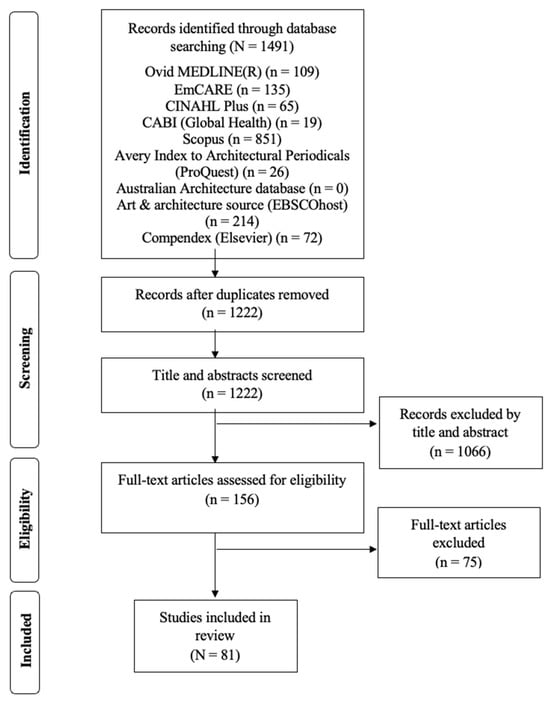
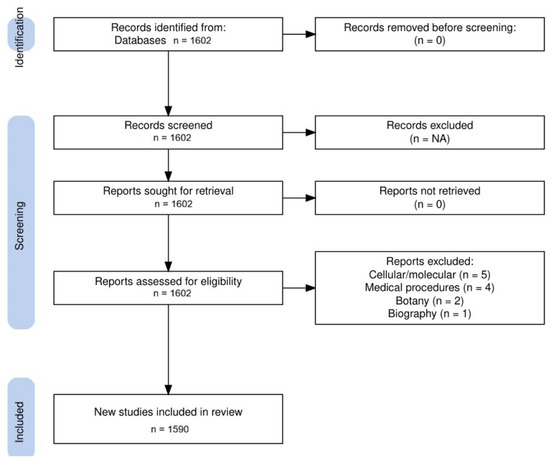
PRISMA flowchart of the studies included in the meta-analysis.

Measuring quality of life (QoL) in patients with early-stage lung cancer is an important aspect of treatment success. This study assessed QoL in the early postoperative period in patients with lung cancer, with regard to the type of cancer. This single-center study was conducted on 64 patients who underwent surgery for non-small cell (NSCLC) and small cell (SCLC) lung cancer. Quality of life questionnaires (QLQs) of the European Organization for Research and Treatment of Cancer (EORTC) were used. The EORTC QLQ-C30 questionnaire assesses the quality of life of cancer patients, and the EORTC QLQ-LC13 questionnaire is a lung cancer module. In the group of patients with NSCLC, the general health status (p < 0.001), physical functioning (p = 0.004), emotional functioning (p = 0.005) and total functional scale (p = 0.01) were significantly better assessed, fatigue was less pronounced (p = 0.005), nausea/vomiting (p = 0.04), pain (p = 0.004), breathing difficulties were less pronounced (p = 0.03), loss of appetite was less pronounced (p = 0.005), and the symptom scale was significantly less pronounced (p = 0.002) compared to patients with SCLC. In the QLQ-LC13 symptom scale, SCLC patients had more cough (p = 0.02), dyspnea (p = 0.03), dysphagia (p = 0.005), peripheral neuropathy (p = 0.04), chest pain (p < 0.001), arm or shoulder pain (p < 0.001), and pain in other parts of the body (p = 0.005) compared to NSCLC patients. Patients with NSCLC evaluated the functioning scales better and had less pronounced symptoms on the symptom scale, while patients with SCLC evaluated the treatment symptoms worse on the symptom scale, especially the symptom of pain, which had an impact on the quality of life of the patients. The results of this study could contribute to raising public awareness about the quality of life of lung cancer patients.

30 November 2025

This study aimed to translate the Mental Health Knowledge Schedule (MAKS) to Brazilian Portuguese, adapt it to the Brazilian primary health care context, and evaluate its psychometric properties. The adaptation process involved three stages: translation, back-translation, and peer-group evaluation. To achieve a valid and reliable instrument, the Brazilian Portuguese version of the questionnaire (MAKS-BR) was administered through an anonymous, online self-administered questionnaire to a convenience sample of 289 primary care professionals with a mean age of 39.6 years (SD = 9.6 years), 90% of whom were women. The instrument, in its final 11-item model, presented satisfactory fit and comparative indices with a two-factor model. The first factor aggregates items related to mental health knowledge, while the second included items related to recognition and familiarity with various mental health conditions. The network findings support the discriminant validity of the two dimensions, while also underscoring the integrative nature of mental health literacy, in which knowledge and recognition processes are interconnected yet functionally distinct. Our findings suggest that the MAKS is an adequate instrument for assessing mental health knowledge, considering the linguistic and cultural contexts of Brazil.

30 November 2025

Background: The COVID-19 pandemic exposed persistent weaknesses in global health governance, particularly in preparedness, equity, and accountability. The WHO Pandemic Agreement, adopted in May 2025, aims to address these systemic gaps through a binding international framework. Objective: To identify key challenges in global pandemic preparedness and health governance reported in the literature (2019–2024) through a systematic scoping review, and to evaluate how these challenges are addressed in the provisions of the WHO Pandemic Agreement via qualitative document analysis. Methods: Using Joanna Briggs Institute methodology and PRISMA-ScR guidelines, we systematically identified and thematically analyzed 52 peer-reviewed studies published between 2020 and 2024. The thematic results informed a qualitative document analysis of the WHO Pandemic Agreement text to assess the extent to which its provisions address the identified challenges. Results: Persistent gaps in governance (limited enforceability, fragmented coordination), equity (inequitable access to medical countermeasures), capacity (technology transfer and financing), and accountability were identified. Health systems in low- and middle-income countries continue to face critical resource constraints and lack robust mechanisms to ensure accountability and continuous learning. Document analysis showed the WHO Pandemic Agreement addresses coordination and financing but offers limited advances in enforcement, technology transfer, and independent monitoring. Conclusion: The WHO Pandemic Agreement introduces important institutional and financing measures, but persistent gaps remain in enforcement, technology transfer, and inclusive implementation. Strengthening these domains is crucial to achieving equitable and resilient preparedness. By systematically linking evidence from the pandemic preparedness literature to Treaty provisions, this study offers a novel analytical framework for assessing how global health treaties respond to research-identified challenges.

30 November 2025

News & Conferences

Issues

Open for Submission

Editor's Choice

Get Alerted

Add your email address to receive forthcoming issues of this journal.

XFacebookLinkedIn
Int. J. Environ. Res. Public Health - ISSN 1660-4601