Skip to Content
You are currently on the new version of our website. Access the old version .

Family Sciences

Family Sciences is an international, peer-reviewed, open access journal on various studies pertinent to the family published quarterly online by MDPI.

All Articles (22)

This grounded theory study examines how 40 married couples (N = 80) successfully maintained sexual abstinence until marriage, focusing on the strategies, relational processes, and spiritual commitments that sustained this non-normative practice. Because premarital abstinence is statistically uncommon among African Americans, this sample functions as a critical case context—offering a high-contrast environment in which grounded theory can clearly illuminate the relational and spiritual mechanisms that support abstinence maintenance. Using in-depth individual and dyadic interviews, the study explores how couples upheld abstinence in contexts where it was often encouraged within religious settings yet rarely modeled by parents, mentors, or peers. Findings revealed four interrelated processes: (a) a shared spiritual “why” grounded in sacred meaning, (b) mutual commitment and accountability, (c) proactive boundary-setting and trigger management, and (d) grace-based resilience and recommitment after lapses. Together, these processes illustrate the Premarital Sexual Abstinence Sustainability Model through which couples co-manage temptation and align their behaviors with shared spiritual values. Despite limited examples in their communities, many participants reported becoming perceived role models within their families and faith settings, demonstrating how new behavioral templates emerge when social models are absent. Overall, as the first study of its kind to document how abstaining couples sustain their commitment and experience success, this work offers new implications for research, relationship education, counseling, and faith-based program development.

11 February 2026
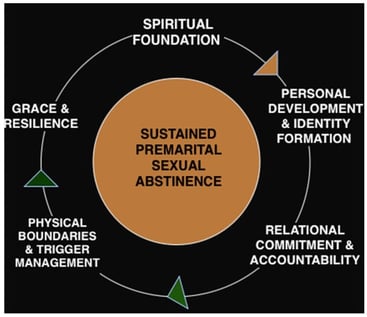
The Premarital Sexual Abstinence Sustainability Model.

Objective: This exploratory study investigated the 10-year longitudinal associations between Family Alliance (FA) in infancy and various outcomes in adolescence (e.g., psychopathological symptoms, self-esteem, life satisfaction). Background: Extensive evidence suggests that the quality of family relationships plays an important role in children’s development. However, few studies have documented this association using observational assessments of the family both in infancy and adolescence, and fewer studies have used longitudinal designs to explore these effects. Method: Using a convenience sample of N = 38 mother–father–child triads, FA was assessed in infancy (at 3, 9, and 18 months postpartum) and in early adolescence (at age 10–13). Adolescent symptoms, self-esteem, and satisfaction with life were self-reported. Results: Regression analyses showed that FA in infancy predicted neither psychopathological symptoms nor self-esteem, but it did predict scores of life satisfaction. FA in infancy and adolescence was significantly and positively associated. Conclusion: The quality of an infant’s relational environment may predict life satisfaction in adolescents. Implications: In health services, promoting family relationships of high quality in the postpartum period may have long-term effects that persist until adolescence.

10 February 2026

The pathway to marriage has changed substantially over the past 20 years or so, with many marrying later or choosing not to marry at all. Yet, many young people report that they do want to marry someday and some marry before the age of 25. There are various influences on the choice to marry or not marry. According to social impact theory, some of these choices may have to do with the immediacy of the source of impact. This study investigates how various influences, from various ranges of immediacy impact important areas of personal and relationship well-being. Results show that pressures to marry early are associated negatively with satisfaction with life and relationship satisfaction, while positively associated with stress and depression. Some results also show the connection of social immediacy impact in that parents’ marrying early positively associates with satisfaction with life, and negatively associates with relationship disillusionment and stress, while siblings marrying early was negatively associated with relationship satisfaction, and friends marrying early was positively associated with relationship satisfaction and negatively associated with stress. Religious influences were only positively associated with satisfaction with life. Implications for practitioners and researchers are provided based on study results and theoretical information.

10 February 2026

Retirement marks a pivotal transition not only for individuals but also for their families. Existing research has examined relational aspects of retirement but primarily focuses on how family members influence the retiree’s well-being rather than on the impact of this transition on other family members and the broader family system. To address this imbalance, the present review synthesizes evidence drawing upon Family Life Course Theory and Family Systems Theory. Using a well-established five-stage framework, we conducted extensive database searches and refined our guiding research question. Of the 4034 studies identified, 61 were selected for detailed analysis. Data extraction and thematic coding, supported by MAXQDA 24 software, revealed eight interconnected themes: marital quality and conflict; dyadic adjustments between partners; financial impacts and concerns; time use and leisure; redistribution of domestic roles; health outcomes; emotional and psychological effects on the family unit; and intergenerational dynamics. Across these domains, gender consistently emerged as a central, asymmetrical determinant of adaptation. Ultimately, this review demonstrates that retirement constitutes a relational turning point within families and calls for future research to adopt inclusive, longitudinal designs, and for practitioners and policymakers to develop family-centred interventions that recognize the systemic impact of retirement.

5 February 2026

News & Conferences

Issues

Open for Submission

Editor's Choice

Get Alerted

Add your email address to receive forthcoming issues of this journal.

XFacebookLinkedIn
Fam. Sci. - ISSN 3042-6693