



Advancements in Vehicle-to-Grid Technology for Smart Energy Systems
A special issue of Energies (ISSN 1996-1073). This special issue belongs to the section "E: Electric Vehicles".
Deadline for manuscript submissions: 30 October 2026 | Viewed by 351
Special Issue Editors

2. School of Engineering and Technology, Central Queensland University, Rockhampton 4701, Australia
Interests: power electronics; renewable energy; smart grid; electric vehicle (EV) charging; vehicle-to-grid (V2G); vehicle-to-home (V2H)

Interests: sustainable development goals; community energy storage; power system dynamics and stability; renewable energy integration; electric vehicles
Special Issues, Collections and Topics in MDPI journals

Interests: grid resilience; electrical machines & drives; control; automation; hybrid electric systems; rail condition monitoring
Special Issues, Collections and Topics in MDPI journals

Interests: optimization and control; artificial intelligence; renewable energy integration; microgrids; energy

Interests: power electronics; renewable energy; smart grid; electric vehicle (EV) charging; vehicle-to-grid (V2G); vehicle-to-home (V2H)
Special Issue Information
Dear Colleagues,
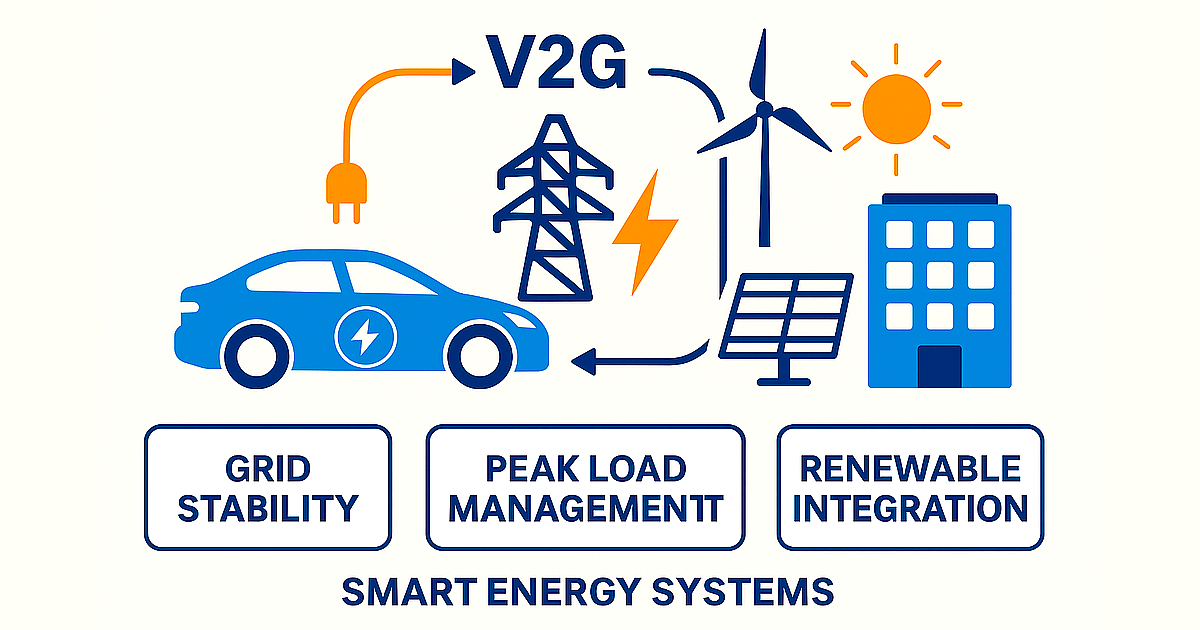
Vehicle-to-grid (V2G) technology is emerging as a cornerstone of smart energy systems, enabling bidirectional energy exchange between electric vehicles (EVs) and the power grid. By transforming EVs from passive loads into active energy assets, V2G supports grid stability, peak load management, and renewable energy integration, while unlocking new value streams for both EV owners and utilities.
As EV adoption grows, the aggregated battery capacity offers significant potential for demand-side flexibility, peak shaving, frequency regulation, and backup power. However, V2G deployment faces several challenges, including battery degradation, interoperability issues, regulatory barriers, and the need for robust control and communication frameworks. Overcoming these challenges is essential to fully realize the benefits of V2G in enhancing grid flexibility, resilience, and sustainability.
This Special Issue aims to showcase the latest research, technological developments, and practical implementations shaping the future of V2G systems within smart energy ecosystems. We welcome the submission of original research articles, comprehensive reviews, and case studies that address the challenges and opportunities in this rapidly evolving field. The Special Issue includes but is not limited to the following topics:
- V2G architecture, protocols, and communication standards;
- Power electronics and converter design for V2G systems;
- Control strategies for bidirectional energy flow;
- Integration of V2G with renewable energy sources;
- Grid stability and ancillary services through V2G;
- Battery degradation and lifecycle analysis in V2G applications;
- V2G-enabled energy management systems;
- Vehicle-to-home (V2H) and vehicle-to-building (V2B) technologies;
- Economic models and policy frameworks for V2G adoption;
- Cybersecurity and data management in V2G networks;
- Pilot projects and real-world implementations of V2G systems.
Dr. Md Mejbaul Haque
Guest Editor
Prof. Dr. Mithulan Nadarajah
Dr. Sanath Alahakoon
Dr. Md Alamgir Hossain
Co-Guest Editors
Dr. Adlan Bagus Pradana
Guest Editor Assistant
Manuscript Submission Information
Manuscripts should be submitted online at www.mdpi.com by registering and logging in to this website. Once you are registered, click here to go to the submission form. Manuscripts can be submitted until the deadline. All submissions that pass pre-check are peer-reviewed. Accepted papers will be published continuously in the journal (as soon as accepted) and will be listed together on the special issue website. Research articles, review articles as well as short communications are invited. For planned papers, a title and short abstract (about 250 words) can be sent to the Editorial Office for assessment.
Submitted manuscripts should not have been published previously, nor be under consideration for publication elsewhere (except conference proceedings papers). All manuscripts are thoroughly refereed through a single-blind peer-review process. A guide for authors and other relevant information for submission of manuscripts is available on the Instructions for Authors page. Energies is an international peer-reviewed open access semimonthly journal published by MDPI.
Please visit the Instructions for Authors page before submitting a manuscript. The Article Processing Charge (APC) for publication in this open access journal is 2600 CHF (Swiss Francs). Submitted papers should be well formatted and use good English. Authors may use MDPI's English editing service prior to publication or during author revisions.
Keywords
- electric vehicles
- vehicle-to-grid (V2G) technology
- V2H
- V2B
- smart energy systems
- bidirectional charging
- power electronics
- grid integration
- renewable energy
- energy management
- battery lifecycle
- cybersecurity in energy systems
Benefits of Publishing in a Special Issue
- Ease of navigation: Grouping papers by topic helps scholars navigate broad scope journals more efficiently.
- Greater discoverability: Special Issues support the reach and impact of scientific research. Articles in Special Issues are more discoverable and cited more frequently.
- Expansion of research network: Special Issues facilitate connections among authors, fostering scientific collaborations.
- External promotion: Articles in Special Issues are often promoted through the journal's social media, increasing their visibility.
- Reprint: MDPI Books provides the opportunity to republish successful Special Issues in book format, both online and in print.
Further information on MDPI's Special Issue policies can be found here.
