
Factors Influencing Major Amputation and Death Following Limb Salvage Surgery in a Diabetic Population: Systematic Review and Real-World Comparison
 , , , , , , , , ,
  and
and
Abstract
1. Introduction
2. Materials and Methods
2.1. Systematic Review—Search Strategies
2.2. Systematic Review—Inclusion and Exclusion Criteria
2.3. Systematic Review—Data Extraction and Quality Assessment
- Level I: High-quality randomized controlled trials (RCTs) or systematic reviews/meta-analyses of RCTs.
- Level II: Lesser-quality RCTs or prospective cohort studies with comparison groups.
- Level III: Retrospective cohort studies or case–control studies.
- Level IV: Case series or retrospective studies without comparison groups.
- Level V: Expert opinion, narrative reviews, or basic science without clinical correlation.
- Good (low risk of bias): Most or all criteria met; minimal threats to internal validity.
- Fair (moderate risk of bias): Some criteria not met or unclear; potential for bias that could affect results.
- Poor (high risk of bias): Many criteria unmet or unclear; significant concerns regarding validity or reliability of findings.
2.4. Heterogeneity and Rationale for Narrative Synthesis
2.5. Mid Essex Diabetes Amputation Reduction Plan—Description
2.6. Mid Essex Diabetes Amputation Reduction Plan—Data Collection
- Demographics: age, sex, type and duration of diabetes, frailty, comorbidities.
- Surgical details: stage of surgery, type of revision procedure, and use of adjunctive biomaterials.
- Clinical outcomes: major amputation, mortality, reintervention, and readmission.
- Patient-reported outcomes (PROMs): Musculoskeletal Health Questionnaire (MSK-HQ; 0–56, higher = better), Manchester-Oxford Foot Questionnaire (MOXFQ; 0–100, higher = worse) across all subscales, and self-reported physical activity frequency (days/week).
2.7. Mid Essex Diabetes Amputation Reduction Plan—Data Analysis
3. Results
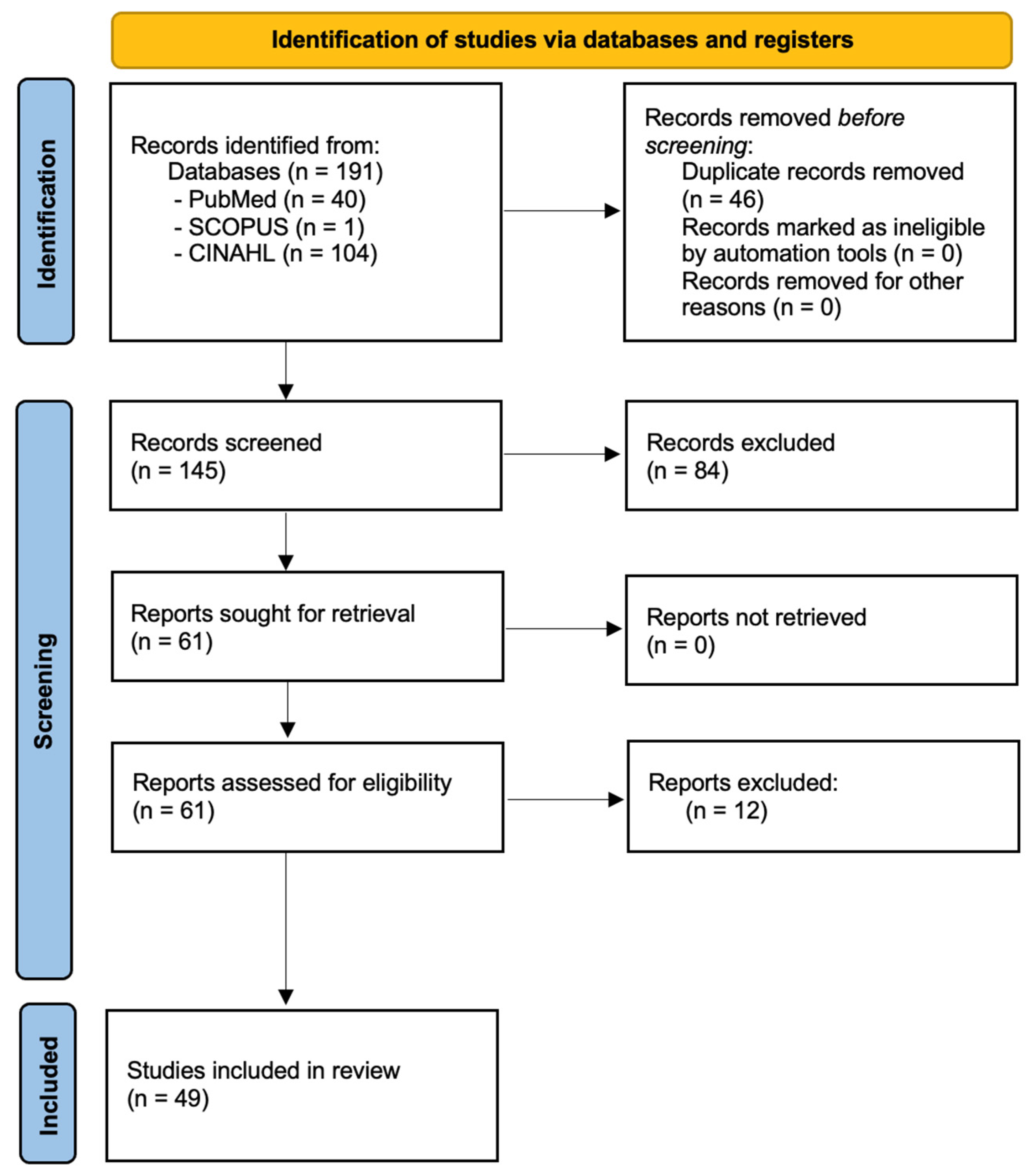
3.1. Study Selection and Characteristics
3.2. Incidence and Risk Factors for Major Amputation and Mortality
- Demographic factors. Increasing age consistently predicted poor outcomes, with markedly higher amputation and mortality risk in patients over 80 years. Male sex and Black race were also identified as independent predictors in selected cohorts.
- Clinical comorbidities. Renal dysfunction emerged as one of the strongest predictors: chronic kidney disease, dialysis dependence, and reduced eGFR were consistently associated with higher amputation and mortality rates. Cardiovascular comorbidities-including peripheral arterial disease, ischemic heart disease, and congestive heart failure-were also frequently linked to adverse outcomes. Laboratory markers such as hypoalbuminemia, elevated C-reactive protein, and poor glycemic control (high HbA1c) further stratified risk. Interestingly, colonization with Staphylococcus aureus was reported as protective in one cohort, underscoring the variability of findings across studies.
- Surgical and wound-related factors. Larger wound size, higher ulcer severity (Wagner/University of Texas classifications), osteomyelitis, and ischemia consistently predicted limb salvage failure. Procedural determinants included flap type, need for repeat debridement, and choice of revascularization strategy. Discharge destination also proved influential: patients discharged to skilled nursing facilities demonstrated higher risks of delayed healing, repeat hospitalization, and major amputation compared with those discharged home.
- Mortality outcomes. Mortality was less frequently reported than amputation, but when available, the same risk profile was observed. Advanced age, renal disease, ischemic heart disease, and insulin-dependent diabetes were recurrent predictors. Reported mortality ranged from 8% to 18% at one year, with long-term survival falling substantially in patients with combined diabetes and chronic limb-threatening ischemia.
3.3. Multidisciplinary Care Models
3.4. Real-World Comparison: Mid Essex Diabetes Amputation Reduction Plan
4. Discussion
4.1. Summary of Main Findings
4.2. Comparison with Previous Literature
4.3. Implications for Clinical Practice
4.4. Strengths and Limitations
4.5. Future Directions
5. Conclusions
Supplementary Materials
Author Contributions
Funding
Institutional Review Board Statement
Informed Consent Statement
Data Availability Statement
Acknowledgments
Conflicts of Interest
Abbreviations
| ABI | Ankle–Brachial Index |
| ABX | Antibiotics |
| AF | Atrial Fibrillation |
| AKA | Above-Knee Amputation |
| ASA | American Society of Anesthesiologists (physical status classification system) |
| AV | Arteriovenous |
| BKA | Below-Knee Amputation |
| BMI | Body Mass Index |
| BUN | Blood Urea Nitrogen |
| CAD | Coronary Artery Disease |
| CCI | Charlson Comorbidity Index |
| CHF | Congestive Heart Failure |
| CI | Confidence Interval |
| CKD | Chronic Kidney Disease |
| CLTI | Chronic Limb-Threatening Ischemia |
| CN | Charcot Neuroarthropathy |
| CRP | C-reactive Protein |
| CVD | Cardiovascular Disease |
| DFI | Diabetic Foot Infection |
| DFO | Diabetic Foot Osteomyelitis |
| DFU | Diabetic Foot Ulcer |
| DVA | Deep Venous Arterialization |
| eGFR | Estimated Glomerular Filtration Rate |
| EM | Emergency Medicine |
| Endo | Endocrinology/Diabetes Medicine |
| ESRD | End-Stage Renal Disease |
| EVT | Endovascular Therapy |
| HbA1c | Hemoglobin A1c (glycated hemoglobin) |
| HF | Heart Failure |
| HIPA model | Hyperglycemia, Infection, Pressure, Arterial flow (MDT framework) |
| HTN | Hypertension |
| IHD | Ischemic Heart Disease |
| IQR | Interquartile Range |
| IWGDF | International Working Group on the Diabetic Foot |
| LEA | Lower Extremity Amputation |
| LEAPP | Lower Extremity Amputation Prevention Program |
| LOS | Length of Stay |
| LRINEC | Laboratory Risk Indicator for Necrotizing Fasciitis |
| MDT | Multidisciplinary Team |
| MEDARP | Mid Essex Diabetes Amputation Reduction Plan |
| MI | Myocardial Infarction |
| MOXFQ | Manchester-Oxford Foot Questionnaire |
| MRSA | Methicillin-resistant Staphylococcus aureus |
| MSK-HQ | Musculoskeletal Health Questionnaire |
| NHLBI | National Heart, Lung, and Blood Institute |
| NICE | National Institute for Health and Care Excellence (UK) |
| NLR | Neutrophil-to-Lymphocyte Ratio |
| NPWT | Negative Pressure Wound Therapy |
| Nsg | Nursing |
| OR | Odds Ratio/Operating Room (context dependent) |
| PAD | Peripheral Arterial Disease |
| PC | Palliative Care |
| PLAN | Patient risk, Limb severity, ANatomic complexity (Global Vascular Guidelines) |
| Plast | Plastic Surgery |
| PRO/PROM | Patient-Reported Outcome/Patient-Reported Outcome Measure |
| PROSPERO | International Prospective Register of Systematic Reviews |
| PT | Physical Therapy |
| PVD | Peripheral Vascular Disease |
| RCT | Randomized Controlled Trial |
| RDW | Red Cell Distribution Width |
| Rehab | Rehabilitation Medicine |
| RTOR | Return to Operating Room |
| SNF | Skilled Nursing Facility |
| Surg | Surgery (general/unspecified) |
| TIR | Time in Range |
| TMA | Transmetatarsal Amputation |
| TNF-alpha | Tumor Necrosis Factor Alpha |
| UT | University of Texas (ulcer classification system) |
| Vasc | Vascular Surgery |
| WCC | White Cell Count |
| WIfI | Wound, Ischemia, and foot Infection |
Appendix A
Screening Prompt
- Population: Adults (≥18 years) with Type 1 or Type 2 diabetes who underwent limb-salvage surgery for diabetic foot complications (e.g., ulceration, infection, ischemia).
- Complications: At least one postoperative complication reported and quantified (e.g., infection, hardware failure, nerve injury, vascular compromise, wound dehiscence, thromboembolism, chronic pain, etc.).
- Design: Randomized controlled trials, prospective/retrospective cohort studies, or case–control studies; large case series (≥10 patients) may be included if outcome data are clear and relevant.
- Outcomes: Reports a quantifiable outcome for major amputation (below-/above-knee) and/or mortality (perioperative or longer-term).
- Timeframe: Published 2020–2025.
- Language: English.
- Non-diabetic populations, pediatric populations (<18 y), or mixed cohorts without diabetes-specific reporting.
- Studies not involving limb-salvage surgery (e.g., primary amputation only; medical-management-only studies).
- Systematic reviews, meta-analyses, editorials, narrative reviews, letters, conference abstracts without full text, case reports or very small series (<10).
- Studies reporting only short-term wound-healing endpoints or experimental therapies not addressing major amputation or mortality risk.
- Highly specific/non-generalizable settings (e.g., rare disorders, military-only contexts) where external validity is limited.
- INCLUDE—Clearly meets all inclusion criteria.
- MAYBE—Unclear; full-text required for clarification.
- EXCLUDE—Meets ≥1 exclusion criterion.
References
- Sun, H.; Saeedi, P.; Karuranga, S.; Pinkepank, M.; Ogurtsova, K.; Duncan, B.B.; Stein, C.; Basit, A.; Chan, J.C.; Mbanya, J.C.; et al. IDF Diabetes Atlas: Global, regional and country-level diabetes prevalence estimates for 2021 and projections for 2045. Diabetes Res. Clin. Pract. 2021, 183, 109119. [Google Scholar] [CrossRef] [PubMed]
- Armstrong, D.G.; Boulton, A.J.; Bus, S.A. Diabetic foot ulcers and their recurrence. N. Engl. J. Med. 2017, 376, 2367–2375. [Google Scholar] [CrossRef]
- Yazdanpanah, L.; Shahbazian, H.; Nazari, I.; Arti, H.R.; Ahmadi, F.; Mohammadianinejad, S.E.; Cheraghian, B.; Hesam, S. Incidence and Risk factors of Diabetic Foot Ulcer: A Population-Based Diabetic Foot Cohort (ADFC Study)—Two-Year Follow-Up Study. Int. J. Endocrinol. 2018, 2018, 7631659. [Google Scholar] [CrossRef]
- Diabetic foot Ulcer: Indepth Article|Mölnlycke Advantage. (n.d.). Available online: https://www.molnlycke.ae/education/wound-areas/dfu/diabetic-foot-ulcer/ (accessed on 23 May 2025).
- Armstrong, D.G.; Tan, T.; Boulton, A.J.M.; Bus, S.A. Diabetic foot ulcers. JAMA 2023, 330, 62. [Google Scholar] [CrossRef]
- Armstrong, D.G.; Swerdlow, M.A.; Armstrong, A.A.; Conte, M.S.; Padula, W.V.; Bus, S.A. Five-year mortality and direct costs of care for people with diabetic foot complications are comparable to cancer. J. Foot Ankle Res. 2020, 13, 16. [Google Scholar] [CrossRef] [PubMed]
- Mohammedi, K.; Woodward, M.; Hirakawa, Y.; Zoungas, S.; Colagiuri, S.; Hamet, P.; Harrap, S.; Poulter, N.; Matthews, D.R.; Marre, M.; et al. Presentations of major peripheral arterial disease and risk of major outcomes in patients with type 2 diabetes: Results from the ADVANCE-ON study. Cardiovasc. Diabetol. 2016, 15, 129. [Google Scholar] [CrossRef] [PubMed]
- Stanek, A.; Mikhailidis, D.P.; Paraskevas, K.I.; Jawien, A.; Antignani, P.L.; Mansilha, A.; Blinc, A.; Poredoš, P. Specificities of primary and secondary prevention of lower extremity artery disease in patients with diabetes mellitus. Int. Angiol. 2024, 43, 367–373. [Google Scholar] [CrossRef]
- Musuuza, J.; Sutherland, B.L.; Kurter, S.; Balasubramanian, P.; Bartels, C.M.; Brennan, M.B. A systematic review of multidisciplinary teams to reduce major amputations for patients with diabetic foot ulcers. J. Vasc. Surg. 2020, 71, 1433–1446.e3. [Google Scholar] [CrossRef]
- Vuorlaakso, M.; Kiiski, J.; Salonen, T.; Karppelin, M.; Helminen, M.; Kaartinen, I. Major amputation profoundly increases mortality in patients with diabetic foot infection. Front. Surg. 2021, 8, 655902. [Google Scholar] [CrossRef]
- Rogers, L.C.; Andros, G.; Caporusso, J.; Harkless, L.B.; Mills, J.L.; Armstrong, D.G. Toe and Flow. J. Am. Podiatr. Med. Assoc. 2010, 100, 342–348. [Google Scholar] [CrossRef]
- Manji, A.; Basiri, R.; Harton, F.; Rommens, K.; Manji, K. Effectiveness of a multidisciplinary limb preservation program in reducing regional hospitalization rates for patients with Diabetes-Related Foot complications. Int. J. Low. Extrem. Wounds 2024, 24, 117–123. [Google Scholar] [CrossRef] [PubMed]
- Li, B.; Montero-Baker, M.; Lepow, B.D. On the go with Toe & Flow: Private Clinic Design and Flow. Semin. Vasc. Surg. 2025, 38, 11–19. [Google Scholar] [CrossRef] [PubMed]
- Page, M.J.; Moher, D.; Bossuyt, P.M.; Boutron, I.; Hoffmann, T.C.; Mulrow, C.D.; Shamseer, L.; Tetzlaff, J.M.; Akl, E.A.; Brennan, S.E.; et al. PRISMA 2020 explanation and elaboration: Updated guidance and exemplars for reporting systematic reviews. BMJ 2021, 372, n160. [Google Scholar] [CrossRef]
- McHugh, D.; Kannegieter, E.; Spencer, L.; Ferguson, K.; Phillips, C.; Alam, S. Factors Influencing Major Amputation and Death Following Limb Salvage Surgery in a Diabetic Population; PROSPERO 2025 CRD420251044859; National Institute for Health and Care Research: Melbourn, UK, 2025; Available online: https://www.crd.york.ac.uk/PROSPERO/view/CRD420251044859 (accessed on 10 August 2025).
- Wright, J.; Swiontkowski, M.; Heckman, J. Introducing levels of evidence to the journal. Orthop. Trauma Dir. 2011, 9, 27–28. [Google Scholar] [CrossRef]
- NHLBI. NIH. National Heart, Lung, and Blood Institute. Study Quality Assessment Tools. Available online: https://www.nhlbi.nih.gov/health-topics/study-quality-assessment-tools (accessed on 7 August 2025).
- NHS England (n.d.). NHS England Diabetes Transformation Fund. Available online: https://www.england.nhs.uk/diabetes/diabetes-prevention/diabetes-transformation-fund/ (accessed on 5 August 2025).
- Davis, K.E.; La Fontaine, J.; Farrar, D.; Oz, O.K.; Crisologo, P.A.; Berriman, S.; Lavery, L.A. Randomized clinical study to compare negative pressure wound therapy with simultaneous saline irrigation and traditional negative pressure wound therapy for complex foot infections. Wound Repair Regen. 2020, 28, 97–104. [Google Scholar] [CrossRef]
- Lava, C.X.; Huffman, S.S.; Li, K.R.; DiBello, J.R.; Ply, C.M.; Rohrich, R.N.; Steinberg, J.S.; Atves, J.N.; Fan, K.L.; Youn, R.C.; et al. A Comparative Analysis of Patient-Reported Outcomes following free tissue transfer, Partial foot amputation, and Below-Knee amputation in High-Risk Limb Salvage patients. Ann. Plast. Surg. 2024, 93, 510–515. [Google Scholar] [CrossRef]
- Lo, Z.J.; Tan, E.; Chandrasekar, S.; Ooi, D.; Liew, H.; Ang, G.; Yong, E.; Hong, Q.; Chew, T.; Farhan, M.F.M.; et al. Diabetic foot in primary and tertiary (DEFINITE) Care: A health services innovation in coordination of diabetic foot ulcer (DFU) Care within a healthcare cluster—18-month results from an observational population health cohort study. Int. Wound J. 2023, 20, 1609–1621. [Google Scholar] [CrossRef]
- Aragón-Sánchez, J.; Víquez-Molina, G.; López-Valverde, M.E.; Aragón-Hernández, C.; Aragón-Hernández, J.; Rojas-Bonilla, J.M. Clinical Features, Inflammatory Markers, and Limb Salvage in Older Adults with Diabetes-Related Foot Infections. Int. J. Low. Extrem. Wounds 2023, 24, 212–218. [Google Scholar] [CrossRef]
- Weissler, E.H.; Narcisse, D.I.; Rymer, J.A.; Armstrong, E.J.; Secemsky, E.; Gray, W.A.; Mustapha, J.A.; Adams, G.L.; Ansel, G.M.; Patel, M.R.; et al. Characteristics and outcomes of patients with diabetes mellitus undergoing peripheral vascular intervention for infrainguinal symptomatic peripheral artery disease. Vasc. Endovasc. Surg. 2021, 55, 124–134. [Google Scholar] [CrossRef]
- Azhar, A.; Basheer, M.; Abdelgawad, M.S.; Roshdi, H.; Kamel, M.F. Prevalence of Peripheral Arterial Disease in Diabetic Foot Ulcer Patients and its Impact in Limb Salvage. Int. J. Low. Extrem. Wounds 2021, 22, 518–523. [Google Scholar] [CrossRef] [PubMed]
- Ge, L.; Zhao, J.; Tan, M.; Tan, E.; Liew, H.; Yong, E.; Hoe, J.; Shi, C.; Chan, D.Y.S.; Ang, G.Y.; et al. Multi-disciplinary diabetic limb salvage programme in octogenarians with diabetic foot ulcers is not futile: An observational study with historical controls. Int. Wound J. 2024, 21, e14801. [Google Scholar] [CrossRef] [PubMed]
- Draper, K.; Li, B.; Syed, M.; Shaikh, F.; Zamzam, A.; Abuhalimeh, B.J.; Rasheed, K.; Younes, H.K.; Abdin, R.; Qadura, M. Identification of Inflammatory Biomarkers for Predicting Peripheral Arterial Disease Prognosis in Patients with Diabetes. Diabetology 2025, 6, 2. [Google Scholar] [CrossRef]
- Rohrich, R.N.; Li, K.R.; Lava, C.X.; Akbari, C.M.; Attinger, C.E. Angiosome-Guided revascularization in local flap reconstruction of the foot and ankle. Ann. Plast. Surg. 2025, 94, 195–203. [Google Scholar] [CrossRef] [PubMed]
- Shin, C.S.; Yoo, K.C. Predictive Factors of Wound Healing and Limb Salvage After Successful Below-the-Knee Endovascular Angioplasty in Patients with Diabetic Foot Ulcer: A Retrospective Study. Medicina 2025, 61, 277. [Google Scholar] [CrossRef] [PubMed]
- Almadwahi, N.; Alhanash, S.; Fadhel, A.; Barat, A.; Alshujaa, M.; Najran, M.; Ahmed, F.; Altam, A.; Al-Jammal, E.; Badheeb, M. Acute limb ischemia and its predictive factors after revascularization: A single-center retrospective study from a resource-limited setting. J. Emerg. Med. Trauma Acute Care 2024, 2024, 21. [Google Scholar] [CrossRef]
- Biz, C.; Belluzzi, E.; Rossin, A.; Mori, F.; Pozzuoli, A.; Bragazzi, N.L.; Ruggieri, P. Minimally Invasive distal metatarsal Diaphyseal Osteotomy (MIS-DMDO) for the prevention and treatment of chronic plantar diabetic foot ulcers. Foot Ankle Int. 2024, 45, 1184–1197. [Google Scholar] [CrossRef]
- Ormaechevarria, A.; De Céniga, M.V.; Blanco, J.; Yáñez, L.; Fernández, J.; Estallo, L. Critical limb ischaemia in Octogenarians: Treatment outcomes compared with younger patients. EJVES Vasc. Forum 2024, 61, 36–42. [Google Scholar] [CrossRef]
- Li, K.R.; Lava, C.X.; Neughebauer, M.B.; Rohrich, R.N.; Atves, J.; Steinberg, J.; Akbari, C.M.; Youn, R.C.; Attinger, C.E.; Evans, K.K. A multidisciplinary approach to End-Stage limb salvage in the highly comorbid atraumatic population: An observational study. J. Clin. Med. 2024, 13, 2406. [Google Scholar] [CrossRef]
- Amarasena, D.K.; Bilal, A.; Elkhidir, I.H.; Flatman, M.; Pillai, A. Biochemical and patient factors as predictors for multiple surgeries in diabetic foot disease. Pract. Diabetes 2024, 41, 24–28. [Google Scholar] [CrossRef]
- Huffman, S.S.; Berger, L.E.; Li, K.; Spoer, D.L.; Gupta, N.J.; Truong, B.N.; Akbari, C.M.; Evans, K.K. Muscle versus Fascia Free Tissue Transfer for Treatment of Chronic Osteomyelitis in the Comorbid Population. J. Reconstr. Microsurg. 2024, 40, 253–261. [Google Scholar] [CrossRef]
- Kostiuk, V.; Gazes, M.; Fereydooni, S.; Chaar, C.I.O.; Guzman, R.J.; Tonnessen, B.H. Long-term limb salvage and functional outcomes for patients undergoing partial calcanectomy. Vascular 2024, 33, 395–403. [Google Scholar] [CrossRef] [PubMed]
- Fujii, M.; Yamada, A.; Yamawaki, K.; Tsuda, S.; Miyamoto, N.; Gan, K.; Terashi, H. Predictive Factors for Limb Salvage and Foot Ulcer Recurrence in Patients with Chronic Limb-Threatening Ischemia After Multidisciplinary Team Treatment: A 6-Year Japanese Single-Center Study. Int. J. Low. Extrem. Wounds 2023, 22, 722–732. [Google Scholar] [CrossRef]
- Ron, I.; Kyin, C.; Peskin, B.; Ghrayeb, N.; Norman, D.; Ben-Kiki, T.; Shapira, J. Risk Factors for a Failed Transmetatarsal Amputation in Patients with Diabetes. J. Bone Jt. Surg. 2023, 105, 651–658. [Google Scholar] [CrossRef]
- Liu, Y.; Shi, Y.; Zhu, J.; Chen, X.; Yang, R.; Shu, B.; Zhou, Z.; Liu, J.; Wu, R.; Xie, J. Study on the Effect of the Five-in-One Comprehensive Limb Salvage Technologies of treating Severe Diabetic foot. Adv. Wound Care 2023, 9, 676–685. [Google Scholar] [CrossRef]
- Ragghianti, B.; Piaggesi, A.; Mannucci, E.; Monami, M. Effects of local antibiotics in calcium-sulphate granules for the treatment of diabetic forefoot osteomyelitis: A propensity-matched observational study. J. Wound Manag. Off. J. Eur. Wound Manag. Assoc. 2023, 24, 19–25. [Google Scholar] [CrossRef]
- Zamzam, A.; McLaren, A.; Ram, E.; Syed, M.H.; Rave, S.; Lu, S.H.; Al-Omran, M.; De Mestral, C. A novel Canadian multidisciplinary acute care pathway for people hospitalised with a diabetic foot ulcer. Int. Wound J. 2023, 20, 3331–3337. [Google Scholar] [CrossRef]
- Zhu, G.; Xu, J.; Dai, H.; Min, D.; Guo, G. Effect of peripheral nerve block versus general anesthesia on the hemodynamics and prognosis of diabetic patients undergoing diabetic foot Surgery. Diabetol. Metab. Syndr. 2023, 15, 213. [Google Scholar] [CrossRef] [PubMed]
- Yammine, K.; Orm, G.A.; Mouawad, J.; Assi, C. Basic haematological tests as inflammatory performance markers of patients treated either by conservative surgery or minor amputation for infected diabetic foot ulcers. Wound Repair Regen. 2023, 31, 627–634. [Google Scholar] [CrossRef]
- Bobirca, F.; Smarandache, C.G.; Bobirca, A.; Alexandru, C.; Dumitrescu, D.; Stoian, A.P.; Bica, C.; Brinduse, L.A.; Musetescu, A.; Gheoca-Mutu, D.; et al. The outcome of Surgical Treatment for the Neuropathic Diabetic Foot Lesions—A Single-Center Study. Life 2022, 12, 1156. [Google Scholar] [CrossRef]
- Abu El Hawa, A.A.; Dekker, P.K.; Mishu, M.D.; Kim, K.G.; Mizher, R.; Fan, K.L.; Attinger, C.E.; Evans, K.K. Early diagnosis and surgical management of necrotizing fasciitis of the lower extremities: Risk factors for mortality and amputation. Adv. Wound Care 2022, 11, 217–225. [Google Scholar] [CrossRef]
- Huang, Z.; Zhang, H.; Huang, Y.; Ye, S.; Ma, Y.; Xin, Y.; Chen, X.; Zhao, S. Association of time in range with postoperative wound healing in patients with diabetic foot ulcers. Int. Wound J. 2022, 19, 1309–1318. [Google Scholar] [CrossRef]
- Kim, J.J.; Littman, A.J.; Sorkin, J.D.; Roghmann, M. Association between foot surgery type and subsequent healing in veterans with Moderate-to-Severe diabetic foot infections. Open Forum Infect. Dis. 2022, 9, ofab650. [Google Scholar] [CrossRef]
- Nigam, M.; Zolper, E.G.; Sharif-Askary, B.; Abdou, S.A.; Charipova, K.; Bekeny, J.C.; Fan, K.L.; Steinberg, J.S.; Attinger, C.E.; Evans, K.K. Expanding Criteria for Limb Salvage in Comorbid Patients with Nonhealing Wounds: The MedStar Georgetown Protocol and Lessons Learned after 200 Lower Extremity Free Flaps. Plast. Reconstr. Surg. 2022, 150, 197–209. [Google Scholar] [CrossRef] [PubMed]
- Schmidt, B.M.; Abihaidar, A. Bedside versus operating room debridement of osteomyelitis of a phalanx of a given toe. Diabet. Foot J. 2022, 25, 1–6. Available online: https://diabetesonthenet.com/wp-content/uploads/DFJ_25-1-Schmidt.pdf (accessed on 3 July 2025).
- Haug, V.; Kadakia, N.; Panayi, A.C.; Kauke, M.; Hundeshagen, G.; Diehm, Y.; Fischer, S.; Hirche, C.; Kneser, U.; Pomahac, B. Combined (endo-)vascular intervention and microsurgical lower extremity free flap reconstruction—A propensity score matching analysis in 5386 ACS-NSQIP patients. J. Plast. Reconstr. Aesthetic Surg. 2021, 74, 1031–1040. [Google Scholar] [CrossRef]
- Thai, D.Q.; Jung, Y.K.; Hahn, H.M.; Lee, I.J. Factors affecting the outcome of lower extremity osteomyelitis treated with microvascular free flaps: An analysis of 65 patients. J. Orthop. Surg. Res. 2021, 16, 535. [Google Scholar] [CrossRef]
- Koivunen, V.; Juonala, M.; Mikkola, K.; Hakovirta, H. Chronic limb threatening ischemia and diabetes mellitus: The severity of tibial atherosclerosis and outcome after infrapopliteal revascularization. Scand. J. Surg. 2021, 110, 472–482. [Google Scholar] [CrossRef]
- Burmeister, R.A.; Jarocki, C.; Holmes, C.M.; Rothenberg, G.M.; Munson, M.E.; Schmidt, B.M. Postoperative healing in the diabetic foot is impacted by discharge destination. Int. Wound J. 2021, 18, 657–663. [Google Scholar] [CrossRef]
- Kim, J.; Yoon, T.; Park, J.K.; Eun, S. Reconstruction of foot and ankle defects using free lateral arm flap: A retrospective review of its versatile application. BioMed Res. Int. 2021, 2021, 4128827. [Google Scholar] [CrossRef] [PubMed]
- Piaggesi, A.; Iacopi, E.; Pieruzzi, L.; Coppelli, A.; Goretti, C. Diabetic foot surgery “Made in Italy”. Results of 15 years of activity of a third-level centre managed by diabetologists. Diabetes Res. Clin. Pract. 2020, 167, 108355. [Google Scholar] [CrossRef] [PubMed]
- Joyce, A.; Yates, B.; Cichero, M. Transmetatarsal amputation: A 12-year retrospective case review of outcomes. Foot 2020, 42, 101637. [Google Scholar] [CrossRef]
- Meloni, M.; Izzo, V.; Giurato, L.; Lázaro-Martínez, J.L.; Uccioli, L. Prevalence, Clinical Aspects and Outcomes in a Large Cohort of Persons with Diabetic Foot Disease: Comparison between Neuropathic and Ischemic Ulcers. J. Clin. Med. 2020, 9, 1780. [Google Scholar] [CrossRef]
- Piwnica-Worms, W.; Stranix, J.T.; Othman, S.; Kozak, G.M.; Moyer, I.; Spencer, A.; Azoury, S.C.; Levin, L.S.; Kovach, S.J. Risk factors for lower extremity amputation following attempted free flap limb salvage. J. Reconstr. Microsurg. 2020, 36, 528–533. [Google Scholar] [CrossRef] [PubMed]
- Lo, Z.J.; Chandrasekar, S.; Yong, E.; Hong, Q.; Zhang, L.; Chong, L.R.C.; Tan, G.; Chan, Y.M.; Koo, H.Y.; Chew, T.; et al. Clinical and economic outcomes of a multidisciplinary team approach in a lower extremity amputation prevention programme for diabetic foot ulcer care in an Asian population: A case-control study. Int. Wound J. 2022, 19, 765–773. [Google Scholar] [CrossRef]
- Seçkin, M.F.; Özcan, Ç.; Çamur, S.; Polat, Ö.; Batar, S. Predictive factors and amputation level for reamputation in patients with diabetic Foot: A Retrospective Case-Control Study. J. Foot Ankle Surg. 2022, 61, 43–47. [Google Scholar] [CrossRef]
- Brodell, J.D.; Kozakiewicz, L.N.; Hoffman, S.L.; Oh, I. Intraoperative site vancomycin powder application in infected diabetic heel ulcers with calcaneal osteomyelitis. Foot Ankle Int. 2020, 42, 356–362. [Google Scholar] [CrossRef] [PubMed]
- Alsabbagh, Y.; Erben, Y.; Lanka, S.P.; Polania-Sandoval, C.; Farres, H. Deep venous arterialization in critical limb-threatening ischemia (CLTI): Case series and literature review. Ann. Vasc. Surg. Brief Rep. Innov. 2024, 4, 100325. [Google Scholar] [CrossRef]
- Brekelmans, W.; Van Laar, W.; Tolen, N.J.; Hoencamp, R.; Van Der Burg, B.L.S.B. Recurrent diabetic foot ulcers: Results of a maximal multidisciplinary approach including reconstructive foot/ankle surgery. Int. Wound J. 2023, 20, 1866–1873. [Google Scholar] [CrossRef]
- Altuntaş, Z.; Tekecik, M.; Dadacı, M. A Simple and Convenient Alternative for the Reconstruction of Lower Extremity Soft Tissue Defects due to Different Types of Etiologies: Bipedicled Flap. Int. J. Low. Extrem. Wounds 2023, 22, 339–344. [Google Scholar] [CrossRef] [PubMed]
- Vasukutty, N.L.; Mordecai, S.; Tarik, A.; Subramaniam, M.; Srinivasan, B. Limb salvage surgery in diabetic foot infection: Encouraging early results with a local antibiotic carrier. Diabet. Foot J. 2022, 25, 2. Available online: https://diabetesonthenet.com/diabetic-foot-journal/limb-salvage-surgery-in-diabetic-foot-infection-encouraging-early-results-with-a-local-antibiotic-carrier/ (accessed on 3 July 2025).
- Frykberg, R.G.; Banks, J. Keller arthroplasty: A cure for the chronic hallux ulceration, hallux limitus and degenerative hallux valgus—A retrospective study. Diabet. Foot J. 2021, 24, 4. Available online: https://diabetesonthenet.com/diabetic-foot-journal/keller-arthroplasty-a-cure-for-the-chronic-hallux-ulceration-hallux-limitus-and-degenerative-hallux-valgus-a-retrospective-study/ (accessed on 3 July 2025).
- Black, C.; Fan, K.L.; Defazio, M.V.; Luvisa, K.; Reynolds, K.; Kotha, V.S.; Attinger, C.E.; Evans, K.K. Limb salvage rates and functional outcomes using a longitudinal slit arteriotomy End-to-Side anastomosis for Limb-Threatening defects in a High-Risk patient population. Plast. Reconstr. Surg. 2020, 145, 1302–1312. [Google Scholar] [CrossRef] [PubMed]
- Ersin, M.; Demirel, M.; Chodza, M.; Bilgili, F.; Kiliçoglu, O.I. Mid-term results of hindfoot arthrodesis with a retrograde intra-medullary nail in 24 patients with diabetic Charcot neuroarthropathy. Acta Orthop. 2020, 91, 336–340. [Google Scholar] [CrossRef]
- McDermott, K.; Fang, M.; Boulton, A.J.; Selvin, E.; Hicks, C.W. Etiology, epidemiology, and disparities in the burden of diabetic foot ulcers. Diabetes Care 2022, 46, 209–221. [Google Scholar] [CrossRef]
- Guo, G.; Guan, Y.; Chen, Y.; Ye, Y.; Gan, Z.; Cao, X.; Chen, Z.; Hao, X. HBA1C and the risk of lower limb ulcers among diabetic patients: An observational and genetics study. J. Diabetes Res. 2025, 2025, 4744194. [Google Scholar] [CrossRef]
- Jupiter, D.C.; Thorud, J.C.; Buckley, C.J.; Shibuya, N. The impact of foot ulceration and amputation on mortality in diabetic patients. I: From ulceration to death, a systematic review. Int. Wound J. 2015, 13, 892–903. [Google Scholar] [CrossRef] [PubMed]
- Xie, Y.; Zhang, H.; Ye, T.; Ge, S.; Zhuo, R.; Zhu, H. The Geriatric Nutritional Risk Index independently predicts mortality in diabetic foot ulcers patients undergoing amputations. J. Diabetes Res. 2017, 2017, 5797194. [Google Scholar] [CrossRef]
- Zhang, W.; Tang, W.; Hu, S.; Fu, X.; Wu, H.; Shen, W.; Chen, H. C-reactive protein and diabetic foot ulcer infections: A meta-analysis. J. Tissue Viability 2022, 31, 537–543. [Google Scholar] [CrossRef]
- Fitridge, R.; Chuter, V.; Mills, J.; Hinchliffe, R.; Azuma, N.; Behrendt, C.; Boyko, E.J.; Conte, M.S.; Humphries, M.; Kirksey, L.; et al. Editor’s choice—The Intersocietal IWGDF, ESVS, SVS Guidelines on peripheral artery Disease in people with diabetes mellitus and a foot ulcer. Eur. J. Vasc. Endovasc. Surg. 2023, 66, 454–483. [Google Scholar] [CrossRef] [PubMed]
- Pena, G.; Kuang, B.; Edwards, S.; Cowled, P.; Dawson, J.; Fitridge, R. Factors associated with key outcomes in Diabetes Related foot Disease: A Prospective observational study. Eur. J. Vasc. Endovasc. Surg. 2021, 62, 233–240. [Google Scholar] [CrossRef]
- Staniszewska, A.; Game, F.; Nixon, J.; Russell, D.; Armstrong, D.G.; Ashmore, C.; Bus, S.A.; Chung, J.; Chuter, V.; Dhatariya, K.; et al. Development of a core outcome set for studies assessing interventions for Diabetes-Related Foot Ulceration. Diabetes Care 2024, 47, 1958–1968. [Google Scholar] [CrossRef] [PubMed]
- Bowling, F.L.; Jude, E.B.; Boulton, A.J.M. MRSA and diabetic foot wounds: Contaminating or infecting organisms? Curr. Diabetes Rep. 2009, 9, 440–444. [Google Scholar] [CrossRef] [PubMed]
- Bode, L.G.; Kluytmans, J.A.; Wertheim, H.F.; Bogaers, D.; Vandenbroucke-Grauls, C.M.; Roosendaal, R.; Troelstra, A.; Box, A.T.; Voss, A.; Van Der Tweel, I.; et al. Preventing Surgical-Site Infections in Nasal Carriers of Staphylococcus aureus. N. Engl. J. Med. 2010, 362, 9–17. [Google Scholar] [CrossRef]
- Lavery, L.A.; La Fontaine, J.; Bhavan, K.; Kim, P.J.; Williams, J.R.; Hunt, N.A. Risk factors for methicillin-resistant Staphylococcus aureus in diabetic foot infections. Diabet. Foot Ankle 2014, 5, 23575. [Google Scholar] [CrossRef] [PubMed][Green Version]
- Ning, J.; Wang, J.; Zhang, S.; Sha, X. Nasal colonization of Staphylococcus aureus and the risk of surgical site infection after spine surgery: A meta-analysis. Spine J. 2019, 20, 448–456. [Google Scholar] [CrossRef]
- Joret, M.O.; Osman, K.; Dean, A.; Cao, C.; Van Der Werf, B.; Bhamidipaty, V. Multidisciplinary clinics reduce treatment costs and improve patient outcomes in diabetic foot disease. J. Vasc. Surg. 2019, 70, 806–814. [Google Scholar] [CrossRef]
- Vuorlaakso, M.; Karèn, V.; Kiiski, J.; Lahtela, J.; Kaartinen, I. Multidisciplinary management of diabetic foot infection associated with improved 8-year overall survival. J. Diabetes Complicat. 2024, 38, 108719. [Google Scholar] [CrossRef]
- Bus, S.A.; Monteiro-Soares, M.; Game, F.; Van Netten, J.J.; Apelqvist, J.; Fitridge, R.; Senneville, E.; Schaper, N.C. Standards for the development and methodology of the 2023 IWGDF guidelines. Diabetes Metab. Res. Rev. 2023, 40, e3656. [Google Scholar] [CrossRef]
- Yammine, K.; Hayek, F.; Assi, C. A meta-analysis of mortality after minor amputation among patients with diabetes and/or peripheral vascular disease. J. Vasc. Surg. 2020, 72, 2197–2207. [Google Scholar] [CrossRef]
- Meloni, M.; Andreadi, A.; Ruotolo, V.; Romano, M.; Bellizzi, E.; Giurato, L.; Bellia, A.; Uccioli, L.; Lauro, D. Hospital readmission in patients with diabetic foot ulcers: Prevalence, causes, and outcomes. Int. J. Low. Extrem. Wounds 2023, 15347346231207747. [Google Scholar] [CrossRef]
- Huang, J.; Yang, J.; Qi, H.; Xu, M.; Xu, X.; Zhu, Y. Prediction models for amputation after diabetic foot: Systematic review and critical appraisal. Diabetol. Metab. Syndr. 2024, 16, 126. [Google Scholar] [CrossRef]
- Senneville, É.; Albalawi, Z.; Van Asten, S.A.; Abbas, Z.G.; Allison, G.; Aragón-Sánchez, J.; Embil, J.M.; Lavery, L.A.; Alhasan, M.; Oz, O.; et al. IWGDF/IDSA Guidelines on the Diagnosis and Treatment of Diabetes-related Foot Infections (IWGDF/IDSA 2023). Clin. Infect. Dis. 2023, 79, ciad527. [Google Scholar] [CrossRef]
- Ndip, A.; Rutter, M.K.; Vileikyte, L.; Vardhan, A.; Asari, A.; Jameel, M.; Tahir, H.A.; Lavery, L.A.; Boulton, A.J. Dialysis treatment is an independent risk factor for foot ulceration in patients with diabetes and stage 4 or 5 chronic kidney disease. Diabetes Care 2010, 33, 1811–1816. [Google Scholar] [CrossRef]
- Bazikian, S.; Pyun, A.J.; Zheng, H.; Padula, W.; Khan, T.; Ziegler, K.; Shin, L.; Magee, G.A.; Rowe, V.L.; Armstrong, D.G. Evaluating the impact of an interdisciplinary integrated limb preservation service operating concurrently with a single-specialty service. J. Foot Ankle Res. 2024, 17, e12013. [Google Scholar] [CrossRef]
- Manu, C.A.; Mustafa, O.G.; Bates, M.; Vivian, G.; Mulholland, N.; Elias, D.; Huang, D.Y.; Deane, C.; Cavale, N.; Kavarthapu, V.; et al. Transformation of the Multidisciplinary Diabetic Foot Clinic into a Multidisciplinary Diabetic Foot Day Unit. Int. J. Low. Extrem. Wounds 2014, 13, 173–179. [Google Scholar] [CrossRef] [PubMed]
- Haghverdian, J.C.; Noori, N.; Hsu, A.R. Clinical pathway for the management of diabetic foot infections in the Emergency Department. Foot Ankle Orthop. 2023, 8, 24730114221148166. [Google Scholar] [CrossRef]
- Kripalani, S.; Chen, G.; Ciampa, P.; Theobald, C.; Cao, A.; McBride, M.; Dittus, R.S.; Speroff, T. A transition care coordinator model reduces hospital readmissions and costs. Contemp. Clin. Trials 2019, 81, 55–61. [Google Scholar] [CrossRef]
- Medina, D.; Zil-E-Ali, A.; Daoud, D.; Brooke, J.; Chester-Paul, K.L.; Aziz, F. Implementation of Transitional Care Planning is Associated with Reduced Readmission Rates in Patients Undergoing Lower Extremity Bypass Surgery for Peripheral Arterial Disease. Ann. Vasc. Surg. 2022, 84, 28–39. [Google Scholar] [CrossRef]
- Yammine, K.; Estephan, M. Telemedicine and diabetic foot ulcer outcomes. A meta-analysis of controlled trials. Foot 2021, 50, 101872. [Google Scholar] [CrossRef] [PubMed]
- Chartrand, J.; Shea, B.; Hutton, B.; Dingwall, O.; Kakkar, A.; Chartrand, M.; Poulin, A.; Backman, C. Patient- and family-centred care transition interventions for adults: A systematic review and meta-analysis of RCTs. Int. J. Qual. Health Care 2023, 35, mzad102. [Google Scholar] [CrossRef] [PubMed]
- Hicks, C.W.; Canner, J.K.; Karagozlu, H.; Mathioudakis, N.; Sherman, R.L.; Black, J.H.; Abularrage, C.J. Quantifying the costs and profitability of care for diabetic foot ulcers treated in a multidisciplinary setting. J. Vasc. Surg. 2019, 70, 233–240. [Google Scholar] [CrossRef] [PubMed]


| Ref. | Authors/Year | Country | Level of Evidence | Quality Assessment | Study Type | Journal | Article Title |
|---|---|---|---|---|---|---|---|
| [19] | Davis et al. (2020) | United States | Level I | Fair | Randomized clinical trial | Wound Repair and Regeneration | Randomized clinical study to compare negative pressure wound therapy with simultaneous saline irrigation and traditional negative pressure wound therapy for complex foot infections. |
| [20] | Lava et al. (2024) | United States | Level II | Fair | Prospective cohort study | Plastic and Reconstructive Surgery—Global Open | A Comparative Analysis of Patient-Reported Outcomes Following Free Tissue Transfer, Partial Foot Amputation, and Below-Knee Amputation in High-Risk Limb Salvage Patients. |
| [21] | Lo et al. (2023) | Singapore | Level II | Fair | Prospective cohort study | International Wound Journal | Diabetic Foot in Primary and Tertiary (DEFINITE) Care: A Health Services Innovation in Coordination of Diabetic Foot Ulcer (DFU) Care within a Healthcare Cluster—18-Month Results from an Observational Population Health Cohort Study. |
| [22] | Aragón-Sánchez et al. (2023) | Spain and Costa Rica | Level II | Fair | Prospective cohort study | The International Journal of Lower Extremity Wounds | Clinical Features, Inflammatory Markers, and Limb Salvage in Older Adults with Diabetes-Related Foot Infections. |
| [23] | Weissler et al. (2021) | United States | Level II | Fair | Prospective cohort study | Vascular and Endovascular Surgery | Characteristics and Outcomes of Patients with Diabetes Mellitus Undergoing Peripheral Vascular Intervention for Infrainguinal Symptomatic Peripheral Artery Disease. |
| [24] | Azhar et al. (2021) | Egypt | Level II | Fair | Prospective cohort study | The International Journal of Lower Extremity Wounds | Prevalence of Peripheral Arterial Disease in Diabetic Foot Ulcer Patients and Its Impact in Limb Salvage. |
| [25] | Ge et al. (2024) | Singapore | Level II | Fair | Prospective cohort study | International Wound Journal | Multi-disciplinary diabetic limb salvage programme in octogenarians with diabetic foot ulcers is not futile: An observational study with historical controls. |
| [26] | Draper et al. (2025) | Canada | Level II | Good | Prospective case–control study | Diabetology | Identification of Inflammatory Biomarkers for Predicting Peripheral Arterial Disease Prognosis in Patients with Diabetes. |
| [27] | Rohrich et al. (2025) | United States | Level III | Fair | Retrospective cohort study | Annals of Plastic Surgery | Angiosome-Guided Revascularization in Local Flap Reconstruction of the Foot and Ankle: Comparable Outcomes With Both Direct and Indirect Revascularization. |
| [28] | Shin & Yoo (2025) | South Korea | Level III | Fair | Retrospective cohort study | Medicina | Predictive Factors of Wound Healing and Limb Salvage After Successful Below-the-Knee Endovascular Angioplasty in Patients with Diabetic Foot Ulcer: A Retrospective Study. |
| [29] | Almadwahi et al. (2024) | Yemen | Level III | Fair | Retrospective cohort study | Journal of Emergency Medicine, Trauma & Acute Care | Acute Limb Ischemia and Its Predictive Factors After Revascularization: A Single-Center Retrospective Study from a Resource-Limited Setting. |
| [30] | Biz et al. (2024) | Italy | Level III | Fair | Retrospective cohort study | Foot & Ankle International | Minimally Invasive Distal Metatarsal Diaphyseal Osteotomy (MIS-DMDO) for the Prevention and Treatment of Diabetic Forefoot Ulcers. |
| [31] | Ormaechevarria et al. (2024) | Spain | Level III | Fair | Retrospective cohort study | EJVES Vascular Forum | Critical Limb Ischaemia in Octogenarians: Treatment Outcomes Compared With Younger Patients. |
| [32] | Li et al. (2024) | United States | Level III | Fair | Retrospective cohort study | Journal of Clinical Medicine | A Multidisciplinary Approach to End-Stage Limb Salvage in the Highly Comorbid Atraumatic Population: An Observational Study. |
| [33] | Amarasena et al. (2024) | United Kingdom | Level III | Fair | Retrospective cohort | Practical Diabetes | Biochemical and patient factors as predictors for multiple surgeries in diabetic foot disease. |
| [34] | Huffman et al. (2024) | United States | Level III | Fair | Retrospective cohort study | Journal of Reconstructive Microsurgery | Muscle versus Fascia Free Tissue Transfer for Treatment of Chronic Osteomyelitis in the Comorbid Population. |
| [35] | Kostiuket al. (2024) | United States | Level III | Fair | Retrospective cohort study | Vascular | Long-term limb salvage and functional outcomes for patients undergoing partial calcanectomy. |
| [36] | Fujii et al. (2023) | Japan | Level III | Fair | Retrospective cohort study | The International Journal of Lower Extremity Wounds | Predictive Factors for Limb Salvage and Foot Ulcer Recurrence in Patients with Chronic Limb-Threatening Ischemia After Multidisciplinary Team Treatment: A 6-Year Japanese Single-Center Study. |
| [37] | Ron et al. (2023) | Israel | Level III | Good | Retrospective cohort study | Journal of Bone and Joint Surgery | Risk Factors for a Failed Transmetatarsal Amputation in Patients with Diabetes. |
| [38] | Liu et al. (2023) | China | Level III | Fair | Retrospective cohort study | Advances in Wound Care | Study on the Effect of the Five-in-One Comprehensive Limb Salvage Technologies of Treating Severe Diabetic Foot. |
| [39] | Ragghianti et al. (2023) | Italy | Level III | Fair | Retrospective cohort study | Journal of Wound Management | Effects of local antibiotics in calcium-sulphate granules for the treatment of diabetic forefoot osteomyelitis: A propensity-matched observational study. |
| [40] | Zamzam et al. (2023) | Canada | Level III | Fair | Retrospective cohort study | International Wound Journal | A novel Canadian multidisciplinary acute care pathway for people hospitalised with a diabetic foot ulcer. |
| [41] | Zhu et al. (2023) | China | Level III | Fair | Retrospective cohort study | Diabetology & Metabolic Syndrome | Effect of Peripheral Nerve Block versus General Anesthesia on the Hemodynamics and Prognosis of Diabetic Patients Undergoing Diabetic Foot Surgery. |
| [42] | Yammine et al. (2023) | Lebanon | Level III | Fair | Retrospective cohort study | International Wound Journal | Basic haematological tests as inflammatory performance markers of patients treated either by conservative surgery or minor amputation for infected diabetic foot ulcers. |
| [43] | Bobirca et al. (2022) | Romania | Level III | Fair | Retrospective cohort study | Life | The Outcome of Surgical Treatment for the Neuropathic Diabetic Foot Lesions—A Single-Center Study. |
| [44] | Abu El Hawa et al. (2022) | United States | Level III | Fair | Retrospective cohort study | Advances in Wound Care | Early Diagnosis and Surgical Management of Necrotizing Fasciitis of the Lower Extremities: Risk Factors for Mortality and Amputation. |
| [45] | Huang et al. (2022) | China | Level III | Fair | Retrospective cohort study | International Wound Journal | Association of Time in Range with Postoperative Wound Healing in Patients with Diabetic Foot Ulcers. |
| [46] | Kim et al. (2022) | United States | Level III | Fair | Retrospective cohort study | Open Forum Infectious Diseases | Association Between Foot Surgery Type and Subsequent Healing in Veterans With Moderate-to-Severe Diabetic Foot Infections. |
| [47] | Nigam et al. (2022) | United States | Level III | Fair | Retrospective cohort study | Plastic and Reconstructive Surgery | Expanding Criteria for Limb Salvage in Comorbid Patients with Nonhealing Wounds: The MedStar Georgetown Protocol and Lessons Learned after 200 Lower Extremity Free Flaps. |
| [48] | Schmidt et al. (2022) | United States | Level III | Fair | Retrospective cohort study | The Diabetic Foot Journal | Bedside versus operating room debridement of osteomyelitis of a phalanx of a given toe. |
| [49] | Haug et al. (2021) | United States and Germany | Level III | Good | Retrospective cohort study | Journal of Plastic, Reconstructive & Aesthetic Surgery | Combined (endo-)vascular intervention and microsurgical lower extremity free flap reconstruction: A propensity score matching analysis in 5386 ACS-NSQIP patients. |
| [50] | Thai et al. (2021) | South Korea | Level III | Fair | Retrospective cohort study | Journal of Orthopaedic Surgery and Research | Factors Affecting the Outcome of Lower Extremity Osteomyelitis Treated with Microvascular Free Flaps: An Analysis of 65 Patients. |
| [51] | Koivunen et al. (2021) | Finland | Level III | Fair | Retrospective cohort study | Scandinavian Journal of Surgery | Chronic Limb Threatening Ischemia and Diabetes Mellitus: The Severity of Tibial Atherosclerosis and Outcome After Infrapopliteal Revascularization. |
| [52] | Burmeister et al. (2021) | United States | Level III | Fair | Retrospective cohort study | International Wound Journal | Postoperative healing in the diabetic foot is impacted by discharge destination. |
| [53] | Kim et al. (2021) | South Korea | Level III | Fair | Retrospective cohort study | BioMed Research International | Reconstruction of Foot and Ankle Defects Using Free Lateral Arm Flap: A Retrospective Review of Its Versatile Application. |
| [54] | Piaggesi et al. (2020) | Italy | Level III | Fair | Retrospective cohort study | Diabetes Research and Clinical Practice | Diabetic Foot Surgery “Made in Italy”: Results of 15 Years of Activity of a Third-Level Centre Managed by Diabetologists. |
| [55] | Joyce et al. (2020) | United Kingdom | Level III | Fair | Retrospective cohort study | The Foot | Transmetatarsal Amputation: A 12-Year Retrospective Case Review of Outcomes. |
| [56] | Meloni et al. (2020) | Italy | Level III | Fair | Retrospective cohort study | Journal of Clinical Medicine | Prevalence, Clinical Aspects and Outcomes in a Large Cohort of Persons with Diabetic Foot Disease: Comparison between Neuropathic and Ischemic Ulcers. |
| [57] | Piwnica-Worms et al. (2020) | United States | Level III | Fair | Retrospective cohort study | Journal of Reconstructive Microsurgery | Risk Factors for Lower Extremity Amputation Following Attempted Free Flap Limb Salvage. |
| [58] | Lo et al. (2022) | Singapore | Level III | Fair | Case–control study | International Wound Journal | Clinical and economic outcomes of a multidisciplinary team approach in a lower extremity amputation prevention programme for diabetic foot ulcer care in an Asian population: A case-control study. |
| [59] | Seçkin et al. (2022) | Turkey | Level III | Fair | Case–control study | The Journal of Foot & Ankle Surgery | Predictive Factors and Amputation Level for Reamputation in Patients With Diabetic Foot. |
| [60] | Brodell et al. (2020) | United States | Level III | Fair | Case–control study | Foot & Ankle International | Intraoperative Site Vancomycin Powder Application in Infected Diabetic Heel Ulcers With Calcaneal Osteomyelitis. |
| [61] | Alsabbagh et al. (2024). | United States | Level IV | Fair | Retrospective case series | Annals of Vascular Surgery | Deep venous arterialization in critical limb-threatening ischemia (CLTI): Case series and literature review. |
| [62] | Brekelmans et al. (2023) | Netherlands | Level IV | Fair | Retrospective case series | International Wound Journal | Recurrent diabetic foot ulcers: Results of a maximal multidisciplinary approach including reconstructive foot/ankle surgery. |
| [63] | Altuntaş et al. (2023) | Turkey | Level IV | Fair | Retrospective case series | The International Journal of Lower Extremity Wounds | A Simple and Convenient Alternative for the Reconstruction of Lower Extremity Soft Tissue Defects due to Different Types of Etiologies: Bipedicled Flap. |
| [64] | Vasukutty et al. (2022) | United Kingdom | Level IV | Fair | Retrospective case series | The Diabetic Foot Journal | Limb salvage surgery in diabetic foot infection: encouraging early results with a local antibiotic carrier. |
| [65] | Frykberg et al. (2021) | United States | Level IV | Fair | Retrospective case series | The Diabetic Foot Journal | Keller arthroplasty: A cure for the chronic hallux ulceration, hallux limitus and degenerative hallux valgus—A retrospective study. |
| [66] | Black et al. (2020) | United States | Level IV | Fair | Retrospective case series | Plastic and Reconstructive Surgery | Limb Salvage Rates and Functional Outcomes Using a Longitudinal Slit Arteriotomy End-to-Side Anastomosis for Limb-Threatening Defects in a High-Risk Patient Population. |
| [67] | Ersin et al. (2020) | Turkey | Level IV | Fair | Retrospective case series | Acta Orthopaedica | Mid-term results of hindfoot arthrodesis with a retrograde intramedullary nail in patients with diabetic Charcot neuroarthropathy. |
| Ref. | Authors/Year | Level of Evidence | Number of Patients Included | Major Amputation Incidence | Mortality Incidence | Type of Risk | Interventions to Reduce Risk | ||
|---|---|---|---|---|---|---|---|---|---|
| Demographic | Clinical | Surgical | |||||||
| [19] | Davis et al. (2020) | Level I | 90 | 6.7–13.3% | - | - | CKD associated with worse healing | Wound size, infection type | Early NPWT with irrigation |
| [20] | Lava et al. (2024) | Level II | 200 | 39% | - | Age, sex | Diabetes, CKD, PVD | Procedure type | Standardized surgical pathways |
| [21] | Lo et al. (2023) | Level II | 3475 | 5.1% | 1-year mortality: 9.1% | Prior minor LEA, Charlson Index | PVD, ESRD, IHD, HbA1c | Wagner grade, baseline LEA, CCI | Wound surveillance, LEAPP clinic, revascularization, glucose and lipid control |
| [22] | Aragón-Sánchez et al. (2023) | Level II | 200 | 7.0% (total); 7.4% (<66 years old); 5.9% (>66 years old) | - | Age, sex | PAD, eGFR, creatinine, BUN, CRP, albumin, retinopathy | Necrosis, severe infection, Staph aureus (protective), CRP, ESR | Antibiotics, revascularization |
| [23] | Weissler et al. (2021) | Level II | 1189 | 3.7% (total); 5.2% (DM); 1.2% (Non-DM) | 7.5% (total); 8.6% (DM); 5.9% (Non-DM) | - | Diabetes | - | Endovascular therapy |
| [24] | Azhar et al. (2021) | Level II | 392 PAD+: 172 PAD−: 22 | 32.7% (total); 51.7% (PAD+); 17.7% (PAD−) | - | Sex, smoking | PAD, IHD, neuropathy, HbA1c, ABPI, hemodialysis | Wagner classification, PAD presence | Debridement, revascularization |
| [25] | Ge et al. (2024) | Level II | 406 | 2.2% | 34.7% | Age | Access to multidisciplinary care | - | Multidisciplinary care team |
| [26] | Draper et al. (2025) | Level II | 392 | - | - | - | Elevated TNF-alpha levels | - | - |
| [27] | Rohrich et al. (2025) | Level III | 33 | 15.2% | - | Age, BMI | ESRD, PAD, CCI, neuropathy | Flap type, location, direct vs. indirect revascularization | Balloon angioplasty before flap; no free flaps |
| [28] | Shin & Yoo (2025) | Level III | 85 | 29.4% | 10.6% | ESRD, age, ambulation | ESRD on dialysis, low serum albumin, low toe pressure | Wagner grade, UT grade and stage | EVT, antibiotics, wound care |
| [29] | Almadwahi et al. (2024) | Level III | 91 | 23.1% | 1.1% | Age, sex | DM, HTN, AF, dialysis, malignancy | Symptom duration > 36 h, CRP > 5, Rutherford stage, fasciotomy | Anticoagulation, thromboembolectomy or endarterectomy |
| [30] | Biz et al. (2024) | Level III | 60 | 0% | 0% | Sex | High HbA1c | Mechanical load, pressure points | Surgical offloading via osteotomy |
| [31] | Ormaechevarria et al. (2024) | Level III | 512 | 23.8% (total); 21% (<80 years old); 28% (≥80 years old) | 35.9% (total); 27% (<80 years old); 49% (≥80 years old) | Age | Heart disease, CKD, CVD | Revascularization strategy (ET vs. OS vs. conservative), distal disease | Medical therapy, debridement, minor or major amputation |
| [32] | Li et al. (2024) | Level III | 300 | - | 7.7% | Age, sex, BMI, CCI, ambulation, ESR | Diabetes, CKD, PVD, hypercoagulability | Wound size, location, flap type, infection control, ischemia, flap monitoring | Preop debridement, angiography, antibiotics, glucose control |
| [33] | Amarasena et al. (2024) | Level III | 70 | - | - | - | Elevated CRP increased risk for multiple surgeries | Pre-op infection and inflammatory markers associated with multiple surgeries | - |
| [34] | Huffman et al. (2024) | Level III | 48 | - | 12.5% | Age, sex, BMI | Diabetes, PAD, ESRD, neuropathy, foreign body | Wound location, culture positivity, flap type | Debridement, NPWT, pre-op angiography, antibiotics |
| [35] | Kostiuket al. (2024) | Level III | 157 | 44 | 22.7% | Older age, Black race | PAD, ESRD, CAD, high HgbA1c | Extent of tissue loss, osteomyelitis | Revascularization (endovascular and bypass) |
| [36] | Fujii et al. (2023) | Level III | 84 | 10.6% | 8.9% | - | Diabetes mellitus, heart disease, osteomyelitis, dyslipidemia, autoimmune disease | Ischemia grade, CRP, albumin, duration of antibiotics, number of bacterial types, ambulatory status, autoimmune disease, steroid use, infection, skin perfusion pressure | Multidisciplinary team intervention |
| [37] | Ron et al. (2023) | Level III | 341 | 54.3% | 61.3% | Age, sex | Renal disease (dialysis, transplant, eGFR), high creatinine | Prior vascular procedure, Norton Score, hemoglobin | Standard debridement, antibiotics |
| [38] | Liu et al. (2023) | Level III | 120 | 5% (total); 1.4% (experimental); 10.4% (control) | - | Gangrene, OM, ischemia | Lack of revascularization linked to lower healing | - | Debridement, NPWT, revascularization, skin graft/flap |
| [39] | Ragghianti et al. (2023) | Level III | 55 | 0% | 3.6% (total); 0% (case); 5.9% (control) | - | Use of local antibiotics during minor amputation | Use of local antibiotics during minor amputation | Use of local antibiotics during minor amputation |
| [40] | Zamzam et al. (2023) | Level III | 57 | 6.1% | - | - | Access to multidisciplinary care | - | Implementation of a multidisciplinary acute care pathway |
| [41] | Zhu et al. (2023) | Level III | 262 | - | 32.9% | Charlson index, ASA score | PVD, nephropathy, comorbidities | Wagner grade, anesthesia type | Ultrasound-guided PNB vs. standard GEA |
| [42] | Yammine et al. (2023) | Level III | 134 | - | - | - | Neutrophil count, NLR, WCC, RDW | Osteomyelitis associated with amputation | - |
| [43] | Bobirca et al. (2022) | Level III | 251 | 14.2% (total); 7.6% (BKA); 6.6% (AKA) | - | - | Anemia (OR 2.975), nephropathy (OR 3.565), hyperglycemia | Gangrene (OR 2.230), infected Charcot foot (OR 5.316) | - |
| [44] | Abu El Hawa et al. (2022) | Level III | 62 | 67.7% (total); 43.5% (BKA); 1.6% (AKA); 12.9% (TMA); 19.4% (toe); 3.2% (calcanectomy) | 16.1% | Age, thrombocytopenia, hypotension, pain, erythema | DM, PVD, necrotic skin, high LRINEC | High LRINEC, late debridement, PVD | Surgical debridement, negative pressure wound therapy, staged amputation |
| [45] | Huang et al. (2022) | Level III | 260 | - | 1.5% | - | Low TIR, high WBC, low albumin, HDL, high Wagner score, insulin use, type of surgery | Amputation + grafting increased risk | Strict perioperative glycemic control (time in range) |
| [46] | Kim et al. (2022) | Level III | 90 | - | - | Age | HbA1c, PAD, osteomyelitis, CKD (none confounded outcome) | Infection location (toe vs. foot), surgery type (bone resection vs. debridement) | - |
| [47] | Nigam et al. (2022) | Level III | 200 | - | - | Age, sex, BMI | DM, PVD, ESRD, thrombophilia | Flap type, calcified arteries, vessel runoff, venous reflux | Preop angiography, thrombophilia panel, venous ultrasound |
| [48] | Schmidt et al. (2022) | Level III | 70 | - | - | Age, BMI | CKD, smoking | Debridement in OR (rather than bedside) | Debridement procedure performed at bedside (rather than OR) |
| [49] | Haug et al. (2021) | Level III | 1230 | - | 3.5% (total); 3.6% (LXTR); 3.4% (VascLXTR) | Age, BMI, ASA | Diabetes, CHF, dialysis, cancer | Wound classification, prolonged OR time, albumin, smoking | Revascularization with angioplasty, bypass, AV loops |
| [50] | Thai et al. (2021) | Level III | 65 | 3.1% | - | Age, sex, smoking | ESRD (p = 0.011), PAD, diabetes | Flap type, use of NPWT, antibiotic beads | Antibiotics, NPWT, angioplasty if needed |
| [51] | Koivunen et al. (2021) | Level III | 497 | 39% (total); 46.9% (IT-DM); 17.5% (NIT-DM); 35.6% (non-DM) | 18.7% (1-year); 39% (3-year) | Age, sex | Diabetes (insulin vs. non-insulin), CAD, MI, HF, CKD | Revascularization type, CIx IV, lesion location | Bypass with saphenous vein; endovascular PTA |
| [52] | Burmeister et al. (2021) | Level III | 175 | 2.2% (total); 4% (discharged home); 10% (discharged to SNF) | 5.5% (home); 20.6% (SNF); p = 0.012 | - | Charlson Comorbidity Index compared | Preoperative infection present in all cases | Direct surgical–SNF communication; SNF staff trained in limb-salvage postop care; Track staff–patient ratios; SNF discharge = higher postop complexity |
| [53] | Kim et al. (2021) | Level III | 20 | 5% (total); 16.7% (DM); 0% (Non-DM) | - | - | Diabetes linked to some flap complications | Flap design and pedicle length considerations | Free flap reconstruction to avoid amputation |
| [54] | Iacopi et al. (2020) | Level III | 1857 | 4.9% | 27.9% | Age, Charlson Comorbidity Index | Retinopathy, renal disease | Surgical type, era of surgery, revascularization rates | Revascularization, debridement, reconstructive surgery |
| [55] | Joyce et al. (2020) | Level III | 47 | 11% | 0% (1 month); 15% (1 year); 43% (5 years) | Age, sex | Renal disease, PVD, glycemic control | Healing influenced by wound closure, infection extent, vascular supply | Antibiotic beads, NPWT, tendon rebalancing, gastrocnemius recession |
| [56] | Meloni et al. (2020) | Level III | 1198 | 4.6% (total); 0.5% (neuropathic); 6.6% (ischemic) | 7.7% (total); 1.1% (neuropathic); 11% (ischemic) | Age, sex | Nephropathy, IHD, ESRD, HF | Ulcer size, depth, infection, revascularization failure | Antibiotics, revascularization, infection control |
| [57] | Piwnica-Worms et al. (2020) | Level III | 129 | 7.8% | - | Diabetes | Residual osteomyelitis, flap failure, pre-op debridements | Arterial injury (esp. PT), poor vessel runoff, recipient artery pathology | Angiography, flap choice consideration |
| [58] | Lo et al. (2022) | Level III | 220 | 7.3% (total); 3% (LEAPP); 8.7% (Non-LEAPP) | - | - | - | - | Use of multidisciplinary team approach |
| [59] | Seçkin et al. (2022) | Level III | 114 | 48.2% | - | - | Albumin, duration of diabetes, smoking, hypertension | Number of debridements, distal amputation level | - |
| [60] | Brodell et al. (2020) | Level III | 35 | 22.9% | - | Age | Charlson Comorbidity Index, CRP, PAD | Extent of ulcer, vancomycin use, clean vs. contaminated margin | Intraoperative vancomycin powder (vs none) |
| [61] | Alsabbagh et al. (2024) | Level IV | 11 | 36.4% | 18.2% | - | - | - | DVA prevented major amputation in some patients with no-option CTLI: 6 out of 12 limbs (50%) achieved full or partial healing during follow-up |
| [62] | Brekelmans et al. (2023) | Level IV | 35 | 8.6% | 11% | - | Access to multidisciplinary care | - | Multidisciplinary treatment approach including reconstructive surgery |
| [63] | Altuntaş et al. (2023) | Level IV | 42 | 0% | - | - | Diabetes, PAD associated with higher risk | Defect size, ischemic comorbidity | Bipedicled flap, serial debridement, antibiotics |
| [64] | Vasukutty et al. (2022) | Level IV | 47 | 6.4% | - | - | - | - | Use of CERAMENT G antibiotic biocomposite |
| [65] | Frykberg et al. (2021) | Level IV | 57 | 0% | - | - | Ulceration, hallux limitus/valgus, peripheral neuropathy | - | Surgical deformity correction (Keller arthroplasty) |
| [66] | Black et al. (2020) | Level IV | 115 | 16.5% | - | Age, sex | DM, HTN, hypercoagulability | Intraoperative thrombosis, vessel calcification, reanastomosis | Debridement, vascular imaging, hypercoagulation workup, vein graft patching |
| [67] | Ersin et al. (2020) | Level IV | 24 | 0% | - | - | - | - | Arthrodesis with retrograde intramedullary nailing, second-generation IM nails |
| Ref. | Authors/Year | Level of Evidence | Number of Patients Included | MDT Model/Type | Team Composition | Reported Outcomes |
|---|---|---|---|---|---|---|
| [20] | Lava et al. (2024) | Level II | 200 | Unspecified | Interdisciplinary care noted, with preoperative optimization and patient selection emphasized. | |
| [21] | Lo et al. (2023) | Level II | 3475 | Multi-site | Primary to Tertiary, Vasc, Endo, Podi | Diabetic foot coordinators; 80% ↓ minor, 35% ↓ major amputations. |
| [22] | Aragón-Sánchez et al. (2023) | Level II | 200 | Consultative | Ortho, Vasc, ID | Joint evaluation for revascularization, resection, or amputation in DFO patients |
| [25] | Ge et al. (2024) | Level II | 406 | Limb salvage pathway | Vasc, Endo, ID, Ortho, Wound | Improved healing, ↓ amputations, ↑ 1-yr survival. |
| [27] | Rohrich et al. (2025) | Level III | 33 | Orthoplastic | Vasc, Plast | Joint operative planning and revasc-first strategy; high limb salvage, functional recovery |
| [29] | Almadwahi et al. (2024) | Level III | 91 | Consultative | Vasc, Ortho, ID, Endo | Revasc-first, debridement, ABX stewardship; ↓ amputations, ↑ healing. |
| [31] | Ormaechevarria et al. (2024) | Level III | 512 | Vascular-led | Vasc, Med, Geri, Anes | Board-style decisions on revasc vs. amputation; safe outcomes in octogenarians |
| [32] | Li et al. (2024) | Level III | 300 | Clinic | Vasc, Endo, ID, Podi, Wound | ↓ Amputations, ↓ mortality, faster healing |
| [33] | Amarasena et al. (2024) | Level III | 70 | Surgical | Ortho, Vasc, Anes, Micro | Periop co-management; CRP > 84 mg/L predicted repeat surgery |
| [34] | Huffman et al. (2024) | Level III | 48 | Rehab-focused | Vasc, Rehab, PT | Joint rounds, stump care, early rehab, discharge planning |
| [35] | Kostiuket al. (2024) | Level III | 157 | Consultative | Vasc, Ortho, Podi, ID | PC within limb salvage program; ~33% major amputation at follow-up |
| [36] | Fujii et al. (2023) | Level III | 84 | Diabetic foot program | Vasc, Endo, Podi, ID, Wound | ↓ Major amputations, ↑ limb salvage. |
| [37] | Ron et al. (2023) | Level III | 341 | Consultative | Vasc, Ortho, ID | Preop decision on TMA vs. higher amputation |
| [38] | Liu et al. (2023) | Level III | 120 | ‘Five-in-One’ pathway | Vasc, Ortho, Plast, Endo, ID, Wound | ↑ Healing, ↓ time, ↓ amputations, ↓ recurrence. |
| [40] | Zamzam et al. (2023) | Level III | 57 | Acute pathway | Chiropody, Vasc, Med, EM, Nsg | ↓ LOS, ↓ costs, ↑ discharge home. |
| [43] | Bobirca et al. (2022) | Level III | 251 | LEAPP clinic | Vasc, Podi, Endo, ID | ↓ Amputations, ↓ mortality, faster healing. |
| [44] | Abu El Hawa et al. (2022) | Level III | 62 | Limb salvage service | Vasc, Podi, Plast, Ortho, ID | ↓ Amputations (36→9%), ↑ limb salvage (62→84%) |
| [46] | Kim et al. (2022) | Level III | 90 | VA limb preservation | Vasc, Podi, ID | Bone resection ↑ healing (69% vs. 38%), esp. toes (RR 4.5) |
| [47] | Nigam et al. (2022) | Level III | 200 | Limb salvage service | Vasc, Plast, Podi, ID | 59% limb salvage, 76% survival at 1 yr after failed revasc. |
| [52] | Burmeister et al. (2021) | Level III | 175 | Discharge planning | Surg, Med, PT, CaseMgr | SNF discharge ↑ risk: slower healing, ↑ rehospitalization, major amputation, mortality |
| [54] | Iacopi et al. (2020) | Level III | 1857 | Limb salvage program | Vasc, Podi, Plast, Ortho, ID | 78% limb salvage, 64% amputation-free survival at 2 yrs |
| [55] | Joyce et al. (2020) | Level III | 47 | GVG guideline consensus | Vasc, Podi, Endo, ID, Wound | PLAN framework; MDT cornerstone of CLTI care. |
| [56] | Meloni et al. (2020) | Level III | 1198 | Specialized DFU unit | Endo, Podi, Vasc, Ortho, ID, Wound | 65% healed, 8% amputation, 18% mortality (1 yr) |
| [57] | Piwnica-Worms et al. (2020) | Level III | 129 | Orthoplastic program | Plast, Ortho, Trauma, Vasc, Podi, Wound | 7.8% secondary amputation. |
| [58] | Lo et al. (2022) | Level III | 220 | LEAPP clinic | Vasc, Podi, Endo | ↓ Minor amputation (14→3%), ↓ major LEA (–33% adj.), ↓ mortality (19.2→7.5%); USD $1.86M cost avoidance |
| [59] | Seçkin et al. (2022) | Level III | 114 | Council | Ortho, Plast, Endo, ID, Cardio | Determined amputation level; re-amputation risks = distal level, low albumin, smoking, HTN, diabetes duration, debridements |
| [60] | Brodell et al. (2020) | Level III | 35 | Ortho | Foot, ankle | ID (post-op abx), Vasc (ABI referral); partial/total calcanectomy; vancomycin powder ↑ RTOR (85% vs. 36%), no benefit; limb salvage 83%. |
| [62] | Brekelmans et al. (2023) | Level IV | 35 | MDT | 11 specialists, HIPA model: Endo, ID, Vasc, Podi, Surg, Foot, Ankle recon | ↓ Recon surgery for CN/DFU; wound closure 69%, ulcer-free 358d, success (mobility w/o ulcer/amputation) 77%, LEA 14% (3 major, 2 minor) |
| [64] | Vasukutty et al. (2022) | Level IV | 47 | Endo/Ortho/Vasc/Podi/ID-Micro/Radiol; 2-center UK, debridement ± recon + local gentamicin | Healing 88%, limb salvage 94%, mobility 83%, 3 major LEA (all heel OM) |
| (a) | |||
| Characteristic | Value | ||
| Patients, n | 72 | ||
| Age, mean (SD) | 68.1 (14.0) | ||
| Sex: Male | 21 (84.0%) | ||
| Sex: Female | 4 (16.0%) | ||
| Diabetes type 1 | 14 (18.2%) | ||
| Diabetes type 2 | 63 (81.8%) | ||
| Diabetes duration, mean years (median) | 20.0 (18.9) | ||
| Rockwood frailty, median (range) | 5.0 (3–9) | ||
| Fontaine stage, worst (I/II/III/IV, n) | 7/20/8/31 | ||
| HbA1c, mean (SD) | 63.8 (16.7) | ||
| eGFR, mean (SD) | 59.2 (19.1) | ||
| (b) | |||
| Measure | Pre-op | 6 Months | 11 Months |
| MSK-HQ | 29.3 (11.1) | 44.2 (14.1) * | 49.4 (9.9) * |
| MOXFQ Walking/Standing | 68.0 (27.0) | 16.8 (27.6) * | 13.7 (22.8) * |
| MOXFQ Pain | 42.5 (27.6) | 6.0 (11.4) * | 6.2 (11.6) * |
| MOXFQ Social Interaction | 56.6 (31.0) | 15.8 (24.5) * | 11.8 (20.4) * |
| Physical activity (days/week) | 1.5 (2.2) | 3.3 (3.0) * | - |
| (c) | |||
| Outcome | n Patients | ||
| Major amputation (any mention) | 5 | ||
| Death (any mention) | 9 | ||
Disclaimer/Publisher’s Note: The statements, opinions and data contained in all publications are solely those of the individual author(s) and contributor(s) and not of MDPI and/or the editor(s). MDPI and/or the editor(s) disclaim responsibility for any injury to people or property resulting from any ideas, methods, instructions or products referred to in the content. |
© 2025 by the authors. Licensee MDPI, Basel, Switzerland. This article is an open access article distributed under the terms and conditions of the Creative Commons Attribution (CC BY) license (https://creativecommons.org/licenses/by/4.0/).
Share and Cite
Ferguson, K.; Alam, S.M.; Phillips, C.; Spencer, L.; Goodeve, M.; Begum, S.; Travis, H.; Tang, J.; Feinn, R.; McHugh, D.; et al. Factors Influencing Major Amputation and Death Following Limb Salvage Surgery in a Diabetic Population: Systematic Review and Real-World Comparison. Complications 2025, 2, 26. https://doi.org/10.3390/complications2040026
Ferguson K, Alam SM, Phillips C, Spencer L, Goodeve M, Begum S, Travis H, Tang J, Feinn R, McHugh D, et al. Factors Influencing Major Amputation and Death Following Limb Salvage Surgery in a Diabetic Population: Systematic Review and Real-World Comparison. Complications. 2025; 2(4):26. https://doi.org/10.3390/complications2040026
Chicago/Turabian StyleFerguson, Kit, Sifat M. Alam, Connor Phillips, Lia Spencer, Michelle Goodeve, Selina Begum, Harrison Travis, Jade Tang, Richard Feinn, Douglas McHugh, and et al. 2025. "Factors Influencing Major Amputation and Death Following Limb Salvage Surgery in a Diabetic Population: Systematic Review and Real-World Comparison" Complications 2, no. 4: 26. https://doi.org/10.3390/complications2040026
APA StyleFerguson, K., Alam, S. M., Phillips, C., Spencer, L., Goodeve, M., Begum, S., Travis, H., Tang, J., Feinn, R., McHugh, D., & Kannegieter, E. (2025). Factors Influencing Major Amputation and Death Following Limb Salvage Surgery in a Diabetic Population: Systematic Review and Real-World Comparison. Complications, 2(4), 26. https://doi.org/10.3390/complications2040026