Prevalence and Factors Associated with Neonatal Hypothermia in Sub-Saharan Africa: Systematic Review and Meta-Analysis
 , , ,
, , ,
Abstract
1. Introduction
2. Materials and Methods
2.1. Reporting
2.2. Search Strategies
2.3. Study Selection and Screening
2.4. Inclusion and Exclusion Criteria
2.5. Quality Assessment
2.6. Data Extraction
2.7. Statistical Analysis
3. Results
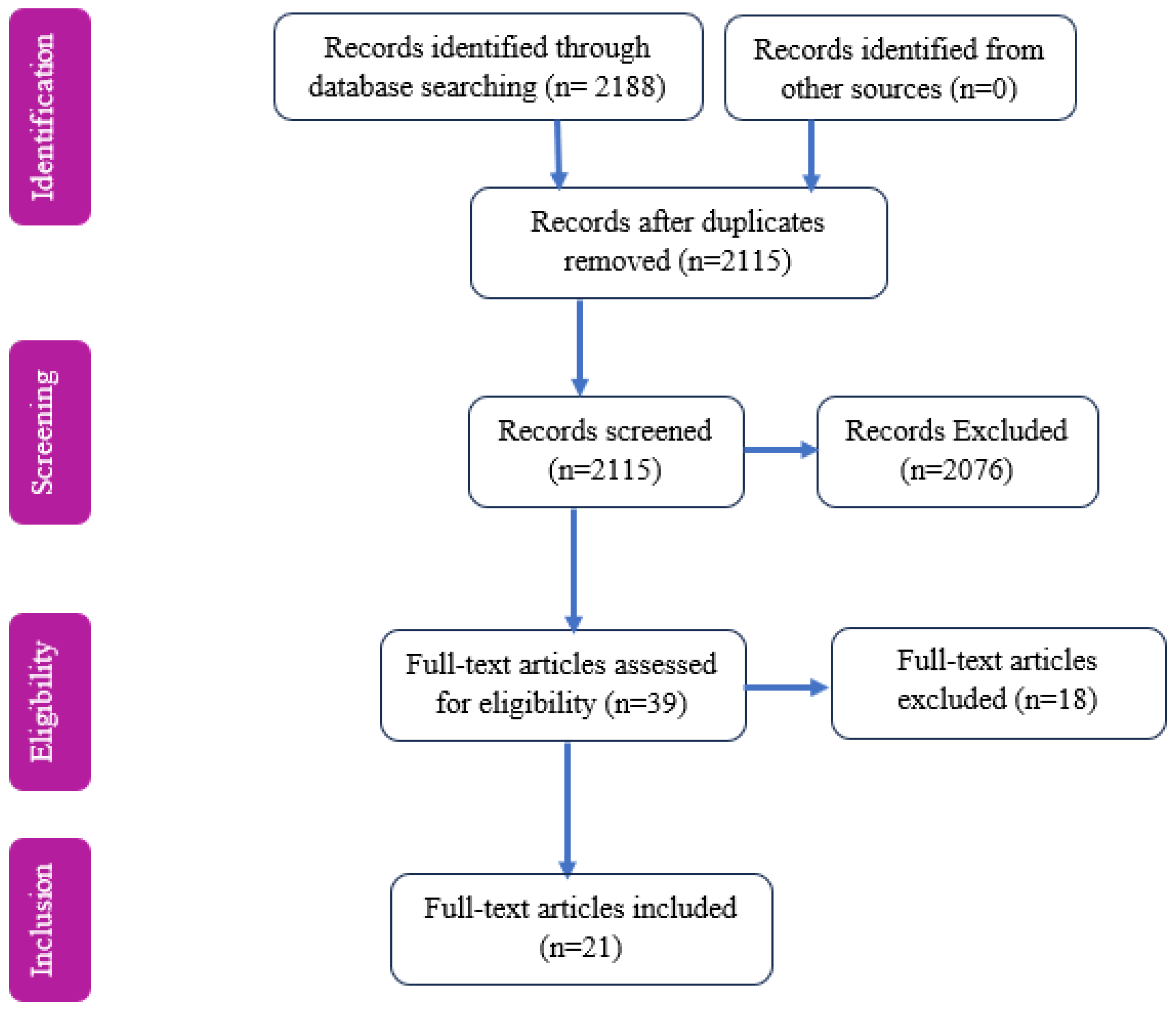
3.1. Literature Screening Results
3.2. Characteristics of Included Studies
3.3. Meta-Analysis
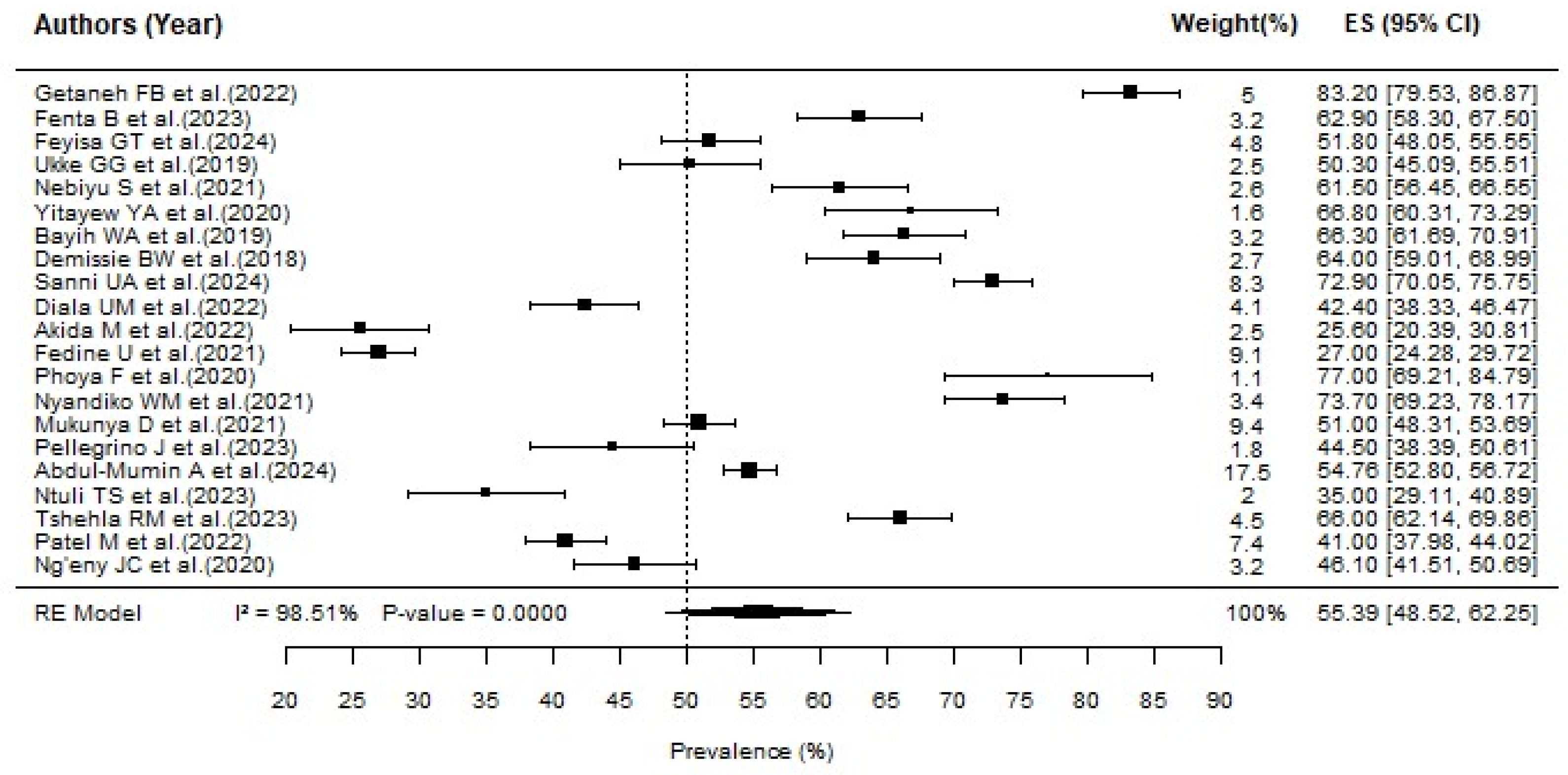
3.3.1. Prevalence of Neonatal Hypothermia
3.3.2. Subgroup Analysis
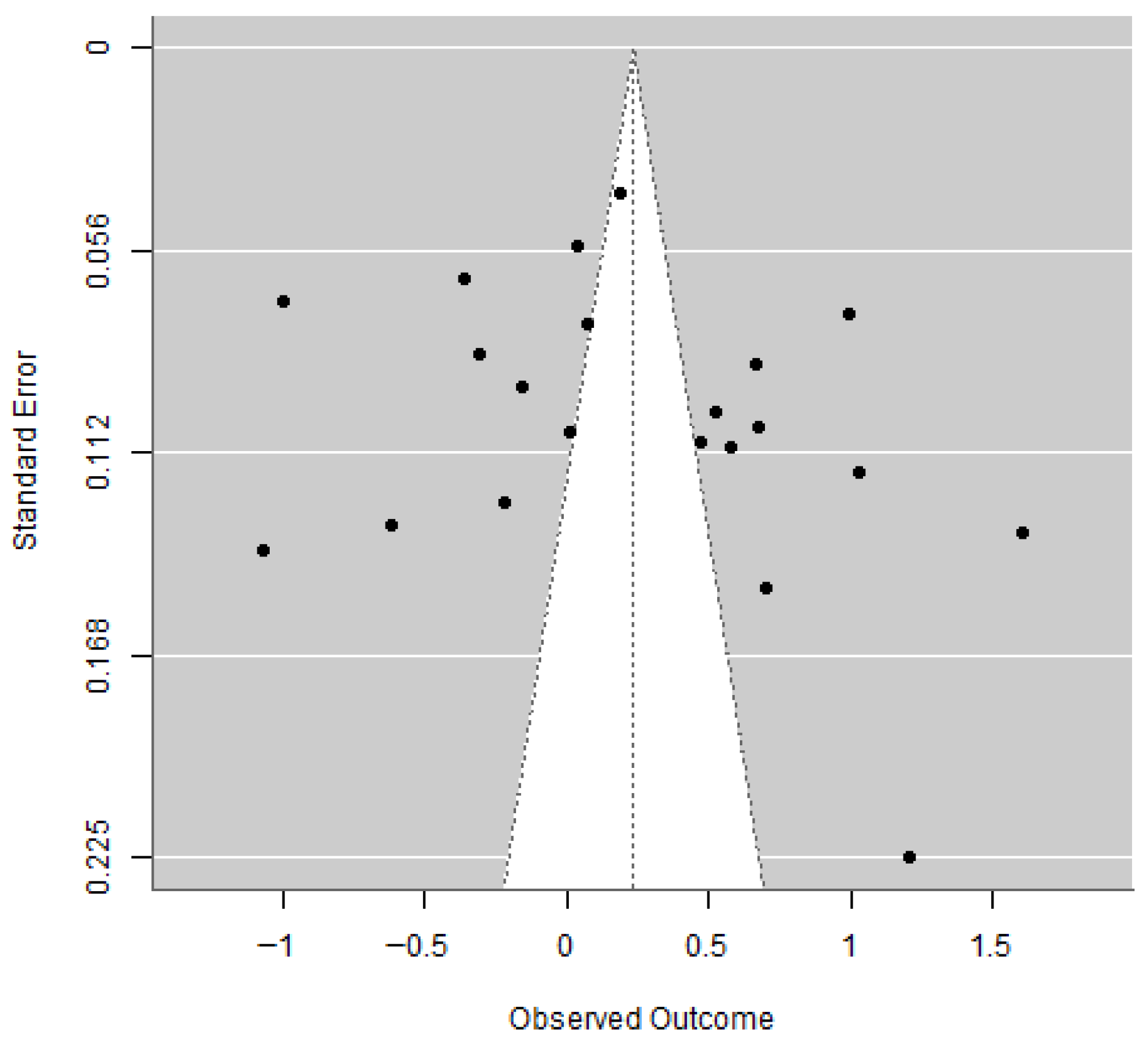
3.3.3. Publication Bias
3.3.4. Factors Associated with Neonatal Hypothermia
4. Discussion
5. Conclusions
Supplementary Materials
Author Contributions
Funding
Institutional Review Board Statement
Informed Consent Statement
Data Availability Statement
Acknowledgments
Conflicts of Interest
Abbreviations
| PRISMA | Preferred Reporting Items for Systematic Review and Meta-Analysis statement |
| JBI | Joanna Briggs Institute |
| OR | Odds ratio |
| CI | Confidence interval |
| WHO | World Health Organization |
| APGAR | Appearance, Pulse, Grimace, Activity, and Respiration |
| SiCPAP | Synchronized inspiratory positive airway pressure |
| NICU | Neonatal intensive care unit |
| CPR | Cardiopulmonary resuscitation |
| ES | Effect size |
References
- Limaso, A.A.; Dangisso, M.H.; Hibstu, D.T. Neonatal survival and determinants of mortality in Aroresa district, Southern Ethiopia: A prospective cohort study. BMC Pediatr. 2020, 20, 33. [Google Scholar] [CrossRef]
- Mitiku, H.D. Neonatal mortality and associated factors in Ethiopia: A cross-sectional population-based study. BMC Womens Health 2021, 21, 156. [Google Scholar] [CrossRef] [PubMed]
- Newborn Mortality. Available online: https://www.who.int/news-room/fact-sheets/detail/newborn-mortality (accessed on 2 September 2024).
- Tembo, D.; Abobo, F.D.N.; Kaonga, P.; Jacobs, C.; Bessing, B. Risk factors associated with neonatal mortality among neonates admitted to neonatal intensive care unit of the University Teaching Hospital in Lusaka. Sci. Rep. 2024, 14, 5231. [Google Scholar] [CrossRef] [PubMed]
- Rosa-Mangeret, F.; Benski, A.C.; Golaz, A.; Zala, P.Z.; Kyokan, M.; Wagner, N.; Muhe, L.M.; Pfister, R.E. 2.5 Million Annual Deaths—Are Neonates in Low- and Middle-Income Countries Too Small to Be Seen? A Bottom-Up Overview on Neonatal Morbi-Mortality. Trop. Med. Infect. Dis. 2022, 7, 64. [Google Scholar] [CrossRef] [PubMed]
- Lawubah, J.; Umeokonkwo, C.D.; Sesay, H.W.; Obafemi, B.J.; Whesseh, F.T.; Maximore, L.; Bobway, F.; Nuyelleh, B.; Sanvee-Blebo, L.M.; Amo-Addae, M. Factors contributing to increased Neonatal Mortality in Grand Kru County, Liberia, January 2017-December 2021. J. Interv. Epidemiol. Public Health 2023, 6, 17. [Google Scholar] [CrossRef]
- Akombi, B.J.; Ghimire, P.R.; Renzaho, A.M. Factors associated with neonatal mortality in the African Great Lakes region: A pooled analysis of national surveys. J. Glob. Health Rep. 2019, 3, e2019043. [Google Scholar] [CrossRef]
- Gebremichael, M.W.; Tsadik, M.; Abebe, H.T.; Gebreegzabiher, A.; Beyene, S.; Aregawi, A.B.; Weldemariam, S. Trends and causes of neonatal mortality from 2010 to 2017 at a Health and Demographic Surveillance site in Northern Ethiopia. Glob. Health Action 2023, 16, 2289710. [Google Scholar] [CrossRef]
- Newborns: Improving Survival and Well-Being. Available online: https://www.who.int/news-room/fact-sheets/detail/newborns-reducing-mortality (accessed on 15 January 2021).
- Pellegrino, J.; Kanyangarara, M.; Agbinko-Djobalar, B.; Owusu, P.G.; Sakyi, K.S.; Baffoe, P.; Sackey, A.; Sagoe-Moses, I.; Dail, R.B. Occurrence of neonatal hypothermia and associated risk factors among low birth weight (LBW) infants in Accra, Ghana. J. Glob. Health Rep. 2023, 6, e2022066. [Google Scholar] [CrossRef]
- Kumar, V.; Shearer, J.C.; Kumar, A.; Darmstadt, G.L. Neonatal hypothermia in low resource settings: A review. J. Perinatol. 2009, 29, 401–412. [Google Scholar] [CrossRef]
- Ahmed, A.T.; Farah, A.E.; Ali, H.N.; Ibrahim, M.O. Determinants of early neonatal mortality (hospital based retrospective cohort study in Somali region of Ethiopia). Sci. Rep. 2023, 13, 1114. [Google Scholar] [CrossRef]
- Interprofessional Education and Research Committee. Newborn Thermoregulation. Champlain Maternal Newborn Regional Program. 2013, pp. 1–16. Available online: https://www.cmnrp.ca/uploads/documents/Newborn_Thermoregulation_SLM_2013_06.pdf (accessed on 19 December 2024).
- Hypothermia—StatPearls—NCBI Bookshelf. Available online: https://www.ncbi.nlm.nih.gov/books/NBK545239/ (accessed on 5 February 2026).
- Cheshire, W.P. Thermoregulatory disorders and illness related to heat and cold stress. Auton. Neurosci. 2016, 196, 91–104. [Google Scholar] [CrossRef]
- World Health Organization. World Health Organization—Thermal Protection of the Newborn: Practical Guide; Maternal and Newborn Health/Safe Motherhood Unit Division of Retroductive Health; World Health Organization: Geneva, Switzerland, 2013; pp. 1–68. [Google Scholar]
- Demissie, B.W.; Abera, B.B.; Chichiabellu, T.Y.; Astawesegn, F.H. Neonatal hypothermia and associated factors among neonates admitted to neonatal intensive care unit of public hospitals in Addis Ababa, Ethiopia. BMC Pediatr. 2018, 18, 263. [Google Scholar] [CrossRef]
- Girma, B.; Tolessa, B.E.; Bekuma, T.T.; Feyisa, B.R. Hypothermia on admission to a neonatal intensive care unit in Oromia, western Ethiopia: A case-control study. BMJ Paediatr. Open 2021, 5, e001168. [Google Scholar] [CrossRef]
- Tasew, H.; Gebrekristos, K.; Kidanu, K.; Mariye, T.; Teklay, G. Determinants of hypothermia on neonates admitted to the intensive care unit of public hospitals of central zone, Tigray, Ethiopia 2017: Unmatched case–control study. BMC Res. Notes 2018, 11, 576. [Google Scholar] [CrossRef] [PubMed]
- Beletew, B.; Mengesha, A.; Wudu, M.; Abate, M. Prevalence of neonatal hypothermia and its associated factors in East Africa: A systematic review and meta-analysis. BMC Pediatr. 2020, 20, 148. [Google Scholar] [CrossRef] [PubMed]
- Wainaina, J.; Ogero, M.; Mumelo, L.; Wairoto, K.; Mbevi, G.; Tuti, T.; Mwaniki, P.; Irimu, G.; English, M.; Aluvaala, J. Hypothermia amongst neonatal admissions in Kenya: A retrospective cohort study assessing prevalence, trends, associated factors, and its relationship with all-cause neonatal mortality. Front. Pediatr. 2024, 12, 1272104. [Google Scholar] [CrossRef] [PubMed]
- Page, M.J.; McKenzie, J.E.; Bossuyt, P.M.; Boutron, I.; Hoffmann, T.C.; Mulrow, C.D.; Shamseer, L.; Tetzlaff, J.M.; Akl, E.A.; Brennan, S.E.; et al. The PRISMA 2020 statement: An updated guideline for reporting systematic reviews. BMJ 2021, 372, n71. [Google Scholar] [CrossRef]
- Getaneh, F.B.; Misganaw, N.M.; Mihretie, D.B.; Bitew, Z.W. Admission Hypothermia and Factors Associated with Mortality among Admitted Hypothermic Preterm Neonates in Neonatal Intensive Care Units of Public Hospitals of Addis Ababa, Ethiopia. Int. J. Pediatr. 2022, 2022, 8078628. [Google Scholar] [CrossRef]
- Fenta, B.; Biyazin, T.; Dagnaw, Y.; Dewey, R.S.; Yetwale, A. Neonatal hypothermia and associated factors in preterm neonates admitted to neonatal intensive care units in southwest Ethiopia. J. Neonatal Nurs. 2023, 29, 307–312. [Google Scholar] [CrossRef]
- Feyisa, G.T.; Marami, S.N.; Dinagde, D.D.; Degefe, B.D.; Abebe, S.T.; Kitil, G.W.; Biratu, A.K. Comparative study of neonatal hypothermia and associated factors among neonates in rural and urban areas of the Shebadino Woreda, Sidama region, Southern Ethiopia: A community-based comparative cross-sectional study. BMC Public Health 2024, 24, 1945. [Google Scholar] [CrossRef]
- Ukke, G.G.; Diriba, K. Prevalence and factors associated with neonatal hypothermia on admission to neonatal intensive care units in Southwest Ethiopia—A cross-sectional study. PLoS ONE 2019, 14, e0218020. [Google Scholar] [CrossRef] [PubMed]
- Nebiyu, S.; Berhanu, M.; Liyew, B. Magnitude and factors associated with neonatal hypothermia among neonates admitted in neonatal intensive care units: Multicenter cross-sectional study. J. Neonatal Nurs. 2021, 27, 111–117. [Google Scholar] [CrossRef]
- Yitayew, Y.A.; Aitaye, E.B.; Lechissa, H.W.; Gebeyehu, L.O. Neonatal Hypothermia and Associated Factors among Newborns Admitted in the Neonatal Intensive Care Unit of Dessie Referral Hospital, Amhara Region, Northeast Ethiopia. Int. J. Pediatr. 2020, 2020, 3013427. [Google Scholar] [CrossRef] [PubMed]
- Bayih, W.A.; Assefa, N.; Dheresa, M.; Minuye, B.; Demis, S. Neonatal hypothermia and associated factors within six hours of delivery in eastern part of Ethiopia: A cross-sectional study. BMC Pediatr. 2019, 19, 252. [Google Scholar] [CrossRef] [PubMed]
- Sanni, U.A.; Usman, F.; Ogunkunle, T.O.; Adamu, A.S.; Lamidi, A.I.; Lawal, T.O.; Bello, S.O.; Na’uzo, A.M.; Ibrahim, T.L.; Naphtal, N.; et al. Hypothermia in preterm infants admitted to low-resource neonatal units in northern Nigeria: An observational study of occurrence and risk factors. BMC Pediatr. 2024, 24, 471. [Google Scholar] [CrossRef]
- Diala, U.M.; Kanhu, P.U.; Shwe, D.D.; Toma, B.O. Prevalence and risk factors for admission hypothermia in neonates in a Tertiary Hospital in Jos, Nigeria. J. Clin. Neonatol. 2022, 11, 195–201. [Google Scholar] [CrossRef]
- Akida, M.; Malasa, L.; Kalingonji, A.; Kalabamu, F.S.; Rutachunzibwa, F.; Fataki, M.; Mwaikambo, E.; Mashalla, Y. Prevalence and Factors Associated with Hypothermia among Neonates in Regional Referral Hospitals in Dar es Salaam, Tanzania. Glob. J. Health Sci. 2022, 14, 37. [Google Scholar] [CrossRef]
- Urubuto, F.; Agaba, F.; Choi, J.; Dusabimana, R.; Teteli, R.; Kumwami, M.; Conard, C.; O’Callahan, C.; Cartledge, P. Prevalence, risk factors and outcomes of neonatal hypothermia at admission at a tertiary neonatal unit, Kigali, Rwanda—A cross-sectional study. J. Matern. Neonatal Med. 2021, 34, 2793–2800. [Google Scholar] [CrossRef]
- Phoya, F.; Langton, J.; Dube, Q.; Iroh Tam, P.-Y. Association of Neonatal Hypothermia with Morbidity and Mortality in a Tertiary Hospital in Malawi. J. Trop. Pediatr. 2020, 66, 470–478. [Google Scholar] [CrossRef]
- Nyandiko, W.M.; Kiptoon, P.; Lubuya, F.A. Neonatal hypothermia and adherence to World Health Organisation thermal care guidelines among newborns at Moi Teaching and Referral Hospital, Kenya. PLoS ONE 2021, 16, e0248838. [Google Scholar] [CrossRef]
- Mukunya, D.; Tumwine, J.K.; Nankabirwa, V.; Odongkara, B.; Tongun, J.B.; Arach, A.A.; Tumuhamye, J.; Napyo, A.; Zalwango, V.; Achora, V.; et al. Neonatal hypothermia in Northern Uganda: A community-based cross-sectional study. BMJ Open 2021, 11, e041723. [Google Scholar] [CrossRef]
- Abdul-Mumin, A.; Boi-Dsane, N.A.A.; Oladokun, S.T.; Owusu, S.A.; Ansah, P. A retrospective data analysis on prevalence and risk factors for hypothermia among sick neonates at presentation to the neonatal intensive care unit of the Tamale Teaching Hospital. PLoS ONE 2024, 19, e0303159. [Google Scholar] [CrossRef] [PubMed]
- Ntuli, T.S.; Mashego, M.P.A.; Hamese, M.H.K. Hypothermia in preterm very-low-birthweight infants in a neonatal care unit of a tertiary hospital in Limpopo Province, South Africa. S. Afr. J. Child Health 2023, 17, 118–121. [Google Scholar] [CrossRef]
- Tshehla, R.M.; Coetzee, M.; Becker, P.J. The impact of hypothermia in a tertiary hospital neonatal unit. S. Afr. J. Child Health 2023, 17, 201–206. [Google Scholar] [CrossRef]
- Patel, M.; Ramagaga, N.; Kruger, D.; Lehnerdt, G.; Mansoor, I.; Mohlala, L.; Rendel, D.; Zaheed, F.; Jordaan, M.; Mokhachane, M.; et al. Hypothermia in neonates born by caesarean section at a tertiary hospital in South Africa. Front. Pediatr. 2022, 10, 957298. [Google Scholar] [CrossRef]
- Ng’eny, J.C.; Velaphi, S. Hypothermia among neonates admitted to the neonatal unit at a tertiary hospital in South Africa. J. Perinatol. 2020, 40, 433–438. [Google Scholar] [CrossRef]
- Brambilla Pisoni, G.; Gaulis, C.; Suter, S.; Rochat, M.A.; Makohliso, S.; Roth-Kleiner, M.; Kyokan, M.; Pfister, R.E.; Schönenberger, K. Ending Neonatal Deaths From Hypothermia in Sub-Saharan Africa: Call for Essential Technologies Tailored to the Context. Front. Public Health 2022, 10, 851739. [Google Scholar] [CrossRef]
- Ruan, J.; Zhong, X.; Qin, L.; Mai, J.; Chen, J.; Ding, H. Incidence and risk factors of neonatal hypothermia: A systematic review and meta-analysis. Acta Paediatr. 2024, 113, 1496–1505. [Google Scholar] [CrossRef]
- Nguyen, L.; Mitsakakis, N.; Sucha, E.; Lemyre, B.; Lawrence, S.L. Factors associated with hypothermia within the first 6 hours of life in infants born at ≥340 weeks’ gestation: A multivariable analysis. BMC Pediatr. 2022, 22, 4–11. [Google Scholar] [CrossRef]
- Ferede, Y.A.; Tassew, W.C.; Zeleke, A.M. Neonatal hypothermia and its determinants among neonates admitted to the neonatal intensive care unit in Ethiopia: A systematic review and meta-analysis. J. Neonatal Nurs. 2024, 31, 152–159. [Google Scholar] [CrossRef]
- Kasturiarachchi, S.; Alwis, I.; Kumara, S.; Rajapaksha, B. Prevalence and associated factors of admission hypothermia among neonates admitted to the premature baby unit of a secondary care hospital in Sri Lanka: A cross-sectional analytical study. BMJ Paediatr. Open 2025, 9, e003233. [Google Scholar] [CrossRef]
- Mank, A.; van Zanten, H.A.; Meyer, M.P.; Pauws, S.; Lopriore, E.; Te Pas, A.B. Hypothermia in Preterm Infants in the First Hours after Birth: Occurrence, Course and Risk Factors. PLoS ONE 2016, 11, e0164817. [Google Scholar] [CrossRef]
- Tessema, T.; Asena, T.F.; Alemayehu, M.M.; Wube, A.M. Risk factors for neonatal hypothermia at Arba Minch General Hospital, Ethiopia. PLoS ONE 2022, 17, e0267868. [Google Scholar] [CrossRef]
- Dunne, E.A.; O’Donnell, C.P.F.; Nakstad, B.; McCarthy, L.K. Thermoregulation for very preterm infants in the delivery room: A narrative review. Pediatr. Res. 2024, 95, 1448–1454. [Google Scholar] [CrossRef]
- Knobel, R.B. Fetal and Neonatal Thermal Physiology. Newborn Infant Nurs. Rev. 2014, 14, 45–49. [Google Scholar] [CrossRef]
- Asmare Techane, M.; Asmare Atalell, K.; Wondim, A. Neonatal hypothermia and its association with delayed initiation of breastfeeding and low birth weight in Ethiopia: Systematic review and meta-analysis. Int. J. Afr. Nurs. Sci. 2022, 16, 100428. [Google Scholar] [CrossRef]



| No | Authors | Year | Country | Study Type | Definition | Population | Sample Size | Prevalence | Risk Factors | Ref. |
|---|---|---|---|---|---|---|---|---|---|---|
| 1. | Getaneh FB et al. | 2022 | Ethiopia | Cross-sectional | Auxiliary temperature < 36.5 | Preterm neonates | 398 | 83.2 | 1, 2, 3, 4, 5 | [23] |
| 2. | Fenta B et al. | 2023 | Ethiopia | Cross-sectional | Auxiliary temperature < 36.5 | Preterm neonates | 423 | 62.9 | 5, 6, 7, 8, 9 | [24] |
| 3. | Feyisa GT et al. | 2024 | Ethiopia | Cross-sectional | Auxiliary temperature < 36.5 | Neonates | 682 | 51.8 | 10, 11, 12 | [25] |
| 4. | Ukke GG et al. | 2019 | Ethiopia | Cross-sectional | Auxiliary temperature < 36.5 | Neonates | 354 | 50.3 | 2, 6, 7, 13, 14 | [26] |
| 5. | Nebiyu S et al. | 2021 | Ethiopia | Cross-sectional | Auxiliary temperature < 36.5 | Neonates | 356 | 61.5 | 2, 5, 7, 13, 15 | [27] |
| 6. | Yitayew YA et al. | 2020 | Ethiopia | Cross-sectional | Auxiliary temperature < 36.5 | Neonates | 202 | 66.8 | 1, 5, 10, 15 | [28] |
| 7. | Bayih WA et al. | 2019 | Ethiopia | Cross-sectional | Auxiliary temperature < 36.5 | Neonates within 6 h of delivery | 403 | 66.3 | 1, 5, 6, 16, 17, 18 | [29] |
| 8. | Demissie BW et al. | 2018 | Ethiopia | Cross-sectional | Auxiliary temperature < 36.5 | Neonates | 356 | 64 | 1, 5, 7, 15 | [17] |
| 9. | Sanni UA et al. | 2024 | Nigeria | Cohort | Auxiliary < 36.5 | Preterm neonates | 933 | 72.9 | 1, 2, 3, 15, 17 | [30] |
| 10. | Diala UM et al. | 2022 | Nigeria | Cross-sectional | Auxiliary < 36.5 | Neonates | 567 | 42.4 | 1, 2, 14, 19, 20 | [31] |
| 11. | Akida M et al. | 2022 | Tanzania | Cross-sectional | Auxiliary temperature < 36.5 | Neonates | 270 | 25.6 | 5, 13, 21 | [32] |
| 12. | Fedine U et al. | 2021 | Rwanda | Cross-sectional | Auxiliary temperature < 36.5 | Neonates | 1021 | 27 | 1, 17 | [33] |
| 13. | Phoya F et al. | 2020 | Malawi | Cross-sectional | Auxiliary temperature < 36.5 | Neonates | 112 | 77 | 2, 5, 7 | [34] |
| 14. | Nyandiko WM et al. | 2021 | Kenya | Cohort | Auxiliary temperature < 36.5 | Neonates in the first 24 h | 372 | 73.7 | 1, 7, 22, 23 | [35] |
| 15. | Mukunya D et al. | 2021 | Uganda | Cross-sectional | Auxiliary temperature < 36.5 | Neonates | 1330 | 51 | 2, 3, 7 | [36] |
| 16. | Pellegrino J et al. | 2023 | Ghana | Cross-sectional | Auxiliary temperature < 36.5 | Low-birth-weight neonates | 254 | 44.5 | 2, 5, 24 | [10] |
| 17. | Abdul-Mumin A et al. | 2024 | Ghana | Cross-sectional | Auxiliary < 36.5 | Neonates | 2469 | 54.76 | 1, 2, 25, 26 | [37] |
| 18. | Ntuli TS et al. | 2023 | South Africa | Retrospective descriptive study | Auxiliary temperature < 36.5 | Preterm low-birth-weight neonates | 252 | 35 | 14, 15, 27, 28 | [38] |
| 19. | Tshehla RM et al. | 2023 | South Africa | Cross-sectional | Auxiliary temperature < 36.5 | Neonates | 579 | 66 | 2, 8, 9, 29, 30 | [39] |
| 20. | Patel M et al. | 2022 | South Africa | Retrospective descriptive study | Auxiliary temperature < 36.5 | Neonates born through caesarean section | 1017 | 41 | 9, 28, 31, 32 | [40] |
| 21. | Ng’eny JC et al. | 2020 | South Africa | Cross-sectional | Skin temperature < 36.5 | Low-birth-weight neonates | 453 | 46.1 | 2, 15 | [41] |
| Subgroups | No. of Studies | ES (95% CI) | Weight (%) | Heterogeneity | |
|---|---|---|---|---|---|
| I2 | p-Value | ||||
| Country | |||||
| Ethiopia | 8 | 63.38 (56.23, 70.53) | 38.10 | 94.7 | <0.0001 |
| South Africa | 4 | 47.10 (33.93, 60.27) | 19.05 | 97.5 | <0.0001 |
| Ghana | 2 | 50.05 (40.03, 60.08) | 9.52 | 89.8 | <0.0001 |
| Nigeria | 2 | 57.69 (27.80, 87.58) | 9.52 | 99.3 | 0.0002 |
| Kenya | 1 | 73.70 (69.23, 78.17) | 4.76 | - | - |
| Malawi | 1 | 77.00 (69.71, 84.79) | 4.76 | - | - |
| Rwanda | 1 | 27.00 (24.28, 29.72) | 4.76 | - | - |
| Tanzania | 1 | 25.60 (20.39, 30.81) | 4.76 | - | - |
| Uganda | 1 | 51.00 (48.31, 53.69) | 4.76 | - | - |
| Study design | |||||
| Cross-sectional | 17 | 55.30 (47.89, 62.71) | 81 | 98.4 | <0.0001 |
| Cohort | 2 | 73.13 (70.73, 75.54) | 9.5 | 0 | <0.0001 |
| Descriptive | 2 | 38.58 (32.78, 44.33) | 9.5 | 68.3 | <0.0001 |
| Study population | |||||
| Neonates | 14 | 55.48 (47.29, 63.67) | 66.7 | 98.4 | <0.0001 |
| Preterm neonates | 3 | 73.07 (61.67, 84.46) | 14.28 | 96.6 | <0.0001 |
| Low-birth-weight neonates | 2 | 45.52 (41.85, 49.19) | 9.5 | 0 | <0.0001 |
| Neonates born through caesarean section | 1 | 41.00 (37.98, 44.02) | 4.76 | - | - |
| Preterm low-birth-weight neonates | 1 | 35.00 (29.11, 40.89) | 4.76 | - | - |
| No. | Subgroups | No. of Studies | OR (95% CI) | Heterogeneity | |
|---|---|---|---|---|---|
| I2 | p-Value | ||||
| 1 | Preterm birth | 9 | 3.49 (1.98, 6.16) | 97.54 | <0.0001 |
| 2 | Low birth weight | 11 | 3.56 (2.36, 5.39) | 79.78 | <0.0001 |
| 3 | No skin-to-skin contact | 9 | 1.31 (0.55, 3.13) | 94.19 | =0.5357 |
| 4 | Lack of resuscitation | 6 | 2.56 (1.75, 3.76) | 49.7 | <0.0001 |
| 5 | Delayed initiation of breastfeeding | 6 | 2.38 (1.57, 3.61) | 81 | <0.0001 |
| 6 | Admission during the cold season | 3 | 1.80(1.33, 2.44) | 0 | =0.0002 |
| 7 | Home delivery | 3 | 1.94 (1.51, 2.50) | 0 | <0.0001 |
| 8 | Early bathing | 3 | 3.03 (0.98, 9.38) | 85.59 | =0.0546 |
| Domain | Risk Factors | Direction of Association | Pooled OR (95% CI) | Strength of Evidence |
|---|---|---|---|---|
| Physiological | Preterm birth | Increased | 3.49 (1.98, 6.16) | Strong |
| Low birth weight | Increased | 3.56 (2.36, 5.39) | Strong | |
| Behavioral | No skin-to-skin contact | Increased | 1.31 (0.55, 3.13) | Weak |
| Lack of resuscitation | Increased | 2.56 (1.75, 3.76) | Moderate | |
| Delayed initiation of breastfeeding | Increased | 2.38 (1.57, 3.61) | Moderate | |
| Early bathing | Increased | 3.03 (0.98, 9.38) | Limited | |
| Environmental | Admission during the cold season | Increased | 1.80(1.33, 2.44) | Moderate |
| Delivery related | Home delivery | Increased | 1.94 (1.51, 2.50) | Moderate |
Disclaimer/Publisher’s Note: The statements, opinions and data contained in all publications are solely those of the individual author(s) and contributor(s) and not of MDPI and/or the editor(s). MDPI and/or the editor(s) disclaim responsibility for any injury to people or property resulting from any ideas, methods, instructions or products referred to in the content. |
© 2026 by the authors. Licensee MDPI, Basel, Switzerland. This article is an open access article distributed under the terms and conditions of the Creative Commons Attribution (CC BY) license.
Share and Cite
Nemomssa, H.D.; Bossuyt, F.; Vandecasteele, B.; Pauw, H.D.; Gidi, N.W.; Bauwens, P. Prevalence and Factors Associated with Neonatal Hypothermia in Sub-Saharan Africa: Systematic Review and Meta-Analysis. J. Clin. Med. 2026, 15, 1818. https://doi.org/10.3390/jcm15051818
Nemomssa HD, Bossuyt F, Vandecasteele B, Pauw HD, Gidi NW, Bauwens P. Prevalence and Factors Associated with Neonatal Hypothermia in Sub-Saharan Africa: Systematic Review and Meta-Analysis. Journal of Clinical Medicine. 2026; 15(5):1818. https://doi.org/10.3390/jcm15051818
Chicago/Turabian StyleNemomssa, Hundessa Daba, Frederick Bossuyt, Bjorn Vandecasteele, Herbert De Pauw, Netsanet Workneh Gidi, and Pieter Bauwens. 2026. "Prevalence and Factors Associated with Neonatal Hypothermia in Sub-Saharan Africa: Systematic Review and Meta-Analysis" Journal of Clinical Medicine 15, no. 5: 1818. https://doi.org/10.3390/jcm15051818
APA StyleNemomssa, H. D., Bossuyt, F., Vandecasteele, B., Pauw, H. D., Gidi, N. W., & Bauwens, P. (2026). Prevalence and Factors Associated with Neonatal Hypothermia in Sub-Saharan Africa: Systematic Review and Meta-Analysis. Journal of Clinical Medicine, 15(5), 1818. https://doi.org/10.3390/jcm15051818