
Skip to Content
Family SciencesFamily Sciences
  • Article
  • Open Access

3 March 2026

Readiness to Change Predicts Economic Self-Sufficiency and Health During Family Development Services

,
,
,
and
1
Omni Institute, P.O. Box 39983, Denver, CO 80239, USA
2
Family Resource Center Association (FRCA), 2543 California St, Denver, CO 80205, USA
*
Author to whom correspondence should be addressed.

Abstract

Preventing child maltreatment requires approaches that address some of the major root causes including ensuring children and families have access to the essentials like housing, food, and medical care. Colorado’s Family Development Services (FDS) improves family economic self-sufficiency (ESS) and health, which are both protective factors linked to reduced child maltreatment. This study examines how the readiness to change, both at the start and throughout FDS enrollment, impacts ESS and health outcomes. FDS, implemented in Family Resource Centers (FRCs), uses evidence-based practices including family-centered programming, motivational interviewing, and goal setting, in addition to connecting families to resources. We hypothesized that these practices foster readiness to change, which, in turn, improves ESS and health. Using data from 2031 families via the Colorado Family Support Assessment (CFSA) 2.0, we applied three multilevel models. The results showed an early readiness to change was linked to greater ESS and health improvements, while accumulated readiness over time led to more rapid progress. These findings underscore the value of family-focused and family-empowering practices for providers, policymakers, and funders who support family and child development services. Further, these results suggest that FRCs should prioritize building strong relationships, employing motivational strategies, and supporting family-driven goal setting to decrease the risk of child maltreatment.

1. Introduction

Child maltreatment, including abuse and neglect, is a topic of public health and policy concern nationally and globally. Recent federal estimates in the United States state that 558,899 children were victims of abuse and/or neglect in 2022, resulting in a rate of 7.7 victims per 1000 children (U.S. HHS, 2025). However, those estimates are thought to underreport the underlying epidemiological problem. National surveys estimate at least one in seven children experience child maltreatment in the U.S. each year (Finkelhor et al., 2015), with estimates of childhood abuse retrospectively approximating that 34% experience emotional abuse, 18% experience physical abuse, and 12% experience sexual abuse (Merrick et al., 2018). Most cases (89%) involve at least one parent (U.S. HHS, 2025) and 74.3% include neglect, often stemming from having limited access to essential resources like housing, food, medical care, or supervision (U.S. HHS, 2024). Within Colorado, the focus of the current study, 9868 children were involved in substantiated child maltreatment cases in 2023, with 90% of those cases substantiating neglect (U.S. HHS, n.d.). While maltreatment occurs across all income levels, economic hardship is a consistent and strong predictor of child protection involvement (Conrad-Hiebner & Byram, 2020; Esposito et al., 2024; for review see Nazari et al., 2025). A key prevention strategy for child maltreatment includes addressing poverty as a risk factor by ensuring access to critical resources such as housing, food, clothing, and medical care. Family Resource Centers (FRCs) are community-based, family-centered organizations that address poverty as a risk factor for child maltreatment and support the overall well-being of families. This study examines a model of service delivery within FRCs, Family Development Services (FDS), which is a systematized approach to providing family support that integrates family-centered programming, motivational interviewing, and goal setting alongside connections to resources and services tailored to support the family’s needs and goals. Evaluations show that families enrolled in FDS demonstrate significant improvements in economic self-sufficiency and health (Omni Institute, 2022, 2023, 2024), reducing the likelihood of child maltreatment.
The current study examines how readiness to change at the beginning of engagement with FDS and throughout engagement with FDS are related to improvements in economic self-sufficiency and health. We posit that the mechanism driving the effectiveness of FDS includes the combination of theory-based and evidence-driven methods and practices that empower families and provide them with adequate support in addressing changes and accomplishing their goals. Testing models of empowerment-based, family-centered responsive models of family support through a traditional research model like a randomized controlled trial is challenging because we cannot randomly assign motivation for seeking services, nor can we randomly assign readiness to change and the behaviors that likely occur as a result of this readiness. Further, the supportive case management, services, and referrals must, by design, be customized to each family’s situation in a responsive model, introducing significant variability in the specific services provided, which make other methods like quasi-experimental designs challenging because matching families based on their specific service provision is nearly impossible. Recognizing these limitations, in this study we examine the experiences of families who are engaging in FDS and draw on natural variability in readiness to change during that engagement.

1.1. Family Resource Centers and Family Development Services

Family Resource Centers (FRCs) are family support hubs that use a strengths-based, multi-generational approach to streamline access to economic resources, mental health support, parenting skills, and other essential services (Casey Family Foundation, 2024; Omni Institute, 2013). Operating under a “no wrong door” model, FRCs reduce barriers by addressing families’ diverse needs in one location (Governing Institute, 2016). Services include programs that strengthen parent–child relationships and provide referrals for early childhood education, housing assistance, nutrition support, parenting education, leadership, and workforce development, among others. Embedded in local communities, FRCs tailor services to cultural and environmental needs, fostering protective factors like economic stability and social support, which help prevent child abuse and neglect (Casey Family Foundation, 2024; Cusick et al., 2024).
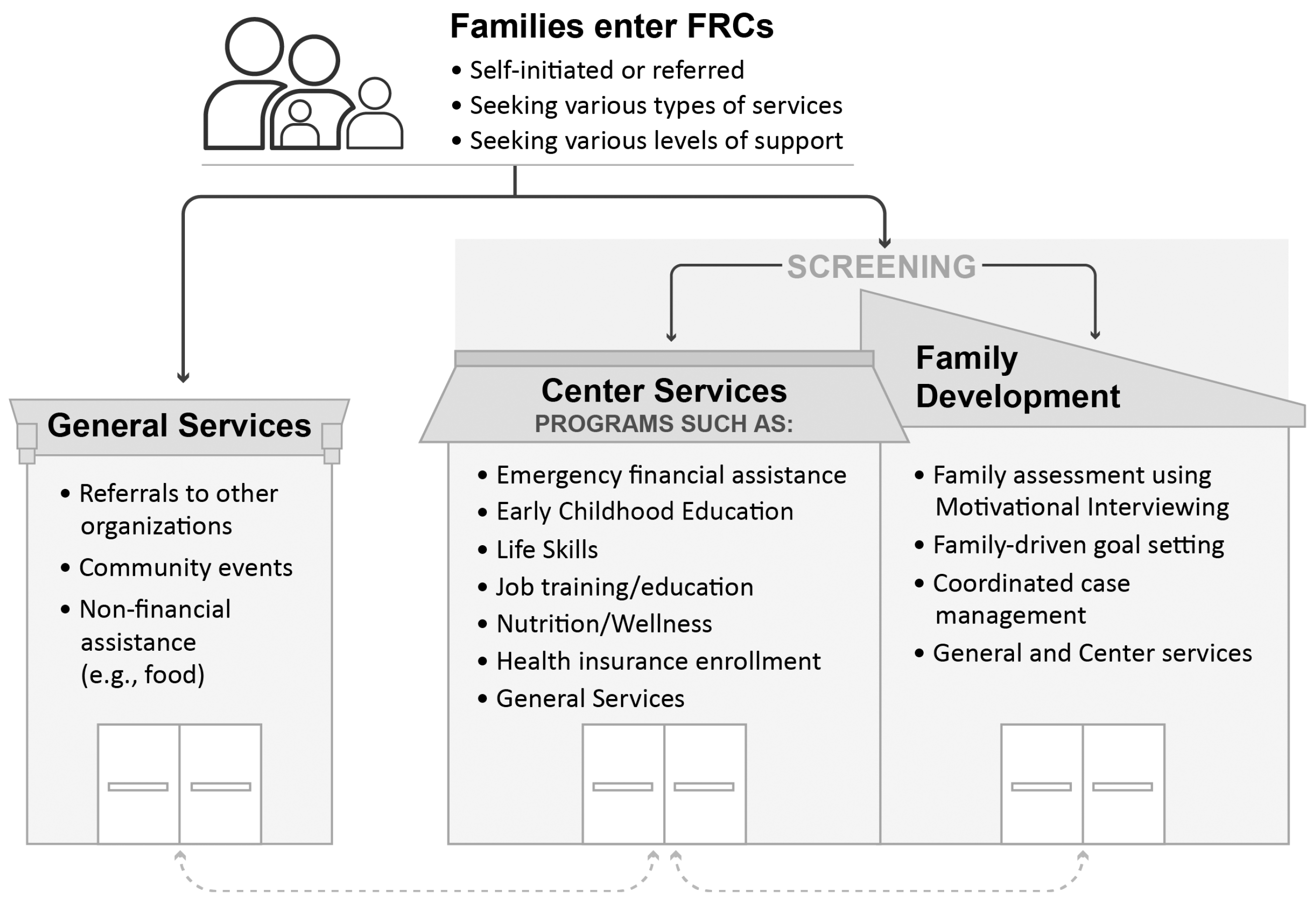
The Colorado Family Pathways Framework©, developed by the Family Resource Center Association (FRCA), provides three service paths for families seeking services from FRCs (see Figure 1):
Figure 1. Family Pathways Framework©.
  • General Services, which involve light-touch universal services for families. These might include child development screenings, parenting tip sheets, and holiday food baskets among other services.
  • Center Services, which involve more specific offerings from the FRC to support family needs. These might include multi-session parent education, fatherhood or nutrition curricula, and General Educational Development (GED) classes.
  • Family Development Services (FDS), which include coordinated case management, motivational interviewing, and goal setting alongside the relevant services and referrals. The current study focuses on FDS, the most intensive path, which includes case management by trained family support workers who empower families toward well-being and self-sufficiency. The FDS approach combines four core practices: (1) centering family choice, (2) motivational interviewing, (3) Specific, Measurable, Attainable, Realistic, and Time-based (SMART) goal setting based on family readiness to change, and (4) ongoing follow-up with the family support worker.

Entering and Engaging in Family Development Services

Upon first accessing services at an FRC, either through self-referral or referral from a community partner such as a school or healthcare provider, all families complete a Common Demographic and Screening Form. This intake screening identifies immediate needs across multiple domains, including housing stability, food security, employment, education, childcare, transportation, and health care. Families with identified needs receive referrals to relevant services. Families with two or more immediate needs are offered enrollment in Family Development Services. Participation in FDS is voluntary, regardless of the pathway of entry.
For families who agree to enroll, formal program participation begins when the family meets with a trained family development case manager to complete a baseline assessment. Within approximately two weeks of enrollment, families complete the Colorado Family Support Assessment (CFSA) 2.0© with their assigned family support worker. The CFSA 2.0 assesses family functioning in domains related to health and economic security, using standardized, behaviorally anchored indicators ranging from 1 (“in crisis”) to 5 (“thriving”). For example, a rating of “in crisis” in the income domain corresponds to a household income between 0 and 100% of the federal poverty line, whereas a rating of “thriving” corresponds to income above 300% of the federal poverty line. The CFSA 2.0 also includes a readiness to change component, in which families self-assess their readiness to set and work toward goals within each domain. Importantly, readiness to change does not function as a gatekeeping or staging mechanism for receiving the service. All families who enroll in FDS proceed to collaborative goal setting regardless of readiness level. Following completion of the baseline CFSA 2.0, family support workers—who are trained case managers and/or social workers—partner with families to develop family-driven SMART goals and connect families with relevant support and services. Readiness to change informs how staff engage with families (e.g., pacing, motivational strategies, and emphasis on relationship-building), rather than whether families receive services or the volume or variety of services they receive. Following screening, baseline assessment, and enrollment in FDS, goals and steps to achieve those goals are typically in place within the first 30 days after enrollment.
Ongoing engagement in FDS is individualized and responsive to family needs and preferences. Follow-up contacts may occur weekly, monthly, or less frequently depending on family goals, current needs, and voluntary participation. Families with greater needs or fewer resources may meet with staff more frequently for a period of time, while families with fewer needs may engage less often. Follow-up assessments to monitor progress toward goals and to reassess support needs are typically conducted every 30–90 days, though timing may vary based on family circumstances. There is no prescribed length of participation in FDS. Families may reduce or discontinue contact when goals are met, when needs change, or when intensive support is no longer desired, and may re-engage if new needs arise. Throughout engagement, family support workers use motivational interviewing techniques, which have been shown to foster trust, strengthen working relationships, and support behavior change (Borrelli et al., 2015; Hettema et al., 2005; Rubak et al., 2005).

1.2. Family Empowerment and Choice

FDS intentionally places family choice and empowerment at the center of their family support framework. Centering family choice as a practice is grounded in theory and research on motivation and behavior change. For example, Self-Determination Theory (SDT) emphasizes three psychological needs for motivation: autonomy, competence, and relatedness (Deci & Ryan, 1985). Intrinsic motivation is thought to arise from genuine interest and enjoyment, and is strongest when individuals feel in control, capable, and socially connected. In contrast, extrinsic motivation, driven by external rewards, varies in autonomy. SDT suggests that environments supporting intrinsic motivation enhance well-being, engagement, and personal growth, while controlling conditions can diminish it (Ryan & Deci, 2000). FDS creates an environment that centers autonomy and supports competence by building skills and connecting families to relevant resources. Research has shown that interventions informed by SDT positively affect health behaviors (see recent meta-analysis by Ntoumanis et al., 2020).
To support autonomous family-led decision-making, the FDS model incorporates family-driven goal setting and motivational interviewing (MI) with a trained family support worker to build trust and empower families. MI is a client-centered, directive approach that enhances intrinsic motivation by exploring and resolving ambivalence (Miller & Rollnick, 2012). Rooted in the Transtheoretical Model of Behavior Change (Prochaska & DiClemente, 1982; Prochaska et al., 1992), MI helps move individuals from contemplation to action. MI is widely applied across a wide range of fields including healthcare (Lundahl et al., 20213), addiction treatment and recovery (Dellazizzo et al., 2023), and child welfare (Casey Family Programs, 2021) to encourage behavior change. In previous research, readiness to change predicted parenting group attendance (Proctor et al., 2018), and reductions in child maltreatment involvement, and improvements in housing, economic stability, and parenting behaviors (Littell & Girvin, 2005). Even brief MI interventions, including single-session healthcare applications, enhance motivation and behavior (Lundahl et al., 2013). MI is thought to support behavior change by addressing ambivalence to behavior change by focusing on the clients’ own goals and values, addressing needs using a tailored personalized approach and by emphasizing client autonomy (Miller & Rollnick, 2012), which has been shown to be more effective than directive or authoritarian methods (Deci & Ryan, 2000). MI is a current focus for practice and policy initiatives with states such as Illinois systematically incorporating MI into their approach to supporting families at risk for child welfare by enhancing family engagement and service participation (White-Wolfe et al., 2025).

1.3. The Colorado Family Support Assessment (CFSA) 2.0©

An integral part of the FDS pathway is the inclusion of consistent and reliable assessment that supports client decision-making and case management. The Colorado Family Support Assessment (CFSA) 2.0© is a valid and reliable tool used by FRCA-member FRCs to measure family economic self-sufficiency (ESS) through a strengths-based, structured interview (Richmond et al., 2015, 2024). The CFSA 2.0 tracks progress across 14 domains, rating each from “in crisis” (1) to “thriving” (5) based on domain-specific criteria. The CFSA 2.0’s two-factor structure allows for robust measurement of ESS and health across diverse populations (Richmond et al., 2024). ESS-related domains include income, employment, housing, transportation, food security, adult education, cash savings, and health coverage. Health-related domains include physical and mental health. Four additional domains, including substance use, debt management, childcare, and child education, are assessed separately.
During CFSA 2.0 administration, families and support workers reflect on the ratings to identify needs and readiness for change. Because the key feature of the Family Pathways Framework© is its emphasis on family empowerment, using motivational interviewing and goal setting to drive change, this study examines how family empowerment and readiness to change influence ESS and health outcomes, specifically testing the role of readiness to change in improving family well-being.

1.4. The Current Study

This study examines readiness to change as a potential mechanism driving the effectiveness of FDS within the Family Pathways Framework©. While evaluations have shown significant improvements in economic self-sufficiency (ESS) and health (Omni Institute, 2022, 2023, 2024), they have not examined the role of readiness to change in these outcomes. Given that the gold-standard methods for evaluating programs (i.e., randomized controlled trials, or quasi-experimental designs) are incompatible with testing the empowerment-based, family-centered responsive nature of FDS, we test the hypothesized mechanism by capturing natural variability in readiness to change during engagement with FDS.
This study is motivated by two goals. The first goal is to assess the role that initial readiness to change plays in later improvements in ESS and health. Families seek FRC services with varying needs and levels of readiness to change; motivational interviewing helps identify and connect readiness to meaningful goals. Families demonstrate initial general agency and empowerment by seeking FRC services, each with varying levels and types of needs, and with different levels of initial readiness to change. Importantly, family support workers use motivational interviewing to tap into and realize a family’s readiness to change, by helping them explicitly identify their readiness and by connecting it to goals that are important to them.
We hypothesize that the initial readiness to change will motivate greater improvements in family self-sufficiency. We expect families that indicate readiness to change on any of the specific domains of ESS or health during their initial assessment will demonstrate greater improvements during engagement in FDS in those areas compared to those who entered and are not ready to change. The second goal was to examine how changes in readiness over time influence ESS and health outcomes. We hypothesize that increases in readiness to change that occur during ongoing engagement with FDS in areas of ESS and/or health over time will also be associated with later improvements in those same areas. To test these hypotheses, we use multilevel modeling on secondary CFSA 2.0 data collected by Family Resource Center Association (FRCA) member FRCs for program evaluation.

2. Materials and Methods

2.1. Participants

This study analyzed data from 2031 families who participated in FDS at 31 FRCA-member FRCs in Colorado between 1 July 2020 and 30 June 2024. Colorado is a state located in the west of the United States. The urban areas of Colorado, including the capital city of Denver, represent about 86% of the population (Colorado Department of Local Affairs, n.d.) while the remaining 14% are in more rural areas of the state. Families in this sample consisted of 3.2 individuals on average and were low-income at FRC entry, with a median annual income of $18,900. The median annual household income in Colorado in 2020 was $75,231 (U.S. Census Bureau, 2020). Table 1 presents the gender, age, and race/ethnicity of the head of households who consented to engage with an FRC family support worker and provided these data by completing a demographic form (n = 1613). In families with multiple caregivers, designation of the head of household is typically assigned to the caregiver most engaged with FRC programming.
Table 1. Counts and percentages for heads of household who engaged with an FRC and completed a demographic questionnaire.

2.2. Procedures

This study includes an analysis of secondary data originally intended for program monitoring and evaluation. All families consented to the collection and use of their information for research and evaluation purposes. FRC staff enter family demographics, unmet needs, services received, and assessments into a shared online database. Demographic information and screening questions were collected at center intake to assess unmet needs and guide service provision. Families opting into FDS completed the Colorado Family Support Assessment (CFSA) 2.0, administered by trained family support workers at baseline (within two weeks of engagement) and at one- to three-month intervals thereafter, with at least 30 days between assessments.
For this study, we examined CFSA 2.0 data from 1 July 2020 to 30 June 2024. Families included in this study had two to five assessments with baseline and latest assessments occurring at least 90 days but no more than two years apart, ensuring sufficient time for meaningful change while limiting outlying unique cases that do not demonstrate a typical experience for families. Up to five CFSA 2.0 assessments per household head were analyzed (i.e., baseline plus up to four follow-ups). Most families had at least two (n = 2031) or three (n = 796) assessments, with fewer having four (n = 278) or five (n = 53). The above inclusion criteria were set following initial exploration into the number of CFSA 2.0s, the average length of time between the baseline and latest assessment, and through discussion with authors familiar with typical family experiences within the program. Every precaution was taken to ensure the ethical use of secondary data, including only receiving data necessary to answer the research questions and de-identifying individuals and families in this dataset. The University of Colorado Boulder IRB reviewed the study design and determined it did not qualify as human subject research under Department of Health and Human Services guidelines.

2.3. Measures

2.3.1. Readiness to Change and Family Self-Sufficiency

We used the Colorado Family Support Assessment (CFSA) 2.0© to capture readiness to change (independent variables) and progress in economic self-sufficiency (ESS) and health (dependent variables). The CFSA 2.0 is a validated family-level assessment with three parts (Richmond et al., 2015, 2024). Part A assesses family stability across 14 domains (e.g., income, employment, housing, food security, physical and mental health) with each domain rated 1 (in crisis) to 5 (thriving), with higher scores indicating greater well-being. For example, for the domain of cash savings, a score of 1 indicates that a family has no cash savings and no desire/ability to set a savings goal, while a score of 2 or greater indicates that the family has planned, begun, or achieved defined levels of cash savings.
Some domains allow “Not Applicable (NA)” or “Not Enough Information (NI)” responses, which were excluded from analysis. Part B, the Protective Factors Survey (PFS), measures factors that protect against child abuse (Counts et al., 2010). Part B was not included in this study. Part C assesses readiness to change, where families with support workers identify areas for change, rate their readiness, and set related goals. Part C was used to measure readiness to change in this study.
To assess whether the validity of the two-factor structure in Part A of the CFSA was consistent with prior research, we ran a Confirmatory Factor Analysis (CFA) on the baseline CFSA 2.0s in the current study. Results closely matched prior research (Richmond et al., 2024), with strong model fit indices (CFI = 0.939, TLI = 0.920, RMSEA = 0.057, SRMR = 0.036) comparable to the original validation study (CFI = 0.914, TLI = 0.886, RMSEA = 0.066, SRMR = 0.043). Taken together, these findings suggested that the factor structure was not only replicated with an independent sample but also exhibited a similarly acceptable level of fit (Richmond et al., 2024).

2.3.2. Measuring Readiness to Change

Using Part C of the CFSA 2.0, we calculated three readiness to change variables that served as the independent variables for both ESS and health, resulting in six total independent variables analyzed in separate multi-level models described further in the next section. ESS-related domains include income, employment, housing, transportation, food security, adult education, cash savings, and health coverage. Health-related domains include physical and mental health.
Baseline Readiness to Change. This is a binary variable indicating whether a family selected at least one readiness domain at baseline (1 = ready to change, 0 = not ready to change). For ESS, readiness required selecting at least one of the eight domains, and for health, at least one of the two domains.
Cumulative Readiness to Change. This is a count of all selected readiness domains across assessments, capturing how readiness can accumulate over time. ESS scores ranged from 0 to 40 (M = 2.47, SD = 2.63) and health scores ranged from 0 to 10 (M = 0.56, SD = 0.99).
Lagged Readiness to Change. This measure includes cumulative readiness scores from the previous assessment, excluding baseline. This is applied to the first through fourth follow-ups to assess how prior readiness to change can influence later assessments.

2.3.3. Analytic Approach

We tested our hypotheses using three sets of two multilevel regressions, one for each readiness to change measure (baseline, cumulative, and lagged), with separate models for ESS and health. Analyses were conducted in R version 4.4.1 (R Core Team, 2024).
Baseline Readiness to Change. First, we assessed how baseline readiness to change can moderate score changes and tested whether higher initial readiness to change could predict greater improvement. We used a multilevel linear model that included fixed effects for baseline readiness to change, assessment order, and their interaction, with random intercepts and slopes to account for individual differences in baseline scores and change rates. This analysis addressed our first goal: to assess the role that initial readiness to change played in later improvements in ESS and health.
Cumulative Readiness to Change. The second set of models examined whether readiness to change accumulated over time could influence ESS and health scores. We used a time-varying multilevel model that also included random intercepts and slopes as well as fixed effects for cumulative readiness to change and its interaction with assessment order to measure changes across assessments. This analysis addressed our second goal: to examine how changes in readiness to change over time influenced ESS and health outcomes.
Lagged Readiness to Change. The final set of analyses evaluated how prior readiness to change could predict future scores, excluding the baseline assessment. Like the cumulative readiness to change assessment, this analysis addressed our second goal of this study aimed at examining changes in readiness to change over time that influenced ESS and health outcomes. However, this assessment targeted more precisely how readiness at the immediately preceding assessment can be associated with changes in these metrics. Due to limited observations per participant born out of the methodological constraint of excluding the baseline assessment, the model was simplified to only include random intercepts to avoid convergence issues.
Finally, we conducted an exploratory analysis to understand how readiness to change at the baseline assessment might differ for different racial/ethnic groups and income groups. This exploratory analysis may provide insight into the way systemic forces may shape family’s initial experience in FDS.

3. Results

The results are presented in three sections, corresponding to the three readiness to change measures, with separate models for economic self-sufficiency (ESS) and health. For each analysis, we have provided a table with full model results and described key findings in the text. Key findings described as statistically significant were all p < 0.05.

3.1. Baseline Readiness to Change

A multilevel linear model assessed whether baseline readiness to change influenced score changes, including fixed effects for baseline readiness to change, assessment order, and their interaction (see Table 2).
Table 2. Results of multi-level model examining effects of readiness to change at baseline on economic self-sufficiency and health.
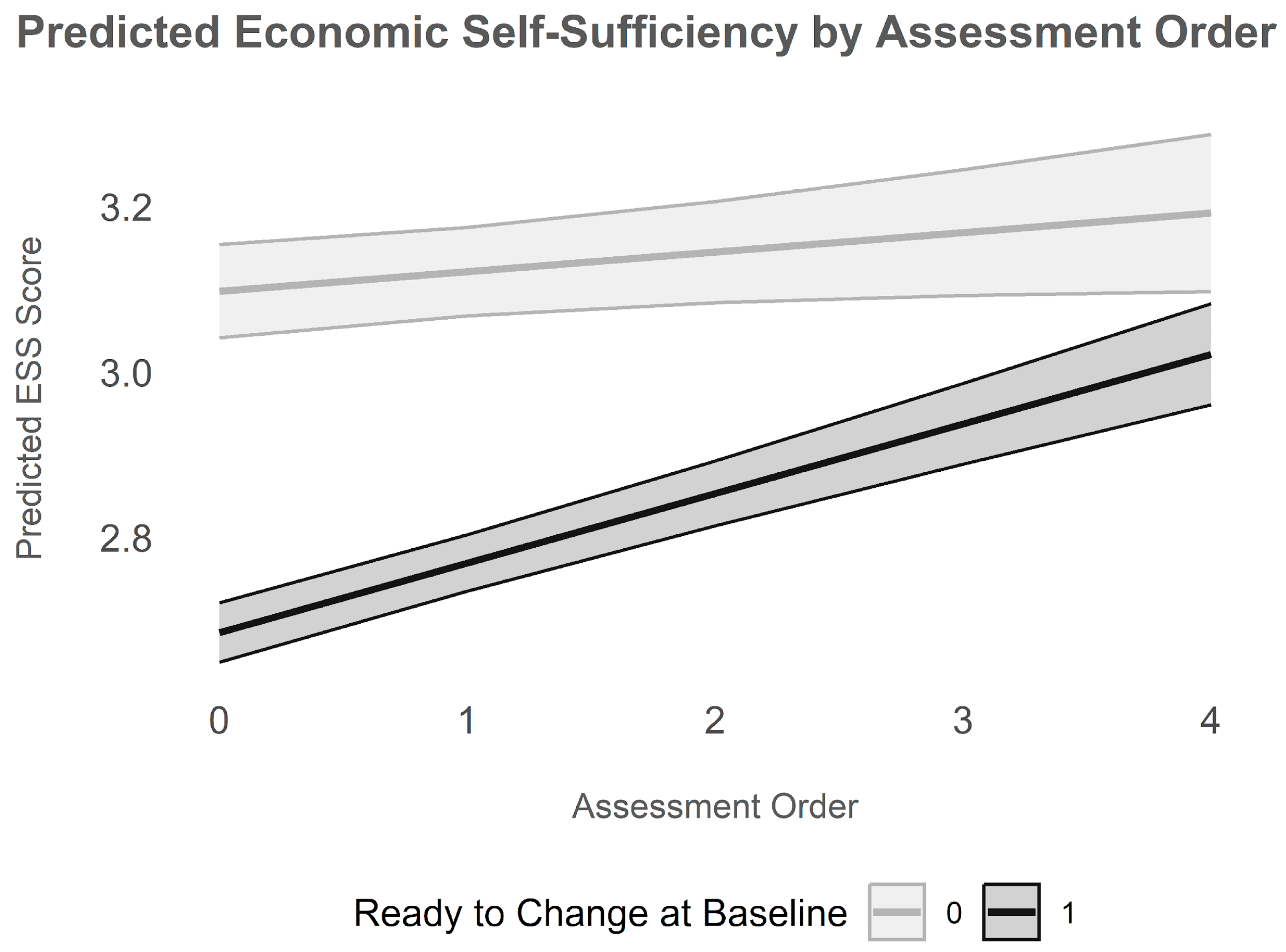
At baseline, 1443 families were ready to change in ESS, while 588 were not. Families ready to change at baseline had significantly lower initial ESS scores (b = −0.41), but they improved significantly more rapidly in ESS across assessments (+0.08 per assessment) compared to those not initially ready to change (see Figure 2).
Figure 2. Predicted ESS score as a function of assessment order for families ready to change at baseline (1) and families not ready to change at baseline (0).
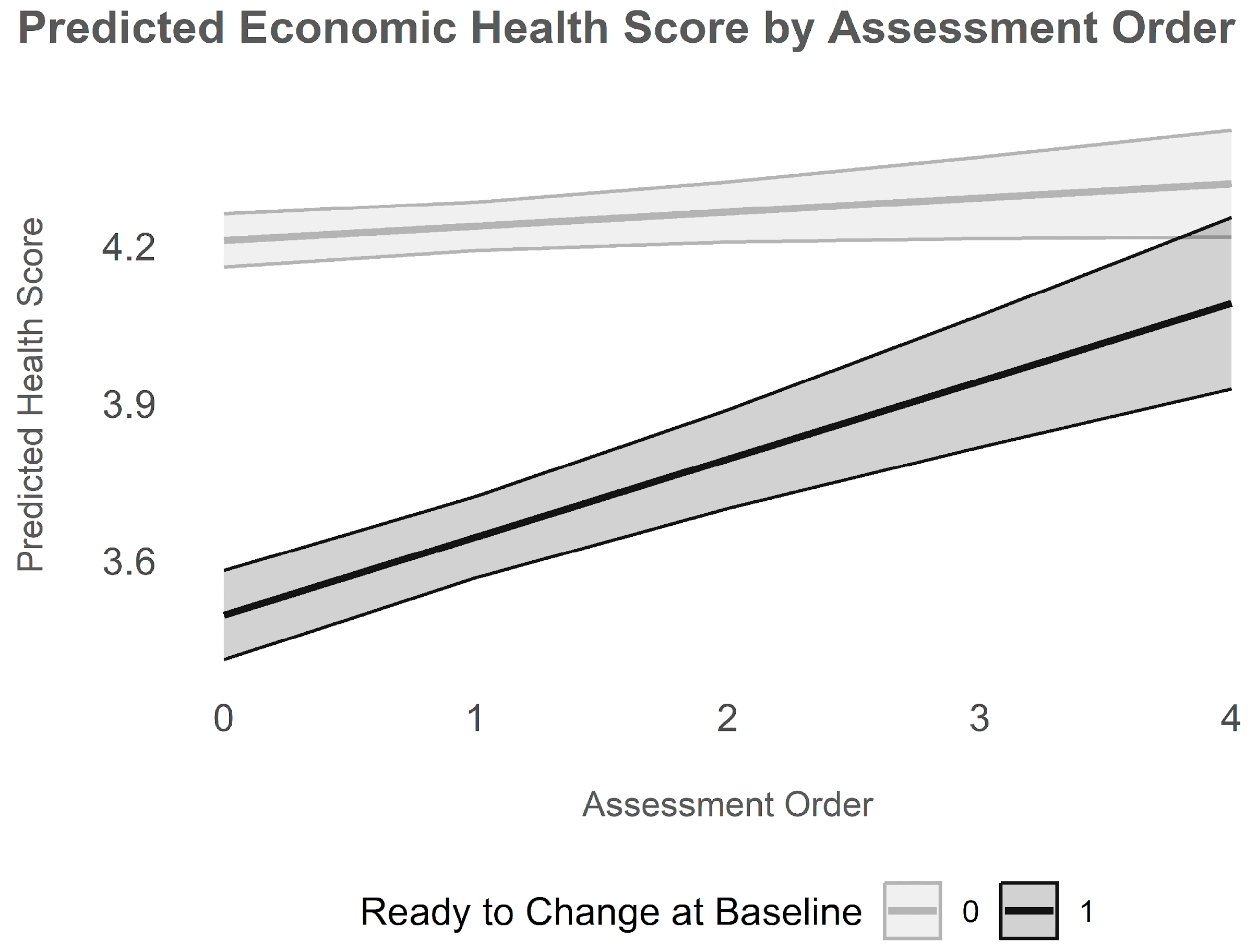
At baseline, 523 families were ready to change in health domains, while 1508 were not. Similar to ESS, families ready to change in health at baseline had significantly lower initial health scores (b = −0.72) showed significantly greater improvement in health over time (+0.15 per assessment, see Figure 3).
Figure 3. Predicted health score as a function of assessment order for families ready to change at baseline (1) and families not ready to change at baseline (0).
Overall, families ready to change at baseline started with lower scores but demonstrated faster improvement in both ESS and health across assessments.

3.2. Cumulative Readiness

The second set of models examined how cumulative readiness to change across assessments influenced ESS and health (Table 3).
Table 3. Results of multi-level model examining effects of cumulative readiness to change on ESS and health.
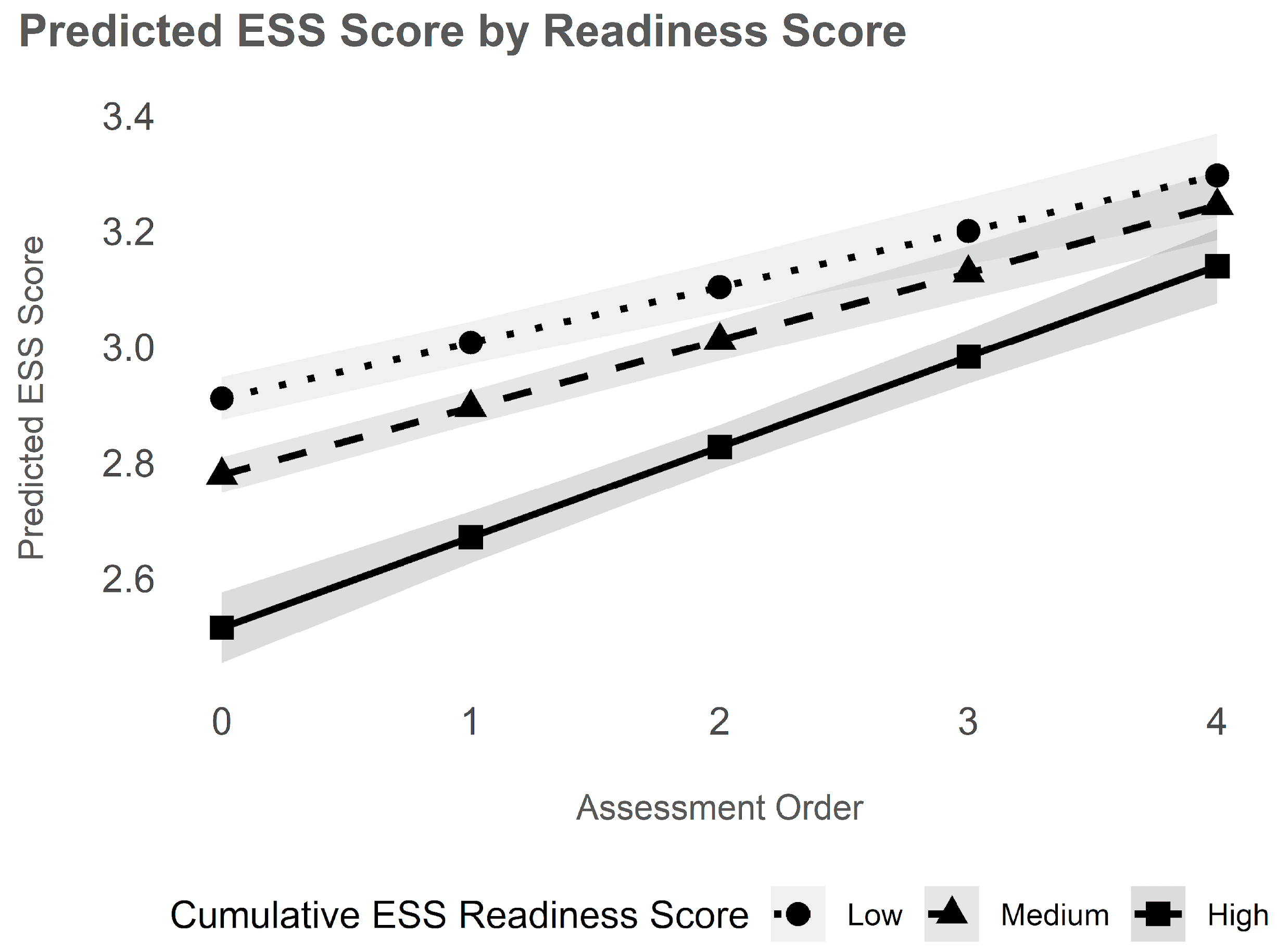
Families with higher cumulative readiness to change in ESS started with significantly lower baseline ESS scores (b = −0.07 per unit increase in readiness). However, the positive interaction with the assessment order (+0.01 per assessment) indicated that these families improved at a significantly faster rate. By the fourth follow-up, the negative baseline effect was nearly eliminated (−0.03), demonstrating a catch-up effect (see Figure 4).
Figure 4. Predicted ESS score as a function of assessment order for three levels of readiness. Low readiness is the 10th percentile of the distribution of ESS readiness, which occurs at a readiness core of 0. Medium is the median ESS readiness and occurs at a readiness score of 2. High is the 90th percentile and occurs at a readiness score of 6.
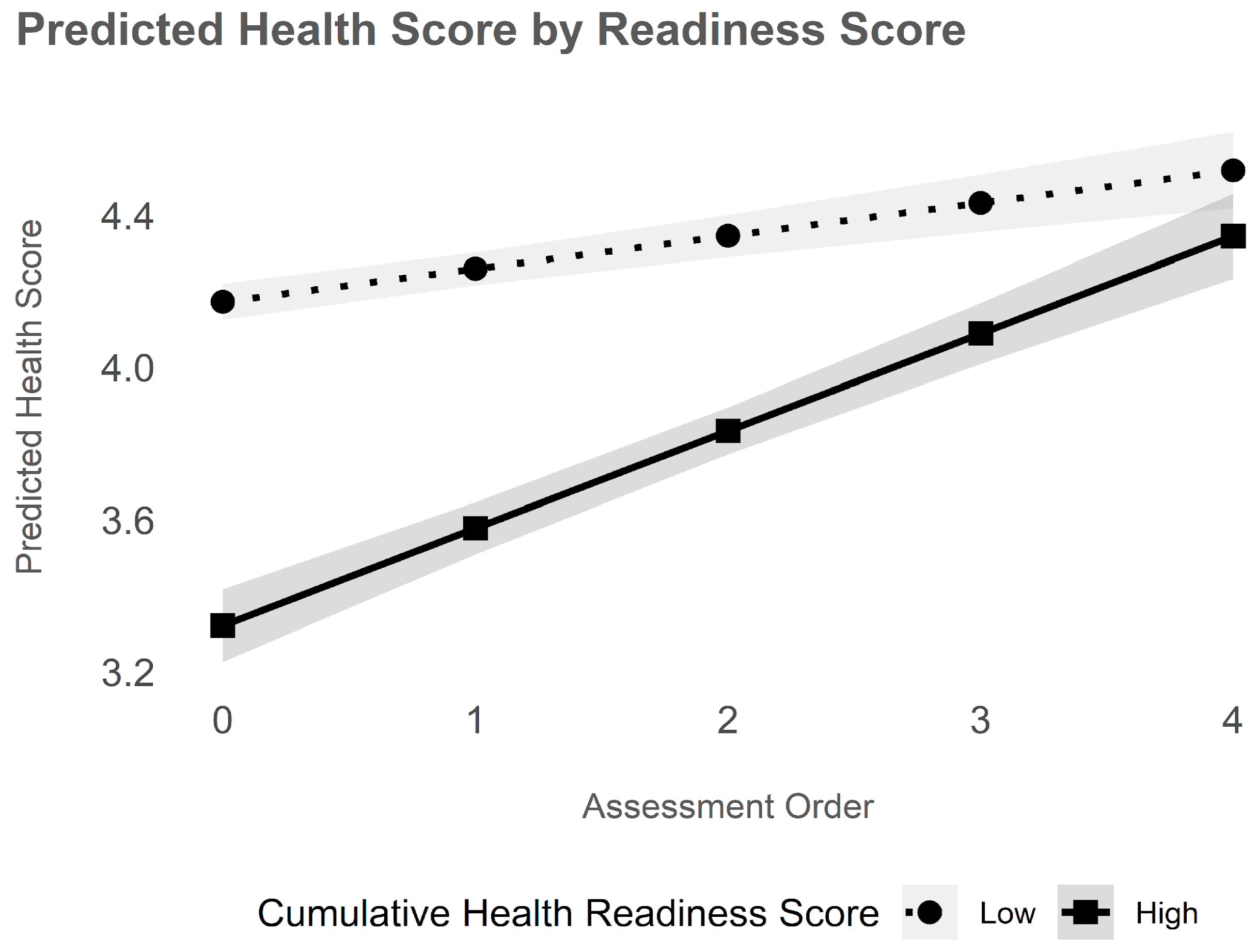
A similar pattern emerged for the health scores; families with higher cumulative readiness to change in health had significantly lower initial health scores (b = −0.43 per unit increase in readiness to change), but the effect diminished over time (+ 0.08 per assessment). By the fourth follow-up, the negative impact had reduced to −0.11, reflecting faster health improvements among families with a high readiness to change (see Figure 5).
Figure 5. Predicted health score as a function of assessment order for two levels of readiness. Low is the 10th percentile of the distribution of health readiness, which occurs at a readiness score of 0. High is the 90th percentile and occurs at a readiness score of 2. Two levels are reported here instead of three, because the distribution of values is narrower for ESS than it is for health.
Overall, while families with higher cumulative readiness to change started with lower scores, they improved more rapidly over time in both ESS and health.

3.3. Lagged Readiness

One of the primary goals of this current study is to understand the role that involvement in FDS has in family readiness to change and subsequent improvements in ESS and health. As such, we implemented a third set of analyses designed to more precisely model how the readiness to change at previous assessments influenced current scores. In our third set of regression analyses, we used the readiness to change score from the previous assessment as a predictor for the current score (Table 4).
Table 4. Results of lagged multi-level model examining effects of readiness to change on a previous assessment on current ESS and health scores.
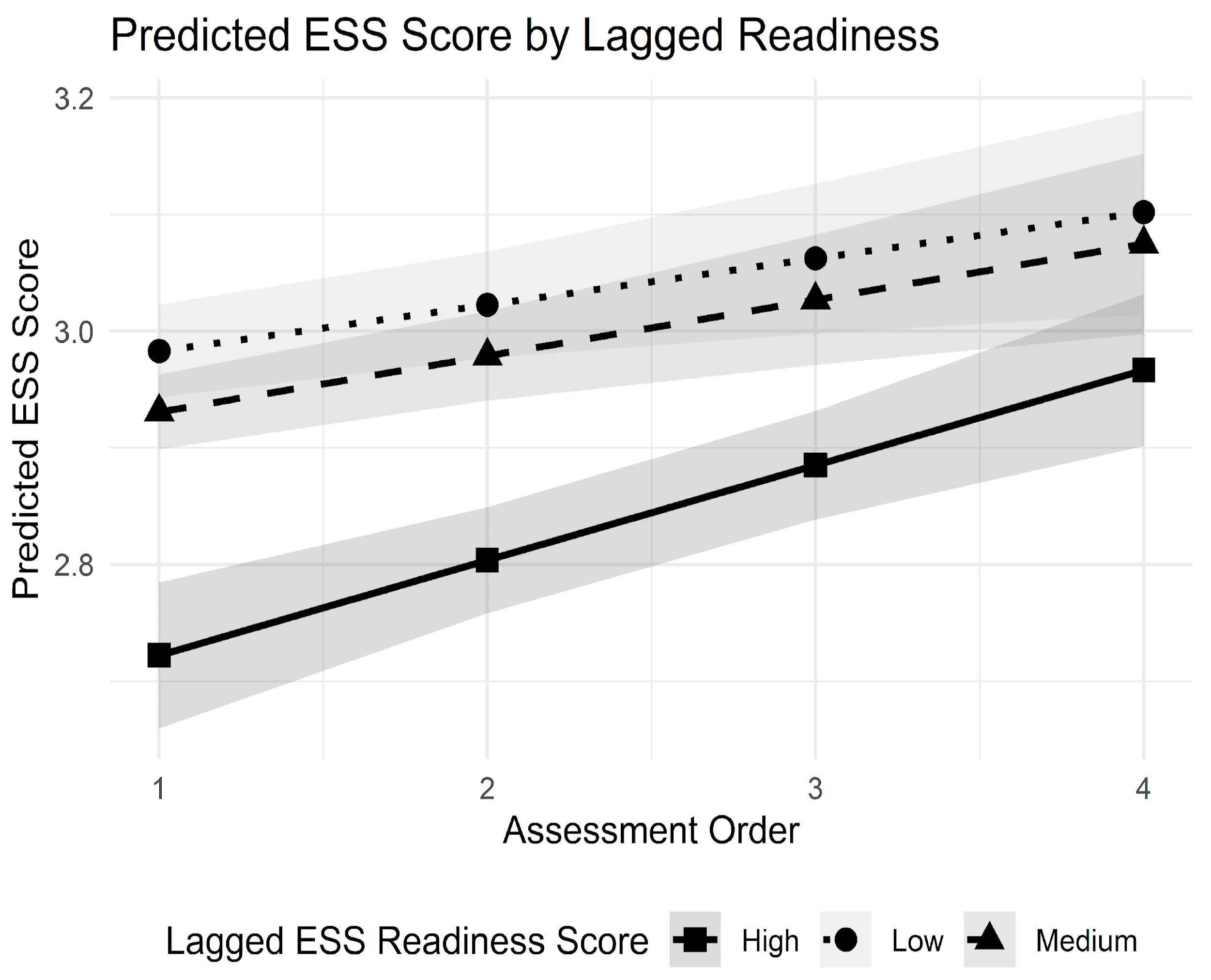
Families with higher prior ESS readiness to change had significantly lower initial ESS scores (b = −0.06 per additional readiness domain) but improved significantly over time. The statistically significant positive interaction with the assessment order (+0.01 per assessment) indicated families with higher readiness to change (and lower initial scores) caught up to those with higher initial scores (see Figure 6).
Figure 6. Predicted ESS score as a function of assessment order for three levels of lagged ESS readiness. Low lagged ESS readiness is the 10th percentile of the distribution, which occurs at a readiness core of 0. Medium is the median of lagged ESS readiness and occurs at a readiness score of 1. High is the 90th percentile and occurs at a lagged ESS readiness of 5.
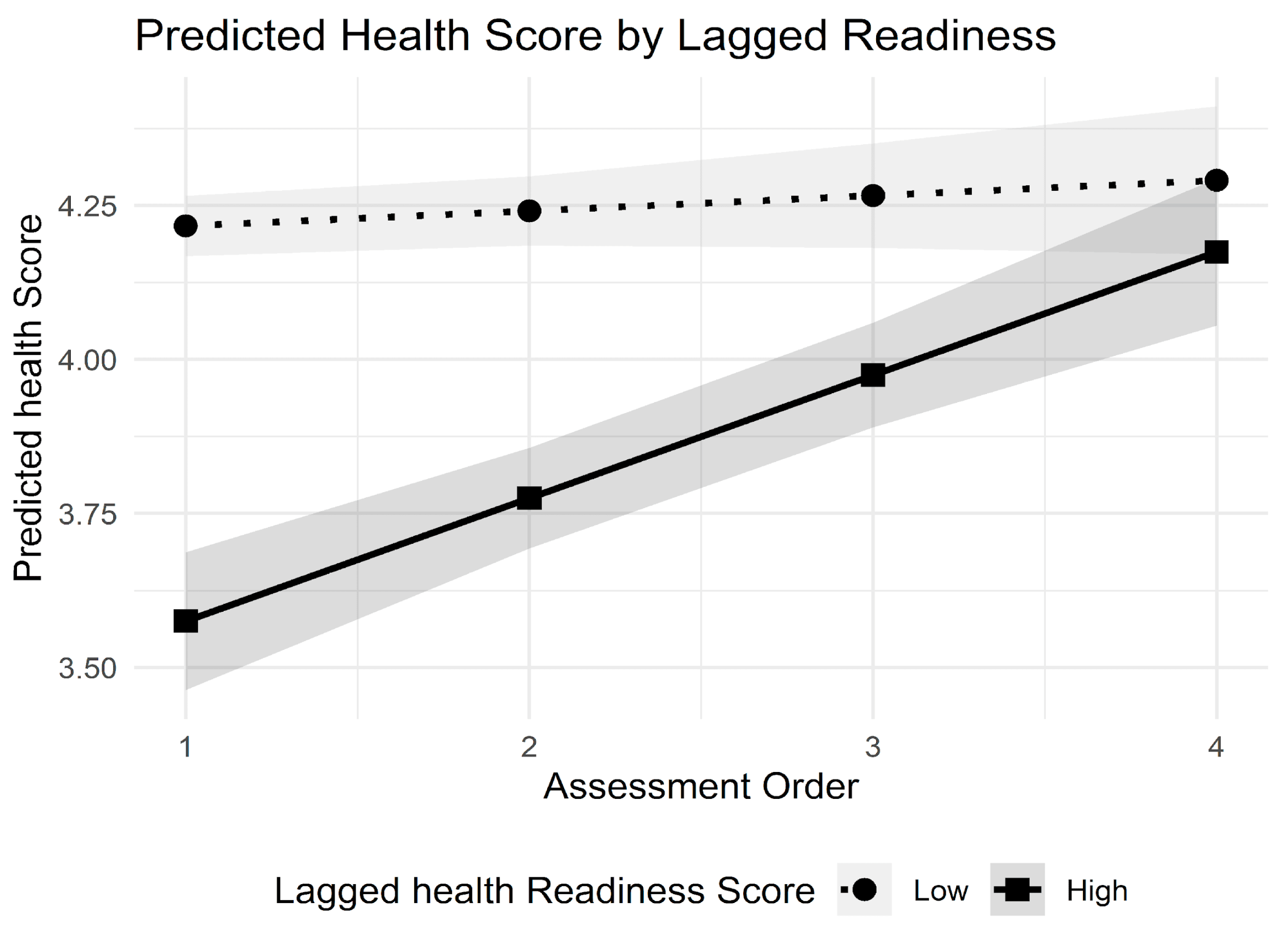
A similar pattern emerged for health, with higher prior health readiness to change linked to significantly lower initial scores (b = −0.41 per readiness to change domain) but significantly faster improvement over time (+0.09 per assessment). Families with higher prior readiness to change showed a catch-up effect in health scores (see Figure 7).
Figure 7. Predicted health score as a function of assessment order for two levels of lagged health readiness. Low lagged ESS readiness is the 10th percentile of the distribution, which occurs at a readiness score of 0. High is the 90th percentile and occurs at a lagged ESS readiness of 1.
Overall, families initially lower ESS and health scores but with higher readiness to change showed greater long-term improvement, reinforcing the role of readiness to change in driving progress.

3.4. Exploratory Analysis: Readiness to Change by Demographic Groupings

We conducted additional exploratory analyses to examine whether readiness to change varied across demographic characteristics, including race, ethnicity, and income—factors that can often alter interactions with social systems, such as law enforcement, child protective services, and healthcare.
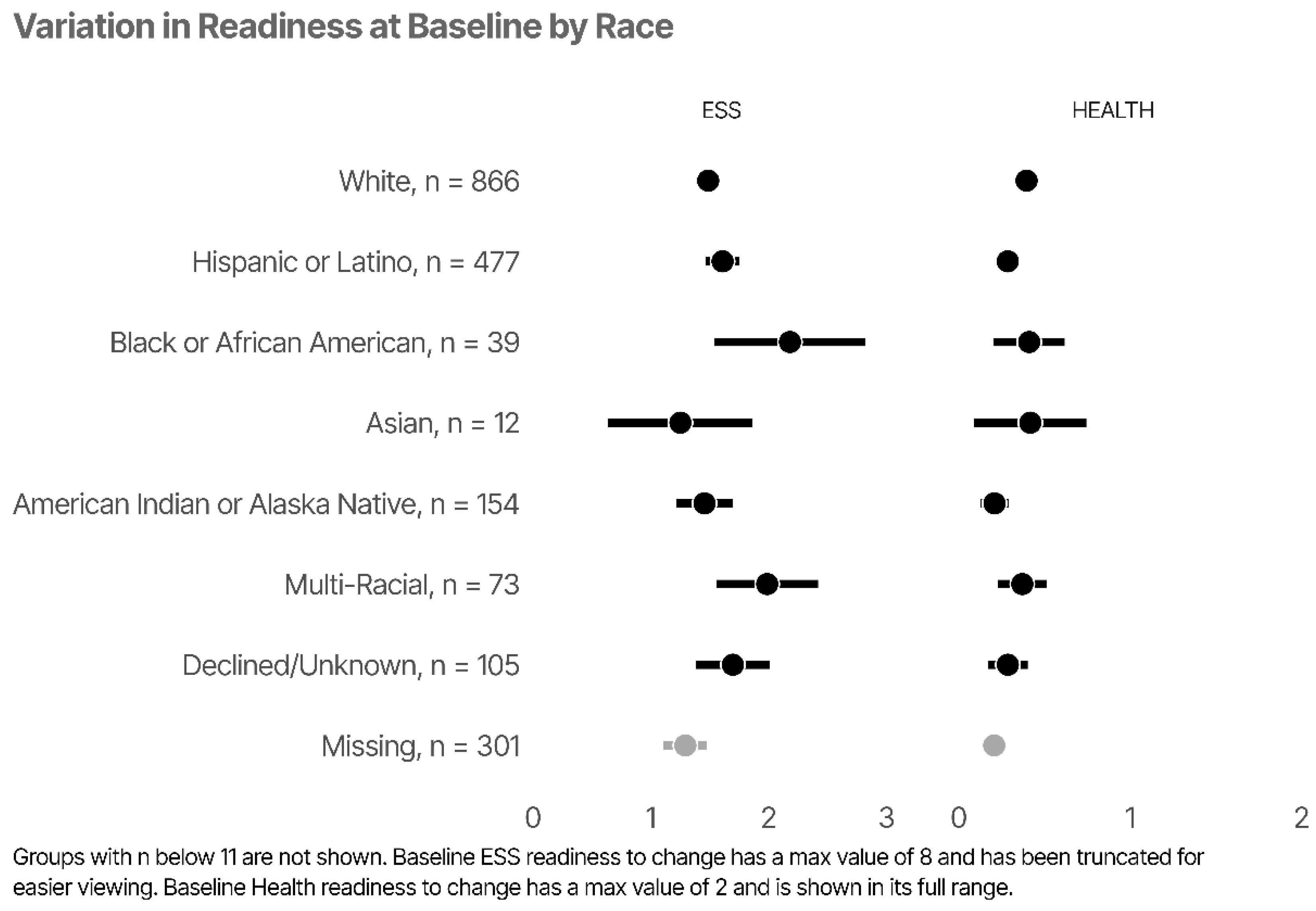
Readiness to change at baseline was plotted for each racial and ethnic group across both ESS and health domains (see Figure 8). Across groups, participants reported readiness to change in 0 to 3 of the eight ESS domains at baseline, with greater variability observed among groups with smaller sample sizes. For health, all groups endorsed readiness to change in 0 to 1 of the two domains. Overall, these data do not suggest substantial systematic differences in baseline readiness to change by race.
Figure 8. Whisker plots demonstrating mean and range of readiness to change at baseline by racial and ethnic groups.
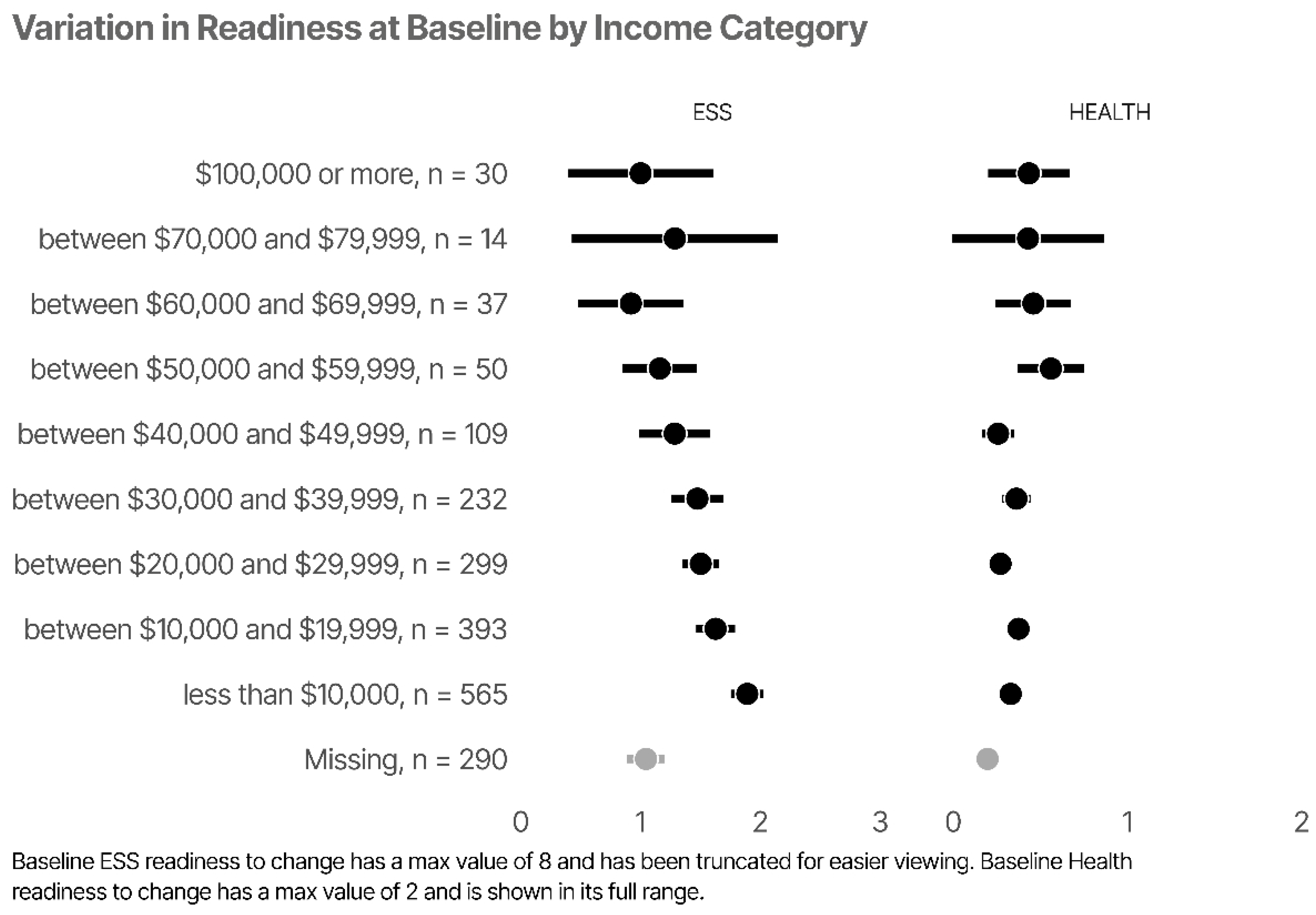
We also examined baseline readiness to change by income level (see Figure 9). A pattern emerged in which families with lower income endorsed readiness to change across a greater number of ESS domains. Across all income groups, families reported readiness to change in 0 to 3 of the eight ESS domains at baseline. These findings aligned with patterns observed elsewhere in our analyses, suggesting that families with greater economic need also exhibited greater readiness to change in areas related to economic self-sufficiency. In contrast, no systematic differences were observed in readiness to change within the health domains by income level, where all families reported readiness to change in 0 to 1 of the two domains at baseline.
Figure 9. Whisker plots demonstrating mean and range of readiness to change at baseline by income groupings.

4. Discussion

The current study leveraged natural variation in family readiness to change and examined its role in impacting family self-sufficiency among families engaged in Family Development Services (FDS). Because family empowerment using motivational interviewing and family-driven goal setting has been a key activity in FDS, we probed the connection between family readiness to change at the beginning and across engagement with FDS to understand how FDS family empowerment practices may be impacting family self-sufficiency. We had two hypotheses. First, we hypothesized that initial family readiness to change would motivate greater improvements in family self-sufficiency, measured via improvements in economic self-sufficiency (ESS) and health. This hypothesis was confirmed. We found that for both ESS and health, families who were ready to change at the baseline also had lower scores at baseline, suggesting that readiness was, at least somewhat, driven by a need to change. This pattern of results is consistent with other research showing families with greater need reporting higher readiness to change (Girvin, 2004; Ramel et al., 2023). Additionally, families who were ready to change at baseline improved more quickly while enrolled in FDS than those families who were not ready to change at baseline.
Our second hypothesis was that increases in readiness to change during engagement in FDS would be associated with increases in ESS and health, demonstrating the impact of family-centered and family-empowering practices that are foundational to the Family Pathways Framework©. We used two different models to test this second hypothesis and found that for both ESS and health, families with higher cumulative readiness to change, acquired at any point since entering FDS, were associated with greater improvements in both ESS and health. In our time-lagged model, we showed that readiness to change scores at a previous assessment predicted improvements in the current assessment, especially early in FDS programming when needs may be the highest. Families determined their engagement duration in FDS and goal setting, but assessments were conducted no less than 30 days apart and no more than 90 days apart.
Exploratory analyses examining demographic differences in baseline readiness to change revealed no substantial systematic variation by race or ethnicity. Readiness to change in ESS domains ranged from 0 to 3 across groups, with similar patterns observed in health domains (0 to 1). When examined by income, families with lower income levels demonstrated greater readiness to change in ESS domains, suggesting that greater economic need may be associated with increased motivation to improve economic self-sufficiency—as demonstrated elsewhere in these analyses. However, no income-related differences were observed in health domains, suggesting that there were no broader influences with income on readiness to change.
The results of the current study contribute to the existing literature connecting readiness to change to improvements in areas of health, addiction treatment and recovery, and child welfare (DiClemente et al., 2004; Littell & Girvin, 2005; Moeini et al., 2022). Within the area of family support and strengthening programs, readiness to change has been found to predict attendance at parenting groups (Proctor et al., 2018), and fewer incidents of child maltreatment (Littell & Girvin, 2005). Additionally, readiness to change has been shown to predict family outcomes, such as a reduction in housing and economic problems, as well as an increase in positive parenting behaviors (Littell & Girvin, 2005). This study supports the importance of family readiness to change on measuring family self-sufficiency and the value and strength that can come from a family’s readiness and willingness to change their situation. Specifically, this study showed that many families see continued increases in readiness to change and subsequent improvements in ESS and health while enrolled in FDS, which we posit reflects the effectiveness of the programming in empowering families using MI and goal setting, all within a family-centered setting. This finding was in line with a wide range of behavior change research. For example, MI has been shown to increase readiness to change across substance use domains, including reducing the use of alcohol and drugs (Schwenker et al., 2023), supporting health promotion behaviors (Bilgin et al., 2022; Bischof et al., 2021; Ghizzardi et al., 2022), and mental health, such as reducing resistance to therapy and improving treatment adherence (Wong-Anuchit et al., 2019).
This study contributed to our knowledge and understanding of family support programs and will benefit social work and family support practice by informing the development of training, coaching, and supervision protocols for family support workers. Specifically, this evidence can underscore the economic and health benefits for families when family support workers use MI to facilitate early readiness to change. The results of the current study can additionally benefit these practices by prioritizing investment in staffing resources toward the onset of engagement to affirm families’ readiness to change and build solid rapport/partnerships to maintain readiness over time and/or grow it if not initially present. Lastly, the study affirmed the practice of administering the CFSA 2.0 using MI skills through a family-led dialog and the value of the CFSA 2.0 as both a practice and research tool. By assessing and reassessing unmet needs, strengths, and areas for growth alongside trained family support workers, families can identify achievable goals and the challenges standing in their way while tracking their progress.

Limitations and Future Research

The CFSA 2.0 measure of readiness to change used in this study was a binary yes/no indicator for domains within the ESS and health areas, and was primarily used as a tool within practice to guide discussions with families. As such, it does not provide a nuanced understanding of the precise level of readiness or the specifics about how families were ready to change within these domains. While this can limit our ability to dissect the complexity of the findings presented here, we believe our findings therefore represent a general and practically measured readiness to change, which is also predictive of improvements in family self-sufficiency.
The focus of this study was on FDS, a program that relies fundamentally on voluntary enrollment. Readiness to change, and its association with change in behaviors and scores related to economic self-sufficiency and health, were likely to be impacted by the extent to which families came to these same services with a sense of agency and family choice. Therefore, our results cannot be generalized to programs by which families are mandated to participate in, but they can be considered applicable to primary prevention programs.
The previous literature has suggested that readiness to change is not uniformly distributed across populations and can be shaped by structural factors, including some of the factors addressed by this program, including poverty and social marginalization (Littell & Girvin, 2005; DiClemente et al., 2004). The results of our exploratory analysis suggested that, in this sample, there was not a systematic difference in baseline readiness to change based on race or ethnicity of the head of household. However, we know that families, regardless of their level of readiness to change or their goals, desires and actions, can be subject to systemic forces beyond what families and FRCs can control. Many of these systemic influences can impact families’ ability to improve their situation and the range in which they can make changes in areas of ESS and health. For example, families may be ready to increase income, but job opportunities may be limited to them based on the economy in their community, their immigration or citizenship status, and/or their criminal history. The period in which these data were collected from families living in Colorado aligned with a rise in a statewide housing crisis (Colorado Coalition for the Homeless, 2023) and inflation that severely increased the cost of basic needs nationally and globally, including both housing and groceries (Kelly, 2024). This study did not address these systemic means by which families’ readiness to change was not met by society or a community with the potential to support the family’s goals. We would expect that marginalized communities would be most impacted by these systemic challenges. Further research is needed to understand how the results of these studies differ for families who are part of specific marginalized communities. Nonetheless, this research demonstrated that family readiness to change was associated with improvements in ESS and health—even during especially challenging economic and health conditions following the initial spread of the COVID-19 virus during which these data were collected.
The focus of this study was on understanding the role of family empowerment, measured via readiness to change, in improvements in economic self-sufficiency (ESS) and health, and therefore did not include analyses of other components of Family Development Services (FDS), such as the provision of services or referrals that increase access to resources and skills. As such, this study tested the components of FDS that were common to all families, including assessment, readiness, and collaborative goal setting, rather than the full range of individualized supports provided. Our focus was on readiness to change due to data availability, and the responsive nature of FDS as a model necessitates that each family receives services, resources, and referrals that fit the needs and current capacity of the unique family. Additionally, previous research has found that service dosage alone was not consistently associated with outcomes for more prescriptive programs (Gross et al., 2015) or have non-linear relationships with outcomes and were moderated by family risk (Hidalgo García et al., 2025). Moreover, readiness to change and motivational factors have been shown to predict engagement and outcomes across intervention contexts independent of service quantity (Prochaska & DiClemente, 1982), and conceptual models of service utilization suggested that higher service volume may reflect greater family need rather than greater readiness or program effectiveness (Andersen, 1974). Future research should continue to disentangle the different components of FDS and their role in creating change in family ESS and health.

5. Conclusions

This study examined readiness to change as a driver of family self-sufficiency and well-being in Family Development Services (FDS). FDS, implemented in Family Resource Centers (FRCs), uses evidence-based practices including family-centered programming, motivational interviewing, and goal setting. Evaluations have shown that families enrolled in FDS repeatedly demonstrated significant improvements in economic self-sufficiency and health (Omni Institute, 2022, 2023, 2024). As economic hardship was the strongest single predictor of child protection involvement (Conrad-Hiebner & Byram, 2020; Esposito et al., 2024; for review see Nazari et al., 2025), this study can help us understand the underlying mechanisms involved in FDS which support changes in economic self-sufficiency and health, thereby reducing the risk of child maltreatment. The results showed that early readiness predicted greater improvements in economic self-sufficiency and health, while higher accumulated readiness during FDS was linked to more rapid progress in both areas. These findings can help explain the consistent improvements observed in FDS evaluations, highlighting readiness to change as a key mechanism of family empowerment.

Author Contributions

Conceptualization—A.J.A., S.B., O.B., and V.H.; Methodology—O.B., S.B., and A.J.A.; Formal Analysis—O.B.; Investigation—A.J.A. and S.B.; Software—O.B.; Resources—R.L.; Data Curation—O.B.; Writing—Original Draft Preparation—A.J.A. and O.B.; Writing—Review & Editing—A.J.A., O.B., S.B., V.H., and R.L.; Visualization—O.B.; Supervision—S.B.; Project Administration—A.J.A. and S.B.; Funding Acquisition—R.L. All authors have read and agreed to the published version of the manuscript.

Funding

This research was funded by the Family Resource Center Association with support from The Jay and Rose Phillips Family Foundation of Colorado.

Institutional Review Board Statement

Ethical review and approval were waived for this study due to the University of Colorado Boulder IRB reviewed the study design and determined it did not qualify as human subject research under Department of Health and Human Services guidelines.

Data Availability Statement

The datasets analyzed during the current study are not available publicly and the authors do not have permission to share the datasets.

Acknowledgments

We want to thank the family support workers who implement the program described here and collect the family-level data required to do this research. We also want to thank FRCA’s Program and Evaluation Committee for supporting and selecting this project and Teri Haymond for her leadership of this program and its research and evaluation, her thought partnership on this study design, and her review of an early version of this manuscript.

Conflicts of Interest

The authors declare no conflicts of interest. Authors affiliated with Omni Institute do not have any competing interests with respect to this manuscript. Family Resource Center Association (FRCA) holds the copyright of the Colorado Family Support Assessment 2.0©. FRCA charges a minimal fee for administrative and training costs for use of the CFSA 2.0. We have assessed that this is not a conflict of interest because FRCA does not profit from others’ use of the CFSA 2.0.

References

  1. Andersen, R. (1974). A behavioral model of families’ use of health services. Center for Health Administration Studies, University of Chicago. [Google Scholar]
  2. Bilgin, A., Muz, G., & Yuce, G. E. (2022). The effect of motivational interviewing on metabolic control and psychosocial variables in individuals diagnosed with diabetes: Systematic review and meta-analysis. Patient Education and Counseling, 105(9), 2806–2823. [Google Scholar] [CrossRef] [PubMed]
  3. Bischof, G., Bischof, A., & Rumpf, H. J. (2021). Motivational interviewing—An evidence-based approach for use in medical practice. Deutsches Ärzteblatt International, 118(7), 109–115. [Google Scholar] [CrossRef] [PubMed]
  4. Borrelli, B., Tooley, E. M., & Scott-Sheldon, L. A. J. (2015). Motivational interviewing for parent-child health interventions: A systematic review and meta-analysis. Pediatric Dentistry, 37(3), 254–265. [Google Scholar] [PubMed]
  5. Casey Family Foundation. (2024). What do we know about family resource centers. Available online: https://www.casey.org/media/24.07-QFF-SCom-Family-Resource-Centers.pdf (accessed on 2 January 2020).
  6. Casey Family Programs. (2021, January 19). How can motivational interviewing be used in child protection? Casey Family Programs. Available online: https://www.casey.org/motivational-interviewing/ (accessed on 12 August 2025).
  7. Colorado Coalition for the Homeless. (2023). The colorado state of homelessness report 2023. Available online: https://www.coloradocoalition.org/sites/default/files/2024-01/2023%20StateOfHomelessness_CCH_F_0.pdf (accessed on 12 August 2025).
  8. Colorado Department of Local Affairs. (n.d.). 2020 census urban area changes and information for Colorado. ArcGIS. Available online: https://experience.arcgis.com/experience/53266f70a1ce42ad977299be7c621de7/page/2020-Criteria/ (accessed on 12 August 2025).
  9. Conrad-Hiebner, A., & Byram, E. (2020). The temporal impact of economic insecurity on child maltreatment: A systematic review. Trauma, Violence, & Abuse, 21(1), 157–178. [Google Scholar] [CrossRef]
  10. Counts, J. M., Buffington, E. S., Chang-Rios, K., Rasmussen, H. N., & Preacher, K. J. (2010). The development and validation of the protective factors survey: A self-report measure of protective factors against child maltreatment. Child Abuse & Neglect, 34(10), 762–772. [Google Scholar] [CrossRef]
  11. Cusick, G., Gaul-Stout, J., Kakuyama-Villaber, R., Wilks, O., Grewal-Kök, Y., & Anderson, C. (2024). A systematic review of economic and concrete support to prevent child maltreatment. Societies, 14(9), 173. [Google Scholar] [CrossRef]
  12. Deci, E. L., & Ryan, R. M. (1985). Intrinsic motivation and self-determination in human behavior. Springer. [Google Scholar]
  13. Deci, E. L., & Ryan, R. M. (2000). The “what” and “why” of goal pursuits: Human needs and the self-determination of behavior. Psychological Inquiry, 11(4), 227–268. [Google Scholar] [CrossRef]
  14. Dellazizzo, L., Potvin, S., Giguère, S., Landry, C., Léveillé, N., & Dumais, A. (2023). Meta-review on the efficacy of psychological therapies for the treatment of substance use disorders. Psychiatry Research, 326, 115318. [Google Scholar] [CrossRef]
  15. DiClemente, C. C., Schlundt, D., & Gemmell, L. (2004). Readiness and stages of change in addiction treatment. The American Journal on Addictions, 13(2), 103–119. [Google Scholar] [CrossRef]
  16. Esposito, T., Caldwell, J., Chabot, M., Blumenthal, A., Trocmé, N., Hélie, S., Fallon, B., & Précourt, S. (2024). Socioeconomic risk and the longitudinal child lifetime prevalence of child protection involvement. Child Abuse & Neglect, 154, 106923. [Google Scholar] [CrossRef]
  17. Finkelhor, D., Turner, H. A., Shattuck, A., & Hamby, S. L. (2015). Prevalence of childhood exposure to violence, crime, and abuse: Results from the national survey of children’s exposure to violence. JAMA Pediatrics, 169(8), 746–754. [Google Scholar] [CrossRef]
  18. Ghizzardi, G., Arrigoni, C., Dellafiore, F., & Caruso, R. (2022). Efficacy of motivational interviewing on enhancing self-care behaviors among patients with chronic heart failure: A systematic review and meta-analysis of randomized controlled trials. Heart Failure Reviews, 27(4), 1029–1041. [Google Scholar] [CrossRef] [PubMed]
  19. Girvin, H. (2004). Beyond ‘stages of change:’ using readiness for change and caregiver-reported problems to identify meaningful subgroups in a child welfare sample. Children and Youth Services Review, 26(10), 897–917. [Google Scholar] [CrossRef]
  20. Governing Institute. (2016). No wrong door: A holistic approach to human services. Available online: https://papers.governing.com/No-Wrong-Door-A-Holistic-Approach-to-Human-Services-73108.html (accessed on 12 August 2025).
  21. Gross, T., Mason, W. A., Parra, G., Oats, R., Ringle, J. L., & Haggerty, K. (2015). Adherence and dosage contributions to parenting program quality. Journal of the Society for Social Work and Research, 6(4), 467–489. [Google Scholar] [CrossRef] [PubMed]
  22. Hettema, J., Steele, J., & Miller, W. R. (2005). Motivational interviewing. Annual Review of Clinical Psychology, 1(1), 91–111. [Google Scholar] [CrossRef]
  23. Hidalgo García, V., Pérez-Padilla, J., Camacho Martínez-Vara de Rey, C., & Jiménez García, L. (2025). The role of dosage and family profiles in a child welfare home visiting program. Child Youth Care Forum, 54, 435–452. [Google Scholar] [CrossRef]
  24. Kelly, J. (2024, December 11). CBS News price tracker shows how much food, gas, utility and housing costs are rising—CBS News. Available online: https://www.cbsnews.com/news/price-tracker/ (accessed on 12 August 2025).
  25. Littell, J. H., & Girvin, H. (2005). Caregivers’ readiness for change: Predictive validity in a child welfare sample. Child Abuse & Neglect, 29(1), 59–80. [Google Scholar] [CrossRef]
  26. Lundahl, B., Moleni, T., Burke, B. L., Butters, R., Tollefson, D., Butler, C., & Rollnick, S. (2013). Motivational interviewing in medical care settings: A systematic review and meta-analysis of randomized controlled trials. Patient Education and Counseling, 93(2), 157–168. [Google Scholar] [CrossRef]
  27. Merrick, M. T., Ford, D. C., Ports, K. A., & Guinn, A. S. (2018). Prevalence of adverse childhood experiences from the 2011–2014 behavioral risk factor surveillance system in 23 states. JAMA Pediatrics, 172(11), 1038–1044. [Google Scholar] [CrossRef]
  28. Miller, W. R., & Rollnick, S. (2012). Motivational interviewing: Helping people change. Guilford Press. [Google Scholar]
  29. Moeini, B., Hazavehei, S. M. M., Faradmal, J., Ahmadpanah, M., Dashti, S., Hashemian, M., & Shahrabadi, R. (2022). The relationship between readiness for treatment of substance use and self-efficacy based on life skills. Journal of Ethnicity in Substance Abuse, 21(1), 364–376. [Google Scholar] [CrossRef]
  30. Nazari, H., Oleson, J. C., & De Haan, I. (2025). Socioeconomic status and child maltreatment: A critical literature review. Social Sciences, 14(6), 331. [Google Scholar] [CrossRef]
  31. Ntoumanis, N., Ng, J. Y. Y., Prestwich, A., Quested, E., Hancox, J. E., Thøgersen-Ntoumani, C., Deci, E. L., Ryan, R. M., Lonsdale, C., & Williams, G. C. (2020). A meta-analysis of self-determination theory-informed intervention studies in the health domain: Effects on motivation, health behavior, physical, and psychological health. Health Psychology Review, 15(2), 214–244. [Google Scholar] [CrossRef] [PubMed]
  32. Omni Institute. (2013). Key components of family resource centers: A review of the literature. Available online: https://docs.wixstatic.com/ugd/20e556_7d6b57ed42d34674a87ac78d28f01bc8.pdf (accessed on 12 August 2025).
  33. Omni Institute. (2022). Colorado family resource center association annual evaluation report 2021–2022. Available online: https://www.cofamilycenters.org/wp-content/uploads/2022/10/Family-Resource-Center-Association-2021-2022-Evaluation-Report.pdf (accessed on 12 August 2025).
  34. Omni Institute. (2023). Colorado family resource center association annual evaluation report 2022–2023. Available online: https://www.cofamilycenters.org/wp-content/uploads/2023/12/Family-Resource-Center-Association-2022-2023-Annual-Evaluation-Report.pdf (accessed on 12 August 2025).
  35. Omni Institute. (2024). Colorado family resource center association annual evaluation report 2023–2024. Available online: https://www.omni.org/family-resource-centers-eval-2024 (accessed on 12 August 2025).
  36. Prochaska, J. O., & DiClemente, C. C. (1982). Transtheoretical therapy: Toward a more integrative model of change. Psychotherapy: Theory, Research & Practice, 19(3), 276–288. [Google Scholar] [CrossRef]
  37. Prochaska, J. O., DiClemente, C. C., & Norcross, J. C. (1992). In search of how people change: Applications to addictive behaviors. American Psychologist, 47(9), 1102–1114. [Google Scholar] [CrossRef] [PubMed]
  38. Proctor, K. B., Brestan-Knight, E., Fan, J., & Zlomke, K. R. (2018). Assessing parental readiness to change: A psychometric evaluation of the READI-SF in a community sample. Journal of Child and Family Studies, 27(4), 1054–1064. [Google Scholar] [CrossRef]
  39. Ramel, M., Wilfley, D. E., Tabak, R., Lew, D., Moursi, N. A., Kilanowski, C., Cook, S. R., Eneli, I. U., Quattrin, T., Schechtman, K. B., & Epstein, L. H. (2023). Relationships examined: Parent and child readiness to change and sociodemographic characteristics in family based weight loss treatment. Pediatric Obesity, 18(9), e13062. [Google Scholar] [CrossRef]
  40. R Core Team. (2024). R: A language and environment for statistical computing [Computer software]. R Foundation for Statistical Computing. Available online: https://www.R-project.org (accessed on 12 August 2025).
  41. Richmond, M. K., Bayless, S. D., & Haymond, T. M. (2024). A validation study of the colorado family support assessment 2.0. Children and Youth Services Review, 163, 107730. [Google Scholar] [CrossRef]
  42. Richmond, M. K., Pampel, F. C., Zarcula, F., Howey, V., & McChesney, B. (2015). Reliability of the Colorado Family Support Assessment: A self-sufficiency matrix for families. Research on Social Work Practice, 27(6), 695–703. [Google Scholar] [CrossRef]
  43. Rubak, S., Sandbaek, A., Lauritzen, T., & Christensen, B. (2005). Motivational interviewing: A systematic review and meta-analysis. British Journal of General Practice, 55(513), 305–312. [Google Scholar]
  44. Ryan, R. M., & Deci, E. L. (2000). Self-determination theory and the facilitation of intrinsic motivation, social development, and well-being. American Psychologist, 55(1), 68–78. [Google Scholar] [CrossRef]
  45. Schwenker, R., Dietrich, C. E., Hirpa, S., Nothacker, M., Smedslund, G., Frese, T., & Unverzagt, S. (2023). Motivational interviewing for substance use reduction. Cochrane Database of Systematic Reviews, 2023(12), CD008063. [Google Scholar] [CrossRef]
  46. U.S. Census Bureau. (2020). S1901: Income in the past 12 months (in 2020 inflation-adjusted dollars) [American Community Survey 5-Year Estimates table for Colorado]. Available online: https://data.census.gov (accessed on 12 August 2025).
  47. U.S. HHS. (n.d.). Child welfare outcomes: Colorado. Available online: https://cwoutcomes.acf.hhs.gov/cwodatasite/byState/colorado/ (accessed on 5 January 2026).
  48. U.S. HHS. (2024). Child Maltreatment 2022. Available online: https://acf.gov/sites/default/files/documents/cb/cm2022.pdf (accessed on 12 August 2025).
  49. U.S. HHS. (2025). Child Maltreatment 2023. Available online: https://acf.gov/sites/default/files/documents/cb/cm2023.pdf (accessed on 12 August 2025).
  50. White-Wolfe, H., Creavey, K., Harison, A., Wei, X., Foltz, R., & Chor, B. (2025). Motivational interviewing: Illinois implementation in child welfare. Chapin Hall. Available online: https://www.chapinhall.org/project/implementing-motivational-interviewing-in-illinois-child-welfare-strengthening-family-engagement-and-casework-practice/ (accessed on 12 August 2025).
  51. Wong-Anuchit, C., Chantamit-o-pas, C., Schneider, J. K., & Mills, A. C. (2019). Motivational interviewing–based compliance/adherence therapy interventions to improve psychiatric symptoms of people with severe mental illness: Meta-analysis. Journal of the American Psychiatric Nurses Association, 25(2), 122–133. [Google Scholar] [CrossRef]
Disclaimer/Publisher’s Note: The statements, opinions and data contained in all publications are solely those of the individual author(s) and contributor(s) and not of MDPI and/or the editor(s). MDPI and/or the editor(s) disclaim responsibility for any injury to people or property resulting from any ideas, methods, instructions or products referred to in the content.

Article Metrics

Citations

Article Access Statistics

Multiple requests from the same IP address are counted as one view.