


Abstract
Adolescent mental health conditions, particularly treatment-resistant depression (TRD), represent a growing public health challenge associated with high morbidity, functional impairment, and elevated suicide risk. Psychedelic-assisted therapies have shown robust antidepressant and transdiagnostic effects in rigorously controlled adult trials. Extending this work to adolescents is scientifically compelling yet ethically complex, given neurodevelopmental vulnerabilities and the paucity of pediatric data. This review examines the historical context of psychedelic use, summarizes adult efficacy and mechanistic insights, explores adolescent-specific opportunities and risks, and considers applications in co-occurring neurodevelopmental disorders. Conventional treatments, including selective serotonin reuptake inhibitors and psychotherapy, are often inadequate for a narrow but substantial subset of clinical phenotypes, prompting interest in novel and rapid-acting interventions. Psychedelic-assisted therapies have shown promising results in adults with refractory mood disorders, yet their applicability to adolescents remains uncertain due to ongoing neurodevelopment and ethical constraints. This review critically examines evidence from adult psychedelic and psychedelic-adjacent interventions, including esketamine, and evaluates their potential relevance to adolescent populations through a developmental, mechanistic, and ethical lens. Rather than advocating for premature clinical adoption, we highlight translational gaps, developmental risks, and research priorities paramount to responsibly assess these approaches in youth.
1. Introduction
For millennia, diverse cultures have used psychedelic substances in religious and healing contexts to promote psychological and spiritual well-being. Naturally occurring psychoactives such as psilocybin, ayahuasca, and peyote were used in guided rituals among adults to foster insight, emotional restoration, and social cohesion [1]. Mid-twentieth-century psychiatry began to systematically investigate the therapeutic potential of psychedelics such as psilocybin and lysergic acid diethylamide (LSD) for anxiety, depression, and substance use disorders. The early integration of these compounds even influenced some principles of the 12-step recovery movement, linking spirituality with transformative mental states.
By the early 1970s, scientific exploration of psychedelics declined sharply under growing sociopolitical and regulatory pressures [2]. Early theoretical models proposed that psychedelics could promote altered states of consciousness, enhance emotional release, and increase neural plasticity, thereby facilitating psychological healing [1]. These ideas, largely dormant for decades, are now being revisited with the support of neuroimaging and molecular neuroscience.
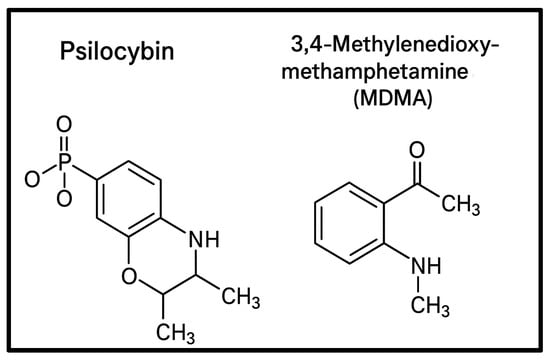
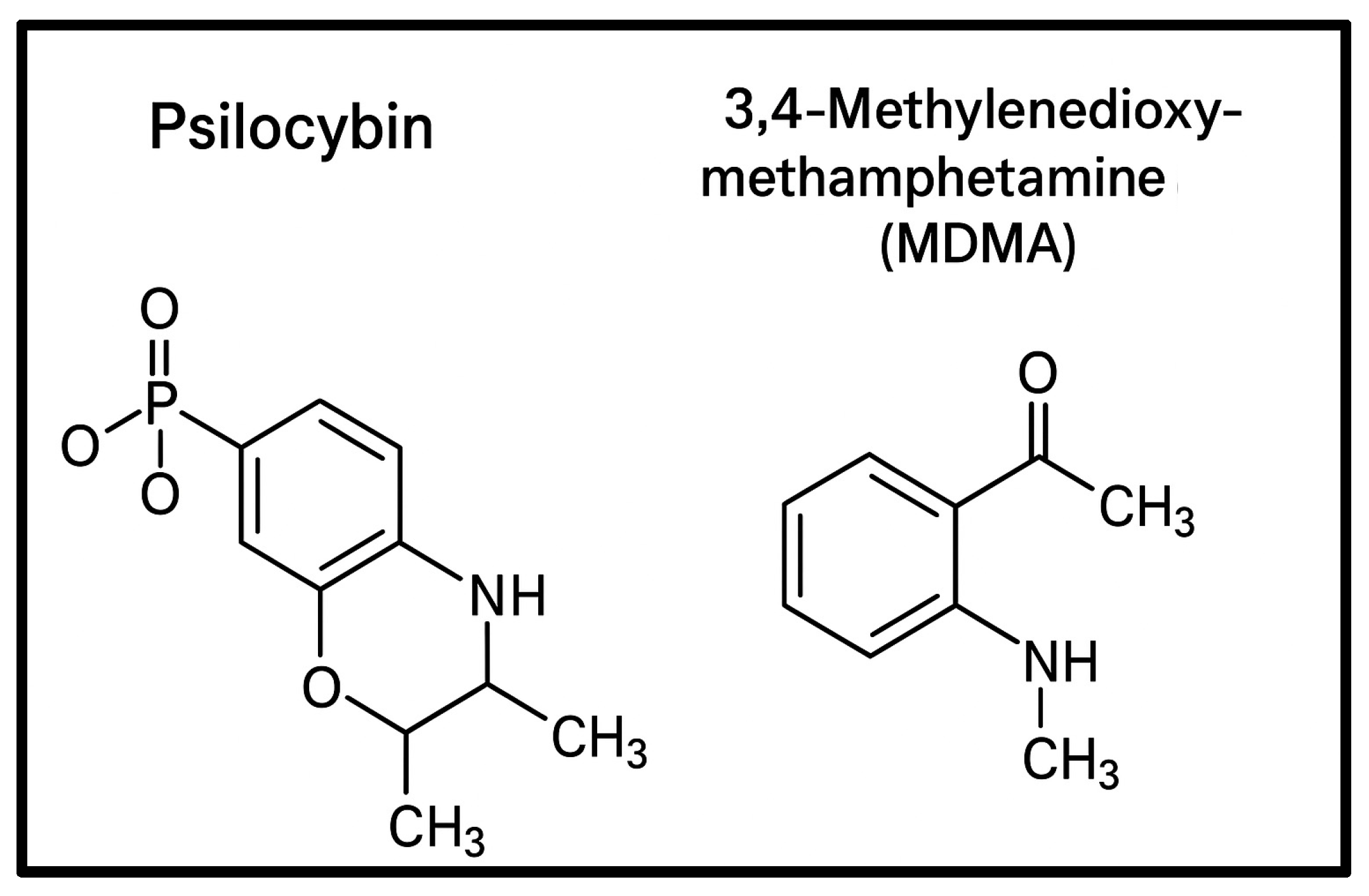
Over the past two decades, rigorous and ethically regulated clinical research has reestablished psychedelics as promising therapeutic agents. Modern studies suggest that structurally psilocybin and 3,4-methylenedioxymethamphetamine (MDMA), as shown in Figure 1, may modulate activity within the default mode network, enhance neuroplasticity, and disrupt maladaptive patterns of cognition and affect [3,4]. Although debate continues over whether these benefits derive primarily from neurochemical mechanisms or from the subjective experience itself, the emerging evidence has renewed optimism about their potential in treatment-resistant depression and posttraumatic stress disorder.
Figure 1.
Comparing the Chemical Structures of Psilocybin and 3,4-methylenedioxymethamphetamine (MDMA).
Yet, despite promising adult data, several gaps remain. The neurodevelopmental complexity of adolescence introduces unique ethical and biological challenges. The adolescent brain is characterized by heightened plasticity and incomplete maturation of regulatory systems, making it both a potential target for therapeutic innovation and a locus of vulnerability. Whether psychedelics can safely engage these developmental mechanisms without adverse consequences is unknown.
Treatment-resistant depression represents a major driver of innovation in psychiatric therapeutics. Recent syntheses highlight that TRD affects a substantial proportion of patients, is associated with chronic disability, and remains inadequately addressed by existing pharmacologic strategies [5]. In adolescents, TRD carries additional developmental consequences, academic trajectories, identity formation, and elevated substance use risks during critical maturational periods. These unmet needs provide an important context for examining novel interventions, including psychedelic therapies, as extensions of broader efforts to address refractory depression rather than as isolated or speculative pursuits.
Notably, esketamine also represents the first rapid-acting, non-traditional antidepressant with perception-altering properties to receive regulatory approval in adults but limited study in adolescent populations. Its growing evidence base in adolescents with severe depression underscores that psychedelic-adjacent interventions may have a place in youth mental health care, albeit cautiously, and require careful conceptual and empirical scrutiny.
This paper therefore examines whether the growing body of adult psychedelic research provides a sufficient scientific and ethical foundation for cautious hypothesis testing in adolescents with severe, treatment-resistant psychiatric conditions. The intent is not to advocate for clinical implementation but to articulate a structured rationale for inquiry. Specifically, this discussion aims to (1) evaluate the translational relevance of adult findings to adolescent neurodevelopment, (2) identify ethical and methodological considerations unique to youth, and (3) propose parameters for early-phase investigation that prioritize safety and empirical integrity.
Framing psychedelic research within a developmental and ethical context allows psychiatry to ask a critical question: can the transformative mechanisms observed in adults be studied responsibly in youth to reduce the burden of refractory mental illness? Only through disciplined scientific inquiry, transparent regulation, and multidisciplinary oversight can this question be answered.
2. Methods
A comprehensive literature search was conducted using PubMed, Scopus, and Google Scholar to identify peer-reviewed studies published up to June 2025. The search focused on clinical trials, systematic reviews, and meta-analyses examining the efficacy, safety, and mechanisms of psychedelic-assisted therapies such as psilocybin and MDMA in populations with depression and post-traumatic stress disorder (PTSD). Keywords included combinations of “psychedelics,” “psilocybin,” “MDMA,” “adolescent depression,” “treatment-resistant depression,” “ASD,” “ADHD,” and “neurodevelopment.” Only studies published in English and available through open access were included to ensure methodological transparency and reproducibility.
3. Results
3.1. Mechanisms: Molecule, “Trip,” or Both?
Psychedelic compounds such as psilocybin and 3,4-methylenedioxymethamphetamine (MDMA) are agonists at the serotonin 2A (5-HT2A) receptor, a cortical receptor that regulates perception, mood, and cognition through excitatory glutamatergic signaling. Activation of the 5-HT2A receptor increases cortical connectivity and likely alters consciousness, while antagonism, as seen with agents such as mirtazapine, reduces serotonergic excitability, contributing to antidepressant actions. Functional neuroimaging studies have shown that psychedelics transiently increase cortical entropy and modulate large-scale neural networks, notably the default mode network (DMN), which governs self-referential thinking and rumination often associated with depressive states [3].
Within the broader neurocognitive architecture, three interconnected systems regulate mental function: the DMN, associated with introspection and baseline mental activity; the salience network (SN), which detects and filters internal and external stimuli; and the central executive network (CEN), which coordinates attention and working memory. These systems share overlapping neural substrates but operate in dynamic balance. In depressive disorders, hyperactivity within the DMN is often accompanied by impaired coordination between the SN and CEN, fostering maladaptive patterns of self-focus and affect regulation. Psychedelics appear to transiently disrupt this imbalance, promoting a state of increased neural flexibility that allows for reorganization of maladaptive cognitive and emotional circuits. In essence, the DMN may represent the neurobiological substrate of the “self,” and its modulation, whether through pharmacologic action or profound experiential states, may catalyze emotional recalibration and psychological growth.
At the molecular level, psychedelics enhance neuroplasticity by promoting synaptogenesis and dendritic complexity in preclinical models, particularly within limbic and prefrontal regions critical for emotional learning and cognitive flexibility [6]. These neuroadaptive processes are thought to underpin the sustained mood improvement and shifts in perspective observed in adults following psychedelic-assisted psychotherapy. However, its application in the developing adolescent brain poses unique challenges. The ongoing process of maturation of prefrontal-limbic circuits and evolving identity formation may heighten vulnerability to both positive and adverse effects. This raises critical empirical questions about whether psychedelics could restore disrupted developmental plasticity in adolescents with severe mental illness or, conversely, negatively interfere with normative neurodevelopmental processes.
While both psilocybin and mirtazapine engage serotonergic pathways, their pharmacodynamics diverge markedly. Psilocybin exerts its effects through 5-HT2A receptor agonism, leading to transient cortical hyperconnectivity and altered self-referential processing. Mirtazapine, conversely, is a noradrenergic and specific serotonergic antidepressant (NaSSA) that antagonizes 5-HT2A, 5-HT2C, and 5-HT3 receptors, reducing serotonergic overstimulation while indirectly enhancing 5-HT1A–mediated transmission. This contrast illustrates two fundamentally distinct therapeutic logics: psilocybin facilitates acute cognitive and emotional expansion through receptor activation, whereas mirtazapine promotes affective stability through inhibition and modulation. Understanding how these mechanisms shape network dynamics and long-term neuroplasticity may provide a framework for refining both psychedelic and traditional pharmacotherapies. See Table 1 for details.
Table 1.
Comparison of 5-HT2A and 5-HT1A receptors.
3.2. What We Actually Know in Adult Trials
The clinical trials in the adult population increasingly support the potential of psychedelic-assisted therapy. Griffiths (2016) conducted a randomized double-blind study showing that psilocybin produced significant and lasting reductions in anxiety and depressive symptoms among patients with terminal cancer [7]. Building on this, Carhart-Harris and colleagues in 2021 compared psilocybin to escitalopram in a phase II trial of individuals with major depressive disorder [3]. Psilocybin therapy resulted in greater symptom improvement and a more pronounced reduction in depressive symptoms than standard antidepressant treatment. Similarly, the Multidisciplinary Association for Psychedelic Studies has shown through phase III trials that MDMA-assisted psychotherapy can be effective for adults with post-traumatic stress disorder [8]. These findings indicate that psychedelic-assisted therapy may offer a promising approach for complex and treatment-resistant mental health conditions. In the last five years, there have been more empirical studies, and Table 2 provides a brief summary.
Table 2.
Empirical evidence of psychedelic-assisted therapy in treatment-resistant mental health conditions.
All interventions were delivered in controlled settings with trained therapists, emphasizing the importance of guidance and the therapeutic environment. Research on psychedelics for end-of-life mental illnesses also suggests that mystical experiences can foster meaning, purpose, and acceptance, which may be relevant to treatment. Despite these promising results, studies involving adolescents are extremely limited due to ethical considerations, legal restrictions, and developmental factors unique to these populations.
3.3. Why Adolescents Might Benefit and Why Caution Is Required
Adolescent depression often involves high relapse rates, treatment resistance, and impairments in functioning with pernicious long-term effects. Standard multimodal interventions such as cognitive-behavioral therapy and selective serotonin reuptake inhibitors are sometimes inadequate for a significant proportion of refractory cases. Adolescence is marked by heightened neuroplasticity, ongoing maturation of executive control networks, and increased emotional reactivity, offering both opportunities and challenges for intervention.
Psychedelics may help “reset” neural circuits linked to depressive symptoms, including rumination and negative cognitive biases, by acting on 5-HT2A receptors and enhancing neural plasticity [3]. Adolescents may benefit from increased emotional openness, enhanced insight, and new perspectives on their experiences. Greater neural flexibility may also enhance engagement with behavioral and cognitive therapies, supporting longer-lasting effects.
In a close parallel, esketamine occupies a unique position at the interface of psychedelic research and established clinical practice. Esketamine, the S(+)-enantiomer of ketamine, is a dissociative anesthetic and hallucinogenic agent clinically approved for use in general anesthesia and for the treatment of depression. While mechanistically distinct from classic serotonergic psychedelics, its rapid antidepressant effects and capacity to induce dissociative and perceptual experiences align it with broader interest in altered-state therapeutics. Importantly, esketamine has been studied in adolescent depression, offering a rare empirical foothold for considering non-traditional antidepressants in youth.
Recent conceptual work by Sarasso et al. (2024) further reframes esketamine-induced dissociation not merely as an adverse effect but as a phenomenological process with potential psychopathological and therapeutic meaning [15]. Their analysis suggests that dissociative experiences may facilitate shifts in self-perception and affective integration, processes particularly salient during adolescence, when identity and self-concept remain fluid. This framework underscores the importance of embedding altered-state interventions within structured psychotherapeutic models, especially for younger patients.
With a broad spectrum of these consilience of inductions, there are potential risks, including impacts on the developing brain, substance misuse, and legal constraints, as most psychedelics remain Schedule One substances. Therefore, highly regulated and controlled research could harness these effects to support emotional, moral, and psychological growth, helping depressed adolescents reengage with life in a meaningful way. Table 3 provides recent attempts to study using non-RCT models in youths.
Table 3.
Summary of integrating the key findings from adult psychedelic research and emerging adolescent evidence.
3.4. Potential Role of Psychedelic-Assisted Therapy for Neurodevelopmental Disorders
There is a myriad range of mental disorders and the associated agitation and irritability that are linked with autism spectrum disorder (ASD) and attention-deficit/hyperactivity disorder (ADHD). While conventionally, these clinical phenotypes in children and adolescents are often treated with selective serotonin reuptake inhibitors (SSRIs) and second-generation antipsychotics. However, these interventions are not without limitations. SSRIs have been linked to a higher risk of behavioral activation in youth, manifesting as new suicidal thoughts, restlessness, irritability, sleep disturbances, and emotional dysregulation, especially in individuals with neurodevelopmental vulnerabilities [23]. Moreover, these therapeutics do not address core features of neurodivergence, such as social cognition deficits, leaving significant unmet clinical needs.
Psychedelic-assisted therapies may offer a novel approach by targeting different neurobiological processes. Compounds such as psilocybin can acutely alter functional connectivity within brain networks and promote synaptic plasticity, in contrast to SSRIs, which chronically modulate serotonin levels [3,6]. These mechanisms have been associated with improved mood regulation, cognitive flexibility, and social connectedness domains often impaired in neurodevelopmental disorders. Preliminary qualitative evidence suggests that psychedelics may enhance emotional awareness, reduce rigid thought patterns, and improve social cognition in individuals with ASD [24]. Unlike SSRIs, psychedelics can be administered infrequently and with flexible dosing, potentially offering practical advantages.
Nevertheless, caution is essential when undergoing critical neurodevelopmental processes, including synaptic pruning, myelination, and maturation of prefrontal-limbic circuits that support emotional regulation [25]. Introducing potent serotonergic agents during this period may carry risks for cognitive and emotional development. Furthermore, altered states induced by psychedelics complicate adherence to ethical standards in pediatric research, including risk minimization and informed consent. Teenagers may lack the maturity to fully comprehend or manage these experiences, highlighting the need for rigorous psychological support before, during, and after sessions, as well as multidisciplinary supervision. Ethical oversight and regulatory review must carefully balance developmental risks against potential therapeutic benefits, emphasizing safety, equity, and methodological rigor.
3.5. Developmental Pharmacokinetics, Pharmacodynamics, and Long-Term Risk Considerations
A critical limitation in extrapolating adult psychedelic findings to adolescents lies in fundamental developmental differences in pharmacokinetic and pharmacodynamic profiles. Drug absorption, distribution, metabolism, and elimination change substantially across adolescence due to age-dependent variation in gastric motility, hepatic enzyme activity, plasma protein binding, and renal clearance [26,27]. Cytochrome P450 enzymes involved in serotonergic drug metabolism, including CYP2D6 and CYP3A4, undergo developmental regulation throughout childhood and adolescence, potentially leading to higher peak plasma concentrations or prolonged exposure at doses considered safe in adults [27,28,29]. These differences raise concerns that adult dosing paradigms may inadvertently increase both acute and long-term adverse risk profiles in younger populations.
Pharmacodynamic sensitivity similarly is also developmentally contingent. Adolescence is characterized by heightened responsivity of serotonergic and dopaminergic systems, ongoing maturation of cortical inhibitory interneurons, and incomplete top-down regulatory control from the prefrontal cortex [30,31]. Activation of 5-HT2A receptors during this developmental window may therefore produce exaggerated or qualitatively distinct effects on perception, affect, and cognition compared with adults [32]. While such sensitivity could theoretically enhance therapeutic plasticity, it may also increase vulnerability to adverse reactions, including perceptual disturbances, dissociation, anxiety, or behavioral dysregulation.
The absence of long-term outcome data further blurs the risk–benefit assessment. Adult trials generally report low rates of persistent adverse effects under controlled conditions [33,34], yet these findings cannot be assumed to generalize to adolescents, for whom longitudinal safety data are essentially absent. Particular concern exists regarding individuals with latent bipolar spectrum disorders or psychosis vulnerability, where serotonergic perturbation may precipitate manic or psychotic symptoms [35,36]. Adolescence is also a peak period for the emergence of such conditions, amplifying uncertainty around causal attribution and long-term trajectory following psychedelic exposure.
While conventional treatments such as selective serotonin reuptake inhibitors and atypical antipsychotics carry known developmental risks, including behavioral activation and metabolic effects, these risks are supported by decades of post-marketing surveillance and long-term follow-up studies [37,38]. Psychedelics, by contrast, lack comparable longitudinal datasets in youth, making it difficult to contextualize relative safety. Importantly, absence of evidence should not be conflated with evidence of absence, particularly when interventions engage neurobiological systems undergoing rapid developmental reorganization [39].
Taken together, these considerations underscore the need for age-specific pharmacokinetic modeling, conservative dose-finding studies, and extended follow-up periods before any claims of its application in adolescents can be justified. The theoretical mechanistic arguments alone are insufficient; developmental context must be treated as a central variable rather than a secondary consideration. Without such rigor, premature translation risks undermining both scientific credibility and ethical responsibility in pediatric psychopharmacology.
4. Discussion
In the historical context serotonergic psychedelic compounds such as psilocybin, lysergic acid diethylamide (LSD), and 3,4-methylenedioxymethamphetamine (MDMA) are known for both recreational and experimental therapeutics. In the last few years, the resurgence of interest in their clinical applications reflects both longstanding unmet needs in mental health and evolving neurobiological insights. Despite nearly four decades of reliance on major classes of antidepressants, such as SSRIs, progress in novel therapeutics remains limited. In this light, the reconsideration of psychedelics in adult populations emerges against a backdrop of stagnation in conventional pharmacotherapy and heightened demand for innovation.
At the molecular level, the 5-HT2A receptor (5-hydroxytryptamine 2A subtype) has emerged as a central target of classic psychedelics. Recent molecular dynamics simulations have clarified that ligand binding to the orthosteric site of the 5-HT2A receptor and subsequent Gq-protein coupling and conformational transitions are critical to receptor activation [40]. Moreover, neuroimaging and receptor-mapping studies indicate that 5-HT2A engagement is part of a broader cascade: many psychedelics also activate 5-HT2B receptors or other serotonergic subtypes [36]. This mechanistic foundation lends plausibility to hypotheses that psychedelics effect rapid changes in network dynamics, particularly within prefrontal cortex circuitry and default mode network connectivity, and may promote plasticity and self-referential cognitive shifts [41].
Accordingly, carefully designed, age-sensitive clinical trials could help determine whether psychedelic-assisted therapy offers meaningful incremental stepped approach benefits over existing modalities. Despite rigorous empirical study designs, many adult psychedelic trials face significant challenges to blinding, given the overt psychoactive effects, heterogeneity of psychotherapeutic support, and small sample sizes. For example, one RCT comparing psilocybin to escitalopram found superiority at six weeks, yet the authors acknowledged limitations of expectancy and unblinding [13]. The adult samples are overwhelmingly middle-aged, White, and physically healthy, limiting generalizability to more diverse populations and other clinical phenotypes, including neurodevelopmental disorders. Although safety profiles in adults appear favorable, acute physiological changes, including increases in systolic blood pressure by approximately 13–24 mmHg, have been documented [7]. Given that in the adolescent brain the neurobiology differs markedly from that of adults, extrapolation warrants caution.
Turning specifically to youth and neurodevelopmental contexts, the literature is markedly sparse. There remain profound unanswered questions regarding psychedelic effects on adolescent brain maturation, including prefrontal-limbic integration, dopaminergic modulation, and synaptic pruning dynamics that differ from adults [30]. Although adults have demonstrated significant benefit from interventions involving compounds such as psilocybin, MDMA, and ketamine, adolescents remain markedly underrepresented, as evidenced by a recent scoping review that found only three trial registrations and one trial plan involving participants under 18 years of age, none of which have yet reported results [18,23]. Another commentary emphasized that although a benefit-to-risk calculus may support adolescent trials in selected 16- to 17-year-olds, robust frameworks for safety, assent, monitoring, and regulations are lacking [23].
A prospective cohort study comparing youths (mean age = 20.4) and adults after self-initiated psychedelic use found comparable improvements in well-being but a higher prevalence of residual perceptual disturbances in younger participants. About 73.5% of adolescents reported hallucinogen-persisting perceptual phenomena versus 34.2% of adults, though only one adolescent considered these adverse effects as distressing [20]. Likewise, data from >16,000 adolescents indicated that lifetime psychedelic use, when adjusted for other drug use, was associated with lower self-reported psychotic symptoms; however, it was at increased risk of manic symptoms in individuals with high genetic vulnerability to schizophrenia or bipolar disorder [21]. Such findings affirm that while risk outweighs the risks in therapeutic contexts, informed consent processes must account for developmental maturity, familial and social dimensions, cognitive vulnerability, and the possibility of novel adverse outcomes.
Despite an unprecedented amount of clinical investigation data, psilocybin currently occupies a regulatory liminal space. Given that it is supported by growing adult efficacy data yet unapproved by the U.S. Food and Drug Administration (FDA). This prolonged gap between evidence and regulatory threshold highlights a broader tension in psychiatric drug development, particularly for compounds whose therapeutic action depends on both pharmacology and context-dependent psychological processes. Unlike conventional antidepressants, psilocybin-assisted therapy challenges existing approval paradigms by coupling a psychoactive agent with an intensive psychotherapeutic framework, complicating determinations of treatment efficacies, standardization, and scalability. Recent late phase clinical trials have moved psilocybin closer to potential regulatory authorization than at any prior point. Synthetic psilocybin formulations such as COMP360 have demonstrated rapid and statistically significant reductions in depressive symptom severity in adults with treatment-resistant depression [42]. These effects often persist for weeks to months after a single administration, suggesting a mechanism that extends beyond symptomatic suppression and may involve enduring changes in cognitive and emotional processing.
This uncertainty has important implications for adolescent translation. Regulatory hesitation reflects not only concerns about the safety and durability of the effect but also unresolved questions regarding implementation fidelity, therapist training, and system-level oversight. Health-system readiness to safely translate into clinical practice is an additional constraint. Psilocybin-assisted therapy remains resource-intensive, requiring extended monitoring, specialized clinician training, and infrastructure that most outpatient psychiatric settings currently lack. These limitations pose challenges for adolescent mental health systems, which are already strained and unevenly distributed [43]. Without clear reimbursement pathways and scalable delivery models, early adoption risks exacerbating existing inequities in access to advanced psychiatric care.
Taken together, the current regulatory and implementation landscape suggests that enthusiasm for adolescent studies must be tempered by structural realism. Before pediatric trials can responsibly proceed, parallel investment is required in regulatory clarity, workforce development, cost-effectiveness analysis, and ethical safeguards tailored to address the needs of selective youth in need [44,45]. Addressing these translational barriers is not ancillary but foundational to determining whether psilocybin-assisted interventions can be studied and eventually utilized without compromising safety, equity, or scientific integrity.
Considering these twin dimensions of promise and uncertainty, it is reasonable to posit that psychedelics may have potential applications in youth with enduring clinical phenotypes, such as treatment-resistant mental disorders or neurodevelopmental disorders with co-occurring conditions. Their capacity for rapid action, reduced burden of daily pharmacotherapy, and potential enhancement of therapeutic alliance and emotional openness is theoretically compelling and increasingly discussed in adult literature. Yet, without adolescent-specific evidence, this remains speculative.
To move the field forward and bridge the translational gap, several pathways emerge.
- 1)
- Preclinical studies targeting adolescence-equivalent developmental stages in animal models to examine long-term neurodevelopmental and behavioral outcomes of classic psychedelics.
- 2)
- Phase I/II safety and feasibility trials in older adolescents with closely defined enrollment criteria, rigorous assent and consent procedures, independent monitoring of adverse events, structured psychotherapy protocols, and long-term follow-up.
- 3)
- Large-scale, multisite RCTs that include neurodevelopmental phenotypes, diverse demographic sampling, and standardized psychotherapeutic adjuncts.
- 4)
- Mechanistic investigations, including functional neuroimaging, network connectivity, and biomarkers such as brain-derived neurotrophic factor (BDNF), cortical thickness, white-matter integrity, and 5-HT2A receptor imaging, to elucidate mediators and developmental moderators of response.
- 5)
- Ethical, regulatory, and access considerations, including frameworks that guard against commercial exploitation, overmedicalization of adolescent populations, and undue hype while ensuring equitable access. The adult research landscape already signals potential conflicts of interest and issues of transparency in for-profit sponsorship.
- 6)
- Integration into clinical services: If adolescent-appropriate safety and efficacy are established, the next challenge will be therapist training, standardization of psychotherapy models, cost-effectiveness analyses, and system-level implementation that includes informed assent, family involvement, and safeguarding.
5. Conclusions
Psychedelic-assisted therapy represents a promising yet highly experimental approach for addressing affective illness in children and adolescents, including individuals with neurodevelopmental disorders. Evidence from adult studies suggests that compounds such as psilocybin and MDMA may have meaningful therapeutic effects, but these findings cannot be generalized to developing clinical phenotypes. Given the unique vulnerability during brain development, alongside ethical and legal considerations, research must proceed with caution.
Future research must proceed with systematic deliberation among stakeholders. Priorities include controlled clinical trials in adolescent populations, conservative dose-finding studies, structured assessment of subjective and phenomenological experiences, and long-term monitoring of neurodevelopmental outcomes. These interventions should be integrated within established stepped psychotherapeutic frameworks rather than deployed as standalone pharmacologic solutions. Only through developmentally informed, ethically rigorous research can the field determine whether these approaches hold a legitimate role in addressing the substantial unmet needs of adolescents with treatment-resistant conditions.
Author Contributions
Conceptualization, M.G. and A.K.; methodology, M.G., A.K., and P.K.; software, M.G. and P.K.; validation, M.G., A.K. and P.K.; formal analysis, M.G., A.K. and P.K.; investigation, M.G., A.K. and P.K.; resources, P.K.; data curation, M.G. and A.K.; writing—original draft preparation, M.G., A.K. and P.K.; writing—review and editing, M.G. and A.K.; visualization, M.G.; supervision, M.G. and A.K.; project administration, M.G. and A.K. All authors have read and agreed to the published version of the manuscript.
Funding
This research received no external funding.
Data Availability Statement
No new data were created or analyzed in this study. Data sharing is not applicable to this article.
Conflicts of Interest
The authors declare no conflicts of interest.
Abbreviations
| 5-HT | 5-hydroxytryptamine (serotonin), a monoamine neurotransmitter involved in mood, perception, and cognition |
| 5-HT1A | Serotonin 1A receptor, a Gi/o-coupled inhibitory receptor involved in mood and anxiety regulation |
| 5-HT2A | Serotonin 2A receptor, a Gq/11-coupled excitatory receptor central to the psychoactive and plasticity-inducing effects of classic psychedelics |
| 5-HT2B | Serotonin 2B receptor, a serotonergic receptor implicated in peripheral and vascular effects |
| 5-HT2C | Serotonin 2C receptor, a serotonergic receptor involved in mood, appetite, and impulse control |
| 5-HT3 | Serotonin 3 receptor, a ligand-gated ion channel involved in nausea and autonomic signaling |
| ADHD | Attention-deficit/hyperactivity disorder, a neurodevelopmental condition characterized by inattention, hyperactivity, and impulsivity |
| ASD | Autism spectrum disorder, a neurodevelopmental condition marked by social communication differences and restricted or repetitive behaviors |
| BDNF | Brain-derived neurotrophic factor, a neurotrophin involved in synaptic plasticity, learning, and mood regulation |
| BP | Blood pressure |
| CEN | Central executive network, a large-scale brain network involved in working memory, attention, and cognitive control |
| COMP360 | A proprietary synthetic formulation of psilocybin developed for clinical trials |
| CYP | Cytochrome P450 enzyme system, a family of hepatic enzymes involved in drug metabolism |
| DMN | Default mode network, a large-scale brain network associated with self-referential thought, rumination, and baseline mental activity |
| DOI | 2,5-Dimethoxy-4-iodoamphetamine, a synthetic serotonergic psychedelic used in preclinical research |
| FDA | U.S. Food and Drug Administration |
| fMRI | Functional magnetic resonance imaging, a neuroimaging technique measuring blood-oxygen-level–dependent (BOLD) signals |
| GPCR | G protein–coupled receptor, a large class of membrane receptors mediating intracellular signaling cascades |
| IP3 | Inositol 1,4,5-trisphosphate, a second messenger involved in calcium signaling downstream of Gq-coupled receptors |
| LSD | Lysergic acid diethylamide, a classic serotonergic psychedelic compound |
| MDMA | 3,4-Methylenedioxymethamphetamine, an entactogenic psychedelic-adjacent compound investigated for PTSD |
| NaSSA | Noradrenergic and specific serotonergic antidepressant, a class of antidepressants exemplified by mirtazapine |
| PKC | Protein kinase C, a family of enzymes activated downstream of Gq-coupled receptor signaling |
| PTSD | Post-traumatic stress disorder |
| RCT | Randomized controlled trial |
| SN | Salience network, a brain network involved in detecting and integrating relevant internal and external stimuli |
| SSRI | Selective serotonin reuptake inhibitor, a class of antidepressants that increase synaptic serotonin availability |
| TRD | Treatment-resistant depression, depression that does not respond to adequate trials of standard treatments |
References
- Nichols, D.E. Psychedelics. Pharmacol. Rev. 2016, 68, 264–355. [Google Scholar] [CrossRef] [Scilit]
- Office of Justice Programs. Psychedelic Drugs Reconsidered. Available online: https://www.ojp.gov/ncjrs/virtual-library/abstracts/psychedelic-drugs-reconsidered (accessed on 10 November 2025).
- Carhart-Harris, R.L.; Bolstridge, M.; Rucker, J.; Day, C.M.J.; Erritzoe, D.; Kaelen, M.; Bloomfield, M.; Rickard, J.A.; Forbes, B.; Feilding, A.; et al. Psilocybin for treatment-resistant depression: FMRI-measured brain mechanisms. Sci. Rep. 2017, 7, 13187. [Google Scholar] [CrossRef] [Scilit]
- Mitchell, J.M.; Ot’alora G, M.; van der Kolk, B.; Shannon, S.; Bogenschutz, M.; Gelfand, Y.; Paleos, C.; Nicholas, C.R.; Quevedo, S.; Balliett, B.; et al. MDMA-assisted therapy for moderate to severe PTSD: A randomized, placebo-controlled phase 3 trial. Nat. Med. 2023, 29, 2473–2480. [Google Scholar] [CrossRef] [Scilit]
- Fiorillo, A.; Demyttenaere, K.; Martiadis, V.; Martinotti, G. Editorial: Treatment resistant depression (TRD): Epidemiology, clinic, burden and treatment. Front. Psychiatry 2025, 16, 1588902. Available online: https://pubmed.ncbi.nlm.nih.gov/40171309/ (accessed on 18 December 2025). [CrossRef] [Scilit] [PubMed]
- Ly, C.; Greb, A.C.; Cameron, L.P.; Wong, J.M.; Barragan, E.V.; Wilson, P.C.; Burbach, K.F.; Zarandi, S.S.; Sood, A.; Paddy, M.R.; et al. Psychedelics promote structural and functional neural plasticity. Cell Rep. 2018, 23, 3170–3182. Available online: https://pubmed.ncbi.nlm.nih.gov/29898390/ (accessed on 10 November 2025). [CrossRef] [Scilit] [PubMed]
- Griffiths, R.R.; Johnson, M.W.; Carducci, M.A.; Umbricht, A.; Richards, W.A.; Richards, B.D.; Cosimano, M.P.; Klinedinst, M.A. Psilocybin produces substantial and sustained decreases in depression and anxiety in patients with life-threatening cancer: A randomized double-blind trial. J. Psychopharmacol. 2016, 30, 1181–1197. [Google Scholar] [CrossRef] [Scilit]
- Multidisciplinary Association for Psychedelic Studies (MAPS). A Multi-Site Phase 3 Study of MDMA-Assisted Therapy for PTSD (MAPP1). Available online: https://maps.org/mdma/ptsd/mapp1/ (accessed on 10 November 2025).
- Rosenblat, J.D.; Meshkat, S.; Doyle, Z.; Kaczmarek, E.; Brudner, R.M.; Kratiuk, K.; Mansur, R.B.; Schulz-Quach, C.; Sethi, R.; Abate, A.; et al. Psilocybin-assisted psychotherapy for treatment-resistant depression: A randomized clinical trial evaluating repeated doses of psilocybin. Med 2024, 5, 190–200. Available online: https://pubmed.ncbi.nlm.nih.gov/38359838/ (accessed on 10 November 2025).
- Back, A.L.; Freeman-Young, T.K.; Morgan, L.; Sethi, T.; Baker, K.K.; Myers, S.; McGregor, B.A.; Harvey, K.; Tai, M.; Kollefrath, A.; et al. Psilocybin therapy for clinicians with symptoms of depression from frontline care during the COVID-19 pandemic: A randomized clinical trial. JAMA Netw. Open 2024, 7, e2427553. Available online: https://jamanetwork.com/journals/jamanetworkopen/fullarticle/2827553 (accessed on 10 November 2025).
- Raison, C.L.; Sanacora, G.; Woolley, J.; Heinzerling, K.; Dunlop, B.W.; Brown, R.T.; Kakar, R.; Hassman, M.; Trivedi, R.P.; Robison, R.; et al. Single-dose psilocybin treatment for major depressive disorder: A randomized clinical trial. JAMA 2023, 330, 843–853. Available online: https://pubmed.ncbi.nlm.nih.gov/37651119/ (accessed on 10 November 2025). [CrossRef] [Scilit]
- Goodwin, G.M.; Aaronson, S.T.; Alvarez, O.; Arden, P.C.; Baker, A.; Bennabi, D.; Borenstein, M.; Carhart-Harris, R.; Caudworth, D.; Chandler, L.; et al. Single-dose psilocybin for treatment-resistant episode of major depression. N. Engl. J. Med. 2022, 387, 1637–1648. [Google Scholar] [CrossRef] [Scilit]
- Carhart-Harris, R.; Giribaldi, B.; Watts, R.; Baker-Jones, M.; Murphy-Beiner, A.; Murphy, R.; Martell, J.; Blemings, A.; Erritzoe, D.; Kaelen, M.; et al. Trial of psilocybin versus escitalopram. N. Engl. J. Med. 2021, 384, 1402–1411. [Google Scholar] [CrossRef] [Scilit]
- Davis, A.K.; Barrett, F.S.; May, D.G.; Cosimano, M.P.; Sepeda, N.D.; Johnson, M.W.; Finan, P.H.; Griffiths, R.R. Effects of Psilocybin-Assisted Therapy on Major Depressive Disorder: A Randomized Clinical Trial. JAMA Psychiatry 2021, 78, 481–489. [Google Scholar] [CrossRef] [Scilit]
- Sarasso, P.; Billeci, M.; Ronga, I.; Raffone, F.; Martiadis, V.; Di Petta, G. Disembodiment and affective resonances in esketamine treatment of depersonalized depression subtype: Two case studies. Psychopathology 2024, 57, 480–491. Available online: https://pubmed.ncbi.nlm.nih.gov/39173608/ (accessed on 18 December 2025). [CrossRef] [Scilit]
- Velit-Salazar, M.R.; Shiroma, P.R.; Cherian, E. A systematic review of the neurocognitive effects of psychedelics in healthy populations. Brain Sci. 2024, 14, 248. [Google Scholar] [CrossRef] [Scilit]
- Johnson, M.W.; Hendricks, P.S.; Barrett, F.S.; Griffiths, R.R. Classic psychedelics: An integrative review of epidemiology, therapeutics, mystical experience, and brain network function. Pharmacol. Ther. 2019, 197, 83–102. [Google Scholar] [CrossRef] [Scilit] [PubMed]
- Izmi, N.; Carhart-Harris, R.L.; Kettner, H. Psychological effects of psychedelics in adolescents. Front. Child Adolesc. Psychiatry 2024, 3, 1364617. [Google Scholar] [CrossRef] [Scilit] [PubMed]
- Rajwani, K. Should adolescents be included in emerging psychedelic research? Can. J. Bioeth./Rev. Can. Bioéthique 2022, 5, 36. Available online: https://philarchive.org/rec/RAJSAB-3 (accessed on 12 November 2025). [CrossRef] [Scilit]
- Simonsson, O.; Mosing, M.A.; Osika, W.; Ullén, F.; Larsson, H.; Lu, Y.; Wesseldijk, L.W. Adolescent psychedelic use and psychotic or manic symptoms. JAMA Psychiatry 2024, 81, 579–585. Available online: https://jamanetwork.com/journals/jamapsychiatry/fullarticle/2816354 (accessed on 12 November 2025). [CrossRef] [Scilit]
- Compass Pathways. COMP360 Psilocybin Therapy Study Results by Compass Pathways. Available online: https://compasspathways.com/our-work/comp360-psilocybin-treatment-in-trd/ (accessed on 22 December 2025).
- Nardou, R.; De Cossío, L.F.; Sun, X.; Zhang, K.; Liu, M.; Garcia-Oscos, F.; Génard, L.; Yuen, E.Y.; Feng, G.; Wong, J.; et al. Psychedelics reopen the social reward learning critical period. Nature 2023, 618, 790–798. [Google Scholar] [CrossRef] [Scilit]
- Rajwani, K.; Sloshower, J.; Hoog, S.; King, B.; Malhotra, S.; Coles, M.; Bourla, A.; Williams, M.T.; Wong, W.; Rosen, R.; et al. Clinical psychedelic research in adolescents. Lancet Child Adolesc. Health 2025, 9, 744–752. [Google Scholar] [CrossRef] [Scilit]
- Anderson, T.; Petranker, R.; Christopher, A.; Rosenbaum, D.; Weissman, C.; Dinh-Williams, L.A.; Hui, K.; Hapke, E. Psychedelic microdosing benefits and challenges: An empirical codebook. Harm Reduct. J. 2019, 16, 43. Available online: https://pubmed.ncbi.nlm.nih.gov/31288862/ (accessed on 10 November 2025). [CrossRef] [Scilit]
- Giedd, J.N.; Blumenthal, J.; Jeffries, N.O.; Castellanos, F.X.; Liu, H.; Zijdenbos, A.; Paus, T.; Evans, A.C.; Rapoport, J.L. Brain development during childhood and adolescence: A longitudinal MRI study. Nat. Neurosci. 1999, 2, 861–863. Available online: https://pubmed.ncbi.nlm.nih.gov/10491603/ (accessed on 10 November 2025). [CrossRef] [Scilit]
- Kearns, G.L.; Abdel-Rahman, S.M.; Alander, S.W.; Blowey, D.L.; Leeder, J.S.; Kauffman, R.E. Developmental pharmacology—Drug disposition, action, and therapy in infants and children. N. Engl. J. Med. 2003, 349, 1157–1167. [Google Scholar] [CrossRef] [Scilit] [PubMed]
- Hines, R.N. Developmental expression of drug metabolizing enzymes: Impact on disposition in neonates and young children. Int. J. Pharm. 2013, 452, 3–7. [Google Scholar] [CrossRef] [Scilit]
- David, A.; Fernandez, A.; Menard, M.-L.; Dor, E.; Leali, G.; Maria, F.; Cruzel, C.; Askenazy, F.; Verstuyft, C.; Thümmler, S. La pharmacorésistance aux psychotropes chez l’enfant et l’adolescent: Recherche d’anomalies pharmacogénétiques du cytochrome P450 2D6. Enceph. Psychiatr. Clin. Biol. Ther. 2021, 47, 227–234. [Google Scholar] [CrossRef] [Scilit] [PubMed]
- Thümmler, S.; Dor, E.; David, R.; Leali, G.; Battista, M.; David, A.; Askenazy, F.; Verstuyft, C. Pharmacoresistant Severe Mental Health Disorders in Children and Adolescents: Functional Abnormalities of Cytochrome P450 2D6. Front. Psychiatry 2018, 9, 2. [Google Scholar] [CrossRef] [Scilit]
- Casey, B.J.; Jones, R.M.; Hare, T.A. The adolescent brain. Ann. N. Y. Acad. Sci. 2008, 1124, 111–126. [Google Scholar] [CrossRef] [Scilit]
- Spear, L.P. Adolescent neurodevelopment. J. Adolesc. Health 2013, 52, S7–S13. Available online: https://pubmed.ncbi.nlm.nih.gov/23332574/ (accessed on 18 December 2025). [CrossRef] [Scilit] [PubMed]
- Celada, P.; Puig, M.V.; Díaz-Mataix, L.; Artigas, F. The hallucinogen DOI reduces low-frequency oscillations in rat prefrontal cortex: Reversal by antipsychotic drugs. Biol. Psychiatry 2008, 64, 392–400. [Google Scholar] [CrossRef] [Scilit]
- Studerus, E.; Kometer, M.; Hasler, F.; Vollenweider, F.X. Acute, subacute and long-term subjective effects of psilocybin in healthy humans. J. Psychopharmacol. 2011, 25, 1434–1452. [Google Scholar] [CrossRef] [Scilit]
- Rucker, J.J.H.; Iliff, J.; Nutt, D.J. Psychiatry & the psychedelic drugs: Past, present and future. Neuropharmacology 2018, 142, 200–218. Available online: https://pubmed.ncbi.nlm.nih.gov/29284138/ (accessed on 18 December 2025). [CrossRef] [Scilit]
- Henry, C.; Sorbara, F.; Lacoste, J.; Gindre, C.; Leboyer, M. Antidepressant-induced mania in bipolar patients: Identification of risk factors. J. Clin. Psychiatry 2001, 62, 249–255. [Google Scholar] [CrossRef] [Scilit]
- Vollenweider, F.X.; Preller, K.H. Psychedelic drugs: Neurobiology and potential for treatment of psychiatric disorders. Nat. Rev. Neurosci. 2020, 21, 611–624. [Google Scholar] [CrossRef] [Scilit]
- Bridge, J.A.; Iyengar, S.; Salary, C.B.; Barbe, R.P.; Birmaher, B.; Pincus, H.A.; Ren, L.; Brent, D.A. Clinical response and risk for reported suicidal ideation and suicide attempts in pediatric antidepressant treatment: A meta-analysis of randomized controlled trials. JAMA 2007, 297, 1683–1696. Available online: https://pubmed.ncbi.nlm.nih.gov/17440145/ (accessed on 18 December 2025). [CrossRef] [Scilit]
- Correll, C.U.; Manu, P.; Olshanskiy, V.; Napolitano, B.; Kane, J.M.; Malhotra, A.K. Cardiometabolic risk of second-generation antipsychotic medications during first-time use in children and adolescents. JAMA 2009, 302, 1765–1773. [Google Scholar] [CrossRef] [Scilit] [PubMed]
- Dotson, S.; Luccarelli, J. Psychedelic Therapeutics for Adolescents: Ethics, Safety, Opportunities, and Equipoise. J. Am. Acad. Child Adolesc. Psychiatry 2024, 64, 755–756. [Google Scholar] [CrossRef] [Scilit]
- Carhart-Harris, R.L.; Friston, K.J. REBUS and the anarchic brain: Toward a unified model of the brain action of psychedelics. Pharmacol. Rev. 2019, 71, 316–344. [Google Scholar] [CrossRef] [Scilit]
- Sutherland, I.; Ho, M.-F.; Croarkin, P.E. Psychedelic treatments in adolescent psychopharmacology: Considering safety, ethics, and scientific rigor. J. Child Adolesc. Psychopharmacol. 2025, 35, 118–125. [Google Scholar] [CrossRef] [Scilit]
- Silczuk, A.; Madejek, R.J.; Koweszko, T.; Mularczyk-Tomczewska, P.; Adamska, E.; Gujski, M.; Szulc, A. Psychedelic-Assisted Therapy: Potential Benefits and Challenges in Mental Health Treatment. Med. Sci. Monit. 2025, 31, e948302. [Google Scholar] [CrossRef] [Scilit] [PubMed]
- Caporuscio, C.; Poppe, C.; Gieselmann, A.; Repantis, D. Ethical issues with psychedelic-assisted treatments in psychiatry: A systematic scoping review. Psychol. Med. 2025, 55, e284. [Google Scholar] [CrossRef] [Scilit]
- Greer, G.R.; Tolbert, R. A method of conducting therapeutic sessions with MDMA. J. Psychoactive Drugs 1998, 30, 371–379. [Google Scholar] [CrossRef] [Scilit]
- Agnorelli, C.; Spriggs, M.; Godfrey, K.; Sawicka, G.; Bohl, B.; Douglass, H.; Fagiolini, A.; Parastoo, H.; Carhart-Harris, R.; Nutt, D.; et al. Neuroplasticity and psychedelics: A comprehensive examination of classic and non-classic compounds in pre- and clinical models. Neurosci. Biobehav. Rev. 2025, 172, 106132. [Google Scholar] [CrossRef] [Scilit] [PubMed]

Disclaimer/Publisher’s Note: The statements, opinions and data contained in all publications are solely those of the individual author(s) and contributor(s) and not of MDPI and/or the editor(s). MDPI and/or the editor(s) disclaim responsibility for any injury to people or property resulting from any ideas, methods, instructions or products referred to in the content. |
© 2026 by the authors. Licensee MDPI, Basel, Switzerland. This article is an open access article distributed under the terms and conditions of the Creative Commons Attribution (CC BY) license.