

Mediterranean-Style Japanese Diet for Anti-Ageing: Systematic Review †


Abstract
1. Introduction
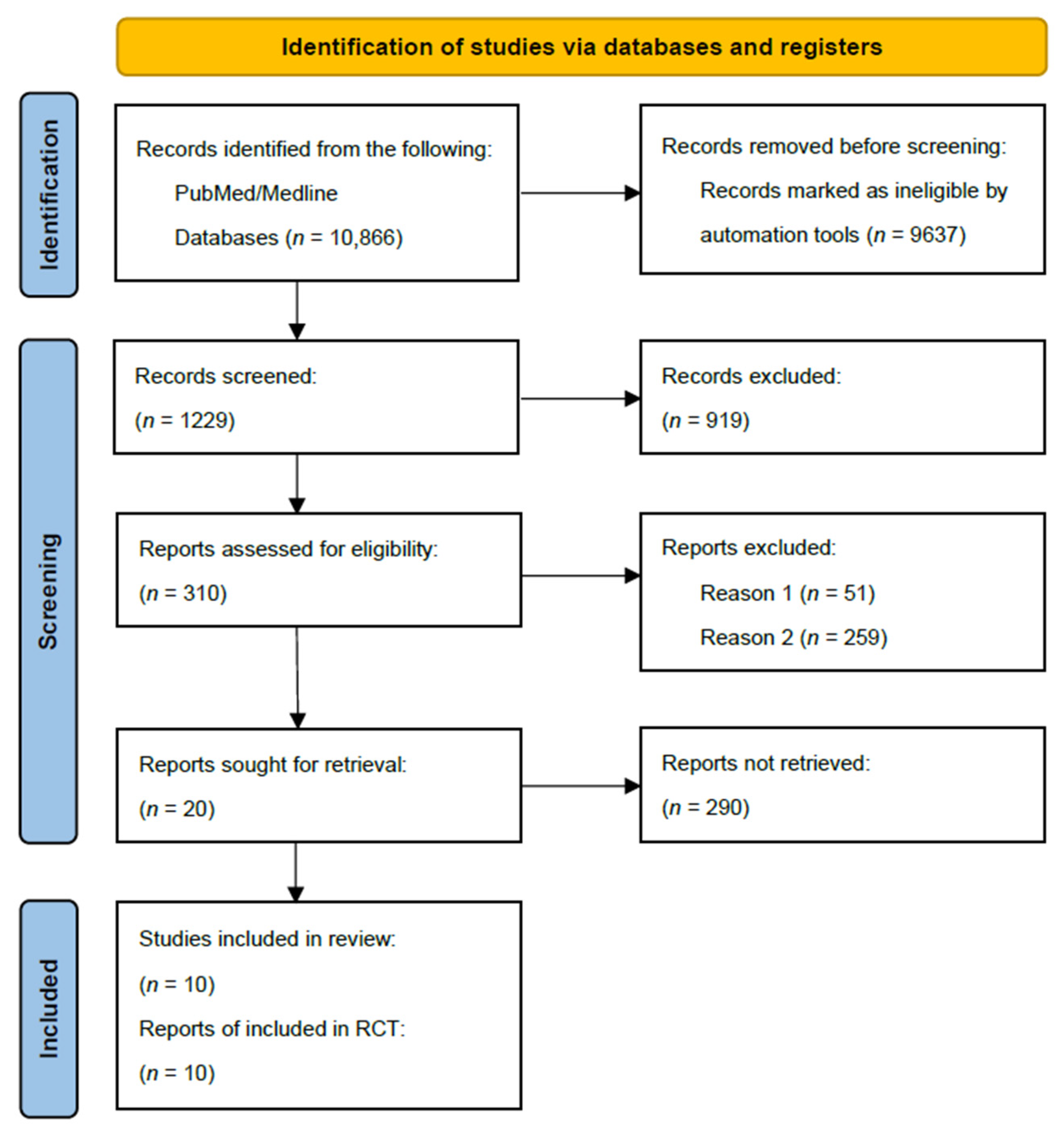
2. Methods
2.1. Article Selection Process of the Mediterranean Diet
2.2. Article Selection Process of the Japanese Diet

3. Results
3.1. Summary of Scientific Evidence Regarding the Mediterranean Diet
3.1.1. Mediterranean Diet-Associated “Review Articles” Within 1 Year (Top 10)
3.1.2. Mediterranean Diet-Associated “Randomised Clinical Trials” in Past 1 Year (Top 10)
3.2. Summary of Scientific Evidence Regarding the Japanese Diet
3.2.1. Japanese Diet-Associated “Review Articles” in Past 10 Years (Top 10)
3.2.2. Japanese Diet-Associated “Randomised Clinical Trials (RCT)” and/or “Clinical Trials” in Past 10 Years (Top 10)
4. Discussion
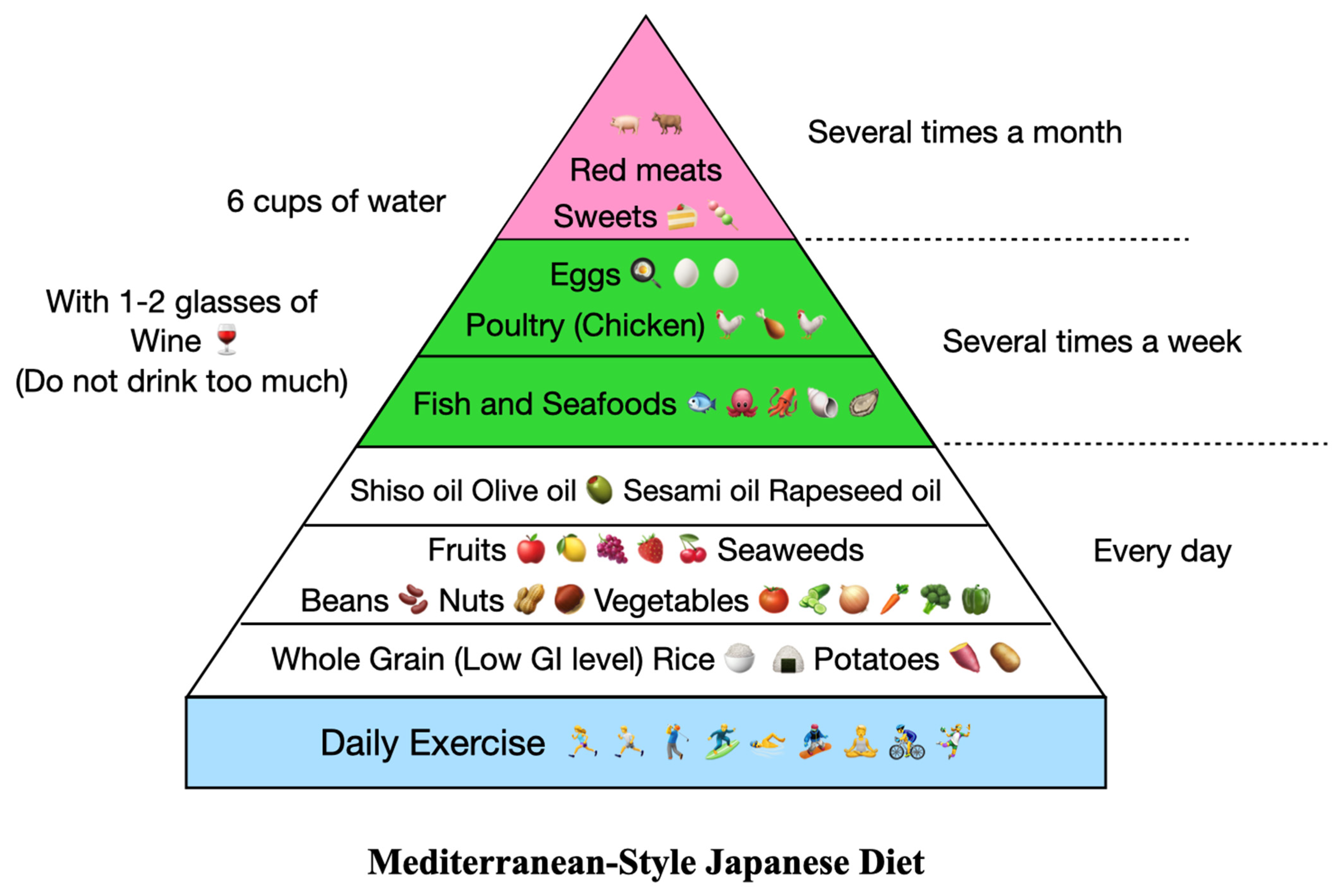
5. Conclusions
Funding
Institutional Review Board Statement
Informed Consent Statement
Data Availability Statement
Conflicts of Interest
References
- Kiani, A.K.; Medori, M.C.; Bonetti, G.; Aquilanti, B.; Velluti, V.; Matera, G.; Iaconelli, A.; Stuppia, L.; Connelly, S.T.; Herbst, K.L.; et al. Modern vision of the Mediterranean diet. J. Prev. Med. Hyg. 2022, 63, E36–E43. [Google Scholar] [CrossRef] [Scilit]
- Keys, A.; Mienotti, A.; Karvonen, M.J.; Aravanis, C.; Blackburn, H.; Buzina, R.; Djordjevic, B.S.; Dontas, A.S.; Fidanza, F.; Keys, M.H.; et al. The Diet and 15-Year Death Rate in the Seven Countries Study. Am. J. Epidemiol. 1986, 124, 903–915. [Google Scholar] [CrossRef] [Scilit]
- Kushi, L.H.; Lenart, E.B.; Willett, W.C. Health implications of Mediterranean diets in light of contemporary knowledge. 1. Plant foods and dairy products. Am. J. Clin. Nutr. 1995, 61, 1407S–1415S. [Google Scholar] [CrossRef] [Scilit]
- Sood, S.; Sylivris, A.L.; Sualeheen, A.; Scott, D.; Tan, S.-Y.; Villani, A.; Baguley, B.J.; Abbott, G.; Kiss, N.; Daly, R.M.; et al. The effects of Mediterranean diet with and without exercise on body composition in adults with chronic disease: A systematic review and meta-analysis of clinical trials. Clin. Nutr. 2025, 51, 222–239. [Google Scholar] [CrossRef] [Scilit]
- Serra-Majem, L.; Trichopoulou, A.; de la Cruz, J.N.; Cervera, P.; Álvarez, A.G.; La Vecchia, C.; Lemtouni, A.; Trichopoulos, D. Does the definition of the Mediterranean diet need to be updated? Public Health Nutr. 2004, 7, 927–929. [Google Scholar] [CrossRef] [Scilit]
- Santa, K.; Kumazawa, Y.; Watanabe, K.; Nagaoka, I. The Recommendation of the Mediterranean-styled Japanese Diet for Healthy Longevity. Endocr. Metab. Immune Disord. Drug Targets 2024, 24, 1794–1812. [Google Scholar] [CrossRef] [Scilit]
- Murakami, K.; Sasaki, S.; Takahashi, Y.; Okubo, H.; Hosoi, Y.; Horiguchi, H.; Oguma, E.; Kayama, F. Dietary glycemic index and load in relation to metabolic risk factors in Japanese female farmers with traditional dietary habits. Am. J. Clin. Nutr. 2006, 83, 1161–1169. [Google Scholar] [CrossRef] [Scilit]
- Page, M.J.; McKenzie, J.E.; Bossuyt, P.M.; Boutron, I.; Hoffmann, T.C.; Mulrow, C.D.; Shamseer, L.; Tetzlaff, J.M.; Akl, E.A.; Brennan, S.E.; et al. The PRISMA 2020 statement: An updated guideline for reporting systematic reviews. BMJ 2021, 372, n71. [Google Scholar] [CrossRef] [Scilit]
- Veronese, N.; Ragusa, F.S.; Dominguez, L.J.; Cusumano, C.; Barbagallo, M. Mediterranean diet and osteoarthritis: An update. Aging Clin. Exp. Res. 2024, 36, 231. [Google Scholar] [CrossRef] [Scilit]
- Dominguez, L.J.; Veronese, N.; Ragusa, F.S.; Petralia, V.; Ciriminna, S.; Di Bella, G.; Schirò, P.; Sabico, S.; Al-Daghri, N.M.; Barbagallo, M. Mediterranean diet and spirituality/religion: Eating with meaning. Aging Clin. Exp. Res. 2024, 36, 223. [Google Scholar] [CrossRef] [Scilit]
- Picone, P.; Girgenti, A.; Buttacavoli, M.; Nuzzo, D. Enriching the Mediterranean diet could nourish the brain more effectively. Front. Nutr. 2024, 11, 1489489. [Google Scholar] [CrossRef] [Scilit]
- Fekete, M.; Varga, P.; Ungvari, Z.; Fekete, J.T.; Buda, A.; Szappanos, Á.; Lehoczki, A.; Mózes, N.; Grosso, G.; Godos, J.; et al. The role of the Mediterranean diet in reducing the risk of cognitive impairement, dementia, and Alzheimer’s disease: A meta-analysis. GeroScience 2025, 47, 3111–3130. [Google Scholar] [CrossRef] [Scilit]
- Dimba, N.R.; Mzimela, N.; Sosibo, A.M.; Khathi, A. Effectiveness of Prebiotics and Mediterranean and Plant-Based Diet on Gut Microbiota and Glycemic Control in Patients with Prediabetes or Type 2 Diabetes: A Systematic Review and Meta-Analysis. Nutrients 2024, 16, 3272. [Google Scholar] [CrossRef] [Scilit]
- Oteri, V.; Galeano, F.; Panebianco, S.; Piticchio, T.; Le Moli, R.; Frittitta, L.; Vella, V.; Baratta, R.; Gullo, D.; Frasca, F.; et al. Influence of Mediterranean Diet on Sexual Function in People with Metabolic Syndrome: A Narrative Review. Nutrients 2024, 16, 3397. [Google Scholar] [CrossRef] [Scilit]
- Furbatto, M.; Lelli, D.; Incalzi, R.A.; Pedone, C. Mediterranean Diet in Older Adults: Cardiovascular Outcomes and Mortality from Observational and Interventional Studies—A Systematic Review and Meta-Analysis. Nutrients 2024, 16, 3947. [Google Scholar] [CrossRef] [Scilit]
- Różańska, D. The Mediterranean Diet, the DASH Diet, and the MIND Diet in Relation to Sleep Duration and Quality: A Narrative Review. Nutrients 2024, 16, 4191. [Google Scholar] [CrossRef] [Scilit]
- Godos, J.; Guglielmetti, M.; Ferraris, C.; Frias-Toral, E.; Azpíroz, I.D.; Lipari, V.; Di Mauro, A.; Furnari, F.; Castellano, S.; Galvano, F.; et al. Mediterranean Diet and Quality of Life in Adults: A Systematic Review. Nutrients 2025, 17, 577. [Google Scholar] [CrossRef] [Scilit]
- Deleu, S.; Becherucci, G.; Godny, L.; Mentella, M.C.; Petito, V.; Scaldaferri, F. The Key Nutrients in the Mediterranean Diet and Their Effects in Inflammatory Bowel Disease: A Narrative Review. Nutrients 2024, 16, 4201. [Google Scholar] [CrossRef] [Scilit]
- Hernando-Redondo, J.; Malcampo, M.; Pérez-Vega, K.A.; Paz-Graniel, I.; Martínez-González, M.Á.; Corella, D.; Estruch, R.; Salas-Salvadó, J.; Pintó, X.; Arós, F.; et al. Mediterranean Diet Modulation of Neuroinflammation-Related Genes in Elderly Adults at High Cardiovascular Risk. Nutrients 2024, 16, 3147. [Google Scholar] [CrossRef] [Scilit]
- Rusch, C.; Beke, M.; Nieves, C.; Mai, V.; Stiep, T.; Tholanikunnel, T.; Ramirez-Zamora, A.; Hess, C.W.; Langkamp-Henken, B. Promotion of a Mediterranean Diet Alters Constipation Symptoms and Fecal Calprotectin in People with Parkinson’s Disease: A Randomized Controlled Trial. Nutrients 2024, 16, 2946. [Google Scholar] [CrossRef] [Scilit]
- Laganà, M.; Piticchio, T.; Alibrandi, A.; Le Moli, R.; Pallotti, F.; Campennì, A.; Cannavò, S.; Frasca, F.; Ruggeri, R.M. Effects of Dietary Habits on Markers of Oxidative Stress in Subjects with Hashimoto’s Thyroiditis: Comparison Between the Mediterranean Diet and a Gluten-Free Diet. Nutrients 2025, 17, 363. [Google Scholar] [CrossRef] [Scilit]
- Cabrera-Suárez, B.M.; Hernández-Fleta, J.L.; Molero, P.; González-Pinto, A.; Lahortiga, F.; Cabrera, C.; Chiclana-Actis, C.; Sánchez-Villegas, A.; PREDI-DEP Investigators. Mediterranean diet-based intervention to improve depressive symptoms: Analysis of the PREDIDEP randomized trial. Nutr. Neurosci. 2023, 27, 951–961. [Google Scholar] [CrossRef] [Scilit]
- Boughanem, H.; Torres-Peña, J.D.; Larriva, A.P.A.-D.; Romero-Cabrera, J.L.; Gómez-Luna, P.; Martín-Piedra, L.; Rodríguez-Cantalejo, F.; Tinahones, F.J.; Serrano, E.M.Y.; Soehnlein, O.; et al. Mediterranean diet, neutrophil count, and carotid intima-media thickness in secondary prevention: The CORDIOPREV study. Eur. Hear. J. 2024, 46, 719–729. [Google Scholar] [CrossRef] [Scilit]
- Vázquez-Lorente, H.; García-Gavilán, J.F.; Shyam, S.; Konieczna, J.; Martínez, J.A.; Martín-Sánchez, V.; Fitó, M.; Ruiz-Canela, M.; Paz-Graniel, I.; Curto, A.; et al. Mediterranean Diet, Physical Activity, and Bone Health in Older Adults: A Secondary Analysis of a Randomized Clinical Trial. JAMA Netw. Open 2025, 8, e253710. [Google Scholar] [CrossRef] [Scilit]
- Hernando-Redondo, J.; Hernáez, Á.; Sanllorente, A.; Pintó, X.; Estruch, R.; Salas-Salvadó, J.; Corella, D.; Arós, F.; Martínez-González, M.Á.; Subirana, I.; et al. Mediterranean Diet Modulates Gene Expression of Cholesterol Efflux Receptors in High-Risk Cardiovascular Patients. Mol. Nutr. Food Res. 2025, 69, e70050. [Google Scholar] [CrossRef] [Scilit]
- Nakaki, A.; Denaro, E.; Crimella, M.; Castellani, R.; Vellvé, K.; Izquierdo, N.; Basso, A.; Paules, C.; Casas, R.; Benitez, L.; et al. Effect of Mediterranean diet or mindfulness-based stress reduction during pregnancy on placental volume and perfusion: A subanalysis of the IMPACT BCN randomized clinical trial. Acta Obstet. Gynecol. Scand. 2024, 103, 2042–2052. [Google Scholar] [CrossRef] [Scilit]
- Kasti, A.N.; Katsas, K.; Pavlidis, D.E.; Stylianakis, E.; Petsis, K.I.; Lambrinou, S.; Nikolaki, M.D.; Papanikolaou, I.S.; Hatziagelaki, E.; Papadimitriou, K.; et al. Clinical Trial: A Mediterranean Low-FODMAP Diet Alleviates Symptoms of Non-Constipation IBS—Randomized Controlled Study and Volatomics Analysis. Nutrients 2025, 17, 1545. [Google Scholar] [CrossRef] [Scilit]
- Chávez-Alfaro, L.; Jiménez, C.T.; Silveira-Sanguino, V.; Gómez, M.J.N.; Fernández-Moreno, C.; Cuesta, A.M.R.; Arana, A.F.L.; Calvo, Ó.S.; De Haro, I.M.; Aguilera, C.M.; et al. Intervention design and adherence to Mediterranean diet in the Cardiovascular Risk Prevention with a Mediterranean Dietary Pattern Reduced in Saturated Fat (CADIMED) randomized trial. Nutr. Res. 2025, 136, 120–132. [Google Scholar] [CrossRef] [Scilit]
- Matsuyama, S.; Shimazu, T.; Tomata, Y.; Zhang, S.; Abe, S.; Lu, Y.; Tsuji, I. Japanese Diet and Mortality, Disability, and Dementia: Evidence from the Ohsaki Cohort Study. Nutrients 2022, 14, 2034. [Google Scholar] [CrossRef] [Scilit]
- Shirota, M.; Watanabe, N.; Suzuki, M.; Kobori, M. Japanese-Style Diet and Cardiovascular Disease Mortality: A Systematic Review and Meta-Analysis of Prospective Cohort Studies. Nutrients 2022, 14, 2008. [Google Scholar] [CrossRef] [Scilit]
- Suzuki, N.; Goto, Y.; Ota, H.; Kito, K.; Mano, F.; Joo, E.; Ikeda, K.; Inagaki, N.; Nakayama, T. Characteristics of the Japanese Diet Described in Epidemiologic Publi-cations: A Qualitative Systematic Review. J. Nutr. Sci. Vitaminol. 2018, 64, 129–137. [Google Scholar] [CrossRef] [Scilit]
- Singh, R.B.; Fedacko, J.; Fatima, G.; Magomedova, A.; Watanabe, S.; Elkilany, G. Why and How the Indo-Mediterranean Diet May Be Superior to Other Diets: The Role of Antioxidants in the Diet. Nutrients 2022, 14, 898. [Google Scholar] [CrossRef] [Scilit]
- Migliaccio, S.; Brasacchio, C.; Pivari, F.; Salzano, C.; Barrea, L.; Muscogiuri, G.; Savastano, S.; Colao, A. What is the best diet for cardiovascular wellness? A comparison of different nutritional models. Int. J. Obes. Suppl. 2020, 10, 50–61. [Google Scholar] [CrossRef] [Scilit]
- Fiore, M.; Tonchev, A.B.; Pancheva, R.Z.; Yamashima, T.; Venditti, S.; Ferraguti, G.; Terracina, S. Increasing Life Expectancy with Plant Pol-yphenols: Lessons from the Mediterranean and Japanese Diets. Molecules 2025, 30, 2888. [Google Scholar] [CrossRef] [Scilit]
- Singh, R.B.; Nabavizadeh, F.; Fedacko, J.; Pella, D.; Vanova, N.; Jakabcin, P.; Fatima, G.; Horuichi, R.; Takahashi, T.; Mojto, V.; et al. Dietary Approaches to Stop Hypertension via Indo-Mediterranean Foods, May Be Superior to DASH Diet Intervention. Nutrients 2022, 15, 46. [Google Scholar] [CrossRef] [Scilit]
- Gray, A.; Dang, B.N.; Moore, T.B.; Clemens, R.; Pressman, P. A review of nutrition and dietary interventions in oncology. SAGE Open Med. 2020, 8, 2050312120926877. [Google Scholar] [CrossRef] [Scilit]
- Tsugane, S. Why has Japan become the world’s most long-lived country: Insights from a food and nutrition perspective. Eur. J. Clin. Nutr. 2020, 75, 921–928. [Google Scholar] [CrossRef] [Scilit]
- Dijck-Brouwer, D.A.J.; Muskiet, F.A.J.; Verheesen, R.H.; Schaafsma, G.; Schaafsma, A.; Geurts, J.M.W. Thyroidal and Extrathyroidal Requirements for Iodine and Selenium: A Combined Evolutionary and (Patho)Physiological Approach. Nutrients 2022, 14, 3886. [Google Scholar] [CrossRef] [Scilit]
- Kushida, M.; Sugawara, S.; Asano, M.; Yamamoto, K.; Fukuda, S.; Tsuduki, T. Effects of the 1975 Japanese diet on the gut microbiota in younger adults. J. Nutr. Biochem. 2019, 64, 121–127. [Google Scholar] [CrossRef] [Scilit]
- Sugawara, S.; Kushida, M.; Iwagaki, Y.; Asano, M.; Yamamoto, K.; Tomata, Y.; Tsuji, I.; Tsuduki, T. The 1975 Type Japanese Diet Improves Lipid Metabolic Parameters in Younger Adults: A Randomized Controlled Trial. J. Oleo Sci. 2018, 67, 599–607. [Google Scholar] [CrossRef] [Scilit]
- Asano, M.; Kushida, M.; Yamamoto, K.; Tomata, Y.; Tsuji, I.; Tsuduki, T. Abdominal Fat in Individuals with Overweight Reduced by Consumption of a 1975 Japanese Diet: A Randomized Controlled Trial. Obesity 2019, 27, 899–907. [Google Scholar] [CrossRef] [Scilit] [PubMed]
- Koga, M.; Toyomaki, A.; Kiso, Y.; Kusumi, I. Impact of a Rice-Centered Diet on the Quality of Sleep in Association with Reduced Oxidative Stress: A Randomized, Open, Parallel-Group Clinical Trial. Nutrients 2020, 12, 2926. [Google Scholar] [CrossRef] [Scilit]
- Sawada, R.; Sato, W.; Minemoto, K.; Fushiki, T. Hunger promotes the detection of high-fat food. Appetite 2019, 142, 104377. [Google Scholar] [CrossRef] [Scilit]
- Maruyama, C.; Shijo, Y.; Kameyama, N.; Umezawa, A.; Sato, A.; Nishitani, A.; Ayaori, M.; Ikewaki, K.; Waki, M.; Teramoto, T. Effects of Nutrition Education Program for the Japan Diet on Serum LDL-Cholesterol Concentration in Patients with Dyslipidemia: A Randomized Controlled Trial. J. Atheroscler. Thromb. 2021, 28, 1035–1051. [Google Scholar] [CrossRef] [Scilit]
- Sakane, N.; Osaki, N.; Takase, H.; Suzuki, J.; Suzukamo, C.; Nirengi, S.; Suganuma, A.; Shimotoyodome, A. The study of metabolic improvement by nutritional intervention controlling endogenous GIP (Mini Egg study): A randomized, cross-over study. Nutr. J. 2019, 18, 52. [Google Scholar] [CrossRef] [Scilit]
- Fan, R.; Xu, M.; Wang, J.; Zhang, Z.; Chen, Q.; Li, Y.; Gu, J.; Cai, X.; Guo, Q.; Bao, L.; et al. Sustaining Effect of Intensive Nutritional Intervention Combined with Health Education on Dietary Behavior and Plasma Glucose in Type 2 Diabetes Mellitus Patients. Nutrients 2016, 8, 560. [Google Scholar] [CrossRef] [Scilit]
- Yoshinaga, K.; Mitamura, R. Effects of Undaria pinnatifida (Wakame) on Postprandial Glycemia and Insulin Levels in Humans: A Randomized Crossover Trial. Plant Foods Hum. Nutr. 2019, 74, 461–467. [Google Scholar] [CrossRef] [Scilit]
- Mano, F.; Ikeda, K.; Joo, E.; Fujita, Y.; Yamane, S.; Harada, N.; Inagaki, N. The Effect of White Rice and White Bread as Staple Foods on Gut Microbiota and Host Metabolism. Nutrients 2018, 10, 1323. [Google Scholar] [CrossRef] [Scilit]
- Rocha, D.M.; Caldas, A.P.; Oliveira, L.L.; Bressan, J.; Hermsdorff, H.H. Saturated fatty acids trigger TLR4-mediated inflammatory response. Atherosclerosis 2016, 244, 211–215. [Google Scholar] [CrossRef] [Scilit]
- Nilsen, L.; Hopstock, L.A.; Grimsgaard, S.; Carlsen, M.H.; Lundblad, M.W. Intake of Vegetables, Fruits and Berries and Compliance to “Five-a-Day” in a General Norwegian Population—The Tromsø Study 2015–2016. Nutrients 2021, 13, 2456. [Google Scholar] [CrossRef] [Scilit] [PubMed]
- Santa, K.; Watanabe, K.; Kumazawa, Y.; Nagaoka, I. Phytochemicals and Vitamin D for a Healthy Life and Prevention of Diseases. Int. J. Mol. Sci. 2023, 24, 12167. [Google Scholar] [CrossRef] [Scilit]
- Tominaga, T.; Kawaguchi, K.; Kanesaka, M.; Kawauchi, H.; Jirillo, E.; Kumazawa, Y. Suppression of type-I allergic responses by oral administration of grape marc fermented withLactobacillus plantarum. Immunopharmacol. Immunotoxicol. 2010, 32, 593–599. [Google Scholar] [CrossRef] [Scilit] [PubMed]
- Martins, I.J. Nutrition Therapy Regulates Caffeine Metabolism with Relevance to NAFLD and Induction of Type 3 Diabetes. Diabetes Metab. Disord. 2017, 4, 19. [Google Scholar] [CrossRef] [Scilit] [PubMed]
- Kawaguchi, K.; Kikuchi, S.-I.; Hasunuma, R.; Maruyama, H.; Yoshikawa, T.; Kumazawa, Y. A Citrus Flavonoid Hesperidin Suppresses Infection-Induced Endotoxin Shock in Mice. Biol. Pharm. Bull. 2004, 27, 679–683. [Google Scholar] [CrossRef] [Scilit] [PubMed]
- Suzuki, K.; Nakamura, K.; Shimizu, Y.; Yokoi, Y.; Ohira, S.; Hagiwara, M.; Wang, Y.; Song, Y.; Aizawa, T.; Ayabe, T. Decrease of α-defensin impairs intestinal metabolite homeostasis via dysbiosis in mouse chronic social defeat stress model. Sci. Rep. 2021, 11, 9915. [Google Scholar] [CrossRef] [Scilit] [PubMed]
- Sonnenburg, E.D.; Sonnenburg, J.L. Starving our Microbial Self: The Deleterious Consequences of a Diet Deficient in Microbiota-Accessible Carbohydrates. Cell Metab. 2014, 20, 779–786. [Google Scholar] [CrossRef] [Scilit]
- Martins, I.J. Single Gene Inactivation with Implications to Diabetes and Multiple Organ Dysfunction Syndrome. J. Clin. Epigenetics 2017, 3, 24. [Google Scholar] [CrossRef] [Scilit]
- Martins, I.J. Anti-Aging Genes Improve Appetite Regulation and Reverse Cell Senescence and Apoptosis in Global Populations. Adv. Aging Res. 2016, 5, 9–26. [Google Scholar] [CrossRef]
- Willcox, D.C.; Scapagnini, G.; Willcox, B.J. Healthy aging diets other than the Mediterranean: A focus on the Okinawan diet. Mech. Ageing Dev. 2014, 136–137, 148–162. [Google Scholar] [CrossRef] [Scilit]
- Miyagi, S.; Iwama, N.; Kawabata, T.; Hasegawa, K. Longevity and Diet in Okinawa, Japan: The Past, Present and Future. Asia Pac. J. Public Health 2003, 15, S3–S9. [Google Scholar] [CrossRef] [Scilit]
- Devranis, P.; Vassilopoulou, Ε.; Tsironis, V.; Sotiriadis, P.M.; Chourdakis, M.; Aivaliotis, M.; Tsolaki, M. Mediterranean Diet, Ketogenic Diet or MIND Diet for Aging Populations with Cognitive Decline: A Systematic Review. Life 2023, 13, 173. [Google Scholar] [CrossRef] [Scilit] [PubMed]
- Nagatsuka, N.; Harada, K.; Ando, M.; Nagao, K. Measurement of the radical scavenging activity of chicken jelly soup, a part of the medicated diet, ‘Yakuzen’, made from gelatin gel food ‘Nikogori’, using chemiluminescence and electron spin resonance methods. Int. J. Mol. Med. 2006, 18, 107–111. [Google Scholar] [CrossRef] [Scilit] [PubMed]


| Main Findings and Markers | First Author, Publication Date, Ref. |
|---|---|
| Adherence to Mediterranean diet (rich in antioxidants and anti-inflammatory compounds and omega-3 fatty acids) improves pain, function, and QOL of osteoarthritis patients | Veronese N, 2024, [9] |
| Influence of Mediterranean diet on spirituality and religion | Dominguez LJ, 2024, [10] |
| Prevention of neurodegenerative disorders by consumption of Mediterranean diet (rich in antioxidants, vitamins, and polyphenols; characterised by healthy, plant-based foods, fats, and moderate consumption of animal products) | Picone P, 2024, [11] |
| Effects of Mediterranean diet on cognitive impairment, dementia, and Alzheimer’s disease; meta-analysis | Fekete M, 2024, [12] |
| Intervention with prebiotics and Mediterranean diet improves gut microbiota composition of Firmicutes, Bacteroidetes, and Bifidobacteria in patients with pre-diabetes or T2DM | Dimba NR, 2024, [13] |
| Improvement of sexual function with Mediterranean diet: both men and women | Oteri V, 2024, [14] |
| Reduction in mortality and cardiovascular risks by Mediterranean diet in older adults: meta-analysis including 28 research articles | Furbatto M, 2024, [15] |
| Beneficial association between duration and/or quality of sleep and diets by Mediterranean diet, DASH diet, and MIND diet | Różańska D, 2024, [16] |
| Significant relationship was observed between Mediterranean diet and QOL in adults: systematic review of 28 research articles | Godos J, 2025, [17] |
| Mediterranean diet (consuming fruits, vegetables, olive oil, whole grains, legumes, and nuts every day) reduces risk of chronic inflammation-associated diseases, including IBD | Deleu S, 2024, [18] |
| First Author, Publication Date, Ref. | Treatment and Subjects | Outcome |
|---|---|---|
| Hernando-Redondo J, 2024, [19] | Randomised dietary intervention of MedDiet—EVOO (high extra virgin olive oil), MedDiet—nuts, and low-fat diet groups (n = 134): 12 months, blood nuclear cells | Mediterranean diet modulates neuroinflammation-related genes in elderly adults at high cardiovascular risk |
| Rusch C, 2024, [20] | Mediterranean diet (n = 19) vs. standard of care (n = 17): 8 weeks, in Parkinson’s disease patients with constipation | Both Mediterranean diet and standard of care improve constipation, while Mediterranean diet increases dietary fibre intakes and reduces intestinal inflammation |
| Laganà M, 2025, [21] | Mediterranean diet (n = 15) vs. gluten-free diet (n = 15) vs. free diet (n = 15): 12 weeks, in euthyroid HT patients | Mediterranean diet significantly lowers AGEs and raises GPX, TRX, and TEAA, while gluten-free diet does not significantly influence these factors |
| Cabrera-Suárez BM, 2024, [22] | Extra virgin olive oil-enriched Mediterranean diet (n = 103) vs. control (n = 93): 2 years, in patients with depression | Mediterranean diet reduced the depressive subsyndromal symptoms |
| Boughanem H, 2025, [23] | Intervention with Mediterranean diet or low-fat diet in 7 years: participants were divided into 3 groups based on tertiles of neutrophil count: the lowest tertile (n = 346), the middle tertile (n = 322), and the highest tertile (n = 334), in patients with coronary heart disease (CHD) | Mediterranean diet reduced the neutrophil count and delayed progression of atherosclerosis |
| Vázquez-Lorente H, 2025, [24] | Intervention (n = 462) vs. control (n = 462): 3 years, in age-related bone deterioration risk | Intervention of Mediterranean diet with increased physical activity reduced the bodyweight and increased bone mineral density (BMD) in older women |
| Hernando-Redondo J, 2025, [25] | MedDiet—EVOO (n = 54) vs. MedDiet—nuts (n = 46) vs. control (n = 51): 12 months, high CVD risk patients | Mediterranean diet increased the gene expression of cholesterol efflux receptors and improved CVD conditions |
| Nakaki A, 2024, [26] | Mediterranean diet (n = 407) vs. stress reduction (n = 407) vs. control (n = 407): at 19- to 23-week gestation | Mediterranean diet and stress reduction during pregnancy reduces lowered proportion of small placentas and is beneficial for foetal growth |
| Kasti AN, 2025, [27] | Mediterranean low-FODMAP (fermentable oligosaccharides, disaccharides, monosaccharides, and polyols) diet (n = 48) vs. NICE recommended diet (n = 44): 6 months, in non-constipated IBS patients | MED-LFD is superior to NICE recommendations in managing non-constipation IBS symptoms and quality of life |
| Chávez-Alfaro L, 2025, [28] | Non-red/-processed meat Mediterranean diet (n = 78) vs. control (n = 78): 8 weeks, in adults with dyslipidemia | When red/processed meat is eliminated (low saturated fat), Mediterranean diet improves dyslipidemia |
| Main Findings and Markers | First Author, Publication Date, Ref. |
|---|---|
| Cohort study in Osaki, Miyagi: Decreasesd disability, and dementia with Japanese diet | Matsuyama S, 2022, [29] |
| Decreasesd CVD death with high dietary fibres and plant-proteins: Increased CVD with high salt intake | Shirota M, 2022, [30] |
| Japanese diet mainly consists of dietary staples, side dishes, and soup, and the components were categorised into 16 groups | Suzuki N, 2018, [31] |
| Indo-Mediterranean diet and Japanese diet diversify food variety and are rich in antioxidants | Singh RB, 2022, [32] |
| Comparison of Mediterranean, vegetarian, ketogenic, and Japanese diets in cardiovascular health: recommendations of vegetables, fruits, whole grains and legumes | Migliaccio S, 2020, [33] |
| Mediterranean and Japanese diets consist of large amounts of polyphenols but small amounts of aging-accelerating processed foods, sugar, and fats | Fiore M, 2025, [34] |
| High blood pressure↓, Metabolic syndrome↓, by soybeans, whole rice, vegetables, fish oil, and taurine in Japanese diet | Singh RB, 2022, [35] |
| Chronic malnutrition and excess calorie intake influence the risk of cancer | Gray A, 2020, [36] |
| Low obesity ratio and decrease in high-salt foods are correlated with the low ischemic heart disease and cancer death | Tsugane S, 2021, [37] |
| Seafood-rich Japanese diet can provide high iodine and selenium | Dijck-Brouwer DAJ, 2022, [38] |
| First Author, Publication Date, Ref. | Treatment and Subjects | Outcome |
|---|---|---|
| Kushida M, 2019, [39] | 1975-type Japanese diet (n = 11) vs. 2005-type modern diet (n = 10): 3 times a day; 28 days, age 20–29 | 1975-type Japanese diet is related to healthy gut microbiota |
| Sugawara S, 2018, [40] | 1975-type Japanese diet (n = 16) vs. 2005-type modern diet (n = 16): 3 times a day; 28 days, age 20–29 | 1975-type Japanese diet is beneficial for body fat parameters |
| Asano M, 2019, [41] | 1975-type Japanese diet (n = 30) vs. 2005-type modern diet (n = 30): 3 times a day; 28 days, obese people | 1975-type Japanese diet reduces metabolic syndrome risk |
| Koga M, 2020, [42] | Rice vs. cereal consumption: 3 times a day; 2 months, volunteer (n = 62) | Rice-centred meals improve quality of sleep |
| Sawada R, 2019, [43] | Reaction time to pictures of high-fat foods (fast food), low-fat foods (Japanese diet) or non-food items (kitchenware), subjects number ND | Hungry subjects prefer fattier foods |
| Maruyama C, 2021, [44] | Japanese diet (n = 49) vs. Partial Japanese diet (n = 49): Japanese diet contains more fish, soy products, vegetables, seaweeds/mushrooms/konnyaku and unrefined grain: 3–6 months | Nutritional education with improved hyperlipidemia |
| Sakane N, 2019, [45] | Smart Japanese diet vs. control: 2 weeks for improvement of metabolism (n = 21), overweight/obese men without diabetes | Smart Japanese diet improves visceral fat area in overweight/obese men |
| Fan R, 2016, [46] | Healthy, monotonous, vegetarian, Japanese, and low energy vs. traditional diets groups: 1-month dietary intervention in China (n = 299), age over 50 | Nutrition education and dietary intervention are effective in diabetes patients |
| Yoshinaga K, 2019, [47] | Rice 200 g vs. rice 200 g + dried wakame 4 g: cross-over method, (n = 26) | Water-soluble fibres in wakame lowered blood sugar spikes |
| Mano F, 2018, [48] | White rice vs. white bread, with 21 cooked side-dishes: two 1-week test periods with a 1-week wash-out period (n = 7), healthy subject | Digestion-resistant carbohydrates are good for gut microbiota |
Disclaimer/Publisher’s Note: The statements, opinions and data contained in all publications are solely those of the individual author(s) and contributor(s) and not of MDPI and/or the editor(s). MDPI and/or the editor(s) disclaim responsibility for any injury to people or property resulting from any ideas, methods, instructions or products referred to in the content. |
© 2025 by the author. Licensee MDPI, Basel, Switzerland. This article is an open access article distributed under the terms and conditions of the Creative Commons Attribution (CC BY) license (https://creativecommons.org/licenses/by/4.0/).
Share and Cite
Santa, K. Mediterranean-Style Japanese Diet for Anti-Ageing: Systematic Review. Med. Sci. Forum 2025, 38, 2. https://doi.org/10.3390/msf2025038002
Santa K. Mediterranean-Style Japanese Diet for Anti-Ageing: Systematic Review. Medical Sciences Forum. 2025; 38(1):2. https://doi.org/10.3390/msf2025038002
Chicago/Turabian StyleSanta, Kazuki. 2025. "Mediterranean-Style Japanese Diet for Anti-Ageing: Systematic Review" Medical Sciences Forum 38, no. 1: 2. https://doi.org/10.3390/msf2025038002
APA StyleSanta, K. (2025). Mediterranean-Style Japanese Diet for Anti-Ageing: Systematic Review. Medical Sciences Forum, 38(1), 2. https://doi.org/10.3390/msf2025038002