


Abstract
Psychological adjustment in adolescents living in residential care settings is a multidetermined process. This study explores the psychological adjustment of adolescents living in residential care, aiming to identify distinct psychosocial profiles. The sample comprised 433 adolescents (196 boys and 237 girls), aged 12 to 18 years, from 46 Portuguese institutions. Participants self-reported on key variables, including social support, coping strategies, emotion regulation, Dark Triad traits, attachment, and institutional integration. Hierarchical cluster analysis revealed three theoretically coherent profiles, differentiated by number of close friends, duration of institutionalization, substance use, and psychiatric medication. These profiles reflect varying levels of psychological, emotional, behavioral, and social adjustment and align with international literature. This study offers a novel contribution by identifying specific adjustment patterns among adolescents in care, providing valuable insights to inform more tailored intervention and prevention strategies aimed at fostering healthier development and well-being in this vulnerable group.
1. Introduction
Adolescence is a period of significant biological, psychological, and social transformations, which contribute to increased vulnerability to psychological adjustment problems (Arnett, 1999; Babicka-Wirkus et al., 2023; Dahl, 2001). During mid-adolescence, symptoms of anxiety and depression tend to increase, with girls being particularly prone to internalizing problems. Emotional experiences also become more intense during this developmental stage, highlighting the critical role of emotion regulation in socioemotional development (Dahl, 2001).
Family environments characterized by harmful relational dynamics can significantly compromise children’s mental, physical, and social well-being in both the short and long term. Experiences marked by anger, neglect, or emotional disengagement are associated with a range of psychological and physical health problems that often persist into adulthood (Taylor, 2011). Exposure to psychosocial stressors and chronic adversity predicts higher levels of internalizing and externalizing symptoms throughout childhood and adolescence, with outcomes influenced by proximal factors such as coping strategies and the capacity for emotional regulation in response to distressing experiences (Grant et al., 2004).
Youth in residential care settings (RCS) are particularly vulnerable to mental health difficulties, including depression, anxiety, and posttraumatic stress disorder symptoms. These challenges are often intensified by prior experiences of abuse, neglect, and the trauma associated with separation from families and subsequent placements. In Portugal, most children and adolescents removed from their biological families are placed in residential care institutions, with over 5400 living in such settings as of 2023 (Instituto da Segurança Social, 2024).
1.1. Determinants of Psychological Adjustment of Adolescents Living in RCS
Globally, the number of children entering child welfare systems has increased over the past several decades. Adolescents in RCS face stress associated with institutional routines and demands, which can further elevate vulnerability to mental health problems. Psychological distress during adolescence can have long-term consequences, negatively affecting both physical and mental health in later adulthood. Individual and contextual factors significantly shape adjustment trajectories among these youth. This study focuses on key variables identified in recent systematic reviews on factors influencing psychological adjustment of adolescents in residential care (Simão et al., 2025c).
Research consistently indicates gender and age differences in emotional and behavioral problems among adolescents in RCS, with overall functioning generally lower compared to normative populations (e.g., Moreno-Manso et al., 2021). Girls tend to exhibit higher levels of internalizing symptoms, such as anxiety and depression, whereas boys more frequently display externalizing behaviors, including aggression and rule-breaking (Cotton et al., 2020).
The impact of time spent in residential care on youth development remains mixed (Dell’Aglio & Hutz, 2004; Ringle et al., 2010). Some studies suggest that extended stays may negatively affect development, as exemplified by Mota et al. (2016) who found a link between boys’ externalizing behaviors and institutionalization duration. Conversely, other research suggests prolonged placements may be associated with fewer adjustment difficulties and greater opportunities to form meaningful emotional bonds with caregivers (Fernandes & de Oliveira-Monteiro, 2016; Hoffnung Assouline & Attar-Schwartz, 2020). Placement instability, however, is consistently linked to increased risk of mental and behavioral problems (McGuire et al., 2018).
Social support is widely recognized as a critical resource for coping with stress and promoting psychological health (Drageset, 2021). In residential care, perceived strong support and positive relationships with family and peers are protective, contributing to better mental health outcomes (Erol et al., 2010).
The ability to cope with stress and regulate emotions plays a central role in reducing the likelihood of developing psychopathology (Compas et al., 2017). Coping strategies are aimed at alleviating stress responses over time, while emotion regulation (ER) involves managing the type, timing, and expression of emotional experiences (Gross, 2015). Both adaptive coping and effective ER are associated with lower levels of psychopathology, with approach-oriented coping inversely related to psychological distress (Compas et al., 2017). Conversely, poor ER is a risk factor for psychological difficulties, particularly in maltreated children, where deficits in ER have been linked to aggressive and disruptive behaviors (Fernández-García et al., 2023; Gross, 2015; Lougheed & Hollenstein, 2012), suggesting that limited opportunities to learn adaptive emotional responses—often due to inadequate primary caregiving—may underlie these difficulties (Kim & Cicchetti, 2010; Paulus et al., 2021).
ER serves as a key mechanism underlying individual and developmental differences in socioemotional functioning (Dahl, 2001; Schäfer et al., 2017). Limited ER strategies are associated with greater vulnerability to internalizing problems, with age and gender influencing both the use and effectiveness of specific ER strategies such as cognitive reappraisal and emotional suppression (Campos et al., 2019; Compas et al., 2017; Fernández-García et al., 2023; Lougheed & Hollenstein, 2012).
Attachment is another critical factor influencing psychosocial functioning (Allen et al., 1998; Flykt et al., 2021). Secure attachment is associated with greater sociability and more effective social interactions, whereas insecure or disorganized attachment is linked to increased externalizing behaviors, particularly among boys in at-risk environments such as residential care (Bakermans-Kranenburg et al., 2011; Lyons-Ruth & Jacobvitz, 1999; Shirley, 1942; The St. Petersburg-USA Orphanage Research Team, 2008). In RCS, the formation of secure attachments with caregivers supports the development of positive internal working models and effective ER strategies (Mota et al., 2024).
Research on personality traits, such as the Dark Triad (DT: Machiavellianism, narcissism, and psychopathy), may further enhance understanding of psychological adjustment in RCS populations (Paulhus & Williams, 2002). While DT traits are generally associated with negative psychosocial outcomes (Furnham et al., 2013; Hu & Lan, 2022; Pechorro et al., 2022a, 2022b), some evidence suggests potentially adaptive effects depending on context (Szabó et al., 2022). Gender differences and contextual factors influence the expression and impact of DT traits on adjustment (Bonfá-Araujo et al., 2020; Lau & Marsee, 2013; Velimirovic et al., 2022).
1.2. Current Study
Psychological adjustment among adolescents living in RCS is a multidetermined process (Simão et al., 2025c). Early adverse experiences often contribute to developmental difficulties across multiple domains, while factors beyond the residential environment itself also shape adjustment outcomes (Sijtsema et al., 2019; van IJzendoorn et al., 2011). Between 50% and 80% of children in care present significant emotional, behavioral, relational, and interpersonal difficulties (Hambrick et al., 2016). The present study aims to examine patterns of psychological adjustment in the Portuguese context and to identify the factors associated with more favorable outcomes among youth in residential care.
Few studies have simultaneously explored the developmental trajectories of coping strategies, emotion regulation, and psychopathology symptoms. When investigating developmental variations, research highlights key transitional processes—such as increased reliance on peers for social support and the maturation of metacognitive and executive function abilities—which provide the foundation for more sophisticated coping and ER strategies (Compas et al., 2017). For adolescents in residential care, however, it is essential to identify potential differences in these characteristics. Collectivist environments, such as institutional care, often emphasize group dynamics over individual needs, which may result in smaller variations in DT traits compared with adolescents raised in more individualistic contexts. Examining the natural configurations of DT traits within this population may reveal group-specific associations between malevolent personality characteristics and psychological adjustment (Hu & Lan, 2022).
The Report on the Transition from Institutional Care to Community-Based Services in 27 EU Member States (Šiška & Beadle-Brown, 2020) indicates that institutional care remains the main form of provision for children and youth without parental care or exposed to psychosocial risk in several European Union countries. In the Portuguese context, there is still a strong dependence on institutional care as the primary alternative care arrangement for young people, with adolescents representing the majority.
This study seeks to offer an innovative contribution to the field, as, to the best of our knowledge, no previous research has examined adolescents in residential care by analyzing this particular set of variables to develop a comprehensive psychosocial profile of this at-risk population. We aim to explore how distinct psychosocial profiles differ in terms of mental health indicators and related factors. Expanding the literature in this area is not only theoretically relevant—by advancing an integrative model of mental health within the DT framework—but also practically meaningful for identifying at-risk youth more effectively. Such insights can inform the development of targeted intervention and prevention strategies tailored to the specific needs of adolescents living in RCS. Grounded in existing literature, the present study has the following objectives: (1) to identify distinct profiles of youth in residential care based on psychosocial, behavioral, and relational characteristics; (2) to explore differences between the identified groups regarding risk and protective factors; (3) to examine levels of institutional integration, attachment styles, coping strategies, and emotion regulation as potential distinguishing features among the identified profiles; and (4) to assess behavioral and relational patterns that may influence adolescents’ adaptation within the institutional context.
2. Materials and Methods
2.1. Participants
The sample consisted of 433 adolescents, including 196 boys (45.3%) and 237 girls (54.7%), aged between 12 and 18 years (M = 15.33, SD = 1.74), residing in 46 RCS across Portugal. This age group (12–17 years) is the most represented among children and adolescents in residential care nationwide (Instituto da Segurança Social, 2024).
On average, participants had lived in their current institution for 34 months (SD = 37.00; range = 1–204 months), with some experiencing multiple placements (range = 0–8 different institutions). Approximately 32% were living with at least one sibling in the same institution. Beyond school attendance, 51% of adolescents participated in extracurricular activities such as sports, music, or scouting. Regarding educational attainment, 45.7% had completed the 9th grade.
Parental educational levels were generally low: 21% of mothers and 15% of fathers had completed the 9th grade, while 36% of mothers and 34% of fathers had completed only lower secondary education (6th grade) or less. Family contact varied, with 48% reporting frequent contact with family members and 40% reporting no contact at all. The most frequently reported reasons for placement in care included school absenteeism (33%), financial hardship (28%), exposure to domestic violence (26%), neglect (19%), physical or emotional maltreatment (19%), and sexual abuse (7%).
In terms of psychological and psychiatric support, 63% of the participants were receiving psychological counseling, and 32% were taking psychiatric medication at the time of data collection. Regarding institutional typology, 37% of adolescents resided in all-girl institutions, 34% in mixed-gender institutions, and 29% in all-boys institutions. The majority of institutions (64%) had a religious orientation, and 89% received external supervision.
2.2. Measures
Abbreviated Dysregulation Inventory (ADI, Mezzich et al., 2001; Portuguese version by da Motta et al., 2018).
The ADI is a 30-item self-report questionnaire designed to assess affective (e.g., “I lose sleep because I worry”), behavioral (e.g., “I spend money without thinking about it first”), and cognitive dysregulation (e.g., “I think about the future consequences of my actions”) in adolescents. Each subscale includes 10 items, and participants respond using a 4-point Likert scale. The validation study reported good psychometric properties and satisfactory internal consistency, with Cronbach’s alpha values of 0.84 for emotional dysregulation, 0.86 for behavioral dysregulation, and 0.85 for cognitive dysregulation. In the present study, internal consistency was also adequate (α = 0.88, 0.87, and 0.85, respectively).
Brief COPE (Carver, 1997; Portuguese version by Nunes et al., 2021)
The Brief COPE (Carver, 1997) is a shortened version of the original COPE inventory designed to assess individuals’ coping strategies in stressful situations. This self-report questionnaire includes 14 subscales with two items each. Responses are rated on a 4-point scale (0 = “I never do this” to 3 = “I do it almost all the time”), with higher scores reflecting greater use of the respective coping strategy. In the present study, coping strategies were grouped into three dimensions: problem-focused (active coping, planning, using instrumental support), emotion-focused (acceptance, humor, religion, using emotional support, positive reframing, expression of feelings), and avoidance-oriented (self-blame, self-distraction, denial, substance use, behavioral disengagement). Cronbach’s alphas for the original version (Carver, 1997) ranged between 0.50 and 0.90, indicating adequate internal reliability. In the Portuguese adaptation (Nunes et al., 2021), alpha coefficients varied between 0.37 and 0.88. In the present study, internal consistency values were α = 0.79 for problem-focused, α = 0.78 for emotion-focused, and α = 0.78 for avoidance-oriented coping.
Positive Residential Care Integration scale (PRCI, Simão et al., 2025b, in press)
The PRCI is a six-item self-report questionnaire adapted from the Positive Home Integration scale (PHI; Kothari et al., 2018) for the Portuguese population (Simão et al., 2025b). It aims to capture adolescents’ perspectives and experiences in residential care, focusing on their perceived relationships with caregivers and other significant adults (e.g., “To what extent/how much do you feel included in the institution?”). The scale assesses youths’ perceptions of RCS integration, defined as their sense of belonging, the quality of their relationships with professionals, and the extent to which their needs are recognized and met within the institution. Responses are rated on a 10-point scale ranging from 1 (Not at all included) to 10 (Very included). Lower scores (typically between 1 and 4) are indicative of poor outcomes in areas such as mental health. The scale demonstrated good internal consistency, with a Cronbach’s alpha of 0.88.
Scale of satisfaction with social support for children and adolescents (Gaspar et al., 2009)
The Social Support Satisfaction Scale for Children and Adolescents (Gaspar et al., 2009) is a Portuguese instrument designed to assess satisfaction with social support—an important dimension of cognitive and emotional processes related to well-being and quality of life. This self-report questionnaire comprises 12 items divided into two dimensions: a positive dimension, Satisfaction with social support (SSS; seven items: e.g., “I am satisfied with the number of friends I have”), and a negative dimension, Need for activities related to social support (NASS; five items: e.g., “I miss having social activities that are fulfilling for me”). Responses are provided on a 5-point Likert scale ranging from 1 (Strongly disagree) to 5 (Strongly agree). Following the authors’ recommendation, item 5 was excluded from the analysis. Cronbach’s alpha coefficients in the original version were 0.84 for the SSS dimension and 0.69 for the NASS dimension. In the present study, internal consistency values were α = 0.70 for SSS and α = 0.69 for NASS.
Short Dark Triad (SD3, Jones & Paulhus, 2014; Portuguese version by Pechorro et al., 2018)
The Portuguese version assesses the DT traits using 21 items divided into three subscales: Machiavellianism (e.g., “It’s not wise to tell your secrets”), narcissism (e.g., “I know that I am special because everyone keeps telling me so”), and psychopathy (e.g., “Payback needs to be quick and nasty”). Participants rate their agreement on a 5-point Likert scale, with higher scores indicating greater levels of DT traits. Cronbach’s alpha coefficients in the original version were above 0.80. In the present study, internal consistency values were α = 0.78 for Machiavellianism, α = 0.58 for narcissism, and α = 0.69 for psychopathy.
Strengths and Difficulties Questionnaire (SDQ, Goodman, 1997; Portuguese version by Pechorro et al., 2011)
The SDQ is a 25-item self-report measure designed to assess socioemotional functioning using a 3-point Likert scale. Items are grouped into five subscales: emotional problems (e.g., “I am nervous in new situations. I easily lose confidence”), behavioral problems (e.g., “I am often accused of lying or cheating”), hyperactivity/inattention difficulties (e.g., “I am easily distracted, I find it difficult to concentrate”), peer relationship problems (e.g., “I have one good friend or more”), and prosocial behaviors (e.g., “I am helpful if someone is hurt, upset or feeling ill”). A total difficulties score provides an overall index of the child’s mental health (Goodman, 1997). The Portuguese adaptation (Pechorro et al., 2011) reported Cronbach’s alpha coefficients ranging from 0.43 to 0.61. In the present study, internal consistency values were α = 0.68 for emotional problems, α = 0.57 for behavioral problems, α = 0.66 for hyperactivity/inattention difficulties, α = 0.51 for peer relationship problems, α = 0.78 for prosocial behaviors, and α = 0.78 for the total scale.
Vulnerable Attachment Style Questionnaire (VASQ, Bifulco et al., 2003; Portuguese version by Simão et al. (2025a), manuscript submitted for publication).
The VASQ is a brief self-report measure developed to assess adult attachment styles as a vulnerability factor for depression. The original version comprises 22 items evaluating behaviors, emotions, and attitudes related to attachment (Bifulco et al., 2003). The Portuguese version (Simão et al., 2025a) includes 14 items and provides a total score for vulnerable attachment, as well as three subscales: Insecure-ambivalent (e.g., “I feel people are against me”), Insecure-avoidant (e.g., “I find it difficult to confide in people”), and Proximity-seeking (e.g., “I rely on others to help me make decisions”) attachment styles. Participants rate each item on a 5-point Likert scale according to how they generally feel rather than their current emotional state, with higher scores indicating greater levels on the respective dimension. In the Portuguese version, Cronbach’s alpha coefficients were α = 0.78 for Insecure-ambivalent, α = 0.66 for Insecure-avoidant, and α = 0.67 for Proximity-seeking attachment. This instrument was chosen for its brevity and prior use with adolescents in residential care (Bifulco et al., 2017).
An additional ad hoc questionnaire collected participants’ sociodemographic data.
2.3. Procedures
2.3.1. Data Collection
Ethical approval for this study was granted by the Ethics Committee of the University of Algarve (CEUAlg No. 110/2023). All procedures complied with the ethical standards of the 1964 Declaration of Helsinki and its subsequent amendments. Permission to use the Portuguese versions of the instruments was obtained from the respective authors.
A convenience sampling method was used to recruit participants. A total of 46 RCS from mainland Portugal and the archipelagos of the Azores and Madeira were invited to participate via telephone and email. Each institution received detailed information regarding the study’s aims and procedures and voluntarily agreed to participate. Whenever feasible, data collection was conducted in person by the first author. When geographic constraints prevented this, questionnaires were mailed and administered by a designated staff member within the institution. Clear written instructions were provided both during the approval phase and again at the time of questionnaire delivery. Throughout the process, the first author remained available to respond to any questions from staff or participants.
Participants were eligible if they were aged 12 years or older, fluent in Portuguese, and did not have any medical condition that could interfere with participation. Adolescents identified by institutional staff as having cognitive impairments were excluded. All eligible participants were informed about the study’s objectives, the voluntary nature of their participation, and their right to withdraw at any time without negative consequences. Written informed consent was obtained from participants aged 16 or older. For those under 16, written consent was obtained from a legal guardian or the institution’s technical director, in accordance with ethical guidelines.
Data were collected using anonymous, structured self-report questionnaires administered within the residential care institutions. Additionally, the directors of each RCS completed separate anonymous questionnaires providing institutional information, including organizational and religious affiliation. Data collection took place between October 2023 and October 2024. Participants who submitted incomplete responses were excluded from the final sample.
2.3.2. Analysis Plan
To identify patterns and group similarities within the dataset, a hierarchical cluster analysis was conducted using IBM SPSS Statistics (Version 30.0; IBM Corp, 2024). Prior to analysis, all continuous variables were standardized (z-scores) to ensure comparability and to eliminate the influence of differing measurement scales (Hair et al., 2019). The agglomerative hierarchical method—specifically Ward’s method—was applied to minimize total within-cluster variance (Ward, 1963). Squared Euclidean distance served as the dissimilarity measure, which is appropriate for metric data and commonly recommended for use with Ward’s method (Everitt et al., 2011). The optimal number of clusters was determined by examining both the dendrogram and the agglomeration schedule, focusing on marked increases in the agglomeration coefficients that typically indicate the most suitable cluster solution (Fonseca, 2013). The final cluster solution was selected based on a combination of statistical criteria and theoretical interpretability.
Following cluster formation, a one-way analysis of variance (ANOVA) was performed to test for statistically significant differences among clusters across continuous variables. When the ANOVA indicated significant effects (p ≤ 0.05), post hoc comparisons were conducted using Tukey’s HSD test, which controls for Type I error in multiple comparisons (Field, 2024). For categorical variables, chi-square tests of independence were used to assess associations between clusters and categorical attributes. When significant associations were detected, post hoc analyses of standardized residuals were carried out to identify the specific variables contributing to overall significance (Sharpe, 2015).
Each cluster was then analyzed in terms of psychological domains using descriptive statistics (e.g., means, standard deviations, minimum and maximum values). For categorical variables, frequencies (f) and p-values from chi-squared tests are reported. For continuous variables, means and significance levels from mean comparisons are presented. This comprehensive analytic approach enabled a robust identification and interpretation of cluster profiles, supported by statistical validation of intergroup differences.
3. Results
A cluster analysis was conducted to examine how adolescents in residential care grouped together based on selected psychological variables, including Dark Triad personality traits, attachment styles, coping strategies, social support, emotion regulation, and psychological adjustment.
During the exploratory phase, the k-means clustering procedure was applied to test two-, three- and four-cluster solutions. The three-cluster solution provided the best fit, accounting for the largest proportion of variance in the clustering variables and aligning most closely with theoretical expectations. This solution was also supported by dendrogram inspection (Figure 1).
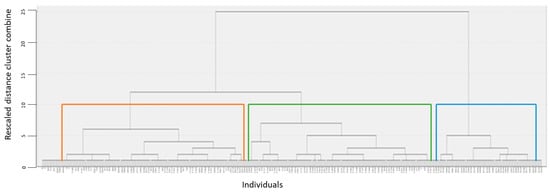
Figure 1.
Dendrogram with the three-cluster solution (X-axis: Individuals; Y-axis: Rescaled distance cluster combined; Orange: Cluster 1; Green: Cluster 2; Blue: Cluster 3).
The k-means algorithm was applied to 15 continuous standardized variables (z-scores) to ensure comparability across different measurement scales. The final three-cluster solution is depicted in Figure 2, and cluster-specific means for the psychological variables are presented in Table 1.
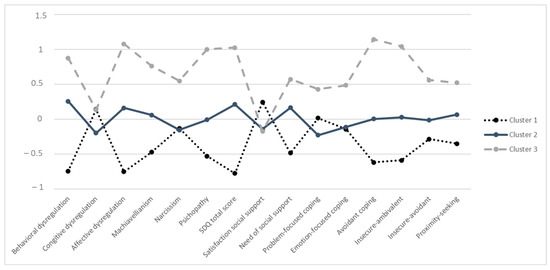
Figure 2.
Average levels of variables characterizing adolescents’ psychological profile by cluster.

Table 1.
Descriptive statistics of psychological variables by cluster.
In the second stage, a validation phase was conducted to examine the relationships between cluster membership and the outcome variables of interest. Univariate and bivariate statistical analyses were performed to determine which cluster memberships accounted for variation in demographic and outcome variables. All analyses were based on the full available dataset.
The cluster analysis identified three distinct groups within the sample: Cluster 1 included 166 participants, Cluster 2 consisted of 178 adolescents, and Cluster 3 comprised 89 individuals. Based on their psychological profiles, the clusters were categorized as follows: C1 = Higher adjustment, C2 = Moderate adjustment, and C3 = Lower adjustment.
Table 2 presents the descriptive statistics for demographic variables across the three clusters, along with p-values from the statistical tests used to examine group differences. Cross-tabulation analyses were conducted to assess associations between cluster membership and categorical variables, followed by post hoc analyses of standardized adjusted residuals to identify specific cells contributing to overall significance. Significant differences between clusters were found for the following variables: psychiatric medication use, quality of peer relationships within the institution, and history of exposure to domestic violence. Marginal differences were observed for experiences of sexual abuse. In addition, significant variations emerged in behavioral indicators, including engagement in theft, physical aggression, and substance use or intention to experiment with psychoactive substances.
Table 2.
Cluster characterization based on sociodemographic variables.
Although the three clusters differed across several characteristics, not all differences reached statistical significance. Specifically, no significant differences were found between clusters regarding the presence of siblings in the same institution, χ2 (2, N = 433) = 4.37, p = 0.113; sex, χ2 (2, N = 433) = 1.08, p = 0.583; or age group, χ2 (2, N = 433) = 3.18, p = 0.204. Similarly, institutional typology, χ2 (4, N = 433) = 3.09, p = 0.543, and frequency of contact with the biological family, χ2 (4, N = 433) = 3.00, p = 0.558, were not significantly associated with cluster membership.
However, a significant association was observed between clusters and quality of peer relationships, χ2 (2, N = 433) = 11.63, p = 0.003. In addition, length of stay in care and history of sexual abuse approached statistical significance.
ANOVA results revealed significant differences among clusters in perceived institutional integration, F(2, 432) = 15.68, p < 0.001, η2 = 0.07, and in the average number of close friends adolescents reported being able to rely on in times of need, F(2, 432) = 3.55, p = 0.030, η2 = 0.02.
The group with higher adjustment (Cluster 1) consists of adolescents who have more siblings living in the same residential care facility and are more frequently placed in mixed-type institutions. They report positive peer relationships and a greater number of close friends they can rely on in times of need. This cluster also shows higher levels of institutional integration and, on average, longer stays in care. Participants tend to be older, report lower use of psychiatric medication, and engage less frequently in risk behaviors such as theft, aggression, and substance use. They are also more likely to actively reject substance use. Moreover, their placement in care is less often associated with experiences of domestic violence or sexual abuse. Collectively, these features suggest a more emotionally stable and socially integrated profile.
Psychologically, these adolescents report fewer behavioral and emotional regulation difficulties, below-average scores across the Dark Triad traits, and the lowest levels of adjustment problems as measured by the Strengths and Difficulties Questionnaire (SDQ total score). Consistent with their positive peer relationships and number of close friends, they also report the highest satisfaction with received social support and the lowest perceived need for additional support-related activities. In coping with stress, they rely primarily on problem-focused and emotion-regulation strategies rather than avoidance. Regarding attachment, they score below the mean on all dimensions of insecure attachment, reinforcing the interpretation of greater psychological stability and interpersonal competence within this cluster.
Adolescents in Cluster 2 do not show significant deviations from the statistical mean across the psychological variables assessed. Demographically, the group is relatively homogeneous in terms of sex and age. Relationally, these adolescents maintain regular contact with their biological families, report generally positive peer relationships within the institution, and have an average number of close friends they can rely on for support. Notably, this cluster presents the highest prevalence of domestic violence as the primary reason for residential placement. In addition, adolescents in this group show greater involvement in aggressive behaviors and theft, along with the highest levels of regular tobacco and alcohol use among the three clusters. Psychologically, they display mild behavioral and emotional regulation difficulties, low levels of Dark Triad traits, and relatively few adjustment problems. However, satisfaction with perceived social support is slightly below average, suggesting a moderate risk profile despite an overall functional psychological presentation (see Table 2).
The group with lower adjustment (Cluster 3) is composed predominantly of younger female adolescents who have typically spent less time in residential care and report below-average levels of institutional integration. Many participants in this cluster indicate having no ongoing contact with their biological families. Although they report generally positive peer relationships within the institution, they also report fewer close friends available for emotional support. This group represents the most psychologically vulnerable profile, displaying statistically significant differences from the other clusters. Adolescents in Cluster 3 report the highest involvement with psychoactive substances, including frequent use and stronger curiosity or intention to experiment. They also exhibit greater reliance on psychiatric medication, highlighting compromised emotional and behavioral adjustment. Regarding risk behaviors, approximately half of the adolescents in this cluster report involvement in theft or physical aggression, with statistically significant differences compared to the other clusters. Furthermore, more than half of the placements in this group were due to domestic violence or sexual abuse, further distinguishing this cluster in terms of exposure to early adverse experiences (see Table 2).
With regard to psychological variables, adolescents in this group exhibit above-average difficulties in behavioral and emotional regulation, elevated levels of Dark Triad traits, and the highest number of adjustment difficulties, as reflected by the total SDQ score. They also report the lowest satisfaction with social support and the greatest perceived need for additional support-related activities. When facing stress, these adolescents predominantly rely on avoidance-based coping strategies. Their interpersonal relationships are characterized by insecure attachment patterns, suggesting relational instability and heightened emotional vulnerability.
4. Discussion
This study aimed to identify distinct profiles of youth in RCS based on psychosocial, behavioral, and relational characteristics and to explore intergroup differences in risk and protective factors. Cluster analysis revealed three distinct profiles of adolescents in care, each with specific psychological, behavioral, and relational features, as well as differing mental health outcomes. These findings align with prior research emphasizing the heterogeneity of institutionalized youth and the importance of person-centered approaches to assessment and intervention (Calheiros & Patrício, 2014; del Valle & Bravo, 2013).
A key distinguishing factor across clusters was the quality of interpersonal relationships—particularly peer bonds—which appeared to be closely associated with substance use and behavioral risk. Similarly, higher perceived institutional integration corresponded with better adaptive functioning and a lower likelihood of behavioral problems, suggesting that institutional belonging may act as a protective correlate (Mota et al., 2016; Santos et al., 2023).
Exposure to domestic violence and involvement in theft and aggression further contextualized differences in risk and vulnerability across the profiles. Substance use also emerged as a meaningful differentiating variable, indicating that consumption patterns are relevant markers of psychosocial adjustment among institutionalized youth. The uneven distribution of psychiatric medication use across clusters may reflect differences in mental health status; however, medication use alone cannot be interpreted as a direct indicator of mental health. Although sociodemographic variables such as gender, age, and the presence of siblings in the same institution did not differ significantly across clusters (p ≥ 0.05), their distribution still offers useful descriptive insights and merits further study in larger or more diverse samples.
Adolescents in cluster 1, labeled the higher adjustment group, reported high levels of institutional integration, positive peer relationships, and greater access to close social connections. They also exhibited lower rates of behavioral problems, substance use, and psychiatric medication, along with below-average scores on Dark Triad traits. Psychologically, they demonstrated stronger emotional and behavioral regulation, fewer adjustment difficulties, and a preference for problem-focused coping strategies. These adolescents also presented lower levels of attachment insecurity, indicating more secure relational patterns (Bowlby, 1977). This profile illustrates the co-occurrence of social support, institutional stability, and adaptive functioning, consistent with research suggesting that supportive environments may buffer against the effects of adverse life experiences (Lam, 2024; Santos et al., 2023). Human development and self-perception are shaped by interpersonal relationships, which play central roles in both physiological and psychological well-being (Bowlby, 1977; Wang et al., 2021). The characteristics of this cluster align with findings showing inverse associations between adolescents’ adjustment difficulties and perceived attachment security in residential settings (Shalem & Attar-Schwartz, 2022), although the present study assessed overall attachment. Moreover, individual differences in emotion-regulation strategies are linked to affective functioning, social relationships, and well-being, with adaptive strategies generally associated with more favorable outcomes (Gross, 2015; Park et al., 2020).
As Huffhines et al. (2020) note, not all youth exposed to maltreatment develop clinically significant internalizing or externalizing symptoms, highlighting the relevance of factors such as maltreatment chronicity and coping style in understanding variability in mental health outcomes.
The group with moderate adjustment (Cluster 2) showed mean-level scores across most psychosocial indicators. Adolescents maintained regular family contact, reported functional peer relationships, and displayed low to moderate emotion- and behavior-regulation difficulties. Nonetheless, they reported higher exposure to domestic violence and greater involvement in theft and physical aggression, as well as the highest levels of regular tobacco and alcohol use. These findings underscore the importance of identifying protective factors and developing intervention strategies within a socioecological framework that addresses individual, familial, and community levels (Rooney et al., 2024). Although this group showed some vulnerabilities, their overall psychological functioning remained stable. Consistent with previous studies, family contact and support were linked to better adjustment (Attar-Schwartz & Fridman-Teutsch, 2018; Shalem & Attar-Schwartz, 2022). Their slightly below-average satisfaction with social support may reflect unmet relational needs not captured in more superficial interactions (Calheiros & Patrício, 2014). Research on adverse childhood experiences—such as abuse and neglect, family dysfunction and household challenges—has repeatedly shown that early adversity is associated with a range of maladaptive outcomes (Campbell et al., 2016; Gilbert et al., 2015), which may help contextualize the higher prevalence of delinquent behaviors within this cluster.
The group with lower adjustment (Cluster 3) included mostly younger girls who had spent less time in care, had limited family contact, and reported low institutional integration. Although they perceived their peer relationships positively, they reported fewer close confidants and displayed the highest rates of psychiatric medication use and substance involvement, with statistically significant differences from the other groups. These adolescents also exhibit marked emotional and behavioral dysregulation, elevated Dark Triad traits, and the highest adjustment difficulties scores. They relied predominantly on avoidance-based coping strategies and showed higher levels of attachment insecurity—particularly ambivalent patterns—consistent with prior findings linking early trauma and maltreatment to relational and emotional vulnerability (Cyr et al., 2010; del Valle & Bravo, 2013). This profile underscores the importance of trauma-informed approaches tailored to the needs of highly vulnerable youth in care. The observed pattern is consistent with evidence connecting Dark Triad traits and maladaptive emotion-regulation strategies to increased stress, anxiety, and depression (Gómez-Leal et al., 2022; Mojsa-Kaja et al., 2021; Walker et al., 2022). Moreover, the combination of fewer close friendships and elevated attachment insecurity may contribute to lower perceived institutional integration.
Coping behaviors are typically motivated by efforts to manage emotional responses to stress (Compas et al., 2017). Individuals with higher Dark Triad traits often prioritize self-interest over prosocial goals, which has been linked to greater risk-taking and delinquent behaviors (Gillen et al., 2016; Malesza & Ostaszewski, 2016; Pechorro et al., 2022a, 2022b). Younger adolescents also tend to score higher on these traits (Jonason & Tost, 2010), which is consistent with the behavioral profile of Cluster 3.
Adolescents with insecure attachment styles may seek support and attention through paradoxical or disruptive behaviors, such as delinquency (Mota & Matos, 2008). Feelings of psychological loneliness and abandonment may manifest in externalizing symptoms, partially explaining the substantial proportion of placements due to behavioral problems in Portuguese residential care (Instituto da Segurança Social, 2024).
In line with the third objective (to examine levels of institutional integration, attachment styles, coping strategies, and emotion regulation as potential distinguishing features among the identified profiles), institutional integration, coping strategies, emotion regulation, and attachment style emerged as meaningful differentiators across clusters. Adolescents in Cluster 1 reported more adaptive coping, fewer regulatory difficulties, and greater attachment security, whereas those in Cluster 3 presented the opposite pattern. These findings, together with institutional integration and peer relationships, are consistent with evidence that youth adjustment in institutional settings is closely associated with interpersonal relationships and psychological resources (del Valle & Bravo, 2013). Although no associations were found between these psychological variables and length of stay in care (Costa et al., 2020), prolonged stability within the same institution might facilitate emotional restructuring by promoting predictability and continuity of care. Nevertheless, the influence of the duration and age at placement likely varies according to prior experiences and contextual factors, warranting further investigation.
Although clusters differed on several variables, not all differences reached statistical significance. For example, age group, sex, and the presence of siblings in the same facility were not significant predictors of cluster membership. However, peer relationship quality and length of stay were associated with adjustment levels, supporting the importance of relational factors in institutional adaptation (Costa et al., 2020; Simão et al., 2025c), consistent with the fourth objective (to assess behavioral and relational patterns that may influence adolescents’ adaptation within the institutional context). The broader social and organizational context of care—including caregiver relationships, institutional norms, youth-to-staff ratios, and institutional typology—may also contribute to adolescents’ psychological well-being (Silva et al., 2022).
Because this study was cross-sectional, causal relationships between coping, emotion regulation, and psychological adjustment cannot be inferred. However, the associations observed highlight developmental trends that should be examined longitudinally to clarify how these processes evolve during care. Given the conceptual overlap between coping and emotion-regulation mechanisms, findings related to coping may indirectly inform understanding of regulatory processes.
Finally, differences in placement reasons (e.g., domestic violence, sexual abuse, and behavioral issues) likely reflect diverse pathways into residential care rather than causal determinants of adjustment (Smyke et al., 2007). Previous research indicates that trauma exposure is associated with increased self-destructive and risky behaviors, as well as justice-system involvement (Green et al., 2005; Kerig, 2019). These findings underscore the need for trauma-informed and developmentally sensitive interventions targeting the unique vulnerabilities of youth in residential care.
4.1. Implications for Practice
Although no statistically significant differences were found regarding age, a marginal trend emerged, which—consistent with previous research—underscores the relevance of age of entry and length of stay in RCS as potential factors associated with adolescents’ psychological adjustment. A considerable proportion of participants entered RCS during late adolescence, and many maintained ongoing contact with their biological families. In this sample, 48% reported frequent family contact, and 43% expressed the intention to return home after leaving care. These figures highlight the importance of family-centered interventions, particularly at early stages of placement (Mota et al., 2024). Such interventions should aim to strengthen and restore familial bonds, promote responsive and secure caregiving, and enhance relational continuity throughout placement. Achieving these goals requires systematic coordination between RCS and family-oriented services, as well as continuous training and supervision for caregivers. This dual approach can help sustain developmentally supportive environments that attend to both the youths’ emotional needs and the complex dynamics of family reintegration.
Adopting a strengths-based framework that emphasizes protective factors offers an effective approach for professionals working with system-involved youth. Rather than focusing exclusively on adversity or trauma histories, this perspective highlights adolescents’ capabilities, assets, and potential for growth. Grounded in a social–ecological model, it considers the multiple, interrelated systems—individual, relational, community, and societal—that influence youth outcomes (Couture et al., 2022). Individual behavior change is most effective when supported by corresponding adjustments in the surrounding environment; therefore, interventions should address several levels of influence. Programs should aim to foster protective factors across multiple domains: individual (social and emotional competencies, emotion regulation, and coping skills), relational (positive peer and caregiver relationships and stable attachments), community (nurturing, structured environments, and engagement in social institutions), and societal (policies and procedures that promote well-being and healthy youth development) (Center for the Study of Social Policy, 2022; Rooney et al., 2024).
Investing in adequately qualified and trained staff is also critical. Staff should be prepared to respond both to normative developmental challenges and to severe emotional, behavioral, or cultural integration difficulties faced by youth in care—particularly those with trauma histories (del Valle & Bravo, 2013).
From a practical standpoint, the findings support the design of tailored, profile-specific interventions. Adolescents demonstrating higher adaptive functioning (Cluster 1) may benefit from supportive programming that consolidates developmental progress and facilitates transitions to independent living. Youth in cluster 2 could profit from preventive initiatives addressing substance use and relational risk behaviors, alongside programs that enhance social participation, satisfaction with social support, and adaptive regulation strategies. Adolescents with higher emotional and behavioral dysregulation (Cluster 3) would benefit from intensive, trauma-informed interventions focused on emotional regulation, attachment repair, and adaptive coping development (Couture et al., 2022; Leve et al., 2009). Preventive efforts should also target substance use and delinquent behavior while promoting engagement in structured social and recreational activities to foster relational stability and support satisfaction.
Finally, early identification of adolescents at risk for antisocial or delinquent behaviors remains crucial. Timely referral to evidence-based prevention and intervention programs—including those that strengthen emotion regulation and coping skills—may support adaptive responses to stress and adversity, ultimately improving psychological adjustment and mitigating long-term risk trajectories.
4.2. Limitations, Strengths, and Future Directions
While these findings offer a nuanced understanding of psychological adjustment among adolescents in residential care, several limitations should be acknowledged. The cross-sectional design precludes any inference of causality, and reliance on self-report measures may introduce social desirability or recall bias. Additionally, the analytic approach carries inherent limitations: cluster analysis is exploratory by nature and highly sensitive to variable selection, scaling, and methodological choices, such as the clustering algorithm and the number of clusters retained. Consequently, the profiles identified here should be interpreted as data-driven groupings that describe patterns within this sample, rather than as fixed or generalizable categories.
Despite these limitations, the study presents several notable strengths. It draws on a nationally representative sample, incorporates adolescents’ self-reports on key psychosocial variables, and achieves a high participation rate within a population that is typically hard to access and understudied. The inclusion of youths’ own perspectives provides valuable insight into their lived experiences and adaptive functioning in care settings.
While the national scope of the data enhances its representativeness, caution is warranted when generalizing these results beyond Portugal, as child protection systems and residential care frameworks differ across countries. Nonetheless, residential care continues to represent a predominant model for children without parental care in many European contexts, and the present findings are broadly consistent with prior research, suggesting potential relevance beyond the Portuguese system.
Some contextual factors, however, may be unique to Portugal, including the structure of the residential care system, staff training and stability, socioeconomic conditions, and cultural attitudes toward family and institutional care. Institutionalization in Portugal may also carry heightened social visibility and stigma (Faria et al., 2008), which can influence adolescents’ experiences and adjustment. While stigma is a widespread phenomenon, its expression and impact vary across sociocultural contexts, highlighting the importance of context-sensitive interpretations of these findings.
Future research should seek to validate the identified profiles longitudinally and include multiple informants, such as caregivers and educators, to enhance reliability and depth. Longitudinal designs could also clarify how caregiver relationships, institutional practices, and trauma history interact with these psychological profiles over time. Such work would strengthen the ecological validity of these findings and support the development of evidence-informed, person-centered interventions within RCS.
5. Conclusions
Incorporating a broad range of individual, social, and contextual factors into research on psychological adjustment allows for a more comprehensive understanding of how personal and environmental influences interact to shape adolescents’ mental health and development. Developmental contexts play a crucial role in the construction of self and personality, underscoring the dynamic interplay between the individual and their care environment.
The present study identified three distinct profiles of adolescents in residential care, reflecting meaningful differences in psychosocial and behavioral functioning. The most pronounced distinctions emerged between Clusters 1 and 3, particularly in institutional integration, number of close friendships, duration of institutionalization, substance use, and psychiatric medication use. These differences suggest varying levels of psychosocial adjustment and highlight the presence of a subgroup characterized by greater emotional, behavioral, and relational stability.
Overall, the findings emphasize that examining the correlates of adolescents’ mental health within residential settings can enhance understanding of the diverse adaptation processes among youth in care. Such knowledge is essential for informing evidence-based, person-centered prevention and intervention strategies that promote psychological well-being, relational competence, and healthy developmental trajectories.
Author Contributions
Conceptualization, A.S. and C.N.; methodology, A.S. and C.N.; software, A.S., C.M. and C.N.; validation, A.S., C.M. and C.N.; formal analysis, A.S., C.M. and C.N.; investigation, A.S.; data curation, A.S. and C.N.; writing—original draft preparation, A.S.; writing—review and editing, A.S., C.M. and C.N.; visualization, A.S. and C.N.; supervision, C.N. All authors have read and agreed to the published version of the manuscript.
Funding
This work was funded by national funds through FCT—Fundação para a Ciência e a Tecnologia—as part the project CUIP—Refª UID/06317/2023.
Institutional Review Board Statement
The study was conducted in accordance with the Declaration of Helsinki, and approved by the Ethics Committee of the University of Algarve (protocol code: 110/2023; date of approval: 30 October 2023).
Informed Consent Statement
Informed consent was obtained from all subjects involved in the study.
Data Availability Statement
The data that support the findings of this study are available from the corresponding author upon reasonable request.
Conflicts of Interest
The authors declare no conflicts of interest.
Abbreviations
The following abbreviations are used in this manuscript:
| ADI | Abbreviated Dysregulation Inventory |
| DT | Dark Triad |
| PRCI | Positive Residential Care Integration |
| RCS | Residential Care Settings |
| SD3 | Short Dark Triad |
| SDQ | Strengths and Difficulties Questionnaire |
| VASQ | Vulnerable Attachment Style Questionnaire |
References
- Allen, J. P., Moore, C., Kuperminc, G., & Bell, K. (1998). Attachment and adolescent psychosocial functioning. Child Development, 69(5), 1406–1419. [Google Scholar] [CrossRef]
- Arnett, J. J. (1999). Adolescent storm and stress, reconsidered. American Psychologist, 54(5), 317–326. [Google Scholar] [CrossRef] [PubMed]
- Attar-Schwartz, S., & Fridman-Teutsch, A. (2018). Father support and adjustment difficulties among youth in residential care: The moderating role of peer victimization and gender. American Journal of Orthopsychiatry, 88(6), 701–712. [Google Scholar] [CrossRef] [PubMed]
- Babicka-Wirkus, A., Kozłowski, P., Wirkus, Ł., & Stasiak, K. (2023). Internalizing and externalizing disorder levels among adolescents: Data from Poland. International Journal of Environmental Research and Public Health, 20(3), 2752–2769. [Google Scholar] [CrossRef] [PubMed]
- Bakermans-Kranenburg, M. J., Steele, H., Zeanah, C. H., Muhamedrahimov, R. J., Vorria, P., Dobrova-Krol, N. A., Steele, M., van IJzendoorn, M. H., Juffer, F., & Gunnar, M. R. (2011). Attachment and emotional development in institutional care: Characteristics and catch up. Monographs of the Society for Research in Child Development, 76(4), 62–91. [Google Scholar] [CrossRef]
- Bifulco, A., Jacobs, C., Ilan-Clarke, Y., Spence, R., & Oskis, A. (2017). Adolescent attachment style in residential care: The attachment style interview and vulnerable attachment style questionnaire. The British Journal of Social Work, 47(7), 1870–1883. [Google Scholar] [CrossRef][Green Version]
- Bifulco, A., Mahon, J., Kwon, J.-H., Moran, P. M., & Jacobs, C. (2003). The Vulnerable Attachment Style Questionnaire (VASQ): An interview-based measure of attachment styles that predict depressive disorder. Psychological Medicine, 33(6), 1099–1110. [Google Scholar] [CrossRef]
- Bonfá-Araujo, B., Lima-Costa, A. R., Cremasco, G. d. S., Sette, C. P., & Jesuíno, A. D. A. (2020). A tríade sombria da personalidade: Afetos e lócus de controle. Avances en Psicología Latinoamericana, 38(3), e8652. [Google Scholar] [CrossRef]
- Bowlby, J. (1977). The making and breaking of affectional bonds. I. Aetiology and psychopathology in the light of attachment theory. British Journal of Psychiatry, 130(3), 201–210. [Google Scholar] [CrossRef]
- Calheiros, M. M., & Patrício, J. N. (2014). Assessment of needs in residential care: Perspectives of youth and professionals. Journal of Child and Family Studies, 23(3), 461–474. [Google Scholar] [CrossRef]
- Campbell, J. A., Walker, R. J., & Egede, L. E. (2016). Associations between adverse childhood experiences, high-risk behaviors, and morbidity in adulthood. American Journal of Preventive Medicine, 50(3), 344–352. [Google Scholar] [CrossRef]
- Campos, J., Barbosa-Ducharne, M., Dias, P., Rodrigues, S., Martins, A. C., & Leal, M. (2019). Emotional and behavioral problems and psychosocial skills in adolescents in residential care. Child & Adolescent Social Work Journal, 36(2), 237–246. [Google Scholar] [CrossRef]
- Carver, C. S. (1997). You want to measure coping but your protocol’ too long: Consider the brief cope. International Journal of Behavioral Medicine, 4(1), 92–100. [Google Scholar] [CrossRef] [PubMed]
- Center for the Study of Social Policy. (2022, January 26). Protective factors for youth involved in systems of care. ERIC–Education Resources Information Center. Available online: https://eric.ed.gov/?id=ED619395 (accessed on 15 April 2025).
- Compas, B. E., Jaser, S. S., Bettis, A. H., Watson, K. H., Gruhn, M. A., Dunbar, J. P., Williams, E., & Thigpen, J. C. (2017). Coping, emotion regulation, and psychopathology in childhood and adolescence: A meta-analysis and narrative review. Psychological Bulletin, 143(9), 939–991. [Google Scholar] [CrossRef] [PubMed]
- Costa, M., Melim, B., Tagliabue, S., Mota, C. P., & Matos, P. M. (2020). Predictors of the quality of the relationship with caregivers in residential care. Children and Youth Services Review, 108, 104579. [Google Scholar] [CrossRef]
- Cotton, S. M., Rice, S., Moeller-Saxone, K., Magnus, A., Harvey, C., Mihalopoulos, C., Humphreys, C., Murray, L., Halperin, S., McGorry, P. D., & Herrman, H. (2020). Sex differences in psychological distress, behavioural and emotional problems, and substance use in young people in out-of-home care. Child & Family Social Work, 25(2), 325–336. [Google Scholar] [CrossRef]
- Couture, S., Hébert, S. T., Laurier, C., Monette, S., Hélie, S., & Lafortune, D. (2022). Profile of runaway youths from residential care centers: Variation in risk-taking propensity. Journal of Research on Adolescence, 32(1), 355–371. [Google Scholar] [CrossRef]
- Cyr, C., Euser, E. M., Bakermans-Kranenburg, M. J., & Van Ijzendoorn, M. H. (2010). Attachment security and disorganization in maltreating and high-risk families: A series of meta-analyses. Development and Psychopathology, 22(1), 87–108. [Google Scholar] [CrossRef]
- Dahl, R. E. (2001). Affect regulation, brain development, and behavioral/emotional health in adolescence. CNS Spectrums, 6(1), 60–72. [Google Scholar] [CrossRef]
- da Motta, C. D., Rijo, D., Vagos, P., & Sousa, B. (2018). The Abbreviated Dysregulation Inventory: Dimensionality and psychometric properties in Portuguese adolescents. Journal of Child and Family Studies, 27, 3806–3815. [Google Scholar] [CrossRef]
- Dell’Aglio, D. D., & Hutz, C. S. (2004). Depressão e desempenho escolar em crianças e adolescentes institucionalizados [Depression and school achievement of institutionalized children and adolescents]. Psicologia: Reflexão e Crítica, 17(3), 341–350. [Google Scholar] [CrossRef]
- del Valle, J. F., & Bravo, A. (2013). Current trends, figures and challenges in out of home child care: An international comparative analysis. Psychosocial Intervention, 22(3), 251–257. [Google Scholar] [CrossRef]
- Drageset, J. (2021). Social support. In Health promotion in health care–vital theories and research (pp. 137–144). Springer International Publishing. [Google Scholar] [CrossRef]
- Erol, N., Simsek, Z., & Münir, K. (2010). Mental health of adolescents reared in institutional care in Turkey: Challenges and hope in the twenty-first century. European Child & Adolescent Psychiatry, 19(2), 113–124. [Google Scholar] [CrossRef]
- Everitt, B. S., Landau, S., Leese, M., & Stahl, D. (2011). Cluster analysis (5th ed.). Wiley. [Google Scholar]
- Faria, S., Salgueiro, A. G., Trigo, L. R., & Alberto, I. (2008). As narrativas de adolescentes institucionalizadas: Percepções em torno das vivências de institucionalização. Atas eletrónicas do Congresso Internacional em Estudos da Criança, organizado pelo Instituto de Estudos da Criança e realizado na Universidade do Minho. Universidade do Minho. [Google Scholar]
- Fernandes, A. O., & de Oliveira-Monteiro, N. R. (2016). Psychological indicators and perceptions of adolescents in residential care. Paidéia, 26(63), 81–89. [Google Scholar] [CrossRef]
- Fernández-García, O., Gil-Llario, M. D., & Ballester-Arnal, R. (2023). Does emotion regulation in adolescents in residential care mitigate the association between sexual victimization and poor psychological well-being? Children and Youth Services Review, 152, 107091. [Google Scholar] [CrossRef]
- Field, A. (2024). Discovering statistics using IBM SPSS statistics (6th ed.). SAGE Publications. [Google Scholar]
- Flykt, M., Vänskä, M., Punamäki, R.-L., Heikkilä, L., Tiitinen, A., Poikkeus, P., & Lindblom, J. (2021). Adolescent attachment profiles are associated with mental health and risk-taking behavior. Frontiers in Psychology, 12, 761864. [Google Scholar] [CrossRef]
- Fonseca, J. R. S. (2013). Clustering in the field of social sciences: That is your choice. International Journal of Social Research Methodology, 16(5), 403–428. [Google Scholar] [CrossRef]
- Furnham, A., Richards, S. C., & Paulhus, D. L. (2013). The dark triad of personality: A 10-year review. Social and Personality Psychology Compass, 7(3), 199–216. [Google Scholar] [CrossRef]
- Gaspar, T., Ribeiro, J. L. P., Matos, M. G., Leal, I., & Ferreira, A. (2009). Psychometric properties of a brief version of the escala de satisfação com o suporte social for children and adolescents. The Spanish Journal of Psychology, 12(1), 360–372. [Google Scholar] [CrossRef]
- Gilbert, L. K., Breiding, M. J., Merrick, M. T., Thompson, W. W., Ford, D. C., Dhingra, S. S., & Parks, S. E. (2015). Childhood adversity and adult chronic disease: An update from ten states and the District of Columbia, 2010. American Journal of Preventive Medicine, 48(3), 345–349. [Google Scholar] [CrossRef]
- Gillen, C. T. A., Barry, C. T., & Bater, L. R. (2016). Anxiety symptoms and coping motives: Examining a potential path to substance use-related problems in adolescents with psychopathic traits. Substance Use & Misuse, 51(14), 1920–1929. [Google Scholar] [CrossRef]
- Goodman, R. (1997). The strengths and difficulties questionnaire: A research note. Journal of Child Psychology and Psychiatry, 38(5), 581–586. [Google Scholar] [CrossRef]
- Gómez-Leal, R., Ferrando, P. J., & Fernández-Berrocal, P. (2022). The dark triad and subjective well-being: The mediating role of cognitive--emotional regulation strategies. Scandinavian Journal of Psychology, 63(6), 606–618. [Google Scholar] [CrossRef] [PubMed]
- Grant, K. E., Compas, B. E., Thurm, A. E., McMahon, S. D., & Gipson, P. Y. (2004). Stressors and child and adolescent psychopathology: Measurement issues and prospective effects. Journal of Clinical Child & Adolescent Psychology, 33(2), 412–425. [Google Scholar] [CrossRef] [PubMed]
- Green, B. L., Krupnick, J. L., Stockton, P., Goodman, L., Corcoran, C., & Petty, R. (2005). Effects of adolescent trauma exposure on risky behavior in college women. Psychiatry, 68(4), 363–378. [Google Scholar] [CrossRef] [PubMed]
- Gross, J. J. (2015). Emotion regulation: Current status and future prospects. Psychological Inquiry, 26(1), 1–26. [Google Scholar] [CrossRef]
- Hair, J. F., Black, W. C., Babin, B. J., & Anderson, R. E. (2019). Multivariate data analysis (8th ed.). Cengage Learning. [Google Scholar]
- Hambrick, E. P., Oppenheim-Weller, S., N’zi, A. M., & Taussig, H. N. (2016). Mental health interventions for children in foster care: A systematic review. Children and Youth Services Review, 70, 65–77. [Google Scholar] [CrossRef]
- Hoffnung Assouline, A. A., & Attar-Schwartz, S. (2020). Staff support and adolescent adjustment difficulties: The moderating role of length of stay in the residential care setting. Children and Youth Services Review, 110, 104761. [Google Scholar] [CrossRef]
- Hu, Y., & Lan, X. (2022). A comprehensive and person-centered view of the association between the dark triad and youth mental health. Frontiers in Psychiatry, 13, 900354. [Google Scholar] [CrossRef]
- Huffhines, L., Jackson, Y., & Stone, K. J. (2020). Internalizing, externalizing problems and psychiatric hospitalizations: Examination of maltreatment chronicity and coping style in adolescents in foster care. Journal of Child & Adolescent Trauma, 13(4), 429–441. [Google Scholar] [CrossRef]
- IBM Corp. (2024). IBM SPSS statistics for windows (Version 30.0). IBM Corp. [Google Scholar]
- Instituto da Segurança Social, I. P. (2024). CASA 2023–Relatório de caracterização anual da situação de acolhimento das crianças e jovens. Available online: https://www.seg-social.pt/documents/10152/29506/CASA2023.pdf (accessed on 20 February 2025).
- Jonason, P. K., & Tost, J. (2010). I just cannot control myself: The dark triad and self-control. Personality and Individual Differences, 49, 611–615. [Google Scholar] [CrossRef]
- Jones, D. N., & Paulhus, D. L. (2014). Introducing the Short Dark Triad (SD3). Assessment, 21(1), 28–41. [Google Scholar] [CrossRef] [PubMed]
- Kerig, P. K. (2019). Linking childhood trauma exposure to adolescent justice involvement: The concept of posttraumatic risk-seeking. Clinical Psychology: Science and Practice, 26, e12280. [Google Scholar] [CrossRef]
- Kim, J., & Cicchetti, D. (2010). Longitudinal pathways linking child maltreatment, emotion regulation, peer relations, and psychopathology. Journal of Child Psychology and Psychiatry, 51(6), 706–716. [Google Scholar] [CrossRef]
- Kothari, B. H., McBeath, B., Bank, L., Sorenson, P., Waid, J., & Webb, S. J. (2018). Validation of a measure of foster home integration for foster youth. Research on Social Work Practice, 28(6), 751–761. [Google Scholar] [CrossRef]
- Lam, P. H. (2024). An extension to the stress-buffering model: Timing of support across the life course. Brain, Behavior, & Immunity–Health, 42, 100876. [Google Scholar] [CrossRef]
- Lau, K. S. L., & Marsee, M. A. (2013). Exploring narcissism, psychopathy, and machiavellianism in youth: Examination of associations with antisocial behavior and aggression. Journal of Child and Family Studies, 22(3), 355–367. [Google Scholar] [CrossRef]
- Leve, L. D., Fisher, P. A., & Chamberlain, P. (2009). Multidimensional treatment foster care as a preventive intervention to promote resiliency among youth in the child welfare system. Journal of Personality, 77(6), 1869–1902. [Google Scholar] [CrossRef]
- Lougheed, J. P., & Hollenstein, T. (2012). A limited repertoire of emotion regulation strategies is associated with internalizing problems in adolescence. Social Development, 21(4), 704–721. [Google Scholar] [CrossRef]
- Lyons-Ruth, K., & Jacobvitz, D. (1999). Attachment disorganization: Unresolved loss, relational violence, and lapses in behavioral and attentional strategies. In J. Cassidy, & P. Shaver (Eds.), Handbook of attachment: Theory, research and clinical applications (pp. 520–554). Guilford Press. [Google Scholar]
- Malesza, M., & Ostaszewski, P. (2016). The utility of the Dark Triad model in the prediction of the self-reported and behavioral risk-taking behaviors among adolescents. Personality and Individual Differences, 90, 7–11. [Google Scholar] [CrossRef]
- McGuire, A., Cho, B., Huffhines, L., Gusler, S., Brown, S., & Jackson, Y. (2018). The relation between dimensions of maltreatment, placement instability, and mental health among youth in foster care. Child Abuse & Neglect, 86, 10–21. [Google Scholar] [CrossRef] [PubMed]
- Mezzich, A. C., Tarter, R. E., Giancola, P. R., & Kirisci, L. (2001). The dysregulation inventory: A new scale to assess the risk for substance use disorder. Journal of Child & Adolescent Substance Abuse, 10(4), 35–43. [Google Scholar] [CrossRef]
- Mojsa-Kaja, J., Szklarczyk, K., González-Yubero, S., & Palomera, R. (2021). Cognitive emotion regulation strategies mediate the relationships between Dark Triad traits and negative emotional states experienced during the COVID-19 pandemic. Personality and Individual Differences, 181, 111018. [Google Scholar] [CrossRef]
- Moreno-Manso, J. M., García-Baamonde, M. A. E., Guerrero-Barona, E., Godoy-Merino, M. A. J., Guerrero-Molina, M., & Barbosa-Torres, C. (2021). Executive processes and emotional and behavioural problems in youths under protective measures. Frontiers in Psychology, 12, 716489. [Google Scholar] [CrossRef]
- Mota, C. P., Costa, M., & Matos, P. M. (2016). Resilience and deviant behavior among institutionalized adolescents: The relationship with significant adults. Child & Adolescent Social Work Journal, 33(4), 313–325. [Google Scholar] [CrossRef]
- Mota, C. P., Gonçalves, T., Carvalho, H., & Costa, M. (2024). The role of attachment in the life aspirations of Portuguese adolescents in residential care: The mediating effect of emotion regulation. Child & Adolescent Social Work Journal, 41, 33–42. [Google Scholar] [CrossRef]
- Mota, C. P., & Matos, P. M. (2008). Adolescência e institucionalização numa perspectiva de vinculação. Psicologia & Sociedade, 20(3), 367–377. [Google Scholar] [CrossRef][Green Version]
- Nunes, C., Pérez-Padilla, J., Martins, C., Pechorro, P., Ayala-Nunes, L., & Ferreira, L. I. (2021). The brief COPE: Measurement invariance and psychometric properties among community and at-risk Portuguese parents. International Journal of Environmental Research and Public Health, 18(6), 2806. [Google Scholar] [CrossRef]
- Park, C. L., Williams, M. K., Hernandez, P. R., Agocha, V. B., Lee, S. Y., Carney, L. M., & Loomis, D. (2020). Development of emotion regulation across the first two years of college. Journal of Adolescence, 84(1), 230–242. [Google Scholar] [CrossRef] [PubMed]
- Paulhus, D. L., & Williams, K. M. (2002). The dark triad of personality: Narcissism, machiavellianism, and psychopathy. Journal of Research in Personality, 36(6), 556–563. [Google Scholar] [CrossRef]
- Paulus, F. W., Ohmann, S., Möhler, E., Plener, P., & Popow, C. (2021). Emotional dysregulation in children and adolescents with psychiatric disorders: A narrative review. Frontiers in Psychiatry, 12, 628252. [Google Scholar] [CrossRef] [PubMed]
- Pechorro, P., Caramelo, V., Oliveira, J. P., Nunes, C., Curtis, S. R., & Jones, D. N. (2018). The short dark triad (SD3): Adaptation and psychometrics among at-risk male and female youths. Deviant Behavior, 40(3), 273–286. [Google Scholar] [CrossRef]
- Pechorro, P., Curtis, S., DeLisi, M., Maroco, J., & Nunes, C. (2022a). Dark Triad psychopathy outperforms self-control in predicting antisocial outcomes: A structural equation modeling approach. European Journal of Investigation in Health, Psychology and Education, 12(6), 549–562. [Google Scholar] [CrossRef]
- Pechorro, P., DeLisi, M., Gonçalves, R. A., Braga, T., & Maroco, J. (2022b). Dark triad personalities, self-control, and antisocial/criminal outcomes in youth. Journal of Forensic Psychology Research and Practice, 22(5), 427–443. [Google Scholar] [CrossRef]
- Pechorro, P., Poiares, C., & Vieira, R. (2011). Propriedades psicométricas do questionário de capacidades e de dificuldades na versão portuguesa de auto-resposta/Psychometric properties of the Portuguese self-report version of the strengths and difficulties questionnaire. Journal of Consultation-Liaison Psychiatry, 16(1), 99–109. [Google Scholar]
- Ringle, J. L., Ingram, S. D., & Thompson, R. W. (2010). The association between length of stay in residential care and educational achievement: Results from 5- and 16-year follow-up studies. Children and Youth Services Review, 32(7), 974–980. [Google Scholar] [CrossRef]
- Rooney, R. M., Hopkins, A., Peckover, J., Coleman, K., Sampson, R., Alati, R., Hassan, S., Pollard, C. M., Dantas, J. A., Lobo, R., & Jeemi, Z. (2024). Protective factors, risk factors, and intervention strategies in the prevention and reduction of crime among adolescents and young adults aged 12–24 years: A scoping review protocol. PLoS ONE, 19(11), e0312684. [Google Scholar] [CrossRef] [PubMed]
- Santos, L., Ribeiro da Silva, D., Pinheiro, M. d. R., & Rijo, D. (2023). Impact of early memories and current experiences of warmth and safeness on adolescents’ psychological distress. Journal of Research on Adolescence, 33(3), 858–869. [Google Scholar] [CrossRef] [PubMed]
- Schäfer, J. Ö., Naumann, E., Holmes, E. A., Tuschen-Caffier, B., & Samson, A. C. (2017). Emotion regulation strategies in depressive and anxiety symptoms in youth: A meta-analytic review. Journal of Youth and Adolescence, 46(2), 261–276. [Google Scholar] [CrossRef]
- Shalem, N., & Attar-Schwartz, S. (2022). Good enough residential care setting: Child-parent contact and youth adjustment in the context of staff attitudes towards parent involvement. Children and Youth Services Review, 143, 106687. [Google Scholar] [CrossRef]
- Sharpe, D. (2015). Your chi-square test is statistically significant: Now what? Practical Assessment, Research & Evaluation, 20(8), 1–10. [Google Scholar] [CrossRef]
- Shirley, M. M. (1942). Children’s adjustments to a strange situation. The Journal of Abnormal and Social Psychology, 37(2), 201–217. [Google Scholar] [CrossRef]
- Sijtsema, J. J., Garofalo, C., Jansen, K., & Klimstra, T. A. (2019). Disengaging from evil: Longitudinal associations between the dark triad, moral disengagement, and antisocial behavior in adolescence. Journal of Abnormal Child Psychology, 47(8), 1351–1365. [Google Scholar] [CrossRef]
- Silva, C. S., Calheiros, M. M., Carvalho, H., & Magalhães, E. (2022). Organizational social context and psychopathology of youth in residential care: The intervening role of youth–caregiver relationship quality. Applied Psychology: An International Review, 71(2), 564–586. [Google Scholar] [CrossRef]
- Simão, A., Martins, C., Bifulco, A., & Nunes, C. (2025a). Vulnerable attachment style questionnaire: Adaptation, validation, and psychometric properties for a sample of institutionalized youths. Unpublished manuscript.
- Simão, A., Martins, C., Ratinho, E., Kothari, B. H., & Nunes, C. (2025b). Positive residential care integration scale: Portuguese adaptation and validation. European Journal of Investigation in Health, Psychology and Education. In press. [Google Scholar]
- Simão, A., Santos, R. d., Brás, M., & Nunes, C. (2025c). Determinants of psychological adjustment of institutionalized adolescents: A systematic review. Child & Youth Care Forum, 54, 1483–1534. [Google Scholar] [CrossRef]
- Smyke, A. T., Koga, S. F., Johnson, D. E., Fox, N. A., Marshall, P. J., Nelson, C. A., & Zeanah, C. H. (2007). The caregiving context in institution-reared and family-reared infants and toddlers in Romania. Journal of Child Psychology and Psychiatry, 48(2), 210–218. [Google Scholar] [CrossRef] [PubMed]
- Szabó, Z. P., Kun, A., Balogh, B. E., Simon, E., & Csike, T. (2022). Dark and strong?! The associations between dark personality traits, mental toughness and resilience in Hungarian student, employee, leader, and military samples. Personality and Individual Differences, 186(Pt B), 111339. [Google Scholar] [CrossRef]
- Šiška, J., & Beadle-Brown, J. (2020). Transition from institutional care to community-based services in 27 EU member states: Final report. Research Report for the European Expert Group on Transition from Institutional to Community-based Care. European Expert Group on Transition from Institutional to Community-Based Care. [Google Scholar]
- Taylor, S. E. (2011). Social support: A review. In IMSF (Ed.), The handbook of health psychology (pp. 189–214). Oxford University Press. [Google Scholar]
- The St. Petersburg-USA Orphanage Research Team. (2008). The effects of early social-emotional and relationship experience on the development of young orphanage children. Monographs of the Society for Research in Child Development, 73(3), vii–295. [Google Scholar] [CrossRef]
- van IJzendoorn, M. H., Palacios, J., Sonuga-Barke, E. J., Gunnar, M. R., Vorria, P., McCall, R. B., LeMare, L., Bakermans-Kranenburg, M. J., Dobrova-Krol, N. A., & Juffer, F. (2011). Children in institutional care: Delayed development and resilience. Monographs of the Society for Research in Child Development, 76(4), 8–30. [Google Scholar] [CrossRef] [PubMed]
- Velimirovic, M., Bojanic, M., & Dinic, B. (2022). The effects of negative life events and dark tetrad traits on antisocial behaviour in adolescents. Zbornik Instituta Za Pedagoska Istrazivanja, 54(1), 61–81. [Google Scholar] [CrossRef]
- Walker, S. A., Olderbak, S., Gorodezki, J., Zhang, M., Ho, C., & MacCann, C. (2022). Primary and secondary psychopathy relate to lower cognitive reappraisal: A meta-analysis of the Dark Triad and emotion regulation processes. Personality and Individual Differences, 187, 111394. [Google Scholar] [CrossRef]
- Wang, Y., Chung, M. C., Wang, N., Yu, X., & Kenardy, J. (2021). Social support and posttraumatic stress disorder: A meta-analysis of longitudinal studies. Clinical Psychology Review, 85, 101998. [Google Scholar] [CrossRef] [PubMed]
- Ward, J. H. (1963). Hierarchical grouping to optimize an objective function. Journal of the American Statistical Association, 58(301), 236–244. [Google Scholar] [CrossRef]
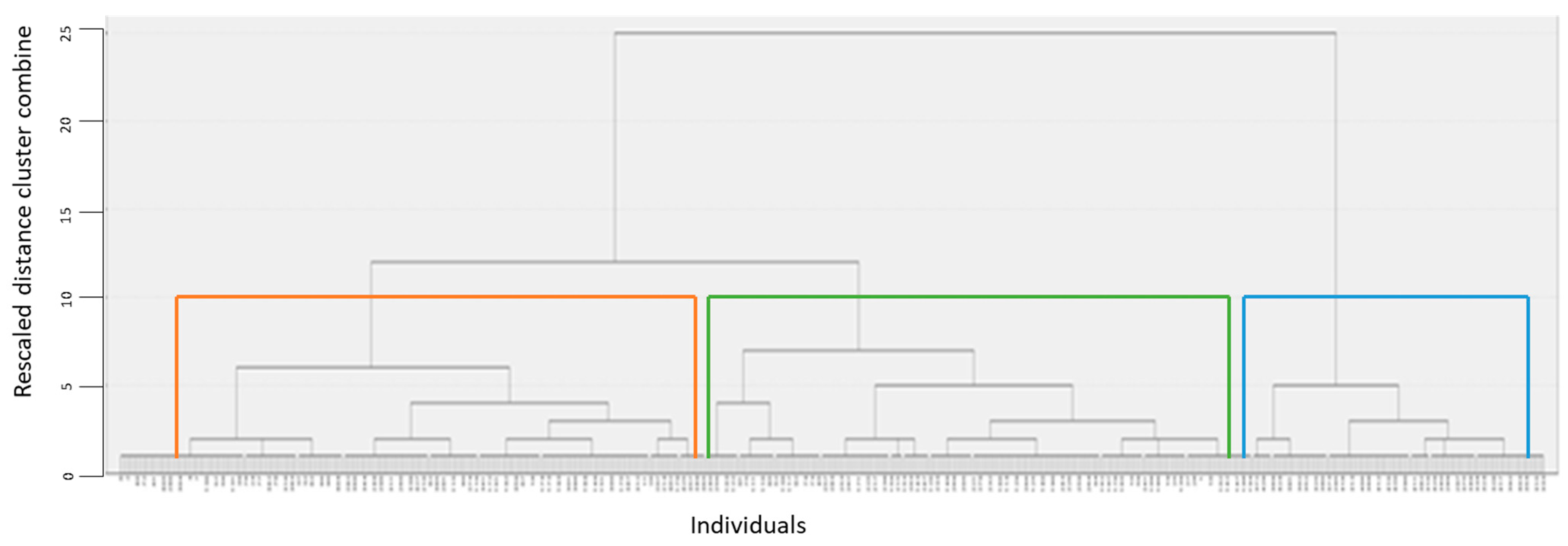
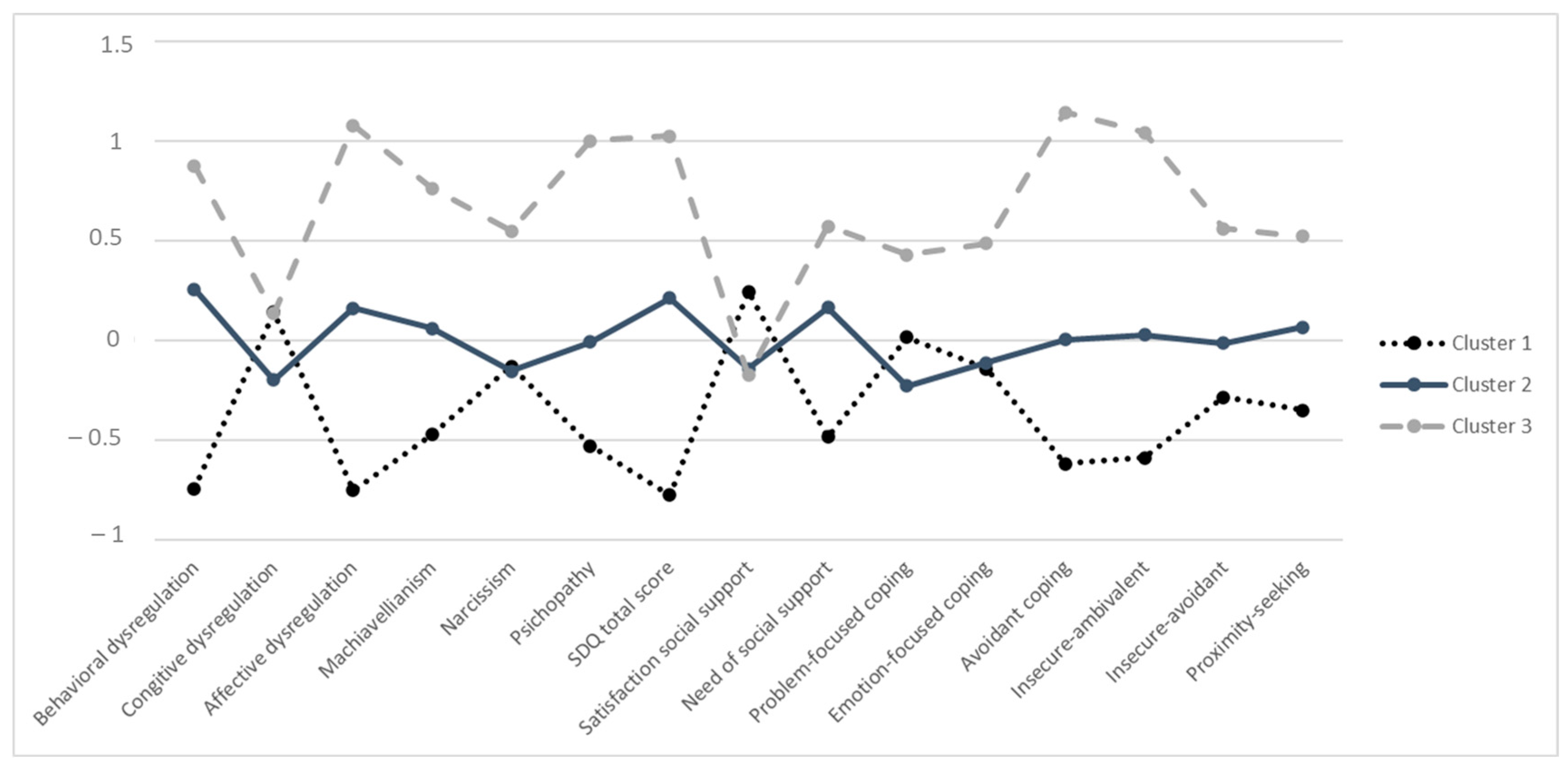
Disclaimer/Publisher’s Note: The statements, opinions and data contained in all publications are solely those of the individual author(s) and contributor(s) and not of MDPI and/or the editor(s). MDPI and/or the editor(s) disclaim responsibility for any injury to people or property resulting from any ideas, methods, instructions or products referred to in the content. |
© 2025 by the authors. Licensee MDPI, Basel, Switzerland. This article is an open access article distributed under the terms and conditions of the Creative Commons Attribution (CC BY) license (https://creativecommons.org/licenses/by/4.0/).