


Abstract
Challenges to the health and wellbeing of youth refugees in Kenya are well documented, particularly in refugee camps. However, amid protracted crises in the region, changes in refugee camp legislation and reduced funding are driving the further urbanization of refugees, necessitating a greater focus on understanding the hardships, movements, and challenges young urban refugees face. The focus of this paper is to document research on mapping the food supply chains, including points of intersection for young South Sudanese urban refugees in Kenya, and to identify barriers, constraints, and opportunities for procuring, growing, and selling food. This youth-led study, a follow-up to previous findings, included 40 participants aged 19 to 32. Youth food-resilience stories highlight critical areas for strategic intervention and provide insights into the design of spatially just and economically inclusive urban spaces. Applying a multimethod approach, including food diaries, food maps, and survey tools embedded in a learning platform, the paper weaves a narrative that highlights youth ingenuity in food security and provides insights for governments, policymakers, community leaders, and donors to support responsive, economically inclusive community design in addressing social challenges. Our findings indicate that improving the quality of life and food security of refugee youth is complex and requires a holistic approach. Without education and improvements in livelihoods, including urban agricultural opportunities, refugee youth’s health and wellbeing will continue to be affected.
1. Introduction
A substantial portion of the world’s hungry population lives on the continent of Africa, with an estimated 490 million people living in extreme poverty, indicative of indefinite food insecurity (United Nations Conference on Trade and Development [UNCTAD], 2021). Moreover, key drivers and influencers of migration are directly linked to hunger, food insecurity and poverty (Food and Agriculture Organization [FAO], 2021). While levels of food insecurity amongst migrants and refugees in urban areas of the Global South have recently received some attention, the relationship between migration and urban food supply chains remains less understood. Modern approaches to food safety management and control of food supply chains in urban areas significantly contribute to addressing food security challenges. Researchers have examined the intersections of migration and food security, calling for interdisciplinary research to document food insecurity in migrant communities (Orjuela-Grimm et al., 2021). Following an extensive literature review on food insecurity and a previous study on the challenges faced by South Sudanese migrant and refugee communities, as well as research on transforming food supply chains in Nairobi, Kenya, it is necessary to collaboratively explore how to reduce the food insecurity challenges that South Sudanese migrants and refugees face in urban settings. Over 60 percent of urban refugees in Nairobi are extremely food insecure despite food being a common form of support from agencies and non-government organizations (NGOs) (Pape et al., 2021). Within the broader context of Kenyan food insecurity and restrictions linked to the UNHCR urban refugee status, the literature suggests that urban refugees in Kenya have shared lived experiences, outlining difficulties in accessing food after migration to urban areas (Muindi & Mberu, 2019; Pape et al., 2021).
In December 2022, during a previous collaborative study conducted by the University of Nairobi and the University of the Fraser Valley under the MiFOOD Project of the Hungry Cities Partnership and the MiFOOD Network, the research team held three focus group sessions with South Sudanese refugees (see Enns et al., 2024). The participants included registered urban refugees and refugees registered to a rural refugee camp who opted to live in Nairobi or Nakuru. All participants were between 19 and 32 years old and had recently arrived in their respective urban locations. The study highlighted the need and desire of youth for education and training. The United Nations High Commissioner for Refugees (UNHCR) estimates that only 6 percent of displaced youth enroll in higher education, compared to a global average of 40 percent (UNHCR, 2023; Witthaus, 2023).
Eighty percent of participants in the previous study advocated for programs and policies that would build their capacity, enabling them to exercise greater agency to improve their lives. They ultimately sought greater economic freedom. The youth suggested that increased funding for small business start-ups would enhance their financial flexibility, in turn enabling them to better overcome food insecurity. In short, the research findings advocate for the formulation of clear policies and migration systems that prioritize the needs of urban refugees to safeguard their rights and uphold human dignity. The previous paper concluded with a reflection on the Nairobi context as a host centre, considering the opportunity to develop a sanctuary city framework through collaborative engagement with donors, local host and refugee communities, and other stakeholders to create effective policies that promote stability, economic advancement, and social integration.
While the overall focus of this subsequent paper is to document research on the mapping of food supply chains, including points of intersection for young South Sudanese urban refugees in Kenya, the theme of fluidity, as it relates to the youth’s official legal status and residential location, emerged throughout the research process. The idea of fluidity here is not surprising, as little has been written about the limitations of categorizing youth refugees in ways that align with available resources. We draw on postcolonial theory to better understand the fluidity of refugee mobility between South Sudan and rural camps, as well as between rural camps and urban areas in Kenya, contributing to postcolonial disparities (Sellman, 2018). Positionality can shift depending on the researcher’s position at a specific moment, time, and space (Bayeck, 2022); therefore, the role of researchers with critical lived experiences was fundamental for this project. We conclude by recommending that responsive, inclusive community design be implemented to address social challenges, such as food security among refugee youth.
1.1. Contextualization
1.1.1. Conflict and Displacement in South Sudan
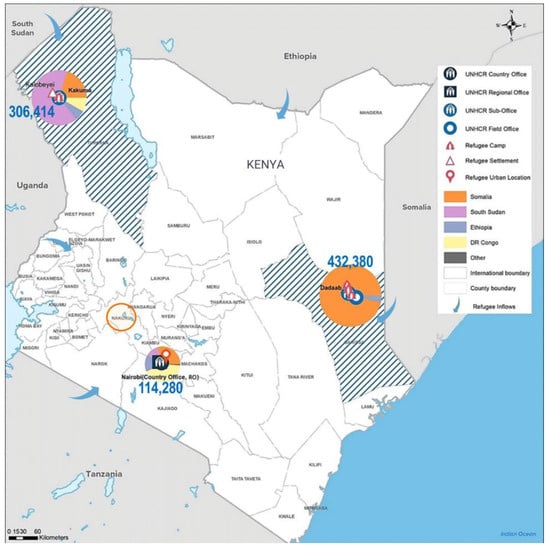
In 2013, civil war broke out in South Sudan, and though a ceasefire was signed in 2018, instability and violence continued, displacing millions of citizens (Coates et al., 2007). By the end of 2022, South Sudanese were the fifth-largest population of refugees, refugees in refugee-like situations, and others in need of international protection (USA for UNHCR, 2023; UNHCR, 2024). With Kenya’s “open-door asylum policy,” and being East Africa’s largest economy, South Sudanese refugees have sought asylum within Kenya. Kenya hosts approximately 830,000 refugees and asylum seekers, with 25 percent being South Sudanese and about one-fifth being urban refugees (HIAS, 2025; IIED, 2024; see Figure 1).
Figure 1.
Registered Refugees and Asylum Seekers (Schofield, K., & Enns, C.). Source: Adapted from (UNHCR, 2025).
1.1.2. Refugees in Kenya
Refugees living in urban areas are often not registered with UNHCR, and as they are also highly mobile, it is not easy to estimate exact numbers (Easton-Calabria et al., 2022; O’Callaghan et al., 2019; Perry, 2024). In fact, urban refugees can become somewhat invisible as they are “absorbed into the urban fabric, dispersed over the city, and highly mobile” (UNHCR & World Bank, 2020). Indeed, the authors’ previous study verified that refugee youth move between communities (see Enns et al., 2024). When we returned to offer the training platform to the original participants, community leaders reported that a majority of the youth had moved. Although youth may live in an urban centre for a time, they may also move between urban areas, their country of origin, rural areas and camps. Despite this fluidity in residence, available data indicate that refugees residing in Nakuru, Kenya, are predominantly from South Sudan (Pape et al., 2021). The figures for Nakuru highlight the significant challenges faced by South Sudanese refugees when residing in urban areas. In Nakuru, 55 percent of the refugee population is under 18 years of age, compared to 41 percent in the host community (Pape et al., 2021), and young adults often lead households.
The high percentage of people under 18 years means Nakuru refugee households have the highest dependency rates (Pape et al., 2021). Furthermore, in Nakuru, 61 percent of refugee households are headed by women (in contrast to 41 percent in the rest of the country), but women have a very low likelihood of employment (Pape et al., 2021). In fact, in Nakuru, the possibility of refugees being employed is only 12 percent (Pape et al., 2021). With those statistics, it is not surprising that 68 percent of the refugees in Nakuru face food insecurity. Combined with such high dependency rates, these statistics indicate that South Sudanese urban refugee children are at greater risk for malnutrition.
South Sudanese refugees account for only 9 percent of the urban refugees in Nairobi, and although the numbers are not proportionally smaller, they reflect the same struggles seen in Nakuru (Pape et al., 2021). While South Sudanese urban refugees constitute a small share of the total urban refugee population, there are over 10,000 registered in Kenyan cities. Furthermore, in Nairobi, refugee households are more likely to be headed by women and have a higher dependency ratio than their hosts (Pape et al., 2021). Refugees in Nairobi are also younger than their hosts (Pape et al., 2021). The refugees in Nairobi have a higher employment rate than those in Nakuru, at 43 percent. Still, their secondary net enrollment rate is 29 percent, and food insecurity is only slightly better than in Nakuru, at 61 percent (Pape et al., 2021).
Historically, urban refugees receive less assistance. Although the World Food Programme (WFP) assists refugees in camps in Kenya, it provides little to no food support to urban refugees (Ahmed et al., 2024). Even though moving to urban centres means less support, refugees are drawn to the greater economic opportunities that cities offer. Unfortunately, in the cities, they face economic marginalization, harassment by the state, and hostile host citizens (Ahmed et al., 2024). The withdrawal of USAID support has further reduced food assistance for refugees in Kenya, exacerbating their food insecurity (Buchanan, 2025). In addition to the reduction in food assistance, the lack of policy enabling refugees to obtain employment despite the fluidity of their residency status has created an environment where urban refugees live a “precarious existence” in overcrowded settlements and face food insecurity (Onyango et al., 2023). Other challenges that urban youth face include:
- A low loan availability rate: 40 percent of individuals access loans from friends and family, while only 1 percent receive loans from banks (Pape et al., 2021).
- Poor secondary school enrollment, with a net rate of 28 percent (31 percent for boys and 24 percent for girls) (Wangui & Kipchumba, 2024).
- Harassment from officials (Muindi & Mberu, 2019).
- Competition with locals for resources and employment (Muindi & Mberu, 2019).
- Previous education is often disregarded because employers are reluctant to recognize certifications from foreign schools (Okello, 2024).
In February of 2022, a new Refugee Act came into effect in Kenya. The act moves away from keeping refugees in camps, focuses on socioeconomic integration (Department of Refugee Services, 2023), and emphasizes freedom of movement (IIED, n.d.). Through its “Shirika Plan,” the government aims to enable refugees to transition from relying on aid to achieving long-term development and to share prosperity with their host communities (U.S. Committee for Refugees and Immigrants, 2025). This is a promising development, as it not only enables refugees to contribute more meaningfully to the economy but also affords them greater dignity and self-determination. Hopefully, it will shift how refugees are perceived: from vulnerable to capable and from a burden to a benefit.
At the local level, cities have become the preferred venue for implementing migration policies. Consequently, the division between national and regional or municipal policy is clearly visible. Cities have accepted responsibility for the arrival of successive waves of immigrants who have come for economic improvement, employment opportunities, or because of war or natural disasters (Manfredi-Sánchez, 2020).
1.1.3. Refugee Youth Health and Wellbeing Ecosystems
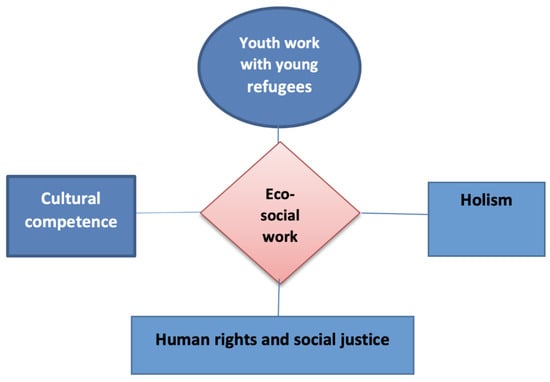
The World Health Organization (WHO) states that “the experience of migration is a key determinant of health” and that refugees and migrants are the most vulnerable, often experiencing regularly occurring physical and mental health problems (WHO, n.d.). Youth health and wellbeing are strongly dependent on both bio-physical and social environments, to the extent that they should not be considered in isolation (UN-Habitat, 2023; Rambaree et al., 2016). Rambaree et al. created an “eco-social work framework for youth work with refugees”, as shown in Figure 2 (2016). This framework is grounded in the core values of holism, cultural competence, human rights and social justice. The holism component emphasizes a comprehensive understanding of the social, economic, ecological and civic dimensions of refugee youths’ lived experiences (Rambaree et al., 2016). The cultural competence component emphasizes recognizing the diversity of refugee youth’s cultural backgrounds and orientations. In contrast, the human rights and social justice components ensure that refugee youth can participate in life and enjoy an acceptable standard of health and wellbeing (Rambaree et al., 2016).
Figure 2.
‘Eco-social work framework for youth work with refugees’ (Rambaree et al., 2016).
Analyzing refugee youth health and wellbeing through an ecosystem framework helps ensure young people have access to resources that promote their physical, mental, and social health and wellbeing (UN-Habitat, 2023). For example, applying this framework could improve youths’ experience in their urban environment through greater access to “safe and accessible parks and playgrounds, nutritious food options, access to healthcare and mental health services, supportive and caring relationships with adults and peers, and opportunities for physical activity, creative expression, and learning” (UN-Habitat, 2023).
1.1.4. Theoretical Framework
Postcolonial theory provides a lens for understanding migration within global and postcolonial contexts (Pingeot & Pouliot, 2024; Sellman, 2018). Although human mobility and resource issues predate postcolonialism, the global division of resources—such as food, water, and other natural resources—is rooted in postcolonial disparities, which have mainly shaped migration (Sellman, 2018; Aljararwa, 2023). While postcolonial experiences of mobility may afford more frequent access to spaces and places, not everyone travels with the same level of status. Individuals crossing borders may be categorized as migrants, refugees, exiles, immigrants, tourists, or travelers (Sellman, 2018; Pingeot & Pouliot, 2024; Watkins, 2016). Although these terms are fluid, patterns of international movement are more accessible to specific populations along the North–South divide (Sellman, 2018). It is therefore crucial to consider the interplay between space, context, and identity in shaping urban environments. Examining migration and resource access through the postcolonial lens enables a deeper understanding of the fluidity of mobility and migratory status, as well as access to resources.
1.1.5. Research Aim
Building on the 2022 study, this study draws on critical lived experiences to further examine food insecurity among urban refugees in its full context, focusing on the barriers and opportunities for young South Sudanese urban refugees living in Nairobi and Nakuru, Kenya. While the earlier study documented experiences of young South Sudanese refugees, this research analyzes food systems and uses a digital learning platform to gain insights. The previous study focused on lived experiences during COVID-19; the current study also targets youth (ages 19–32) but explores linkages, perceived barriers, and opportunities for procuring, growing, and selling food. This research aims to highlight the dynamics of urban food supply chains in Kenya and to examine the role of food and supply chains in the experiences of South Sudanese urban refugees. As Kenya moves towards strengthening its national safety nets and potentially re-evaluating past labour restrictions for refugees (Gikandi, 2020), understanding the barriers to food security is necessary for informed policy decisions and the practical implementation of strategies aimed at promoting food security and sustainable livelihoods for urban refugees within the evolving framework of national safety nets.
2. Materials and Methods
Before conducting the research, the proposed study underwent an extensive ethics review by the University of the Fraser Valley. Researchers also obtained a National Commission for Science, Technology and Innovation (NACOSTI) certificate from the Kenyan government. In addition, at the start of the learning platform, participants were asked to sign a consent form that explained the study’s purposes. Every effort was made to follow ethical guidelines for research with human participants.
The objective of this study was to document research on food supply chain mapping, including points of intersection for young South Sudanese urban refugees aged 19 to 32 years living in Kenya, and to identify barriers, constraints, and opportunities for procuring, growing, producing, and purchasing food. We recruited participants using purposeful sampling. This research gathered just over 40 participants, including individuals of all self-identified genders, with a focus on individuals who have recently relocated to Nairobi or Nakuru from Kakuma in Kenya or South Sudan. Youth and South Sudanese refugees were also engaged in the ideation process, encouraging them to share their insights, experiences, and innovative ideas for addressing food security challenges.
Several qualitative data collection methods were employed to understand the agricultural systems and enterprises, the South Sudanese community’s role in these systems, and food security and availability. The methods included surveys, food diaries, and food maps. The data collection considers the varied stories and backgrounds of the South Sudanese refugee population. We focus on social relations and the daily lives of actors, providing an institutional ethnography for participants, including mapping key stakeholders.
The research team employed a human-centred design methodology, building upon the ideation sessions from the previous study. Through collaborative innovation, the ‘Seed to Market’ training platform was developed, enabling stakeholders, community leaders, and South Sudanese refugees to collaborate and co-create innovative solutions that transform urban food supply chains. The information presented on the learning platform was centred around the needs, experiences, and aspirations that were identified in the previous study. All participants were given access to an interactive online ‘Seed to Market’ training platform.
Surveys were embedded at the start and conclusion of the course to measure changes in their understanding of the subject matter and to evaluate the effectiveness of the digital learning platform. Participants were encouraged to share the impact migration and food supply chains have had on their livelihood since relocating to Nairobi and Nakuru. Subsequently, the human-centred training program will implement interventions in the key areas identified through the previous study.
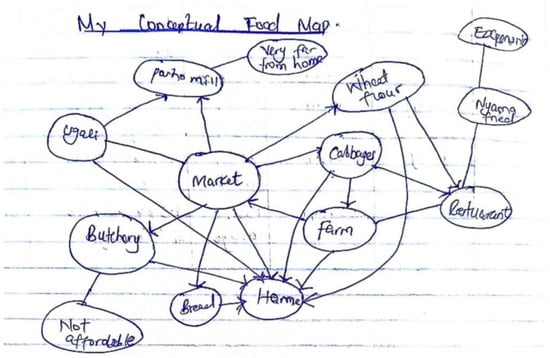
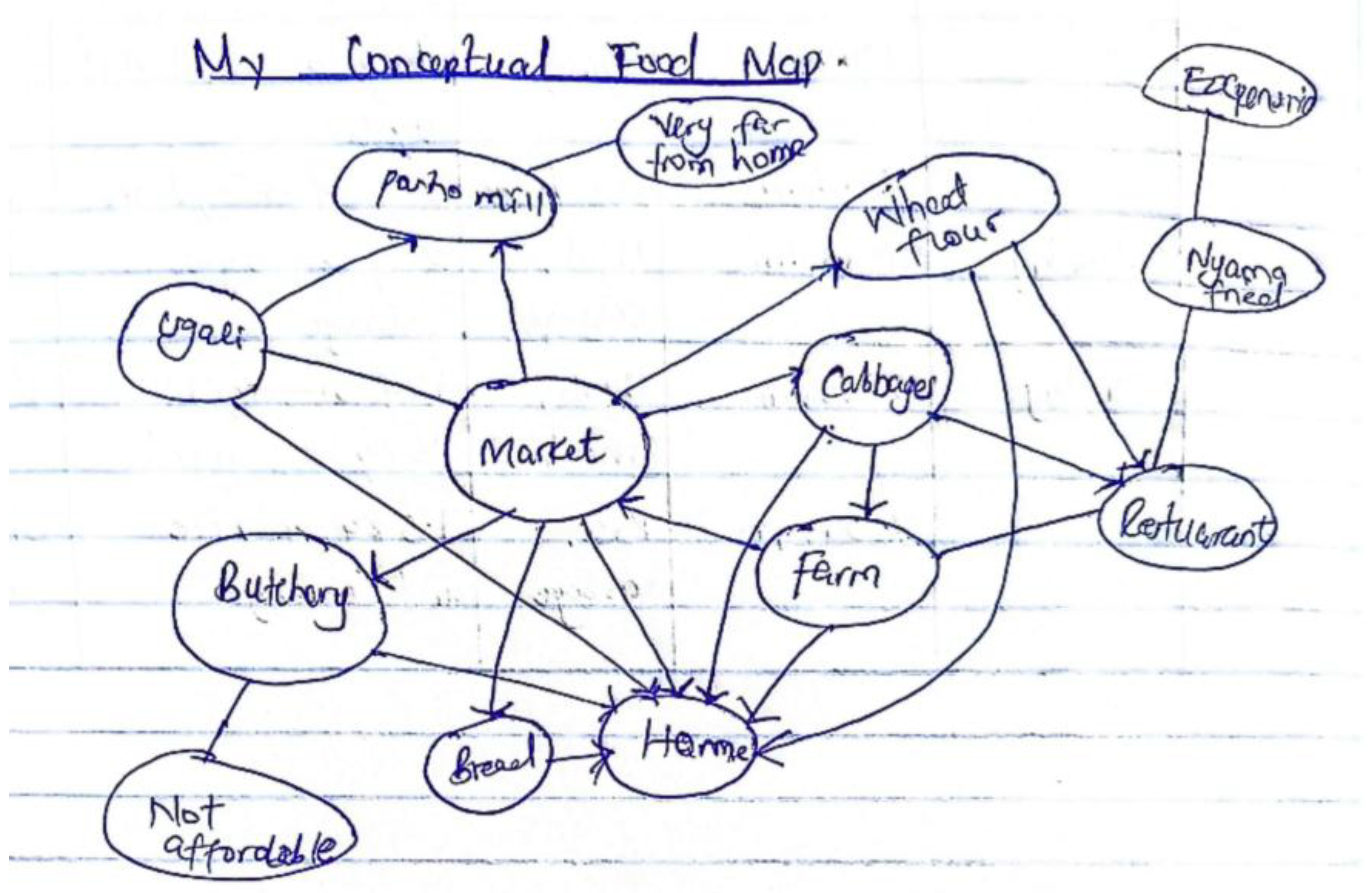
Throughout the course, participants submitted two anonymized assignments. In the first assignment, participants were asked to keep a food diary for 1 week, noting all meals and snacks. For consistency with the broader MiFood research project on food security, the Household Dietary Diversity Score (HDDS) was used to analyze the food diaries. The second assignment was for participants to create geographical and conceptual food maps. The purpose of the food maps was to help participants identify where they can obtain food in their community. Participants were asked to consider and include on their map the prices of food, types of food, where the food comes from, infrastructure barriers, and accessibility. Overall, the food maps created by participants highlighted where they sourced their food and any barriers they encountered. Figure 3 provides an example of a participant’s conceptual food map.
Figure 3.
Example of participant food map.
In addition to the surveys and assignments, all course participants received a contest form as an option for sharing their ideas and possibly winning a prize. The contest was linked to the training’s learning outcomes. Respondents were provided with tools to create a food-related social enterprise to address food insecurity challenges and gaps in the food systems. The top three concepts were selected by the South Sudanese research team members based on the viability and potential impact.
3. Results
3.1. Survey Results
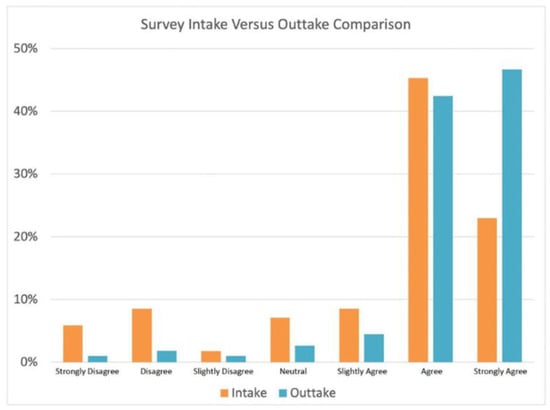
Embedded surveys at the beginning and end of the course allowed assessment of how beneficial the learning material was to participants. Their choices were on a Likert scale from strongly disagree to agree strongly. The higher their agreement, the stronger their knowledge, awareness and/or confidence on the subject. The questions were the same at the beginning and at the end of the course.
3.1.1. Completion and Participation
Regrettably, not all participants completed both surveys (15 completed one and 17 the other), which may have slightly skewed the results. Participants were given a series of statements to assess their understanding, awareness, and confidence in the various topics covered. In summary:
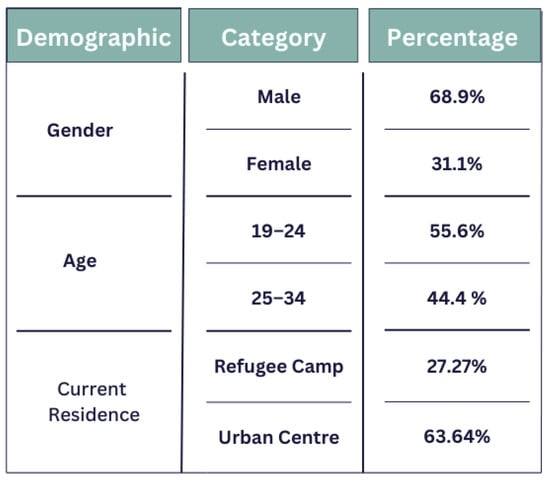
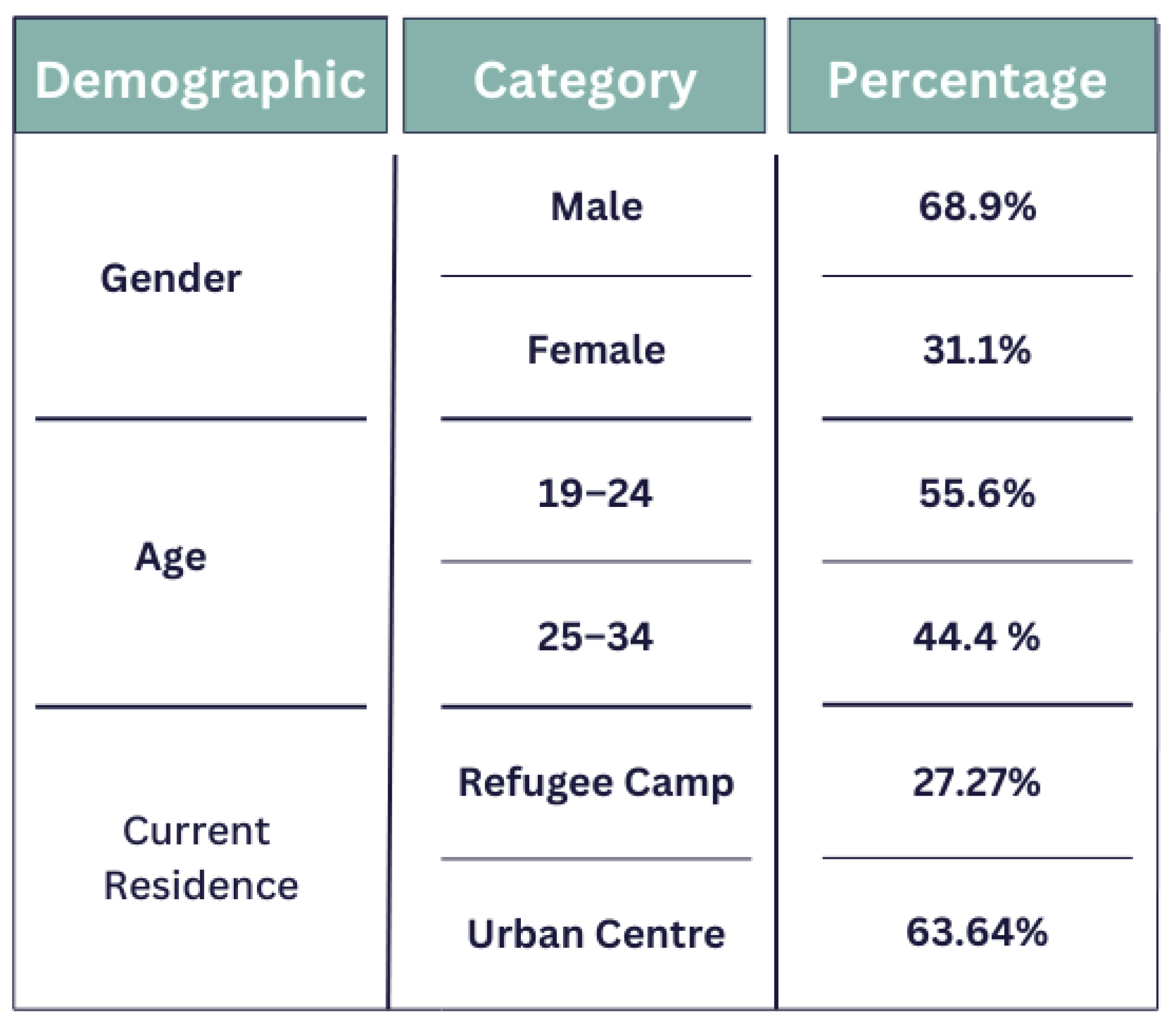
- 42 participants enrolled in the digital course (see demographic chart in Figure 4).
- 23 learners completed the online portion, and 14 submitted food maps and diaries.
- 8 of them sent in an optional business idea, and 3 ideas have been selected to receive a small start-up grant.
- Emails encouraging participants to complete incomplete assignments helped motivate some learners to act, but others seemed to struggle with completing everything.
- Participants were eager to receive a completion certificate from a Canadian university.
Figure 4.
Demographic overview of participants compiled from surveys and registration (Schofield, K. & Enns, C.).
The completion rate reflects the struggles shown in the eco-social work theory. If refugees are facing difficulties in meeting basic needs, it will be challenging to complete training regardless of the benefits.
3.1.2. Knowledge Gains
Surveys showed increases in knowledge and understanding for almost every statement (see Figure 5). In some cases, the gains were considerable. Understanding of the following showed significant improvement:
Figure 5.
Compiled survey results (Schofield, K. & Enns, C.).
- The different work permit classes in Kenya rose from 45.45 percent to 87.5 percent (+42.05 percent).
- Legal consequences of working without a work permit jumped from 63.64 percent to 100 percent.
- Rights as a worker in Kenya grew from 36.36 percent to 87.5 percent (+51.14 percent);
- What a social enterprise is improved from 45.45 percent to 93.75 percent.
Knowledge gains were most significant in the section related to legal issues and workers’ rights. This unveils the gap in critical information that refugees need to be able to thrive after being forcibly displaced. As the eco-social work framework suggests, when refugee youth fully understand their rights, they are better able to attain a higher level of wellbeing.
For some statements, the participants already had a high understanding, so increases were less pronounced:
- The difference between a resume and a CV climbed from 90.9 percent to 93.75 percent.
- The purpose of a cover letter was already at 100 percent agreement, but the percentage of “strongly agree” still increased, indicating greater understanding.
- The purpose of a business plan advanced from 90.9 percent agreeing to 100 percent.
For statements regarding education, such as “I am aware of the different types of educational institutions”, all participants showed high agreement both before and after, with only minimal improvement. This is likely due to the platform requiring some educational background and speaks to the way participants were recruited.
3.1.3. Confidence and Empowerment
Although the confidence statements scored high, confidence sometimes decreased. Any gains were modest. These results likely show the inconsistency that occurred because not everyone took both surveys.
- “I feel confident in my abilities and skills to get a job” dropped from 81.81 percent to 81.25 percent.
- “I feel confident in supporting myself and/or others” contracted from 72.72 percent to 68.75 percent (−3.97 percent).
- “I feel empowered to contribute to food security in my community” increased from 90.91 percent to 93.75 percent.
Growing in confidence may require more active engagement than this course demanded of the students.
3.1.4. Aspirations
The topics covered on the learning platform were very specific because researchers sought to improve food insecurity through education and to build on the needs identified in earlier focus groups. The lead researcher received emails from several participants who were looking to build careers in other fields, including politics and international relations, nursing, African law, cybersecurity, community planning and planning technique. Like young people everywhere, these participants have a wide range of interests.
3.2. Food Diaries and Refugee Food Insecurity
3.2.1. Sources and Distribution of Food
Refugees rely on their families to send remittances. As one female participant stated,
We don’t get food unless I talk to my relatives who are far away to give us something to eat. That is how we survived. Other than that, there is [not] any means of survival here in Nairobi.(as quoted in Enns et al., 2024, p. 6)
They also rely on their local communities for support. When food was short during COVID-19, refugees united and shared their resources (Enns et al., 2024). Members of the South Sudanese community purchased food from markets, shops and kiosks, which they then distributed among the community (Enns et al., 2024). Another method was for friends to come together, pool their money, and give it to the friend most in need (Enns et al., 2024). These adaptations show how refugees navigated food shortages and the difficulties encountered during COVID.
With regard to measuring food quality, sources, variety, and their roles in the production, procurement, and sale of food, it was found that 64 percent of the participants still receive food from aid organizations, while 45 percent use local shops and markets. A male respondent explained, “Since I arrived in Kenya at Kakuma refugee camp I got my food from aid organizations, WFP, UNHCR etc. but when I moved to Nakuru town, I buy food from markets.” 73 percent reported they get most of their food from aid organizations, and 27 percent buy food themselves. One reason they buy their own food is that they do not receive aid in Nakuru.
3.2.2. Change in Variety and Nutritional Quality
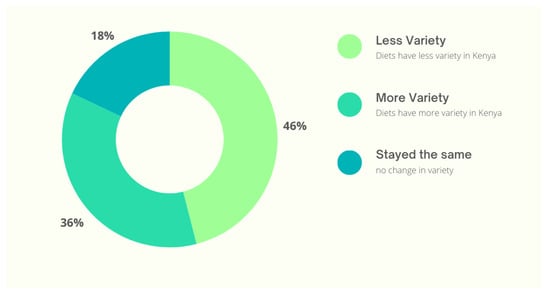
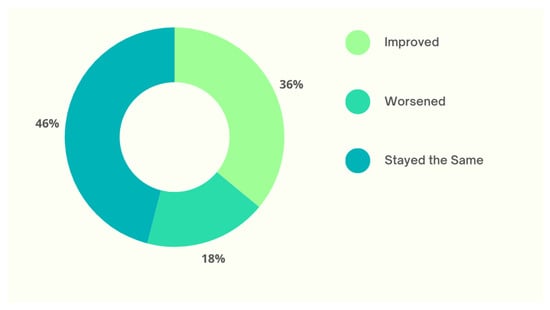
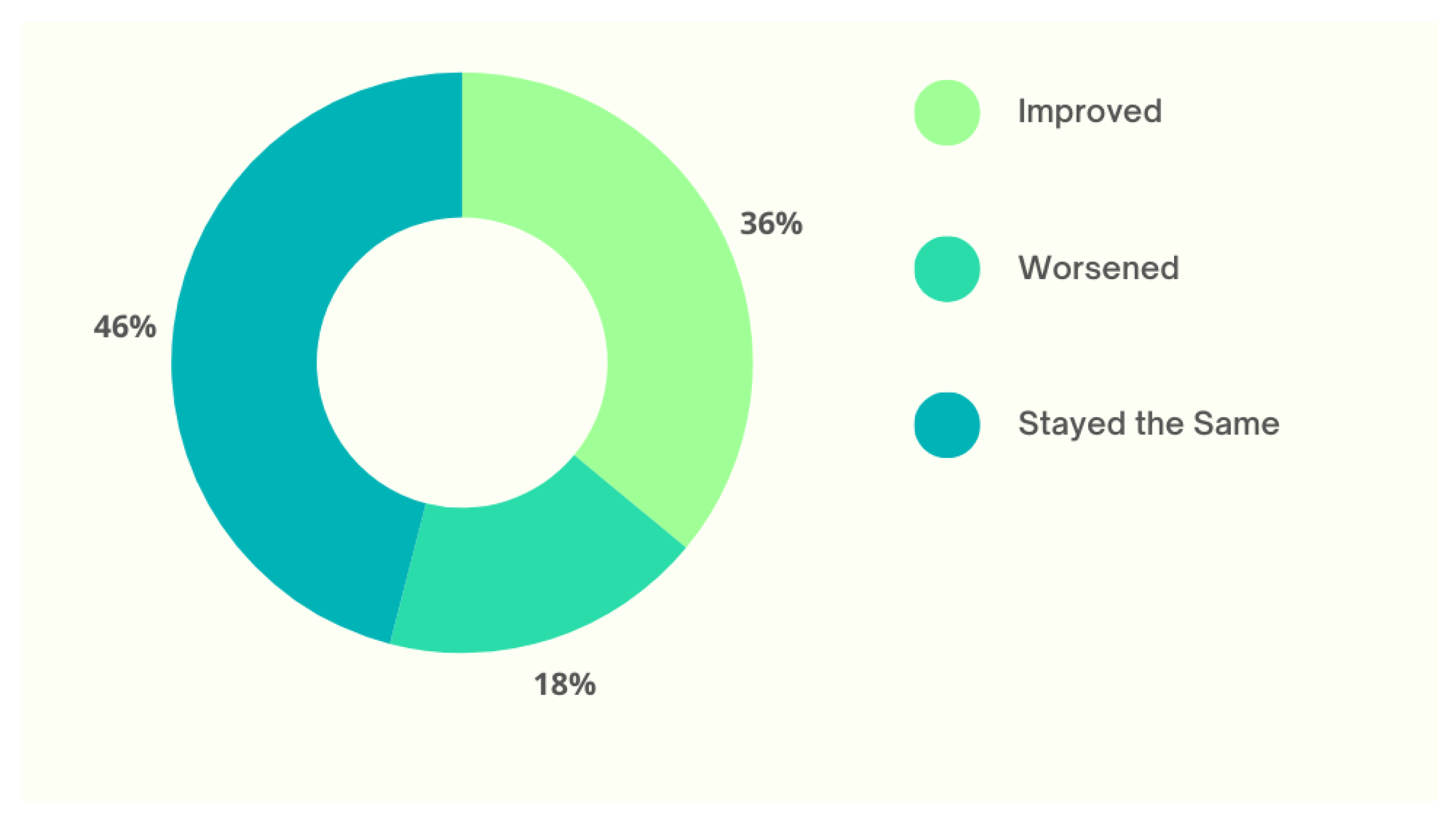
Measuring dietary variety is insightful because it is directly linked to food security. Dietary variety declines as food security declines (Onyango et al., 2023). As seen in Figure 6, 46 percent said their diet has less variety than when they were in South Sudan. However, only 18 percent said the nutritional quality of the food they eat has worsened (See Figure 7). These graphs highlight the wide spectrum of food security challenges that refugee youth face. They also indicate where to focus interventions.
Figure 6.
Changes in the Variety of the Participants’ Diet (Schofield, K., & Enns, C.).
Figure 7.
Changes in Nutritional Quality of Participants’ Diet (Schofield, K., & Enns, C.).
3.2.3. Household Dietary Diversity Score (HDDS)
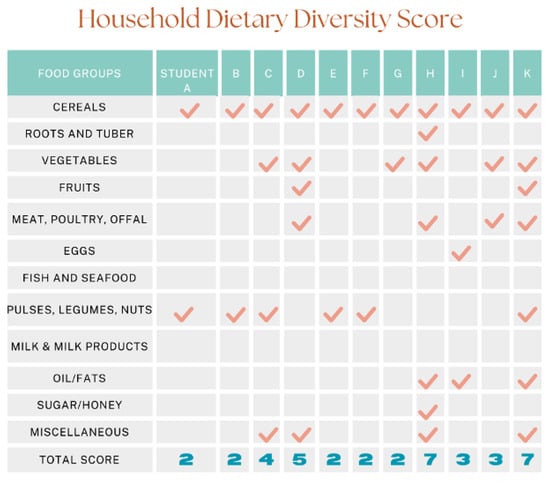
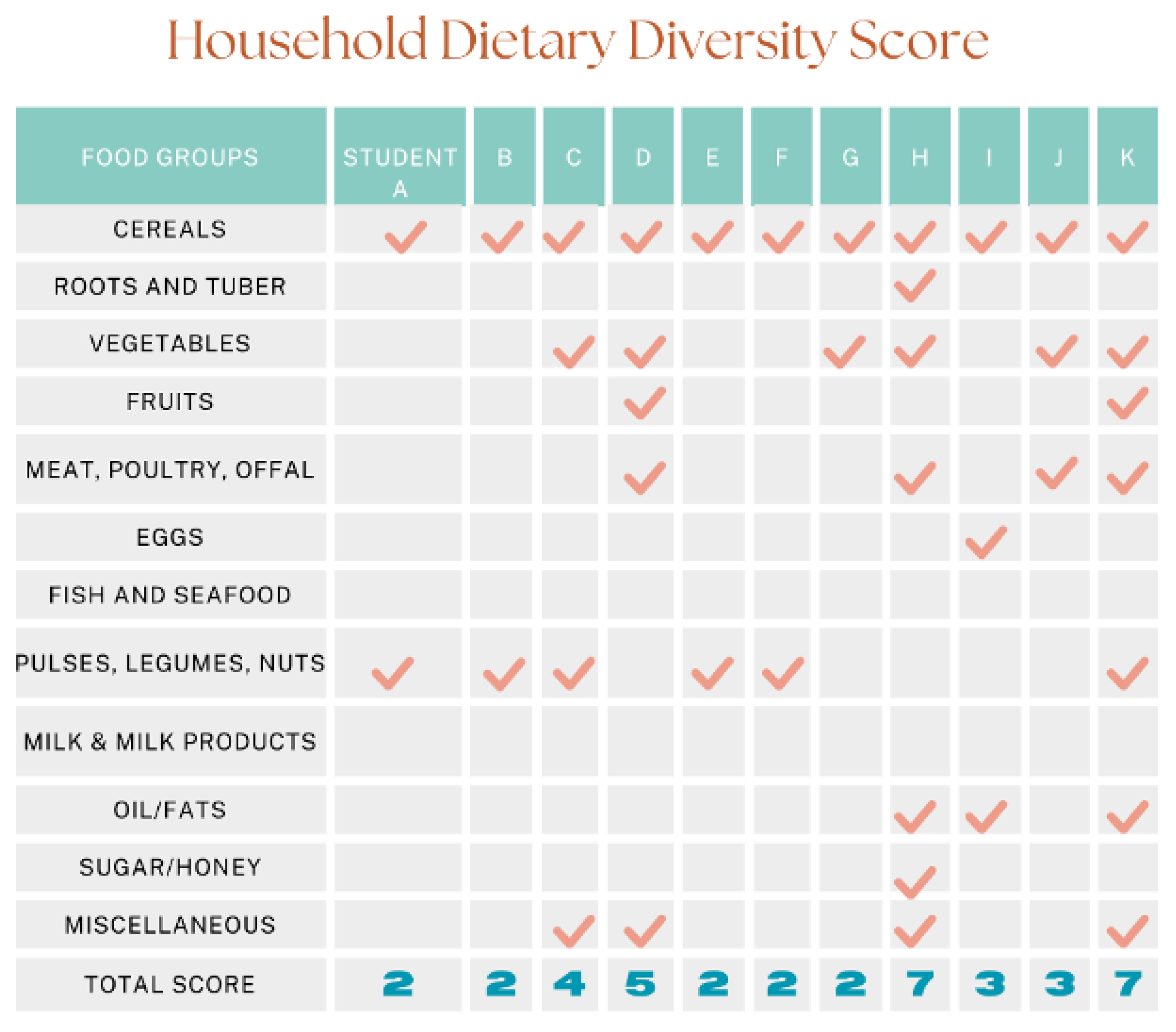
The food diaries reveal more details. The average number of meals per day was two. In the 186 meals reported, fruit was only eaten three times. For 16 percent of the meals, the refugees reported eating meat or fish. Their diets were carb-heavy, with ugali (cornmeal), porridge, rice, bread, and chapati as the main staples, usually served with beans and/or kale. Most meals were prepared at home, 16 percent were purchased, and 10 percent were from school. Participants primarily reported feeling happy or relaxed after eating, with a few reporting feeling sleepy or tired. As shown in Figure 8, the participant who reported the most food in their food diary scored a 7 in the Household Dietary Diversity Score (HDDS), meaning they consumed 7 out of 12 food groups in 24 h (Tufts University, 2023). The participant who reported the least scored a two, indicating consumption from only two food groups (Tufts University, 2023). A score of less than three is considered severely food insecure, while seven is mildly food insecure (WHL, n.d.).
Figure 8.
Food Diaries and HDSS Scoring (Schofield, K., & Enns, C.). These scores reveal that young refugees confront varying levels of food insecurity.
In addition to HDDS, another method for measuring food insecurity is the Household Food Insecurity Access Scale (HFIAS). HFIAS is used to determine the prevalence of food insecurity through a survey that asks participants if they experienced worry about food or a reduction in their eating habits in the last four weeks (Coates et al., 2007). However, instead of applying the HFIAS survey directly, this study focused on changes in participants’ diets since arriving in Kenya to explore how displacement affected participants’ food access and dietary patterns.
3.2.4. Roles in Procuring, Growing and Selling Food
When questioned about their roles in producing and obtaining food, 9 percent receive food exclusively from the UN-affiliated food programs. This is concerning, given that USAID’s withdrawal of financial support for food programs has led the WFP to reduce rations to 40 percent of a complete ration (WFP, 2025). At the same time, 73 percent report that their role is only as buyers. A male respondent indicated that they buy “because we cannot cultivate in Kenya. No land for farming.” When households rely on purchasing food from either the formal or informal sector, they are vulnerable to price increases (Onyango et al., 2023). Despite the challenges mentioned by one participant, 9 percent report growing food to some degree, and 18 percent do some selling. Regarding how their roles have changed in obtaining or producing food since moving to Kenya, 64 percent report selling less, 18 percent growing less, 18 percent remaining the same, and 9 percent growing more. These roles reinforce how their residential circumstances and legal status limit the agency of refugees.
Finally, insights from community co-author William Kolong Pioth give further context to the experiences reported by South Sudanese urban refugee youth. Decolonizing knowledge and research requires responding to the insights of those with lived experience (Tembo, 2022). “Donors and stakeholders should understand that the movements of South Sudanese urban youth refugees are complex and fluid, influenced by shifting security dynamics, economic conditions and strong social ties. Support that addresses both protection and sustainable livelihood options is essential to respond effectively to their diverse and evolving needs.”—William Kolong Pioth. In reviewing the findings, Pioth verified that South Sudanese youth refugees sometimes return to refugee camps due to ongoing conflict and insecurity in South Sudan, as well as the lack of livelihood opportunities and limited access to basic services within the country. William shared that even when youth refugees move to urban areas in Kenya, they are reluctant to give up their refugee status because life in the camp, despite its hardships, provides them with protection and access to humanitarian aid that they may not be able to secure otherwise. Some South Sudanese urban refugee youth may return to South Sudan for family reasons, to seek employment with INGOs or NGOs, or to reconnect with their communities, despite the risks involved.
3.3. Case Studies
Upon completing the course, learners were invited to submit a business idea related to food security. The ideas further reflect the hopes and aspirations of urban refugee youth. Submissions ranged from pharmacies to cybersecurity and clothing. The top three ideas were selected to win a financial award to help them start their businesses. The following are the three winning ideas. Their names have been changed, and their stories have been fictionalized.
3.3.1. A New Dawn for Atem
Seated by the window of their small two-bedroom house, Atem waited quietly for the sun to rise. This morning felt different, quieter, heavier. His family had just arrived in a new country called Kenya, far from the home he once knew in South Sudan. As the first rays of sunlight touched the horizon, Atem’s heart sank with the realization that he would no longer see his little cousins running around the compound, hear Auntie Angwesi preparing breakfast before everyone woke, or sit with his childhood friends as they watched the sun rise together.
South Sudan, his beloved home, had been torn apart by war and political instability. Going back was not an option. So here he was in a strange land, with just his mother and two younger siblings, Gaso and Deng, trying to figure out what this new life would look like. Though uncertain about the future, Atem made a promise to himself that morning: “No matter what, I will make the most of this new beginning.” Fortunately, Atem had completed high school back in South Sudan and spoke English fluently, which helped him communicate in Kenya. He could talk to the neighbours, shopkeepers, street food vendors, and people in the market. Most importantly, he was able to register his brothers in school, a small but powerful step in building a new life.
Life in Kenya was not easy. As foreigners, Atem’s family was not legally allowed to work. They could not own land or grow their food. Every meal depended on donations from organizations like UNHCR or whatever little they could buy from the local market. Their survival depended on remittances sent by relatives abroad. It was tough, and many days tested their strength. Atem did not let the struggle break him. Instead, it sparked an idea. He dreamt of starting a small convenience store, one that would serve people in his community with affordable everyday items.
He did not want it to stop there. Atem imagined a section dedicated to fresh produce, sourced from local farmers. He even envisioned creating community gardens where people from the South Sudan community could rent space to grow their food, since the laws in Kenya did not allow them to farm where they lived. Atem also hopes to further his education in Information Technology. He believes that with tech skills, he could better serve his community, offer faster, smarter solutions and maybe even create digital platforms to support migrant families like his.
Atem’s story is a reminder that while no one is ever truly prepared for the life of a migrant, having courage, vision, and an open mind can turn even the hardest journey into a powerful one. To every young person starting over, remember this: “Your challenges don’t define you, your dreams do.”
3.3.2. Sowila’s Ride
In the breathtaking heart of Kenya’s Great Rift Valley, where flamingos stroll across lake waters and diverse communities mingle in harmony, a young South Sudanese girl named Sowila began a new chapter of her life. She is beautiful, resilient, and driven, qualities that carried her from the dusty plains of Kakuma Refugee Camp to the vibrant town of Nakuru.
Life in Kakuma Refugee Camp had been hard. As a refugee and a young adult, opportunities were limited, and the future often felt uncertain. Many of Sowila’s friends had left the camp for better chances in Nakuru and encouraged her to do the same. After much thought, she made the bold decision to leave behind the only home she had ever known. With nothing but a suitcase and her bicycle, she boarded the next matatu (bus) and set off to chase something more. Cycling had always been her passion. In Nakuru, her bicycle became more than just transportation; it was her tool for survival. It saved her from spending money on crowded matatus or boda bodas (motor bicycles) and gave her the freedom to move through the city on her terms.
As Sowila began settling into her new environment, she noticed a recurring problem: the local markets sold low-quality, overpriced produce that often sat too long on the shelves. To ensure she ate well, she started cycling every Sunday to nearby farms, where she could buy fresh fruits and vegetables directly from farmers, of better quality at fair prices. Word spread quickly. Neighbours and friends saw the value in what she was doing and soon began asking her to pick up produce for them too. It was not long before they started paying her for deliveries. Her simple routine turned into a growing service.
What began as a way to feed herself evolved into a small business. Sowila was now a trusted bridge between farmers and households, delivering fresh, affordable produce with speed, care, and her own two legs. As demand grew, so did her vision. She imagined a sustainable delivery business that could do more than just move food. She saw bicycles as vehicles for community empowerment, connecting farms to homes, promoting healthy living, creating jobs for youth, and supporting local agriculture, all while protecting the environment. Her dream was clear: a youth-led bicycle delivery network that provided healthy produce to doorsteps, encouraged physical activity, and saved people time and money. For South Sudanese youth like herself, it would also be a source of pride and purpose.
Determined to take this idea further, Sowila drafted a business plan and shared it with William Kolong, a respected leader in the South Sudanese community in Nakuru. She hoped that, through his connections to different beneficiaries, she could secure funding to recruit more youth and purchase additional bicycles to expand her venture. William is well connected to the University of the Fraser Valley and had been supporting the Mifood Project and Seed-to-Market Training, which was ongoing at the time Sowila reached out. He was happy to make the connection, and Sowila was able to expand on her business idea upon the completion of the online seed-to-market training.
Looking back, Sowila is humbled by how far she has come. Born in a refugee camp to parents who fled war-torn South Sudan, she once knew nothing beyond the camp’s fences. Leaving Kakuma had been a leap into the unknown, but one that transformed her life. Today, Sowila shares her story to inspire others. She often tells young people, “Even a bicycle can become a bridge to your dreams if you believe and begin.”
3.3.3. Beyond the Market: A Garden for Nyaboth
“Nyaboth,” Mama Finza called.
“Yes, Mother?” Nyaboth answered, turning from the half-washed dishes.
“Here is 2000 shillings,” Mama Finza said, pressing the worn note into her daughter’s hand. “Go to Umoja market centre and get us some vegetables for today’s meals, please.”
Nyaboth sighed softly, pocketing the money. “What should I buy today?”
“Sukuma wiki, tomatoes, onions, garlic, spinach, dry fish and two kilos of ugali (corn) flour,” Mama said. “When mama mboga (vegetable woman) cuts the sukuma wiki (kale), ask her ‘Ongeza kidogo Tafadali,’ which means add a little more, please! in Swahili, and when she adds more, don’t forget to say ‘Asante’ (Thank you).”
Nyaboth rolled her eyes and gave a small smile. “Mother, you don’t have to remind me every day. I probably know more Swahili than you by now.” Mama Finza chuckled, turning back to her beans. “Still, reminders don’t hurt.”
Nyaboth grabbed the faded green reusable bag hanging by the door and stepped outside, her feet crunching the dry earth. It was just after breakfast, as usual. That was Mama’s favourite time to send her, right when the market produce was freshest, and the sun had not fully scorched the ground. However, the truth was that the sun always caught up.
From my spot on the front step, I watched her trudge off, pulling her sweater sleeves up in preparation for the heat. She quickly disappeared down the narrow path that led out of our neighbourhood. She did this almost every day. I never really paid attention until one day, I offered to go with her. The walk to Umoja was longer than I imagined. It wound through dusty roads and down rocky footpaths. My flip-flops scraped my heels raw. Nyaboth did not complain; she just walked on, quick and determined.
The market was alive when we got there, with women calling out prices, babies crying, and the smell of fried fish and ripe bananas thick in the air. Nyaboth knew where to go, whom to greet, and how to negotiate with the vendors. I stood awkwardly beside her as she bargained with a mama mboga, holding out the sukuma wiki and saying politely, “Ongeza kidogo tafadhali.” The mama mboga laughed and obliged.
On our way back, I offered to carry the bag. Only then did I feel the weight she dealt with. My arms ached halfway through, but she just kept going, barely noticing. By the time we reached home, I was drenched in sweat, my feet were sore, and my shoulders were burning. That day changed something in me. I realized that her daily trips were not just chores; they were labour. And like her, many other girls in Nakuru bore the quiet burden of feeding their families. Some of them walked even farther. What about during the rainy season? What about when they were sick?
That evening, still stiff from the walk, I lay on the couch, scrolling through WhatsApp. A message came in from William Kolong, a well-known figure in our South Sudanese community. “Hello youth! Sign up to be part of Seed-to-Market—a focused group research project led by MiFood Network. We’re looking to understand how South Sudanese youth access food before and after COVID-19. Join us and share your experience!”
My eyes lit up. This was something I wanted to be part of. It was not just about food. It was about voices, about stories like Nyaboth’s. I signed up immediately. Sharing my family’s experience, especially what I had seen Nyaboth go through, felt important. When the focus group met, we talked about more than just food; we talked about access, about dignity and survival in the context of being South Sudanese refugees living in Kenya.
After sharing our stories, we were challenged to think of business ideas that could benefit our communities. That is when the idea came to me: a small kitchen garden, right here in Nakuru. With just $250, I imagined starting something simple but powerful, a small garden that would provide fresh vegetables to at least one vulnerable household or community group. Here was the plan:
- Find a suitable location: a backyard, community plot, or even a school ground.
- Prepare the land and improve the soil.
- Purchase seeds: spinach, sukuma wiki, tomatoes, and onions, which are fast-growing and high-yielding.
- Train a few people in basic gardening techniques.
- Monitor growth and harvest for daily home use.
I budgeted $30 for seeds, $130 for gardening tools and materials, $30 for training, $40 for protective fencing, and $20 for miscellaneous items.
The goal of this business idea was not just vegetables. It was sustainability, nutrition, health, skills, and empowering people with the ability to feed themselves. After the first harvest, some of the produce could be sold or saved for replanting. Over time, others could replicate it at home. People would not have to walk miles under the sun just to put dinner on the table. Maybe one day, Nyaboth would not need to carry that heavy grocery bag every morning. Instead, she could pick fresh sukuma wiki from right outside our door.
I am grateful to our community leader, William Kolong, for sharing the MiFood Research and Seeds-to-Market Training Platform through the University of the Fraser Valley. This training has empowered South Sudanese youth like me to be innovative and create sustainable food systems for our communities. It planted a seed not just in the soil, but in us.
4. Discussion
Through this study, the Seed-to-Market course was created as a research tool and in response to the research team’s previous study findings. Postcolonial concepts guided each phase of research. The research team sought to learn, from the perspective of marginalized urban refugee youth, about their food security, further extending themes generated in previous ideation sessions. The learning platform, as a research tool, was a direct response to participants’ desire for increased agency in meeting their needs. The eco-social work framework is used to assess how increased knowledge and access to affordable food systems improve the health and wellbeing of refugee youth. The learners who completed the course reported significant gains in their understanding, awareness and empowerment of the subject material. Over 50 percent completed a combination of the various course elements.
Given the precarious situation of urban refugee youth, to be truly effective, the platform faces some challenges that need to be addressed. For example, the varied participation levels suggest that more support, such as a facilitator, may be helpful for future versions of the training. Finding ways to support highly mobile people is complex. Some refugee youth may be reluctant to move ahead in getting citizenship or official work permits because of concerns about losing the financial support they receive as refugees.
Even so, as evidenced by the additional course requests, urban refugee youth are eager to learn and receive an education. However, refugees face several challenges in pursuing education and training. Some of those who did not complete the course likely faced some of these constraints. Refugees have limited internet access; even urban refugees are confronted with a “digital divide” (Crea & Sparnon, 2017; Mupenzi et al., 2020; Taftaf & Williams, 2020; Witthaus & Ryan, 2021; Witthaus, 2023).
Another challenge is the life load that refugees carry (Hews et al., 2022), with many refugees dealing with trauma, homelessness, and uncertain futures that make it difficult to obtain online education (Witthaus, 2023). Therefore, to support refugees in completing online courses, their basic capabilities need to be addressed. They should not have to worry about shelter, food, or the financial resources needed for survival (Mkwananzi, 2019, p. 187; Witthaus, 2023). Managing these obstacles is crucial for refugee youth to participate meaningfully in community food systems.
A key component of a healthy ecosystem is the provision of safe and nutritious food. Adequate access to and security of food are central to the health and wellbeing of refugee youth and their families. When food access is unstable, refugee youth are likely to accept any available food, regardless of their preferences and religious/non-religious dietary restrictions (Enns et al., 2024). While the case studies highlight the hopes and aspirations of refugee youth, they also demonstrate the youth’s willingness to be active participants in their community food system. Atem dreamt of being allowed to work in Kenya so he could open a convenience store that provided affordable, everyday items. Sowila left Kakuma Refugee Camp for Nakuru and used her bicycle to create a small business delivering fresh, inexpensive produce from the farm to her neighbours. Nyaboth created a plan to create a “small kitchen garden” in Nakuru to provide fresh produce to vulnerable households and community groups.
5. Conclusions
5.1. Significance and Implications
Providing accessible, relevant online training to urban refugee youth is an investment in human capital that empowers them to achieve socioeconomic independence (Kamau & Mwenda, 2021). Recognizing the capacities of refugee youth and empowering them, rather than viewing them as a vulnerable group, will enable them to increase their food security and become an economic engine in Kenya (Easton-Calabria et al., 2022; Kamau & Mwenda, 2021). In line with the eco-social work framework, this more holistic research approach illustrates a strategy for further empowerment.
In confronting food insecurity, urban farming can help refugees to become more self-sufficient. By growing their own food, refugees can add variety and quality food to their diets and sell the surplus to supplement their income (Oyuela, 2019). As Johanna Mendelson Forman, a Distinguished Fellow at the Stimson Center’s Food Security Program, asserts, “Food can be a powerful force for social integration” (Oyuela, 2019). Urban farms have the added benefit of transforming spaces. They not only provide food but also beautify spaces, giving people a sense of home and hope (Schulze, 2018).
While the overall focus of this paper is to document research on mapping food supply chains, including points of intersection for young South Sudanese urban refugees in Kenya, the theme of fluidity in refugee residence emerged throughout the research process. Available data indicate that refugees residing in Nakuru, Kenya, are predominantly from South Sudan (Pape et al., 2021), whereas only 9 percent of those in Nairobi are from South Sudan. However, in both cities, the study found that refugee youth are highly mobile and may live in an urban centre for a time or move between urban and rural areas, never updating their UNHCR status. The case study narratives highlight examples of refugee youth who chose to leave the Kakuma Refugee Camp and move between South Sudan and Nakuru or Nairobi, Kenya, without changing their residential status. This fluidity speaks to the need for flexible program design and flexible localized support.
Nairobi is constantly reshaped by various actors, echoing colonial influences, including the 81,000 refugees that live there (USA for UNHCR, 2023). Definitions of formal, informal, urban, non-urban, and refugee versus permanent-status residents are fluid and are not adequately accounted for in program development and funding. This attempt to categorize refugees without allowance for ease of updates potentially restricts access to relevant support, further marginalizing youth refugees who are highly mobile.
5.2. Limitations
Unfortunately, the researchers faced several limitations that curtailed the study’s potential outreach, such as delays in approvals and an inability to reach as many youths as intended. However, the focus of participatory action research was still achieved. The approach allowed the researchers to engage with urban refugee youth to chart points of intersection across systems and begin to gain a broader understanding that considers factors such as gender, age, geographic location, and the unique situations participants are coming from, including how different households address food security.
Some constraints encountered by the researchers included the mobility of urban refugees. Many of the earlier participants had returned to South Sudan, preventing their participation in the second phase of the study. Further delays were connected to the volatile situation in South Sudan (UNHCR, 2024). Due to the violence, the community outreach worker who was to support the study in Nairobi had to return to South Sudan, as he was engaged in pressing matters there. His unavailability delayed the start of the study and reduced the time available for data collection. In addition, urban youth refugees have limited digital access. The individuals who are in the greatest need could not use the learning platform without some support with digital access. Lastly, financial constraints limited the scale of this study.
5.3. Recommendations
With both urban centres hosting large numbers of refugees and food assistance decreasing, refugee policy should shift to allow refugees to work and access their programs, regardless of the fluidity of their residency or refugee status. Furthermore, urban centres should explore opening ongoing opportunities for urban agriculture.
Actors such as Nairobi City County, humanitarian actors, and land-use planners have an opportunity to build a responsive, inclusive community design that addresses social challenges, including food insecurity among urban refugee youth. Creating youth health and wellbeing ecosystems requires a multisectoral, collaborative approach among young people, healthcare providers, various levels of government agencies, community organizations, and educators (UN-Habitat, 2023). To address the health and wellbeing of refugee youth, policymakers should adopt a more holistic approach to monitoring and implementing programs, in line with the eco-social work framework. Urban strategies could involve collaborative food system initiatives, such as shared urban farms and markets that leverage existing long-term relationships with vulnerable youth in the community, as youth represent the most significant proportion of the population. Implementing food systems strategies can strengthen refugee youth’s food security and overall wellbeing, as they move in and out of regions.
Author Contributions
Conceptualization, A.C., S.O. and C.E.; Methodology, K.S., S.O. and C.E.; Validation, C.E.; Formal analysis, J.F., A.C. and C.E.; Investigation, J.F., W.K.P. and C.E.; Resources, C.E.; Writing—original draft, K.S., A.C. and C.E.; Writing—review and editing, J.F., W.K.P., S.O. and C.E.; Visualization, C.E.; Project administration, C.E.; Funding acquisition, C.E. All authors have read and agreed to the published version of the manuscript.
Funding
This paper is funded through a seven-year collaborative MiFood project funded by a Partnership Grant from the Social Sciences and Humanities Research Council of Canada (SSHRC Grant No. 895-2021-1004).
Institutional Review Board Statement
The study was conducted in accordance with the UFV Human Research Ethics Board, Tri-Council Policy Statement, and the NACOSTI Kenyan Ethics Board. HREB Protocol No: 101770 of June 2025 and NACOSTI No: P/22/22432.
Informed Consent Statement
Informed consent was obtained from all subjects involved in the study.
Data Availability Statement
Data is unavailable due to privacy or ethical restrictions given the vulnerability of participants.
Acknowledgments
We want to acknowledge the South Sudanese youth who participated in this study.
Conflicts of Interest
The authors declare that they have no conflicts of interest.
Abbreviations
The following abbreviations are used in this manuscript:
| HDSS | Household Dietary Diversity Score |
| HFIAS | Household Food Insecurity Access Scale |
| UNHCR | United Nations High Commissioner for Refugees |
| USAID | United States Agency for International Development |
| WHO | World Health Organization |
| WFP | World Food Program |
References
- Ahmed, Z., Crush, J., Owuor, S., & Onyango, E. (2024). Refugee migration and urban food security: Somali migrants in Nairobi, Kenya. MiFOOD Network. Available online: https://mifood.org/papers/refugee-migration-and-urban-food-security-somali-migrants-in-nairobi-kenya/ (accessed on 4 June 2025).
- Aljararwa, R. (2023). (Re)negotiating empire: A postcolonial reading of the narrative of refugee experience in Laila Lalami’s hope and other dangerous pursuits. Journal of Global Postcolonial Studies, 11(1–2), 5–19. [Google Scholar] [CrossRef] [Scilit]
- Bayeck, R. (2022). Positionality: The interplay of space, context and identity. International Journal of Qualitative Methods, 21, 160940692211147. [Google Scholar] [CrossRef] [Scilit]
- Buchanan, R. T. (2025, April 9). ‘Everything was stopped’: USAID cuts hit hard in northern Kenya. The New Indian Express. Available online: https://www.newindianexpress.com/world/2025/Apr/09/everything-was-stopped-usaid-cuts-hit-hard-in-northern-kenya (accessed on 1 May 2025).
- Coates, J., Swindale, A., & Bilinsky, P. (2007, August). Household food insecurity access scale (HFIAS) for measurement of household food access: Indicator guide. Version 3. Food and Nutrition Technical Assistance Project, Academy for Educational Development. Available online: https://www.fantaproject.org/sites/default/files/resources/HFIAS_ENG_v3_Aug07.pdf (accessed on 4 June 2025).
- Crea, T. M., & Sparnon, N. (2017). Democratizing education at the margins: Faculty and practitioner perspectives on delivering online tertiary education for refugees. International Journal of Educational Technology in Higher Education, 14(1), 43. [Google Scholar] [CrossRef] [Scilit]
- Department of Refugee Services. (2023). The Kenya Shirika plan: Overview and action plan. Government of Kenya. Available online: https://refugee.go.ke/kenya-shirika-plan-overview-and-action-plan (accessed on 18 June 2025).
- Easton-Calabria, E., Abadi, D., Gebremedhin, G., & Wood, J. (2022). Urban refugees and IDPs in secondary cities: Case studies of crisis migration, urbanisation, and governance. Cities Alliance. Available online: https://www.citiesalliance.org/sites/default/files/2022-10/citiesalliance_urban-refugees-and-idps-in-secondary-cities_2022.pdf (accessed on 4 June 2025).
- Enns, C., Owuor, S., Lin, A., Kapeleelow, N., Fanta, J., Achieng, C., Kolong, W., & Swardk, K. (2024, May 11). COVID-19, food insecurity and South Sudanese urban refugees in Nairobi and Nakuru, Kenya (MiFOOD Paper No. 19). MiFOOD Network. Available online: https://mifood.org/wp-content/uploads/2024/05/MiFOOD19.pdf (accessed on 25 April 2025).
- Food and Agriculture Organization (FAO). (2021). The state of food security and nutrition in the world 2021: The world is at a critical juncture. Food and Agriculture Organization. Available online: https://www.fao.org/state-of-food-security-nutrition/2021/en/ (accessed on 6 May 2025).
- Gikandi, L. (2020). COVID-19 and vulnerable, hardworking Kenyans: Why it’s time for a strong social protection plan (pp. 1–18). Oxfam International. [Google Scholar]
- Hews, R., McNamara, J., & Nay, Z. (2022). Prioritising lifelong and ever-learning load: Understanding post-pan demic student engagement. Journal of University Teaching & Learning Practice, 19(2), 128–148. [Google Scholar] [CrossRef] [Scilit]
- HIAS. (2025, May 1). Refugees in Kenya: What you need to know. HIAS. Available online: https://hias.org/news/refugees-kenya-what-you-need-know/ (accessed on 21 May 2025).
- International Institute for Environment and Development (IIED). (n.d.). Nairobi launch: Pioneering refugee integration strategy. International Institute for Environment and Development. Available online: https://www.iied.org/nairobi-launch-pioneering-refugee-integration-strategy#:~:text=Apprencent20newpercent20Refugeepercent20Capertenc2 (accessed on 1 May 2025).
- International Institute for Environment and Development (IIED). (2024). An inclusive Nairobi? refugee accounts of life in the City. International Institute for Environment and Development. Available online: https://www.iied.org/inclusive-nairobi-refugee-accounts-life-city (accessed on 29 May 2025).
- Kamau, D. M., & Mwenda, M. N. (2021). Empowerment of urban refugee youths in Nairobi County, Kenya: A socio-economic perspective. European Journal of Business and Management Research, 6(1), 142–148. [Google Scholar] [CrossRef] [Scilit]
- Manfredi-Sánchez, J. L. (2020). Sanctuary cities: What global migration means for local governments. Social Sciences, 9(8), 146. [Google Scholar] [CrossRef] [Scilit]
- Mkwananzi, F. (2019). Understanding migrants’ valued capabilities and functionings. In Higher education, youth and migration in contexts of disadvantage (pp. 87–102). Palgrave Macmillan. [Google Scholar] [CrossRef] [Scilit]
- Muindi, K., & Mberu, B. (2019). Urban refugees in Nairobi: Tackling barriers to accessing housing, services and infrastructure. International Institute for Environment and Development. Available online: https://www.iied.org/sites/default/files/pdfs/migrate/10882IIED.pdf (accessed on 6 May 2025).
- Mupenzi, A., Mude, W., & Baker, S. (2020). Reflections on COVID-19 and impacts on equitable participation: The case of culturally and linguistically diverse migrant and/or refugee (CALDM/R) students in Australian higher education. Higher Education Research & Development, 39(7), 1337–1341. [Google Scholar] [CrossRef] [Scilit]
- O’Callaghan, S., Manji, F., Holloway, K., & Lowe, C. (2019). The comprehensive refugee response framework: Progress in Kenya [working paper]. Overseas Development Institute. Available online: https://cdn.odi.org/media/documents/12940.pdf (accessed on 16 September 2025).
- Okello, A. (2024, November). Refugee welfare in Kenya: Challenges and solutions (LERRN Working Paper No. 28). Local Engagement Refugee Research Network. Available online: https://carleton.ca/lerrn/wp-content/uploads/RM_Nov_8_2024_LERRN_Working_Paper_28.pdf (accessed on 21 May 2025).
- Onyango, E. O., Crush, J. S., & Owuor, S. (2023). Food insecurity and dietary deprivation: Migrant households in Nairobi, Kenya. Nutrients, 15(5), 1215. [Google Scholar] [CrossRef] [Scilit] [PubMed]
- Orjuela-Grimm, M., Deschak, C., Aragon Gama, C. A., Bhatt-Carreño, S., Hoyos, L., Mundo, V., Bojorquez, I., Carpio, K., Quero, Y., Xicotencatl, A., & Infante, C. (2021). Migrants on the move and food (in)security: A call for research. Journal of Immigrant and Minority Health, 24(5), 1318–1327. [Google Scholar] [CrossRef] [Scilit] [PubMed]
- Oyuela, A. (2019, December 9). Empowering refugees in Kenya through urban farming. Food Tank. Available online: https://foodtank.com/news/2019/12/empowering-refugees-in-kenya-through-urban-farming/ (accessed on 17 June 2025).
- Pape, U., Beltramo, T., Fix, J., Nimoh, F., Rios-Rivera, L. A., & Sarr, I. (2021). Understanding the socioeconomic conditions of refugees in Kenya. Results from the 2020-21 urban socioeconomic survey (Vol. C: Urban Refugees, pp. 1–84). UNHCR & World Bank Group. [Google Scholar]
- Perry, J. (2024, November 1). Localizing climate adaptation in Kenya’s refugee-hosting counties. Refugees International. [Google Scholar]
- Pingeot, L., & Pouliot, V. (2024). Agency is positionally distributed: Practice theory and (post)colonial structures. International Studies Quarterly, 68(2), sqae021. [Google Scholar] [CrossRef] [Scilit]
- Rambaree, K., Berg, M., & Thomson, R. (2016). A framework for youth work with refugees. Youth Partnership. Available online: https://pjp-eu.coe.int/documents/42128013/47262364/Framework-youth-work-refugees.pdf/94f8ad98-27af-4bfb-81e0-80fade21838a?t=1490108241000 (accessed on 16 September 2025).
- Schulze, H. (2018, January 15). Greening Iraq’s refugee camps: “This garden is my kingdom”. Food Tank. Available online: https://foodtank.com/news/2018/01/greening-iraqs-refugee-camps-urban-agriculture/ (accessed on 1 May 2025).
- Sellman, J. (2018). A global postcolonial: Contemporary Arabic literature of migration to Europe. Journal of Postcolonial Writing, 54(6), 751–765. [Google Scholar] [CrossRef] [Scilit]
- Taftaf, R., & Williams, C. (2020). Supporting refugee distance: A review of the literature. American Journal of Distance, 34(1), 5–18. [Google Scholar] [CrossRef] [Scilit]
- Tembo, J. (2022). Do African postcolonial theories need an epistemic decolonial turn? Postcolonial Studies, 25(1), 35–53. [Google Scholar] [CrossRef] [Scilit]
- Tufts University. (2023). Household dietary diversity score (HDDS). In Data4Diets: Building blocks for diet-related food security analysis. Available online: https://inddex.nutrition.tufts.edu/data4diets/indicator/household-dietary-diversity-score-hdds (accessed on 10 July 2025).
- UN-Habitat. (2023). Models & programs for youth’s governance & participation in planning: More inclusive & sustainable cities. UN-Habitat Youth. Available online: https://www.unhabitatyouth.org/wp-content/uploads/2023/03/her_city_final_report_20221019.pdf (accessed on 21 May 2025).
- UNHCR. (2023, September 8). New UNHCR report reveals over 7 million refugee children out of school [press release]. Available online: https://www.unrefugees.org/news/new-unhcr-report-reveals-over-7-million-refugee-children-out-of-school/ (accessed on 4 June 2025).
- UNHCR. (2024, July 19). South Sudan—Spontaneous refugee returns dashboard (May 2024). UNHCR. Available online: https://data.unhcr.org/en/documents/details/108426 (accessed on 17 June 2025).
- UNHCR. (2025, May 31). Kenya—Statistics Package (May 2025). UNHCR. Available online: https://www.unhcr.org/ke/media/kenya-statistics-package-31-may-2025 (accessed on 4 June 2025).
- UNHCR & World Bank. (2020). Kenya: Socioeconomic survey of urban refugees in Kenya, 2021 [microdata]. UNHCR Microdata Library. Available online: https://microdata.unhcr.org/ (accessed on 4 June 2025).
- United Nations Conference on Trade and Development (UNCTAD). (2021). Facts and figures: Economic development in Africa report 2021—Reaping the potential benefits of the African Continental Free Trade Area for inclusive growth. UN Trade and Development. Available online: https://unctad.org/press-material/facts-and-figures-7 (accessed on 9 May 2025).
- USA for UNHCR. (2023, July 24). South Sudan refugee crisis explained. Available online: https://www.unrefugees.org/news/south-sudan-refugee-crisis-explained/ (accessed on 18 July 2025).
- U.S. Committee for Refugees and Immigrants. (2025, May 13). Toward a shared future: Advancing refugee integration in Kenya. Available online: https://refugees.org/toward-a-shared-future-advancing-refugee-integration-in-kenya/ (accessed on 29 May 2025).
- Wangui, W. I., & Kipchumba, D. H. E. (2024). Determinants of urban refugee youth self-reliance in Nairobi City County, Kenya. Journal of Public Policy and Governance, 4(2), 1–18. [Google Scholar] [CrossRef] [Scilit]
- Watkins, A. (2016). Tourists, travellers, refugees: An interview with Michelle De Kretser. Journal of Postcolonial Writing, 52(5), 572–580. [Google Scholar] [CrossRef] [Scilit]
- WELT HUNGER LIFE. (n.d.). Household dietary diversity score (HDDS) [Web indicator]. WELT HUNGER LIFE. Available online: https://whh.indikit.net/indicator/925-food-security/4464-household-dietary-diversity-score-hdds (accessed on 25 June 2025).
- WHO. (n.d.). Refugee and migrant health—Global. World Health Organization. Available online: https://www.who.int/health-topics/refugee-and-migrant-health#tab=tab_1 (accessed on 21 May 2025).
- Witthaus, G. (2023). Refugees and online engagement in higher education: A capabilitarian model. Online Learning, 27(2), 46–66. [Google Scholar] [CrossRef] [Scilit]
- Witthaus, G., & Ryan, G. (2021). Supported mobile learning in the “Third Spaces” between non-formal and formal education for displaced people. In J. Traxler, & H. Crompton (Eds.), Critical mobile pedagogy: Cases of inclusion, development, and empowerment (pp. 76–88). Routledge. [Google Scholar]
- World Food Programme (WFP). (2025, May 22). Refugees in Kenya at risk of worsening hunger as WFP faces critical funding shortfall. World Food Programme. Available online: https://www.wfp.org/news/refugees-kenya-risk-worsening-hunger-wfp-faces-critical-funding-shortfall (accessed on 9 June 2025).
Disclaimer/Publisher’s Note: The statements, opinions and data contained in all publications are solely those of the individual author(s) and contributor(s) and not of MDPI and/or the editor(s). MDPI and/or the editor(s) disclaim responsibility for any injury to people or property resulting from any ideas, methods, instructions or products referred to in the content. |
© 2025 by the authors. Licensee MDPI, Basel, Switzerland. This article is an open access article distributed under the terms and conditions of the Creative Commons Attribution (CC BY) license (https://creativecommons.org/licenses/by/4.0/).