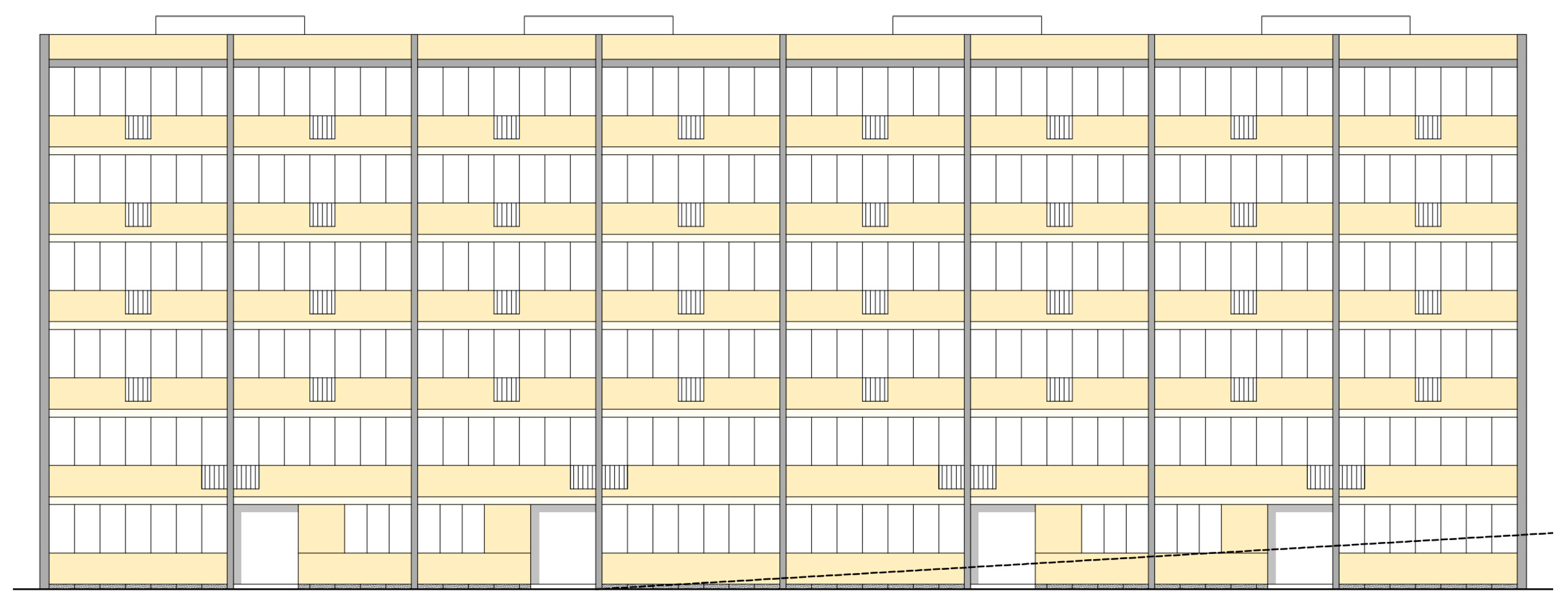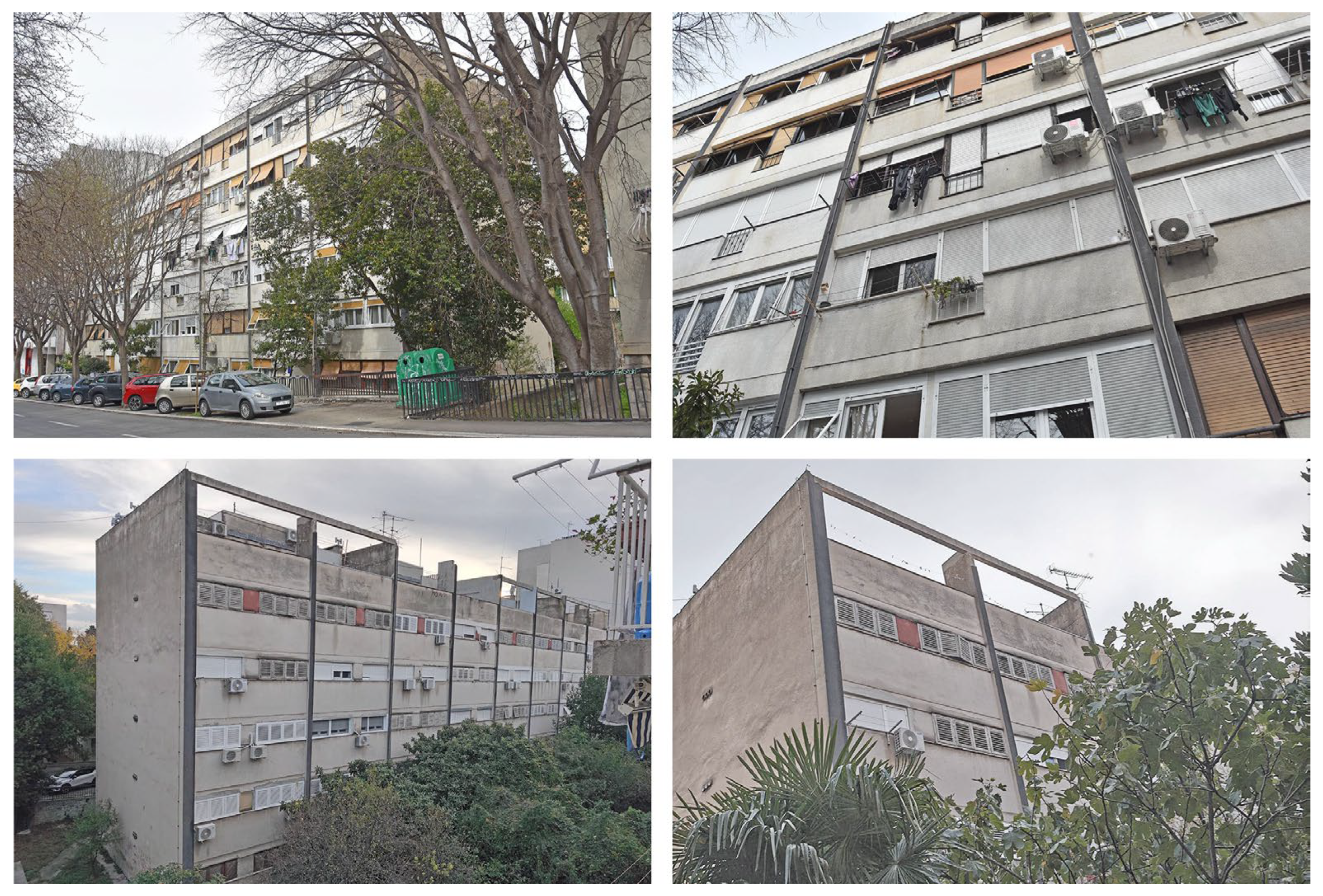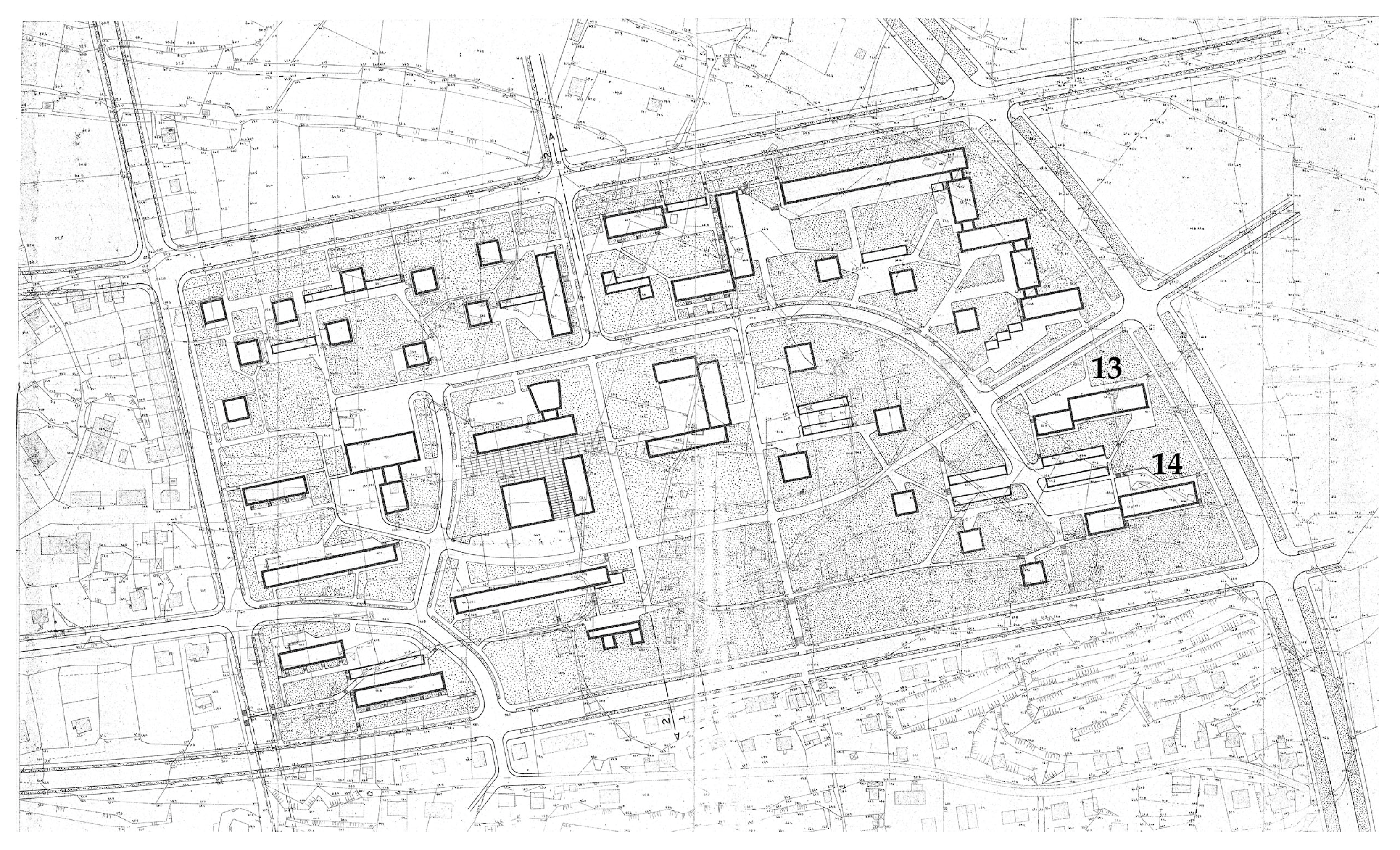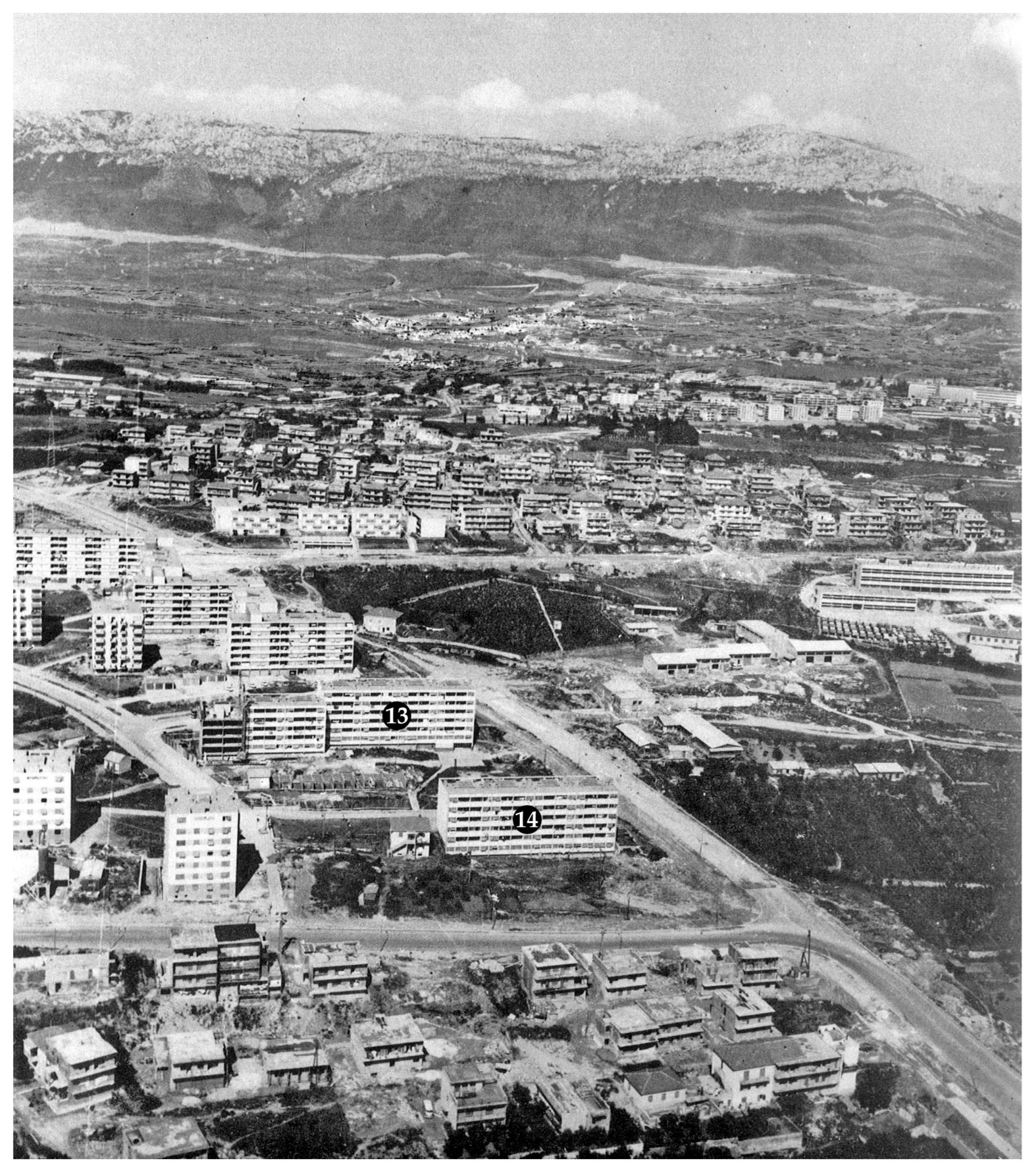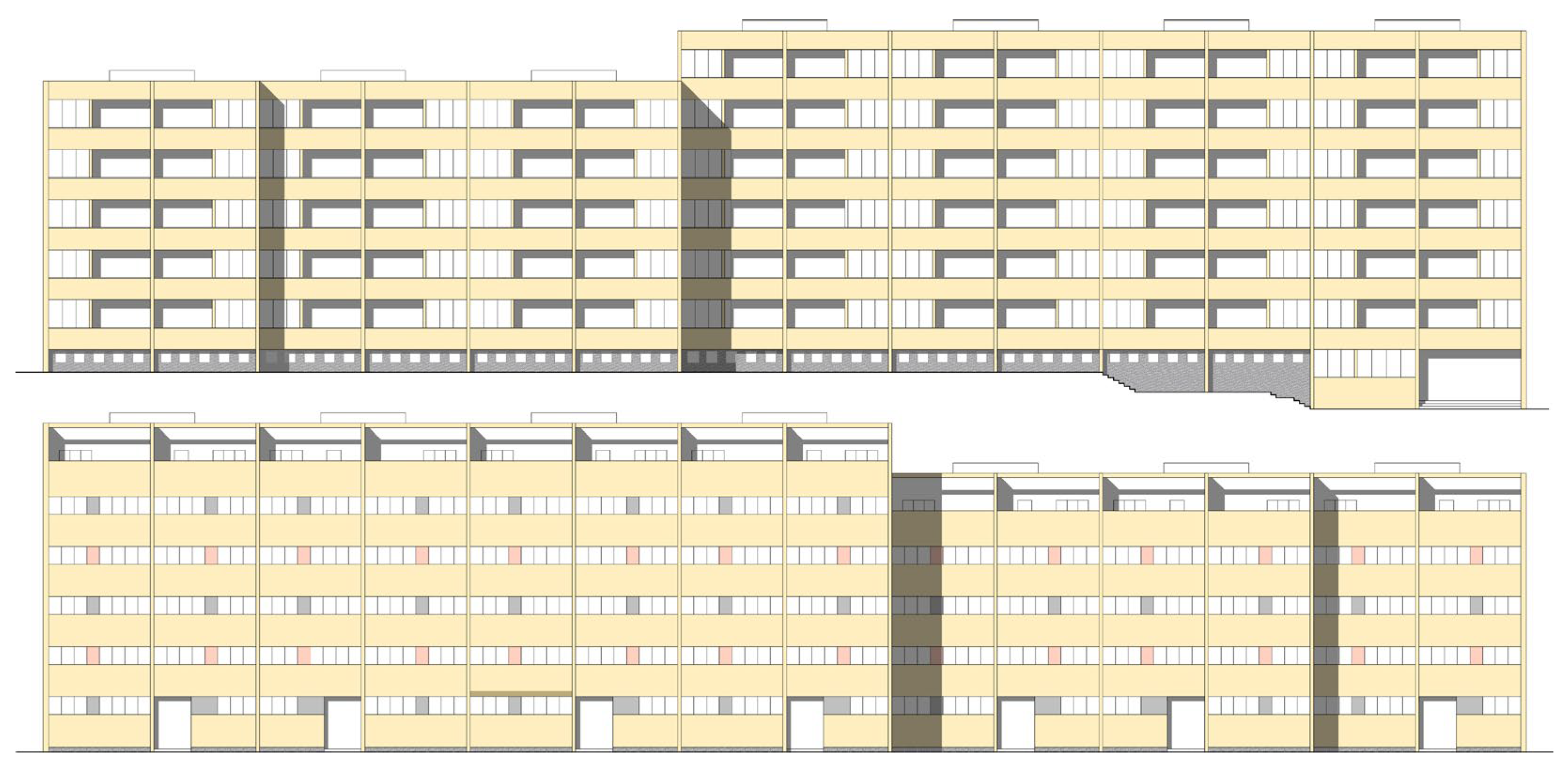

Architect Josip Vojnović: URBS 1 Standard Residential Buildings from the 1960s in Split, Croatia


Abstract
1. Introduction
2. Professional Background of Architect Josip Vojnović
3. Mass Housing Development in Europe in 1950s and 1960s
4. Materials and Methods
5. Rational Residential Buildings Type URBS 1
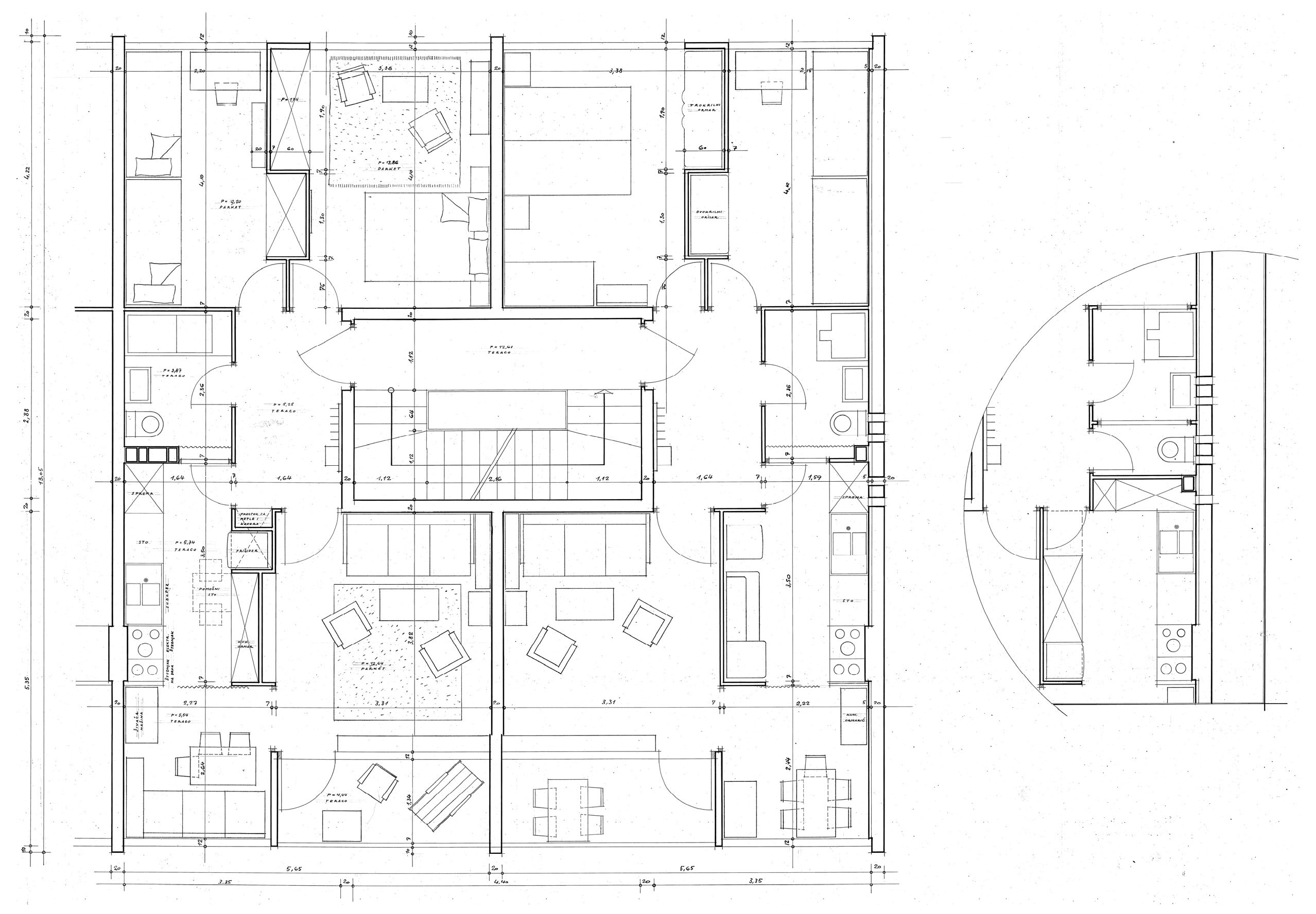
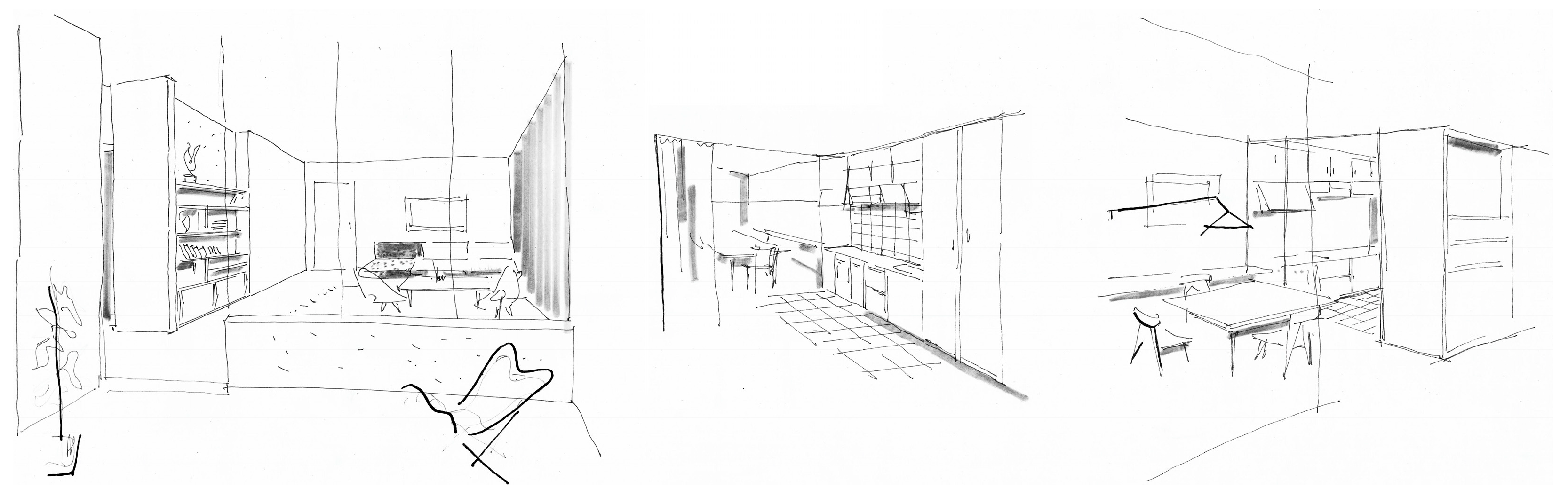
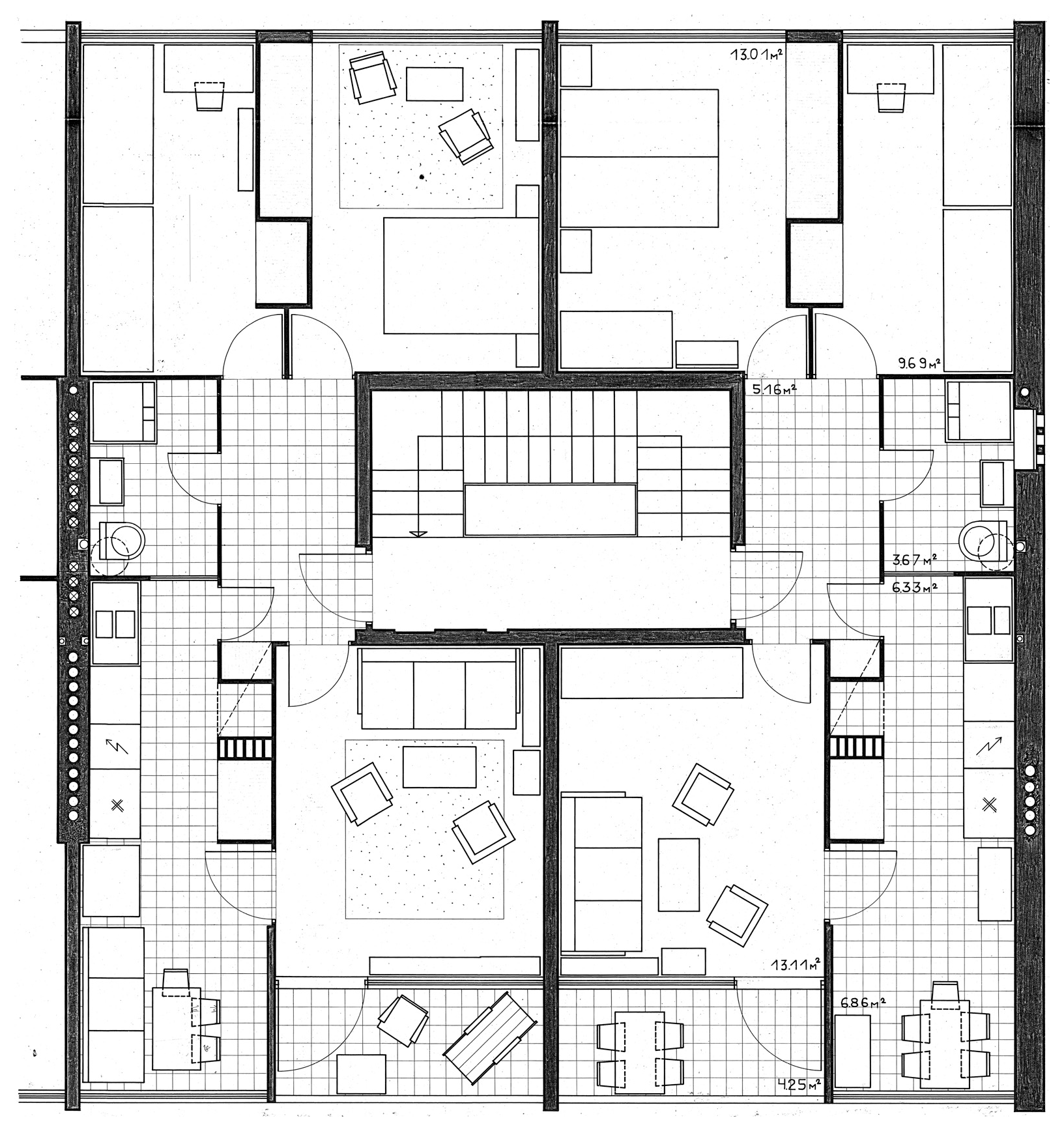
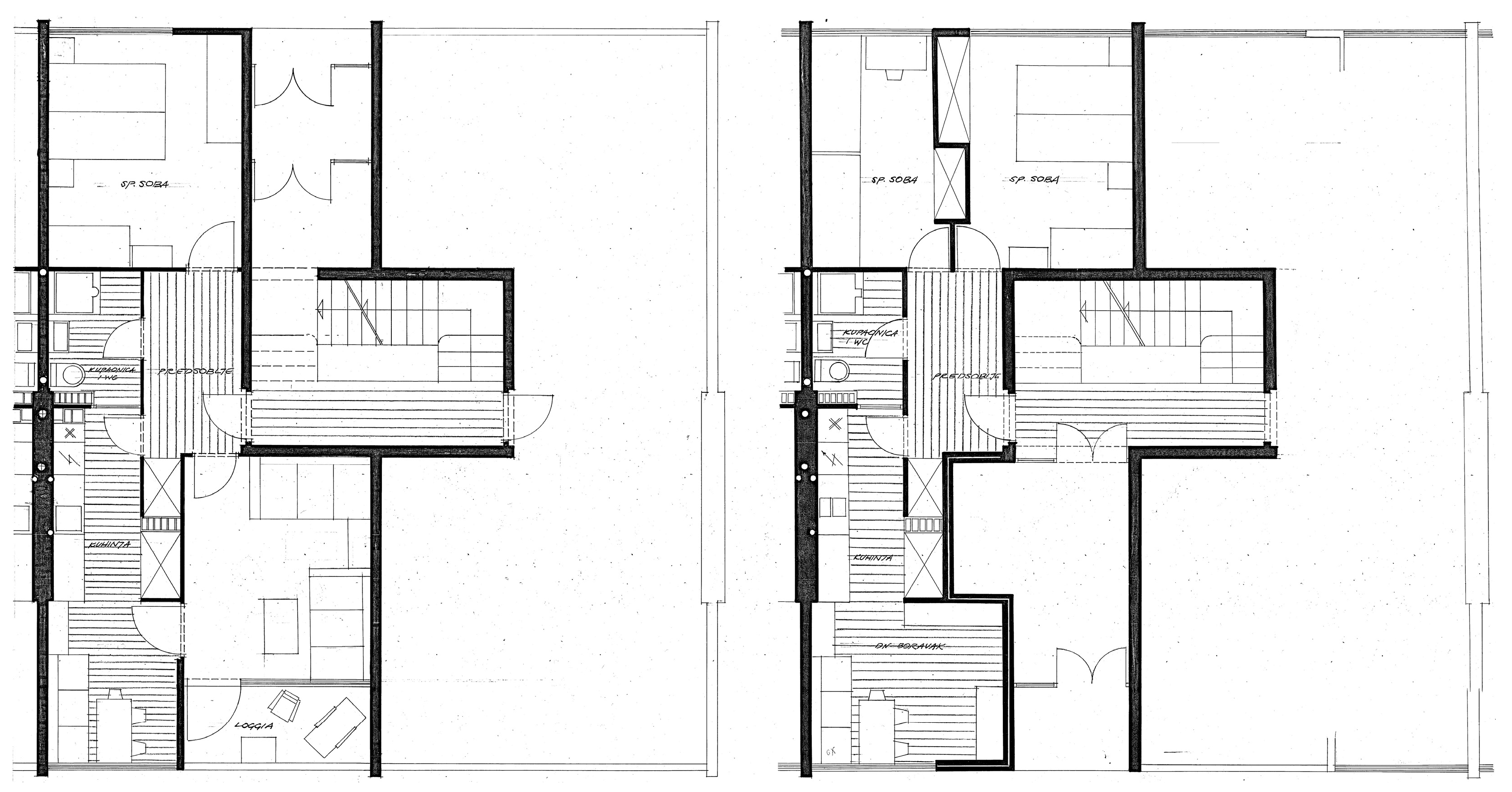
5.1. Typical Housing Unit
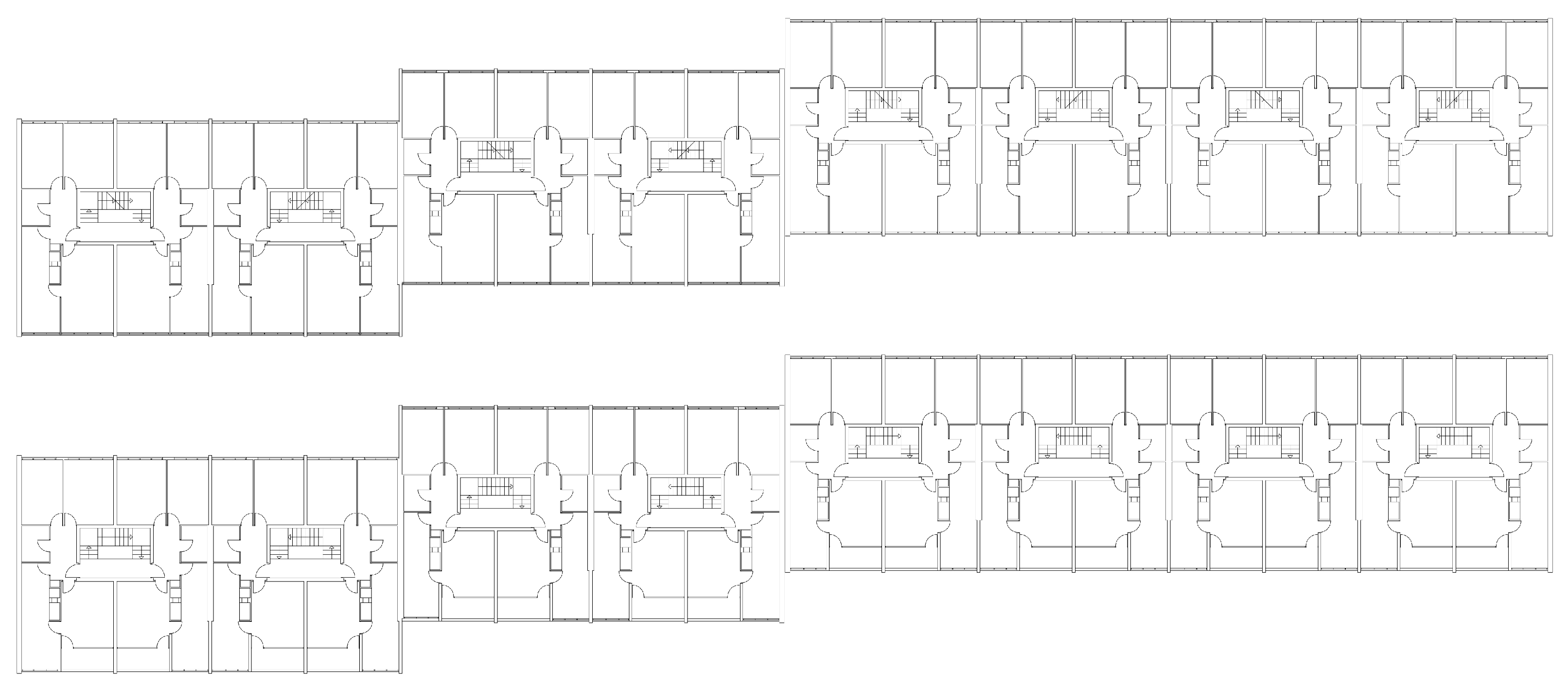
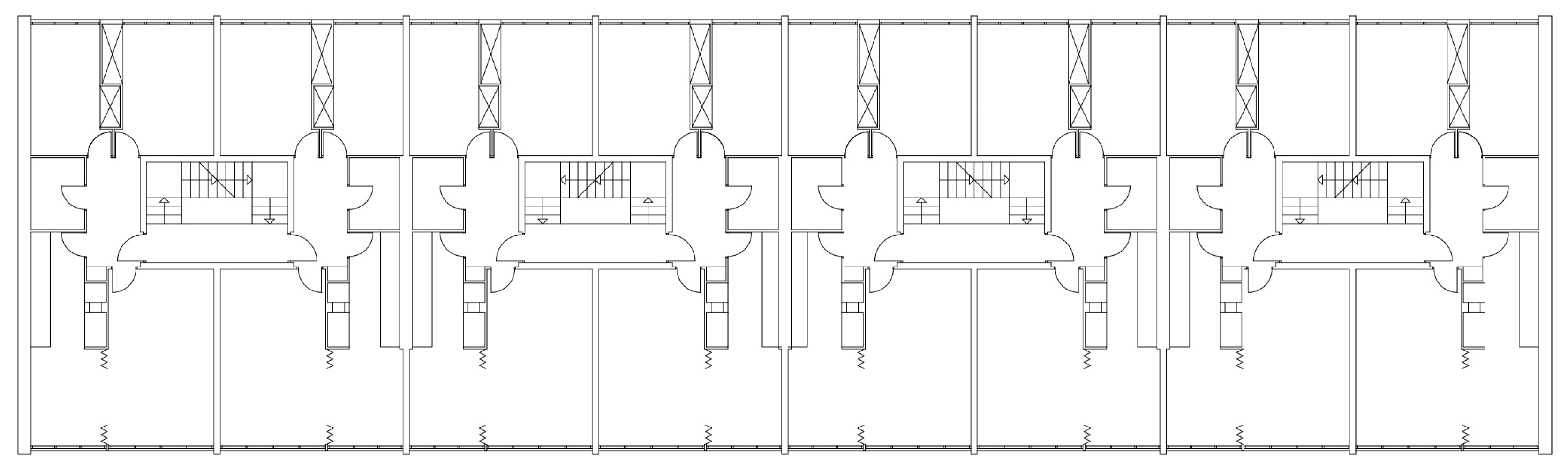
5.2. Typical Building Floor Plans
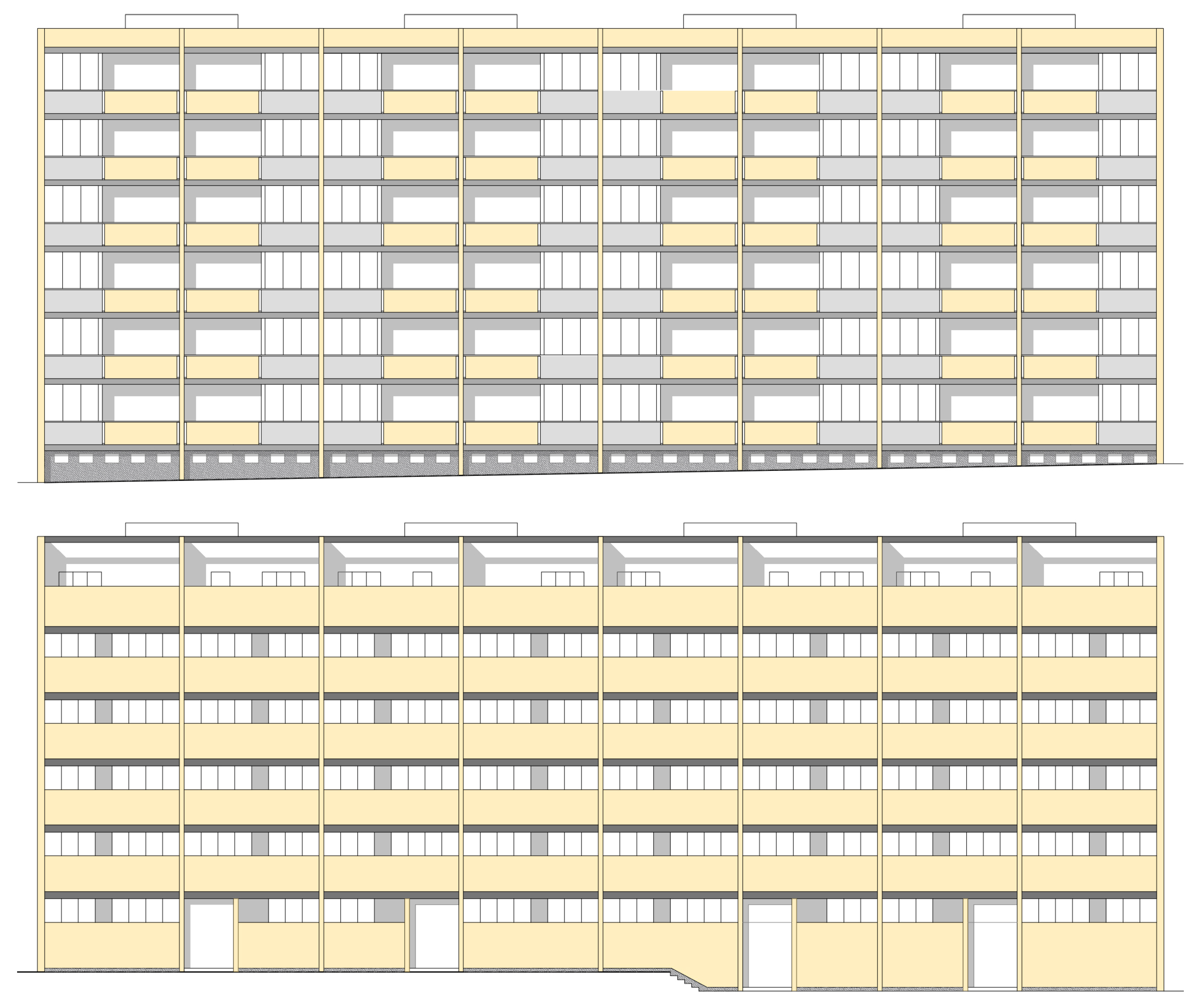
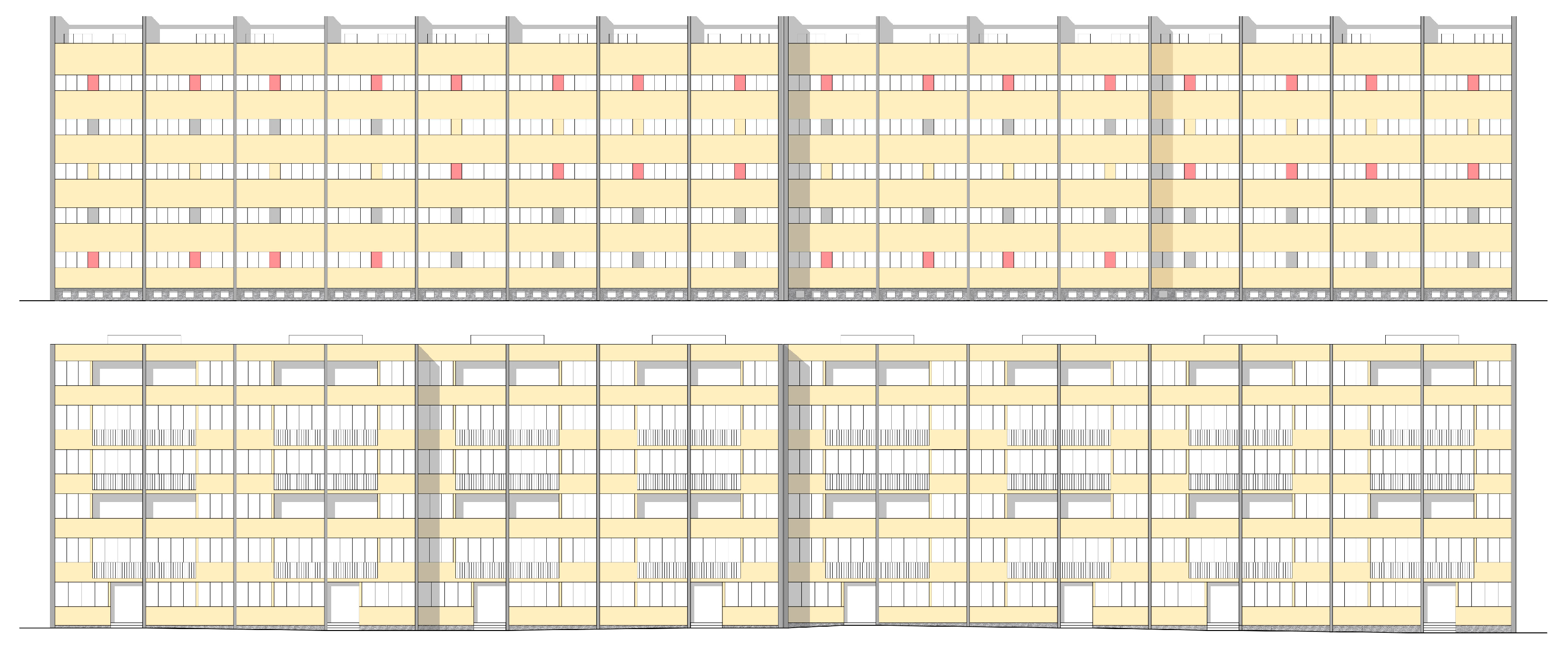
5.3. Typical Building Façades
6. Analysis of URBS 1 Buildings Built in Split
6.1. URBS 1 Residential Buildings in Residential Area Along Osječka Street—Project in 1959, Construction from 1960 to 1962
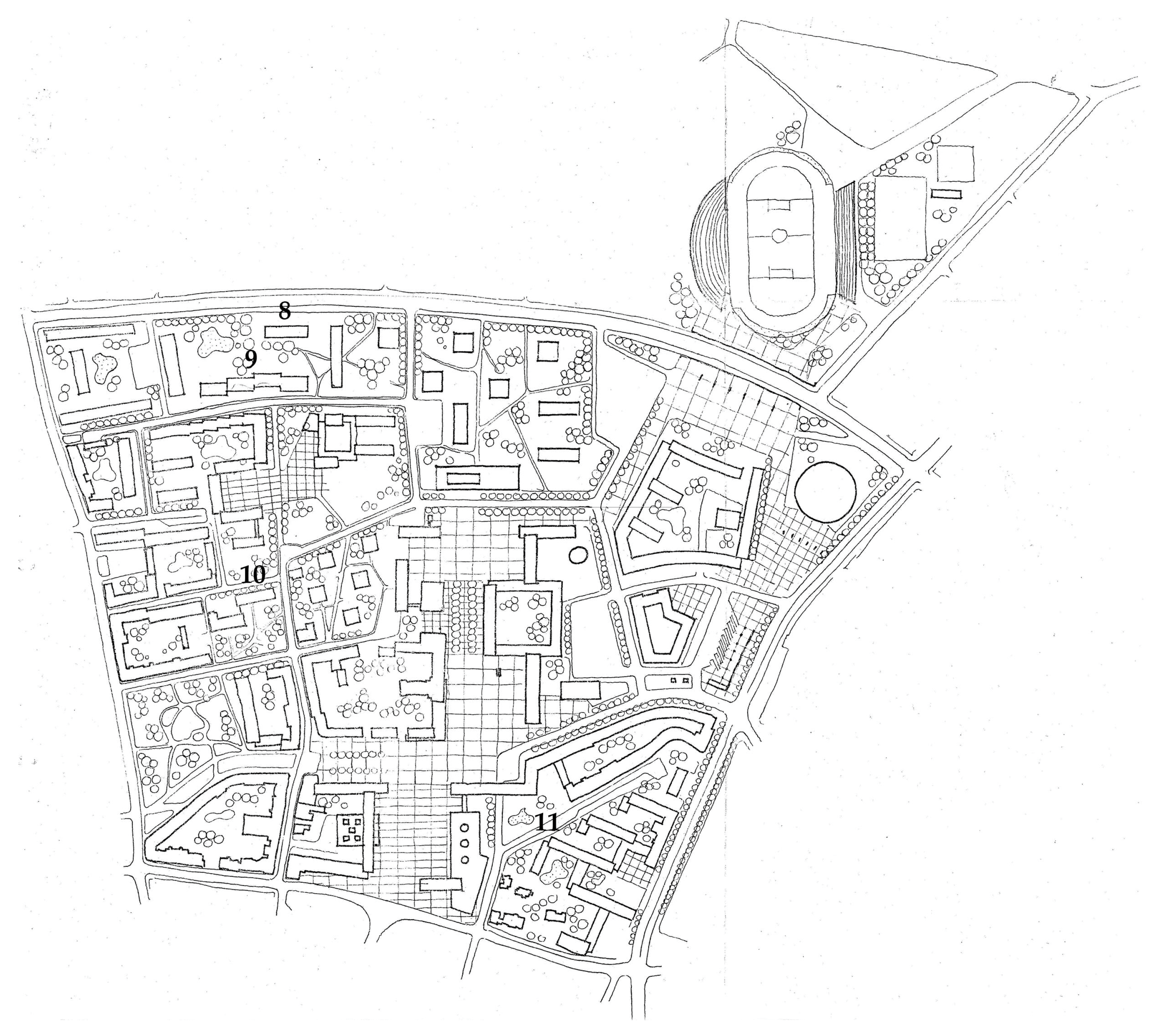
6.1.1. Urban Context
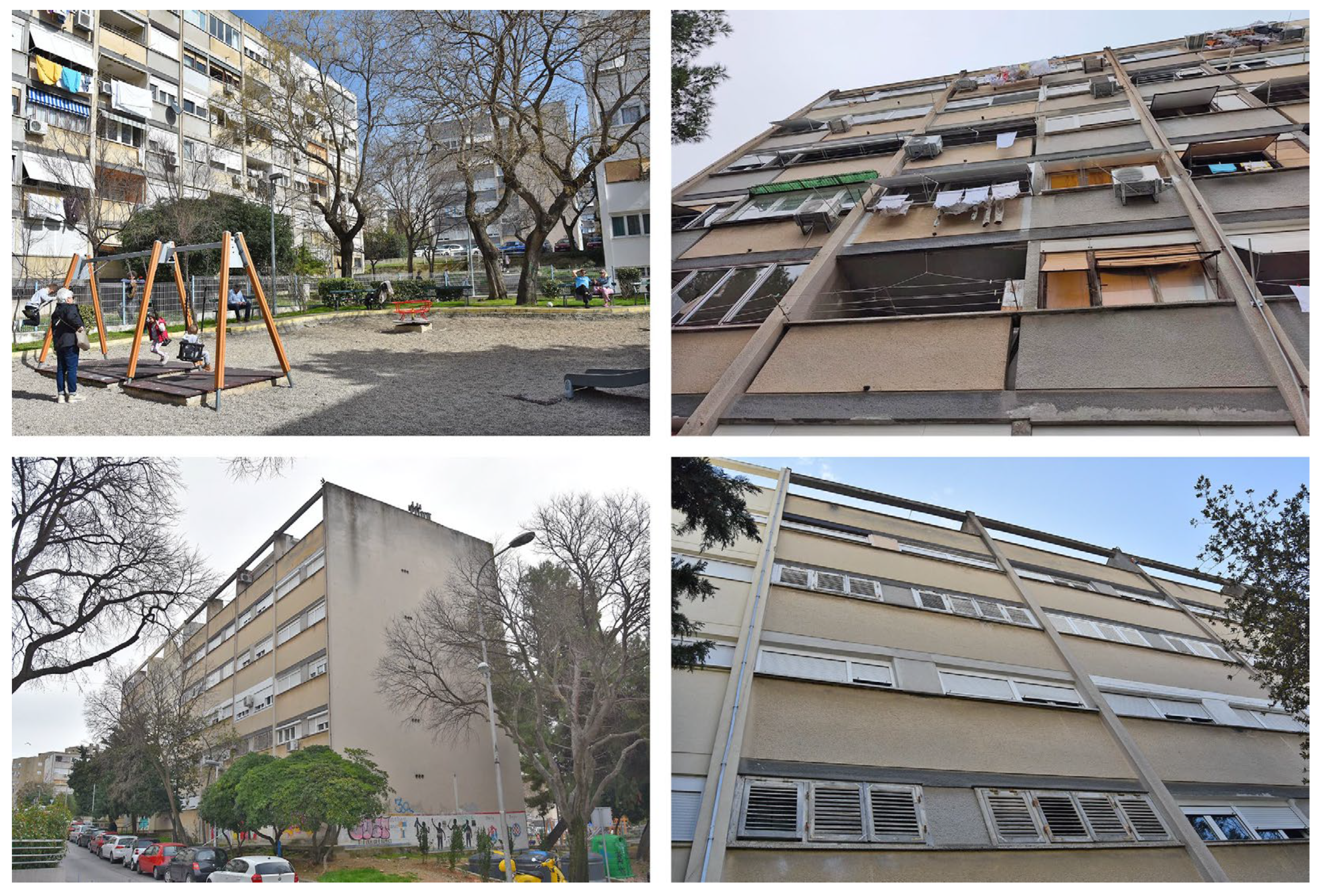
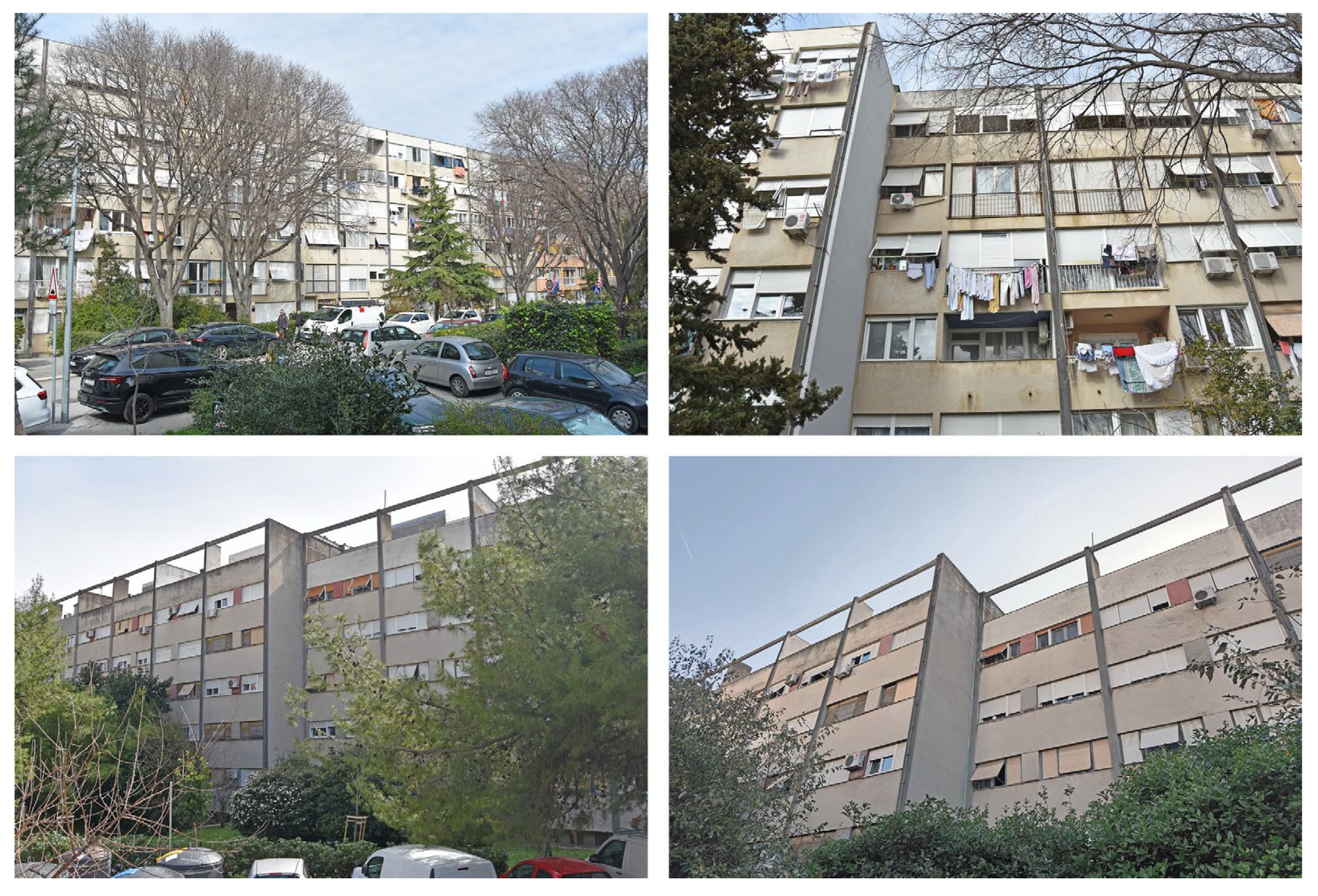
6.1.2. Typical URBS 1 Residential Building on Krstulovićeva Street
6.2. URBS 1 Residential Buildings in Skalice City District—Project in 1960, Construction in 1962
6.2.1. Urban Context
6.2.2. Typical URBS 1 Residential Building on Put Skalica Street
6.3. Residential Building URBS 1 on Pojišanska Street—Project in 1959, Construction in 1961
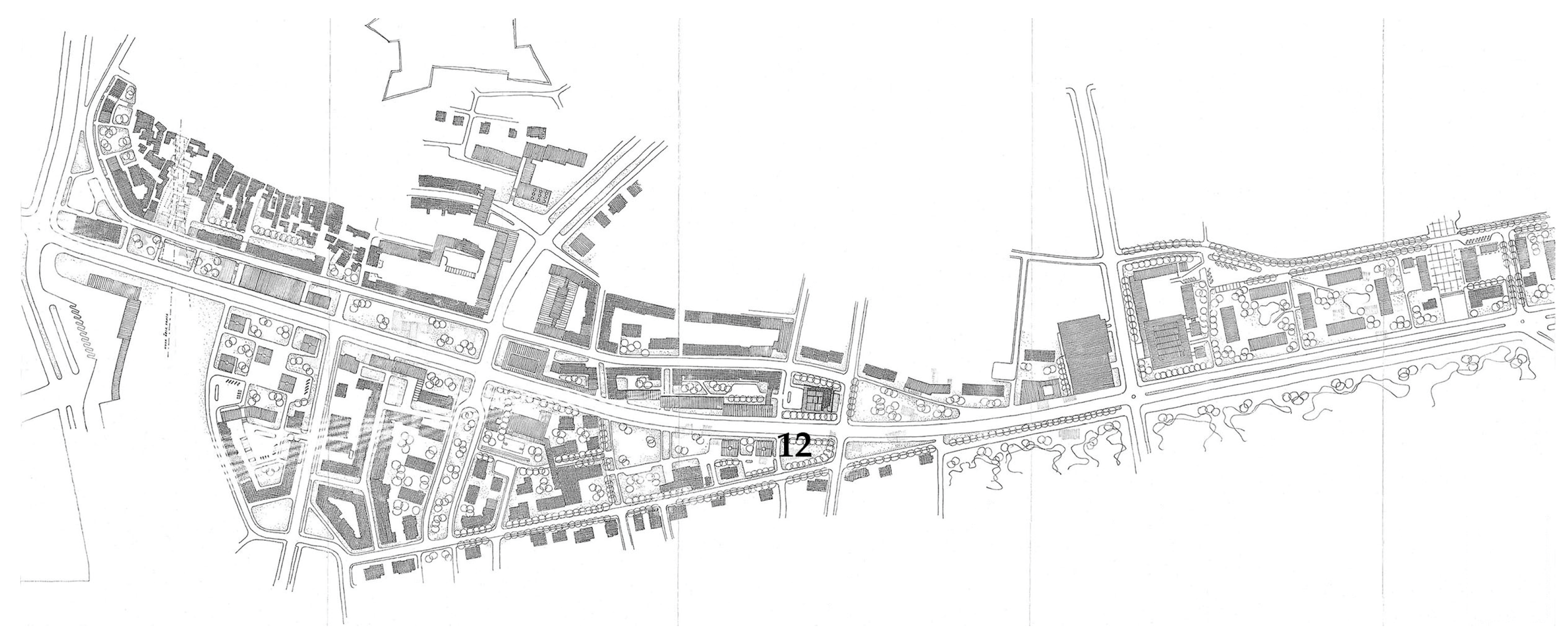
6.3.1. Urban Context
6.3.2. URBS 1 Residential Building on Pojišanska Street
6.4. URBS 1 Residential Buildings in the Lokve City District—Project in 1965, Construction in 1967
6.4.1. Urban Context
6.4.2. Typical URBS 1 Residential Building on Jurja Šižgorića Street
6.5. URBS 1 Buildings Built in Šibenik, Omiš and Ploče
7. Conclusions
Author Contributions
Funding
Institutional Review Board Statement
Informed Consent Statement
Data Availability Statement
Conflicts of Interest
References
- Tušek, D. Architectural Competitions in Split 1945–1995; Split Society of Architects, Faculty of Civil Engineering, University of Split: Split, Croatia, 1996. [Google Scholar]
- Gamulin, M. Residential Architecture in Split from 1945 Until Today; Arhitektura, 1–3 (208–210); Savez Društava Arhitekata Hrvatske: Zagreb, Croatia, 1989–1991; pp. 28–32. Available online: https://arhitekti.eindigo.net/?pr=iiif.v.a&id=11200&tify={%22pages%22:[30],%22view%22:%22info%22} (accessed on 20 September 2025).
- Muljačić, S. Construction of Split 1944–1969; URBS 8; Urban Planning Bureau-Split: Split, Croatia, 1969; pp. 7–42.
- Muljačić, S. Construction of Split 1944–1990. In Split in Tito’s Era/Memento on the 110th Anniversary of the Birth, 22nd Anniversary of the Death of Josip Broz Tito and the 58th Anniversary of the Liberation of Split; Čurin, M., Ed.; Society “Josip Broz Tito”—Split/The Association of Anti-Fascist Fighters and Anti-Fascists—Split: Split, Croatia, 2002; pp. 200–244. [Google Scholar]
- Tušek, D. (Ed.) Split 20th Century Architecture. A Guidebook; Faculty of Civil Engineering, Architecture and Geodesy, University of Split: Split, Croatia, 2011. [Google Scholar]
- Tušek, D. A Lexicon of Split Modern Architecture; Faculty of Civil Engineering, Architecture and Geodesy, University of Split: Split, Croatia, 2018. [Google Scholar]
- Rošin, J. Josip Vojnović and Split 3. In The Arthitects Unplugged; Alfa: Zagreb, Croatia, 2023; pp. 393–401. [Google Scholar]
- Perković, L. Review of the Architectural Achievements of the Urban Planning Bureau; URBS 7; Urban Planning Bureau-Split: Split, Croatia, 1967; pp. 29–46.
- Works of the Urban Planning Bureau 1947–1967: Architectural Projects; URBS 7; Urban Planning Bureau-Split: Split, Croatia, 1967; pp. 74–80.
- Arheološka, Arhitektonska I Likovna Baština. In Split. Hrvatska Enciklopedija, Mrežno Izdanje. Leksikografski Zavod Miroslav Krleža. 2013–2025. Available online: https://www.enciklopedija.hr/clanak/split (accessed on 4 March 2025).
- Vojnović, J. Chronological List of Professional, Scientific and Educational Work: Period from 1954 to the Present; Archives of Faculty of Civil Engeenering, Architecture and Geodesy in Split: Split, Croatia, 1997. [Google Scholar]
- Tušek, D. Josip Vojnović, 1929–2008. In Čovjek I Prostor, 1–2; Croatian Architects’ Association: Zagreb, Croatia, 2008; p. 75. Available online: https://arhitekti.eindigo.net/?pr=iiif.v.a&id=11287&tify={%22pages%22:[77],%22panX%22:0.733,%22panY%22:0.681,%22view%22:%22info%22,%22zoom%22:0.589} (accessed on 4 March 2025).
- In Memoriam: Architect Josip Vojnović. Available online: https://dugirat.com/kultura/68-urbanizam/5895-in-memoriam-arhitekt-josip-vojnovi-v15-5895 (accessed on 4 March 2025).
- Vojnović, J. Rationalisation and Evolution of Housing and Communal Construction in the Processes of Planning, Organisation and Programming. Doctoral Dissertation, Faculty of Architecture, University of Zagreb, Zagreb, Croatia, 1977. [Google Scholar]
- Glendinning, M. Mass Housing: Modern Architecture and State Power—A Global History, 1st ed.; Bloomsbury: London, UK, 2021. [Google Scholar]
- Hess, D.B.; Tammaru, T.; van Ham, M. (Eds.) Lessons Learned from a Pan-European Study of Large Housing Estates: Origin, Trajectories of Change and Future Prospects Housing. In Estates in Europe: Poverty, Ethnic Segregation and Policy Challenges; Springer: Cham, Switzerland, 2018; pp. 3–34. [Google Scholar] [CrossRef] [Scilit]
- Monclús, J.; Díez Medina, C. Modernist housing estates in European cities of the Western and Eastern Blocs. Plan. Perspect. 2016, 31, 533–562. [Google Scholar] [CrossRef] [Scilit]
- Mumford, E. CIAM and Its Outcomes. Urban Plan. 2019, 4, 291–298. [Google Scholar] [CrossRef] [Scilit]
- Frampton, K. Modern Architecture: A Critical History, 3rd ed.; Thames & Hudson: London, UK, 2000. [Google Scholar]
- Vezilić Strmo, N.; Delić, A.; Kincl, B. Causes of Problems in the Existing Housing Stock in Croatia. Prostor 2013, 21, 340–349. [Google Scholar]
- Mrčela, V. Selected Aspects of Supply and Demand in Yugoslav Housing Construction from 1945 to the Present. Covjek. Prost. 1981, 344, 13–15. [Google Scholar]
- Dekker, K.; Van Kempen, R. Large Housing Estates in Europe: Current Situation and Developments. Tijdschr. Voor Econ. Soc. Geogr. 2004, 95, 570–577. [Google Scholar] [CrossRef] [Scilit]
- National Archives in Split. HR-DAST-119 Urban Planning Institute of Dalmatia—Split, Sign. 2.7., 188/id Typical Residential Building; National Archives in Split: Split, Croatia, 1958.
- National Archives in Split. HR-DAST-119 Urban Planning Institute of Dalmatia—Split, Sign. 2.7., 188/po Typical Residential Building; National Archives in Split: Split, Croatia, 1958.
- National Archives in Split. HR-DAST-119 Urban Planning Institute of Dalmatia—Split, Sign. 2.7., 265/po Typical d Residential Building URBS 1A, Rade Končara Street, Split; National Archives in Split: Split, Croatia, 1959.
- National Archives in Split. HR-DAST-119 Urban Planning Institute of Dalmatia—Split, Sign. 2.7., 271-V7/po Typical Residential Building URBS-1, V7, Vrzov Dolac Street, Split; National Archives in Split: Split, Croatia, 1959.
- National Archives in Split. HR-DAST-119 Urban Planning Institute of Dalmatia—Split, Sign. 2.7., 299/gl Typical Residential Building URBS 1A, “S-4”, Skalice, Split; National Archives in Split: Split, Croatia, 1960.
- National Archives in Split. HR-DAST-119 Urban Planning Institute of Dalmatia—Split, Sign. 2.7., 299/gl Typical Residential Building URBS 1A, “S-5”, Skalice, Split; National Archives in Split: Split, Croatia, 1960.
- National Archives in Split. HR-DAST-119 Urban Planning Institute of Dalmatia—Split, Sign. 2.7., 299/gl Typical Residential Building URBS 1A, “S-6”, Skalice, Split; National Archives in Split: Split, Croatia, 1960.
- National Archives in Split. HR-DAST-119 Urban Planning Institute of Dalmatia—Split, Sign. 2.7., 446/gl Typical Residential Building URBS-1, Split, Lj. Posavskog Street; National Archives in Split: Split, Croatia, 1963.
- National Archives in Split. HR-DAST-119 Urban Planning Institute of Dalmatia—Split, Sign. 2.7., 615/1-gl Residential Building URBS-1, No. 37, Gripe-Lokve, Split; National Archives in Split: Split, Croatia, 1965.
- National Archives in Split. HR-DAST-119 Urban Planning Institute of Dalmatia—Split, Sign. 2.7., 615/2-gl Residential Building URBS-1, No. 37, Gripe-Lokve, Split; National Archives in Split: Split, Croatia, 1965.
- National Archives in Split. HR-DAST-119 Urban Planning Institute of Dalmatia—Split, Sign. 2.7., 616/1-gl Residential Building URBS-1, Lokve, Split; National Archives in Split: Split, Croatia, 1965.
- National Archives in Split. HR-DAST-119 Urban Planning Institute of Dalmatia—Split, Sign. 2.7., 616/2-gl Residential Building URBS-1, Lokve, Split; National Archives in Split: Split, Croatia, 1965.
- Čičin-Šain, Č.; Pervan, B.; Vekarić, Z. The Directive Regulatory Basis of the City of Split; Arhitektura 5–8; Savjet Društava Arhitekata Jugoslavije: Zagreb, Croatia, 1951. [Google Scholar]
- The Urban Planning Institute of Dalmatia-Split. Master Urban Plan of Split; Urban Planning Institute of Dalmatia: Split, Croatia, 1978. [Google Scholar]
- Perković, L. For a More Rational and Social Conception of Architecture; URBS 1, Urban Planning Bureau-Split: Split, Croatia, 1957; pp. 43–46. [Google Scholar]
- Muljačić, S. Chronological Overview of the Construction of Split in the 19th and 20th Centuries (1806–1958). In Proceedings of the Union of Associations of Engineers and Technicians in Split; Zajednica Udruga Inženjera i Tehničara u Splitu: Split, Croatia, 1958; pp. 61–98. [Google Scholar]
- Marasović, T. Development of the Residential House in Split: From the Early Middle Ages to the Present Day. In Proceedings of the Union of Associations of Engineers and Technicians Split; Zajednica Udruga Inženjera i Tehničara u Splitu: Split, Croatia, 1958; pp. 97–110. [Google Scholar]
- Sumić, D.; Perković, L. Housing Situation in Split/Current State, Opportunities and Paths to Resolution. In Proceedings of the Union of Associations of Engineers and Technicians in Split; Zajednica Udruga Inženjera i Tehničara u Splitu: Split, Croatia, 1958; pp. 111–132. [Google Scholar]
- Pervan, B. Organisation of Residential Construction in Split; URBS 1; Urban Planning Bureau-Split: Split, Croatia, 1957; pp. 47–50.
- To Determine the Final Residential Development Plan. In Slobodna Dalmacija (12.3.1956); Nakladni Zavod Slobodna Dalmacija: Split, Croatia, 1956; p. 4.
- Cost-Effective Designs. In Slobodna Dalmacija (29.3.1956); Nakladni Zavod Slobodna Dalmacija: Split, Croatia, 1956; p. 6.
- To Prioritise the Construction of Apartment Blocks. In Slobodna Dalmacija (4.4.1956); Nakladni Zavod Slobodna Dalmacija: Split, Croatia, 1956; p. 4.
- How to Address the Housing Issue. In Slobodna Dalmacija (1.-3.5.1956); Nakladni Zavod Slobodna Dalmacija: Split, Croatia, 1956; p. 12.
- To Draw on the Experience of Other Cities. In Slobodna Dalmacija (28.1.1957); Nakladni Zavod Slobodna Dalmacija: Split, Croatia, 1957; p. 4.
- More on Low-Cost Housing Construction. In Slobodna Dalmacija (9.11.1957); Nakladni Zavod Slobodna Dalmacija: Split, Croatia, 1957; p. 2.
- Chronological Review of the Construction of Split 1944–1969; URBS 8; Urban Planning Bureau-Split: Split, Croatia, 1969; pp. 47–101.
- Mudnić, P. VII-VIII Residential Unit; URBS 6; Urban Planning Bureau-Split: Split, Croatia, 1966; pp. 109–110.
- Ivan Lučić Lavčević, Split. Jugoslavia: 1948–1978; I. L. Lavčević: Split, Croatia, 1978. [Google Scholar]
- Kalogjera, B. Split—Study on Urban Regulation of the City Centre; URBS 3; Urban Planning Bureau-Split: Split, Croatia, 1959; pp. 9–32.
- Kalogjera, B. The New Town Centre; URBS 6; Urban Planning Bureau-Split: Split, Croatia, 1966; pp. 71–73.
- Kalogjera, B. “Skalice—Glavičine” Residential Unit; URBS 6; Urban Planning Bureau-Split: Split, Croatia, 1966; pp. 86–88.
- National Archives in Split. HR-DAST-119 Urban Planning Institute of Dalmatia—Split, Sign. 2.7., IV-D/2 Urban Regulation of the Skalice District, Preliminary Design; National Archives in Split: Split, Croatia, 1959.
- Graphic Attachment No. 9—Skalice Tabla; URBS 6; Urban Planning Bureau-Split: Split, Croatia, 1966.
- National Archives in Split. HR-DAST-119 Urban Planning Institute of Dalmatia—Split, Sign. 2.7., D-XXXIX Rade Končara Street, Preliminary Urban Plan; National Archives in Split: Split, Croatia, 1960.
- National Archives in Split. HR-DAST-119 Urban Planning Institute of Dalmatia—Split, Sign. 2.7., SP-XIII/5 Urban Design Project for the Gripe-Lokve Residential District; National Archives in Split: Split, Croatia, 1965.
- Družeić, M. “Gripe—Lokve” Residential Unit; URBS 6; Urban Planning Bureau-Split: Split, Croatia, 1966; pp. 103–105.
- Graphic Attachment No. 8—Lokve; URBS 6; Urban Planning Bureau-Split: Split, Croatia, 1966.
- Barišić Marenić, Z.; Perković Jović, V. Modernism in the Mediterranean: Omiš, Croatia, Urban and Architectural Development of the Dalmatian City in the Second Half of the 20th Century. Heritage 2023, 6, 3921–3984. [Google Scholar] [CrossRef] [Scilit]
- Kečkemet, D. City for Man; Book XXVII; The Croatian Society of Art Historians: Split, Croatia, 1981. [Google Scholar]
- Gotovac, F. Humanisation of Space. Slobodna Dalmacija, (1.-3.1.1963); Nakladni Zavod Slobodna Dalmacija: Split, Croatia, 1963; p. 7. [Google Scholar]
- Republic of Croatia; Croatian Bureau of Statistics. Decline in the Number of Households with Three or More Members, and Increase in Single-and Two-Person Households. Published on 31 May 2023. Available online: https://dzs.gov.hr/vijesti/pad-broja-kucanstava-od-tri-i-vise-clanova-a-porast-broja-samackih-i-dvoclanih-kucanstava/1565 (accessed on 20 January 2026).

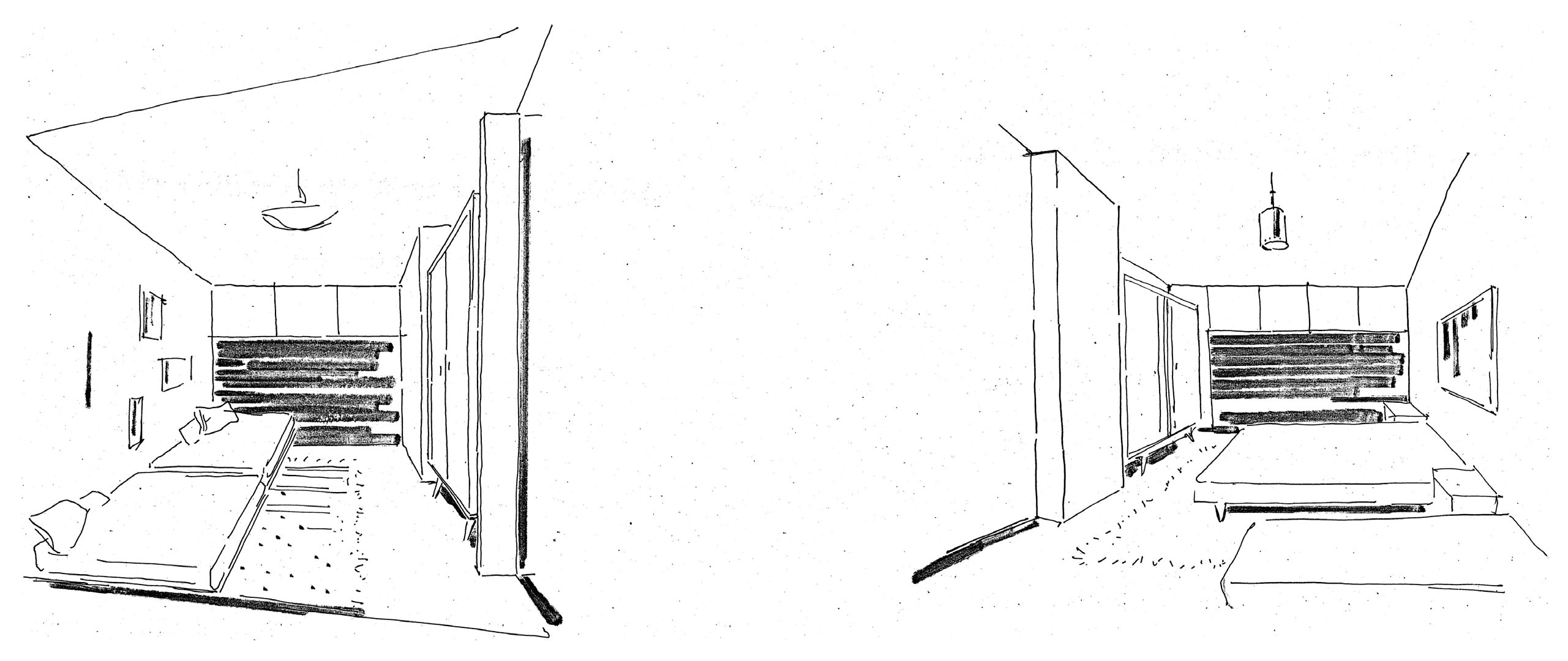


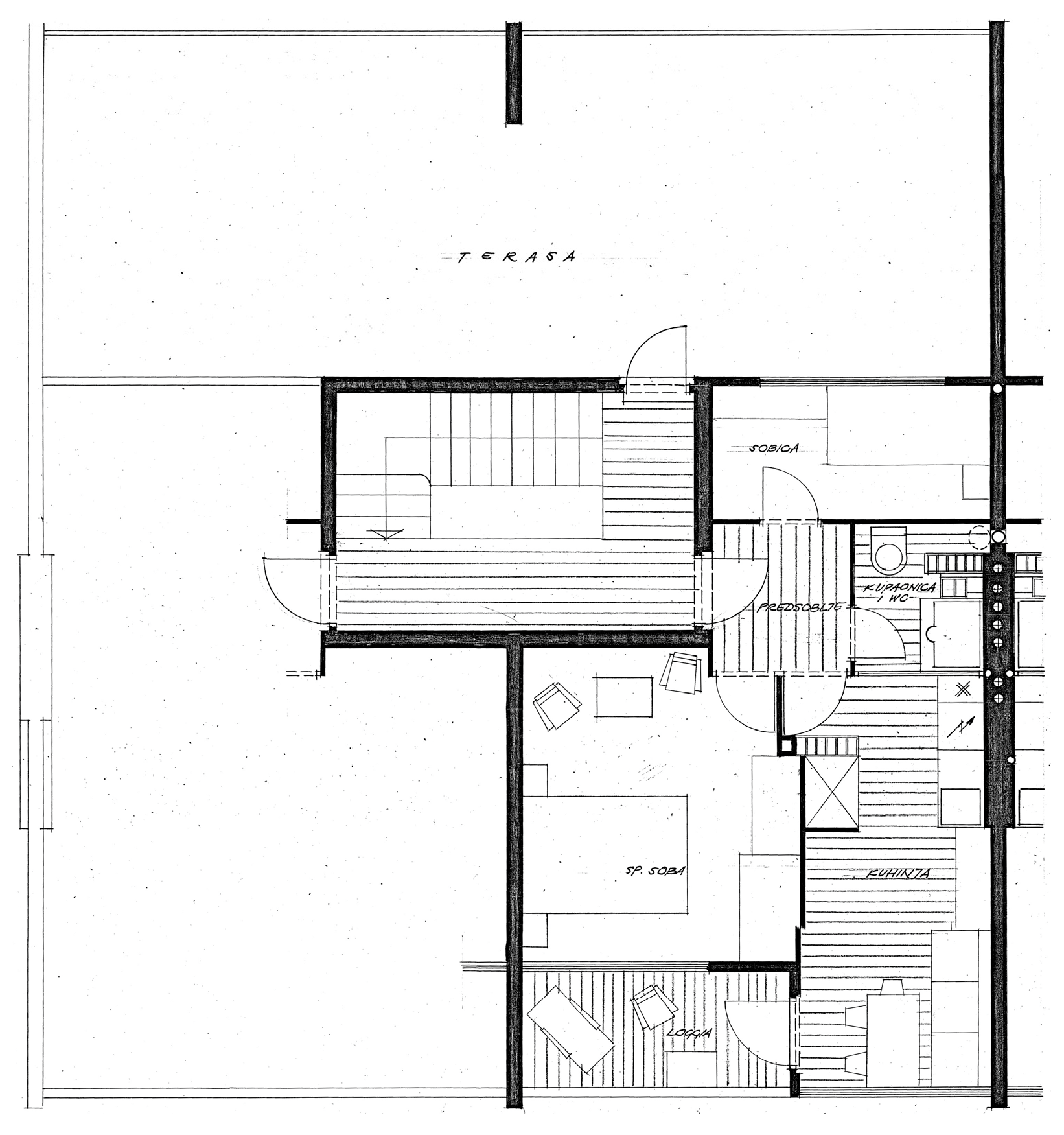


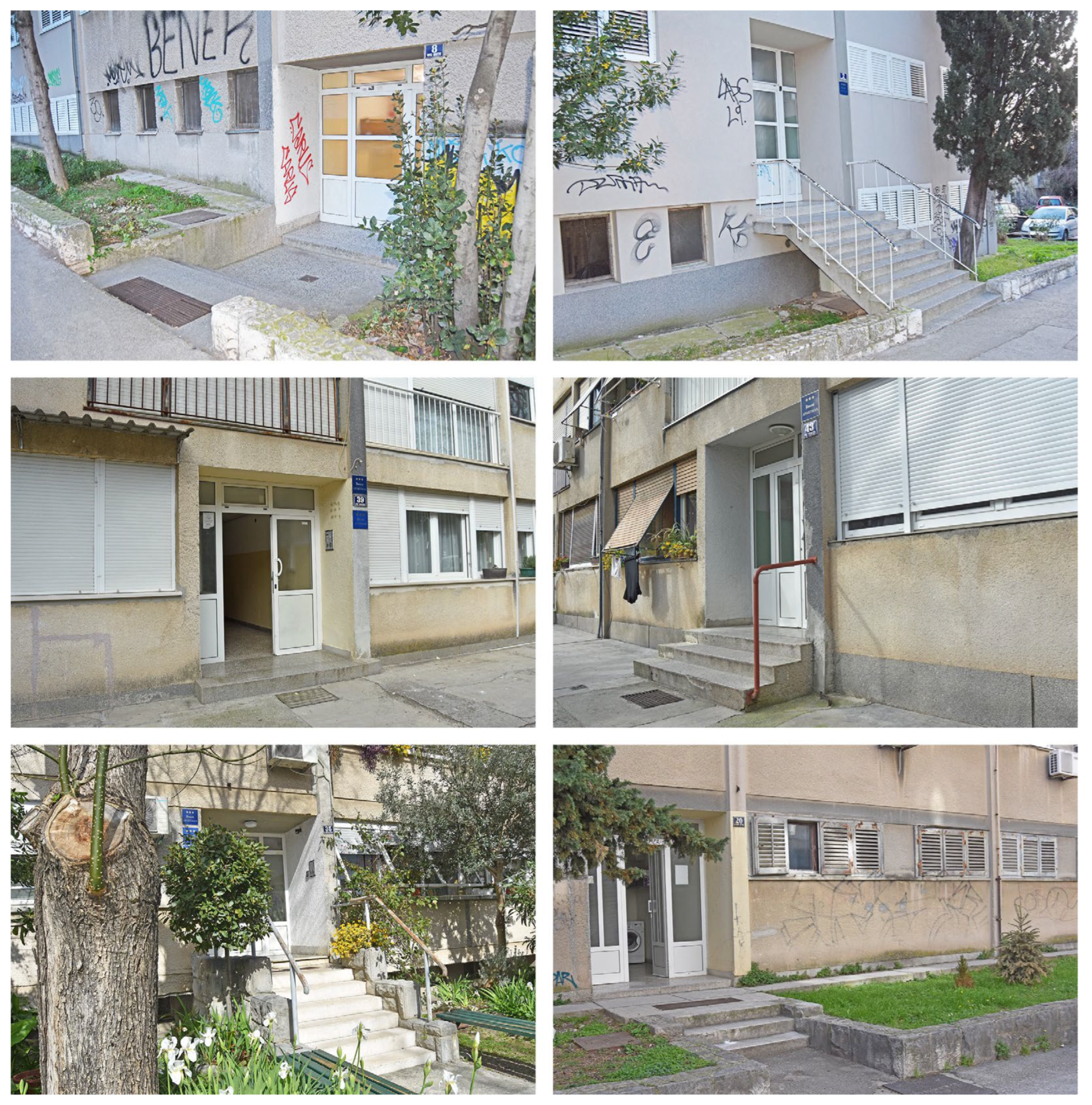


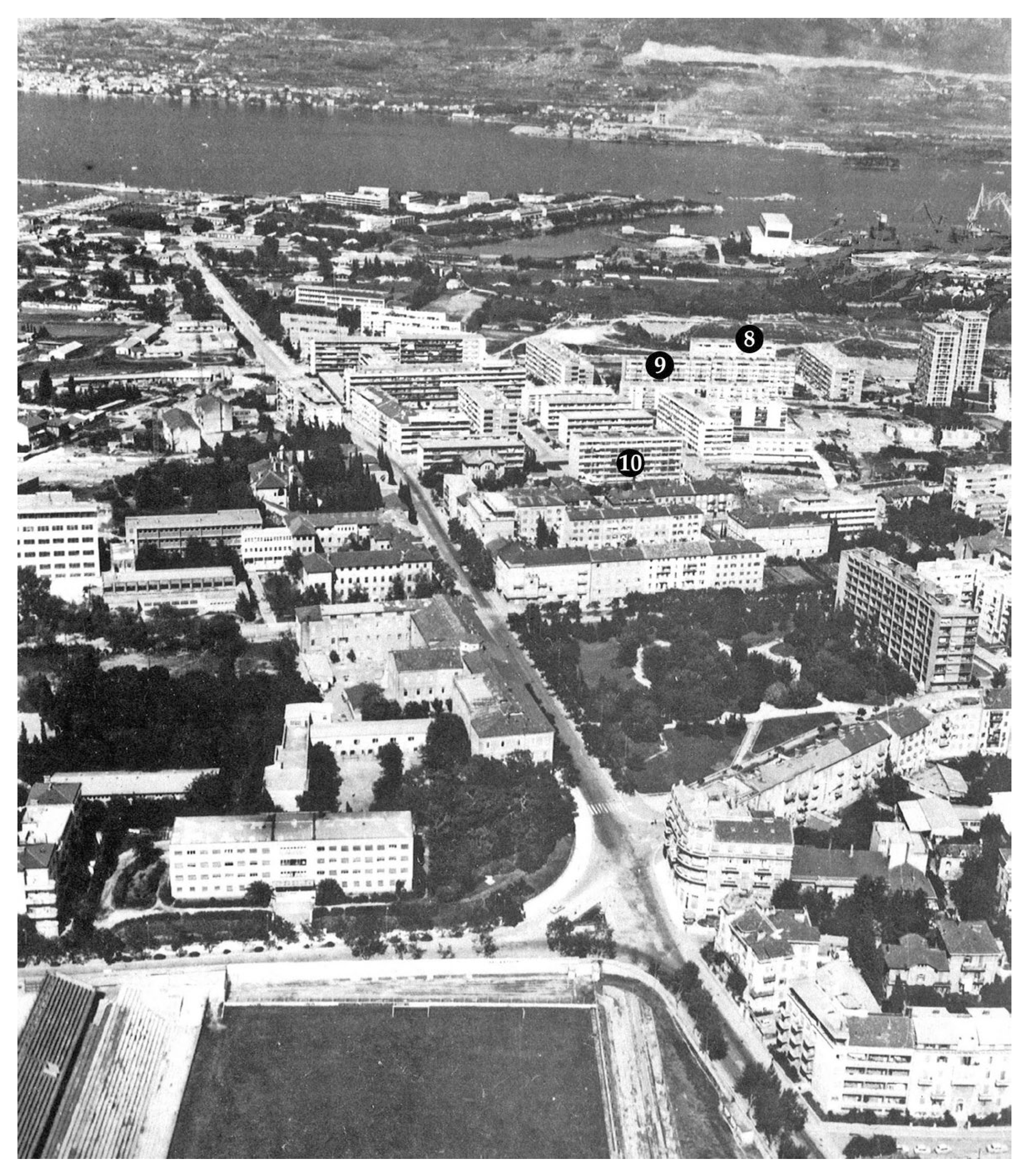


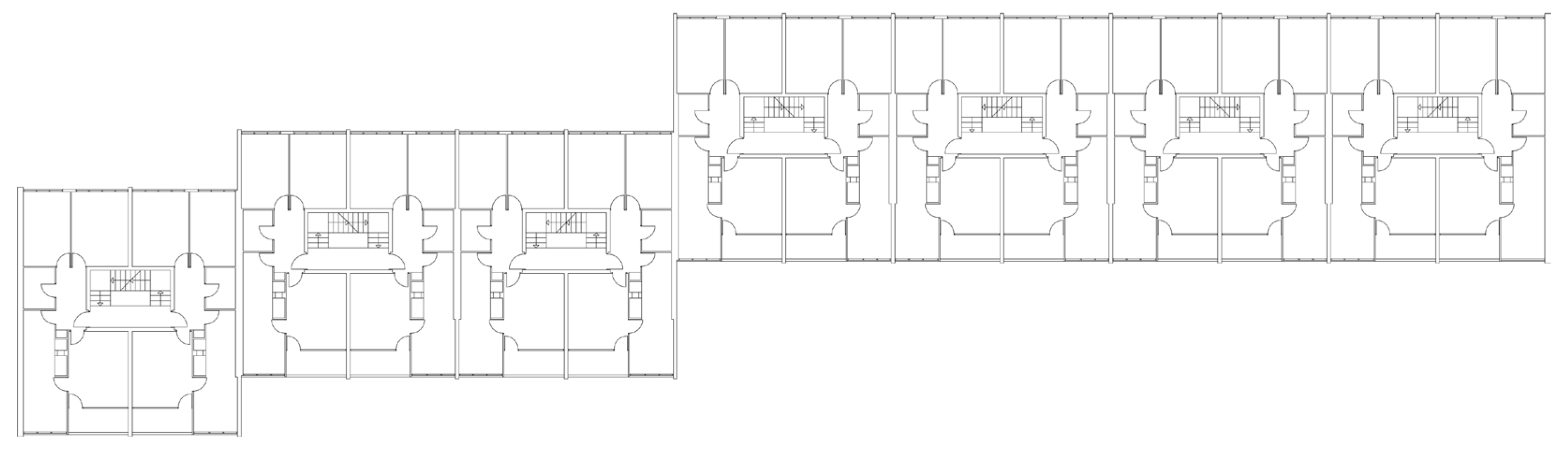

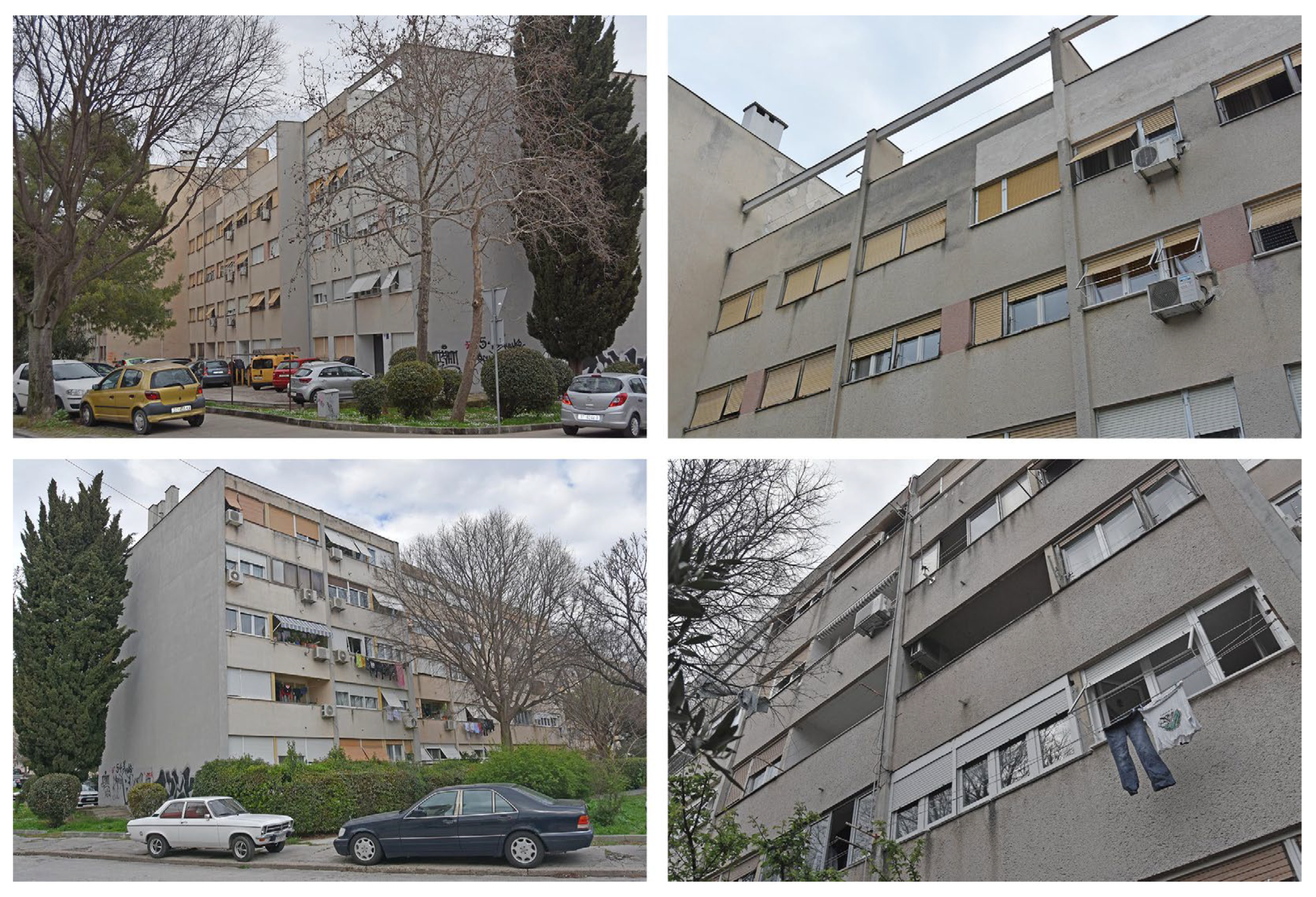

| 1. | Urban planning of residential neighborhoods influences the architectural design of buildings, so an apartment should be treated not only as part of a building but also as part of the urban design—as a unit of the residential neighborhood. |
| 2. | The location of a building should be chosen based on prior analysis, not intuitively. |
| 3. | The shape of a building’s floor plan is an important factor in cost savings. A narrower street frontage and a deeper floor plan (while maintaining the same building area) will result in a smaller wall surface and less work on the building’s façade. |
| 4. | The orientation and sunlight exposure of an apartment are important elements of good and economical housing. Southern orientation is the most favorable for the conditions in Split. |
| 5. | Purposeful design of shading devices and protection of the southern façade from the sun is essential. The use of loggias is a better solution than large windows, as loggias protect interior spaces from both wind and sun. |
| 6. | An apartment must be treated as a functional workspace. Practicality and the efficient use of time should be considered when designing apartments. Outdated concepts of residential space need to be replaced with new, modern, and rational solutions. |
| 7. | Apartment furnishings should consist of modern furniture rather than large, bulky solid-wood pieces. |
| 8. | Room dimensions should be minimal, but provide view of the surrounding natural outdoor spaces. |
| 9. | Façade design should be given careful attention, as living in a pleasant environment is a fundamental prerequisite for good and comfortable housing. |
| SPLIT | |
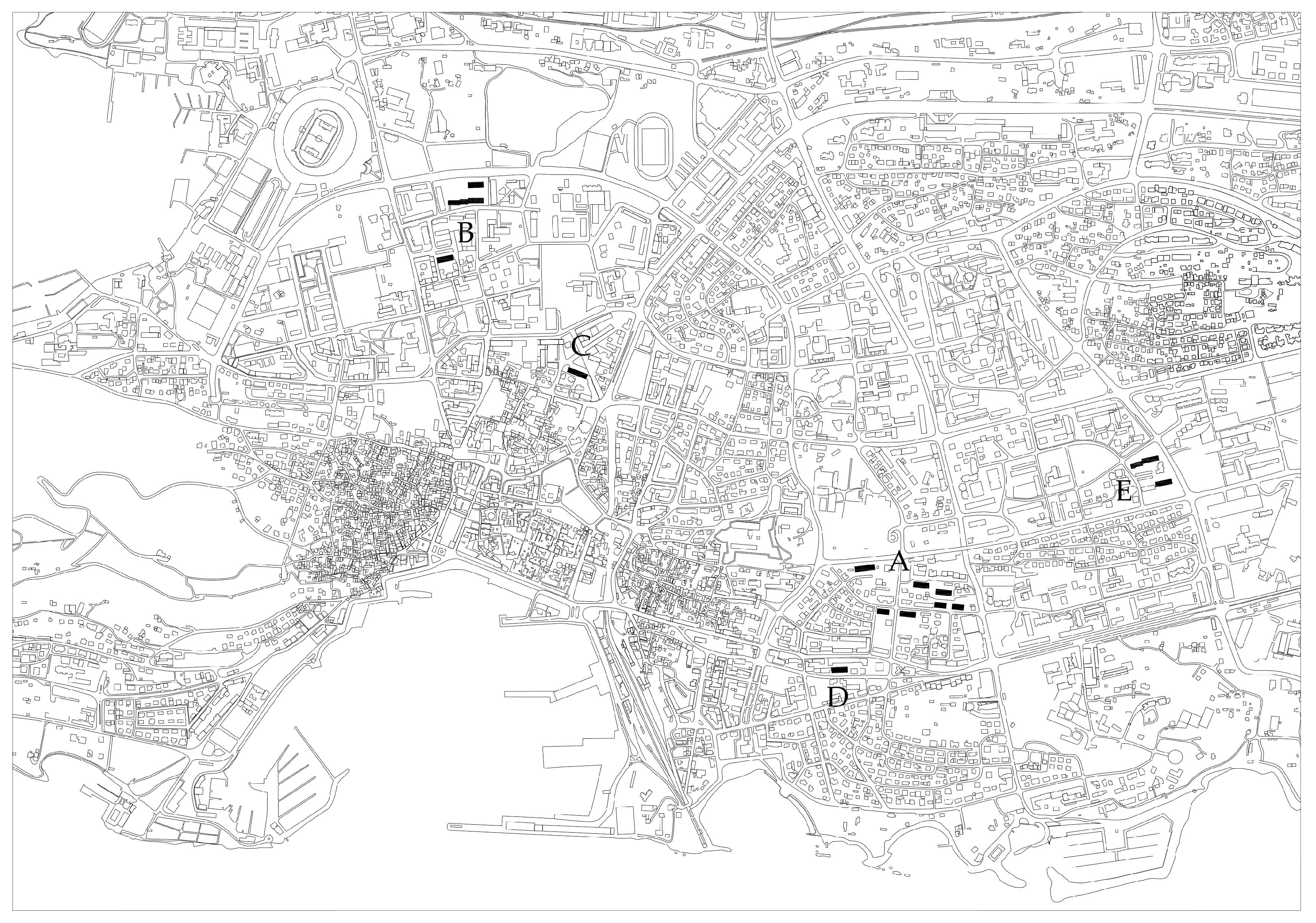
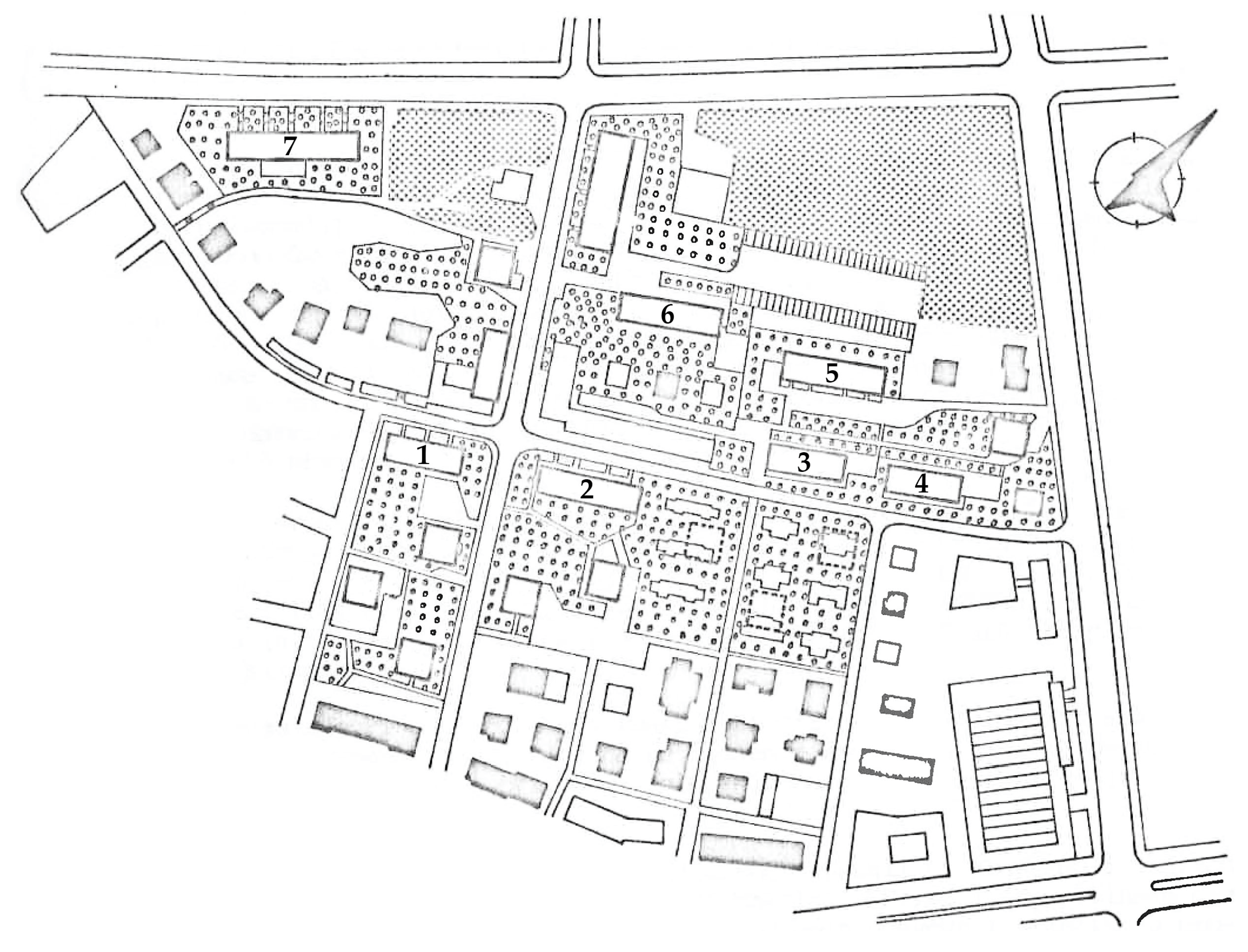
| Residential settlement along Osječka Street | |
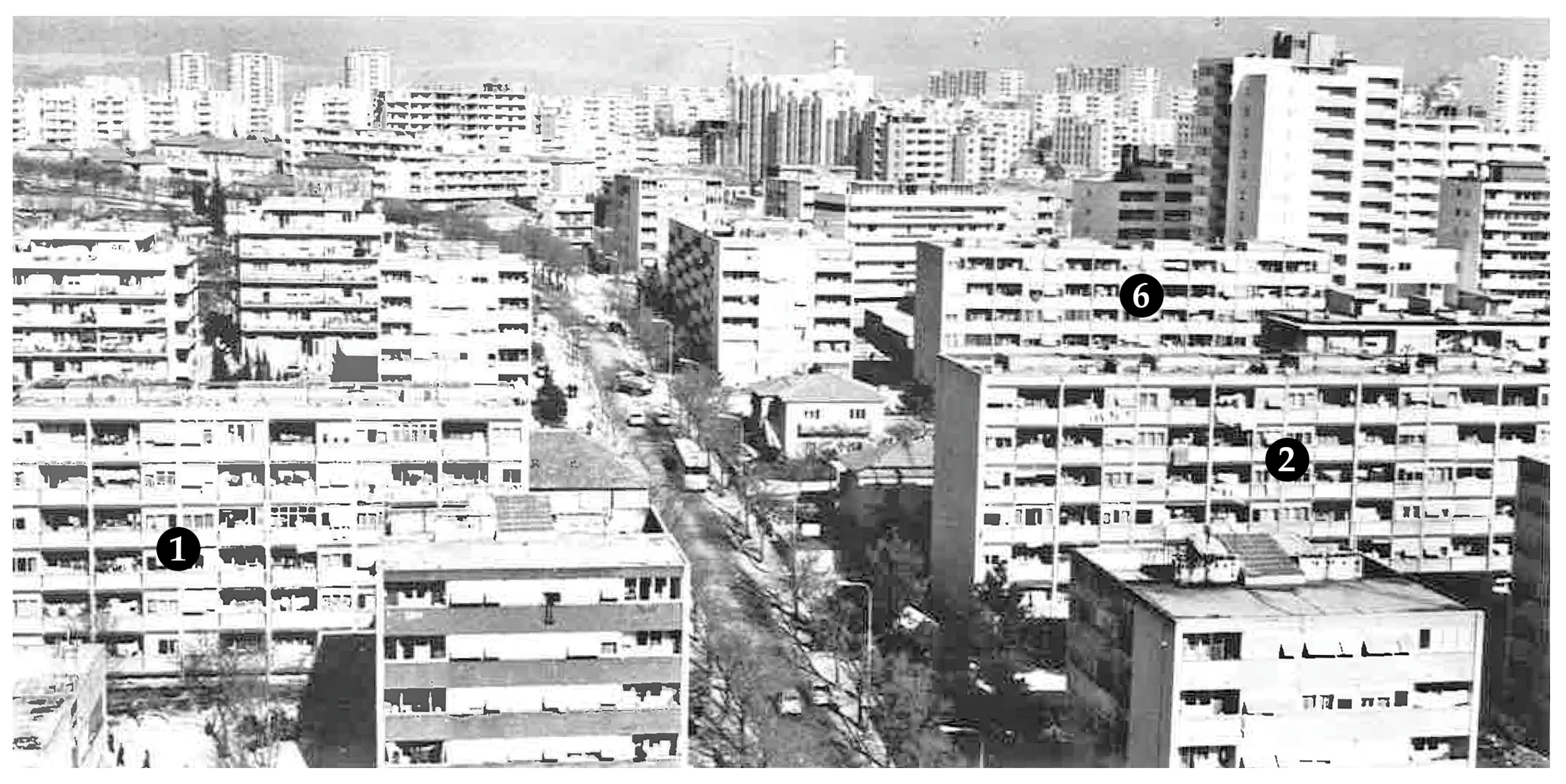
| Building 1 | |
| Address | 16, 18, 20 Barakovićeva Street |
| Project | HR-DAST sign. 2.7., 188/po-building V2 |
| Investor | People’s Committee of the Municipality of Split |
| Year of design | 1959 |
| Year of completion | 1960 (plaque at the building entrance no. 18) |
| Height and use | basement, ground floor and five upper floors |
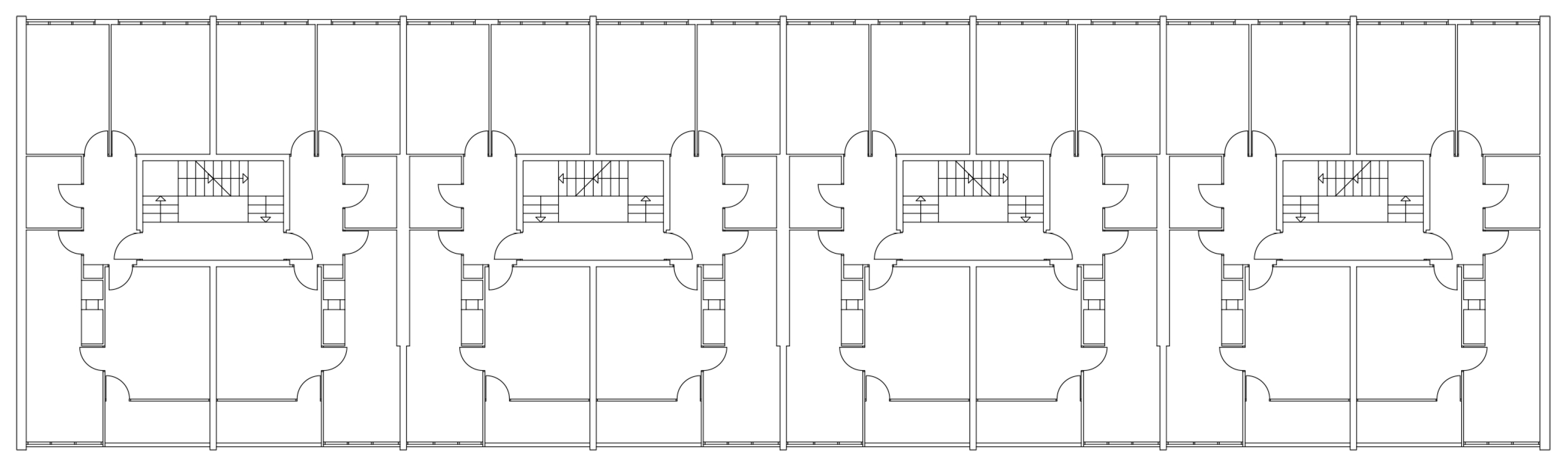
| Typical floor plan | 3 typical floor units connected in a row |
| Number of apartments | 36 (3 two-bedroom and 3 three-bedroom apartments on the ground floor; 24 three-bedroom apartments on the 1st–4th floors; 6 one-bedroom apartments on the 5th floor) |
| Entrances to the building | 3 entrances from the north |
| Building 2 | |
| Address | 2, 4, 6, 8 Krstulovićeva Street |
| Project | HR-DAST sign. 2.7., 188/po-building V1 |
| Investor | People’s Committee of the Municipality of Split |
| Year of design | 1959 |
| Year of completion | 1960 (plaque at the building entrance no. 6) |
| Height and use | basement, ground floor and five upper floors |
| Typical floor plan | 4 typical floor units connected in a row |
| Number of apartments | 48 (4 two-bedroom and 4 three-bedroom apartments on the ground floor; 32 three-bedroom apartments on the 1st–4th floors; 8 one-bedroom apartments on the 5th floor) |
| Entrances to the building | 4 entrances from the north |
| Building 3 | |
| Address | 33, 35, 37 Krstulovićeva Street |
| Project | HR-DAST sign. 2.7., 188/po-building V3 |
| Investor | People’s Committee of the Municipality of Split |
| Year of design | 1959 |
| Year of completion | 1961 (plaque at the building entrance no. 35) |
| Height and use | basement, ground floor and five upper floors |
| Typical floor plan | 3 typical floor units connected in a row |
| Number of apartments | 36 (3 two-bedroom and 3 three-bedroom apartments on the ground floor; 24 three-bedroom apartments on the 1st–4th floors; 6 one-bedroom apartments on the 5th floor) |
| Entrances to the building | 3 entrances from the south |
| Building 4 | |
| Address | 39, 41, 43 Krstulovićeva Street |
| Project | HR-DAST sign. 2.7., 188/po–building V4 |
| Investor | People’s Committee of the Municipality of Split |
| Year of design | 1959 |
| Year of completion | 1961 (no plaque at the building entrance; the year of construction is recorded in the list of Vojnović’s projects [11]) |
| Height and use | basement, ground floor and five upper floors |
| Typical floor plan | 3 typical floor units connected in a row |
| Number of apartments | 36 (3 two-bedroom and 3 three-bedroom apartments on the ground floor; 24 three-bedroom apartments on the 1st–4th floors; 6 one-bedroom apartments on the 5th floor) |
| Entrances to the building | 3 entrances from the south |
| Building 5 | |
| Address | 21, 23, 25, 27 Krstulovićeva Street |
| Project | HR-DAST sign. 2.7., 188/po–building V5 |
| Investor | People’s Committee of the Municipality of Split |
| Year of design | 1959 |
| Year of completion | 1961 (no plaque at the building entrance; the year of construction is recorded in the list of Vojnović’s projects [11]) |
| Height and use | basement, ground floor and five upper floors |
| Typical floor plan | 3 typical floor units connected in a row |
| Number of apartments | 48 (4 two-bedroom and 4 three-bedroom apartments on the ground floor; 32 three-bedroom apartments on the 1st–4th floors; 8 one-bedroom apartments on the 5th floor) |
| Entrances to the building | 4 entrances from the south |
| Building 6 | |
| Address | 18, 20, 22, 24 Osječka Street |
| Project | The design documentation has not been saved. |
| Year of completion | 1962 (plaque at the building entrance no. 20) |
| Height and use | basement, ground floor and five upper floors |
| Typical floor plan | 4 typical floor units connected in a row |
| Number of apartments | 48 (4 two-bedroom and 4 three-bedroom apartments on the ground floor; 32 three-bedroom apartments on the 1st–4th floors, 8 one-bedroom apartments on the 5th floor) |
| Entrances to the building | 4 entrances from the north |
| Building 7 | |
| Address | 2, 4, 6, 8, 10 Matice hrvatske Street |
| Project | HR-DAST sign. 2.7., 188/po–building V7 |
| Investor | Institute for Residential Construction–Split |
| Year of design | 1959 |
| Year of completion | 1961 (no plaque at the building entrance; the year of construction is recorded in the list of Vojnović’s projects [11]) |
| Height and use | basement, ground floor and six upper floors |
| Typical floor plan | 5 typical floor units connected in a row |
| Number of apartments | 70 (5 two-bedroom and 5 three-bedroom apartments on the ground floor; 50 three-bedroom apartments on the 1st–5th floors, 10 one-bedroom apartments on the 6th floor) |
| Entrances to the building | 5 entrances from the north |
| Skalice residential settlement | |
| Building 8 | |
| Address | 23, 25, 27, 29 Put Skalica |
| Project | HR-DAST sign. 2.7., 299/gl–building S5 |
| Investor | Institute for Residential Construction–Split |
| Year of design | 1960 |
| Year of completion | 1963 (no plaque at the building entrance, the year of construction is recorded in the list of Vojnović’s projects [11]) |
| Height and use | basement, ground floor and five upper floors |
| Typical floor plan | 4 typical floor units connected in a row |
| Number of apartments | 48 (4 two-bedroom and 4 three-bedroom apartments on the ground floor; 32 three-bedroom apartments on the 1st–4th floors; 8 one-bedroom apartments on the 5th floor) |
| Entrances to the building | 4 entrances from the south |
| Building 9 | |
| Address | 33, 35, 37, 39, 41, 43, 45 Put Skalica |
| Project | HR-DAST sign. 2.7., 299/gl–building S4 |
| Investor | Institute for Residential Construction–Split |
| Year of design | 1960 |
| Year of completion | 1963 (no plaque at the building entrance; the year of construction is recorded in the list of Vojnović’s projects [11]) |
| Height and use | basement, ground floor and five upper floors |
| Typical floor plan | 7 typical floor units connected in a segmented row—the row is divided into three parts: the western and central parts consist of two floor units each, and the eastern part consists of three |
| Number of apartments | 84 (7 two-bedroom and 7 three-bedroom apartments on the ground floor; 56 three-bedroom apartments on the 1st–4th floors; 14 one-bedroom apartments on the 5th floor) |
| Entrances to the building | 7 entrances from the south |
| Building 10 | |
| Address | 8, 10, 12, 14 Table Street |
| Project | HR-DAST sign. 2.7., 299/gl–building S6 |
| Investor | Institute for Residential Construction–Split |
| Year of design | 1960 |
| Year of completion | 1962 (plaque at the building entrance no. 10) |
| Height and use | basement, ground floor and five upper floors |
| Typical floor plan | 4 typical floor units connected in a row |
| Number of apartments | 48 (4 two-bedroom and 4 three-bedroom apartments on the ground floor; 32 three-bedroom apartments on the 1st–4th floors; 8 one-bedroom apartments on the 5th floor) |
| Entrances to the building | 4 entrances from the north |
| Residential settlement along Ljudevita Posavskog Street | |
| Building 11 | |
| Address | 2, 4, 6, 8, 10 Ljudevita Posavskog Street |
| Project | HR-DAST sign. 2.7., 446/gl |
| Investor | I. L. Lavčević Construction Company–Split |
| Year of design | 1963 |
| Year of completion | 1964 (plaque at the building entrance no. 8, 10) |
| Height and use | basement, ground floor and five upper floors |
| Typical floor plan | 5 typical floor units connected in a row |
| Number of apartments | 60 (5 two-bedroom and 5 three-bedroom apartments on the ground floor; 50 three-bedroom apartments on the 1st–5th floors) |
| Entrances to the building | 5 entrances from the north |
| Pojišanska Street | |
| Building 12 | |
| Address | 13, 15, 17, 19 Pojišanska Street |
| Project | HR-DAST sign. 2.7., 265/po |
| Investor | V.P. 7345/35–Split (military investor) |
| Year of design | 1959 |
| Year of completion | 1961 (plaque at the building entrance no. 17) |
| Height | basement, ground floor and five upper floors |
| Typical floor plan | 4 typical floor units connected in a row |
| Number of apartments | 48 (4 two-bedroom and 4 three-bedroom apartments on the ground floor; 32 three-bedroom apartments on the 1st–4th floors; 8 one-bedroom apartments on the 5th floor) |
| Entrances to the building | 4 entrances from the south |
| City district of Lokve | |
| Building 13 | |
| Address | 22, 24, 26, 28, 30, 32, 34 Jurja Šižgorića Street |
| Project | HR-DAST sign. 2.7., 616/1-gl and HR-DAST sign. 2.7., 616/2-gl |
| Investor | Radnik Construction Company–Benkovac |
| Year of design | 1965 |
| Year of completion | 1967 (plaque at the building entrance no. 28, 30, 32, 34) |
| Height | basement, ground floor and four upper floors (western and central sections of the row); basement, ground floor and five upper floors (eastern section of the row) |
| Typical floor plan | 7 typical floor units connected in a segmented row—the row is divided into three parts: the western and central parts consist of one floor unit each, and the eastern part consists of four |
| Number of apartments | 78 (7 two-bedroom and 7 three-bedroom apartments on the ground floor; 42 three-bedroom apartments on the 1st–3rd floors, 8 three-bedroom i 6 one-bedroom apartments on the 4th floor, 8 one-bedroom apartments on the 5th floor) |
| Entrances to the building | 7 entrances from the north |
| Building 14 | |
| Address | 81, 83, 85, 87 Alojzija Stepinca Street |
| Project | The design documentation has not been saved. |
| Year of completion | 1967 (plaque at the building entrance br. 85) |
| Height | basement, ground floor and five upper floors |
| Typical floor plan | 4 typical floor units connected in a row |
| Number of apartments | 48 (4 two-bedroom and 4 three-bedroom apartments on the ground floor; 32 three-bedroom apartments on the 1st–4th floors, 8 one-bedroom apartments on the 5th floor) |
| Entrances to the building | 4 entrances from the north |
| ŠIBENIK | |
| City district of Baldekin | |
| Building 15 | |
| Address | 12, 14, 16, 18 Petra Preradovića Street |
| Project | HR-DAST sign. 2.7., 278/po |
| Investor | V.P. 7345/35 Split (military investor) |
| Year of design | 1959 |
| Year of completion | 1962 (no plaque at the building entrance, the year of construction is recorded in the list of Vojnović’s projects [11]) |
| Height | basement, ground floor and four upper floors |
| Typical floor plan | 4 typical floor units connected in a row—layout and façade design of the building is the same as in the building in Pojišanska Street |
| Number of apartments | 40 (4 two-bedroom and 4 three-bedroom apartments on the ground floor; 24 three-bedroom apartments on the 1st–3rd floors, 8 one-bedroom apartments on the 4th floor) |
| Entrances to the building | 4 entrances from the south |
| Building 16 | |
| Address | 78, 80, 82, 84 Stjepana Radića Street |
| Project | HR-DAST sign. 2.7., 278/po |
| Investor | V.P. 7345/35 Split (military investor) |
| Year of design | 1959 |
| Year of completion | 1961 (plaque at the building entrance no. 82) |
| Height | basement, ground floor and four upper floors |
| Typical floor plan | 4 typical floor units connected in a row—layout and façade design of the building is the same as in the building in Pojišanska Street |
| Number of apartments | 40 (4 two-bedroom and 4 three-bedroom apartments on the ground floor; 24 three-bedroom apartments on the 1st–3rd floors, 8 one-bedroom apartments on the 4th floor) |
| Entrances to the building | 4 entrances from the east |
| Building 17 | |
| Address | 90, 92, 94, 96 Stjepana Radića Street |
| Project | HR-DAST sign. 2.7., 278/po |
| Investor | V.P. 7345/35 Split (military investor) |
| Year of design | 1959 |
| Year of completion | 1962 (no plaque at the building entrance, the year of construction is recorded in the list of Vojnović’s projects [11]) |
| Height and use | basement, ground floor and five upper floors |
| Typical floor plan | 4 typical floor units connected in a row—layout and façade design of the building is the same as in the building in Pojišanska Street |
| Number of apartments | 40 (4 two-bedroom and 4 three-bedroom apartments on the ground floor; 24 three-bedroom apartments on the 1st–3rd floors, 8 one-bedroom apartments on the 4th floor) |
| Entrances to the building | 4 entrances from the northeast |
| Building 18 | |
| Address | 115, 117, 119, 121, 123, 125, 127, 129 Stjepana Radića Street |
| Project | HR-DAST sign. 2.7., 462/1-2-gl |
| Investor | Bureau for Residential Construction–Šibenik |
| Year of design | 1963 |
| Year of completion | 1964 (no plaque at the building entrance; the year of construction is recorded in the list of Vojnović’s projects [11]) |
| Height and use | basement, ground floor and five upper floors |
| Typical floor plan | 8 typical floor units connected in a segmented row; the row is divided into three parts—the western and central parts consist of two floor units each, and the eastern part consists of four; layout and façade design of the building is the same as in the buildings in the Skalice residential settlement |
| Number of apartments | 96 (8 two-bedroom and 8 three-bedroom apartments on the ground floor; 64 three-bedroom apartments on the 1st–4th floors, 16 one-bedroom apartments on the 5th floor) |
| Entrances to the building | 8 entrances from the south |
| City district of Šubićevac | |
| Building 19 | |
| Address | 38, 40, 42, 44 Bana Josipa Jelačića Street |
| Project | The design documentation has not been saved. |
| Year of completion | 1961 (plaque at the building entrance no. 40) |
| Height and use | basement, ground floor and four upper floors |
| Typical floor plan | 4 typical floor units connected in a row—layout and façade design of the building is the same as in the buildings in the Skalice residential settlement |
| Number of apartments | 40 (4 two-bedroom and 4 three-bedroom apartments on the ground floor; 24 three-bedroom apartments on the 1st–3rd floors, 8 one-bedroom apartments on the 4th floor) |
| Entrances to the building | 4 entrances from the northeast |
| Building 20 | |
| Address | 46, 48, 50, 52 Bana Josipa Jelačića Street |
| Project | The design documentation has not been saved. |
| Year of completion | 1961 (plaque at the building entrance no. 48) |
| Height and use | basement, ground floor and four upper floors |
| Typical floor plan | 4 typical floor units connected in a row—layout and façade design of the building is the same as in the buildings in the Skalice residential settlement |
| Number of apartments | 40 (4 two-bedroom and 4 three-bedroom apartments on the ground floor; 24 three-bedroom apartments on the 1st–3rd floors, 8 one-bedroom apartments on the 4th floor) |
| Entrances to the building | 4 entrances from the northeast |
| Building 21 | |
| Address | 8, 10, 12, 14 Bana Josipa Jelačića Street |
| Project | The design documentation has not been saved. |
| Year of completion | 1962 (no plaque at the building entrance, the year of construction is recorded in the list of Vojnović’s projects [11]) |
| Height | basement, ground floor and three upper floors |
| Typical floor plan | 4 typical floor units connected in a row—layout and façade design of the building is the same as in the buildings in the Skalice residential settlement |
| Number of apartments | 32 (4 two-bedroom and 4 three-bedroom apartments on the ground floor; 16 three-bedroom apartments on the 1st–2nd floors, 8 one-bedroom apartments on the 3rd floor) |
| Entrances to the building | 4 entrances from the east |
| Building 22 | |
| Address | 16, 18, 20, 22 Bana Josipa Jelačića Street |
| Project | The design documentation has not been saved. |
| Year of completion | 1962 (no plaque at the building entrance, the year of construction is recorded in the list of Vojnović’s projects [11]) |
| Height | basement, ground floor and three upper floors |
| Typical floor plan | 4 typical floor units connected in a row—layout and façade design of the building is the same as in the buildings in the Skalice residential settlement |
| Number of apartments | 32 (4 two-bedroom and 4 three-bedroom apartments on the ground floor; 16 three-bedroom apartments on the 1st–2nd floors; 8 one-bedroom apartments on the 3rd floor) |
| Entrances to the building | 4 entrances from the east |
| City district of Crnica | |
| Building 23 | |
| Address | 2, 4, 6 Stipe Ninića Street |
| Project | The design documentation has not been saved. |
| Year of completion | 1967 (plaque at the building entrance no. 6) |
| Height and use | basement, ground floor and four upper floors |
| Typical floor plan | 3 typical floor units connected in a row—layout and façade design of the building is the same as in the buildings in the Lokve residential settlement |
| Number of apartments | 26 (2 two-bedroom apartments on the ground floor, 18 three-bedroom apartments on the 1st–3rd floors; 6 one-bedroom apartments on the 4th floor) |
| Entrances to the building | 3 entrances from the west |
| OMIŠ | |
| Building 24 | |
| Address | 2, 4, 6, 8, 10 Joke Kneževića Street |
| Project | HR-DAST sign. 2.7., 275/po |
| Investor | People’s Committee of the Municipality of Split Omiš |
| Year of design | 1959 |
| Year of completion | 1962 (plaque at the building entrance no. 8, 10) |
| Height and use | basement, ground floor and four upper floors |
| Typical floor plan | 5 typical floor units connected in a row—layout and façade design of the building is the same as in the buildings in the Skalice residential settlement |
| Number of apartments | 50 (5 two-bedroom and 5 three-bedroom apartments on the ground floor; 30 three-bedroom apartments on the 1st–3rd floors; 10 one-bedroom apartments on the 4th floor) |
| Entrances to the building | 5 entrances from the southeast |
| PLOČE | |
| Building 25 | |
| Address | 8, 10, 12 Vladimira Nazor Street |
| Project | HR-DAST sign. 2.7., 324-gl–building no. 1 |
| Investor | V.P. 7345/35 Split (military investor) |
| Year of design | 1960 |
| Year of completion | 1962 (plaque at the building entrance no. 10) |
| Height and use | basement, ground floor and four upper floors |
| Typical floor plan | 3 typical floor units connected in a row—layout and façade design of the building is the same as in the buildings in the Skalice residential settlement |
| Number of apartments | 30 (3 two-bedroom and 3 three-bedroom apartments on the ground floor; 18 three-bedroom apartments on the 1st–3rd floors; 6 one-bedroom apartments on the 4th floor) |
| Entrances to the building | 3 entrances from the north |
| Building 26 | |
| Address | 16, 18, 20 Vladimira Nazor Street |
| Project | HR-DAST sign. 2.7., 324-gl–building no. 2 |
| Investor | V.P. 7345/35 Split (military investor) |
| Year of design | 1960 |
| Year of completion | 1962 (plaque at the building entrance no. 18) |
| Height and use | basement, ground floor and four upper floors |
| Typical floor plan | 3 typical floor units connected in a row—layout and façade design of the building is the same as in the buildings in the Skalice residential settlement |
| Number of apartments | 30 (3 two-bedroom and 3 three-bedroom apartments on the ground floor; 18 three-bedroom apartments on the 1st–3rd floors; 6 one-bedroom apartments on the 4th floor) |
| Entrances to the building | 3 entrances from the north |
Disclaimer/Publisher’s Note: The statements, opinions and data contained in all publications are solely those of the individual author(s) and contributor(s) and not of MDPI and/or the editor(s). MDPI and/or the editor(s) disclaim responsibility for any injury to people or property resulting from any ideas, methods, instructions or products referred to in the content. |
© 2026 by the authors. Licensee MDPI, Basel, Switzerland. This article is an open access article distributed under the terms and conditions of the Creative Commons Attribution (CC BY) license.
Share and Cite
Perković, V.; Mrinjek Kliska, N.; Mlinar, I. Architect Josip Vojnović: URBS 1 Standard Residential Buildings from the 1960s in Split, Croatia. Architecture 2026, 6, 23. https://doi.org/10.3390/architecture6010023
Perković V, Mrinjek Kliska N, Mlinar I. Architect Josip Vojnović: URBS 1 Standard Residential Buildings from the 1960s in Split, Croatia. Architecture. 2026; 6(1):23. https://doi.org/10.3390/architecture6010023
Chicago/Turabian StylePerković, Vesna, Neda Mrinjek Kliska, and Ivan Mlinar. 2026. "Architect Josip Vojnović: URBS 1 Standard Residential Buildings from the 1960s in Split, Croatia" Architecture 6, no. 1: 23. https://doi.org/10.3390/architecture6010023
APA StylePerković, V., Mrinjek Kliska, N., & Mlinar, I. (2026). Architect Josip Vojnović: URBS 1 Standard Residential Buildings from the 1960s in Split, Croatia. Architecture, 6(1), 23. https://doi.org/10.3390/architecture6010023