


Abstract
School learning environments play a crucial role in both student and faculty outcomes; however, the limited funding allocated to public school facilities can result in poor environmental conditions which can hinder occupant health and performance. Existing school facilities must then explore affordable retrofit strategies that can effectively improve health and performance outcomes. The emerging field of biophilic design offers significant potential for improving existing school environments with benefits for both the students and faculty. Through case study research, this study proposes a toolkit of 42 biophilic retrofits for existing K-12 schools in a set of stakeholder cards that illustrate precedents, known impacts, and their relevance to high-performance schools. Additionally, a stakeholder card sorting study was conducted to establish the perceived viability and impact of each strategy. The findings reveal that biophilic retrofit design strategies are perceived by school community stakeholders to be impactful with varying levels of affordability. These findings further demonstrate that a toolkit of biophilic interventions for K-12 schools will offer invaluable insights to improve student and faculty conditions.
1. Introduction
School learning environments play a crucial role in the development and wellbeing of children. However, research indicates that an alarming number of school facilities, especially those in public schools, face a funding gap that affects the quality of the school infrastructure [1,2,3,4]. K-12 students in both public and private schools spend an average of 42% of their waking hours within school facilities, thus it is imperative that school buildings are in excellent condition to enhance student learning [5]. Recent research has identified that quality school building design and maintenance have measurable effects on both student and teacher performance [6]. However, the American Society of Civil Engineers’ (ASCE) 2021 Report Card for America’s Infrastructure scored school facility conditions and building systems at a grade of D+ on an A–F scale in terms of structure and maintenance [7]. Given that both students and teachers spend a considerable amount of their daily lives in school buildings, facility design and retrofits need to actively enhance human health, wellbeing, and performance. In order to combat poor facility conditions, there needs to be a push for both the budgetary decisions to allocate increased funding to K-12 schools, as well as a push for community decision makers to invest in affordable retrofit options that have significant benefits to the health and performance of students and teachers.
Biophilia is the innate human desire to connect with nature and other living beings. The term “biophilia” was first coined by psychoanalyst Erich Fromm in his 1964 publication, The Anatomy of Human Destructiveness [8]. Fromm stated that biophilia was the “passionate love of life and all that is alive…” [8]. In 1984, biologist EO Wilson popularized the term “biophilia” and proposed the current definition for biophilia—humans’ innate tendency to focus on living things [9]. However, it was not until 2008 that Stephen Kellert solidified the concept of biophilia as a strategy for architecture and sustainability and coined the term “biophilic design” [10]. Over the past 50 years, the term “biophilia” has shifted from a psychological concept to a design practice within the built environment.
Biophilic design is the practice of connecting people and nature within our built environments and communities. There are a growing number of resources to help facilitate biophilic design such as taxonomies and best practices. Two leading biophilic design guidelines are Stephen Kellert’s Six Biophilic Design Elements [10] and Terrapin Bright Green’s 14 Patterns of Biophilic Design [11].
In parallel, there is a growing body of literature that reveals the benefits of connecting children with nature, as well as the importance of biophilic design for human outcomes [12,13,14,15,16,17,18,19,20]. This research suggests that K-12 school decision makers should be investing in biophilic retrofits for schools because nature is key to early childhood development. In a 2005 publication, Kellert concluded that the healthy emotional, evaluative, and intellectual development of children depends on accessible and abundant natural environments [21]. Additionally, in a 2021 population-based birth cohort study in Metro Vancouver, Canada, Jarvis et al. identified that every 10% increase in percentage of vegetation within 250 m of a residential postal code resulted in a 0.16 increase in teacher-assessed Early Development Instrument scores [22].
Indeed, the concepts of biophilia and biophilic design are quite prevalent in the literature and have been the subject of over 700 published articles and studies as found in a 2021 critical review [23]. However, there is still a lack of widespread realization of biophilic design in architecture and the built environment. This study aims to continue bridging the gap between academia and practice through the creation and validation of a biophilic design toolkit for K-12 school community stakeholders.
After an extensive literature and design precedent review, seven categories of biophilic retrofit design strategies were captured in a biophilic retrofit taxonomy. These overarching categories include: Indoor Greenery, Views, Biophilic Finishes, Natural Light, Nature’s Sounds, Taste and Touch, Nature Interaction and Engagement, and Spatial Biophilic approaches. A total of 42 biophilic design strategies are summarized in the taxonomy card set. In order to quantify the connection between the biophilic design strategies and their impact on student and teacher performance, a thorough literature review identifying the relevant benefits of specific biophilic retrofit strategies to humans was completed and captured on the back of each strategy card. The studies found significant connections between biophilic design elements and human health and productivity outcomes, including anxiety and stress [24,25,26], attention [27,28,29,30], cognitive function [12,13,19,31], engagement (in class) [32], graduation rates [33], physical health [15,34,35,36,37], standardized test scores [18,38,39,40,41], systems thinking [42], teamwork [43], and thermal comfort [44].
Through the understanding of biophilic design and its impact on humans, a rich palette of biophilic design elements can be developed to engage K-12 school community stakeholders and address the health and performance of both students and faculty.
2. Materials and Methodology
The Biophilic Toolkit and user testing were undertaken in two stages. The first stage focused on the creation of a taxonomy of 42 biophilic retrofit strategies for K-12 schools, as well as an aggregation of school case studies and health and performance literature reviews for the set of cards that were created within the taxonomy. The second stage was a user perception study to determine a strategy prioritization approach.
By analyzing both Kellert’s 6 Biophilic Design Elements and Terrapin Bright Green’s 14 Patterns of Biophilic Design, 42 specific biophilic design strategies were identified and included in the creation of a taxonomy based on their feasibility for implementation in an existing K-12 school setting. The strategies included in this set are uniquely developed, inspired by the previously published biophilic literature including Kellert and Terrapin Bright Green’s frameworks. Factors for selection included the following: replicability in a K-12 school building given typical US conditions of infrastructure, space utilization, building codes and regulations; limiting the level of disruption that might be necessary for construction; and alignment with pedagogical goals of secondary education. First costs to implement and possible maintenance requirements, based on the literature findings and preliminary pricing, were also factors in the development of the taxonomy. In order to validate each strategy’s impact on students and faculty, a rigorous literature review of potential health and performance impacts was conducted. Following the development of the biophilic retrofit taxonomy, a card set was created to engage school community stakeholders in the retrofit design of healthy and sustainable schools.
In order to evaluate the card set as a toolkit, a one-month long card sorting study was conducted between 4 March and 17 April 2022. This study investigated stakeholder perceptions of how beneficial and applicable the 42 different biophilic retrofit strategies were for the K-12 students and faculty. The community stakeholders included teachers, school board members, school administrators, parents, and school designers/consultants, who ranked the strategies based on perceived level of positive impact and affordability.
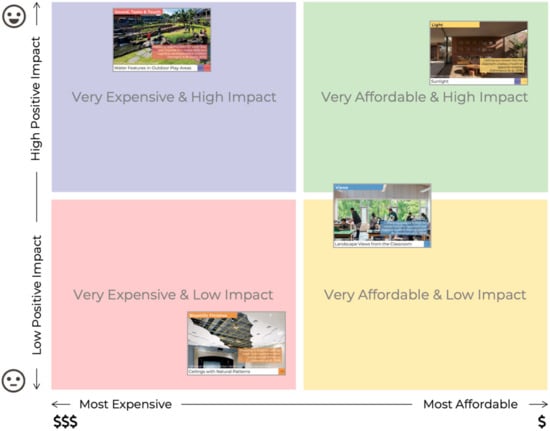
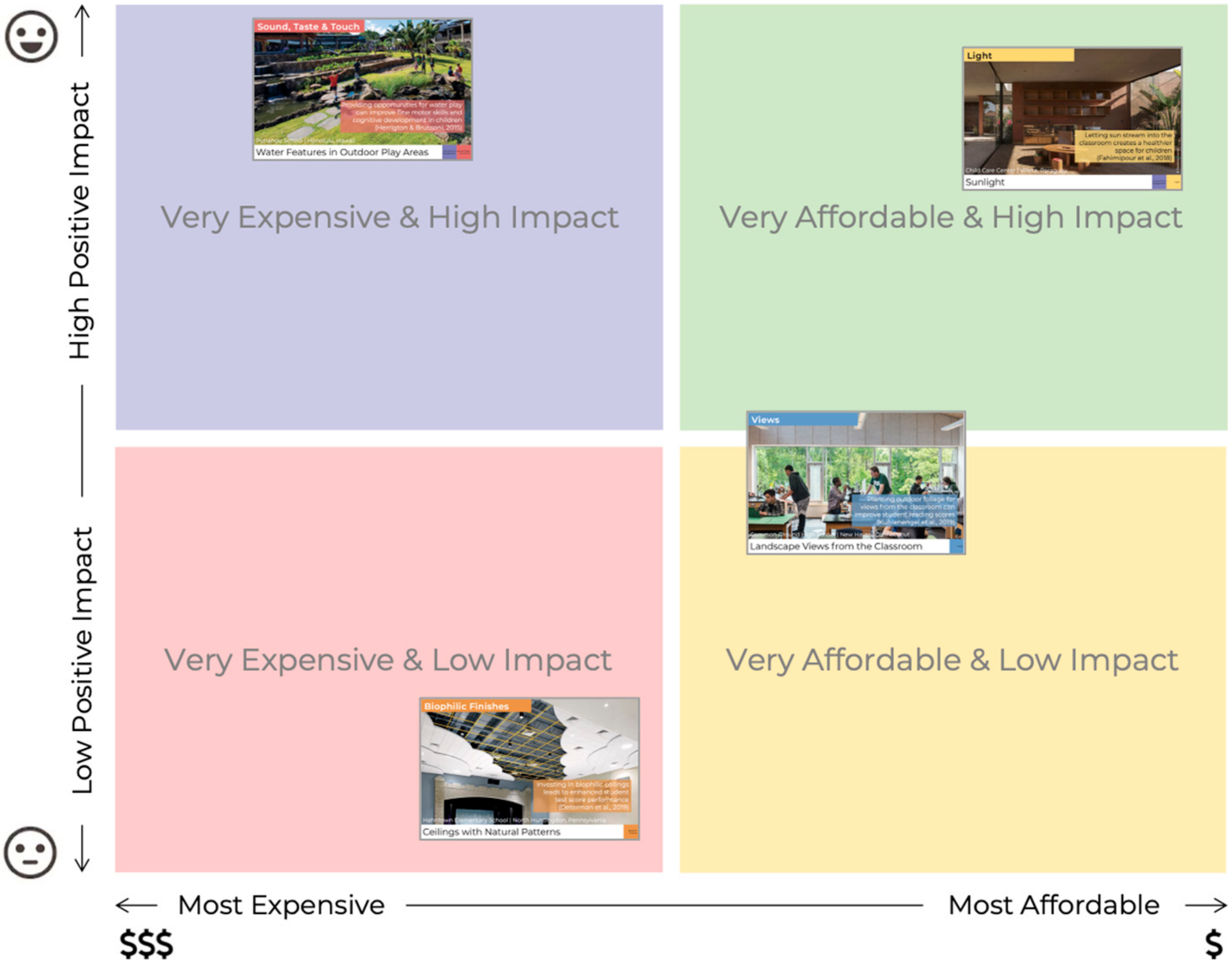
The ranking was achieved through a quadrant chart with the x-axis measuring affordability and the y-axis measuring level of positive impact (Figure 1). There were two different formats of the study, a paper version and an electronic version. Both were used in the overall analysis and conclusions of this study. This study was approved under Exempt Review by the Carnegie Mellon University Institutional Review Board (IRB) on 23 February 2022.
Figure 1.
Quadrant chart for the card sorting game (Paper version) [15,38,39,45].
To ensure the accessibility of this study to the general public, a dedicated website was created to offer educational resources on biophilia and outline the focus of the research project. The website featured a link to the electronic survey and provided a downloadable version of the paper survey. Additionally, paper packages of the study were dispatched to four local K-12 schools in Pittsburgh. These packages included a comprehensive instruction packet, a set of the 42 cards, and a paper quadrant chart, which served as the metric for card ranking.
Identification of suitable local schools for the distribution of the paper version of the study was facilitated through a collaboration with the Green Building Alliance in Pittsburgh (GBA). Contacts recommended by the GBA received introductory emails outlining the study and its materials. Upon obtaining approval from the schools, paper packages were promptly mailed out. Participants in the paper-based card study were instructed to arrange the cards across the quadrant chart, placing those they deemed to have perceived positive impact for students and faculty onto the chart. Subsequently, participants were required to photograph their completed activity and submit it through the same survey link used for the electronic version. There was a separate section within the electronic survey for paper version submissions. The same survey was used to honor the IRB consent, and demographic questions were required for all participants. After completing the exercise and submission, the individual participants were asked to place the disassembled paper study back into the envelope and pass it forward to another K-12 stakeholder to extend the test set.
The second format consisted of an electronic survey. The survey software, Qualtrics, was used to create and administer the surveys. The electronic version of this study was aimed at reaching as many participants as possible, as well as collecting data from a variety of different regions and climates., The survey was shared to all relevant personal contacts of the author as well as advertised on a number of social media platforms including LinkedIn, Facebook, Instagram, and Reddit.
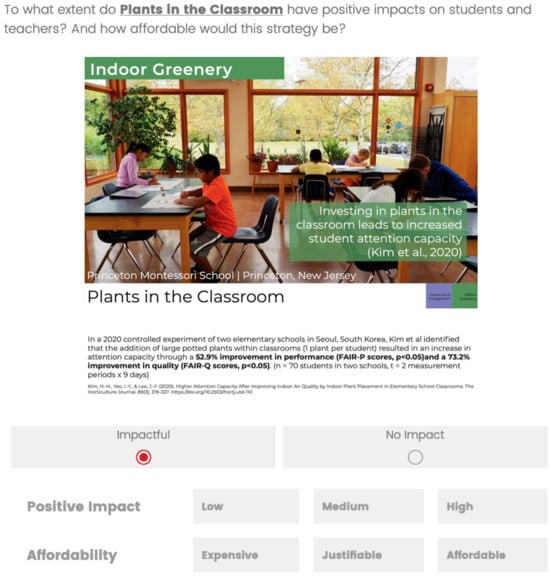
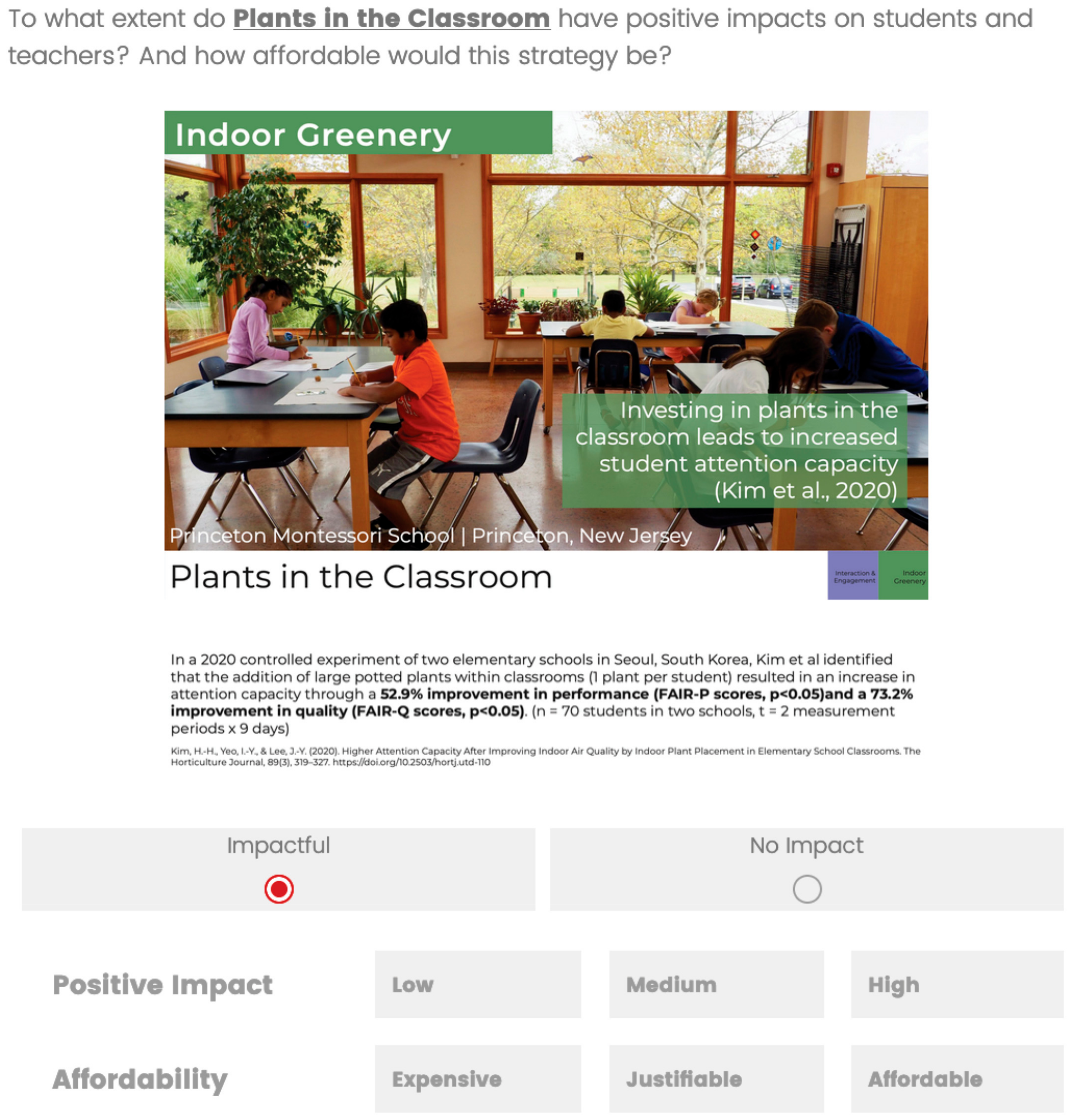
The electronic version of this study also asked participants to rank each card based on its level of impact as well as its affordability. Due to limited survey platform flexibility, participants were not asked to sort the cards on a quadrant chart via dragging and dropping; instead, they were asked to select the ranking of the cards on a scale of low, medium, and high for both impact and affordability (Figure 2). For the purposes of the card rankings, only the front of each card as well as the research summary that is listed on the back of the cards, was displayed. Participants could opt out of ranking a card if they felt there would be no level of positive impact.
Figure 2.
Electronic Study Survey Question on Plants in the Classroom [27].
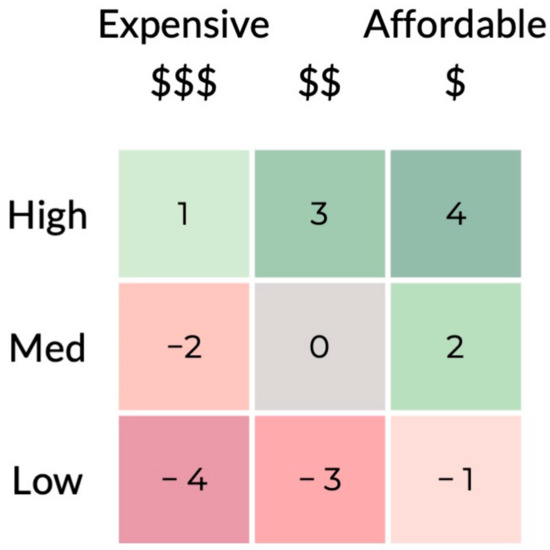
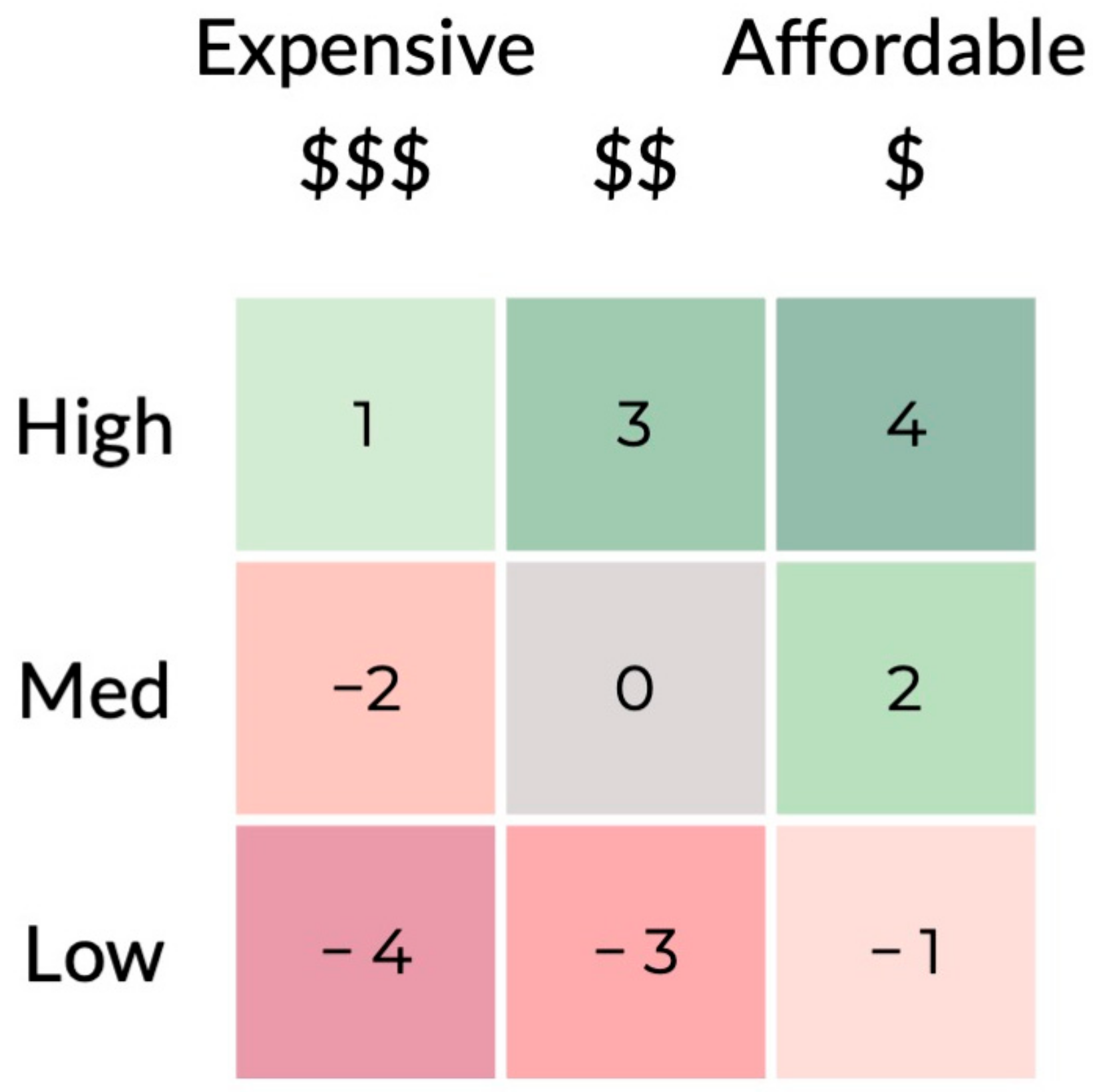
Given these three levels of positive impact and affordability to choose from, a 3 × 3 matrix for card ranking was defined. Each box was assigned a score on a scale of −4 to +4. A score of +4 denotes a ranking of “High Impact and Affordable”, while a score of −4 represents “Low Impact and Expensive”. Additionally, it was decided that since affordability is very important to public schools, a strategy that is deemed to be “Medium Impact and Affordable” would score higher than a strategy that was “High Impact and Expensive”. The same scoring applied to “Low Impact and Affordable” vs. “Medium Impact and Expensive” strategies (Figure 3).
Figure 3.
Scoring legend based on impact and cost for the card sorting study.
The average score for each biophilic action card is the value that was used to derive the statistical analysis in the results. Since the electronic version of the survey limited the ranking choices to a 3 × 3 matrix and the paper version was based on the quadrant chart, a 3 × 3 grid was manually overlayed on the images of the completed paper versions to make the paper and electronic results comparable in terms of the scoring.
The results of the card sorting exercise (both paper and electronic versions) were analyzed using Qualtrics, Microsoft Excel, R Studio, and Tableau. Descriptive statistics were utilized to understand key findings in the data. Statistical analysis was used to support the findings of the descriptive statistics using one-way ANOVA paired with Tukey’s Procedure as a follow-up for unplanned corrections in the statistical analysis.
3. Results
3.1. A Taxonomy of Biophilic Retrofit Interventions in Cards
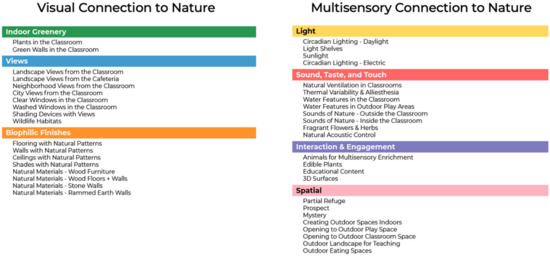
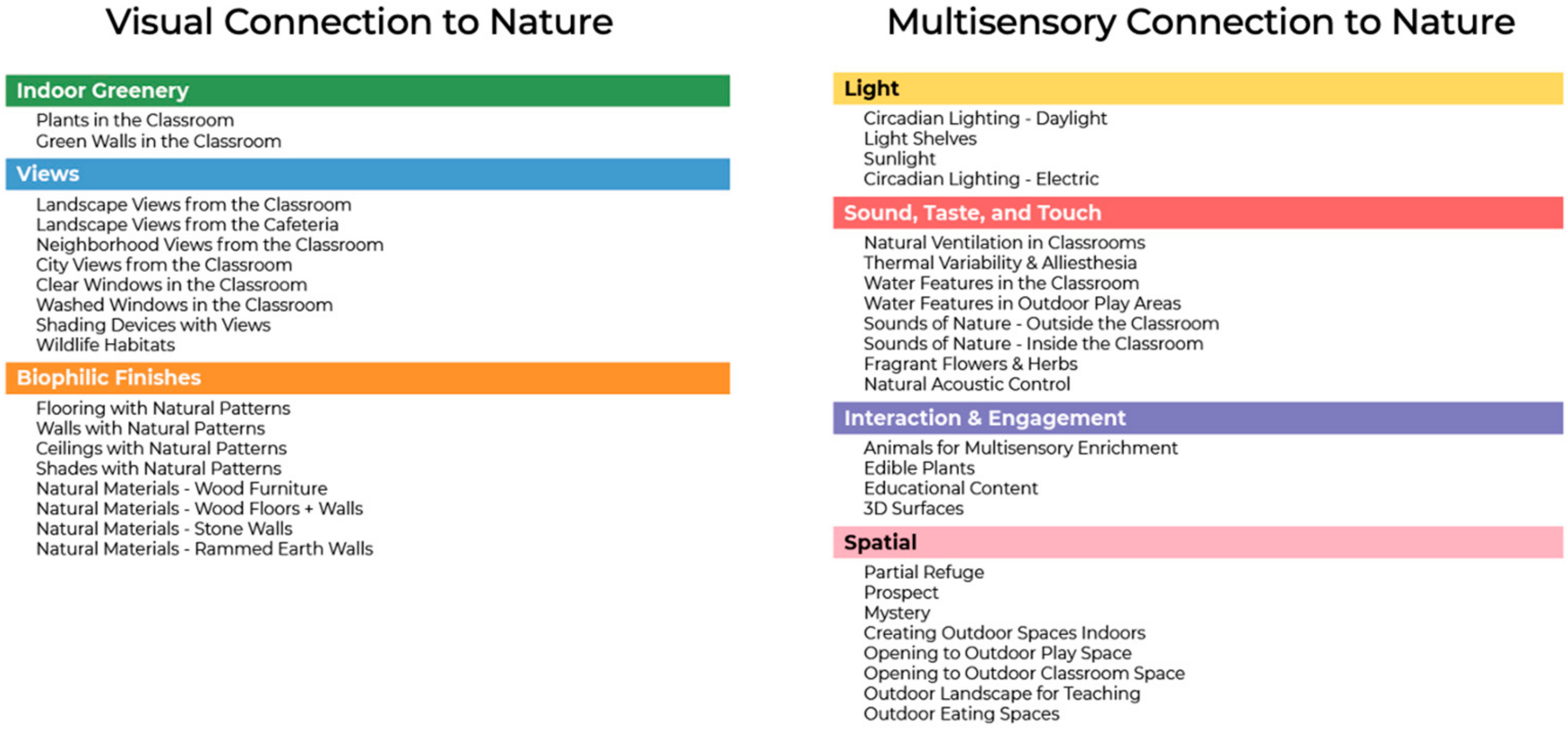
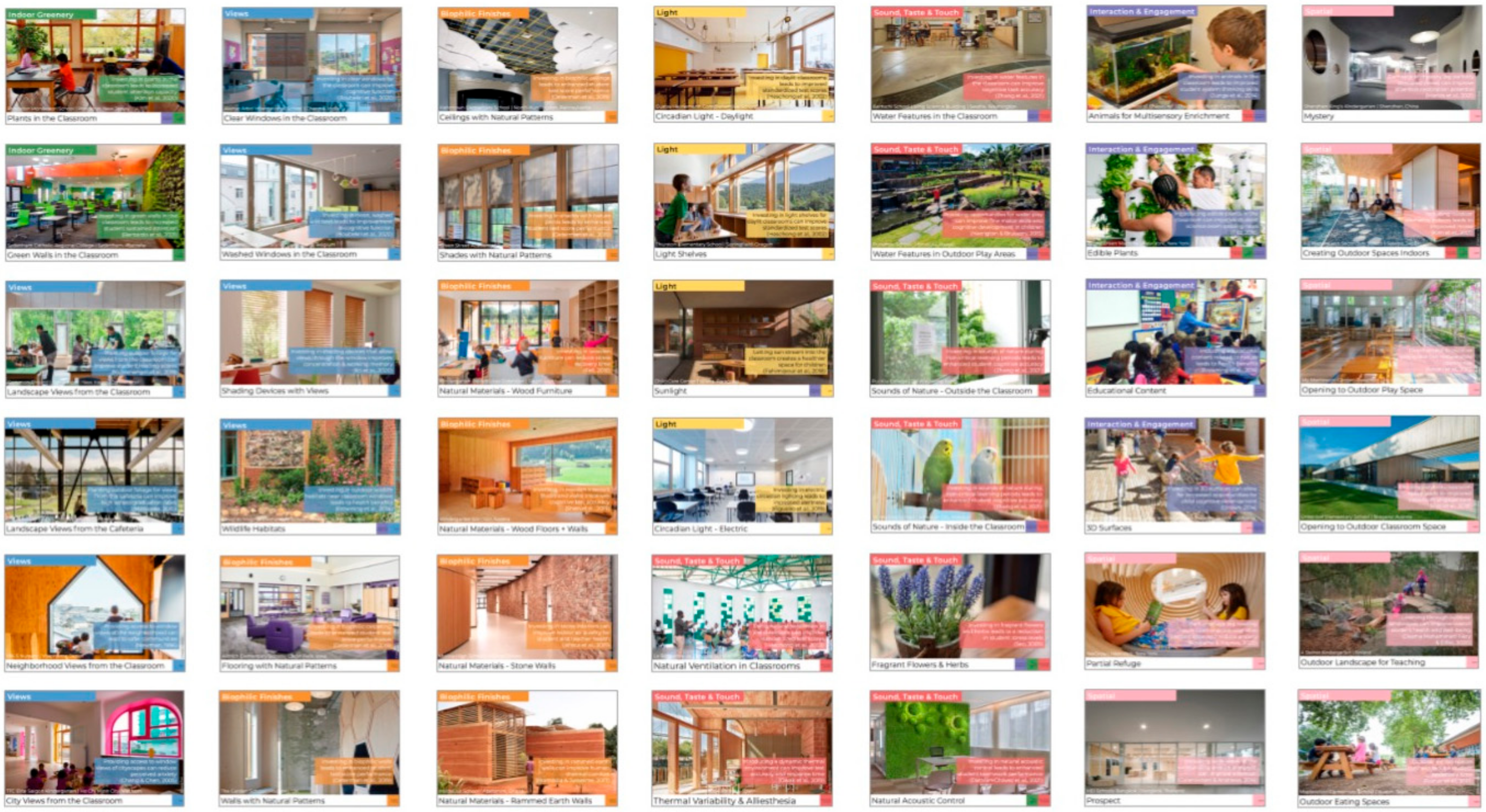
The taxonomy created in this study was strongly influenced by Terrapin Bright Green’s 14 Patterns of Biophilia as well as Stephen Kellert’s 6 Biophilic Design Elements. These strategies were identified to be both significant and feasible in a school setting through a comprehensive literature review. The final taxonomy consists of 42 biophilic retrofit strategies spread across seven categories (Figure 4). The seven categories are grouped into two parts, namely Visual Connection to Nature and Multisensory Connection to Nature. Within Visual Connection to Nature, there are three strategy sets as follows: Indoor Greenery, Views, and Biophilic Finishes. For Multisensory Connection to Nature, there are four factors, namely Natural Light, Nature’s Sound, Taste, and Touch, Nature Interaction and Engagement, and Spatial Biophilic Strategies.
Figure 4.
The taxonomy of the 42 biophilic retrofit interventions.
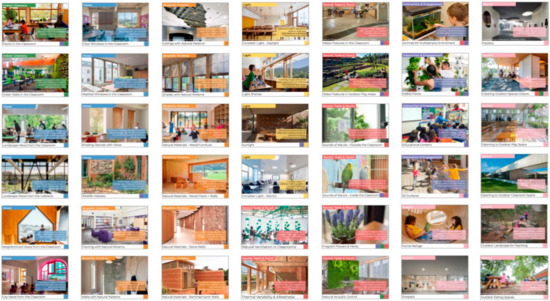
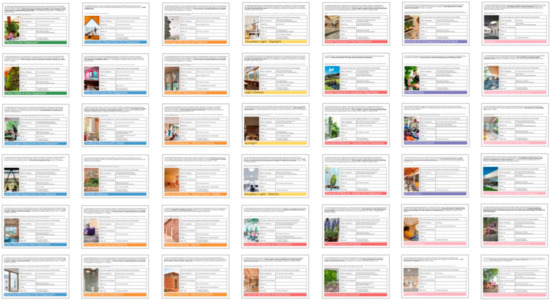
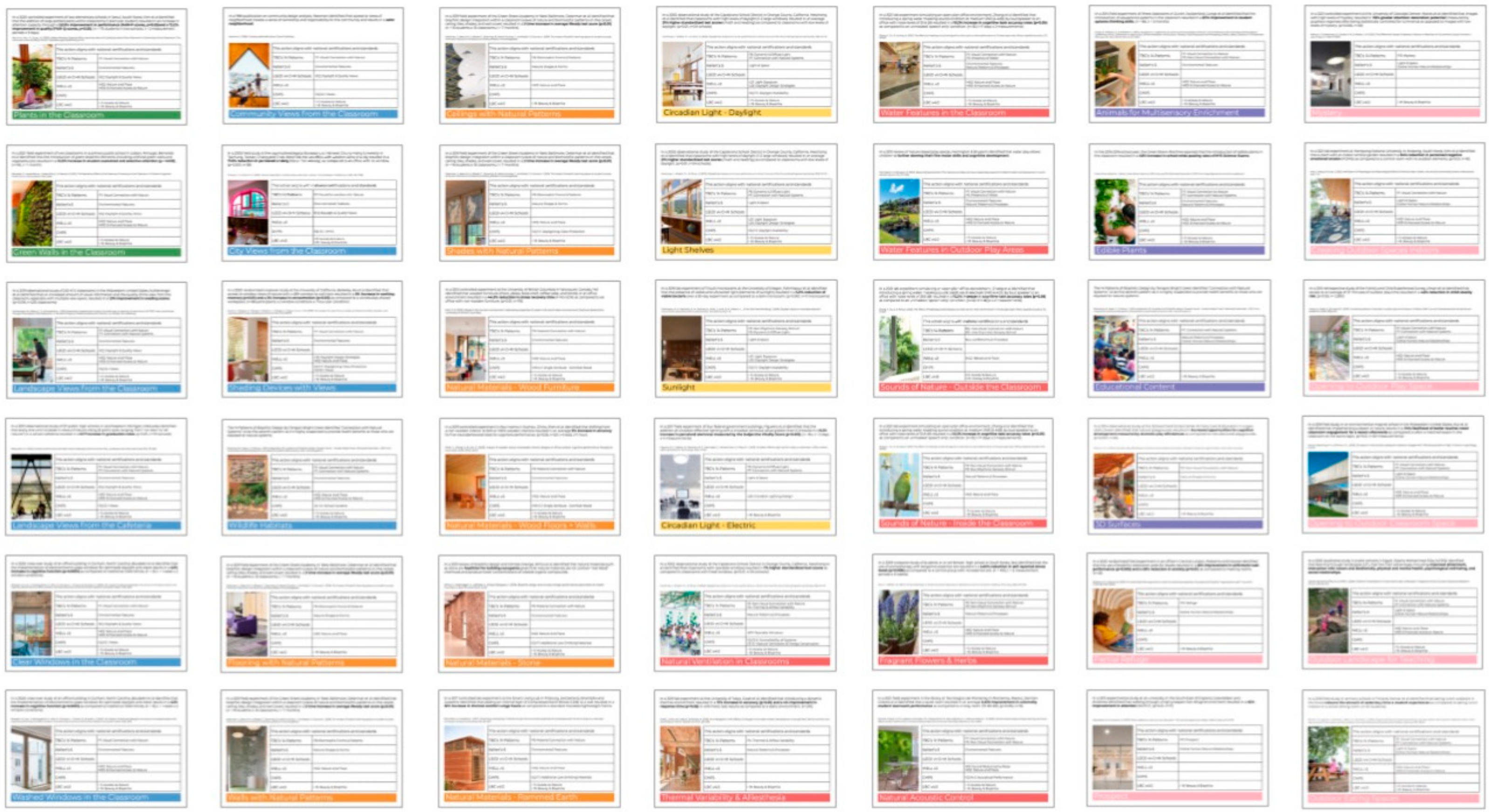
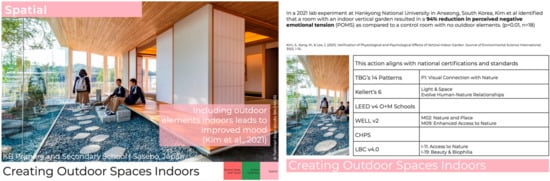
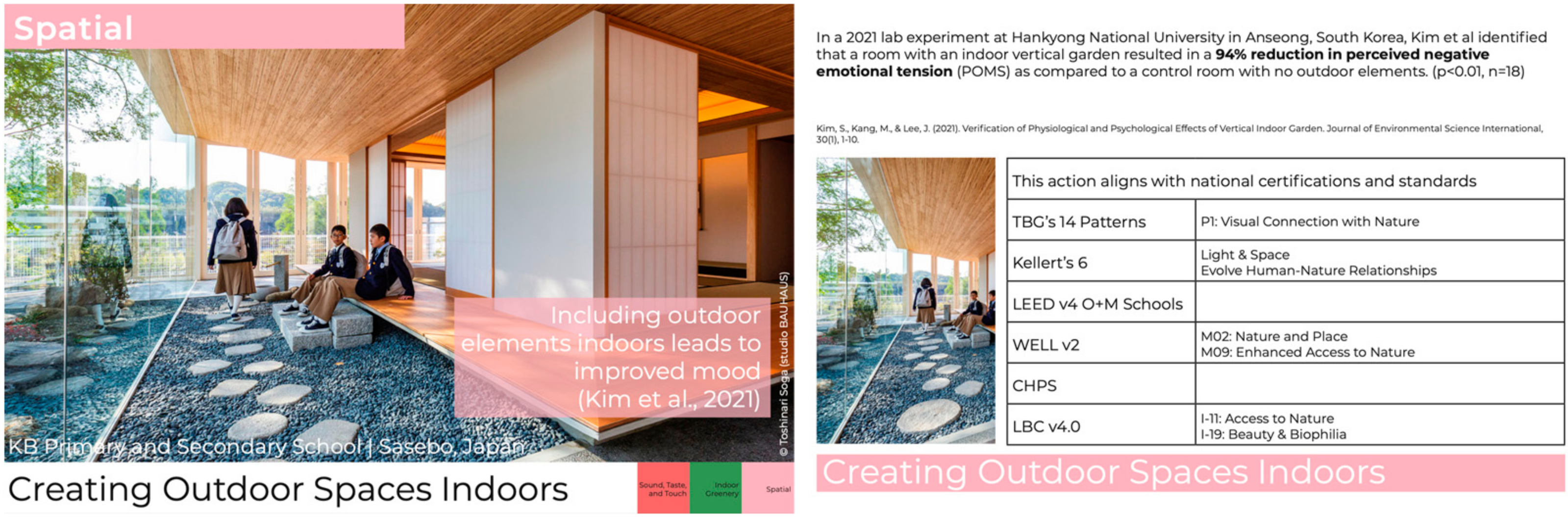
Based on this taxonomy, 42 cards were created with one card for each strategy (Figure 5). Each of the cards provided a brief summary of the strategy and a visual illustration of the strategy in practice on the front of the card, and the benefits of implementing the strategy based on a literature review, as well as a matrix of how the strategy aligned with the national standards and certifications on the back of the card (Figure 6). The standards and certifications included in the scope of the cards were LEED, WELL, CHPS (Collaborative for High Performing Schools), and LBC v4.0 (Living Building Challenge version 4.0).
Figure 5.
Full card set [12,13,15,18,19,24,25,26,27,28,29,30,31,32,33,34,35,36,37,38,39,40,41,42,43,44,45,46,47].
Figure 6.
Creating Outdoor Spaces Indoors card front and back [20].
3.2. Testing Stakeholder Perception of the Biophilic Taxonomy
In order to evaluate the card set as a toolkit, a card sorting study was conducted in the spring of 2022. This study investigated the value of the 42 different biophilic retrofit strategies for K-12 students and faculty from the perspective of stakeholders, including teachers, school boards, school administrators, and parents, who ranked the strategies based on level of positive impact and affordability.
The card sorting study collected a total of 74 responses from the K-12 school community stakeholders. Of these 74 respondents, 78.4% were teachers and school administrators. Additionally, 54.8% of respondents were 45 years or older and 73.6% of all respondents were female. The online survey also collected responses from 13 of 50 states, which included at least one respondent from all the main geographical regions of the United States.
Each category was analyzed and the average score of each category was identified capturing the benefits of both impact and affordability (Table 1). The scores ranged from −4 to 4. Based on this, Interaction and Engagement, as a category, scored the highest with an average score of 1.67. As a category, Biophilic Finishes scored the lowest at −0.85. It should be noted that there were different numbers of cards in each category, with some ranked more impactful and affordable than others.
Table 1.
Average biophilic category scores.
While not every participant identified all 42 biophilic retrofit strategies in the card set as having any positive impact, all strategies had at least 77% of participants agree that there was some level of perceived positive impact on student and faculty outcomes. This is aligned with the current published research that appears on the back of the cards.
In addition to the overall category scoring analysis, subsets in each of the seven categories were separately analyzed to identify the strategies per category that were deemed the most impactful by the participants of this study. The cards within each category were compared to each other using statistical analysis based on the average scores of each card derived from the scoring approach which merges perceived level of impact and affordability as previously described (Figure 3).
In the Indoor Greenery category, plants in the classroom were identified to be the most impactful and affordable strategy for student and teacher outcomes at 95.9%, as compared to green walls at 37.5% (p = 0.00).
In the Views category, five of the eight strategies were identified to have a significant perceived impact on impact and affordability—clear glass windows, washed windows, landscape views from the classroom, wildlife habitats, and shading devices enabling views (p = 0.0002). Of these five, clear glass windows scored the highest with 75.3% of participants identifying it as having a high level of impact, and 98.6% deeming clear glass windows as having at least some level of positive impact on student and teacher outcomes.
Among the eight strategies in the Biophilic Finishes category, wooden furniture was identified to be the most impactful and affordable strategy for student and teacher outcomes (p = 0.017). In general, Biophilic Finishes had the most strategies being perceived by survey respondents as both low impact and expensive (−4). However, wooden furniture was perceived to be significantly more impactful and affordable than the other seven strategies with 47.8% of participants who identified the strategy as having a high impact level.
Of the four strategies in the Light category, both sunlight and circadian daylight were identified to have significant impact and affordability as compared to light shelves and electric circadian lighting (p = 0.00). Based on the results of the survey, 100% of all participants felt that sunlight would certainly have a positive impact on students and teachers, from low to high. This was the only strategy of the 42 strategies in the taxonomy that all 74 participants universally agreed would have positive impact.
Of the eight strategies in the Natural Sound, Taste, and Touch category, four were identified to have a significant positive impact and affordability—fragrant flowers and herbs, natural ventilation in the classroom, water feature outdoors, and sounds of nature from outside (p = 0.00). Of these four, fragrant flowers and herbs scored the highest with 55.7% of participants ranking the strategy as high impact.
Of the four strategies in the Interaction and Engagement category, both nature educational content and animals in the classroom were identified to have significant impact and affordability (p = 0.00). Of these two, nature educational content scored the highest with 48.5% of participants who ranked the strategy identifying it as a both high impact and affordable (+4).
Lastly, in the Spatial category, five of the eight strategies were identified to have significant impact and affordability—classroom opening to outdoors, opening to outdoor play space, outdoor landscape for teaching, partial refuge, and outdoor eating spaces (p = 0.00). Of these five, classrooms opening to the outdoors scored the highest with 83.3% of participants ranking the strategy as high impact, although only 12.5% felt it was both high impact and affordable.
In addition to the strategy ranking, the survey also asked stakeholders about additional biophilic retrofit strategies that were not included in the taxonomy and card set, that could be potentially added into the taxonomy. These strategies have yet to be reviewed and researched, but included:
- Natural patterns for air diffusers;
- Improving window area and view factors;
- Outdoor community gardens;
- Messy outdoor classrooms;
- Skylights;
- Dynamic light patterns (e.g., filtered/shaded skylights, programmable light systems);
- Material and tactile experience of nature.
The last analysis completed for this stakeholder perception study was an overall analysis on the entire taxonomy to identify which strategies US K-12 schools might prioritize based on the combined level of positive impact and affordability. A total of 74 K-12 school stakeholders identified eight strategies with the highest impact and affordability—Sunlight, Nature Educational Content, Circadian Daylight, Fragrant Flowers and Herbs, Outdoor Eating Spaces, Clear Glass Windows in the Classroom, Washed Windows in the Classroom, and Plants in the Classroom—as compared to 34 other biophilic retrofit design strategies (p = 0.037).
4. Discussion
In light of the severe underfunding of K-12 schools, decision makers must pinpoint cost-effective yet impactful design solutions for current school structures. Extensive academic research has demonstrated that biophilic design strategies offer both quantitative and qualitative advantages for human health and performance. This research project reveals that there exist numerous affordable retrofit strategies to introduce biophilic design into existing schools. It is crucial to involve the community stakeholders in K-12 schools in the decision-making process to ensure the creation of quality learning environments that foster the wellbeing and success of students and teachers.
Based on the results of the survey, these eight strategies could be prioritized for K-12 school retrofit planning and designs in order to affordably create more beautiful and impactful spaces for students and teachers—Sunlight, Nature Educational Content, Circadian Daylight, Fragrant Flowers and Herbs, Outdoor Eating Spaces, Clear Glass Windows in the Classroom, Washed Windows in the Classroom, and Plants in the Classroom. However, it should be noted that this prioritization assumes that windows are a given in an existing classroom, which is not always the case. Four of these eight strategies rely on access to a window in the classroom (Sunlight, Circadian Daylight, Clear Windows in the Classroom, and Washed Windows in the Classroom). This underscores the significance of windows in K-12 classrooms and provides additional justification for banning windowless classrooms in the future.
Within the full set of 42 biophilic retrofit strategies, there are certain strategies that may not be entirely compatible, such as pairing “refuge” or “mystery” with “prospect” (see cards in the Supplementary Material), or pairing shading devices with views, circadian daylight, or sunlight. However, the eight strategies deemed most impactful and affordable, as defined by the community stakeholders, could be incorporated together since they are not inherently conflicting.
The purpose of the 42 retrofit action cards was to help stakeholders make informed decisions about which strategies would be the most appropriate for their existing K-12 school. It was important for decision makers and K-12 school stakeholders to meet and discuss potential opportunities and limitations for each of the 42 strategies relative to their school.
This study was undertaken during the height of the COVID-19 pandemic and necessitated both physical and electronic engagement to increase the number of community stakeholders. Future studies would improve the online interface to enable nuanced location of the cards on the quadrant grid to match the paper version. The paper version of the survey facilitated greater dialogue and exchange, and a greater comparative shuffling of strategies—an altogether deeper level of engagement in the exploration of biophilic retrofits for their school.
5. Conclusions
The importance of high-quality school learning environments for the development and wellbeing of children cannot be overstated. Many K-12 schools, particularly public schools in the US, face significant funding challenges that impact the quality of their facilities. Given the substantial amount of time students spend within these environments, it is critical to address these deficiencies through strategic design and retrofitting efforts that enhance both student and teacher performance.
Biophilic design, which leverages the human affinity for nature, offers a compelling approach to improving school environments. This study has highlighted the substantial benefits of biophilic design in educational settings, supported by a robust body of literature that links a series of biophilic retrofit design strategies to improved cognitive function, reduced stress, better engagement, and overall enhanced academic performance.
Through the development of a taxonomy of 42 biophilic retrofit strategies and a subsequent user perception study, the most impactful and affordable strategies for K-12 schools were identified. These include sunlight, nature educational content, circadian daylight, fragrant flowers and herbs, outdoor eating spaces, clear glass windows, washed windows, and plants in the classroom. These strategies were consistently rated highly for impact and affordability by community stakeholders, indicating their feasibility and effectiveness in enhancing school environments.
It is essential for decision makers to prioritize these biophilic strategies in retrofit planning to create healthier, more productive learning spaces. While certain strategies may not be universally applicable due to existing infrastructure limitations, this taxonomy provides a flexible toolkit on biophilic retrofit strategies that can be adapted to the specific needs and constraints of individual schools. Engaging school community stakeholders in this process ensures that the selected strategies align with the unique educational and environmental goals of each institution.
Supplementary Materials
The following supporting information can be downloaded at: https://www.mdpi.com/article/10.3390/architecture4020024/s1, Figure S1: Printable card set.
Author Contributions
Conceptualization, K.L. and V.L.; methodology, K.L. and V.L.; formal analysis, K.L.; investigation, K.L.; writing—original draft preparation, K.L.; writing—review and editing, K.L. and V.L.; visualization, K.L.; supervision, V.L.; funding acquisition, K.L. All authors have read and agreed to the published version of the manuscript.
Funding
This research was funded by Carnegie Mellon University School of Architecture.
Institutional Review Board Statement
The study was conducted in accordance with the Declaration of Helsinki and approved by the Institutional Review Board of Carnegie Mellon University on 23 February 2022 (IRB ID: STUDY2022_00000031).
Informed Consent Statement
Informed consent was obtained from all subjects involved in the study.
Data Availability Statement
Data are unavailable due to privacy restrictions.
Conflicts of Interest
The authors declare no conflicts of interest. The funders had no role in the design of the study; in the collection, analyses, or interpretation of data; in the writing of the manuscript; or in the decision to publish the results.
References
- Cochran, E. The Impact of School Building Occupancy, Facility Characteristics and Neighborhood Attributes on Student Academic Performance and Health Outcomes. Ph.D. Thesis, Carnegie Mellon University, Pittsburgh, PA, USA, 2014. [Google Scholar]
- Filardo, M. 2021 State of Our Schools: America’s PK–12 Public School Facilities 2021; 21st Century School Fund: Washington, DC, USA, 2021. [Google Scholar]
- American Association of School Administrators. School Budgets 101—AASA. Available online: https://www.aasa.org/uploadedFiles/Policy_and_Advocacy/files/SchoolBudgetBriefFINAL.pdf (accessed on 17 March 2022).
- Alexander, D.; Lewis, L. Condition of America’s Public School Facilities: 2012–13 (NCES 2014-022); U.S. Department of Education. National Center for Education Statistics: Washington, DC, USA, 2014. [Google Scholar]
- National Center for Education Statistics. Schools and Staffing Survey (SASS). Available online: https://nces.ed.gov/surveys/sass/tables/sass0708_035_s1s.asp (accessed on 1 April 2022).
- Earthman, G.I. School Facility Conditions and Student Academic Achievement; UCLA’s Institute for Democracy, Education, & Access (IDEA): Los Angeles, CA, USA, 2002. [Google Scholar]
- ASCE. ASCE’s 2021 Infrastructure Report Card. Available online: https://infrastructurereportcard.org/cat-item/schools/ (accessed on 1 April 2022).
- Fromm, E. The Anatomy of Human Destructiveness; Macmillan: New York, NY, USA, 1964. [Google Scholar]
- Wilson, E.O. Biophilia; Harvard University Press: Cambridge, MA, USA, 1984. [Google Scholar]
- Kellert, S.R.; Heerwagen, J.; Mador, M. Biophilic Design: The Theory, Science and Practice of Bringing Buildings to Life; John Wiley & Sons: Hoboken, NJ, USA, 2008. [Google Scholar]
- Browning, W.D.; Ryan, C.O.; Clancy, J.O. 14 Patterns of Biophilic Design; Terrapin Bright Green LLC: New York, NY, USA, 2014. [Google Scholar]
- Shen, J.; Zhang, X.; Lian, Z. Impact of wooden versus nonwooden interior designs on office workers’ cognitive performance. Percept. Mot. Ski. 2020, 127, 36–51. [Google Scholar] [CrossRef] [Scilit] [PubMed]
- Boubekri, M.; Lee, J.; MacNaughton, P.; Woo, M.; Schuyler, L.; Tinianov, B.; Satish, U. The impact of optimized daylight and views on the sleep duration and cognitive performance of office workers. Int. J. Environ. Res. Public Health 2020, 17, 3219. [Google Scholar] [CrossRef] [Scilit] [PubMed]
- Ko, W.H.; Schiavon, S.; Zhang, H.; Graham, L.T.; Brager, G.; Mauss, I.; Lin, Y.W. The impact of a view from a window on thermal comfort, emotion, and cognitive performance. Build. Environ. 2020, 175, 106779. [Google Scholar] [CrossRef] [Scilit]
- Fahimipour, A.K.; Hartmann, E.M.; Siemens, A.; Kline, J.; Levin, D.A.; Wilson, H.; Betancourt-Román, C.M.; Brown, G.Z.; Fretz, M.; Van Den Wymelenberg, K.; et al. Daylight exposure modulates bacterial communities associated with household dust. Microbiome 2018, 6, 175. [Google Scholar] [CrossRef] [Scilit] [PubMed]
- Figueiro, M.G.; Kalsher, M.; Steverson, B.C.; Heerwagen, J.; Kampschroer, K.; Rea, M.S. Circadian-effective light and its impact on alertness in office workers. Light. Res. Technol. 2019, 51, 171–183. [Google Scholar] [CrossRef] [Scilit]
- Loftness, V.; Aziz, A.; Choi, J.; Kampschroer, K.; Powell, K.; Atkinson, M.; Heerwagen, J. The value of post-occupancy evaluation for building occupants and facility managers. Intell. Build. Int. 2009, 1, 249–268. [Google Scholar] [CrossRef]
- Gwak, J.; Shino, M.; Ueda, K.; Kamata, M. An investigation of the effects of changes in the indoor ambient temperature on arousal level, thermal comfort, and physiological indices. Appl. Sci. 2019, 9, 899. [Google Scholar] [CrossRef] [Scilit]
- Zhang, Y.; Ou, D.; Kang, S. The effects of masking sound and signal-to-noise ratio on work performance in Chinese open-plan offices. Appl. Acoust. 2021, 172, 107657. [Google Scholar] [CrossRef] [Scilit]
- Kim, S.; Kang, M.; Lee, J. Verification of Physiological and Psychological Effects of Vertical Indoor Garden. Environ. Sci. Int. 2021, 30, 1–10. [Google Scholar] [CrossRef] [Scilit]
- Kellert, S.R. Building for Life: Designing and Understanding the Human-Nature Connection; Island Press: Washington, DC, USA, 2005. [Google Scholar]
- Jarvis, I.; Davis, Z.; Sbihi, H.; Brauer, M.; Czekajlo, A.; Davies, H.W.; Gergel, S.E.; Guhn, M.; Jerrett, M.; van den Bosch, M.; et al. Assessing the association between lifetime exposure to greenspace and early childhood development and the mediation effects of air pollution and noise in Canada: A population-based birth cohort study. Lancet Planet. Health 2021, 5, e709–e717. [Google Scholar] [CrossRef] [Scilit] [PubMed]
- Wijesooriya, N.; Brambilla, A. Bridging biophilic design and environmentally sustainable design: A critical review. J. Clean. Prod. 2021, 283, 124591. [Google Scholar] [CrossRef] [Scilit]
- Chang, C.Y.; Chen, P.K. Human response to window views and indoor plants in the workplace. HortScience 2005, 40, 1354–1359. [Google Scholar] [CrossRef] [Scilit]
- Fell, D.R. Wood in the Human Environment: Restorative Properties of Wood in the Built Indoor Environment. Ph.D. Thesis, University of British Columbia, Vancouver, BC, Canada, 2010. [Google Scholar]
- Seo, J.Y. The effects of aromatherapy on stress and stress responses in adolescents. J. Korean Acad. Nurs. 2009, 39, 357–365. [Google Scholar] [CrossRef] [Scilit] [PubMed]
- Kim, H.-H.; Yeo, I.-Y.; Lee, J.-Y. Higher Attention Capacity After Improving Indoor Air Quality by Indoor Plant Placement in Elementary School Classrooms. Hortic. J. 2020, 89, 319–327. [Google Scholar] [CrossRef] [Scilit]
- Bernardo, F.; Loupa-Ramos, I.; Matos Silva, C.; Manso, M. The Restorative Effect of the Presence of Greenery on the Classroom in Children’s Cognitive Performance. Sustainability 2021, 13, 3488. [Google Scholar] [CrossRef] [Scilit]
- Gatersleben, B.; Andrews, M. When walking in nature is not restorative—The role of prospect and refuge. Health Place 2013, 20, 91–101. [Google Scholar] [CrossRef] [Scilit] [PubMed]
- Marois, A.; Charbonneau, B.; Szolosi, A.M.; Watson, J.M. The Differential Impact of Mystery in Nature on Attention: An Oculometric Study. Front. Psychol. 2021, 12, 759616. [Google Scholar] [CrossRef] [Scilit] [PubMed]
- Roskams, M.; Haynes, B. A randomised field experiment to test the restorative properties of purpose-built biophilic “regeneration pods”. Corp. Real Estate 2020, 22, 297–312. [Google Scholar] [CrossRef] [Scilit]
- Kuo, M.; Browning, M.H.; Penner, M.L. Do lessons in nature boost subsequent classroom engagement? Refueling students in flight. Front. Psychol. 2018, 8, 2253. [Google Scholar] [CrossRef] [Scilit] [PubMed]
- Matsuoka, R.H. Student performance and high school landscapes: Examining the links. Landsc. Urban Plan. 2010, 97, 273–282. [Google Scholar] [CrossRef] [Scilit]
- Africa, J.; Heerwagen, J.; Loftness, V.; Ryan Balagtas, C. Biophilic design and climate change: Performance parameters for health. Front. Built Environ. 2019, 5, 28. [Google Scholar] [CrossRef] [Scilit]
- Ansari, A.; Pettit, K.; Gershoff, E. Combating obesity in head start: Outdoor play and change in children’s BMI. J. Dev. Behav. Pediatr. JDBP 2015, 36, 605. [Google Scholar] [CrossRef] [Scilit] [PubMed]
- Romar, J.E.; Enqvist, I.; Kulmala, J.; Kallio, J.; Tammelin, T. Physical activity and sedentary behaviour during outdoor learning and traditional indoor school days among Finnish primary school students. J. Adventure Educ. Outdoor Learn. 2019, 19, 28–42. [Google Scholar] [CrossRef] [Scilit]
- Osama Mohammed Fikry, N.; ElFiki, S. Teachers’ Interpretation of “Learning through Landscapes” in Egyptian School Grounds. Engineering Research Journal 2020, 168, 325–342. [Google Scholar] [CrossRef] [Scilit]
- Kuhlenengel, M.; Waters, C.E.; Konstantzos, I. Assessing the impact of outside view on learning: A close look to EN 17037 ‘view out’ practices through the analysis of 220 classrooms. J. Phys. Conf. Ser. 2019, 1343, 012159. [Google Scholar] [CrossRef] [Scilit]
- Determan, J.; Akers, M.A.; Albright, T.; Browning, B.; Martin-Dunlop, C.; Archibald, P.; Caruolo, V. The Impact of Biophilic Learning Spaces on Student Success; American Institute of Architecture, Building Research Knowledgebase: New York, NY, USA, 2019. [Google Scholar]
- Heschong, L.; Wright, R.L.; Okura, S. Daylighting impacts on human performance in school. J. Illum. Eng. Soc. 2002, 31, 101–114. [Google Scholar] [CrossRef] [Scilit]
- Green Bronx Machine. Available online: https://greenbronxmachine.org/about/ (accessed on 8 November 2021).
- Junge, R.; Wilhelm, S.; Hofstetter, U. Aquaponic in classrooms as a tool to promote system thinking. In Proceedings of the Conference on Agriculture, Environmentalism, Horticulture, Floristics, Food Production and Processing, Strahinj, Naklo, Slovenia, 14–15 November 2014. [Google Scholar]
- Damián-Chávez, M.M.; Ledesma-Coronado, P.E.; Drexel-Romo, M.; Ibarra-Zárate, D.I.; Alonso-Valerdi, L.M. Environmental noise at library learning commons affects student performance and electrophysiological functioning. Physiol. Behav. 2021, 241, 113563. [Google Scholar] [CrossRef] [Scilit] [PubMed]
- Brambilla, A.; Jusselme, T. Preventing overheating in offices through thermal inertial properties of compressed earth bricks: A study on a real scale prototype. Energy Build. 2017, 156, 281–292. [Google Scholar] [CrossRef] [Scilit]
- Herrington, S.; Brussoni, M. Beyond physical activity: The importance of play and nature-based play spaces for children’s health and development. Curr. Obes. Rep. 2015, 4, 477–483. [Google Scholar] [CrossRef] [Scilit] [PubMed]
- Newman, O. Creating Defensible Space; Diane Publishing: Collingdale, PA, USA, 1996. [Google Scholar]
- Drown, K.K.C. Dramatic Play Affordances of Natural and Manufactured Outdoor Settings for Preschool-Aged Children; Utah State University: Logan, UT, USA, 2014. [Google Scholar]

Disclaimer/Publisher’s Note: The statements, opinions and data contained in all publications are solely those of the individual author(s) and contributor(s) and not of MDPI and/or the editor(s). MDPI and/or the editor(s) disclaim responsibility for any injury to people or property resulting from any ideas, methods, instructions or products referred to in the content. |
© 2024 by the authors. Licensee MDPI, Basel, Switzerland. This article is an open access article distributed under the terms and conditions of the Creative Commons Attribution (CC BY) license (https://creativecommons.org/licenses/by/4.0/).