
Abstract
Torrential flows are hazardous hydro-geomorphological phenomena characterized by sudden water discharge and intense sediment transport. They occur in mountainous areas where hydrometeorological monitoring is often limited or absent. The lack of such data hinders the identification of flow types and sediment transport conditions, reducing the effectiveness of mitigation measures. To address this issue, the current study focuses on geomorphic characteristics of torrential watersheds and identifies indirect indicators of torrential activity. The sedimentological and geomorphic signatures of torrential flows in the lower Damdere River catchment (Eastern Rhodopes Mountains, southern Bulgaria) were characterized. To capture inter-annual variability in torrential activity and differences between the Damdere and its tributary the Duandere, we sampled riverbed deposits. We also sampled areas upstream and downstream of the check dam to assess its influence. Samples were analyzed for grain size distribution, petrography, and mineralogy (X-ray diffraction). Results show contrasting controls on sediment supply and transport: the Duandere delivers relatively coarse material, whereas the Damdere attains higher transport capacity during torrential events. The check dam is largely infilled and exerts only local effects by trapping finer sediments upstream. Downstream, the channel retains its torrential character. Inter-annual comparison upstream of the structure shows sediment fining linked to lower flows. Petrographic and XRD data point to mechanically driven erosion and rapid sediment transfer. The results underline the importance of geological–geomorphological indicators in the lack of long-term monitoring in similar mountain catchments and can support flood risk management.
1. Introduction
Torrential flows are natural phenomena characterized by high-velocity channelized water movement and substantial sediment transport. Their propagation frequently results in torrential or debris floods—hazardous hydro-geomorphic events that occur suddenly and display distinct hydrological and sedimentary regimes. Understanding the nature of torrential flows is essential for effective planning and implementation of prevention and mitigation measures, in line with the EU Floods Directive (2007/60/EC) and the Water Framework Directive (2000/60/EC). Catchments prone to torrential flows typically exhibit highly dynamic hydro-geomorphic conditions determined by steep slopes, shallow soils, limited infiltration capacity, and rare vegetation. Intense rainfall acts as a triggering factor when these predisposing conditions are met, with rainfall intensity and critical precipitation thresholds being key parameters for event prediction [1,2,3,4]. However, many mountainous areas most susceptible to torrential floods and debris flows lack hydrometeorological monitoring networks, which makes it necessary to rely on geomorphic evidence and field-based indicators to assess torrential activity. In this context, knowledge of the geological and geomorphological framework contributes substantially to understanding the initiation, movement, and propagation mechanisms of torrential flows.
Numerous studies emphasize sediment characteristics as key indicators of torrential flow events [5,6,7,8,9,10]. Deposited materials exhibit complex behavior controlled by interactions among geological, geomorphological, and hydrological factors. Parameters such as grain size distribution, shape, and orientation provide valuable insights into transport dynamics, flow type and energy, and depositional conditions [11,12,13,14,15,16]. A large gravel content indicates higher energy of the transport. Poorly sorted deposits show high turbulence of the flow. Furthermore, petrographic features and mineralogical composition of sediments are critical for identifying sediment sources, reconstructing transport pathways, and clarifying sedimentation mechanisms [9,17]. Variations in sediment mineralogy during storm events can give information about the mechanisms of sediment transport and depositional processes [18]. For example, if the mineral composition in the upper course is rich in quartz and feldspars, while in the lower course it is dominated by clay minerals, this indicates progressive downstream fining and the accumulation of secondarily reworked fine-grained sediments—likely derived from the erosion of weathered materials on lower slopes. In other words, the source of the clays is not the headwater area but local erosional processes in the middle section of the valley. In addition to indicating sediment provenance, mineralogical composition also influences the physical behavior of torrential flows. As demonstrated by De Haas et al. [6], an increase in clay content generally enhances both the velocity and runout distance of highly concentrated flows. However, when the clay fraction becomes excessively high, the resulting increase in fluid viscosity can lead to a reduction in flow velocity and mobility [9]. These contrasting effects highlight the complex rheological behavior of sediment–water mixtures and underscore the importance of mineralogical composition in controlling the dynamics and depositional patterns of torrential flows.
The review of published studies shows that grain size statistical parameters are among the most commonly used indicators for interpreting sediment transport processes and depositional environments [8,19]. In contrast, X-ray diffraction (XRD) is primarily applied to identify source areas and trace transport pathways. Although XRD analysis can also provide information for understanding sediment dynamics in torrential watersheds and for identifying the types of flows, its use for this purpose remains comparatively limited [9].
Building upon the above, the present study investigates a torrential flow area, based on geological–geomorphological indicators at a local scale. In case of absence of hydrometeorological monitoring on the watershed, the aim of the research is to give insights into the type of flow, transport, and deposition conditions in the area, based on the analyses of the deposits. The research was conducted in the lower part of the Damdere River catchment, located in a region which is highly susceptible to hazardous hydro-geomorphic processes—Eastern Rhodopes Mountains, southern Bulgaria [20,21,22,23]. To characterize the flow and debris flood deposition area, grain size analysis and XRD were conducted on the deposited riverbed materials. The current study describes temporal changes in sediment characteristics between 2023 and 2024 and the influence of check dams on sediment properties.
The analyses provide new insights into the sedimentological features and geomorphic dynamics associated with torrential flows in the region. The results confirm the applicability of integrating the grain size analysis and XRD for more accurate identification and classification of hydro-geomorphic events and contribute to improving hazard assessment and risk management in mountainous environments.
2. Study Area
2.1. Location and Geographical Environment
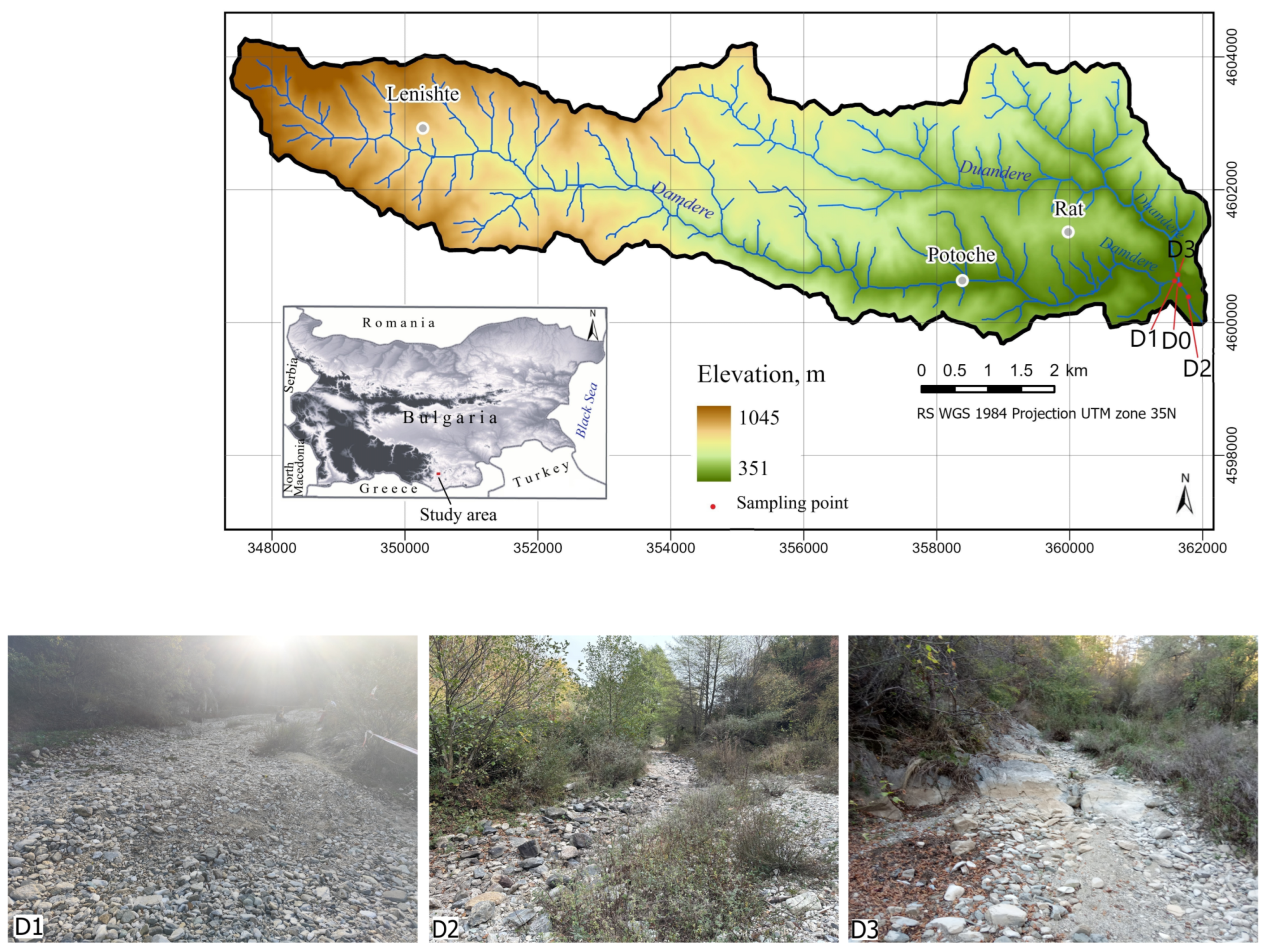
The watershed of the river Damdere is formed in the southern part of Bulgaria—Eastern Rhodopes mountains (Figure 1). This is a small watershed (around 41 km2), part of the larger basin of the river Varbitsa (1200 km2). The Duandere, the largest tributary of the Damdere River, joins from the left in the lower section of the Damdere watershed, approximately 4 km upstream from its confluence with the Varbitsa River. Our study site is located at the confluence of the rivers Damdere and Duandere. The upstream contributing area is approximately 39 km2. The length of Damdere to the confluence with Duandere is nearly 15 km, and the river Duandere is 9 km long. These morphometric parameters are determined using a 12.5 m resolution ALOS-PALSAR digital elevation model and applying Hydrology Tools of ArcGIS Pro, v. 3.4.0 (ESRI Inc., 2024). The watershed elevation varies from 351 to 1045 m. The average slope gradient of the watershed is 14.8, slightly higher in the Damdere sub-basin (15.4°) and lower in the Duandere sub-basin (13.8°) [23]. Overall, the studied watershed is characterized by intermittent streamflow, with its maximum in winter, and it almost dries up in the summer months, which is typical for most of the small rivers in this region [24]. Cases of intense rainfall during the autumn–winter period and rapid snowmelt in late winter and early spring create favorable conditions for torrential activity in the Damdere River watershed. Sparse vegetation cover also contributes to the propagation of torrential phenomena during the cold half of the year. To reduce erosion and sediment transport, several check dams have been constructed along the river course. Despite these upstream anti-erosion structures, the check dam located downstream of the Damdere–Duandere confluence has become filled with sediment. This reduces its anti-erosion effectiveness and increases the risk of debris flood. Although the catchment is highly susceptible to flash-flood events, no hydrometeorological monitoring stations are currently installed within its boundaries, which limits the assessment of flood hazard and vulnerability.
Figure 1.
Study area and sampling points location; views of the test sites: D1; D2; D3.
The catchment is sparsely populated, and, consequently, the direct flood risk to the population is relatively low. However, approximately 4 km downstream from the Duandere–Damdere confluence, a bridge connecting the regional center of Kardzhali with the municipal center of Djebel is exposed to danger. High flows that transport large amounts of coarse sediment—mainly boulders and gravel—pose a significant threat to the stability and function of this infrastructure.
2.2. Geological Settings
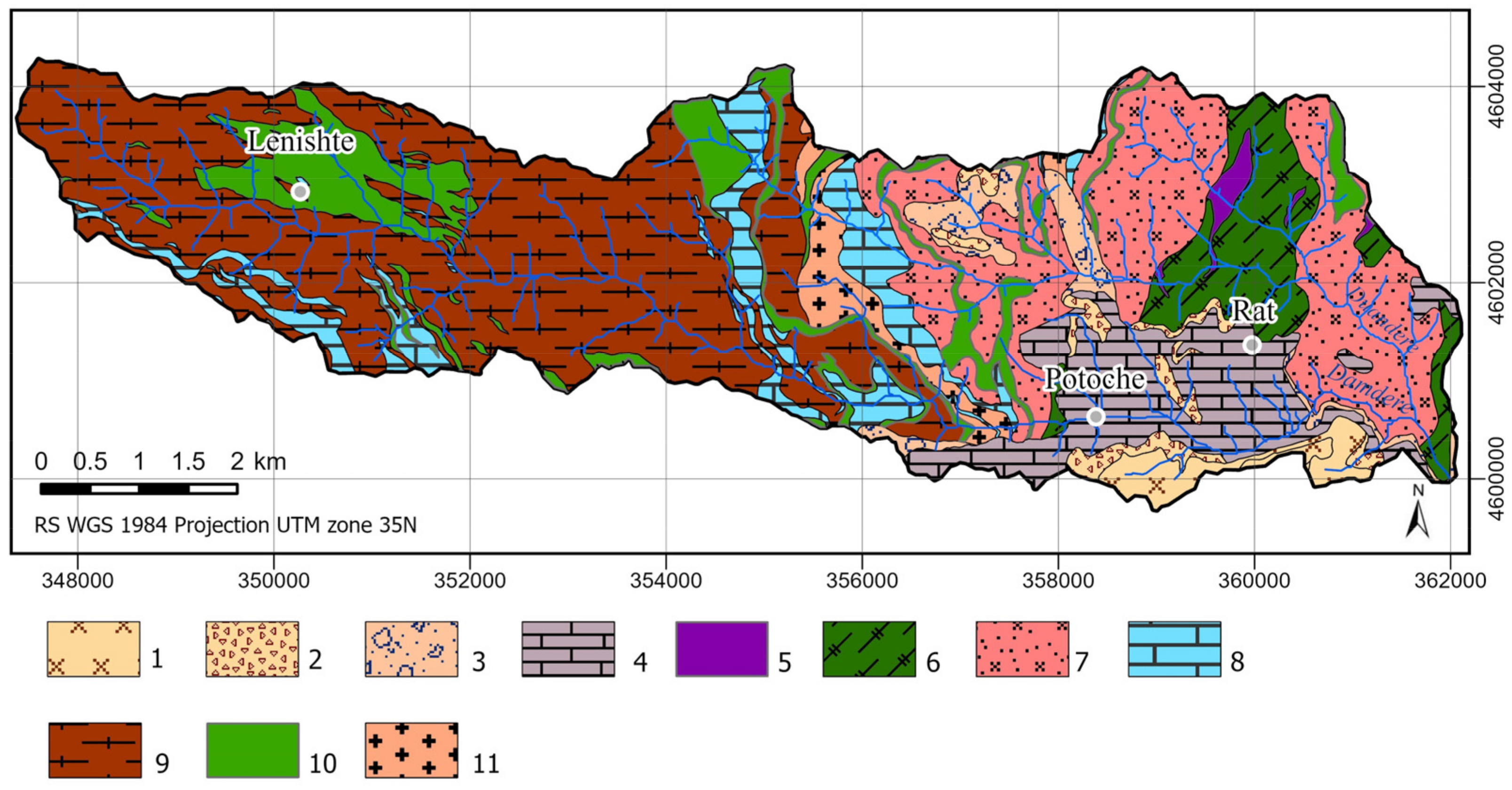
Regarding geology (Figure 2), the western/upper part of the studied watershed comprises predominantly migmatized biotite gneisses. Less voluminous marble layers occur interlayered with the gneisses [25]. Going east, the rock varieties change as sandstones, conglomerates, tuffs, and rhyolites are exposed in the region [26], as well as cavernous limestones.
Figure 2.
Lithological map (after [25,26], with modifications): 1. Ignimbrites; 2. Varied intermediate and felsic pyroclastic rocks; 3. Volcano–sedimentary unit—tuffs, sandstones and breccia conglomerates; 4. Organogenic limestones; 5. Ultramafic subvolcanic rocks; 6. Mylonites; 7. Aplitoid metagranites; 8. Marble; 9. Migmatized biotite gneisses; 10. Amphibolites; 11. Porphyritic granites.
In general, the watershed can be divided into an upper high-grade metamorphic part and a lower volcano–sedimentary part with small, felsic, hypabyssal intrusions. The rock structure in the metamorphic part of the watershed is characterized by the metamorphic layering and foliation of the rather strong crystalline rocks and the volcano–sedimentary part by the sedimentary and volcanic layering [27,28].
Regarding the resistance to weathering and erosion, the general impression is that pegmatite and aplite veins from the metamorphic complex are the most resistant, which occur in significant quantities in the sediment despite their relatively low abundance in the rock sequence. It is obviously due to their high quartz content and dense crystalline texture. Gneisses are also common followed by gneiss–schists [27]. Among the sedimentary rocks, quartz-rich sandstones exhibit the highest preservation potential.
3. Materials and Methods
The present study focuses on the analysis of the deposits in the riverbeds of the Damdere and the Duandere near the lowest check dam along the river course (Figure 1). The area is characterized by frequent occurrences of torrential phenomena, which determined its selection for the present study. According to information from the Regional Forestry Directorate in the town of Kardzhali, torrential events occur annually in this part of the catchment. Given the objective of the study—to determine the type of flows based on sediment characteristics—samples were collected from the riverbeds of the Damdere and Duandere rivers, near their confluence, and downstream of the check dam constructed immediately after their junction. Sampling of the surface layer of fluvial deposits was conducted in October 2023 and October 2024, during periods when there was no surface flow in the riverbed. Samples were collected from the Damdere River approximately 100 m upstream of the confluence of the Duandere River (site D1/2023; D1/2024); from the Duandere River about 500 m upstream of its confluence with the Damdere (site D3/2023); and immediately downstream of the confluence, before the check dam (site D0/2024). In October 2024, an additional sample was collected from riverbed deposits approximately 500 m downstream of the dam (site D2/2024). Grain size, XRD, and petrographic analyses were conducted to determine the properties of the deposits. The interpretation of the data provides information about the conditions of transport and accumulation, as well as the nature of the flows.
3.1. Grain Size Analysis
The fractions of riverbed surface sediments were separated in the Laboratory of Geochemistry at the University of Mining and Geology “St. Ivan Rilski” (Sofia) according to the Bulgarian State Standard [29]. Sieving was used for separation of the fractions > 63 µm and aerometric method for the fractions < 63 µm. Statistical parameters such as mean, standard deviation, skewness, and kurtosis were calculated using Gradistat 9.1 open software [30], based on the grain diameter values at the 5%, 16%, 50%, 84%, and 95% percentiles (φ5; φ16; φ50; φ84; φ95) [31].
The mean size of sediments serves as an indicator of their kinetic energy and is calculated using the following formula:
The standard deviation quantifies the variation in values from the mean. It is an indicator for sorting the grains in the sample, and in this relation it gives information about the transport conditions. This coefficient is computed using the following equation:
The coefficient of skewness measures how evenly fine and coarse particles are distributed around the modal value in a grain size curve. A positive or negative skewness indicates whether fine or coarse particles dominate. It is calculated as follows:
The coefficient of kurtosis measures the degree of peakness or flatness in a grain size distribution curve, indicating how concentrated the particle sizes are around the mean. A higher kurtosis value signifies a more peaked (leptokurtic) distribution, while a lower value indicates a flatter (platykurtic) distribution. It is calculated employing the following equation:
In addition to the grain size analysis, a morphoscopic analysis of large clasts (gravel-sized and larger particles) was conducted following [32,33]. The study examined clast shape, petrographic composition, and distinctive features to infer transport mechanisms and depositional environment. For this purpose, about 100 grains, randomly picked from each site according to the Wolman Pebble Count method [34], were manually measured along the three axes—a, b, and c (long, intermediate, and short). Clast shape was determined using the c/b and b/a ratios [32]. The petrographic composition was identified macroscopically on the basis of the predominant minerals and the clasts’ structural and textural characteristics. The data from the morphoscopic analysis helps clarify sedimentary dynamics and geomorphological processes in the torrential flow and watershed areas.
3.2. X-Ray Diffraction
X-ray diffraction (XRD) was conducted in the “X-Ray Diffraction” Research Laboratory at the University of Mining and Geology “St. Ivan Rilski” (Sofia). The measurements were performed using a Bruker D2 Phaser diffractometer (Bruker, Billerica, MA, USA) equipped with Cu radiation (λ = 1.54184). The instrument operated at 30 kV and 10 mA. Data were collected over a 2θ range of 3.5–90° with a step size of 0.02° and a counting time of 0.4 s per step. A total of 4265 steps were recorded, resulting in a total acquisition time of approximately 1800 s (30 min). The parameters of the diffraction analysis are given in Table 1. This setup provides high resolution suitable for phase identification, parameter determination, and analysis of mineral composition.
Table 1.
Parameters of XRD analysis.
XRD was conducted on the fine fraction (<63 µm; silt + clay) because this fraction represents the suspension matrix that controls the rheology of the flows. The matrix is, therefore, more diagnostic than the larger clasts. Before the XRD analysis, the fine fraction was separated by sieving and hand-ground to achieve homogenization. Samples D1/2023, D1/2024, D3/2023, and D0/2024 were analyzed.
4. Results
4.1. Grain Size Parameters
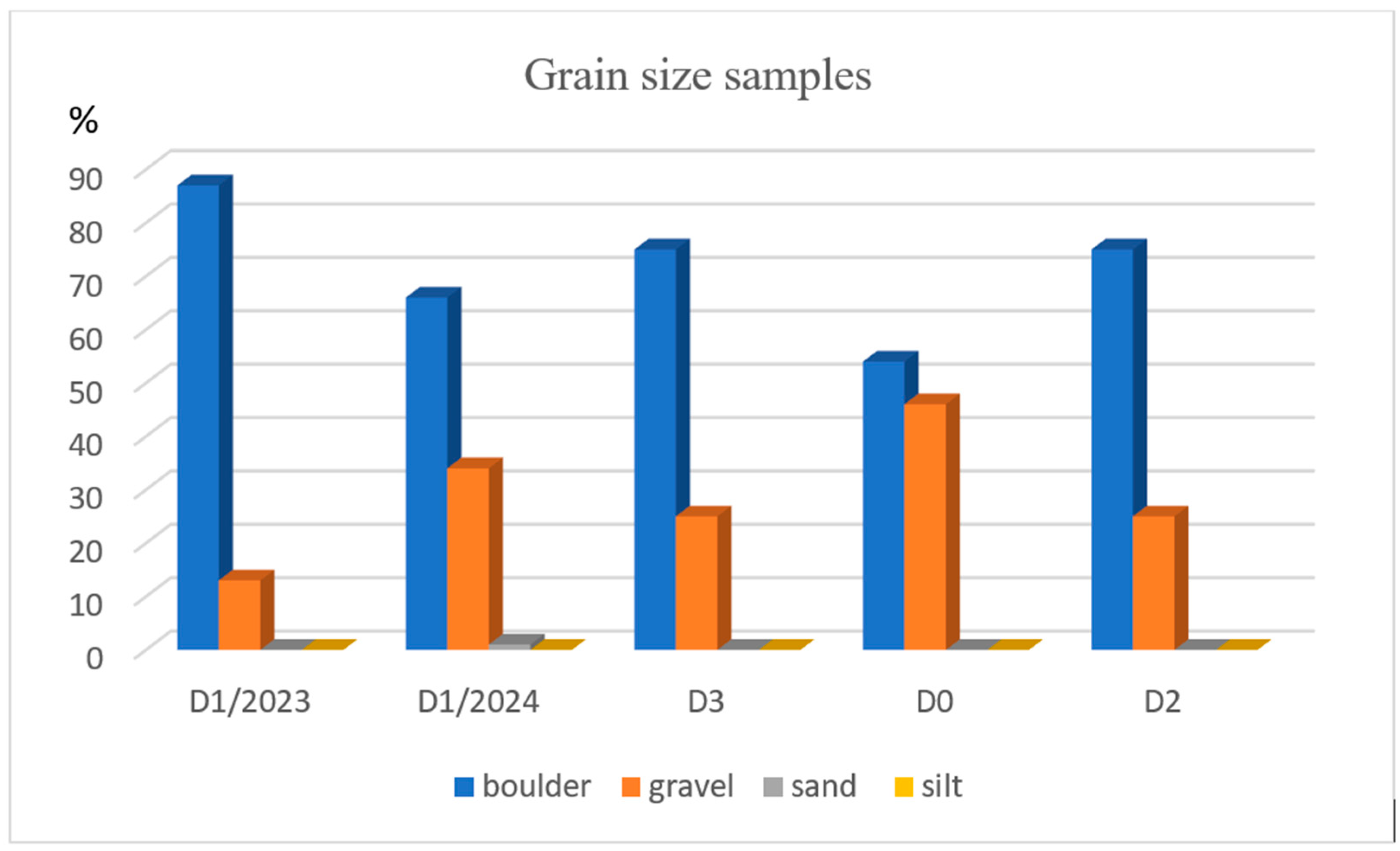
Grain size data are presented in а Table (Table 2) and а histogram (Figure 3) showing sediment distribution for each sample. The modified φ method (φ = −log2d, where d is grain size in mm) was used to characterize torrential flow materials. These results clarify sediment dynamics and depositional conditions in the Damdere River watershed.
Table 2.
Grain size statistical parameters in φ (phi).
Figure 3.
Grain size distribution at the sampling sites along the Damdere River.
Grain size analysis of the sediment samples indicates a predominance of coarse-grained material, ranging from very fine to fine gravel. Mean grain size values vary from –1.200 to –2.658 φ, reflecting generally coarse sediments characteristic of high-energy depositional environments associated with torrential flow processes. All samples are poorly sorted, with standard deviation values between 1.425 and 1.756. This indicates a wide range of particle sizes and limited hydraulic sorting. Skewness values range from –0.140 to +0.296, showing a predominance of fine skewness among most samples. One sample (D3/2023), however, exhibits a slightly coarse skewness, suggesting localized variations in sediment supply or flow energy. This may also be related to the steeper slopes (from 30° to 45°) in the lower reaches of the Duandere River which result in rapid slope runoff and poorly sorted clastic material. Kurtosis values range between 0.819 and 1.061, corresponding to mesokurtic to platykurtic distributions.
The comparison of sediment samples from D1/2023 and D1/2024 indicates that sediments have become finer in 2024, with the mean grain size decreasing from −2.658 to −1.795 (Table 2). Sorting has slightly worsened (from σ = 1.425 to 1.756), while the fine-skewed profile is maintained in both samples. The lower kurtosis in 2024 (0.819) suggests a flatter and more heterogeneous grain size distribution. Together, these changes suggest subtle modifications in depositional and transport dynamics, with a greater contribution of finer sediments and a wider range of particle sizes being deposited under variable energy conditions.
When comparing samples from D1/2023 (Damdere River) and D3/2023 (Duandere River), we observe notable differences in sediment characteristics between the riverbeds. The Damdere River (Mean = −2.658) carries slightly finer gravel compared to the Duandere River (Mean = −2.005), which may be due to differences in flow or sediment supply. Both rivers show poor sorting (1.425 for Damdere and 1.539 for Duandere), with the tributary (Duandere) displaying more variability due to heterogeneous sources and episodic transport. The sediment skewness also reveals that the Damdere River is fine-skewed (0.296), while the Duandere River is slightly coarse-skewed (−0.140), indicating varying energy conditions. Both rivers exhibit mesokurtic distributions (~1.05), reflecting moderately peaked particle sizes.
In addition to comparing sediment characteristics across rivers and over time, we analyzed samples from sites D0/2024 (upstream of the check dam) and D2/2024 (downstream of the check dam) to assess the dam’s impact on sediment transport and deposition processes. The upstream check dam sample consists of very fine gravel (mean = −1.200 φ) and poorly sorted sediments (σ = 1.595), displaying a nearly symmetrical distribution (skewness = −0.034) and a platykurtic distribution (kurtosis = 0.875). These characteristics indicate a heterogeneous sediment assemblage, where the reduced flow velocity upstream of the check dam promotes the deposition of a wide range of grain sizes. Conversely, the downstream check dam sample (D2/2024) displays a slightly coarser mean grain size (fine gravel, mean = −2.079 φ), with a slight increase in standard deviation (σ = 1.632), fine-skewed sediments (skewness = 0.147), and a distribution nearing mesokurtic (kurtosis = 0.963).
These results indicate that although dam construction affects sediment characteristics and partially modifies downstream grain size distributions, the geomorphological regime still supports episodic, high-energy torrential flows.
4.2. Morphoscopic Analysis of Large Particles
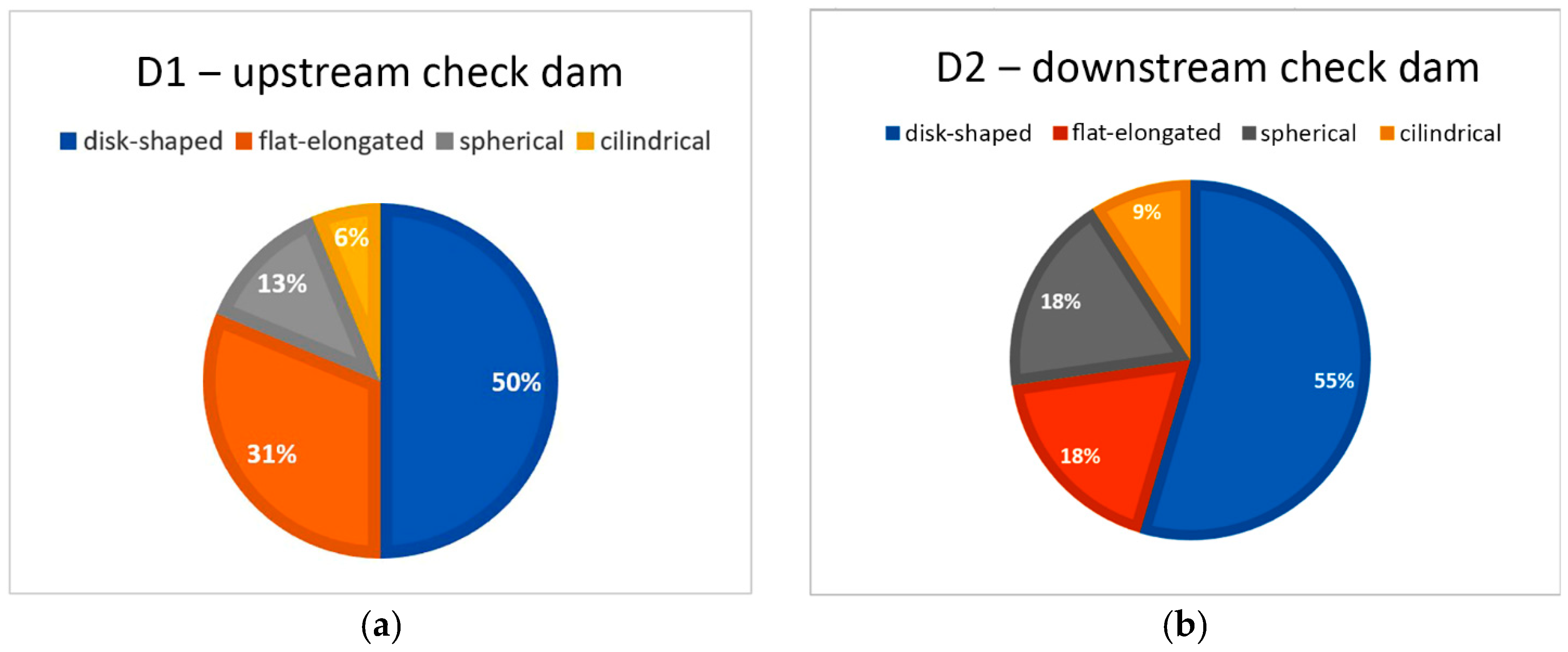
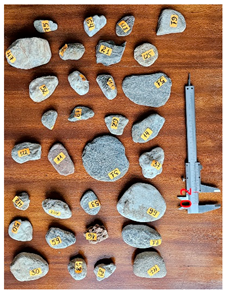
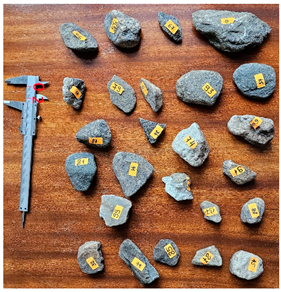
In the present study, morphoscopic analysis of the gravel and larger particles (clasts—gravel-sized and larger) was performed for sediment samples collected upstream and downstream of the check dam (D1/2024 and D2/2024). This provides insight into the dam’s influence on sediment dynamics and depositional textures within the torrential flow channel. The results are shown in Table 3 and Figure 4.
Table 3.
Morphoscopic parameters of the clasts in the sampling sites before and after the check dam.
Figure 4.
Grain shape: (a) upstream check dam; (b) downstream check dam.
The morphoscopic analysis conducted upstream (D1) and downstream (D2) of the check dam reveals notable changes in grain size, composition, and transport characteristics. Minimal grain dimensions increased downstream (D2/2024) compared to upstream (D1/2024), while maximal long and intermediate axes decreased slightly. Average grain sizes are larger downstream of the dam (D2: a = 6.0 cm, b = 4.1 cm, c = 2.2 cm; D1: a = 5.1 cm, b = 3.6 cm, c = 1.5 cm), indicating selective retention of finer material.
Most clasts both upstream and downstream the check dams display a high degree of roundness. In the samples collected upstream of the check dam, the clast assemblage is dominated by disk-shaped particles (50%), followed by flat–elongated forms (31%), spherical forms (13%), and cylindrical forms (6%). This distribution suggests that clast transport primarily occurred through dragging along the channel bed.
Downstream of the check dam, a distinct shift in clast morphology is observed. Disk-shaped clasts show a slight increase in proportion (55% of the total sample), retaining their dominance within the analyzed assemblage. In contrast, flat–elongated forms decrease markedly to 18%, while cylindrical clasts exhibit a notable increase to 18%. The proportion of spherical clasts shows a minor reduction to 9%. These morphological changes indicate a modification in flow dynamics and transport processes induced by the check dam, possibly reflecting reduced flow energy.
Regarding petrographic composition, the samples collected upstream of the dam are predominantly metamorphic rocks (mainly gneisses, with some schists and marble), followed by pegmatites and a minor proportion of sedimentary rocks (primarily limestones and subordinate sandstones). Metamorphic rocks continue to dominate downstream of the dam, followed by pegmatites; however, a higher proportion of volcanic rocks (tuffs) is observed, likely sourced from the left tributary, the Duandere.
4.3. XRD of Clay and Silt Fraction
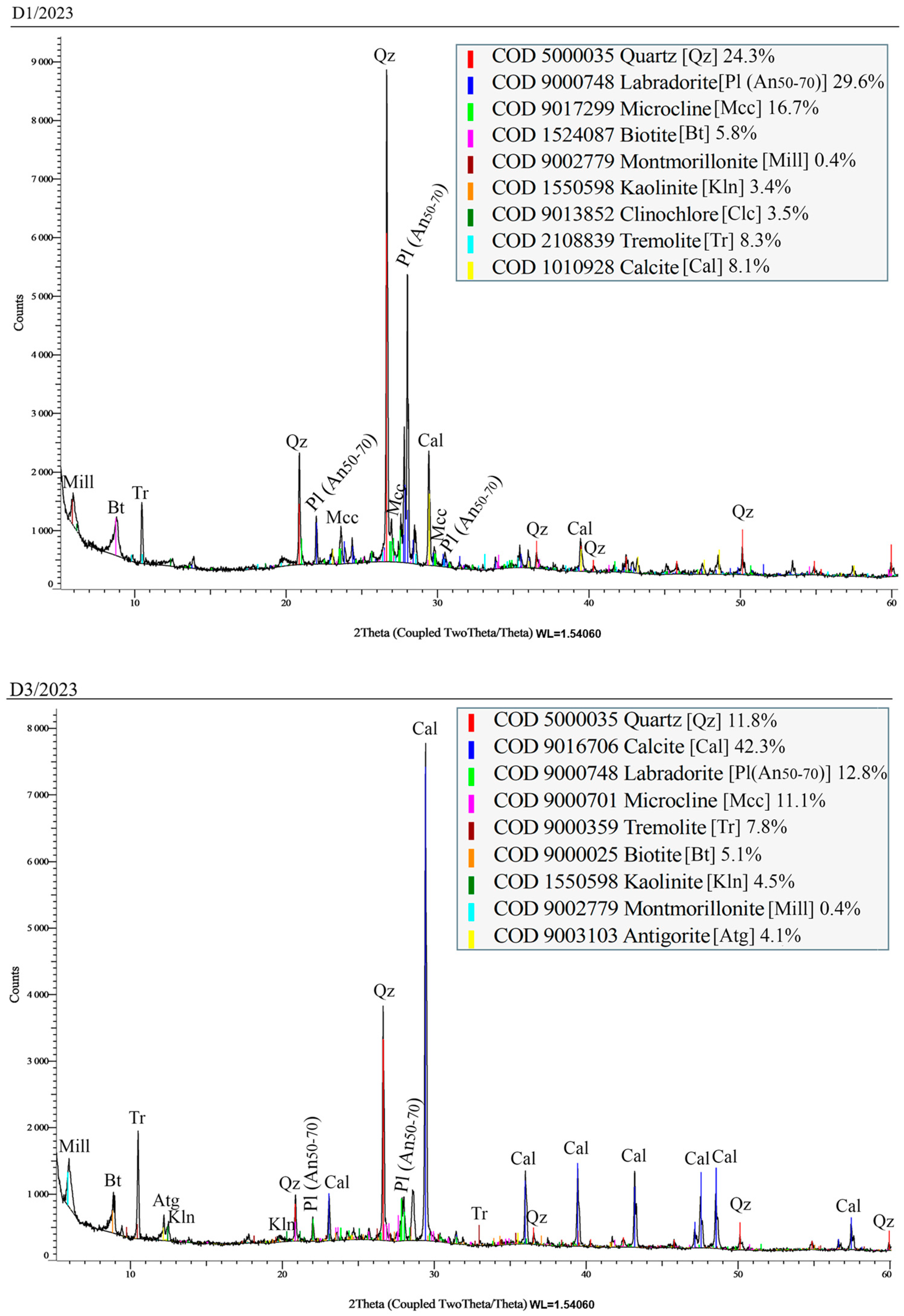
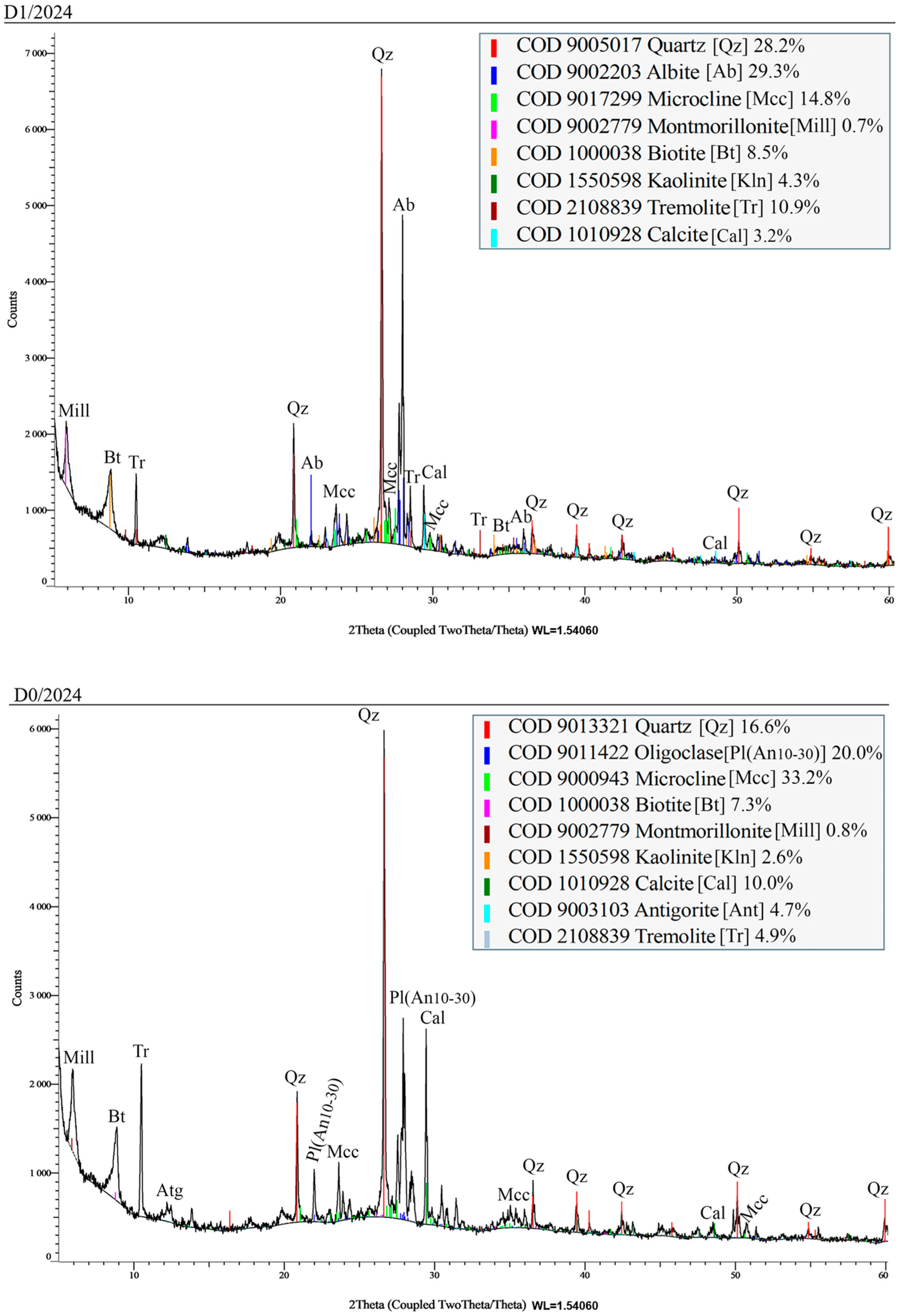
The results of XRD of fine fraction are given in Figure 5. All clearly notable reflections (peaks with strong intensities) in the polymineral sample were identified using licensed Diffrac.EVA v. 7.0 software with an integrated reference database. For all identified phases, references are indicated by their corresponding numbers in the legend (upper right corner of each diffractogram). The analysis reveals a broad spectrum of minerals, typical of river deposits.

Figure 5.
XRD diagrams from the analysis of riverbed sediments—fine fraction.
All analyzed samples show a high proportion of quartz and feldspars and a relatively low content of clay minerals. The presence of resistant minerals within the clay fraction of the sediments, particularly the dominance of quartz, indicates predominantly mechanical weathering, short transport distances, and high-energy flow conditions. These characteristics are typical of a torrential (flash-flood) environment. The considerable proportion of feldspars (albite, labradorite, oligoclase, and microcline), which are less stable than quartz yet occur in substantial amounts, further suggests limited chemical weathering and short sediment transport.
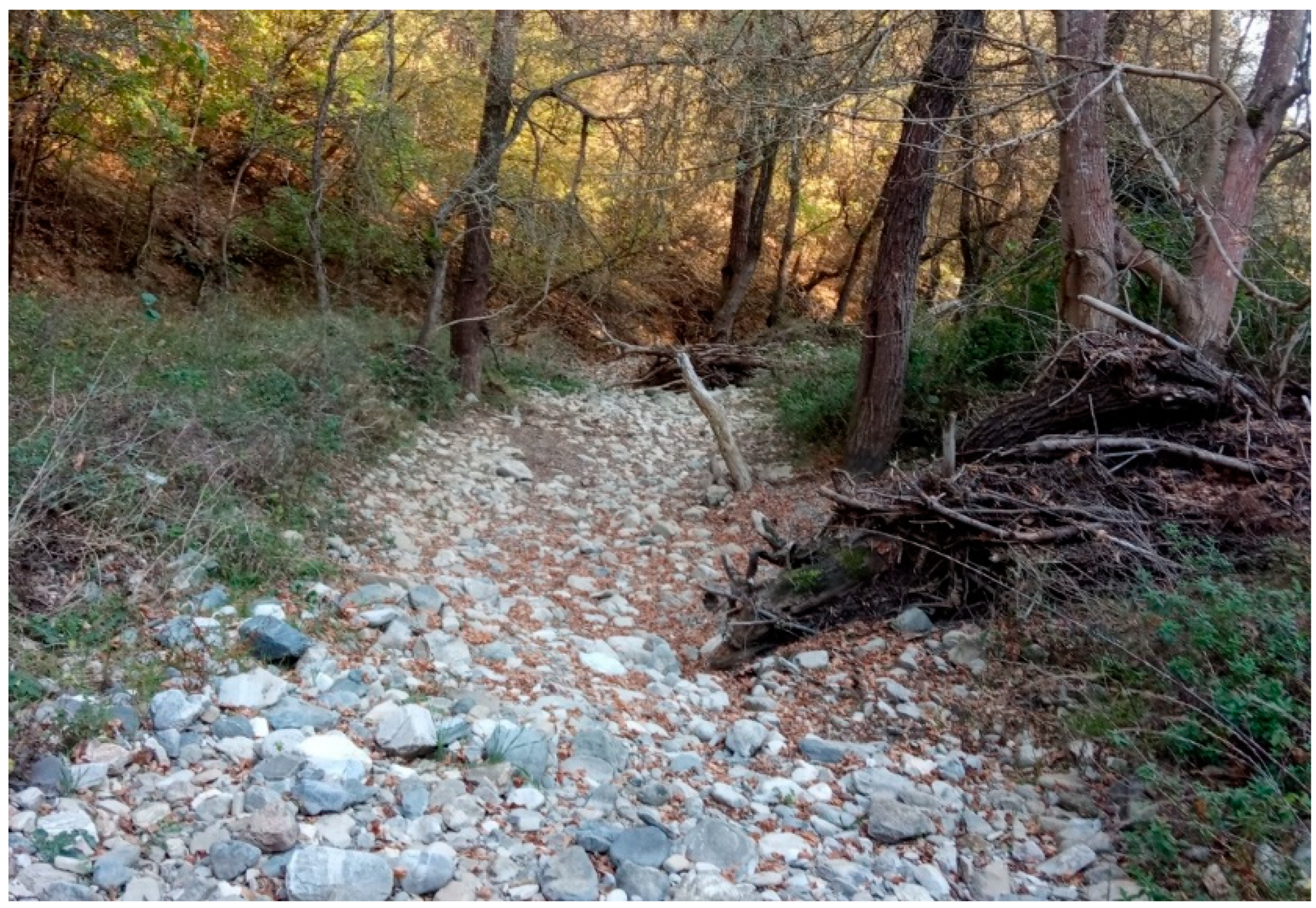
A notably high calcite content (over 40%) is observed in the sample from the lower part of the left tributary, the Duandere River (site D3/2023). In this watershed, metagranites and amphibolites generally predominate, but in contrast, the upper part of the catchment is characterized by exposures of gneisses and marble. The occurrence of calcite, a relatively unstable mineral, compared to quartz (Figure 5), likely reflects input from the upper catchment. This pattern suggests short sediment residence time and episodic high-energy flows. The accumulation of boulders, gravel, and woody debris along the flow course (Figure 6) further supports the torrential nature of the flow.
Figure 6.
The Duandere riverbed around 400 m before the confluence with the Damdere.
XRD data from the deposits formed after the confluence of the Damdere and Duandere streams (D0/2024) indicate an increased proportion of feldspars overall (oligoclase and microcline totaling 53.2%), which can be attributed to the contribution of the left tributary, the Duandere. The deposits also show a high quartz content and a very low proportion of clay minerals (Figure 5). These characteristics, together with the statistical coefficients derived from the grain size analysis, confirm rapid sediment transport, limited chemical weathering, and fluctuating water discharge within the stream. The presence of less stable minerals such as biotite and tremolite further supports the interpretation of minimal weathering. Overall, the stream exhibits high mechanical activity, typical of small mountainous catchments with intermittent flow.
The low proportion of pure clay minerals (kaolinite and montmorillonite) in the <63 µm fraction of all samples (3.4–5%) indicates predominantly mechanical processes (weathering and erosion), short-lived torrential dynamics, and limited transport from a nearby source.
5. Discussion
5.1. Grain Size Characteristics and Interpretation
Overall, the grain size characteristics of sampled riverbed sediments suggest deposition under episodic, high-energy conditions with minimal post-depositional reworking. These conditions are typical of torrential flow-dominated catchments in mountainous terrain. The predominance of coarse material (very fine to fine gravel; mean from –1.200 to –2.658 φ) reflects strong transport capacity and points to limited hydraulic sorting. The poor sorting is consistent with rapid sediment transport and deposition under high-energy flow conditions [31,35]. Such grain size patterns are indicative of torrential-flow and flash-flood processes in mountainous basins, where rapid runoff mobilizes heterogeneous sediments with little subsequent modification [36]. The uniformly poor sorting of all samples further supports deposition during episodic, high-energy transport events. In these cases, both coarse and fine fractions are rapidly deposited under fluctuating flow conditions [37]. Predominantly fine-skewed distributions suggest deposition under waning flow conditions [31]. A slightly coarse-skewed sample from the Duandere River indicates locally enhanced flow energy or coarser sediment input. The negative skewness values indicate the turbulent character of transport and deposition [38]. The observed differences in the kurtosis of the distribution (mesokurtic to platykurtic) suggest moderately peaked to flat grain size distributions. This is consistent with the textural heterogeneity typical of torrential flow deposits [39,40].
The comparison of sedimentological data from the Damdere (main channel) and Duandere (tributary) rivers highlights clear geomorphological and depositional differences within the system. The Damdere River is characterized by fine gravel deposited under high-energy flow, although the flow energy appears slightly lower than that of the Duandere River. This is supported by the grain size statistical parameters of samples D1/2023 and D3/2023 (Table 2). The fine skewness suggests brief periods of depositional quiescence or slackwater conditions following strong transport events. In contrast to the Damdere, the Duandere River contributes more heterogeneous material, reflecting its role as a tributary influenced by slope-derived inputs and episodic flows. The coarse skewness and poor sorting imply active sediment reworking [41]. These contrasts are crucial for understanding sediment transport dynamics, depositional patterns, and channel morphology across the river network.
Considering the changes in grain size parameters of samples collected from the riverbed upstream and downstream the check dam, the shift to a coarser and fine-skewed distribution is observed. This implies that the dam has modified sediment transport dynamics by retaining finer sediments upstream while allowing coarser materials to move downstream. According to Yousefi et al. [10], a decrease in average particle size from the upstream to the transfer zone indicated debris flow termination in the upstream section. In our case, the presence of coarser clasts downstream indicates active episodic debris flows. The poor sorting suggests that high-energy sediment transport processes continue to function, likely prompted by intense flows during extreme rainfall or snowmelt events, even with the dam’s presence. This emphasizes the necessity of implementing integrated watershed management approaches to ensure the sustainable functioning of dynamic mountain river systems such as the Damdere.
The shape of the clasts is an indicator of the mode of sediment transport. The results of the current study show that disk-shaped and flat–elongated shapes are predominant in the analyzed samples. This suggests that the material was transported mainly by dragging along the channel bed, as well as demonstrates high sediment concentration. Similar results were obtained in a study of debris flow deposits in the Struma River valley (southwestern Bulgaria), indicating similarity in the behavior of the flows [42].
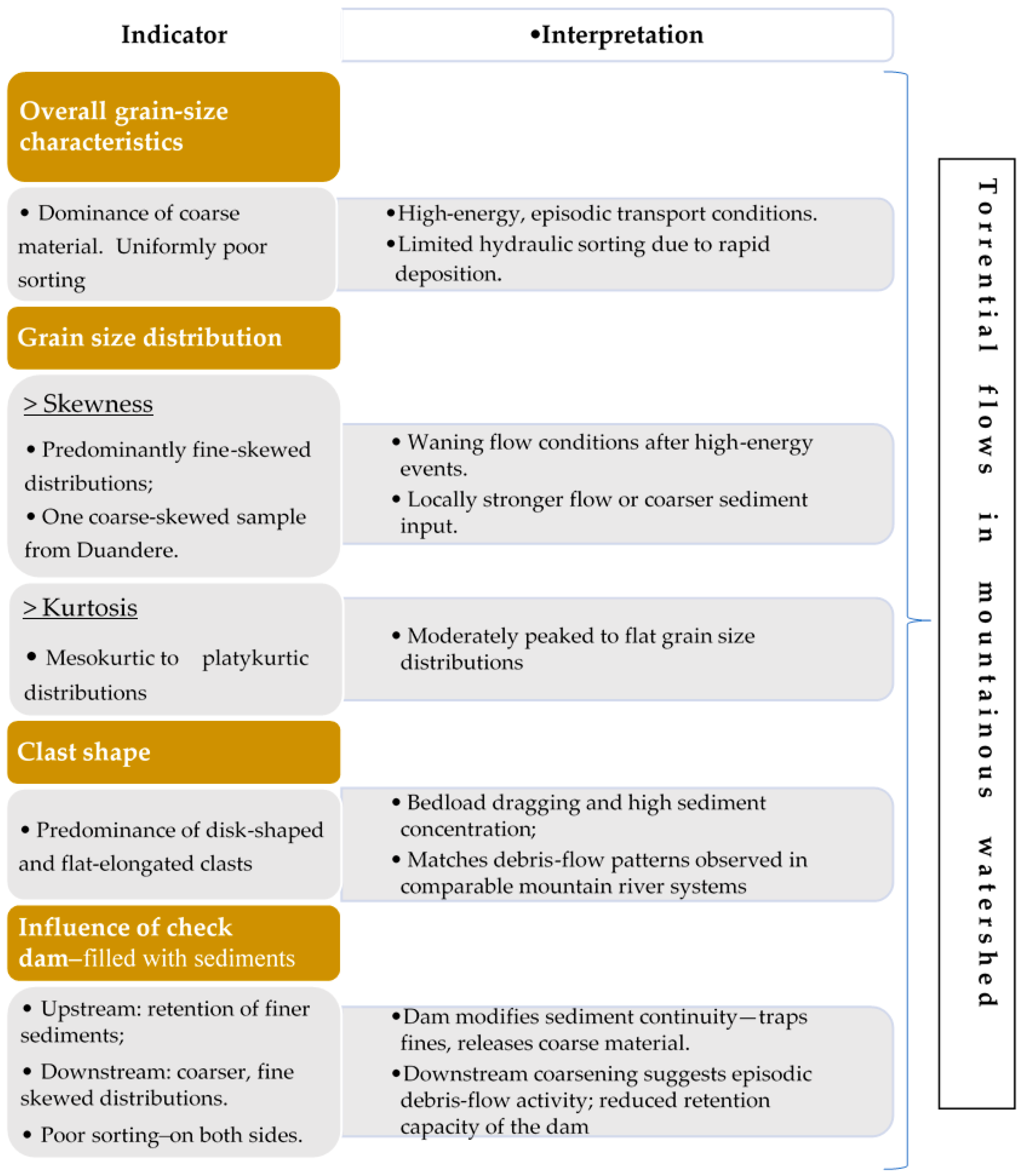
A summary of the key findings from grain size analysis is presented in Figure 7.
Figure 7.
Sedimentological indicators of torrential flows.
5.2. Mineral Spectrum of Fine Fraction
XRD provides semi-quantitative information on the mineral compositions of sediments that are essential for determining sediment sources and understanding transport pathways [43]. This analysis reveals several differences when applied to torrential watersheds compared with other watershed types. The differences arise from the distinct hydrological and geological characteristics of torrential systems. In torrential flows deposits, there is typically a presence of both coarse and fine materials and a broader spectrum of minerals. Torrential watersheds may show a significant presence of quartz, which is less common in other fluvial systems [18]. Similar results are received from XRD of riverbed sediments from the Damdere and Duandere rivers. Overall, the mineral assemblage of the fraction < 63 µm is dominated by silicates, reflecting the petrographic composition of the catchment area, whose upper and partly middle sectors are composed mainly of biotite gneisses, and amphibolites. The presence of biotite and tremolite—both relatively unstable minerals—points to intense mechanical disintegration without significant chemical alteration [44,45].
A comparison of the XRD results from samples collected in 2023 and 2024 along the Damdere River, upstream of its confluence with the Duandere River, shows no significant changes in the mineral composition of the <63 µm fraction. A more detailed examination of the feldspar group, however, reveals the presence of labradorite (29.6%) in the 2023 sample (D1/2023) and its absence in the 2024 sample (D1/2024), where albite (29.3%) was identified instead (Figure 5). Both minerals belong to the plagioclase series, but the calcium content in labradorite makes it slightly less stable and more prone to alteration into secondary minerals such as montmorillonite and kaolinite under prolonged chemical weathering [46]. The slightly higher proportion of these clay minerals in the 2024 sample compared to that of 2023 suggests a longer and more tranquil transport phase between the two sampling periods. On the other hand, the presence of the more stable albite may indicate rapid transport and the occurrence of a torrential flow capable of carrying material from the upper and middle parts of the catchment area to the lower river course within a short time. Another indicator of rapid transport is the high quartz content in both samples (D1/2023 and D1/2024). This interpretation is further supported by the results of the grain size analysis (Table 2), which reveal poorer sorting and a lower kurtosis coefficient of the 2024 deposits. This is an indicator of more variable transport conditions or episodic flooding events, reflected in a wider range of grain sizes. These characteristics suggest more chaotic conditions of sediment transport and deposition, despite the finer material. The 2024 sampling results indicate a possible lower water level and deposition following a torrential event.
At the regional scale, this is the first study in Bulgaria which implements XRD analysis to determine the types of flows. In the investigation of the source area of a debris flow in the Struma River watershed (southwestern Bulgaria), Dobrev and Georgieva [47] analyzed the fine fraction, only to characterize the deposits. The results of the current XRD analysis of the fine fraction from the Damdere watershed are consistent with those reported for the Struma River watershed. In both areas (Damdere and Struma), quartz and plagioclase dominate in the fine fraction despite differences in watershed lithology. This suggests similarity in the flow types and confirms their torrential (debris flow) character.
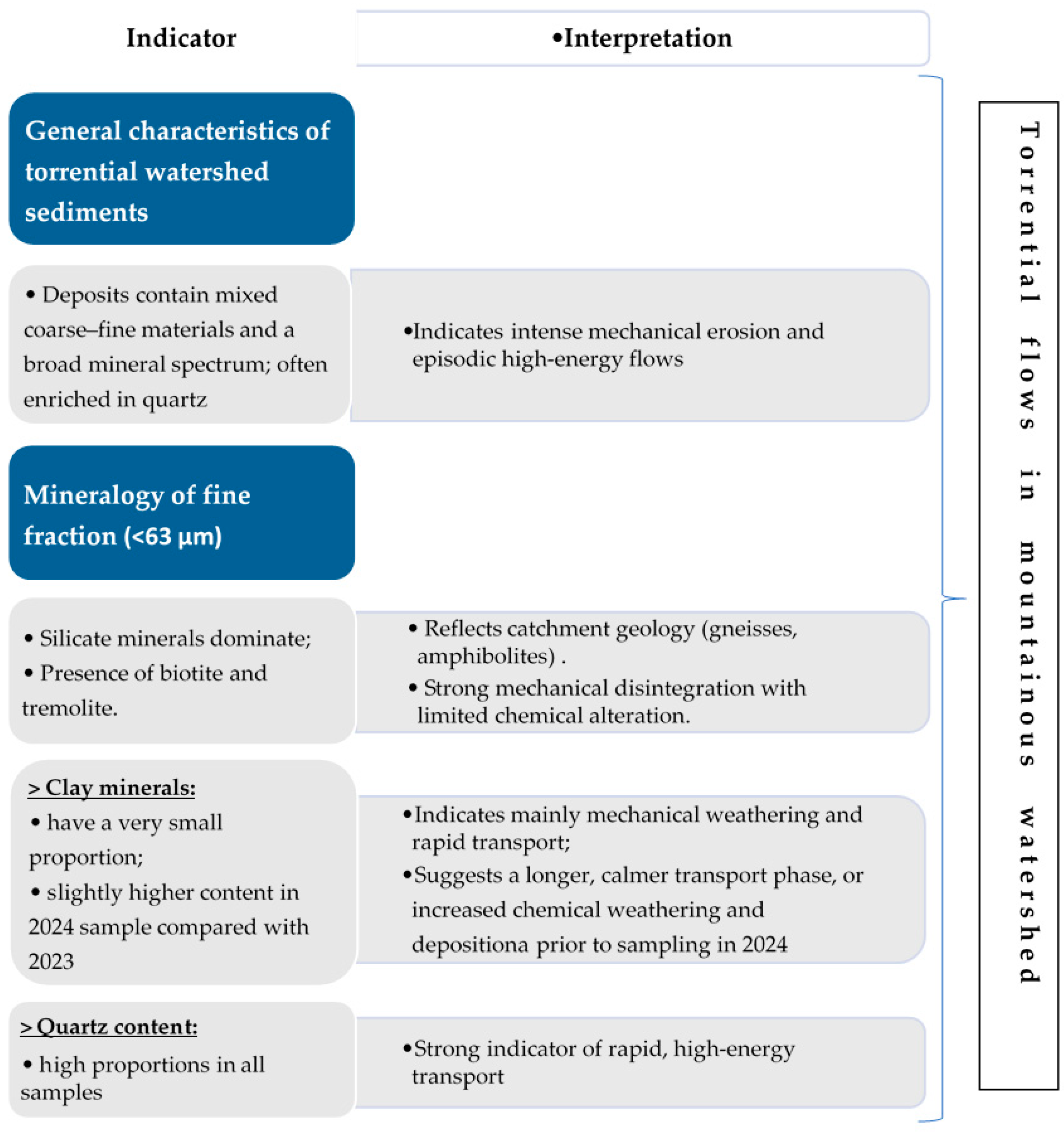
A summary of the main findings from XRD analysis is presented in Figure 8.
Figure 8.
Mineralogical features of torrential flows.
Overall, the results from grain size and XRD analyses provide an integrated sedimentological–mineralogical signature of the depositional environment, enabling identification of the flow type.
6. Conclusions
This study provides the first integrated application in Bulgaria of grain size, petrographic, and XRD analyses aimed at determining sediment transport conditions and the types of flows in a mountain watershed. The combined use of these methods represents a methodological advancement, allowing for a more robust interpretation of hydro-geomorphological processes than approaches relying solely on grain size data.
The grain size characteristics of the riverbed sediments in the lower part of the Damdere River watershed clearly demonstrate that torrential flow dynamics remain the dominant control on sediment transport, even in the presence of a check dam that partially modifies local hydraulic conditions. The dam is filled with sediments which decrease its retention capacity, and the Damdere River retains its torrential flow dynamics. Upstream, sediments are coarse and poorly sorted, reflecting high-energy processes. A comparison of sediments sampled upstream the check dam in 2023 and 2024 indicates that the sorting became worse, implying more variable flow conditions or episodic changes in discharge. The shift from mesokurtic to platykurtic distribution suggests a broader range of particle sizes, confirming the less uniform depositional conditions.
The XRD analysis of the fine fraction, supported by petrographic and grain size data, further confirms transport by intense torrential flows. The predominance of quartz and feldspars over clay minerals further indicates mechanically dominated processes and active erosion. The dynamic replacement of materials between the two sampling years (2023 and 2024) emphasizes the sensitivity of the system and confirms the short episodic nature of the sediment supply.
By integrating sedimentological and mineralogical methods, this study provides new and detailed insights into the flows in a small, ungauged mountain watershed affected by torrential processes. The results contribute to a better understanding of sediment pathways, transport conditions, and flow variability—key elements for reconstructing hydro-geomorphological dynamics in data-scarce environments. Knowledge of sediment patterns, grain size distribution, and mineral composition enhances the accuracy of determining flow characteristics in ungauged watersheds, which is essential for more effective hazard assessment and risk management in mountain environments. The methodological framework applied here offers a reference for similar studies in other small, torrential flow-prone catchments.
Author Contributions
Conceptualization, V.N., R.R., and I.D.; methodology, V.N., R.R., and J.B.; formal analysis, V.N., R.R., and D.D.; investigation, V.N., R.R., J.B., and A.M.P.; resources, V.N. and A.M.P.; writing—original draft preparation, V.N., R.R., and I.D.; writing—review and editing, J.B. and A.M.P.; visualization, V.N. and D.D.; project administration, V.N. and A.M.P.; funding acquisition, V.N. and A.M.P. All authors have read and agreed to the published version of the manuscript.
Funding
This research was carried out in the frame of the projects “Geomorphological interpretation of photogrammetry and laser scanning data in the study of torrential watersheds”, № КП-06-Дунав/5, 14.08.2023 (National Science Fund, Ministry of Education and Science, Bulgaria), 337-00-140/2023-05/10 (Ministry of Science, Technological Development and Innovation, Serbia) and MSMT 8X23015 (Czechia), and “Intelligent Risk Management for Businesses from Adverse Events and Natural Disasters, Competition for financial support for basic research projects–2021”, № KП-06-N55/5, 15.11.2021 (National Science Fund, Ministry of Education and Science, Bulgaria).
Data Availability Statement
The original contributions presented in the study are included in the article; further inquiries can be directed to the corresponding author.
Acknowledgments
The authors express their gratitude to Lyubomir Mihailov for his valuable advice regarding the XRD analysis.
Conflicts of Interest
The authors declare no conflicts of interest.
References
- Abancó, C.; Hürlimann, M.; Moya, J.; Berenguer, M. Critical rainfall conditions for the initiation of torrential flows. Results from the Rebaixader catchment (Central Pyrenees). J. Hydrol. 2016, 541, 218–229. [Google Scholar] [CrossRef]
- Oorthuis, R.; Hürlimann, M.; Vaunat, J.; Moya, J.; Lloret, A. Monitoring the role of soil hydrologic conditions and rainfall for the triggering of torrential flows in the Rebaixader catchment (Central Pyrenees, Spain). Landslides 2023, 20, 249–269. [Google Scholar] [CrossRef]
- Lopes, S.; Fragoso, M.; Reis, E. Rainfall analysis in mountain streams affected by torrential floods on Madeira Island, Portugal. Nat. Hazards Earth Syst. Sci. 2025, 25, 3109–3123. [Google Scholar] [CrossRef]
- Pandey, V.K.; Rai, J.; Sharma, K.K.; Singh, R. Analysis of flood and channel dynamics adversity in the Upper Beas Basin during 9–11 July 2023, Himachal Pradesh. Nat. Hazards Res. 2025; in press. [Google Scholar] [CrossRef]
- Arattano, M.; Franzi, L. Analysis of different water-sediment flow processes in a mountain torrent. Nat. Hazards Earth Syst. Sci. 2004, 4, 783–791. [Google Scholar] [CrossRef]
- de Haas, T.; Braat, L.; Leuven, J.R.F.W.; Lokhorst, I.R.; Kleinhans, M.G. Effects of debris flow composition on runout, depositional mechanisms, and deposit morphology in laboratory experiments. J. Geophys. Res. Earth Surf. 2015, 120, 1949–1972. [Google Scholar] [CrossRef]
- Ordóñez, J.I. Basic Hydrodynamic Characteristics of Torrential Flow. In Proceedings of the 38th IAHR World Congress, Panama City, Panama, 1–6 September 2019. [Google Scholar] [CrossRef]
- Dobrev, N.; Ivanov, P.; Baltakova, A.; Rizova, R. Peculiarities of the materials involved in the debris flows in Kresna Gorge, Southwest Bulgaria. Eng. Geol. Hydrogeol. 2023, 37, 19–33, (In Bulgarian with an abstract in English). [Google Scholar] [CrossRef]
- Bolliger, D.; Schlunegger, F.; McArdell, B.W. Comparison of debris flow observations, including fine-sediment grain size and composition and runout model results, at Illgraben, Swiss Alps. Nat. Hazards Earth Syst. Sci. 2024, 24, 1035–1049. [Google Scholar] [CrossRef]
- Yousefi, S.; Imaizumi, F.; Takayama, S. Spatial distribution and transport characteristics of debris flow sediment using high-resolution UAV images in the Ohya debris flow fan. Geomorphology 2025, 469, 109533. [Google Scholar] [CrossRef]
- Yang, T.; Liu, D.; Li, Y.; Guo, X.; Zhang, J.; Jiang, Y. Grain Configuration Effect on Pore Water Pressure in Debris Flow. Front. Earth Sci. 2021, 9, 660634. [Google Scholar] [CrossRef]
- Tsunetaka, H.; Hotta, N.; Sakai, Y.; Wasklewicz, T. Effect of debris-flow sediment grain-size distribution on fan morphology. Earth Surf. Dynam. 2022, 10, 775–796. [Google Scholar] [CrossRef]
- Wang, Q.; Yang, J.; Xu, W.; Yuan, B.; He, C. A review of research on the stability of fine-grained sediments in debris flows. Geosciences 2024, 14, 248. [Google Scholar] [CrossRef]
- Alves, K.M.A.S.; Fonseca, D.; Lagos, M.; Barra, J.C. Granulometric characterization of the alluvial-colluvial deposits in microbasins of the Copiapó river –Atacama region (Chile). Rev. Geociênc. Nordeste 2025, 1, 970–987. [Google Scholar] [CrossRef]
- Jan, C.-D.; Nguyen, L.-T.; Dey, L. Effects of grain size distribution on the movement and deposition of granular materials flowing down an inclined channel. J. Mech. 2025, 41, 157–172. [Google Scholar] [CrossRef]
- Bilal, A.; Yang, R.; Chen, S.; Lenhardt, N.; Mughal, M.S.; Kontakiotis, G. Seismically Induced Soft-Sediment Deformation in Alluvial Fans: Mechanisms and Implications for Geological Evolution of the Ordos Basin (China). J. Asian Earth Sci. 2025, 294, 106821. [Google Scholar] [CrossRef]
- Ni, H.; Zheng, W.; Liu, X.; Gao, Y. Fractal–statistical analysis of grain-size distributions of debris-flow deposits and its geological implications. Landslides 2011, 8, 253–259. [Google Scholar] [CrossRef]
- River, M.; Richardson, C.J. Suspended Sediment Mineralogy and the Nature of Suspended Sediment Particles in Stormflow of the Southern Piedmont of the USA. Water Resour. 2019, 55, 5665–5678. [Google Scholar] [CrossRef]
- Baiyegunhi, C.; Liu, K.; Gwavava, O. Grain Size Statistics and Depositional Pattern of the Ecca Group Sandstones, Karoo Supergroup in the Eastern Cape Province, South Africa. Open Geosci. 2017, 9, 554–576. [Google Scholar] [CrossRef]
- Nikolova, V.; Kamburov, A. Geoinformation technologies in the evaluation of short-term geomorphic change: An example of Damdere debris flood area (Bulgaria). J. Geogr. Inst. Jovan Cvijic SASA 2022, 72, 133–145. [Google Scholar] [CrossRef]
- Ivanov, I.; Ivanova, E. Influence of precipitation on landslide activity in Southwestern Bulgaria in the context of climate change. Eng. Geol. Hydrogeol. 2023, 37, 133–144. [Google Scholar] [CrossRef]
- Berov, B.; Gadzhev, G.; Ivanov, P.; Dobrev, N.; Ivanov, V.; Nikolova, N.; Toteva, A.; Krastanov, M.; Nankin, R.; Frantzova, A. Assessment of landslide susceptibility in Bulgaria, in the context of climate change, using the Mora and Vahrson method. Geol. Balc. 2025, 54, 3–16. [Google Scholar] [CrossRef]
- Nikolova, V.; Kamburov, A.; Rizova, R. Morphometric analysis of debris flow basins in the Eastern Rhodopes (Bulgaria) using geospatial technologies. Nat. Hazards 2021, 105, 159–175. [Google Scholar] [CrossRef]
- Hristova, N. The River Waters in Bulgaria; Tip-Top Press Publishing House: Sofia, Bulgaria, 2012; 830p, (In Bulgarian with summary in English); ISBN 9789547230804. [Google Scholar]
- Sarov, S.; Yordanov, B.; Valkov, V.; Georgiev, S.; Kamburov, D.; Raeva, E.; Grozdev, V.; Balkanska, E.; Moskovska, L.; Dobrev, G.; et al. Geological Map of Bulgaria 1:50000, Map Sheet K-35-87-A Ardino, with Explanatory Notes; Geology and Geophysics Ltd.: Sofia, Bulgaria, 2007. [Google Scholar]
- Sarov, S.; Yordanov, B.; Valkov, V.; Georgiev, S.; Kamburov, D.; Raeva, E.; Grozdev, V.; Balkanska, E.; Moskovska, L.; Dobrev, G. Geological Map of Bulgaria 1:50000, Map Sheet K-35-87-B Kardzhali, with Explanatory Notes; Geology and Geophysics Ltd.: Sofia, Bulgaria, 2007. [Google Scholar]
- Yordanov, B.; Sarov, S.; Georgiev, S.; Valkov, V.; Balkanska, E.; Grozdev, V.; Marinova, R.; Markov, N. Explanatory Note to the Geological Map of the Republic of Bulgaria, Scale 1:50,000, Map Sheet K-35-87-A (Ardino); Ministry of Environment and Water, Bulgarian Geological Survey: Sofia, Bulgaria, 2008; 76p.
- Yordanov, B.; Sarov, S.; Georgiev, S.; Valkov, V.; Balkanska, E.; Grozdev, V.; Marinova, R.; Markov, N. Explanatory Note to the Geological Map of the Republic of Bulgaria, Scale 1:50,000, Map Sheet K-35-87-B (Kardzhali); Ministry of Environment and Water, Bulgarian Geological Survey: Sofia, Bulgaria, 2008; 131p.
- BDS EN ISO 17892-4:2017; Geotechnical Investigation and Testing—Laboratory Testing of Soil—Part 4: Determination of Particle Size Distribution (ISO 17892-4:2016). Bulgarian Institute for Standardization: Sofia, Bulgaria, 2017.
- Blott, S.J. GRADISTAT, Version 9.1; Kenneth Pye Associates Ltd.: Wallingford, UK, 2020. [Google Scholar]
- Folk, R.L.; Ward, W.C. Brazos River bar: A study in the significance of grain-size parameters. J. Sediment. Petrol. 1957, 27, 3–26. [Google Scholar] [CrossRef]
- Zingg, T. Beiträge zur Schotteranalyse. Ph.D. Thesis, ETH Zürich, Zurich, Switzerland, 1935; pp. 39–140. [Google Scholar]
- Serebryanyi, L.R. Laboratory Analysis in Geo-Morphology and Quaternary Paleogeography; Viniti: Moscow, Russia, 1980; p. 160. [Google Scholar]
- Wolman, M.G. A method for sampling coarse river-bed material. Am. Geophys. Union Trans. 1954, 35, 951–956. [Google Scholar] [CrossRef]
- Subramanian, M.; Divakaran Sarasamma, J.; Mohan, V. Grain size distribution of the sediments along the Kollam shoreline, Southwest coast of India. Mar. Georesour. Geotechnol. 2025, 43, 2502–2512. [Google Scholar] [CrossRef]
- Pierson, T.C. Hyperconcentrated flow—Transitional process between water flow and debris flow. In Debris-Flow Hazards and Related Phenomena; Jakob, M., Hungr, O., Eds.; Springer Praxis Books; Springer: Berlin/Heidelberg, Germany, 2005; pp. 159–202. [Google Scholar] [CrossRef]
- Blair, T.C.; McPherson, J.G. Grain-size and textural classification of coarse sedimentary deposits. J. Sediment. Res. 1999, 69, 6–19. [Google Scholar] [CrossRef]
- Awasthi, A.K. Skewness as an environmental indicator in the Solani River system, Roorkee (India). Sediment. Geol. 1970, 4, 177–183. [Google Scholar] [CrossRef]
- Zaleha, M.J.; Wiesemann, S.A. Hyperconcentrated flows and gastroliths: Sedimentology of diamictites and wackes of the Upper Cloverly Formation, Lower Cretaceous, Wyoming, U.S.A. J. Sediment. Res. 2005, 75, 43–54. [Google Scholar] [CrossRef]
- Kasim, S.A.; Ismail, M.S.; Ahmed, N. Grain size statistics and morphometric analysis of Kluang-Niyor, Layang-Layang, and Kampung Durian Chondong Tertiary sediments, onshore Peninsular Malaysia: Implications for paleoenvironment and depositional processes. J. King Saud Univ. Sci. 2023, 35, 102481. [Google Scholar] [CrossRef]
- Wei, X.; Cai, S.; Zhan, W.; Li, Y. Changes in the distribution of surface sediment in the Pearl River Estuary, 1975–2017, largely due to human activity. Cont. Shelf Res. 2021, 228, 104538. [Google Scholar] [CrossRef]
- Kenderova, R.; Baltakova, A.; Rachev, G. Debris flows in the middle Struma Valley, Southwest Bulgaria. In Geomorphological Impacts of Extreme Weather; Loczy, D., Ed.; Springer: Berlin/Heidelberg, Germany, 2013; pp. 283–287. [Google Scholar] [CrossRef]
- Hein, J.R.; Mizell, K.; Barnard, P.L. Sand sources and transport pathways for the San Francisco Bay coastal system, based on X-ray diffraction mineralogy. Mar. Geol. 2013, 345, 154–169. [Google Scholar] [CrossRef]
- Cheng, S.; Hong, H.; Ji, K.; Li, F.; Wang, X. New insight into biotite weathering in the subtropic Tongcheng granite regolith, Hubei Province, South China. Appl. Clay Sci. 2022, 224, 106518. [Google Scholar] [CrossRef]
- Repczyńska, M.M.; Molina, J.F.; Cambeses, A.; Montero, P.; Bea, F.; Itano, K.; Pujol-Solà, N.; Novo-Fernández, I.; Barcos, L.; Garcia-Casco, A. Geochemical behaviour of biotite during interaction with aqueous and brine fluids: Constraints from hydrothermal batch experiments. Chem. Geol. 2025, 672, 122486. [Google Scholar] [CrossRef]
- Bartz, M.; Peña, J.; Grand, S.; Kin, G.E. Potential impacts of chemical weathering on feldspar luminescence dating properties. Geochronology 2023, 5, 51–64. [Google Scholar] [CrossRef]
- Dobrev, N.; Georgieva, M. The Debris Flow in the Northern Part of Kresna Gorge: Characterization of the Source Zone and Material Properties. Rev. Bulg. Geol. Soc. 2010, 71, 113–121, (In Bulgarian with an abstract in English). [Google Scholar]
Disclaimer/Publisher’s Note: The statements, opinions and data contained in all publications are solely those of the individual author(s) and contributor(s) and not of MDPI and/or the editor(s). MDPI and/or the editor(s) disclaim responsibility for any injury to people or property resulting from any ideas, methods, instructions or products referred to in the content. |
© 2025 by the authors. Licensee MDPI, Basel, Switzerland. This article is an open access article distributed under the terms and conditions of the Creative Commons Attribution (CC BY) license.