


Abstract
Turmeric (Curcuma longa) has been a famous root crop for its medicinal properties since pre-historical times. Lack of effective therapeutics for most viral diseases, higher cost of some antiviral therapies, and the emergence of antiviral drug resistance are increasingly reported. Drug resistance is predicted to be a leading cause of mortality globally by 2050, thus requiring intervention. The need for effective natural antiviral compounds to mitigate viral diseases, such as curcumin, calls for further studies. Curcumin, a primary curcuminoid compound, has demonstrated a broad activity as an antiviral agent. Due to the need to overcome drug resistance to chemically synthesised drugs, the best option is to improve and adapt the use of natural antiviral agents. The antiviral potential of curcumin is hindered by its solubility and bioavailability. Recently, different techniques, such as the preparation of curcumin carbon quantum dots, have been used to improve curcumin antiviral activity. Therefore, the current review aims to assess curcumin’s benefits as a natural antiviral agent and techniques to improve its medicinal activity. Future use of curcumin will aid in mitigating viral diseases, including resistant strain, hence sustainability of the entire community. In this case, research and innovation are required to improve the solubility and bioavailability of curcumin for medical uses.
1. Introduction
Turmeric (Curcuma longa) is a blossoming plant of the Zingiberaceae family. Since the prehistoric period, turmeric has been used in Asian medicine as a major part of Ayurveda, Siddha, Traditional Chinese, Unani medicine, and the animistic rituals of Austronesian peoples. It was initially used as a dye and then later for its supposed properties in folk medicine [1]. The plant is a rhizomatous perennial herbaceous native to Southeast Asia and the Indian subcontinent, flourishing in temperate conditions and requiring a significant annual rainfall [2,3,4]. Mostly the rhizomes are used fresh or boiled in water and dried, after which they are crushed into a deep orange-yellow powder that is commonly used as a colouring and flavouring agent in many Asian cuisines, especially curries, as well as for dyeing, thanks to the properties imparted by curcumin, the main turmeric constituent [2,5,6,7]. Turmeric powder has an earthy, mustard-like fragrance and a warm, bitter black pepper flavour. Curcuma species diversity is greatest in India, followed by Thailand, and other tropical Asian countries have various wild Curcuma species [5,8,9,10]. Recent research revealed issues with Curcuma longa classification, with only specimens from South India being identified as C. longa. Other species and cultivars in other world regions still need their phylogeny, relationships, intraspecific and interspecific variation and even identity to be identified and validated [11]. Multiple species advertised as turmeric in different parts of the world have been found to belong to several visually identical taxa with overlapping local names. Traditional medicinal practices are the main source of primary healthcare providers, especially in developing countries. The World Health Organization (WHO) reported that about 80% of the global population depends on traditional medicine for their healthcare [12]. Natural product remedies are becoming more popular among developed countries as they see medicinal herbs as safe alternatives to orthodox medicines [13].
1.1. Global Distribution of Curcuma longa
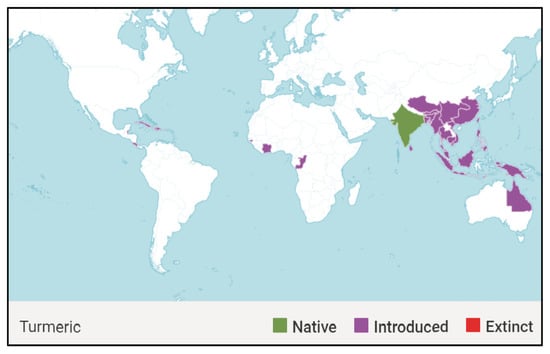
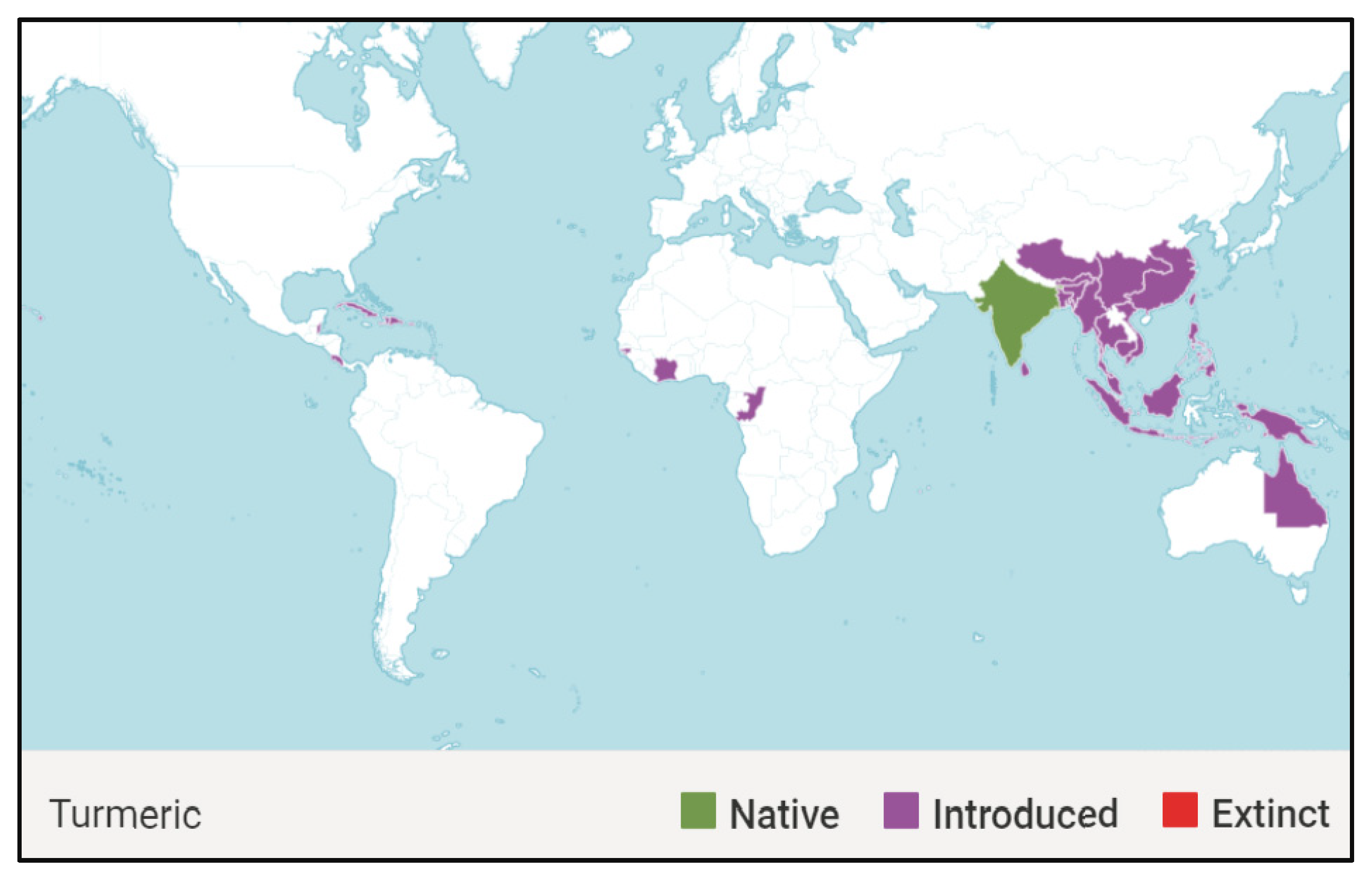
Curcuma longa is native to India and was introduced to other areas such as the Andaman Islands, Assam, Bangladesh, Belize, Borneo, Cambodia, Caroline Islands, China South-Central, China Southeast, Comoros, Congo, Cook Islands, Costa Rica, Cuba, Dominican Republic, East Himalaya, Easter Islands, Fiji, Gilbert Islands, Guinea-Bissau, Gulf of Guinea Islands, Haiti, Hawaii, Ivory Coast, Jawa, Leeward Islands and Lesser Sunda Islands, M [14]. Figure 1 represents the global distribution of Curcuma longa.
Figure 1.
Global distribution of Curcuma longa plants [14].
1.2. Morphology of Curcuma longa
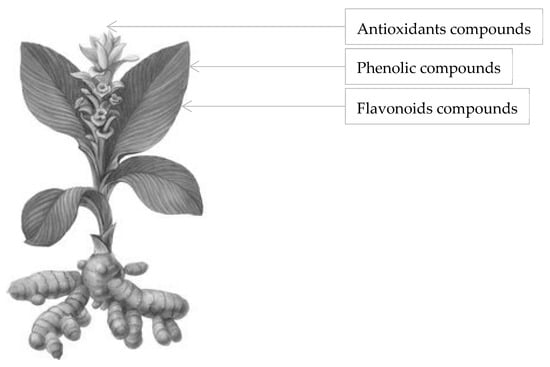
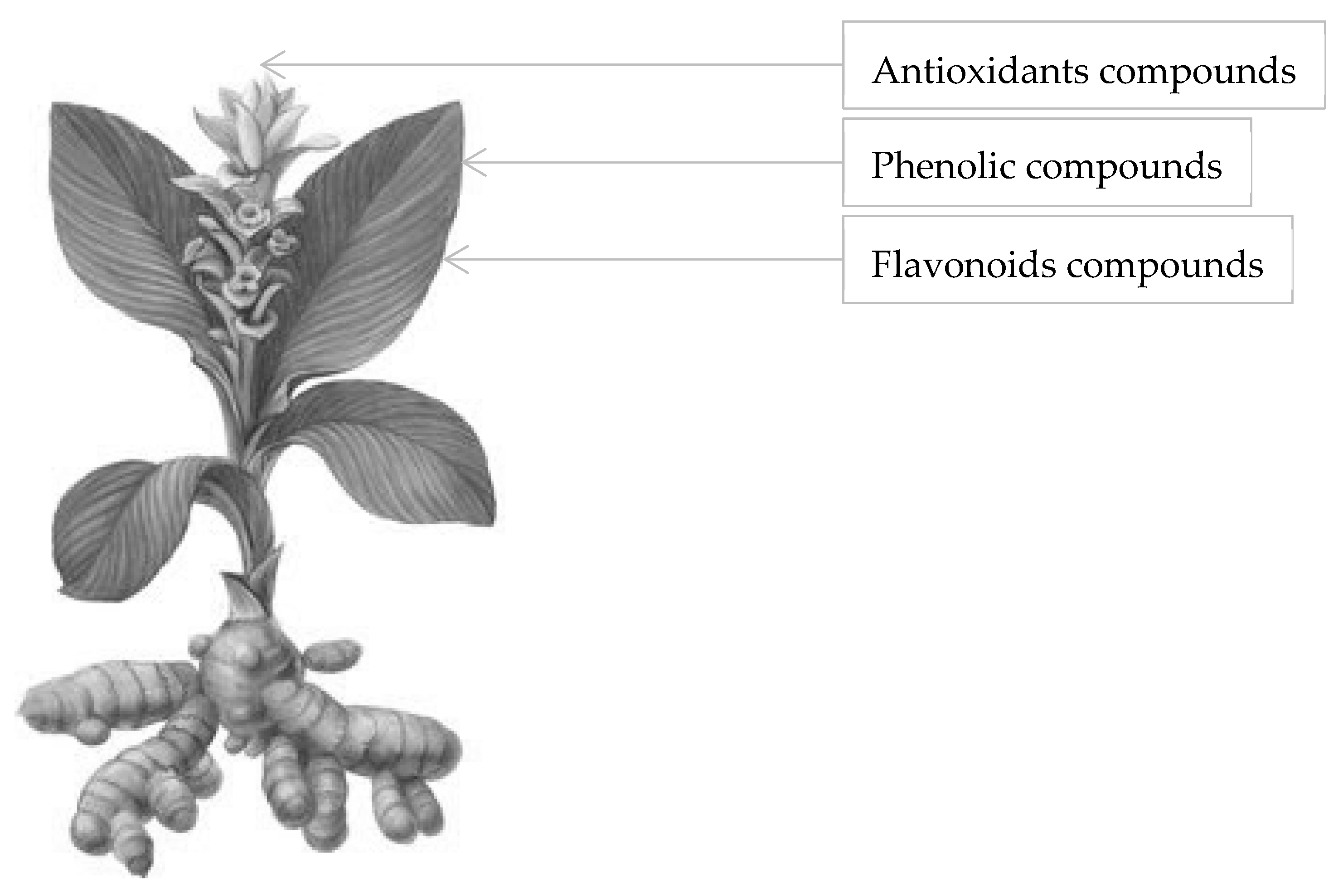
Turmeric is a herbaceous perennial plant that grows up to 1 m tall. The rhizomes are branching, bright to orange, cylindrical and scented. The leaves are placed in two rows and alternate. Leaf-sheath, petiole and leaf blade are the three parts of the leaf. A fake stem is created from the leaf sheaths. The petiole can range in length from 50 to 115 cm. Simple leaf blades range in length from 76 to 115 cm, with some reaching up to 230 cm [8,9,11,15,16]. They are 38 to 45 cm wide and oblong to elliptical, narrowing at the tip. Stem bracts, which are white to green in colour and sometimes tinged reddish-purple, are located at the top of the inflorescence and have tapered upper ends. The flowers of hermaphrodites are threefold and zygomorphic. The three sepals are white, united and contain fluffy hairs; the three calyx teeth are uneven. The three vivid yellow petals are united into a 3-centimetre-long corolla tube. The three corolla lobes are triangular with soft-spiny top tips and measure 1.0 to 1.5 cm in length [8,9,11,15,16]. Only the median stamen of the inner circle is fertile, even though the average corolla lobe is larger than the two lateral ones. Figure 2 represents the morphology of curcumin.
Figure 2.
Morphological description of turmeric [17,18].
The base of the dust bag is spurred. The remaining stamens are transformed into staminodes. The staminodes on the outside are shorter than those on the inside. The labellum is yellowish, with a yellow ribbon in the centre, and is obovate, measuring 1.2 to 2.0 cm in length [11,16]. Three carpels are held in place by a trilobed, sparsely hairy ovary [8,9,11,15,16]. Three sections open up when the fruit capsule is opened. The blossoming season in East Asia is normally in August. An inflorescence stalk, 12 to 20 cm long and with many flowers, grows at the end of the false stem [11,16]. The bracts are light green and elliptical to oblong shape with a blunt upper end, measuring 3 to 5 cm in length [11,16].
1.3. Botanical Classification of C. longa
The taxonomic classification of turmeric botanically known as Curcuma longa is presented in Table 1.
Table 1.
Describes the scientific classification of C. longa.
1.4. Chemistry of Curcumin
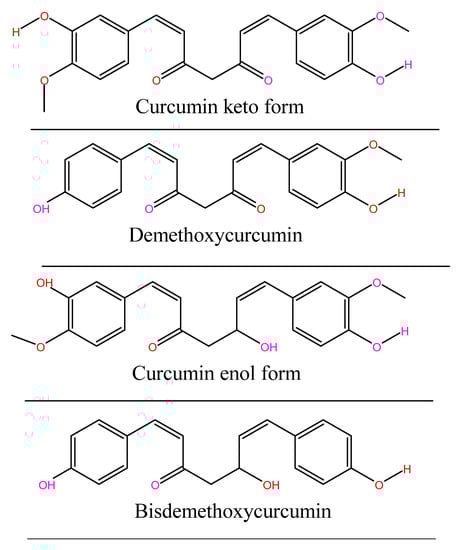
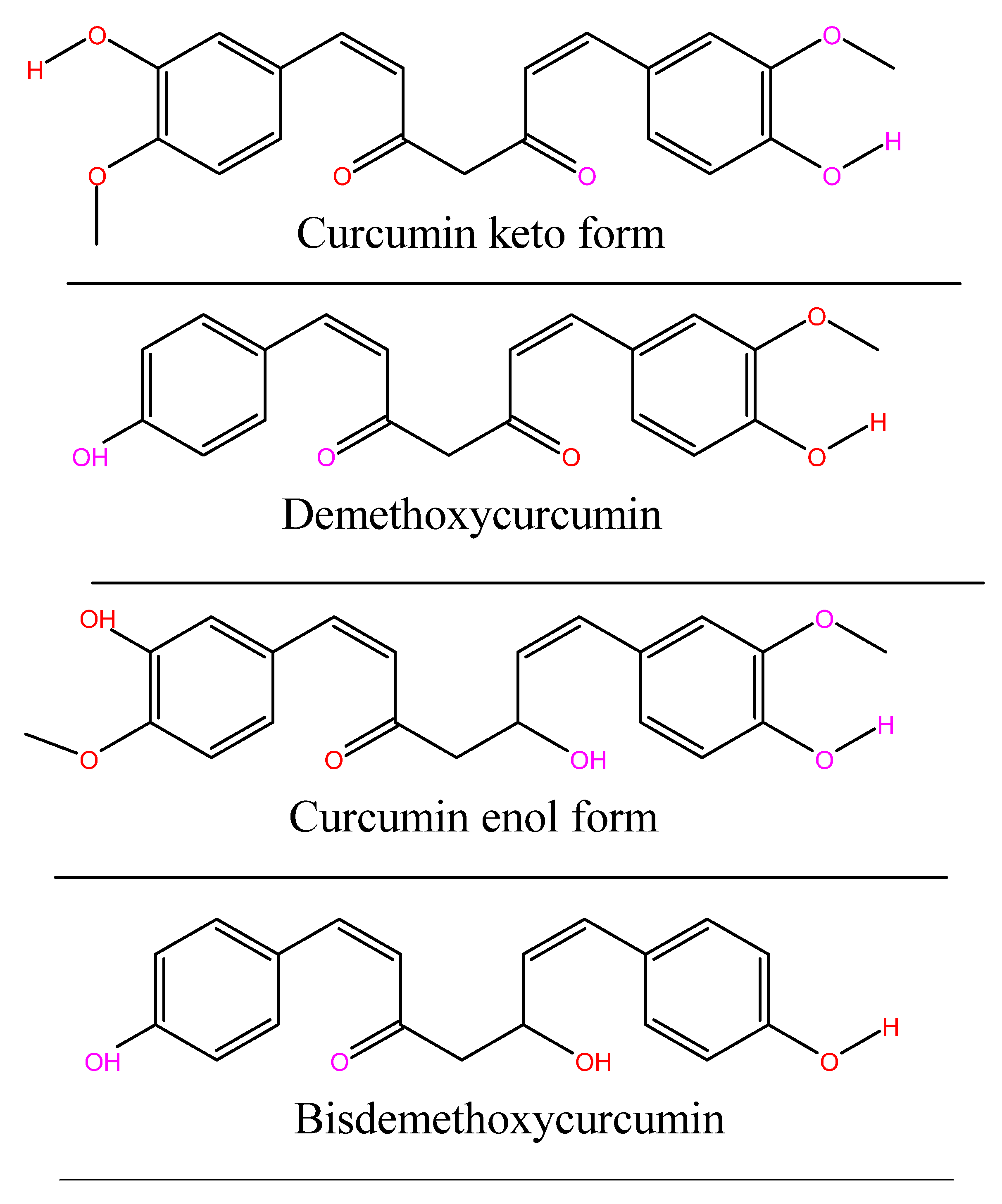
Curcumin has a seven-carbon linker and three major functional groups: an aromatic O-methoxy-phenolic group, an aromatic O-methoxy-phenolic group and an aromatic O-methoxy-phenolic group [19]. Two-unsaturated carbonyl groups join the aromatic ring systems, which are phenols. It is a diketone tautomer in both enolic and keto forms in organic solvents and water [20]. The diketones deprotonate to create enolates and form stable enols; the-unsaturated carbonyl group is a good Michael acceptor and undergoes nucleophilic addition [21]. Curcumin is poorly soluble in water due to its hydrophobic nature [20]. Organic solvents, on the other hand, make it very soluble. Selected structures of the bioactive present in Curcumin are presented in Figure 3.
Figure 3.
Represents selected structures of the phytochemical constituents present in Curcuma longa.
2. Materials and Methods
The scope of this literature review was the potential of curcumin as an antiviral agent and the measures taken to remove barriers to its utility for medical application. Curcuma longa is native to India. Figure 1 details its global status through its introduction in other areas, and it is used for medical applications and as a food additive globally. Besides the fact that Curcuma longa has been reported to possess other bioactivities, this study focuses only on antiviral potential. This study includes potential studies from 2000 to 2021; apart from the use of Curcuma longa from the pre-historic period, a growing trend in published articles was observed from 2000. This may be due to the growing need to source drug candidates from natural products for mitigation of diseases, including resistant strains. The search keywords included Curcuma longa, the antiviral potential of Curcuma longa; medicinal potential; ethnobotanical uses of Curcuma longa; how to improve the bioactivity of Curcuma longa; uses of Curcuma longa. Web of Science, Scopus, Wiley Online Library, Science Direct, Taylor and Francis Online, Sage Publishing, Scopus, Research for Life, and PubMed were the search engines used for searching scientific journals, and some were hand-picked from Google Scholar. The literature review was performed on papers obtained for the data related to Curcuma longa, pharmacology, ethnomedicinal use, application, safety, toxicity and medical applicability. This resulted in a database of data extracted from representative studies for this review. Table 2 represents studies that detail modifications done on Curcuma longa-based drug to improve its bioactivity. Table 3 details the antiviral potential of Curcuma longa-based drugs, and Table 3 details the antiviral potential of Curcuma longa.
3. Pharmacology of Curcumin
Curcumin is a false lead that medicinal chemists classify as “pan-assay interference substances” since it shows up positive in most drug discovery assays. This attracts excessive experimental interest while failing to progress as viable therapeutic or pharmacological leads [22,23,24]. However, other curcumin derivatives, such as EF-24, have received much attention [25]. Chemical instability, water insolubility, lack of powerful and selective target activity, low bioavailability, limited tissue distribution and extensive metabolism are all factors that limit curcumin or its analogues’ bioactivity [22]. Curcumin escapes the GI system in small amounts, and most of it is eliminated intact in the stool [26]. Because curcumin is promiscuous and interacts with multiple proteins known to enhance the likelihood of adverse effects, such as hERG, cytochrome P450s, and glutathione S-transferase, there is a substantial risk of toxicity if it reaches plasma in moderate concentrations [22]. Diferuloylmethane, commonly curcumin, a natural polyphenolic compound derivative of turmeric (Curcuma longa), is a widely used spice and colouring agent in food [27]. Curcumin is commonly included in many therapeutic remedies, singly or with other natural substances [28]. Gathered evidence indicates that curcumin is associated with a great variety of pharmacological activities, such as anti-microbial [1,28,29,30,31], anti-inflammatory [32] and antioxidant [33]. Curcumin inhibits several tumours in vitro and in vivo [34,35]. Such effects have been attributed to the interaction of curcumin with a diverse range of molecular targets involved in cell growth, metastasis, tumour angiogenesis and apoptosis; for instance, nuclear factor jB (NF-jB), cyclooxygenase-2, matrix metalloproteinase, vascular cell adhesion molecule-1 and p53 [36]. By inhibiting IjB phosphorylation by IjB kinase, curcumin effectively suppressed NF-jB signalling, which regulates the expression of genes contributing to tumorigenesis and cell survival [37,38,39].
5. Application of Curcumin
Curcumin’s full potential is hampered by poor oral bioavailability and insufficient solubility in aqueous solvents, which result in poor absorption, rapid metabolism and rapid systemic elimination. Curcumin microcapsules with improved solubility are suitable for use as a preservative and colourant in the food industry, with MIC values ranging from 15.7 to 250 g/mL against food-borne pathogens such as Penicillium notatum, Saccharomyces cerevisiae, Yersinia enterocolitica, B. cereus, E. coli, Staph. aureus and B. subtilis [105]. With the need to maintain the performance and health of birds, there is increased interest in creating natural alternatives to antibiotic growth promoters. Over the last decade, turmeric has been widely employed in chicken diets [106]. For decades curcumin has been utilized to mitigate various medical conditions and recently to mitigate COVID-19. According to the literature, curcumin is a promising preventative and therapeutic candidate for COVID-19 [54]. Curcumin’s antiviral effect against various enveloped viruses, including SARS-CoV-2, is aided by many mechanisms: direct contact with viral membrane proteins; breakdown of the viral envelope; inhibition of viral proteases and induction of host antiviral responses [54]. Curcumin has been publicised to be safe and well-tolerated in healthy and ill humans and protects against deadly pneumonia and acute respiratory distress syndrome (ARDS) by inhibiting the pathways NF-B, inflammasome, IL-6 trans signal, and HMGB1 [105], indicating its future use as a preventive treatment in clinical and public health settings.
5.1. Traditional Uses and Ethnopharmacology of Curcumin
Curcuma longa is an important nutritional plant with antioxidant, antibacterial, anti-inflammatory, anticancer and anti-clotting properties [6,107]. Alternative therapeutic options such as medicinal plants have a long history of treating many diseases, and it is widely known that herbs are a good source of possible therapeutic chemicals [2,6,108]. Turmeric (Curcuma longa) has been used as a spice in daily cooking and traditional medicine for over 6000 years. C. longa is a South and Southeast Asian plant rhizome found in Pakistan, China, Indonesia, India, Nepal, Jamaica, Bangladesh, Malaysia, El Salvador, Taiwan and Haiti. Curcuma is a genus of medicinal plants with therapeutic properties that include about 70 identified species [6,72,108,109,110]. They have long been employed as food preservatives, colouring pigments and spices and have great therapeutic potential. Curcuma longa plant belongs to Zingiberaceae (ginger) family widely grown in Southeast Asia, primarily in China and India [3,5,111,112].
5.2. Application of Curcumin-Based Nano-Formulations
Curcumin-based nano-formulations have a promising future in preventing, diagnosing, and treating medical disorders such as cancer, but further research is needed to determine the safety and delivery strategy [113,114,115]. Efficient curcumin delivery via nanotechnology helps overcome issues with solubility, rapid drug metabolism, degradation, and drug stability. It should also diffuse or target indent tissues while minimizing unintended toxicity to surrounding normal cells/tissues [113,114,115,116]. For example search for more effective cancer treatment with fewer side effects is ongoing; curcumin has demonstrated potential anticancer activities through numerous pathways, including inhibiting and/or inducing the generation of multiple cytokines, interfering with multiple cellular mechanisms, enzymes, or growth factors including IκB kinase β (IκKβ), tumour necrosis factor-alpha (TNF-α), signal transducer, and activator of transcription 3 (STAT3), cyclooxygenase II (COX-2), protein kinase D1 (PKD1), nuclear factor-kappa B (NF-κB), epidermal growth factor, and mitogen-activated protein kinase (MAPK) [117], indicating that curcumin nano formulations may have potential applications. Ahmed and colleagues synthesized and characterized the curcumin-loaded AgNPs based on the size, polydispersity index, potential, morphology, size distribution, drug loading effectiveness and interactions with excipients. The anti-cancer potentials of the nanoparticles were evaluated against MM-138, FM-55 and MCF-7 cell lines. The nanoparticles effectively transported a greater amount of curcumin, indicating that it is a superb nanocarrier. In addition, the curcumin-loaded nanoparticles effectively fought against three different cancerous cell lines: MM-138, FM-55 and MCF-7. The potential of curcumin-based drugs, including nano formulations, is yet to be utilized to manage communicable and non-communicable diseases [117,118].
Haghnegahdar and colleagues fabricated CM-functionalized nanocomposite with a large surface area, extended stability, strong adaptation, anti-interference capability and considerable reproducibility [119]. The fabricated nanocomposite exhibits a strong electrocatalytic activity toward the oxidation of analytes, especially for dopamine (DA) (vs. Ag/AgCl), according to the electrochemical data. While the DA, uric acid (UA) and guanine (GU) results are consistent, there was no equivalent electrochemical peak for ascorbic acid (AA) [119]. It was further reported for DA, GU and UA, respectively, that their calibration curves were linear in the ranges of 12.0–200.0, 16.0–400.0, and 18–650.0 mol/L and the detection limits for DA, GU, and UA values were 0.14 mol/L, 0.19 mol/L and 0.38 mol/L, respectively [119]. The produced electrode was effectively used for the simultaneous analysis of analytes in samples of blood, serum, urine and dopadic ampoules [119]. The electrode had a lower detection limit, indicating its potential application for the detection of disease biomarkers as may be present at lower concentrations. This may be helpful in the early detection of diseases and hence their early mitigation.
Results of a study by Proença-Assunção and colleagues revealed that without metabolic activation, Cur-AgNPs are not mutagenic, but when exposed to S9, Cur-AgNPs become mutagenic to the TA98 and TA100 strains, demonstrating the importance of metabolizer enzymes to activate Cur-AgNPs on these bacteria, which regained their capacity to synthesize histidine (His+). The curcumin-based nanoparticles may be a potential drug for managing medical disorders. The possibility of engineering nano-formulations to multifunctionality, merging therapeutic, targeting and diagnostic features, has shown potential advancement in managing diseases globally. These potentials caused the nanoparticles to rise as therapeutic agents with increased efficacy and diminished systemic drug side effects helpful for managing chronic diseases.
5.3. Electrostatic Nature and Size of Curcumin-Based Nano-Formulations
Electrostatic forces are among the most versatile interactions for mediating nanostructured material assembly [117,119,120,121,122,123,124,125,126,127,128]. These forces can be long or short-ranged, attractive or repulsive, and the shapes of the charged nano-objects can control their directionality, depending on the experimental conditions [117,120,121,122]. Electrostatic interactions operate in nano-formulations such as electroactive and or switchable nanoparticles, charged nanoparticle mixtures, nanoparticle chains, sheets, coatings, crystals, crystals-within-crystals, and other structures used in chemical sensing and amplification [123,125,126,128,129,130,131,132]. On the other hand, the nano-formulations charge can be used to arrange nanoparticles to higher-order structures, but it is necessary to utilize oppositely charged nanoparticles [123,125,126,129,130,131,132]. The electrostatic repulsion is the potential for the increased surface activity of nanoparticles, drug delivery, and formation of static and dynamic structures [123,125,126,129,130,131,132], which are necessary to diagnose and mitigate medical conditions. Nano particles range from 1 to 100 nm and close to 100 nm [87] and are efficient drug delivery systems. Curcumin nanoparticles are reported to range from 2 to 40 nm [88], but usually their size depends on the methodology used for their preparation. The size of a particle influences the overall charge density of a particle. Smaller size creates larger charge density for molecules with the same charge but differing size. A study by Vatanparast and colleagues investigated the role of electrostatic interactions in improving surface properties of anionic surfactants in silica nanoparticles [130]. Results indicated that the observed SDS interfacial behaviour in the presence of nanoparticles was due to the electrostatic repulsive interaction [130], leading to the increased surfactant surface activity and the adsorption of the dodecanol on the surfaces of particles, affecting the adsorption dynamic and resulting in faster interfacial relaxation, indicating the potential of the electrostatic interactions in the functioning of nano-formulations.
5.4. Curcumin Therapy for Mitigation of COVID-19
Coronavirus disease (COVID-19) is a virus-borne infection caused by the SARS-CoV-2 virus. Most people infected with the virus will have mild to moderate respiratory illness and recover without special treatment [133,134,135]. Some, however, will become critically ill and require medical attention. People over 65 and those with underlying medical conditions such as cardiovascular disease, diabetes, chronic respiratory disease or cancer are at a higher risk of developing a serious illness. Any age can become seriously ill or die due to COVID-19 [104,134,136,137]. Curcumin is an effective molecule for treating viral infections due to its ability to modulate various molecular targets involved in the infection process [134,138,139,140,141]. These processes include inactivation and attack on virus structures [138,140], inhibition of virus attachment and entry into cells [104,134,136,137], protease inhibition [104,134,136,137], and transcription and replication regulation [104,134,136,137]. These factors led to the wide application of curcumin during the era of COVID-19 pandemic in the clinical setting [135,140,141,142,143,144,145,146,147]. Curcumin therapy decreased symptoms, hospitalisation duration and death [104,136,139,142,145,147,148,149,150].
In a recent study, Kow and colleagues reported significantly reduced odds of mortality with the use of curcumin relative to the non-use of curcumin in patients with COVID-19, indicating the potential use of cumin for mitigation of the pandemic [136]. Bormann and colleagues reported that turmeric root extract, dissolved turmeric capsule and pure curcumin effectively neutralized SARS-CoV-2 in Vero E6 and human Calu- 3 cells at subtoxic levels concentrations [151]. It was further observed that curcumin significantly reduced SARS-CoV-2 RNA levels in cell culture, indicating it is a promising complementary COVID-19 treatment [146,151,152,153]. In this case, curcumin, turmeric root or capsules may be used to manage COVID-19. Therefore, studies are needed to potentially investigate further curcumin-based drugs for managing COVID-19 and future pandemic.
5.5. User Preference for Curcumin
Turmeric has been widely used for various applications globally since the prehistoric period. However, literature is silent about user preference for this precious herb. All aspects of turmeric are widely reviewed, such as medical use due to potential pharmacological activities, inclusion in daily diet, and its use as a preservative. Future research should cover information on user preference apart from its acceptability due to its potential.
5.6. Safety Aspects of Curcumin
Curcumin is the chief bioactive compound in turmeric, one of the most effective nutritional supplements and traditional medicine [154]. Studies demonstrated that curcumin has anti-inflammatory, anti-oxidant and anti-neoplastic properties. Previous literature has described the potential roles of this phytochemical in treating and preventing specific diseases such as metabolic syndrome, arthritis, anxiety, hyperlipidaemia and cancers [155,156,157]. The US FDA recognised turmeric as safe and granted an acceptable daily intake (ADI) level of 3 mg/kg-BW by the joint FAO and WHO Expert Committee on Food Additives in 1996 [10]. Despite enthusiasm for the potential value of curcumin on human health that has led to more than 120 clinical trials of curcuminoids, efforts in curcumin-based drug development have been hampered by certain obstacles, including its poor bioavailability, which is primarily due to poor absorption and metabolic instability, and enigmatic diverse effects (or promiscuous bioassay profile) that leads to speculation of curcumin being a pan-assay interference compound (PAINS) [22]. The poor bioavailability issue has led to numerous efforts to improve bioavailability, such as modulation of route and medium of curcumin administration, blocking of metabolic pathways by concomitant administration with other agents, conjugation and structural modifications of curcumin [158].
Alafiatayo and colleagues embryotoxicity and teratogenic effects of Curcuma longa extract on zebrafish (Danio rerio) [159]. Results indicated that the toxicity effects were reliant on a dose, while, at 125.0 µg/mL, mortality of embryos was observed, and physical body deformities of larvae were recorded among the hatched embryos at higher concentrations. The teratogenic effects of the extract were severe at higher doses leading to physical body deformities such as bend trunk, enlarged yolk sac oedema and kink tail [159]. Lastly, the therapeutic index (TI) values were roughly identical for different doses investigated. The results revealed that plants with therapeutic potential could also threaten when consumed at higher doses, especially in the embryos [159]. Thus, detailed toxicity analysis should be conducted on medicinal plants to ascertain their safety on the embryos and their development. A phase 1 human trial consisting of 25 clients administered up to 8000 mg of curcumin per day for 3 months revealed no toxicity from curcumin [157,160].
Similarly, five other trials using 1125–2500 mg of curcumin daily have also found it safe for consumption [161,162,163,164,165,166]. These human trials have found some evidence of the anti-inflammatory activity of curcumin. The laboratory studies have identified several different molecules involved in inflammation that is inhibited by curcumin, including phospholipase, lipooxygenase, cyclooxygenase 2, leukotrienes, thromboxane, prostaglandins, nitric oxide, collagenase, elastase, hyaluronidase, monocyte chemoattractant protein-1 (MCP-1), interferon-inducible protein, tumour necrosis factor (TNF) and interleukin-12 (IL-12) [161,162,163,164,165,166]. It may exert anti-inflammatory activity by inhibiting several different molecules that play a role in inflammation [33,48,94,96,97,102,103], indicating potential medical applicability.
5.7. Availability of Finished Products
Root and rhizome of the turmeric plant (Curcuma longa L.) are of high therapeutic and economic potential globally, mainly used as a food and supplement. Reports of finished products made of turmeric are available [167]. It was reported that quality differences were observed, which may interfere with its use in clinical settings [167]. Therefore, establishing and managing integrated systems for dietary supplements quality monitoring throughout the supply chain from seed to finished product is essential. Booker and colleagues evaluated turmeric finished products, which were formulated in tablets (2), powder (1), extracts (2), soft gels (2) and capsules (43) which contained either plant extract or crude ground material of the plant or a combination of plant extract and crude ground material [167]. This indicates the availability of finished products in the various formulations. Table 4 details the application of Curcuma longa.
Table 4.
Application of Turmeric (Curcuma longa).
6. Conclusions and Recommendations
Curcumin plays a multipotent role against bacteria, fungi and viruses. Its synergistic effects like anti-oxidant, anti-inflammatory, and anti-tumoral activities have made it a miracle drug. Their ability to affect various molecular targets makes them a potential candidate for preventing and treating several diseases. Many potentials are seen in curcumin-enhanced drugs that can be readily bioavailable with targeted effects against viruses. The effectiveness of curcumin in treating infectious diseases is hindered by its solubility; different techniques have been observed to improve its effectiveness and hence the possibility of its use in medicine. There is the potential to utilize the antiviral role of curcumin against new and emerging viruses. Conversion of curcumin to bioconjugates, nanoemulsion, nanoparticles and nanotubes is observed to improve its activity, increasing its medical application. Similarly, curcumin is observed to work best in treatments if it is initiated early, indicating the need to re-motivate its use in preventive medicine in daily meals to aid in protecting the human body from contracting an infection from various pathogenic organisms such as viruses.
Author Contributions
Ideation and conceptualization, A.S.R., H.M.M. and B.B.L.S.; methodology and first draft, A.S.R. and H.M.M.; final draft scrutiny and reference management, A.S.R.; English language structure and grammar check, H.M.M. and B.B.L.S. All authors have read and agreed to the published version of the manuscript.
Funding
This research received no external funding.
Institutional Review Board Statement
This study was facilitated by University of Dodoma research fund for Manuscript processing and publication. The statements and opinion in this paper are solely the responsibility of the authors, and do not necessarily represent the views of the University of Dodoma (UDOM) or its research commetee.
Informed Consent Statement
Not applicable.
Data Availability Statement
This study utilized secondary data and is referenced within the article.
Acknowledgments
Aurthors of this manuscript acknowledges the contribution of anonymous reviewers who critically reviewed this work, their feedbacks and critics improved the quality of the work. The University of Dodoma and its research commetee are equally acknowledged.
Conflicts of Interest
The authors declare no conflict of interest.
References
- Hussain, Z.; Thu, H.E.; Amjad, M.W.; Hussain, F.; Ahmed, T.A.; Khan, S. Exploring recent developments to improve antioxidant, anti-inflammatory and antimicrobial efficacy of curcumin: A review of new trends and future perspectives. Mater. Sci. Eng. C 2017, 77, 1316–1326. [Google Scholar]
- Hussain, W.; Haleem, K.S.; Khan, I.; Tauseef, I.; Qayyum, S.; Ahmed, B.; Riaz, M.N. Medicinal plants: A repository of antiviral metabolites. Future Virol. 2017, 12, 299–308. [Google Scholar]
- Krishnaswamy, K. Traditional Indian spices and their health significance. Asia Pac. J. Clin. Nutr. 2008, 17, 265–268. [Google Scholar] [PubMed]
- Pandey, G. Dravyaguna Vijnana, 2nd ed.; Krishnadas Academy Publisher: Varanasi, India, 2002; Volume 1, pp. 737–746. [Google Scholar]
- Prasad, S.; Aggarwal, B.B. Turmeric, the golden spice. In Herbal Medicine: Biomolecular and Clinical Aspects, 2nd ed.; CRC Press: Boca Raton, FL, USA, 2011. [Google Scholar]
- Kapoor, S.; Lata Saraf, S. Topical Herbal Therapies an Alternative and Complementary Choice. Res. J. Med. Plant 2011, 5, 650–669. [Google Scholar]
- Zorofchian Moghadamtousi, S.; Abdul Kadir, H.; Hassandarvish, P.; Tajik, H.; Abubakar, S.; Zandi, K. A Review on Antibacterial, Antiviral, and Antifungal Activity of Curcumin. BioMed Res. Int. 2014, 2014, 186864. [Google Scholar] [CrossRef] [Scilit]
- Ody, P. Turmeric: Nature’s Miracle Healer: Fact or Fiction; Souvenir Press: London, UK, 2018. [Google Scholar]
- Mathew, A.; Pushpanath, S. Indian Spices; Dee Bee Info Publications: Kottayam, India, 2005. [Google Scholar]
- Institute, N.C. Clinical development plan: Curcumin. Cell. Biochem. 1996, 26, 72–85. [Google Scholar]
- Sasikumar, B. Genetic resources of Curcuma: Diversity, characterization and utilization. Plant Genet. Resour. 2005, 3, 230–251. [Google Scholar]
- Easmin, M.S.; Sarker, M.Z.; Ferdosh, S.; Shamsudin, S.H.; Yunus, K.B.; Uddin, M.S.; Sarker, M.M.R.; Akanda, M.J.H.; Hossain, M.S.; Khalil, H.A. Bioactive compounds and advanced processing technology: Phaleria macrocarpa (sheff.) Boerl, a review. J. Chem. Technol. Biotechnol. 2015, 90, 981–991. [Google Scholar]
- Van Andel, T.; Carvalheiro, L.G.; Medicine, A. Why urban citizens in developing countries use traditional medicines: The case of Suriname. Evid.-Based Complement. Altern. Med. 2013, 2013, 1–13. [Google Scholar]
- Kew Science. Curcuma longa L. Plants of the World Online. Available online: https://powo.science.kew.org/taxon/urn:lsid:ipni.org:names:796451-1 (accessed on 19 June 2022).
- Kandiannan, K.; Anandaraj, M.; Prasath, D.; Zachariah, T.J.; Krishnamurthy, K.; Srinivasan, V. Evaluation of short and tall true turmeric (Curcuma longa) varieties for growth, yield and stability. Indian J. Agric. Sci. 2015, 85, 718–720. [Google Scholar]
- Nair, R.R.; Shiva, K.N.; Anchu, S.; Zachariah, T.J. Characterization of open-pollinated seedling progenies of turmeric (Curcuma longa L.) based on chromosome number, plant morphology, rhizome yield and rhizome quality. Cytologia 2010, 75, 443–449. [Google Scholar] [CrossRef] [Scilit]
- Kim, S.; Ko, S.-C.; Kim, Y.-S.; Ha, S.-K.; Park, H.-Y.; Park, Y.; Lee, S.-H. Determination of Curcuma longa L.(Turmeric) leaf extraction conditions using response surface methodology to optimize extraction yield and antioxidant content. J. Food Qual. 2019, 2019, 1–8. [Google Scholar]
- Kumar, A.; Singh, M.; Singh, P.P.; Singh, S.K.; Raj, P.; Pandey, K.D. Antioxidant efficacy and curcumin content of turmeric (Curcuma-longa L.) flower. Int. J. Curr. Pharm. Res. 2016, 8, 112–114. [Google Scholar]
- Fujisawa, S.; Murakami, Y. Eugenol and its role in chronic diseases. Drug Discov. Mother Nat. 2016, 929, 45–66. [Google Scholar]
- Khopde, S.M.; Indira Priyadarsini, K.; Palit, D.K.; Mukherjee, T. Effect of Solvent on the Excited-state Photophysical Properties of Curcumin. Photochem. Photobiol. 2000, 72, 625–631. [Google Scholar] [CrossRef] [Scilit]
- Jackson, P.A.; Widen, J.C.; Harki, D.A.; Brummond, K.M. Covalent Modifiers: A Chemical Perspective on the Reactivity of α,β-Unsaturated Carbonyls with Thiols via Hetero-Michael Addition Reactions. J. Med. Chem. 2017, 60, 839–885. [Google Scholar] [CrossRef] [Scilit]
- Nelson, K.M.; Dahlin, J.L.; Bisson, J.; Graham, J.; Pauli, G.F.; Walters, M.A. The essential medicinal chemistry of curcumin: Miniperspective. J. Med. Chem. 2017, 60, 1620–1637. [Google Scholar]
- Baker, M. Deceptive curcumin offers cautionary tale for chemists. Nature 2017, 541, 144–145. [Google Scholar]
- Bisson, J.; McAlpine, J.B.; Friesen, J.B.; Chen, S.-N.; Graham, J.; Pauli, G.F. Can invalid bioactives undermine natural product-based drug discovery? J. Med. Chem. 2016, 59, 1671–1690. [Google Scholar] [CrossRef] [Scilit]
- He, Y.; Li, W.; Hu, G.; Sun, H.; Kong, Q. Bioactivities of EF24, a novel curcumin analog: A review. Front. Oncol. 2018, 8, 614. [Google Scholar]
- Metzler, M.; Pfeiffer, E.; Schulz, S.I.; Dempe, J.S. Curcumin uptake and metabolism. BioFactors 2013, 39, 14–20. [Google Scholar] [CrossRef] [Scilit] [PubMed]
- Goel, A.; Kunnumakkara, A.B.; Aggarwal, B.B. Curcumin as “Curecumin”: From kitchen to clinic. Biochem. Pharmacol. 2008, 75, 787–809. [Google Scholar] [CrossRef] [Scilit] [PubMed]
- Araújo, C.C.; Leon, L.L. Biological activities of Curcuma longa L. Mem. Inst. Oswaldo Cruz 2001, 96, 723–728. [Google Scholar] [CrossRef] [Scilit] [PubMed]
- De, R.; Kundu, P.; Swarnakar, S.; Ramamurthy, T.; Chowdhury, A.; Nair, G.B.; Mukhopadhyay, A.K. Antimicrobial activity of curcumin against Helicobacter pylori isolates from India and during infections in mice. Antimicrob. Agents Chemother. 2009, 53, 1592–1597. [Google Scholar] [CrossRef] [Scilit]
- Santezi, C.; Reina, B.D.; de Annunzio, S.R.; Calixto, G.; Chorilli, M.; Dovigo, L.N. Photodynamic potential of curcumin in bioadhesive formulations: Optical characteristics and antimicrobial effect against biofilms. Photodiagnosis Photodyn. Ther. 2021, 35, 102416. [Google Scholar] [CrossRef] [Scilit]
- Hussain, Y.; Alam, W.; Ullah, H.; Dacrema, M.; Daglia, M.; Khan, H.; Arciola, C.R. Antimicrobial Potential of Curcumin: Therapeutic Potential and Challenges to Clinical Applications. Antibiotics 2022, 11, 322. [Google Scholar] [CrossRef] [Scilit]
- Brouet, I.; Ohshima, H. Curcumin, an anti-tumor promoter and anti-inflammatory agent, inhibits induction of nitric oxide synthase in activated macrophages. Biochem. Biophys. Res. Commun. 1995, 206, 533–540. [Google Scholar] [CrossRef] [Scilit]
- Sreejayan, N.; Rao, M.; Priyadarsini, K.; Devasagayam, T. Inhibition of radiation-induced lipid peroxidation by curcumin. Int. J. Pharm. 1997, 151, 127–130. [Google Scholar] [CrossRef] [Scilit]
- Anand, P.; Kunnumakkara, A.B.; Newman, R.A.; Aggarwal, B.B. Bioavailability of curcumin: Problems and promises. Mol. Pharm. 2007, 4, 807–818. [Google Scholar] [CrossRef] [Scilit]
- Maheshwari, R.K.; Singh, A.K.; Gaddipati, J.; Srimal, R.C. Multiple biological activities of curcumin: A short review. Life Sci. 2006, 78, 2081–2087. [Google Scholar] [CrossRef] [Scilit]
- Goel, G.; Makkar, H.P.; Francis, G.; Becker, K. Phorbol esters: Structure, biological activity, and toxicity in animals. Int. J. Toxicol. 2007, 26, 279–288. [Google Scholar] [CrossRef] [Scilit] [PubMed]
- Kumar, A.; Dhawan, S.; Hardegen, N.J.; Aggarwal, B.B. Curcumin (diferuloylmethane) inhibition of tumor necrosis factor (TNF)-mediated adhesion of monocytes to endothelial cells by suppression of cell surface expression of adhesion molecules and of nuclear factor-κB activation. Biochem. Pharmacol. 1998, 55, 775–783. [Google Scholar] [CrossRef] [Scilit]
- Bharti, A.C.; Donato, N.; Singh, S.; Aggarwal, B.B. Curcumin (diferuloylmethane) down-regulates the constitutive activation of nuclear factor–κB and IκBα kinase in human multiple myeloma cells, leading to suppression of proliferation and induction of apoptosis. Blood J. Am. Soc. Hematol. 2003, 101, 1053–1062. [Google Scholar] [CrossRef] [Scilit] [PubMed]
- Aggarwal, B.B.; Bhardwaj, A.; Aggarwal, R.S.; Seeram, N.P.; Shishodia, S.; Takada, Y. Role of resveratrol in prevention and therapy of cancer: Preclinical and clinical studies. Anticancer. Res. 2004, 24, 2783–2840. [Google Scholar]
- Malkin, E.Z.; Bratman, S.V. Bioactive DNA from extracellular vesicles and particles. Cell Death Dis. 2020, 11, 584. [Google Scholar] [CrossRef] [Scilit]
- Lam, J.H.; Smith, F.L.; Baumgarth, N. B cell activation and response regulation during viral infections. Viral Immunol. 2020, 33, 294–306. [Google Scholar] [CrossRef] [Scilit]
- Gao, Y.; Wijewardhana, C.; Mann, J.F. Virus-like particle, liposome, and polymeric particle-based vaccines against HIV-1. Front. Immunol. 2018, 9, 345. [Google Scholar] [CrossRef] [Scilit]
- Bello-Morales, R.; Ripa, I.; López-Guerrero, J.A. Extracellular vesicles in viral spread and antiviral response. Viruses 2020, 12, 623. [Google Scholar] [CrossRef] [Scilit]
- Magwa, M.L.; Gundidza, M.; Gweru, N.; Humphrey, G. Chemical composition and biological activities of essential oil from the leaves of Sesuvium portulacastrum. J. Ethnopharmacol. 2006, 103, 85–89. [Google Scholar] [CrossRef] [Scilit]
- Dosoky, N.S.; Setzer, W.N. Chemical composition and biological activities of essential oils of Curcuma species. Nutrients 2018, 10, 1196. [Google Scholar] [CrossRef] [Scilit]
- Liu, Z.; Ying, Y. The inhibitory effect of curcumin on virus-induced cytokine storm and its potential use in the associated severe pneumonia. J. Front. Cell Dev. Biol. 2020, 8, 479. [Google Scholar] [CrossRef] [Scilit]
- Yang, L.; Li, J.; Li, S.; Dang, W.; Xin, S.; Long, S.; Zhang, W.; Cao, P.; Lu, J. Extracellular Vesicles Regulated by Viruses and Antiviral Strategies. Front. Cell Dev. Biol. 2021, 9, 2842. [Google Scholar] [CrossRef] [Scilit] [PubMed]
- Chen, T.-Y.; Chen, D.-Y.; Wen, H.-W.; Ou, J.-L.; Chiou, S.-S.; Chen, J.-M.; Wong, M.-L.; Hsu, W.-L. Inhibition of enveloped viruses infectivity by curcumin. PLoS ONE 2013, 8, e62482. [Google Scholar] [CrossRef] [Scilit] [PubMed]
- Mounce, B.C.; Cesaro, T.; Carrau, L.; Vallet, T.; Vignuzzi, M. Curcumin inhibits Zika and chikungunya virus infection by inhibiting cell binding. Antivir. Res. 2017, 142, 148–157. [Google Scholar] [CrossRef] [Scilit] [PubMed]
- Vivcharenko, V.; Przekora, A. Modifications of wound dressings with bioactive agents to achieve improved pro-healing properties. Appl. Sci. 2021, 11, 4114. [Google Scholar] [CrossRef] [Scilit]
- Mathew, D.; Hsu, W.-L. Antiviral potential of curcumin. J. Funct. Foods 2018, 40, 692–699. [Google Scholar] [CrossRef] [Scilit]
- Zhang, X.; Chen, L.; Hu, C.; Fast, D.; Zhang, L.; Yang, B.; Kan, J.; Du, J. Curcumin attenuates poly (I: C)-induced immune and inflammatory responses in mouse macrophages by inhibiting TLR3/TBK1/IFNB cascade. J. Funct. Foods 2022, 89, 104949. [Google Scholar] [CrossRef] [Scilit]
- Pécheur, E.-I. Curcumin against hepatitis C virus infection: Spicing up antiviral therapies with ‘nutraceuticals’? Gut 2014, 63, 1035–1037. [Google Scholar] [CrossRef] [Scilit]
- Thimmulappa, R.K.; Mudnakudu-Nagaraju, K.K.; Shivamallu, C.; Subramaniam, K.T.; Radhakrishnan, A.; Bhojraj, S.; Kuppusamy, G.J.H. Antiviral and immunomodulatory activity of curcumin: A case for prophylactic therapy for COVID-19. Heliyon 2021, 7, e06350. [Google Scholar] [CrossRef] [Scilit]
- Aggarwal, B.B.; Deb, L.; Prasad, S.J.M. Curcumin differs from tetrahydrocurcumin for molecular targets, signaling pathways and cellular responses. Molecules 2014, 20, 185–205. [Google Scholar] [CrossRef] [Scilit]
- Yang, M.; Lee, G.; Si, J.; Lee, S.-J.; You, H.J.; Ko, G. Curcumin shows antiviral properties against norovirus. Molecules 2016, 21, 1401. [Google Scholar] [CrossRef] [Scilit] [PubMed]
- Ou, J.L.; Mizushina, Y.; Wang, S.Y.; Chuang, D.Y.; Nadar, M.; Hsu, W.L. Structure–activity relationship analysis of curcumin analogues on anti-influenza virus activity. FEBS J. 2013, 280, 5829–5840. [Google Scholar] [CrossRef] [Scilit] [PubMed]
- Jeong, E.-H.; Vaidya, B.; Cho, S.-Y.; Park, M.-A.; Kaewintajuk, K.; Kim, S.R.; Oh, M.-J.; Choi, J.-S.; Kwon, J.; Kim, D. Identification of regulators of the early stage of viral hemorrhagic septicemia virus infection during curcumin treatment. Fish Shellfish Immunol. 2015, 45, 184–193. [Google Scholar] [CrossRef] [Scilit] [PubMed]
- Vajragupta, O.; Boonchoong, P.; Morris, G.M.; Olson, A.J. Active site binding modes of curcumin in HIV-1 protease and integrase. Bioorg. Med. Chem. Lett. 2005, 15, 3364–3368. [Google Scholar] [CrossRef] [Scilit]
- Sui, Z.; Salto, R.; Li, J.; Craik, C.; de Montellano, P.R.O. Inhibition of the HIV-1 and HIV-2 proteases by curcumin and curcumin boron complexes. Bioorg. Med. Chem. 1993, 1, 415–422. [Google Scholar] [CrossRef] [Scilit]
- Narayanan, A.; Kehn-Hall, K.; Senina, S.; Lundberg, L.; Van Duyne, R.; Guendel, I.; Das, R.; Baer, A.; Bethel, L.; Turell, M. Curcumin inhibits Rift Valley fever virus replication in human cells. J. Biol. Chem. 2012, 287, 33198–33214. [Google Scholar] [CrossRef] [Scilit]
- Ali, A.; Banerjea, A.C. Curcumin inhibits HIV-1 by promoting Tat protein degradation. Sci. Rep. 2016, 6, 27539. [Google Scholar] [CrossRef] [Scilit]
- Jafari, M.; Ghadami, E.; Dadkhah, T.; Akhavan-Niaki, H. PI3k/AKT signaling pathway: Erythropoiesis and beyond. J. Cell. Physiol. 2019, 234, 2373–2385. [Google Scholar] [CrossRef] [Scilit]
- Diehl, N.; Schaal, H. Make yourself at home: Viral hijacking of the PI3K/Akt signaling pathway. Viruses 2013, 5, 3192–3212. [Google Scholar] [CrossRef] [Scilit]
- Shi, Q.; Hoffman, B.; Liu, Q. PI3K-Akt signaling pathway upregulates hepatitis C virus RNA translation through the activation of SREBPs. Virology 2016, 490, 99–108. [Google Scholar] [CrossRef] [Scilit]
- Lee, P.J.; Alam, J.; Wiegand, G.W.; Choi, A. Overexpression of heme oxygenase-1 in human pulmonary epithelial cells results in cell growth arrest and increased resistance to hyperoxia. Proc. Natl. Acad. Sci. USA 1996, 93, 10393–10398. [Google Scholar] [CrossRef] [Scilit] [PubMed]
- Hamilton, S.K.; Ikizler, M.R.; Wallen, C.; Wright, P.F.; Harth, E. Effective delivery of IgG-antibodies into infected cells via dendritic molecular transporter conjugate IgGMT. Mol. Biosyst. 2008, 4, 1209–1211. [Google Scholar] [CrossRef] [Scilit] [PubMed]
- Mettenleiter, T.C.; Sobrino, F. Animal Viruses: Molecular Biology; Caister Academic Press: Norfolk, VA, USA, 2008; Volume 1. [Google Scholar]
- Richart, S.M.; Li, Y.-L.; Mizushina, Y.; Chang, Y.-Y.; Chung, T.-Y.; Chen, G.-H.; Tzen, J.T.-C.; Shia, K.-S.; Hsu, W.-L. Synergic effect of curcumin and its structural analogue (Monoacetylcurcumin) on anti-influenza virus infection. J. Food Drug Anal. 2018, 26, 1015–1023. [Google Scholar] [CrossRef] [Scilit] [PubMed]
- Yang, X.X.; Li, C.M.; Huang, C.Z. Curcumin modified silver nanoparticles for highly efficient inhibition of respiratory syncytial virus infection. Nanoscale 2016, 8, 3040–3048. [Google Scholar] [CrossRef] [Scilit]
- Phansalkar, P.S.; Zhang, Z.; Verenich, S.; Gerk, P.M. Pharmacokinetics and bioavailability enhancement of natural products. In Natural Products for Cancer Chemoprevention; Springer: Berlin/Heidelberg, Germany, 2020; pp. 109–141. [Google Scholar]
- Bawa, G.; Khurana, N.; Singh, A. Clinical Uses of Piperine: A Review. World J. Pharm. Res. 2021, 10, 2232–2270. [Google Scholar]
- Lin, C.J.; Chang, L.; Chu, H.W.; Lin, H.J.; Chang, P.C.; Wang, R.Y.; Unnikrishnan, B.; Mao, J.Y.; Chen, S.Y.; Huang, C.C. High amplification of the antiviral activity of curcumin through transformation into carbon quantum dots. Small 2019, 15, 1902641. [Google Scholar] [CrossRef] [Scilit]
- Loutfy, S.A.; Elberry, M.H.; Farroh, K.Y.; Mohamed, H.T.; Mohamed, A.A.; Mohamed, E.B.; Faraag, A.H.I.; Mousa, S.A. Antiviral activity of chitosan nanoparticles encapsulating curcumin against hepatitis C virus genotype 4a in human hepatoma cell lines. Int. J. Nanomed. 2020, 15, 2699. [Google Scholar] [CrossRef] [Scilit]
- Kharisma, V.D.; Agatha, A.; Ansori, A.N.M.; Widyananda, M.H.; Rizky, W.C.; Dings, T.G.A.; Marina Derkho8, I.L.; Antonius, Y.; Rosadi, I.; Zainul, R. Herbal combination from Moringa oleifera Lam. and Curcuma longa L. as SARS-CoV-2 antiviral via dual inhibitor pathway: A viroinformatics approach. J. Pharm. Pharmacogn. Res. 2021, 10, 138–146. [Google Scholar] [CrossRef] [Scilit]
- Nabila, N.; Suada, N.K.; Denis, D.; Yohan, B.; Adi, A.C.; Veterini, A.S.; Anindya, A.L.; Sasmono, R.T.; Rachmawati, H. Antiviral action of curcumin encapsulated in nanoemulsion against four serotypes of dengue virus. Pharm. Nanotechnol. 2020, 8, 54–62. [Google Scholar] [CrossRef] [Scilit]
- Singh, R.K.; Rai, D.; Yadav, D.; Bhargava, A.; Balzarini, J.; De Clercq, E. Synthesis, antibacterial and antiviral properties of curcumin bioconjugates bearing dipeptide, fatty acids and folic acid. Eur. J. Med. Chem. 2010, 45, 1078–1086. [Google Scholar] [CrossRef] [Scilit]
- Ting, D.; Dong, N.; Fang, L.; Lu, J.; Bi, J.; Xiao, S.; Han, H. Multisite inhibitors for enteric coronavirus: Antiviral cationic carbon dots based on curcumin. ACS Appl. Nano Mater. 2018, 1, 5451–5459. [Google Scholar] [CrossRef] [Scilit]
- Zandi, K.; Ramedani, E.; Mohammadi, K.; Tajbakhsh, S.; Deilami, I.; Rastian, Z.; Fouladvand, M.; Yousefi, F.; Farshadpour, F. Evaluation of antiviral activities of curcumin derivatives against HSV-1 in Vero cell line. Nat. Prod. Commun. 2010, 5, 1935–1938. [Google Scholar] [CrossRef] [Scilit] [PubMed]
- Kutluay, S.B.; Doroghazi, J.; Roemer, M.E.; Triezenberg, S. Curcumin inhibits herpes simplex virus immediate-early gene expression by a mechanism independent of p300/CBP histone acetyltransferase activity. Virology 2008, 373, 239–247. [Google Scholar] [CrossRef] [Scilit] [PubMed]
- Bonfim, C.M.d.; Monteleoni, L.F.; Calmon, M.d.F.; Cândido, N.M.; Provazzi, P.J.S.; Lino, V.d.S.; Rabachini, T.; Sichero, L.; Villa, L.L.; Quintana, S.M. Antiviral activity of curcumin-nanoemulsion associated with photodynamic therapy in vulvar cell lines transducing different variants of HPV-16. Artif. Cells Nanomed. Biotechnol. 2020, 48, 515–524. [Google Scholar] [CrossRef] [Scilit]
- Ma, Y.; Frutos-Beltrán, E.; Kang, D.; Pannecouque, C.; De Clercq, E.; Menéndez-Arias, L.; Liu, X.; Zhan, P. Medicinal chemistry strategies for discovering antivirals effective against drug-resistant viruses. Chem. Soc. Rev. 2021, 50, 4514–4540. [Google Scholar] [CrossRef] [Scilit]
- Xiong, R.; Zhang, L.; Li, S.; Sun, Y.; Ding, M.; Wang, Y.; Zhao, Y.; Wu, Y.; Shang, W.; Jiang, X.J.P.; et al. Novel and potent inhibitors targeting DHODH are broad-spectrum antivirals against RNA viruses including newly-emerged coronavirus SARS-CoV-2. Protein Cell 2020, 11, 723–739. [Google Scholar] [CrossRef] [Scilit]
- Choi, Y.-M.; Lee, S.-Y.; Kim, B.-J. Naturally occurring hepatitis B virus reverse transcriptase mutations related to potential antiviral drug resistance and liver disease progression. World J. Gastroenterol. 2018, 24, 1708. [Google Scholar] [CrossRef] [Scilit]
- Rhee, S.-Y.; Taylor, J.; Wadhera, G.; Ben-Hur, A.; Brutlag, D.L.; Shafer, R.W. Genotypic predictors of human immunodeficiency virus type 1 drug resistance. Proc. Natl. Acad. Sci. USA 2006, 103, 17355–17360. [Google Scholar] [CrossRef] [Scilit]
- Shome, S.; Talukdar, A.D.; Choudhury, M.D.; Bhattacharya, M.K.; Upadhyaya, H. Curcumin as potential therapeutic natural product: A nanobiotechnological perspective. J. Pharm. Pharmacol. 2016, 68, 1481–1500. [Google Scholar] [CrossRef] [Scilit]
- Talodthaisong, C.; Plaeyao, K.; Mongseetong, C.; Boonta, W.; Srichaiyapol, O.; Patramanon, R.; Kayunkid, N.; Kulchat, S.J.N. The Decoration of ZnO Nanoparticles by Gamma Aminobutyric Acid, Curcumin Derivative and Silver Nanoparticles: Synthesis, Characterization and Antibacterial Evaluation. Nanomaterials 2021, 11, 442. [Google Scholar] [CrossRef] [Scilit]
- Basniwal, R.K.; Buttar, H.S.; Jain, V.K.; Jain, N. Curcumin nanoparticles: Preparation, characterization, and antimicrobial study. J. Agric. Food Chem. 2011, 59, 2056–2061. [Google Scholar] [CrossRef] [Scilit]
- Tomita, M.; Kawakami, H.; Uchihara, J.-n.; Okudaira, T.; Masuda, M.; Takasu, N.; Matsuda, T.; Ohta, T.; Tanaka, Y.; Mori, N. RETRACTED: Curcumin suppresses constitutive activation of AP-1 by downregulation of JunD protein in HTLV-1-infected T-cell lines. Leuk. Res. 2006, 30, 313–321. [Google Scholar] [CrossRef] [Scilit] [PubMed]
- Divya, C.S.; Pillai, M.R. Antitumor action of curcumin in human papillomavirus associated cells involves downregulation of viral oncogenes, prevention of NFkB and AP-1 translocation, and modulation of apoptosis. Mol. Carcinog. Publ. Coop. Univ. Tex. MD Anderson Cancer Cent. 2006, 45, 320–332. [Google Scholar] [CrossRef] [Scilit] [PubMed]
- Prusty, B.K.; Das, B.C. Constitutive activation of transcription factor AP-1 in cervical cancer and suppression of human papillomavirus (HPV) transcription and AP-1 activity in HeLa cells by curcumin. Int. J. Cancer 2005, 113, 951–960. [Google Scholar] [CrossRef] [Scilit]
- Dutta, K.; Ghosh, D.; Basu, A. Curcumin protects neuronal cells from Japanese encephalitis virus-mediated cell death and also inhibits infective viral particle formation by dysregulation of ubiquitin–proteasome system. J. Neuroimmune Pharmacol. 2009, 4, 328–337. [Google Scholar] [CrossRef] [Scilit]
- Si, X.; Wang, Y.; Wong, J.; Zhang, J.; McManus, B.M.; Luo, H. Dysregulation of the ubiquitin-proteasome system by curcumin suppresses coxsackievirus B3 replication. J. Virol. 2007, 81, 3142–3150. [Google Scholar] [CrossRef] [Scilit]
- Kim, K.; Kim, K.H.; Kim, H.Y.; Cho, H.K.; Sakamoto, N.; Cheong, J. Curcumin inhibits hepatitis C virus replication via suppressing the Akt-SREBP-1 pathway. FEBS Lett. 2010, 584, 707–712. [Google Scholar] [CrossRef] [Scilit]
- Bourne, K.Z.; Bourne, N.; Reising, S.F.; Stanberry, L.R. Plant products as topical microbicide candidates: Assessment of in vitro and in vivo activity against herpes simplex virus type 2. Antivir. Res. 1999, 42, 219–226. [Google Scholar] [CrossRef] [Scilit]
- Chen, D.-Y.; Shien, J.-H.; Tiley, L.; Chiou, S.-S.; Wang, S.-Y.; Chang, T.-J.; Lee, Y.-J.; Chan, K.-W.; Hsu, W.-L. Curcumin inhibits influenza virus infection and haemagglutination activity. Food Chem. 2010, 119, 1346–1351. [Google Scholar] [CrossRef] [Scilit]
- Li, C.J.; Zhang, L.J.; Dezube, B.J.; Crumpacker, C.S.; Pardee, A.B. Three inhibitors of type 1 human immunodeficiency virus long terminal repeat-directed gene expression and virus replication. Proc. Natl. Acad. Sci. USA 1993, 90, 1839–1842. [Google Scholar] [CrossRef] [Scilit]
- Mazumder, A.; Raghavan, K.; Weinstein, J.; Kohn, K.W.; Pommier, Y. Inhibition of human immunodeficiency virus type-1 integrase by curcumin. Biochem. Pharmacol. 1995, 49, 1165–1170. [Google Scholar] [CrossRef] [Scilit]
- Balasubramanyam, K.; Varier, R.A.; Altaf, M.; Swaminathan, V.; Siddappa, N.B.; Ranga, U.; Kundu, T.K. Curcumin, a novel p300/CREB-binding protein-specific inhibitor of acetyltransferase, represses the acetylation of histone/nonhistone proteins and histone acetyltransferase-dependent chromatin transcription. J. Biol. Chem. 2004, 279, 51163–51171. [Google Scholar] [CrossRef] [Scilit] [PubMed]
- Lv, Y.; An, Z.; Chen, H.; Wang, Z.; Liu, L. Mechanism of curcumin resistance to human cytomegalovirus in HELF cells. BMC Complement. Altern. Med. 2014, 14, 284. [Google Scholar] [CrossRef] [Scilit]
- Ferreira, V.H.; Nazli, A.; Dizzell, S.E.; Mueller, K.; Kaushic, C. The anti-inflammatory activity of curcumin protects the genital mucosal epithelial barrier from disruption and blocks replication of HIV-1 and HSV-2. PLoS ONE 2015, 10, e0124903. [Google Scholar] [CrossRef] [Scilit] [PubMed]
- Zhu, L.; Ding, X.; Zhang, D.; Ch, Y.; Wang, J.; Ndegwa, E.; Zhu, G. Curcumin inhibits bovine herpesvirus type 1 entry into MDBK cells. Acta Virol. 2015, 59, 221–227. [Google Scholar] [CrossRef] [Scilit] [PubMed]
- Obata, K.; Kojima, T.; Masaki, T.; Okabayashi, T.; Yokota, S.; Hirakawa, S.; Nomura, K.; Takasawa, A.; Murata, M.; Tanaka, S. Curcumin prevents replication of respiratory syncytial virus and the epithelial responses to it in human nasal epithelial cells. PLoS ONE 2013, 8, e70225. [Google Scholar] [CrossRef] [Scilit]
- Manoharan, Y.; Haridas, V.; Vasanthakumar, K.C.; Muthu, S.; Thavoorullah, F.F.; Shetty, P. Curcumin: A Wonder Drug as a Preventive Measure for COVID-19 Management. Indian J. Clin. Biochem. 2020, 35, 373–375. [Google Scholar] [CrossRef] [Scilit]
- D’Souza, S.P.; Chavannavar, S.V.; Kanchanashri, B.; Niveditha, S.B. Pharmaceutical perspectives of spices and condiments as alternative antimicrobial remedy. J. Evid.-Based Integr. Med. 2017, 22, 1002–1010. [Google Scholar] [CrossRef] [Scilit]
- Khan, R.U.; Naz, S.; Javdani, M.; Nikousefat, Z.; Selvaggi, M.; Tufarelli, V.; Laudadio, V. The use of turmeric (Curcuma longa) in poultry feed. World’s Poult. Sci. J. 2012, 68, 97–103. [Google Scholar] [CrossRef] [Scilit]
- Rao, R.V.; Descamps, O.; John, V.; Bredesen, D.E. Ayurvedic medicinal plants for Alzheimer’s disease: A review. Alzheimer’s Res. Ther. 2012, 4, 22. [Google Scholar] [CrossRef] [Scilit]
- Pan, S.-Y.; Zhou, S.-F.; Gao, S.-H.; Yu, Z.-L.; Zhang, S.-F.; Tang, M.-K.; Sun, J.-N.; Ma, D.-L.; Han, Y.-F.; Fong, W.-F.; et al. New perspectives on how to discover drugs from herbal medicines: CAM’s outstanding contribution to modern therapeutics. Evid.-Based Complement. Altern. Med. 2013, 2013, 627375. [Google Scholar] [CrossRef] [Scilit] [PubMed]
- Malgaonkar, M.; Shirolkar, A.; Murthy, S.N.; Pawar, S. Ayurvedic Plants with Antidiabetic Potential. In Medicinal Plants-Recent Advances in Research and Development; Springer: Berlin/Heidelberg, Germany, 2016; pp. 439–468. [Google Scholar]
- Krup, V.; Prakash, L.H.; Harini, A. Pharmacological activities of turmeric (Curcuma longa Linn): A review. J. Homeopath. Ayurvedic Med. 2013, 2, 1000133. [Google Scholar] [CrossRef]
- Shahrajabian, M.H.; Sun, W.; Cheng, Q. Clinical aspects and health benefits of ginger (Zingiber officinale) in both traditional Chinese medicine and modern industry. Acta Agric. Scand. Sect. B—Soil Plant Sci. 2019, 69, 546–556. [Google Scholar] [CrossRef] [Scilit]
- Rajkumari, S.; Sanatombi, K. Nutritional value, phytochemical composition, and biological activities of edible Curcuma species: A review. Int. J. Food Prop. 2017, 20, S2668–S2687. [Google Scholar] [CrossRef] [Scilit]
- Gilani, S.J.; Imam, S.S.; Jafar, M.; Alshehri, S.; Taleuzzaman, M.; Jahangir, M.A. Curcumin Nanomedicine and Their Application in the Management of Disease. In Biomarkers as Targeted Herbal Drug Discovery; Apple Academic Press: Palm Bay, FL, USA, 2021; pp. 43–63. [Google Scholar]
- Khezri, K.; Saeedi, M.; Mohammadamini, H.; Zakaryaei, A.S. A comprehensive review of the therapeutic potential of curcumin nanoformulations. Phytother. Res. 2021, 35, 5527–5563. [Google Scholar] [CrossRef] [Scilit] [PubMed]
- Lv, H.; Wang, Y.; Yang, X.; Ling, G.; Zhang, P. Application of curcumin nanoformulations in Alzheimer’s disease: Prevention, diagnosis and treatment. Nutr. Neurosci. 2022, 1–16. [Google Scholar] [CrossRef] [Scilit]
- Quispe, C.; Herrera-Bravo, J.; Javed, Z.; Khan, K.; Raza, S.; Gulsunoglu-Konuskan, Z.; Daştan, S.D.; Sytar, O.; Martorell, M.; Sharifi-Rad, J.; et al. Therapeutic applications of curcumin in diabetes: A review and perspective. BioMed Res. Int. 2022, 2022, 1–14. [Google Scholar] [CrossRef] [Scilit]
- Kabir, M.T.; Rahman, M.H.; Akter, R.; Behl, T.; Kaushik, D.; Mittal, V.; Pandey, P.; Akhtar, M.F.; Saleem, A.; Albadrani, G.M.; et al. Potential Role of Curcumin and Its Nanoformulations to Treat Various Types of Cancers. Biomolecules 2021, 11, 392. [Google Scholar] [CrossRef] [Scilit]
- Maleki Dizaj, S.; Alipour, M.; Dalir Abdolahinia, E.; Ahmadian, E.; Eftekhari, A.; Forouhandeh, H.; Rahbar Saadat, Y.; Sharifi, S.; Zununi Vahed, S. Curcumin nanoformulations: Beneficial nanomedicine against cancer. Phytother. Res. 2022, 36, 1156–1181. [Google Scholar] [CrossRef] [Scilit]
- Haghnegahdar, N.; Abbasi Tarighat, M.; Dastan, D. Curcumin-functionalized nanocomposite AgNPs/SDS/MWCNTs for electrocatalytic simultaneous determination of dopamine, uric acid, and guanine in co-existence of ascorbic acid by glassy carbon electrode. J. Mater. Sci. Mater. Electron. 2021, 32, 5602–5613. [Google Scholar] [CrossRef] [Scilit]
- Peng, Y.; Chen, L.; Ye, S.; Kang, Y.; Liu, J.; Zeng, S.; Yu, L. Research and development of drug delivery systems based on drug transporter and nano-formulation. Asian J. Pharm. Sci. 2020, 15, 220–236. [Google Scholar] [CrossRef] [Scilit]
- Walker, D.A.; Kowalczyk, B.; de la Cruz, M.O.; Grzybowski, B.A. Electrostatics at the nanoscale. Nanoscale 2011, 3, 1316–1344. [Google Scholar] [CrossRef] [Scilit] [PubMed]
- Halevas, E.; Mavroidi, B.; Swanson, C.H.; Smith, G.C.; Moschona, A.; Hadjispyrou, S.; Salifoglou, A.; Pantazaki, A.A.; Pelecanou, M.; Litsardakis, G. Magnetic cationic liposomal nanocarriers for the efficient drug delivery of a curcumin-based vanadium complex with anticancer potential. J. Inorg. Biochem. 2019, 199, 110778. [Google Scholar] [CrossRef] [Scilit] [PubMed]
- Chen, K.; Xu, Y.; Rana, S.; Miranda, O.R.; Dubin, P.L.; Rotello, V.M.; Sun, L.; Guo, X. Electrostatic selectivity in protein-nanoparticle interactions. Biomacromolecules 2011, 12, 2552–2561. [Google Scholar] [CrossRef] [Scilit] [PubMed]
- Hosseini, S.M.H.; Emam-Djomeh, Z.; Sabatino, P.; Van der Meeren, P. Nanocomplexes arising from protein-polysaccharide electrostatic interaction as a promising carrier for nutraceutical compounds. Food Hydrocoll. 2015, 50, 16–26. [Google Scholar] [CrossRef] [Scilit]
- Appel, E.A.; Tibbitt, M.W.; Greer, J.M.; Fenton, O.S.; Kreuels, K.; Anderson, D.G.; Langer, R. Exploiting Electrostatic Interactions in Polymer-Nanoparticle Hydrogels. ACS Macro Lett. 2015, 4, 848–852. [Google Scholar] [CrossRef] [Scilit]
- Sims, K.R., Jr.; He, B.; Koo, H.; Benoit, D.S.W. Electrostatic Interactions Enable Nanoparticle Delivery of the Flavonoid Myricetin. ACS Omega 2020, 5, 12649–12659. [Google Scholar] [CrossRef] [Scilit]
- Chen, S.; McClements, D.J.; Jian, L.; Han, Y.; Dai, L.; Mao, L.; Gao, Y. Core-Shell Biopolymer Nanoparticles for Co-Delivery of Curcumin and Piperine: Sequential Electrostatic Deposition of Hyaluronic Acid and Chitosan Shells on the Zein Core. ACS Appl. Mater. Interfaces 2019, 11, 38103–38115. [Google Scholar] [CrossRef] [Scilit]
- Papagiannopoulos, A.; Sklapani, A. Xanthan-based polysaccharide/protein nanoparticles: Preparation, characterization, encapsulation and stabilization of curcumin. Carbohydr. Polym. Technol. Appl. 2021, 2, 100075. [Google Scholar] [CrossRef] [Scilit]
- Li, H.; Zhang, X.; Zhao, C.; Zhang, H.; Chi, Y.; Wang, L.; Zhang, H.; Bai, S.; Zhang, X. Entrapment of curcumin in soy protein isolate using the pH-driven method: Nanoencapsulation and formation mechanism. LWT 2022, 153, 112480. [Google Scholar] [CrossRef] [Scilit]
- Vatanparast, H.; Shahabi, F.; Bahramian, A.; Javadi, A.; Miller, R. The Role of Electrostatic Repulsion on Increasing Surface Activity of Anionic Surfactants in the Presence of Hydrophilic Silica Nanoparticles. Sci. Rep. 2018, 8, 7251. [Google Scholar] [CrossRef] [Scilit]
- Bian, T.; Gardin, A.; Gemen, J.; Houben, L.; Perego, C.; Lee, B.; Elad, N.; Chu, Z.; Pavan, G.M.; Klajn, R. Electrostatic co-assembly of nanoparticles with oppositely charged small molecules into static and dynamic superstructures. Nat. Chem. 2021, 13, 940–949. [Google Scholar] [CrossRef] [Scilit] [PubMed]
- Karatas, D.; Tekin, A.; Bahadori, F.; Celik, M.S. Interaction of curcumin in a drug delivery system including a composite with poly(lactic-co-glycolic acid) and montmorillonite: A density functional theory and molecular dynamics study. J. Mater. Chem. B 2017, 5, 8070–8082. [Google Scholar] [CrossRef] [Scilit] [PubMed]
- Zahedipour, F.; Hosseini, S.A.; Sathyapalan, T.; Majeed, M.; Jamialahmadi, T.; Al-Rasadi, K.; Banach, M.; Sahebkar, A. Potential effects of curcumin in the treatment of COVID-19 infection. Phytother. Res. 2020, 34, 2911–2920. [Google Scholar] [CrossRef] [Scilit]
- Astuti, I.; Ysrafil. Severe Acute Respiratory Syndrome Coronavirus 2 (SARS-CoV-2): An overview of viral structure and host response. Diabetes Metab. Syndr. 2020, 14, 407–412. [Google Scholar] [CrossRef] [Scilit]
- Celik, C.; Gencay, A.; Ocsoy, I. Can food and food supplements be deployed in the fight against the COVID-19 pandemic? Biochim. Biophys. Acta Gen. Subj. 2021, 1865, 129801. [Google Scholar] [CrossRef] [Scilit] [PubMed]
- Kow, C.S.; Ramachandram, D.S.; Hasan, S.S. The effect of curcumin on the risk of mortality in patients with COVID-19: A systematic review and meta-analysis of randomized trials. Phytother. Res. 2022. [Google Scholar] [CrossRef] [Scilit]
- Vahedian-Azimi, A.; Abbasifard, M.; Rahimi-Bashar, F.; Guest, P.C.; Majeed, M.; Mohammadi, A.; Banach, M.; Jamialahmadi, T.; Sahebkar, A. Effectiveness of Curcumin on Outcomes of Hospitalized COVID-19 Patients: A Systematic Review of Clinical Trials. Nutrients 2022, 14, 256. [Google Scholar] [CrossRef] [Scilit]
- Zhou, Y.W.; Xie, Y.; Tang, L.S.; Pu, D.; Zhu, Y.J.; Liu, J.Y.; Ma, X.L. Therapeutic targets and interventional strategies in COVID-19: Mechanisms and clinical studies. Signal Transduct. Target. Ther. 2021, 6, 317. [Google Scholar] [CrossRef] [Scilit]
- Krumm, Z.A.; Lloyd, G.M.; Francis, C.P.; Nasif, L.H.; Mitchell, D.A.; Golde, T.E.; Giasson, B.I.; Xia, Y. Precision therapeutic targets for COVID-19. Virol. J. 2021, 18, 66. [Google Scholar] [CrossRef] [Scilit]
- Matthews, D.A.; Dragovich, P.S.; Webber, S.E.; Fuhrman, S.A.; Patick, A.K.; Zalman, L.S.; Hendrickson, T.F.; Love, R.A.; Prins, T.J.; Marakovits, J.T.; et al. Structure-assisted design of mechanism-based irreversible inhibitors of human rhinovirus 3C protease with potent antiviral activity against multiple rhinovirus serotypes. Proc. Natl. Acad. Sci. USA 1999, 96, 11000–11007. [Google Scholar] [CrossRef] [Scilit]
- Bruningk, S.C.; Klatt, J.; Stange, M.; Mari, A.; Brunner, M.; Roloff, T.-C.; Seth-Smith, H.; Schweitzer, M.; Leuzinger, K.; Sogaard, K.K. Determinants of SARS-CoV-2 transmission to guide vaccination strategy in an urban area. Virus Evol. 2022, 8, veac002. [Google Scholar] [CrossRef] [Scilit] [PubMed]
- Dhar, S.; Bhattacharjee, P. Promising role of curcumin against viral diseases emphasizing COVID-19 management: A review on the mechanistic insights with reference to host-pathogen interaction and immunomodulation. J. Funct. Foods 2021, 82, 104503. [Google Scholar] [CrossRef] [Scilit] [PubMed]
- Dourado, D.; Freire, D.T.; Pereira, D.T.; Amaral-Machado, L.; Alencar, N.; de Barros, A.L.B.; Egito, E.S.T. Will curcumin nanosystems be the next promising antiviral alternatives in COVID-19 treatment trials? Biomed. Pharmacother. 2021, 139, 111578. [Google Scholar] [CrossRef] [Scilit] [PubMed]
- Fu, Y.S.; Chen, T.H.; Weng, L.; Huang, L.; Lai, D.; Weng, C.F. Pharmacological properties and underlying mechanisms of curcumin and prospects in medicinal potential. Biomed. Pharmacother. 2021, 141, 111888. [Google Scholar] [CrossRef] [Scilit]
- Widjaja, S.S.; Rusdiana, R.; Amelia, R. Curcumin: Boosting the immunity of COVID-19-vaccinated populations. J. Adv. Pharm. Technol. Res. 2020, 13, 187. [Google Scholar] [CrossRef] [Scilit]
- Suresh, P.S. Curcumin and Coagulopathy in the COVID-19 Era. Indian J. Clin. Biochem. 2020, 35, 504–505. [Google Scholar] [CrossRef] [Scilit]
- Hassaniazad, M.; Eftekhar, E.; Inchehsablagh, B.R.; Kamali, H.; Tousi, A.; Jaafari, M.R.; Rafat, M.; Fathalipour, M.; Nikoofal-Sahlabadi, S.; Gouklani, H.; et al. A triple-blind, placebo-controlled, randomized clinical trial to evaluate the effect of curcumin-containing nanomicelles on cellular immune responses subtypes and clinical outcome in COVID-19 patients. Phytother. Res. 2021, 35, 6417–6427. [Google Scholar] [CrossRef] [Scilit]
- Pawar, K.S.; Mastud, R.N.; Pawar, S.K.; Pawar, S.S.; Bhoite, R.R.; Bhoite, R.R.; Kulkarni, M.V.; Deshpande, A.R. Oral Curcumin with Piperine as Adjuvant Therapy for the Treatment of COVID-19: A Randomized Clinical Trial. Front. Pharmacol. 2021, 12, 669362. [Google Scholar] [CrossRef] [Scilit]
- Pourhajibagher, M.; Azimi, M.; Haddadi-Asl, V.; Ahmadi, H.; Gholamzad, M.; Ghorbanpour, S.; Bahador, A. Robust antimicrobial photodynamic therapy with curcumin-poly (lactic-co-glycolic acid) nanoparticles against COVID-19: A preliminary in vitro study in Vero cell line as a model. Photodiagnosis Photodyn. Ther. 2021, 34, 102286. [Google Scholar] [CrossRef] [Scilit]
- Rattis, B.A.C.; Ramos, S.G.; Celes, M.R.N. Curcumin as a Potential Treatment for COVID-19. Front. Pharmacol. 2021, 12, 675287. [Google Scholar] [CrossRef] [Scilit]
- Bormann, M.; Alt, M.; Schipper, L.; van de Sand, L.; Le-Trilling, V.T.K.; Rink, L.; Heinen, N.; Madel, R.J.; Otte, M.; Wuensch, K.; et al. Turmeric Root and Its Bioactive Ingredient Curcumin Effectively Neutralize SARS-CoV-2 In Vitro. Viruses 2021, 13, 1914. [Google Scholar] [CrossRef] [Scilit] [PubMed]
- Askari, G.; Sahebkar, A.; Soleimani, D.; Mahdavi, A.; Rafiee, S.; Majeed, M.; Khorvash, F.; Iraj, B.; Elyasi, M.; Rouhani, M.H. The efficacy of curcumin-piperine co-supplementation on clinical symptoms, duration, severity, and inflammatory factors in COVID-19 outpatients: A randomized double-blind, placebo-controlled trial. Trials 2022, 23, 472. [Google Scholar] [CrossRef] [Scilit] [PubMed]
- Askari, G.; Alikiaii, B.; Soleimani, D.; Sahebkar, A.; Mirjalili, M.; Feizi, A.; Iraj, B.; Bagherniya, M.J.T. Effect of curcumin-pipeine supplementation on clinical status, mortality rate, oxidative stress, and inflammatory markers in critically ill ICU patients with COVID-19: A structured summary of a study protocol for a randomized controlled trial. Trials 2021, 22, 434. [Google Scholar] [CrossRef] [Scilit]
- Schraufstätter, E.; Bernt, H. Antibacterial action of curcumin and related compounds. Nature 1949, 164, 456–457. [Google Scholar] [CrossRef] [Scilit] [PubMed]
- Strimpakos, A.S.; Sharma, R.A. Curcumin: Preventive and therapeutic properties in laboratory studies and clinical trials. Antioxid. Redox Signal. 2008, 10, 511–546. [Google Scholar] [CrossRef] [Scilit]
- Aggarwal, B.B.; Gupta, S.C.; Sung, B. Curcumin: An orally bioavailable blocker of TNF and other pro-inflammatory biomarkers. Br. J. Pharmacol. 2013, 169, 1672–1692. [Google Scholar] [CrossRef] [Scilit]
- Chainani-Wu, N. Safety and anti-inflammatory activity of curcumin: A component of tumeric (Curcuma longa). J. Altern. Complement. Med. 2003, 9, 161–168. [Google Scholar] [CrossRef] [Scilit]
- Prasad, S.; Tyagi, A.K.; Aggarwal, B.B. Recent developments in delivery, bioavailability, absorption and metabolism of curcumin: The golden pigment from golden spice. Cancer Res. Treat. Off. J. Korean Cancer Assoc. 2014, 46, 2–18. [Google Scholar] [CrossRef] [Scilit]
- Alafiatayo, A.A.; Lai, K.-S.; Syahida, A.; Mahmood, M.; Shaharuddin, N.A.; Medicine, A. Phytochemical evaluation, embryotoxicity, and teratogenic effects of Curcuma longa extract on zebrafish (Danio rerio). Evid.-Based Complement. Altern. Med. 2019, 2019, 3807207. [Google Scholar] [CrossRef] [Scilit]
- Hsu, C.-H.; Cheng, A.-L. Clinical studies with curcumin. In The Molecular Targets and Therapeutic Uses of Curcumin in Health and Disease; Springer Science+Business Media: Berlin/Heidelberg, Germany, 2007; pp. 471–480. [Google Scholar]
- Kuptniratsaikul, V.; Thanakhumtorn, S.; Chinswangwatanakul, P.; Wattanamongkonsil, L.; Thamlikitkul, V. Efficacy and safety of Curcuma domestica extracts in patients with knee osteoarthritis. J. Altern. Complement. Med. 2009, 15, 891–897. [Google Scholar] [CrossRef] [Scilit]
- Salehi, B.; Stojanović-Radić, Z.; Matejić, J.; Sharifi-Rad, M.; Kumar, N.V.A.; Martins, N.; Sharifi-Rad, J. The therapeutic potential of curcumin: A review of clinical trials. Eur. J. Med. Chem. 2019, 163, 527–545. [Google Scholar] [CrossRef] [Scilit] [PubMed]
- Yamauchi, Y.; Izumi, Y.; Asakura, K.; Hayashi, Y.; Nomori, H. Curcumin induces autophagy in ACC-MESO-1 Cells. Phytother. Res. 2012, 26, 1779–1783. [Google Scholar] [CrossRef] [Scilit] [PubMed]
- Purohit, R.N.; Bhatt, M.; Purohit, K.; Acharya, J.; Kumar, R.; Garg, R.J. Clinical and radiological evaluation of turmeric powder as a pulpotomy medicament in primary teeth: An in vivo study. Int. J. Clin. Pediatr. Dent. 2017, 10, 37. [Google Scholar]
- Ullah, F.; Liang, A.; Rangel, A.; Gyengesi, E.; Niedermayer, G.; Münch, G. High bioavailability curcumin: An anti-inflammatory and neurosupportive bioactive nutrient for neurodegenerative diseases characterized by chronic neuroinflammation. Arch. Toxicol. 2017, 91, 1623–1634. [Google Scholar] [CrossRef] [Scilit] [PubMed]
- AloK, A.; Singh, I.D.; Singh, S.; Kishore, M.; Jha, P.C. Curcumin–pharmacological actions and its role in oral submucous fibrosis: A review. J. Clin. Diagn. Res. 2015, 9, ZE01. [Google Scholar] [CrossRef] [Scilit]
- Booker, A.; Chatzinasiou, L.; Heinrich, M.; MacLennan, E.; Mackonochie, M. Turmeric (Curcuma longa L.) products: What quality differences exist? J. Herb. Med. 2019, 17, 100281. [Google Scholar]
- Choi, Y.-H.; Yan, G.-H.; Chai, O.H.; Song, C.H. Inhibitory effects of curcumin on passive cutaneous anaphylactoid response and compound 48/80-induced mast cell activation. Anat. Cell Biol. 2010, 43, 36–43. [Google Scholar] [CrossRef] [Scilit]
- Xu, D.; Tian, W.; Shen, H. Curcumin prevents induced drug resistance: A novel function? Chin. J. Cancer Res. 2011, 23, 218–223. [Google Scholar] [CrossRef] [Scilit]
- Bhatt, N.A.; Singh, A.; Sharma, R. Pharmacological Activities of Curcuma Longa: A Review. Eur. J. Mol. Clin. Med. 2021, 8, 2021. [Google Scholar]
- Dohare, P.; Garg, P.; Jagannathan, N.; Ray, M. Neuroprotective efficacy and therapeutic window of curcuma oil: In rat embolic stroke model. BMC Complementary Altern. Med. 2008, 8, 55. [Google Scholar] [CrossRef] [Scilit]
- Dhiman, A.K. Common Drug Plants and Ayurvedic Remedies; Reference Press: New Delhi, India, 2004. [Google Scholar]
- Oluwafemi, R.; Olawale, I.; Alagbe, J.; Sciences, V. Recent trends in the utilization of medicinal plants as growth promoters in poultry nutrition—A review. Res. Agric. Vet. Sci. 2020, 4, 5–11. [Google Scholar]
- Park, J.; Conteas, C.N. Anti-carcinogenic properties of curcumin on colorectal cancer. World J. Gastrointest. Oncol. 2010, 2, 169. [Google Scholar] [CrossRef] [Scilit] [PubMed]
- Parasramka, M.A.; Gupta, S.V. Synergistic effect of garcinol and curcumin on antiproliferative and apoptotic activity in pancreatic cancer cells. J. Oncol. 2012, 2012, 709739. [Google Scholar] [CrossRef] [Scilit] [PubMed]

Publisher’s Note: MDPI stays neutral with regard to jurisdictional claims in published maps and institutional affiliations. |
© 2022 by the authors. Licensee MDPI, Basel, Switzerland. This article is an open access article distributed under the terms and conditions of the Creative Commons Attribution (CC BY) license (https://creativecommons.org/licenses/by/4.0/).