


Birds was founded on September 2020 [1]. Since then (20 October 2024), it has published a total of 21 issues comprising 203 papers. In this editorial article, I will describe the journal’s development during its first five years, compare the results with those of the other top four ornithological journals, and evaluate the future of Birds. I will also briefly examine the main topics in current ornithological research based on the articles published in top five ornithological journals, including Birds. Finally, I will introduce some new updates related to the journal’s future and share my insights about the kinds of manuscripts we are seeking for publication.
- Basic Statistics of the Birds
Birds was indexed in Scopus (Elsevier) and in the Emerging Sources Citation Index (ESCI; Web of Science (Clarivate Analytics), starting with Volume 1 (Issue 1). Birds received its first CiteScore index and Impact Factor value in 2023. The current (2024) CiteScore (2.7) and Impact Factor (1.4) values of Birds are comparable to those of the other top four ornithological journals (Table 1). This is a huge accomplishment for a newly established journal like Birds.

Table 1.
The basic journal metrics of the top ornithological journals based on the data from the year 2024. * Also includes manuscripts that were rejected without being sent for review. NA = Not available.
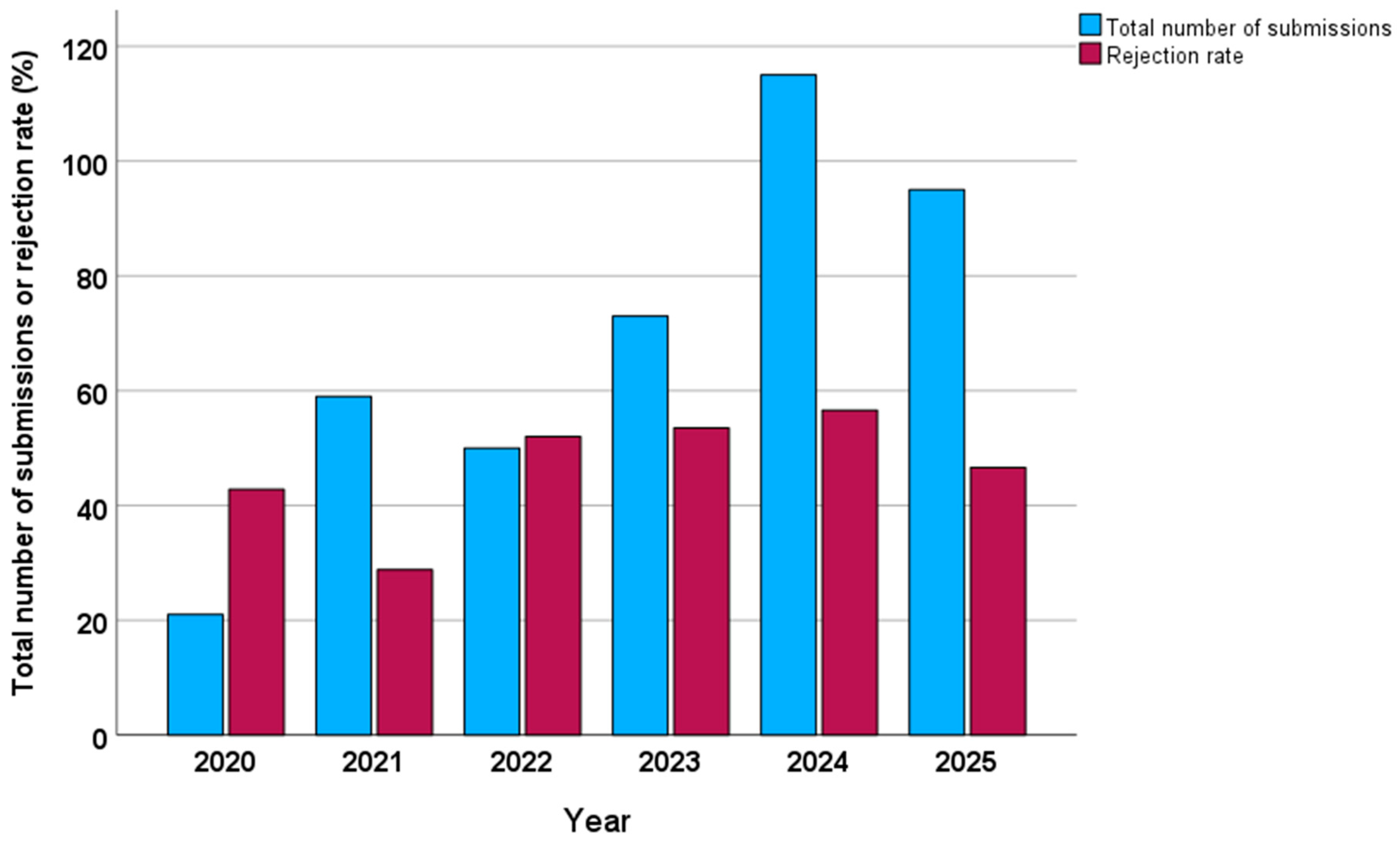
During its first five years (2020–2025), Birds has received 411 submissions. The number of submissions has increased significantly, reaching over 100 submissions per year (Figure 1; notice that the data for the year 2025 is not yet complete [date 5 November 2025]).
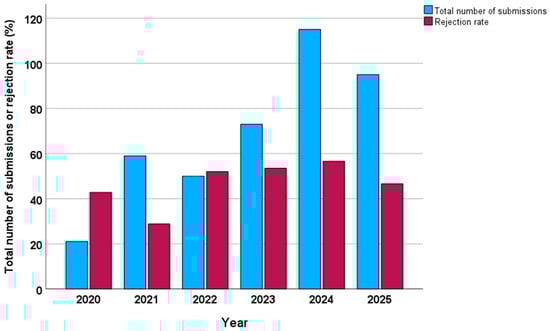
Figure 1.
Total number of submissions and rejection rate (%) of Birds during 2020–2025 (as of 11 November 2025).
All reviewer suggestions (about ten per each submission) about the manuscripts have been implemented, mainly by the Editor-in-Chief or other Academic Editors based on their own specific knowledge related to the topic of the submission. Sometimes the academic editors have also used independent reviewers suggested by the authors. At least two reviewers have reviewed each manuscript, and in addition, the Editor-in-Chief has often revised submissions. If the review reports are inadequate, an additional reviewer is requested. Also, in cases where one reviewer suggests acceptance and the other reviewer suggests rejection, an additional third reviewer is requested to evaluate the manuscript. Therefore, it should be noted that sometimes a manuscript might be accepted even if one reviewer previously recommended that it be rejected. In these rare cases, two independent academic editors will take part in the final decision to secure the rights of the authors and to carry out the professional editorial policy of the journal.
Generally, reviewers are given ten days to conduct their reviews, but they are always granted extra time to finish their reviews if needed. Birds has not experienced many difficulties finding reviewers who are able to conduct their reviews in a given time frame. One possible reason for this could be the rewards that the Birds provides for those who submit high-quality and timely reviews. The reviewer may receive a discount voucher code entitling them to a reduction in the article processing charge (APC) for a future submission to any MDPI journal.
Due to its effective and dedicated reviewers and academic editors, manuscripts submitted to Birds are processed very quickly (Table 1). Normally, the Editor-in-Chief or other Academic Editor will conduct the first pre-check decision within one day. During this process, they will decide whether the submission will be either desk-rejected, whether author revision is needed, or if the manuscript is ready to be sent for review. Manuscripts accepted for publication in Birds are published online very rapidly compared to the other top ornithological journals (on average, within 5 days after acceptance) (Table 1). The effective handling of manuscripts has received widespread acknowledgement not only from the doctoral students who need accepted/published papers for their theses, but also from other ornithologists who have grown tired of waiting for six months or more for a final decision, which might turn out to be a rejection.
The average rejection rate across the years is about 47% (range 28.8–56.6; Figure 1), and it looks like the rejection rate has stabilized between 45 and 50%. The high rejection rate indicates indirectly that Birds has been able to maintain a high quality with regard to its published articles. All acceptance/rejection decisions are made either by the Editor-in-Chief, other Academic Editors (Editorial Boad Members) or Guest Editors of the Special Issues. For Example, I, as an Editor-in-Chief, have made a total of 328 decisions related to the manuscripts submitted to Birds. No automatic acceptance/rejection tools have been used for decision-making.
Birds currently has 42 actively working Editorial Board Members from 16 different countries. Most are from the USA (21.4%), Spain (11.9%), China (9.5%), Italy (7.1%), Poland (7.1%), and Portugal (7.1%). Unfortunately, the Editorial Board of Birds has a gender bias, as is the case for most ornithological journals; only 16.7% of the members are women. During the years 2020–2025, we have used a total of 529 reviewers, with a yearly distribution of 12 reviewers in 2020, 101 in 2021, 67 in 2022, 72 in 2023, 137 in 2024, and 140 in 2025.
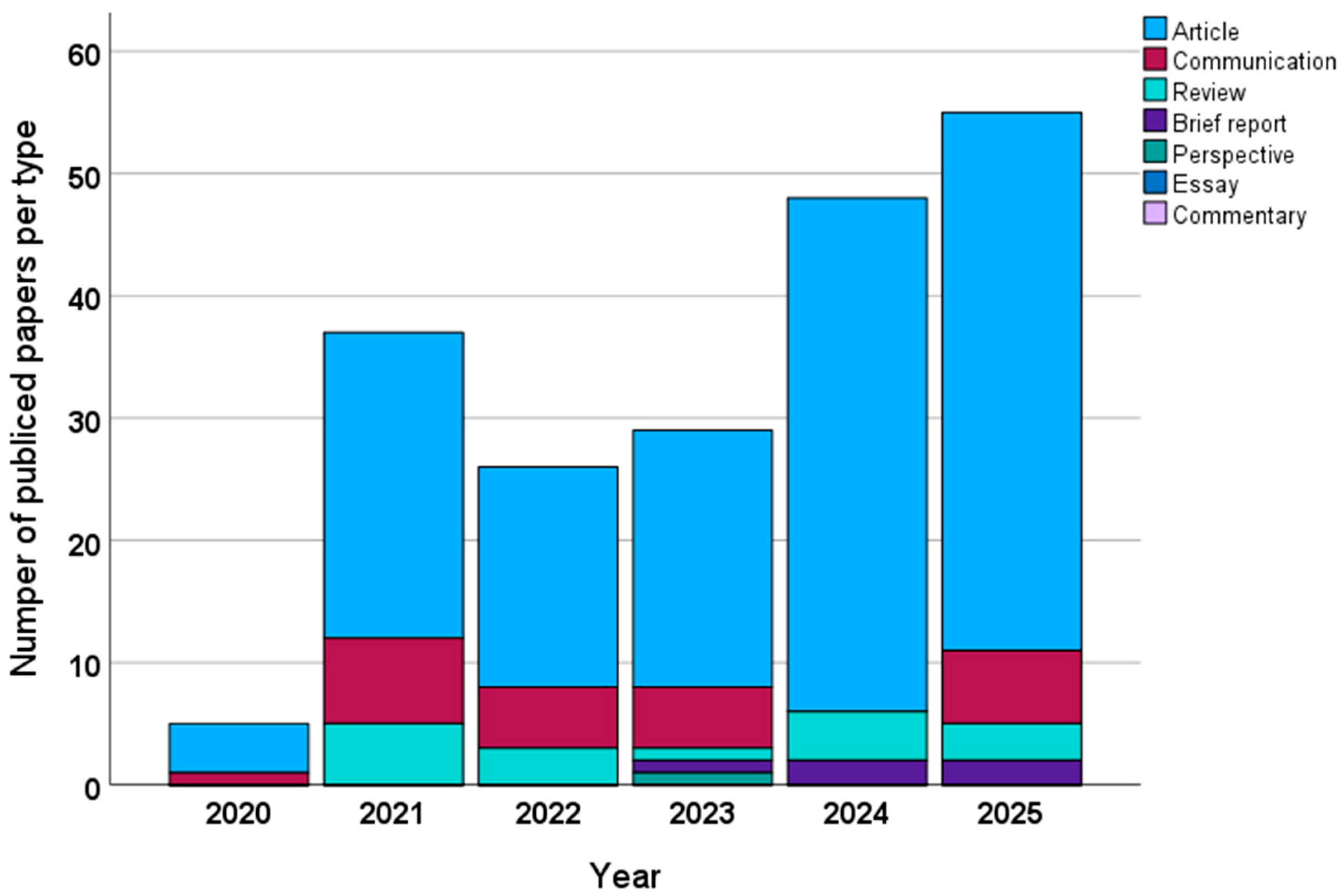
The total number of papers published in Birds has also increased significantly during the last four years (2022–2025) (Figure 2). Most of the published papers are research articles. However, Birds differs from other top ornithological journals by also publishing manuscripts which report novel behavioral observations in the form of Brief Reports or Communications papers. This is highlighted by the quite high proportion of these kinds of published papers (Figure 2). The Birds has released only six Special Issues so far, covering topics such as Birds’ mortality caused by power lines, Birds and people, Resilience of birds in changing environments, and Unveiling the breeding biology and life history evolution in birds. This last Special Issue in this list is still open to submissions until 30 September 2026.
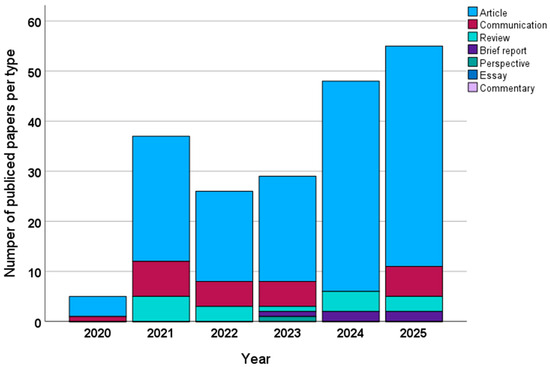
Figure 2.
Number of different types of papers published in Birds during the years 2020–2025.
- Share of the Authors of Birds
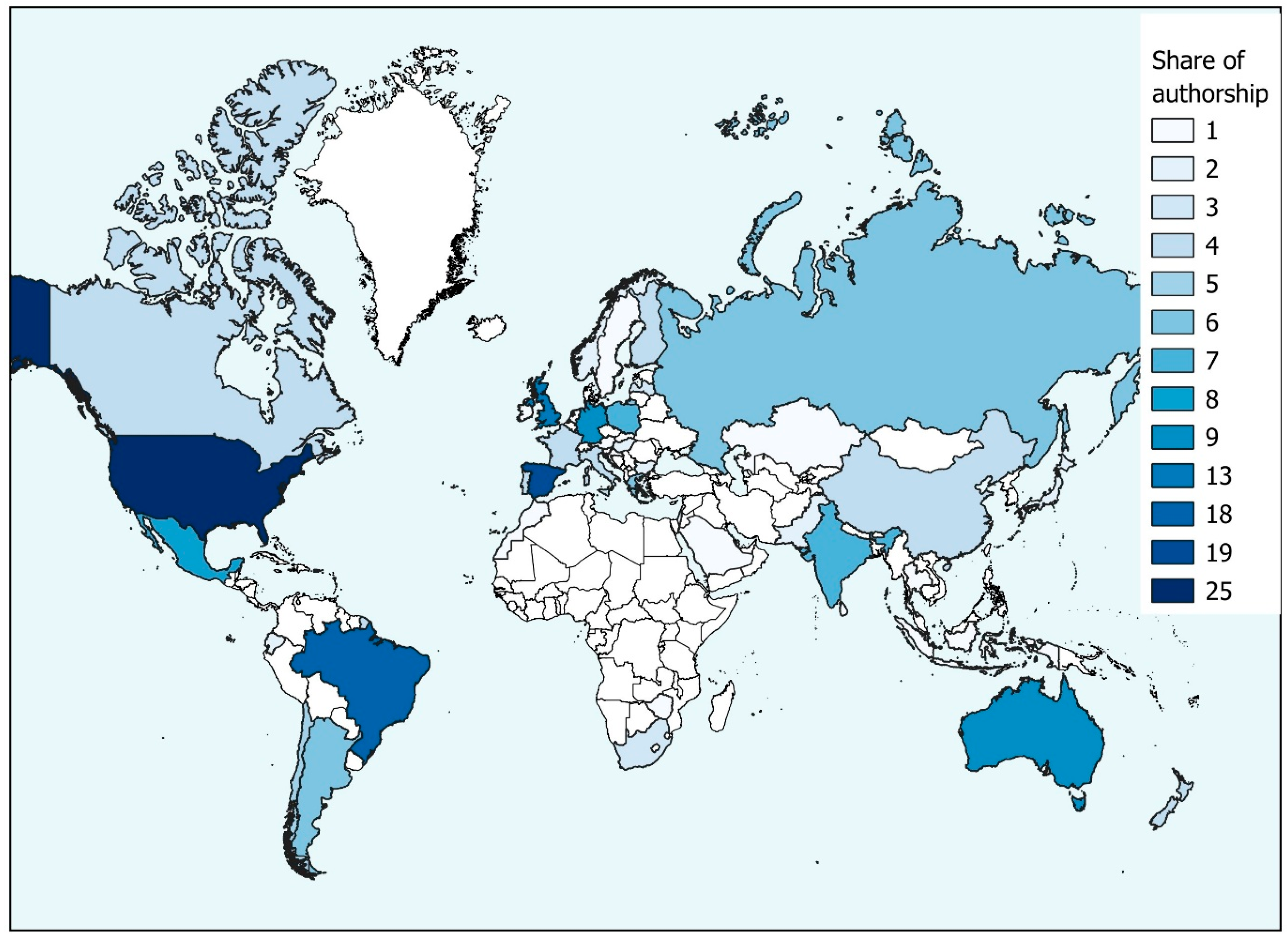
We are very proud that the first authorship of the papers published in Birds is very widespread, covering 46 countries (Figure 3). Most of the first authors of the papers published in Birds thus far are from the USA (18%), Spain (14%), Brazil (13%), UK (9%), Australia (6%) and Germany (6%) (Figure 3). This share corresponds quite well with the data of Ibis [2], in which the top author countries (with a share of at least 8%) were the UK, Canada, Spain, the USA, and Australia, as well for the Journal of Avian Biology [4], in which the top author countries (with a share of at least 6%) were the UK, Spain, Australia, China, and Germany during the year 2024. In general, the top five first author countries in Birds remained quite stable during the years 2021–2025. The USA and Spain have been included for five years; the UK and Brazil for three years; Australia and India for two years; and Germany, New Zealand, Canada, Argentina, Mexico, and South Africa for one year.
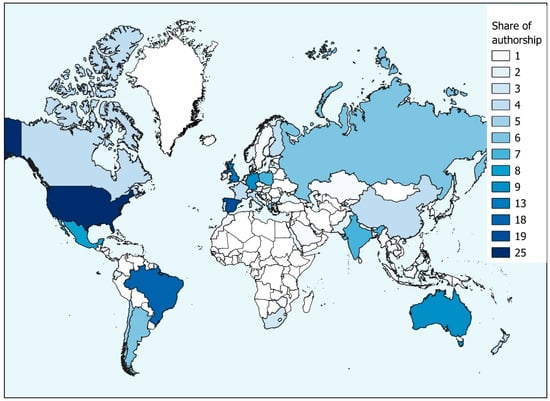
Figure 3.
Share of the first authors of the published papers in Birds during the years 2020–2025. Map: Arto Vitikka, Arctic Centre, University of Lapland. Country border data: Runfola, D. et al. (2020) [6].
- Which Kinds of Papers have been Published in Birds
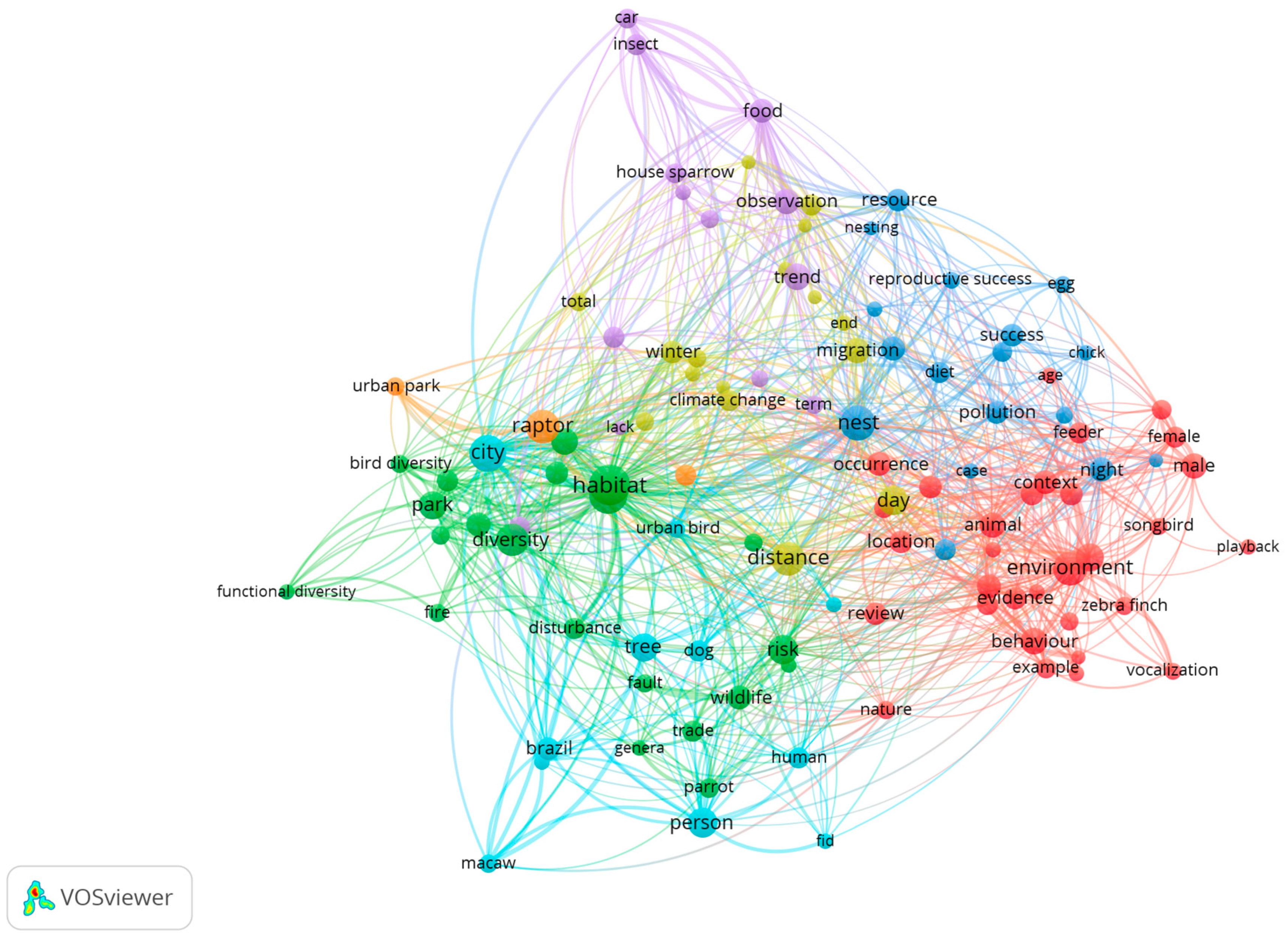
We collected information about the scope of publications from the past five years (2021–2025) for the top four ornithological journals and Birds, and analyzed the data using VOSviewer version 1.6.20 ([7], Figure 4). Each journal was analyzed independently. The titles and abstracts of the publications were extracted, and a Network Visualization was generated for each journal. The data contained 183 publications from Birds, 309 from Ornithological Applications, 504 from Ibis, 235 from Ornithology, and 244 from the Journal of Avian Biology. In the visualization, different colors usually represent different clusters or groups within the network. Each color indicates a grouping of items (e.g., keywords) that are more closely related to each other than to items in other groups. The size of the dots (nodes) represents the importance or frequency of that item within the network. For example, in a keyword co-occurrence map, larger dots indicate keywords that are used more frequently across the analyzed publications. The lines connecting the dots represent relationships between items. Thicker lines generally indicate stronger connections. For instance, thicker lines indicate that the two keywords appear together more frequently in publications.
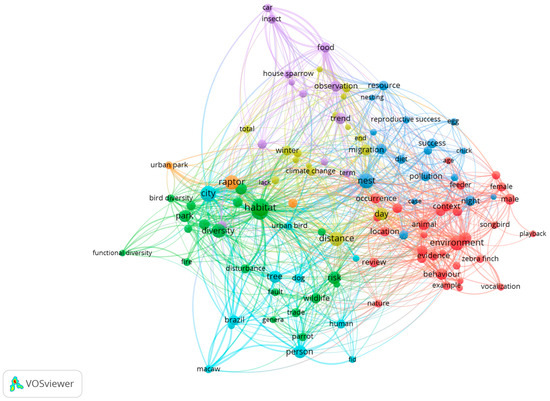
Figure 4.
A Network Visualization [7] of the papers published in Birds based on the titles and abstracts of the articles published during the years 2021–2025. Each color indicates a grouping of items (e.g., keywords) that are more closely related to each other than to items in other groups. The size of the dots (nodes) represents the importance or frequency of that item within the network.
Based on Network Visualization [7], the main research themes of Birds have been identified as being related to the environment, habitats, nests, cities, and diversity (Figure 4). These themes differ somewhat from the main themes of the other top ornithological journals. Migration- and sex-related papers have been included in the main topics in all other top journals (Ibis, Ornithology, Ornithological Applications, and Journal of Avian Biology). Other top themes have been related to nest (Ornithology, Journal of Avian Biology), behavior and sites (Ornithology, Journal of Avian Biology), temperature (Ibis, Ornithological Applications), song (Ornithology, Ornithological Applications), season (Journal of Avian Biology), range (Ibis), predation (Ibis), and forests (Ornithological Applications).
Birds have 15 main scopes [8]. Based on this scope-based categorization of the papers published in Birds, the top five main themes have been identified as (1) Birds’ Conservation and People’s Impacts, (2) Birds’ Ecology and Behavior, (3) Evolution, Genetics, and Phylogenetics, (4) Applied Methods and Technologies in Bird studies, and (5) Population Dynamics and Community Structure.
- Most Cited and Viewed Papers
Numbers of citations represent the scientific importance of papers, whereas number of views indicate general interest in the paper. The most cited papers in Birds deal with phylogeny, ecology, wind power development, birdwatchers, aviculture, Sparrow populations, macro plastics, illegal bird trade, the impacts of COVID-19 on bird behavior, and the use of photographs in citizen science (Table 2). Most, but not all, of the most highly cited articles are also among the most viewed articles (Table 2).
Table 2.
Top ten most cited and viewed papers published in Birds.
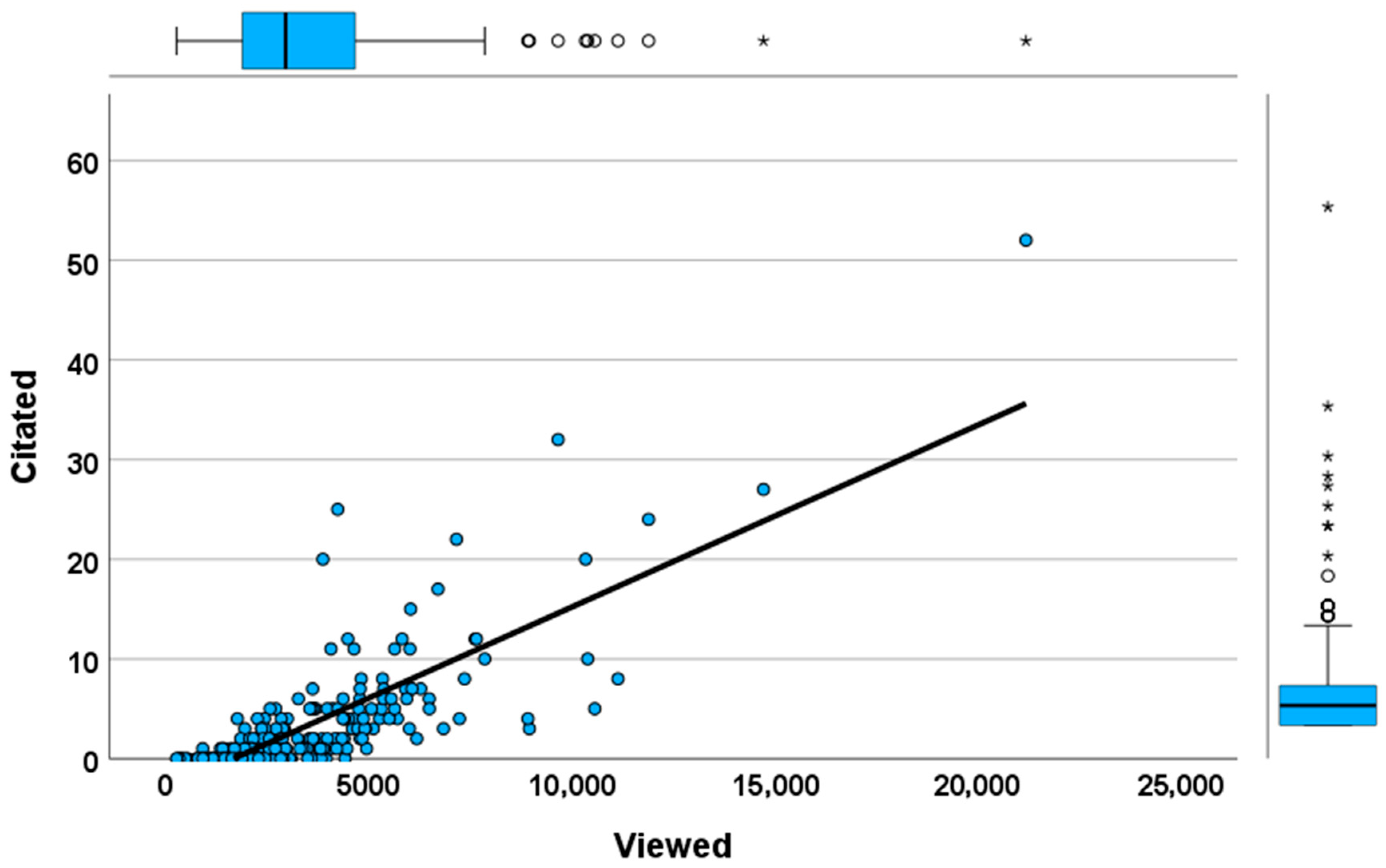
It is understandable that both the most cited and viewed papers were published during the early years of Birds. An average article published in Birds has received 3.54 citations (SD = 6.06; n = 213) and 3613.13 views (SD = 2608.62; n = 213). It should be noted that these numbers also include Editorial papers and recently published papers which have not yet received any citations. About 66% of the articles published in Birds have received at least one citation. If a paper receives a lot of views, it can be expected that the paper will later also receive many citations (Figure 5).
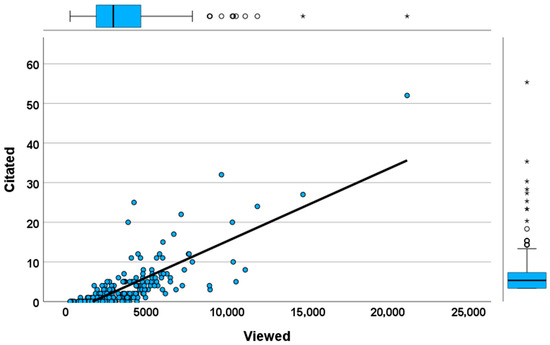
Figure 5.
Relationship between the number of viewed and cited articles with a linear fit line and bar charts of means (n = 213 articles published). The boxplot figures at the upper and right side of the figure present the minimum, the maximum, the sample median, and the first and third quartiles excluding the outliers. Outliers have indicated special marks, extremely outlier cases are indicated by *.
- Some Tips for the Authors
In general, the manuscripts submitted to Birds are of a good quality. However, some basic weaknesses can be observed. Firstly, sometimes manuscripts lack study hypotheses and corresponding predictions. These should be given at the end of the Introduction section. I acknowledge that not all types of submissions need this, but in most cases, clear hypotheses and predictions increase the clarity of the paper. Secondly, the descriptions of the study area and study methods are inadequate. A detailed description of the study area (and species) will help the readers to put the research in the right context. For scientific research, it is of the utmost importance to describe all study methods in sufficient detail that other researchers can easily repeat the study using the exact same methods after they have read the paper. Thirdly, all ecological and ornithological studies have some weaknesses which the authors should openly describe in a separate chapter after the Discussion section or in an ending paragraph of the Discussion section. Authors may also provide suggestions for further research at the end of these parts. As an Editor-in-Chief, I check these topics either during the pre-check or revision phase of the manuscript and I will ask authors to revise the manuscript accordingly. Lastly, Birds has started to follow the new AviList nomenclature and writing style for bird species names, which authors should now follow [9].
- The Future of Birds
The number of submissions Birds receives will obviously increase in the future, at least partly because the Impact Factor and CiteScore values of Birds have increased. That might lead to manuscripts having slightly longer handling times in the future. It is possible that Birds will recruit an Associate Editor-in-Chief during the coming years. I noticed that there is a male bias in the editorial board of Birds. Therefore, I hope that we will have more women join our Editorial Board soon.
Birds is a fully open access journal. Due to the increases in the number of submissions and articles published, the article processing charge (APC) of Birds will increase from CHF 1200 (Swiss francs) to CHF 1400 at the beginning of 2026. The new APC is still very competitive compared to the other top ornithological journals in which the APC or Page Charges are two or even three times as high as that of Birds. In addition, Birds provides discounts for authors from institutes which participate in MDPI’s Institutional Open Access Program (IOAP). It is notable that Birds also awards waivers or discounts on a case-by-case basis for authors from low- and middle-income countries. This article processing charge cover the costs of peer review, copyediting, typesetting, long-term archiving, and journal management.
So far, Birds has given more value to the scientific quality of the manuscripts during the decision-making process. In the future, more value will be given to topics based on the novelty of the topic, the significance of the content, the overall quality of the presentation, the scientific soundness, interest for readers, and the overall merit of the submission in the decision-making process. Previously, academic editors have often tried to help authors with these topics, e.g., during the pre-check decision phase, but in the future, authors should carefully consider these topics themselves before submitting.
Birds is interested in all types of high-quality international submissions related to ornithology and wild birds. Although spatially and temporally replicated descriptive manuscripts are welcome, we hope to receive more experimental research papers which go deeper in explaining various factors and their influences on birds. Also, Birds is interested in papers which analyze the impacts of different land use practices on bird populations, and especially on the behavior of birds. Currently, for example, the impacts of wind power development on birds are inadequately understood. As most people live in cities nowadays and the urban land cover is increasing at accelerating speed, understanding human–bird relationships more deeply has become a very relevant study theme. Therefore, Birds welcomes manuscripts pertaining to the relationship between people and birds via a very wide range of scopes. Lastly, unlike most other top ornithological journals, manuscripts reporting novel behavioral observations can be published as Brief Reports or Communications type publications in Birds. These kinds of reports about novel behaviors often open up ideas for further wider ornithological research and are therefore important to publish.
Birds adheres to the COPE (Committee on Publication Ethics; [10]) principles of transparency and best practice in scholarly publishing outline guidelines for ethical and transparent scholarly publishing. For example, editors are responsible for promoting accessibility, diversity, equity, and inclusivity in every aspect of the publication process. Also, all editorial decisions are based only on scholarly merit and free from bias related to authors’ nationality, ethnicity, political beliefs, race, or religion.
Acknowledgments
Arto Vitikka kindly produced a global map of the share of the first authors. I also thank all of the Editorial Board members and Reviewers for their impactful work with the submissions. Lastly, without ornithologists doing their great work and submitting their manuscripts to Birds, the journal would not exist.
Conflicts of Interest
The authors declare no conflict of interest.
References
- Jokimäki, J. Development of Ornithology and Ornithological Journals—A New Opening by the MDPI with the Birds Journal. Birds 2020, 1, 1–4. [Google Scholar] [CrossRef]
- Journal Metrics: Ibis. Available online: https://onlinelibrary.wiley.com/journal/1474919x/journal-metrics (accessed on 17 November 2025).
- About the American Ornithological Society. Available online: https://academic.oup.com/auk/pages/About (accessed on 17 November 2025).
- Journal Metrics: Journal of Avian Biology. Available online: https://nsojournals.onlinelibrary.wiley.com/journal/1600048x/journal-metrics (accessed on 17 November 2025).
- About the Journal. Available online: https://academic.oup.com/condor/pages/about (accessed on 17 November 2025).
- Runfola, D.; Anderson, A.; Baier, H.; Crittenden, M.; Dowker, E.; Fuhrig, S.; Goodman, S.; Grimsley, G.; Layko, R.; Melville, G.; et al. geoBoundaries: A global database of political administrative boundaries. PLoS ONE 2020, 15, e0231866. [Google Scholar] [CrossRef] [PubMed]
- VOSviewer: Visualizing Scientific Landscapes. Available online: https://www.vosviewer.com/ (accessed on 17 November 2025).
- About Birds. Available online: https://www.mdpi.com/journal/birds/about (accessed on 18 November 2025).
- AviList Core Team. AviList: The Global Avian Checklist, v2025; AviList Core Team: Ithaca, NY, USA, 2025. [Google Scholar] [CrossRef]
- COPE. Principles of Transparency and Best Practice in Scholarly Publishing. Available online: https://publicationethics.org/guidance/guideline/principles-transparency-and-best-practice-scholarly-publishing (accessed on 28 November 2025).
Disclaimer/Publisher’s Note: The statements, opinions and data contained in all publications are solely those of the individual author(s) and contributor(s) and not of MDPI and/or the editor(s). MDPI and/or the editor(s) disclaim responsibility for any injury to people or property resulting from any ideas, methods, instructions or products referred to in the content. |
© 2025 by the author. Licensee MDPI, Basel, Switzerland. This article is an open access article distributed under the terms and conditions of the Creative Commons Attribution (CC BY) license (https://creativecommons.org/licenses/by/4.0/).