


Abstract
This study examines multi-celebrity deployment as a destination branding practice, using Seoul as an empirical case. The analysis draws on 172 official tourism promotional videos released by the Seoul Tourism Organization between 2011 and 2025, featuring 67 identifiable celebrities and 438 destination references. A qualitative content analysis examines how celebrity endorsement is organized as a branding mechanism, focusing on who appears, what is represented, and how representations are communicated across media formats over time. The findings show that Seoul’s tourism promotion operates through a structured multi-celebrity branding system in which multiple endorsers are coordinated across campaigns and periods. Endorser selection is anchored in Hallyu-affiliated celebrities who function as primary carriers of destination meaning, while emerging, non-Hallyu, and heritage-linked figures occupy complementary roles that broaden representational scope and reduce reliance on individual figures. Celebrity endorsement continues to emphasize major and symbolically dense attractions, while also extending visibility to everyday neighborhoods and locally oriented urban landscapes. Long-term ambassador-led campaigns coexist with travel vlogs and other creative video formats, enabling variation in narrative tone and experiential framing. Theoretically, the study extends celebrity endorsement research by conceptualizing multi-celebrity deployment as a coordinated branding system. Practically, the findings show how destination marketing organizations can mobilize a broad pool of celebrity resources to structure endorsement portfolios over time. Coordinated use of celebrities with different levels of familiarity supports wider spatial representation, enables ongoing narrative renewal, and maintains promotional continuity across changing media environments. This configuration is most applicable to destinations with strong cultural visibility and an established celebrity ecosystem, and may be less transferable to destinations with limited access to influential figures.
1. Introduction
Destination promotion unfolds in a competitive setting where destinations seek to maintain their attractiveness alongside others (Hanna et al., 2021; Ruiz-Real et al., 2020). Efforts to communicate this attractiveness have long relied on promotional activity that introduces attractions, experiences, and place characteristics to prospective visitors (Gladkey, 2018; Pan & Ryan, 2007; Wee & Sanmargaraja, 2016). As media environments have shifted, the ways destinations carry out this promotion have also changed, bringing new forms of promotional materials and styles of presentation. Alongside these changes, popular figures have become increasingly present in destination promotion, appearing as part of how destinations present and communicate their attractions. Tourism research has recognized this presence and has documented the use of celebrity endorsement across destination promotion in a range of contexts (Glover, 2009; Johns et al., 2015; Panda & Thakkar, 2017; Roy et al., 2021). Empirical studies report associations between celebrity involvement and destination visibility, destination image, and tourist response, supporting continued scholarly attention to celebrity endorsement as part of destination promotion (Marković et al., 2022; Pradhan et al., 2023; H. Zhang & Xu, 2024). Existing studies suggest that the involvement of celebrities has generally been viewed as a constructive approach in destination promotion and branding practice.
Celebrity participation in destination promotion has expanded over time, yet accounts of these developments appear more frequently in news reporting and organizational communication than in academic research. Official tourism channels, including destination-managed online video platforms, play an active role in circulating celebrity-related promotional content, but systematic scholarly engagement with these materials remains limited. In addition, existing studies tend to examine promotional practices involving a single celebrity or a small number of highly visible figures, often situated within specific campaigns or short-term promotional arrangements (Armielia, 2019; Clarke, 2009; Johns et al., 2015; S. J. Lee & Jeong, 2023; Nair & Solanki, 2022; Roy et al., 2021; W. Yang, 2018). Promotional practices that involve a broader range of celebrities coordinated across sustained destination communication have received less attention. This limitation has hindered understanding of how destinations can deploy multiple public figures within official promotional practice and how such multi-celebrity deployment is organized over time.
Hence, this study attempts to fill the identified knowledge gap by examining how destinations organize the use of multiple celebrities within official tourism promotion. Seoul is used as the empirical context because the city has systematically engaged multiple celebrities in its official tourism promotion since 2011, with different figures appearing across audiovisual materials, tourism sites, and campaign themes distributed through official channels (Seoul Tourism Organization, 2026), while such sustained patterns of multi-celebrity use have received limited academic attention. The analysis examines official promotional output over time and contributes empirical insight into how multi-celebrity participation is coordinated within destination branding practice. The paper proceeds as follows. It first reviews the literature on destination promotion and celebrity endorsement, then outlines the data and methodological approach, presents the findings, and concludes with discussion and conclusions.
2. Literature Review
2.1. Celebrity Endorsement as a Destination Branding Mechanism
Destinations operate in competitive environments in which cities and regions seek to differentiate themselves to attract visitors, investment, and associated economic benefits. Destination branding has therefore become an important approach through which places shape visibility and communicate distinctive identities to external audiences (Ford et al., 2023; Hanna et al., 2021). Recent scholarship emphasizes the role of soft power in tourism, demonstrating how symbolic resources such as culture, heritage, and image contribute to destination development and economic returns (Casado Claro et al., 2023; Pasquinelli & Kavaratzis, 2025). Destination branding research further shows that branding activities encourage cultural consumption, as cities and destinations promote experiences, narratives, and symbolic assets that invite engagement with place identity (Kolotouchkina & Seisdedos, 2016; W.-T. Li & Cheng, 2022; Zain et al., 2018). These dynamics underscore the importance of communicative agents, since place meanings are articulated through the ways destinations are represented in promotional communication.
Tourism and hospitality research has conceptualized celebrity endorsement as one means through which destinations promote attractions and articulate place meanings by associating them with widely recognized public figures. This perspective developed as branding concepts gradually entered tourism research. Branding had not yet been fully incorporated into the tourism sector during the mid-2000s, which helps explain why celebrity involvement in destination promotion received little scholarly attention at that time. Research instead focused on tourism flows generated through popular culture, such as film-induced visitation associated with The Lord of the Rings, where mediated narratives stimulated visitor interest and contributed to destination branding without extending discussion to the strategic use of popular figures as identifiable representatives of destinations (Beeton, 2006; Carl et al., 2007). Glover (2009) marked an early moment at which celebrity engagement began to be addressed explicitly in tourism scholarship by drawing attention to the growing presence of celebrities in destination promotion. This work signaled the emergence of celebrity endorsement as a recognizable practice within tourism marketing, which later studies examined through selected high-profile cases. Johns et al. (2015) analyzed Australia’s appointment of Oprah Winfrey as a national tourism ambassador, while W. Yang (2018) documented cases including Psy’s role in promoting South Korea, the use of Taylor Swift and Meryl Streep to promote New York City and New York State, and Chris Hemsworth’s involvement in promoting Australia.
Beyond these studies, celebrity engagement in destination promotion has been identified with a single prominent figure or a small set of closely related figures within a defined campaign period (Armielia, 2019; Clarke, 2009; Johns et al., 2015; S. J. Lee & Jeong, 2023; Nair & Solanki, 2022; Roy et al., 2021; W. Yang, 2018). This configuration is reinforced through news reporting and official destination communications, which consistently present one or few figures as the principal representative of the destination during a defined timeframe (AAP, 2016; Bernardo, 2025; Klugey, 2019; New York City Tourism + Conventions, 2014; Scheiner, 2014; Switzerland Tourism, 2026). Existing studies have largely framed celebrity endorsement in destination promotion as a branding mechanism centered on single or limited celebrity representation, where one prominent figure, or a small number of closely related figures, serves as the primary symbolic reference for the destination. Nevertheless, academic research has approached celebrity endorsement primarily through analysis of endorsement effects, audience response, and branding outcomes (Marković et al., 2022; Pradhan et al., 2023; Salamoura et al., 2020; H. Zhang & Xu, 2024; L. Zhang et al., 2024). Likewise, limited scholarly attention has been directed toward cases in which destinations engage more than one public figure across official promotional communication, leaving multi-celebrity deployment largely unexplored in destination branding research.
2.2. Familiarity, Credibility and Meaning Transfer in Destination Branding
The review so far has identified a common branding model in which celebrities function as prominent representatives in tourism promotion. This prevalence invites closer examination of why destinations rely on celebrity endorsement as a means of communicating destination attractiveness. From the destination perspective, celebrities offer a channel through which place meanings can be conveyed using figures that audiences already recognize and trust. Tourism scholarship explains this process through various mechanism. First, mediated familiarity, derived from Schickel’s concept of celebrities as intimate strangers, refers to how repeated media exposure can produce a sense of perceived closeness despite the absence of direct interaction (Schickel, 1985). J. Yang et al. (2025) extend the notion of celebrities as intimate strangers by integrating it with match-up theory. Their findings indicate that the effects of mediated familiarity depend on how audiences evaluate the fit between a celebrity and the tourism context being promoted, with relevance for cultural tourism settings. Empirical tourism research supports this interpretation by showing that familiarity with celebrities influences trust, credibility, and consumption-related behavior across a range of tourism contexts (P. Li & Sun, 2024; Qiu et al., 2021).
Studies also report that tourists are more inclined to engage with tourism products and services associated with familiar celebrities, including destination visits, tourism experiences, and intermediary services such as travel agencies (Lin & Jiang, 2023; Matiza & Slabbert, 2024; Nugraha et al., 2024; X. Yang et al., 2025). In this context, celebrities function as reference points that can reduce uncertainty in travel decision-making (Tang & Chung, 2025). They are perceived as sources of credibility whose messages are trusted and attended to. Meaning transfer theory offers a further explanation for why celebrities are selected as carriers of destination messages (McCracken,1989). This model conceptualizes celebrities as carriers of symbolic meanings formed through their mediated public presence, which are conveyed through endorsement and drawn upon by audiences when evaluating endorsed objects. In celebrity endorsement research, this framework has been extended to interpret how such meanings become associated with promoted products and services (Halonen-Knight & Hurmerinta, 2010; Tian et al., 2022). Tourism studies applying this framework show that destinations may acquire symbolic associations linked to celebrities’ values, lifestyles, or reputations through endorsement (S. J. Lee & Jeong, 2023; C. Li et al., 2026). On this basis, the theories reviewed provide an explanatory framework for understanding why destinations engage celebrities in the promotion of tourism attractions, as celebrity figures can shape audience attention, influence consumption of tourism products, and encourage visitation.
2.3. Celebrity Endorsers in Destination Branding Research
After outlining the key mechanisms through which celebrity endorsement operates in tourism promotion, this section examines the types of celebrities typically featured and how different celebrity categories are mobilized in branding practice. Research on destination branding indicates that celebrity selection follows recognizable patterns linked to occupational background. Much of the early academic discussion focused on entertainment celebrities, particularly film and television personalities, whose media visibility allows destinations to communicate through widely recognized cultural figures. In Australia, examples of celebrity engagement include Paul Hogan, whose popularity stemmed from the Crocodile Dundee films, and Oprah Winfrey, a globally recognized television host, both of whom have been associated with tourism promotion (Glover, 2009; Johns et al., 2015). Sports celebrities form another prominent category. Athletes’ competitive achievements and international exposure position them as credible representatives, particularly in contexts associated with national pride and global visibility (Hautbois et al., 2024), as also seen in tourism promotion linked to golf destinations in Thailand (Aphisavadh, 2024).
Beyond occupational background, destination branding research also distinguishes celebrities according to the spatial reach of their public recognition. Internationally recognized celebrities are often engaged to enhance global visibility and support circulation across international media environments (Roy et al., 2021). Professional documentation reports similar strategies in destinations such as UEA and Fiji, where globally recognized figures are used to position destinations in international tourism markets (Corder, 2025; Dundas, 2021; Pacific Tourism Organization, 2018; The National, 2025). Research further suggests that association with celebrities possessing broad cultural exposure can contribute to the repositioning of lesser-known destinations, including regional coastal towns promoted through widely recognized cultural figures (Clements, 2024). Likewise, destinations also use their popular domestic celebrities to promote attractions. South Korea and Taiwan were among the early adopters of this approach in Asia during the early 2010s, using regionally popular celebrities to promote tourism attractions across their destinations (Sung, 2015). India also harnessed its domestic celebrities to promote hospitality values and domestic tourism (Panda & Thakkar, 2017). A similar strategy was identified in Spain, in which Antonio Banderas was featured for Andalucia tourism (King, 2021). The use of a local celebrity with global exposure can also be observed in Switzerland, notably through tourism promotion associated with Roger Federer (Switzerland Tourism, 2026). Similarly, South Africa has leveraged the popularity of Trevor Noah in its tourism promotion efforts (Tourism Business Council of South Africa, 2023).
Additional forms of selection draw on cultural and mediated proximity. Heritage-linked celebrities are mobilized through ancestry, cultural origin, or historical association, framing destinations through narratives of identity and belonging (Klugey, 2019; Oluwadara, 2024). Internet-based celebrities and influencers also represent an increasingly visible category, particularly in contexts such as China, where digital personalities shape destination image and travel interest through sustained platform visibility and audience interaction (Fath et al., 2017; Guo, 2024; Rambe & Ndofirepi, 2025). These patterns indicate that celebrity selection in destination branding is organized along two main dimensions: occupational category and spatial reach of recognition. This perspective sheds light on the types of celebrities most typically chosen to represent destinations in tourism promotion.
2.4. Spatial and Media Organization of Celebrity Endorsement in Destination Branding
Following the preceding section on celebrity selection, this section turns to what destinations seek to promote through tourism branding and how celebrities are presented across different promotional media formats. Much of the existing literature approaches this issue through analysis of official campaign materials produced by destination marketing organisations, which offer insight into how attractions are framed within promotional communication. Research on destination marketing organization promotional videos shows that these materials commonly foreground panoramic views, natural scenery, and cultural landscapes (Chen et al., 2022; Choi & Rifon, 2019; G. Li et al., 2023). Visual content analyses also identify recurring patterns in the representation of people and place, with cultural and natural landscapes appearing most frequently in promotional imagery (Zuo et al., 2023). Other studies note variation in visual emphasis, with some campaigns highlighting landscapes and leisure activities through scenic and activity-oriented imagery (Alegro & Turnšek, 2021; Gan et al., 2023). This literature characterizes a relatively consistent profile of attraction types presented through official promotional videos.
Research on celebrity appearances situates celebrities as part of this promotional environment. Studies on celebrity endorsement discuss celebrity presence in relation to campaign context and branding arrangements. Celebrities continue to appear in videos produced by destination marketing organisations that present recognisable attractions, as illustrated by content released through official tourism channels (Switzerland Tourism, 2026). Research also addresses the media formats through which destinations communicate promotional content. Studies examining destination marketing organisation practice report that official promotional videos remain a commonly adopted format for presenting destination attractions (Cao et al., 2021; Gan et al., 2023; Guerrero-Rodríguez et al., 2020). A related body of tourism research identifies audiovisual promotional materials as influential in shaping destination branding narratives and informing pre-travel decision processes (Mohamed et al., 2021; Uner et al., 2023; Vlassis, 2021). More recent studies document expansion toward short-form video, travel vlog formats, and content produced by internet celebrities and independent creators, extending destination visibility alongside official DMO output (Nguyen et al., 2025; X. Wu & Lai, 2021; Zhao et al., 2024). These studies also note instances where destination marketing organizations engage with such formats, indicating interaction between official promotion and platform-based tourism media.
Viewed in combination, this literature frames destination promotion as an attraction-focused practice delivered primarily through audiovisual media. Official destination marketing organization videos provide a stable reference point for presenting recognizable attractions, while celebrity appearances are incorporated into some campaigns as part of this promotional environment. The expansion of short-form and creator-driven media introduces additional modes of circulation, while official promotional formats continue to anchor destination representation. This framing provides a basis for examining how celebrity presence is layered onto established attraction-centered promotion across evolving media contexts.
2.5. Conceptual Gaps and Framework
The literature reviewed above shows that tourism and hospitality research has established celebrity endorsement as a recognized destination branding practice. Existing studies explain why destinations engage celebrities and document recurring patterns of celebrity involvement across tourism promotion. Research further indicates that promotional materials tend to present a consistent set of destination types, particularly natural landscapes and widely recognized settings. Celebrity-led campaigns discussed in the literature introduce comparable destination representations, while official tourism videos have become a common promotional format, later complemented by short-form and platform-based content.
What remains less clearly articulated is how celebrity endorsement operates when multiple celebrities appear across promotional output for the same destination. While the literature documents patterns related to who appears in destination promotion, what types of destinations are presented, and which media formats are employed, it offers limited conceptual discussion of how multiple celebrity appearances are organized across campaigns and media formats. To address this gap, the present study adopts an analytical framework organized around three interrelated dimensions: who appears, referring to the range and observable profiles of celebrities featured; what is presented, focusing on the types of destinations and tourism areas associated with multiple celebrity appearances; and how promotion is delivered, considering the media formats through which celebrity endorsement is enacted. This framework provides a basis for examining multi-celebrity endorsement as a destination branding practice across established destination representations and evolving promotional media.
3. Methodology
3.1. Empirical Context: Hallyu, Tourism, and Seoul
Seoul, the capital city of South Korea, has acquired heightened global visibility alongside the expansion of Korean popular culture, commonly referred to as the Korean Wave or Hallyu phenomenon. Hallyu initially gained regional prominence in East Asia, particularly in China, before extending to Japan (Han & Lee, 2008). With the diffusion of digital media platforms and the growth of transnational fan networks, Korean cultural content later circulated beyond East Asia and achieved global reach (Jin, 2019). Increasing international consumption of Korean television dramas, popular music, and related cultural products intensified overseas interest in South Korea and contributed to growth in inbound tourism, a pattern later described as Hallyu tourism (Bae et al., 2017; C. G. Lee & How, 2022; Lim & Giouvris, 2020).
The contribution of Hallyu to tourism development has been formally recognised within national policy discourse. During the Moon Jae-in administration (2017–2022), Hallyu was strengthened as part of South Korea’s soft power and cultural diplomacy agenda, including initiatives associated with the New Southern Policy (Kamon, 2022). Popular culture was positioned as a resource for enhancing the country’s international image and supporting external engagement. High-profile initiatives, such as the appointment of BTS as cultural envoys and their engagement at the United Nations, illustrate how popular culture figures have been mobilized as symbolic representatives of the nation (UN Office for Partnerships, 2021). Through such initiatives, Korean celebrities increasingly operated beyond entertainment, functioning as cultural intermediaries whose visibility supported international engagement and overseas market expansion for Korean industries (Drianda et al., 2024; Ainslie, 2016).
Alongside this expansion, Hallyu has become increasingly transnational in composition. Korean music and entertainment agencies have incorporated performers of diverse national backgrounds, who operate within the organizational and symbolic framework of Hallyu despite differing nationalities (Jin, 2025; S. Lee & Nornes, 2015). These artists are promoted under the umbrella of Korean popular culture and global K-pop production systems, reinforcing Hallyu as an industry-led cultural formation rather than a strictly national one, while maintaining its association with South Korea as a cultural reference point. Comparable dynamics are evident within tourism promotion, where celebrities associated with Hallyu are also appointed as overseas tourism ambassadors and featured across official promotional communication to attract visitors (Bernardo, 2025; Tourism Promotion Board Philippines, 2025). Previous study has identified the contribution of Korean destination branding to destination image, using BTS fans as the audiences (S. J. Lee & Jeong, 2023). This may explain why South Korea, particularly Seoul, has been continuously use popular Korean figures in its tourism promotion. Compared to other Korean cities, Seoul has been quite aggressive in promoting its destination, as reported in various media outlets (S. J. Lee & Jeong, 2023; Rokou, 2025). Its destination marketing organization, Seoul Tourism Organization, has employed a wide range of celebrities to feature the city’s attractions through a variety of audiovisual materials. While these massive practices are documented on the VisitSeoul TV YouTube Channel and website, which is operated by the Seoul Tourism Organization, they remain underexamined in academic research. This study therefore analyzes such materials released by the Seoul Tourism Organization.
3.2. Data Collection
As outlined above, this study focuses on official destination marketing organisation videos released by the Seoul Tourism Organization as the primary site of analysis. It examines how celebrity endorsement is organised and articulated across promotional campaigns, and how these representations are connected to the attractions and experiences being promoted. Seoul provides an appropriate empirical context due to the sustained presence of celebrities across its official tourism promotion and the breadth of its video-based output. Audiovisual materials published through the Visit Seoul website and the official VisitSeoul YouTube channel were selected, as these platforms offer a consistent and publicly accessible archive of Seoul’s official tourism communication across campaigns and time periods. All available videos released between 2009 and 2025 were reviewed. These materials are publicly released for tourism promotion, and no screenshots or reproduced visuals from the platforms are presented in this study.
A qualitative content analysis was subsequently employed to examine the selected video materials. Content analysis is a well-established approach for analyzing audiovisual communication and is particularly suitable for examining large datasets while retaining attention to relevant details (Krippendorff, 2019). This approach enables systematic categorization of video content and supports comparison across campaigns and time periods, with a focus on observable patterns of celebrity engagement within tourism promotion videos. An initial review of the collected materials was conducted to identify whether each video featured at least one identifiable celebrity. This screening stage resulted in a reduced dataset, which was then subjected to further eligibility assessment (See Figure 1). Videos were considered eligible if they met three criteria: First, they promoted destinations or experiences located within Seoul. Videos that primarily featured peripheral areas or non-Seoul locations were excluded to maintain spatial consistency with the research focus. Second, they adopted tourism promotion formats, including general promotional clips, music- or performance-based videos, and travel vlog-style content. Third, re-edited versions and duplicate uploads were excluded. Based on these criteria, 172 videos were selected for analysis. This number was considered sufficient once additional videos no longer generated new patterns across the analytical categories.
Figure 1.
Research Design and Analytical Procedure.
Each selected video served as the unit of analysis and was reviewed and coded using a structured extraction sheet. The coding process captured three analytical dimensions: celebrity classification, campaign setting and media format, and the destinations or experiences presented. The resulting dataset included 67 unique celebrities and 438 distinct destination references. Coding was conducted independently by two researchers using the predefined category framework. All videos were viewed multiple times to ensure consistency in category assignment. A third researcher subsequently reviewed a subset of the coded data to identify ambiguities and support consistency in category interpretation and application. The coding scheme and operational definitions used in the analysis are presented below (See Table 1).
Table 1.
Coding Scheme and Operational Definitions.
To assess the reliability of the coding process, inter-rater reliability was evaluated using Krippendorff’s alpha for nominal data. A subsample of 30 videos was independently coded by the two researchers, and agreement levels were calculated for the main four analytical categories: type of celebrity, Hallyu affiliation, video format and endorsed activities. The resulting average alpha coefficient across these categories was α = 0.8080, indicating generally acceptable agreement. Prior to full coding of the dataset, discussions were conducted among the researchers to align interpretations and ensure shared understanding of the category definitions. Following the coding process, patterns emerging across campaigns and time periods were analyzed. This analytical approach enabled the study not only to identify the presence of celebrities in promotional videos, but also to examine how celebrity engagement is structured across campaigns, media formats, and locations over time. The findings section reports observed patterns in how multiple celebrities appear across campaigns and time periods, and how their appearances relate to promoted attractions, experiences, and video formats. Furthermore, this approach allows the study to examine how these dimensions collectively contribute to broader place branding strategies. While the content analysis method employed in this study is replicable, the findings reflect the specific cultural and industrial context of Seoul. Consequently, the branding patterns discussed may not be directly transferable to other destinations with different cultural resources or media ecosystems.
4. Results
4.1. The Endorsers of Seoul Tourism
4.1.1. Celebrity-Featured Tourism Videos, 2011–2025
The analysis reveals a clearly structured temporal pattern in celebrity engagement within Seoul’s tourism campaigns (see Figure 2). While promotional videos have been disseminated through the Visit Seoul platform since 2009, the incorporation of celebrities did not emerge until 2011. This initial phase was followed by intermittent growth, with renewed increases in 2013 and a pronounced expansion in 2015, marking the first major intensification of celebrity use. A short-lived contraction occurred in 2016, after which celebrity participation resumed an upward trajectory through 2018. From 2018 to 2019, engagement levels stabilized with a slight decline. This pattern shifted sharply in 2020, when celebrity-featured content increased and reached its peak during the COVID-19 period, indicating a strategic reliance on recognizable figures during a time of restricted mobility and heightened digital consumption. After this peak, celebrity involvement gradually tapered off. By 2025, the volume of tourism videos featuring celebrities had declined to a noticeably lower level, suggesting a recalibration of promotional strategies in the post-pandemic phase.
Figure 2.
Pattern of celebrity engagement in Seoul tourism promotional videos over time, 2011–2025. Source: Authors’ Analysis, 2025.
Table 2 demonstrates a clear concentration of major endorsers affiliated with the Hallyu industry, with 81 percent of all figures linked to Korean popular culture and 19 percent classified as non-Hallyu or international. This distribution confirms Hallyu as the central foundation of Seoul’s tourism storytelling between 2011 and 2025. While early 2010s campaigns occasionally incorporated regional figures from Japan and Thailand to engage nearby markets, the subsequent global expansion of the Korean Wave reinforced reliance on Hallyu celebrities, reflecting confidence in the international circulation of Korean cultural content. This dominance consolidates Seoul’s image as both the origin and stage of Korean popular culture, where mediated familiarity formed through music, drama, and digital interaction precedes physical travel and translates symbolic attachment into spatial experience. In recent years, the Seoul Tourism Organization has selectively introduced international figures without altering this core framework, as illustrated by the collaboration with Xantheia Pennisi in a Red Bull-supported performance at Yanghwa Bridge, which broadened representational scope while retaining Hallyu as the narrative anchor.
Table 2.
Categories of Hallyu and Non-Hallyu Endorsers Featured in Seoul Tourism Campaigns between 2011 and 2025.
4.1.2. Endorsers of the Tourism Videos
As shown in Table 3, K-pop idols dominate Seoul’s tourism campaigns, accounting for about 55 percent of all appearances, followed by lifestyle figures such as chefs, influencers, and photographers (21 percent), actors (10 percent), musicians (9 percent), and athletes (5 percent). This distribution indicates a deliberate diversification strategy, with K-pop positioned as the core communicative channel through which Seoul projects its global image. The prominence of idols reflects an institutional recognition of fandom as a durable communicative infrastructure that sustains attention through repetition and symbolic intimacy. The appointment of BTS as honorary ambassadors in 2017 exemplifies this logic, linking Seoul’s local identity to the global circulation of Hallyu. Actors and musicians support this strategy by adding narrative depth through story-based and performance-oriented videos situated in recognizable urban spaces such as Bukchon Hanok Village, Gyeongbokgung Palace, the Han River, and Seoul Forest. Lifestyle figures further broaden this representational range by foregrounding everyday cultural practice, as seen in collaborations with Chef Edward Lee and Steve McCurry, reinforcing Seoul’s branding as cosmopolitan while remaining grounded in local culture.
Table 3.
Categories of celebrities endorsing Seoul tourism between 2011 and 2025.
Further analysis demonstrates the structural dominance of idols as recurring lead endorsers across Seoul’s tourism campaigns (see Figure 3). Idols were consistently deployed to promote diverse attractions, functioning as a central mechanism for activating inbound Hallyu tourism. In 2012, 2013, and 2017, idols appeared as the major endorsers in official promotional videos, underscoring their institutional primacy within the endorsement hierarchy. Actors assumed a leading role in selected years, most notably 2015, 2016, and 2021, although their presence outside these periods remained limited. Musicians entered the campaign portfolio during the pandemic, first appearing around 2020 and reappearing in 2022, suggesting a context-specific adjustment aligned with heightened reliance on digitally mediated cultural consumption. After the pandemic, actors became increasingly visible as primary campaign figures. This shift is illustrated by Kim Yo-han, who led a series of time-travel themed videos, and Song Kang, who fronted the “Pick Your Seoul” campaign. Both actors experienced rapid increases in public recognition during the COVID-19 period through widely circulated dramas, including Love Alarm, Nevertheless, Navillera, School 2021, and A Love So Beautiful. Other endorsement categories appeared more sporadically. Lifestyle figures were concentrated in 2015 through collaborations with a Japanese model commissioned by the Seoul Tourism Organization, after which this category expanded to include chefs and media personalities. Sports celebrities appeared briefly in 2023 and did not feature prominently in other years, reinforcing their marginal role within Seoul’s broader celebrity endorsement strategy.
Figure 3.
The Type of Celebrities Endorsing Seoul Tourism. Source: Authors’ Analysis, 2025.
4.2. Attractions Endorsed by Celebrities in Seoul Tourism Videos
Out of 438 videos, idols were most frequently associated with heritage-related attractions (see Figure 4). A prominent example is BTS, who featured the National Museum of Korea in the Eogiyeongcha: Your Seoul Goes On campaign, with brief scenes set in galleries displaying Silla-period collections, the Joseon royal throne, the Gyeongcheonsa Pagoda, and calligraphy and painting exhibits. Other idol endorsers also regularly highlighted major heritage landmarks, most notably Gyeongbok Palace, which similarly appeared in actor-led campaigns. Beyond heritage, shopping and lifestyle formed the second most frequently promoted attraction category. Districts such as Seongsu-dong and Myeong-dong, along with retro alleyways, were presented as spaces of everyday urban culture and historical continuity. One illustrative case is Cha Eun-woo, whose appearance in the Viewtiful Seoul series showcased selected sites linked to past urban lifestyles, serving as an example rather than a defining pattern. Other endorsers also featured smaller shops offering a more personal shopping experience in Seoul, just like how a local shops.
Figure 4.
Attractions Featured in Celebrity-Led Tourism Videos. Source: Authors’ Analysis, 2025.
Recreational and outdoor attractions also appeared quite often, with green and waterfront spaces such as Seoul Forest Park and the Han River featured across several campaigns. A non-Hallyu figure was also engaged to introduce this green environment of Seoul, exemplified by Julian Quintart, who presented sustainable walking routes in these areas. In addition to the above-mentioned attractions, food and market culture was also present, with traditional markets such as Gwangjang Market and Tongin Market framed as sites of everyday authenticity and local culinary practice. Popular cafés and local restaurants were also featured, including venues that were already familiar to tourists as well as lesser-known establishments, such as a gukbap restaurant introduced by Giselle, a member of the popular girl group, aespa, in one of her travel vlog videos.
Figure 5 illustrates the districts promoted by celebrities in Seoul’s tourism videos, showing a clear concentration in Jongno-gu, followed by Jung-gu. These districts function as spatial anchors through which historical depth and symbolic continuity are communicated. Jongno contains major heritage sites, including Gyeongbok Palace, Bukchon Hanok Village, and Gwanghwamun Square, while Jung-gu connects these historical areas with spaces of consumption and urban representation such as Myeongdong and Dongdaemun. Their adjacency enables tourism narratives that present Seoul as a city where heritage and contemporary urban life coexist. Gangnam-gu and Yongsan-gu also appeared frequently, reinforcing images of global orientation, consumption, and cultural diversity. Gangnam, in particular, is associated with Hallyu-oriented urban imagery through sites such as Apgujeong Rodeo Street and the Gangnam Style Statue, which operate as symbolic markers of Korean popular culture’s global visibility. AB6IX, an emerging idol group, was engaged to endorse attractions in Gangnam, introducing the district to visitors through performances and tour-oriented content that highlighted its role as a center of contemporary Hallyu culture and youth-oriented urban life.
Figure 5.
Spatial Distribution of Celebrity-Promoted Districts. Source: Authors’ Analysis, 2025.
Between 2021 and 2025, the Seoul Tourism Organization extended its promotional focus to districts beyond the traditional tourism core, including Mapo-gu, Yeongdeungpo-gu, Seongdong-gu, Seocho-gu, Songpa-gu, and Gwangjin-gu. These districts, previously peripheral within official tourism promotion, appeared in celebrity-led videos that foregrounded neighborhood cafés, bookstores, markets, and everyday urban settings. In Mapo-gu, the videos portrayed the area as a social space for younger audiences through locations such as Oil Tank Culture Park, ARC·N·BOOK, and the Hongdae area, emphasizing creativity, informal gathering, and contemporary youth culture. Across these districts, idol-led campaigns highlighted routine mobility, casual social interaction, and ordinary consumption practices, shifting attention away from landmark-centered imagery. This spatial expansion reflects an institutional effort to redistribute tourism visibility across the metropolitan landscape and to integrate everyday urban life into Seoul’s tourism narrative.
4.3. Modes of Celebrity Engagement in Tourism Campaigns
Figure 6 details how celebrities are systematically deployed across Seoul’s tourism promotional campaigns, revealing a structured differentiation between long-term and short-term modes of engagement. Ambassador-led tour videos appear across most years in the dataset, demonstrating the consistent use of tourism ambassadors as a stable promotional device. These campaigns are characterized by sustained participation across multiple years, establishing continuity in narrative tone and visual identity. In contrast, other promotional formats rely on short-term celebrity involvement that is typically confined to single campaign cycles or project-specific initiatives. This pattern points to a deliberate promotional architecture that balances representational stability through ambassadors with flexibility achieved through rotating celebrity appearances and periodically refreshed themes.
Figure 6.
Celebrity Deployment by Promotional Video Format, 2011–2025.
The appointment of BTS as honorary tourism ambassadors in 2017 signaled a strategic shift toward extended celebrity engagement. The group appeared across multiple thematic campaigns and was used to promote both major tourist attractions and ordinary urban spaces associated with everyday local life, including neighborhood dining settings. Their ambassadorship continued throughout the pandemic period, maintaining Seoul’s presence in international tourism discourse during a phase of restricted global mobility. As members entered military service, the Seoul Tourism Organization sustained this long-horizon strategy by mobilizing individual members with ongoing public visibility. In 2023, V, one of the group’s members, fronted the Seoul, Make It Yours campaign, which foregrounded urban nature and emerging cultural practices. This was followed in 2024 by Jin, the group’s eldest member, through the Feel Seoul Good campaign. In 2025, the ambassador role was transferred to Jennie of BLACKPINK, whose campaign reframed Seoul through the interplay of heritage, contemporary design, and youth-oriented urban culture.
Beyond ambassador-led initiatives, celebrities were incorporated through a range of media formats that emphasized short-term engagement. Vlog-style videos emerged as a prominent format, centering on personal experience, observational detail, and informal narration. These videos often lingered on everyday urban scenes, directing attention to shopfronts, street corners, and routine activities. Figures such as Mino of WINNER presented areas like Mullae-dong as spaces of creative experimentation and informal social life. Thematic storytelling videos extended this approach by embedding celebrities in concise narratives focused on friendship, leisure, and food-centered encounters, linking emotion and place while prioritizing atmosphere over spectacle. Music and performance videos constituted another category, positioning celebrities as performers within recognizable urban settings such as the Han River and Dongdaemun Design Plaza, with celebrity participation tied to specific promotional moments and limited continuity across campaigns. General promotional clips completed this spectrum by featuring a diverse mix of domestic and international figures in short-format content designed for flexible circulation across digital platforms, favoring breadth of exposure over sustained narrative presence.
5. Discussion
5.1. Multi-Celebrity Deployment as a Branding Mechanism
The first mechanism identified in this study concerns the organization of celebrity endorsement across promotional cycles. Tourism research has described celebrity endorsement as a branding mechanism through which destinations align themselves with popular figures to communicate place meanings (Glover, 2009; Onyeama & Kayaman, 2024; Panda & Thakkar, 2017). In much of this literature, endorsement practice appears organized around one celebrity, or a very limited set of figures, acting as the primary representative during a defined campaign period. This configuration has become a common reference point for understanding celebrity endorsement in destination branding. However, the Seoul case reveals a different organizational pattern. Celebrity endorsement takes place through the coordinated presence of several figures during the same promotional period, often linked to the same destinations or closely connected attraction areas. This finding confirms that multi-celebrity deployment is workable, especially when a destination holds strong cultural associations with a wide pool of public figures. Seoul does not depend on one celebrity to stabilize destination meaning. Stability develops through repetition across several endorsers, each contributing a partial and complementary perspective on the city.
This configuration follows a clear internal structure. Celebrities assume different representational roles through distinct media formats. Long-term ambassadors appear in tour-oriented and thematic videos that provide continuity and establish a consistent narrative frame. Other celebrities appear through travel vlogs, performance-based clips, or short promotional videos. These formats often address similar themes, including heritage, lifestyle, or everyday urban experience, while varying in tone, pacing, and narrative focus. This role differentiation allows several celebrities to operate during the same period without weakening destination identity. This pattern extends existing branding discussions by showing that coherence does not depend on exclusive representation. In Seoul’s campaigns, coherence emerges through coordination across figures and formats. Destinations appear repeatedly through different celebrity perspectives, creating narrative density over short time spans. Attractions introduced by one endorser gain reinforcement through additional appearances, while lesser-known sites receive visibility through complementary figures. Celebrity endorsement functions as an accumulative system that builds meaning through repetition and variation.
The viability of this configuration is closely related to Seoul’s cultural context. Seoul has gained heightened global visibility through the Korean Wave, which has positioned the city as a central site of popular culture production (Korean Foundation for International Cultural Exchange, 2024; J. L. Wu & Kim, 2017; Zaini et al., 2020). Popular culture industries have generated dense and recurring associations between the city and a wide range of celebrities through media production, performance, and everyday circulation. In this setting, celebrity endorsement draws on place meanings that are already familiar to audiences, providing a stable interpretive ground for repeated appearances by multiple figures. This helps explain how several celebrities can be featured across campaigns without producing ambiguity in destination representation. This pattern supports existing theories that emphasize familiarity and cultural grounding in celebrity endorsement (Afifah, 2022; Liu et al., 2023), while also extending them by showing that branding coherence can be maintained through coordinated repetition, differentiated representational roles, and structured use of media formats. The presence of a broad pool of recognizable figures also enables continuity in promotion when individual celebrities become unavailable due to career transitions, public controversy, or mandatory military service, allowing destination representation to persist without reliance on a single endorser.
5.2. Mediated Familiarity, Credibility, and Meaning Transfer in Multi-Celebrity Promotion
The findings indicate that Seoul applies mediated familiarity in a way that stretches how this mechanism is commonly described in the literature. Familiarity is often discussed as a contributor to credibility through repeated exposure, recognition, and perceived closeness, which explains why destinations tend to prioritize certain celebrities (Schickel, 1985; J. Yang et al., 2025; Zhou et al., 2024). Seoul follows this logic through the sustained mobilization of well-established idols such as BTS, whose global visibility provides stable reference points for international audiences. The city also accepts a degree of promotional risk by engaging lesser-known and emerging figures whose mediated familiarity remains limited. The inclusion of groups such as AB6IX shows that familiarity is treated as something that can be supported through campaign structure and association with more recognizable figures.
Timing plays a central role in how familiarity and credibility are sustained. During the COVID-19 period, BTS continued to appear in tourism promotion, maintaining Seoul’s symbolic presence when physical travel was not possible. As military enlistment reduced full-group appearances, Seoul adjusted its approach by featuring individual members who remained publicly active, allowing familiarity to persist through partial representation. A similar timing logic is visible in the engagement of actors such as Kim Yo-han and Song Kang, who were incorporated into tourism promotion during periods of heightened public attention following successful screen exposure. Their deployment indicates sensitivity to moments when mediated familiarity is still vivid, enabling recent narrative recognition to be extended into destination promotion.
These strategies shape how meaning transfer extends into spatial practice. Meaning transfer theory explains how symbolic associations attached to celebrities become linked to places through repeated representation (McCracken, 1989). In Seoul’s campaigns, this process unfolds across coordinated appearances by celebrities with different levels of recognition, allowing trust attached to well-established figures to support the visibility of emerging artists and less prominent locations. This configuration aligns with patterns of fan tourism, where audiences seek places associated with celebrities, performances, and mediated narratives (Hur & Kim, 2020; C. Li et al., 2026; Thelen & Kim, 2023). By repeatedly connecting Hallyu celebrities with specific urban settings, Seoul enables fans to trace cultural narratives through physical space, translating mediated familiarity into visitation that extends beyond landmark sites to everyday neighborhoods. Seoul’s increased use of Hallyu celebrities across both major and lesser-known destinations reflects an awareness of this mechanism and an effort to translate cultural attention into spatial movement.
5.3. Endorser Profiles and Destination Representation in Multi-Celebrity Promotion
The findings related to the profile of endorsers reveals a clear representational orientation in Seoul’s tourism promotion. Hallyu-affiliated celebrities account for the majority of campaign appearances, indicating strong reliance on domestically grounded cultural figures as primary carriers of destination meaning. Likewise, idols were found to dominate the promotional landscape, a pattern consistent with reports by Korean-based organization that identify K-pop as a major pull factor shaping inbound tourism to Korea (Korean Foundation for International Cultural Exchange, 2024). This pattern aligns with scholarship that frames Hallyu as a form of soft power rooted in nationally produced popular culture that circulates globally while retaining clear cultural origin (Jin, 2019, 2025; Kwon, 2017; J. L. Wu & Kim, 2017). The prominence of domestic celebrities suggests that Seoul places particular confidence in figures whose cultural authority emerges from Korean music, drama, and media industries, positioning them as credible and culturally anchored representatives of place identity. This orientation contrasts with endorsement practices documented in other destinations, where international celebrities are often engaged to enhance global visibility or compensate for limited domestic recognition (Corder, 2025; Dundas, 2021; Pacific Tourism Organization, 2018; The National, 2025). In the Seoul case, international and non-Hallyu figures appear less frequently and serve a complementary role. Their presence extends promotional reach to audiences who may not actively consume Korean popular entertainment, while domestic celebrities remain central to narrative construction. This configuration indicates that Seoul does not replace domestic figures with external ones, but layers additional endorsers to broaden audience access while preserving cultural grounding.
Heritage-linked figures add a further dimension to this profiling strategy. Prior practices indicated that celebrities connected to cultural origin, ancestry, or everyday practice can frame destinations through narratives of identity and belonging (Klugey, 2019; Oluwadara, 2024). The engagement of Edward Lee, whose visibility stems from global food-related media exposure, illustrates how Seoul extends endorsement beyond entertainment genres. Although such figures fall outside the idol and drama system, their association with Korean culinary culture allows heritage meanings to circulate across different audience segments. This profiling indicates that Seoul adopts a diversified endorsement strategy to extend the reach of its tourism promotion. By prioritizing domestically grounded Hallyu figures while selectively incorporating non-Hallyu, international, and heritage-linked celebrities, the city engages audiences across varied cultural interests and media preferences. Seoul’s increased use of Hallyu celebrities as part of its destination branding strategy reflects an explicit effort to harness Hallyu-driven cultural visibility and translate it into spatial distribution across both major attractions and lesser-known urban areas.
5.4. Spatial Representation and Media Formats in Seoul’s Multi-Celebrity Tourism Promotion
The spatial and media organization of celebrity endorsement shows how Seoul structures tourism promotion through deliberate coordination of place and communication. Existing research on destination promotion has shown that official tourism materials tend to concentrate on recognizable attractions and iconic urban settings, which function as stabilizing reference points for destination identity (Guerrero-Rodríguez et al., 2020; Zuo et al., 2023). The findings from Seoul confirm the continued importance of these spatial anchors, particularly central districts associated with political history, heritage, and symbolic city identity. These locations provide visual and narrative continuity that supports recognizability across promotional output. Celebrity appearances are organized across locations with distinct symbolic roles. Some campaigns associate celebrities with central and symbolically dense areas, reinforcing established place meanings through repetition and recognizable settings. Other campaigns position celebrities in neighborhoods, everyday environments, and less prominent districts, where familiarity develops through routine activities, proximity, and ordinary urban experience. This distribution indicates that spatial organization follows differentiated promotional functions, aligning celebrity roles with the type of urban space being presented rather than relying on a uniform spatial logic.
Recent promotional materials illustrate this pattern through increased focus on areas such as Seongsu-dong, Mapo-gu, and Songpa-gu. These districts are characterized by cafés, small eateries, creative workshops, and informal commercial spaces that structure everyday urban life. Celebrity appearances in these settings align with the popularity of café-hopping culture, especially among younger audiences for whom visiting multiple cafés constitutes a routine leisure practice and a mode of urban exploration (Chueamueangsaen et al., 2022; Luu & Westh, 2023). Celebrities are depicted eating local food, visiting neighborhood cafés, and moving through ordinary commercial streets, positioning consumption as part of daily urban rhythms. Through celebrity mediation, cafés function as accessible entry points into neighborhood life, allowing ordinary spaces to gain touristic relevance through familiar social practices.
Media format plays a complementary role in supporting this spatial strategy. Alongside conventional destination marketing organization promotional videos, Seoul employs a range of formats that vary in tone, narrative structure, and degree of personalization. Ambassador-led videos provide continuity and recognizable framing, while travel vlogs and more personalized content introduce informality, immediacy, and experiential detail. This variation allows promotional materials to engage audiences across different viewing practices and media habits, while also expanding the range of places and experiences that can be meaningfully presented. By combining established promotional formats with newer content styles associated with travel vlogging and personalized storytelling, as introduced in existing studies (Irfan et al., 2022; Katahenggam et al., 2025; Wang & Huang, 2025), Seoul’s tourism promotion accommodates both traditional and emerging marketing practices.
Through this alignment of spatial focus and media form, destination promotion increasingly foregrounds experience as something enacted through everyday practices and repeated engagement with place. This spatial logic resonates with Hannigan’s discussion of cities organized around experience-oriented consumption, where urban environments gain value through leisure practices such as walking, browsing, eating, and casual observation (Hannigan, 2005). In this view, places acquire meaning through repeated use and recognizable routines rather than monumentality. Seoul’s tourism promotion reflects this logic by mobilizing celebrities to translate ordinary urban settings into experiential spaces. Cafés, food streets, retro alleyways, and everyday commercial environments are presented as places where visitors can spend time, consume, and participate in familiar practices. Repeated emphasis on nostalgic streetscapes and long-standing neighborhood businesses frames these environments as sites of continuity and everyday memory, which tourism research associates with affective engagement and slower exploration (Keskin et al., 2024; Maltseva et al., 2023; Shim & Kim, 2025).
6. Conclusions
This study clarifies how multi-celebrity deployment operates as a destination branding mechanism and shows how such an approach can be organized in practice. The analysis demonstrates that Seoul does not depend on exclusive representation by a single figure to stabilize destination meaning. Branding coherence is produced through coordinated exposure across multiple celebrities active during overlapping promotional cycles. Through repetition, differentiated roles, and thematic alignment, destination narratives accumulate across campaigns, confirming that multi-celebrity endorsement constitutes a workable and structured configuration in destination branding. This configuration is closely linked to Seoul’s cultural context. Heightened global visibility generated through the Korean Wave has positioned the city as a recognized site of popular culture production. Popular culture industries have created dense associations between Seoul and a wide range of celebrities through media production, performance, and everyday circulation. These associations provide a foundation for branding practices that draw on existing cultural familiarity and credibility. Well-established domestic figures with global reach anchor recognizability and symbolic continuity, while international personalities and lesser-known domestic celebrities operate in complementary roles. Emerging figures do not function as primary carriers of destination meaning, but extend thematic and spatial coverage alongside more recognizable endorsers. Fan cultures associated with Hallyu further support this mechanism, as mediated familiarity and symbolic attachment are already embedded through sustained popular culture consumption.
Temporal coordination further structures this branding mechanism. Seoul mobilizes multiple celebrities to sustain relevance across shifting cultural cycles, respond to changes in public attention, and broaden destination coverage. Celebrities are introduced at moments of heightened visibility, allowing tourism promotion to remain responsive while maintaining narrative stability. Limited familiarity does not prevent participation when endorsement roles are clearly differentiated and supported by parallel appearances from more recognizable figures. This arrangement also addresses risks commonly associated with celebrity endorsement, including reputational volatility and structural interruptions such as scandals or mandatory military enlistment. By distributing endorsement across several figures, Seoul reduces dependence on individual availability and limits disruption when participation becomes constrained. Multi-celebrity deployment also shapes what is promoted and how it is framed. Major landmarks and symbolically dense sites continue to anchor tourism narratives, while celebrity endorsement supports systematic extension toward everyday environments and locally oriented experiences. Cafés, neighborhood streets, retro settings, and traditional markets are presented as integral parts of urban life that visitors can engage with directly. Spatial representation therefore becomes more distributed, allowing lesser-known districts to enter tourism imaginaries through routine practices and cultural familiarity. Media format reinforces this process. Long-term ambassador campaigns and conventional destination marketing videos coexist with travel vlogs and other formats, allowing destinations to be framed through different experiential registers. Alignment between celebrity roles, media formats, and thematic focus sustains coherence across this diversity.
From a theoretical perspective, the findings reinforce established explanations of celebrity endorsement that emphasize mediated familiarity, credibility, and meaning transfer, while extending these concepts beyond single-figure models. The Seoul case shows that these mechanisms can operate at the campaign level through coordinated repetition across multiple endorsers. Branding coherence emerges from structured organization across figures, representational roles, and media formats in contexts where place identity is already strongly embedded in popular culture. This contributes to destination branding theory by clarifying how endorsement functions as a system of representation rather than a one-to-one association. From a practical perspective, the study provides insight into how destination marketing organizations can mobilize a broad pool of celebrity resources to structure endorsement portfolios over time. The findings show how coordinated use of celebrities with different levels of familiarity supports wider spatial representation, enables continued narrative renewal, and sustains promotional continuity across changing media environments. For destinations with strong cultural visibility, multi-celebrity strategies offer a means to extend coverage beyond core attractions, adapt to evolving media practices, and reduce dependence on individual endorsers while maintaining a coherent destination image. However, this configuration may not be readily transferable to destinations with a limited pool of celebrities or with figures who lack comparable influence at domestic or international levels.
This study also has limitations that point to future research directions. The analysis focuses on promotional materials produced by the Seoul Tourism Organization, enabling close examination of city-level branding practice but leaving national-level coordination unexplored. Comparative research across institutional scales, including the Korea Tourism Organization, would provide further insight into how branding strategies are aligned or differentiated. The study also concentrates on identifiable public figures, limiting engagement with emerging internet personalities and unfamiliar participants who increasingly appear in neighborhood-focused campaigns. Future research could extend analysis to influencer-driven platforms, user-generated content, and audience reception, examining how different publics interpret multi-celebrity and non-celebrity tourism narratives and how these interpretations shape movement, engagement, and place attachment.
Author Contributions
Conceptualization, R.P.D., N.A.R.L., and M.K.; methodology, R.P.D., N.A.R.L., and M.K.; validation, R.P.D., N.A.R.L., and M.K.; formal analysis, R.P.D., N.A.R.L., and M.K.; investigation, R.P.D., N.A.R.L., and M.K.; resources, R.P.D., N.A.R.L., and M.K.; data curation, R.P.D., N.A.R.L., and M.K.; writing—original draft preparation, R.P.D., N.A.R.L., and M.K.; writing—review and editing, R.P.D.; visualization, R.P.D., and N.A.R.L. All authors have read and agreed to the published version of the manuscript.
Funding
This research received no external funding.
Institutional Review Board Statement
Not applicable.
Informed Consent Statement
Not applicable.
Data Availability Statement
The data presented in this study are available on the Visit Seoul Official Website and YouTube Channel. These data were derived from the following resources available in the public domain: https://www.youtube.com/user/visitseoul (accessed on 23 December 2025).
Acknowledgments
During the preparation of this manuscript, the authors used ChatGPT 5.2 as a support tool for checking writing clarity, sentence refinement, and potential language inconsistencies. All content generated with this assistance was critically reviewed, revised, and integrated by the authors, who take full responsibility for the accuracy, interpretation, and originality of the manuscript.
Conflicts of Interest
The authors declare no conflicts of interest.
References
- AAP. (2016, January 7). Chris Hemsworth wins people’s choice award. News.com.au. Available online: https://www.news.com.au/national/breaking-news/chris-hemsworth-wins-peoples-choice-award/news-story/0bc99b4e458727dbbe928457465e44ce (accessed on 10 January 2026).
- Afifah, I. F. (2022). Expertise, trustworthiness, similarity, familiarity, likeability, product-match up of celebrity endorsement to purchase intention. Journal of Communication & Public Relations, 1(2), 21–30. [Google Scholar] [CrossRef] [Scilit]
- Ainslie, M. J. (2016). Korean overseas investment and soft power: Hallyu in Laos. Korea Journal, 56(3), 5–34. [Google Scholar] [CrossRef] [Scilit]
- Alegro, T., & Turnšek, M. (2021). Striving to be different but becoming the same: Creativity and destination brands’ promotional videos. Sustainability, 13(1), 139. [Google Scholar] [CrossRef] [Scilit]
- Aphisavadh, S. (2024). An analysis of golf tourism in Thailand. World Journal of Advanced Research and Reviews, 24(3), 636–646. [Google Scholar] [CrossRef] [Scilit]
- Armielia, A. A. (2019). Celebrity endorsement in Japan tourism based on consumer celebrity worship. Ultima Management: Jurnal Ilmu Manajemen, 10(2), 65–80. [Google Scholar] [CrossRef] [Scilit]
- Bae, E. S. O., Chang, M., Park, E. S., & Kim, D. C. (2017). The effect of Hallyu on tourism in Korea. Journal of Open Innovation: Technology, Market, and Complexity, 3(4), 1–12. [Google Scholar] [CrossRef] [Scilit]
- Beeton, S. (2006). Understanding film-induced tourism. Tourism Analysis, 11(3), 181–188. [Google Scholar] [CrossRef] [Scilit]
- Bernardo, J. (2025, December 21). Korean stars Kim Myung-soo, Choi Bo-min named PH tourism ambassadors. ABS-CBN. Available online: https://www.abs-cbn.com/lifestyle/2025/12/21/korean-stars-kim-myung-soo-choi-bo-min-named-ph-tourism-ambassadors-1154 (accessed on 10 January 2026).
- Cao, X., Qu, Z., Liu, Y., & Hu, J. J. (2021). How the destination short video affects customers’ attitudes: The role of narrative transportation. Journal of Retailing and Consumer Services, 62, 102672. [Google Scholar] [CrossRef] [Scilit]
- Carl, D., Kindon, S., & Smith, K. (2007). Tourists’ experiences of film locations: New Zealand as “middle-earth”. Tourism Geographies, 9(1), 49–63. [Google Scholar] [CrossRef] [Scilit]
- Casado Claro, M. F., Pastrana Huguet, J., & Concepción Saavedra Serrano, M. (2023). Tourism as a soft power tool: The role of public diplomacy in Japan’s country and destination branding. Journal of Tourism, Sustainability and Well-Being, 11(2), 66–80. [Google Scholar]
- Chen, J., Zhang, H., Lu, L., Zhang, H., & Xu, Y. (2022). Persuasion effect of tourism promotional videos: A longitudinal tracking experiment under crisis scenarios. Tourism Tribune, 35(4), 64–75. [Google Scholar]
- Choi, S. M., & Rifon, N. J. (2019). Who is the celebrity in advertising? Understanding dimensions of celebrity images. The Journal of Popular Culture, 40(2), 304–324. [Google Scholar] [CrossRef] [Scilit]
- Chueamueangsaen, S., Insee, J., Prasanphanich, A., & Buathong, K. (2022). Marketing and promotional strategies: A guideline for café hopping tourism in Nakhon Phanom Province. Academic Journal of Management Technology, 3(1), 45–56. [Google Scholar]
- Clarke, R. (2009). Travel and celebrity culture: An introduction. Postcolonial Studies, 12(2), 145–152. [Google Scholar] [CrossRef] [Scilit]
- Clements, J. (2024). Culture, community and tourism: The transformation of a regional coastal town. Rural Society, 33(3), 1–19. [Google Scholar] [CrossRef] [Scilit]
- Corder, J. (2025, April 14). Dubai Tourism’s campaign with Millie Bobby Brown could pull in younger travelers. Skift. Available online: https://skift.com/2025/04/14/dubai-tourisms-campaign-with-millie-bobby-brown-could-pull-in-younger-travelers/ (accessed on 10 January 2026).
- Drianda, R. P., Kesuma, M., & Lestari, N. A. R. (2024). Hallyu and FDI: The growth of South Korea’s investment in Indonesia’s cultural content industry. International Development Planning Review, 46(1), 89–106. [Google Scholar] [CrossRef] [Scilit]
- Dundas, G. (2021, December 3). Rebel Wilson enlisted as Fiji Ambassador to lure visitors back. Latte Luxury News. Available online: https://latteluxurynews.com/2021/12/03/rebel-wilson-enlisted-as-fiji-ambassador-to-lure-visitors-back/ (accessed on 10 January 2026).
- Fath, B. P., Fiedler, A., Li, Z., & Whittaker, D. H. (2017). Collective destination marketing in China: Leveraging social media celebrity endorsement. Tourism Analysis, 22(3), 377–387. [Google Scholar] [CrossRef] [Scilit]
- Ford, R. C., Bowen, J. T., & Yates, S. (2023). Executing a destination branding strategy: Louisville Tourism’s Urban Bourbon Trail. International Journal of Tourism Cities, 9(1), 128–145. [Google Scholar] [CrossRef] [Scilit]
- Gan, J., Shi, S., Filieri, R., & Leung, W. K. S. (2023). Short video marketing and travel intentions: The interplay between visual perspective, visual content, and narration appeal. Tourism Management, 99, 104795. [Google Scholar] [CrossRef] [Scilit]
- Gladkey, O. (2018). Promotion of Vinnitsa City tourism product on the tourist market of Ukraine. Geography and Tourism, 44, 92–109. [Google Scholar] [CrossRef] [Scilit]
- Glover, P. (2009). Celebrity endorsement in tourism advertising: Effects on destination image. Journal of Hospitality and Tourism Management, 16(1), 16–23. [Google Scholar] [CrossRef] [Scilit]
- Guerrero-Rodríguez, R., Stepchenkova, S., & Kirilenko, A. (2020). Experimental investigation of the impact of a destination promotional video with physiological and self-reported measures. Tourism Management Perspectives, 33, 100625. [Google Scholar] [CrossRef] [Scilit]
- Guo, C. (2024). The influence of internet celebrity effect on the development of modern tourism industry: Case of Litang. Advances in Economics, Management and Political Sciences, 73(1), 72–82. [Google Scholar] [CrossRef] [Scilit]
- Halonen-Knight, E., & Hurmerinta, L. (2010). Who endorses whom? Meanings transfer in celebrity endorsement. Journal of Product and Brand Management, 19(6), 452–460. [Google Scholar] [CrossRef] [Scilit]
- Han, H. J., & Lee, J. S. (2008). A study on the KBS TV drama Winter Sonata and its impact on Korea’s Hallyu tourism development. Journal of Travel and Tourism Marketing, 24(2–3), 115–126. [Google Scholar] [CrossRef] [Scilit]
- Hanna, S., Rowley, J., & Keegan, B. (2021). Place and destination branding: A review and conceptual mapping of the domain. European Management Review, 18(2), 105–117. [Google Scholar] [CrossRef] [Scilit]
- Hannigan, J. (2005). Fantasy city: Pleasure and profit in the postmodern metropolis (pp. 1–256). Routledge. [Google Scholar]
- Hautbois, C., Biscaia, R., & Djaballah, M. (2024). Athletes as destination ambassadors: Understanding the role of athlete attachment and sport involvement on country-of-origin image and intention to visit. Leisure Studies, 44(3), 540–558. [Google Scholar] [CrossRef] [Scilit]
- Hur, J., & Kim, T. (2020). Understanding contraflow pop-culture tourism: Transnational fandom and Hallyu tourism. Journal of Tourism Insights, 10(1), 4. [Google Scholar] [CrossRef] [Scilit]
- Irfan, M., Malik, M. S., & Zubair, S. K. (2022). Impact of vlog marketing on consumer travel intent and purchase intent. SAGE Open, 12(2), 21582440221099522. [Google Scholar] [CrossRef] [Scilit]
- Jin, D. Y. (2019). Transnationalism, cultural flows, and the rise of the Korean wave around the globe. International Communication Gazette, 81(2), 117–120. [Google Scholar] [CrossRef] [Scilit]
- Jin, D. Y. (2025). Cultural production of Hallyu in the digital platform era: Industry perspectives. University of Michigan Press. [Google Scholar] [CrossRef] [Scilit]
- Johns, R., Weir, B., & Weir, R. (2015). The power of celebrity: Exploring the basis for Oprah’s successful endorsement of Australia. Journal of Vacation Marketing, 21(2), 117–130. [Google Scholar] [CrossRef] [Scilit]
- Kamon, B. (2022). The Hallyu policies of the Korean government. Journal of Language and Culture, 41(2), 45–60. [Google Scholar]
- Katahenggam, N., Ch’ng, C. B., & Siow, Y. C. (2025). Multilinguistic exploration of travel vlogs: Unravelling heritage tourism marketing dynamics in Malaysia. Worldwide Hospitality and Tourism Themes, 17(3), 321–334. [Google Scholar] [CrossRef] [Scilit]
- Keskin, E., Aktaş, F., Yayla, Ö., & Dedeoğlu, B. B. (2024). The importance of nostalgic emotions and memorable tourism experience in the cultural experience. Journal of Quality Assurance in Hospitality and Tourism, 25(1), 1–21. [Google Scholar] [CrossRef] [Scilit]
- King, C. (2021, May 21). Antonio Banderas to be new face of Turismo Andaluz. Euroweekly. Available online: https://euroweeklynews.com/2021/05/21/antonio-banderas-to-be-new-face-of-turismo-andaluz/ (accessed on 10 January 2026).
- Klugey, M. (2019, March 21). Meet Ghana’s first African-American tourism ambassador, Diallo Sumbry. Africans in America. Available online: https://africans-in-america.com/2019/03/21/meet-ghanas-first-african-american-tourism-ambassador-diallo-sumbry/ (accessed on 9 January 2026).
- Kolotouchkina, O., & Seisdedos, G. (2016). The urban cultural appeal matrix: Identifying key elements of the cultural city brand profile using the example of Madrid. Place Branding and Public Diplomacy, 12(1), 59–67. [Google Scholar] [CrossRef] [Scilit]
- Korean Foundation for International Cultural Exchange. (2024). 2024 overseas hallyu trend. Available online: https://www.archivecenter.net/kaitArchive/attach/120000/126745/20250312025337227.pdf (accessed on 10 January 2026).
- Krippendorff, K. (2019). Content analysis: An introduction to its methodology (4th ed.). Sage Publications. [Google Scholar]
- Kwon, C. (2017). A study on the relationship between the Korean Wave and Korea’s international tourism demand. Journal of Tourism Sciences, 41(1), 99–118. [Google Scholar] [CrossRef] [Scilit]
- Lee, C. G., & How, S. M. (2022). Hallyu tourism: Impacts on inbound tourists to South Korea. Current Issues in Tourism, 25(9), 1361–1367. [Google Scholar] [CrossRef] [Scilit]
- Lee, S., & Nornes, A. M. (2015). Hallyu 2.0: The Korean wave in the age of social media. University of Michigan Press. [Google Scholar] [CrossRef] [Scilit]
- Lee, S. J., & Jeong, E. H. (2023). An integrative approach to examining the celebrity endorsement process in shaping affective destination image: A K-pop culture perspectives. Tourism Management Perspectives, 48, 101150. [Google Scholar] [CrossRef] [Scilit]
- Li, C., Li, J., Sheng, S., Wan, F., & Yi, T. (2026). Celebrity identity in domestic tourism endorsement. Tourism Management, 112, 105280. [Google Scholar] [CrossRef] [Scilit]
- Li, G., Zhang, H., Lu, L., & Chen, J. (2023). Process of destination image perception under the influence of promotional videos: A case of Bali. Human Geography, 34(6), 98–108. [Google Scholar]
- Li, P., & Sun, Y. (2024). Impact of internet celebrities’ short videos on audiences’ visit intentions: Is beauty power? Humanities and Social Sciences Communications, 11(1), 381. [Google Scholar] [CrossRef] [Scilit]
- Li, W.-T., & Cheng, Y.-H. (2022). Creating sustainable development of the destination with tea public version packaging design by obtaining relational space concept. Sustainability, 14(15), 9256. [Google Scholar] [CrossRef] [Scilit]
- Lim, S. K., & Giouvris, E. (2020). Tourist arrivals in Korea: Hallyu as a pull factor. Current Issues in Tourism, 23(1), 99–130. [Google Scholar] [CrossRef] [Scilit]
- Lin, H., & Jiang, J. (2023). Review of celebrity endorsement of destination: Influencing factors and theoretical models. Tourism Management and Technology Economy, 6(1), 10–19. [Google Scholar]
- Liu, B., Moyle, B., Kralj, A., & Li, Y. (2023). Celebrity endorsement in tourism: Attention, emotional arousal, and familiarity. Tourism Management, 98, 104750. [Google Scholar] [CrossRef] [Scilit]
- Luu, Q., & Westh, W. (2023). The influence of café culture in tourism: A global study on Vietnam, Japan, Sweden, and The Netherlands (pp. 1–62). Linnaeus University, Kalmar. [Google Scholar]
- Maltseva, M. V., Zamyatina, N. A., & Zbarskaya, A. V. (2023). Perspectives on retro-tram in tourism. Vestnik Universiteta, (3), 50–59. [Google Scholar] [CrossRef] [Scilit]
- Marković, I., Radosavljević, G., & Borisavljević, K. (2022). Celebrity endorsement influence on destination image. Naše Gospodarstvo, 68(4), 66–74. [Google Scholar] [CrossRef] [Scilit]
- Matiza, T., & Slabbert, E. (2024). The celebrity influencer: Delineating the effect of tourism-oriented short video marketing on international tourist conation. Journal of Global Marketing, 37(4), 331–349. [Google Scholar] [CrossRef] [Scilit]
- McCracken, G. (1989). Who is the celebrity endorser? Cultural foundations of the endorsement process. Journal of Consumer Research, 16(3), 310–321. [Google Scholar] [CrossRef] [Scilit]
- Mohamed, G. A., Alakhras, H. A., Khalil, R. A., & Mohamed, M. A. (2021). Role of tourism advertising campaigns in improving destination image. Journal of Sustainable Tourism and Entrepreneurship, 3(1), 75–88. [Google Scholar] [CrossRef] [Scilit]
- Nair, B. B., & Solanki, S. (2022). Celebrity-induced yoga tourism: The case of Amritapuri Ashram, India. Tourism, 70(3), 354–368. [Google Scholar] [CrossRef] [Scilit]
- New York City Tourism + Conventions. (2014, October 17). NYC & Company announces Taylor Swift as New York City’s global welcome ambassador. Available online: https://www.business.nyctourism.com/press-media/press-releases/nyc-company-announces-taylor-swift-as-new-york-citys-global-welcome-ambassa (accessed on 9 January 2026).
- Nguyen, P. M. B., Pham, X. L., & Truong, G. N. T. (2025). The influence of source credibility and inspiration on tourists’ travel planning through travel vlogs. Journal of Travel Research, 64(1), 1–20. [Google Scholar] [CrossRef] [Scilit]
- Nugraha, A. W., Abdullah, Y., Abdillah, F., & Maulana, L. (2024). Mediating role of trust in celebrity endorsements and millennial purchases of halal tourism packages. Equilibrium: Jurnal Ekonomi Syariah, 12(2), 475–498. [Google Scholar] [CrossRef] [Scilit]
- Oluwadara, S. (2024, February 29). Celebrities using their star power to promote Ghana. Urban Geekz. Available online: https://urbangeekz.com/2024/02/celebrities-star-power-promote-ghana/ (accessed on 9 January 2026).
- Onyeama, A. E., & Kayaman, R. (2024). Exploring the impact of celebrity endorsements and social media platforms on sustainable consumer behavior in tourism. International Journal of Tourism and Hospitality, 4(2), 15–26. [Google Scholar] [CrossRef] [Scilit]
- Pacific Tourism Organization. (2018). Ileana D’Cruz named Tourism Fiji brand ambassador. Available online: https://southpacificislands.travel/ileana-dcruz-named-tourism-fiji-brand-ambassador/ (accessed on 10 January 2026).
- Pan, S., & Ryan, C. (2007). Analyzing printed media travelogues: Means and purposes with reference to framing destination image. Tourism, Culture & Communication, 7(2), 85–97. [Google Scholar] [CrossRef] [Scilit]
- Panda, B., & Thakkar, R. (2017). Celebrity endorsement in tourism advertisement: A study of Gujarat tourism. Journal of Content, Community and Communication, 6, 67–70. [Google Scholar]
- Pasquinelli, C., & Kavaratzis, M. (2025). Theorizing the linkage between place branding and sustainable destinations: An integrative and generative review. International Journal of Management Reviews. Advanced online publication. [Google Scholar] [CrossRef] [Scilit]
- Pradhan, D., Moharana, T. R., & Malik, G. (2023). Influence of celebrity, destination and tourist personality on destination attachment and revisit intention: Moderating roles of endorsement embeddedness, destination crowding and gender. Journal of Destination Marketing & Management, 27, 100754. [Google Scholar] [CrossRef] [Scilit]
- Qiu, L., Chen, X., & Lee, T. J. (2021). How can the celebrity endorsement effect help consumer engagement? A case of promoting tourism products through live streaming. Sustainability, 13(15), 8655. [Google Scholar] [CrossRef] [Scilit]
- Rambe, P., & Ndofirepi, T. (2025). Antecedents and consequences of internet celebrity endorsements: The moderation of sentiment analysis and travel video blogging. Tourism Recreation Research. Advanced online publication. [Google Scholar] [CrossRef] [Scilit]
- Rokou, T. (2025, December 4). South Korea increases 2026 culture and tourism budget. Travel Daily News Asia-Pacific. Available online: https://www.traveldailynews.asia/tourism-policy/south-korea-increases-2026-culture-and-tourism-budget/ (accessed on 10 January 2026).
- Roy, S., Dryl, W., & de Araujo Gil, L. (2021). Celebrity endorsements in destination marketing: A three-country investigation. Tourism Management, 83, 104213. [Google Scholar] [CrossRef] [Scilit]
- Ruiz-Real, J. L., Uribe-Toril, J., & Gázquez-Abad, J. C. (2020). Destination branding: Opportunities and new challenges. Journal of Destination Marketing and Management, 17, 100453. [Google Scholar] [CrossRef] [Scilit]
- Salamoura, M., Giannopoulos, A., & Moumouri, F. (2020). Tourists’ perceptions and intended behavior thanks to celebrity endorsement: Antetokounmpo invites you to Santorini with Aegean Airlines. In Springer proceedings in business and economics (pp. 1001–1011). Springer. [Google Scholar] [CrossRef] [Scilit]
- Scheiner, M. (2014, December 19). The year of Taylor Swift. The New York Times. Available online: https://www.nytimes.com/2014/12/21/fashion/the-year-of-taylor-swift.html (accessed on 9 January 2026).
- Schickel, R. (1985). Common fame: The culture of celebrity. Film Comment, 21(1), 1–10. [Google Scholar]
- Seoul Tourism Organization. (2026). Visit Seoul TV [YouTube channel]. Available online: https://www.youtube.com/channel/UCtlz8pU3IiHf77V8s740-pQ (accessed on 5 January 2026).
- Shim, C.-S., & Kim, H.-W. (2025). A phenomenological study on retro-tourism experience. Journal of Tourism Studies, 37(1), 3–21. [Google Scholar] [CrossRef] [Scilit]
- Sung, S. Y. L. (2015). Face of the nation: Articulating a new image of Korea and Taiwan through regionally popular celebrities. International Journal of Asia-Pacific Studies, 11(1), 35–52. [Google Scholar]
- Switzerland Tourism. (2026). Discover Switzerland together with Roger [YouTube playlist]. Available online: https://www.youtube.com/playlist?list=PLS21syVwGcjnGfyY_Y6av7_Ut6p44JgRj (accessed on 5 January 2026).
- Tang, T., & Chung, N. (2025). What makes impulsive buying in tourism live streaming e-commerce? Journal of Vacation Marketing. Advanced online publication. [Google Scholar] [CrossRef] [Scilit]
- Thelen, T., & Kim, S. (2023). Understanding fan tourists at a non-commodified fan pilgrimage site: An application of fan capital theory. Current Issues in Tourism, 26(1), 12–17. [Google Scholar] [CrossRef] [Scilit]
- The National. (2025, October 7). UAE brand ambassadors from Hollywood and Bollywood over the years, from Deepika Padukone to Chris Hemsworth. Available online: https://www.thenationalnews.com/travel/2025/10/07/uae-celebrity-brand-ambassadors-abu-dhabi-dubai/ (accessed on 9 January 2026).
- Tian, S., Tao, W., Hong, C., & Tsai, W. H. S. (2022). Meaning transfer in celebrity endorsement and co-branding: Meaning valence, association type, and brand awareness. International Journal of Advertising, 41(6), 1017–1037. [Google Scholar] [CrossRef] [Scilit]
- Tourism Business Council of South Africa. (2023, November 10). TBCSA partners with Trevor Noah to boost SA’s tourism sector. Available online: https://tbcsa.travel/tbcsa-partners-with-trevor-noah-to-boost-sas-tourism-sector/ (accessed on 10 January 2026).
- Tourism Promotion Board Philippines. (2025). South Korean star and new Philippine tourism ambassador Seo In Guk explores Boracay, samples Pinoy sisig and sinigang. Available online: https://www.tpb.gov.ph/press_releases/south-korean-star-and-new-philippine-tourism-ambassador-seo-in-guk-explores-boracay-samples-pinoy-sisig-and-sinigang/ (accessed on 10 January 2026).
- Uner, M. M., Karatepe, O. M., Cavusgil, S. T., & Kucukergin, K. G. (2023). Does a highly standardized international advertising campaign contribute to the enhancement of destination image? Evidence from Turkey. Journal of Hospitality and Tourism Insights, 6(3), 1169–1187. [Google Scholar] [CrossRef] [Scilit]
- UN Office for Partnerships. (2021, September 20). BTS shine spotlight on the United Nations as envoys of the President of the Republic of Korea. Available online: https://unpartnerships.un.org/videos/bts-shine-spotlight-united-nations-envoys (accessed on 9 January 2026).
- Vlassis, A. (2021). Global online platforms, COVID-19, and culture: The global pandemic, an accelerator towards which direction? Media, Culture & Society, 43(5), 957–969. [Google Scholar] [CrossRef] [Scilit]
- Wang, J. S., & Huang, A. M. (2025). Moved by emotion and persuaded by reason: The influence of source credibility and travel vlog attributes on tourism destination image. Journal of Quality Assurance in Hospitality and Tourism, 26(1), 1–23. [Google Scholar] [CrossRef] [Scilit]
- Wee, S. T., & Sanmargaraja, S. (2016). Accessible information required by the independent disabled tourists: A mini review. Australian Journal of Basic and Applied Sciences, 10(1), 65–70. [Google Scholar]
- Wu, J. L., & Kim, B. S. (2017). Soft power of Seoul city: The perceived image of Seoul by Chinese visitors. Global Business and Finance Review, 22(3), 19–32. [Google Scholar] [CrossRef] [Scilit]
- Wu, X., & Lai, I. K. W. (2021). The acceptance of augmented reality tour app for promoting film-induced tourism: The effect of celebrity involvement and personal innovativeness. Journal of Hospitality and Tourism Technology, 12(3), 454–470. [Google Scholar] [CrossRef] [Scilit]
- Yang, J., Luo, J. M., & Yao, R. (2025). Elevating cultural celebrity endorsements’ impact in intangible cultural heritage tourism: Role of generativity. Humanities and Social Sciences Communications, 12(1), 300. [Google Scholar] [CrossRef] [Scilit]
- Yang, W. (2018). Star power: The evolution of celebrity endorsement research. International Journal of Contemporary Hospitality Management, 30(1), 389–415. [Google Scholar] [CrossRef] [Scilit]
- Yang, X., Wu, H., & Bao, Y. (2025). The effect of “Juzhang endorsement” on visit intention: The chain mediating effect of celebrity worship, attitude toward an advertisement, and attitude toward a destination. Current Issues in Tourism. Advanced online publication. [Google Scholar] [CrossRef] [Scilit]
- Zain, N. A. M., Zahari, M. S. M., & Hanafiah, M. H. (2018). Food and tourism destination image: Moderating effect of local food consumption. E-Review of Tourism Research, 15(1), 1–20. [Google Scholar]
- Zaini, F. H. M., Azinuddin, M., Shariffuddin, N. S. M., & Zain, W. M. A. W. M. (2020). The role of the Hallyu phenomenon in shaping a destination image among Malaysian adolescents. International Journal of Innovation, Creativity and Change, 13(5), 834–850. [Google Scholar]
- Zhang, H., & Xu, H. (2024). Good match, deep love: Three studies examining celebrity endorsement’s influence on destination brand love. Journal of Travel Research, 63(3), 565–587. [Google Scholar] [CrossRef] [Scilit]
- Zhang, L., Shi, D., Huang, Z., Zhang, A., & Zhang, B. (2024). How celebrity endorsement affects travel intention: Evidence from tourism live streaming. Journal of Hospitality & Tourism Research, 48(8), 1493–1506. [Google Scholar] [CrossRef] [Scilit]
- Zhao, Y., Li, Y., Liu, B., Chang, H., & Guo, Y. (2024). Unique attributes of official endorsers in destination marketing. Scientific Reports, 14(1), 13959. [Google Scholar] [CrossRef] [Scilit] [PubMed]
- Zhou, Y., Li, Y. Q., Ruan, W. Q., Zhang, S. N., & Yang, T. T. (2024). Who should the spotlight be on? The interactive effects of celebrity endorser type and destination personality. Tourism Management, 105, 104957. [Google Scholar] [CrossRef] [Scilit]
- Zuo, B., Tsai, C. H., Su, C. H., Jantes, N., Chen, M. H., & Liu, J. (2023). Formation of a tourist destination image: Co-occurrence analysis of destination promotion videos. Journal of Destination Marketing and Management, 27, 100763. [Google Scholar] [CrossRef] [Scilit]
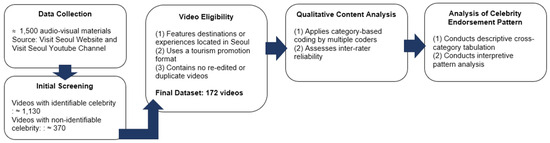
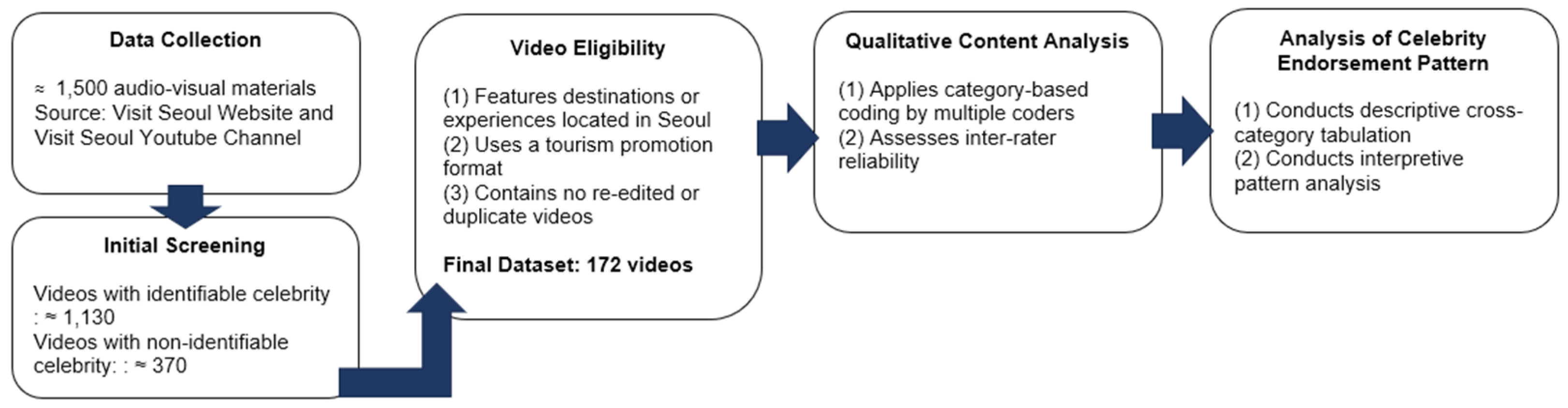
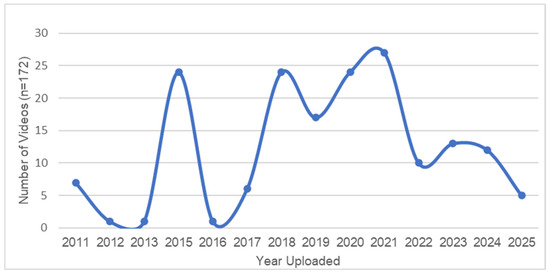
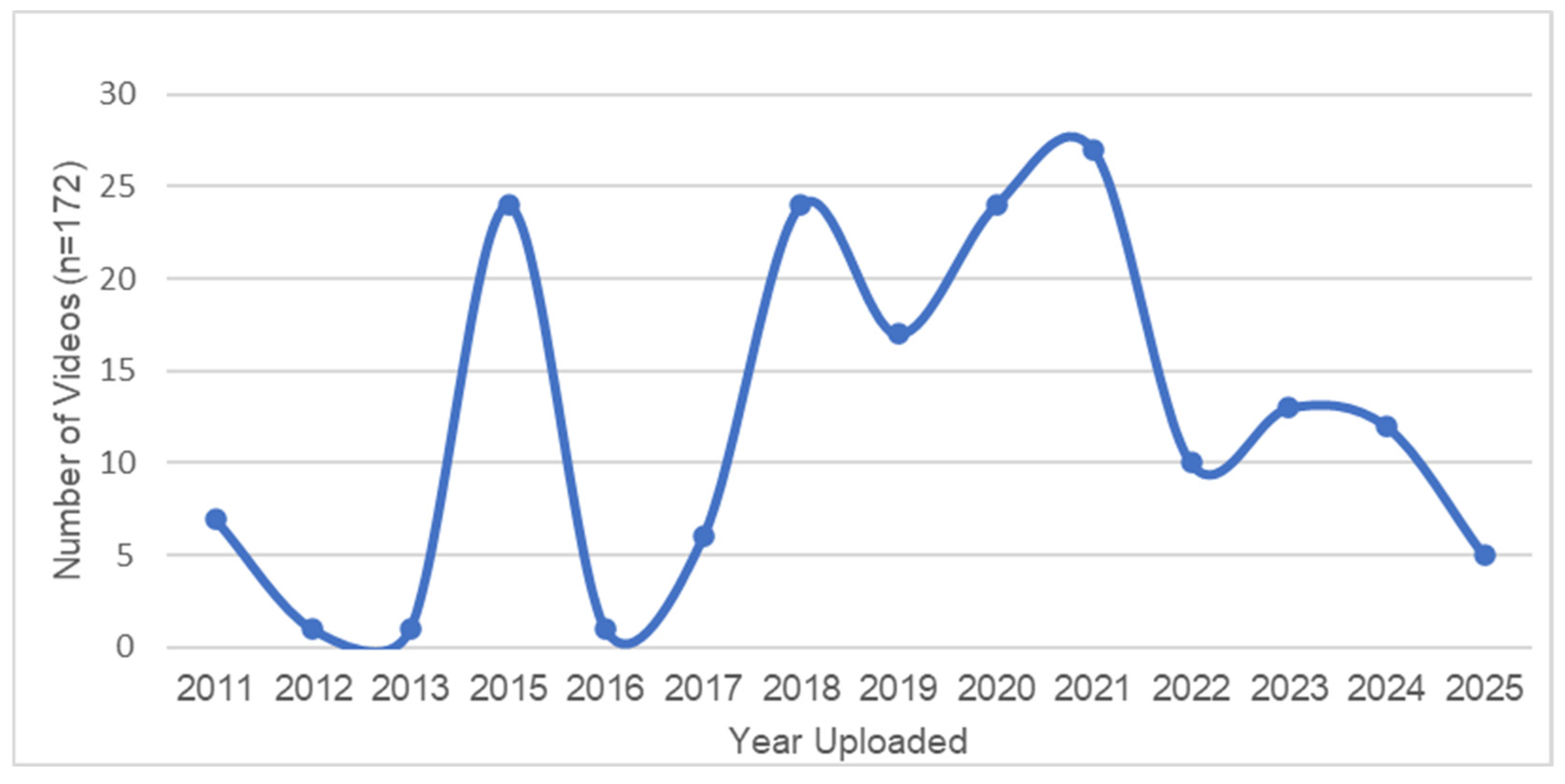
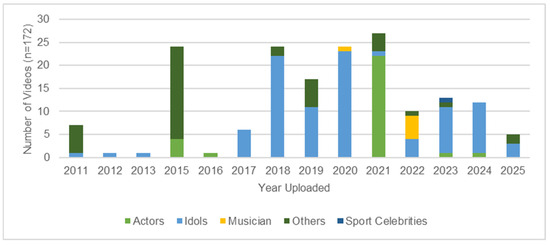
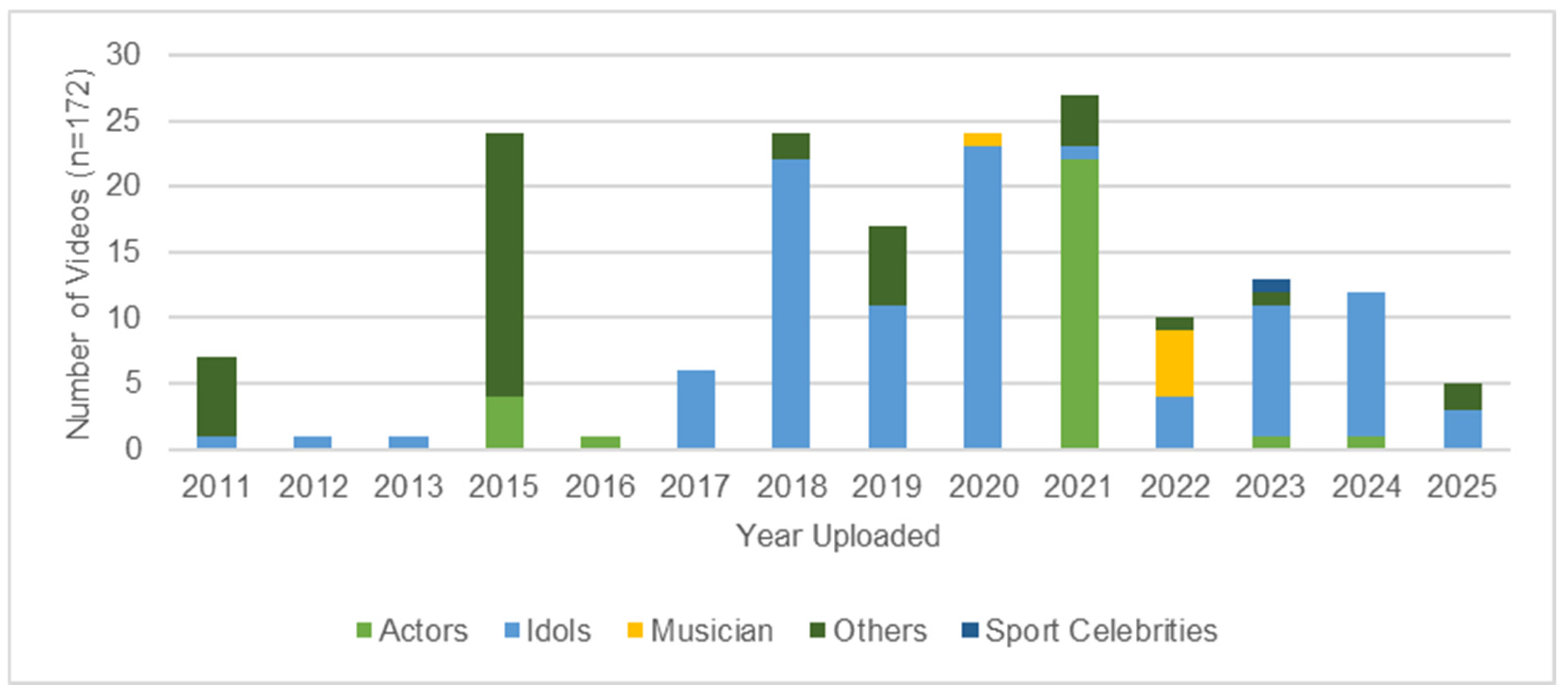
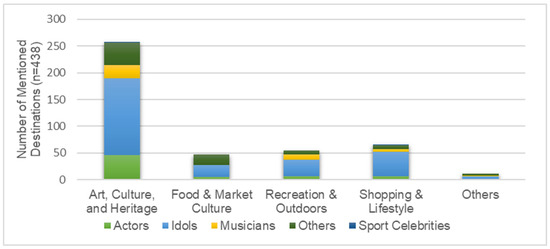
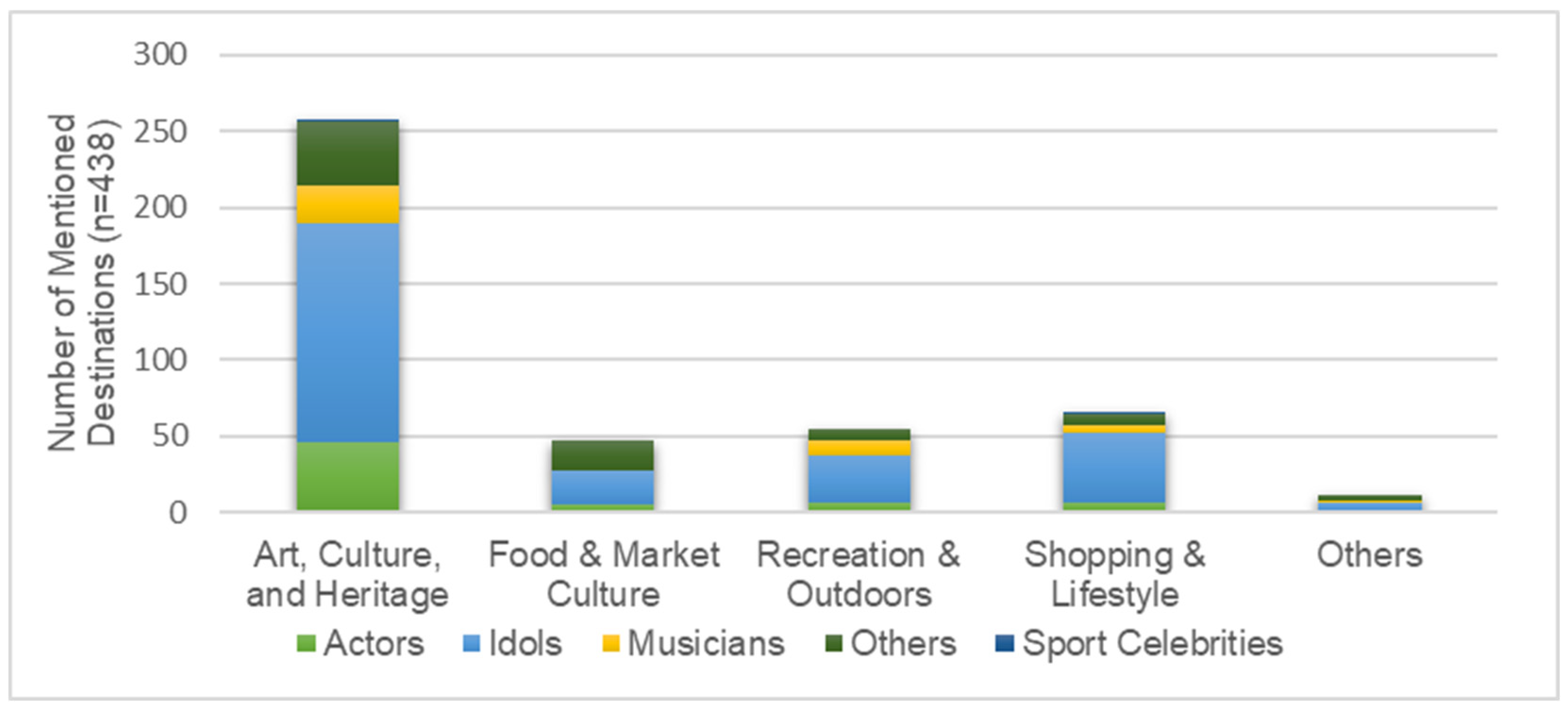
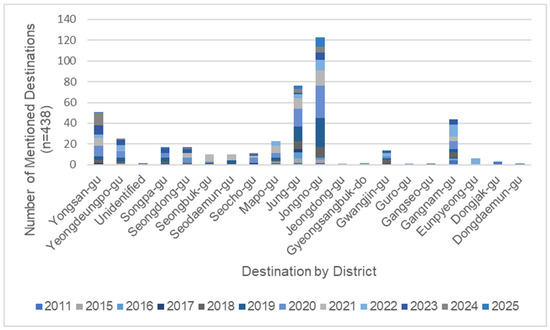
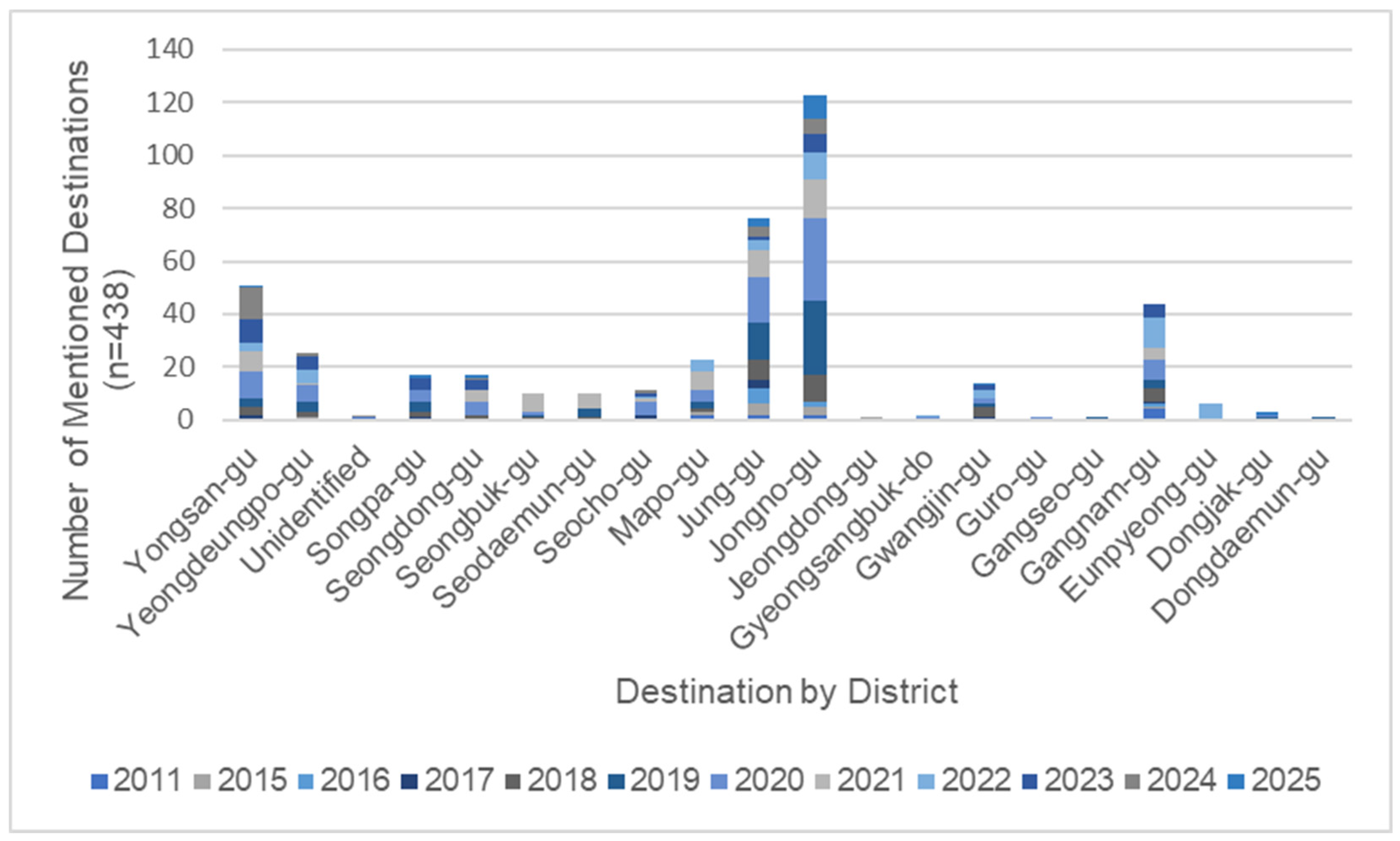
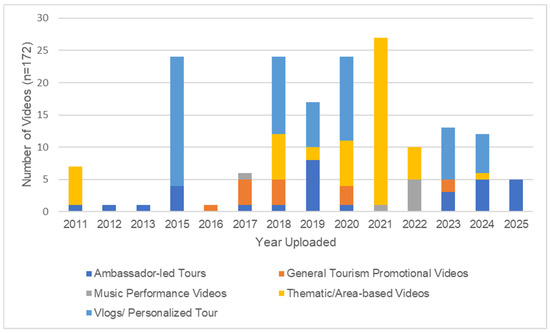
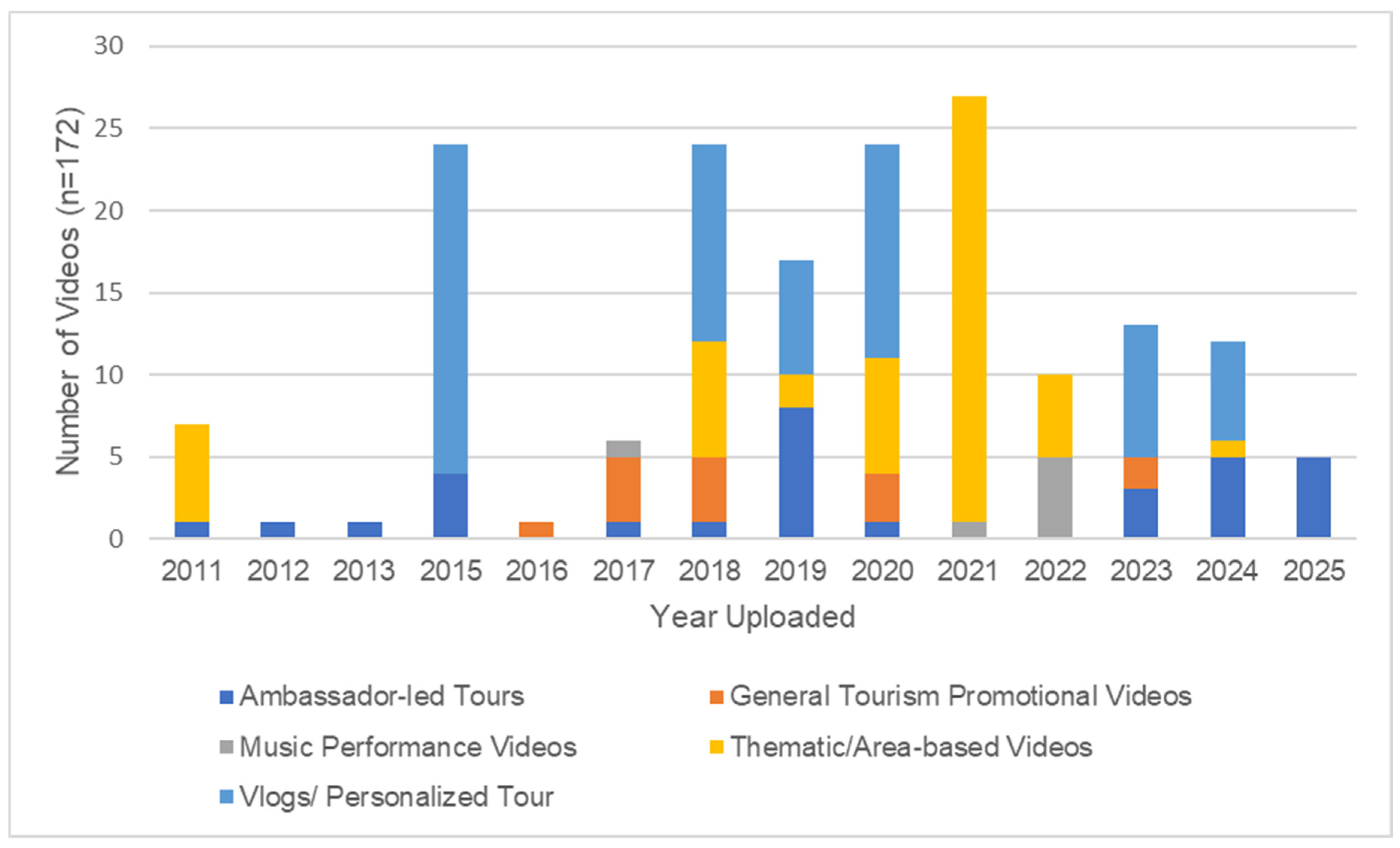

Disclaimer/Publisher’s Note: The statements, opinions and data contained in all publications are solely those of the individual author(s) and contributor(s) and not of MDPI and/or the editor(s). MDPI and/or the editor(s) disclaim responsibility for any injury to people or property resulting from any ideas, methods, instructions or products referred to in the content. |
© 2026 by the authors. Licensee MDPI, Basel, Switzerland. This article is an open access article distributed under the terms and conditions of the Creative Commons Attribution (CC BY) license.