Article

Rethinking Community Participation in Destination Planning Towards Achieving Sustainable Development: The Role of Civil Society—The Maniatakeion Foundation at the Town of Koroni, Greece, in Connection with the Mediterranean Diet


Department of Tourism, Ionian University, 49132 Corfu, Greece
Tour. Hosp. 2025, 6(5), 263; https://doi.org/10.3390/tourhosp6050263

Submission received: 19 August 2025 / Revised: 31 October 2025 / Accepted: 18 November 2025 / Published: 1 December 2025
(This article belongs to the Special Issue Rethinking Destination Planning Through Sustainable Local Development)

Abstract

The present paper deals with community participation in destination planning, using the small town of Koroni in Greece and the associated Maniatakeion Foundation as a case study. Benefiting from the author’s consulting experience and based on interviews with the foundation’s owner and the local community, on local press articles and a business plan on the development of Koroni, the paper aims at exploring the following: (A) how the participation of the local community in destination planning can lead to concrete plans and actions towards achieving sustainable development; and (B) the role of civil society organisations to this end. At first, the existing development model of Koroni is outlined. Then, the new development model of Koroni, based on the Mediterranean Diet, is analysed: how it was crafted; how it was implemented; what the role of the Maniatakeion Foundation was; and whether it was embraced by the local community groups. It is shown that (A) Koroni managed to shift from a mass tourism development model towards an alternate model that is rooted in sustainable development. Also, the fact that Koroni, which had no brand name (even on a local level), succeeded in acquiring an international brand name through the inscription of the Mediterranean Diet on the UNESCO Intangible Heritage List; (B) the destination planning process was initiated, coordinated, and operated by the local civil organisation Maniatakeion Foundation. The key lesson of broader application to be taken is that civil society organisations can build integrity and capacity and play a leading (and not only a supportive-supplementary) role in destination planning.

1. Introduction

In recent decades, there has been a growing interest in the participation of the local community in destination planning. The ultimate objective is that the economic as well as the social and the political benefits of destination planning are shared among the entire range of the involved community/stakeholder groups and especially the local community, in the context of sustainable development (Roxas et al., 2020). The importance of community participation in destination planning was further acknowledged at times of the global economic crisis commenced in late 2008 (Karachalis, 2021) and also at times of the global COVID pandemic crisis (Higgins-Desbiolles & Bigby, 2023).
The participation of the local community in destination planning could serve a variety of purposes, such as the following: the legitimisation of the destination planning process, with the inclusion of the whole variety of community/stakeholder groups, towards an increased sense of “democratisation”, accountability, and transparency of the process and of the associated policy (Perkins et al., 2020; McIntyre-Mills, 2003); the efficiency of the decision-making policy in the medium- and long term (Kalandides, 2018; Kavaratzis & Hatch, 2013; de Smedt & Borch, 2021); the development of a more positive approach of the local community towards the tourism phenomenon and the tourists, and the offering of an upgraded experience to the tourists (Roxas et al., 2020).
The participation of the local community in destination planning can be conducted in various forms and scales (see Mannigel, 2008), such as those suggested by Arnstein (1969): manipulation, therapy, informing, consultation, placation, partnership, delegated power, and citizen control. There is a variety of tools and practices facilitating community participation in destination planning, some of which are introduced from other disciplines such as marketing while others are developed exclusively for destination planning, such as the importance of dialogue and contradiction, the 4 Ps model, the 8 Ps model, the 5 key stakeholder group model, the 4Rs model, and the triple helix model (Kavaratzis & Hatch, 2013; Kotler & Armstrong, 1999; Hospers, 2011; Aitken & Campelo, 2011; Morgan, 2016; see also Sarantakou & Karachalis, 2024). Digital platforms can also help facilitate community participation in destination planning, by providing the necessary information and updates to the users and allowing them to vote on specific topics (Trunfio & Della Lucia, 2019).
In spite of the aforementioned forms and tools–practices applied, however, community participation in destination planning could largely be seen as being designed, initiated, coordinated, and operating within the frameworks and in line with the rules set by the experts leading the process; its results are in most cases evaluated and applied by the experts, and the actual benefits brought to the local community may often be ambiguous (Yuksel & Yuksel, 2008; Leal-Solís & Robina-Ramírez, 2022).
Concerning destination planning in connection with the management of cultural heritage in particular, the local community is often treated as a part of “an abstract and faceless public”, as one of the various stakeholder groups—and rather not the most important one (Poulios, 2010, 2015). Furthermore, it has been argued, with reference to the phenomenon of globalisation posing threats to local cultures, to the technological developments providing open access to any kind of interpretation of local cultures, and to the international character and activity of heritage institutions and tourism enterprises, that “the concept of “sustainable development” tends to gradually distance itself from the local level and move towards a much broader, global level” leading to a kind of imbalance of global values and systems at the expense of local ones (Poulios, 2015, pp. 166–67).
A dimension of community participation in destination planning that has not been sufficiently examined so far in the existing literature regards the role of civil society (de Bruyn & Fernández Alonso, 2012; Roman & Fellnhofer, 2022). Civil society includes “the wide array of non-governmental and not-for-profit organisations that have a presence in public life, expressing the interests and values of their members or others, based on ethical, cultural, political, scientific, religious or philanthropic considerations”, including different kinds of organisations such as non-governmental organisations, labour unions, charitable organisations, professional associations, and foundations (World Economic Forum, 2013, p. 8). Civil society organisations are regarded as legitimate and moral stakeholders in the tourism industry (Haukeland, 2011). In tourism planning, civil society organisations can help better understand the local development processes, preserve the environment, and maintain sustainability (Aref et al., 2010; Pongponrat, 2011).
There is a variety of tools and practices facilitating the participation of civil society organisations in destination planning, the majority of which are the same with those mentioned above in connection with the local community while some have been developed exclusively for the needs of civil society organisations. A characteristic example of such a tool is the quadruple helix model, which consists of the above-mentioned triple helix model (which calls for the inclusion of the university, the industry, and the government) with the addition of civil society as the fourth helix (Aranguren et al., 2018; Roman et al., 2020).
The participation of civil society organisations in destination planning, however, involves a series of complexities. First, the participation of civil society organisations is conducted within the framework and under the rules set by the government. Specifically, the establishment of participatory planning models and mechanisms cannot transcend the established structures of power and domination in the society (Davies, 2011), maintaining and supporting an elite-pluralist regime with a policy agenda closed to influence from non-privileged layers of civil society (Davies & Chorianopoulos, 2018). As a result, “the status, inclusion or exclusion, legitimacy, system of representation, scale of operation, and internal or external accountability of different groups or individuals often take place in non-transparent, ad hoc, and context-dependent ways in the network-based governance forms” (Roman & Fellnhofer, 2022, p. 2; see also Swyngedouw, 2005). Also, in countries in which decision-making and policy making process is generally top-down with the dominance of the government and/or the private sector, the ability of civil society organisations to influence decision-making is unclear and their participation in destination planning is minimal (Scherl & Edwards, 2007). Moving further, especially in developing countries, there are cases that government authorities use a series of methods to control civil society organisations including monitoring, coordination, co-option, and dissolution—this phenomenon has been recorded in a number of countries in Africa (Bratton, 1989; Boulassel, 2021). Second, civil society organisations are not given a substantial role but rather a supplementary-supportive role in the process. As it was characteristically noted, they are “less prone to engage in general vision-building exercises and more likely to engage in exercises linked to specific issues” (Aranguren et al., 2018). Third, government authorities may be reluctant to facilitate participatory policy processes in destination planning because they consider them both time and resource demanding, and/or difficult to implement—this phenomenon has been recorded in a number of countries in Europe (Perianez-Forte & Wilson, 2021; Roman & Fellnhofer, 2022). Fourth, some civil society organisations face an issue of integrity: they may not be serving the collective good but rather the personal, political, and financial interests of their owners-leaders (or those behind them), hence creating a kind of mistrust in the local community (Boulassel, 2021). Fifth, some civil society organisations might often have insufficient capacity, in terms of formal, established legal status, structure, financial resources, and/or experienced personnel and know-how. As a result, these organisations tend to be heavily dependent on others, especially on government authorities (Boulassel, 2021). Another result is that, as it was shown with reference to a number of countries in Europe, a large number of organisations do not have the skills required to participate in policy decision-making processes (Perianez-Forte & Wilson, 2021).
The present paper deals with the participation of the local community, and especially civil society, in destination planning in the context of sustainable development. The town of Koroni is used as a case study, where the local civil society organisation, Maniatakeion Foundation, helped Koroni acquire a brand through the inscription of the Mediterranean Diet on the UNESCO ‘Representative List of the Intangible Cultural Heritage of Humanity’ (henceforth cited as UNESCO Intangible Heritage List) towards achieving sustainable development.
In an attempt to address the above-mentioned gaps in the existing literature, the paper has two objectives:
(A)
explore how the participation of the local community in destination planning can lead to concrete plans and actions particularly in the cases of challenging an established development model and seeking an alternate one that is rooted in sustainable development; and
(B)
highlight that civil society organisations can play a leading (and not simply a supportive-supplementary) role in destination planning process and analyse how they can be equipped with the integrity and the capacity to this end.
The associated research questions are the following:
  • Which was the existing development model of Koroni?
  • Which was the new development model of Koroni; how it was crafted and how it was implemented; what the role of the Maniatakeion Foundation in the crafting and implementation of the new model was; and if the local community groups embraced the new development model? and
  • What are the key lessons of broader application to be taken from the specific case concerning the participation of the local community, and especially civil society, in destination planning?
Regarding research methodology, the paper follows the destination planning process methodology consisting of the following two key phases: (i) crafting the new development model; and (ii) implementing the new development model. Each of the two stages is divided in smaller steps. The paper explores the actions taken by the Maniatakeion Foundation, in cooperation with other community groups, at every stage and step of the process. The analysis of every stage and step is accompanied by a critique of the elements that worked well in the context of sustainable development, as well as the elements that did not help in this direction.
The research is based on documents linked to the mapping of the existing development model and the crafting and the implementation of the new development model, such as the Future Leaders business plan. The research paper benefits from the author’s past experience as a consultant for the Maniatakeion Foundation. This connection means that the author was present at the actions, was in touch with the associated key community groups and persons, and has developed a firm understanding of these actions. The fact that this connection belongs to the past (and is not an ongoing one) allows the author to distance himself from the actions and the associated community groups and persons, and develop a critical analysis towards them. The paper is also based on an interview taken from the founder of the Maniatakeion Foundation Dimitris Maniatakis at present, which allows him to distance himself from the past and develop a critical analysis, and on an interview taken from the member of the local community Kostis Zouzounis who has followed the actions and experienced their impact over time. In order to ensure objectivity, the findings from the interview from Dimitris Maniatakis were then discussed and confirmed with Kostis Zouzounis. Local press articles further help evaluate the actions of the Maniatakeion Foundation and their impact from the perspective of the local community.
The paper is structured as follows: the town of Koroni is presented in terms of location, history, and present situation, and the established model of its development is outlined. The emphasis is, then, on the quest of a new development model. The Maniatakeion Foundation, as the institution that is linked to the quest of the new development model, is presented, highlighting its connection to the concept of sustainable development. The crafting of the new development model is explored, with reference to specific actions: (i) the organisation of an international conference; (ii) the Future Leaders programme business plan for the sustainable development of Koroni; and (iii) the inscription of the Mediterranean Diet on the UNESCO Intangible Heritage List. Additionally, the implementation of the new development model is examined. The paper ends with recommendations of broader applicability.
It is shown:
(C)
in connection with research objective A, that Koroni managed to shift from a mass tourism development model towards an alternate development model that is rooted in sustainable development. Also, the fact that Koroni, which had no brand name (even on a local level), succeeded in acquiring an international brand name through the recognition of the UNESCO listing, but then found it hard to exploit this recognition. Therefore, despite the intentions and the attempts, the goal of sustainable development is still open.
(D)
in connection with research objective B, the destination planning process was initiated, coordinated, and operated by the local civil organisation Maniatakeion Foundation. The Maniatakeion Foundation, based on its own capacity (and not dependant on government authorities), succeeded in mobilising and working together with local community groups (such as local government and local enterprises) and also with groups outside the local community (such as researchers, universities, students, central government authorities/ministries, local governments and communities from other countries, and UNESCO) to this end.
The ultimate aim, as well as the contribution, of the paper is to draw suggestions of broader applicability regarding the participation of the local community and the role of civil society in destination planning, towards shifting from mass tourism to sustainable development and towards creating a (global) brand from the very beginning.

2. The Town of Koroni, Greece

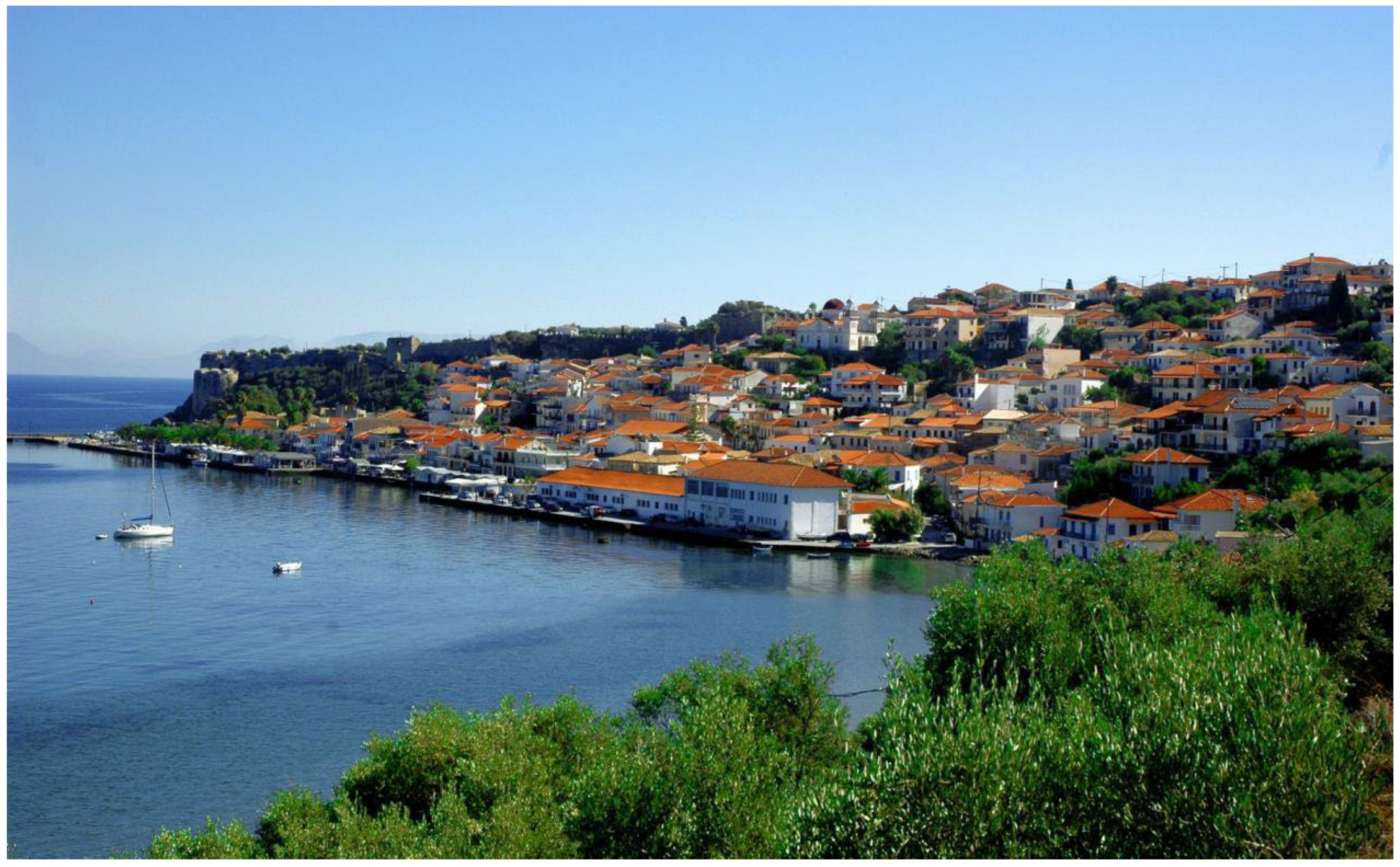
Koroni is a town in the Prefecture of Messenia, in the region of the Peloponnese, Greece. The town is built on a hill below a Venetian castle and reaches to the edge of the gulf.
The history of Koroni ranges from antiquity to the present date (Litsas, 1983). The town was founded in the 4th century BC as a colony of Boeotia, and flourished in the following centuries, as reported by the 2nd-century geographer Pausanias in his book “Messiniaka”. The Medieval phase of its history dates back to the 6th century. A fortress was built, and a Bishopric was established.
Following the fall of Constantinople [i.e., the capital of the Byzantine Empire] to the Fourth Crusade in 1204, Koroni, as well as the neighbouring town of Methoni, came under the possession of the Franks for a couple of years, and then of the Venetians. The Venetian occupation of Koroni and Methoni (Nanetti, 1999), recognised by the Treaty of Sapienza in 1209, lasted approximately 300 years. Koroni and Methoni were equipped with very strong fortresses and reached their peak as a waystation of merchants and pilgrims to the Holy Land. Koroni, in particular, was famous for its cochineal, from which crimson dyes were made, and for the Venetian engineers’ expertise in siege engines.
In 1500, Koroni was occupied by the Ottoman Turks. The Ottoman occupation lasted until 1828, with two brief breaks: from 1532 to 1534 it was occupied by the Maltese knights, and from 1685 to 1715 by the Venetians. During Ottoman times, Koroni flourished as a trade place exporting silk and olive oil. During the 18th century, the town declined due to the decline of the trade. In 1828, Koroni was liberated by the French General Nicolas Joseph Maison, and became part of the modern Greek state.
The history of Koroni is inextricably linked to its castle (Biris, 2016). The castle was built by the Byzantine Greeks in the 6th century, expanded by the Venetians in the 13th century, and completed by the Ottoman Turks in the 13th century.
Today, Koroni is a small town centred on its harbour and around the castle (Figure 1).

3. The Established Development Model of Koroni

The tourism development of Koroni could be outlined as follows (Future Leaders, 2010; the figures provided concern year 2010, i.e., the period during which the actions analysed below took place). The Municipality of Koroni has 5068 permanent residents, and the town of Koroni 1668 permanent residents, with a population density of 48 persons per km2. Its economy is primarily based on tourism and, on a secondary level, on agriculture and fishery. The Municipality of Koroni attracts approximately 5000 visitors per year. The Municipality of Koroni has 25 hotel premises in total, out of which 1 camping, a few small-scale hotels, and some rooms-to-let, providing rather basic services.
Koroni does not have a recognised brand name. Koroni is developed (Future Leaders, 2010) on the basis of the “Sea and Sun” mass tourism model, centred on the summer holidays (mostly July and August). The visitors come to Koroni, as a primary destination, mostly from Europe, and there is also a strong diaspora community (originating from Koroni and the broader region) settled in the US that visits the place during summer holidays. At the same time, visitors to nearby established destinations such as the city of Kalamata would pay a short, daily visit to Koroni.
The tourist use of Koroni (Future Leaders, 2010) is centred on the harbour and the nearby beaches, with the castle serving as the major highlight. As a result, the areas close to the harbour and the beaches have been commercialised and deteriorated, while the interior of the town remains to a large extent untouched (Figure 1). The tourist use of Koroni, especially for a short visit, has been increased due to the operation of Costa Navarino grand resort [i.e., one of the largest and iconic high-end resorts in South Europe located next to the nearby town of Pylos], the expansion of the Kalamata airport and the increase in flight connections, and the improvement of the road network. The aforementioned developments have led to the further congestion, as well as commercialisation, of the town during summer.

4. Crafting a New Development Model

4.1. The Maniatakeion Foundation

The Maniatakeion Foundation is a private, non-profit, public-service institution based in Athens and operating in Koroni (www.maniatakeion.gr accessed on 1 August 2025). It was established in 1995 by Dimitris Maniatakis and his wife Eleni Tagonidi-Maniatakis. Dimitris Maniatakis, born in Koroni, is an economist and businessman, and has served as a founding member and CEO of ICAP consulting company, CEO of Public Power Corporation S.A. in Greece, and as a member of the managing boards of a series of enterprises and business associations in Greece and Europe. Eleni Tagonidi Maniatakis, born in Cairo, has a background in sociology and philosophy, has worked as a teacher of English, French, and Italian languages, and is an author and an artist. Upon retirement, Dimitris Maniatakis decided, with the support of his wife, to establish the Foundation in order to benefit his birthplace Koroni and its local community, without any interest in any political or economic gains (Dimitris Maniatakis personal comment; Kostis Zouzounis personal comment). It is important to note that the inter-disciplinary backgrounds and interests of the founders, combining business and culture, reflect different perspectives of the concept of sustainable development, with a focus on Koroni.
The vision of the Maniatakeion Foundation is to revitalise Koroni, giving it a prominent role in Greece and in the Southeastern Mediterranean (www.maniatakeion.gr). The Maniatakeion Foundation aims at the protection of cultural heritage and the promotion of the economic development of Koroni (www.maniatakeion.gr). It is worth noting that the concept of sustainable development is embraced in the vision and the objectives of the Foundation.
The Maniatakeion Foundation implements its aforementioned vision and objectives through a series of actions that cover the following axes (www.maniatakeion.gr)—which represent the pillars of sustainable development:
(a)
the environmental and cultural axis, which includes actions such as the study of local history and the protection of local cultural and natural heritage; the promotion of cultural and environmental education; the promotion of folk art and traditions; and the organisation of art exhibitions.
(b)
the social axis, with a series of actions such as moral and material support in improving the living standards of the residents of Koroni; support to the library of the primary school of Koroni; prizes and scholarships to students at secondary schools of the region to support them in pursuing university education; and building closer ties to the foreign residents of Koroni.
(c)
the economic axis, with actions such as conducting and supporting regional development studies; support to entrepreneurs, both local and outside investors; and securing EU funding.
It is worth stressing that the aforementioned axes, as well as the associated actions, were initially seen as separate ones; over the course of time, however, connections among these axes and actions were sought (Dimitris Maniatakis personal comment; Kostis Zouzounis personal comment)—which is in line with the concept of sustainable development. An example to this end is the support provided to the local association of women farmers: this action could be seen as part of the economic axis (increasing the economic profit of the association), yet could also be linked to the social axis (care for the local women) and to the environmental and cultural axis (maintenance of traditional practices of cultivation).
For the needs of the aforementioned activities, the Maniatakeion Foundation was collaborating with (Dimitris Maniatakis personal comment) (a) a specific number of (permanent) consultants of diverse backgrounds, who helped towards designing the actions, with each consultant being responsible for the axis that is closer to their background supported by the other consultants. Their diverse backgrounds, as well as their inter-disciplinary collaboration, could also be seen in line with the requirements of the concept of sustainable development. Examples of consultants were Professor of Economics Panos Mourdoukoutas, economist and businessman Thanos Niforos, Professor of Venetian history who has published extensively on Koroni Andrea Nanetti, and archaeologist and heritage manager Ioannis Poulios; and (b) a series of temporary consultants, who helped towards implementing each action, depending on its content: for example, a curator for the needs of the organisation of an art exhibition and an expert on agriculture for the needs of a farming activity.
Besides its own activity, the Maniatakeion Foundation also develops collaborations—e.g., through establishing formal partnerships or acting as an official or unofficial consulting body—with a variety of local authorities and associations (such as the local municipality and the local Bishopric) in a wide range of projects (Dimitris Maniatakis personal comment; Kostis Zouzounis personal comment).

4.1.1. Action A: International Conference on “Historic Memory and Economic Growth”

The Maniatakeion Foundation, with the patronage of the Hellenic Parliament and the cooperation of the Embassies of Italy and France in Greece and at the physical presence of the President of the Hellenic Republic [i.e., the highest political authority in Greece], organised an International Conference on “Historic Memory & Economic Growth” in Athens and Koroni, 2–5 July 2009 (Maniatakeion Foundation, 2009). The conference was organised to commemorate a milestone in the history of Koroni: the 800th anniversary from the signing of the Treaty of Sapienza in 1209 and the handing over of Koroni and Methoni to the Venetians for a period of 300 years (see above). The main objective of the conference was to examine the role of cultural heritage in the socio-economic development of the local community over the course of time and seek similar opportunities at the present—in line with the concept of sustainable development seen from a diachronic perspective. The conference consisted of academic and scientific presentations given by a wide range of international and Greek scholars, field trips to local landmarks with a focus on the castle, and folklore dances and traditional dishes prepared by members of the local community (author’s personal experience; Dimitris Maniatakis personal comment; Kostis Zouzounis personal comment). It is worth noting, at this point, that the castle continues to serve as the key landmark associated with the development of the area, while at the same time alternate elements appreciated by foreigners are coming into board, such as folklore dances and traditional dishes.
The conference succeeded in promoting Koroni towards a much broader audience, conveying the problems caused by the existing development model centred on mass tourism and highlighting the need for alternate models of development through the exploitation of cultural heritage, and raising some general thoughts in this direction, without reaching a concrete idea to work on yet. The conference also succeeded in connecting a variety of international and especially Mediterranean organisations, mobilising the highest central and local government authorities in Greece, and building awareness in the local community—in the direction of the quest of new development models. It is important to stress, at this point, that the thoughts for the new development model do not come from the local community groups, which are attached to the established model of development, but from “outsiders”, who are thinking “outside the box”.

4.1.2. Action B: “Future Leaders” Programme and the Business Plan for the Sustainable Development of Koroni

The “Future Leaders” Programme, developed by the global consulting firm Hay Group (and later by NGO “Future Leaders”) under the initiative of Kris Amiralis, brings together NGOs, universities, and enterprises (www.futureleaders.gr; Kris Amiralis personal comment). University post-graduate students of diverse backgrounds (such as mechanical engineering, IT engineering, business studies, architecture, and social sciences), supported by business coaches from enterprises and assisted by the NGOs’ personnel and local community groups, craft strategic and marketing plans for the NGOs and the local communities—therefore, sustainable development is at the core of the programme. The crafting of the plans is assigned to post-graduate students, who already have a background—undergraduate studies, and are expected to bring fresh ideas (Kris Amiralis personal comment). The ultimate aim of the programme is the creation of a new generation of business leaders with increased social and cultural responsibilities and ethics.
An edition of the “Future Leaders” programme was developed on Koroni, in collaboration with the Maniatakeion Foundation, in Athens and Koroni in March 2010 (Maniatakeion Foundation, 2010; Eleftheria News, 2011). On the part of the Maniatakeion Foundation, the project coordinator was Thanos Niforos, assisted by Andrea Nanetti, Panos Mourdoukoutas, and Ioannis Poulios (see above) with the addition of architects Angelos Nakassis and Loukas Patis.
The aim of the Programme was the crafting of a business plan for the development of the society and the economy of Koroni and the wider region based on its culture (Future Leaders, 2010)—thus, exploiting some of the general thoughts raised at the international conference in a more systematic way and towards more concrete ideas. The participants/the students—supported and assisted by the Maniatakeion Foundation consultants—contacted all local community groups, collected the widest range of local data, and mapped the local resources. It is worth stressing, at this point, that the Maniatakeion Foundation personnel and consultants, while assisting the participants, were forbidden by the Future Leaders personnel to transfer their own views on the participants concerning the development of the area, in an attempt to ensure the objectivity and unobstructed understanding on the part of the participants (Kris Amiralis personal comment). On the basis of the mapping of the resources, a SWOT analysis was conducted of Koroni’s strong points (such as history and culture, natural beauty, local cuisine, and hospitality), weak points (such as lack of biological waste treatment, poor road network, ageing population, lack of social services, lack of city promotion, poor tourism services, seasonal desolation, and obstacles in the commercial exploitation of the castle), opportunities (such as collaborations with Costa Navarino grand resort), and threats (such as the global economic crisis that commenced in late 2008 and the heavy competition from other destinations). One of the findings of the SWOT analysis was that the castle of Koroni, highly acclaimed by the local community and the key highlight of the established development model (see above), was not recognised as a competitive advantage of Koroni on a local-regional, national, and international context, given the increased number of similar castles—yet, of a larger scale, surviving in a better condition, and already operating as established tourist destinations—in the region of Peloponnese, across Greece, and also across Italy, Spain, and France.
The plan (Future Leaders, 2010) identified the vision for the development of the area through the logo-slogan “Koroni in our hearts”. The mission was that Koroni becomes an authentic town that, primarily, provides a high standard of living to its local community and, on a secondary level, an exceptional experience to the visitors, based on its cultural identity, in line with the “Sea, Sun, and Culture” model (in differentiation from the established “Sea and Sun” mass tourism model; see above)—the priority given to the local residents over the visitors is in line with the concept of sustainable development. The key objectives for Koroni were set as follows: (a) Koroni should maintain the authenticity of its natural and cultural heritage, accompanied with small-scale interventions on the urban fabric and with actions associated with mild development; and, at the same time, (b) Koroni should exploit the new development conditions of the area, and develop cooperation, e.g., with Costa Navarino grand resort. On the basis of the aforementioned objectives, a series of strategic themes were defined: the protection and promotion of the local culture and natural setting, upgrading the quality of life of the local residents, extroversion through partnerships and the development of the local economy, and the reinforcement of tourism. These strategic themes included targeted, realistic, and low-budget actions: for each action, a schedule for its implementation in the short term as well as in the long term was developed, the criteria for its success and the associated risks were identified, as well as financial data on the estimated cost. Examples of actions were the following: associated with the above-mentioned objective (a), the renovation of the existing hotels, as well as the construction of new hotel resorts, of high-quality small-scale hotel resorts that respect and adjust to the landscape targeting high-end customers; and associated with the above-mentioned objective (b), the local enterprises and the associations of the farmers establish collaborations through collaborations with Costa Navarino grand resort, e.g., through operating shops with traditional products in the resort and through offering tour packages to the resort customers to visit Koroni.
The plan further suggested specific combined actions, which brought different separate actions together. The most important of these combined actions—in terms of its potential contribution to the sustainable local development—was the promotion of the Mediterranean Diet (see below in detail), which is still practiced at the part of Koroni that remains untouched by tourism (see above). The Mediterranean Diet is associated with both above-mentioned objectives (i.e., safeguarding cultural and natural heritage, and building cooperation) and with all the strategic themes (i.e., protection and promotion of the local culture and natural setting; upgrading the quality of life of the local residents; extroversion through partnerships and the development of the local economy; and the reinforcement of tourism), and combines different separate actions such as the inclusion of Mediterranean Diet dishes in the menu of local hotels, and the selling of Mediterranean Diet products in Costa Navarino shops.
It is important to note that the crafting of the business plan was not undertaken by the local community groups, who are attached to the established model of development, but by “outsiders” who can think outside the box—following the same approach with the international conference.
The business plan brought a series of innovation concerning the development of Koroni. First, it was the first time that the local resources were mapped in a systematic way. Second, the competitive advantages of the area were identified, and concrete plans and actions were suggested towards achieving sustainable development. To this end, it is interesting to stress that Koroni’s weak points identified were much more (in number) and much stronger (in strength) than its strong points. Hence, the attempt was not to increase the strong points and/or reduce or mitigate the weak ones—which would have been impossible; instead, the strong points were highlighted and led to suggested actions, initially separate ones and then combined ones. Third, the significance of the Mediterranean Diet was highlighted.

4.1.3. Action C: The Mediterranean Diet and Its Inscription on the UNESCO Intangible Heritage List

The Mediterranean Diet is a diet model, based on olive oil, that contributes to health, well-being, and longevity (Bach-Faig et al., 2011). From the perspective of medicine, research has demonstrated the benefits of the Mediterranean Diet to the prevention of heart diseases, diabetes, and cancer (Sánchez-Villegas et al., 2006; Capone et al., 2014; Trichopoulou et al., 2005; Tagonidi-Maniataki & Vretta, 2001). The Mediterranean Diet has a strong cultural content as well, associated with the nature of the Mediterranean region and its ecological characteristics, the shared historic events and cultural values, the traditional practices of land cultivation, the management of natural resources, as well as the social and cultural identity of the people (Reguant-Aleix & Sensat, 2012; Bitsani et al., 2019), as part of the Mediterranean anthropo-geographic and historical entity as envisioned by Fernand Braudel (Braudel, 1975). In this context (UNESCO, n.d.):
“the Mediterranean Diet involves a set of skills, knowledge, rituals, symbols and traditions concerning crops, harvesting, fishing, animal husbandry, conservation, processing, cooking, and particularly the sharing and consumption of food. […] Emphasizes values of hospitality, neighbourliness, intercultural dialogue and creativity, and a way of life guided by respect for diversity. […] Women play an important role in transmitting knowledge of the Mediterranean diet: they safeguard its techniques, respect seasonal rhythms and festive events, and transmit the values of the element to new generations.”
The Mediterranean Diet was inscribed on the UNESCO “Representative List of the Intangible Cultural Heritage of Humanity”, as a joint collaborative effort of the so-called “emblematic” local communities of Koroni in Greece, Soria in Spain, Cilento in Italy, and Shefchaouen in Morocco in November 2010 (UNESCO, n.d.; see also Trichopoulou, 2021). On the part of Greece, the inscription was achieved by the Municipality of Koroni representing the local community of Koroni. The role of the Maniatakeion Foundation was the most significant one throughout the process. Specifically, the Maniatakeion Foundation took the initiative, coordinated the procedure, mobilised, and provided its know-how—initially as an informal consulting body and later as a formal consulting body—to the Municipality of Koroni, formed collaborations with local authorities and associations, mobilised the Ministries of Culture and Tourism and of Agriculture of Greece, contacted and cooperated with the local communities of Spain, Italy, and Morocco, and took a leading role in the preparation and submission of the UNESCO nomination dossier (author’s personal experience; Dimitris Maniatakis personal comment; Kostis Zouzounis personal comment; all the major actions before and after the inscription are documented in Maniatakeion Foundation, 2021; Alivizatou et al., 2015; Municipality of Pylos-Nestor, 2022, n.d.).
The inscription of the Mediterranean Diet on the UNESCO Intangible Heritage List could be considered a significant success for Greece. This is the first time that an intangible heritage expression of Greece was inscribed on the UNESCO Intangible Heritage List. Also, and this is the only time even until today that Greece has achieved an inter-state inscription on UNESCO Lists (i.e., Intangible Heritage List, and the World Heritage List concerning heritage sites and monuments).
On a local level, this inscription provided Koroni with a strong international brand name. This brand name encapsulated, as well as consolidated, the strongest points of Koroni such as history, culture, tradition, people, local products, and enterprise, rendering them as a competitive advantage in relation to other destinations of similar or larger scale. At the same time, the inscription opened the path towards collaborations on a Mediterranean, European, and international level. Thanks to this brand name, Koroni could serve as a pilot study of sustainable local development across Greece and abroad.

5. Implementing the New Development Model

The Maniatakeion Foundation continued to take the lead of the actions regarding the Mediterranean Diet. The cooperation of the four “emblematic” local communities was enhanced through a series of actions: the formation of a joint legal entity with the aim of enhancing this collaboration; the signing of a Cooperation Protocol; and the establishment of a permanent Secretary for the Mediterranean Diet (Dimitris Maniatakis personal comment; Maniatakeion Foundation, 2021; Agrotypos News, 2011; Eleftheria News, 2010). Furthermore, in 2013, the inscription of the Mediterranean Diet on the UNESCO Intangible Heritage List was broadened, with the inclusion of local communities from Cyprus, Croatia, and Portugal (UNESCO, n.d.).
At the same time, on a local level, the Maniatakeion Foundation organised, in collaboration with local authorities and local associations, a series of events towards building awareness on the significance as well as the potential of the UNESCO inscription and towards initiating collaborations to this end (Dimitris Maniatakis personal comment; Kostis Zouzounis personal comment; Maniatakeion Foundation, 2021; Tharros News, 2024).
Despite the aforementioned events, the local authorities and the local community groups did not exploit or benefit from the UNESCO brand name (Dimitris Maniatakis personal comment; Kostis Zouzounis personal comment; Alivizatou et al., 2015; Ganiatsou, 2013). Specifically, the Region of the Peloponnese, the Municipality of Koroni, and the private tour agencies have not branded Koroni as the core of the Mediterranean Diet—consequently, even the residents of the Peloponnese and a large number of the members of the Greek diaspora in the US that originate from Koroni are not aware of the inscription. The licenced tour guides and the tour agents have not designed routes on the Mediterranean Diet focusing on Koroni or connecting Koroni with popular destinations of the region such as the town of Kalamata, the archaeological site of Messini, the town of Pylos, and Costa Navarino grand resort. The local hotels and restaurants have not incorporated dishes based on the Mediterranean Diet in their menu. The local hotels have not designed eco-tourism activities centred on the Mediterranean Diet, such as the cultivation of farms through traditional methods and the cooking of traditional dishes with the help of local women. The local olive oil producers have not exploited the UNESCO brand name in their international sales. There is no shop or selling point on the Mediterranean Diet in the Costa Navarino grand resort. The University of the Peloponnese has not designed courses on the Mediterranean Diet, seen from the cultural–environmental, social, and business perspectives, in line with the concept of sustainable development.
Therefore, the mission and the objectives in the context of the new development model, as outlined in the Future Leaders business plan and as epitomised in the concept of the Mediterranean Diet and branded through the UNESCO inscription, have not been achieved. As a result, Koroni is still following the “Sea and Sun” mass tourism model centred on the summer period. To the local community as well as the Greek and international visitors, Koroni is still famous for its castle.

6. Conclusions

The analysis of the case study of Koroni could lead to a series of good practices of broader application concerning the participation of the local community, and especially civil society, in destination planning towards achieving sustainable development. These good practices concern theory, policy, and practice.
The present research advances the existing theoretical discussion by demonstrating that civil society organisations should not be restricted in a supplementary-supportive role to that of the governments and experts, but can also play a leading role in the destination planning process especially towards achieving sustainable development. Specifically, destination planning can be designed and initiated on a local level. On that level, civil society organisations, as organisations committed to the collective good, can substitute for the lacking capacity on the part of the local authorities, in terms of vision, personnel, and/or know-how (as in the case of Koroni: the Prefecture and the Municipality), and also avoid the individual, mostly economic and political, agendas of the private entrepreneurs. Policymakers, especially at a regional and local level, should become aware of this important role of civil society organisations and enhance the associated institutional framework and rules to this end. With regard to a number of countries particularly in the developing world, much stronger legislative and institutional reform that would first protect civil society organisations from interventions on the part of government authorities is required.
In order to play this enhanced role in destination planning, civil society organisations should meet the requirements of integrity and capacity. As far as integrity is concerned, it is important that the owners-directors of civil society organisations do not have individual, economic, or political, benefits out of the establishment of the organisations (see, e.g., the profile of Dimitris Maniatakis and Eleni Tagonidi-Maniataki, and their purpose of establishing Maniatakeion Foundation). In this way, civil society organisations can be acknowledged as a kind of representative of the local community, develop collaborations and partnerships with the local authorities and local community groups (Maniatakeion Foundation, for example, serving as a kind of technical advisor to the local municipality, and developing collaborations with a wide range of local community groups, and supporting local entrepreneurs).
With regard to capacity, a series of suggestions can be drawn. Civil society organisations should have an established, formal legal form-status (as in the case of the Maniatakeion Foundation), rather than being unofficial associations such as “the friends of a place”. The established legal form-status can ensure the continuation of leadership and decision-making coherence over time and make it easier to develop collaborations with other legal entities of the public and the private sector such as the Prefecture, the Municipality, Ministries, and enterprises. It is also important that the management structure and operation of the organisations are linked to the concept of sustainable development, in terms of mission, objectives, actions, personnel, and consultants (as with the Maniatakeion Foundation). Furthermore, it is important that these organisations have sufficient financial resources as well as personnel and know-how, so that they develop their own policies and actions independently from the government authorities (the Maniatakeion Foundation hiring personnel and cooperating with consultants, organising, and financing the international conference). Given that these resources are not unlimited, these organisations would afterwards inevitably need to seek and exploit synergies, as well as resources, from existing schemes-formulas. To this end, it is important that these schemes-formulas are linked to the concept of sustainable development (the Maniatakeion Foundation collaborating with Future Leaders programme, and also with government authorities in Greece, and local communities from abroad towards the UNESCO Intangible Heritage inscription of the Mediterranean Diet).
Furthermore, the present paper suggests good practices of broader application concerning the participation of the local community, especially in the cases of challenging an established development model and seeking an alternate one that is rooted in the concept of sustainable development. It is suggested that the two phases of planning process methodology, i.e., crafting the new development model and implementing the new development model, should be seen as separate ones, requiring a different set of skills and a different leading authority. It is also suggested that the local community should be involved from the very beginning and throughout the process, both at the crafting stage and at the implementation stage; however, its involvement should be different at the two stages.
Specifically, the crafting phase includes the mapping and analysis of the existing situation through the identification of the strong points as well as the weak points of the area. Particularly in cases of moving away from the existing development model towards a new model, the weak points of the existing situation are expected to be much more (in number) and much stronger (in strength) than the strong ones. Thus, the attempt should not be to reduce or mitigate the weak points and increase the strong points; instead, the strong points should be highlighted in connection with the new development model, and lead to concrete plans and actions (as with the Future Leaders business plan). A further step would be targeted combined actions that would incorporate the strongest points of the place in connection with the new development model (as with the Mediterranean Diet). It is worth stressing that the aforementioned steps should not be taken by the local community groups, who are attached to the established model, but from “outsiders” who are thinking outside the box. On this basis, the organisations that take the lead in the destination process should find ways to embrace these “outsiders” and bring them in touch with the local community groups and the local data—the role of civil society organisations can be very important to this end (in the case of Koroni, this was achieved through the international conference and the Future Leaders programme, organised by the Maniatakeion Foundation). The local community groups should be kept updated concerning the quest of the new development model, assisting the “outsiders” yet not imposing their own views upon them (see the approach of the Maniatakeion Foundation consultants and the local community of Koroni, towards the postgraduate students developing the Future Leaders business plan).
While at the implementation stage, the local community groups should take the lead, mostly through their local enterprises (in the case of Koroni, the leading role should have been taken by the local enterprises such as tour agencies, hotels and restaurants, and their management associations). The organisations that took the lead at the crafting phase should also be involved and assist in a supportive-supplementary role at the implementation phase, to ensure the continuity of the process over time and the transferring of know-how from the crafting to the implementation stage—civil society organisations can assist to this end (e.g., the Maniatakeion Foundation).
The actions undertaken at the implementation stage should be evaluated and reviewed in relation to those decided at the crafting stage. The evaluation and review should be conducted mostly by the organisations that took the leading role in the crafting process—civil society organisations can play a very important role in this (in the case of Koroni, the actions undertaken after the UNESCO inscription should have been evaluated and reviewed by the Maniatakeion Foundation on the basis of the Future Leaders business plan).
The present research has certain limitations. Towards a more complete understanding and evaluation of the actions undertaken at the implementation stage, it would have been a good idea to contact the whole range of community groups, individuals, and authorities in Greece who were involved in the crafting of the new development model. Furthermore, it would have been a good idea to conduct a comparative analysis, by examining and reviewing the actions undertaken at the other emblematic communities associated with the UNESCO inscription of the Mediterranean Diet (i.e., Soria in Spain, Cilento in Italy, and Shefchaouen in Morocco) in relation to the actions undertaken at Koroni. The aforementioned dimensions were not feasible in the context of the present research but may be included in future research projects.
The importance of civil society organisations in destination planning towards achieving sustainable development needs to be further explored. In this context, a topic for future research would be the application of concepts and tools from Human Resources Management discipline to social society organisations: for example, which leadership model(s) would be more appropriate; how the organisational chart and decision-making processes would be adjusted; and how the internal culture of the organisations would be formulated.

Funding

This research received no external funding.

Institutional Review Board Statement

Not applicable.

Informed Consent Statement

Not applicable.

Data Availability Statement

The original contributions presented in the study are included in the article; further inquiries can be directed to the corresponding author.

Acknowledgments

The paper benefits from my experience as a consultant for the Maniatakeion Foundation. I would like to specially thank Dimitris Maniatakis and Eleni Tagonidou Maniataki, Vicky Igglezou, and Antonia Trichopoulou, as well as consultants Thanos Niforos, Andrea Nanetti, Panos Mourdoukoutas, Angelos Nakassis, and Loukas Patis. In the context of the Future Leaders Programme, thanks are owed to Kris Amiralis, i.e., the founder and the heart of the Programme, business coaches Eleni Primikiri and Panagiotis Tselikoglou, facilitators Thodoris Tsamourtzis and Panagiota Theodorou, and participants Apostolos Ekkliasiarhis, Vassilis Poulopoulos, Eugenia-Androniki Papamitropoulou, Katerina Arvaniti, Lefteris Orfanidis, Marianna Polyzou, Christina Lafiati, and Christos Kourountzas. Regarding the local community of Koroni, the contribution of Kostis Zouzounis, and Valanti Leftaki should be acknolwledged. Regarding the Ministry of Culture, thanks are owed to Stavroula Fotopoulou, Ioannis Drinis, and Panagiota Andrianopoulou. The topic of the inscription of the Mediterranean Diet on the UNESCO Intangible Heritage List in connection with the local community of Koroni was also developed, from a different perspective and of different objectives, in Greek, by Ganiatsou (2013) in the context of the Cultural Organisations Management, School of Social Sciences, Hellenic Open University. I would like to thank Maria Ganiatsou for the cooperation we had, as well as George Gantzias and Androniki Kavoura. Findings of the research were presented in the following conferences: (a) Poulios, I. & Papavlassopoulos, Th. 2023, Sustainable Tourism and Local Economies: international developments–insights into South Peloponnese, International Spartan Studies Forum, Sparti, Greece, 8–11 June 2023; and (b) Poulios, I. & Papavlassopoulos, Th. 2024, Planning process methodology towards achieving sustainable development: The inscription of the Mediterranean Diet on the UNESCO Intangible Heritage List, 2nd International Conference on “Greece and India: History, Society, Science & Entrepreneurship”, Thessaloniki, Greece, 2–6 December 2024. I would like to thank co-presenter Thanassis Papavlassopoulos, as well as the organisers of the conferences. Significant insights in community participation in tourism planning from different parts of the world, with an emphasis on the role of civil society, were shared at AlUla International Symposium on “Regenerative Heritage: A 360° Perspective for Sustainable Futures”, AlUla, Saudi Arabia, 12 November 2025. Thanks are owed to ICOMOS Saudi Arabia, and the Royal Commission for AlUla. Findings of the research were published, from a different perspective and of different objectives, in Greek, by Alivizatou et al. (2015). I would like to thank my co-authors Marilena Alivizatou and Maria Papadaki. Last but not least, I would like to thank the editors of the present Special Issue Efthymia Sarantakou, Alkmini Gkritzali, and Sotirios Varelas, as well as the anonymous reviewers of the paper. The paper is dedicated to my colleague Eugenia Bitsani.

Conflicts of Interest

The author declares no conflicts of interest.

References

  1. Agrotypos News. (2011). The Mediterranean diet starts from Koroni in order to conquer the world. Available online: https://www.agrotypos.gr/paragogi/i-mesogeiaki-diatrofi-xekina-apo-tin-koroni-gia-na-kataktisei-ton-kosmo (accessed on 1 October 2025).
  2. Aitken, R., & Campelo, A. (2011). The four R’s of place branding. Journal of Marketing Management, 27(9–10), 913–933. [Google Scholar] [CrossRef]
  3. Alivizatou, M., Poulios, I., & Papadaki, M. (2015). Management of intangible cultural heritage, local community, and sustainable development/Διαχείριση Άυλης Πολιτιστικής Κληρονομιάς, Τοπική Κοινωνία και Βιώσιμη Aνάπτυξη. In I. Poulios (Ed.), Cultural management, local community, and sustainable development/Πολιτισμική Διαχείριση, Τοπική Κοινωνία και Βιώσιμη Aνάπτυξη. Kallipos ‘Greek Academic Online Teaching Material’. Available online: https://repository.kallipos.gr/handle/11419/2394?locale=el (accessed on 20 July 2025).
  4. Aranguren, M. J., Magro, E., Navarro, M., & Wilson, J. R. (2018). Governance of the territorial entrepreneurial discovery process: Looking under the bonnet of RIS3. Regional Studies, 53(4), 451–461. [Google Scholar] [CrossRef]
  5. Aref, F., Gill, S. S., & Farshid, A. (2010). Tourism development in local communities: As a community development approach. Journal of American Science, 6(2), 155–161. Available online: http://www.jofamericanscience.org/journals/am-sci/am0602/26_1215_Communities_am0602.pdf (accessed on 1 October 2025).
  6. Arnstein, S. R. (1969). A ladder of citizen participation. Journal of the American Institute of Planners, 35(4), 216–224. [Google Scholar] [CrossRef]
  7. Bach-Faig, A., Berry, E. M., Lairon, D., Reguant, J., Trichopoulou, A., Dernini, S., Medina, F. X., Battino, M., Miranda, G., & Serra-Majem, L. (2011). Mediterranean diet pyramid today. Science and cultural updates. Public Health Nutrition, 14(12A), 2274–2284. [Google Scholar] [CrossRef]
  8. Biris, Y. (2016). The fortress of Koroni: A touring and historical search/Το Φρούριο της Κορώνης: Περιηγητική και ιστορική αναζήτηση. Maniatakeion Foundation. [Google Scholar]
  9. Bitsani, E., Agriopoulou, S., & Athanasopoulou, C. (2019). Cultural, nutritional and the socioeconomic value of greek messinian olive oil. In A. Kavoura, E. Kefallonitis, & A. Giovanis (Eds.), Strategic innovative marketing and tourism (Springer Proceedings in Business and Economics, pp. 307–315). Springer. [Google Scholar]
  10. Boulassel, S. (2021). Challenges of civil society organizations in tourism in Algeria: A civil participation approach, Espaço e Economia—Revista Brasileira de Geografia Econômica 22. Available online: https://journals.openedition.org/espacoeconomia/21202?lang=fr (accessed on 10 August 2025).
  11. Bratton, M. (1989). The politics of government-NGO relations in Africa. World Development, 17(4), 569–587. [Google Scholar] [CrossRef]
  12. Braudel, F. (1975). The Mediterranean and the Mediterranean world in the age of Philip II. Fontana/Collins. [Google Scholar]
  13. Capone, R., Bilali, H. E., Debs, P., Cardone, G., & Driouech, N. (2014). Mediterranean food consumption patterns sustainability: Setting up a common ground for future research and action. American Journal of Nutrition and Food Science, 1(2), 37–52. [Google Scholar] [CrossRef]
  14. Davies, J. (2011). Challenging governance theory—From networks to hegemony. The Policy Press. [Google Scholar]
  15. Davies, J., & Chorianopoulos, I. (2018). Governance: Mature paradigm or chicken soup for European public management? Critical Policy Studies, 12(3), 360–366. [Google Scholar] [CrossRef]
  16. de Bruyn, C., & Fernández Alonso, A. (2012). Tourism destination governance. In E. Fayos-solà (Ed.), Bridging tourism theory and practice: Knowledge management in tourism: Policy and governance applications. Emerald Books. [Google Scholar]
  17. de Smedt, P., & Borch, K. (2021). Participatory policy design in system innovation. Policy Design and Practice, 5(1), 51–65. [Google Scholar] [CrossRef]
  18. Eleftheria News. (2010, November 29). Than. Petrakos: “Koroni [to be] the base of the Mediterranean diet”. Eleftheria News. Available online: https://eleftheriaonline.gr/local/politiki/aftodioikisi/item/2313 (accessed on 1 October 2025).
  19. Eleftheria News. (2011, February 8). Cutting of the vasilopita cake [for the new year] at the maniatakeion foundation. Eleftheria News. Available online: https://eleftheriaonline.gr/local/politismos/ekdiloseis/item/4213 (accessed on 1 October 2025).
  20. Future Leaders. (2010, April 20). The development of Koroni: Project plan/H ανάπτυξη της Κορώνης: Project plan. Hay Group. Available online: www.maniatakeion.gr/articlefiles/Project_Plan_Maniatakeion_Idryma_21042010.pdf (accessed on 20 July 2025).
  21. Ganiatsou, M. (2013). The application of the principles of human resource management in the management of intangible cultural heritage: The initiative of the local community of Koroni towards the inscription of the Mediterranean diet on the ‘representative list of the intangible cultural heritage of humanity’ of UNESCO/Εφαρμογή των Aρχών της Διαχείρισης Aνθρώπινου Δυναμικού στη Διαχείριση της Άυλης Πολιτισμικής Κληρονομιάς: H Πρωτοβουλία της Τοπικής Κοινωνίας της Κορώνης για την Ένταξη της Μεσογειακής Διατροφής στον Aντιπροσωπευτικό Κατάλογο της Άυλης Πολιτισμικής Κληρονομιάς της Unesco [Master’s thesis, Cultural Organisations Management, School of Social Sciences, Hellenic Open University]. [Google Scholar]
  22. Haukeland, J. V. (2011). Tourism stakeholders’ perceptions of national park management in Norway. Journal of Sustainable Tourism, 19(2), 133–153. [Google Scholar] [CrossRef]
  23. Higgins-Desbiolles, F., & Bigby, B. (2023). The local turn in tourism: Empowering communities. Bristol, Blue Ridge Summit: Channel View Publications. [Google Scholar]
  24. Hospers, G. J. (2011). City branding and the tourist gaze. In K. Dinnie (Ed.), City branding: Theory and cases (pp. 27–35). Palgrave McMillan. [Google Scholar]
  25. Kalandides, A. (2018). Citizen participation: Towards a framework for policy assessment. Journal of Place Management and Development, 11(2), 152–164. [Google Scholar] [CrossRef]
  26. Karachalis, N. (2021). Temporary use as a participatory placemaking tool to support cultural initiatives and its connection to city marketing strategies—The case of Athens. Sustainability, 13(4), 1652. [Google Scholar] [CrossRef]
  27. Kavaratzis, M., & Hatch, M. J. (2013). The dynamics of place branding: An Identity-based approach to place branding theory. Marketing Theory, 13(2), 69–86. [Google Scholar] [CrossRef]
  28. Kotler, P., & Armstrong, G. (1999). Principles of marketing. Prentice Hall. [Google Scholar]
  29. Leal-Solís, A., & Robina-Ramírez, R. (2022). Tourism planning in underdeveloped regions—What has been going wrong? The case of extremadura (Spain). Land, 11(5), 663. [Google Scholar] [CrossRef]
  30. Litsas, F. (1983). Koroni: The portrait of a town/Κορώνη, η προσωπογραφία μιας πολιτείας. Association of Koroni community/Σύνδεσμος των Aπανταχού Κορωναίων. [Google Scholar]
  31. Maniatakeion Foundation. (2009, July 2). International conference on: “Historic memory & economic growth”. Available online: https://www.maniatakeion.gr/en/international-conference-on-historic-memory-economic-growth-p34.html (accessed on 1 October 2025).
  32. Maniatakeion Foundation. (2010, March 29). Hay group’s ‘future leaders’ programme run in collaboration with the maniatekeion foundation comes to an end. Available online: https://www.maniatakeion.gr/en/hay-groups-future-leaders-programme-run-in-collaboration-with-the-maniatekeion-foundation-comes-to-an-end-p52.html (accessed on 1 October 2025).
  33. Maniatakeion Foundation. (2021). Koroni: Emblematic community—Mediterranean diet: 10 years UNESCO intangible cultural heritage of humanity. Maniatakeion Foundation, and Kapetan Vassilis and Carmen Konstantakopoulos Foundation. [Google Scholar]
  34. Mannigel, E. (2008). Integrating parks and people: How does participation work in protected area management? Society & Natural Resources, 21(6), 498–511. [Google Scholar] [CrossRef]
  35. McIntyre-Mills, J. (2003). Critical systemic praxis for social and environmental justice: Participatory policy design and governance for a global age. Springer Science. [Google Scholar]
  36. Morgan, K. (2016). Collective entrepreneurship: The Basque model of innovation. European Planning Studies, 248, 1544–1560. [Google Scholar] [CrossRef]
  37. Municipality of Pylos-Nestor. (n.d.). Mediterranean diet as a global treasure. Available online: https://pylos-nestor.gr/i-mesogeiaki-diatrofi/ (accessed on 1 October 2025).
  38. Municipality of Pylos-Nestor. (2022, November 25). 12 years of Koroni at UNESCO for the Mediterranean diet. Available online: https://pylos-nestor.gr/12-chronia-i-koroni-stin-unesco-gia-ti-mesogeiaki-diatrofi/ (accessed on 1 October 2025).
  39. Nanetti, A. (1999). Documenta veneta coroni & methoni rogata: Euristica e critica documentaria per gli oculi capitales communis veneciarum (secoli XIV e XV). National Hellenic Research Foundation, Institute of Byzantine Studies. [Google Scholar]
  40. Perianez-Forte, I., & Wilson, J. (2021). Assessing smart specialisation: The entrepreneurial discovery process. Publications Office of the European Union. Available online: https://s3platform.jrc.ec.europa.eu/documents/20125/245333/JRC124405_Science.for.policy.publication.pdf/c702f96b-dacc-2fc9-16ed-76b25b126e91?t=1622555010020 (accessed on 1 October 2025).
  41. Perkins, R., Khoo-Lattimore, C., & Arcodia, C. (2020). Understanding the contribution of stakeholder collaboration towards regional destination branding: A systematic narrative literature review. Journal of Hospitality and Tourism Management, 43, 250–258. [Google Scholar] [CrossRef]
  42. Pongponrat, K. (2011). Participatory management process in local tourism development: A case study on fisherman village on Samui Island, Thailand. Asia Pacific Journal of Tourism Research, 16(1), 57–73. [Google Scholar] [CrossRef]
  43. Poulios, I. (2010). Moving beyond a ‘values-based approach’ to heritage conservation. Conservation and Management of Archaeological Sites, 12(2), 170–185. [Google Scholar] [CrossRef]
  44. Poulios, I. (2015). Gazing at the ‘blue ocean’, and tapping into the mental models of conservation: Reflections on the Nara+20 document. Heritage and Society, 8(2), 158–177. [Google Scholar] [CrossRef]
  45. Reguant-Aleix, J., & Sensat, F. (2012). The Mediterranean diet, intangible cultural heritage of humanity. In F. Mombiela (Ed.), Mediterra 2012. The Mediterranean diet for sustainable regional development (pp. 465–484). Presses de Science. [Google Scholar]
  46. Roman, M., & Fellnhofer, K. (2022). Facilitating the participation of civil society in regional planning: Implementing quadruple helix model in Finnish regions. Land Use Policy, 112, 105864. Available online: https://www.sciencedirect.com/science/article/pii/S0264837721005871 (accessed on 1 October 2025). [CrossRef]
  47. Roman, M., Varga, H., Cvijanovic, V., & Reid, A. (2020). Quadruple helix models for sustainable regional innovation: Engaging and facilitating civil society participation. Economies, 8(2), 48. [Google Scholar] [CrossRef]
  48. Roxas, F. M. Y., Rivera, J. P. R., & Gutierrez, E. L. M. (2020). Mapping stakeholders’ roles in governing sustainable tourism destinations. Journal of Hospitality and Tourism Management, 45, 387–398. [Google Scholar] [CrossRef]
  49. Sarantakou, E., & Karachalis, N. (2024). Destination planning and management: Strategic and spatial approaches/Σχεδιασμός και διαχείριση τουριστικών προορισμών: στρατηγικές και χωρικές προσεγγίσεις. Kritiki. [Google Scholar]
  50. Sánchez-Villegas, A., Bes-Rastrollo, M., Martínez-González, M. A., & Serra-Majem, L. (2006). Adherence to a Mediterranean dietary pattern and weight gain in a follow-up study: The SUN cohort. International Journal of Obesity, 30, 350–358. [Google Scholar] [CrossRef]
  51. Scherl, L. M., & Edwards, S. (2007). Tourism and protected areas: Benefits beyond boundaries. In The Vth IUCN world parks congress (pp. 71–88). CABI. [Google Scholar] [CrossRef]
  52. Swyngedouw, E. (2005). Governance innovation and the citizen: The Janus-face of governance beyond-the-state. Urban Studies, 42(11), 1991–2006. [Google Scholar] [CrossRef]
  53. Tagonidi-Maniataki, E., & Vretta, A. (2001). Delicious/Καλλίγευστον. Christakis. [Google Scholar]
  54. Tharros News. (2024, July 18). Maniatakeion foundation: International symposium in the context of the summer school of the university of the peloponnese. Available online: https://www.tharrosnews.gr/2024/07/maniatakeio-idryma-diethnis-imerida-sto-plaisio-tou-therinou-scholeiou-tou-panepistimiou-peloponnisou/ (accessed on 20 August 2025).
  55. Trichopoulou, A. (2021). Mediterranean diet as intangible heritage of humanity: 10 years on. Nutrition, Metabolism and Cardiovascular Diseases, 31(7), 1943–1948. Available online: https://www.sciencedirect.com/science/article/abs/pii/S0939475321001812 (accessed on 1 October 2025). [CrossRef]
  56. Trichopoulou, A., Bamia, C., & Trichopoulos, D. (2005). Mediterranean diet and survival among patients with coronary health disease in Greece. Archives of Internal Medicine, 165(8), 929–935. [Google Scholar] [CrossRef]
  57. Trunfio, M., & Della Lucia, M. (2019). Engaging destination stakeholders in the digital era: The best practice of italian regional DMOs. Journal of Hospitality & Tourism Research, 43(3), 349–373. [Google Scholar]
  58. UNESCO. (n.d.). Mediterranean diet. Available online: https://ich.unesco.org/en/RL/mediterranean-diet-00884 (accessed on 20 July 2025).
  59. World Economic Forum. (2013). The future role of civil society. Available online: https://www3.weforum.org/docs/WEF_FutureRoleCivilSociety_Report_2013.pdf (accessed on 1 October 2025).
  60. Yuksel, F., & Yuksel, A. (2008). Perceived clientelism: Effects on residents’ evaluation of municipal services and their intentions for participation in tourism development projects. Journal of Hospitality & Tourism Research, 32(2), 187–208. [Google Scholar] [CrossRef]
Figure 1. The town of Koroni. The castle is shown on the left, and the harbour at the centre (source and copyright: https://upload.wikimedia.org/wikipedia/commons/5/59/View_of_Koroni%2C_Greece_-_panoramio.jpg accessed on 1 October 2025; G Da).
Tourismhosp 06 00263 g001
Disclaimer/Publisher’s Note: The statements, opinions and data contained in all publications are solely those of the individual author(s) and contributor(s) and not of MDPI and/or the editor(s). MDPI and/or the editor(s) disclaim responsibility for any injury to people or property resulting from any ideas, methods, instructions or products referred to in the content.