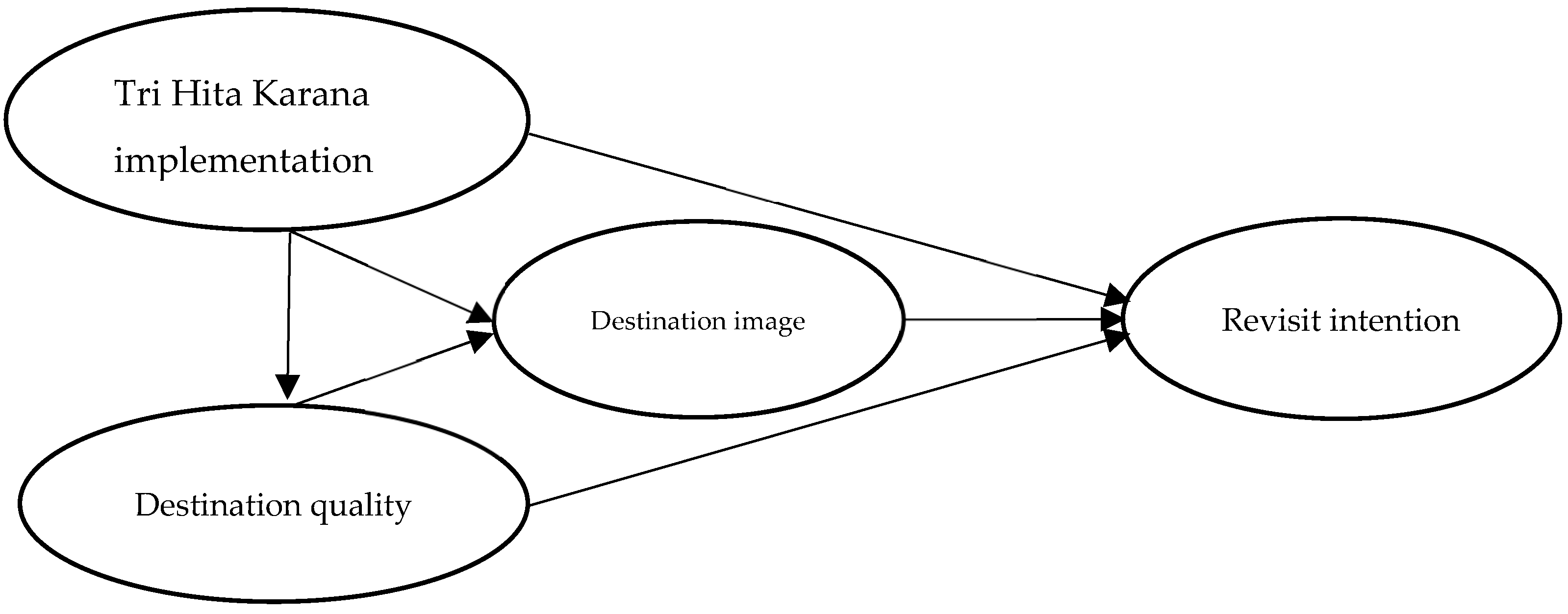

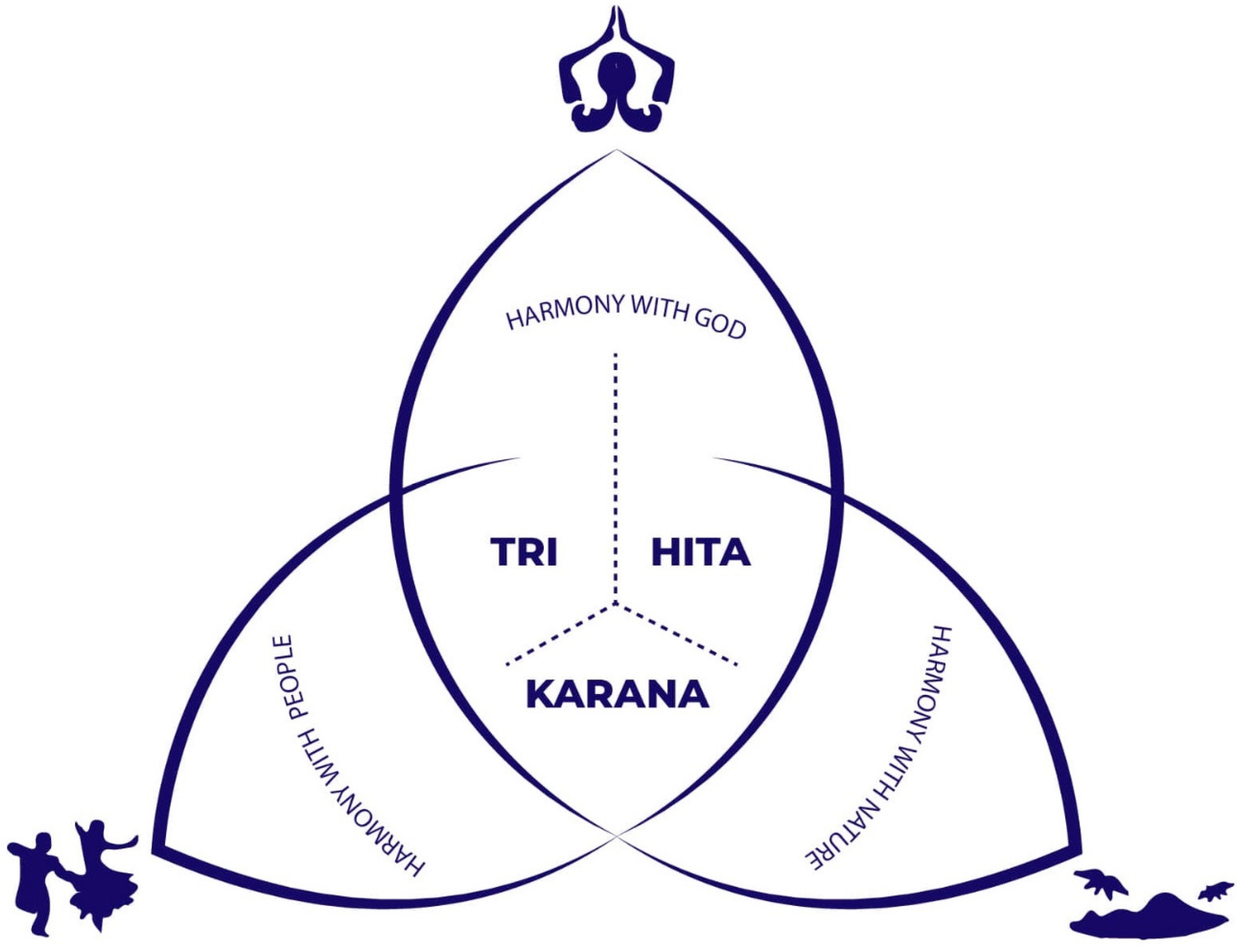
The Impact of a Local Well-Being Philosophy on Revisit Intentions to Bali Among Digital Nomads

 ,
,  , , and
Abstract
1. Introduction
2. Literature Review and Hypotheses Development
2.1. Theoretical Foundations
2.2. Local Wisdom
2.3. Digital Nomads
2.4. Local Wisdom and Revisit Intentions
2.5. Local Wisdom and Destination Image
2.6. Local Wisdom and Destination Quality
2.7. Destination Quality and Destination Image
2.8. Destination Image and Revisit Intentions
2.9. Destination Quality and Revisit Intentions
2.10. Mediation by Destination Image
2.11. Mediation by Destination Quality
3. Methodology
4. Results
4.1. Descriptive Statistics
4.1.1. Respondent Characteristics
4.1.2. Measurement Item Ranking
4.2. Common Method Bias (CMB) Test
4.3. Assessment of Measurement Model
4.4. Assessment of Structural Model
5. Conclusions and Discussion
6. Managerial Implications
7. Limitations and Future Research Directions
Author Contributions
Funding
Institutional Review Board Statement
Informed Consent Statement
Data Availability Statement
Conflicts of Interest
Appendix A. THK Indicators
| Variable | Dimensions | Indicator items |
| Implementation of Tri Hita Karana Sources: [119,124,125,126] |
Parhyangan (Spiritual) |
|
| Pawongan (Social) |
| |
| ||
| Palemahan (Natural) |
| |
|
Appendix B. Descriptive Statistic Details
Appendix B.1. Respondent Characteristics
| No. | Characteristics | Levels | Persons | % |
| 1. | Origin | Indonesia | 270 | 51.92 |
| Europe | 83 | 15–96 | ||
| Australia | 60 | 11.54 | ||
| Asia | 55 | 11.58 | ||
| USA | 52 | 10.00 | ||
| Total | 520 | 100.00 | ||
| 2. | Gender | Male | 277 | 53.27 |
| Female | 243 | 46.73 | ||
| Total | 520 | 100.00 | ||
| 3. | Age | 17–30 years old | 362 | 69.61 |
| 31–50 years old | 142 | 27.30 | ||
| >50 years | 16 | 3.10 | ||
| Total | 520 | 100.00 | ||
| 4. | Education | Diploma/Bachelor | 347 | 77.73 |
| Senior high school | 96 | 18.58 | ||
| Master degree | 74 | 14.22 | ||
| Doctoral degree | 3 | 0.58 | ||
| Total | 520 | 100.00 | ||
| 5. | Occupation | Employees | 242 | 46.57 |
| Students | 130 | 25.02 | ||
| Professional | 45 | 8.72 | ||
| Government officer | 21 | 4.04 | ||
| Others | 82 | 1.85 | ||
| Total | 520 | 100.00 | ||
| 6. | Trips average per year | 2–5 times/year | 301 | 57.91 |
| Once/year | 160 | 30.82 | ||
| >5 times/year | 59 | 11.33 | ||
| Total | 520 | 100.00 | ||
| 7. | Purpose of visit | Holiday | 364 | 70.00 |
| Business | 66 | 12.69 | ||
| VFR | 52 | 10.00 | ||
| Event visit | 14 | 2.70 | ||
| Others | 24 | 4.62 | ||
| Total | 520 | 100.00 | ||
| 8. | Travel with | Family/relatives | 205 | 39.42 |
| Friends | 169 | 32.50 | ||
| Alone | 104 | 20.00 | ||
| Spouse | 42 | 8.08 | ||
| Total | 520 | 100.00 | ||
| 9. | Source information on Bali | Social media | 290 | 55.77 |
| Family/friends | 172 | 33.08 | ||
| Official website | 28 | 5.38 | ||
| Others | 30 | 5.77 | ||
| Total | 520 | 100.00 | ||
| 10. | Length of stay in Bali | 1–4 weeks | 302 | 58.08 |
| 1–3 months | 120 | 23.08 | ||
| >3 months | 98 | 18.85 | ||
| Total | 520 | 100.00 | ||
| 11. | Where staying in Bali | Canggu | 112 | 21.54 |
| Seminyak | 101 | 19.42 | ||
| Ubud | 88 | 16.92 | ||
| Sanur | 53 | 10.19 | ||
| Others | 166 | 31.92 | ||
| Total | 520 | 100.00 | ||
| 12. | Times visited Bali | 2–3 times | 221 | 42.50 |
| >3 times | 216 | 41.54 | ||
| Once | 83 | 15.96 | ||
| Total | 520 | 100.00 | ||
| 13. | Destination before Bali | Other Indonesia | 201 | 38.65 |
| Asia | 190 | 36.54 | ||
| Europe | 68 | 13.08 | ||
| Australia | 44 | 8.46 | ||
| Others | 17 | 3.27 | ||
| Total | 520 | 100.00 | ||
| 14. | Destination after Bali | Other Indonesia | 212 | 40.77 |
| Asia | 189 | 36.35 | ||
| Europe | 42 | 8.08 | ||
| Australia | 38 | 7.31 | ||
| USA | 19 | 3.65 | ||
| Others | 20 | 3.85 | ||
| Total | 520 | 100.00 | ||
| 15. | Know about Tri Hita Karana | Yes | 514 | 99.04 |
| No | 6 | 0.96 | ||
| Total | 520 | 100.00 |
Appendix B.2
Appendix B.2.1. Tri Hita Karana Implementation: Mean Item Scores
| No | Items | Respondent Ranking | Total Score | Mean Score | ||||
| 1 | 2 | 3 | 4 | 5 | ||||
| A. | Parhyangan (X 1.1) (Spiritual) | 4.45 | ||||||
| 1. | Take good care of places of worship (X1.1.1) | 0 | 4 | 36 | 195 | 285 | 2.321 | 4.46 |
| 2. | Upholding the diversity of religions and beliefs (X1.1.2) | 0 | 2 | 23 | 199 | 296 | 2.349 | 4.52 |
| 3. | Faithfully attend spiritual meetings (X1.1.3) | 0 | 3 | 28 | 208 | 281 | 2.327 | 4.48 |
| 4. | Have a spiritual lifestyle (thanksgiving and praying always) (X1.1.4) | 0 | 3 | 48 | 214 | 255 | 2.281 | 4.39 |
| 5. | Maintaining the sacred or spiritual values of Bali (X1.1.5) | 0 | 0 | 48 | 208 | 266 | 2.298 | 4.42 |
| 6. | Applying Balinese spatial ethics (X1.1.6) | 0 | 4 | 30 | 207 | 279 | 2.321 | 4.46 |
| B. | Pawongan (X1.2) (Social) | 4.40 | ||||||
| 1. | The spirit of gotong royong (partnering and collaboration) (X1.2.1) | 0 | 3 | 31 | 206 | 280 | 2.323 | 4.47 |
| 2. | Appreciate art and culture (X1.2.2) | 0 | 4 | 43 | 231 | 242 | 2.271 | 4.37 |
| 3. | Maintain harmony in society (X1.2.3) | 0 | 6 | 37 | 224 | 253 | 2.284 | 4.39 |
| 4. | Carry out the teachings of Tat Twam Asi (I am you & you are me) (X1.2.4) | 0 | 7 | 26 | 228 | 259 | 2.299 | 4.42 |
| 5. | Maintaining harmony with local residents, immigrants, and tourists (X1.2.5) | 0 | 6 | 19 | 228 | 267 | 2.316 | 4.45 |
| 6. | Maintaining the local wisdom of the Balinese people (X1.2.6) | 0 | 5 | 42 | 250 | 223 | 2.251 | 4.33 |
| 7. | Synergize in building the existence of Bali tourism (X1.2.7) | 0 | 5 | 39 | 251 | 225 | 2.256 | 4.34 |
| 8. | Creative and innovative human resources in promoting Balinese culture (X1.2.8) | 0 | 3 | 33 | 232 | 252 | 2.293 | 4.41 |
| C. | Palemahan (X1.3) (Natural) | 4.34 | ||||||
| 1. | Strive to reduce, reuse, and recycle waste (X1.3.1) | 1 | 1 | 41 | 265 | 319 | 2.296 | 4.42 |
| 2. | Adequate waste/waste management (X1.3.2) | 0 | 3 | 42 | 273 | 309 | 2.278 | 4.38 |
| 3. | Preserve and protect flora, fauna, water, and energy sources (X1.3.3) | 2 | 16 | 95 | 266 | 248 | 2.225 | 4.28 |
| 4. | Wise land use (prioritizing local culture and open space) (X1.3.4) | 5 | 11 | 81 | 261 | 269 | 2.230 | 4.29 |
| 5. | Applying the concept of traditional Balinese architecture (X1.3.5) | 1 | 10 | 68 | 284 | 264 | 2.272 | 4.37 |
| 6. | Maintain harmony between worldly and non-worldly (X1.3.6) | 2 | 12 | 91 | 242 | 280 | 2.233 | 4.29 |
| 7. | Preserving the Tri Mandala in the environment (main area, transition area, & outer area) (X1.3.7) | 1 | 5 | 46 | 279 | 296 | 2.249 | 4.33 |
| 8. | Availaibity of a temporary dump (X1.3.8) | 2 | 6 | 79 | 257 | 283 | 2.275 | 4.38 |
| Overall Tri Hita Karana implementation score | 4.40 | |||||||
Appendix B.2.2. Destination Image Mean Scores
| No | Items | Respondent Ranking | Total Score | Mean Score | ||||
| 1 | 2 | 3 | 4 | 5 | ||||
| A. | Cognitive (Y1.1) | 4.39 | ||||||
| 1. | The people are friendly and helpful (Y1.1.1) | 0 | 1 | 42 | 231 | 246 | 2.282 | 4.39 |
| 2. | Standard hygiene and cleanliness conditions (Y1.1.2) | 0 | 4 | 38 | 258 | 220 | 2.254 | 4.33 |
| 3. | Values of money for holidays (Y1.1.3) | 0 | 1 | 44 | 242 | 233 | 2.267 | 4.36 |
| 4. | Destination has good infrastructure and fascinating architecture (Y1.1.4) | 0 | 2 | 30 | 222 | 266 | 2.312 | 4.45 |
| 5. | Excellent and suitable accommodation (Y1.1.5) | 0 | 2 | 33 | 236 | 249 | 2.292 | 4.41 |
| B. | Affective (Y1.2) | 4.49 | ||||||
| 1. | Pleasant and thrilling place (Y1.2.1) | 0 | 1 | 29 | 213 | 277 | 2.326 | 4.47 |
| 2. | Lively place (Y1.2.2) | 0 | 4 | 21 | 214 | 281 | 2.332 | 4.48 |
| 3. | Feel quite excited about this place (Y1.2.3) | 0 | 1 | 22 | 210 | 287 | 2.343 | 4.51 |
| C. | Unique (Y1.3) | 4.53 | ||||||
| 1. | Unique communities and historical sites (Y1.3.1) | 0 | 3 | 27 | 237 | 360 | 2.835 | 4.52 |
| 2. | Unique climate and natural beauty (Y1.3.2) | 0 | 4 | 30 | 231 | 362 | 2.832 | 4.52 |
| 3. | Unique cultural diversity (Y1.3.3) | 0 | 2 | 34 | 213 | 378 | 2.848 | 4.54 |
| Overall destination image score | 4.47 | |||||||
Appendix B.2.3. Destination Quality Mean Scores
| No | Items | Respondent Ranking | Total Score | Mean Score | ||||
| 1 | 2 | 3 | 4 | 5 | ||||
| A. | Infrastructure quality (X2.1) | 4.40 | ||||||
| 1. | Information center availability (X2.1.1) | 0 | 5 | 65 | 233 | 217 | 2.222 | 4.27 |
| 2. | Amenities availability (X2.1.2) | 0 | 1 | 27 | 247 | 245 | 2.296 | 4.42 |
| 3. | Pubs/entertainment availability (X2.1.3) | 0 | 2 | 28 | 218 | 272 | 2.230 | 4.46 |
| 4. | Easy to get daily needs (X2.1.4) | 0 | 2 | 52 | 228 | 238 | 2.262 | 4.35 |
| 5. | Easy to get foods and drinks (X2.1.5) | 0 | 3 | 23 | 213 | 281 | 2.332 | 4.48 |
| B. | Human resource quality (X2.2) | 4.46 | ||||||
| 1. | Have an adequate educational background (X2.2.1) | 0 | 2 | 33 | 212 | 273 | 2.316 | 4.45 |
| 2. | Have good hospitality (X2.2.2) | 0 | 2 | 30 | 214 | 274 | 2.320 | 4.46 |
| C. | Natural and environmental quality (X2.3) | 4.35 | ||||||
| 1. | Get real experience (X2.3.1) | 0 | 2 | 43 | 205 | 270 | 2.303 | 4.43 |
| 2. | Has a cultural tourist attraction (X2.3.2) | 0 | 2 | 42 | 206 | 270 | 2.304 | 4.43 |
| 3. | Reasonable price (X2.3.3) | 0 | 2 | 63 | 228 | 223 | 2.228 | 4.28 |
| 4. | Have good hygiene and sanitation (X2.3.4) | 0 | 5 | 52 | 240 | 253 | 2.241 | 4.31 |
| 5. | Has a low level of interference (X2.3.5) | 0 | 16 | 54 | 231 | 219 | 2.213 | 4.26 |
| 6. | Gaining experience is worth the sacrifices incurred (X2.3.6) | 0 | 3 | 47 | 233 | 237 | 2.264 | 4.35 |
| 7. | Good level of security (X2.3.7) | 0 | 3 | 44 | 240 | 233 | 2.263 | 4.35 |
| Overall destination quality score | 4.40 | |||||||
Appendix B.2.4. Revisit Intention Mean Scores
| No | Items | Respondent Ranking | Total Score | Mean Score | ||||
| 1 | 2 | 3 | 4 | 5 | ||||
| 1. | I will visit again (Y2.1) | 1 | 2 | 13 | 150 | 354 | 2.414 | 4.64 |
| 2. | I will recommend Bali to others (Y2.2) | 0 | 1 | 18 | 139 | 362 | 2.422 | 4.66 |
| 3. | I have plans to revisit Bali in the near future (Y2.3) | 1 | 14 | 33 | 149 | 233 | 2.339 | 4.50 |
| 4. | I consider Bali as my first choice (Y2.4) | 1 | 13 | 54 | 188 | 264 | 2.261 | 4.35 |
| 5. | Willingness to visit (Y2.5) | 1 | 1 | 22 | 198 | 298 | 2.351 | 4.52 |
| Overall revisit intention score | 4.53 | |||||||
Appendix B.3. Factor Loadings
| Constructs, Dimensions and Indicator Items | Load Factors |
| THK implementation | |
| Parhyangan (X1.1) | |
| Take good care of places of worship (X1.1.1) | 0.625 |
| Upholding the diversity of religions and beliefs (X1.1.2) | 0.627 |
| Faithfully attend spiritual meetings (X1.1.3) | 0.719 |
| Have a spiritual lifestyle (thanksgiving and praying always) (X1.1.4) | 0.681 |
| Maintaining the sacred or spiritual values of Bali (X1.1.5) | 0.654 |
| Applying Balinese spatial ethics (X1.1.6) | 0.653 |
| Pawongan (X1.2) | |
| The spirit of gotong royong (partnering and collaboration) (X1.2.1) | 0.660 |
| Appreciate art and culture (X1.2.2) | 0.679 |
| Maintain harmony in society (X1.2.3) | 0.774 |
| Carry out the teachings of Tat Twam Asi (I am you & you are me) (X1.2.4) | 0.823 |
| Maintaining harmony with local residents, immigrants, and tourists (X1.2.5) | 0.687 |
| Maintaining the local wisdom of the Balinese people (X1.2.6) | 0.674 |
| Synergize in building the existence of Bali tourism (X1.2.7) | 0.705 |
| Creative and innovative human resources in promoting Balinese culture (X1.2.8) | 0.632 |
| Palemahan (X1.3) | |
| Strive to reduce, reuse, and recycle waste (X1.3.1) | 0.769 |
| Adequate waste/waste management (X1.3.2) | 0.789 |
| Preserve and protect flora, fauna, water, and energy sources (X1.3.3) | 0.745 |
| Wise land use (prioritizing local culture and open space) (X1.3.4) | 0.694 |
| Applying the concept of traditional Balinese architecture (X1.3.5) | 0.754 |
| Maintain harmony between worldly and non-worldly (X1.3.6) | 0.616 |
| Preserving the Tri Mandala in the environment (main area, transition area, & outer area) (X1.3.7) | 0.805 |
| Avalaibity of a temporary dump (X1.3.8) | 0.769 |
| Destination quality | |
| Infrastructure quality (X2.1) | |
| Information center availability (X2.1.1) | 0.605 |
| Amenities availability (X2.1.2) | 0.702 |
| Pubs/entertainment availability (X2.1.3) | 0.699 |
| Easy to get daily needs (X2.1.4) | 0.565 |
| Easy to get foods and drinks (X2.1.5) | 0.798 |
| Human resource quality (X2.2) | |
| Have an adequate educational background (X2.2.1) | 0.664 |
| Have good hospitality (X2.2.2) | 0.833 |
| Natural and environmental quality (X2.3) | |
| Get real experience (X2.3.1) | 0.625 |
| Has a cultural tourist attraction (X2.3.2) | 0.742 |
| Reasonable price (X2.3.3) | 0.677 |
| Have good hygiene and sanitation (X2.3.4) | 0.796 |
| Has a low level of interference (X2.3.5) | 0.726 |
| Gaining experience is worth the sacrifices incurred (X2.3.6) | 0.823 |
| Good level of security (X2.3.7) | 0.622 |
| Destination image | |
| Cognitive (Y1.1) | |
| The people are friendly and helpful (Y1.1.1) | 0.756 |
| Standard hygiene and cleanliness conditions (Y1.1.2) | 0.740 |
| Values of money for holidays (Y1.1.3) | 0.804 |
| Destination has good infrastructure and fascinating architecture (Y1.1.4) | 0.669 |
| Excellent and suitable accommodation (Y1.1.5) | 0.809 |
| Affective (Y1.2) | |
| Pleasant and thrilling place (Y1.2.1) | 0.756 |
| Lively place (Y1.2.2) | 0.740 |
| Feel quite excited about this place (Y1.2.3) | 0.804 |
| Unique (Y1.3) | |
| Unique communities and historical sites (Y1.3.1) | 0.683 |
| Unique climate and natural beauty (Y1.3.2) | 0.675 |
| Unique cultural diversity (Y1.3.3) | 0.629 |
| Revisit intention | |
| I will visit again (Y2.1) | 0.747 |
| I will recommend Bali to others (Y2.2) | 0.760 |
| I have plans to revisit Bali in the near future (Y2.3) | 0.751 |
| I consider Bali as my first choice (Y2.4) | 0.671 |
| Willingness to visit (Y2.5) | 0.760 |
Appendix B.4. Discriminant Validity Tests
| Constructs | THK (X1) | Destination Quality (X2) | Destination Image (Y1) | Revisit Intention (Y2) |
| THK implementation (X1) | 0.708 | |||
| Destination quality (X2) | 0.508 | 0.710 | ||
| Destination image (Y1) | 0.550 | 0.588 | 0.710 | |
| Revisit intention (Y2) | 0.365 | 0.372 | 0.419 | 0.739 |
| Indicator Items | THK (X1) | Destination Quality (X2) | Destination Image (Y1) | Revisit Intention (Y2) |
| X1.1.1 | 0.625 | 0.383 | 0.349 | 0.285 |
| X1.1.2 | 0.627 | 0.387 | 0.354 | 0.355 |
| X1.1.3 | 0.719 | 0.318 | 0.407 | 0.245 |
| X1.1.4 | 0.681 | 0.405 | 0.386 | 0.318 |
| X1.1.6 | 0.653 | 0.356 | 0.395 | 0.322 |
| X1.2.1 | 0.660 | 0.353 | 0.385 | 0.336 |
| X1.2.2 | 0.679 | 0.431 | 0.412 | 0.268 |
| X1.2.3 | 0.774 | 0.323 | 0.413 | 0.268 |
| X1.2.4 | 0.823 | 0.348 | 0.417 | 0.271 |
| X1.2.5 | 0.687 | 0.338 | 0.429 | 0.233 |
| X1.2.6 | 0.674 | 0.385 | 0.394 | 0.230 |
| X1.2.7 | 0.705 | 0.385 | 0.419 | 0.256 |
| X1.2.8 | 0.632 | 0.369 | 0.423 | 0.249 |
| X1.3.1 | 0.769 | 0.406 | 0.445 | 0.266 |
| X1.3.2 | 0.789 | 0.382 | 0.399 | 0.244 |
| X1.3.3 | 0.745 | 0.302 | 0.318 | 0.202 |
| X1.3.4 | 0.694 | 0.280 | 0.287 | 0.151 |
| X1.3.4 | 0.694 | 0.280 | 0.287 | 0.151 |
| X1.3.5 | 0.754 | 0.319 | 0.375 | 0.218 |
| X1.3.6 | 0.751 | 0.338 | 0.378 | 0.210 |
| X1.3.7 | 0.616 | 0.357 | 0.409 | 0.241 |
| X1.3.8 | 0.805 | 0.371 | 0.416 | 0.244 |
| X2.1.1 | 0.341 | 0.605 | 0.350 | 0.276 |
| X2.1.2 | 0.390 | 0.702 | 0.488 | 0.245 |
| X2.1.3 | 0.367 | 0.699 | 0.507 | 0.302 |
| X2.1.4 | 0.379 | 0.565 | 0.428 | 0.216 |
| X2.1.5 | 0.395 | 0.798 | 0.495 | 0.290 |
| X2.2.1 | 0.334 | 0.664 | 0.404 | 0.238 |
| X2.2.2 | 0.381 | 0.833 | 0.469 | 0.286 |
| X2.3.1 | 0.359 | 0.625 | 0.332 | 0.391 |
| X2.3.3 | 0.322 | 0.677 | 0.320 | 0.346 |
| X2.3.4 | 0.415 | 0.796 | 0.404 | 0.219 |
| X2.3.5 | 0.420 | 0.726 | 0.373 | 0.212 |
| X2.3.6 | 0.341 | 0.823 | 0.407 | 0.202 |
| X2.3.7 | 0.293 | 0.622 | 0.411 | 0.220 |
| Y1.1.1 | 0.394 | 0.438 | 0.756 | 0.317 |
| Y1.1.2 | 0.425 | 0.420 | 0.740 | 0.266 |
| Y1.1.3 | 0.391 | 0.465 | 0.804 | 0.306 |
| Y1.1.4 | 0.352 | 0.429 | 0.669 | 0.217 |
| Y1.1.5 | 0.346 | 0.441 | 0.809 | 0.257 |
| Y1.2.1 | 0.427 | 0.427 | 0.692 | 0.335 |
| Y1.2.2 | 0.413 | 0.389 | 0.634 | 0.350 |
| Y1.2.3 | 0.429 | 0.447 | 0.688 | 0.357 |
| Y1.3.1 | 0.376 | 0.396 | 0.683 | 0.270 |
| Y1.3.2 | 0.421 | 0.369 | 0.675 | 0.266 |
| Y1.3.3 | 0.307 | 0.355 | 0.629 | 0.315 |
| Y2.1 | 0.234 | 0.232 | 0.329 | 0.747 |
| Y2.2 | 0.330 | 0.288 | 0.386 | 0.760 |
| Y2.3 | 0.251 | 0.260 | 0.290 | 0.751 |
| Y2.4 | 0.258 | 0.285 | 0.199 | 0.671 |
| Y2.5 | 0.263 | 0.311 | 0.313 | 0.760 |
Appendix B.5. Multicollinearity Statistics (VIF)
| Constructs | Inner VIF Value |
| THK implementation → Revisit intention | 1.150 |
| Destination quality → Revisit intention | 1.653 |
| Destination image → Revisit intention | 1.757 |
| THK implementation → Destination image | 1.349 |
| Destination quality → Destination image | 1.349 |
Appendix B.6. Effect Size (f-Square, f2)
| Constructs and Dimensions | f2 |
| THK implementation → Revisit intention | 0.154 |
| Destination quality → Revisit intention | 0.150 |
| Destination image → Revisit intention | 0.246 |
| Parhyangan → THK implementation | 0.855 |
| Pawongan → THK implementation | 0.932 |
| Palemahan → THK implementation | 0.913 |
| Infrastructure quality → Destination quality | 0.898 |
| Human resource quality → Destination quality | 0.805 |
| Natural and environmental quality → Destination quality | 0.927 |
| Cognitive → Destination image | 0.879 |
| Affective → Destination image | 0.802 |
| Unique → Destination image | 0.797 |
| THK implementation → Destination image | 0.338 |
| Destination quality → Destination image | 0.416 |
References
- Picard, M. Cultural tourism nation-building regional culture: The making of a Balinese identity. In Tourism, Ethnicity, and the State in Asian and Pacific Societies; Picard, M., Wood, R., Eds.; University of Hawaii Press: Honolulu, HI, USA, 1997. [Google Scholar]
- Richards, G.; Russo, A.P. Alternative and Creative Tourism; Association for Tourism and Leisure Education: Arnhem, The Netherlands, 2014. [Google Scholar]
- Babolian, H.R. Delivering tourism intelligence about agritourism, delivering tourism intelligence. Bridg. Tour. Theory Pract. 2019, 11, 77–89. [Google Scholar]
- Roth, D.; Sedana, G. Reframing Tri Hita Karana: From ‘Balinese culture’ to politics. Asia Pac. J. Anthropol. 2015, 16, 157–175. [Google Scholar] [CrossRef]
- Emery, M.; Flora, C. Spiraling-up: Mapping community transformation with community capitals framework. Community Dev. 2006, 37, 19–35. [Google Scholar] [CrossRef]
- UNESCO. Cultural Landscape of Bali Province: The Subak System as a Manifestation of the Tri Hita Karana Philosophy. 2023. Available online: https://whc.unesco.org/en/list/1194/ (accessed on 31 August 2024).
- Bali Regional Regulation No. 5 of 2020. Available online: https://ijcjs.com/menu-script/index.php/ijcjs/article/download/492/367?__cf_chl_tk=hR5OHBz5gFGzamQLcpUvm1vQVZpRTuYRibMQkRbiAow-1730361979-1.0.1.1-9qwaXnTItRQLXD2XGoGwrl1D6WmBEpubmzXIQ2kNpY8 (accessed on 31 August 2024).
- Mohaidin, Z.; Wei, K.T.; Ali Murshid, M. Factors influencing the tourists’ intention to select sustainable tourism destination: A case study of Penang, Malaysia. Int. J. Tour. Cities 2017, 3, 442–465. [Google Scholar] [CrossRef]
- Shahijan, M.K.; Rezaei, S.; Amin, M. Qualities of effective cruise marketing strategy: Cruisers’ experience, service convenience, values, satisfaction and revisit intention. Int. J. Qual. Reliab. Manag. 2018, 36, 2304–2327. [Google Scholar] [CrossRef]
- Sharma, P.; Nayak, J.K. Do tourists’ emotional experiences influence images and intentions in yoga tourism? Tour. Rev. 2019, 74, 646–665. [Google Scholar] [CrossRef]
- Kusumawati, A.; Utomo, H.S.; Suharyono, S.; Sunarti, S. Effects of sustainability on WOM intention and revisit intention, with environmental awareness as a moderator. Manag. Environ. Qual. 2020, 31, 273–288. [Google Scholar] [CrossRef]
- Hashemi, S.; Marzuki, A.; Kiumarsi, S. Perceived conference quality, quality services and experiences in hospitality and tourism. Bridg. Tour. Theory Pract. 2018, 9, 165–180. [Google Scholar]
- Canalejo, A.M.C.; del Rio, J.A.J. Quality, satisfaction and loyalty indices. J. Place Manag. Dev. 2018, 11, 428–446. [Google Scholar] [CrossRef]
- Saragih, H.S.; Jonathan, P. Views of Indonesian consumers towards medical tourism experience in Malaysia. J. Asia Bus. Stud. 2019, 13, 507–524. [Google Scholar] [CrossRef]
- Breiby, M.A.; Slåtten, T. The role of aesthetic experiential qualities for tourist satisfaction and loyalty. Int. J. Cult. Tour. Hosp. Res. 2018, 12, 1–14. [Google Scholar] [CrossRef]
- Berbekova, A.; Uysal, M.; Assaf, A.G. Toward an assessment of quality of life indicators as measures of destination performance. J. Travel Res. 2022, 61, 1424–1436. [Google Scholar] [CrossRef]
- Morrison, A.M. Marketing and Managing Tourism Destinations, 3rd ed.; Routledge: London, UK, 2023. [Google Scholar]
- Wall, G.; Mathieson, A. Tourism Changes, Impacts and Opportunities; Pearson Prentice Hall: Hoboken, NJ, USA, 2006. [Google Scholar]
- Fishbein, M.; Ajzen, I. Belief, Attitude, Intention, and Behavior: An Introduction to Theory and Research; Addison-Wesley: Reading, MA, USA, 1975. [Google Scholar]
- Then, J.; Yulius, K.G. Motivation and interest in traveling of young traveler during revenge tourism. Glob. Res. Tour. Dev. Adv. 2022, 4, 110–121. [Google Scholar] [CrossRef]
- Vogler, R. Revenge and catch-up travel or degrowth? Debating tourism post COVID-19. Ann. Tour. Res. 2022, 93, 103272. [Google Scholar] [CrossRef]
- Ajzen, I. The theory of planned behavior. Organ. Behav. Hum. Decis. Process. 1991, 50, 179–211. [Google Scholar] [CrossRef]
- Barney, J. Firm resources and sustained competitive advantage. J. Manag. 1991, 17, 99–120. [Google Scholar] [CrossRef]
- Barney, J.B.; Clark, D.N. Resource-Based Theory Creating and Sustaining Competitive Advantage; Oxford University Press: Oxford, UK, 2007. [Google Scholar]
- Rothaermel, F.T. Strategic Management; McGraw-Hill: New York, NY, USA, 2016. [Google Scholar]
- Zahra, S.A. The resource-based view, resourcefulness, and resource management in startup firms: A proposed research agenda. J. Manag. 2021, 47, 1841–1860. [Google Scholar] [CrossRef]
- Buhalis, D. Marketing the competitive destination of the future. Tour. Manag. 2000, 21, 97–116. [Google Scholar] [CrossRef]
- Kozak, M.; Rimmington, M. Tourist satisfaction with Mallorca, Spain, as an off-season holiday destination. J. Travel Res. 2000, 38, 260–269. [Google Scholar] [CrossRef]
- Claver-Cortes, E.; Molina-Azorín, J.F.; Pereira-Moliner, J. The impact of strategic behaviors on hotel performance. Int. J. Contemp. Hosp. Manag. 2007, 19, 6–20. [Google Scholar] [CrossRef]
- Pereira-Moliner, J.; Font, X.; Tarí, J.J.; Molina-Azorin, J.F.; Lopez-Gamero, M.D.; Pertusa-Ortega, E.M. The holy grail: Environmental management, competitive advantage and business performance in the Spanish hotel industry. Int. J. Contemp. Hosp. Manag. 2015, 27, 714–738. [Google Scholar] [CrossRef]
- Séraphin, H.; Gowreesunkar, V.G.B. Conclusion: What marketing strategy for destinations with a negative image? Worldw. Hosp. Tour. Themes 2017, 9, 570–576. [Google Scholar] [CrossRef]
- Ko, E.; Hwang, Y.K.; Kim, E.Y. Green marketing’s functions in building corporate image in the retail setting. J. Bus. Res. 2013, 66, 1709–1715. [Google Scholar] [CrossRef]
- Tapia, G.P.; Melé, P.M.; García, F.A. Corporate image and destination image: The moderating effect of the motivations on the destination image of Spain in South Korea. Asia Pac. J. Tour. Res. 2019, 24, 70–82. [Google Scholar] [CrossRef]
- Biswas, J.; Shabbirhusain, R.V. Role of self-congruity in predicting travel intention. In Methodological Issues in Management Research: Advances, Challenges, and the Way Ahead; Subudhi, R.N., Mishra, S., Eds.; Emerald: Bingley, UK, 2019; pp. 261–267. [Google Scholar]
- Wang, F.; Lu, L.; Xu, L.; Wu, B.; Wu, Y. Alike but different: Four ancient capitals in China and their destination images. Int. J. Tour. Cities 2020, 6, 415–429. [Google Scholar] [CrossRef]
- Jani, D.; Han, H. Personality, social comparison, consumption emotions, satisfaction, and behavioral intentions. Int. J. Contemp. Hosp. Manag. 2013, 25, 970–993. [Google Scholar] [CrossRef]
- Allameh, S.M.; Pool, J.K.; Jaberi, A.; Salehzadeh, R.; Asadi, H. Factors influencing sport tourists’ revisit intentions: The role and effect of destination image, perceived quality, perceived value and satisfaction. Asia Pac. J. Mark. Logist. 2015, 27, 191–207. [Google Scholar] [CrossRef]
- Alegre, J.; Garau, J. Tourist satisfaction and dissatisfaction. Ann. Tour. Res. 2010, 37, 52–73. [Google Scholar] [CrossRef]
- Akroush, M.N.; Jraisat, L.E.; Kurdieh, D.J.; AL-Faouri, R.N.; Qatu, L.T. Tourism service quality and destination loyalty. The mediating role of destination image from international tourists’ perspectives. Tour. Rev. 2016, 71, 18–44. [Google Scholar] [CrossRef]
- Wang, T.L.; Tran, P.T.K.; Tran, V.T. Destination perceived quality, tourist satisfaction and word-of-mouth. Tour. Rev. 2017, 72, 392–410. [Google Scholar] [CrossRef]
- Wang, J.; Wang, S.; Wang, Y.; Li, J.; Zhao, D. Extending the theory of planned behavior to understand consumers’ intentions to visit green hotels in the Chinese context. Int. J. Contemp. Hosp. Manag. 2018, 30, 2810–2825. [Google Scholar] [CrossRef]
- Xu, Y.; Jeong, E. The effect of message framings and green practices on customers’ attitudes and behavior intentions toward green restaurants. Int. J. Contemp. Hosp. Manag. 2019, 31, 2270–2296. [Google Scholar] [CrossRef]
- Phau, I.; Shanka, T.; Dhayan, N. Destination image and choice intention of university student travelers To Mauritius. Int. J. Contemp. Hosp. Manag. 2010, 22, 758–764. [Google Scholar] [CrossRef]
- Agapito, D.; Oom do Valle, P.; da Costa Mendes, J. The cognitive-affective-conative model of destination image: Confirmatory Analysis. J. Travel Tour. Mark. 2013, 30, 471–481. [Google Scholar] [CrossRef]
- Michael, N.; James, R.; Michael, I. Australia’s cognitive, affective and conative destination image: An Emirati tourist perspective. J. Islam. Mark. 2018, 9, 36–59. [Google Scholar] [CrossRef]
- Kim, H.-B.; Lee, S. Impacts of city personality and image on revisit intention. Int. J. Tour. Cities 2015, 1, 50–69. [Google Scholar] [CrossRef]
- Kim, S.; Lehto, X.; Kandampully, J. The role of familiarity in consumer destination image formation. Tour. Rev. 2019, 74, 885–901. [Google Scholar] [CrossRef]
- Da Rosa, S.; dos Anjos, F.A.; Pereira, M.d.L.; Arnhold Junior, M. Image perception of surf tourism destination in Brazil. Int. J. Tour. Cities 2020, 6, 1111–1127. [Google Scholar] [CrossRef]
- Alrawadieh, Z.; Dincer, M.Z.; Istanbullu Dincer, F.; Mammadova, P. Understanding destination image from the perspective of Western travel bloggers: The case of Istanbul. Int. J. Cult. Tour. Hosp. Res. 2019, 12, 198–212. [Google Scholar] [CrossRef]
- Ragab, H.; Mahrous, A.A.; Ghoneim, A. Egypt’s perceived destination image and its impact on tourist’s future behavioral intentions. Int. J. Tour. Cities 2020, 6, 449–466. [Google Scholar] [CrossRef]
- Ministry of Tourism of the Republic of Indonesia. Material for the National Tourism Working Meeting. In Digitization of Destinations and Nomadic Tourism; BNDCC Nusa Dua Bali: Kuta Selatan, Indonesia, 2018. [Google Scholar]
- Zerva, K.; Huete, R.; Segovia-Pérez, M. Digital nomad tourism: The experience of living at the destination. In Remodelling Businesses for Sustainable Development; Negrușa, A.L., Coroş, M.M., Eds.; ICMTBHT 2022. Springer Proceedings in Business and Economics; Springer: Cham, Switzerland, 2023; pp. 15–26. Available online: https://doi-org.ezproxy.lib.purdue.edu/10.1007/978-3-031-19656-0_2 (accessed on 31 August 2024).
- Makimoto, T. The age of the digital nomad: Impact of CMOS innovation. IEEE Solid-State Circuits 2013, 5, 40–47. [Google Scholar] [CrossRef]
- UNWTO. Nomadic Tourism for Mongolia. Critical Issues in Silk Road Tourism. 2016. Available online: https://webunwto.s3.eu-west-1.amazonaws.com/imported_images/45889/3._gansukh_damba.pdf (accessed on 31 August 2024).
- Mahadewi, N.M.E. Nomadic tourism, educational tourism, digitization and event tourism in the development of homestay accommodation services businesses in tourist destinations. J. Tour. 2018, 17, 1–13. [Google Scholar]
- Mulyana, C.; Sudana, I.P.; Sagita, P.A.W. Digital nomads’ perceptions and motivations for traveling in Tibubeneng Village, Canggu, North Kuta. Travel Ind. J. 2020, 8, 183–190. [Google Scholar]
- Chevtaeva, E.; Denizci-Guillet, B. Digital nomads’ lifestyles and coworkation. J. Destin. Mark. Manag. 2021, 21, 100633. [Google Scholar] [CrossRef]
- Chen, X.; Cheng, Z.; Kim, G.-B. Make it memorable: Tourism experience, fun, recommendation and revisit intentions of Chinese outbound tourists. Sustainability 2020, 12, 1904. [Google Scholar] [CrossRef]
- Smith, S.L.J. The supply-side definition of tourism reply to Leiper. Ann. Tour. Res. 1991, 18, 312–315. [Google Scholar] [CrossRef]
- Stevens, B.F. Price value perceptions of travelers. J. Travel Res. 1992, 31, 44–48. [Google Scholar] [CrossRef]
- Murphy, P.; Pritchard, M.P.; Smith, B. The destination product and its impact on traveler perceptions. Tour. Manag. 2000, 21, 43–52. [Google Scholar] [CrossRef]
- Limberger, P.F.; dos Anjos, F.A.; Meira, J.V.S.; dos Anjos, S.J.G. Satisfaction in hospitality on Tripadvisor.com: An analysis of the correlation between evaluation criteria and overall satisfaction. Tour. Manag. Stud. 2014, 10, 59–65. [Google Scholar]
- dos Anjos, S.J.G.; Meira, J.V.d.S.; Pereira, M.d.L.; Limberger, P.F. Quality attributes of Jericoacoara, Brazil. Int. J. Tour. Cities 2017, 3, 196–204. [Google Scholar] [CrossRef]
- Gunn, C.A. Vacationscape: Designing Tourist Regions; Taylor & Francis: New York, NY, USA, 1972. [Google Scholar]
- Crompton, J.L. Motivations for pleasure vacation. J. Travel Res. 1979, 6, 408–424. [Google Scholar] [CrossRef]
- Butler, R. The concept of a tourist area cycle of evolution: Implications for management of resources. Can. Geogr. 2008, 24, 5–12. [Google Scholar] [CrossRef]
- Gartner, W.C. Image formation process. J. Travel Tour. Mark. 1993, 2, 191–216. [Google Scholar] [CrossRef]
- Echtner, C.M.; Ritchie, J.R.B. The meaning and measurement of destination image. J. Tour. Stud. 2003, 14, 37–48. [Google Scholar]
- Pike, S. Destination brand positions of a competitive set of near-home destinations. Tour. Manag. 2009, 30, 857–866. [Google Scholar] [CrossRef]
- Konecnik, M.; Gartner, W.C. Customer-based brand equity for a destination. Ann. Tour. Res. 2007, 34, 400–421. [Google Scholar] [CrossRef]
- Sukawati, T.G.A.I.; Sukaatmadja, I.P.G.; Yasa, N.N.K.; Widagda, I.G.N.J.A. The role of local wisdom culture moderating the effect of product differentiation, service differentiation, and image differentiation on tourist satisfaction (Case study of tourist satisfaction at Royal Kirana Spa & Wellness Ubud). Int. Res. J. Manag. IT Soc. Sci. 2021, 8, 377–392. [Google Scholar]
- Yeap, J.A.L.; Ong, K.S.G.; Yapp, E.H.T.; Ooi, S.K. Hungry for more: Understanding young domestic travelers’ return for Penang street food. Br. Food J. 2019, 122, 1935–1952. [Google Scholar] [CrossRef]
- Nandasena, R.; Morrison, A.M.; Coca-Stefaniak, J.A. Transformational tourism—A systematic literature review and research agenda. J. Tour. Futures 2022, 8, 282–297. [Google Scholar] [CrossRef]
- Hall, C.M.; Weiler, B. What’s special about special interest tourism? In Special Interest Tourism; Weiler, B., Hall, C.M., Eds.; Belhaven Press: London, UK, 1992; pp. 1–14. [Google Scholar]
- Yoo, C.-K.; Yoon, D.; Park, E. Tourist motivation: An integral approach to destination choices. Tour. Rev. 2018, 73, 169–185. [Google Scholar] [CrossRef]
- Yadav, R.; Dokania, A.K.; Pathak, G.S. The influence of green marketing functions in building corporate image. Int. J. Contemp. Hosp. Manag. 2016, 28, 2178–2196. [Google Scholar] [CrossRef]
- Stylidis, D.; Belhassen, Y.; Shani, A. Destination image, on-site experience and behavioral intentions: Path analytic validation of a marketing model on domestic tourists. Curr. Issues Tour. 2017, 20, 1653–1670. [Google Scholar] [CrossRef]
- Mason, M.C.; Moretti, A. Antecedents and moderators of golf tourists’ behavioral intentions: An empirical study in a Mediterranean destination. EuroMed J. Bus. 2015, 10, 338–359. [Google Scholar] [CrossRef]
- Rajaratnam, S.D.; Nair, V.; Sharif, S.P.; Munikrishnan, U.T. Destination quality and tourists’ behavioral intentions: Rural tourist destinations in Malaysia. Worldw. Hosp. Tour. Themes 2015, 7, 463–472. [Google Scholar]
- Fam, K.-S.; Ting, H.; Tan, K.-L.; Hussain, K.; Cheah, J.-H. Does it matter where to run? Intention to participate in destination marathon. Asia Pac. J. Mark. Logist. 2020, 32, 1475–1494. [Google Scholar] [CrossRef]
- Al-Kwifi, O.S. The impact of destination images on tourists’ decision making: A technological exploratory study using fMRI. J. Hosp. Tour. Technol. 2015, 6, 174–194. [Google Scholar] [CrossRef]
- Leong, A.M.W.; Yeh, S.-S.; Chang, L.-H. Nostalgic tourism in Macau: The bidirectional causal relationship between destination image and experiential value. J. Hosp. Tour. Technol. 2015, 6, 89–99. [Google Scholar]
- Evren, S.; Evren, S.E.; Çakıcı, A.C. Moderating effect of optimum stimulation level on the relationship between satisfaction and revisit intention: The case of Turkish cultural tourists. Int. J. Cult. Tour. Hosp. Res. 2020, 14, 681–695. [Google Scholar] [CrossRef]
- Sthapit, E.; Del Chiappa, G.; Coudounaris, D.N.; Björk, P. Tourism experiences, memorability and behavioral intentions: A study of tourists in Sardinia, Italy. Tour. Rev. 2020, 75, 533–558. [Google Scholar] [CrossRef]
- Halpenny, E.; Kono, S.; Moghimehfar, F. Predicting World Heritage Site visitation intentions of North American park visitors. J. Hosp. Tour. Technol. 2018, 9, 417–437. [Google Scholar] [CrossRef]
- Castillo-Villar, F.R. Destination image restoration through local gastronomy: The rise of Baja Med cuisine in Tijuana. Int. J. Cult. Tour. Hosp. Res. 2020, 14, 507–523. [Google Scholar] [CrossRef]
- Guachalla, A. Cultural capital and destination image: Insights from The Opera House tourist. Int. J. Tour. Cities 2021, 7, 511–528. [Google Scholar] [CrossRef]
- Perovic, Ð.; Moric, I.; Pekovic, S.; Stanovcic, T.; Roblek, V.; Bach, M.P. The antecedents of tourist repeat visit intention: Systemic approach. Kybernetes 2018, 47, 1857–1871. [Google Scholar] [CrossRef]
- Iordanova, E.; Stylidis, D. The impact of visitors’ experience intensity on in-situ destination image formation. Tour. Rev. 2019, 74, 841–860. [Google Scholar] [CrossRef]
- Tzschentke, N.; Kirk, D.; Lynch, P.A. Reasons for going green in serviced accommodation establishments. Int. J. Contemp. Hosp. Manag. 2004, 16, 116–124. [Google Scholar] [CrossRef]
- Sukawati, T. Establishing local wisdom values to develop sustainable competitiveness excellence. J. Manag. Mark. Rev. 2017, 2, 73–82. [Google Scholar] [CrossRef]
- Amir, N. Development of local wisdom-based tourism. Adv. Soc. Sci. Educ. Humanit. Res. 2018, 282, 175–179. [Google Scholar]
- Yasa, N.; Giantari, I.G.A.K.; Setini, M.; Sarmawa, W.; Rahmayanti, P.; Dharmanegara, I. Service strategy based on Tri Kaya Parisudha, social media promotion, business values and business performance. Manag. Sci. Lett. 2020, 10, 2961–2972. [Google Scholar] [CrossRef]
- Yasa, N.N.K.; Adnyani, I.G.A.D.; Rahmayanti, P.L.D.; Dharmanegara, I.B.A. Integration of partnership strategy models based on local values of “Tat Twam Asi” with competitive advantages and business performance: A conceptual model. IAR J. Bus. Manag. 2020, 1, 402–405. [Google Scholar]
- Grybovych, O. Designing a qualitative multi-case research study to examine participatory community tourism planning practices. In Field Guide to Case Study Research in Tourism, Hospitality and Leisure Advances in Culture, Tourism and Hospitality Research; Hyde, K.F., Ryan, C., Woodside, A.G., Eds.; Emerald: Bingley, UK, 2012; Volume 6, pp. 501–520. [Google Scholar]
- Peric, M.; Djurkin, J. Systems thinking and alternative business model for responsible tourist destination. Kybernetes 2014, 43, 480–496. [Google Scholar] [CrossRef]
- Lekaota, L. The importance of rural communities’ participation in the management of tourism management. Worldw. Hosp. Tour. Themes 2015, 7, 453–462. [Google Scholar] [CrossRef]
- Tasci, A.D.A.; Croes, R.; Villanueva, J.B. Rise and fall of community-based tourism—Facilitators, inhibitors and outcomes. Worldw. Hosp. Tour. Themes 2014, 6, 261–276. [Google Scholar]
- Gudlaugsson, T.; Magnússon, G. North Atlantic island destinations in tourists’ minds. Int. J. Cult. Tour. Hosp. Res. 2012, 6, 114–123. [Google Scholar] [CrossRef]
- Bhat, S.A.; Darzi, M.A. Antecedents of tourist loyalty to tourist destinations: A mediated-moderation study. Int. J. Tour. Cities 2018, 4, 261–278. [Google Scholar] [CrossRef]
- Leung, X.Y.; Jiang, L. How do Destination Facebook pages work? An extended TPB model of fans’ visit intention. J. Hosp. Tour. Technol. 2018, 9, 397–416. [Google Scholar] [CrossRef]
- Drumwright, M.E. Socially responsible organizational buying: Environmental concern as a noneconomic buying criterion. J. Mark. 1994, 58, 1–19. [Google Scholar] [CrossRef]
- Han, H.; Kim, Y. An investigation of green hotel customers’ decision formation: Developing an extended model of the theory of planned behavior. Int. J. Hosp. Manag. 2010, 29, 659–668. [Google Scholar] [CrossRef]
- Han, H.; Hsu, L.T.J.; Sheu, C. Application of the theory of planned behavior to green hotel choice: Testing the effect of environmental friendly activities. Tour. Manag. 2010, 31, 325–334. [Google Scholar] [CrossRef]
- Lee, J.S.; Hsu, L.T.; Han, H.; Kim, Y. Understanding how consumers view green hotels: How a hotel’s green image can influence behavioral intentions. J. Sustain. Tour. 2010, 18, 901–914. [Google Scholar] [CrossRef]
- Stylos, N.; Vassiliadis, C.A.; Bellou, V.; Andronikidis, A. Destination images, holistic images and personal normative beliefs: Predictors of intention to revisit a destination. Tour. Manag. 2016, 53, 40–60. [Google Scholar] [CrossRef]
- Stylidis, D.; Cherifi, B. Characteristics of destination image: Visitors and non-visitors’ images of London. Tour. Rev. 2018, 73, 55–67. [Google Scholar] [CrossRef]
- Stepchenkova, S.; Kirilenko, A.P.; Shichkova, E. Influential factors for intention to visit an adversarial nation: Increasing robustness and validity of findings. Int. J. Tour. Cities 2019, 5, 491–510. [Google Scholar] [CrossRef]
- Plog, S.C. Why destination areas rise and fall in popularity. Cornell Hotel Restaur. Adm. Q. 1974, 14, 55–58. [Google Scholar]
- Belk, R.W. Situational variables and consumer behavior. J. Consum. Res. 1975, 2, 157–164. [Google Scholar] [CrossRef]
- Goeldner, C.R.; Ritchie, J.R.B. Tourism Principles, Practices, and Philosophies; Wiley: Hoboken, NJ, USA, 2006. [Google Scholar]
- Kim, A.K.; Brown, G. Understanding the relationships between perceived travel experiences, overall satisfaction, and destination loyalty. Anatolia Int. J. Tour. Hosp. Res. 2012, 23, 328–347. [Google Scholar] [CrossRef]
- Moon, H.; Han, H. Destination attributes influencing Chinese travelers’ perceptions of experience quality and intentions for island tourism: A case of Jeju Island. Tour. Manag. Perspect. 2018, 28, 71–82. [Google Scholar] [CrossRef]
- Alexander, M.; Hamilton, K. Recapturing place identification through community heritage marketing. Eur. J. Mark. 2016, 50, 1118–1136. [Google Scholar] [CrossRef]
- Huang, Y.-C.; Liu, C.-H.S. Moderating and mediating roles of environmental concern and ecotourism experience for revisit intention. Int. J. Contemp. Hosp. Manag. 2017, 29, 1854–1872. [Google Scholar] [CrossRef]
- Skinner, H. The impact of cultural values and economic constraints on tourism businesses’ ethical practices. Int. J. Tour. Cities 2018, 5, 169–187. [Google Scholar] [CrossRef]
- Madiun, I.N. Nusa Dua Modern Tourism Area Development Model; Udayana University Press: Denpasar, Indonesia, 2010. [Google Scholar]
- Chin, C.-H.; Lo, M.-C.; Songan, P.; Nair, V. Rural tourism destination competitiveness: A study on Annah Rais Longhouse Homestay, Sarawak. Procedia Soc. Behav. Sci. 2014, 144, 35–44. [Google Scholar] [CrossRef]
- Peters, J.H.; Wardana, W. Tri Hita Karana the Spirit of Bali; Gramedia: Jakarta, Indonesia, 2013. [Google Scholar]
- Templeton, G.F.; Lewis, B.R.; Snyder, C.A. Development of a measure for the organizational learning construct. J. Manag. Inf. Syst. 2002, 19, 175–218. [Google Scholar] [CrossRef]
- MacKenzie, S.B.; Podsakoff, P.M. Common method bias in marketing: Causes, mechanisms, and procedural remedies. J. Retail. 2012, 88, 542–555. [Google Scholar] [CrossRef]
- Hair, J.F.; Risher, J.J.; Sarstedt, M.; Ringle, C.M. When to use and how to report the results of PLS-SEM. Eur. Bus. Rev. 2019, 31, 2–24. [Google Scholar] [CrossRef]
- Kock, N.; Lynn, G. Lateral collinearity and misleading results in variance-based SEM: An illustration and recommendations. J. Assoc. Inf. Syst. 2012, 13, 546–580. [Google Scholar] [CrossRef]
- Windia, W.; Dewi, R.K. Business Analysis Based on Tri Hita Karana; Udayana University Press: Denpasar, Indonesia, 2011. [Google Scholar]
- Iverson, T.J. Cultural conflict: Tourists versus tourists in Bali, Indonesia. Int. J. Cult. Tour. Hosp. Res. 2010, 4, 299–310. [Google Scholar] [CrossRef]
- Benge, L.; Neef, A. Tourism in Bali at the interface of resource conflicts, water crisis and security threats. In The Tourism–Disaster–Conflict Nexus (Community, Environment and Disaster Risk Management, 2018, 19); Neef, A., Grayman, J.H., Eds.; Emerald Publishing Limited: Leeds, UK, 2018; pp. 33–52. [Google Scholar]


| Constructs and Dimensions | Cronbach’s Alpha | rho_A | Composite Reliability (CR) | Average Variance Extracted (AVE) |
|---|---|---|---|---|
| Destination image (Y1) | 0.900 | 0.901 | 0.917 | 0.504 |
| Affective (Y1.2) | 0.783 | 0.790 | 0.876 | 0.704 |
| Cognitive (Y1.1) | 0.910 | 0.917 | 0.935 | 0.743 |
| Unique (Y1.3) | 0.776 | 0.779 | 0.871 | 0.692 |
| Destination quality (X2) | 0.923 | 0.928 | 0.934 | 0.505 |
| Infrastructure quality (X2.1) | 0.812 | 0.824 | 0.870 | 0.575 |
| Human resource quality (X2.2) | 0.870 | 0.902 | 0.938 | 0.884 |
| Natural and environmental quality (X2.3) | 0.888 | 0.897 | 0.914 | 0.604 |
| THK implementation (X1) | 0.952 | 0.953 | 0.956 | 0.501 |
| Palemahan (X1.3) | 0.926 | 0.930 | 0.940 | 0.663 |
| Parahyangan (X1.1) | 0.867 | 0.866 | 0.901 | 0.606 |
| Pawongan (X1.2) | 0.895 | 0.898 | 0.916 | 0.579 |
| Revisit intentions (Y2) | 0.792 | 0.800 | 0.857 | 0.545 |
| Hypotheses and Constructs | Original Sample (O) | Sample Mean (M) | Standard Deviation (STDEV) | t-Statistics (|O/STDEV|) | p-Values | Results |
|---|---|---|---|---|---|---|
| Direct relationships | ||||||
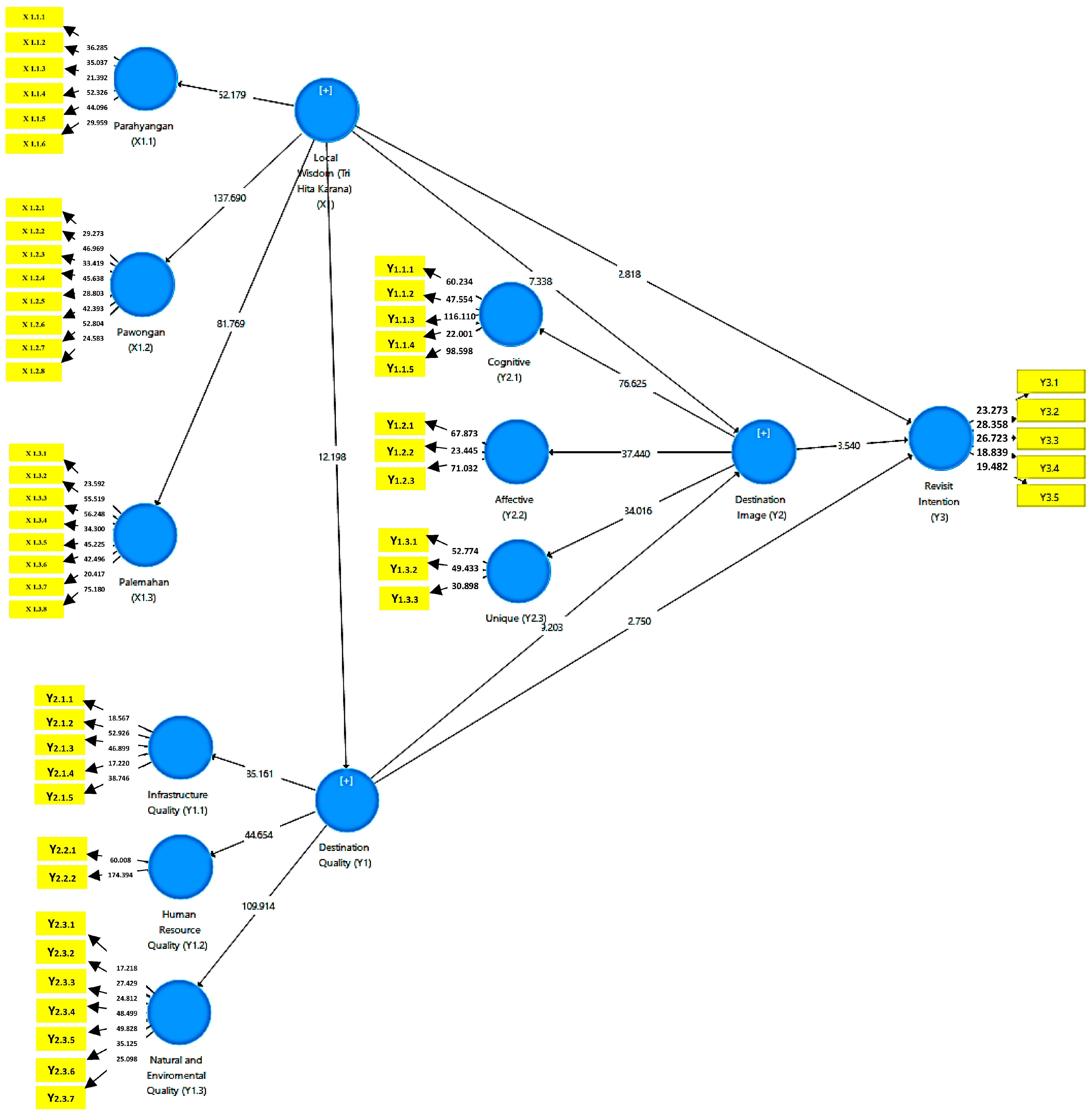
| H1: THK implementation → Revisit intention | 0.154 | 0.156 | 0.055 | 2.818 | 0.005 ** | Positive and significant; supported |
| H2: THK implementation → Destination image | 0.338 | 0.334 | 0.046 | 7.338 | 0.000 *** | Positive and significant; supported |
| H3: THK implementation → Destination quality | 0.510 | 0.508 | 0.042 | 12.198 | 0.000 *** | Positive and significant; supported |
| H4: Destination quality → Destination image | 0.416 | 0.417 | 0.045 | 9.203 | 0.000 *** | Positive and significant; supported |
| H5: Destination image → Revisit intention | 0.246 | 0.245 | 0.069 | 3.540 | 0.000 *** | Positive and significant; supported |
| H6: Destination quality → Revisit intention | 0.149 | 0.151 | 0.054 | 2.750 | 0.006 ** | Positive and significant; supported |
| Indirect relationships | ||||||
| H7: THK implementation → Destination image → Revisit intention | 0.083 | 0.082 | 0.025 | 3.266 | 0.001 ** | Positive and significant; supported |
| H8” THK implementation → Destination quality → Revisit Intention | 0.052 | 0.053 | 0.018 | 2.906 | 0.004 ** | Positive and significant; supported |
| Model/Construct | Path Coefficient | t-Statistic (|O/STDEV|) | p-Value | Description |
|---|---|---|---|---|
| a. THK implementation → Revisit intention | 0.154 | 2.818 | 0.005 ** | a positive and significant, b positive and significant, c positive and significant, partial mediation (complementary) |
| b. THK implementation → Destination image | 0.338 | 7.338 | 0.000 *** | |
| c. Destination image → Revisit intention | 0.246 | 3.540 | 0.000 *** | |
| a. Destination quality → Destination image | 0.416 | 9.203 | 0.000 *** | a positive and significant, b positive and significant, c positive and significant, partial mediation (complimentary) |
| b. Destination quality → Revisit intention | 0.149 | 2.750 | 0.006 ** | |
| c. Destination image → Revisit intention | 0.246 | 3.540 | 0.000 *** |
Disclaimer/Publisher’s Note: The statements, opinions and data contained in all publications are solely those of the individual author(s) and contributor(s) and not of MDPI and/or the editor(s). MDPI and/or the editor(s) disclaim responsibility for any injury to people or property resulting from any ideas, methods, instructions or products referred to in the content. |
© 2024 by the authors. Licensee MDPI, Basel, Switzerland. This article is an open access article distributed under the terms and conditions of the Creative Commons Attribution (CC BY) license (https://creativecommons.org/licenses/by/4.0/).
Share and Cite
Liestiandre, H.K.; Morrison, A.M.; Yasa, N.N.K.; Sukawati, T.G.R.; Sukaatmadja, I.P.G. The Impact of a Local Well-Being Philosophy on Revisit Intentions to Bali Among Digital Nomads. Tour. Hosp. 2024, 5, 1099-1124. https://doi.org/10.3390/tourhosp5040062
Liestiandre HK, Morrison AM, Yasa NNK, Sukawati TGR, Sukaatmadja IPG. The Impact of a Local Well-Being Philosophy on Revisit Intentions to Bali Among Digital Nomads. Tourism and Hospitality. 2024; 5(4):1099-1124. https://doi.org/10.3390/tourhosp5040062
Chicago/Turabian StyleLiestiandre, Hanugerah Kristiono, Alastair M. Morrison, Ni Nyoman Kerti Yasa, Tjok Gd Raka Sukawati, and I. Putu Gde Sukaatmadja. 2024. "The Impact of a Local Well-Being Philosophy on Revisit Intentions to Bali Among Digital Nomads" Tourism and Hospitality 5, no. 4: 1099-1124. https://doi.org/10.3390/tourhosp5040062
APA StyleLiestiandre, H. K., Morrison, A. M., Yasa, N. N. K., Sukawati, T. G. R., & Sukaatmadja, I. P. G. (2024). The Impact of a Local Well-Being Philosophy on Revisit Intentions to Bali Among Digital Nomads. Tourism and Hospitality, 5(4), 1099-1124. https://doi.org/10.3390/tourhosp5040062