


Abstract
In the realm of civil construction, river sand is an essential ingredient that cannot be overlooked. With the ever-increasing surge in construction activities, the demand for river sand has surged in tandem, resulting in its escalating scarcity, and subsequently, its price surge across the entire nation. This study delves into the utilization of copper slag as a viable alternative in the production of cement mortars, particularly as a partial replacement for fine aggregates. Experiments were conducted on concrete cubes and cylinders to determine the compressive strength and split tensile strength, respectively. Five cubes and cylinders were tested after 7, 14, and 21 days of curing. The extensive characterization of copper slag was conducted, encompassing its chemical composition, mineralogical attributes, and size distribution. The findings highlight that mortars containing copper slag exhibit superior compression resistance compared to the river sand-based mortars. Specifically, the 50% replacement of river sand with a blend of copper slag and quartz demonstrates the highest strength, surpassing the other compositions. Notably, the partial substitution of sand with copper slag outperforms both quartz and sand individually, with the optimal strength achieved at a 50% replacement rate. Copper slag, with its pozzolanic properties, showed a greater strength-enhancing potential, while quartz also exhibited positive effects. These findings are promising for optimizing concrete mix designs, reducing the environmental impacts caused by industrial by-products, and exploring natural alternatives.
1. Introduction
Cement mortar, a crucial construction compound composed of sand, cement, and water, heavily relies on river sand as a primary fine aggregate. However, the soaring demand for infrastructure development, particularly in developing nations, has put a strain on the supply of natural sand, leading to its rapid depletion. This scarcity has spurred the search for alternative fine aggregates with manufactured sand produced using crushers, which are emerging as a promising substitute. This artificial sand must adhere to the accepted gradation standards, as it can reduce the voids and cement consumption, enhancing the cost-effectiveness. In response to the escalating demand for alternatives to river sand, experts in the construction field have identified various options, including waste glass, crushed rock, limestone powder, and fly ash. Notably, materials, such as copper slag (CS) and quartz, that were previously overlooked as fine aggregate replacements are now considered promising due to their comparable properties to traditional sand.
Copper slag, a by-product of copper smelting and refining, holds promise as a construction material, serving as a partial or full substitute for the conventional aggregates. Widely used in sandblasting and abrasive tool manufacturing due to its hardness, density, and low free silica content, copper slag is finding favor as a filler material in the building industry. Every ton of copper production generates 2.2–3.0 tons of copper slag. Its physical properties include a pH of 5, an electrical conductivity of 5.5 s/m, a hardness rating of seven on the Mohs scale, a bulk density of 1.88 g/cc, a specific gravity of 3.53, and a minimal moisture content (<0.001) [1,2,3]. Numerous studies have explored copper slag’s potential as a partial replacement for fine aggregates in concrete. Experiments using M25-grade concrete have investigated replacement percentages ranging from 10% to 20% [1,2,3]. In-depth investigations into strength, workability, and durability have identified the optimal proportions of copper slag as a substitute material [4,5,6,7]. Other research on high-strength concrete (HSC)-incorporating copper slag has shown improved strength and durability with less than 40% copper slag as a sand substitute, especially when coupled with superplasticizer additives [8,9,10,11]. Additionally, the use of quartz sand as a sand replacement has been explored, presenting an economical substitution for weather-resistant concrete [6].
Quartz, the most abundant silica mineral, is typically colorless and transparent. It forms in various rock types, including igneous, metamorphic, and sedimentary formations. Composed mainly of SiO2, quartz boasts a Mohs hardness of seven and remarkable resistance to both mechanical and chemical weathering. Its durability renders it a dominant mineral in mountain regions and the primary component of beaches, riverbeds, and desert sands. Quartz’s ubiquity, abundance, and robustness make it an invaluable geological feature [4,12,13,14]. Numerous studies have explored quartz’s potential as a partial replacement for fine aggregates in construction materials. Sandstone comprising predominantly smooth and rounded quartz grains has been the subject of research into compressive strength, providing valuable insights [8]. Investigations into Ultra High-Performance Concrete have delved into the effects of quartz powder (Qp) and quartz sand (Qs), employing mathematical models based on coded variables and ANOVA techniques. These models apply to variable ranges, such as quartz powder substitution (0–20% by cement weight), quartz sand substitution (0–50% by crushed limestone weight), and water curing temperatures (from 25 °C to 95 °C) [15,16,17]. In this study, an attempt has been made to find out the compressive strength of the cube with different proportions of copper slag and quartz with a cement–concrete mix design [18,19,20,21].
2. Materials and Methods/Methodology
Materials are usually categorized into two sources: natural and manmade. Materials such as stone and wood are natural, and concrete, masonry, and steel are manmade. But both must be prepared and treated before they are used in a building. Structural materials consist of a hard, chemically inert particulate substance known as aggregate (usually sand and gravel), bonded together by cement and water.
2.1. Cement
Ordinary Portland cement of 53 grade conforming to IS 8112-1989 [22] was used. Tests on various physical properties, such as specific gravity, fineness, and initial and final setting times, were performed as per IS 269-1989 [23].
2.2. Fine Aggregate
Commercially available river sand was used in this study. Grain size distribution was carried out as per IS 383-1970 [24].
2.3. Water
Potable water was used for the entire project.
2.4. Copper Slag and Quartz
The copper slag and quartz used in this work were bought from Megha metallizers, Bommasandra, Karnataka, India. Tests on various physical and chemical properties were performed.
2.5. Mix Design Calculation for Mortar Specimen (as Specified by IS 456:2000) [25]
The process of selecting suitable ingredients for concrete and determining their relative amounts to produce concrete of the required, strength, durability, and workability as economically as possible is termed the concrete mix design.
Volume = 70 × 70 × 70; density of mortar = 2200 Kg/m3; mass = 2200 × 0.07 × 0.07 × 0.07 = 0.7546 Kg; cement/sand ratio= 1:3; weight of cement = 1/4 × 0.7546 × 1 = 0.188 Kg; weight of sand = ¼ × 0.7546 × 3 = 0.565 Kg; w/c = 0.5; water = 0.5 × 1.88 = 0.094 L.
2.6. Casting of Cubes
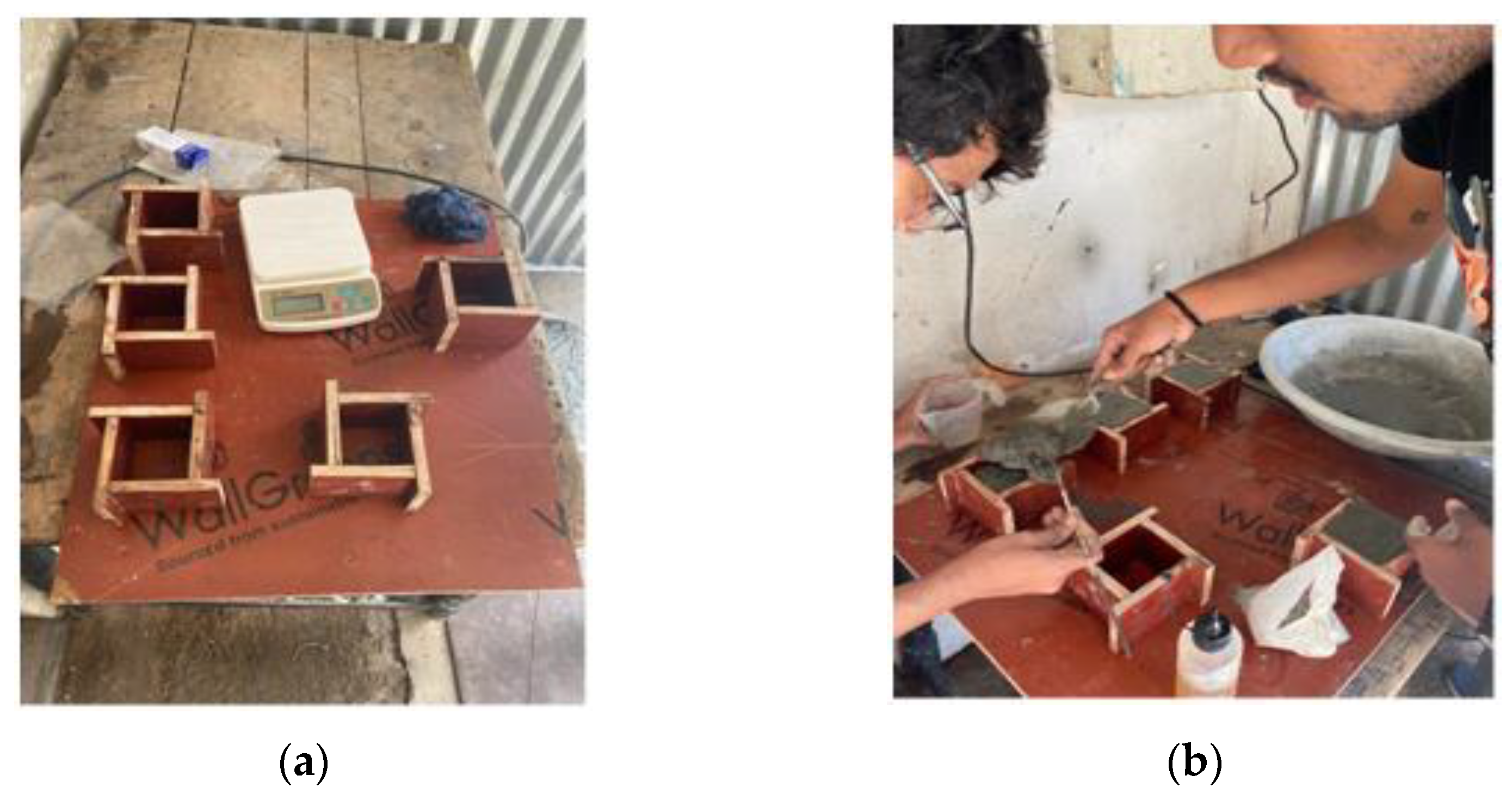
The cube must be cast as per the details given in Table 1. The number of mortar cubes that were cast is 5. The replaced copper slag mortar cubes contained different replacement quantities. The contents of copper slag totaled 0%, 25%, 50%, 75%, and 100%. Five cubes were cast for each replacement. The total number of cubes cast was 15. The ratio 1 (cement):3 (fine aggregate) was achieved by completely mixing 94 mL of water. The size of mould cubes was 70 × 70 × 70 cubic mm, and they were made of plywood as shown in Figure 1. For the casting of mortar in plywood cube moulds, the moulds were coated with grease so that mortar could be easily removed out of mould.

Table 1.
Values of mass of ingredients required for 1:3 ratio, where natural sand is replaced with copper slag/quartz.
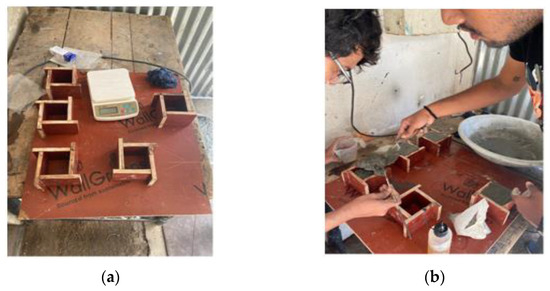
Figure 1.
Casting of cubes. (a) Cube moulds; (b) cement mortar casting.
2.7. Casting of Cylinders
The cylinders must be cast as per the details given in Table 1. The number of mortar cylinders that were cast is 5. The replaced copper slag mortar cylinders contained different replacement quantities. The contents of copper slag were 0%, 25%, 50%, 75%, and 100%. Five of the cylinders were cast for each replacement. The total number of cylinders cast was 15. The ratio 1 (cement):3 (fine aggregate) was achieved by completely mixing 94 mL of water. The size of mould cylinder was 70 mm in diameter, and it was made of PVC. For the casting of mortar in the moulds, the moulds were coated with grease so that mortar could be easily removed from the mould.
2.8. Curing of Cubes and Cylinder
After casting and allowing the cubes to set, it is essential to begin the curing process before conducting any tests, except in cases where a 24-h test is specifically required. These freshly cast cubes should be promptly placed into a curing tank. To ensure proper water circulation and effective curing, it is important to maintain adequate spacing between the individual specimens. When utilizing a mist room for curing, it is crucial to provide ample space around the specimens. This arrangement ensures that all the surfaces of the cubes remain consistently moist throughout the curing period. The compressive strength of cubes was tested for 5 different cubes after 7, 14, and 21 days of curing.
2.9. Experimental Setup
The experiments were conducted on concrete cubes and cylinders to determine the compressive strength and split tensile strength, respectively. The cubes and cylinders used for experiments were cast as per IS 516 [26] and IS 5816 [27]. Five cubes and cylinders were tested after 7, 14, and 21 days of curing. A Universal Testing machine was used to conduct compressive strength tests.
3. Results and Discussion
3.1. Sieve Analysis of Fine Aggregate
The sieve analysis of sand and copper slag was performed as discussed earlier.
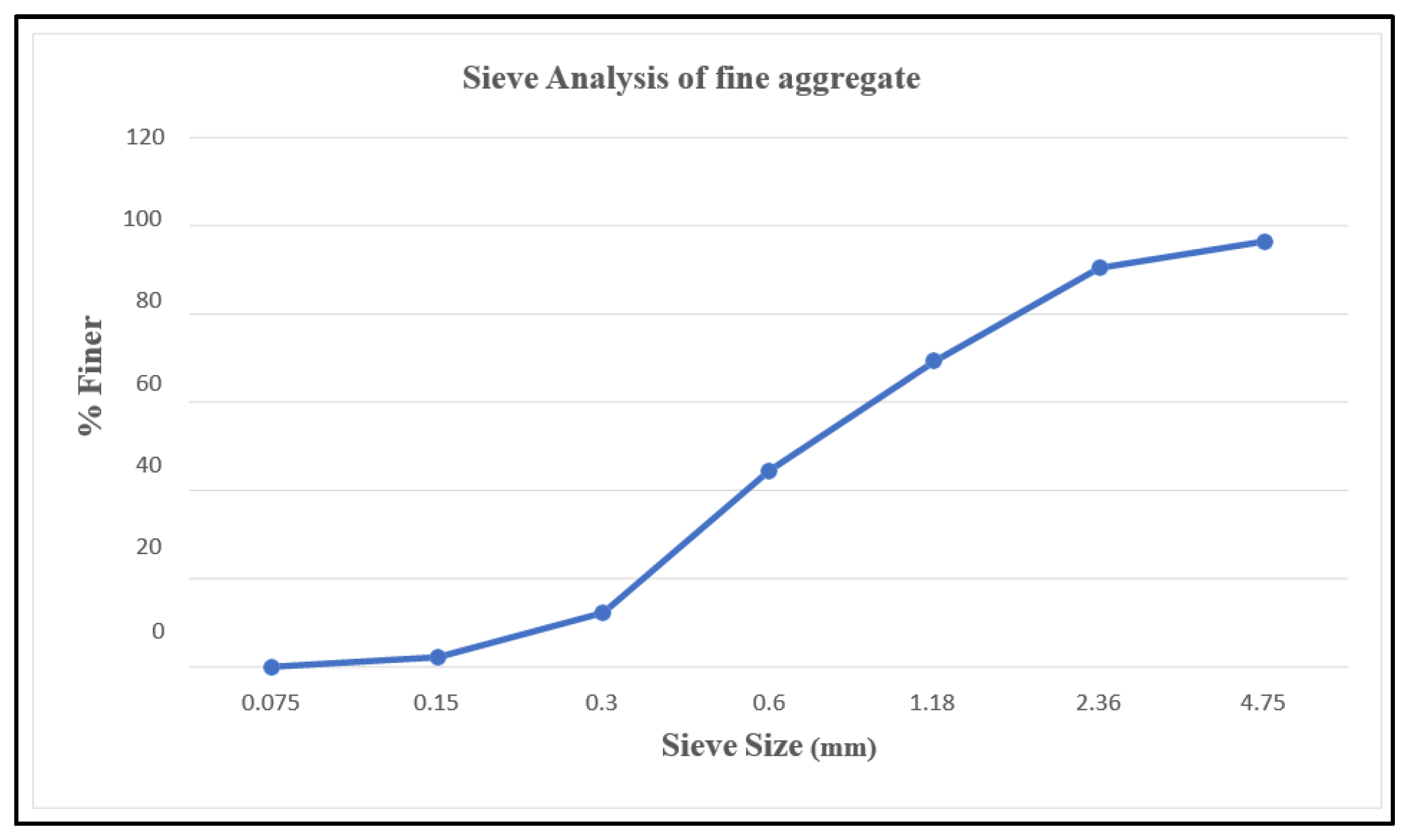
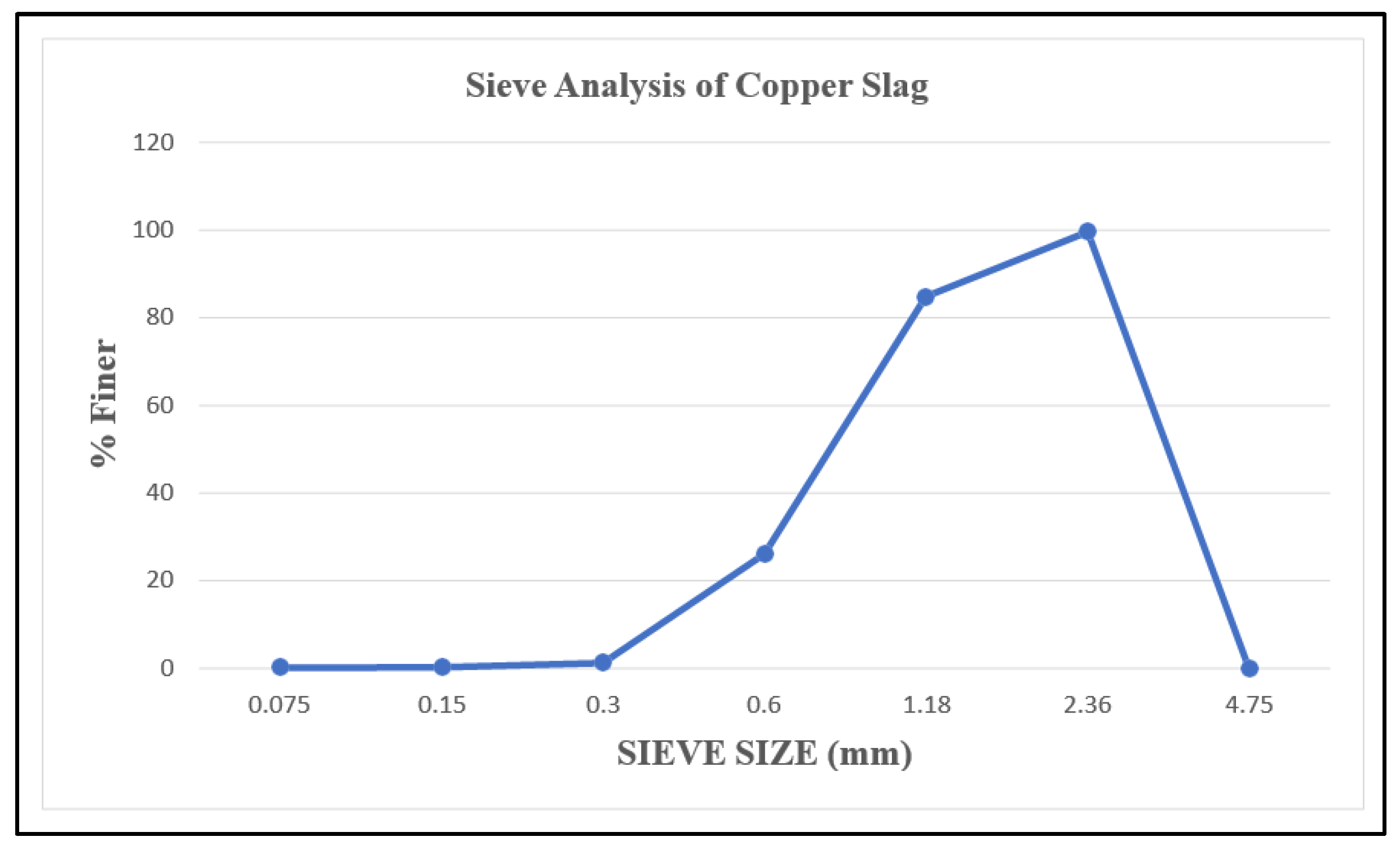
From Table 2 and Figure 2 show the details of sieve analysis conducted for sand, also from Table 3 and Figure 3 it is observed that copper slag, being an industrial by-product, exhibits a different particle size distribution compared to that of natural sand. In this case, the data show that no material was retained on the 4.75 mm sieve. This indicates that the copper slag particles are predominantly smaller. Since copper slag was not retained on the larger sieve, this means that it is 100% finer than 4.75 mm.
Table 2.
Observations and calculations for sieve analysis of sand.
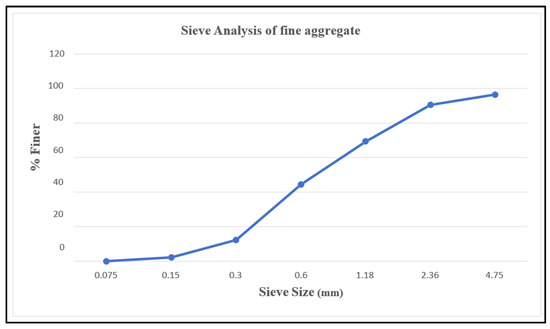
Figure 2.
Sieve analysis of sand.
Table 3.
Observations and calculations for sieve analysis of copper slag.
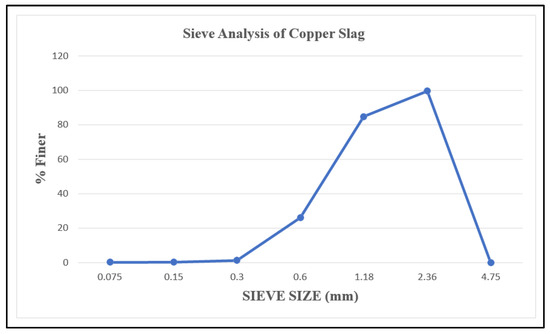
Figure 3.
Sieve analysis of copper slag.
The data show that they consist of a range of fine-to-coarse particles, which are suitable for use as a fine aggregate in concrete. The sieve analysis of copper slag indicates that it primarily consists of fine particles, with most of the material passing through the sieves as shown in Figure 3. This suggests that copper slag can be a potential replacement for fine aggregates in concrete, provided it has the other required properties. The sieve analysis of quartz shows a mix of particle sizes, including both fine and coarse particles. These data imply that quartz may not be an ideal candidate for a fine aggregate replacement in concrete without further processing to obtain a more consistent particle size distribution.
3.2. Compressive Test of the Cube for Partial Replacement of Fine Aggregate with Copper Slag
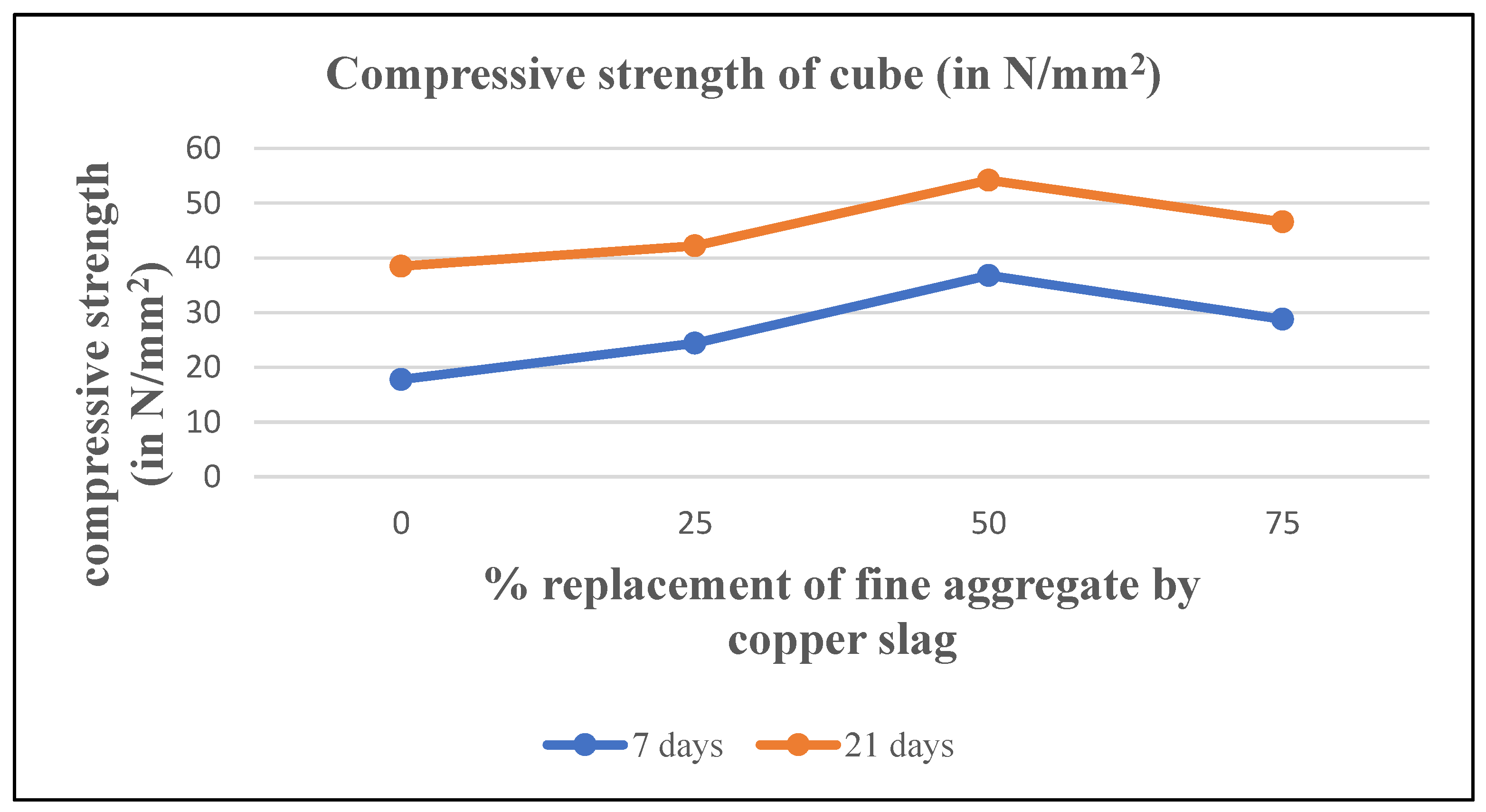
Compressive strength tests were conducted at two curing periods, 7 days, and 21 days. These durations represent the short-term and longer-term strength characteristics of concrete, respectively. The percentage of copper slag replacement varied (0%, 0.25%, 0.50%, and 0.75%). This variation allowed for the assessment of different replacement levels that affect the compressive strength. From Table 4 and Figure 4, the compressive strength of concrete with copper slag replacement increases as the percentage of replacement increases, up to a maximum of 0.50% replacement (36.88 N/mm2). Similar to the 7-day results, the 21-day data indicate that the maximum compressive strength was achieved at 0.50% replacement (54.22 N/mm2).
Table 4.
The following compressive strength results were obtained after curing cubes for 7 and 21 days for different proportions of copper slag, as given below.
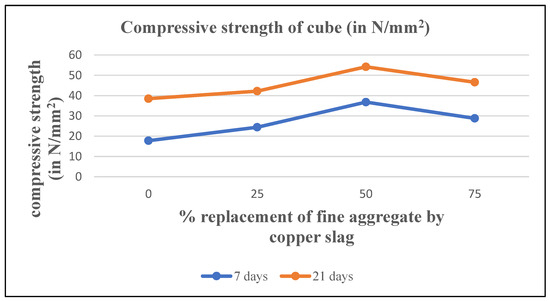
Figure 4.
Compressive strength for 7 and 21 days for different proportions of copper slag.
3.3. Compressive Test of the Cube for Partial Replacement of Fine Aggregate with Quartz
The following compressive strength results were obtained after curing the cubes for 7 and 21 days with different proportions of quartz, as given below in Table 5.
Table 5.
The compression strength of the cube filled with sand partially replaced with quartz.
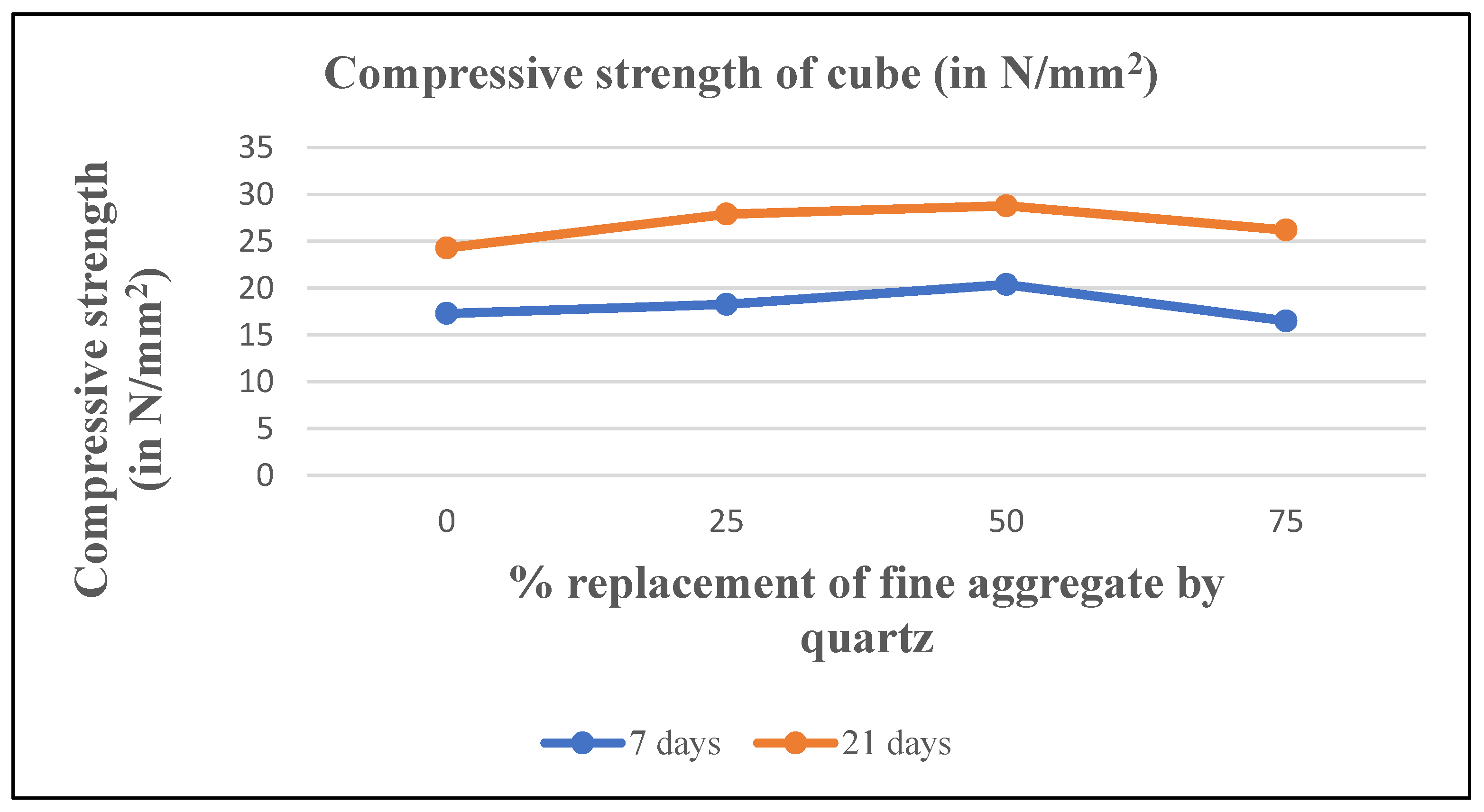
The copper slag tests and compressive strength tests for quartz-replaced concrete were conducted at 7 days and 21 days. The percentages of quartz replacement (0%, 0.25%, 0.50%, and 0.75%) varied to assess their impact on the compressive strength. From Table 4 and Figure 5, the compressive strength generally increases with increasing quartz replacement up to 0.50% (20.38 N/mm2). This trend is similar to the copper slag replacement results and suggests that quartz can be an effective partial replacement for fine aggregates. At 21 days, the maximum compressive strength is also observed at 0.50% quartz replacement (28.80 N/mm2).
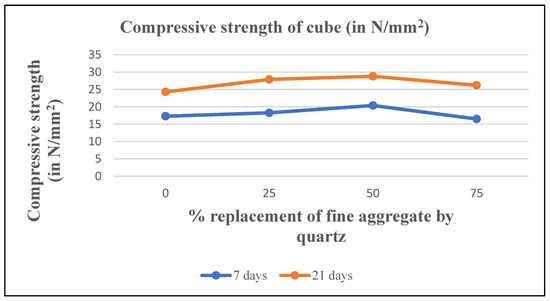
Figure 5.
Compression strength of the cube filled with sand partially replaced with quartz.
3.4. Split Tensile Strength of Cylinders for Partial Replacement of Sand with Copper Slag
The following split tensile strength results were obtained after curing the cylinders for 7 and 21 days for different proportions of copper slag, as given below in Table 6.
Table 6.
Split tensile strength of cylinder filled with sand partially replaced with copper slag.
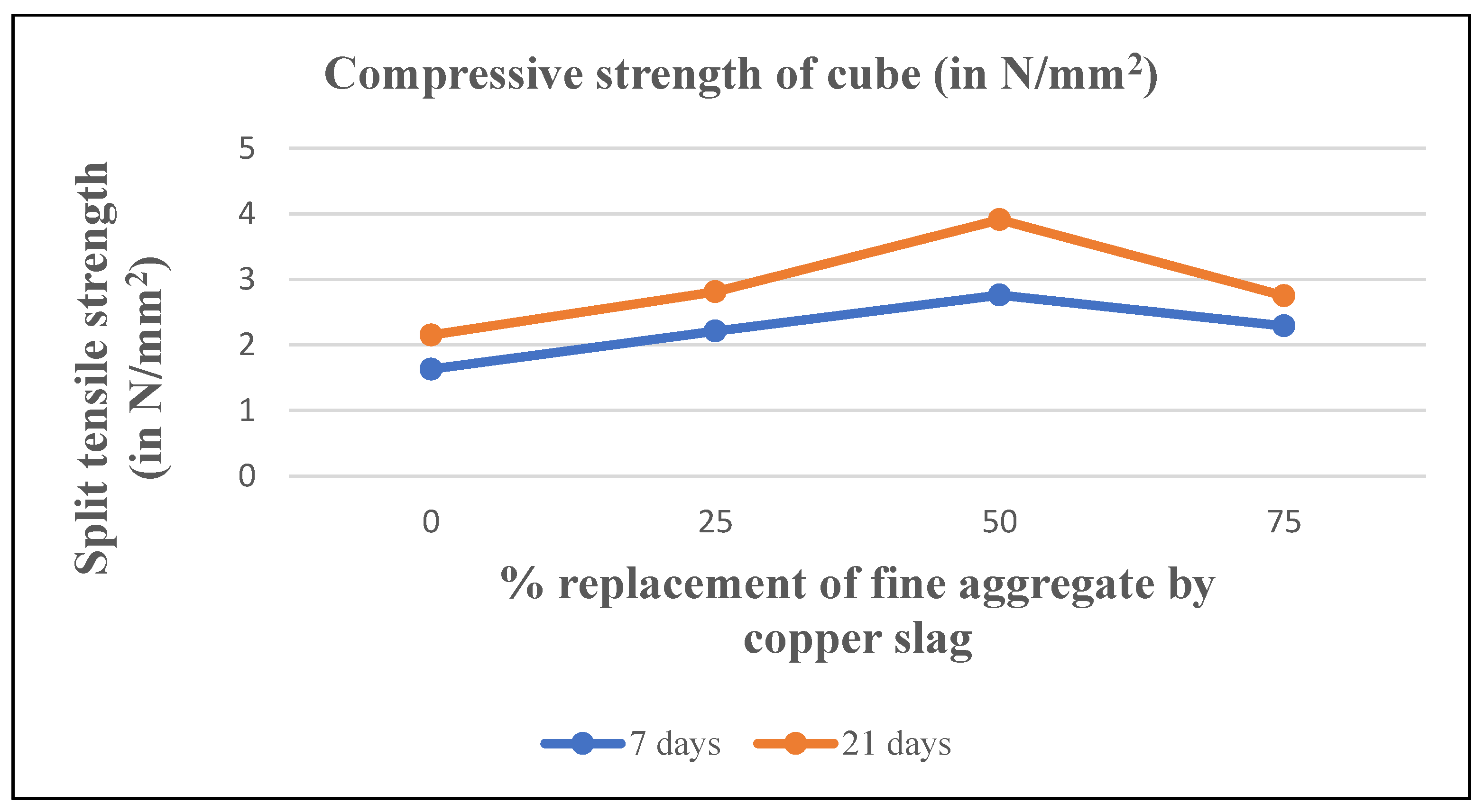
The split tensile strength tests were performed at 7 days and 21 days to assess the tensile properties of concrete with the copper slag replacement. Varying percentages of copper slag replacement (0%, 0.25%, 0.50%, and 0.75%) were tested. The split tensile strength increased as the percentage of copper slag replacement increased, with the maximum at 0.50% replacement (2.76 N/mm2) as shown in Figure 6. This suggests that copper slag enhances the tensile properties of concrete. The trend continued at 21 days, with the highest split tensile strength observed at 0.50% replacement (3.91 N/mm2). As the percentage replacement of copper slag increased, the split tensile strength of concrete increased gradually up to 50%, and then decreased. The maximum strength was typically achieved at the 0.50% replacement level for both the materials. The strength gains observed at 21 days indicate the durability and long-term performance of concrete with these replacements.
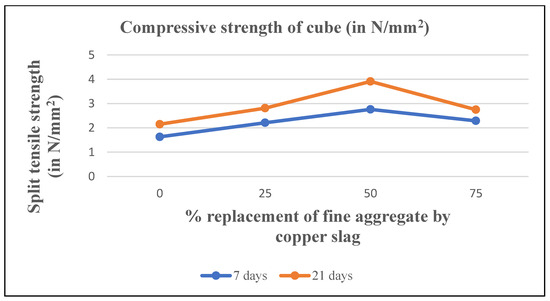
Figure 6.
Split tensile strength of cylinder filled with sand partially replaced with copper slag.
3.5. Comparative Study of Comparative Study of Compressive Strength When Fine Aggregate Is Partially Replaced with Copper Slag and Quartz for 7 Days
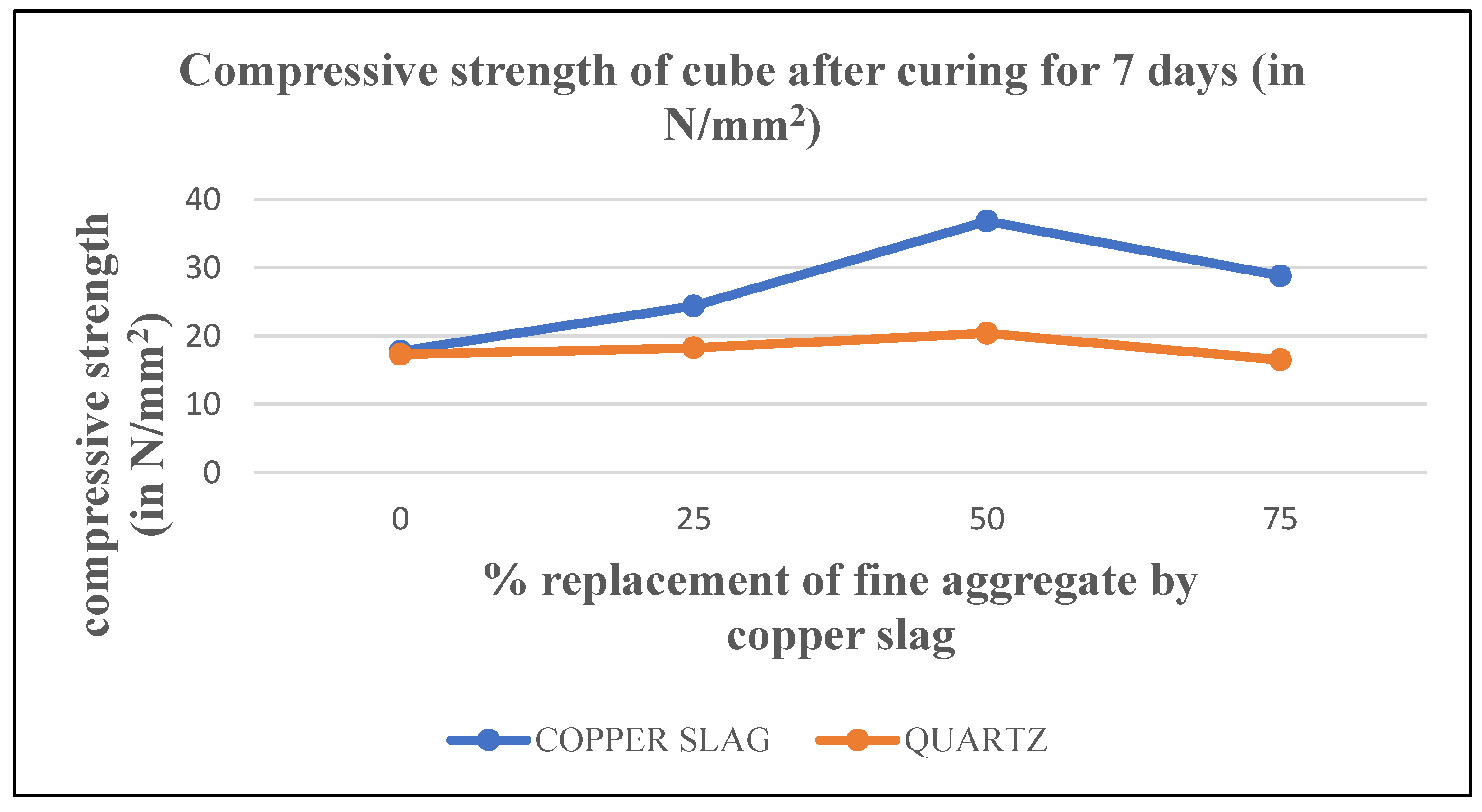
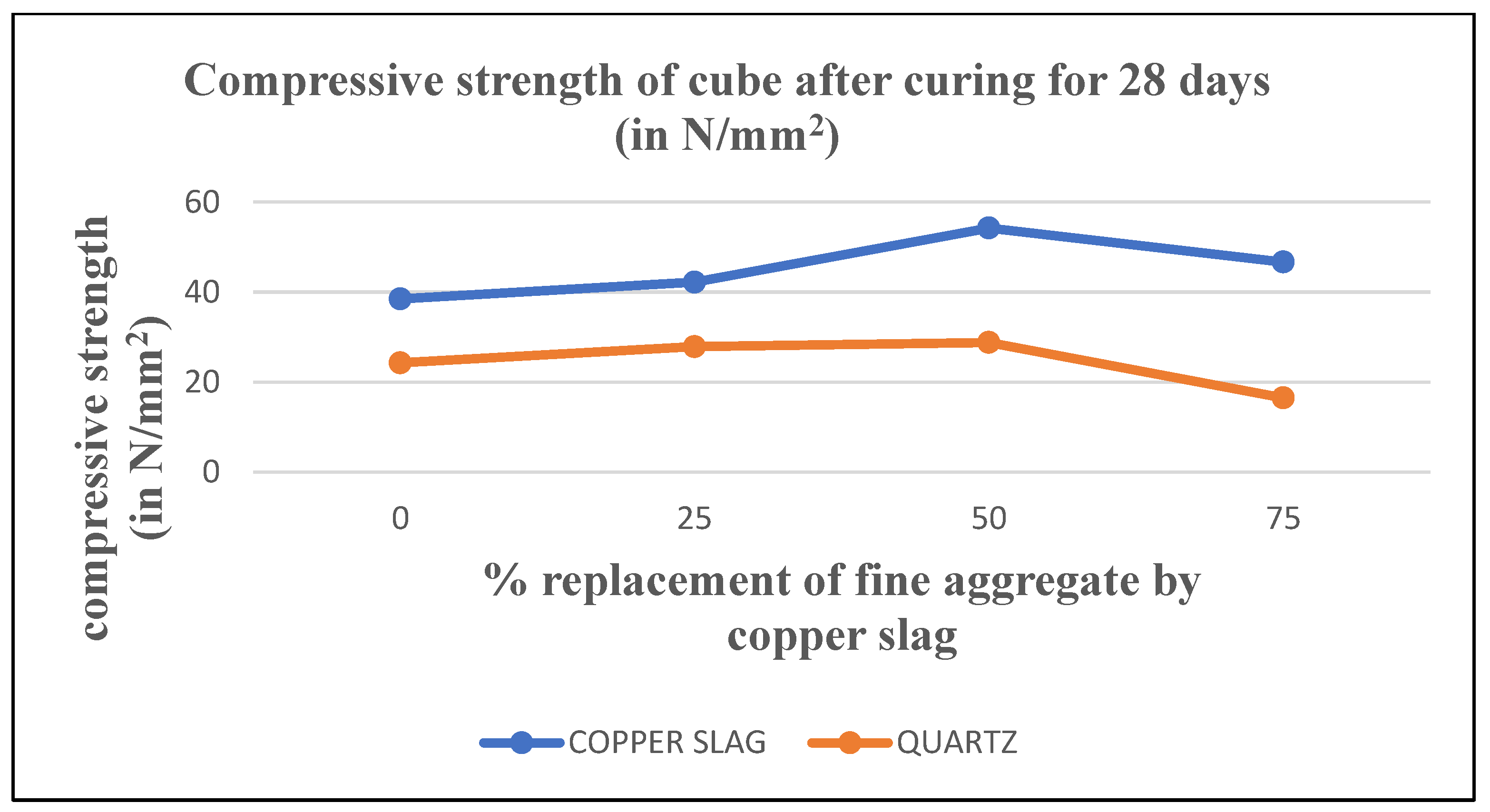
From Figure 7 and Figure 8, it can be observed that the increase in compressive strength over time (from 7 days to 28 days) for both the materials indicates the importance of longer curing periods for achieving optimal concrete strength. The 50% replacement level consistently produces the highest compressive strength for both the copper slag and quartz replacements, highlighting the potential for optimizing concrete mix designs with these materials.
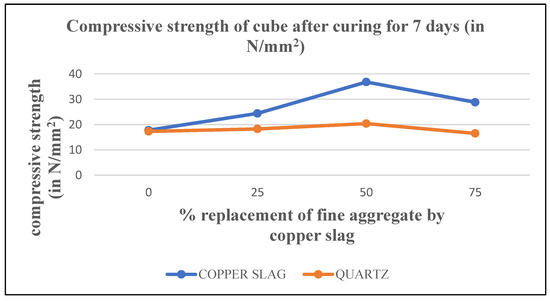
Figure 7.
Comparative study of compressive strength when fine aggregate is partially replaced with copper slag and quartz for 7 days.
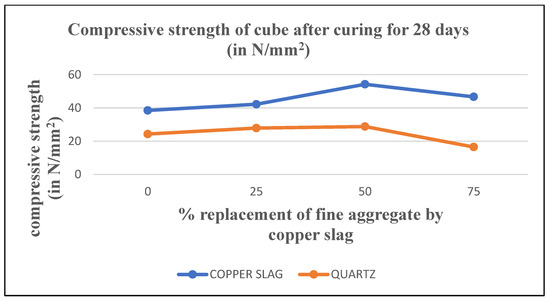
Figure 8.
Compressive strength when fine aggregate is partially replaced with copper slag and quartz for 28 days.
4. Conclusions
This study covered sieve analysis, water absorption, and compressive and split tensile strength tests on concrete mixtures with varying replacement percentages. The key conclusions drawn from the study include the following: The compressive strength increased as the percentage of copper slag replacement increased, with the maximum strength achieved with the 0.50% replacement after both 7 and 21 days of curing. An increased copper slag content also improved the workability. The compressive strength generally increased with increasing quartz replacement up to 0.50% after both 7 and 21 days of curing. The split tensile strength increased with more copper slag replacement, peaking at 0.50% replacement after both 7 and 21 days of curing. The tensile properties of concrete were enhanced by the copper slag.
Both copper slag and quartz can effectively replace fine aggregate in concrete, leading to improved compressive and split tensile strengths. The maximum strength was typically achieved at the 0.50% replacement level for both materials. Longer curing periods (28 days) resulted in increased strength, indicating the durability and long-term performance of these replacements. In conclusion, this study demonstrates that both copper slag and quartz can be viable alternatives for fine aggregate in concrete mixtures. Copper slag, with its pozzolanic properties, showed a greater strength-enhancing potential, while quartz also exhibited positive effects. These findings are promising for optimizing concrete mix designs, reducing the environmental impacts of using industrial by-products, and exploring natural alternatives.
Author Contributions
Conceptualization, A.Y. and M.N.: methodology, A.Y. and M.N.; formal analysis, S.M.J.; investigation, S.G., N.J. and J.P.; data curation, V.A. and A.Y.; writing—original draft preparation, S.G. and A.Y.; writing—review and editing, A.Y., R.R.M. and M.N. All authors have read and agreed to the published version of the manuscript.
Funding
This research received no external funding.
Informed Consent Statement
Not applicable.
Data Availability Statement
Data is contained in the article.
Acknowledgments
The authors would also like to express their sincere gratitude to the Manipal Institute of Technology Bengaluru for providing technical support. Also, the editor and referees for their insightful comments and suggestions, which greatly improved the quality of this article. We would also like to express our gratitude to the RAISE conference organizers.
Conflicts of Interest
The authors declare no conflicts of interest.
References
- Ambrish, E.; Dhavamani, D.S.; Shanmuganathan, N.; Ganapathi, R. Partial replacement of copper slag as fine aggregate. Int. J. Civ. Eng. 2017, 4, 18–23. [Google Scholar]
- Bhimarao, B.M.; Shrikant, S.A.; Patil, S.K. Replacement of copper slag with fine aggregate. Int. Res. J. Eng. Technol. 2020, 7, 4201–4204. [Google Scholar]
- Gorai, B.; Jana, R.K. Characteristics and utilisation of copper slag—A review. Resour. Conserv. Recycl. 2003, 39, 299–313. [Google Scholar] [CrossRef]
- Götze, J.; Pan, Y.; Müller, A. Mineralogy and mineral chemistry of quartz: A review. Mineral. Mag. 2021, 85, 639–664. [Google Scholar] [CrossRef]
- Khalifa, S.; Makota Hisada Abdullah, H. Performance of high strength concrete made with copper slag as a fine aggregate. Constr. Build. Mater. 2009, 23, 2132–2140. [Google Scholar]
- Wu, W.; Zhang, W.; Ma, G. Optimum content of copper slag as a fine aggregate in high strength concrete. Mater. Des. 2010, 31, 2878–2883. [Google Scholar] [CrossRef]
- Mithun, B.M. Performance of Alkali Activated Slag Concrete Mixes Incorporating Copper Slag as Fine Aggregate. Doctoral Dissertation, National Institute of Technology Karnataka, Surathkal, India, 2015. [Google Scholar]
- Ambily, P.S.; Umarani, C.; Ravisankar, K.; Prem, P.R.; Bharatkumar, B.H.; Iyer, N.R. Studies on ultra-high performance concrete incorporating copper slag as fine aggregate. Constr. Build. Mater. 2015, 77, 233–240. [Google Scholar] [CrossRef]
- Velumani, M.; Nirmalkumar, K. Feasibility studies of copper slag as fine aggregate replacement in concrete. EM international 2014, 33, 17–21. [Google Scholar]
- Ushakranti, J.; Srinivasu, K.; Nagasai, A. Comparison of The Replacement of Natural Sand by Copper Slag on the Properties of Concrete (M30 & M40). In Proceedings of the International Multidisciplinary Conference on “Knowledge Sharing, Technological Advancements and Sustainable Development” (IMC2k18), Vijayawada, Andhra Pradesh, India, 30–31 March 2018; pp. 463–468. [Google Scholar]
- Patnaik, B.; Sekhar, T.S.; Rao, S. An Experimental Investigation on Optimum Usage of Copper Slag as Fine Aggregate in Copper Slag Admixed Concrete. Int. J. Curr. Eng. Technol. 2014, 4, 3646–3648. [Google Scholar] [CrossRef]
- Al-Jabri, K.S.; Taha, R. Effect of copper slag as a fine aggregate on the properties of cement mortars and concrete. Constr. Build. Mater. 2011, 25, 933–938. [Google Scholar] [CrossRef]
- Divya, E.; Shanthini, R.; Arulkumaran, S. Study on Behaviour of Concrete Partially Replacing Quartz Sand as Fine Aggregate; IFET College of Engineering: Gangarampalaiyam, India, 2015; pp. 1–9. [Google Scholar]
- KS, P.; Subhash, K. An Experimental work on Reactive Powder Concrete using Quartz Sand and Metakaolin. Int. J. Innov. Technol. Explor. Eng. (IJITEE) 2020, 9, 107–110. [Google Scholar]
- Kumar, S.; Gupta, R.C.; Shrivastava, S.; Csetenyi, L.; Thomas, B.S. Preliminary study on the use of quartz sandstone as a partial replacement of coarse aggregate in concrete. Constr. Build. Mater. 2016, 107, 103–108. [Google Scholar] [CrossRef]
- Mosaberpanah, M.A.; Eren, Ö. Effect of quartz powder, quartz sand and water curing regimes on mechanical properties of UHPC using response surface modelling. Adv. Concr. Constr. 2017, 5, 481. [Google Scholar]
- Pachipala, S. A Study on Mechanical Properties of Concrete using Silica Sand as Partial Replacement of Cement. Int. J. Civ. Eng. 2017, 4, 34–39. [Google Scholar]
- Shettar, M.; Kowshik, S.; Hiremath, P.; Sharma, S. Water sorption-desorption-resorption effects on mechanical properties of epoxy-nanoclay nanocomposites. Int. J. Automot. Mech. 2022, 19, 9478–9486. [Google Scholar] [CrossRef]
- Kowshik, S.; Shettar, M.; Rangaswamy, N.; Chate, G.; Somdee, P. Effect of nanoclay on mechanical, flammability, and water absorption properties of glass fiber-epoxy composite. Cogent Eng. 2022, 9, 2069070. [Google Scholar] [CrossRef]
- Singh, H.; Singh, K.; Vardhan, S.; Sharma, S.M. A Critical Review of Mechanical and Wear Resistance Characterizations on Developed Aluminium Matrix Composite Reinforced With MgO Particulates. J. Comput. Mech. Manag. 2023, 2, 45–56. [Google Scholar] [CrossRef]
- Naik, N.; Shivamurthy, B.; Thimmappa, B.H.S.; Jaladi, G.; Samanth, K.; Shetty, N. Recent advances in green composites and their applications. Eng. Sci. 2023, 21, 779. [Google Scholar] [CrossRef]
- IS: 8112–1989; 43–Grade Ordinary Portland Cement. Specification Bureau of Indian Standards: New Delhi, India, 1990.
- IS: 269–1989; Ordinary Portland Cement 33 Grade. Specifications Bureau of Indian Standards: New Delhi, India, 1990.
- IS: 383–1970; Specification for coarse and Fine Aggregates from Natural Sources for Concrete. Bureau of Indian Standards: New Delhi, India, 1971.
- IS: 456-1978; Explanatory Handbook on Indian Standard Code of Practice for Plain and Reinforced Concrete. Bureau of Indian Standards: New Delhi, India, 1983.
- IS: 516–1959; Methods of Tests for Strength of Concrete. Bureau of Indian Standards: New Delhi, India, 1959.
- IS: 5816–1970; Method of Test for Splitting Tensile Strength of Concrete Cylinders. Bureau of Indian Standards: New Delhi, India, 1999.
Disclaimer/Publisher’s Note: The statements, opinions and data contained in all publications are solely those of the individual author(s) and contributor(s) and not of MDPI and/or the editor(s). MDPI and/or the editor(s) disclaim responsibility for any injury to people or property resulting from any ideas, methods, instructions or products referred to in the content. |
© 2024 by the authors. Licensee MDPI, Basel, Switzerland. This article is an open access article distributed under the terms and conditions of the Creative Commons Attribution (CC BY) license (https://creativecommons.org/licenses/by/4.0/).