


Abstract
By using the machine learning of artificial intelligence to explore the application business opportunities of the Metaverse in the MMORPG (Massively Multiplayer Online Role-Playing Game) interactive game market, we study the supply and demand laws of buyers and sellers at the market economy level, future trends, and business opportunities. The feasibility of its new products and services is explored under a pragmatic, cooperative model of the game community platform “Key to the Desert” case for the application level and business opportunities of Taiwan’s Metaverse markets. Online and offline integration (OMO; Online Merge Offline), precision marketing, and the customer management data platform (Customer Data Platform) are also explored in the application business opportunities of the Metaverse market. By combining the NFT (Non-Fungible Token) Monopoly game and MMORPG interactive games, we study the laws of supply and demand of buyers and sellers at the market economy level to provide third-party payment, electronic payment, mobile payment, and other transaction method certifications such as NFT (Non- Fungible Token). We also evaluation the future and security issues of cryptocurrency.
1. Introduction
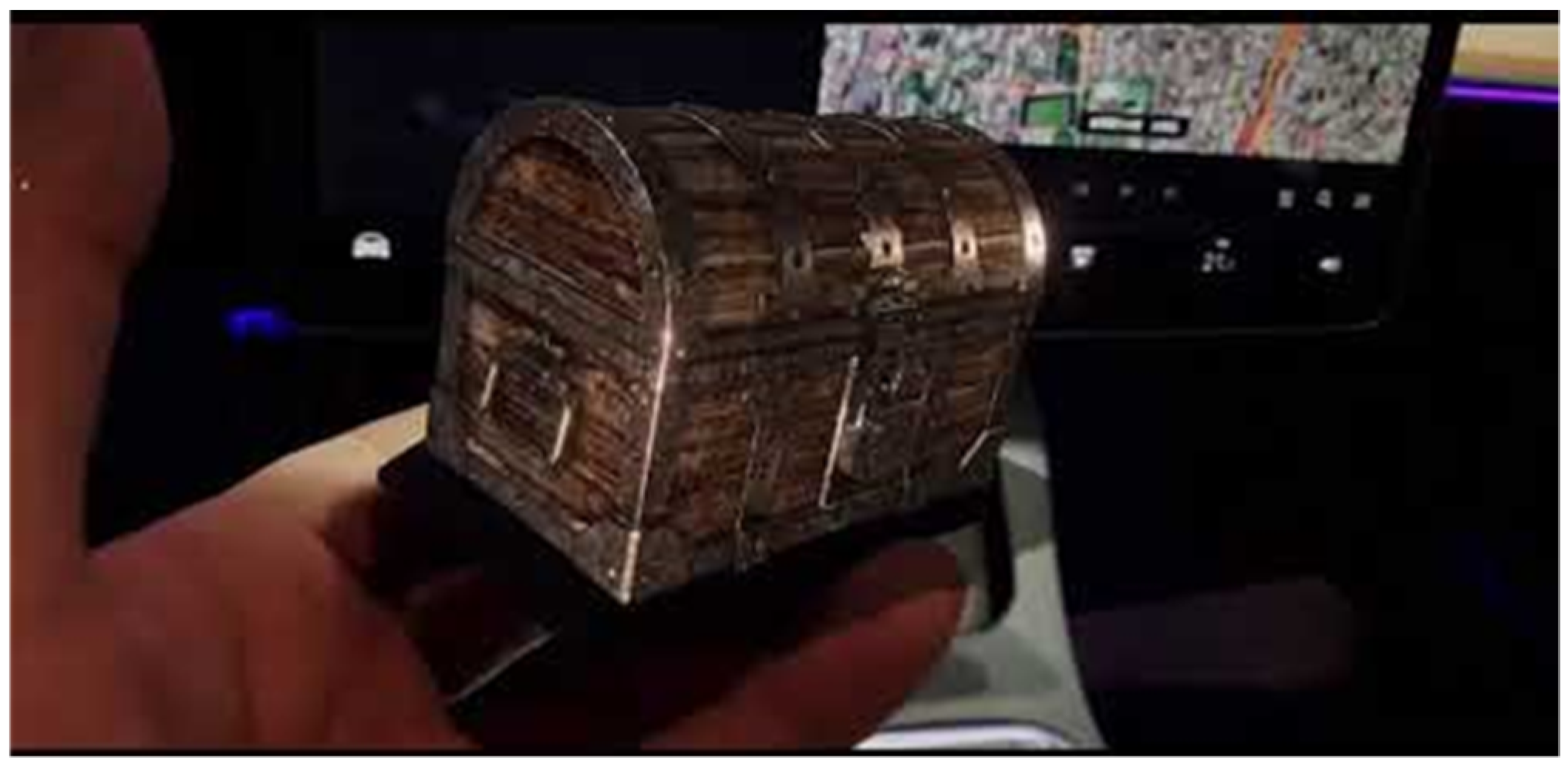
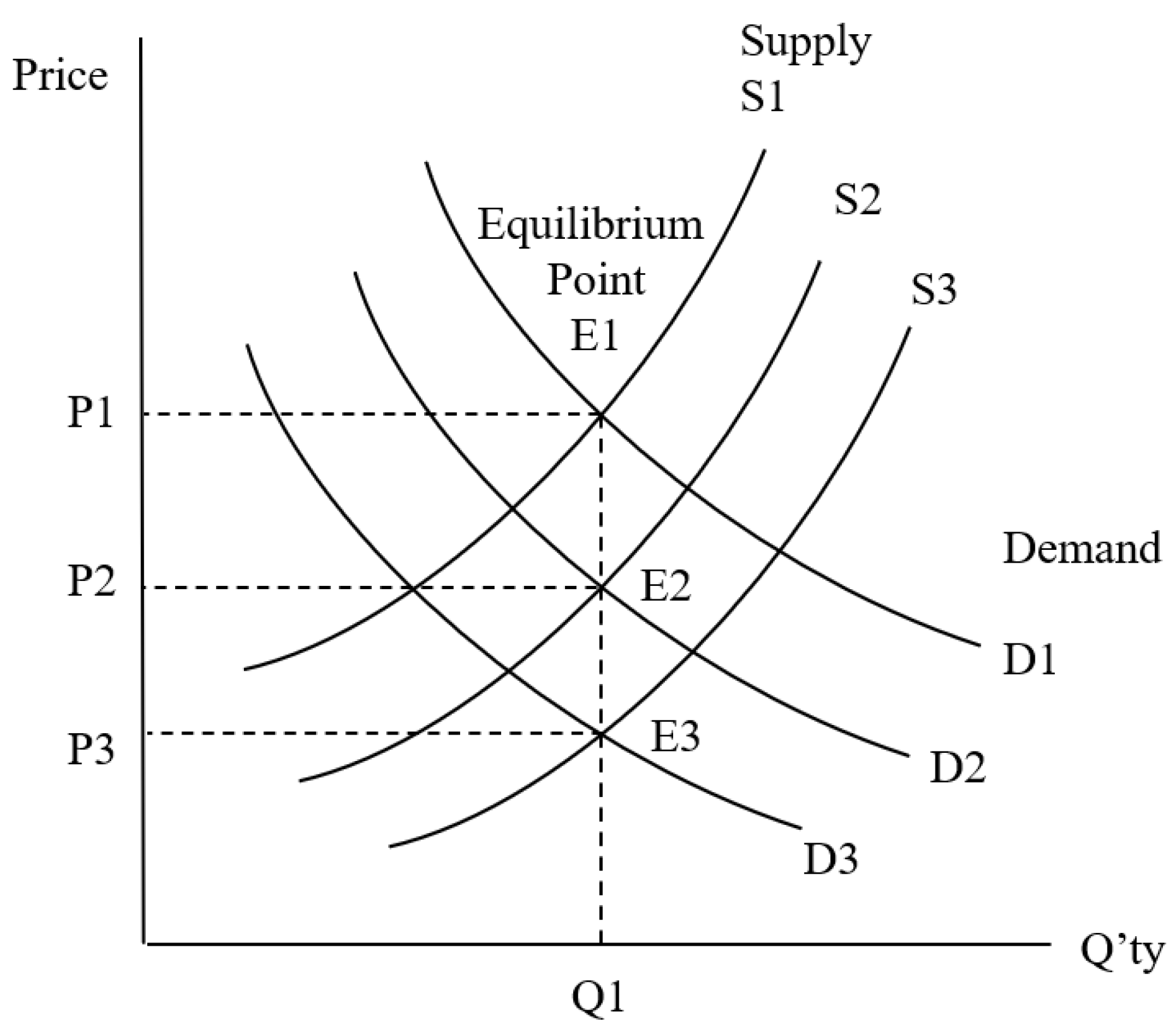
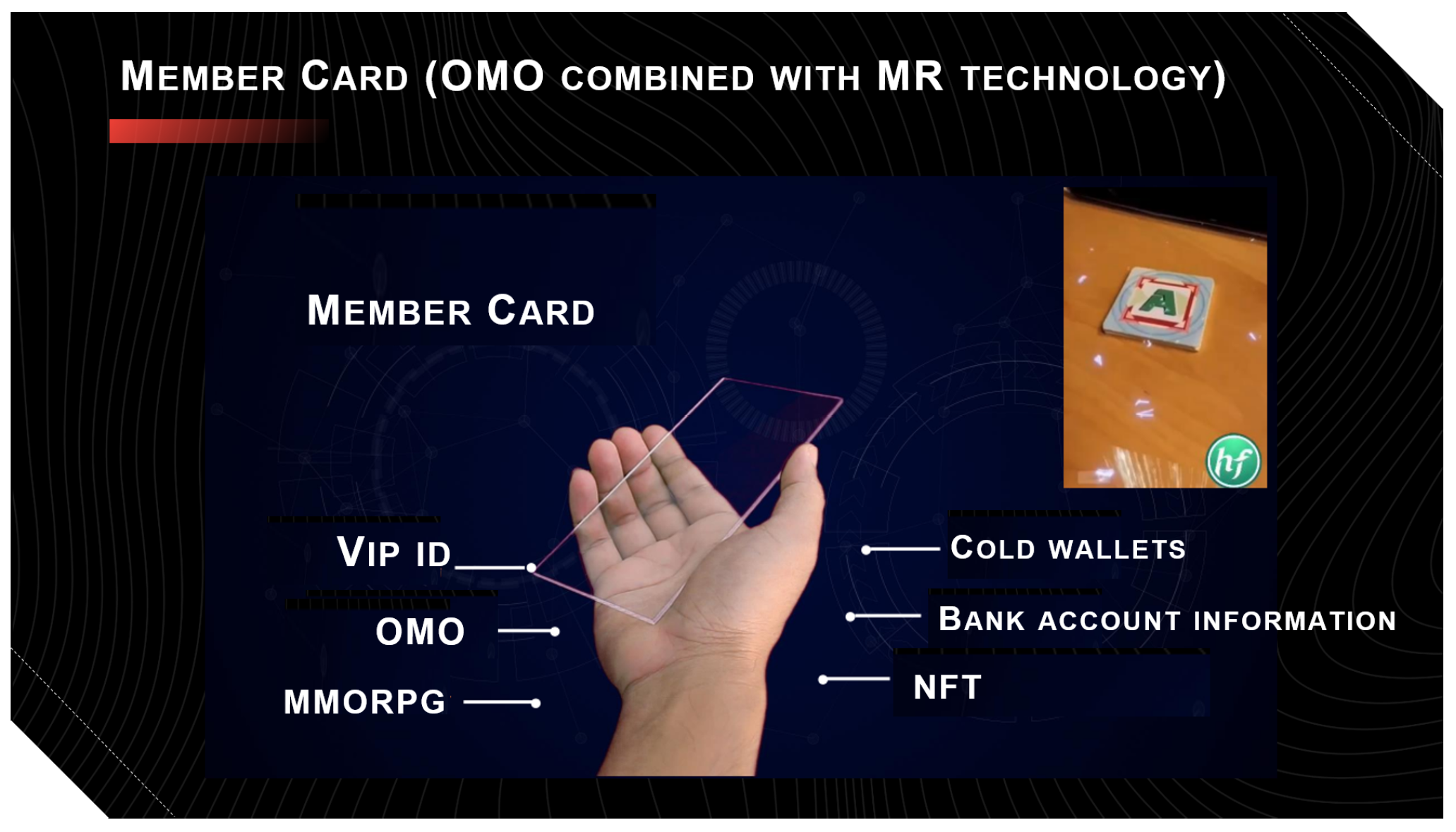
By using AR (Augmented Reality) [1] technology and combining it with animation design (Figure 1) [1], or using AR alone, we can enhance the visual and auditory effect of a member card. Therefore, through NFT (Non-Fungible Token) supply and demand sales certification [2], products are integrated through virtual and real sales platforms. Online Merge Offline (OMO) [3] intelligently collides with AI (Artificial Intelligence) machine learning technology to match buyers and sellers on the cloud service platform [4], so that buyers and sellers are allowed to classify the big data provided by the cloud service for information docking, in a similar way to Uber’s method [5]. To make matching transactions in the actual field, the transaction equilibrium points (E1, E2, and E3) must reach the supply and demand side mentioned in Figure 2.
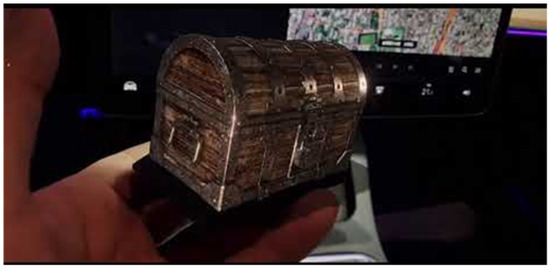
Figure 1.
Member card with AR technology implemented (https://www.youtube.com/embed/48NEaMFm6Go?feature=oembed, accessed on 24 November 2023).
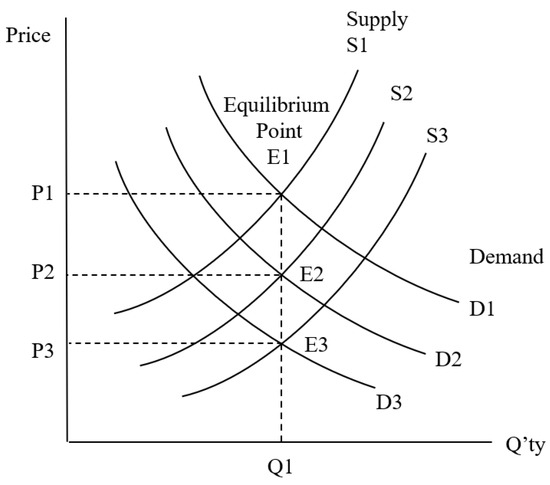
Figure 2.
Equilibrium point in between supply and demand.
2. AI and Metaverse
2.1. NFT Monopoly Game and MMORPG
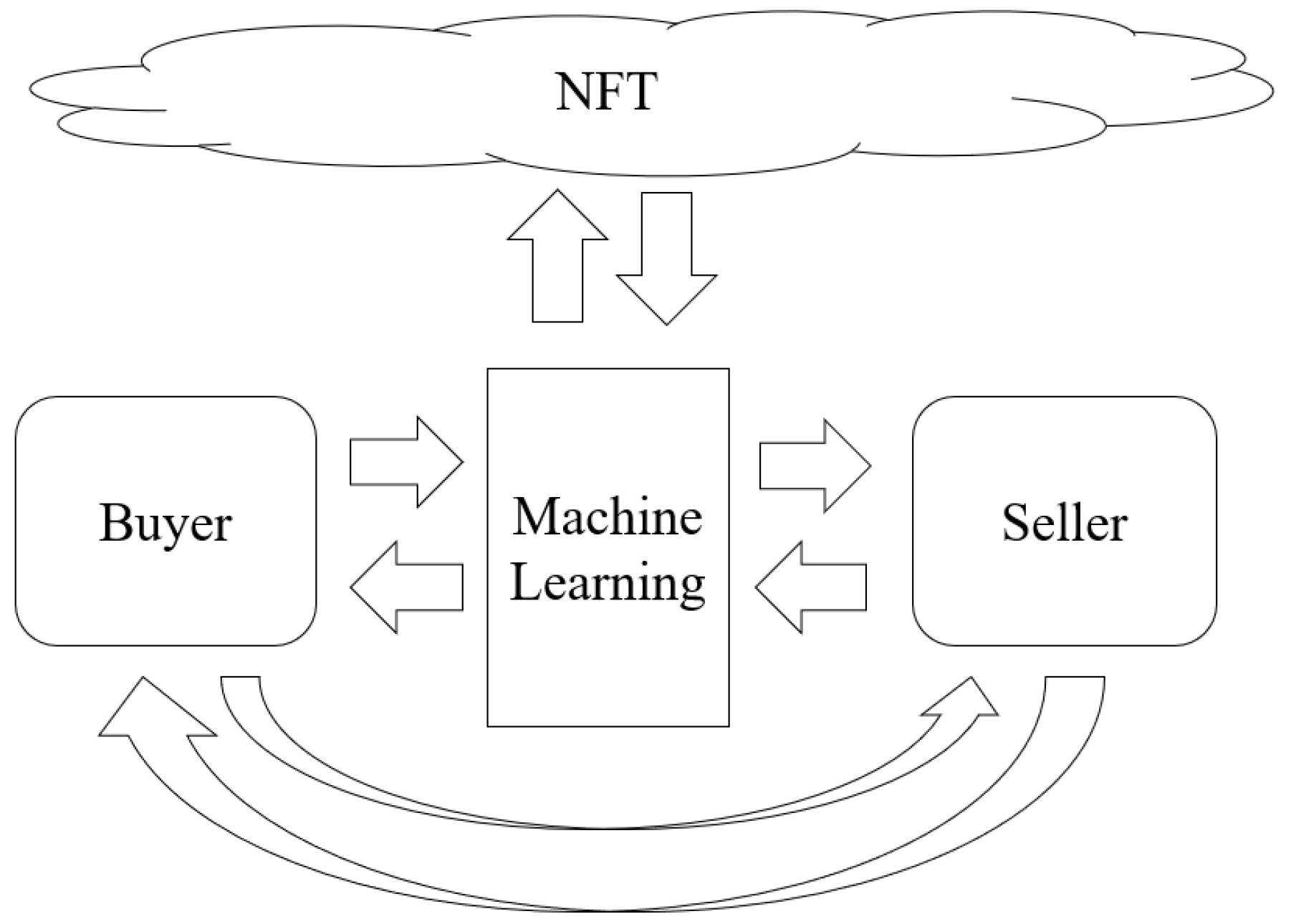
Figure 3 shows that with the collected data and information, it is possible to quickly find suitable buyers and sellers and conduct balanced supply and demand transactions through the calculation and classification of the cloud platform. Online and offline sales can also be carried out. The integrated model confirms the transaction amount and identity authentication of both parties. In addition to preventing transaction fraud, this does not need to be guaranteed by banks or financial institutions, reducing intermediate handling costs [6].
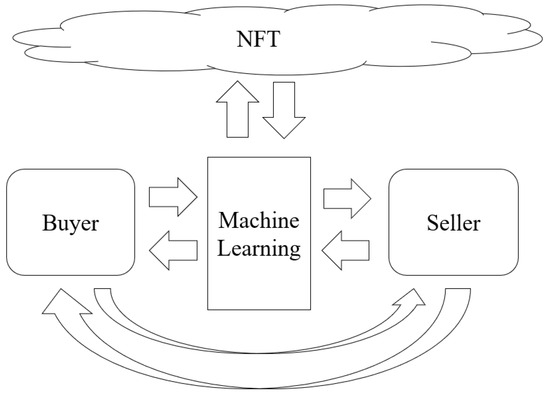
Figure 3.
Using ML to match buyer and seller via NFT.
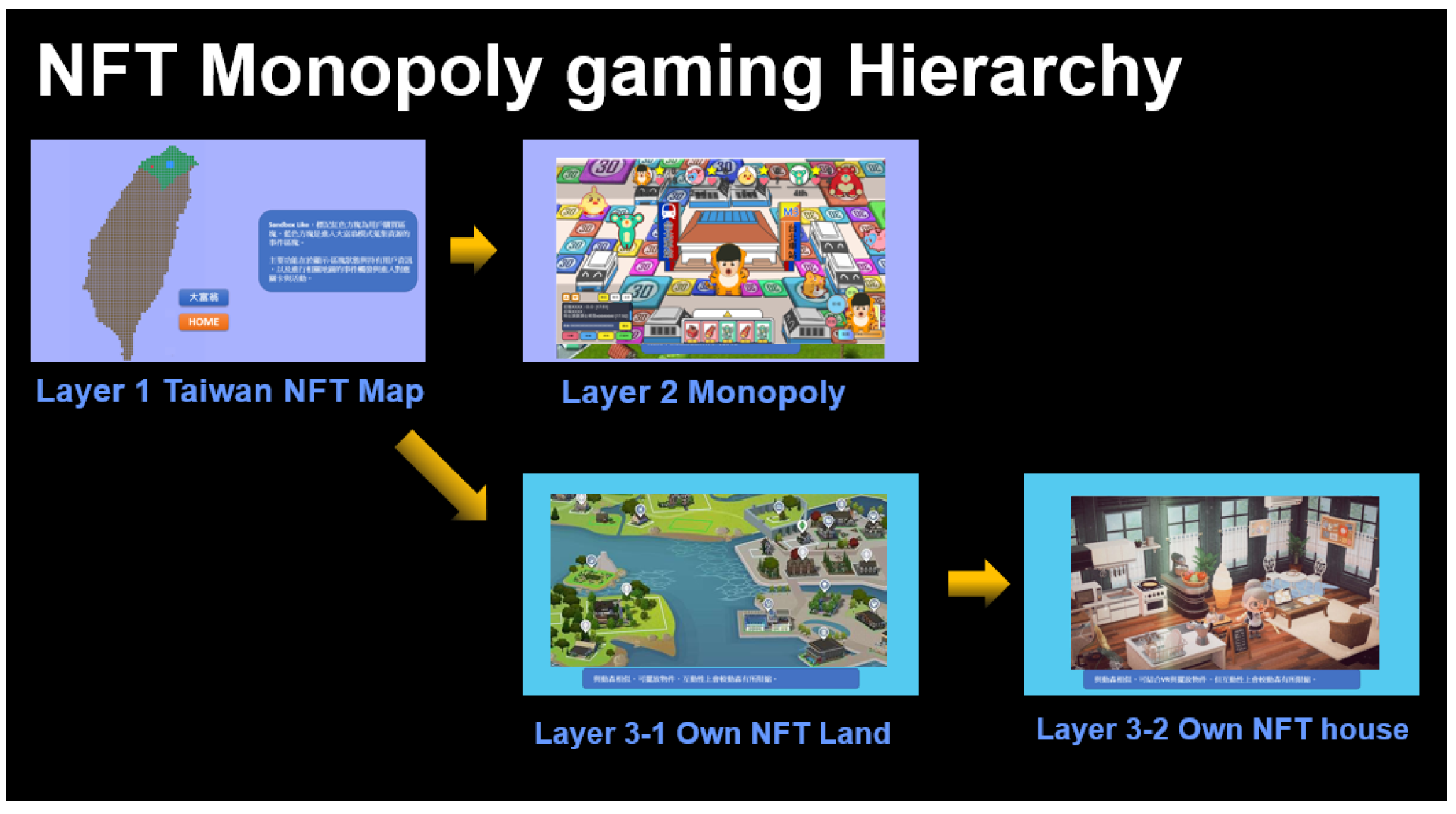
Next, we use CDPs (Customer Data Platform) for precise marketing [7] and customer management to explore the applications and business opportunities of the Taiwan Metaverse [8] market. Combining the NFT Monopoly game and MMORPG (Massively Multiplayer Online Role-Playing Game) [9] interaction games, new markets and future developments are created as shown in Figure 4.
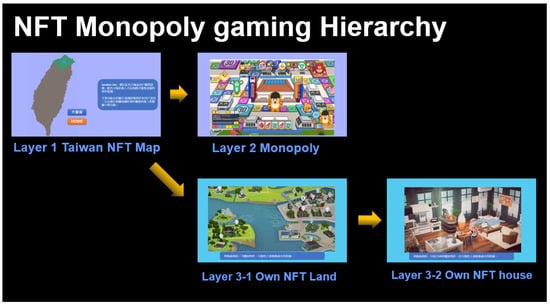
Figure 4.
NFT Monopoly gaming hierarchy and MMORPG.
The NFT Monopoly game is a virtual online game that has existed for a long time. Being combined with MMORPG’s massively multiplayer online role-playing interactive game and the recently rammed metaverse land purchase business opportunity, the Taiwan map is first matrixed. However, pixel bitmap files, which are restricted to digitizing and building roads and infrastructure in important cities, are started such as traffic signs, bridges, and other public buildings.
2.2. Cryptocurrency
Combined with the cold wallet conversion of virtual currency (cryptocurrency) [10] as shown in Figure 5, the fee-free electronic payment and the online and offline membership card system make it easier for consumers to conduct transactions. This is connected to the MMORPG cloud platform by the import of advanced technologies of AR (Augmented Reality), VR (Virtual Reality), MR (Mixed Reality), and XR (X-Reality; Cross Reality; Extended Reality) [11]. As the user experience is more appropriate, consumers are more able to contact the real objects and have a better user experience with the purchased products.
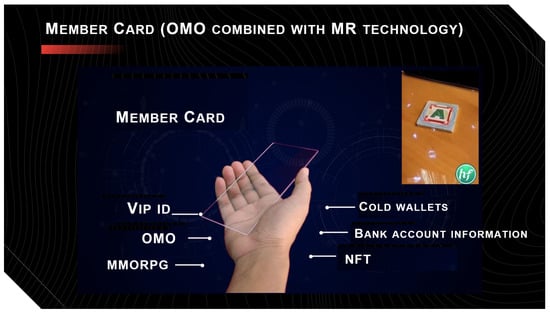
Figure 5.
Cold wallet with AR, VR, MR, and XR technologies.
3. Circular Economy
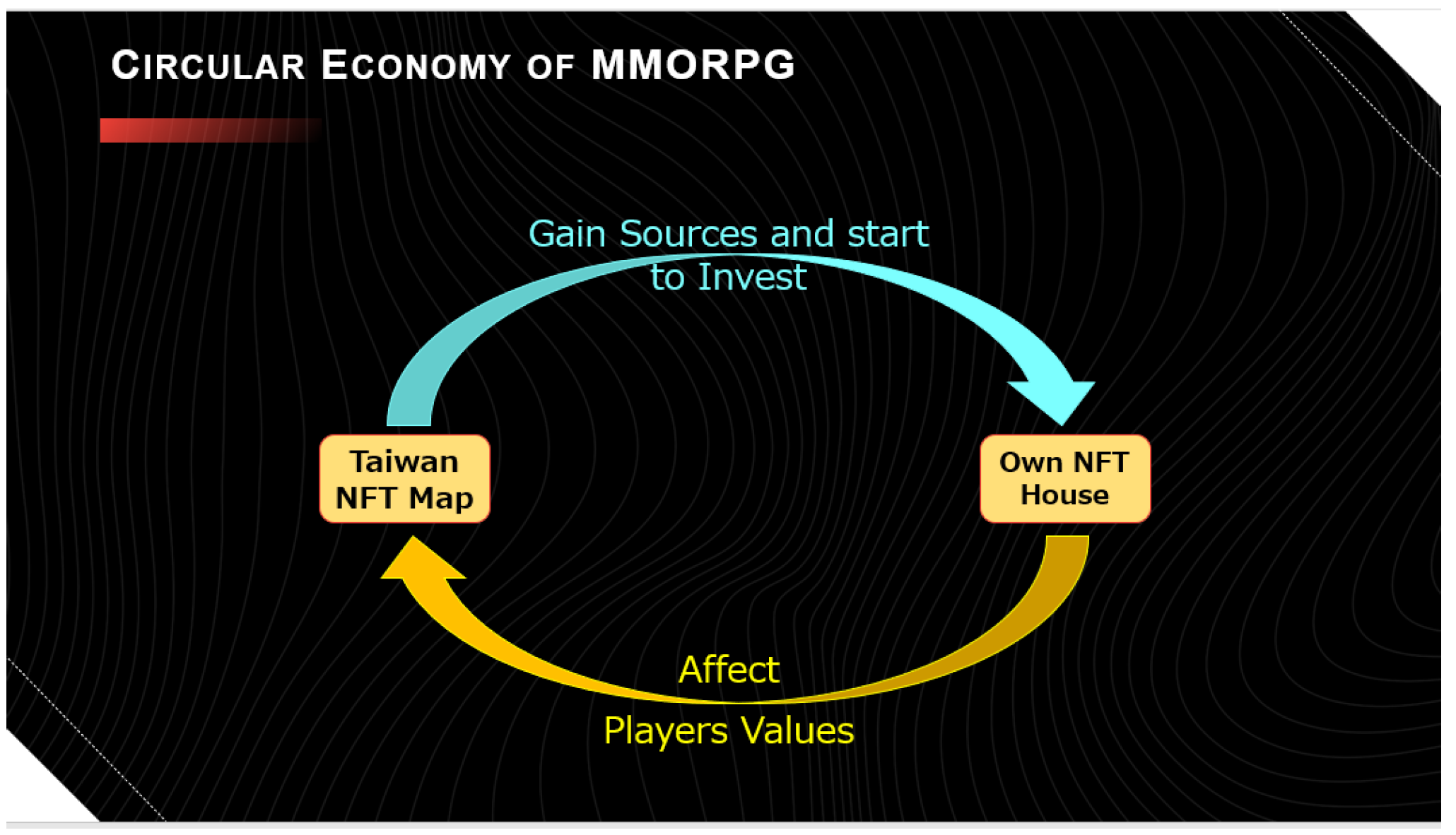
The next step is to combine online and offline brand enterprises and use the OMO and CDP platforms to find the right TA (target audience; target customer; target group; target) [12] for the products and services through the AI algorithm of precise marketing. By lowering the advertising budget, consumers gather in the game, and the brand enterprise sells products and services to the customer group with a faster and more effective fraction, increasing click through rate (CTR) and conversion rate (CVR). The return on advertising spend (ROAS) can then be calculated [13].
Therefore, the NFT Monopoly game continues to create a positive cycle between consumers, brand business owners, and game platforms and continuously increases the CTR and CVR of online games. Thus, buyers and sellers can obtain maximum benefits, and supply and demand reaches the equilibrium trading point as shown in Figure 6.
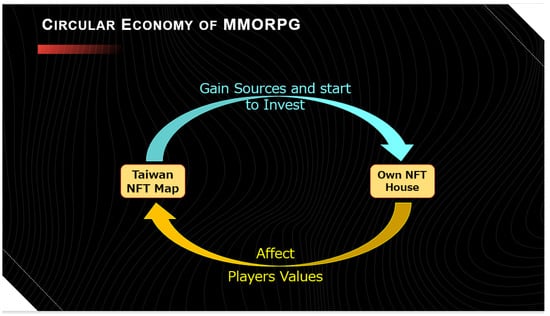
Figure 6.
Circular economy via MMORPG.
4. Case Study
This chapter discusses the new product and service “Key to the Desert” game community platform as a case study and analyzes OMO plus CDP’s precision marketing.
4.1. “Key to the Desert” Game Community Platform
“Key to the Desert” is a social platform that leaps from Web 2.0 to Web 3.0 [14]. From the Metaverse’s original concept, it covers life, work, entertainment, and community. Through consensus gamification, online and offline behaviors are linked to each other to achieve virtual reality. It includes the applications and connections of new technologies to achieve new customers’ expectations [15] in terms of hardware and services.
4.2. OMO and CDP
CDP is a collection platform for customers and consumers. It requires the traces of consumers and customers, such as how long consumers and customers have seen the products for and how soon to take action to buy them. It is based on the internal information of the enterprises, plus external public information to draw a more accurate consumer profile, and it is then used as shown in Table 1. This information is used for the accurate marketing of automatic classification.

Table 1.
Example of CDP case.
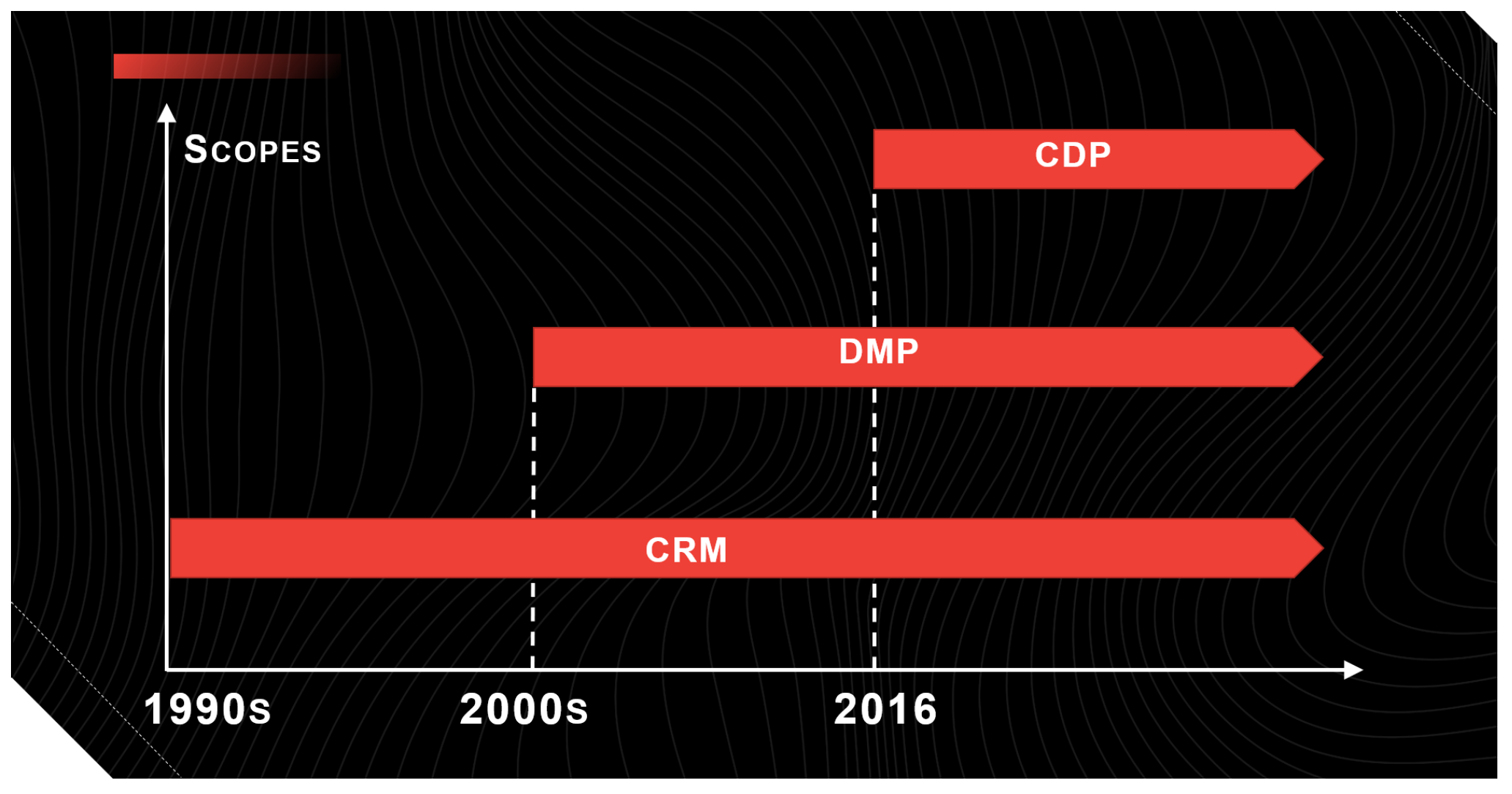
With dynamic data and static data, precise customer marketing can be achieved by combining these with CRM (Customer Relationship Management) [16]. In our current data-based time, it has becomes more difficult for enterprises to operate without CDP. The cross-use of CRM, DMP (Data Management Platform) [17], and CDP can maximize the use of marketing resources for enterprises as shown in Figure 7.
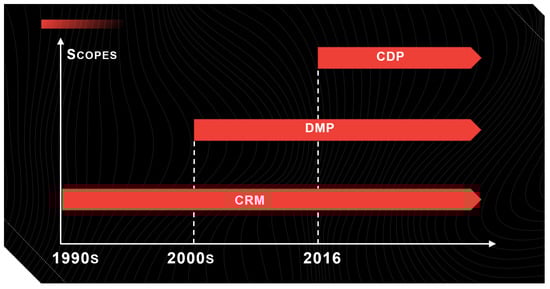
Figure 7.
History of CRM, DMP, and CDP.
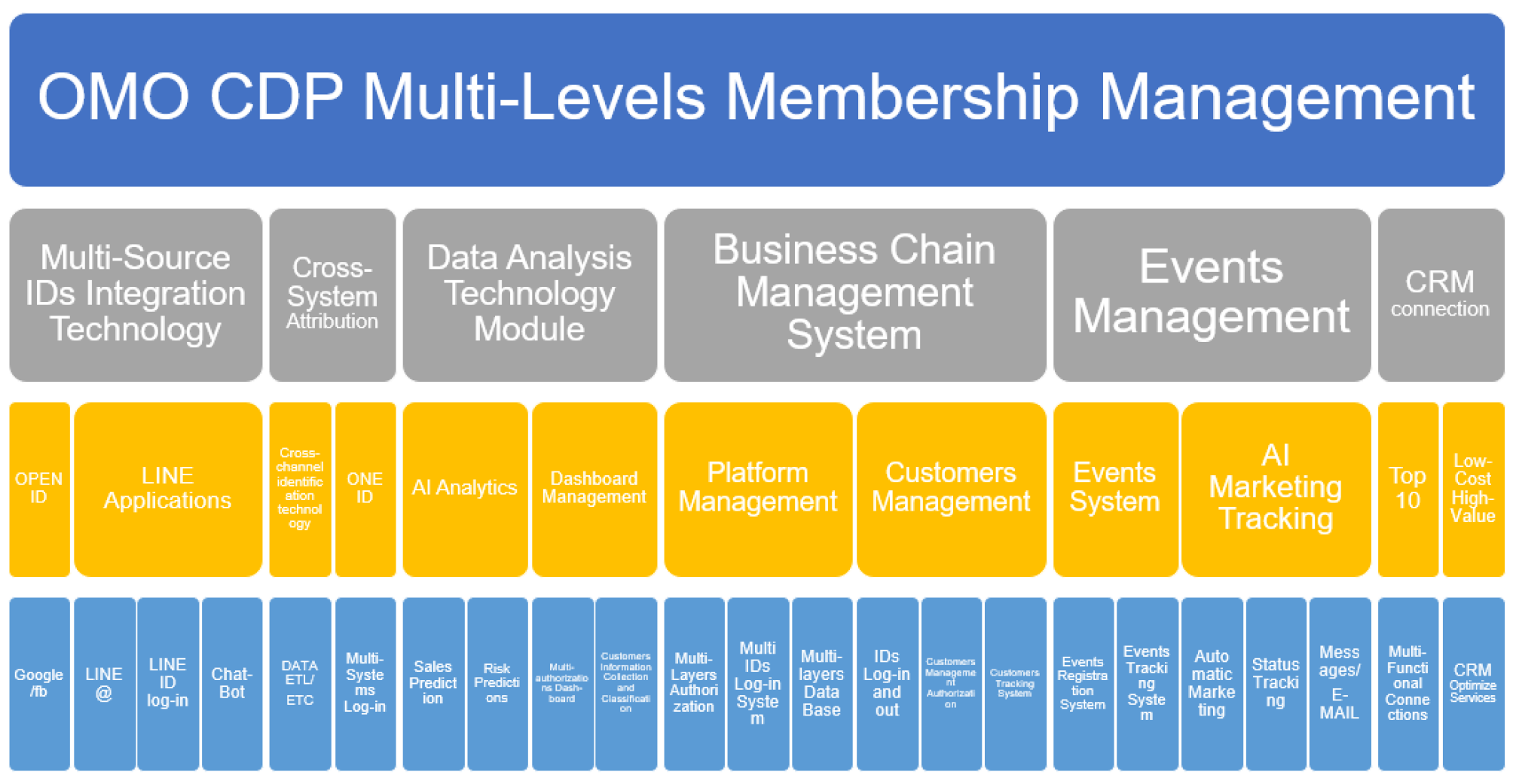
Because the data of the customer journey span many different companies and different behavior trajectories and also use a variety of different systems, it is important to track and label the customer’s behavior completely. The platform has a function built for this purpose. It combines AI automatic labeling and the automatic analysis system so that the functions of the CDP platform can enhance the ability of accurate prediction, thereby making the marketing delivery more efficient (Figure 8).
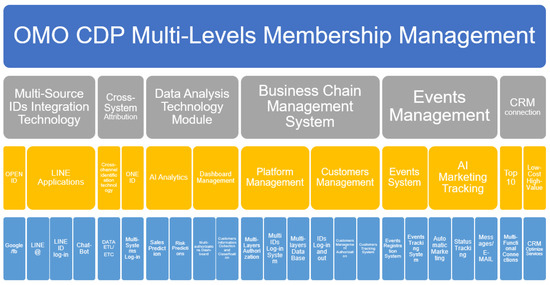
Figure 8.
OMO CDP is used to classify the data collected from customers and consumers to transit more useful information in cloud computing.
The OMO CDP platform uses advanced AR and MR visual technologies to make users feel and experience better, and so they are more willing to join and use the functions of the platform and download the APP (Applications) [18]. With the data, the ecosystem manufacturers that cooperate with the platform also have more complete customer behavior data [19] and predictive analysis to understand the best customer experiences and data integration that is closer to customer needs. This is also the unique function of this platform system.
4.3. Next Steps
The ultimate goal of the OMO CDP platform is to create a data platform with a 360-degree view of customers, including dynamic and static data, and maintain dynamic and real-time updates. Here, the protection of customer privacy data becomes extremely important. This system uses an API (Application Interfaces) [20] encryption technology method to maintain an anti-hacking personal information protection system, which creates a high-security database for enterprises to prevent hackers access to private information.
To implement the OMO CDP platform into MMORPG and create new businesses and opportunities, we need to consider the current and future government act and relative regulations and social rules. Therefore, the next step in further study is to discuss and analyze the challenges of different peoples, countries, and communities.
Author Contributions
Conceptualization, H.L. and J.T.; methodology, K.-H.L.; software, J.T.; validation, C.-T.H. and H.-T.T.; formal analysis, C.-H.C.; investigation, L.-Y.L.; resources, H.L.; data curation, K.-H.L.; writing—original draft preparation, K.-H.L.; writing—review and editing, W.-H.T.; visualization, J.T.; supervision, W.-H.T.; project administration, K.-H.L. All authors have read and agreed to the published version of the manuscript.
Funding
This research received no external funding.
Institutional Review Board Statement
Not applicable.
Informed Consent Statement
Not applicable.
Data Availability Statement
No new data were created or analyzed in this study.
Conflicts of Interest
The authors declare no conflict of interest. AI Value Co., Ltd. and Samoi Techology Co., Ltd. have no conflict of interest with this paper.
References
- Rauschnabel, P.A.; Babin, B.J.; tom Dieck, M.C.; Krey, N.; Jung, T. What is augmented reality marketing? Its definition, complexity, and future. J. Bus. Res. 2022, 142, 1140–1150. [Google Scholar] [CrossRef]
- Dowling, M. Is non-fungible token pricing driven by cryptocurrencies? Financ. Res. Lett. 2021, 44, 102097. [Google Scholar] [CrossRef]
- Liu, K.-H.; Cao, K.-D.; Wang, S.-M. Mini-Program Design and Evaluation to Create Online-Merge-Offline Service for Retailers. In Proceedings of the 2020 2nd International Conference on Big Data Engineering, Shanghai China, 29–31 May 2020. [Google Scholar]
- Sun, S.; Cao, Z.; Zhu, H.; Zhao, J. A survey of optimization methods from a machine learning perspective. IEEE Trans. Cybern. 2019, 50, 3668–3681. [Google Scholar] [CrossRef] [PubMed]
- Grabher, G.; van Tuijl, E. Uber-production: From global networks to digital platforms. Environ. Plan. A Econ. Space 2020, 52, 1005–1016. [Google Scholar] [CrossRef]
- Clemons, E.K.; Madhani, N. Regulation of digital businesses with natural monopolies or third-party payment business models: Antitrust lessons from the analysis of Google. J. Manag. Inf. Syst. 2010, 27, 43–80. [Google Scholar] [CrossRef]
- Zhang, H.-N.; Dwivedi, A.D. Precise Marketing Data Mining Method of E-Commerce Platform Based on Association Rules. Mob. Netw. Appl. 2022, 27, 2400–2408. [Google Scholar] [CrossRef]
- Dionisio, J.D.N.; Burns, W.G., III; Gilbert, R. 3D virtual worlds and the Metaverse: Current status and future possibilities. ACM Comput. Surv. (CSUR) 2013, 45, 1–38. [Google Scholar] [CrossRef]
- Cole, H.; Griffiths, M.D. Social interactions in massively multiplayer online role-playing gamers. CyberPsychology Behav. 2007, 10, 575–583. [Google Scholar] [CrossRef] [PubMed]
- Hileman, G.; Rauchs, M. Global Cryptocurrency Benchmarking Study; Cambridge Centre For Alternative Finance: Cambridge, UK, 2017; pp. 33–113. [Google Scholar]
- Ko, S.H.; Rogers, J. Functional Materials and Devices for XR (VR/AR/MR) Applications. Adv. Funct. Mater. 2021, 31, 2106546. [Google Scholar] [CrossRef]
- Lefebvre, R.C. The new technology: The consumer as participant rather than target audience. Soc. Mark. Q. 2007, 13, 31–42. [Google Scholar] [CrossRef]
- Lewis, R.A.; Rao, J.M. The unfavorable economics of measuring the returns to advertising. Q. J. Econ. 2015, 130, 1941–1973. [Google Scholar] [CrossRef]
- Hendler, J. Web 3.0 Emerging. Computer 2009, 42, 111–113. [Google Scholar] [CrossRef]
- Hoyer, W.D.; Kroschke, M.; Schmitt, B.; Kraume, K.; Shankar, V. Transforming the customer experience through new technologies. J. Interact. Mark. 2020, 51, 57–71. [Google Scholar] [CrossRef]
- Winer, R.S. A framework for customer relationship management. Calif. Manag. Rev. 2001, 43, 89–105. [Google Scholar] [CrossRef]
- Elmeleegy, H.; Li, Y.; Qi, Y.; Wilmot, P.; Wu, M.; Kolay, S.; Dasdan, A.; Chen, S. Overview of turn data management platform for digital advertising. Proc. VLDB Endow. 2013, 6, 1138–1149. [Google Scholar] [CrossRef]
- Alanzi, T. A review of mobile applications available in the app and google play stores used during the COVID-19 outbreak. J. Multidiscip. Healthc. 2021, 14, 45–57. [Google Scholar] [CrossRef] [PubMed]
- Rita, P.; Oliveira, T.; Farisa, A. The impact of e-service quality and customer satisfaction on customer behavior in online shopping. Heliyon 2019, 5, e02690. [Google Scholar] [CrossRef] [PubMed]
- Roldan, J.J.; Pena-Tapia, E.; Garcia-Aunon, P.; Del Cerro, J.; Barrientos, A. Bringing adaptive and immersive interfaces to real-world multi-robot scenarios: Application to surveillance and intervention in infrastructures. IEEE Access 2019, 7, 86319–86335. [Google Scholar] [CrossRef]
Disclaimer/Publisher’s Note: The statements, opinions and data contained in all publications are solely those of the individual author(s) and contributor(s) and not of MDPI and/or the editor(s). MDPI and/or the editor(s) disclaim responsibility for any injury to people or property resulting from any ideas, methods, instructions or products referred to in the content. |
© 2023 by the authors. Licensee MDPI, Basel, Switzerland. This article is an open access article distributed under the terms and conditions of the Creative Commons Attribution (CC BY) license (https://creativecommons.org/licenses/by/4.0/).