


Abstract
The hypothesis of this study was that complex mineral fertilizer (N5P20.5K36) coated with a bacterial inoculant (Paenibacillus azotofixans, Bacillus megaterium, Bacillus mucilaginosus, and Bacillus mycoides) would have a positive effect on the agrochemical composition of soil and on the yield of spring barley. Experimental studies were carried out for three years on sandy loam soil using four different treatments: no N5P20.5K36 (control), 300 kg ha−1 N5P20.5K36 (Tr-1), 150 kg ha−1 N5P20.5K36 coated with a bacterial inoculant (Tr-2), and 300 kg ha−1 N5P20.5K36 coated with a bacterial inoculant (Tr-3). Based on the research results, we found that bacterial inoculant-enriched fertilizer increased the yield of barley grain without exhausting the soil.
1. Introduction
From an environmental and human health perspective, biofertilizers are used as a better alternative to chemical fertilizers. Microorganisms, including bacteria and cyanobacteria, are present in biofertilizers sprinkled on plant surfaces, seeds, or soil that cover the rhizospheres, or internal spaces of plants [1,2,3]. Biswas et al. [4] recommend the use of biological inoculants with mineral fertilizers. Microbial biofertilizers are cost-effective and less expensive than conventional techniques. They provide 25–30% of the chemical fertilizer equivalent to nitrogen. They increase the phosphorus and potassium contents in the soil, increase water absorption, and keep the soil biologically active. In soils cropped with legumes, the application of arbuscular mycorrhizal fungi inoculants tremendously improves growth and yield [5,6]. There is currently a lack of knowledge about the effects of biologically enriched complex mineral fertilizers on soil and spring barley yield. Therefore, the aim of this study was to determine the influence of bacteria-inoculated complex mineral fertilizers on soil properties and yield of spring barley.
2. Materials and Methods
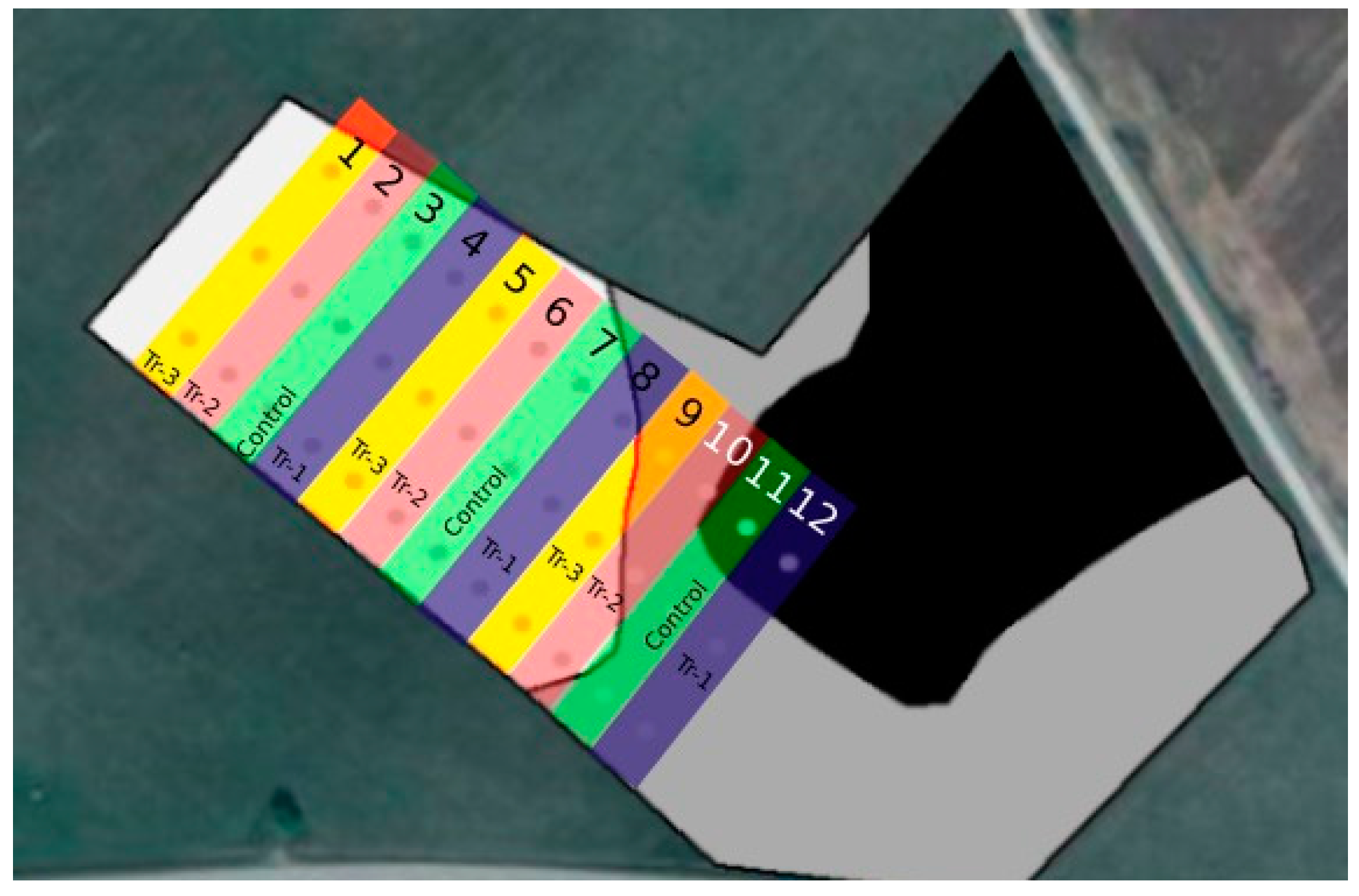
Experimental field research was carried out in 2020–2022 in the region of Lithuania, characterized by Endoeutric Albeluvisol (Orthieutric Albeluvisol). Experimental studies were carried out on sandy loam soil using four different treatments: no (N5P20.5K36) (control), 300 kg ha−1 N5P20.5K36 (Tr-1), 150 kg ha−1 (N5P20.5K36) coated with a bacterial inoculant (Tr-2), and 300 kg ha−1 (N5P20.5K36) coated with a bacterial inoculant (Tr-3). The arrangement of the experimental treatment plots is presented in Figure 1. Complex mineral fertilizers were coated with a bacterial inoculant (500 g ha−1). The bacterial inoculants (Paenibacillus azotofixans, Bacillus megaterium, Bacillus mucilaginosus, and Bacillus mycoides) provided by JSC Nando, Lithuania, were used in equal concentrations (1 × 10⁹ cfu g−1). Nitrogen fertilizer was applied to the crops at the end of tillering (BBCH 25–30). A rate of 68.8 kg N ha−1 ammonium nitrate (NH4NO3; N34.4) was applied. During the experimental studies, the spring barley Hordeum vulgare L. (cv. Iron) seed rate was 4.0–4.5 million units ha−1.
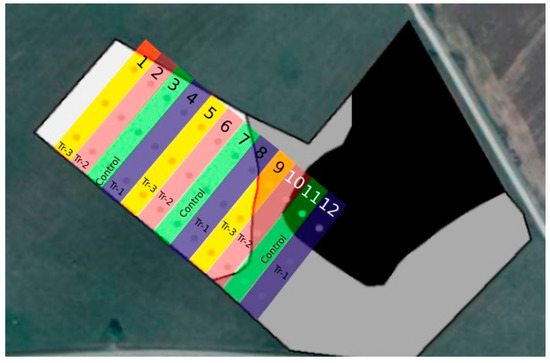
Figure 1.
Arrangement of experimental plots.
Soil samples collected from each experimental plot (15 locations) (Figure 1) were mixed and analyzed at the Agrochemical Research Laboratory. The amount of available phosphorus and potassium (mg kg−1) was determined using the Egner–Riehm–Domingo (A-L) method (LVP D-07:2016).
Ten random plant samples were taken from each plot (Figure 1) for a total of 30 samples per treatment. The samples were threshed using a stationary Wintersteiger LD 350 laboratory threshing bench (Wintersteiger AG, Ried im Innkreis, Austria). The weight of the threshed grains (g) was then determined.
A probability level of 0.05 was used as the criterion for tests of significance throughout the data analysis.
3. Results and Discussion
3.1. Soil Properties
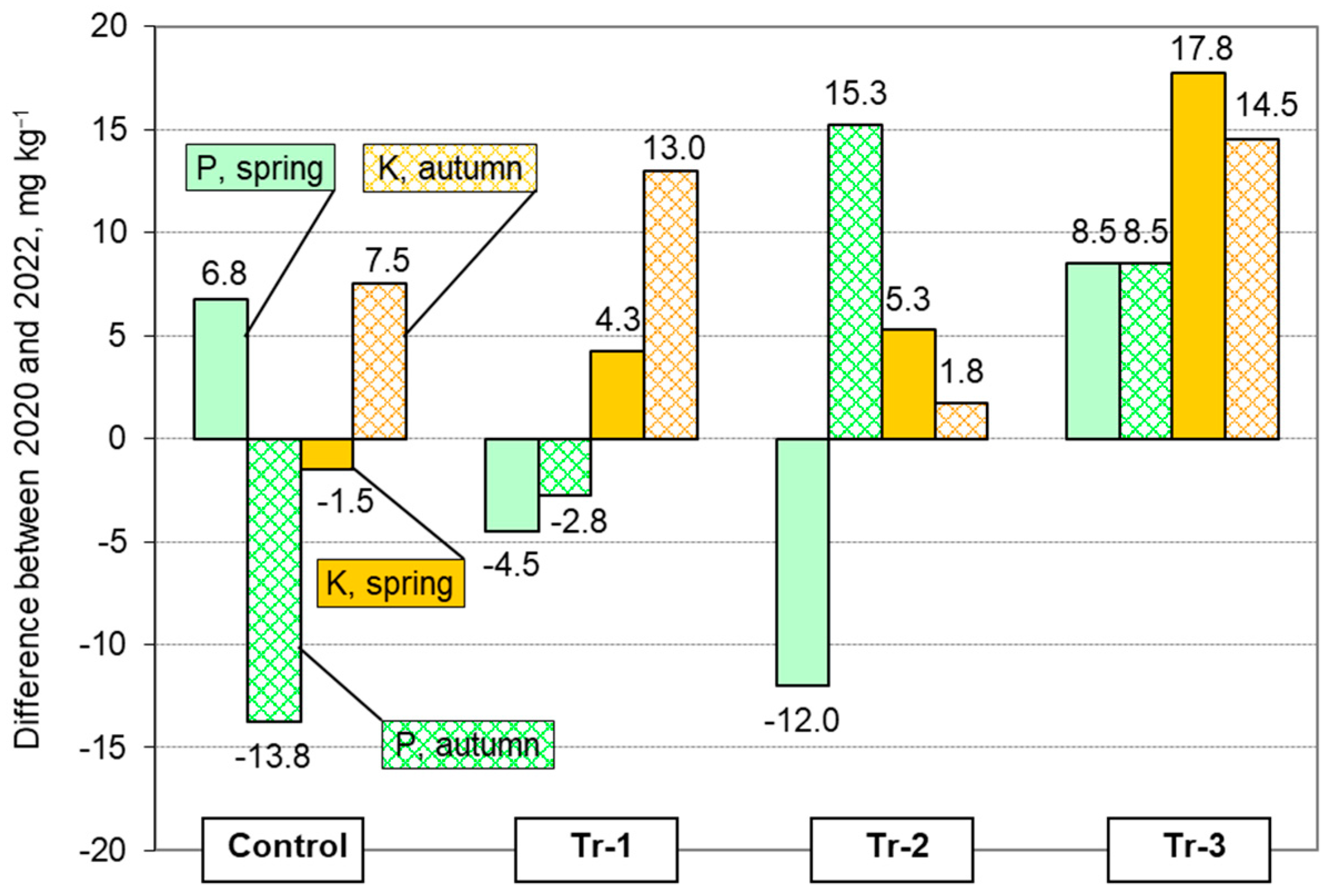
After three years of experimental studies of soil properties in spring and autumn, in the third year of spring, a decrease in soluble potassium (K2O) of 1.5 mg kg−1 in the control and an increase in other treatments were observed (Figure 2). In both spring and autumn, the highest increase in potassium (K2O) was observed in Tr-3 (17.8 mg kg−1 and 14.5 mg kg−1, respectively). Comparing the change in soluble phosphorus (P2O5) in the soil, the highest increase in Tr-3 (8.5 mg kg−1) was found in spring, and the highest increase in Tr-2 (15.3 mg kg−1) was found in autumn. The study by Zhao et al. [7] showed that by using microbial inoculants during the 147 days research period, the concentration of plant-available potassium in the soil increased by 28.1%, and the amount of plant-available phosphorus increased by 38.1%. Li et al. [8] also reported that using bacterial inoculants in three different crops (oats, alfalfa, and cucumber) increased the amount of plant-available phosphorus in the soil by 38.1–52.0%, whereas the amount of soluble potassium increased by 3.01–26.81%.
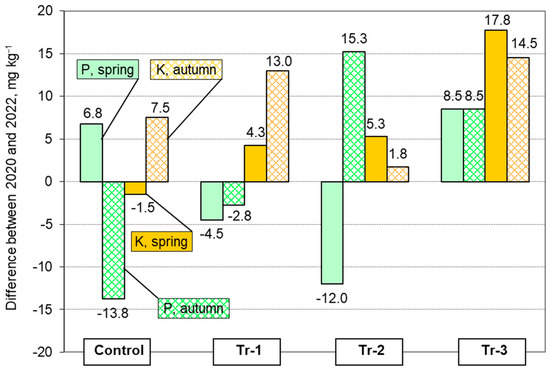
Figure 2.
The effects of different treatments on changes in soil properties.
3.2. Barley Grain Yield
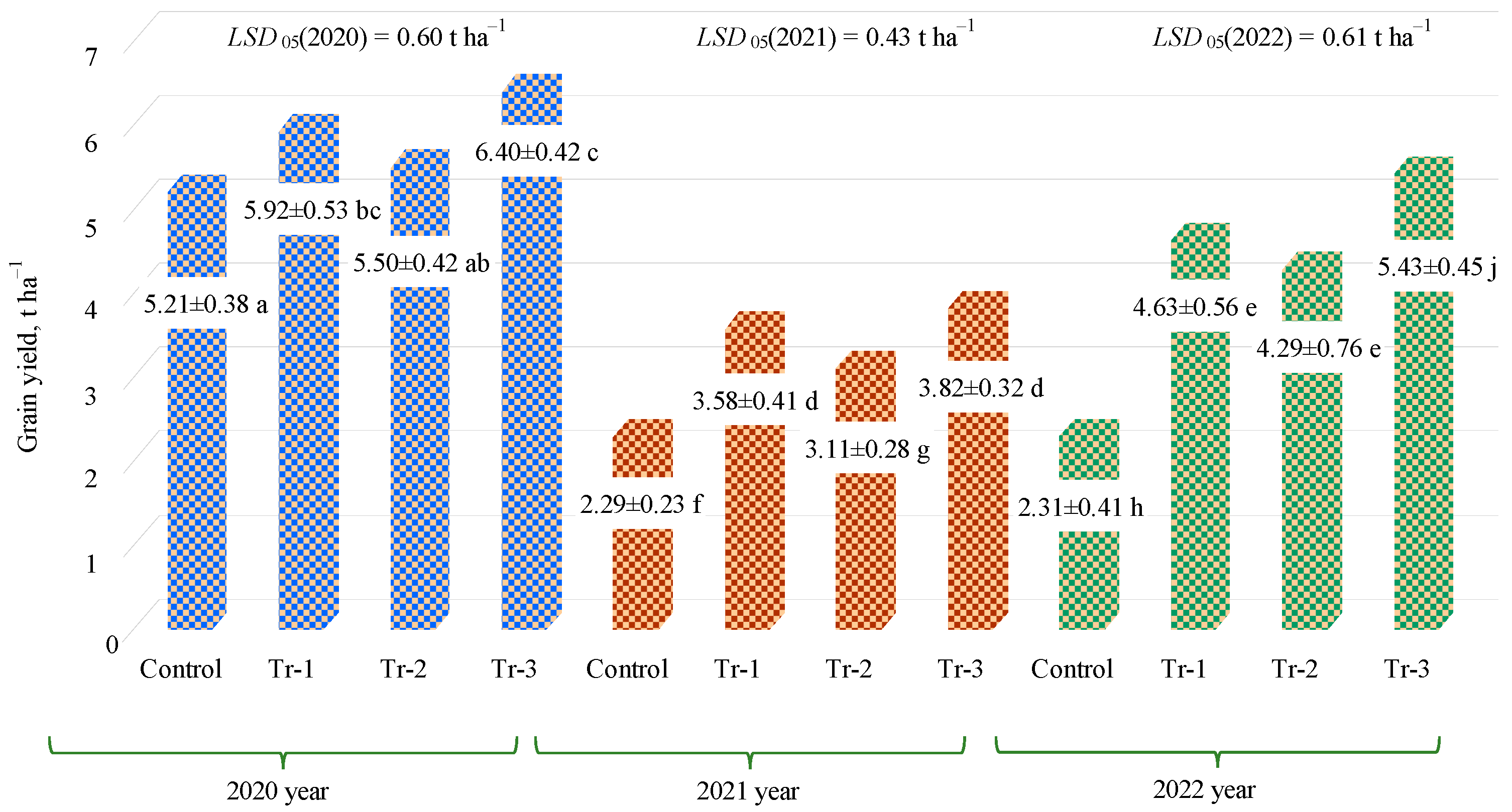
In the first year of the study, spring barley grain yield varied from 5.21 t ha−1 to 6.40 t ha−1; in the second year, it varied from 2.29 t ha−1 to 3.82 t ha−1; and in the third year, it varied from 2.31 t ha−1 to 5.43 t ha−1 (Figure 3). In all research years, the lowest grain yield was observed in the control and the highest yield was observed in Tr-3. The increase in potassium and phosphorus content in the soil may have influenced the yield increase in Tr-3. In the third year of the study, significant effects of the use of biological preparation were observed, as the grain yield of Tr-3 (300 kg ha−1 fertilizer rate, biologically enriched) significantly increased compared to that of Tr-1 (300 kg ha−1 fertilizer rate, not biologically enriched).
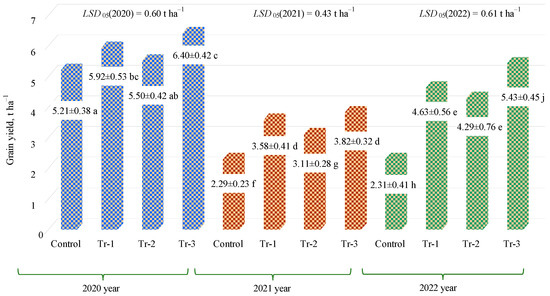
Figure 3.
The effects of different treatments on grain yield. Matching letters indicate no significant difference between treatments in the same years.
Ahmad et al. [9] conducted research on growing wheat and fertilizing it with mineral fertilizers impregnated with bacteria and fertilizers not impregnated; the results of the research showed that the yield increased by 20% due to greater availability of nutrients. Also, it has been reported that it is possible to increase rice yields by 17.73% by incorporating bacterial inoculants into fertilization technology [10].
4. Conclusions
The results showed that in all years of the research, Tr-3 spring barley yields increased by 8%, 7%, and 17%, respectively, compared to Tr-1. This indicates that biological enrichment with fertilizers increases the yield without increasing the fertilizer rate. This was due to the increase in potassium and phosphorus in the soil and the ability of bacterial inoculants to convert insoluble phosphorus and potassium compounds into soluble ones.
Supplementary Materials
The presentation materials can be downloaded at: https://www.mdpi.com/article/10.3390/ECP2023-14720/s1.
Author Contributions
Conceptualization, E.Z., D.S. and J.A.; methodology, D.S. and J.A.; software, J.A.; validation, J.A. and D.S.; formal analysis, J.A., K.L. and D.S.; investigation, J.A., E.Z. and K.L.; resources, J.A.; data curation, D.S., E.Z. and J.A.; writing—original draft preparation, K.L. and J.A.; writing—review and editing, K.L. and E.Z.; visualization, J.A.; supervision, D.S.; project administration, J.A.; funding acquisition, E.Z. All authors have read and agreed to the published version of the manuscript.
Funding
This research received no external funding.
Institutional Review Board Statement
Not applicable.
Informed Consent Statement
Not applicable.
Data Availability Statement
The data will be provided individually upon contacting the corresponding authors.
Conflicts of Interest
The authors declare no conflict of interest.
References
- Rokhzadi, A.; Asgharzadeh, A.; Darvish, F.; Nour-Mohammadi, G.; Majidi, E. Influence of plant growth-promoting rhizobacteria on dry matter accumulation and yield of chickpea (Cicer arietinum L.) under field conditions. Am.-Eurasian J. Sustain. Agric. 2008, 3, 253–257. [Google Scholar]
- Malusa, E.; Vassilev, N. A contribution to set a legal framework for biofertilisers. Appl. Microbiol. Biotechnol. 2014, 98, 6599–6607. [Google Scholar] [CrossRef] [PubMed]
- Yadav, K.K.; Sarkar, S. Biofertilizers, impact on soil fertility and crop productivity under sustainable agriculture. Environ. Ecol. 2019, 37, 89–93. [Google Scholar]
- Biswas, S.S.; Biswas, D.R.; Ghosh, A.; Sarkar, A.; Das, A.; Roy, T. Phosphate solubilizing bacteria inoculated low-grade rock phosphate can supplement P fertilizer to grow wheat in sub-tropical inceptisol. Rhizosphere 2022, 23, 100556. [Google Scholar] [CrossRef]
- Mohammadi, K.; Khalesro, S.; Sohrabi, Y.; Heidari, G. A review: Beneficial effects of the mycorrhizal fungi for plant growth. J. Appl. Environ. Biol. Sci 2011, 1, 310–319. [Google Scholar]
- Alori, E.T.; Dare, M.O.; Babalola, O.O. Microbial inoculants for soil quality and plant health. Sustain. Agric. Res. 2017, 22, 281–307. [Google Scholar]
- Zhao, Y.; Zhang, M.; Yang, W.; Di, H.J.; Ma, L.; Liu, W.; Li, B. Effects of microbial inoculants on phosphorus and potassium availability, bacterial community composition, and chili pepper growth in a calcareous soil: A greenhouse study. J. Soils Sediments 2019, 19, 3597–3607. [Google Scholar] [CrossRef]
- Li, H.; Qiu, Y.; Yao, T.; Ma, Y.; Zhang, H.; Yang, X. Effects of PGPR microbial inoculants on the growth and soil properties of Avena sativa, Medicago sativa, and Cucumis sativus seedlings. Soil Tillage Res. 2020, 199, 104577. [Google Scholar] [CrossRef]
- Ahmad, S.; Imran, M.; Hussain, S.; Mahmood, S.; Hussain, A.; Hasnain, M. Bacterial impregnation of mineral fertilizers improves yield and nutrient use efficiency of wheat. Sci. Food Agric. 2017, 97, 3685–3690. [Google Scholar] [CrossRef] [PubMed]
- Xiao, X.; Zhu, Y.; Gao, C.; Zhang, Y.; Gao, Y.; Zhao, Y. Microbial inoculations improved rice yields by altering the presence of soil rare bacteria. Microbiol. Res. 2022, 254, 126910. [Google Scholar] [CrossRef] [PubMed]
Disclaimer/Publisher’s Note: The statements, opinions and data contained in all publications are solely those of the individual author(s) and contributor(s) and not of MDPI and/or the editor(s). MDPI and/or the editor(s) disclaim responsibility for any injury to people or property resulting from any ideas, methods, instructions or products referred to in the content. |
© 2023 by the authors. Licensee MDPI, Basel, Switzerland. This article is an open access article distributed under the terms and conditions of the Creative Commons Attribution (CC BY) license (https://creativecommons.org/licenses/by/4.0/).