


Abstract
In electrical power systems, the popularity of the microgrid is significantly increasing because of its remarkable advantages. However, the microgrid often exhibits protection problems and seriously affects the reliability of power system. Hence, a proper protection strategy is extremely necessary to solve the protection issues. Therefore, this manuscript proposes a protection strategy against the faults in microgrids using a wavelet packet transform and data mining classifier. MATLAB/SIMULINK and Python are used to investigate the proposed scheme performance. It was found that the proposed technique can detect and classify different types of faults for the islanded and grid-associated modes of the microgrid.
1. Introduction
Microgrid integration with traditional systems has enhanced the capability of the modern power system to perform more efficiently. Microgrids reduce dependency on conventional systems by providing uninterrupted power against the high load [1]. Despite its immense advantages, it also produces implementation, operational, control, and protection problems [2,3]. One cause of the protection issue is that the traditional system is usually radial with unidirectional (from source to consumers) power flow; however, in the microgrid, power flows bidirectionally. The other reason for the protection problem is associated with the fault current level. In grid-linked mode, the fault current is fed from the main utility and distributed generators (DGs); hence, the fault current is relatively higher. Conversely, in islanded mode, the fault current is low, as DGs in the microgrid are of low capacity [4,5,6,7]. The difference in the operation and control of a microgrid with conventional systems causes failures of overcurrent-based protection strategies. Thus, protection design and operation are challenged [8,9].
The protection issues of a microgrid are addressed through different techniques in the literature. In [10,11], the authors addressed the protection strategies by utilizing signal processing and data mining techniques. A discrete wavelet transforms (DWT) combined with an artificial neural network is proposed in [12]. A wavelet transforms (WT) and decision tree-based methodology is described in [13].
Recently, most of the research has addressed data mining approaches. Hence, in our proposed scheme, a combined signal processing and data mining technique is employed to detect the fault in a microgrid and then determine its classification. The main objectives of this study are as follows:
- To protect the microgrid using the wavelet packet transform (WPT) and data mining technique.
- To collect the input dataset by extracting the statistical indices of total harmonic distortion (THD).
- To validate the proposed technique’s effectiveness for both operating modes of the microgrid.
2. Proposed Technique
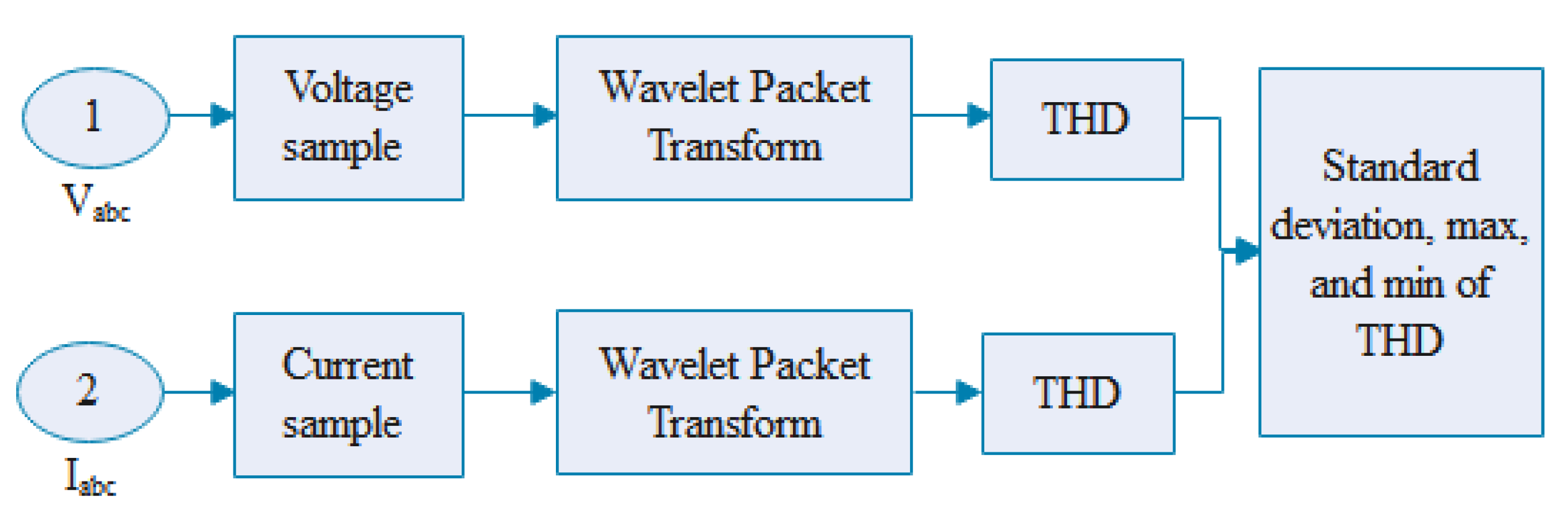
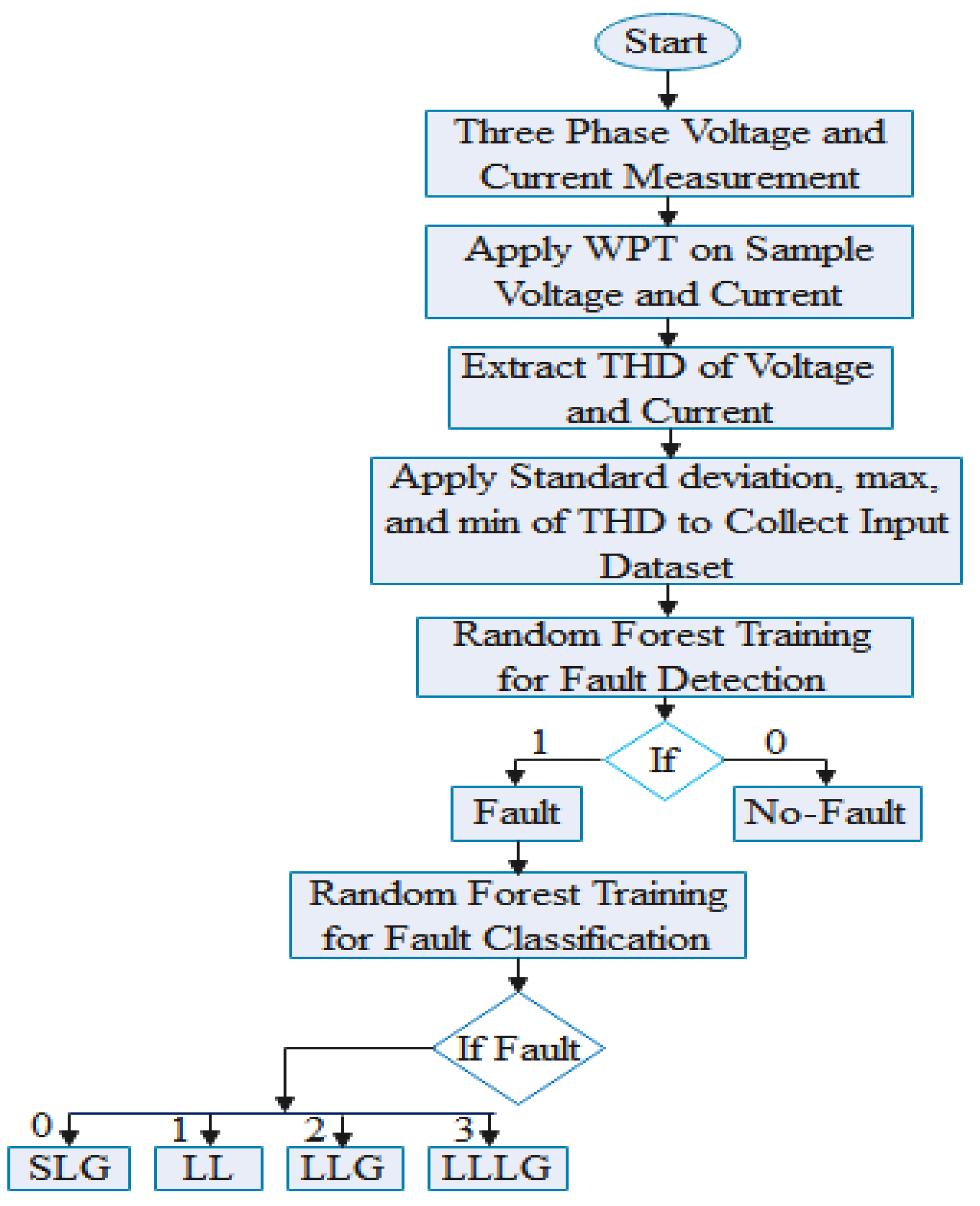
This study provides a solution to the protection issues by utilizing WPT and data mining techniques. The proposed strategy block diagram is presented in Figure 1. First, the sample voltage and current are preprocessed to calculate the THD through WPT. Then, statistical indices (standard deviation, min, and max) of the THD are extracted to collect the input dataset. Once the dataset is collected, it is fed to the random forest classifier to develop the data mining model for fault detection and classification. While collecting the dataset, several fault and no-fault (NF) aspects are considered to perform the simulation, as shown in Table 1 and Table 2 [11], for both operating modes and configurations of the microgrid.
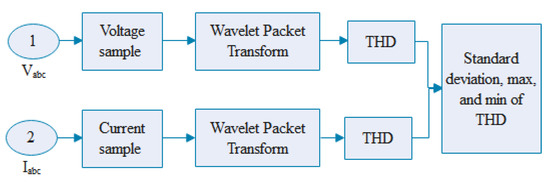
Figure 1.
Proposed technique block diagram.

Table 1.
Simulated fault cases.
Table 2.
Simulated NF cases.
Wavelet Packet Transform
In DWT, the decomposition of an obtained signal is in non-uniform frequency bands. However, for the analysis of harmonics, it is good to evaluate uniform frequency sub-bands which can be obtained through WPT. The main difference between the WPT and DWT is the decomposition process. In DWT, after the first level, either approximation or detailed coefficients are used for further decomposition, whereas in WPT, after the first level, both detailed and approximation coefficients are decomposed to extract the fault information. Hence, through WPT, more fault information can be gathered compared to DWT. The decomposition of a signal y[m] is given as:
where and represents the approximation and detailed coefficients decomposed at i level, gained from
where are the frequency bands for low-pass and high-pass filters.
3. Test System
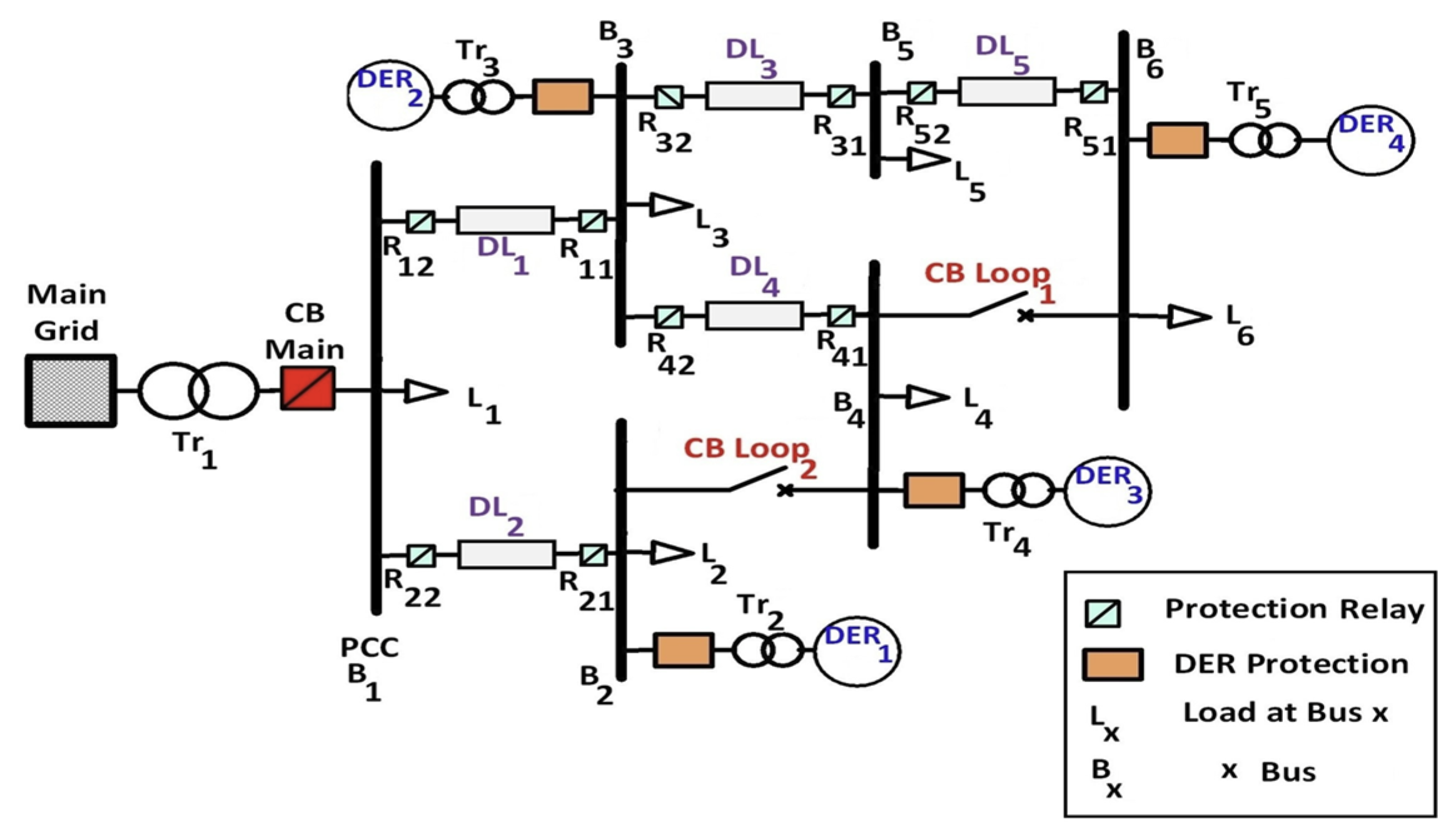
Figure 2 represents the test system of the microgrid, modeled in the MATLAB/SIMULINK. A 25 kV, 15 MVA, and 60 Hz grid is connected with a microgrid at the PCC through a switch, which is used to change the operating modes either into grid-connected or islanded mode. It contains one synchronous-based DG(DER4) of 7 MVA, with one 2 MVA (DGR2) and two 3 MVA (DER1 and DER3) IIDGs. It comprised of five distributed sections (DL1, DL2, DL3, DL4, DL5), with a 20 km line length. It contains six loads linked to each bus. A 120/25 kV Dyn transformer connects the microgrid with the grid, and a 0.630/25 kV transformer is used to connect all DG sources [11].
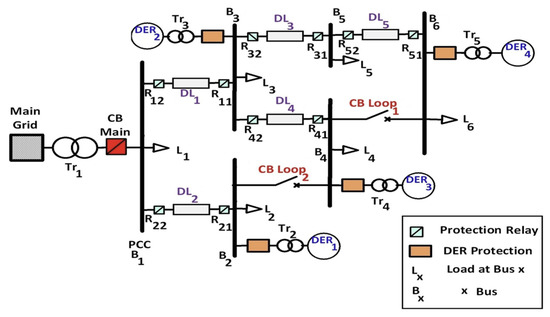
Figure 2.
Microgrid test system.
4. Results Discussion
Figure 3 represents the flowchart of the proposed algorithm. Accuracy, precision, and recall are the basic indices applied to find out the capability of the proposed strategy.
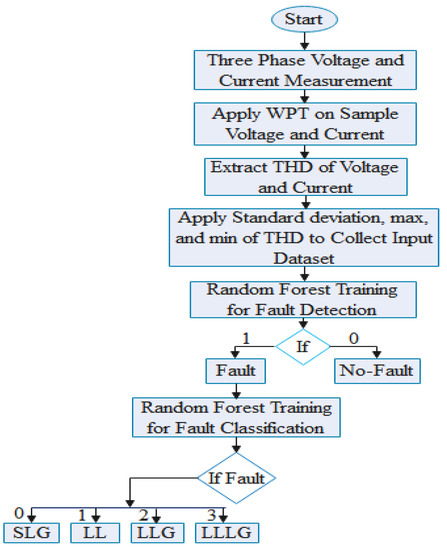
Figure 3.
Flowchart of the proposed scheme.
- (1)
- To measure the dependability of the predicted and actual fault events for fault and NF cases for the proposed technique, accuracy is considered as follows:
- (2)
- Precision gives the relation between the predicted and actual fault events, given as:
- (3)
- Recall precisely measures the predicted and actual NF events as follows:
4.1. Fault Detection
The study considered overall 9088 cases (8800 fault and 288 NF) for the detection of faults in the microgrid. Here, 75% of the cases are considered for training and 25% for testing to build the data mining model. The fault detection is performed by assuming two different values for both of the cases, given as:
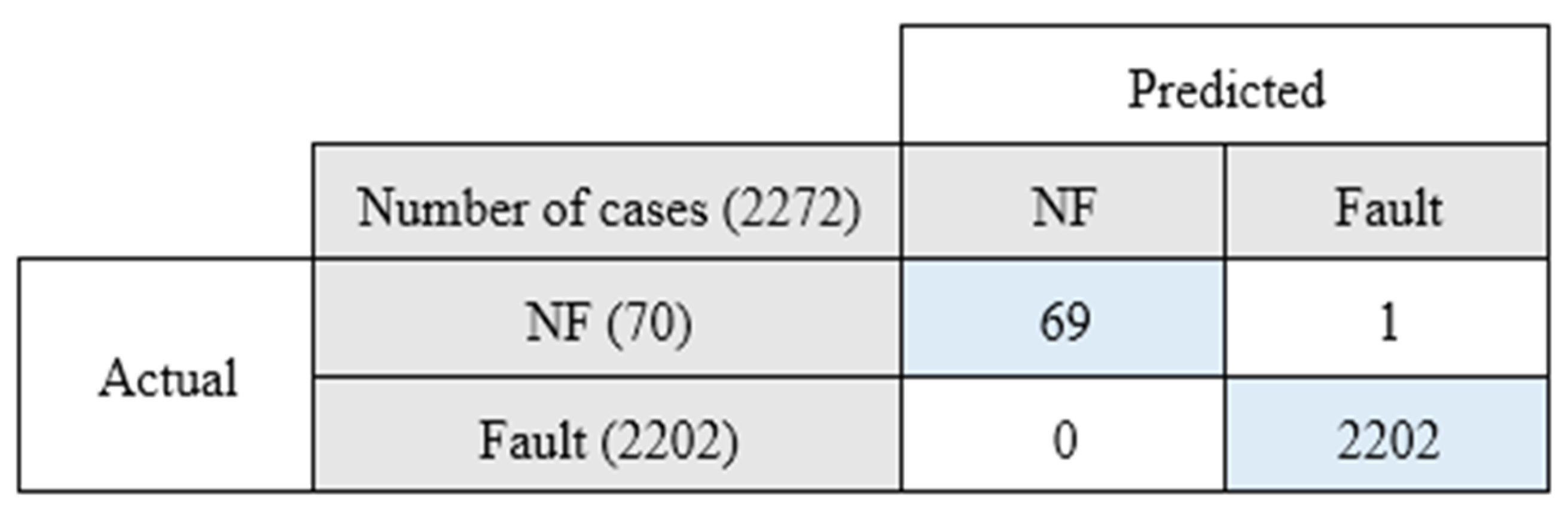
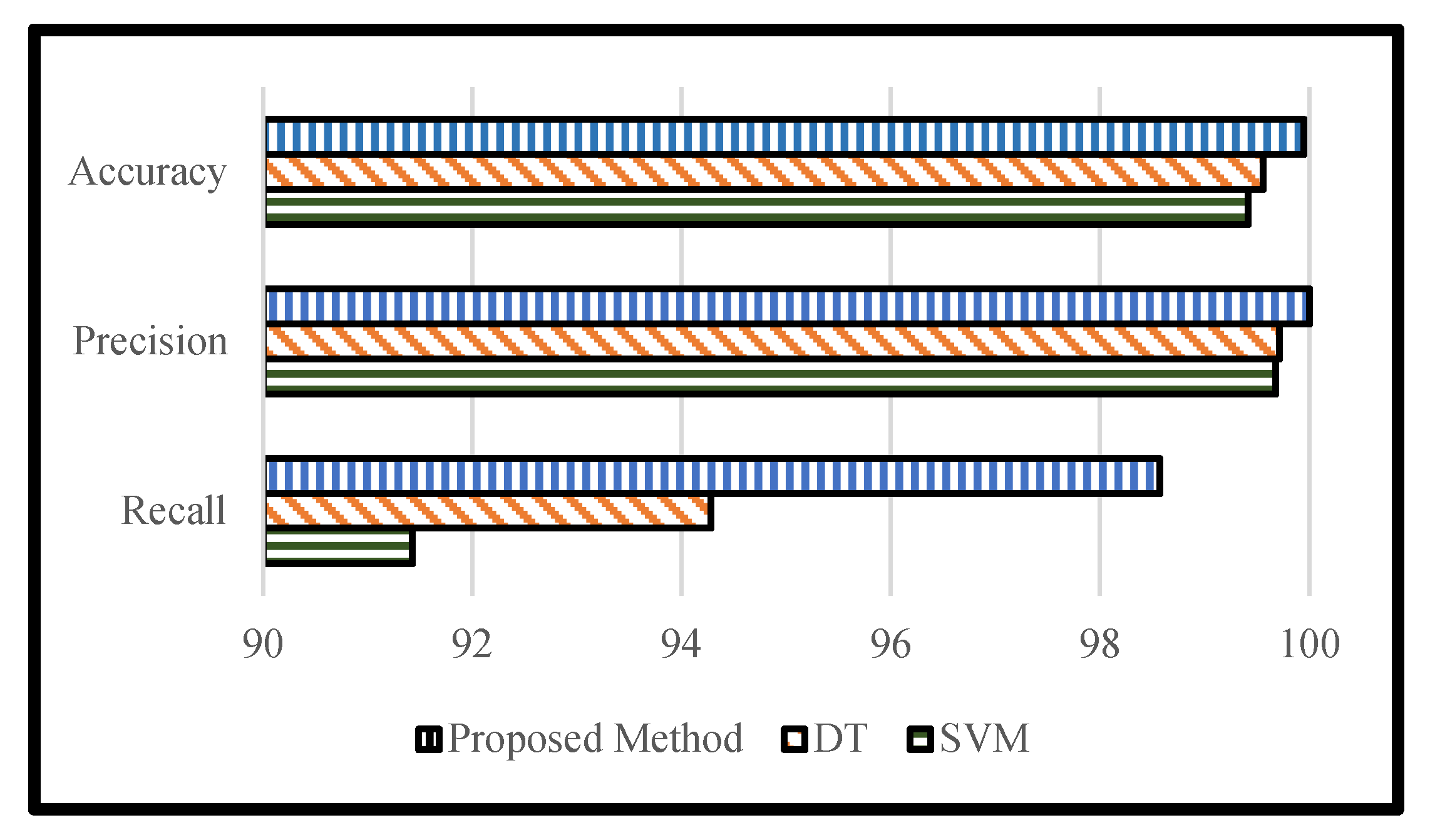
Figure 4 represents the fault detection confusion matrix. From the figure, it can be observed that the proposed scheme randomly selected 2272 cases (70 NF, 2202 fault events). The figure further shows that the proposed scheme accurately detected 2202 fault and 69 NF cases with an accuracy of 99.95%. The comparative analysis of the proposed technique with DT and SVM is tabulated in Table 3. It is demonstrated in the table that the accuracy of the proposed technique is 99.95% (with a precision level of 100%, and a recall level of 98.57%), whereas SVM has an accuracy level of 99.42% (99.68% precision and 91.43% recall), and DT has an accuracy level of 99.56% (with a precision level of 99.72% and a recall level of 94.28%). The comparative analysis can also be seen in Figure 5.
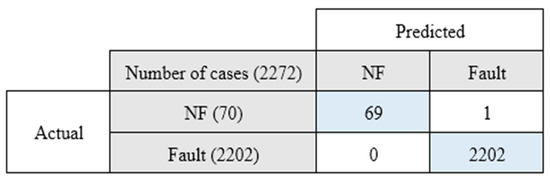
Figure 4.
Fault detection confusion matrix.
Table 3.
Proposed scheme comparative analysis with DT and SVM for fault detection.
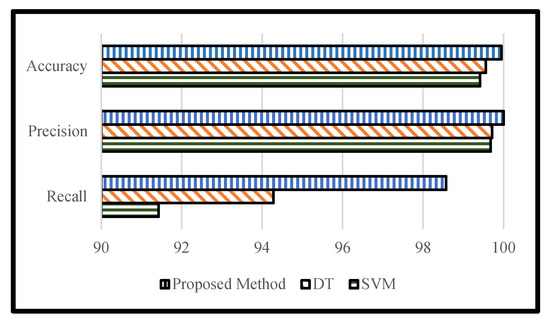
Figure 5.
Comparative analysis of proposed technique, DT and SVM.
4.2. Fault Classification
The next task after fault detection is the classification of the fault. For fault classification while training, the values assumed are given as:
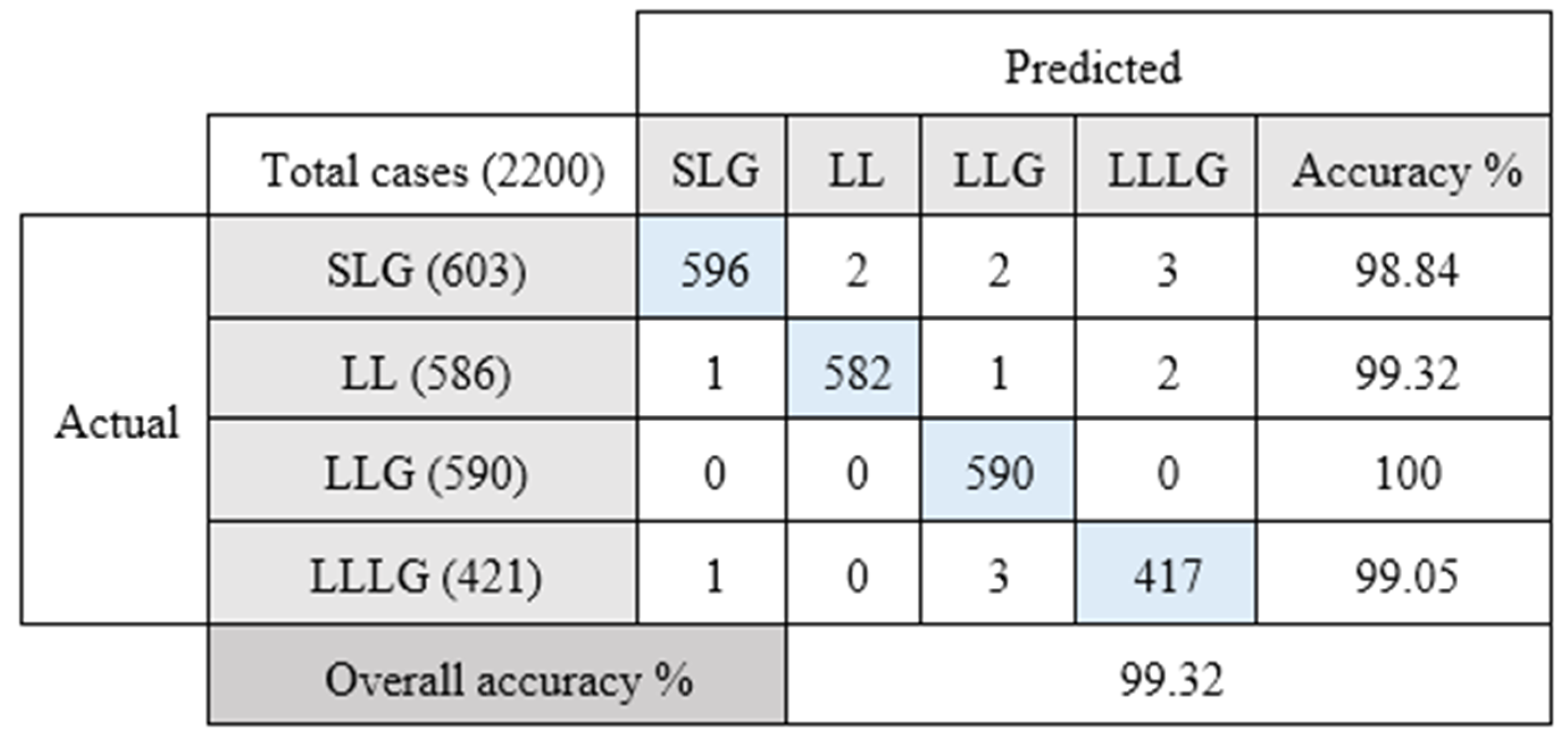
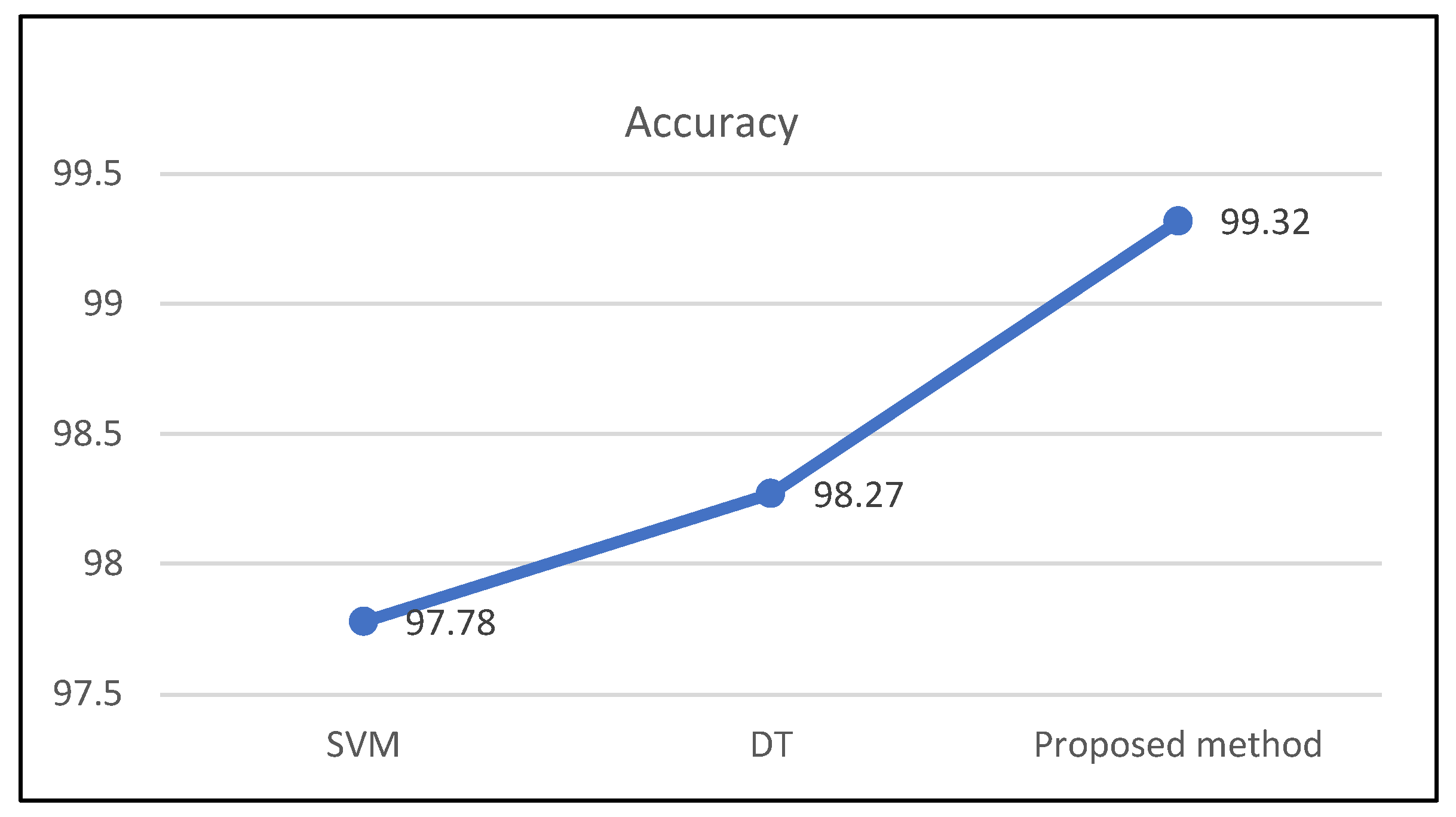
For fault classification, 75% of the cases are used for training and 25% for testing. Figure 6 represents the confusion matrix for fault classification. From the figure, it can be observed that the proposed scheme has arbitrarily considered 2200 fault cases. With seven misclassifications, it has classified 596 SLG cases accurately. Further observation shows that for LL faults it has accurately classified 582 cases, for LLG faults 590 cases, and for LLLG faults 417 cases with 98.84%, 99.32%, 100%, and 99.05% accuracy, respectively. Hence, this leads to an overall accuracy of 99.32%. Table 4 and Figure 7 show a comparative analysis of the proposed scheme with DT and SVM. The comparative analysis verifies that the proposed scheme can effectively classify the faults with 99.32% accuracy compared to SVM and DT having accuracy levels of 97.78% and 98.27%, respectively.
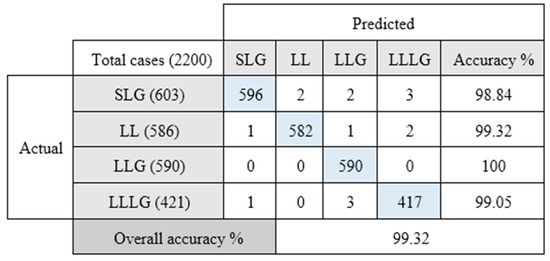
Figure 6.
Fault classification confusion matrix.
Table 4.
Comparative analysis of accuracy measurement for fault classification.
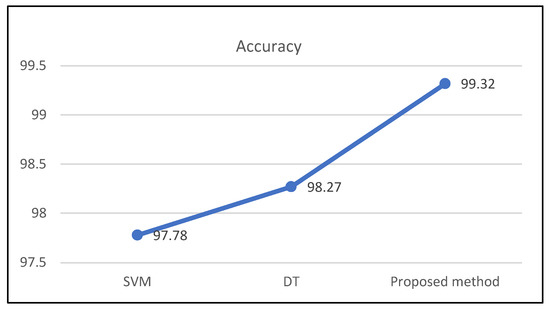
Figure 7.
Proposed scheme comparative analysis with DT and SVM.
5. Conclusions
Microgrids cause many protection problems in power systems. Therefore, this scheme proposes a fault protection solution by using wavelet packet transform and random forest-based techniques. The proposed scheme is investigated in MATLAB to validate its performance. The results indicate improved results over the existing data mining techniques.
Author Contributions
S.B. conceptualized the proposed protection scheme and drafted the original article. S.Z.J. reviewed, edited the first draft and provided the resources and valuable comments during the simulation process. S.A.R.S. revised the paper. All authors have read and agreed to the published version of the manuscript.
Funding
This research received no external funding.
Conflicts of Interest
The authors declare no conflict of interest.
References
- Patnaik, B.; Mishra, M.; Bansal, R.C.; Jena, R.K. Ac microgrid protection—A review: Current and future prospective. Appl. Energy 2020, 271, 115210. [Google Scholar] [CrossRef]
- Sharma, N.K.; Samantaray, S.R. Pmu assisted integrated impedance angle-based microgrid protection scheme. IEEE Trans. Power Deliv. 2020, 35, 183–193. [Google Scholar] [CrossRef]
- Sarangi, S.; Sahu, B.K.; Rout, P.K. Distributed generation hybrid ac/dc microgrid protection: A critical review on issues, strategies, and future directions. Int. J. Energy Res. 2020, 44, 3347–3364. [Google Scholar] [CrossRef]
- Chaitanya, B.; Yadav, A.; Pazoki, M. An improved differential protection scheme for micro-grid using time-frequency transform. Int. J. Electr. Power Energy Syst. 2019, 111, 132–143. [Google Scholar] [CrossRef]
- Tabatabaei, N.M.; Kabalci, E.; Bizon, N. Microgrid Architectures, Control, and Protection Methods; Springer: Berlin/Heidelberg, Germany, 2019. [Google Scholar]
- Abdulwahid, A.H.; Wang, S. A novel approach for microgrid protection based upon combined anfis and hilbert space-based power setting. Energies 2016, 9, 1042. [Google Scholar] [CrossRef]
- Baloch, S.; Jamali, S.Z.; Mehmood, K.K.; Bukhari, S.B.A.; Zaman, M.S.U.; Hussain, A.; Kim, C.-H. Microgrid protection strategy based on the autocorrelation of current envelopes using the squaring and low- pass filtering method. Energies 2020, 13, 2350. [Google Scholar] [CrossRef]
- Saad, S.M.; El-Naily, N.; Mohamed, F.A. A new constraint considering maximum psm of industrial over-current relays to enhance the performance of the optimization techniques for microgrid protection schemes. Sustain. Cities Soc. 2019, 44, 445–457. [Google Scholar] [CrossRef]
- Mishra, M.; Panigrahi, R.R.; Rout, P.K. A combined mathematical morphology and extreme learning machine techniques-based approach to micro-grid protection. Ain Shams Eng. J. 2019, 10, 307–318. [Google Scholar] [CrossRef]
- Baloch, S.; Muhammad, M.S. An intelligent data mining-based fault detection and classification strategy for microgrid. IEEE Access 2021, 9, 22470–22479. [Google Scholar] [CrossRef]
- Baloch, S.; Sunil, S.S.; Muhammad, M.S. Fault Protection in Microgrid Using Wavelet Multiresolution Analysis and Data Mining. IEEE Access 2021, 9, 86382–86391. [Google Scholar] [CrossRef]
- Hong, Y.-Y.; Cabatac, M.T.A.M. Fault detection, classification, and location by static switch in microgrids using wavelet transform and taguchi-based artificial neural network. IEEE Syst. J. 2020, 14, 2725–2735. [Google Scholar] [CrossRef]
- Mishra, D.P.; Samantaray, S.R.; Joos, G. A combined wavelet and data mining based intelligent protection scheme for microgrid. IEEE Trans. Smart Grid 2016, 7, 2295–2304. [Google Scholar] [CrossRef]
Publisher’s Note: MDPI stays neutral with regard to jurisdictional claims in published maps and institutional affiliations. |
© 2022 by the authors. Licensee MDPI, Basel, Switzerland. This article is an open access article distributed under the terms and conditions of the Creative Commons Attribution (CC BY) license (https://creativecommons.org/licenses/by/4.0/).